Course manual: “The Tate has been bequeathed the Prunella Clough archive and has made some of it available on the internet. Prunella Clough began her artistic career in 1937 and, apart from a brief gap during the war, continued working until her death in 1999. She won the prestigious Jerwood prize for drawing just months before her death. Prunella Clough lived a full creative life and the subtleties and sheer celebratory joy in the way she used everyday objects in her compositions is inspirational. Look at her painting entitled Wire Tangle (at the start of Part One). Note how she developed her original visual source material into a sophisticated painting, changing the scale and making decisions about the composition to create an image that is much more than a simple natural still life.“
http://www.tate.org.uk/art/artists/prunella-clough-921
Prunella Clough ( 1919 – 1999)
I start this research by watching the movie “Look again, the visual language of Prunella Clough” available on the Tate website. (https://www.tate.org.uk/art/artists/prunella-clough-921/look-again-visual-language-prunella-clough).
I am delighted to discover this British artist that I was not very familiar with and am especially attracted to her work from the 1970’s onwards, where the whole focus seems to be on form and composition. I found it very interesting to discover through the film, how the artist builds up an extensive library of reference photos, but never reproduces a photo in her paintings. She collects shapes that then reappear in paintings. This is valuable information, as I have a tendency of using reference photos too literally.
I also found it very interesting, that Prunella Clough uses many words in her sketchbooks, she does a “language sketch”, describing what she sees and beyond that, what other sensations come up around the object that she is looking at.
I also really like her choice of subject – the overlooked or forgotten, something others would walk past. This connects to our first project of this course- to paint something unpromising, that then through careful composition gets elevated to something beautiful. The paintings also show the impact of man made objects upon the land- a subject that is very important in todays’ world of environmental concern.
I am reproducing four of my favourite paintings by Prunella Clough from the Tate website.
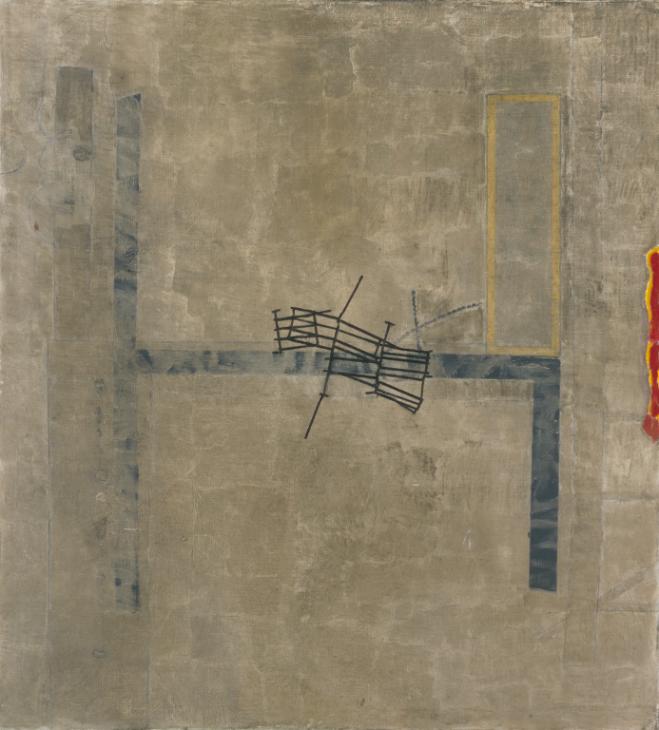
Broken Gates 1982 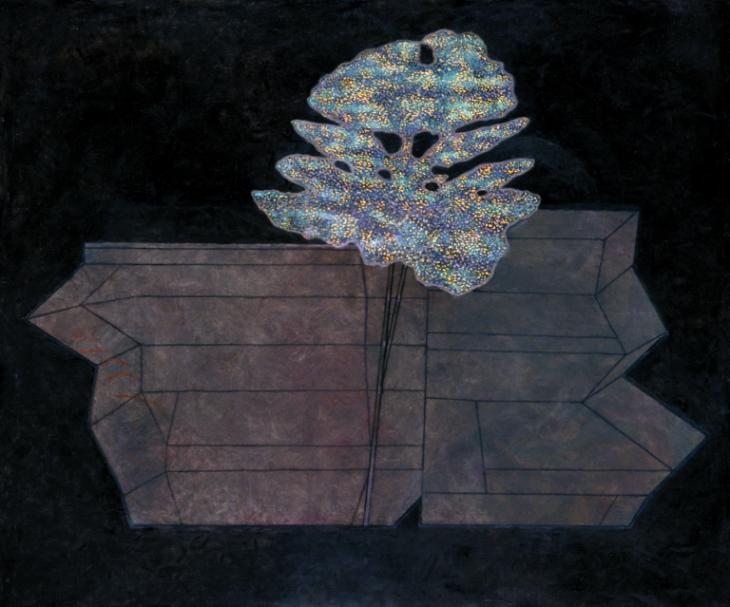
False Flower 1993 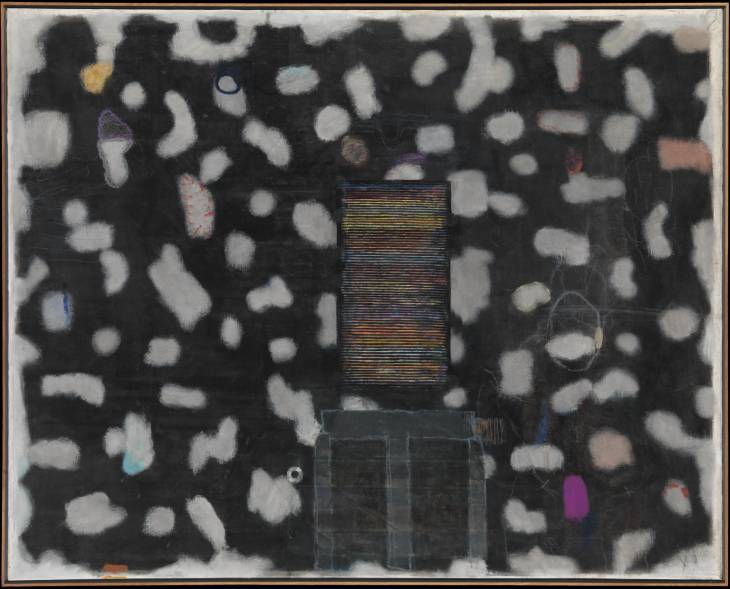
Stack 1993 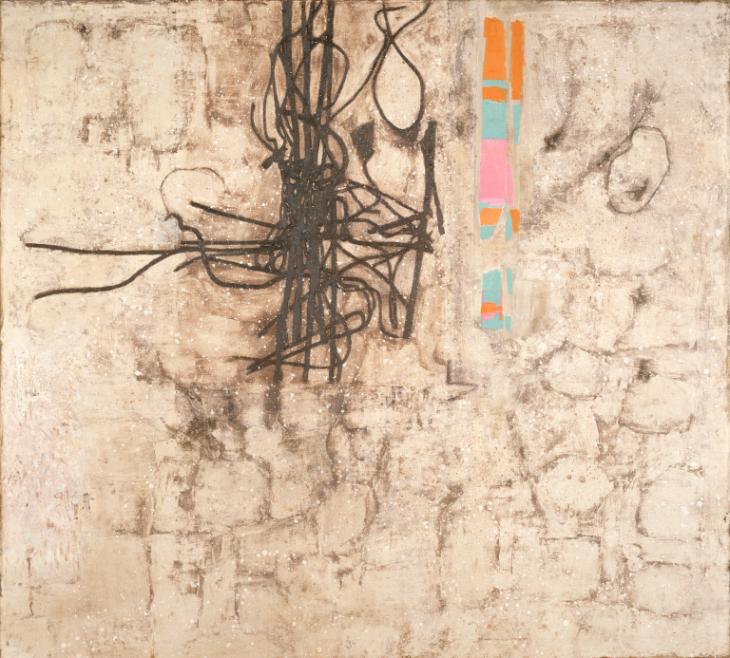
Wire and Demolition 1982
I like that there is a seemingly simple and clear composition, and only looking more attentively do I become aware of the many layers the paintings contain.
When I heard that before studying art, Prunella Clough made maps for the office of war, I can feel how that carries forward in her compositions as territories and borders.
Her palette is mainly earthtones from light browns and beige to dark colours, but then with some small, bright elements standing out, in balance to the larger more subdued areas.
All that we have been looking at through this chapter- unpromising subjects, the relationship between the object and the background and the notion of scale, come together in Prunella Cloughs work.
 Clara's Drawing 2