The well is a place of life and death in this area of long , dry summers. Anyone who asks about the house, asks if it has a good well, and yes, it does. There is also a darker side to the wells- a long tradition of suicides being committed in them. I though it was a joke when my Portuguese partner saw it as an absolute priority to order a new metal lid with a lock for the well, but no, it is really taken seriously.
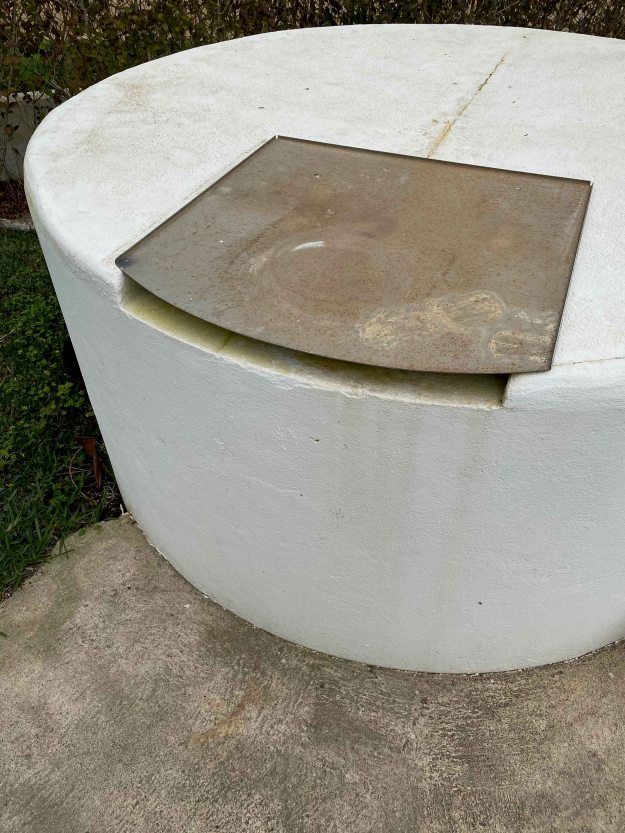
My imagination connected the many stories of drowning and suicide in the wells with the collection of glass I have found on the property. I want to draw portraits under the glass of floating faces at peace.
I start by trying out painting with Cobra watersoluble oil paints on glass. My idea is to introduce water or drops at some points and let the image drown.
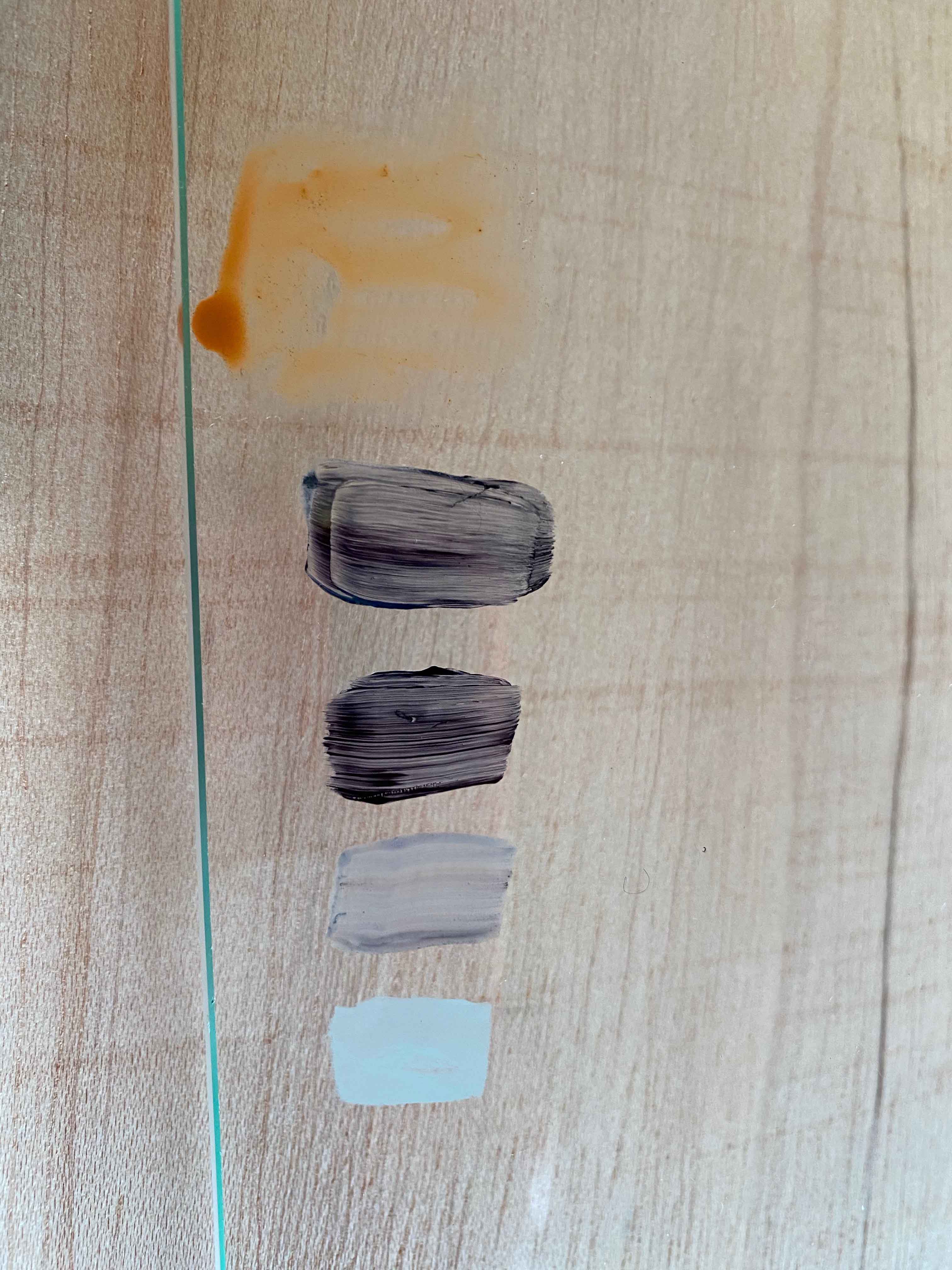
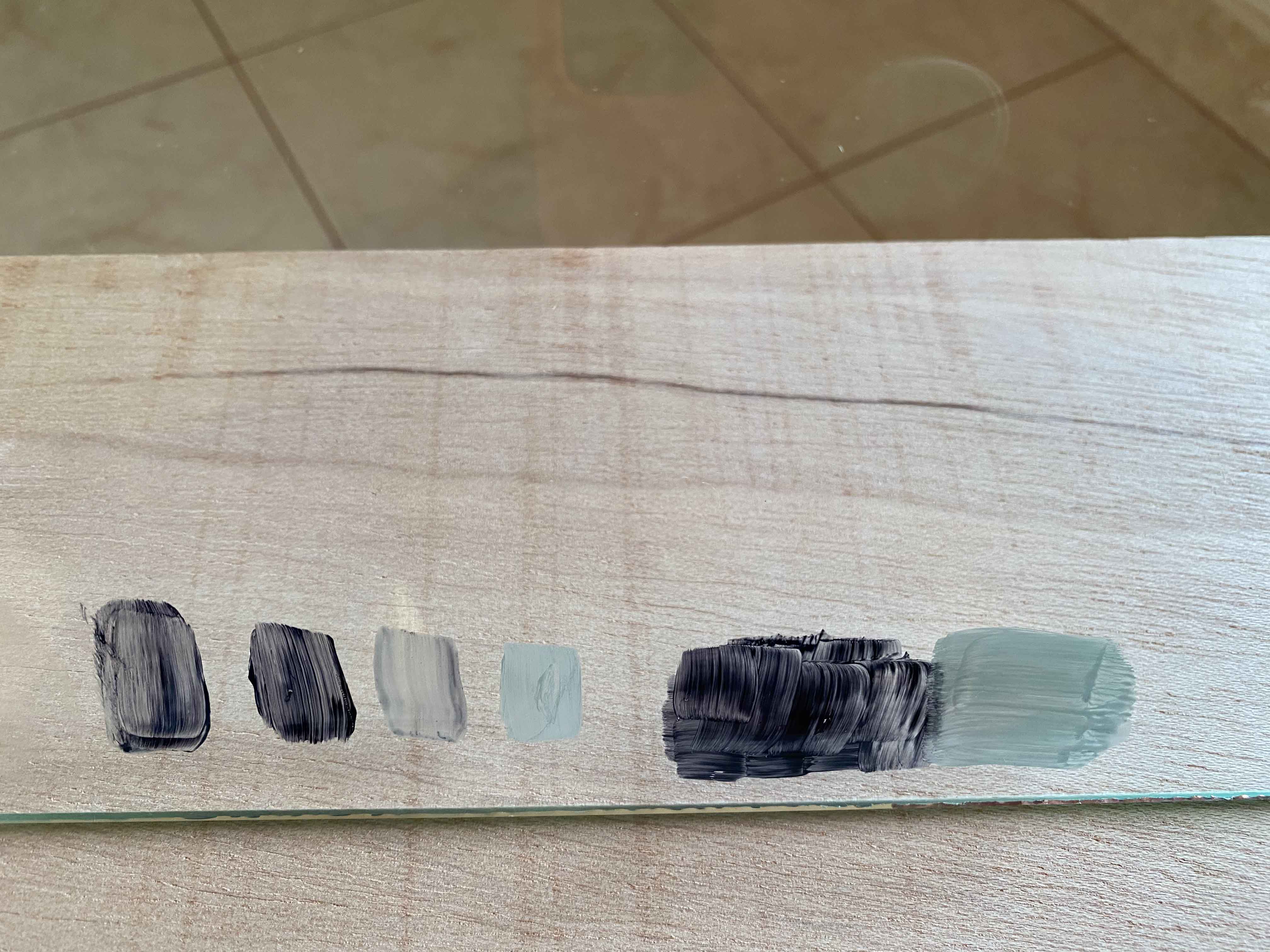
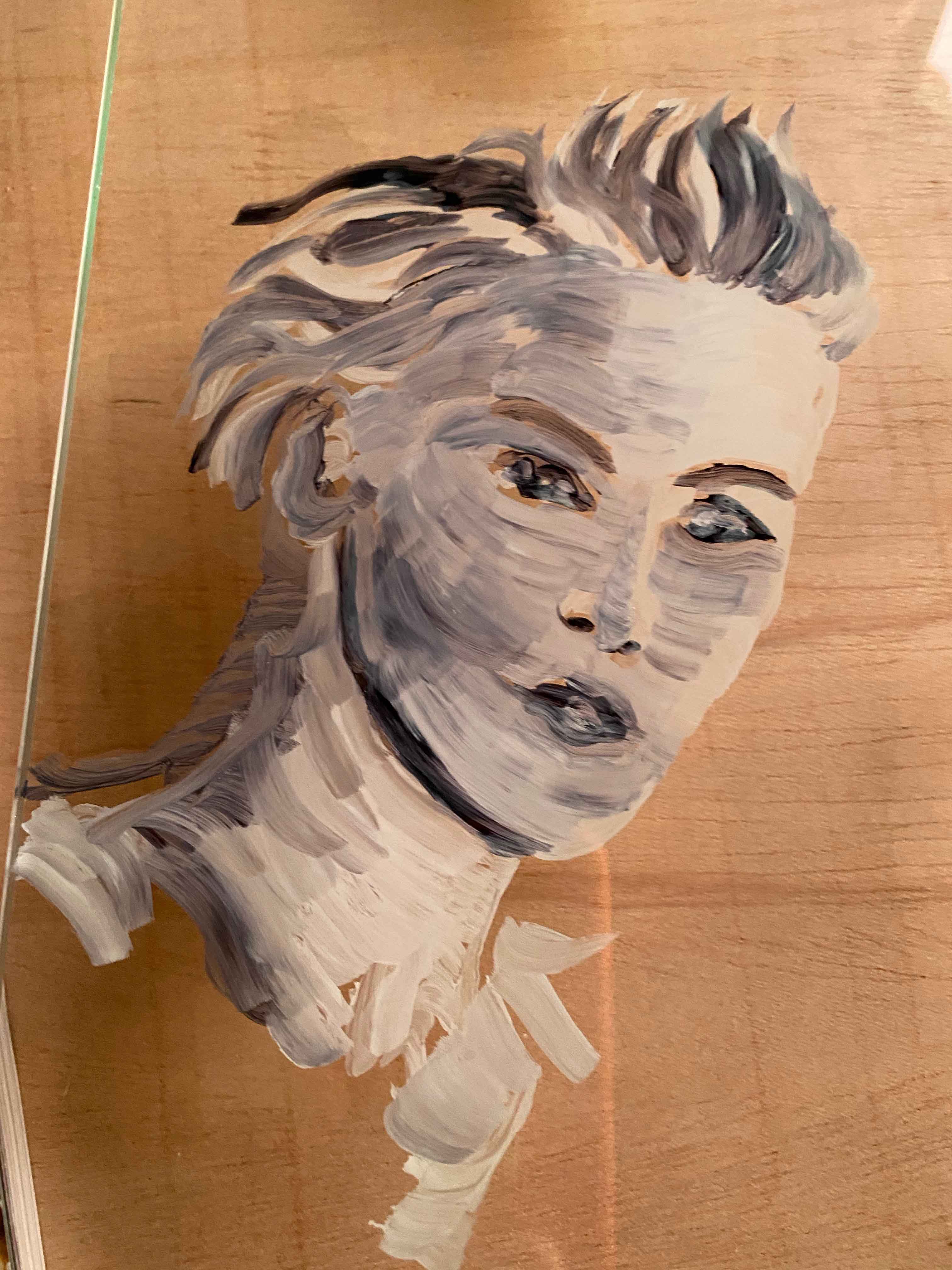
I ask my freediving friend Isa to send me some photos of herself under water to understand the facial expressions under water.
I start with some sketches using these facial expressions under water from the photos, but for different faces.
I am currently on Part 2.2 using sgraffitti, so I try out different compositions in this technique :
These are quick oil sketches in my A4 sketchbook:
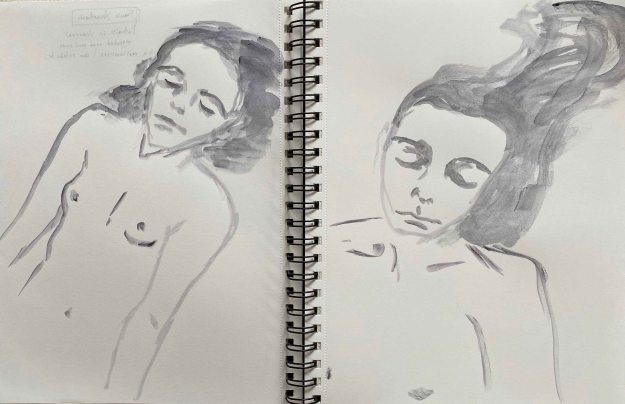
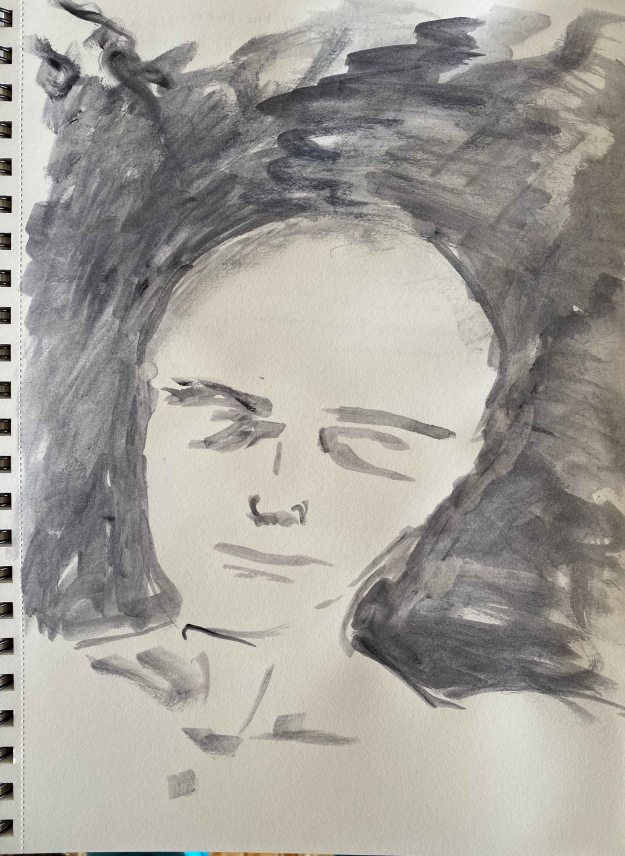
The glass all have different qualities. I choose a large but thin and clear glass, probably from a shelf for Isa’s delicate face floating under water.
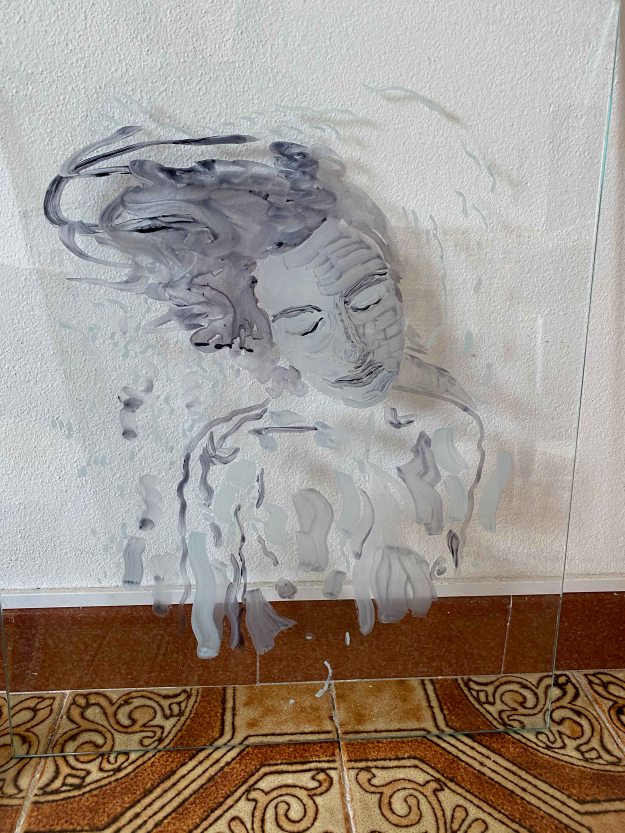
I carry the glass outside and photograph it in different locations. It is a symbolical walk that ends up leaning on the well and finally perched over the opening.
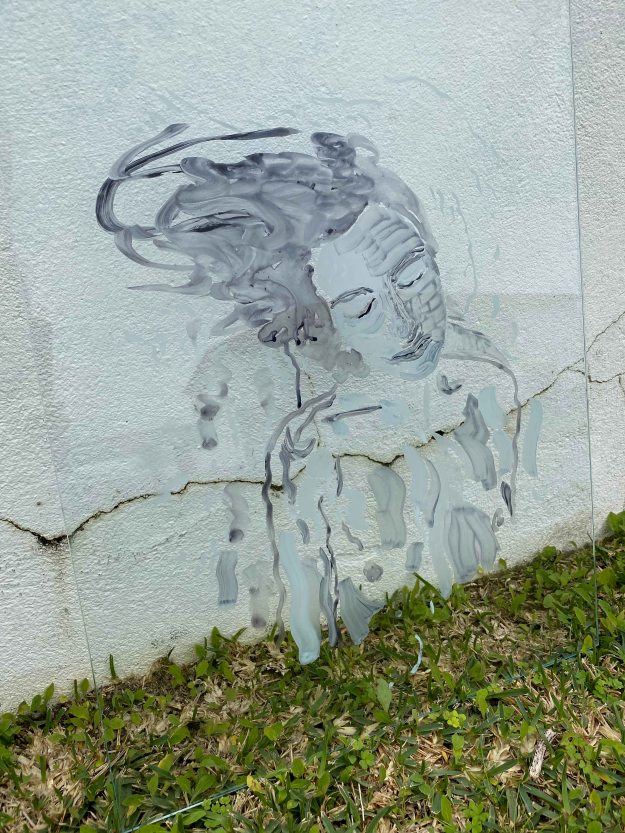
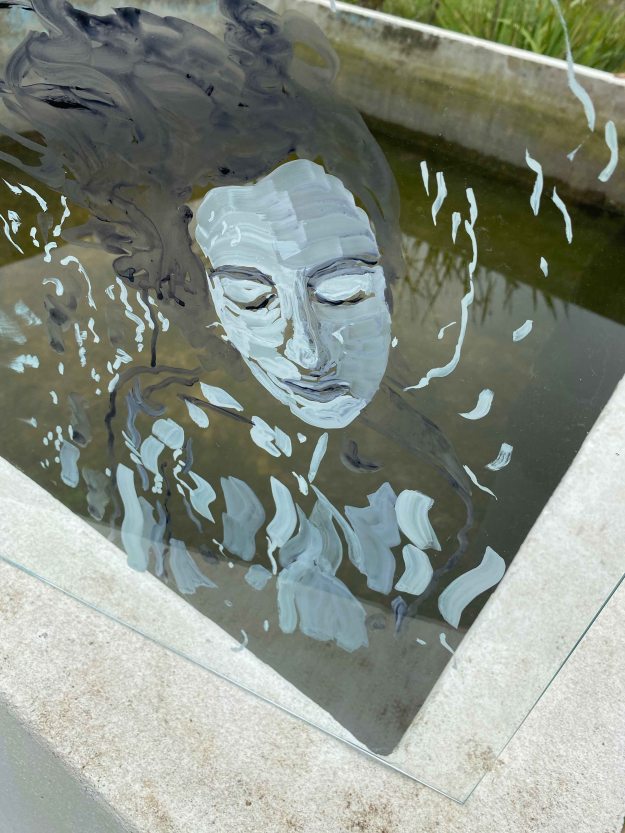
Where I dip it in water and let it wash away….
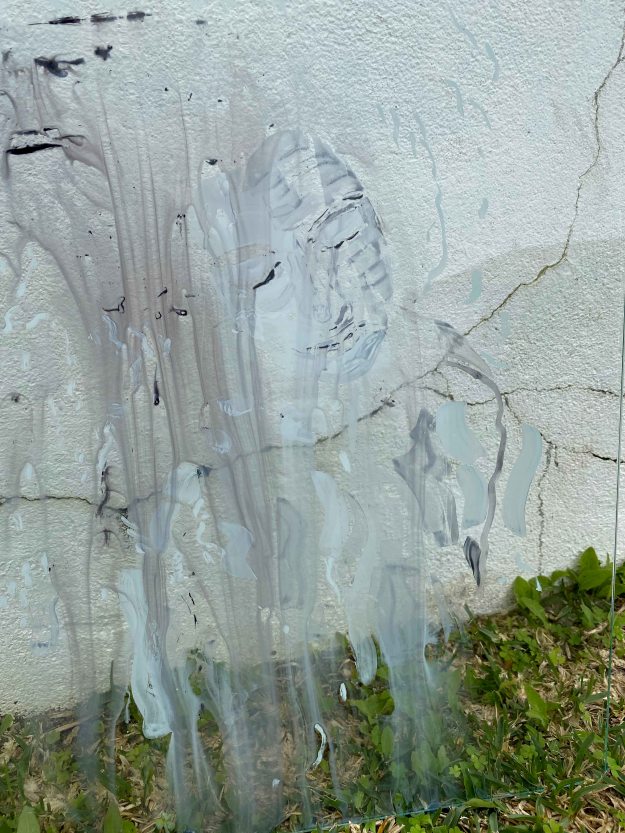
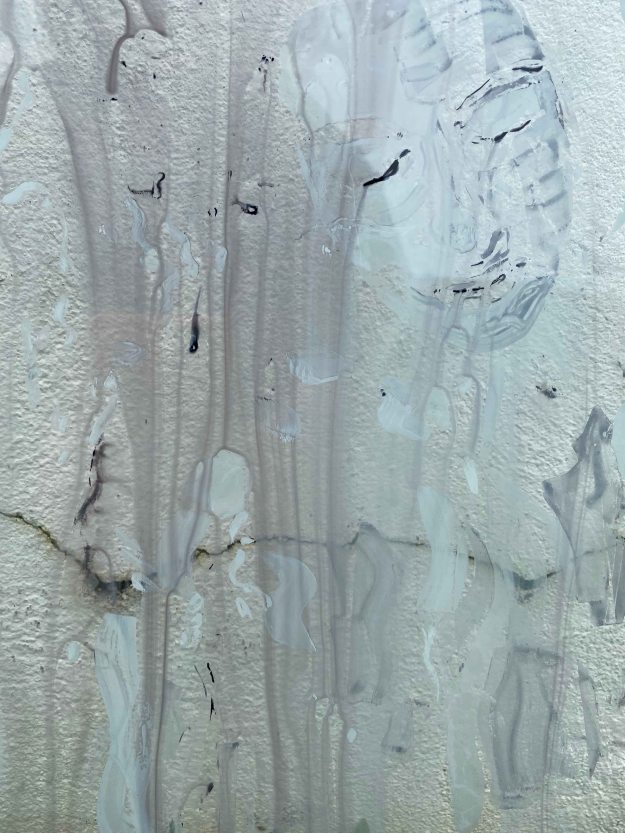
I am quite fascinated by the water soluble oil paints that have a thickness and viscosity that feels like traditional oil while painting, and then wash away like any water soluble paints. That said, the washed away face is too much, it does not leave anything to the imagination of a viewer.
Also, as for the image I painted, I realize that as so often, my very quick sketches in the sketchbook seem more true and have a softer ephemeral quality that I would like to keep. For a second trial on the glass, I choose to sketch lightly using only Payne’s Grey and a light outline.
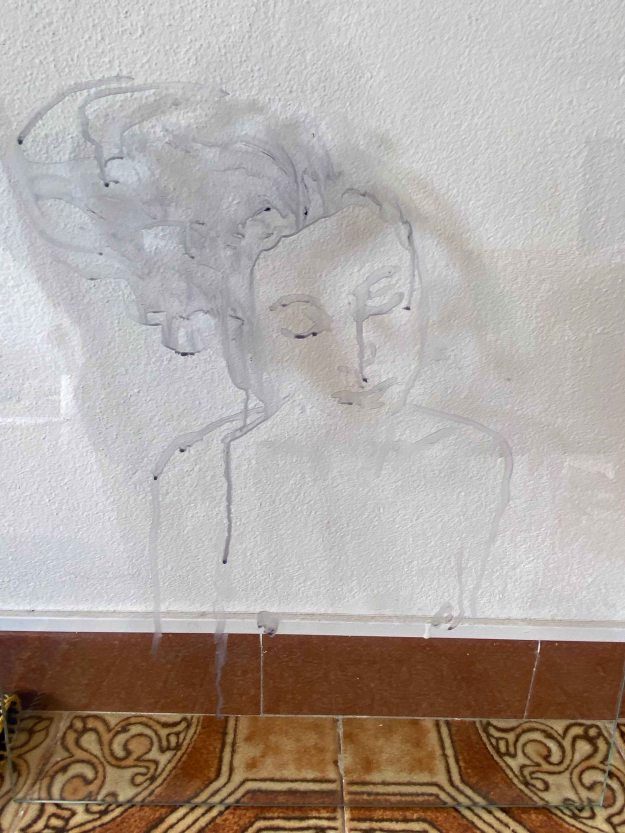
I am happy with the softness and delicacy of this painting- it catches the ephemeral quality I was after. I decide to not wash it away, but merely let a few drops show the contact with water. I continue by carrying the glass outside and taking photographs.
I particularly like this image where my house and the large tree in front are reflected in Isa’s face.
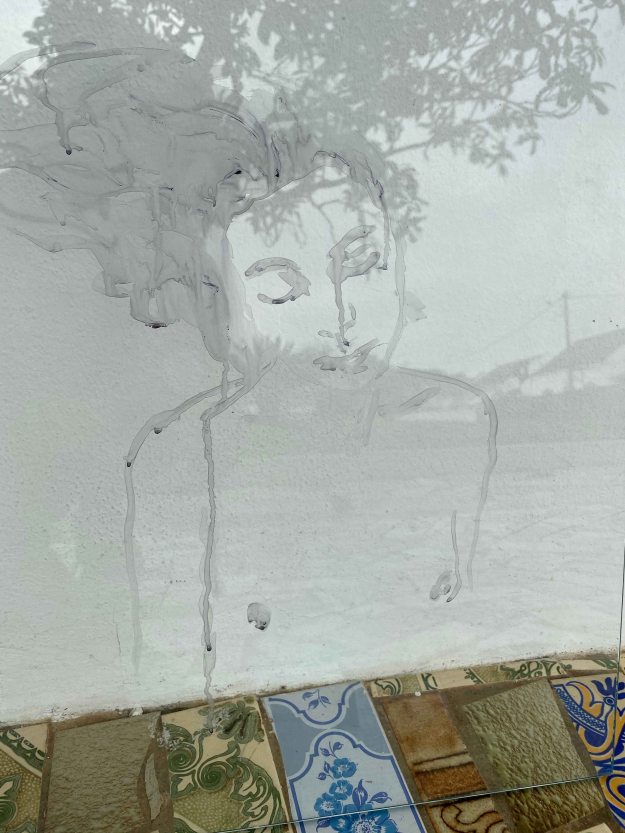
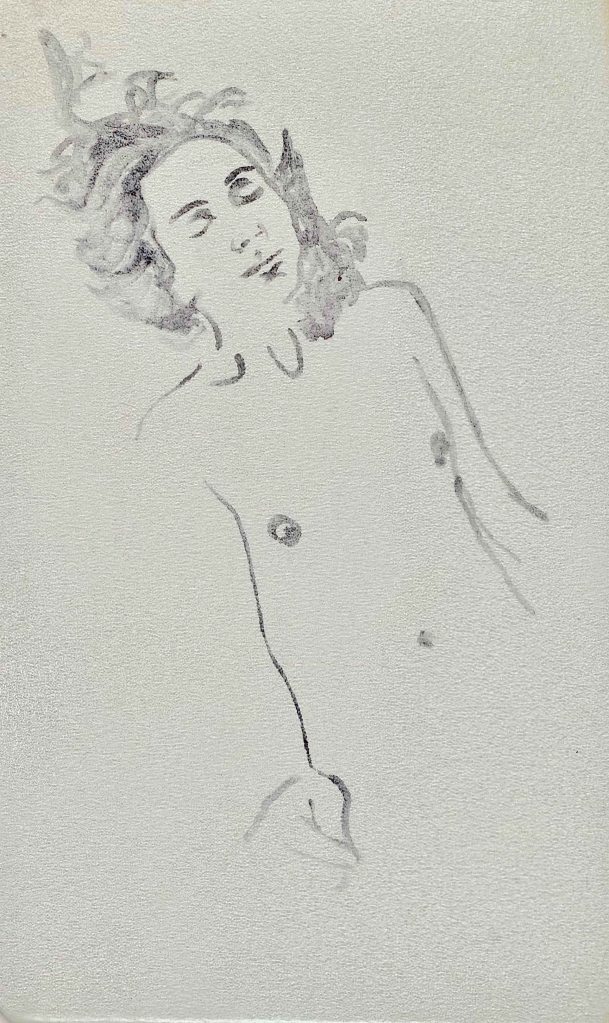
I decide to leave this glass for now, and choose a thick, frosted glass, probably from a refrigerator for a second image. I am using Isa’s facial expressions but want to feature a different person.
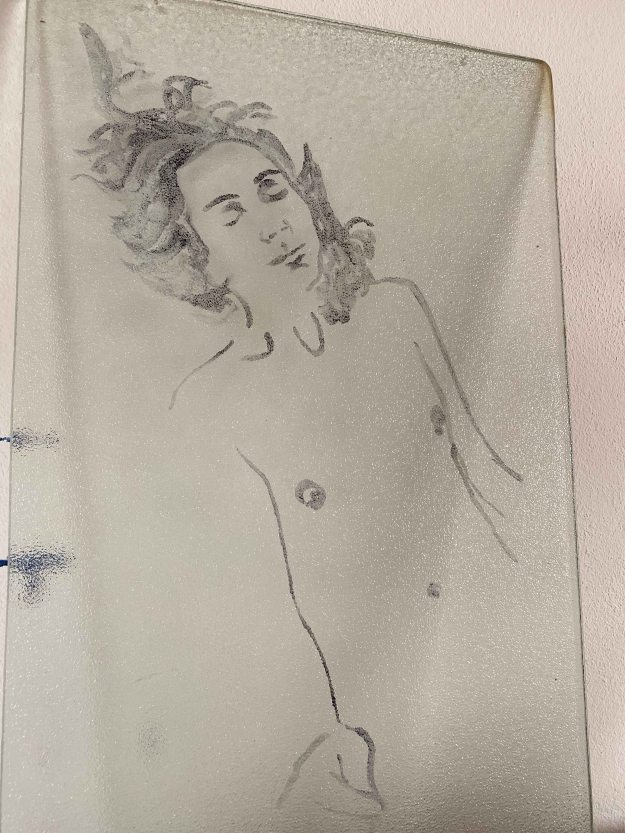
I like the posture and the expression here and decide to put it away and see what wants to happen with it later.
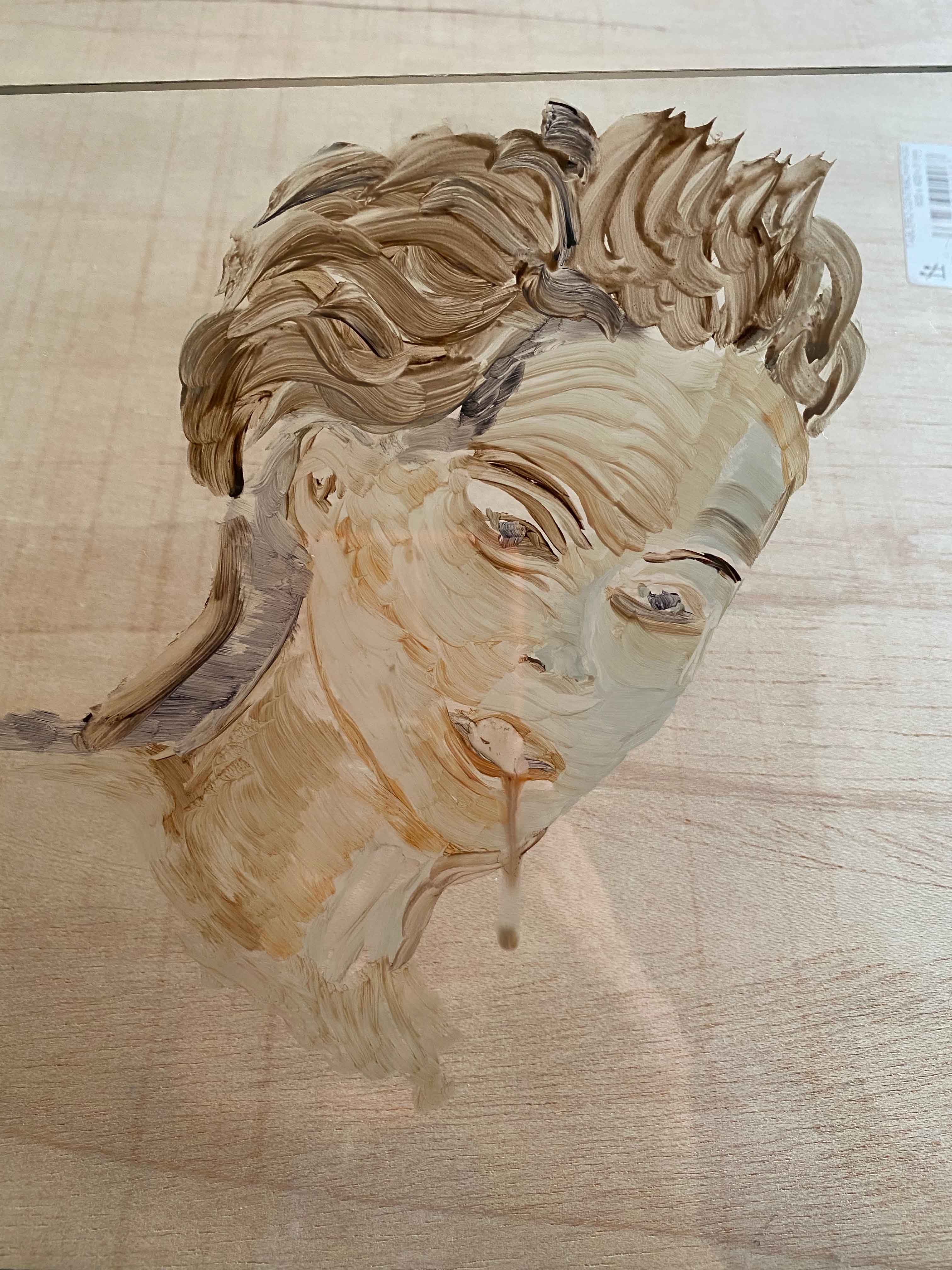
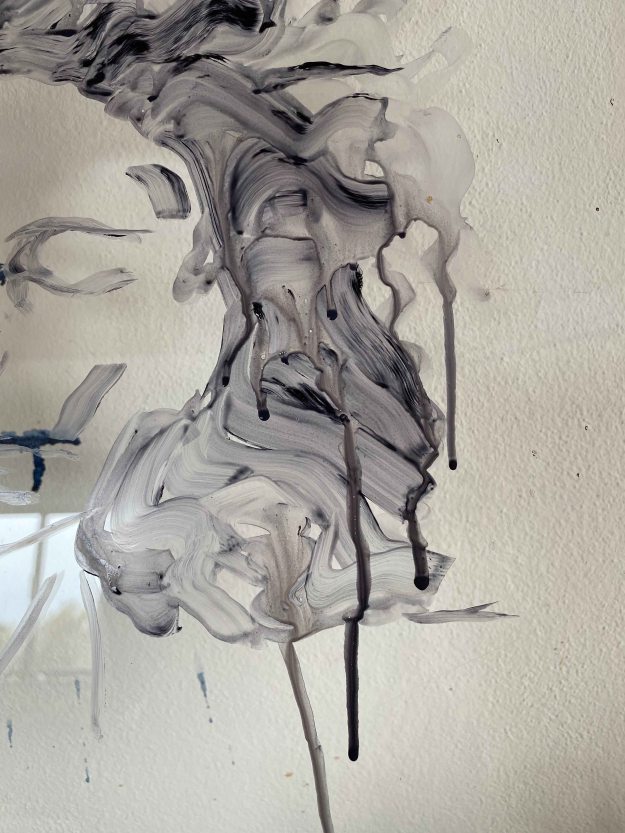
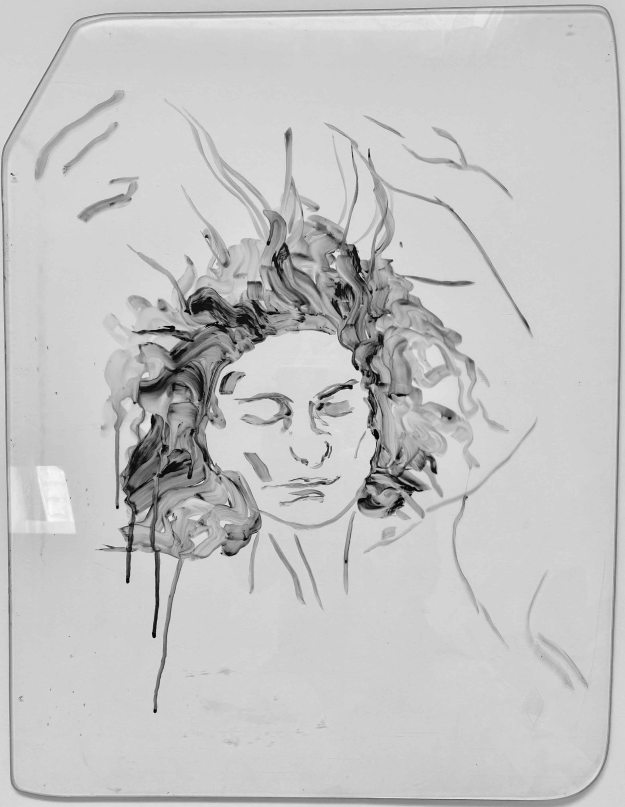
I pick yet another glass, a transparent thicker one and paint a face in a close up, with the arms floating up over the head hinted at.
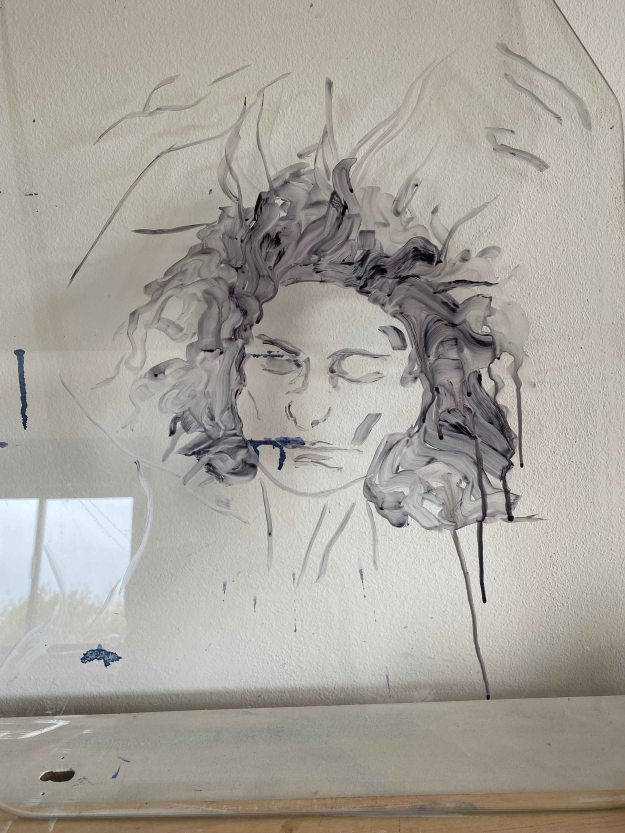
I like the details of the running paint in the hair while the face is clearer.
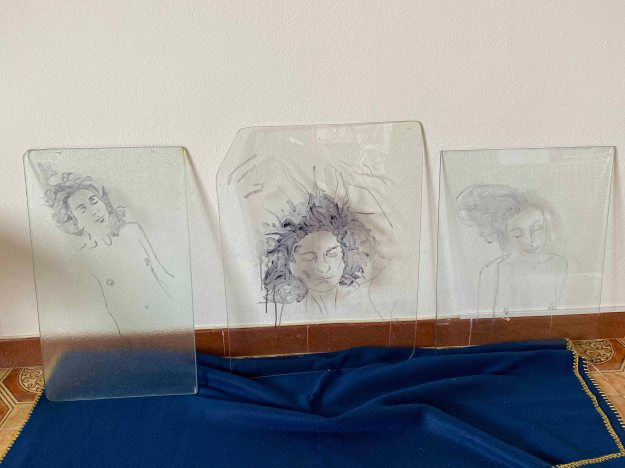
So I have three portraits under glass that I will set aside for the moment:
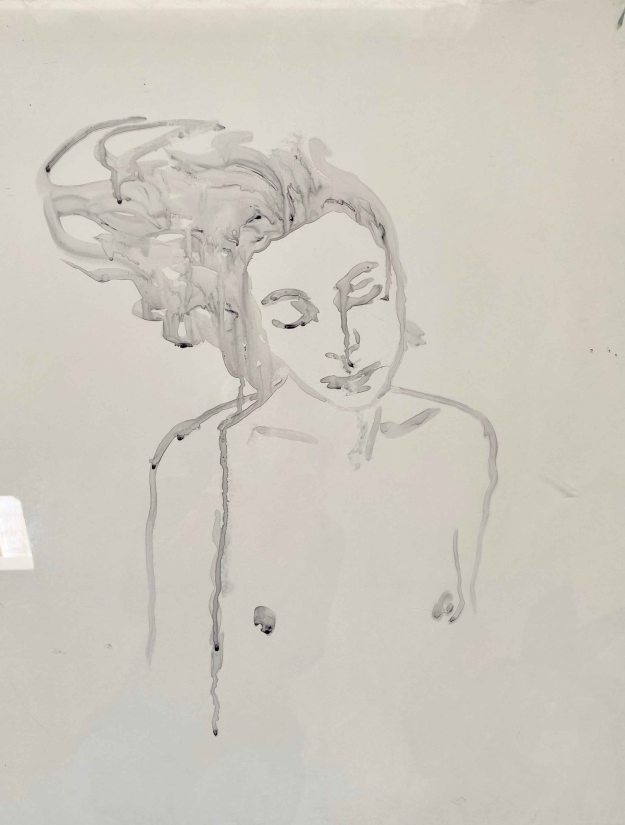
A light rain is starting to fall, and I have the idea to paint another face on glass and leave it out in the rain and see what happens.
I choose a piece that has a rusty border and a strange pink trace of spray paint. I decide to leave it as dirty as I found it.
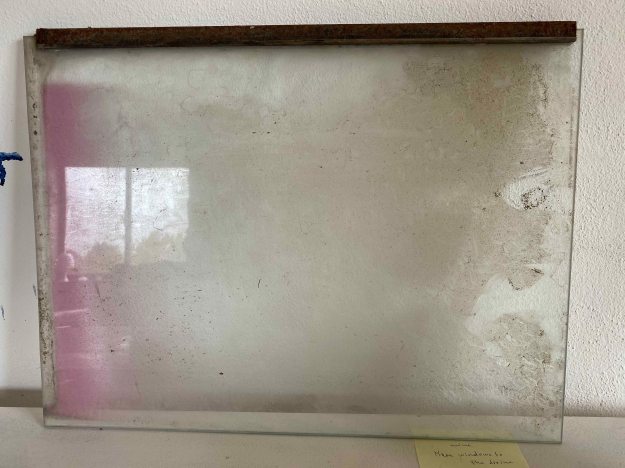
And this is the image that I leave out on the well in the light rain:
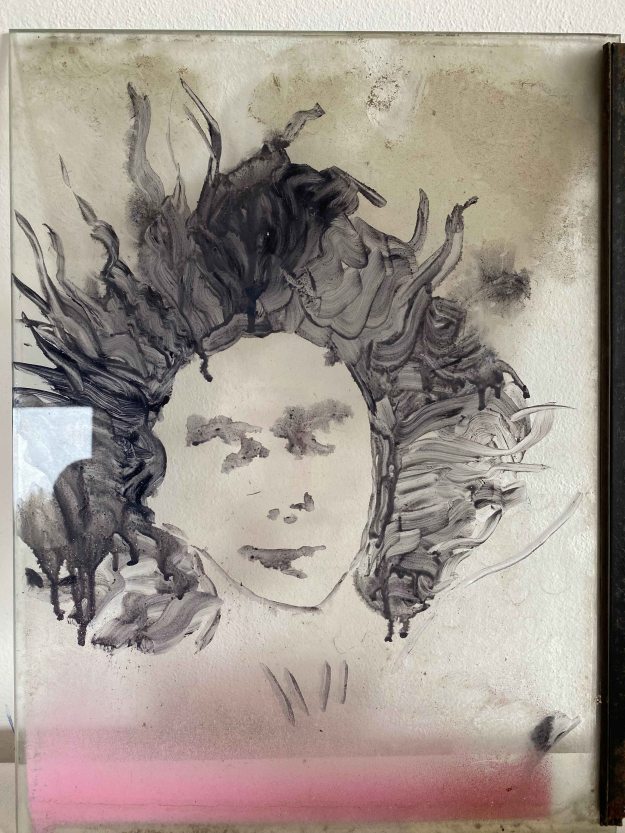
The next morning , I am surprised and disappointed that nothing much has happened to the image.
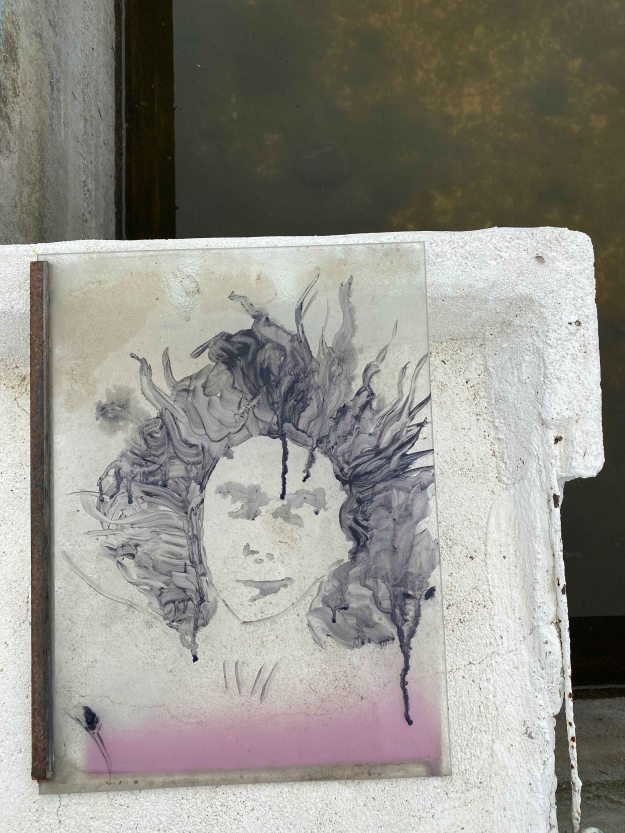
I continued sketching on this theme for the Project 2.2 Markmaking materials:
I am quite fascinated by the paintings of Genevieve Figgis, who allows the paint to flow and puddle. She has often used various metal plates as supports. I want to experiment with very liquid paint ( watersoluble oils? Oils and Liquin? Acrylics and water?) and let it have a life of its own on the slippery glass surface. For the narrative, I have looked at how Marc Chagall tells his stories in different planes of the canvas.
 Clara's Drawing 2