Author Archives: claranow

Tutor Report Part 3

For Part 3, I received a video tutorial with my tutor Emma Drye, followed by a written report. I was really grateful for the video tutorial, as after feeling quite cut off from everything during the quarantine,  this positive and encouraging video chat, really boosted my enthusiasm again.

I had had a lot of fun with Part 3 though, and felt really happy that the projects were light and fun and possible to do in family, like for example blind drawing. Emma Drye also commented on how the video that I submitted for Assignment 3 was a great example of studying with the OCA, combining making art with a role in the family. In the video of spontaneous and intuitive drawing to music, my family pass through and play an important role. My tutor pointed out, that there is a professional quality to the video whilst still feeling personal and the choice of music was exactly right.

We also discussed the Parallel project, which helped formulate it further: “Your other body of work is a slow deconstruction of your home and an exploration of the community narratives that connect it and you to your neighbors.”

We discussed narratives; who owns them and who are they for. We discussed our house as a nexus of narratives and how having moved into it suddenly for lock down have made us part of this narrative. We also discussed how far they might extend beyond the house, or whether neighbors might be invited in, as well as how the stories can be communicated.

We also discussed other artists that have worked around the concepts of place, home or belonging, which is tying in to the parallel project and a subject I am curious about for the Critical review as well:

Daniel Miller – the comfort of things (book), Hans Peter Feldman – archives, Jeremy Deller , Cornelia Parker, Andrew Cranston, Vija Celmins

I will write a separate post researching these artists in the research section of the Parallel project.

We also discussed  how painting as well as drawing can be a part of the work and looked at the paintings with figures and lampshades that I did as part of the Parallel project. Emma Drye encouraged me to slow down, to work in more preparatory steps that I then pin up around the easel. Working in oil, I will let the paint dry in between layers, which will help create a sense of space. In my paintings, there is a lot of blending. When creating more distinct layers, the surface of the painting creates a bridge to 3D, which brings dynamism to the process. If not, it has to be more clear, that the flat character is a conscious choice, like for example in the paintings of Paula Rego.

Emma Drye also asked how the many tiles and patterns in the house can find their way into the project, which is an aspect that had slipped away for me somewhat- so it was a good reminder. To be honest, the chocking overwhelm of the different pattern have already become so familiar after a few months in the house.

I really like the format of the video tutorial, which gives more space for discussion, and then a follow up with a written report which emphasizes the main points again, also containing a list of interesting and relevant artists to research. I feel ready to launch into Part 4, and to continue exploring the Parallel project.


ART BASEL Online Viewing Rooms

Due to the Covid 19 situation, Art Basel opened the access to all artworks online through their Online Viewing Rooms from June 19-26. As I have not seen any exhibitions in the flesh for a long time , due to this worldwide situation,  I am keen to browse the online version of this largest art fair in the world, taking place in Europe in Basel, in the USA in Miami and in Asia in Hong Kong.

There is an incredible amount of information and art works here. 282 galleries from 35 countries show over 4000 artworks! As this is a commercial event, it often shows the works with a pricetag, which puts them in an very different context than seeing the same works in an exhibition. They are also organized by gallery instead of by artist or theme, which brings another dynamic to the viewing, clearly placing the work in this commercial context-  a good reality check for a dreaming aspiring artist like me.

I started by watching an introductory video about the event (https://www.artbasel.com/ovr) and was already overwhelmed by the amount of highly successful contemporary artists mentioned that I did not know! This is a list of the artists highlighted that I want to take a more in-depth look at:

Carrie Mae Weems , Glenn Lighton, Deanna Lawson, Theaster Gates, Nicole Eisenmann, Monica Bonvincini, Jeffrey Gibson, Wade Guyton, Cecile B Evans.

Another category named the “Young Voices” highlighted promising emerging artists to look out for:

Issy Wood, Chen Tiangzhuo, Hanna Miletic, Jonathan Lyndon Chase, Paul Mpagi Sepuya, Rafa Esparza.

A search for these artists with the search engine of the website is not very successful though, several are not found at all, so I decide to leave this list for a general internet search afterwards. Instead I wander through the viewing rooms randomly, much like I would a real art fair and just look for something that catches my eye.

At first I am a little disappointed at the amount of Photography and sculpture or installation presented, in comparison to drawing and painting.

These two paintings by Liliane Tomasko presented by Kerlin Gallery are the first interesting works I encounter,  I am drawn into the layers of clear brushstrokes. These is something about these wide, visible brushstrokes that remind me of the work of Mimei Thompson, although Thompsons’ art is figurative with everyday subjects, like weeds from the backyard or a torn open trash bag. These paintings remain abstract, but I find myself following the forms and trying to make out something figurative that seems to just lurk under the surface.
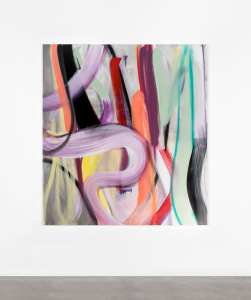
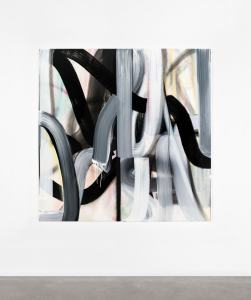
(Tomasko, L. 2020. Https://wwwartbaselcom/catalog/artwork/104940/Liliane-Tomasko-Hold-on-to-Yourself-5-18-2020. [Online]. [25 June 2020]. Available from: https://www.artbasel.com/catalog/artwork/104940/Liliane-Tomasko-Hold-on-to-Yourself-5-18-2020)

Next, I discovered the paintings of Miriam Kahn (Gallery Jocelyn Wolff) where crudely painted humane figures in translucent colours attract my attention. They are clumsy and caricaturist but exude a strange power with their shining limbs and the way they look straight into my eyes with their childishly drawn faces.
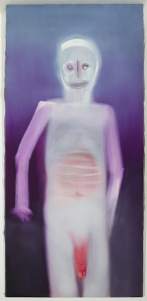
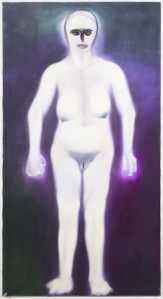
In the midst of the comical, I can feel this insecure uncomfortable humanness.

(Cahn, M. 2020. Artbaselcom/catalog/artwork/113703/Miriam-Cahn-au-travail-27-5-27-6-11. [Online]. [25 June 2020]. Available from: https://www.artbasel.com/catalog/artwork/113703/Miriam-Cahn-au-travail-27-5-27-6-11)

In this artwork by Mariela Scafati (Gallery Isla Flotanta) , I find the composition of small paintings put together really effective and an idea to remember.
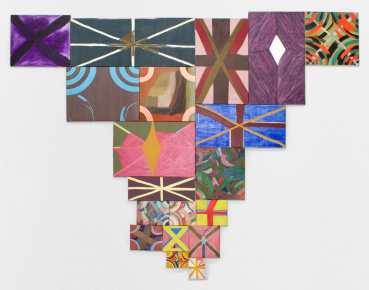
 

(Scafati, M. 2020. Artbaselcom/catalog/artwork/106369/Mariela-Scafati-Montaje-de-los-tiempos-posibles. [Online]. [25 June 2020]. Available from: https://www.artbasel.com/catalog/artwork/106369/Mariela-Scafati-Montaje-de-los-tiempos-posibles)

I am right now working on the art-specific piece for Assignment 4 in a corridor that is not possible to look at in one glimpse, so this could be one way to present images from the separate parts of the artwork.

I really like this painting in only white and blue by A.R Penck from 1976 (Michael Werner Gallery).
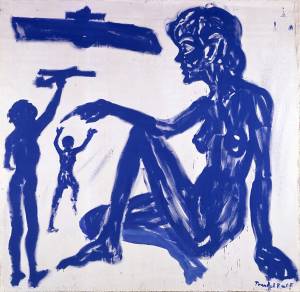
I want to remember how the different figures in different sizes cohabit in flatness- without a sense of perspective.

(Penck, A.R. 2020. Artbaselcom/catalog/artwork/107230/A-R-Penck-Traudel. [Online]. [25 June 2020]. Available from: https://www.artbasel.com/catalog/artwork/107230/A-R-Penck-Traudel)

Looking at Pencks’ work quickly connects me to more viewing rooms with recognized modern masters and I am amazed at the amount of small works on paper on sale in the million dollar range. I try to navigate away from Matisse and Picasso towards more contemporary painting.

The works of Wu Chen (Magician Space Gallery) are somewhere between fairytale and grotesque, like this painting of a fat Christmas man posing nude on the bed in some red and fleshcoloured  boudoir with a mirror over him. The name “Portrait of the Male Female Male” figure also alludes to the classic female nude you would expect in a similar setting.
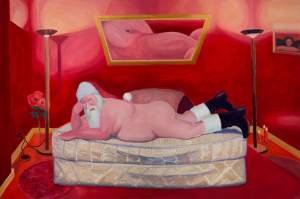
The reflection in the mirror looks more like a female body and the whole feels really strange.

(Chen, W. 2020. Artbaselcom/catalog/artwork/107368/Wu-Chen-Portrait-About-the-Male-Female-Male-Figure. [Online]. [26 June 2020]. Available from: https://www.artbasel.com/catalog/artwork/107368/Wu-Chen-Portrait-About-the-Male-Female-Male-Figure)

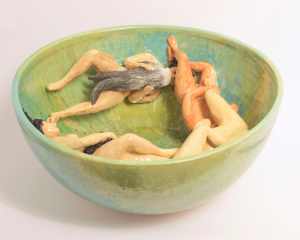
I stopped to take a look at the ceramic bowls by Urara Tsuchiya (Union Pacific Gallery).
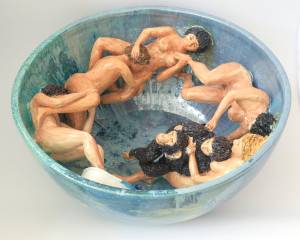
These bowls are full of little nude figures, and some animals intertwined in some unclear postures, opening up some strange narrative. I see that I am always drawn to story and these tell a strange story in a slightly uneasy way while at the same time posing as a colourful decorative item.

(Tsuchiya, H. 2020. Artbaselcom/catalog/artwork/107778/Urara-Tsuchiya-Henry. [Online]. [26 June 2020]. Available from: https://www.artbasel.com/catalog/artwork/107778/Urara-Tsuchiya-Henry)

I found these small works on paper by Cameron Clayborn (Simone Subal Gallery) really attractive in their simplicity.
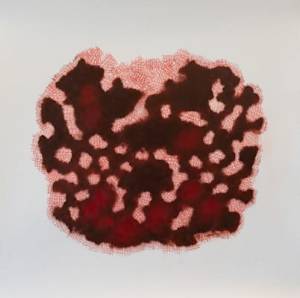
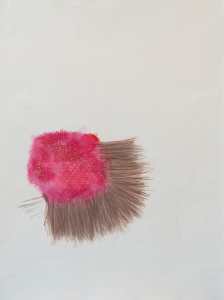
The one on the left is called “a puddle with promise” which I find so fitting.

(Clayborn, C. 2020. Artbaselcom/catalog/artwork/109738/Cameron-Clayborn-a-puddle-with-promise. [Online]. [26 June 2020]. Available from: https://www.artbasel.com/catalog/artwork/109738/Cameron-Clayborn-a-puddle-with-promise)

The same artist presents several inflatable sculptures, like this pillow like one, which also sparks my imagination with its cow like pattern- I can start spinning a lot of ideas from here.
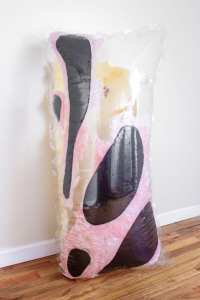
(Clayborn, C. 2020. Artbaselcom/catalog/artwork/111841/Cameron-Clayborn-inflatable-5. [Online]. [26 June 2020]. Available from: https://www.artbasel.com/catalog/artwork/111841/Cameron-Clayborn-inflatable-5)

The Galerie Guido W. Baudach shows several painters that I found worth looking into.

Tamina Amadyar’s clean, abstract painting felt so soothing after the overload of narrative .
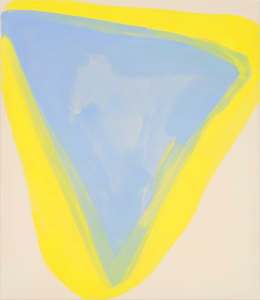
(Amadyar, T. 2020. Artbaselcom/catalog/artwork/104303/Tamina-Amadyar-overlook. [Online]. [26 June 2020]. Available from: https://www.artbasel.com/catalog/artwork/104303/Tamina-Amadyar-overlook)

This painting by Yves Sherer looks abstract at a first glimpse, then it looks like a patterned piece of cloth stamped into the ground, scratched and abandoned.
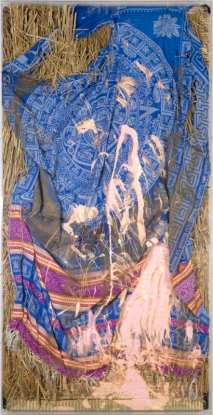
The title “Sirens (Teotihuacan)” can maybe speak about mermaids or maybe about the wailing signal of sirens, and then the name of an Aztec civilization that has disappeared. There seem to be as many layers of meaning here that there is of paint. The pattern on the cloth looks a little like a map, but the whole then scratched and torn.

(Sherer, Y. 2020. Artbaselcom/catalog/artwork/104009/Yves-Scherer-Sirens-Teotihuacan. [Online]. [26 June 2020]. Available from: https://www.artbasel.com/catalog/artwork/104009/Yves-Scherer-Sirens-Teotihuacan)

This painting by Andy Hope from 1930 finds its way my heart with the shriveled figure with twisted eyes and a little unlucky shape.
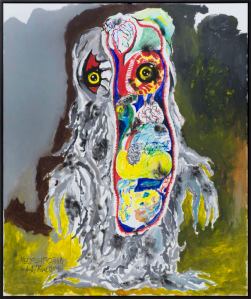
(Hope, A. 2020. Artbaselcom/catalog/artwork/103915/Andy-Hope-1930-HEEDRAHTROPHIA-8. [Online]. [26 June 2020]. Available from: https://www.artbasel.com/catalog/artwork/103915/Andy-Hope-1930-HEEDRAHTROPHIA-8)

Meiro Koizumi’s works  (Annett Gelink Gallery) are called “works on paper” and I am not sure if they are drawings or overworked photographs.
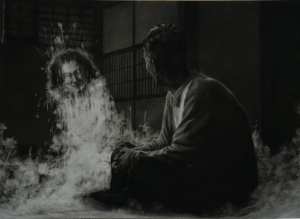
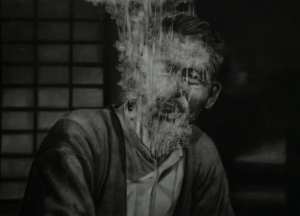
I am drawn in by the fog covering the figures faces creating a sense of mystery- I want to know more. An internet search shows that this Japanese artist is mainly working in video, exploring the domain between public and private. It is true that these scenes look like stills from movies.

(Koizumi, M. 2020. Artbaselcom/catalog/artwork/108829/Meiro-Koizumi-Fog-12. [Online]. [26 June 2020]. Available from: https://www.artbasel.com/catalog/artwork/108829/Meiro-Koizumi-Fog-12)

Here I found a painting that I really like by Kudzanai Chiurai (Goodman Gallery)- a black figure almost not standing out from the black background and a foreground with different types of texts. The posture, the dull colours, the sharp contrast between light and dark, the combination of figure and text- I really appreciate this painting.
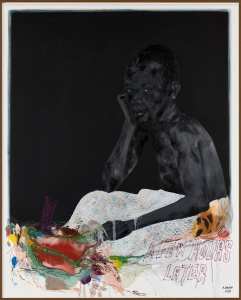
(Chiurai, K. 2020. Artbaselcom/catalog/artwork/103051/Kudzanai-Chiurai-A-few-hours-later. [Online]. [26 June 2020]. Available from: https://www.artbasel.com/catalog/artwork/103051/Kudzanai-Chiurai-A-few-hours-later)

Gallery ChertLuedde presented a long series called “20 th Century alienation” of photographs by David Horvitz showing the same masked person with gloves holding different white sheets of paper with words .
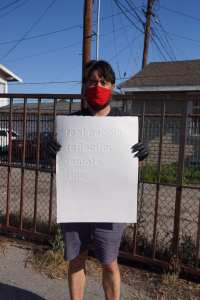
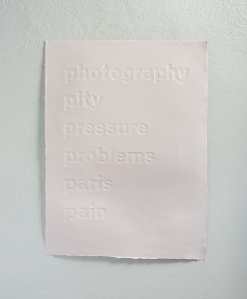
I am not so attracted to the visual here, but I really like the idea and can see more words emerging in my own work.

(Horvitz, D. 2020. Artbaselcom/catalog/artwork/113146/David-Horvitz-20th-Century-Alienation. [Online]. [26 June 2020]. Available from: https://www.artbasel.com/catalog/artwork/113146/David-Horvitz-20th-Century-Alienation)

By now, the Viewing Rooms have already closed, so I turn to an online search of the artists highlighted by the organizers, picking out the ones working with drawing or painting, which is what interests me most.

Carrie Mae Weems (Photography and film)

Deanna Lawson (Photography)

Theaster Gates (Installation, Performance, Dance, Sculpture)

Nicole Eisenmann is the first painter included on the list. She paints the figure because she knows the world through her body, and understands her desires and anxieties through her body, and also the desires and anxieties of our culture.
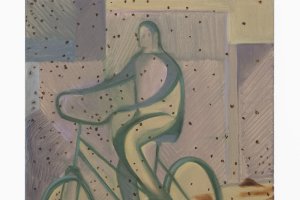
This painting from 2020 is called “Shitstorm”, which is a very evocative title.

The figures look like from caricatures and are often limp or lying, many charged with sexual motives , and many others with words. I like the artists titles, like “Incelesbian” or “Ridykelous”.

I find this painting below interesting because of the unusual cropping.
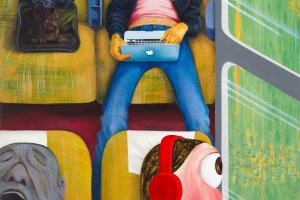
Kern, A. 2020. Anton Kern Gallery. [Online]. [27 June 2020]. Available from: https://www.antonkerngallery.com/artists/nicole_eisenman

Nicole Eisenmann has also created several large scale sculptures. As a whole, this caricature style does not capture me, although I enjoy the artists irony and playfulness.

Monica Bonvincini (Sculpture and performance)

Jeffrey Gibson is the second painter of the list, even if he also works in sculpture and performance. He merges history and ritual from several different traditions to describe the world we live in today, and especially uses the aestetics of Native American cultures.He uses a lot of pattern and text in his paintings.

I was immediately drawn to his painted punching bags. They are multicoloured, multi patterened creations hanging in the room, often also containing a message in text, like here “One becomes the other” and “I put a spell on you”
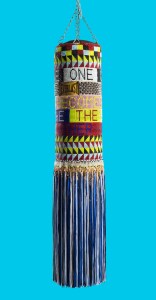
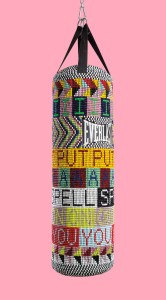
(Sam. 2020. Seattle Art Museum. [Online]. [27 June 2020]. Available from: http://gibson.site.seattleartmuseum.org/)

With these he is fighting using words and ideas rather than fists and guns, he wants to spark the conversation to be more inclusive.

I really like painting on objects myself and found this combination of idea, object, painting and text brilliant.

Wade Guyton is mainly making digital paintings on canvas using scanners and digital inkjet that are then worth millions of dollars. So he is combining the traditional support of painting with new technology. On MoMA’s website, his art is being describes as “post-conceptual”.
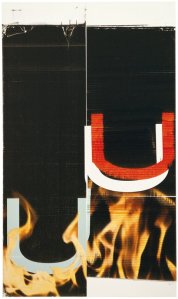
 

(Image from: Dzewior, Y. 2020. Museum Ludwig. [Online]. [1 July 2020]. Available from: https://www.museum-ludwig.de/en/exhibitions/archive/2020/wade-guyton.html)

The letters X, U and flames are recurring themes, and in the later works- large black and white surfaces.

Again, this is not a style of painting I would like to explore myself.  Although I am aware of the impact and possibilities of digital technology, I am actually drawn to the exact opposite- the non-technological, tactile, physical qualities of paint and also the conceptual- how to express an idea through paint.

Cecile B. Evans (video, installation, sculpture and performance)

It was interesting to then jump to Cecile B Evans work which is exploring how we value emotion in contemporary society, and precisely how digital technology has impacted that.

There is an excellent interview with Evans on the Luisiana Channel : https://channel.louisiana.dk/video/cecile-b-evans-virtual-real

Although video is not my chosen media, I found a lot of the artists ideas around how technology influences us and how it regulates our emotions, very relevant and exciting.

I am moving on to the artists described as “Young Voices”

Issy Wood is both a writer and a figurative painter.
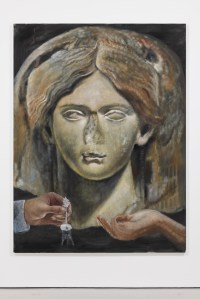
(Images from:   Ishikawa, C. 2020. Carlos Ishikawa. [Online]. [1 July 2020]. Available from: http://www.carlosishikawa.com/artists/issywood/)

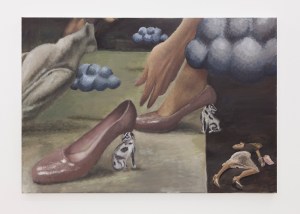
Her paintings are surreal and dark, with obscure narratives that leaves me with an uneasy feeling. I can understand a certain fascination that these paintings have. Looking at exhibition views, I find it interesting how Wood alternates large paintings with really small ones.

Chen Tiangzhuo (performance video work and installations, music)

Hana Miletic (Textiles)

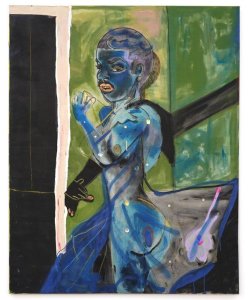
Jonathan Lyndon Chase is a painter focusing mainly on queer. black bodies.
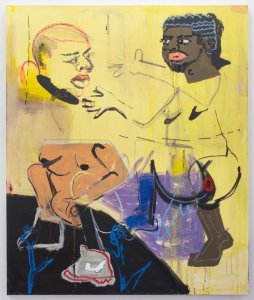
I am quite fascinated by the boldness of these flatly painted, unfinished, unproportional figures. In the painting on the left, I find the unfinished bits and how fragmented the figures become really interesting. In the painting on the left, I am interested in the colour and movement of the figure.

Paul Mpagi Sepuya (Photographer)

Rafa Esparza (Performance and installations using bricks) Rafa Esparza also uses the adobe as supports for his paintings. His work centers around the theme of brown and queer.

As a whole, I am not convinced researching the Art Basel Viewing Rooms and the artists mentioned there was the best approach for an interesting online art visit. I spent a lot of time navigating between rooms and feeling quite overwhelmed with the amount of art, without really seeing much that I felt really touched by. I also had a feeling that I missed many things that would have been really interesting, but I did not chance upon them. Of course this would have been another experience in the flesh and probably incredibly inspiring. For my online art visits, I need to be more focused and clear about what I am looking for and looking at to really appreciate it.


6. Parallel project- transformation and chairs

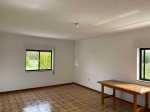
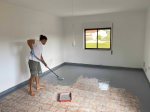
Our latest interventions with paint pots and brushes has brought a sense of transformation to some parts of the house. We are slowly taming the wild patterns and pipes and colour explosions.

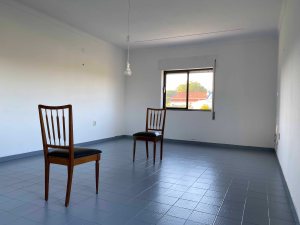
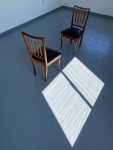
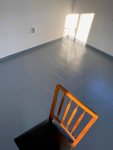
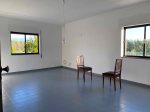
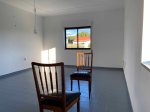
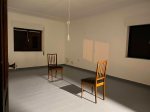
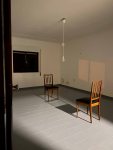
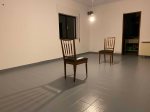
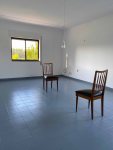
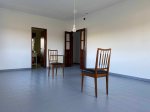
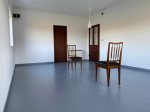
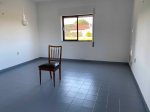
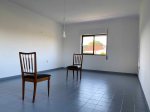
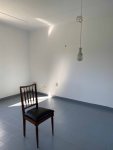
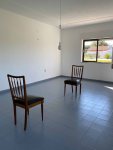
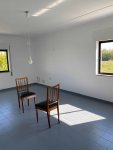
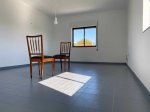
We are joking that we have moved from a Pedro Almodovar movie to one by Lars Norén. Two left over chairs appear in the room, and the cold white/grey surroundings with a single lightbulb hanging transform the scene into an interrogation room.

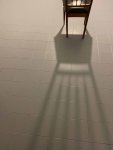
I am walking past this weird random scene in different lights of the day, and start documenting the different atmospheres.

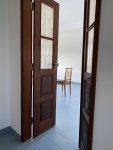
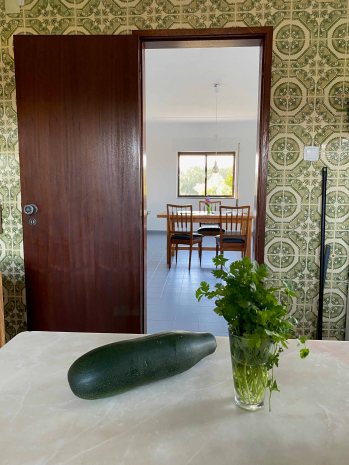
Stepping out from the kitchen into this new reality really highlights the contrast:

Take the walk with me:


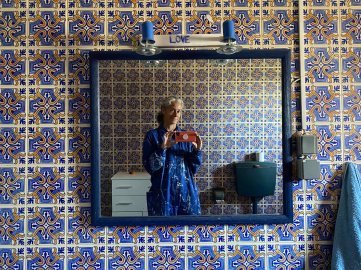
I am still savoring the trip of going to our wild bathroom for a little longer- before our Scandinavian sparsity will creep in here too.

6. Parallel project – Wallpaper and Covid 19 music

Drawing on music for Assignment 3 opened up a desire for more spontaneous and intuitive drawing that I continue exploring here. After drawing on left over shower-curtains, I discover a new interesting support in the wallpaper that I pull down from the ceiling of the living room.

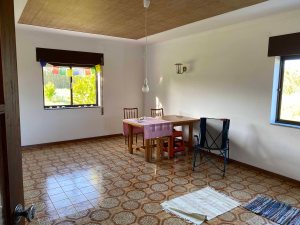
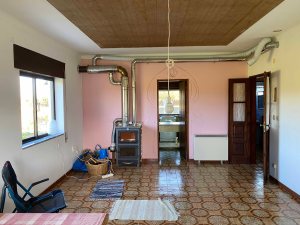
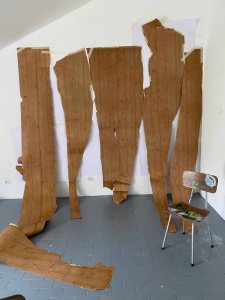
Our living room has fake wooden wallpaper on the ceiling and one pink wall behind an industrial set up of pipes, pared with our sparse, last minute quarantine thrown in furniture, besides the ever present wild tiles of course.

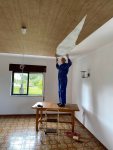
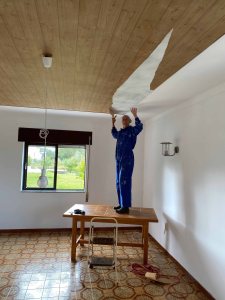
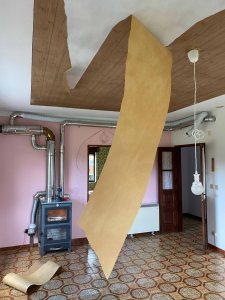
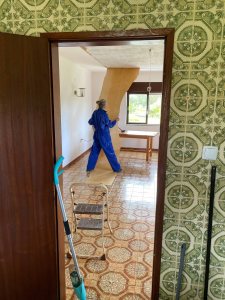
It is a relief to start steaming and pulling down the fake ceiling.

While doing so, I am thinking of all the stories these walls and ceilings have heard, of all the laughter and tears during the many years in this house. When I realize that I can pull off rather large chunks of the paper at a time, I see how this can become an interesting support for drawings:

It is the lockdown of the Covid 19 that brought us here so quickly and intertwined our history with the ones of the house.  Tom Woodfin, my dear friend who is sharing this time here with us has made me aware of the composer Marcus J Buehler who has translated the DNA structure of the virus into music:

Viral Counterpoint of the Coronavirus Spike Protein (2019-nCoV) by Markus J. Buehler on #SoundCloud

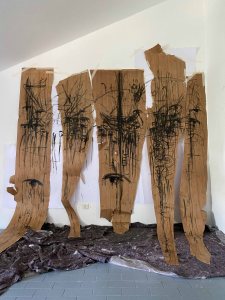
This piece is roughly one hour long. I will use the old wallpaper as a support for intuitive drawing while listening the the music from the Covid 19 virus structure. In this way, I connect the many stories absorbed from the house, with the beginning of our story here.

I tape the stripes of the wallpaper to the wall of my studio:

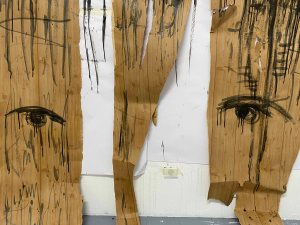
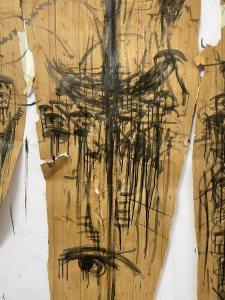
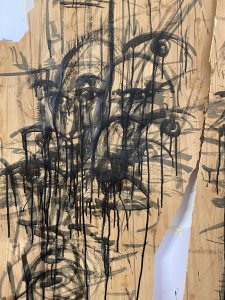
I find they look like ancient scrolls and decide to use only Indian ink for my marks, curious to see what spontaneous new story will emerge.

After one hour of loosing myself in the lulling sounds of the virus, combined with a breathwork mix by Tom Woodfin based on the above musical piece above this is what emerged:

As well as connecting our own presence to the house, I was curious to really feel into and listen to this musical interpretation of the virus. It is something so difficult to grasp on a conscious level, and I was hoping to find this way of feeling into what is happening.

What came out of this listening, was a feeling of overwhelm and tiredness. There was no feeling of threat or danger, I saw more a cry for help. There were many tears cried by many eyes and more water than that, some boats and many drops.

This was a fascinating way of exploring how I felt about the Covid 19 virus, which on a conscious level brings up more questions than answers. At the same time, it was an interesting way of connecting our story to this support that has soaked up so many stories told in this house.

Music:

And Tom Woodfin Mixcloud breathwork sessions:


4.3 Installation: The Nest

Course manual: “Aim: Many artists use installative drawings and what these artists are doing positions the viewer or audience member in a totally different way to someone viewing a work on the wall contained within a frame. Using the link below, look at the work curated for On Line, an exhibition of contemporary drawing held in Edinburgh in 2010. Look particularly at the section entitled ‘line extension’ which discusses the work of Robert Rauschenberg, Cy Twombly, Ellsworth Kelly, Karel Malich, Edward Krasinski and Pierrette Bloch: http://www.moma.org/interactives/exhibitions/2010/online/”

“Method: Make a drawing that relates to its environment in a way that creates an interesting dynamic between the artwork and the space around it. Think about ways that drawings could take part in a kind of dialogue with the space they inhabit. Text might be one way, or a drawn object in partnership with its real world equivalent.”
In this chapter, I have really enjoyed exploring the Landart work of Richard Long and Andy Goldsworthy, using materiasl directly from the land around them to create their stunning pieces. I have also felt very moved by the work of Ana Mendieta, that I was less familiar with before. I am especially fascinated by the way she fuses the use of the elements surrounding her and her own body.

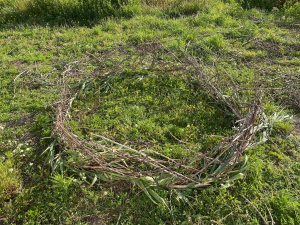
For this project, I want to make a Landart installation, using branches and sticks from the land I live on. My idea is to create a giant nest. A nest for me is a symbol of a place to land in, a place that feels safe, that feels like a home.
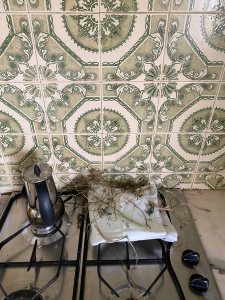
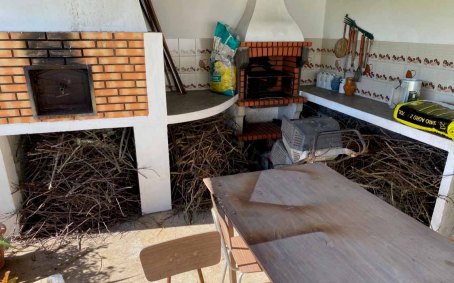
We are currently “nesting” in this big, quirky house after very many years of a nomad lifestyle, so the subject of “creating a nest”, a home, is very present.  We also have a small problem with swallows nesting in our chimney and leaving us the offering of some branches on the stove every single morning:

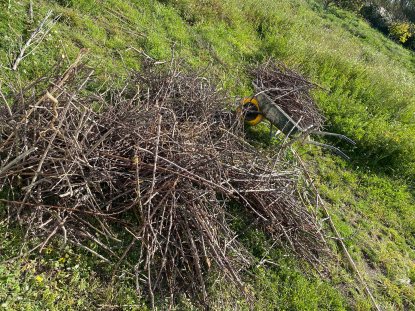
After pruning a lot of old and dry trees, we also have a good supply of prime nest material:

My idea is to create a giant nest, big enough for two persons to sit and converse, drink a cup of tea or meditate in.

This is a site specific installation because it will be a literal nest , on the land where we are nesting, created through branches from the trees growing here. It is deeply connected to this specific place. My intervention will bring a new sense of ordering to elements that were here already.

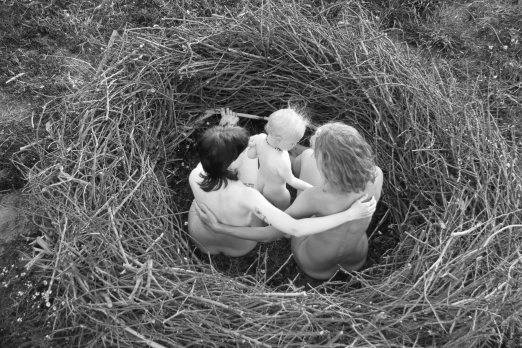
I then plan to create a series of photographs of me and my daughter and granddaughter in the nest, and so connect to the idea of lineage and connection, of creation. This is inspired by the work of Ana Mendieta who often uses her own naked body in a fusion with the natural elements.

Hopefully, I will be able to build a nest that is then possible to move though, so that it could theoretically be placed in a new and different environment, for example a gallery, in a busy city, where a spectator could sit down quietly and feel transported to a calm and safe nest.

Richard Long, who uses circles a lot in his work, speaks about the primal perfection of a circle and the primal feel of standing within one. I hope I can achieve a beautiful, safe circle to spend time in.

THE MAKING:

I choose to build the nest right in front of the house, so that we will be able to take the planned photos from the second floor windows.

I am hoping that the nest will be solid enough to be possible to transport to a more discreet spot in the garden later (and theoretically to a gallery :))

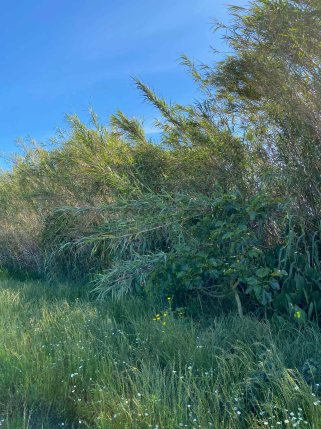
I need to build some sort of light frame to weave the branches onto, and have spotted some canes that have already fallen and are crushing a small fig tree:

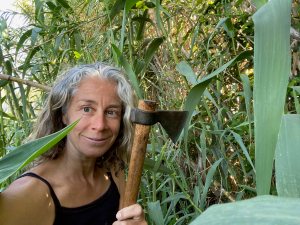
Who knew that my years in the Philippine jungle handling a machete and building mud houses would come in so handy in a Drawing course:)

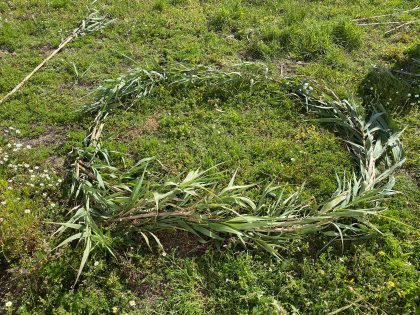
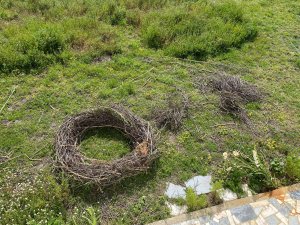
I start by creating a frame with the bendable parts of the canes:

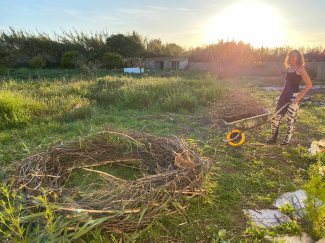
I carry loads and loads of wheelbarrows with sticks from our storage in the outside kitchen to the nesting site. (Trying not to think of how much effort it just took us to store them there before I had this idea to tear them out again.)

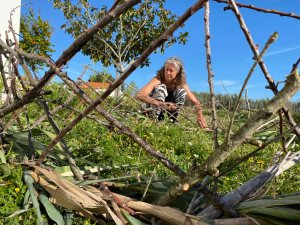
I choose the longest branches, to weave into the cane frame creating loops that I can then fill with smaller branches:

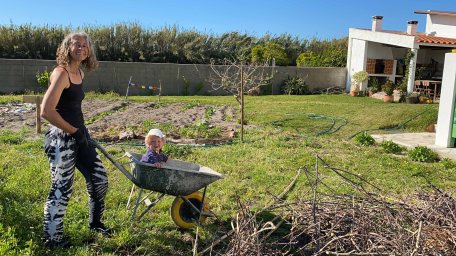
Of course my little helper is present, and enjoys the rides back to the shed.

I spend many hours “fleshing out” the frame by weaving sticks and thickening the structure:

This is how the nest looks when the sun sets on Day 1:

When I see it from the second floor the next morning, I feel real joy. I feel like I am making a statement that reconnects me to this specific place, with my scratched hands touching the earth and the branches from the trees grown here, and at the same time there is something so universal, in this need to create a nest, to order the messy branches into a circle that feels safe.

It takes the whole of day 2 to finish building up the bulk of the nest by weaving smaller branches into the longer ones and twinning them so that they would create a stable body.

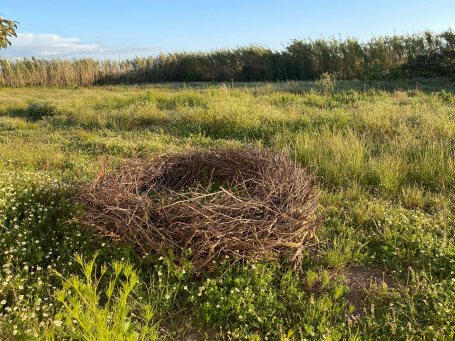
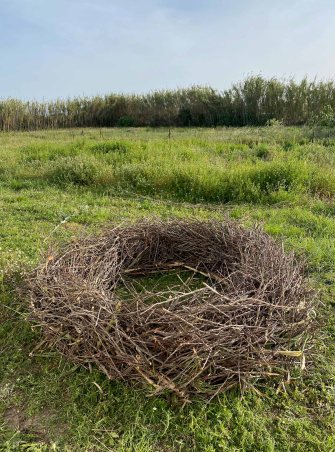
This is the finished nest:

THE PHOTOGRAPHS:

The nest is ready for our photo session.

My partner Andre and our best friend Tom are ready with cameras in the second floor window.

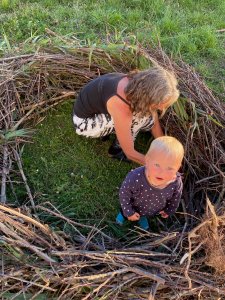
Inspired by the work of Ana Mendieta who uses her own naked body and the idea of that body merging with nature as a symbol of rebirth, or regeneration, we will use the bodies of our three generations of women here- we will sit in the nest with my daughter and granddaughter, naked on the earth that has welcomed us, in a ritual of landing safely. It also becomes a ritual of my daughter getting ready to leave the nest- it is time.

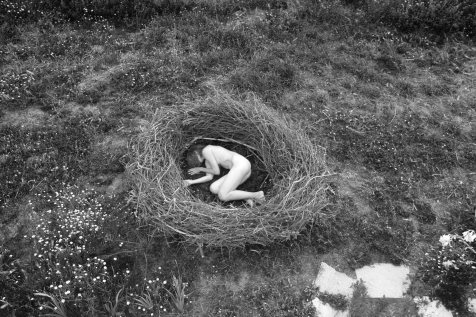
We are also creating a series of photos of me lying down on the ground, which feels even more like a vulnerable merging with the earth, and with this specific place.

My parallel project is about exploring the history and my own connection to this house and documenting its transformation. This Installation connects to that same quest.

It would be possible to move this nest into a very different environment, where it’s strength could be in the stark contrast between the materials used here and the surroundings- for example a cool concrete floor and shiny white walls. I can imagine a series of photographs on the walls, while the visitor can be invited to sit down in the nest and reflect upon how it feels.

I would argue that this installation is a drawing, as it has been patiently created by intertwined lines in space. It is a drawing using “poor materials” and deeply connected to the environment, constructed with elements of the same environment.

Duarte Vitoria at Espaço Exhibitionista, Lisbon

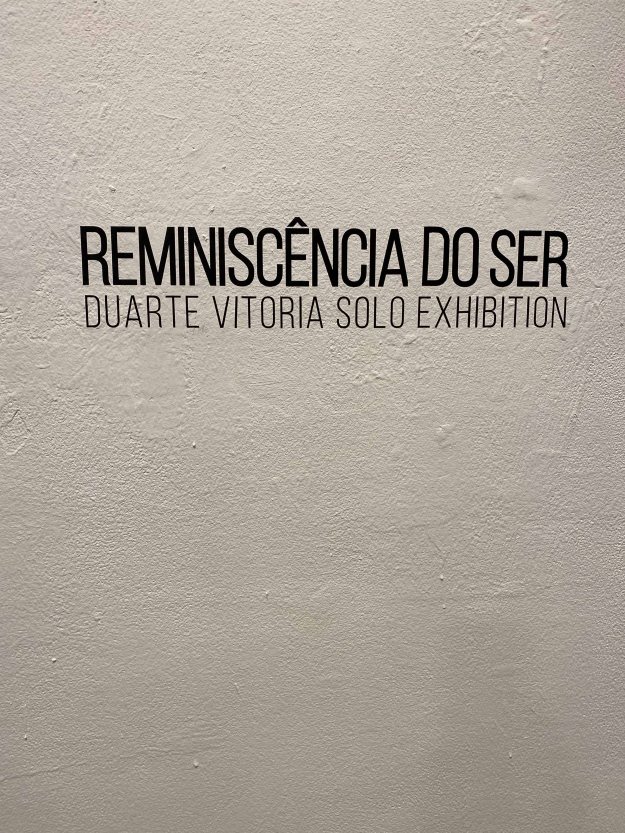
After what feels like a very long lockdown due to Covid 19, I am back in Lisbon and am visiting a fist exhibition again: Duarte Vitoria at the Espaço Exhibitionista Gallery.

This is one of my favorite Lisbon galleries, showing a new exhibition of contemporary Portuguese artists every month.

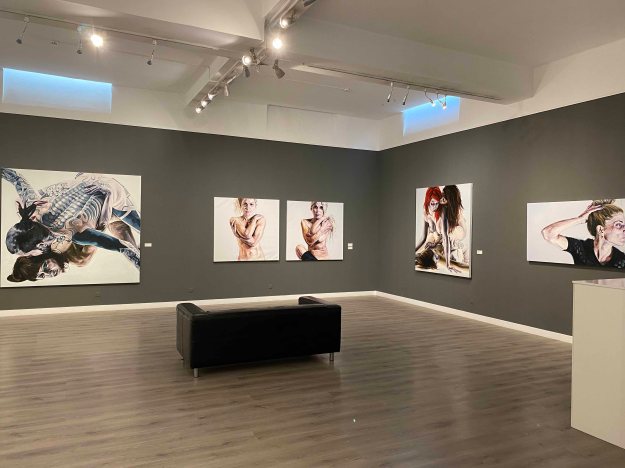
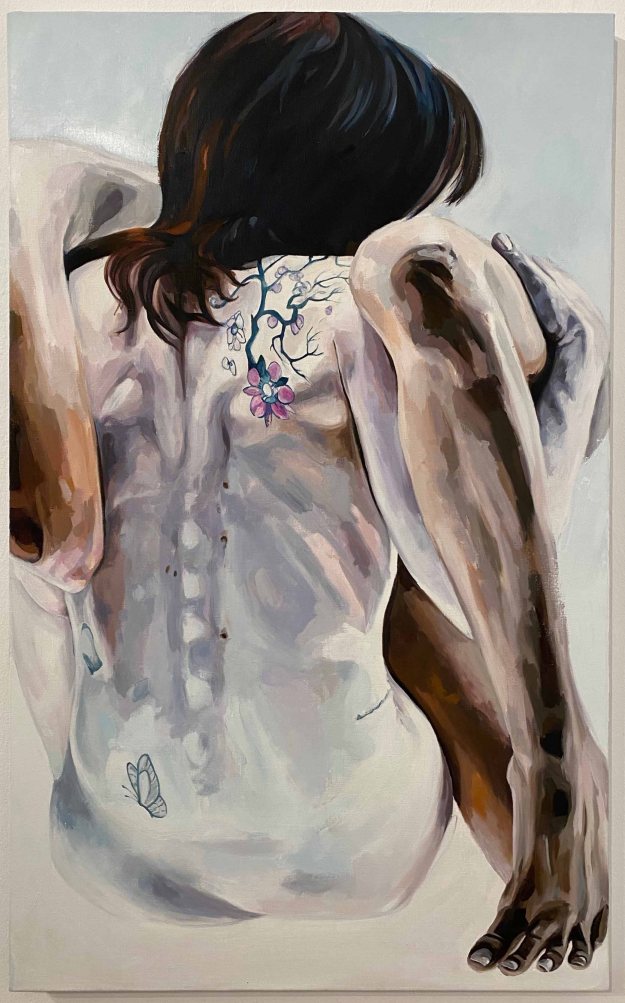
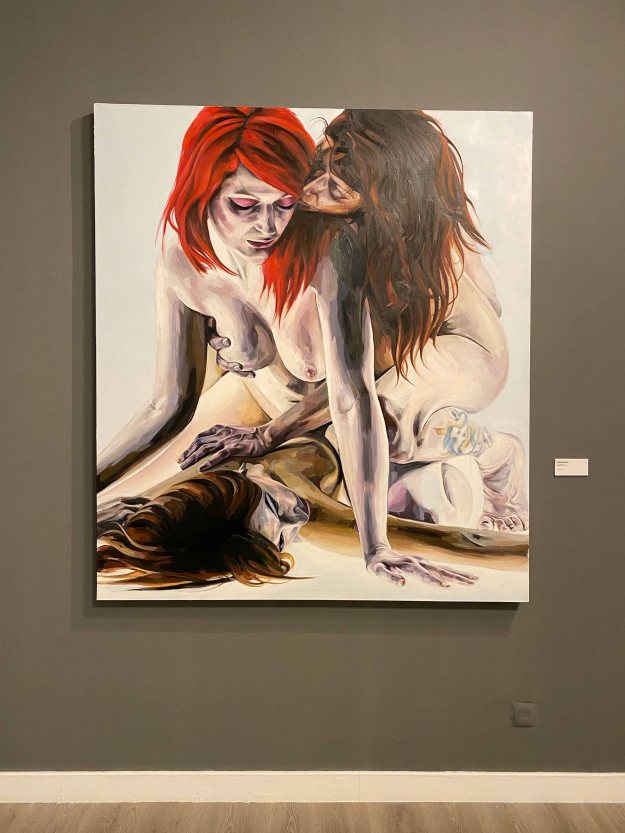
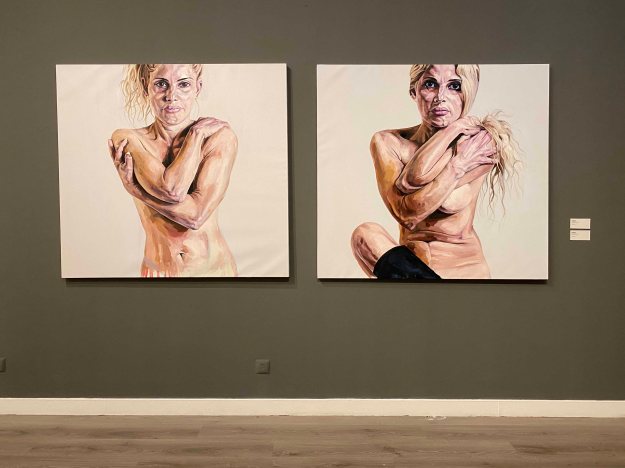
In this exhibition, Duarte Vitoria presents drawings and paintings of female figures. They are unsettling, distorted, foreshortened.

In some of the paintings, the skeleton seems to protrude beneath the skin. In others, the figures are contorted and seem in agony.

Some seem to have a sexual note, but it is unclear what is happening.

In the exhibition catalogue, well known Portuguese writer Valter Hugo Mae describes the work as ” a study on the extremes in physicality. They approach the near abnormality of gesture, searching as the demanding choreographer, for the unforeseen or at least perceptible movement in our daily reading”.

I find that as unclear as the feelings I have when seeing these paintings.

There is definitely a feeling of anguish and some irritation.

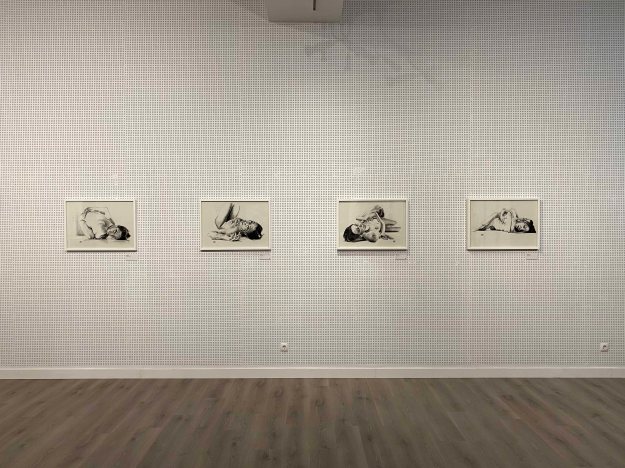
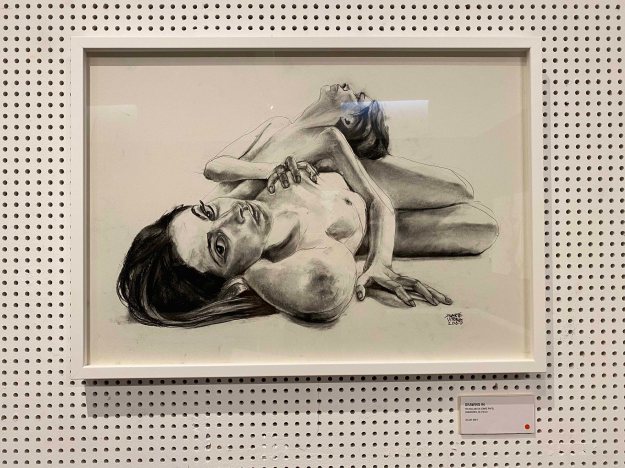
A series of drawings in charcoal are the works that I prefer, and I am told they are drawn with live models, starting as blind drawings, with the artist not looking at the paper.

I can see anguish and pain and the direct eye contact with the viewer has something of a call for help.

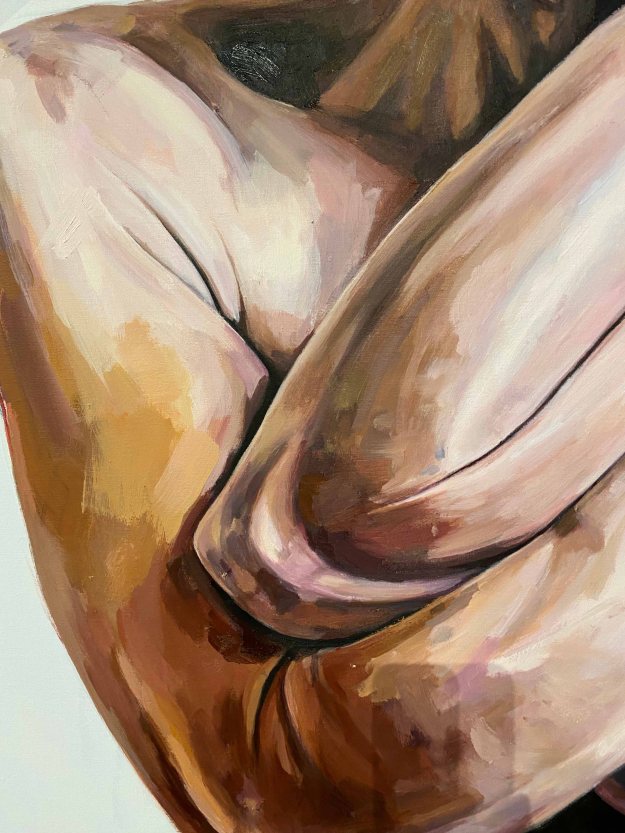
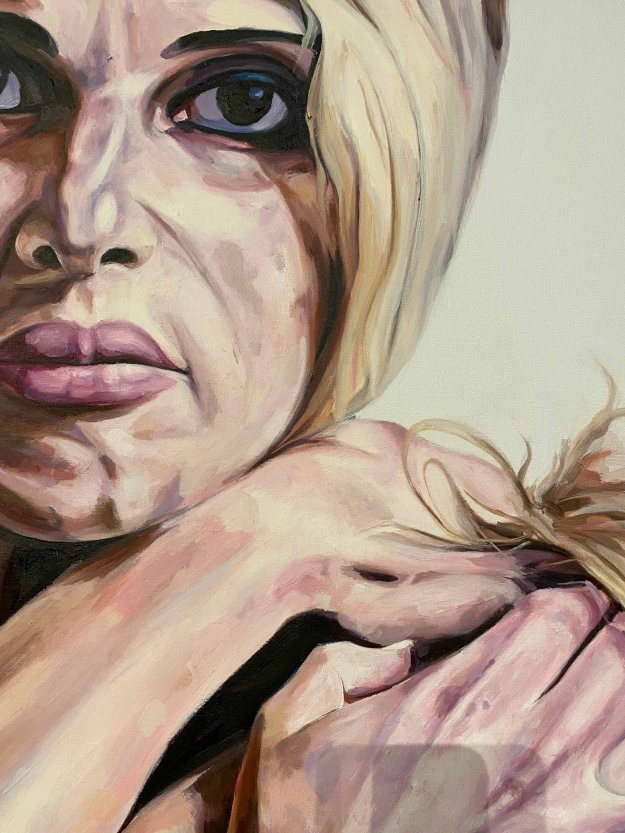
I was puzzling if these two half figure portraits are of the same woman in different roles, with almost the same expression. The titles “Squeeze” and “Memorie” do not give any clue. The way of applying paint is rough, with large patches of colours:

The skin tones are picking up the tone of the background so that the figures seem flatter and paler, again staring straight to the viewer, but here with a more defiant look, almost arrogant.

There is an unease in the poses that is very clearly transferred to me, the viewer. I feel like an uninvited onlooker in some intimate, intriguing and anguishing setting.

Parallel project- Painting to music on shower curtains

I have just completed Part 3, which ended with painting to music- a process I absolutely loved.  A link to the blogpost about Assignment 3:https://clarasdrawing2.design.blog/2020/05/02/assignment-3/(opens in a new tab).

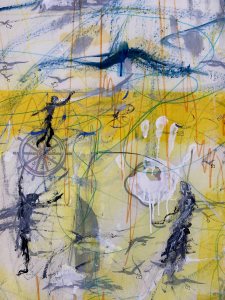
Among the many treasures of old left over items in the house that I am using for this parallel project, were two shower – curtains left hanging. I decide to approach the same process of painting to music using these two very different large curtains as supports.

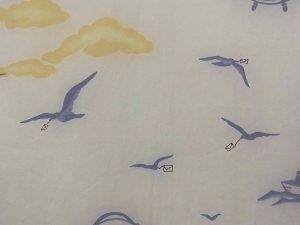
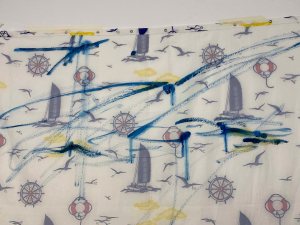
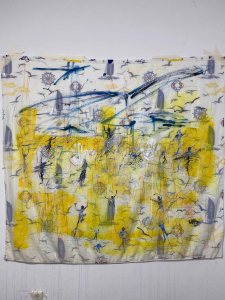
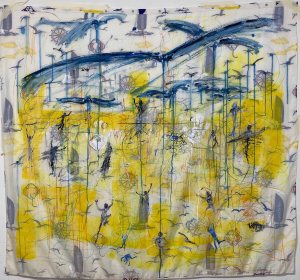
I start with a curtain with a plastic feel and a maritime theme with sailboats and seagulls:


I choose Portuguese music- Fado- with lyrics about the sea and longing. Fado is traditional Portuguese music and it is full of feeling and tears and sad lovestories, that I can very well imagine associated to this village close to the sea. The Portuguese word “Saudade” meaning “Longing” has a special place both in the language and in this type of music.

I was imagining starting by just closing my eyes and moving to the music, but I immediately got drawn to let the seagulls carry loveletters and started adding a letter to every bird.

I could feel tears building up and let some large sad movements with blue acrylics follow the birds and drops (tears) flow.

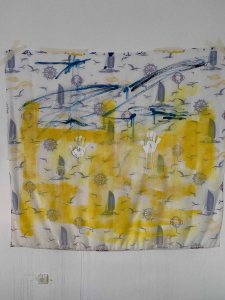
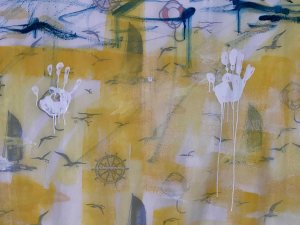
I felt the drama building up and grabbed a large brush with burning yellow, followed by white using my whole palms.

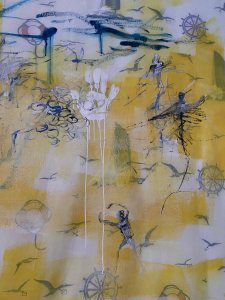
As the story became denser- figures started appearing, calling out, clinging, longing, running, reaching.

Different tones had different coloured marks, and I let the layers build up.

This is the final painting on the shower curtain:

This painting is again more a story about process than a final, finished piece, like I experienced with Assignment 3 as well.  I felt that starting from a patterned cloth, rather than a blank page conditioned the story too strongly. I was already caught between the lyrics of the music and the motive of the existing curtain, which directed my imagination strongly.

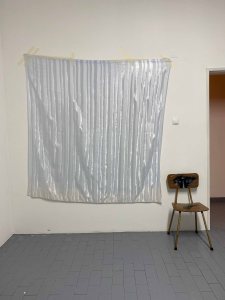
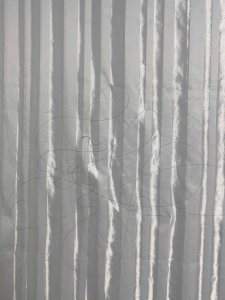
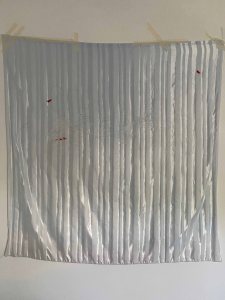
The second showercurtain is in a plain blue grey colour with a silky finish. I feel relief at starting without a print.

I choose to listen to Fado again- traditional, very emotional Portuguese music. Again the theme is unanswered love and longing.

This time, I close my eyes and just let the pen dance over the fabric in movements to the music.

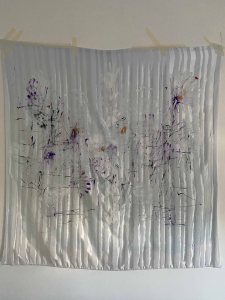
I realize that the touch of this fabric is very sensual, and decide to continue exploring that by painting with my hands and fingers, emphasizing touch.

There are some sharp, painful moments that I see in red:

After approximately 45 minutes of listening to Fado, I have really reached a point of saturation. I step back and see if I can recognize a motive in the musical marks.

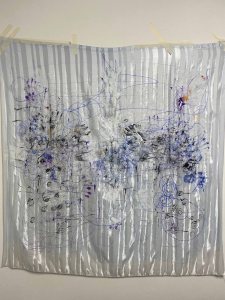
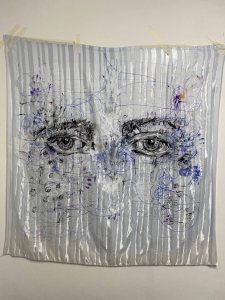
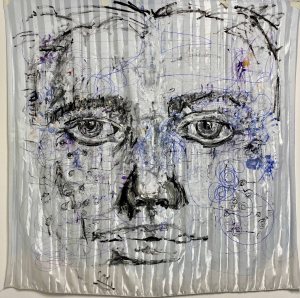
It requires pushing the imagination, but I decide to see the face of a lost love in the marks, and bring it forward with black acrylic paint.

The final portrait on the shower curtain is not so convincing- but this process of painting to music brings forward an incredible amount of different marks and layers. It allows for a freedom of marks and use of different media that feels very liberating.

This richness of marks and layers that this free and intuitive approach is adding to the drawings is definitely something I want to continue exploring in various contexts.


2.2 Interacting with the environment

Course manual: Aim: Drawing in a favourite or inspiring place can be very rewarding, but a great deal of translation goes on – in terms of scale, for example, as well as the information from other senses than the visual which is harder to convey. Creating a site-specific artwork enables the artist to manipulate the participant’s experience of the actual environment, rather than presenting a simulacrum in two dimensions for the spectator to reconstitute imaginatively, or a remnant left over from the artist’s own experience.

Method: Take a walk in a place you know well and make five different small drawn interactions in the environment using only what you find around you and your own body and without damaging any plants or animals in the process. Try to do things which will affect the way a visitor to the space would perceive it, either by directing their gaze or by changing the qualities of the place.


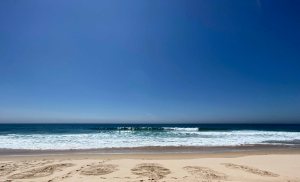
After eight weeks of Covid 19 related lockdown, we can finally go to the beach legally! I do not hesitate long in the choice of where to go for this project!

BEACH WALK nr 1:

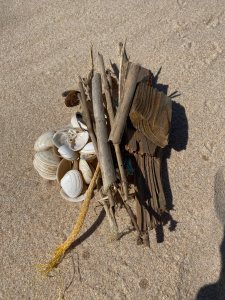
I start by collecting an array of sticks and white shells that I find on the beach.


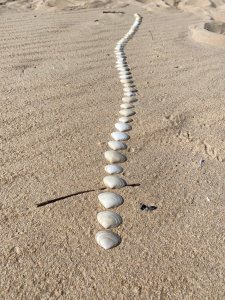
Inspired by the many ways of drawing a line in Land art, for example the beautiful line of dandelions on a tree trunk by Andy Goldsworthy, I place the shells in a line.

It is so simple, but I find it quite effective. It reminds me of a spine.

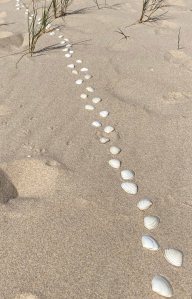
I then try a different arrangement, where the shells are placed in a double line, a little like footsteps in the sand.

Both of these “drawings” would definitely direct the gaze of an onlooker and awaken curiosity.

I create a small installation with some of the driftwood, that I find respond to a certain harmony:

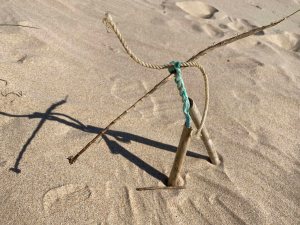
The sun is getting lower, and I realize that the shadow is becoming an integral part of the drawing. I create a figure from some driftwood and a piece of string.

The wind is gently rocking the string, so that it actually looks like a moving figure.

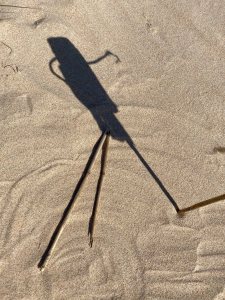
For my next piece, I focus entirely on the shadow- it becomes a running figure:


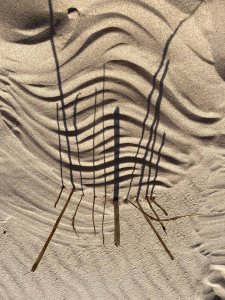
I continue using the shadows as part of the drawings. I like the very ephemeral nature of this and the movement that the change of the light brings to it.
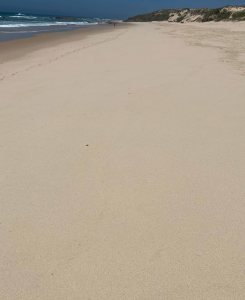
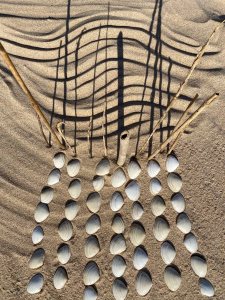
For a final piece, I join the shells to this shadow and sand drawing:

I love the immediacy and the connection to the place and the elements, that I feel while creating these little pieces with parts that I find randomly, and the sand and the light.

BEACHWALK NR. 2

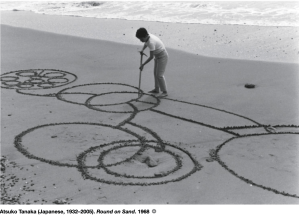
Sand drawings is an integral part of many traditions. I have just researched Emily Kame Kngwarreye who started with aboriginal sand drawing and body painting before she moved on to painting on canvas. I love drawing in the sand, and have discovered quite a lot of contemporary artists that do this too. One of them is Atsuko Tanaka, that I discovered while researching the exhibition On Line from 2010.

(Image from: Moma. 2020. MoMa/On Line. [Online]. [1 June 2020]. Available from: https://www.moma.org/interactives/exhibitions/2010/online/#works/02/54)

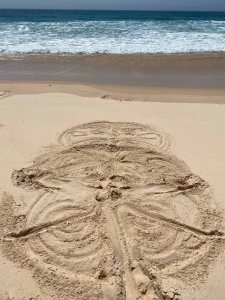
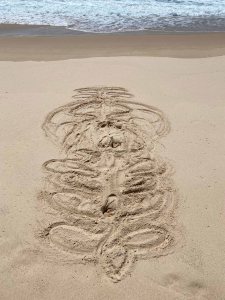
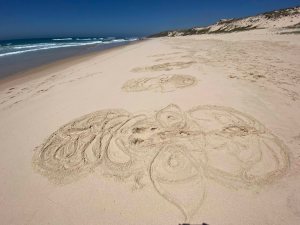
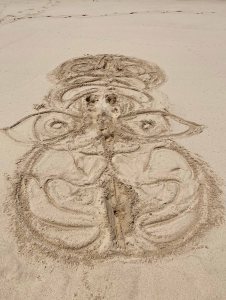
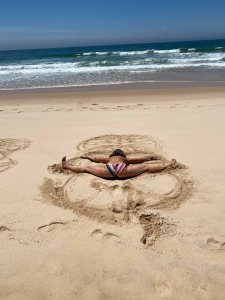
I will not use a stick to draw however- I love feeling the sand on my hands and body. Continuing the large format drawings on paper that I explored for Part 1, and the body prints for Part 2,  I will draw with my hands and feet reaching as far as I can while stretching out in various poses. The drawings will record the lines my body makes in the sand.

I walk til I find a most untouched stretch of sand, big enough for several large drawings beside each other.

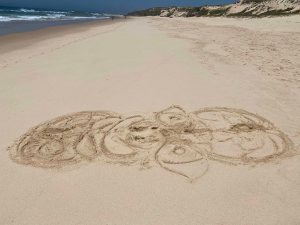
I jump as far as I can feet together into the sand and lie down, stretching as far as my arms and legs reach symmetrically. This is the first drawing:

front view:

While on my second drawing, my partner Andre takes some pictures of this simple process, that show the scale of the drawings:

Drawing nr 2:

Drawing nr 3:

I am allowing the movement and the sensations of the sand guide the drawing, more than any idea of a visual shape. This is very much spontaneous, sensory drawings.

Drawing nr 4:

And drawing nr 5:

All five drawings in a line (it is difficult to take a picture of this as I am standing on the same level as the drawings)

I am trying to put myself in the place of a viewer, and believe that anyone walking past now would see these lines as drawings. They have a ritualistic, symbolic character, even if there is no clear meaning. Drawing in sand is very ephemeral, very soon the tide will rise and wash them away. That it is so easy to wipe them out is one of the main allures of drawing in the sand- the experience becomes light and playful, and a direct connection to the sensory feeling and the moment.


Emily Kame Kngwarreye

Emily Kame Kngwarreye was one of Australia’s most significant contemporary artists. Her life story is absolutely fascinating. An indigenous woman, she grew up in a small, remote community named Utopia where she became an established Elder with a lead role in ceremonies. She was often using ceremonial sandpainting and painting on bodies, and later batik.

She was already over 80 years old when she started painting on canvas, but still produced over 3000 paintings in the 8 years to her death, which means in average at least one painting per day! Having started painting late in life myself, this is an incredibly inspiring story!

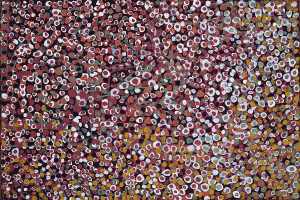
The shapes and the colours of Kngwarreyes paintings are all taken from the land surrounding her. In “Yam” for example, she builds up multiple layers of dots, each dot a seed from a plant, and each layer symbolic of ancestors.

Her painting “Earths Creation” from 1994, brought immediate international recognition and broke records at auction.

(Images from: Nma. 2008. National Museum Australia. [Online]. [8 June 2020]. Available from: https://www.nma.gov.au/exhibitions/utopia/emily-kame-kngwarreye)

It is fascinating to see how an artist who had so little contact with the outside world and with art history, was exploring painting that could be compared to Pointillist or Impressionist works.

I think the impact of these paintings must be so much stronger if you can stand before them as they are really large in size. Emily was painting them with the canvases laying on the ground, and herself sitting on top of the pieces, like if she was a part of the canvas, just as she was a part of the story and of the surroundings. Because of this, they can also be seen from different directions and are hung differently in various exhibitions. I feel very attracted to this idea of painting directly while sitting on the canvas- something to explore.

The fascination of Kngwarreye’s paintings come from the strong sense of connection and love for the land that emanate from them.  There is a clear feeling of how much respect and love lies behind the dedication of the dots and lines and choices of colours, reflecting the surrounding land. I believe that strong feeling of belonging, and of connection to nature, is something so many of us crave in our contemporary lives and that is why these paintings affect us so.

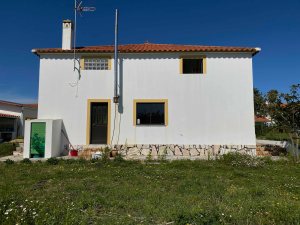
This importance of place and belonging is something I am exploring in my own work as well. My parallel project is centered around the stories of a house and a village that I have just moved to in the south of Portugal, and how my own story and the story of my family is intertwining with it now.

In this context, I will continue the research about other artists exploring belonging and home in separate blogposts.


Research point: On Line, Pierrette Bloch and Installation

The exhibition “On Line” in the MoMa in 2010-2011 explored “Drawing through the 20 th Century” and ” argues for an expanded history of drawing that moves off the page into space and time.”

I found the linking of drawing and thought fascinating in the following quote from the description of the exhibition on MoMa’s website : “Line, like thought, once understood as linear and progressive, has evolved into a kind of network: fluid, simultaneous, indefinite, and open.”

(quotes from: Moma. 2020. MoMa/ On Line. [Online]. [1 June 2020]. Available from: https://www.moma.org/interactives/exhibitions/2010/online/)

Seen like this, almost anything can be a drawing, which opens up exhilarating possibilities.

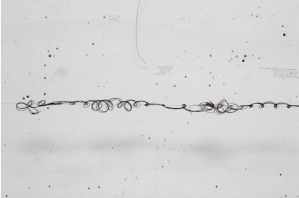
During this chapter of the course, I have become more sensible to seeing lines and drawings all around me. In many works of this exhibition, a spontaneous or accidental line , is moved back into the art context. So for example Pierrette Bloch’s five sculptures, titled “Horsehair lines” , each made of a horsehair extended on a nylon thread. I imagine the horsehair curls up naturally, and Bloch then took this scribbled line in space and mounted it and presented it as the sculpture it is.

(Image from: Moma. 2010. MoMa/On Line. [Online]. [8 June 2020]. Available from: https://www.moma.org/interactives/exhibitions/2010/online/#works/02/55)

It looks like something could be written in space. Pierrette Bloch is described as using “Poor materials” as besides these horsehair drawings, she is often using ink on found paper or cardboard. She is also very sparse in her mark-making, and very repetitive, using repeated dots, lines or hyphens. I feel that, because she is not “elevating” the marks she makes to a painting, or a fancy drawing on thick paper with an expensive frame- they transport more a message of being a written note, a message or a musical chord, that seems like it should be easily readable, but then has the intriguing elusive quality of only being understood by the artist herself.

(Image from: Fyfe, J. 2009. Artcriticalcom. [Online]. [8 June 2020]. Available from: https://artcritical.com/2009/05/11/pierrette-bloch-at-haim-chanin/)

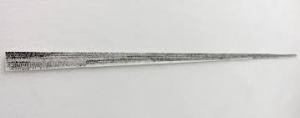
The support also becomes an important part of the message, for example in her very, very long drawings, where the paper is already a very long line. Here it is an interesting tension between the line, the paper, and the repetitive dots that punctuate it, with the paper being as much the drawing as the ink.

(Image from: Musee fabre. 2009. Musee Fabre en Montpellier. [Online]. [8 June 2020]. Available from: https://museefabre-en.montpellier3m.fr/Exhibitions/Pierrette_Bloch).

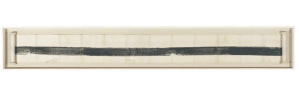
Robert Rauschenbergs’s “Automobile Tire Print” from 1953, is also presented on a long scroll of paper.

Here, he let a friend drive through a pool of black paint and then over the prepared paper. This piece is closer to performance art, than to the gestural approach of Pierrette Bloch. The drawing is a direct record of the movement of the tyre over the paper. This work was a pioneering piece between a ready-made, a performance and an automated drawing.

This long format, adds a feeling of representing a landscape, an idea that then collides with the subjects of a mark made by a tyre.

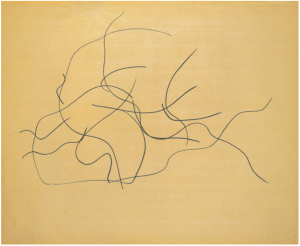
Ellsworth Kelly was represented with some automated drawings, like here a drawing from pine branches from 1950 :

It was really fun exploring different ways of producing automated drawings for Part 3 of this course, but I am not sure I would be so fascinated at looking at them in an exhibition.

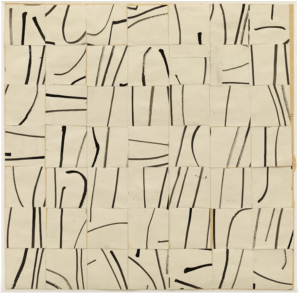
I found the following piece by the same artist much more interesting- here he has intervened and cut up the drawing in 49 different pieces and then placed them together randomly. I find this piece more engaging and exciting with the interesting pattern it creates, as well as being attracted to the idea of trying this.

(Images from: Moma. 2010. MoMa/On Line. [Online]. [8 June 2020]. Available from: https://www.moma.org/interactives/exhibitions/2010/online/#works/02/45)

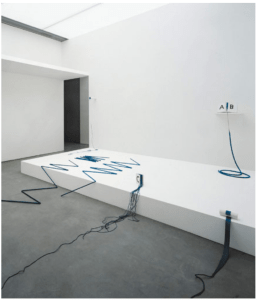
As described in the course manual, Edward Krasinski extends his lines into the environment, so his drawings exist somewhere between 2 D drawings and sculpture.

His signature is the use of blue line, which can be drawn with tape or cable.

(Image from: Moma. 2010. MoMa/On Line. [Online]. [8 June 2020]. Available from: https://www.moma.org/interactives/exhibitions/2010/online/#works/02/66)

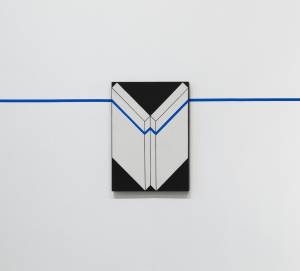
His paintings are site-specific, in that they connect the work with the surroundings through the tape, but in many works, like here in “Intervention 15” from 1975, by the geometrical form on the painting relating to the architectural shapes in the gallery around it.
Intervention 15 1975 Edward Krasinski 1925-2004 Presented by Tate International Council 2007 http://www.tate.org.uk/art/work/T12568

The stripe of tape does not just pass through the painting, but follows the contours of the form depicted, so that it emphasizes the 3-dimensional form.

(Image from: Butakova, E. 2010. Tateorguk. [Online]. [8 June 2020]. Available from: https://www.tate.org.uk/art/artworks/krasinski-intervention-15-t12568)

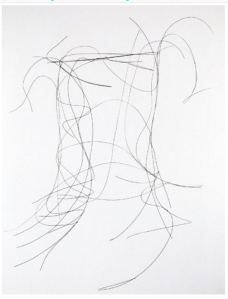
I became quite fascinated with the wireworks of Czech artist Karel Malich .

The name of this drawing from 1974 is “Energy”, and I can certainly feel the swirling energy emanating from it.
(Image from: Moma. 2010. MoMa/On Line. [Online]. [8 June 2020]. Available from: https://www.moma.org/interactives/exhibitions/2010/online/#works/02/68)
If this drawing would have been two-dimensional on a piece of paper, it would not have the impact as it has when the space around it becomes part of the drawing, and when a light is directed towards it, it adds shadows that are another new level of the drawing.

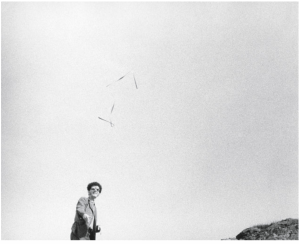
Another work that I found fascinating from the exhibition is Tom Marioni’s “One second sculpture”.

(Image from: Moma. 2010. MoMa/On Line. [Online]. [8 June 2020]. Available from: https://www.moma.org/interactives/exhibitions/2010/online/#works/02/69)

Here the artist holds a metal line in his hand and throws it in the air where it forms a shape for one second and then falls flat to the ground. This work exists in an interesting crossroads of drawing in the sky, momentary ephemeral sculpture, performance and even music with the sound it creates in the air. Adding this element of time really stretches the concept of drawing to a place that I had not considered before.

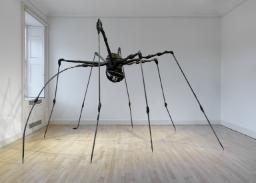
After studying these works from the exhibition On Line and further, and seeing how a drawing can extend into space, I would consider Louise Bourgeois “Spider” from 1995 a drawing without hesitating.

Spider 1994 Louise Bourgeois 1911-2010 ARTIST ROOMS Tate and National Galleries of Scotland. Lent by the Easton Foundation 2013 http://www.tate.org.uk/art/work/AL00354

(Image from: Adamou, N. 2016. Tateorguk. [Online]. [8 June 2020]. Available from: https://www.tate.org.uk/art/artworks/bourgeois-spider-al00354)

This monumental bronze sculpture truly feels like a line drawing that has stepped out from the confinement of a two- dimensional drawing into space.

ALL IMAGES REPRODUCED FOR EDUCATIONAL PURPOSES ONLY