Coursemanual:
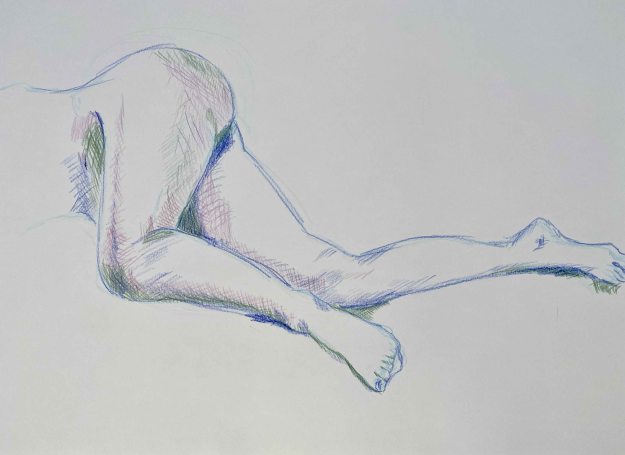
Aim: Drawing the human figure allows you to develop skills in observing underlying structure – the ‘engineering’ of the figure – combined with the natural grace and flow of an organic form. The effects of the way weight is distributed and light falls to reveal volume are hard to pin down but hard to fudge; figure drawing is like a workout for the eyes. By drawing parts of the figure, you can develop your skills in managing several inter-related elements within a drawing – rhythm, weight, volume, structure. The object of this exercise is to create a drawing which leads the eye of the viewer into the overlapping twists and turns of the limbs. Use your judgment to make the most powerful statement you can.
Method: Make a drawing of two combined body parts. This might be two feet crossed over, folded arms or a hand resting on a waist. Look at the curves and the rhythms set up by those curves. Look at the muscles and bones under the skin and the tension and energy they give. Make a drawing which has a curving or sinuous composition using parts of the human figure. If necessary, consider lighting the limbs with an Anglepoise lamp or similar to give yourself more dramatic tones in the manner of chiaroscuro. Don’t leave the limbs to taper off into nothing, even if that means cropping. Don’t be more tentative because you’re working from the figure; redraw and correct vigorously to achieve the most accurate drawing you can.
I am starting this exercise by looking for a pose with two limbs overlapping that creates interesting forms, drawing the eye of the viewer in.
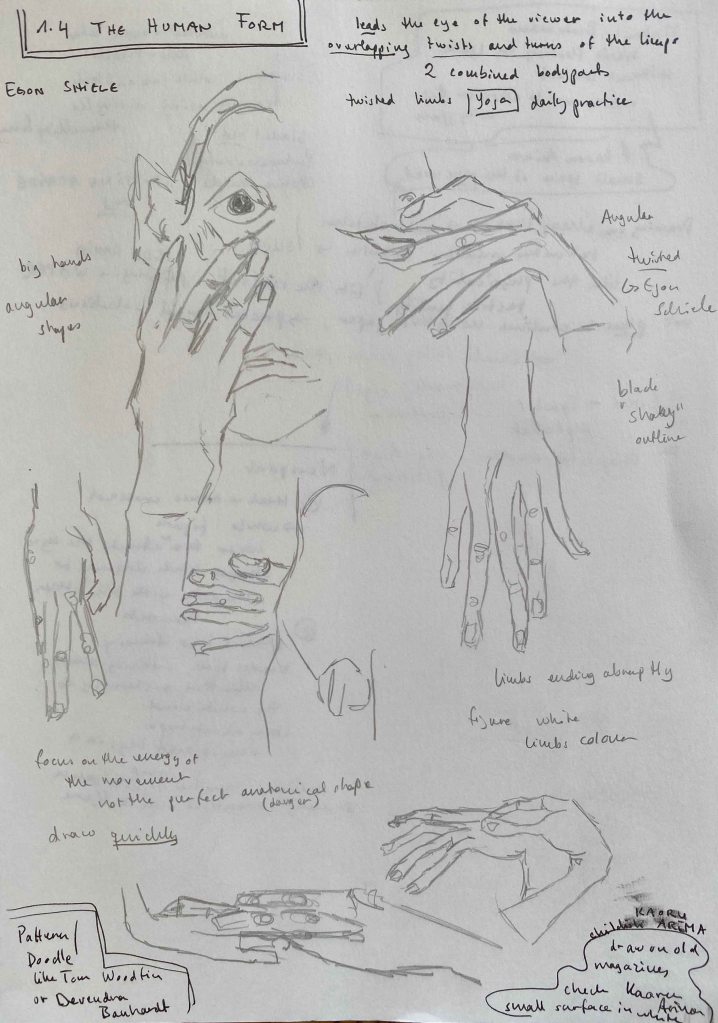
I think it is the wording “twists and turns of the limbs” that immediately guide my thoughts to Egon Schiele’s selfportraits, where there is often a twisted, tense quality of the limbs. He often emphasizes the hands in angular, twisted shapes and is not afraid of letting limbs taper into nothing. There has been quite a heated discussion on the OCA email group about Schiele’s work, but despite his questionable morale, I am still a great admirer of his art.
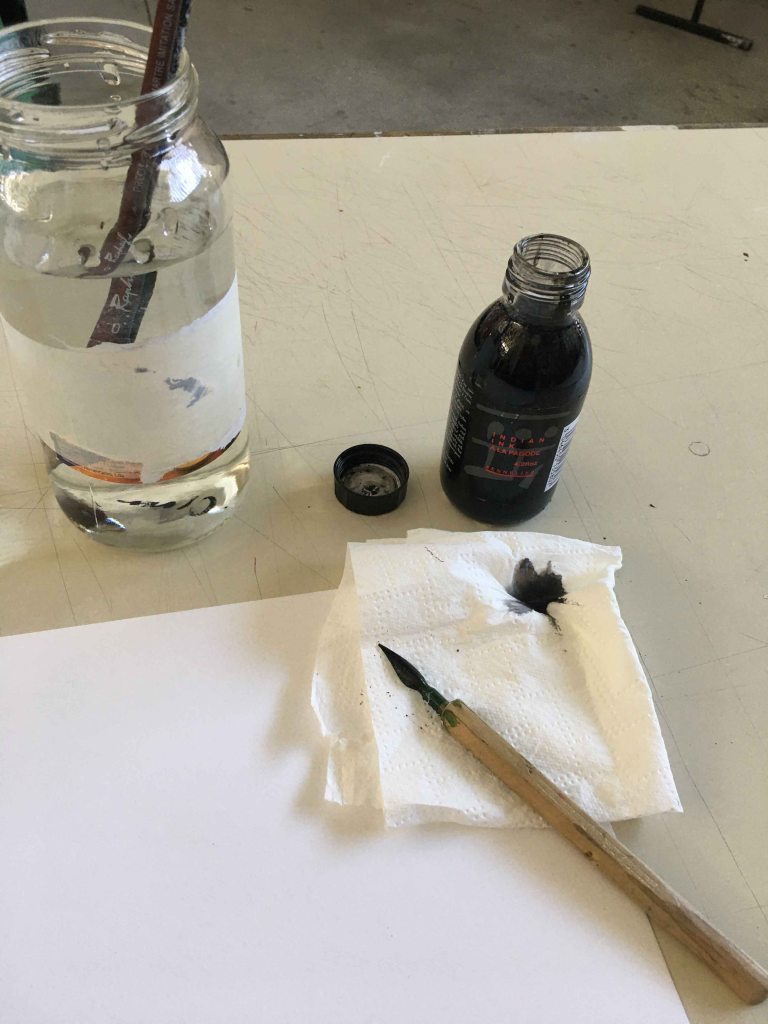
I want to draw a quick series of poses , focusing on the dynamic of the poses more than catching the perfect anatomical shapes. I prepare a long roll of cheap paper from IKEA and place myself in front of the mirror with Indian ink and brushes at the ready.
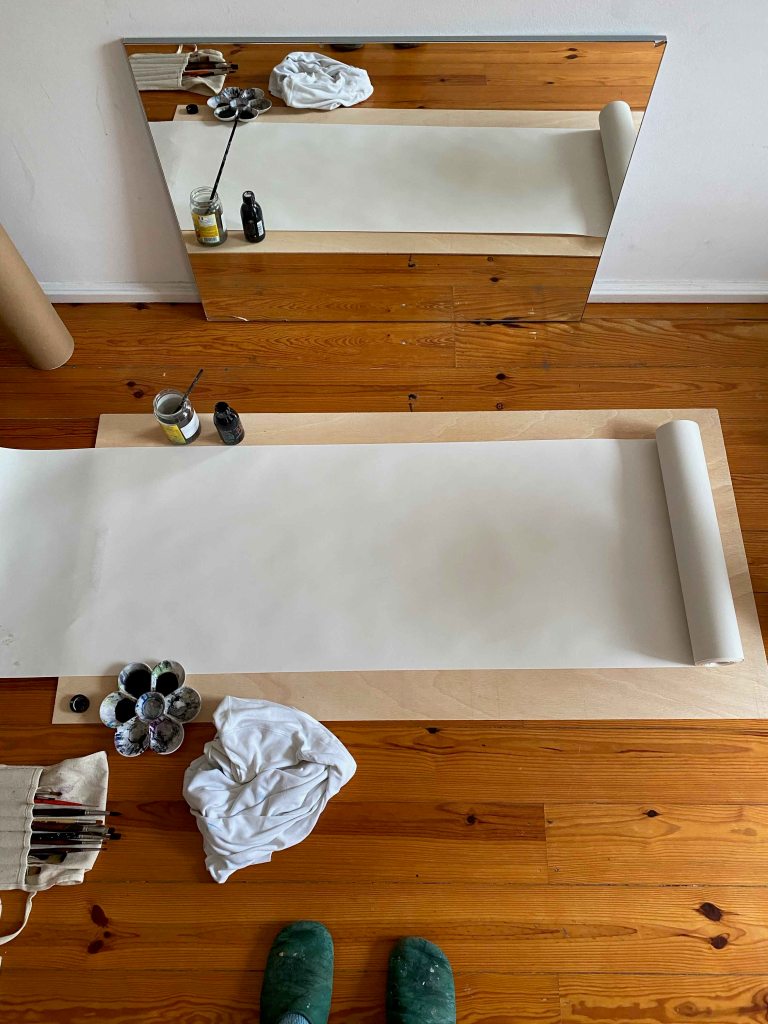
It is quite confusing at first to draw from the mirror, but I soon get into the flow :
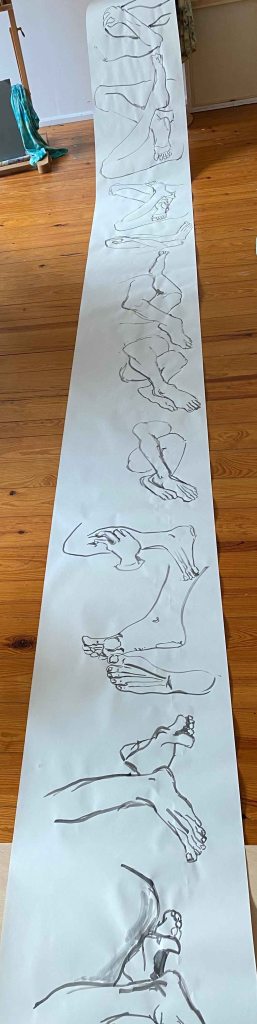
Although the thin paper gets quite wobbly from the ink, I decide to turn it over and continue sketching on the reverse:
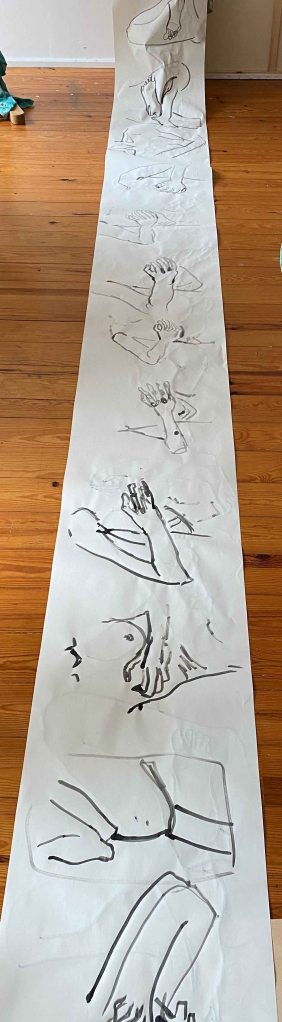
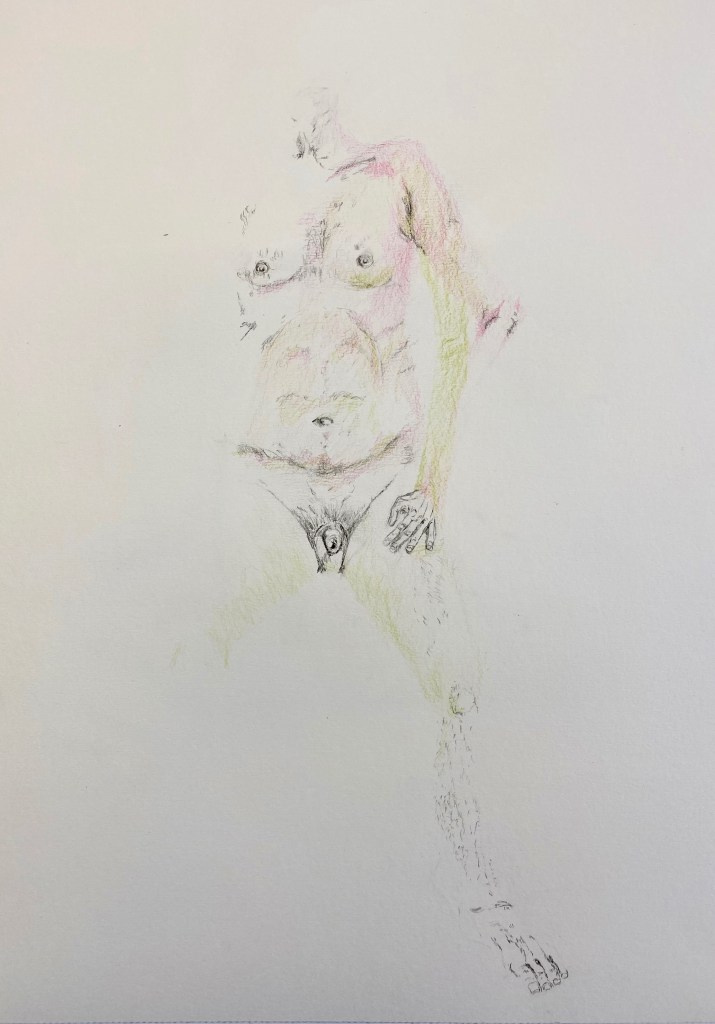
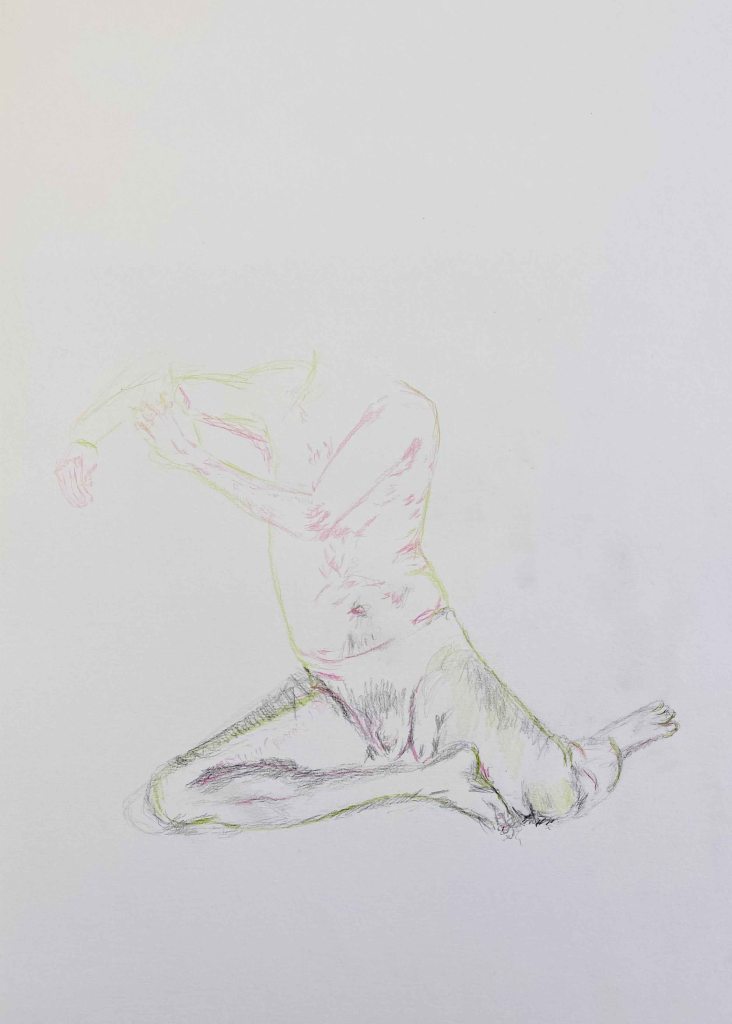
I pick out a few poses that I find most interesting:
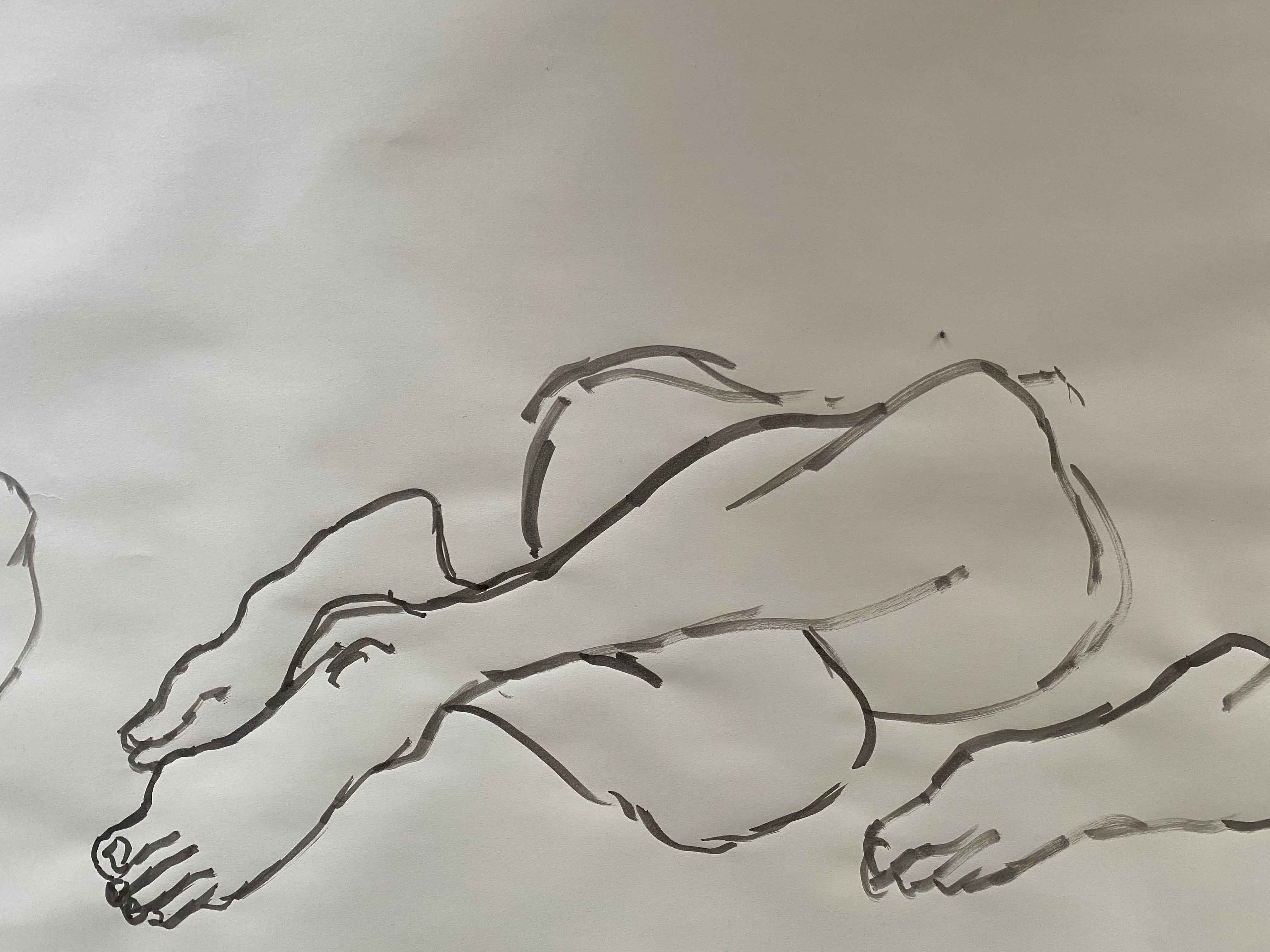

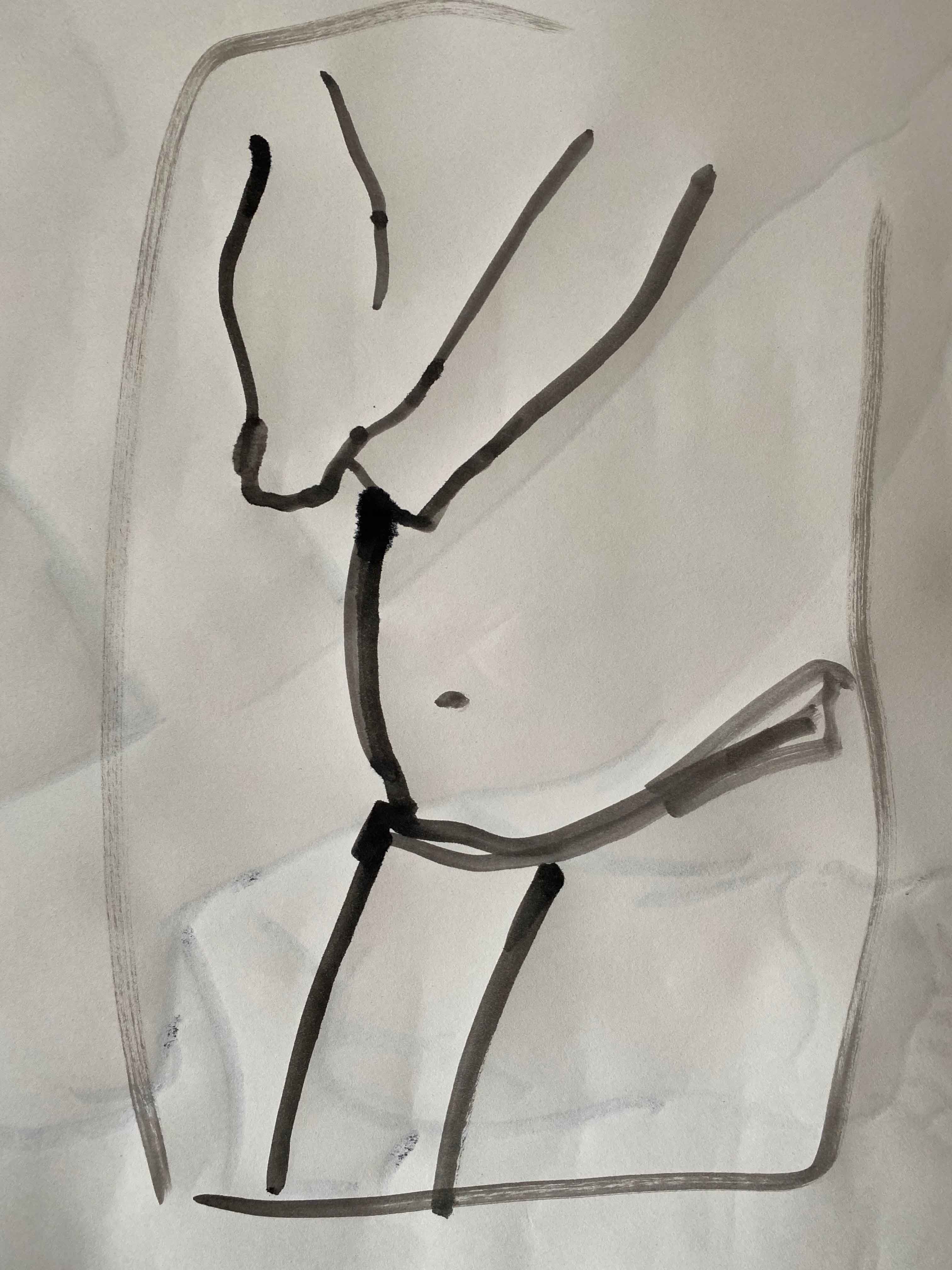
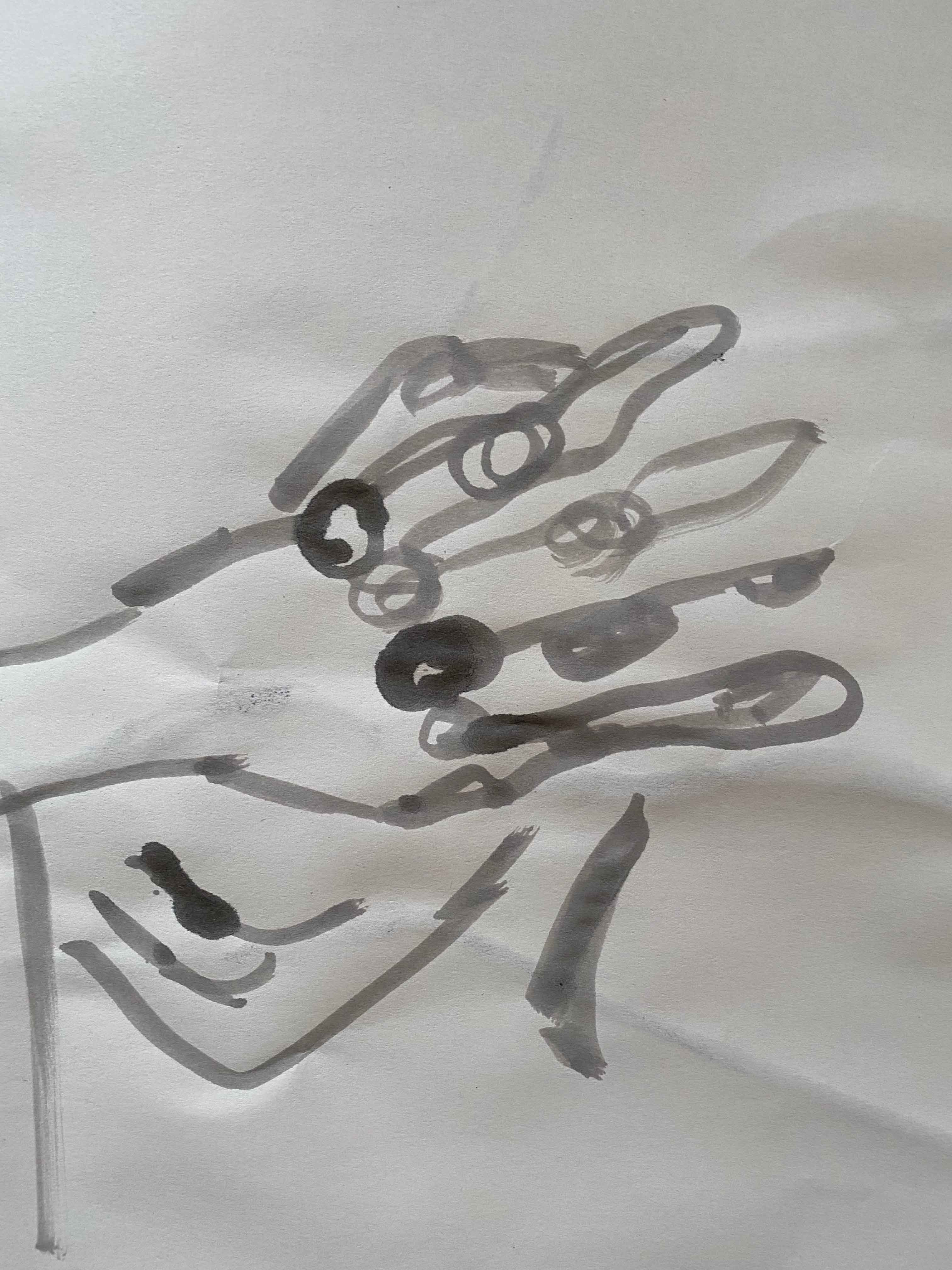
I decide to continue with the two legs, one folded backwards and the other draped over. This pose is at the same time simple and a little intriguing, it takes an extra second to realize how the legs are folded. I like the shape of the whole, forming something like a symbol, close to an infinite symbol.
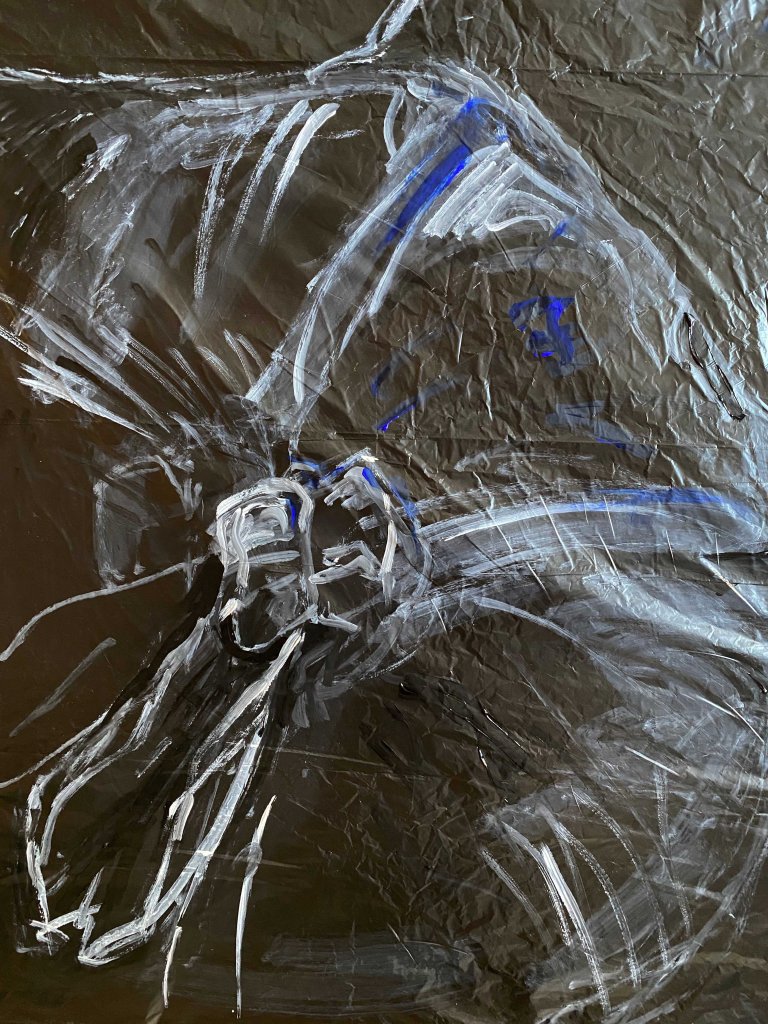
Although I initially started drawing on the cheap paper roll just for quick sketches, I notice how the wrinkles of the paper make me think of skin. I like the physicality of this, the tactile quality it adds, and decide to continue drawing on this too thin paper.
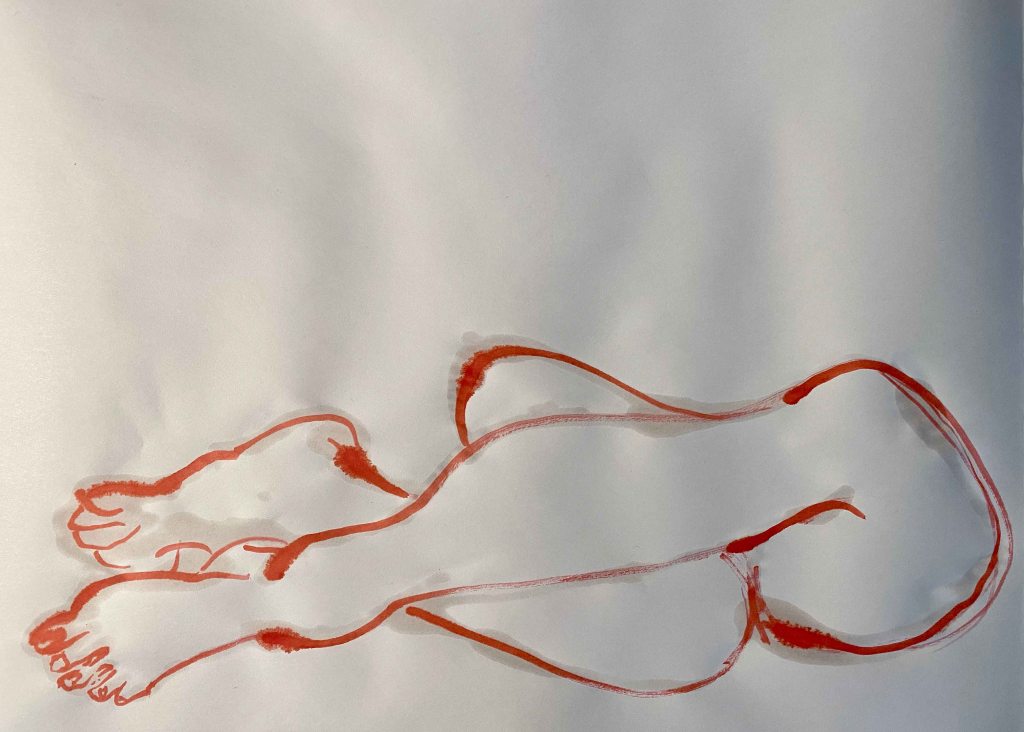
I start experimenting with a Winsor&Newton Vermillion ink. I draw in water first and then in red, so that it bleeds a little. This drawing in red reminds me of Louise Bourgeois’ inkdrawings.
Using the water to create more wrinkles, also reminded me of a drawing by Portuguese artist Ilda David that I really liked from the book “Ilda David from dark to light”, drawn only in water on white paper:
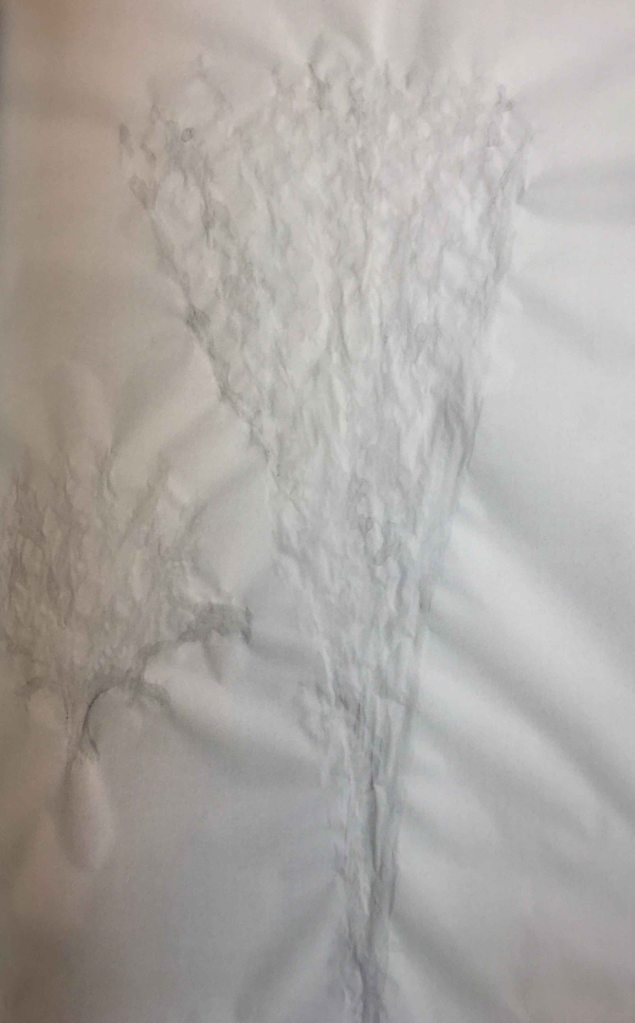
(Image from: Faria, N (2016). Ilda David Do Negro a luz, Desenhos do 1986-2016. Portugal: Dokumenta Fundacao Carmona e Costa.)
This drawing is so simple and so effective. I try drawing my entwined limbs in water.
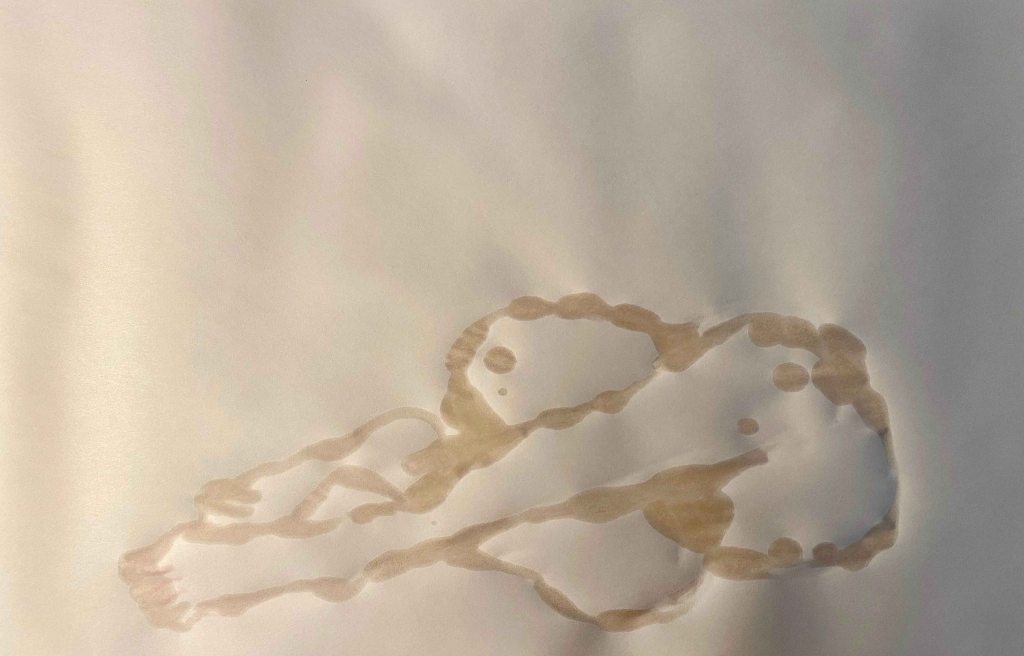
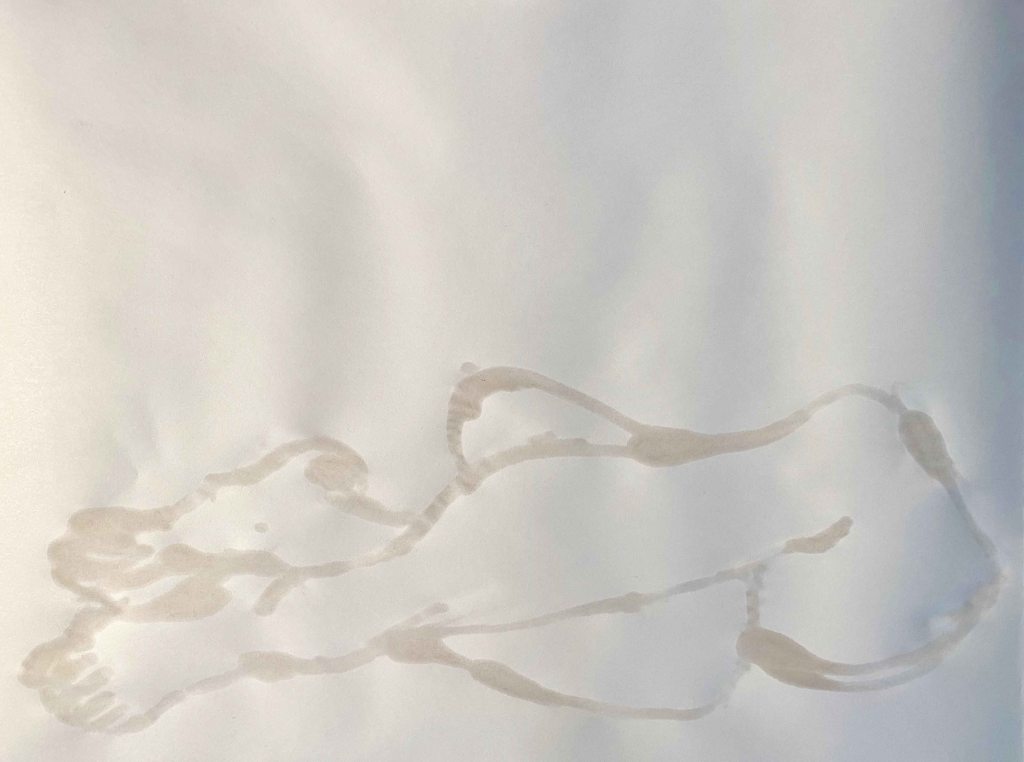
I find that my pose looks like a sign or a symbol. I will draw it small, leaving a large white page around tell the story and let this mark be a symbol.
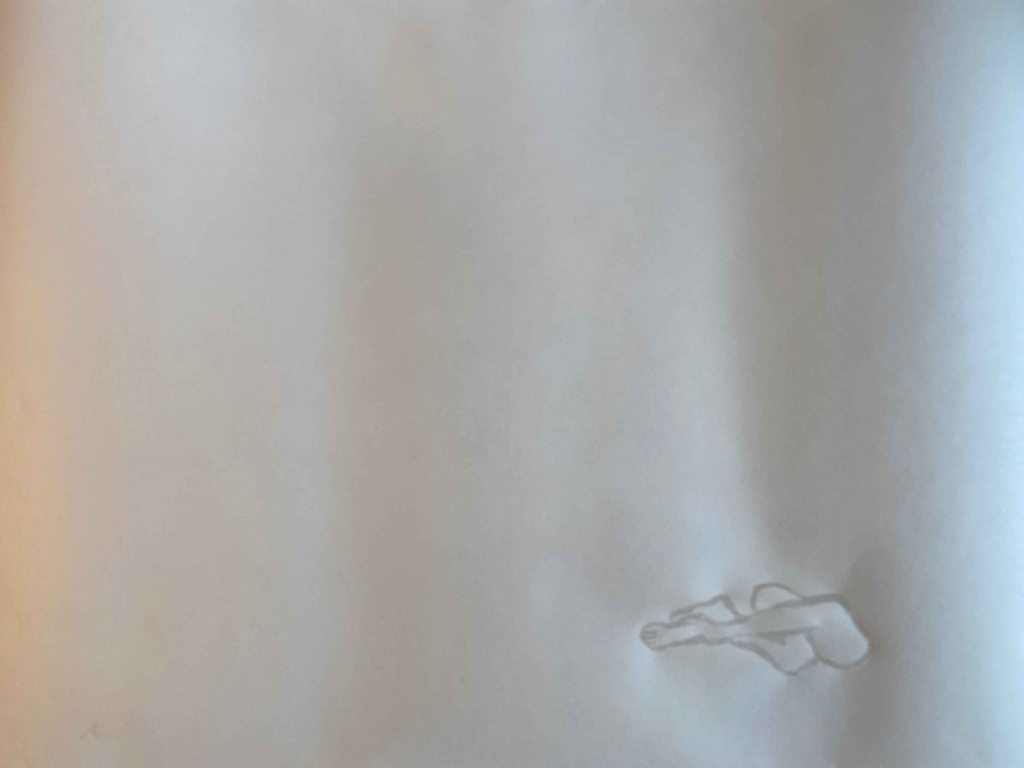
I find it effective how this very subtle mark sits on the page, but I am not happy with the shape. I decide to try and draw in pencil first and then water
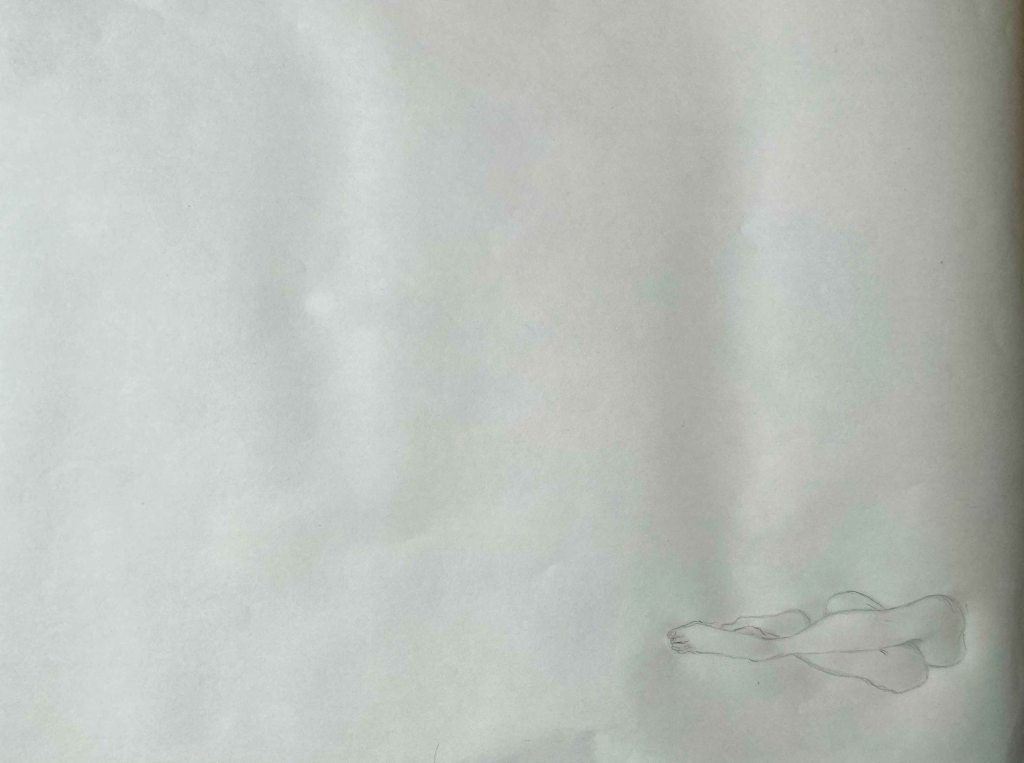
This drawing is much better! But when i try to erase the pencil (close up)…
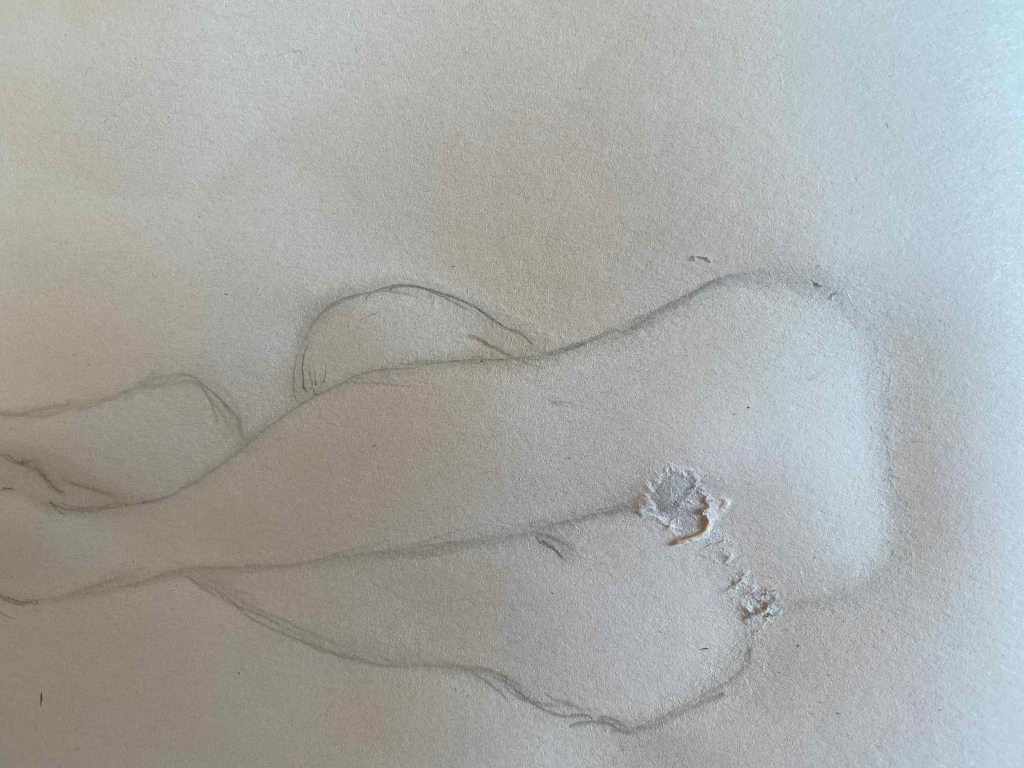
…I rubbed a hole in the paper…
I decide to try this proportion of the white page and the small symbol with a brown ink too:
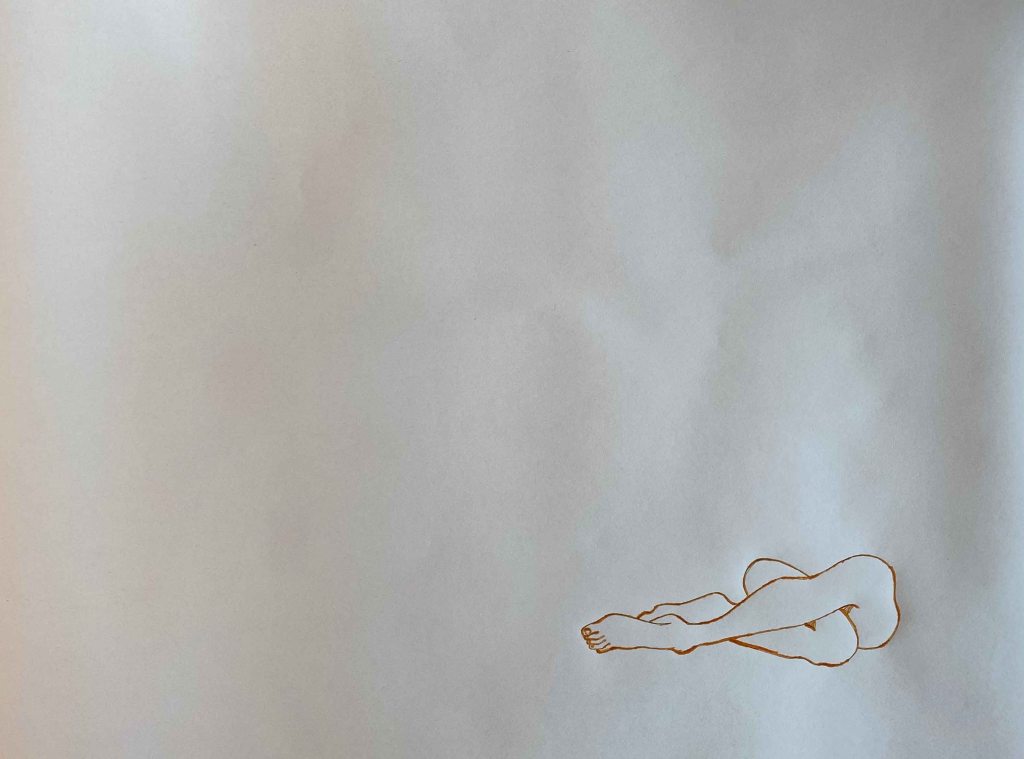
Here the drawing went well, but it is not effective with the brown ink. It needs to be either really subtle, like the water, or stronger on the page. I colour in the brown ink with a black Indian ink and add vermillion details in a cubic pattern:
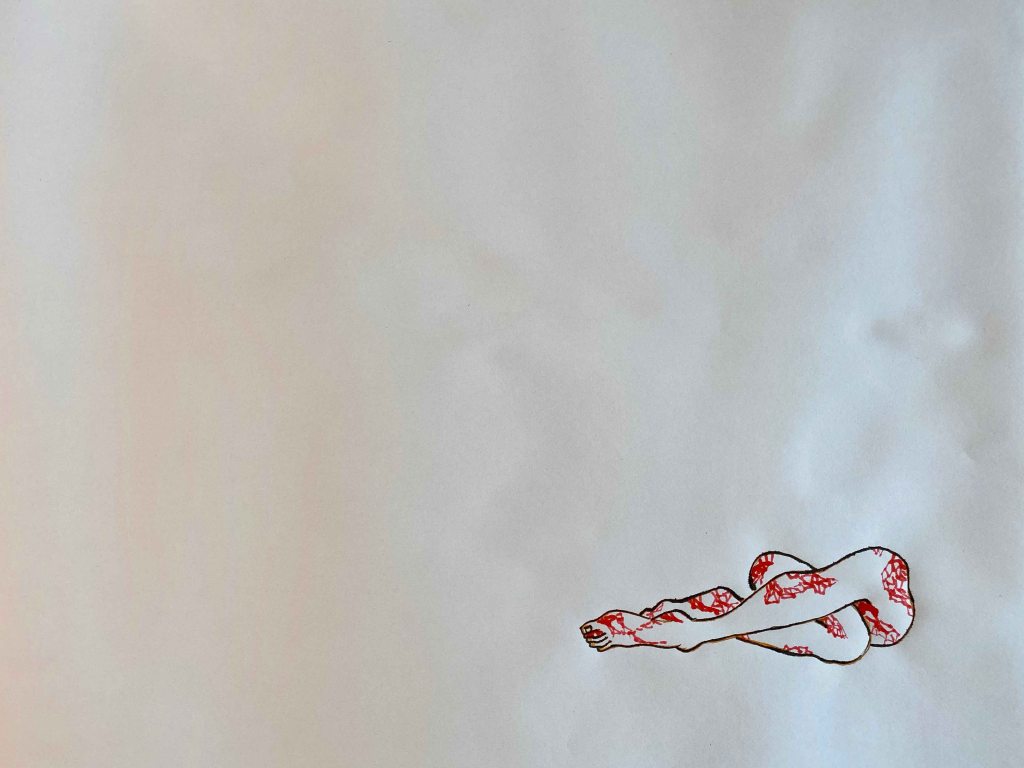
This drawing works again. It has enough interest to sit so slightly on the large page and still let the page be in balance.With this pattern, the legs have a snakelike character.
I am still curious about exploring the very subtle though, and decide to try out drawing the same pose twice again, with Winsor& Newton white ink on a Fabriano watercolour paper.
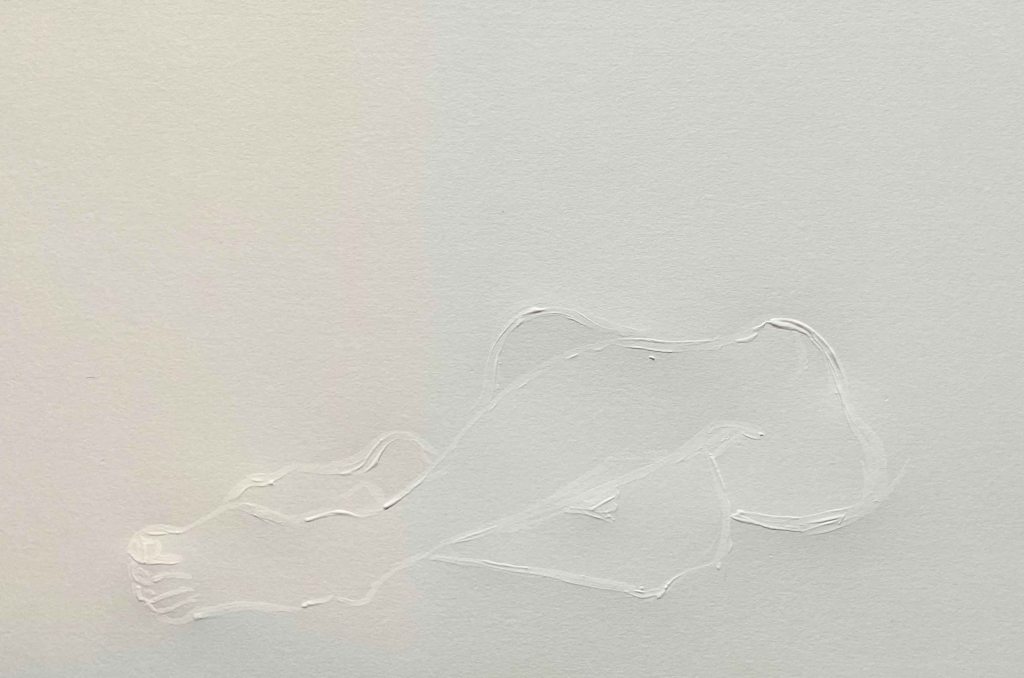
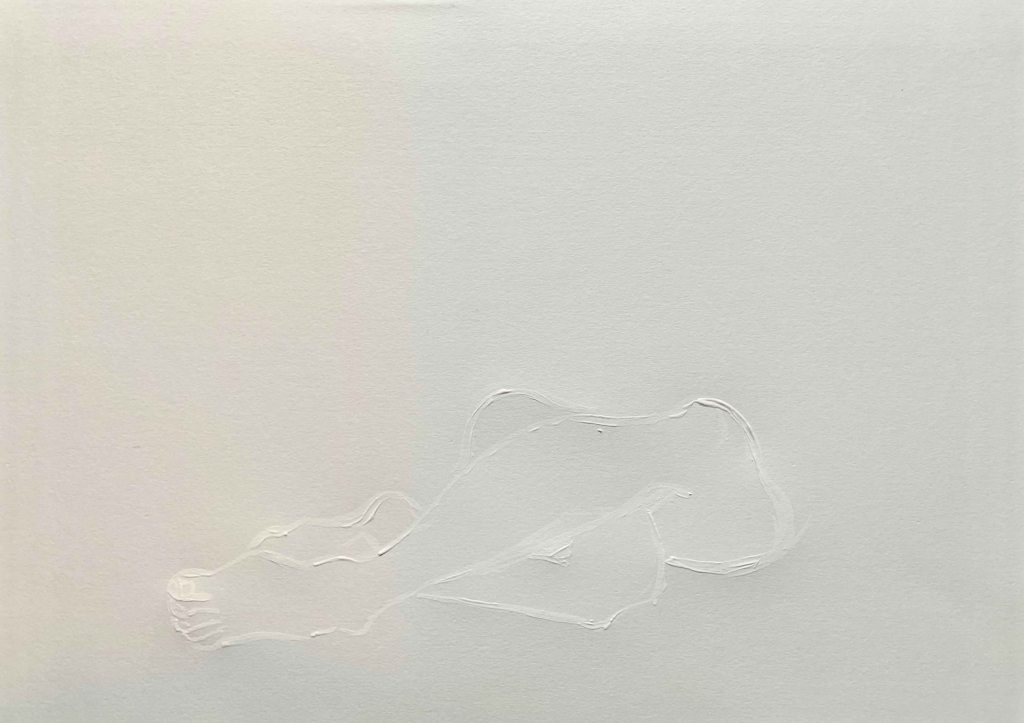
This could work, but is not as appealing and subtle as using only water.
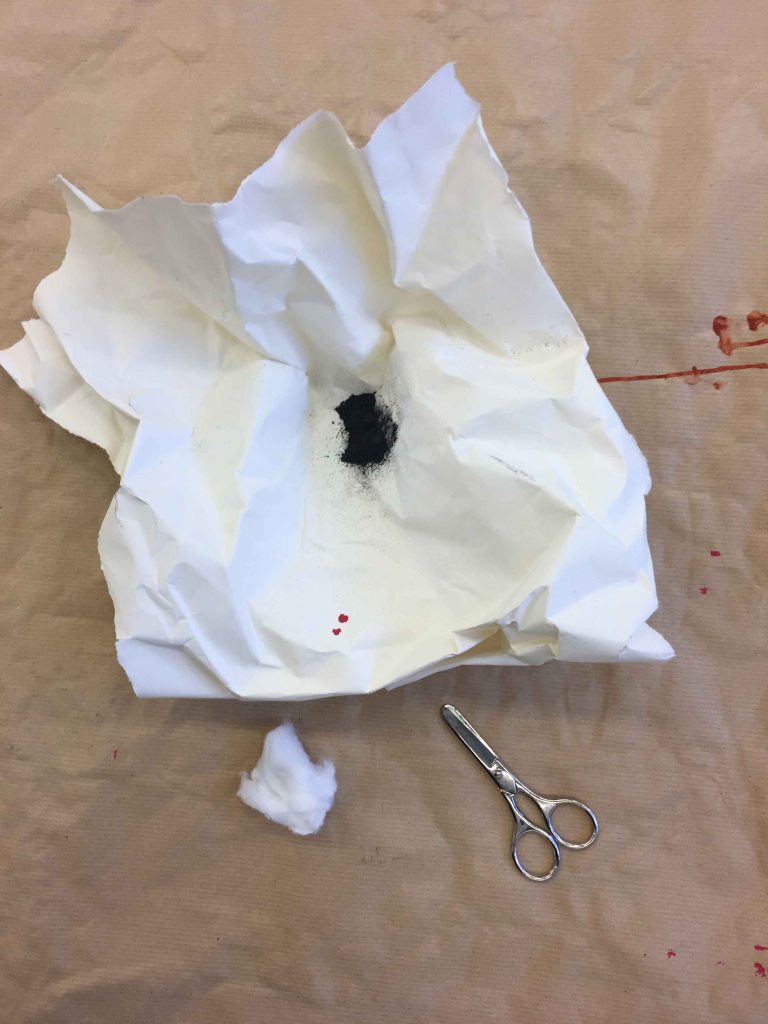
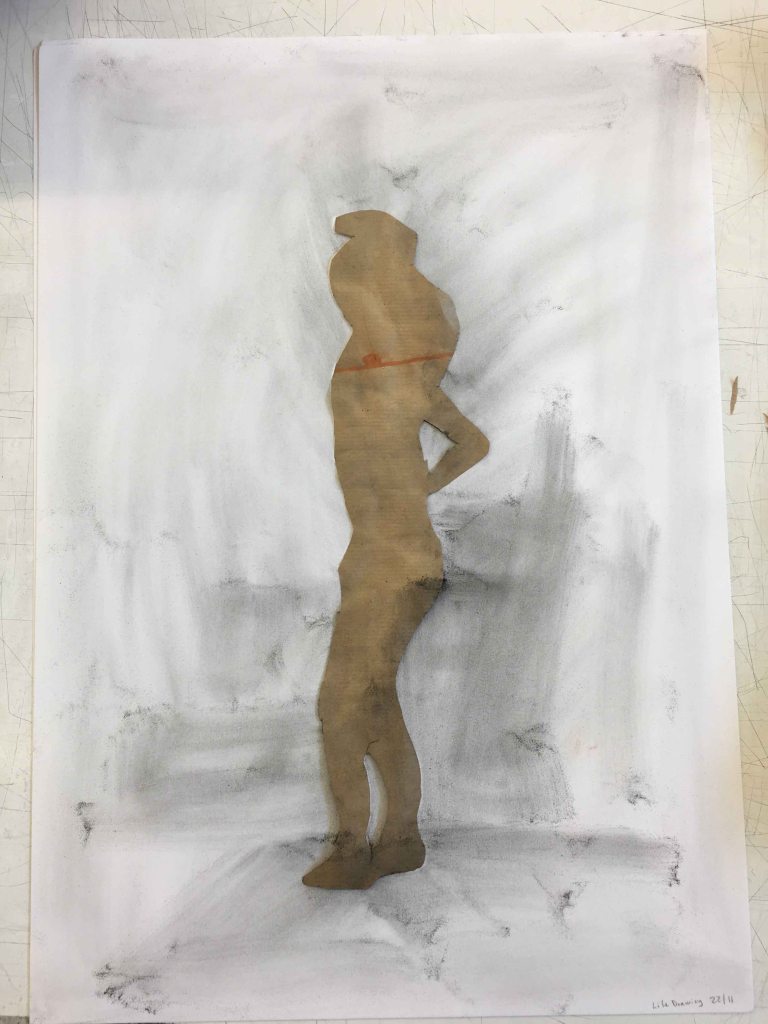
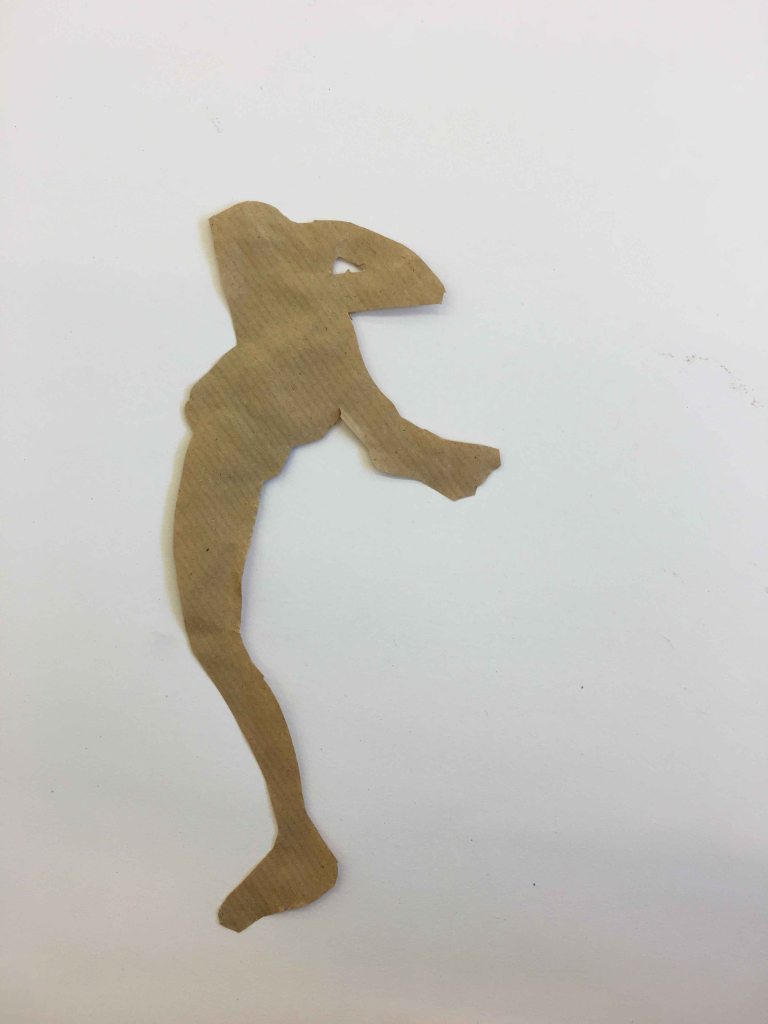
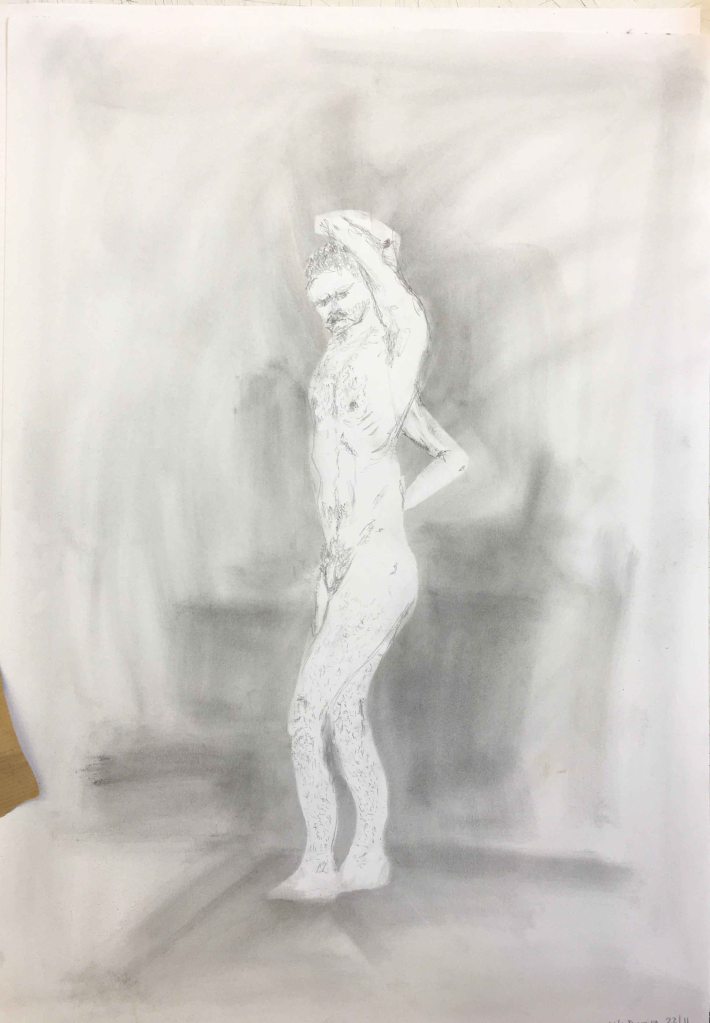
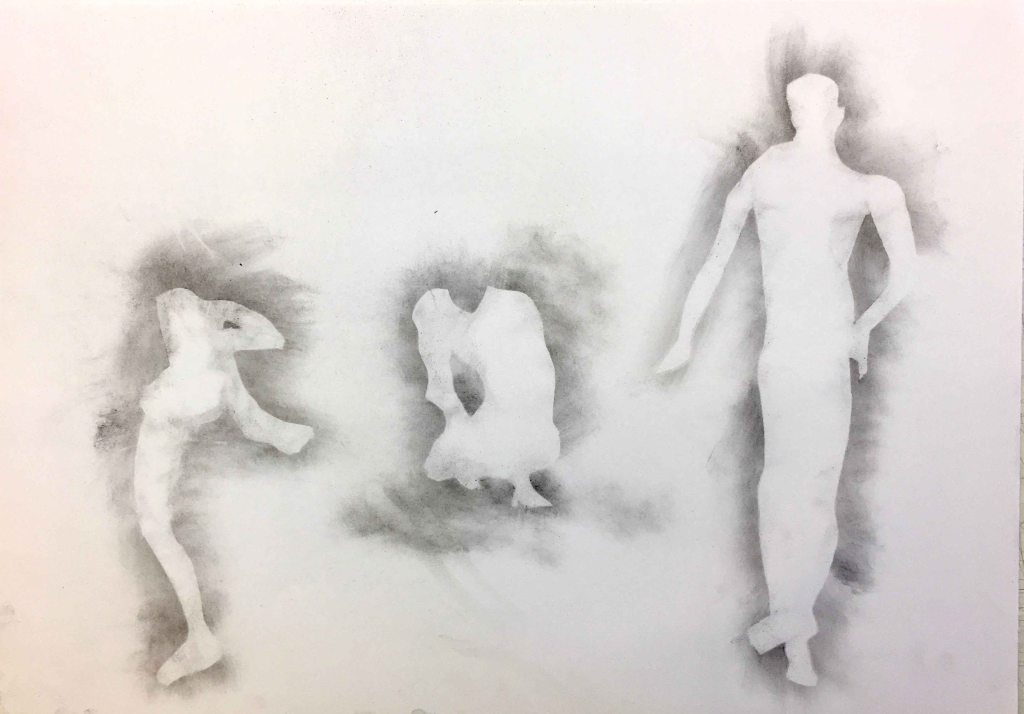
Next, I decide to try out a technique I tried in a lifedrawingclass- cutting out the shape of the pose and then drawing the contours using this positive or the negative mold with graphite powder.
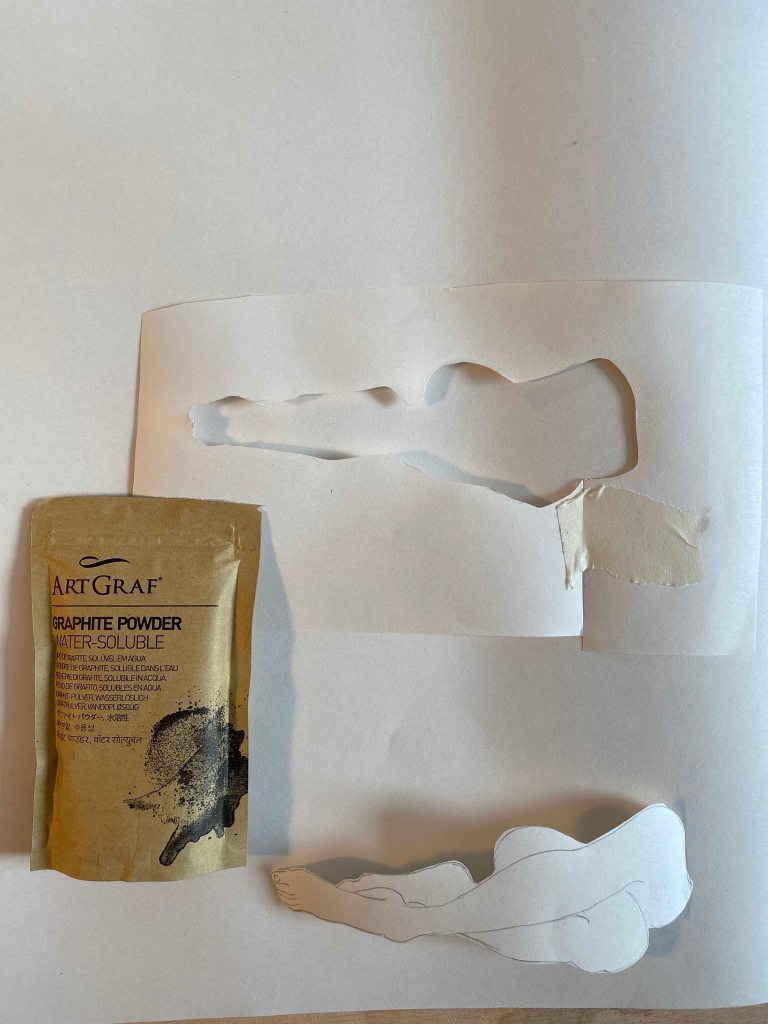
I am using a small drawing of the figure on the bottom of the page again.
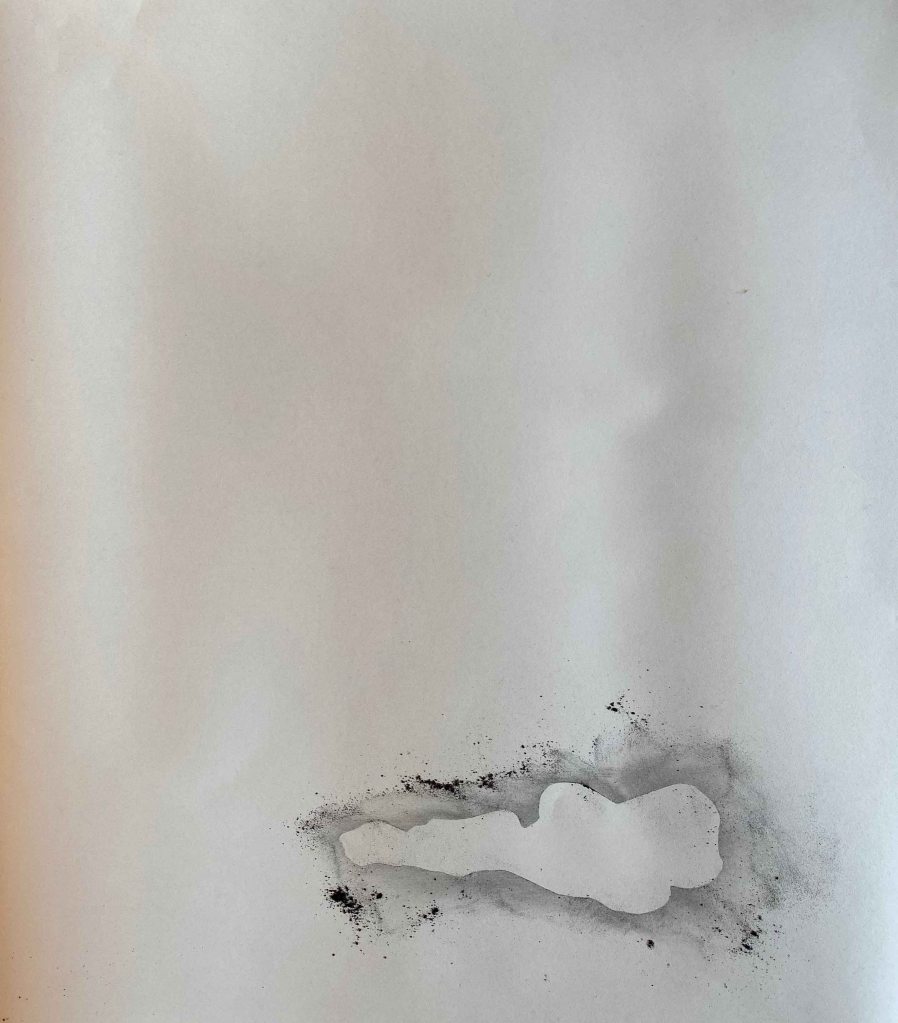
I like how it looks with the surrounding powder and wonder if I can fixate it like this.
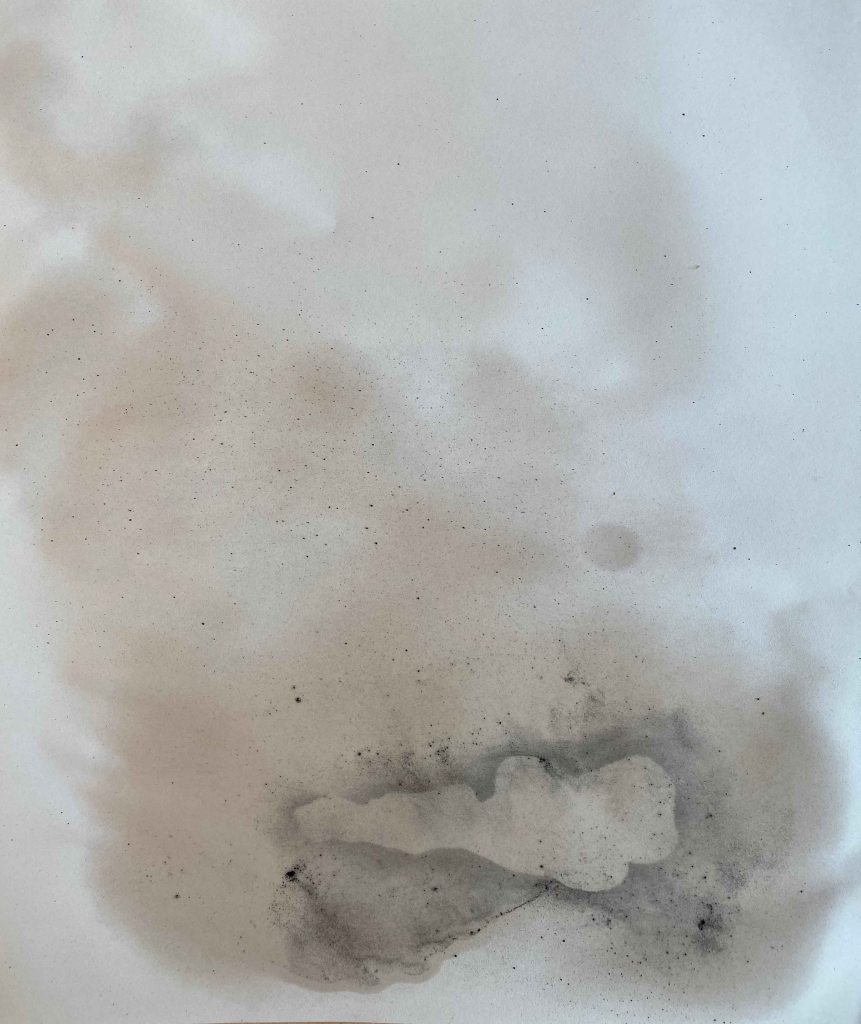
The answer is no. I try this twice with different methods.
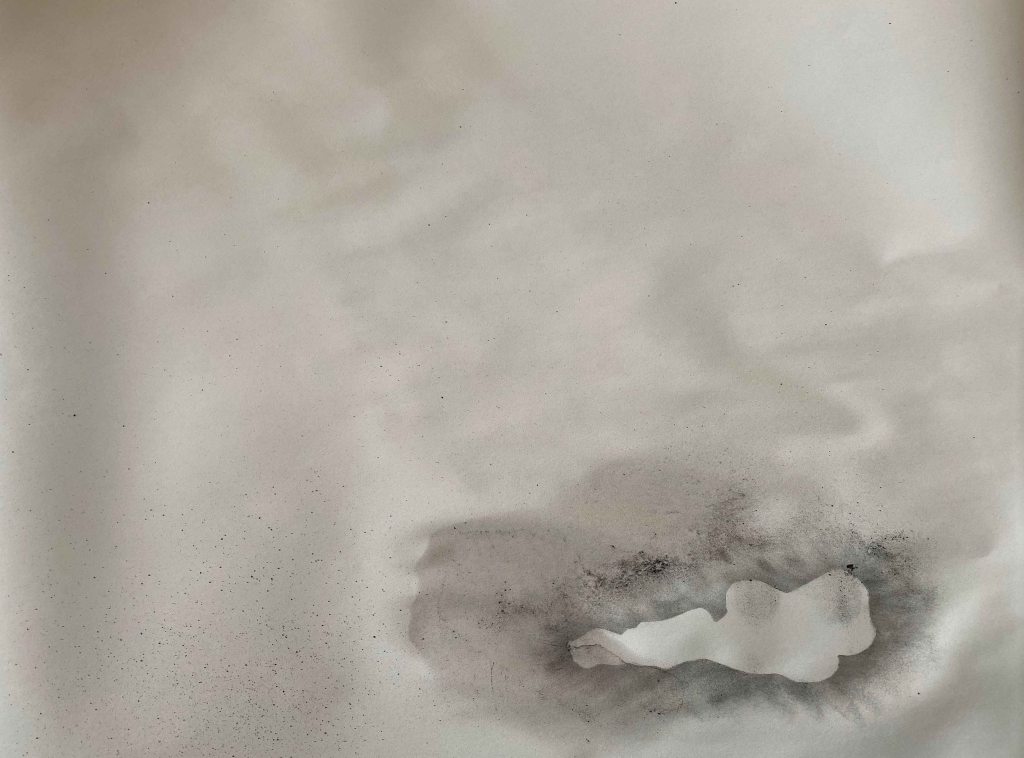
I find this second less messy version still has some interest, with the different layers of white and then graphite spreading out from the figure. It looks like a creature in a nest.
I continue with making a composition using the positive and the negative molds:
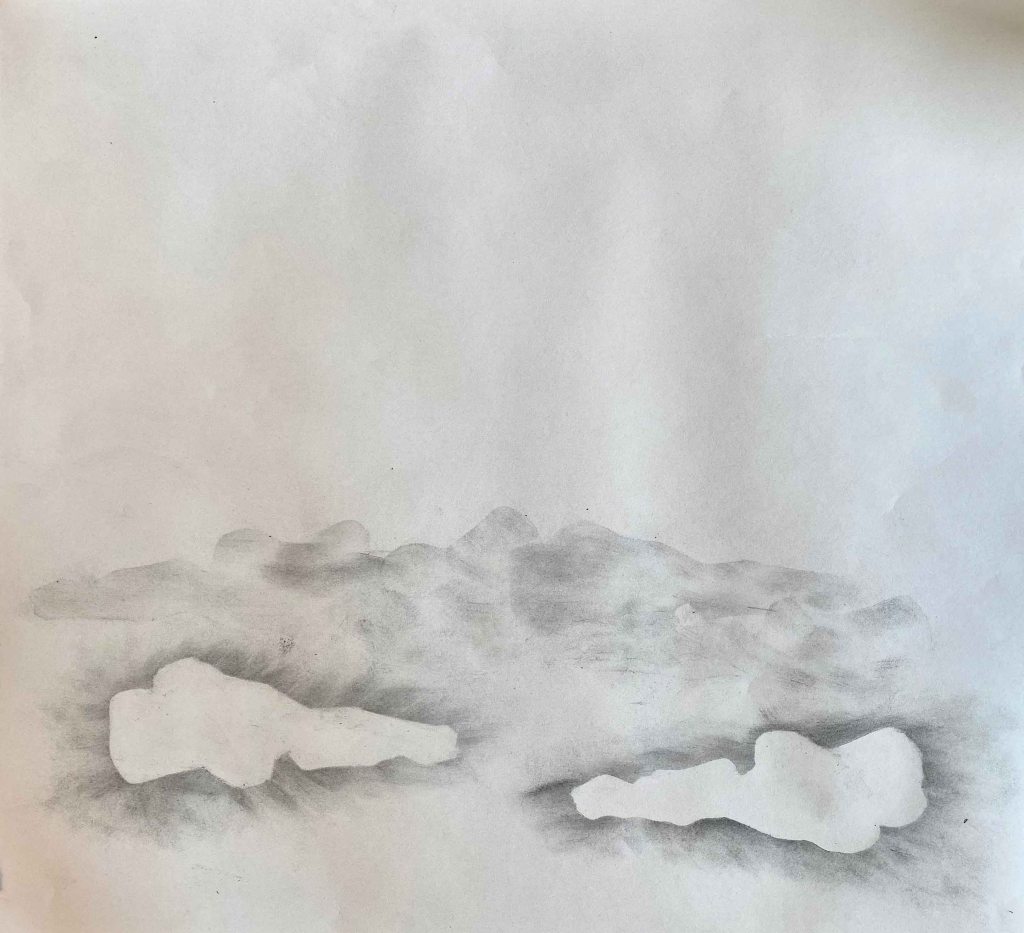
Here my two intertwined limbs have morphed in to a landscape. I see something like fallen soldiers on a battlefield.
I am still hanging on to the idea of my figure as a symbol and it’s relationship to the page when I discover these works on newsprint by Kaoru Arima in the wonderful book Vitamin D: New Perspectives in Drawing:
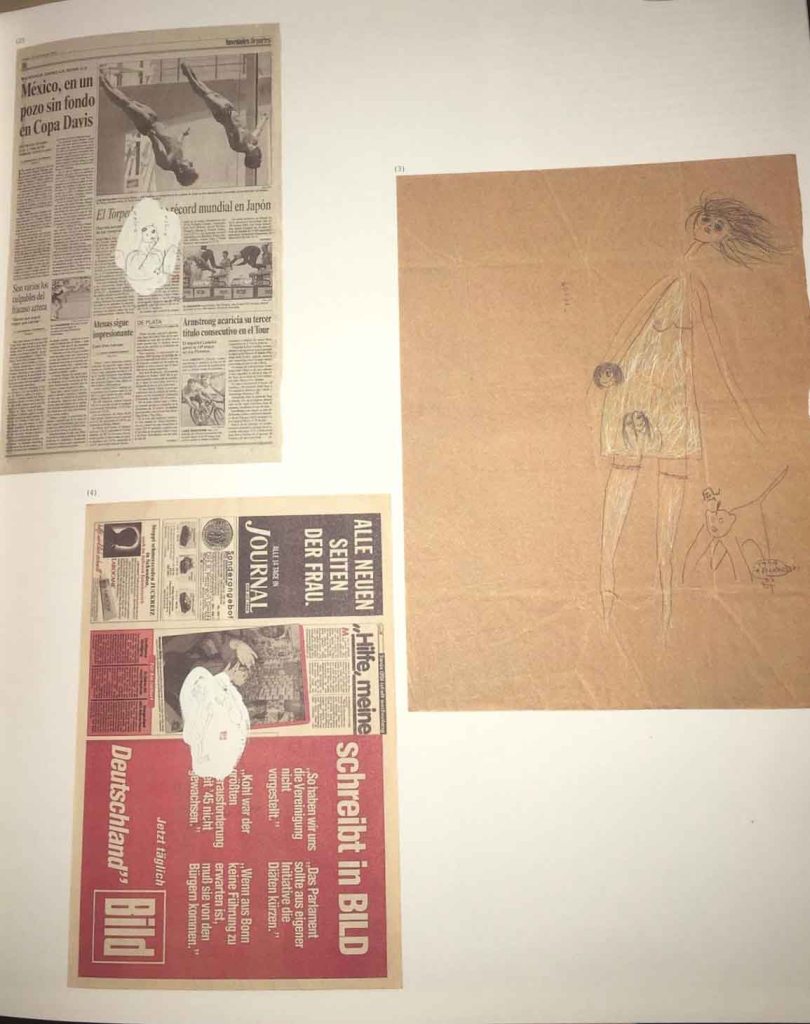
(Image from: Dexter, E (2005). Vitamin D: New Perspectives in Drawing . England: Phaidon press)
As a final trial for this project, I choose a page of a newspaper and paint a white cloud for my drawing to sit on. I choose a page with an image of a man with the arms crossed, which mirrors my crossed legs. I blacken out the face so that it doesn’t become the main focus .
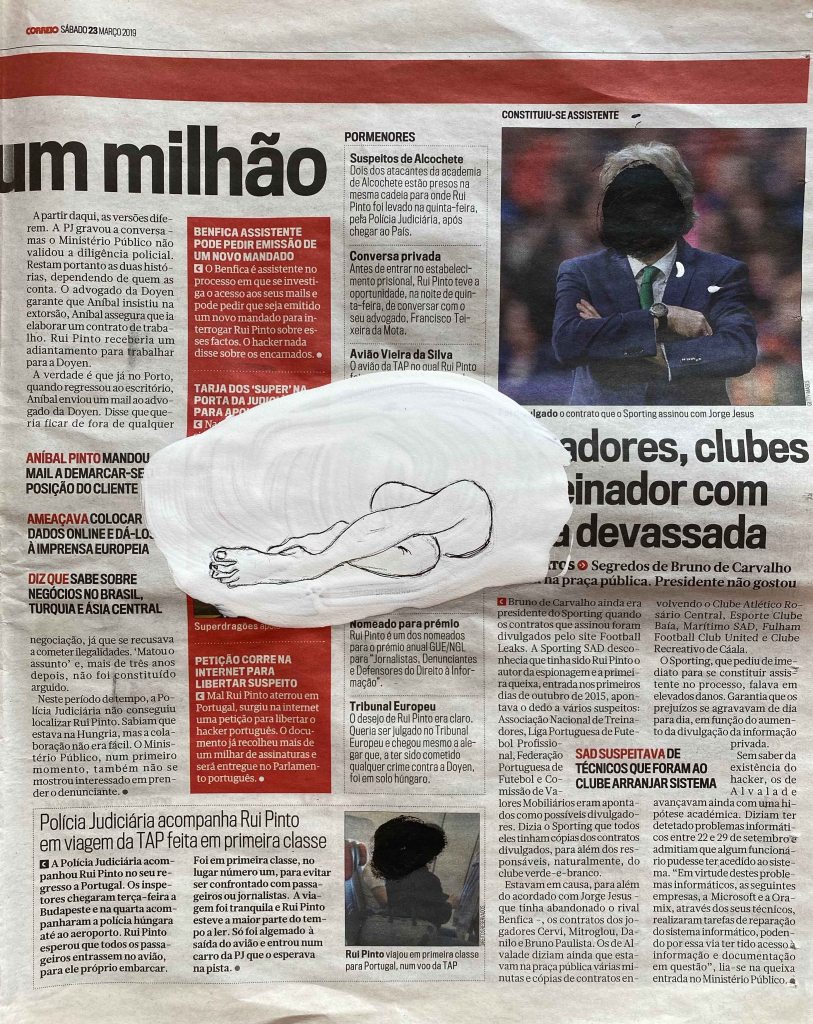
I like this final of many versions of this pose. I has an interesting interaction with the other elements of the page. It is placed on a different layer through the white dot, but competes in strength with the hard red blocks, the rather strong image top right and the larger texts. The drawing itself is a little caricatured with the foot too large. The man with the now black dot head is looking down at the drawn legs.
Reflection: How far does your drawing direct the viewer’s gaze? Did you manage to retain the tension in the limbs – or do they seem a bit floppy and directionless? Have you managed to add an extra dimension to what could otherwise be a technical or academic exercise?
I think this pose directs the viewers eyes in an interesting loop. When this symbol like drawing is small at the bottom right of the page, it redirects the viewer back towards the center again. It reminds me of an infinity sign or of the letter in an unknown pictorial alphabet. In the last version on newsprint, it competes with the many other strong elements, but I find that after scanning the page, the eyes return to the loop of the legs.
I have allowed the process to guide this project, responding to way the paper wrinkles or the graphite powder blows instead of approaching it from a technical or academical way. Inspired by the previous projects, I have played more with composition and scale than an accurate anatomical drawing. I can think of so many interesting ways this project could have gone. I lost sight of the Egon Schiele inspired way of seeing the limbs. I will choose to continue looking at the human figure for the assignment though and develop this further.













 Clara's Drawing 2