Course manual: “Aim: This project should make you very aware of how your brain works when you’re drawing – by changing the sense that you’re translating into physical movement from sight to touch. As you’ll see, translating the visual processing of three dimensions into a physical movement designed to leave a trace on two dimensions, which in turn may give the illusion of three dimensions, is a highly sophisticated process.
Method: Choose a smallish object you know well, preferably something with a fairly distinctive shape. Position it on a table with a sketchpad next to it. Put your pencil in the middle of your sketchpad then close your eyes. Reach out for your object and feel it; as you do this, make a record of what you feel on your sketchpad with your pencil. Feel free to take a peek and reposition your pencil at any time, but do so as little as possible. Make several studies until you feel that you’ve arrived at something interesting.”
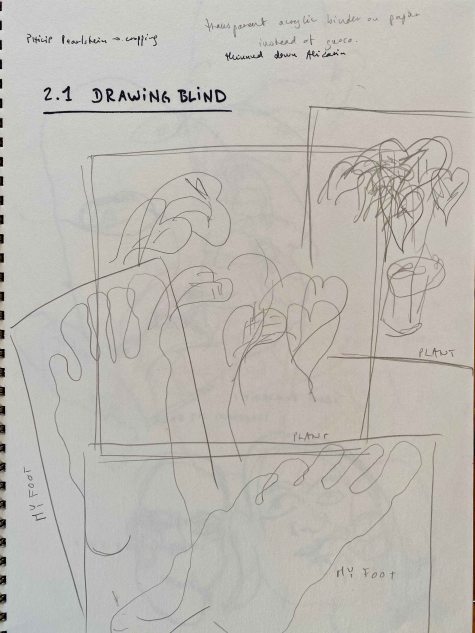
I start this exercise in the A4 sketchbook, by choosing to touch a small plant on my table. I also try it touching my foot.
I am noting an interesting resistance to letting go of the control that the sight gives, there is an urge to peek .
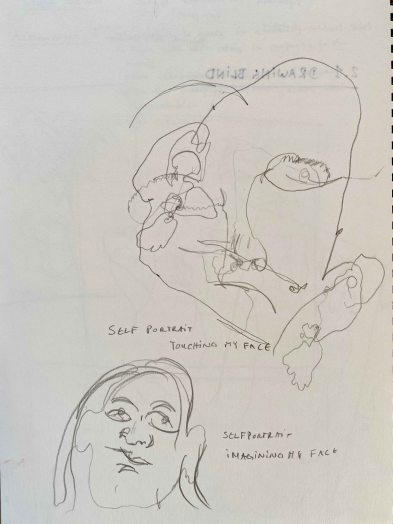
Having little time to myself these quarantine days, I transform this into a family activity, where we all, baby included, sit around the table and draw blind. I touch my own face for self portraits and then we draw each other without looking at the paper.
This produces some hilarious portraits and much laughter- I can definitely recommend it as an activity for quarantine days!
It is interesting to note how it took several attempts to move from a schematic, imagined view to actually draw what I felt, touching my face.
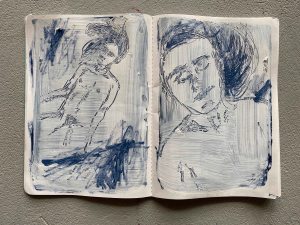
On this page, I tried to touch my face for the top one, and imagine it without looking at the page for the bottom drawing. The touching one definitely feels more evocative and true, compared to the imagined one that becomes a caricature. In the comparison, I understood that when wanting, I could let go and record the sensation of touch, and rather than trying to substitute sight, let that lead me to a new language.
Since coming to this house, we have had good laughs about the horrible tiles, the crazy layout of the rooms, the low ceilings- which all seemed really funny as we were planning all the great renovations we would do- move walls, open up glassdoors to a wonderful deck, change the whole kitchen and bathrooms of course.
A couple of moths later, due to the Covid 19 virus, here we are all of us safely tucked away without any income. Suddenly we will just have to love the house as it is!
While still believing that it was very temporary, I had some fun painting the kitchen
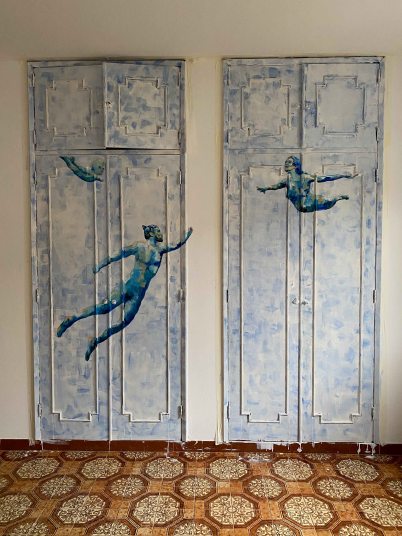
The bedroom closets
This week, already in quarantine and it dawning that this is not so temporary- the door to Tom’s room:
A couple of chairs:
The door to my room is next 🙂
This is already a very crazy house, but there is no reason to stop now! I am already looking at everything as a potential canvas.
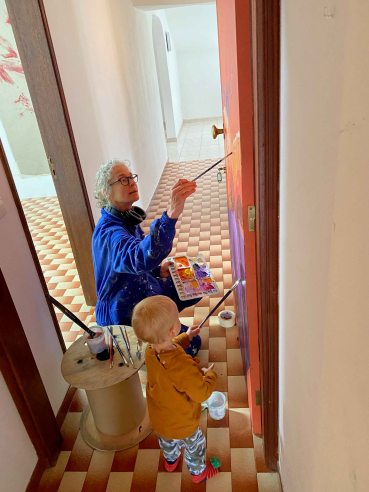
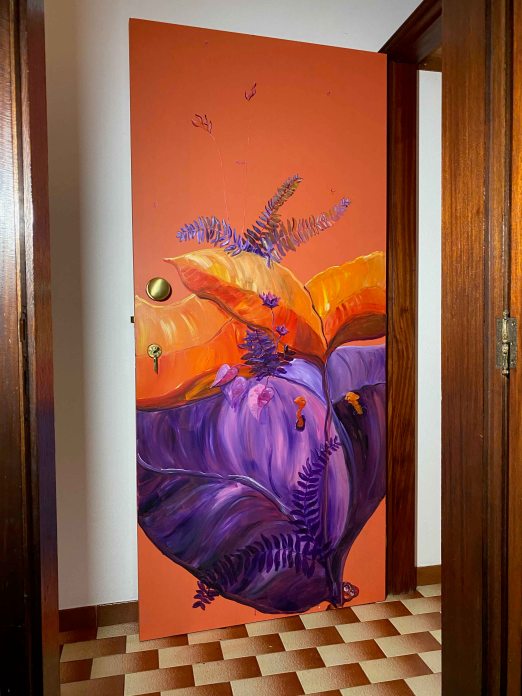
This is how the orange door turned out:
And the door to the gas bottles:
My little assistant is happily painting along with water for now, but she will probably soon discover that my palette is different…
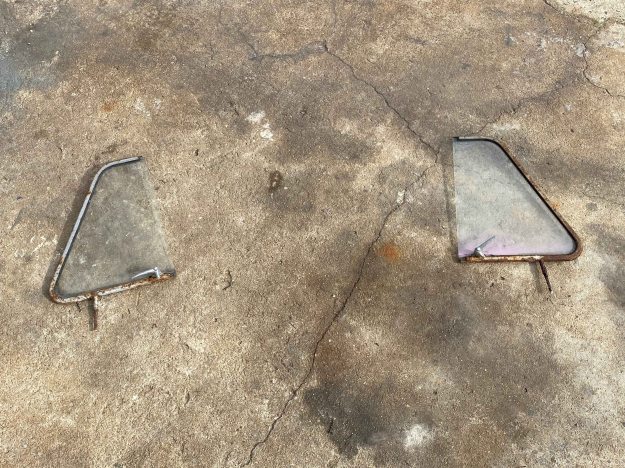
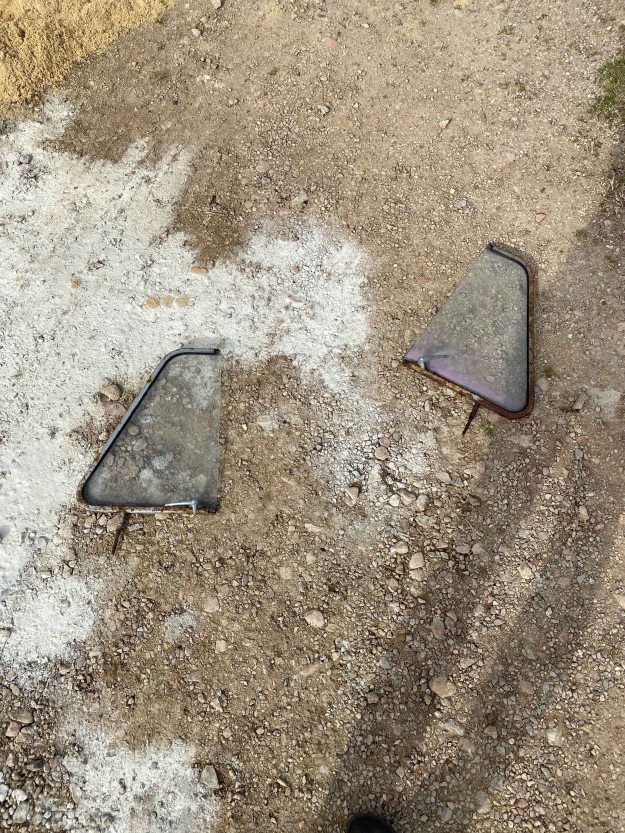
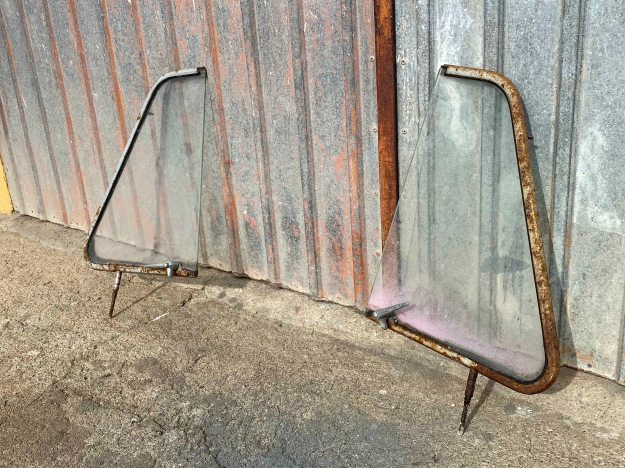
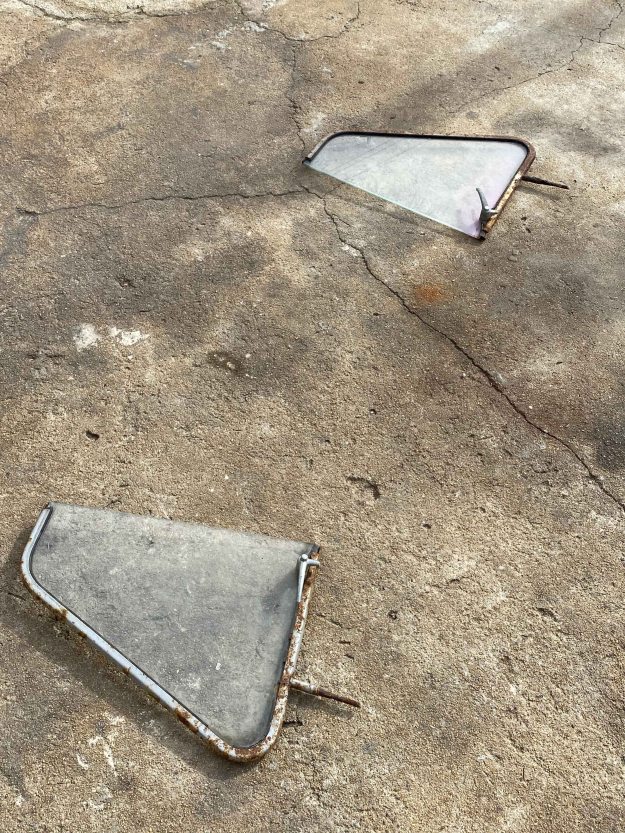
I have used various glass panes as supports for a series on drowning around the well. Now I am considering how these pieces of glass already tell a story of their own. Especially, there is a couple of triangular pieces of glass, that tell the story of coming from a old car. I started out by imagining what narratives I would paint on these pieces of glass, when I realized that just looking at them, the imagination of the viewer could already see so many different stories around this car.
Maybe the pride of driving it shining new all those years ago, a kiss, a road trip, shopping, an accident…
I let these pieces tell their story themselves, by simply placing them in different spots on the entrance driveway or outside the garage.
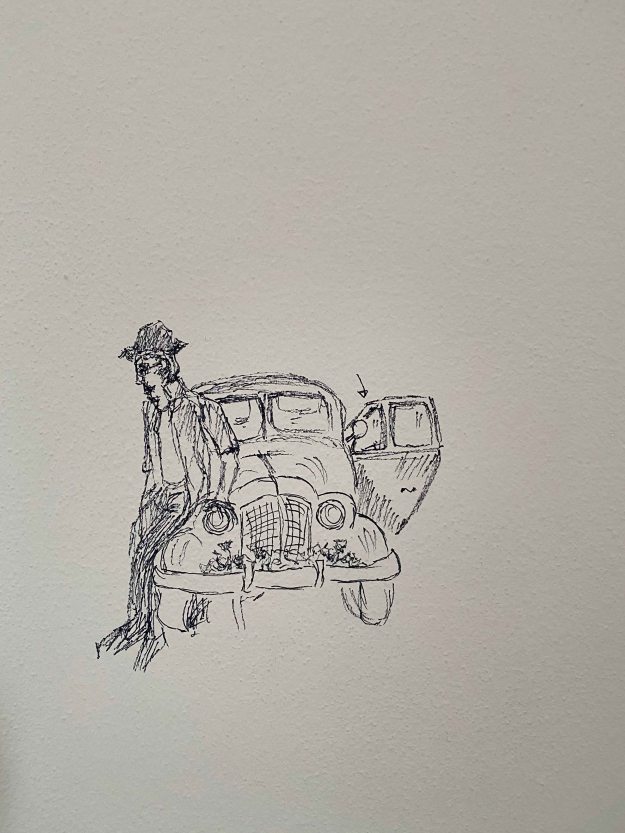
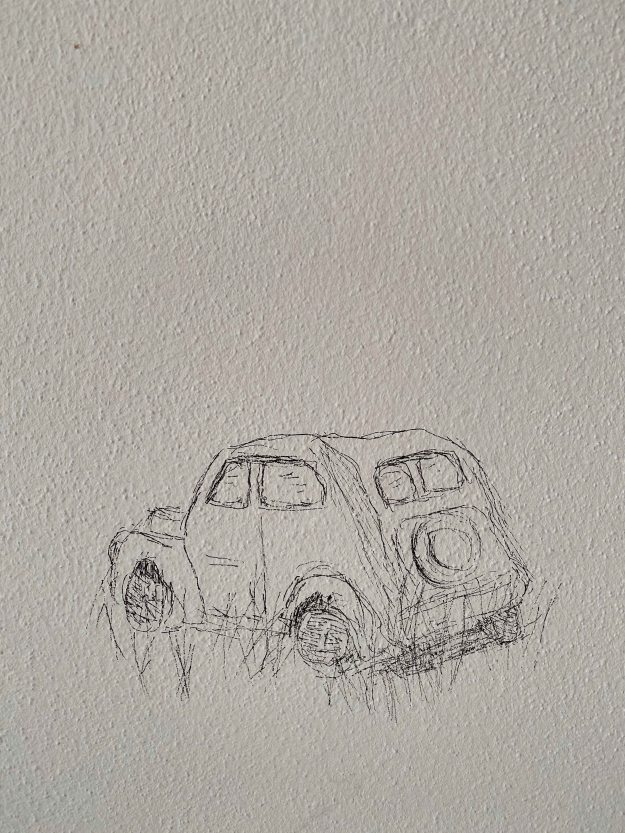
I am using “the empty room” that I describe in another blogpost as a sketchbook and include two small drawings on the walls about this car:
The well is a place of life and death in this area of long , dry summers. Anyone who asks about the house, asks if it has a good well, and yes, it does. There is also a darker side to the wells- a long tradition of suicides being committed in them. I though it was a joke when my Portuguese partner saw it as an absolute priority to order a new metal lid with a lock for the well, but no, it is really taken seriously.
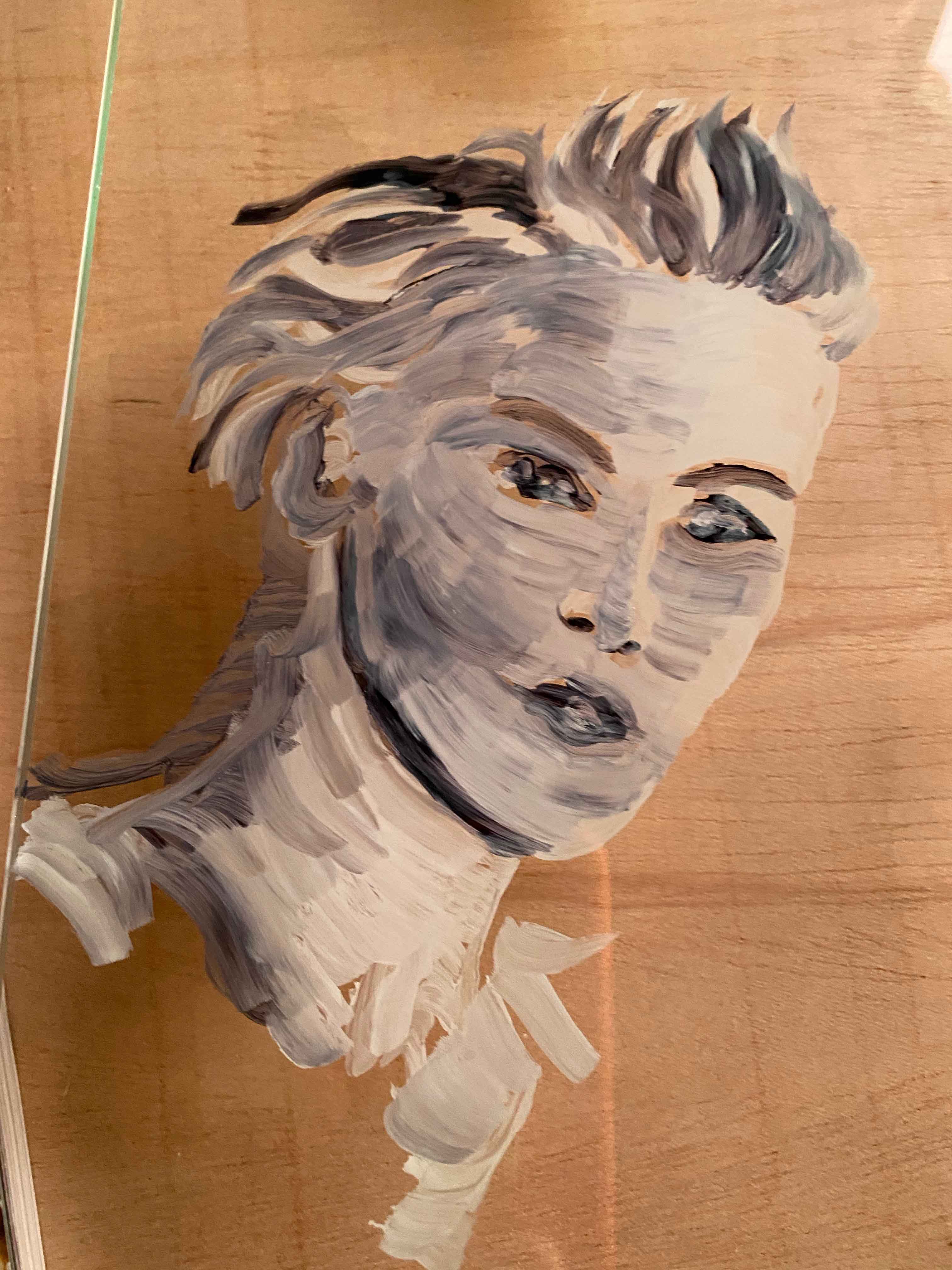
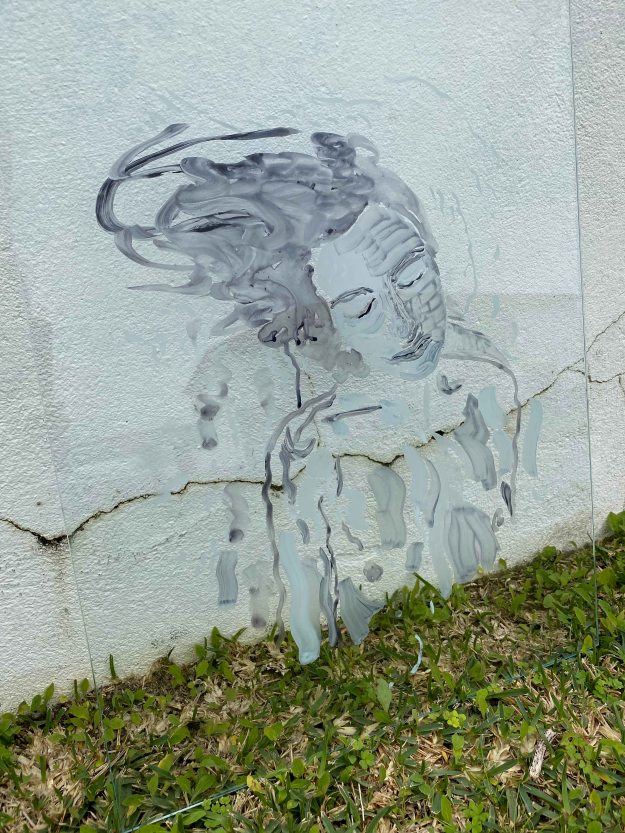
My imagination connected the many stories of drowning and suicide in the wells with the collection of glass I have found on the property. I want to draw portraits under the glass of floating faces at peace.
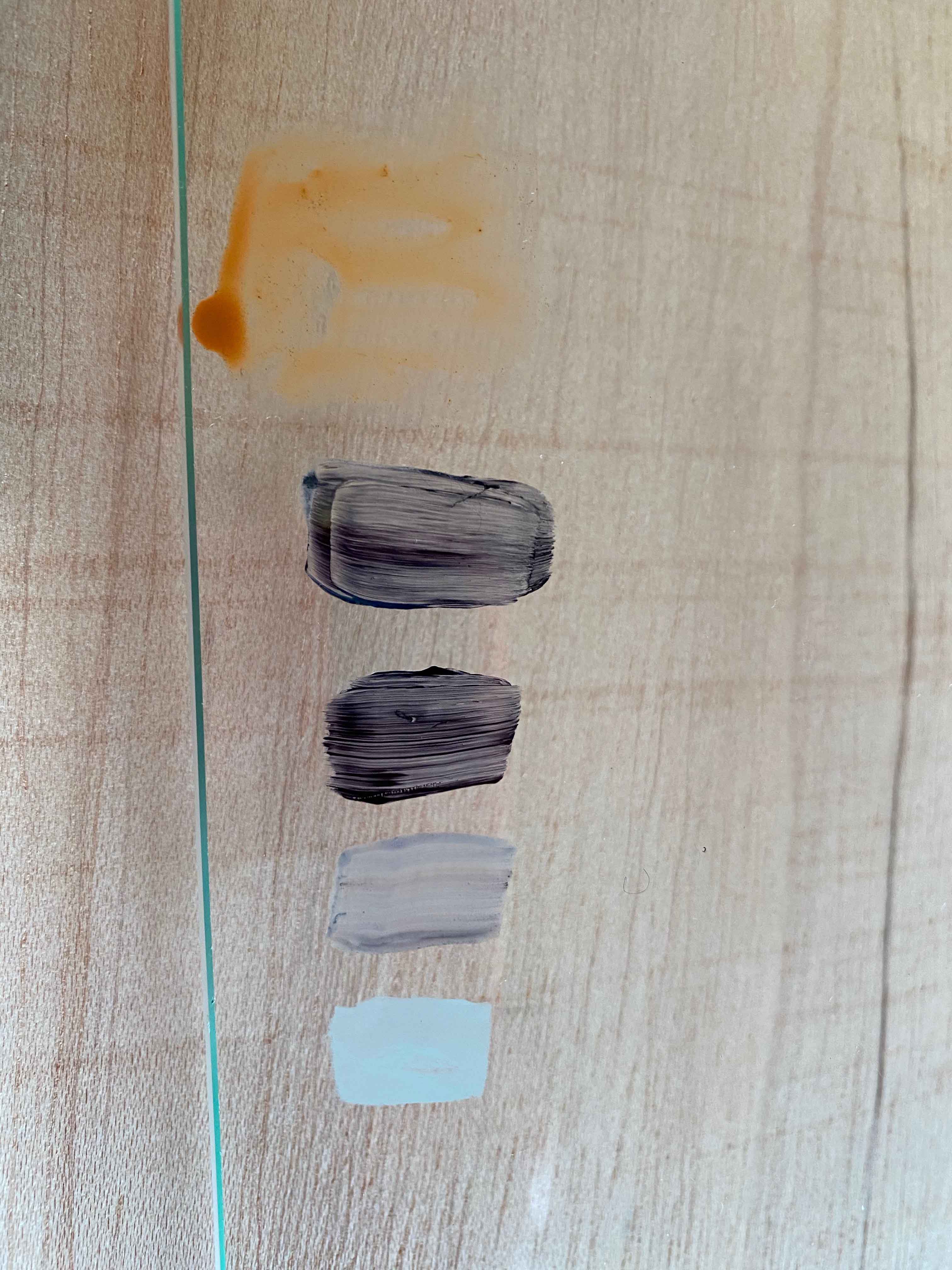
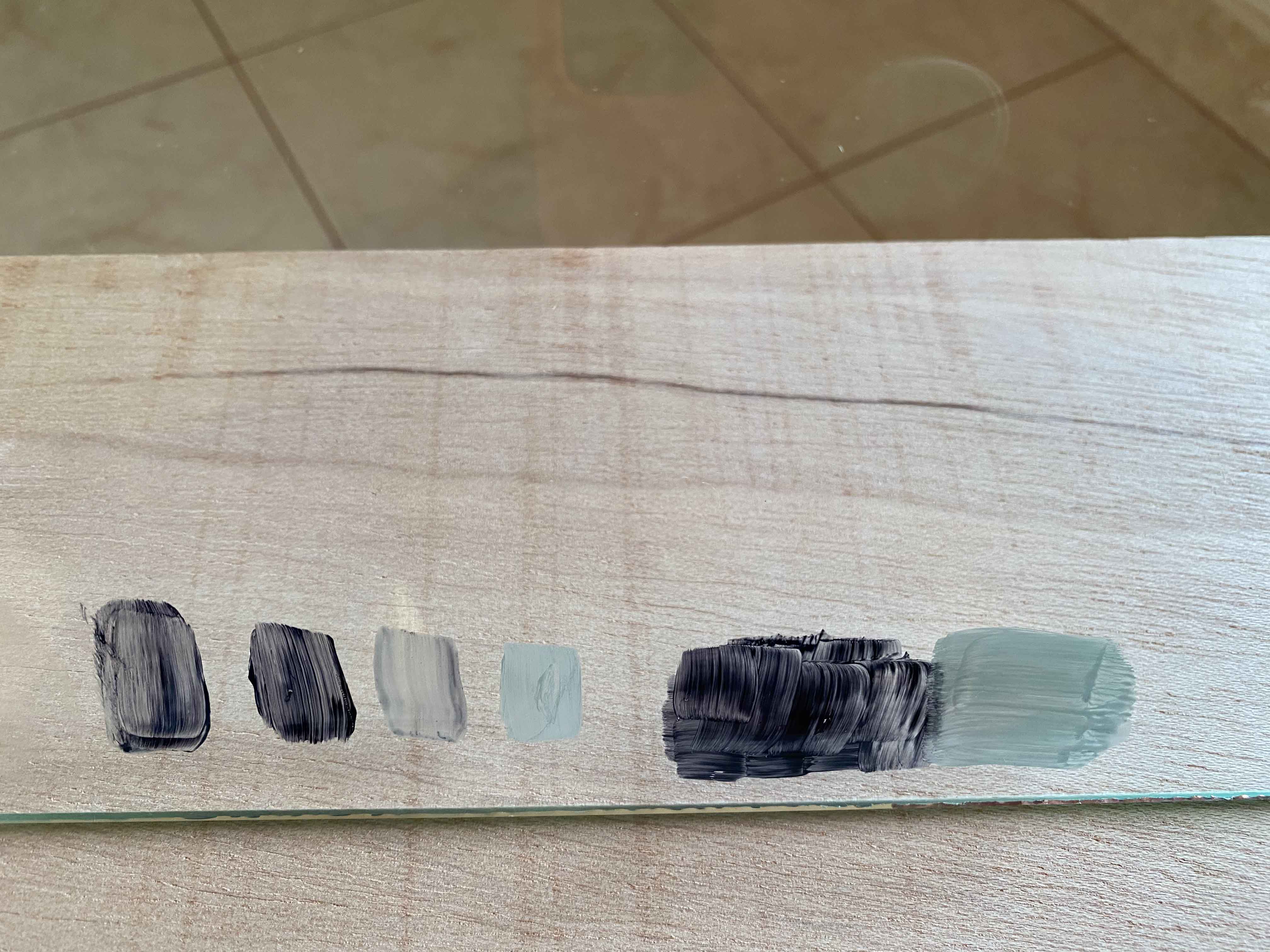
I start by trying out painting with Cobra watersoluble oil paints on glass. My idea is to introduce water or drops at some points and let the image drown.
I ask my freediving friend Isa to send me some photos of herself under water to understand the facial expressions under water.
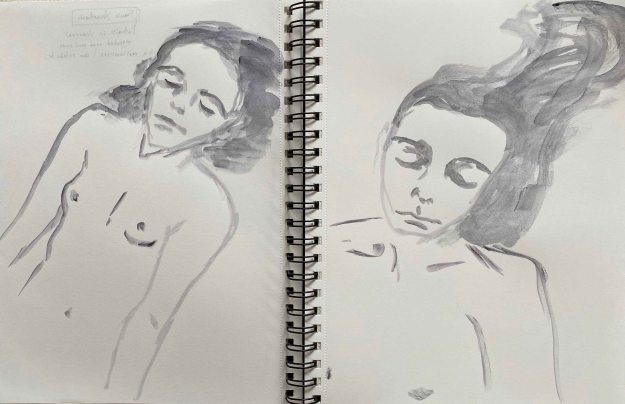
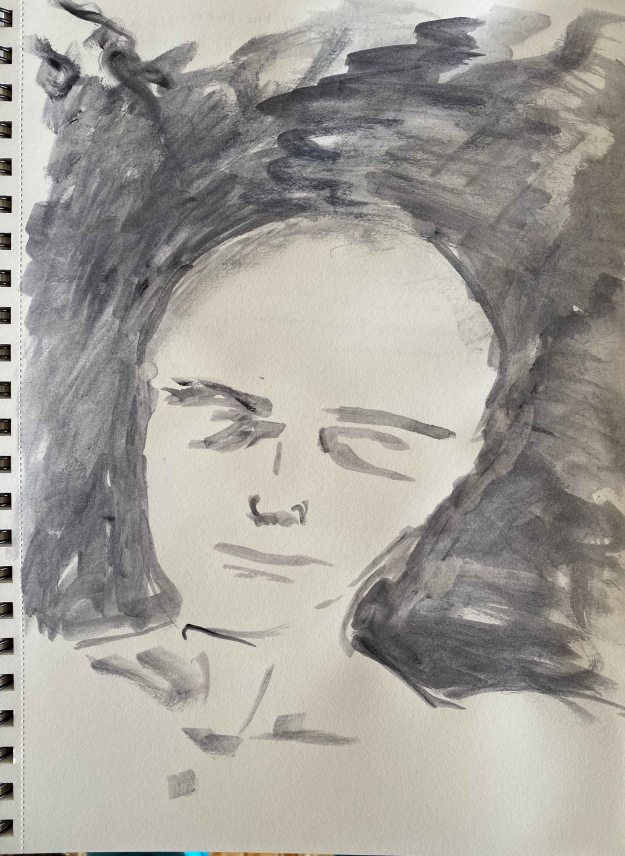
I start with some sketches using these facial expressions under water from the photos, but for different faces.
I am currently on Part 2.2 using sgraffitti, so I try out different compositions in this technique :
These are quick oil sketches in my A4 sketchbook:
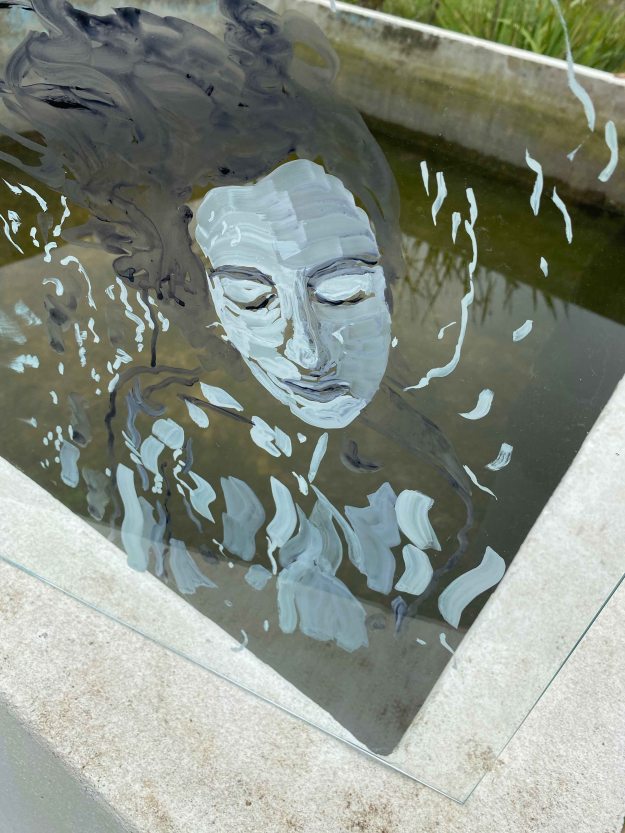
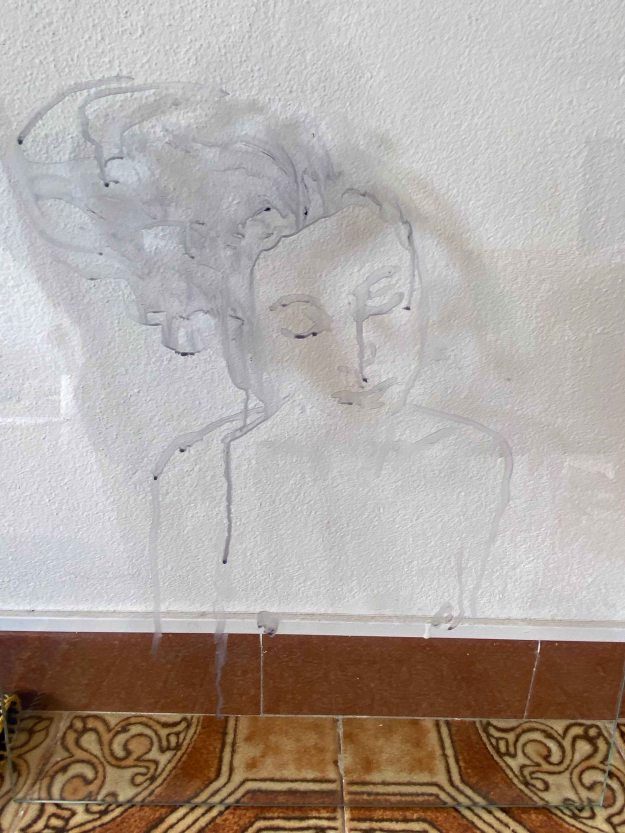
The glass all have different qualities. I choose a large but thin and clear glass, probably from a shelf for Isa’s delicate face floating under water.
I carry the glass outside and photograph it in different locations. It is a symbolical walk that ends up leaning on the well and finally perched over the opening.
Where I dip it in water and let it wash away….
I am quite fascinated by the water soluble oil paints that have a thickness and viscosity that feels like traditional oil while painting, and then wash away like any water soluble paints. That said, the washed away face is too much, it does not leave anything to the imagination of a viewer.
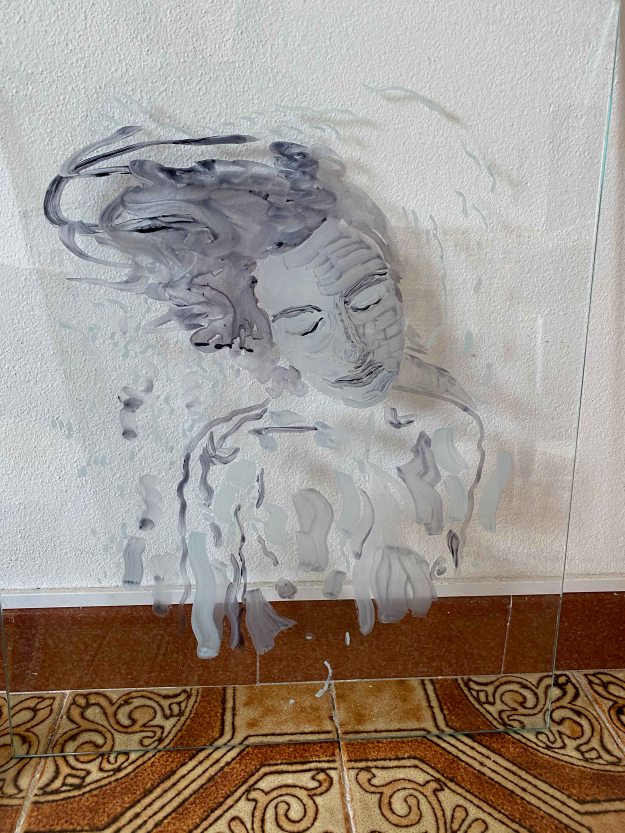
Also, as for the image I painted, I realize that as so often, my very quick sketches in the sketchbook seem more true and have a softer ephemeral quality that I would like to keep. For a second trial on the glass, I choose to sketch lightly using only Payne’s Grey and a light outline.
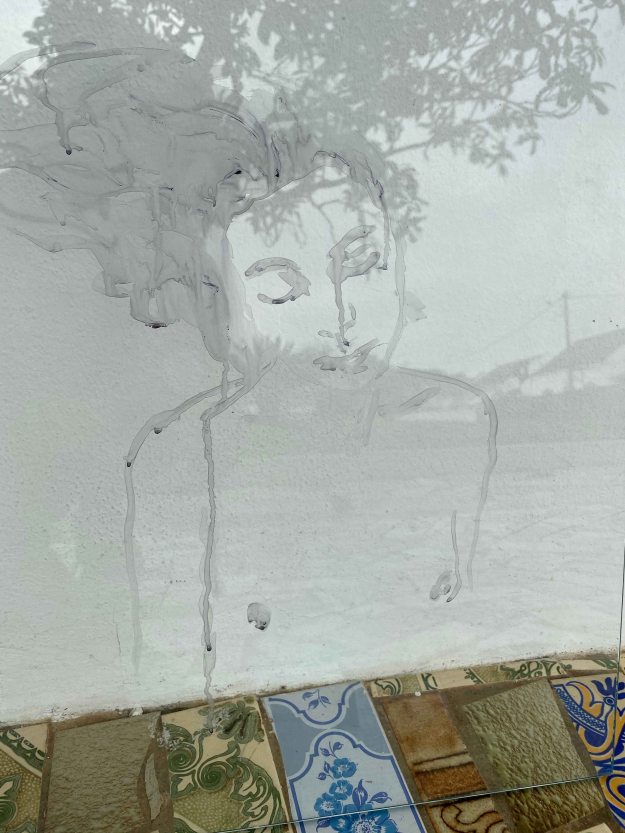
I am happy with the softness and delicacy of this painting- it catches the ephemeral quality I was after. I decide to not wash it away, but merely let a few drops show the contact with water. I continue by carrying the glass outside and taking photographs.
I particularly like this image where my house and the large tree in front are reflected in Isa’s face.
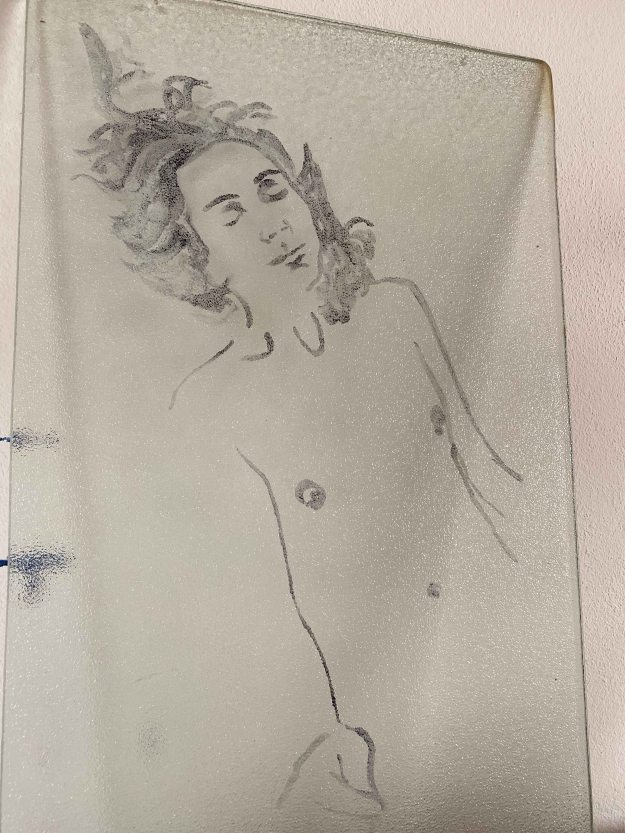
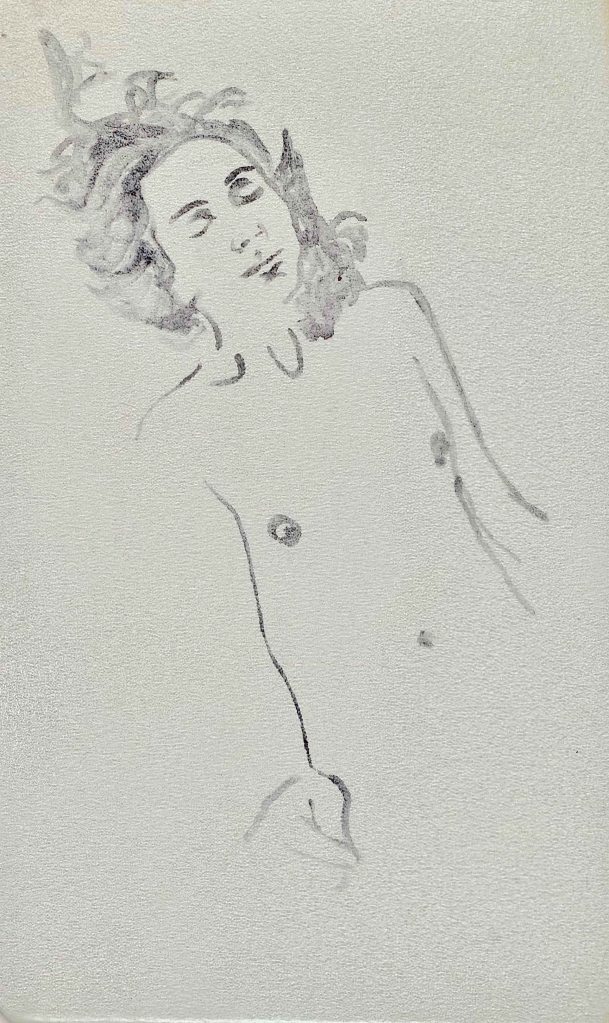
I decide to leave this glass for now, and choose a thick, frosted glass, probably from a refrigerator for a second image. I am using Isa’s facial expressions but want to feature a different person.
I like the posture and the expression here and decide to put it away and see what wants to happen with it later.
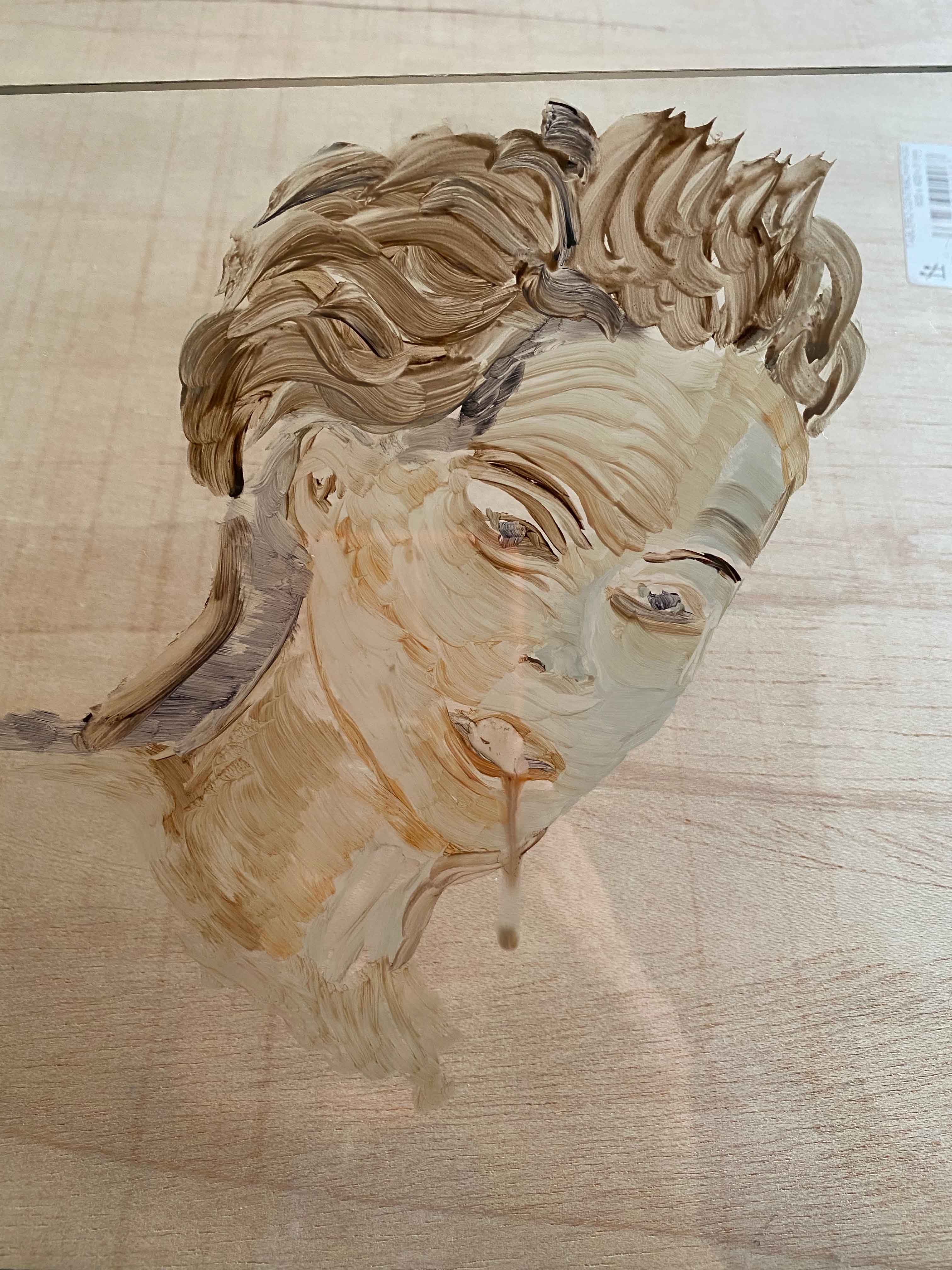
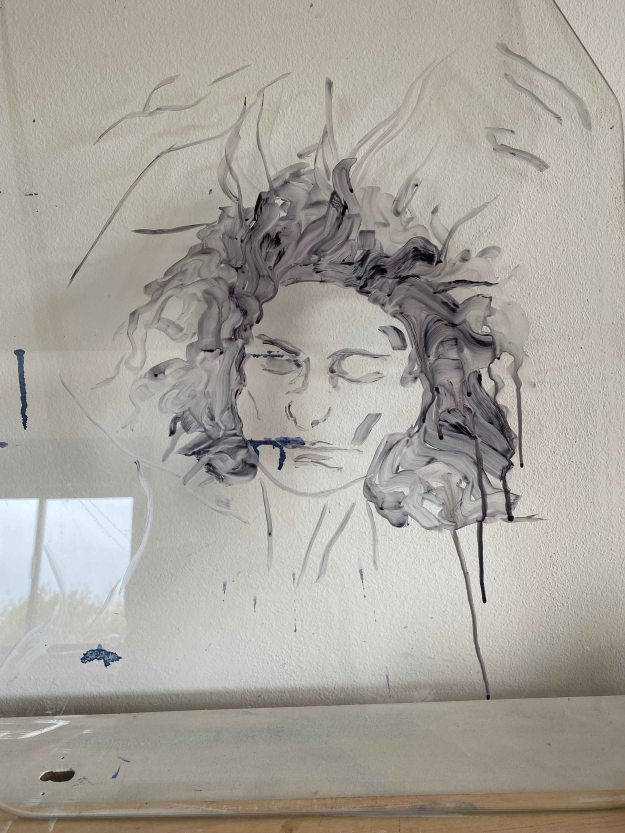
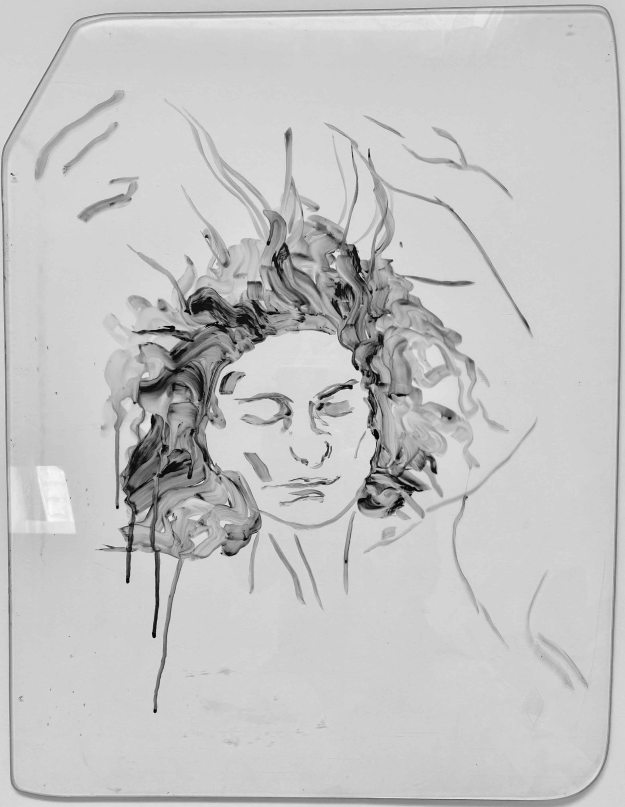
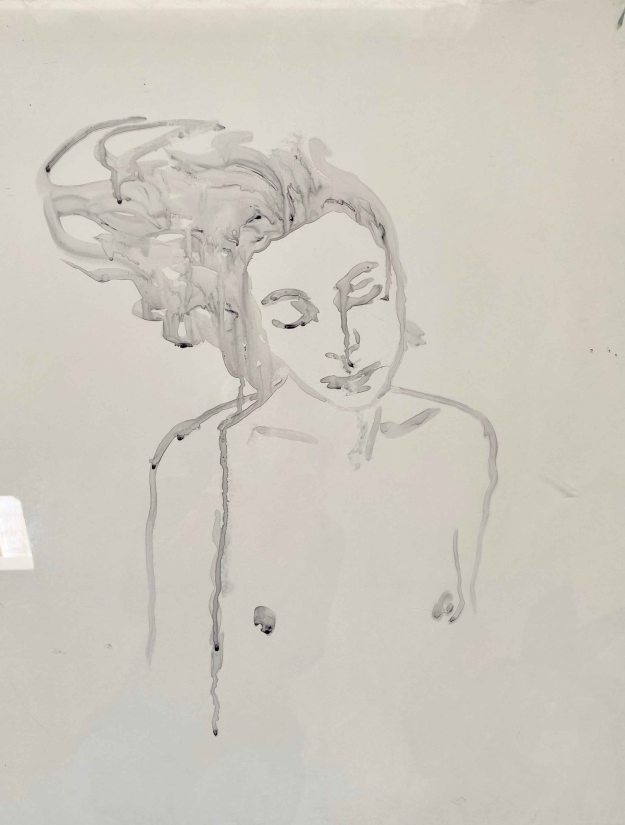
I pick yet another glass, a transparent thicker one and paint a face in a close up, with the arms floating up over the head hinted at.
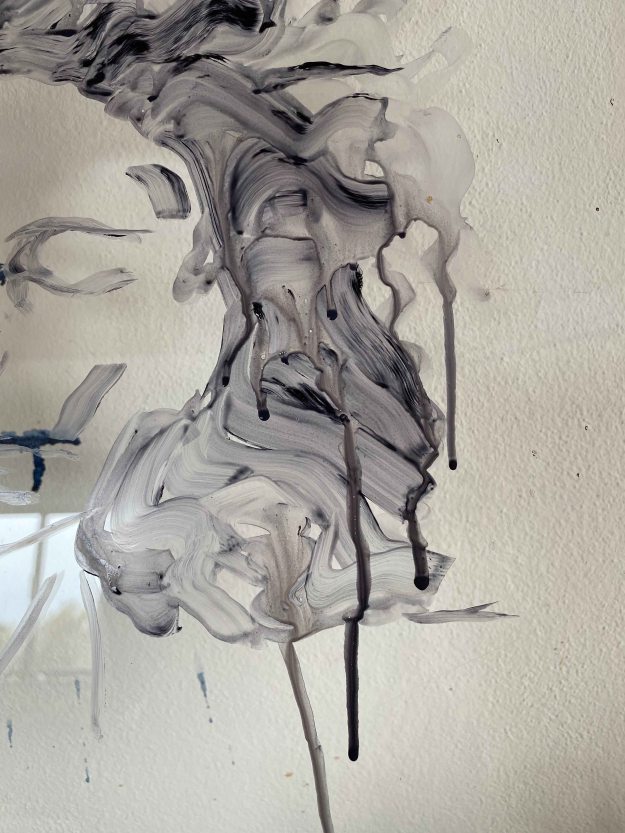
I like the details of the running paint in the hair while the face is clearer.
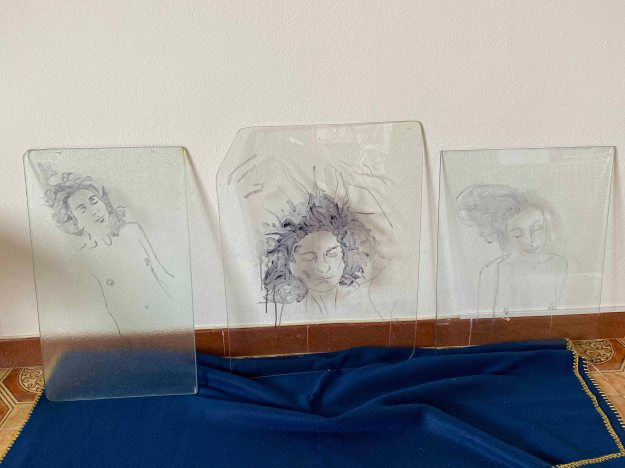
So I have three portraits under glass that I will set aside for the moment:
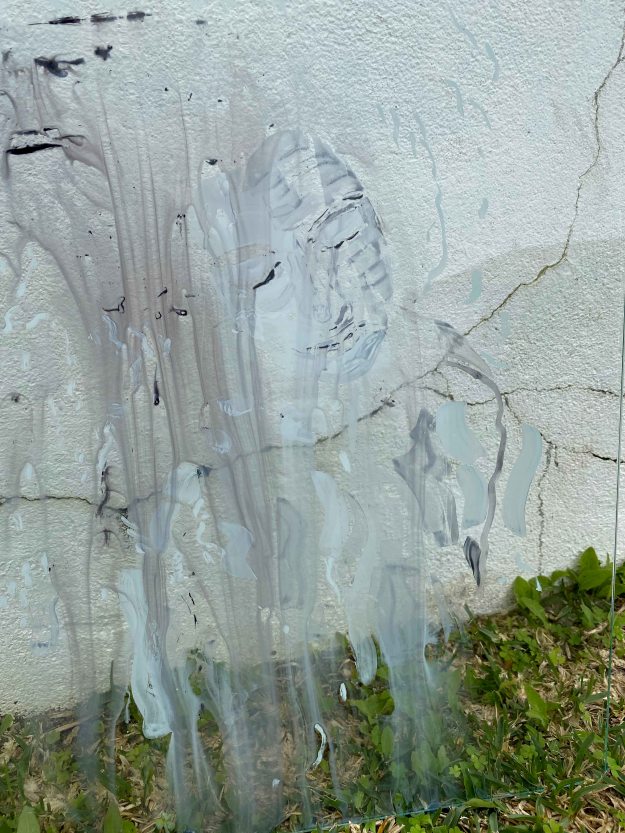
A light rain is starting to fall, and I have the idea to paint another face on glass and leave it out in the rain and see what happens.
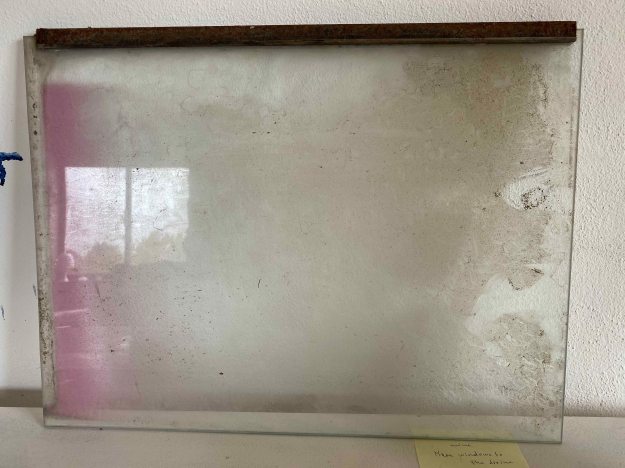
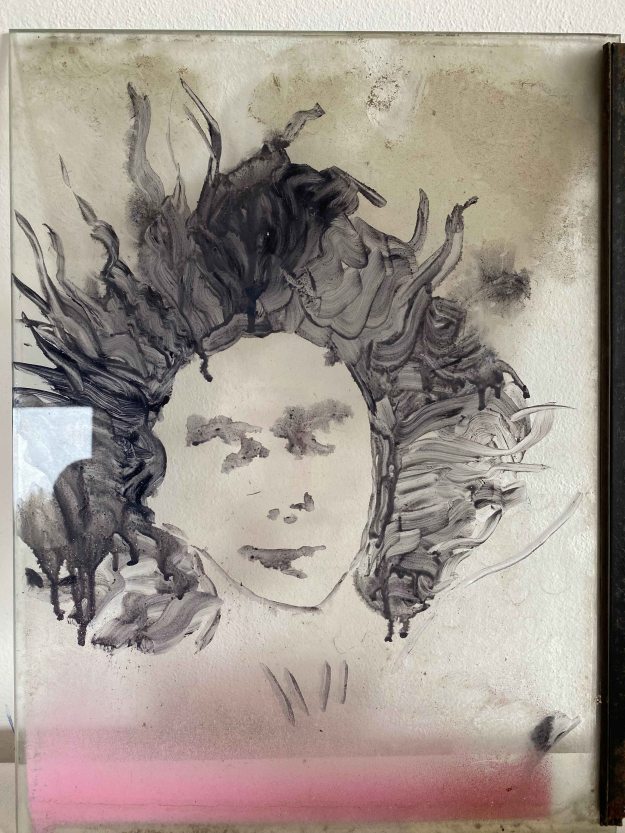
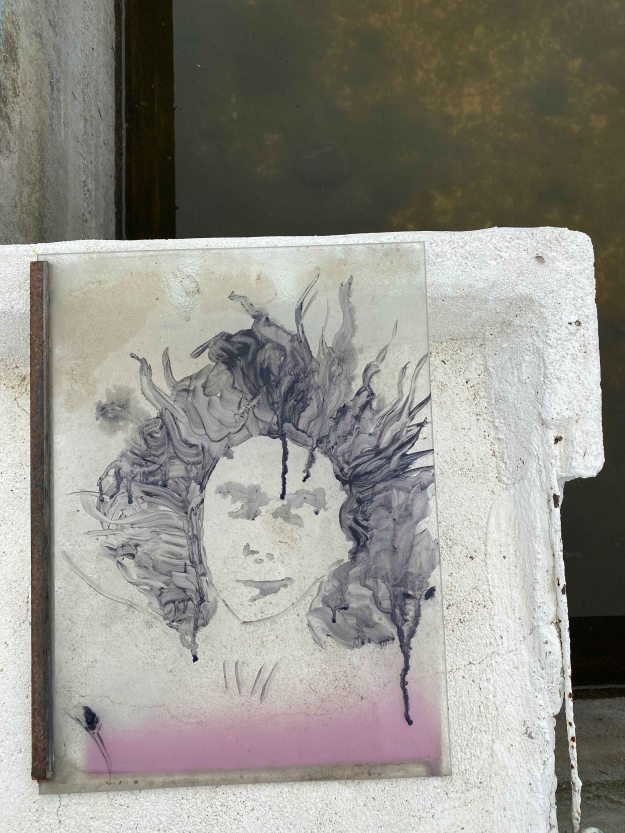
I choose a piece that has a rusty border and a strange pink trace of spray paint. I decide to leave it as dirty as I found it.
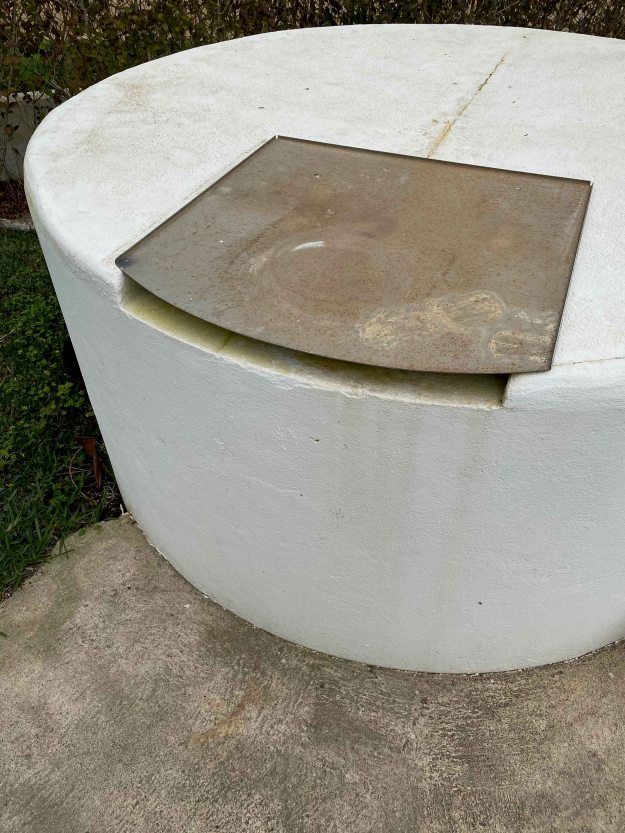
And this is the image that I leave out on the well in the light rain:
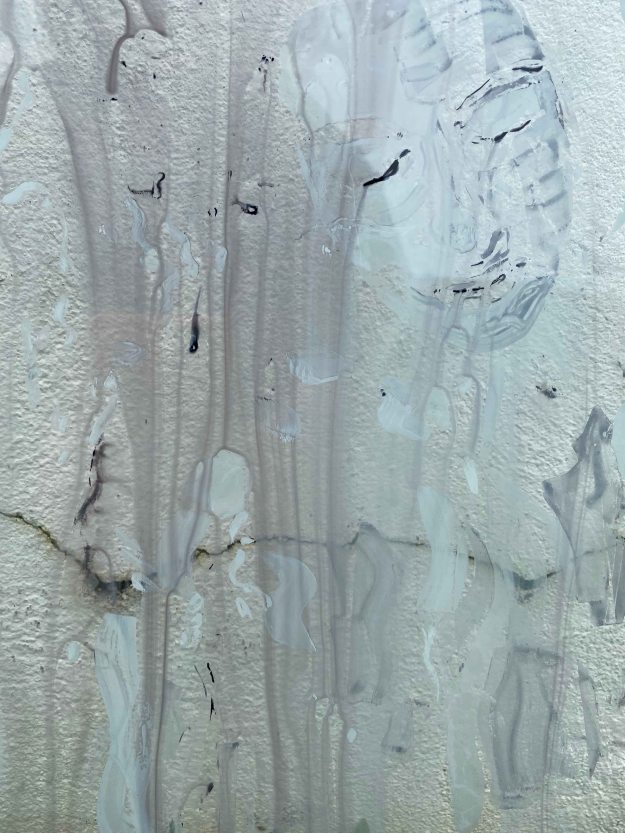
The next morning , I am surprised and disappointed that nothing much has happened to the image.
I continued sketching on this theme for the Project 2.2 Markmaking materials:
I am quite fascinated by the paintings of Genevieve Figgis, who allows the paint to flow and puddle. She has often used various metal plates as supports. I want to experiment with very liquid paint ( watersoluble oils? Oils and Liquin? Acrylics and water?) and let it have a life of its own on the slippery glass surface. For the narrative, I have looked at how Marc Chagall tells his stories in different planes of the canvas.
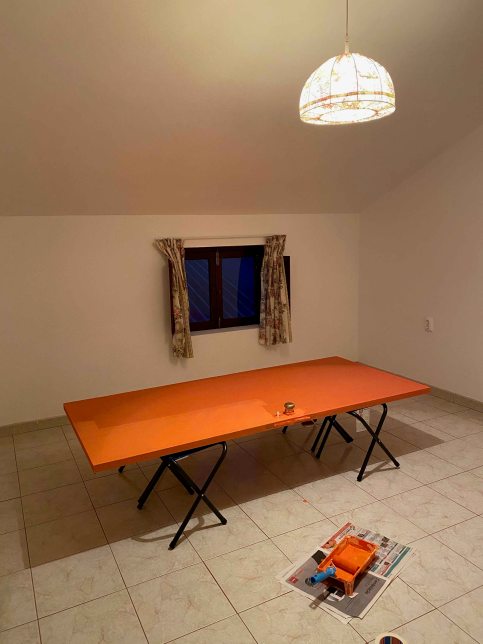
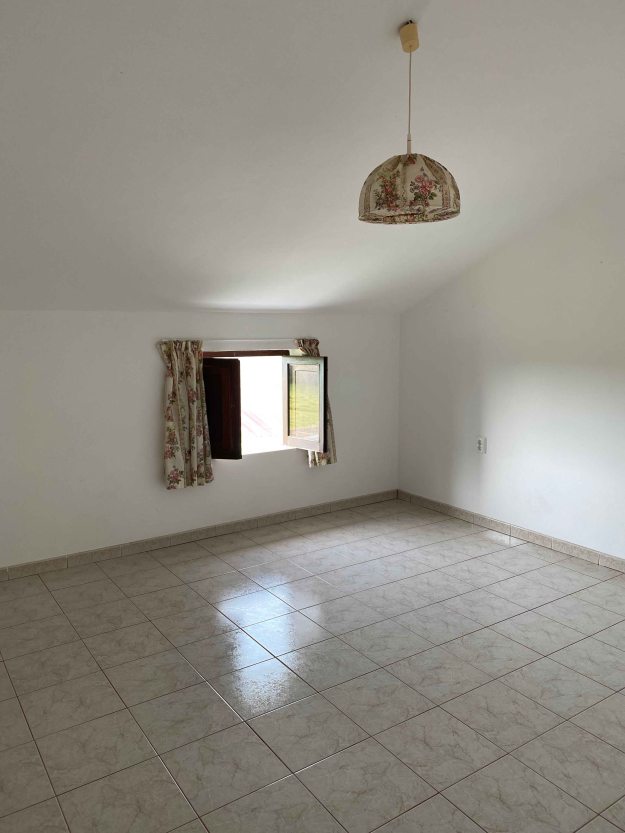
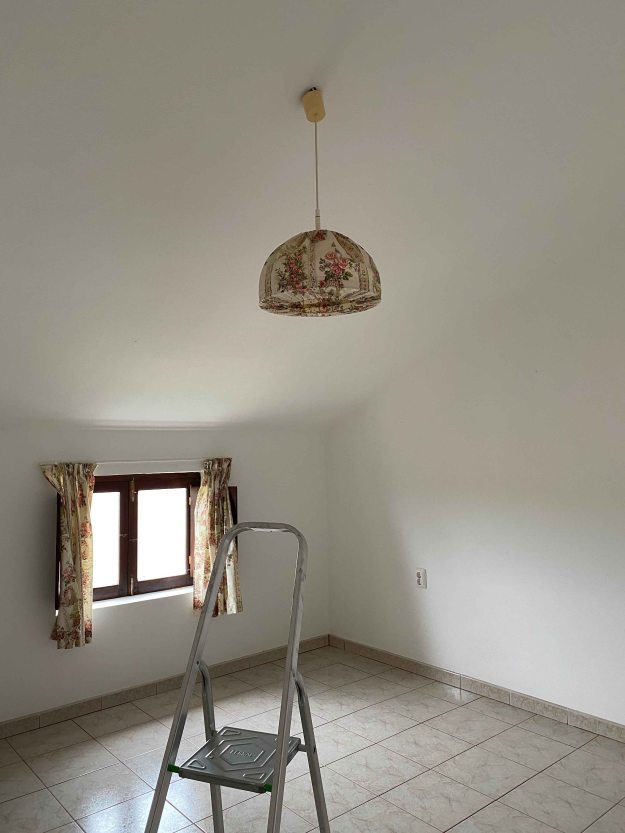
In several of the rooms, a lampshade is left dangling from the ceiling and some curtains left on the window. In a way, these lonely left over objects just emphasize the emptiness of the room.
This room is to the North and always cold and dark. It has a weird shape and really low ceiling to one side. When I first saw it, it had very much very dark, heavy furniture in it and I can still feel the energy of this dark heaviness lingering. It took me a good while to even clean it out and it is definitely the space I have spent less minutes in.
I will change this by making “an empty room” one of the objects for the parallel project and by using this whole room as my sketchbook to record many of the stories I hear about the village.
I plan to start different stories at different parts of the walls and then continue the narratives til they meet and create a pattern over the room. At some point, these walls will be smashed and I will collect the stories as dust in a suitable box.
Hera I am, ready to start. A whole white room as my white page. And now I need to decide where to put down the tip of my pen.
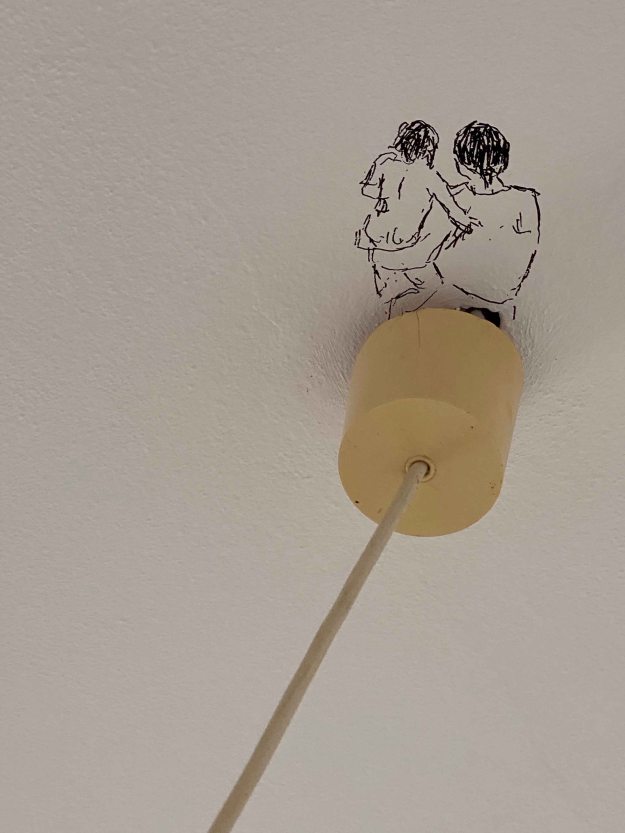
The dangling lampshade seems to be the center around which the space moves and I climb the ladder to start there.
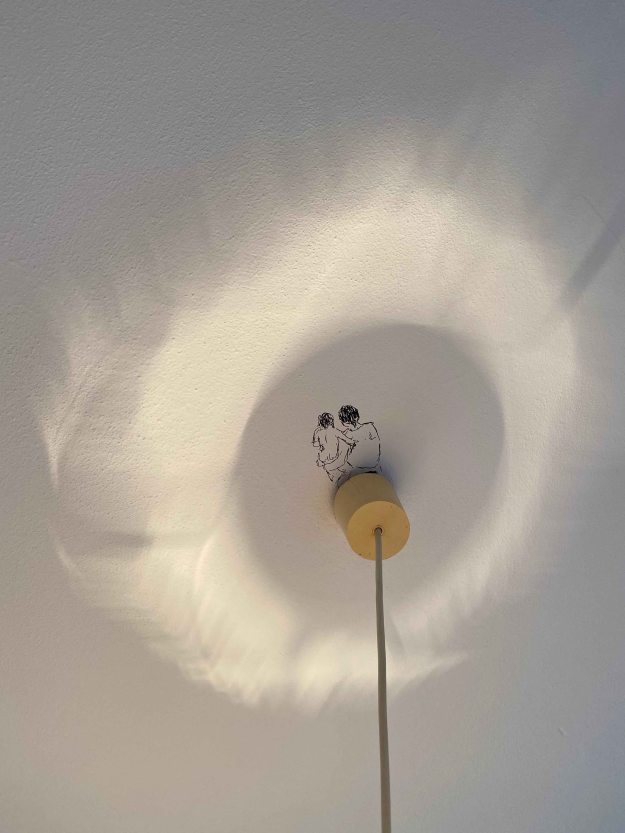
I start with my neighbor Donna Maria’s account of her first memory from when she was 3 or 4 years old and still little enough to be carried by her mother.
When I switch on the light, I am so happy I chose to start at this point in the room:
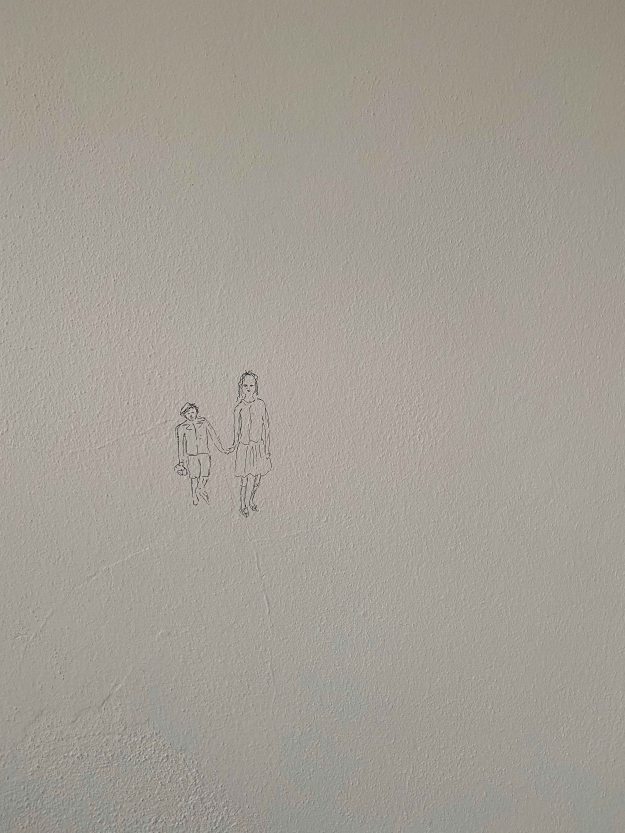
I start another story on the wall to the East, about Maria Jose walking to school with her little brother, the 4 km to the nearest primary school.
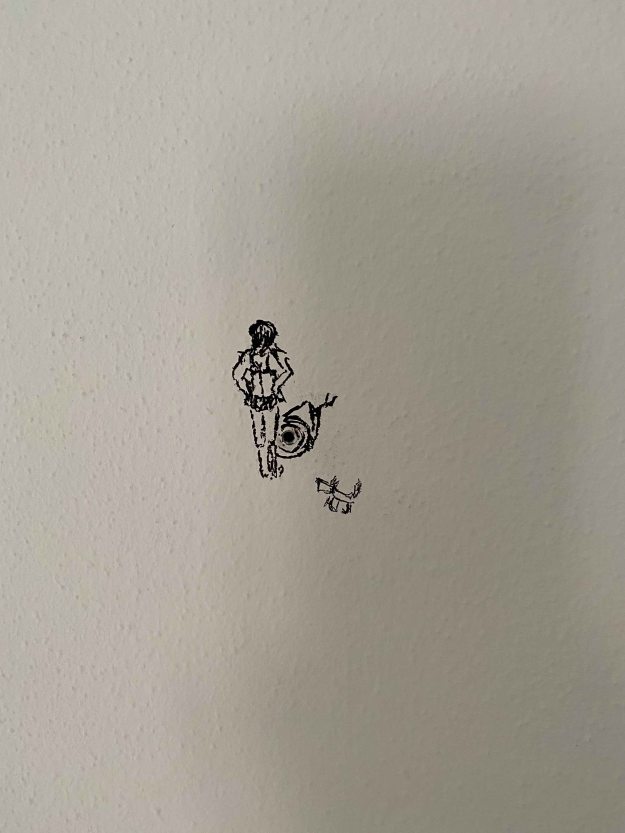
On the back wall, her granddaughter has a dog called Boss.
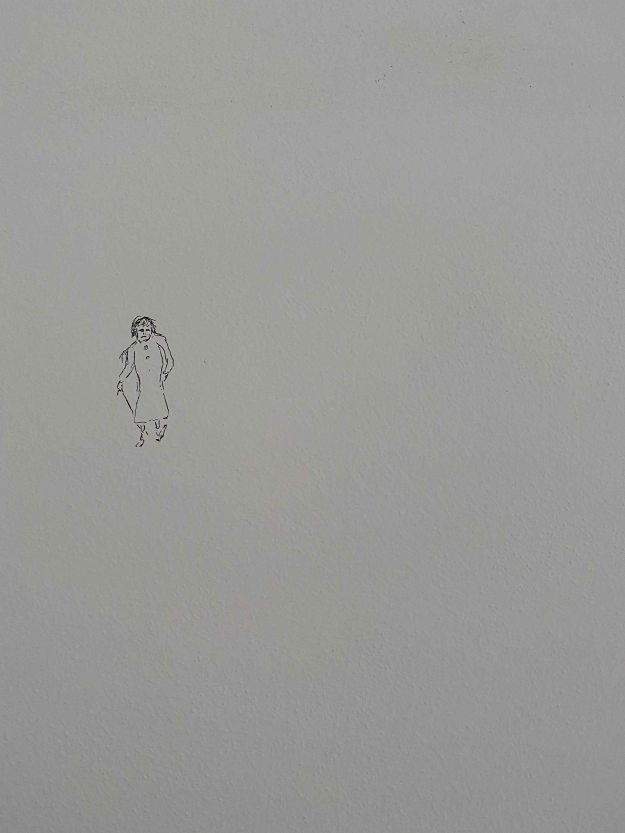
I realize that all three stories start with relationships- to the mother, to the dog, to the brother. I decide to leave the Western wall to a lonely figure- Donna Laura from the house on the other side of ours.
Her story is very sad. I will let it evolve around the figure in time.
I have written another blogpost about all the glass I have found, and some of the pieces are clearly from a car. I decide to let other parts of the walls start with stories about the cars from which these glasses came- using this room as a sketchbook:
I prepared several different pens, with the idea of letting fainter drawings lie further back in time than thicker, clearer drawings. I will let go of this though, as I will use the walls more freely and allow myself to grab whatever pen is at hand at the moment.
Spinning these drawings together in stories adds the dimension of time engrained in the piece, as well as the two-dimensionality of the drawings and the three-dimensionality of the whole room.
I will resume the drawings now again on this fresh coat of paint. There will probably not be any grand finale with breaking the walls and collecting the dust, but this room will still be the sketchbook for the stories.
Suddenly we also live full time in the unrenovated house with all the family, due to the lock down, so today it occurred to me that our presence, our life here will weave into the sketchbook entries on these walls too. We already belong to the story of this house.
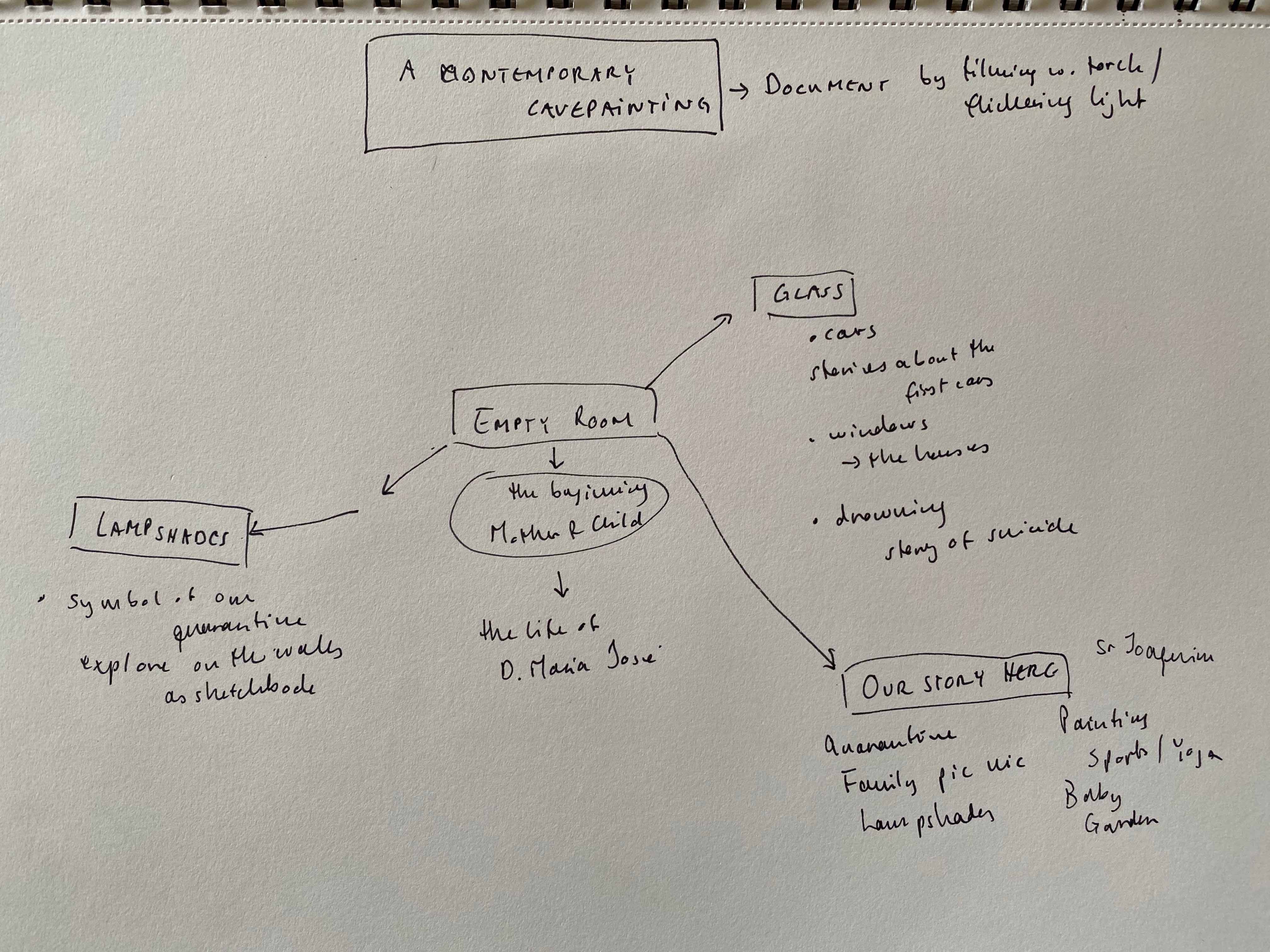
The new map of this “empty room” looks like this:
The motives of the sketches on the walls here will connect to all other parts of the parallell project.
Our presence here first appeared with small sketches from a photoseries I did with my daughter and granddaughter wearing lampshades on their heads:
These are sketches for oil paintings that I logged more about under the part of the parallel project “lampshades”.
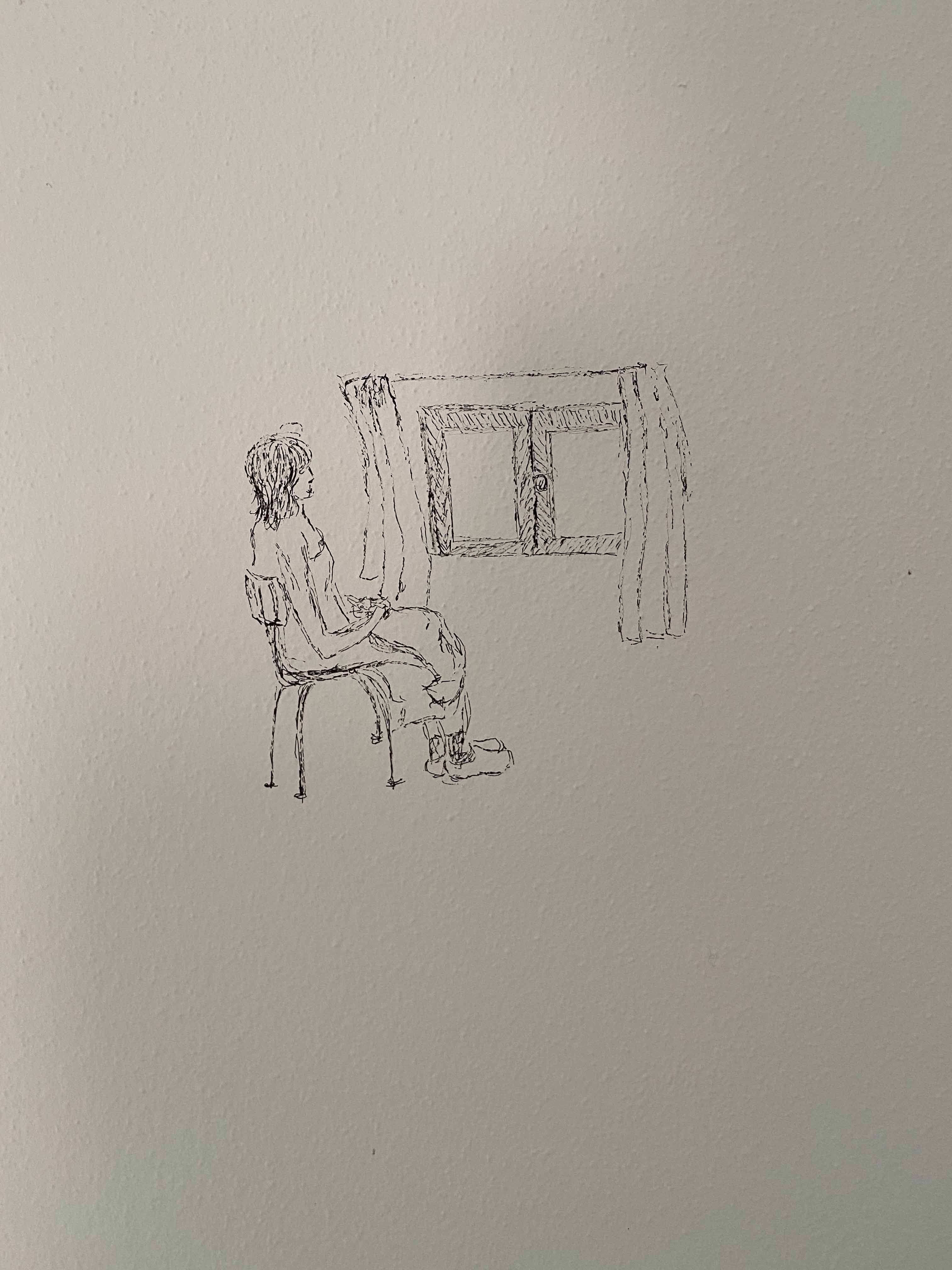
Also a sketch of my daughter longingly looking through the window after way too long in this house for quarantine:
Course manual: Make a drawing of a subject of your choice using the subject itself, or tools constructed from the subject, dipped in ink or paint.
THE BEACH
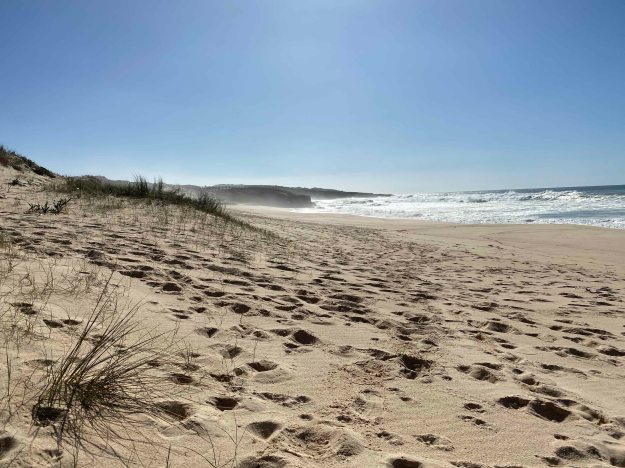
The directness of being outside in nature, at the beach, feeling, seeing and hearing the elements, and using only found materials to draw what is surrounding me, of course appealed to me. I prepared only a block of A4 watercolour paper, a pot of Indian ink and some white acrylic paints, and set off. This day, I did not yet know that a couple of days later it would become illegal to go to the beach, so this experience already carries a precious personal memory.
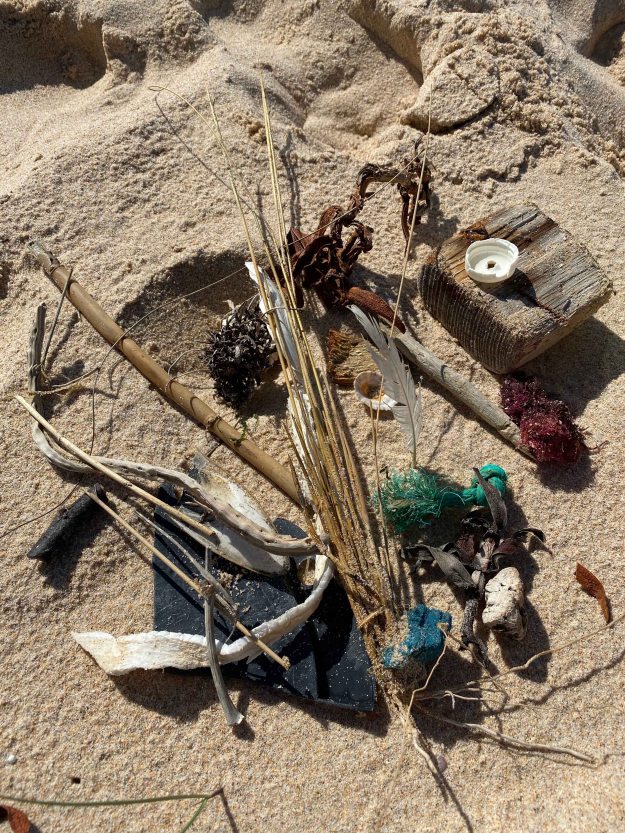
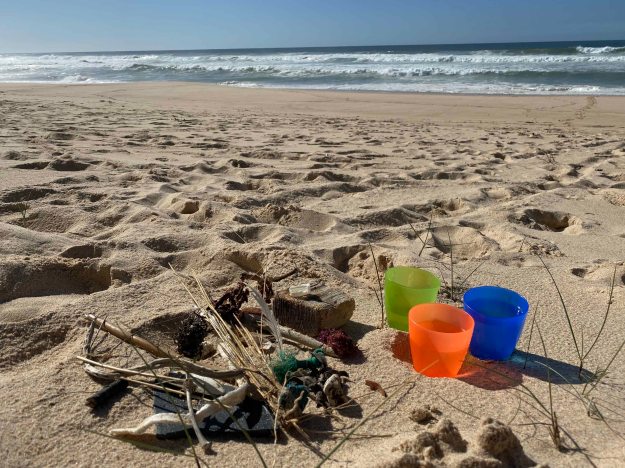
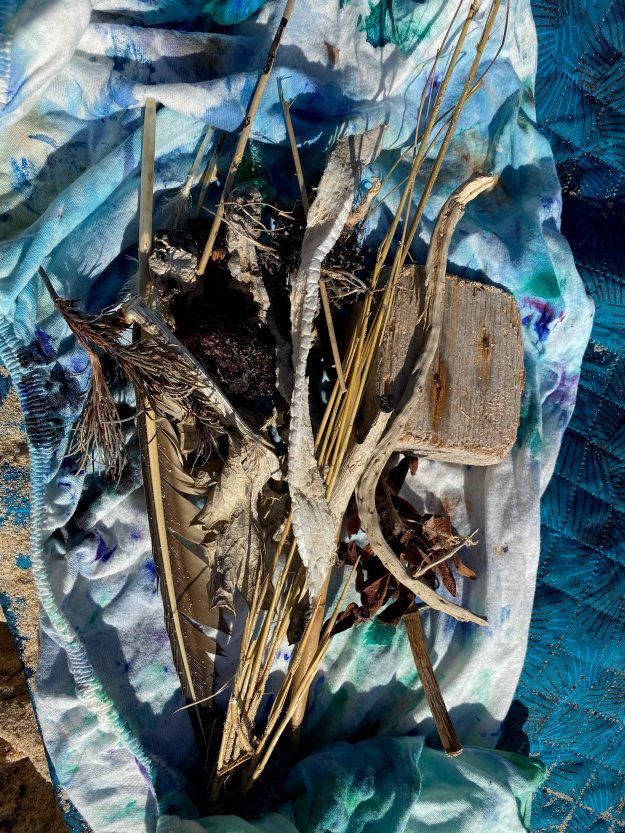
Within just a few minutes of walking in the sand, I had a whole collection of suitable painting materials- feathers, dry grasses, pieces of wood, trash, ropes and shells. And of course an unlimited supply of sand.
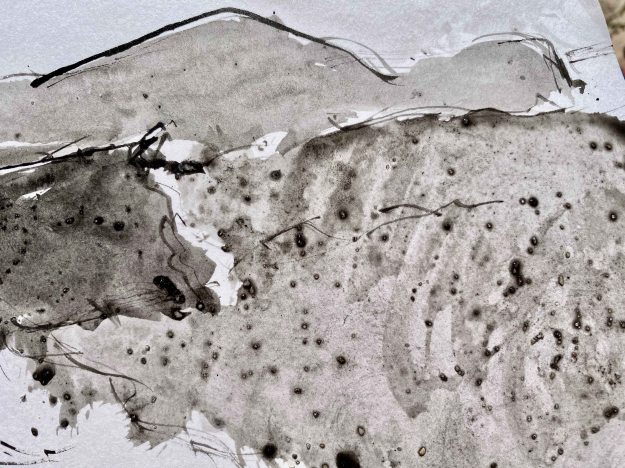
I started by trying out what marks my different tools can make with the ink.
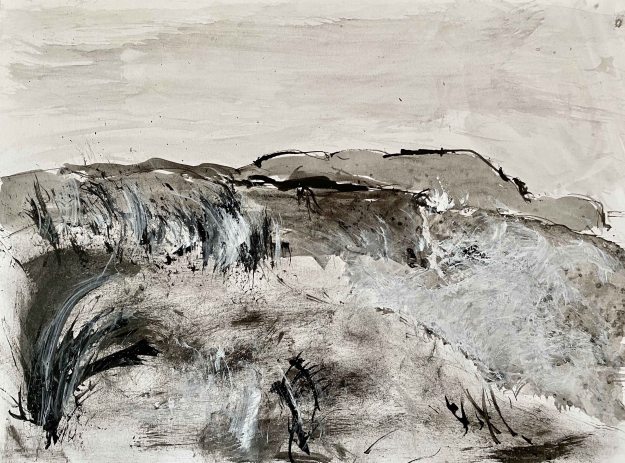
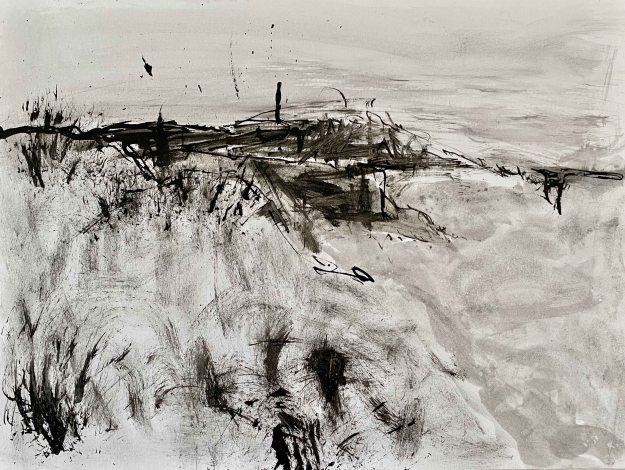
I continued with a rather quick A4 drawing of the landscape around me, using the different marks.
I try to associate the “tools” with the elements that I am drawing. So I am using a feather for the light marks of the sky, stones and woods for the rocks and an algae producing little bubbles for the water.
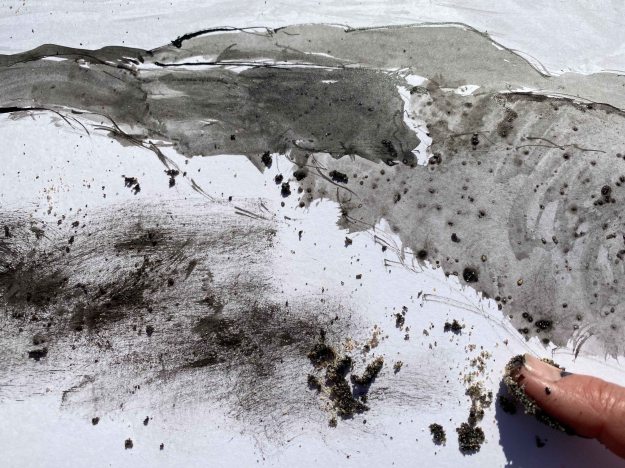
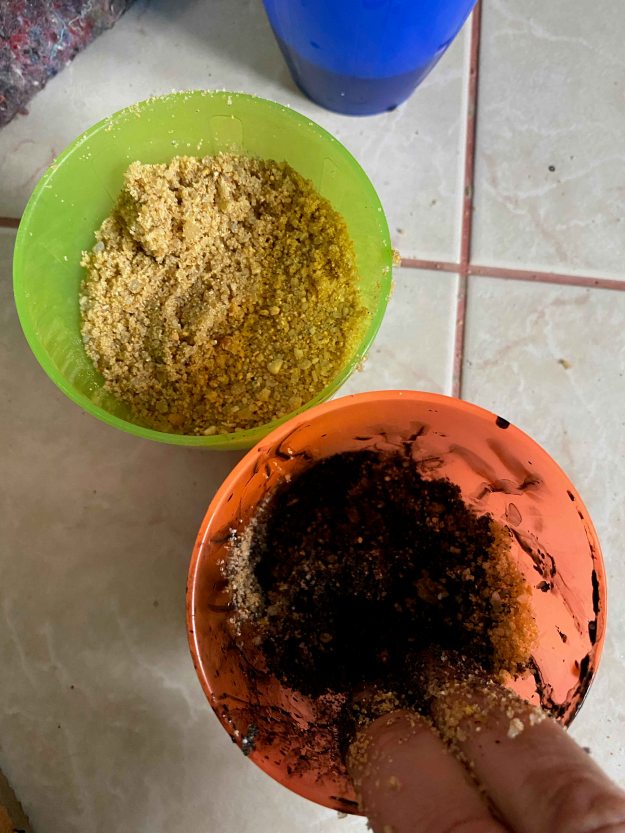
I am mixing ink and sand and rub it to the paper with my fingers for the sandy parts of the image.
Finally, I add a few strokes of white acrylic paint on the crest of the waves with a feather. This is the first final sketch A4:
I regret adding the white marks, the drawing felt clearer and more focused on the variety of the marks before.
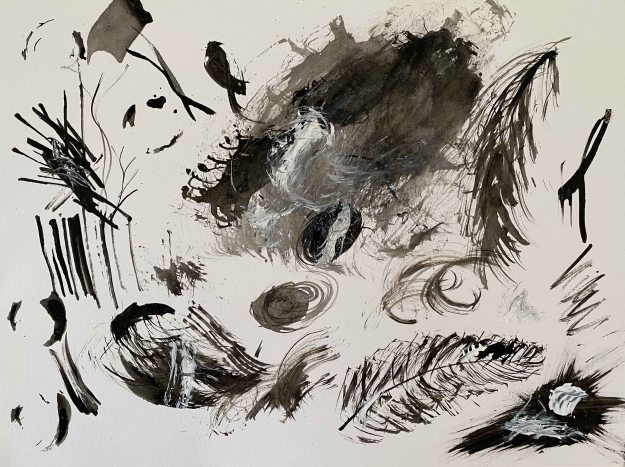
I start over and focus on the markmaking the different tools allow:
I am happier with this second, rougher version.
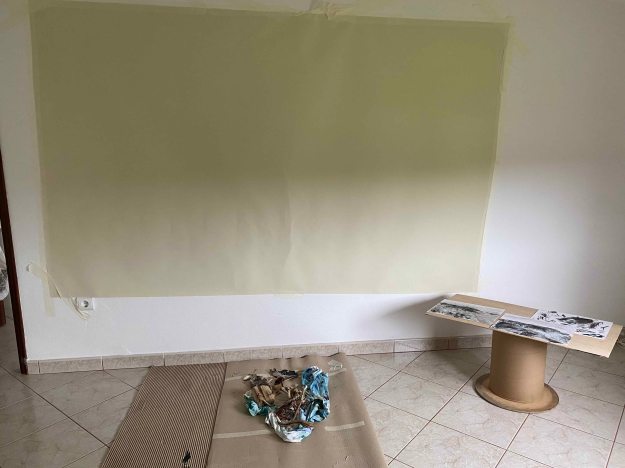
I decide to wrap my collection of tools and bring them home to push this further on a larger format drawing back in the studio.
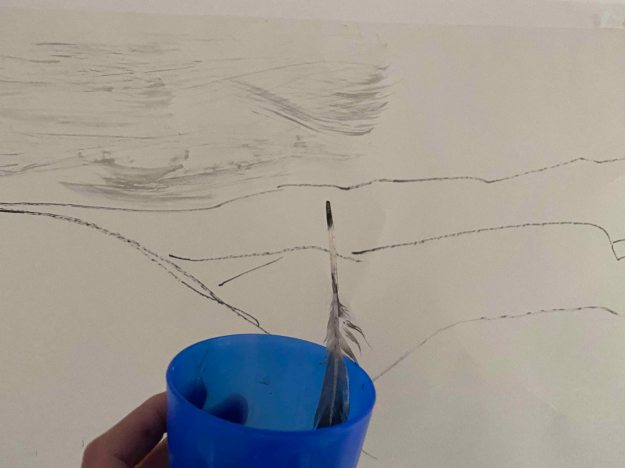
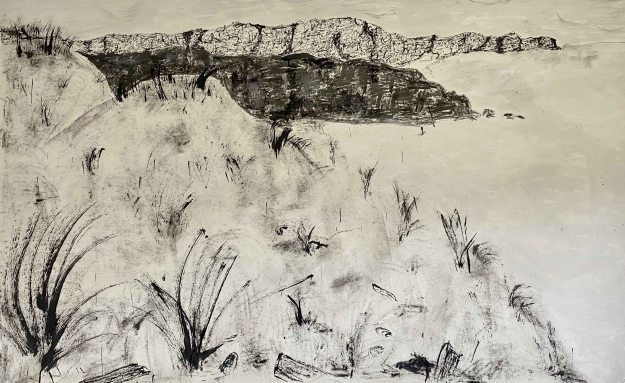
I follow the same principle of using “tools” or materials that are as close as possible to the elements I am depicting- using sand to draw sand, water algae to draw water, feathers for the sky, rocks for the rocks, grass for the grass etc.
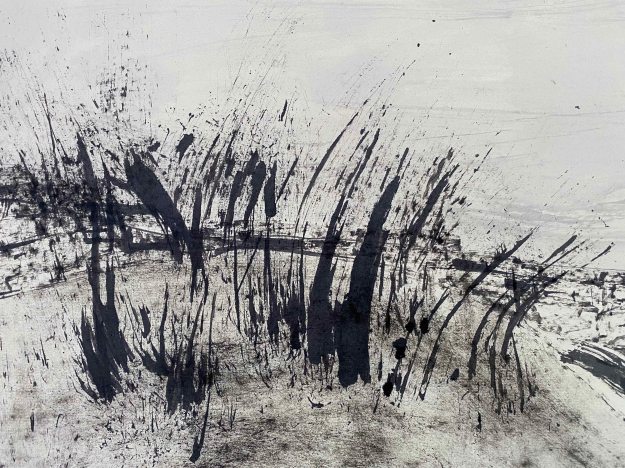
This is the final drawing, approximately 150×250 cm:
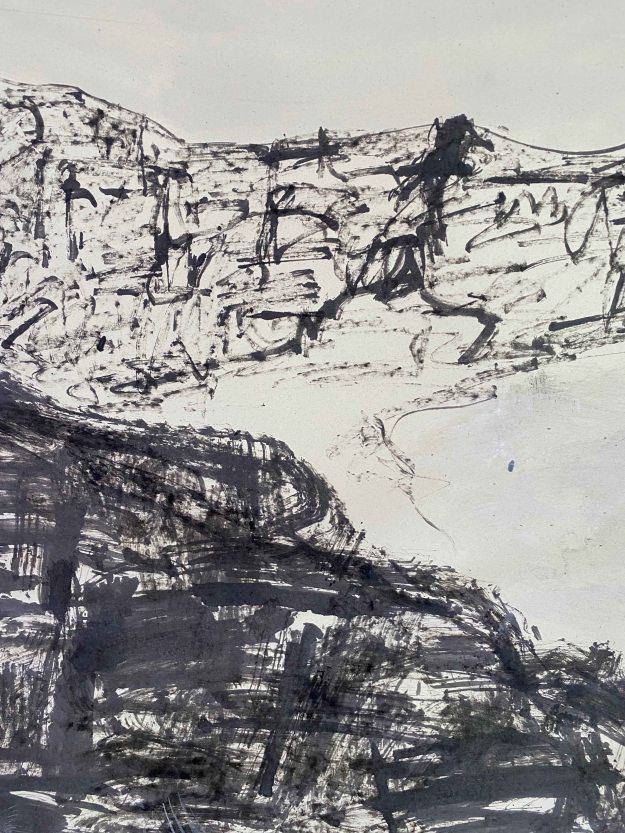
These are some close-ups:
Water drawn with algae:
Rocks drawn with stones:
Sky drawn with feathers:
Wood drawn with wood:
Shells drawn with shells:
Sand drawn with sand:
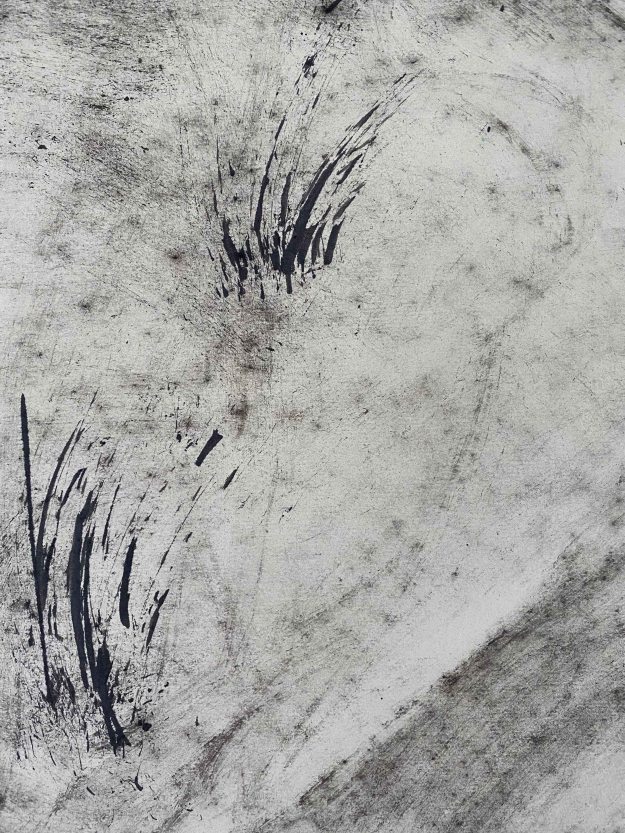
And beach grasses drawn with different leaves, sticks and grasses:
I feel happy with the exploration of the different marks my found tools can make in the details, but in the larger piece made at home, I can definitely feel how less spontaneous it is and the final result is suffering from it. I much preferred the directness of the experience of painting on the beach.
( to be continued in a life after the virus…)
THE BODY
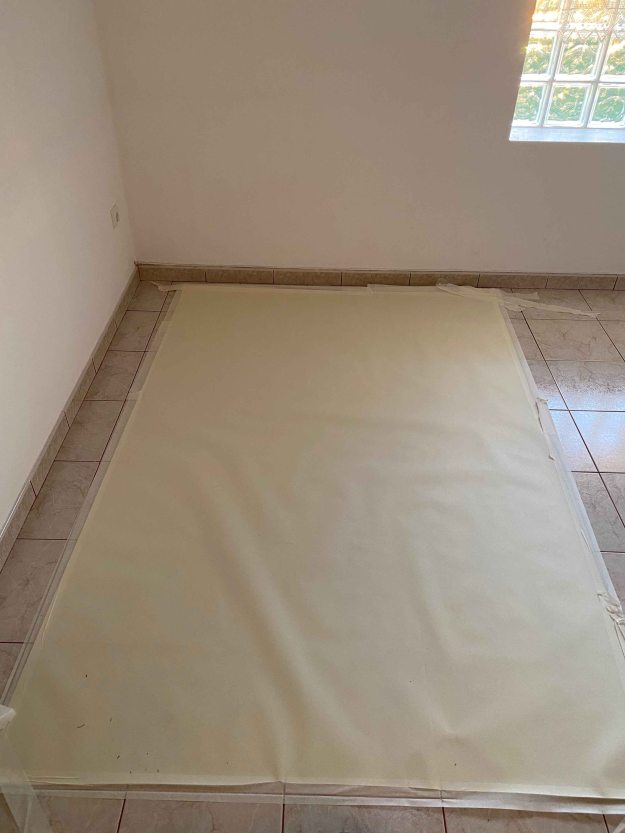
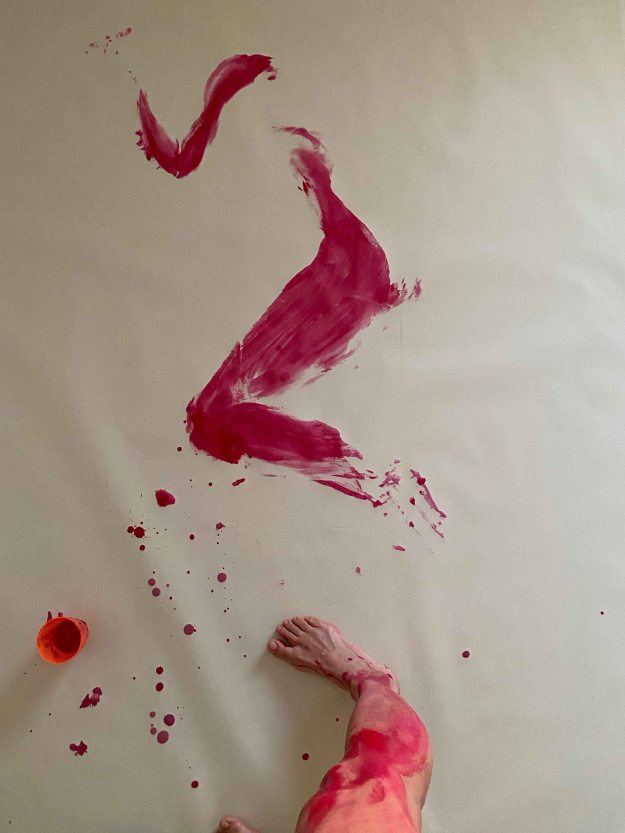
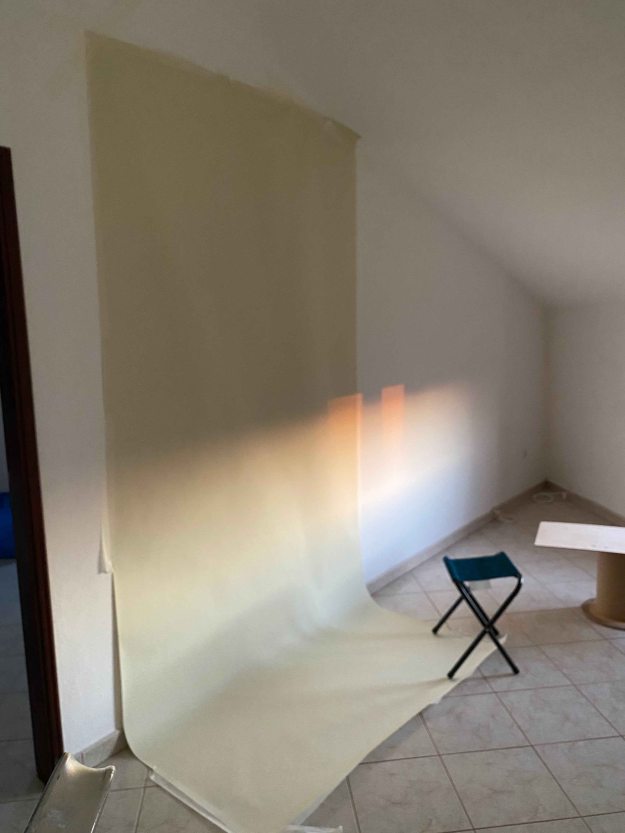
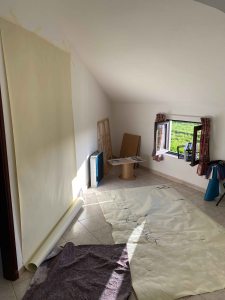
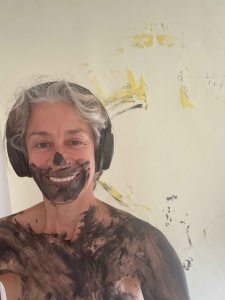
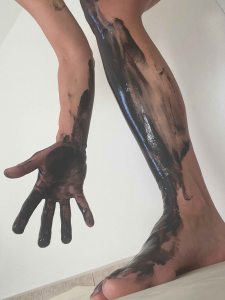
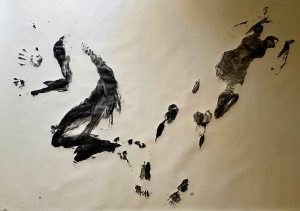
This assignment brief also feels like an invitation to explore bodypainting- painting my hands with my hands, my feet with my feet, my hair with my hair, my body with my body. I finally have a space that allows serious messiness, and I have of a long white roll of paper. Also, we are in quarantine by now, so painting on location is not an option. The thought of painting my body with my body is just getting louder and louder.
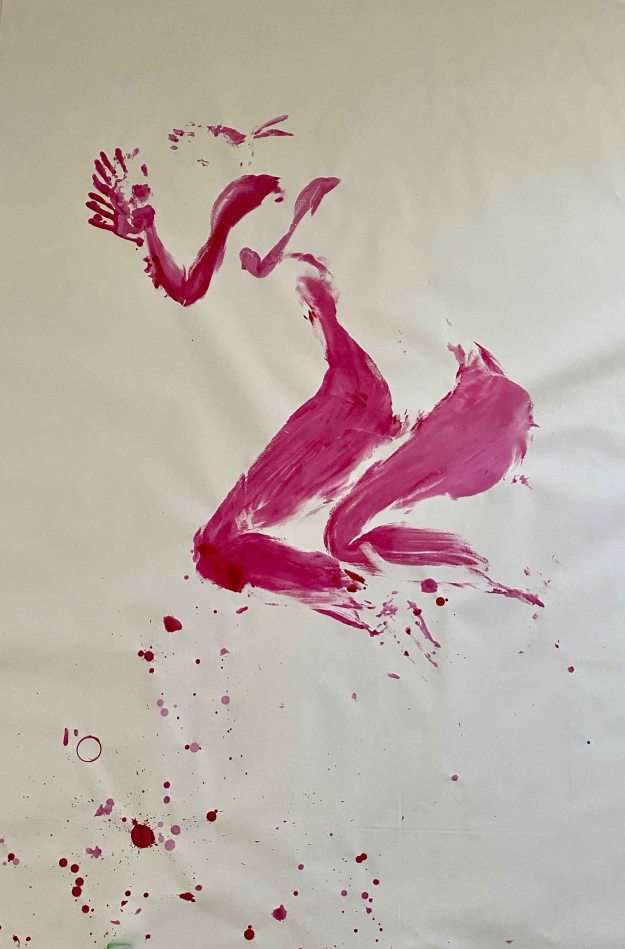
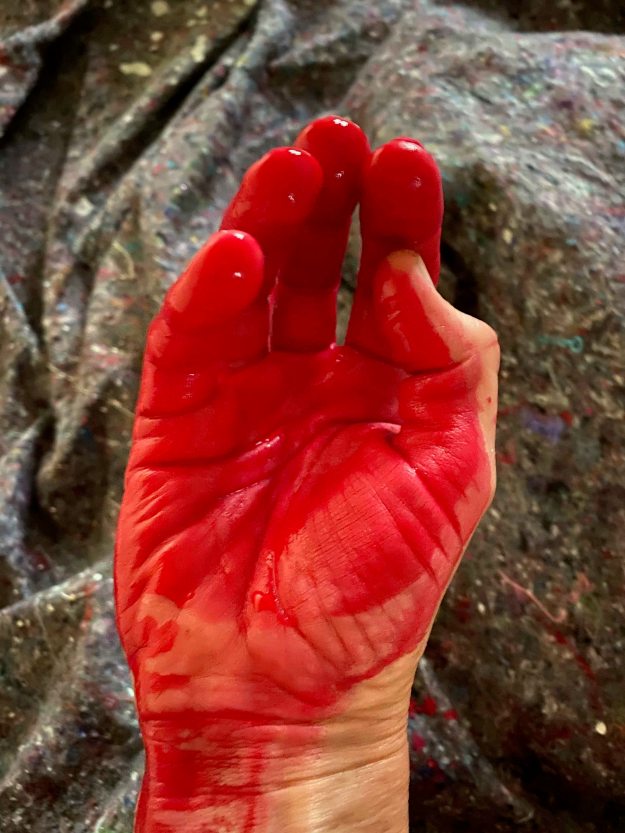
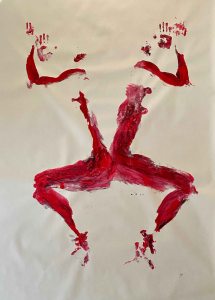
When I am standing here in front of the huge white paper, I have a lot of possible drawings in mind, but I want to stay spontaneous and just let one mark lead to the next. I start by covering my whole right side with a bright red paint acrylic and lie down on the paper.
And again:
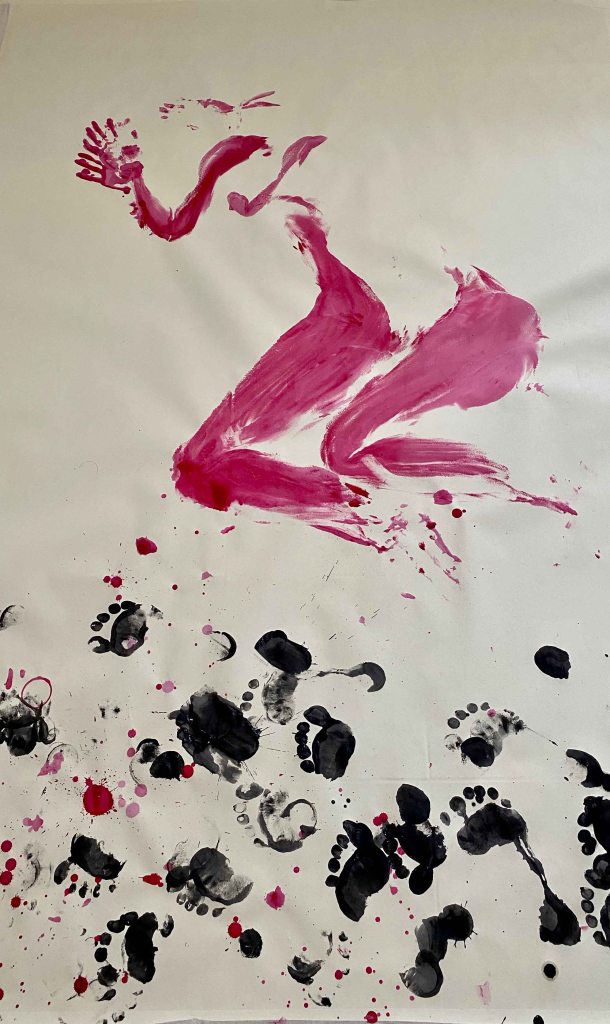
I couldn’t really guess how this would turn out, but the feeling of painting with my whole body is fantastic (despite is being really too cold!) This two prints looks like two figures interlaced and the wispy marks of the back hand randomly became a face. This drawing is already expressing a lot with so little that I decide to leave it for a day or two and see if I need to continue, instead of spoiling it by doing too much. I have an urge to walk around with my feet covered in black paint, but I am not sure.
After coming back and looking at it for two days, I just can’t stop myself. I cover the soles of my feet with black and walk around at the bottom of the drawing.
It was a miss. I should have left it alone. What I can do now is crop it to this, leaving just some footsteps…:
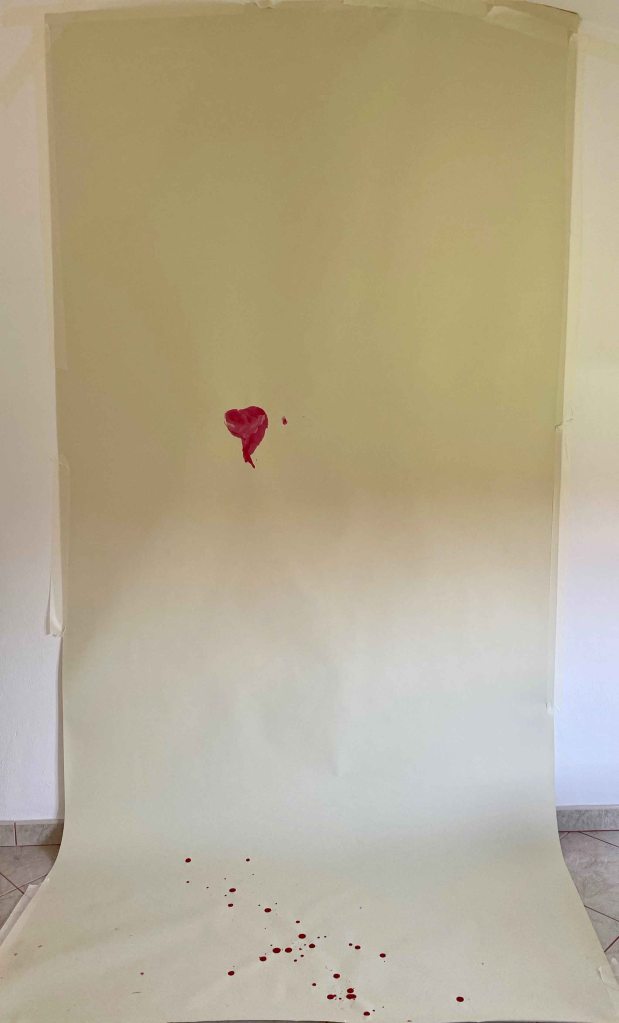
I start over again with a vertical paper larger than me:
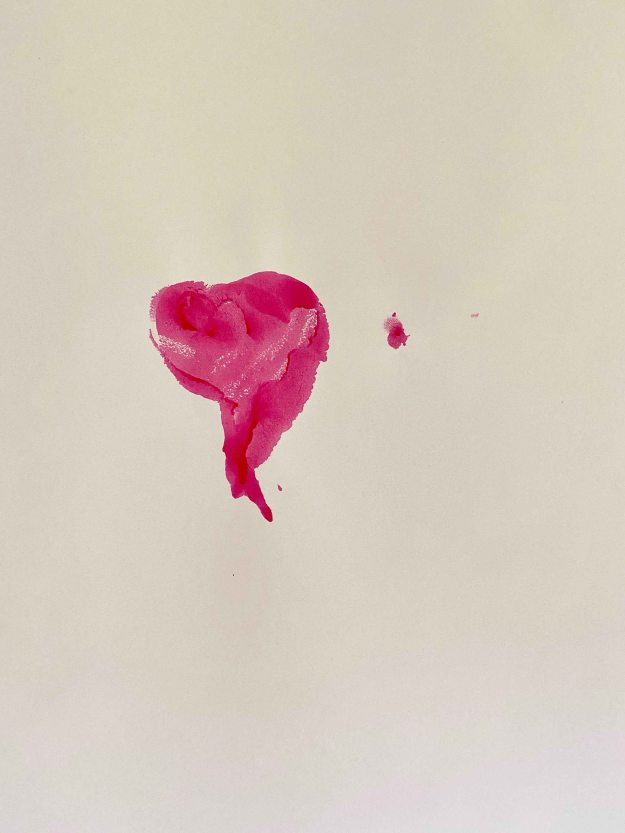
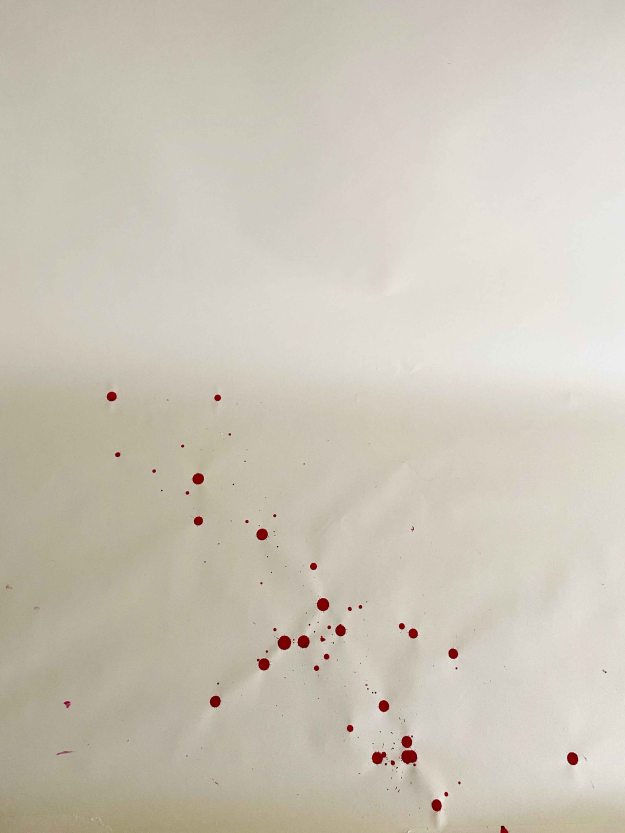
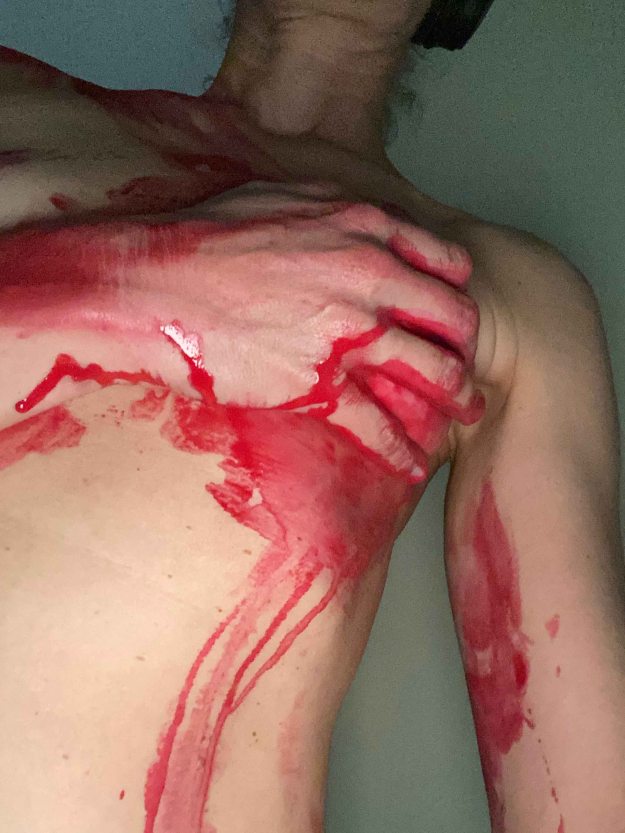
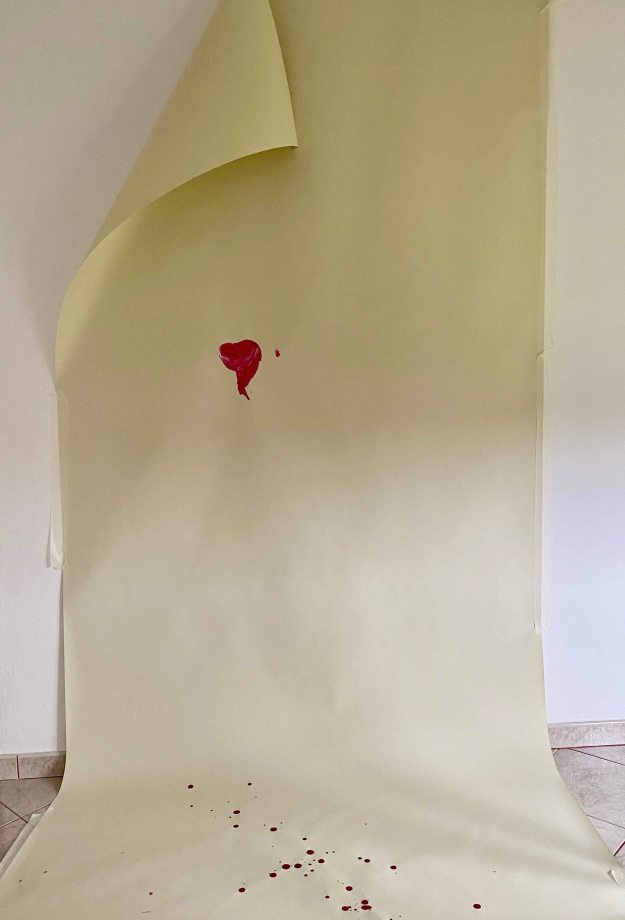
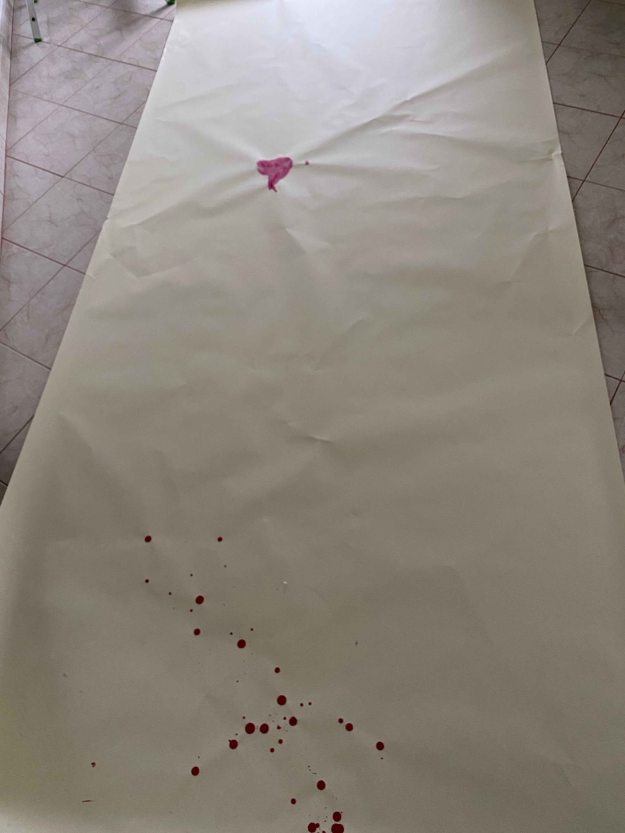
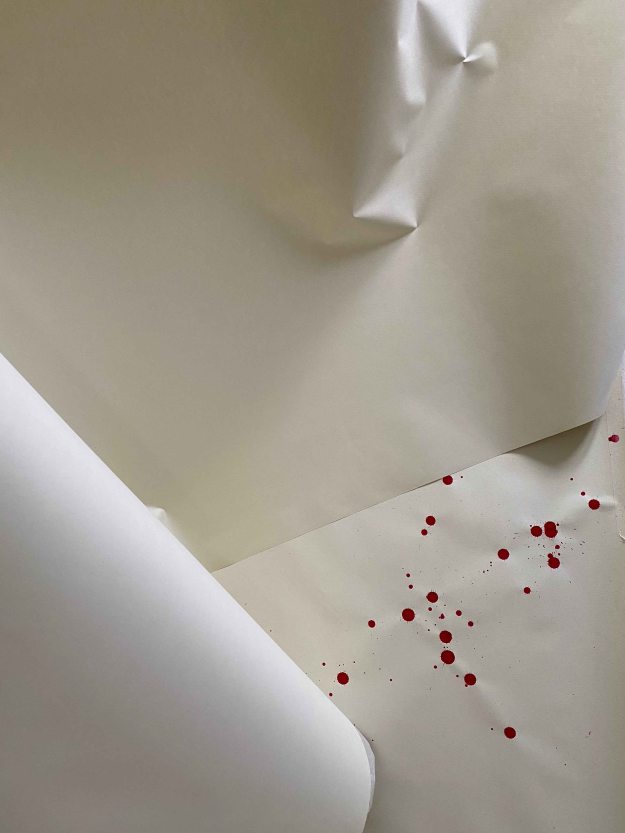
This time I am really seeing a fuller image of my whole body from the front and am especially curious about the marks from my hair. I feel magically drawn to the red colour again and when I look down on my body I start by covering my left breast, uneven and imperfect after surgery for breastcancer two years ago. I stop right there and just press that one breast to the paper. I spill some drops of paint to the floor.
I feel so much. This simple touch of my one mutilated breast on the large white paper said it all. I did quite a few drawings of the experience at the time but nothing expressed it as well as this. I feel how all that I was, suddenly became reduced to this one spot, how from being so much, I became a person with breastcancer. How lost I was. I was surprised at the strength of my feelings now. This experience lies two years back, and I would have thought that I had healed it both physically and emotionally.
This drawing is finished.
I continued by touching the paint and taking photos:
The direction and strength of this experience took me by surprise. It became more revealing and personal than I had intended. Also, I am incapable of judging how much this drawing is readable for anyone else, or if it is just so strong for myself.
The next day, I felt like taking it off the wall became a part of the experience- clearing and opening up to a feeling of relief.
BODY, nr 2
I am ready for a second trial and come back to painting my body with my body.
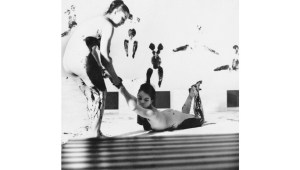
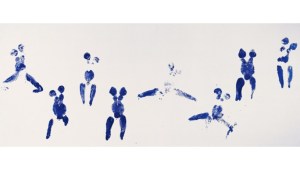
Meanwhile, I have researched the “Anthropométries series” by Yves Klein from the early 1960’s. He used nude models to act as “living brushes” in performances where they were covered in International Klein Blue (IKB)- a blue patented by Klein that he used in almost all his work- and then touched their bodies to huge canvases.
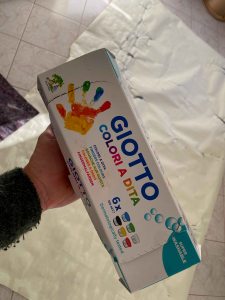
My studio is prepared with two large pieces of paper from my giant roll, one vertical and one horizontal. This time I am using childrens fingerpaint, as I had a really hard time scrubbing off the red acrylic paint last time. I can’t begin to imagine scrubbing of the precious IKB oil paint.
Yves Klein missed out on a really crucial part of the experience here I believe. Covering the body in paint and feeling how it wants to fall on the paper is an incredible experience that I would not want to miss!
I start by using the backside of the “Beach” drawing described above, so the paper has a wobbly surface here:
This is the final drawing:
It is almost like a limp figure carried by some birds, or upwards. I find it unfortunately chaotic. There are too many small marks to give a very clear and coherent sense of body. I do like the uneven surface though , that adds a level of texture.
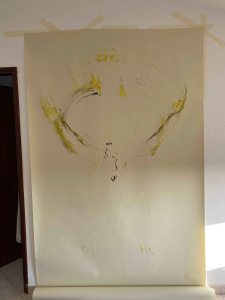
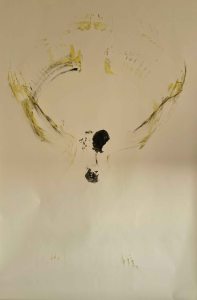
For the vertical paper, I add yellow colour to my underarms and stand in front of the paper lifting my arms as in a sun salutation.
I am closing my eyes and focusing on the movement.
I decide to press my black body to the paper too:
I really like the winglike aura, which reflects the feeling of the movement really well. This is a light drawing, unfortunately really tricky to photograph. It has much more atmosphere in the flesh. Emotionally, today’s’ drawings were just fun and messy, I did not experience as much as strongly as last time.
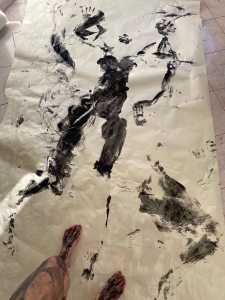
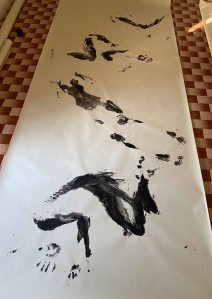
A couple of days later, I am ready for another trial. This time I prepare a longer piece of the paper on the floor, so that I can create a series of figures. I am using black paint again, liking the simplicity of it. Black could be ink or charcoal or many kinds of paint but has the connotation of being just that- a drawing medium, whereas the red spirals my imagination towards blood. I am avoiding using blue to be too close to Kleins’ project.
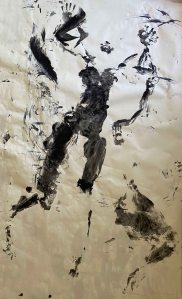
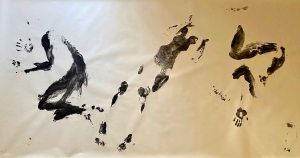
This is the final drawing. I have tried to create a wavelike movement, like springing up from a crouching position and continuing tumbling over.
I find the drawing stronger, when cropped to the two first figures:
I prepare one more horizontal paper. This time I go back to the red, but without washing of the black layer and lie down one side after the next:
I like the creature like shape that comes out of this. It is not as strong as the image that I achieved the first time though, with the two figures intertwined.
This time again, I greatly enjoyed the experience. It is a magical feeling to stand in front of a huge white paper and not have any preconceived idea of what will happen, more than using my whole body as the drawing instrument to draw the body. It feels like I am stepping out of the process and allow it to happen, while at the same time being absolutely and literally immersed in the drawing.
BODY nr 3
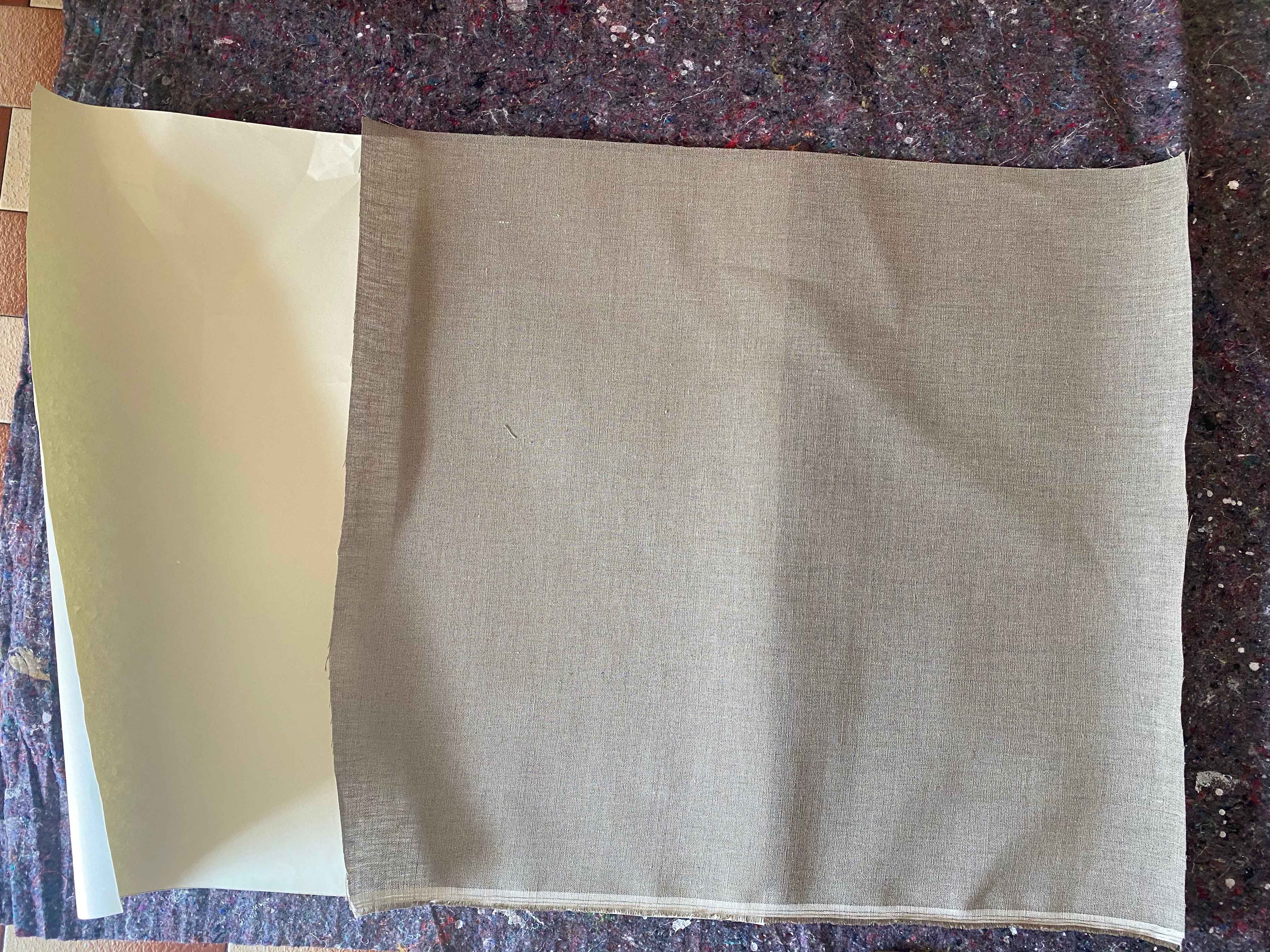
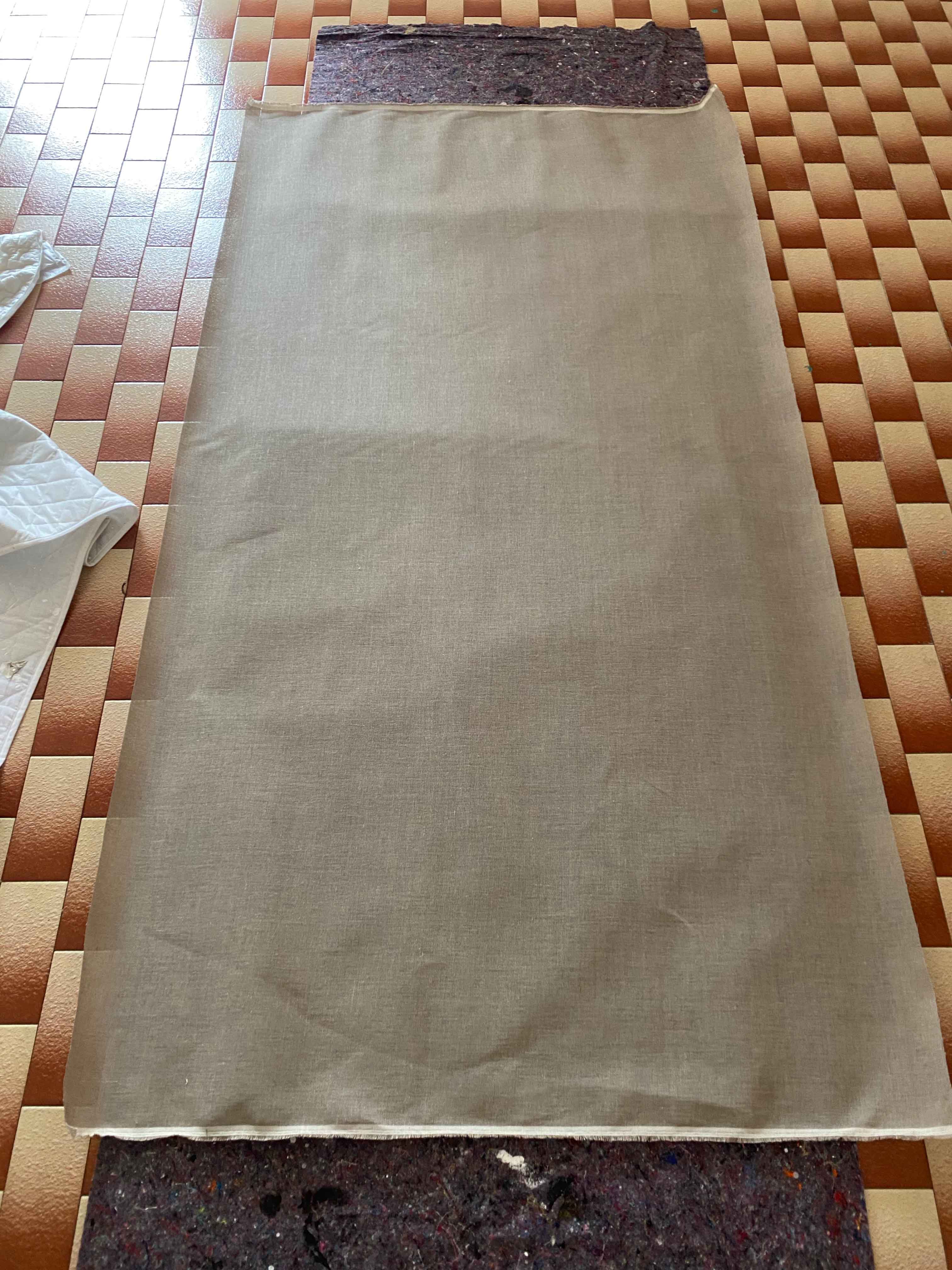
Since looking at Yves Klein’s work, the idea of using oil on canvas has of course intensified with me saying yes- no- yes – no several times a day. Some time ago, I bought a first piece of untreated linen canvas to experiment with pouring diluted paints like Helen Frankenthaler. Am I going to use it for a single moment of body printing instead?
I am going to go for it… With the argument that I can always prime it and use it for something else later (although not as I intended).
I start by testing if it makes a difference, if I put the thin linen on an absorb able cloth surface or on a glossy paper. I imagine that the thin material will let the paint seep through and might react differently.
I will use watersoluble oil paints and also want to test how traumatizing the washing off is.
No, it does not make a difference if the underlying surface is absorbable. Actually, I am surprised at how resistant the surface is, I had imagined the diluted paint would bleed more.
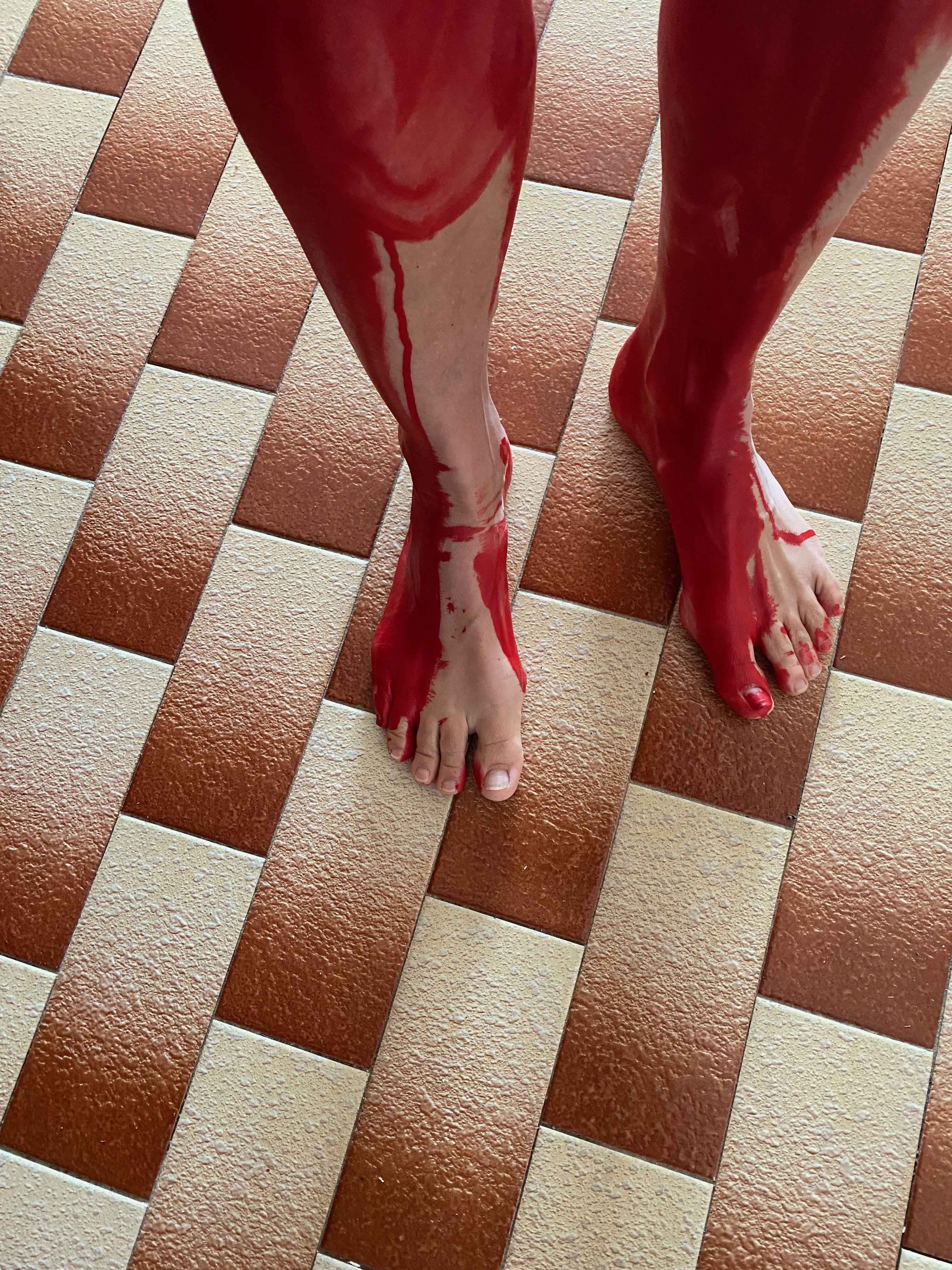
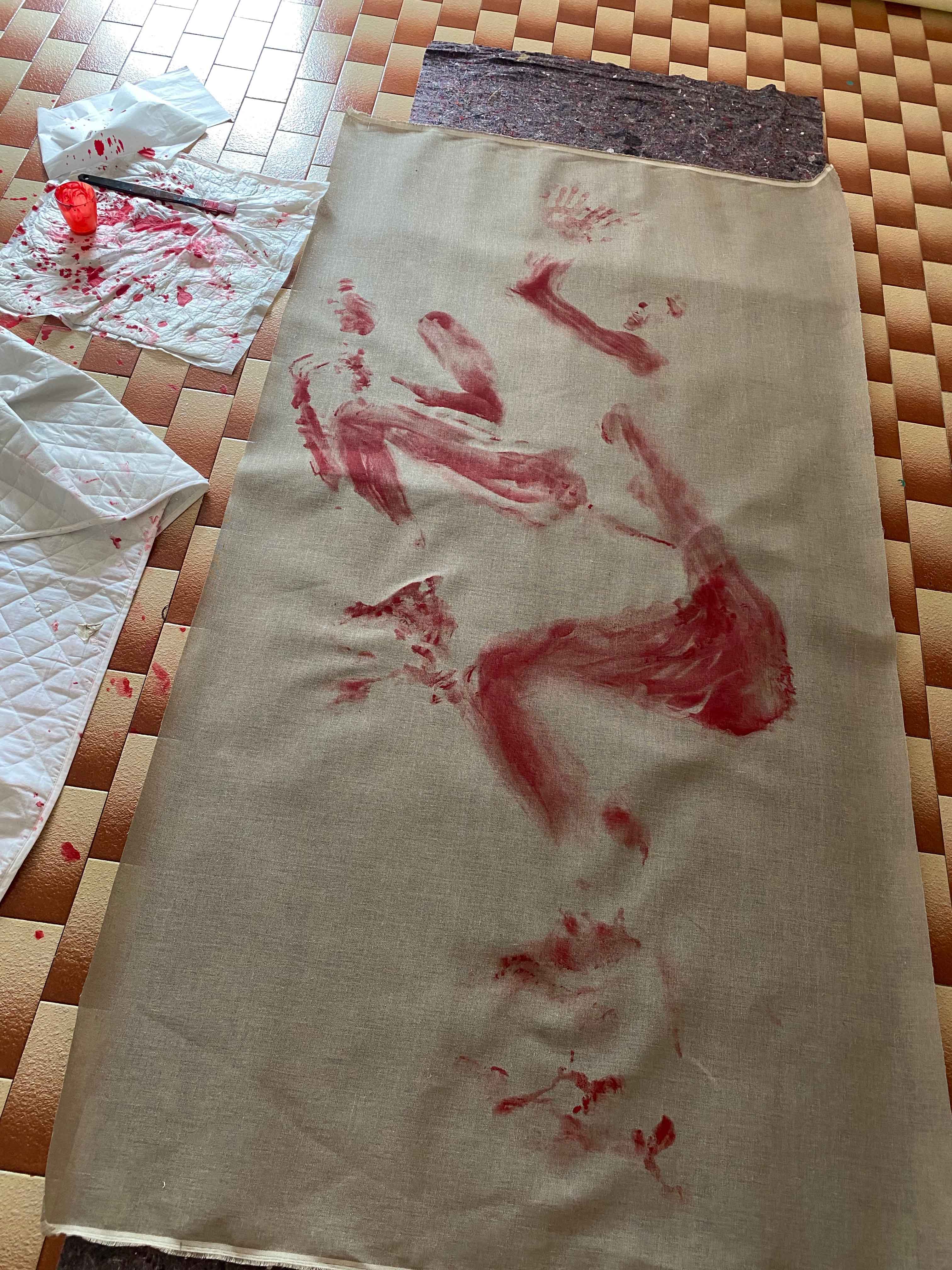
I choose to use red colour again, mixing Winsor&Newtons Artisan Cadmium red medium with a Cobra Carmin. The colour of the canvas is grey-brown and adding the red colour has a primal feel, reminiscent of a cave painting. It also feels primal because it looks like blood, adding another bodily element to the process.
It is all ready, but I feel a crushing responsibility at messing up the canvas, which takes away the lightness of the experience. I try lying down in different positions first without paint, which I did not do the previous times.
Here we go..
This is the painting after two rounds:
It is actually easier to wash off than acrylics! (And it helps that we have installed hot water in the house by now.)
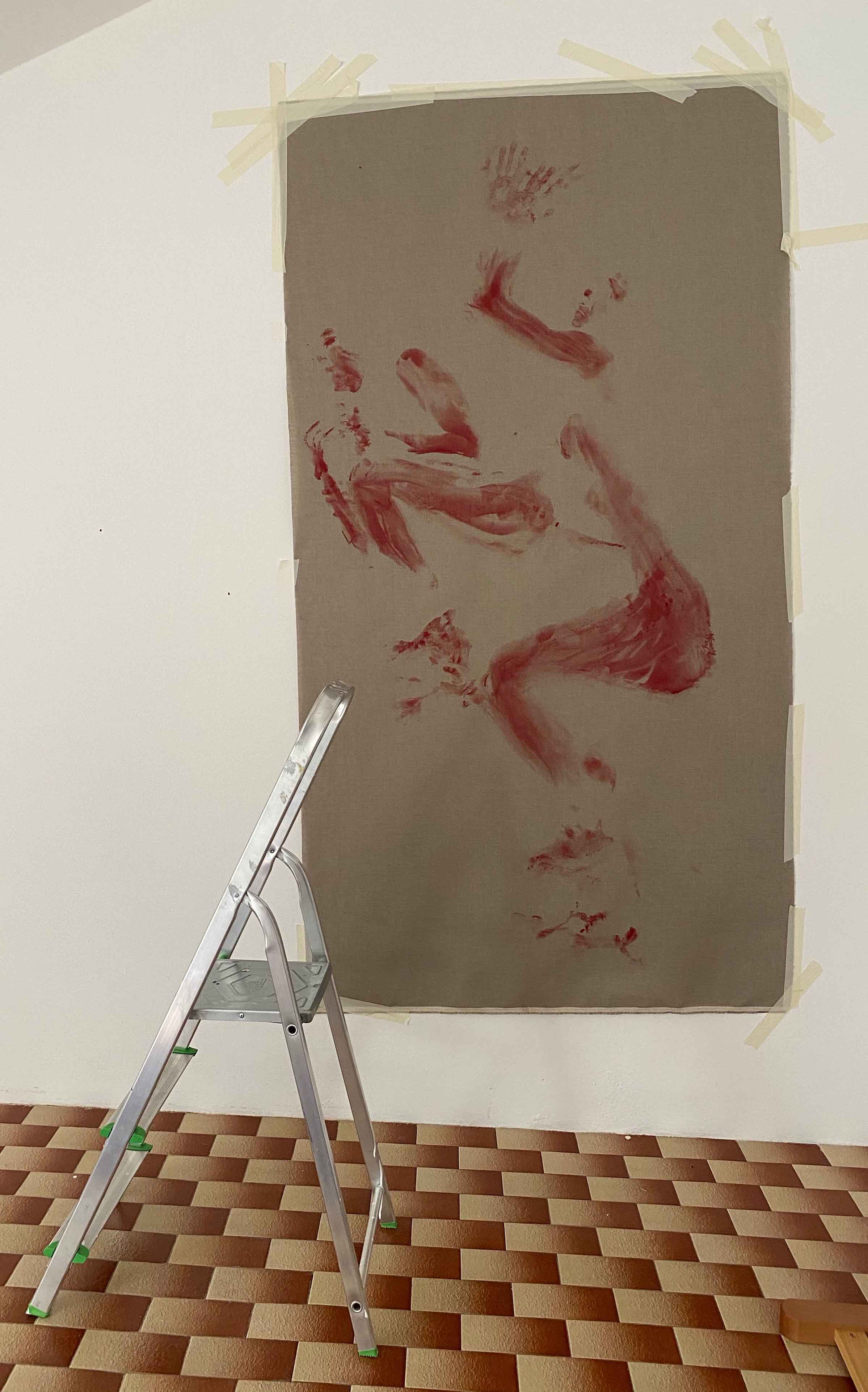
I hang the canvas vertically and take a photo with the ladder to show the scale:
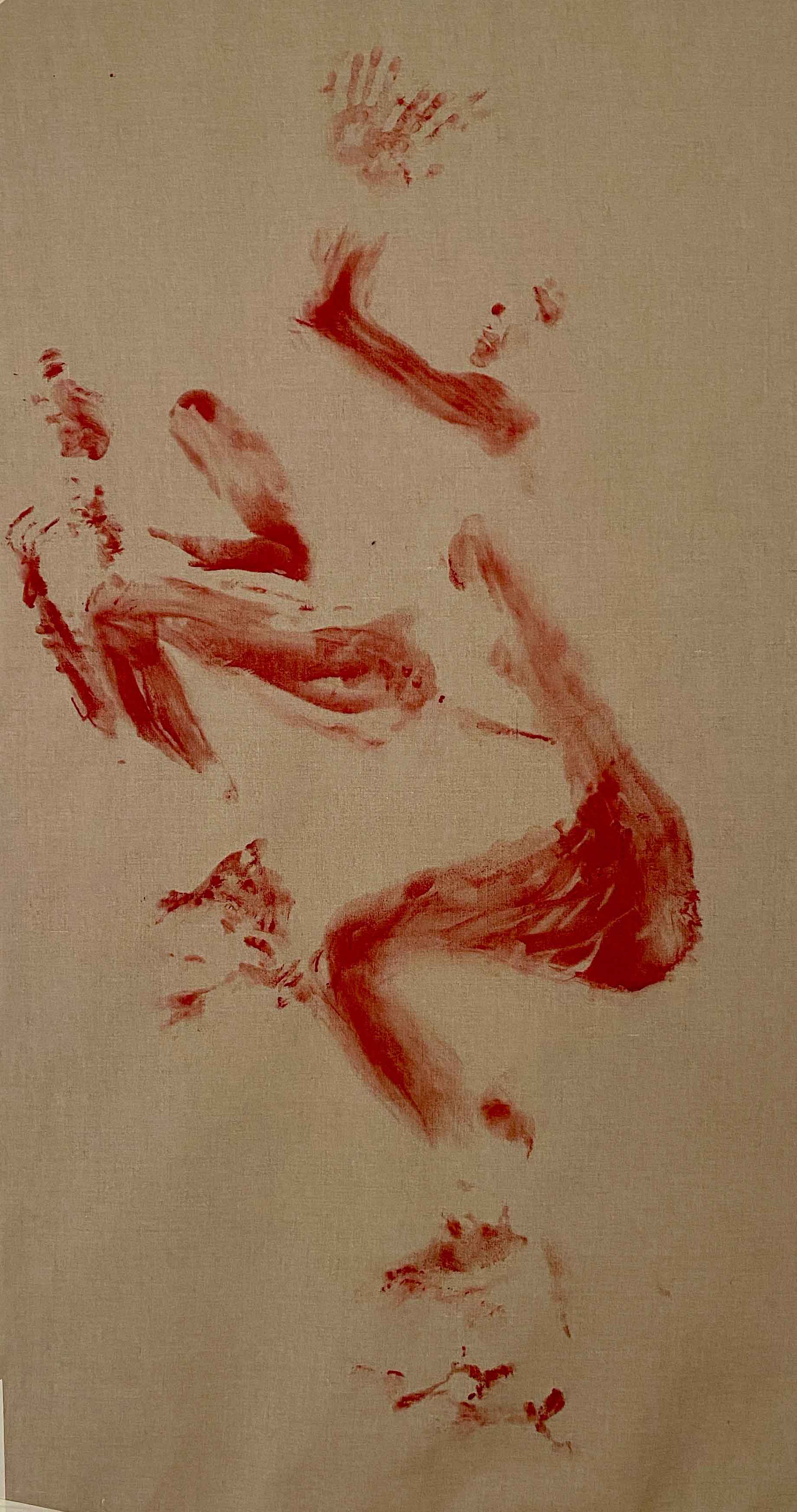
This is the final painting:
I am not overwhelmed with the result, but it is also not a total miss. Compared to the works on paper, there is a much wider range of tones, many a little blurred or “wispy” marks, depending on how much paint got absorbed. I feel that this painting is somewhere between a cave painting and an Xray.
As a whole, painting with my whole body has been an incredible experience in fusing the subject and the process. It has been really interesting and surprising to observe my feelings coming up through the experience. It is also a process to accept the result when I only have seconds to paint, and so much time and material to prepare and to clean up.
Course manual: “Aim: Materials and the way they are applied can be very expressive and can imply a narrative without using words. Thickly plastered encaustic or finely dusted chalk – each imparts information about itself and, through association, the subject or your response to it. Take time to experiment with the expressive potential of a range of materials and then make a selection to create a piece where the materials contribute significantly to the way the piece is read.
Method: Think of a person for whom you have strong feelings or hold a strong opinion. Find an object or item of clothing that reminds you of that person. Make a piece of artwork that uses the object to provide the imagery but uses the materials to give the viewer a sense of the person. In effect, you’re making a portrait of a person as an item of clothing. You could use your daughter’s first shoes, your mother’s hat. Thinking more widely, you could use a blue tooth device and tie to make a piece of work about bankers or an old school tie wrapped around a silver spoon for our political class. Experiment widely and produce as many pieces as you need to until you arrive at something which you think fits.”
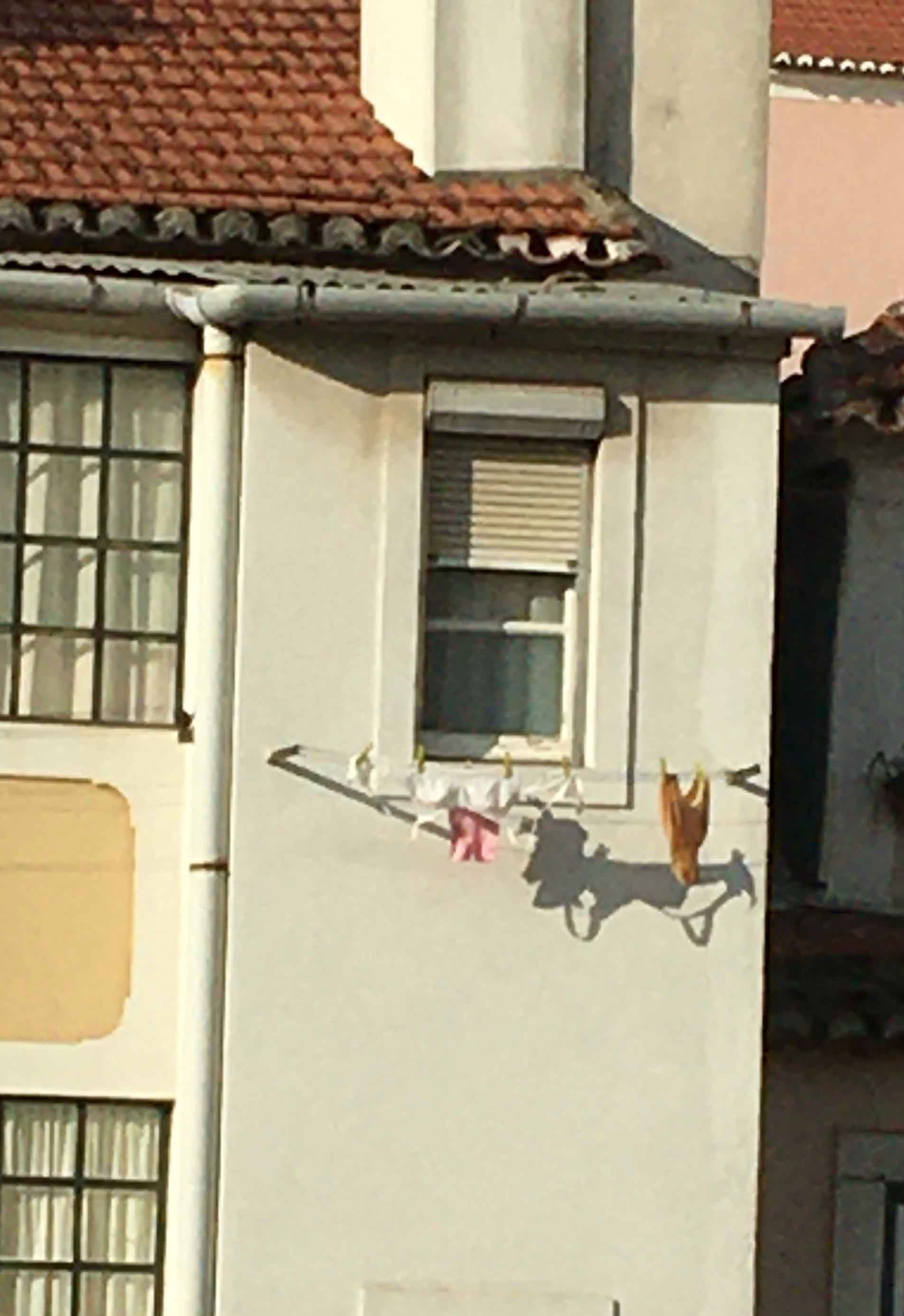
My first idea for this project was to portray my 104 year old Lisbon neighbor, Donna Hortense, through her laundry.
She hangs out some pieces of personal underwear from her window every day (possibly the rest of the laundry gets taken care of), and these intimate pieces drying also function as a flag saying- “I am up and about and well”.
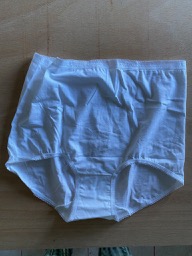
I was too shy to ask Donna Hortense to borrow her underwear, so I went as far as buying a pair of giant underwear …
I will definitely come back to this idea.. But for now COVID- 19 swiftly changed our lives. We packed up the family and within a day are living in quarantine in the countryside.
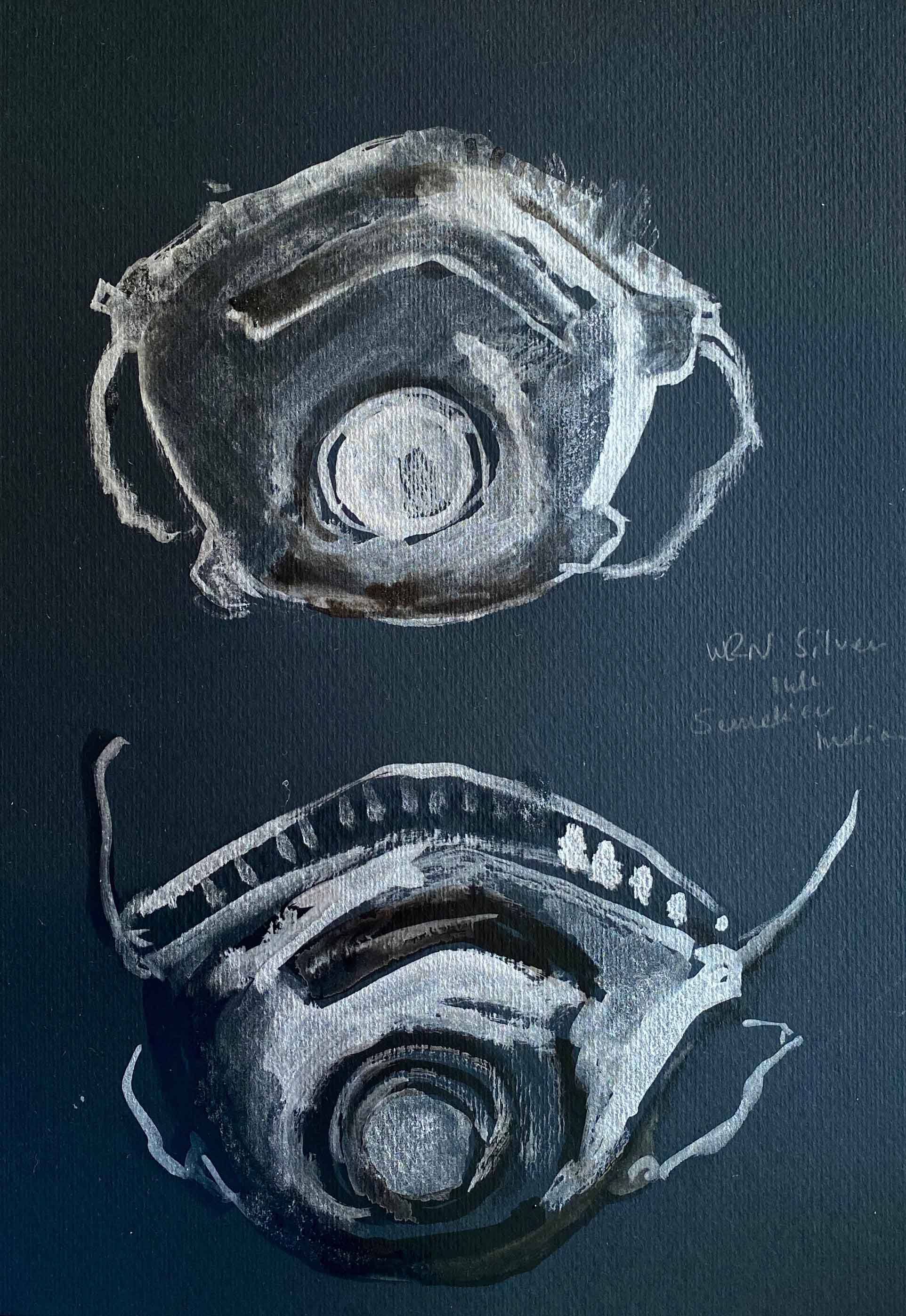
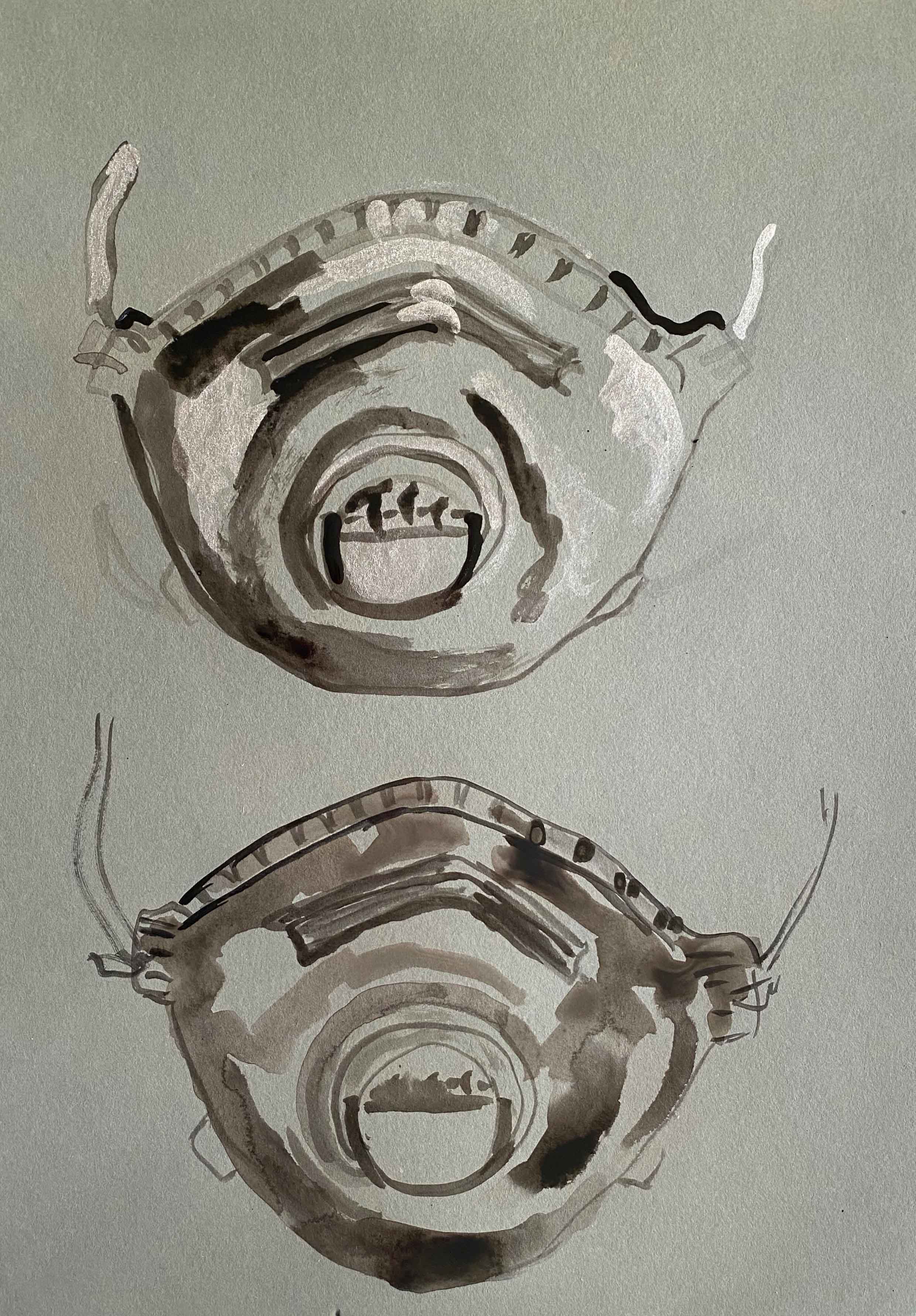
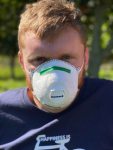
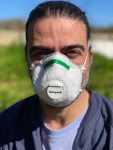
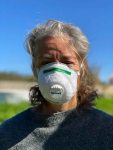
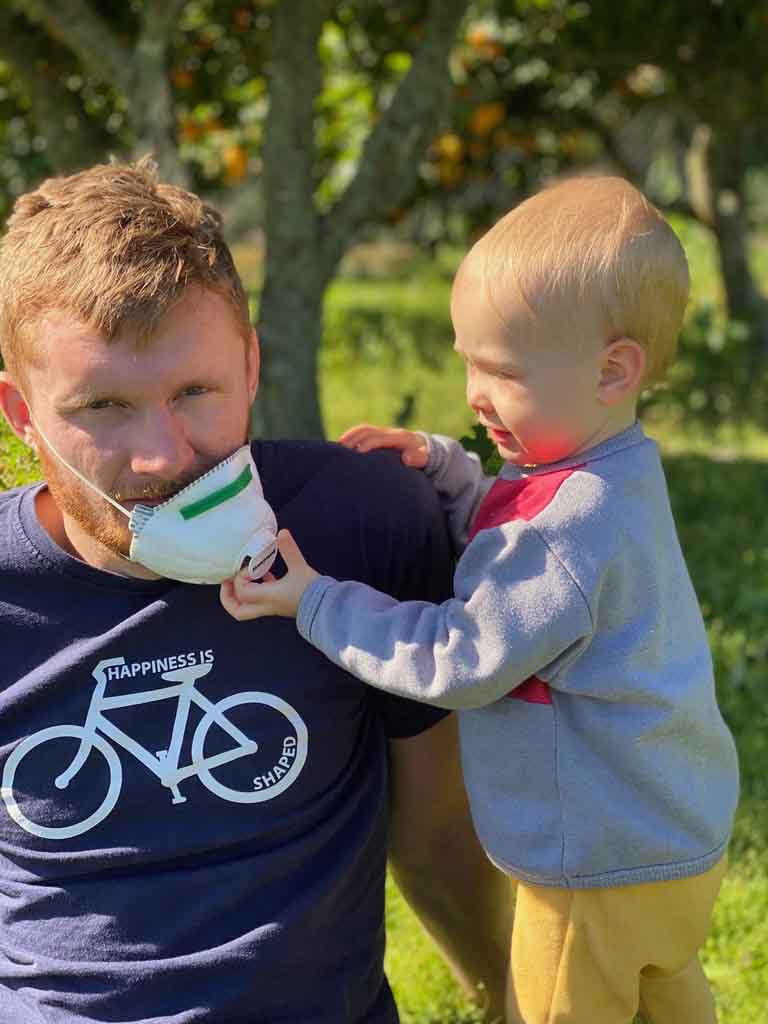
The virus has infected all of our thoughts and conversations to start with. I managed to buy one mask for the five of us, and this lonely mask has become a symbol of this whole situation and the start of my new narrative.
On the exact opposite of a personal item, the mask blocks out part of the features and our personality seems to fade away behind it. In that sense, I want to use the mask to give a sense of the absence of the person, rather than the presence.I will draw it as if on the face though, not as if placed on a surface.
I start by trying out different materials.
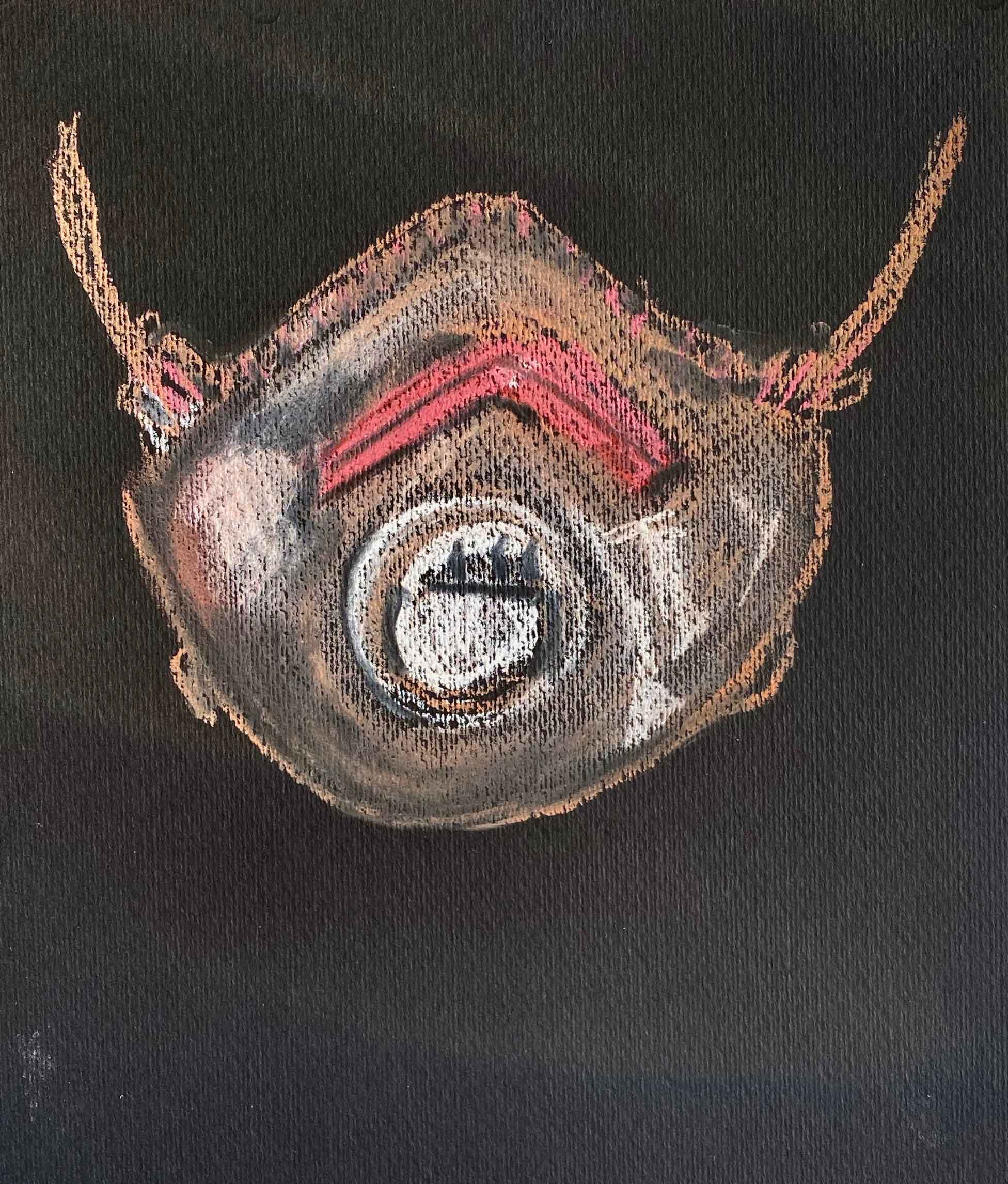
Rembrandt dry pastel in skin tones on black paper ( a silky touch like skin):
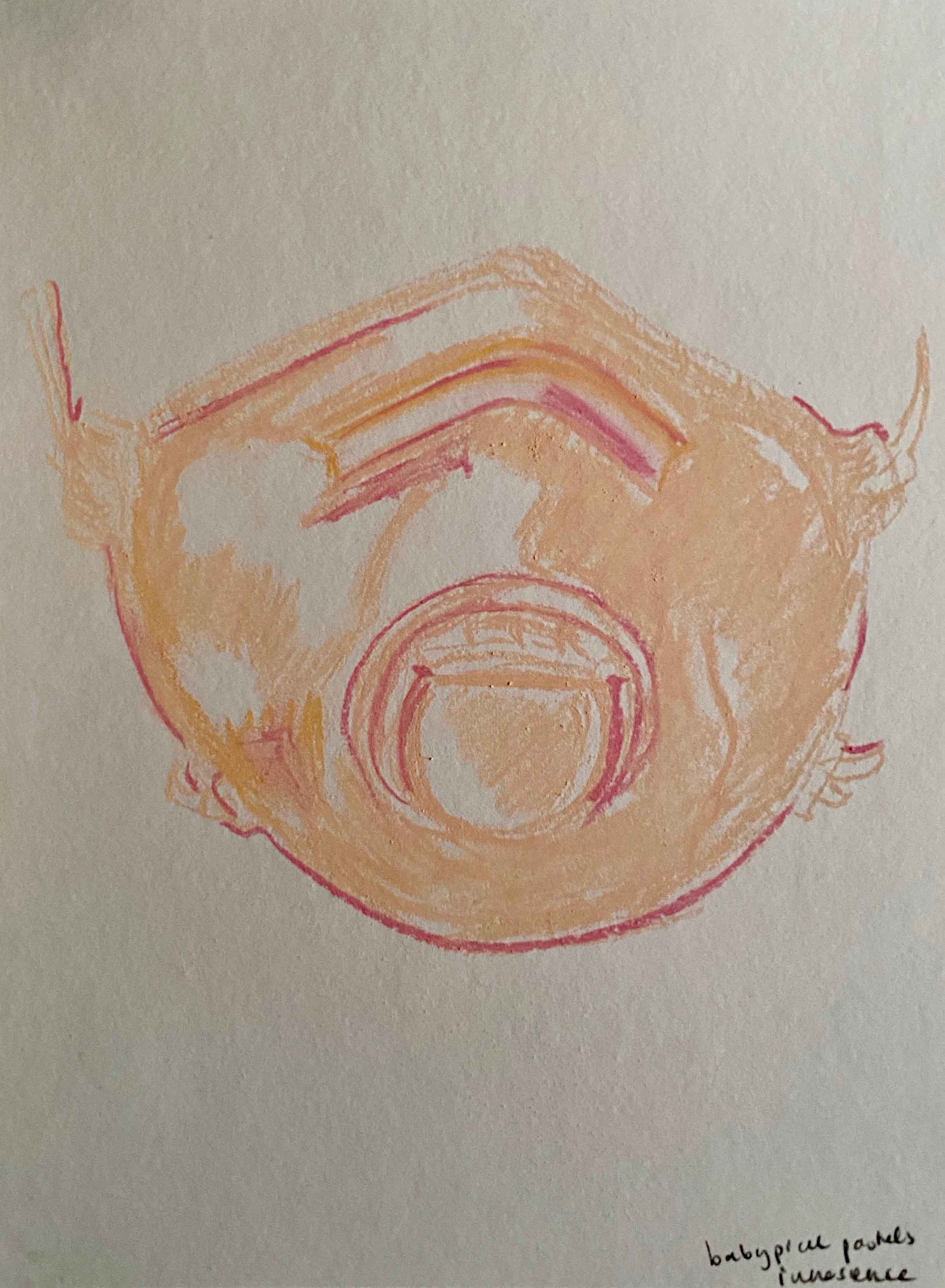
I try baby pink pastels on white paper too- aiming at a connotation of innocence:
I continue experimenting with Winsor&Newton silver ink and Sennelier Indian ink for a metallic, shiny surface on black paper:
The same inks seem much warmer and softer on a warm grey paper:
I change for a transparent paper, with Indian ink and acrylics:
I like how the transparent paper wrinkles like a more alive surface. I also like the idea that I can hold it up to any face.
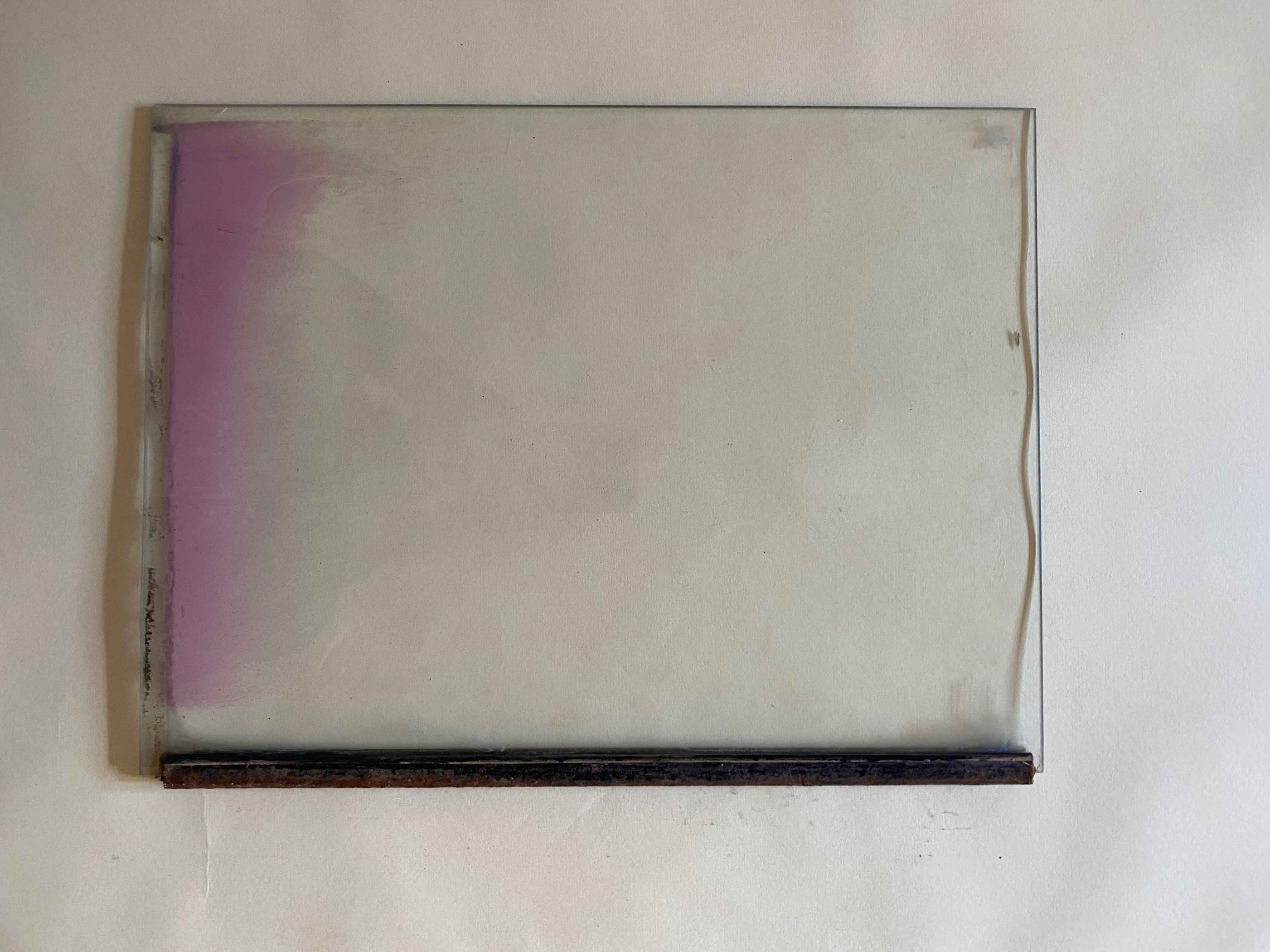
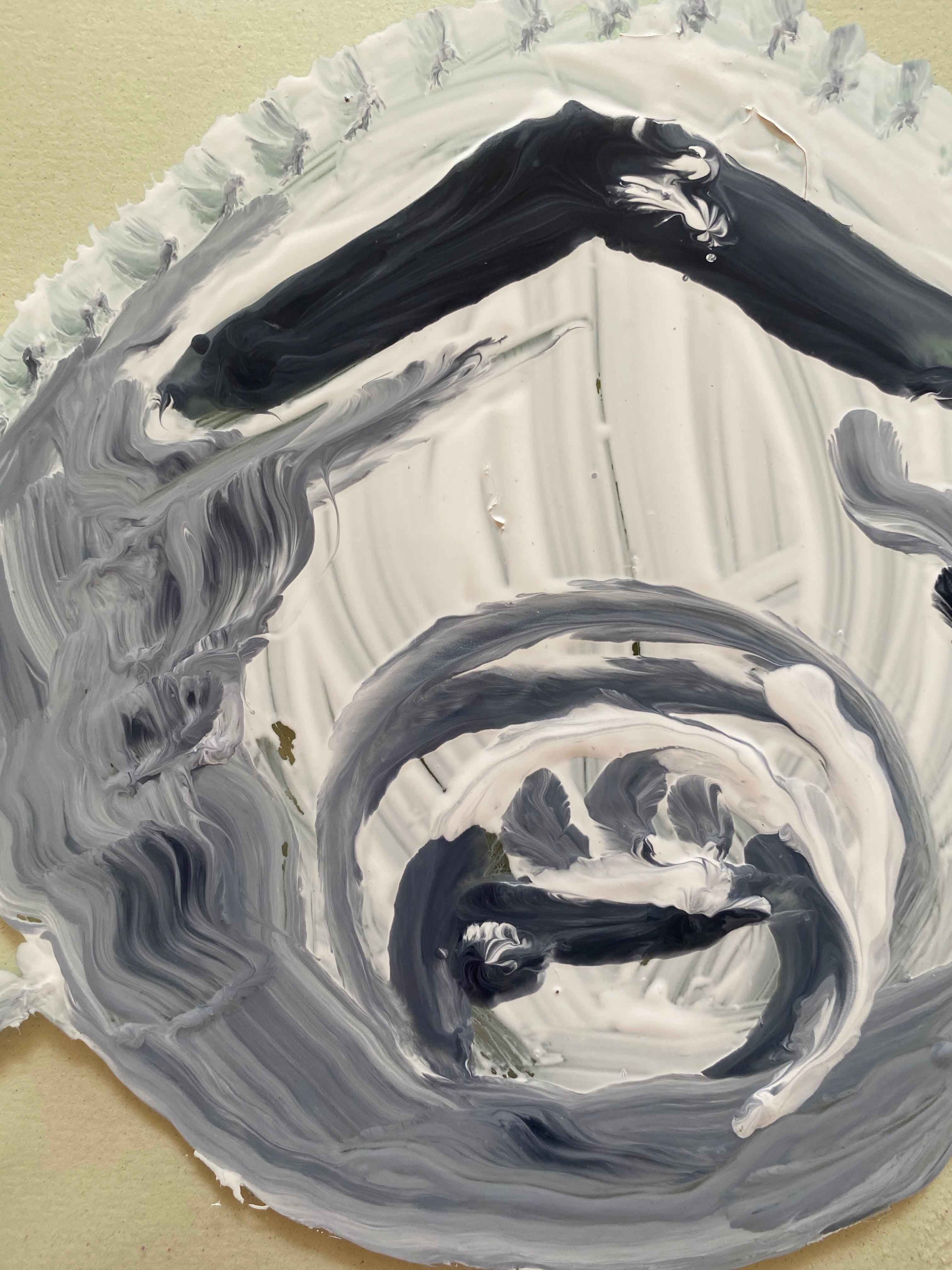
I push this idea of a mask that I can hold in front of a face further by using oil paints on glass. This ties in with a part of the parallel project where I have used oil paints for portraits of faces under water. I am using an old glass pane with some pink spray paint and a rusty border, which is quite creepy.
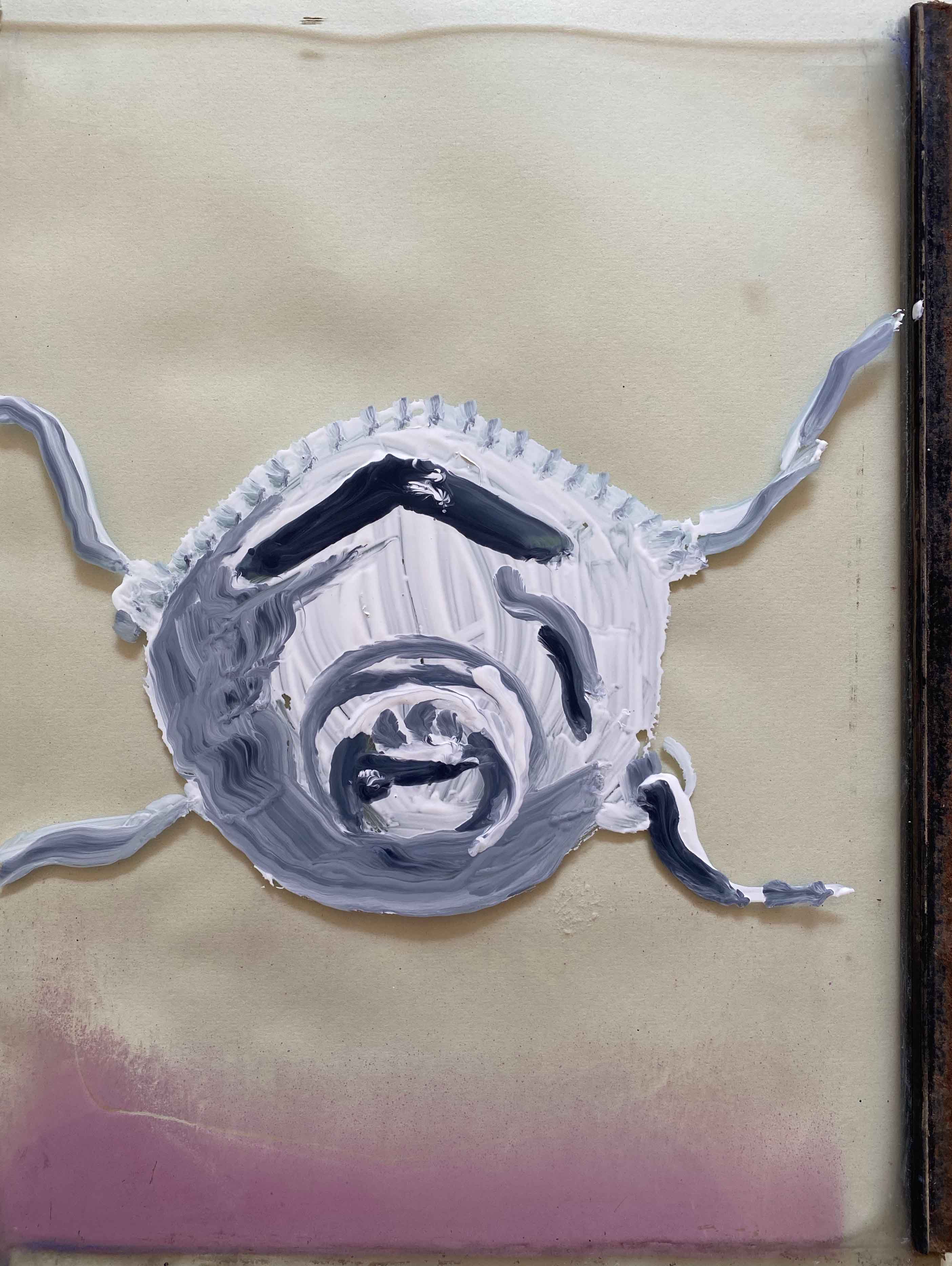
I want to try dripping the paint on the surface and allow it to pool, inspired by paintings by Genevieve Figgis.
Hmm, this looks like some sort of insect, interesting maybe, but not what I was aiming for. I have too little control when dripping on the glass.
I have another go using a brush and then just drop a few drops:
This is closer to what I was aiming for. The thick oilpaint looks chunky and velvety and the fluid brushmarks are very visible:
A very different surface is a rough burlap that I have stretched over a frame of 60x80cm
The burlap is so rough that I will place a sheet of paper under and use very diluted oilpaints, imagining that the paint that seeps through the holes onto the paper also could create an interesting ghost image. (It didnt’t, just some puddles)
Besides the really rough surface, that you really would not like to touch your face, the size is different here.
All the previous trials were roughly A4, but this is big enough to cover my whole head if I would use it, which is repelling.
I guess I could return this burlap to the use of a sack transporting potatoes or so, which would make them unappetizing immediately.
I am not really drawn to any of the media I have explored so far because I already started off with a clear idea- and none of this has convinced me to see it differently.
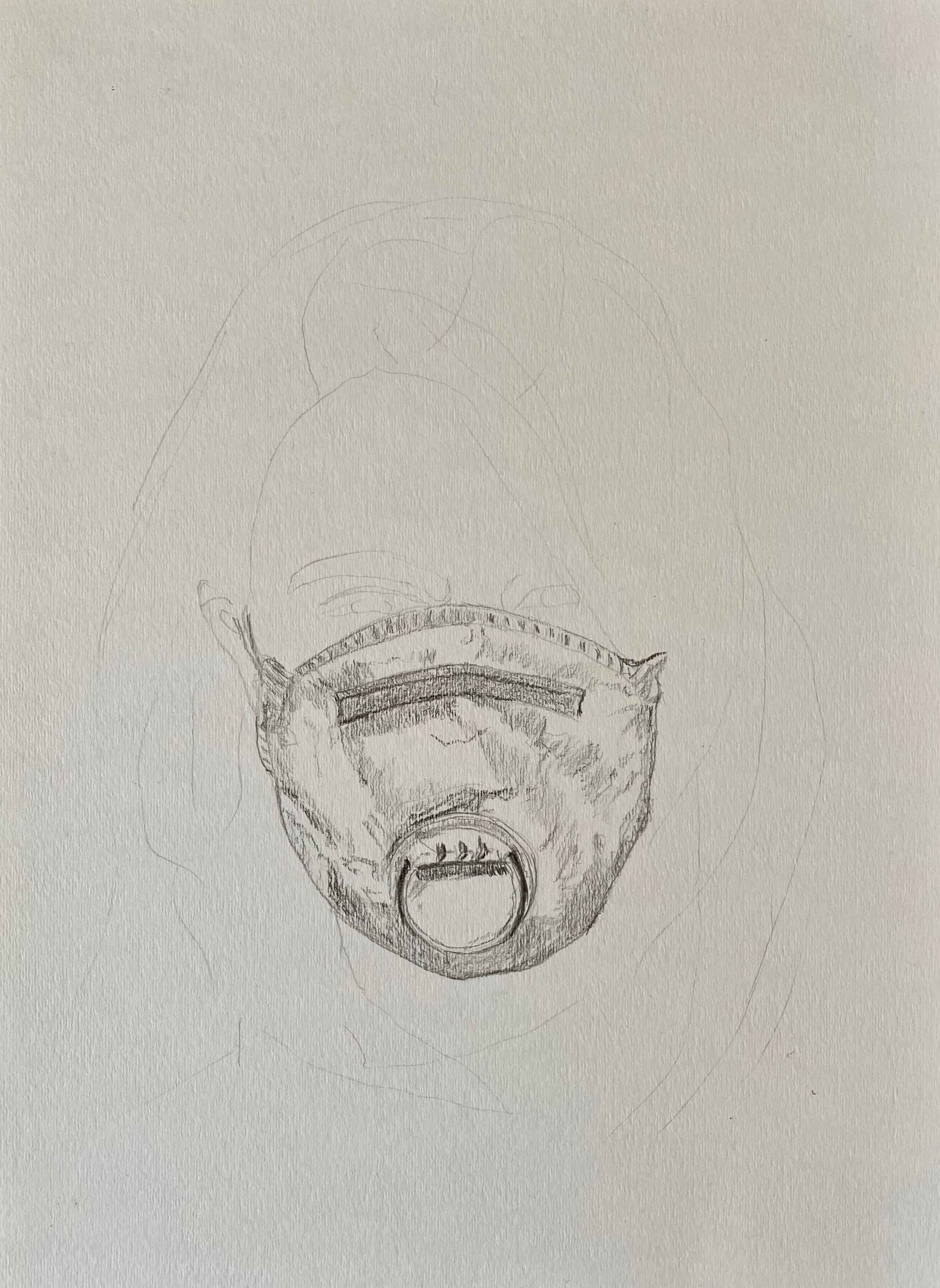
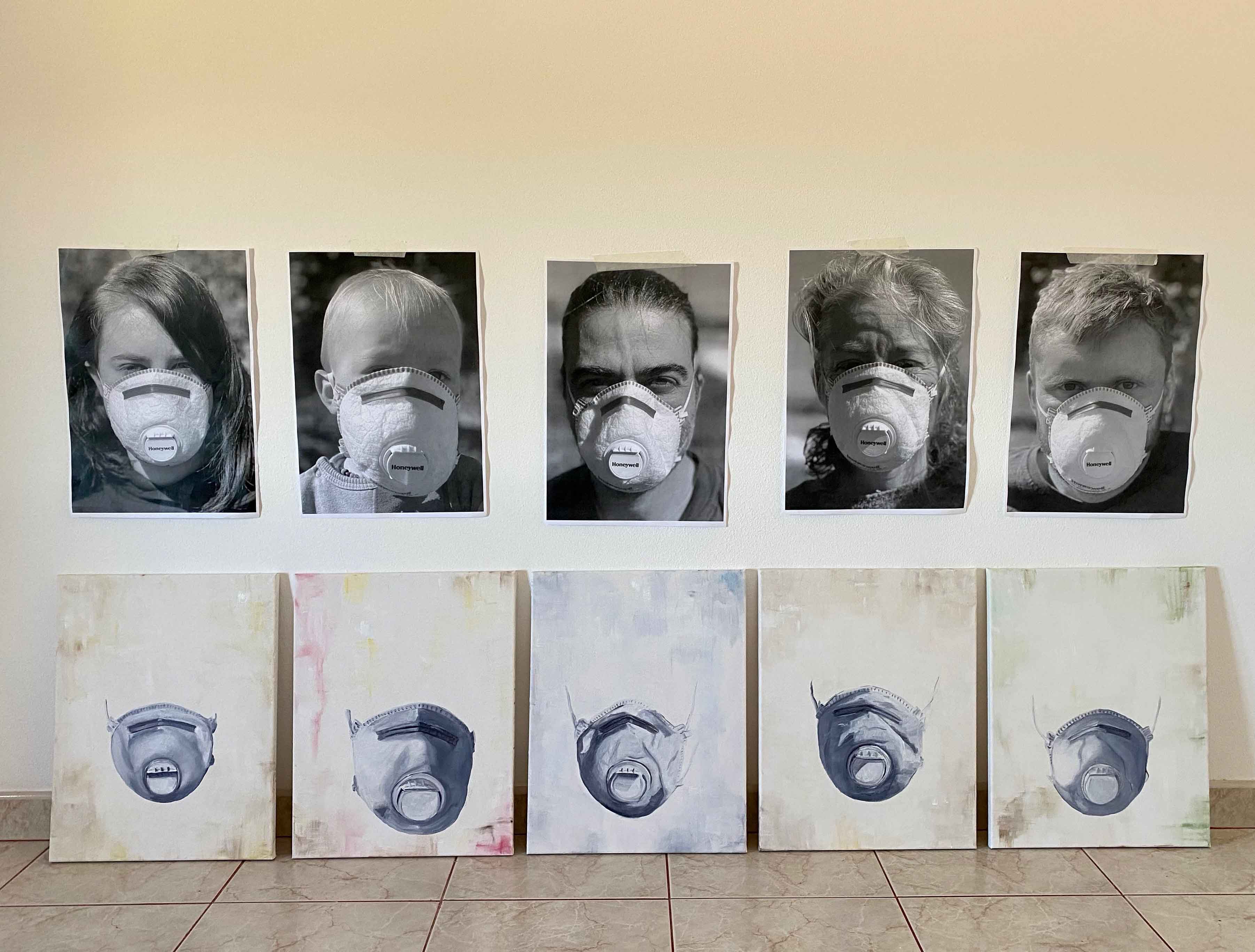
I imagine a series of my family members behind the same (one and only) mask we have. The portraits all very classical, passport picture shaped, to emphasize the impersonal, and I would choose simple pencil drawings. Everyone has a pencil and it is so everyday shopping list familiar which in normal times would be so comfortingly incongruous with using a mask.
We are so lucky to have a garden we can still walk out into in these strange quarantine times and I start by taking a series of photos that I call “family picnic”: ( or “Dejeuner sur l’herbe 2020”)
I have the idea to use video again for this subject – drawing the faces lightly in pencil- which also feels impersonal- and then slowly erasing them til only the masks are left. I think using video that adds a dimension of (short) time to the images, is a very fitting media to describe the process of fading of the personality behind fear, rules and statistics in these strange times of quarantine.
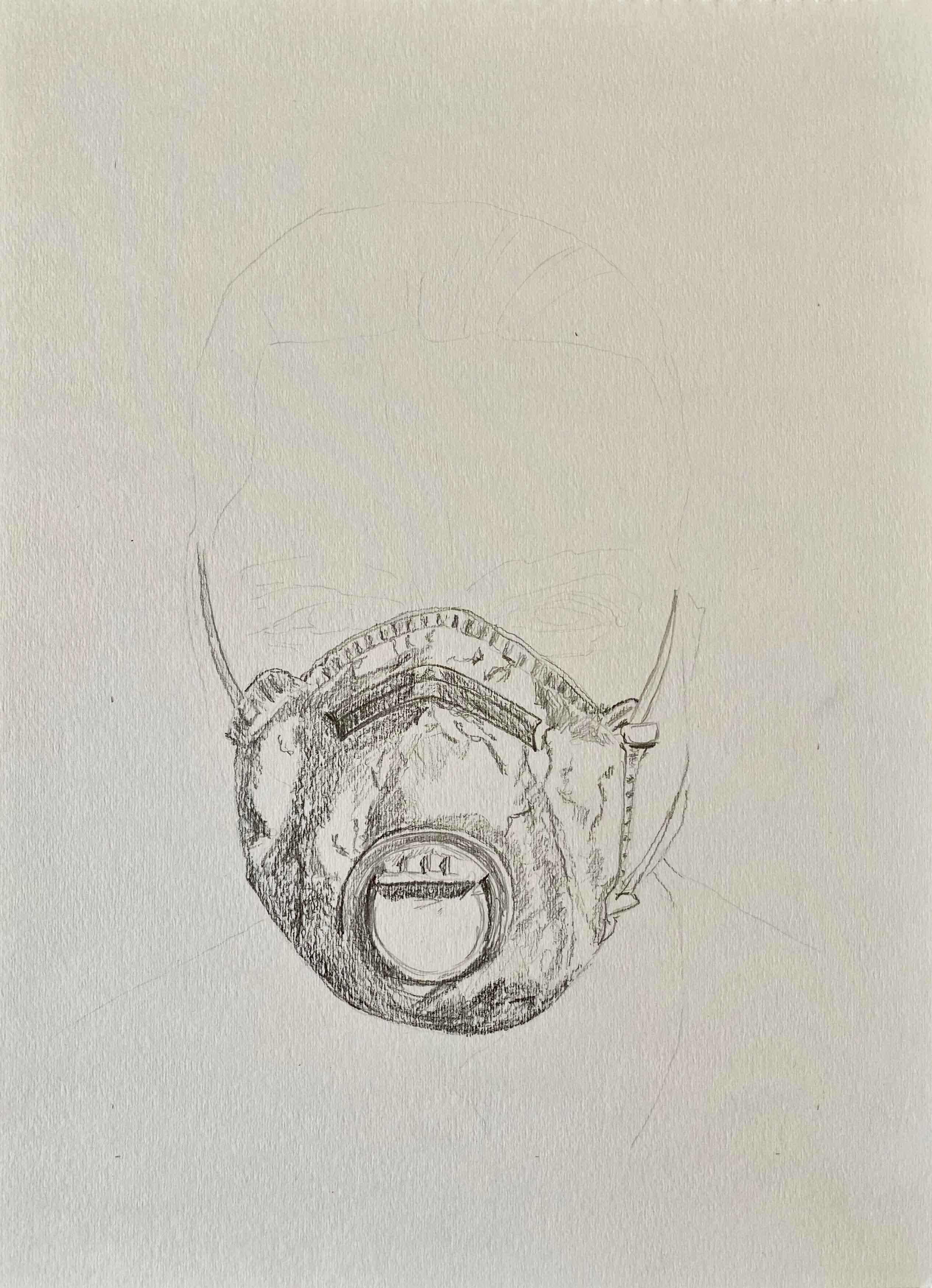
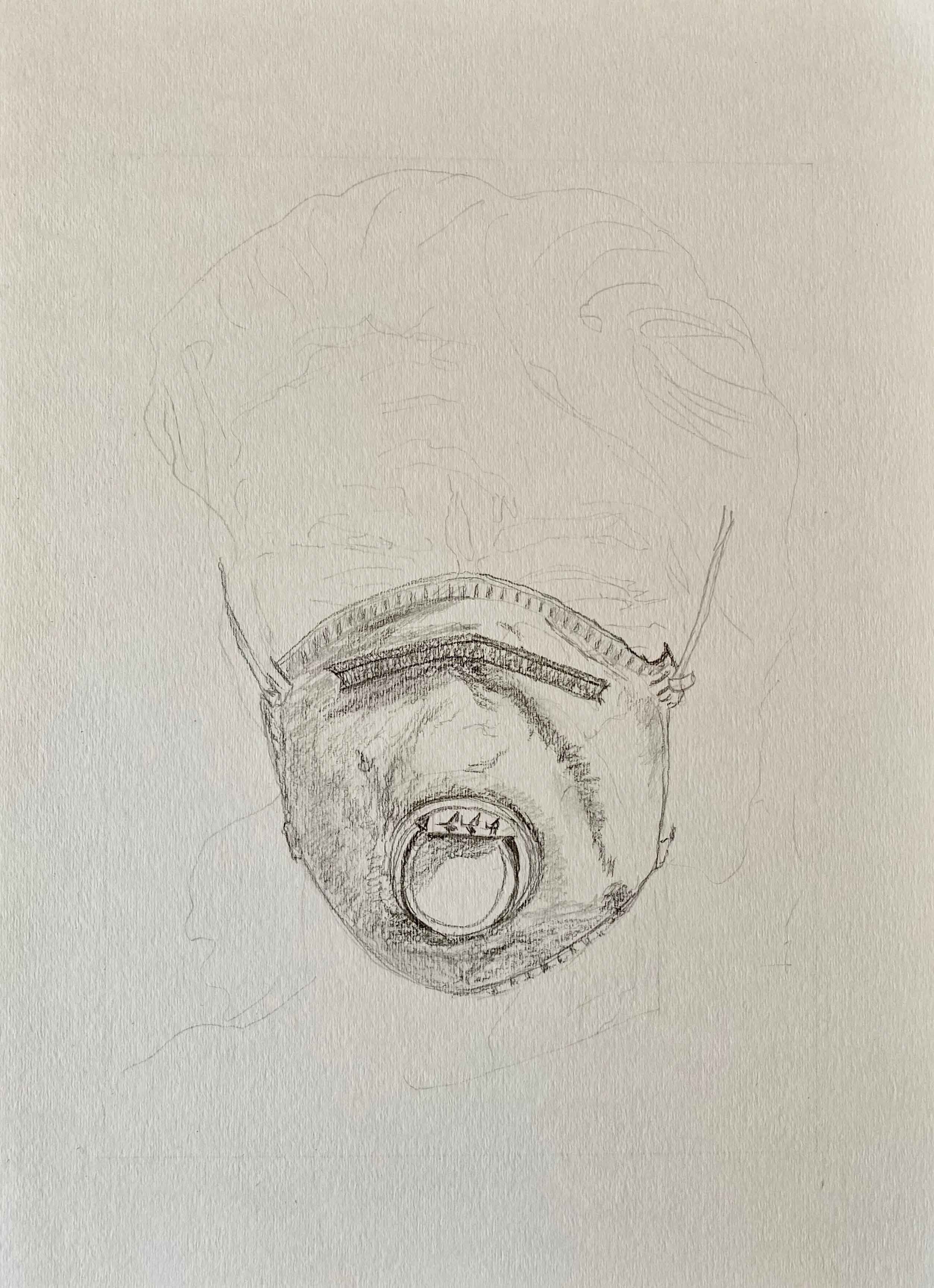
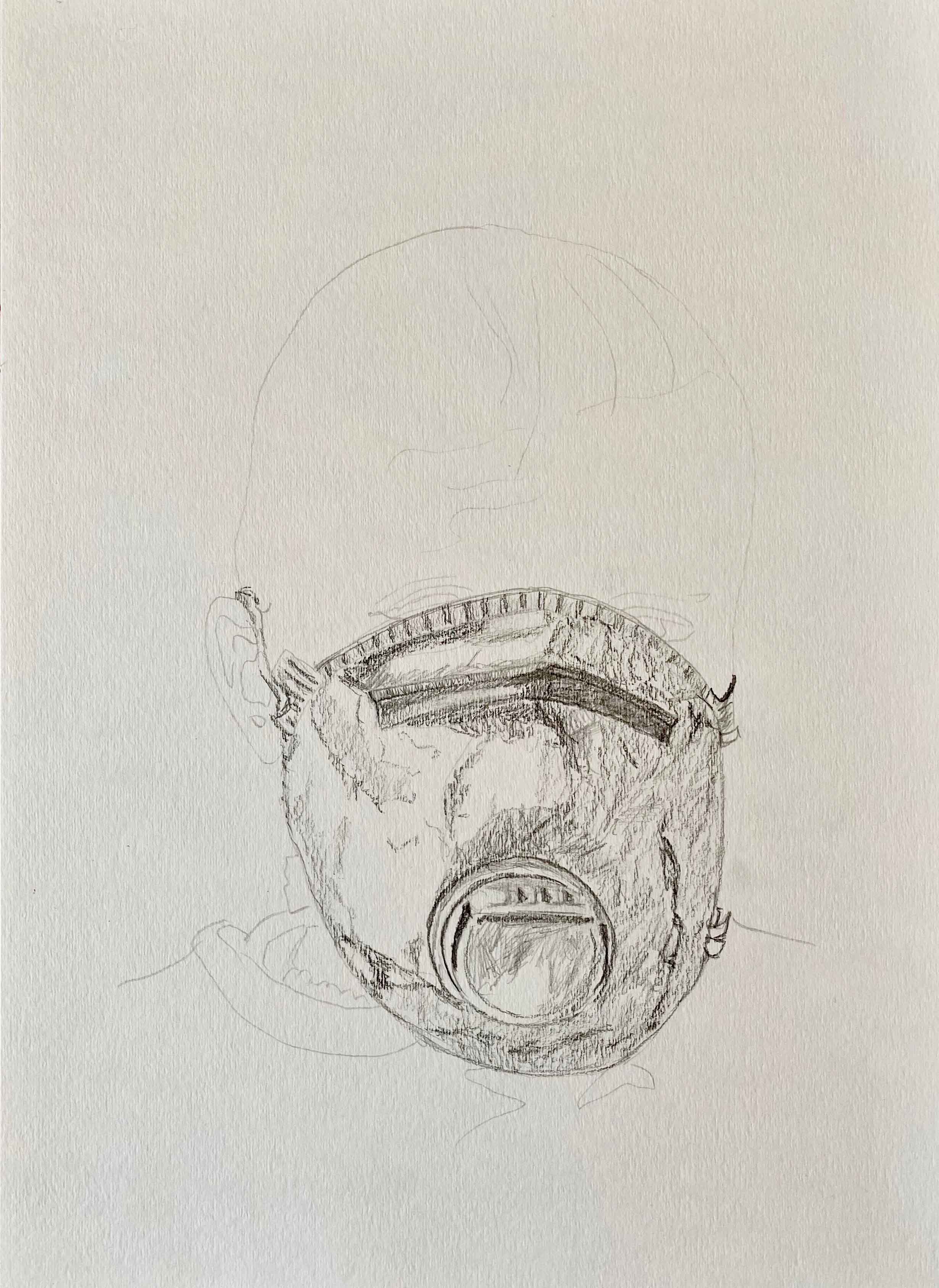
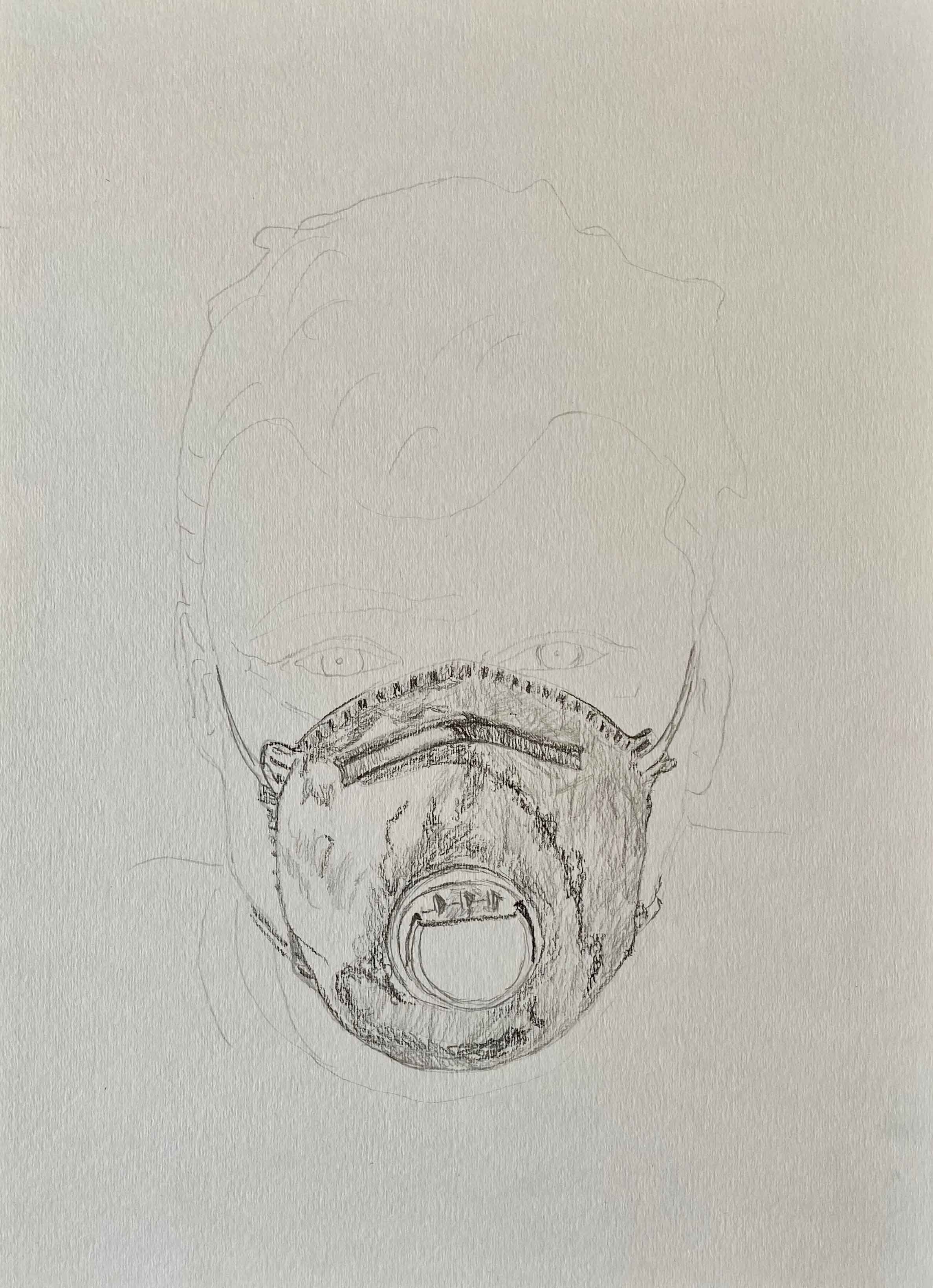
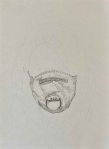
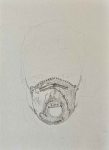
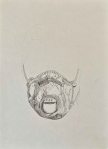
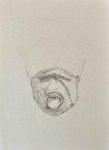
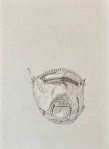
I start by creating a series of pencildrawings, using pencils HB, 3B, 5B and 8B for a tonal drawing of each mask on our faces.
This is how they look all together in a series:
Keeping the drawings as a series instead of one big painting of a family picnic is showing the isolation and separation of this time too.
I continued with finishing the portraits of me and my partner and started with the fading of these in the below video. (The soundtrack is my granddaughter’s loud reaction to my daughter trying to wean her off breastfeeding when bringing her to sleep. )
This simple stop motion video creates so many feelings of fear and became unsettling to a point that I decided to stop here and not pursue my original idea of continuing this process with drawings of the kids. It is actually way more unsettling than I had expected and I am quite chocked at where this inquiry brought me.
In the BBC Scotland movie “Cornelia Parker- What do artists do all day” (available on Youtube https://www.youtube.com/watch?v=tf7plwgxAzw), Cornelia Parker says about her work: “I am trying to unpick something that is a bit too hard to swallow”. It feels like what I am trying to do with this narrative.
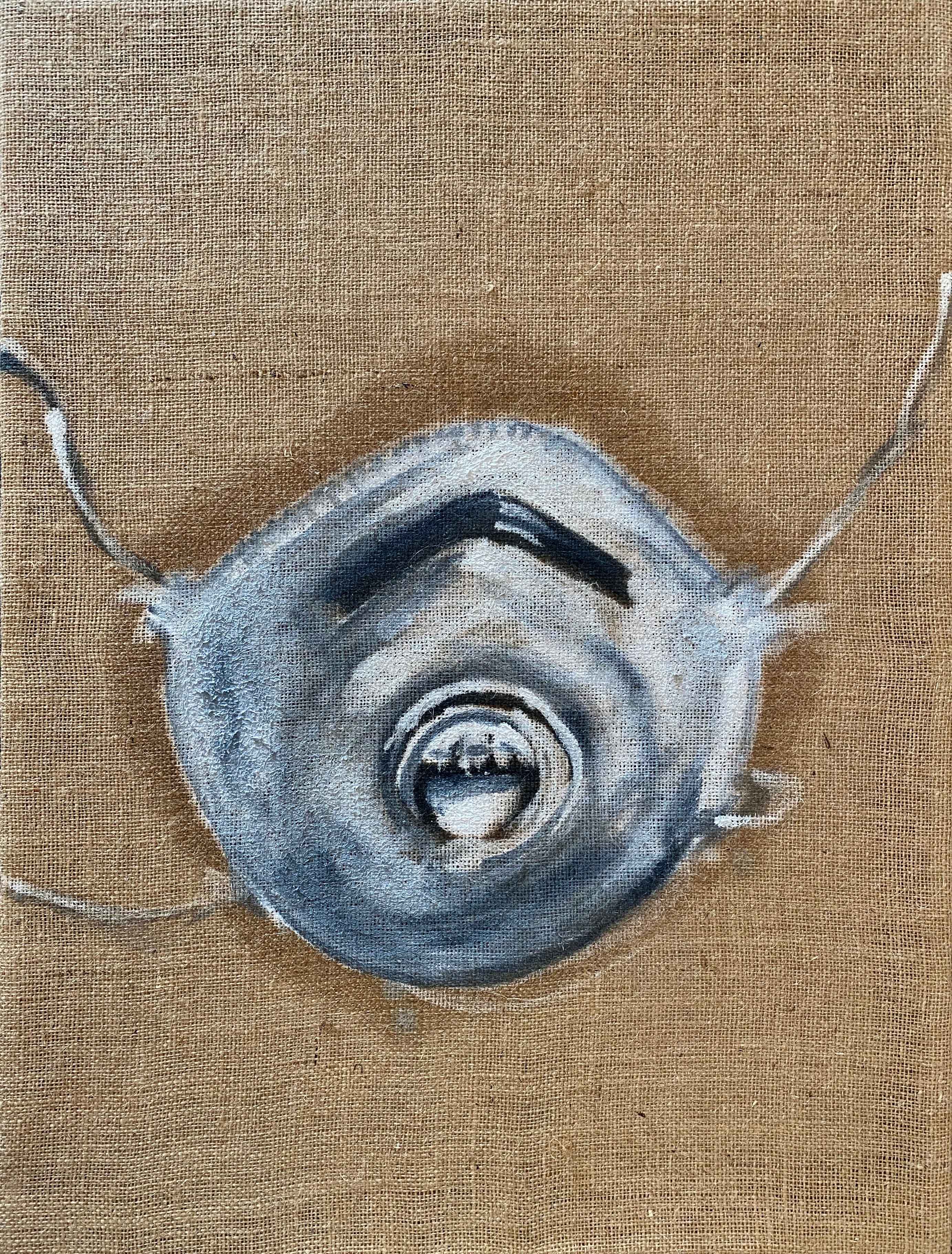
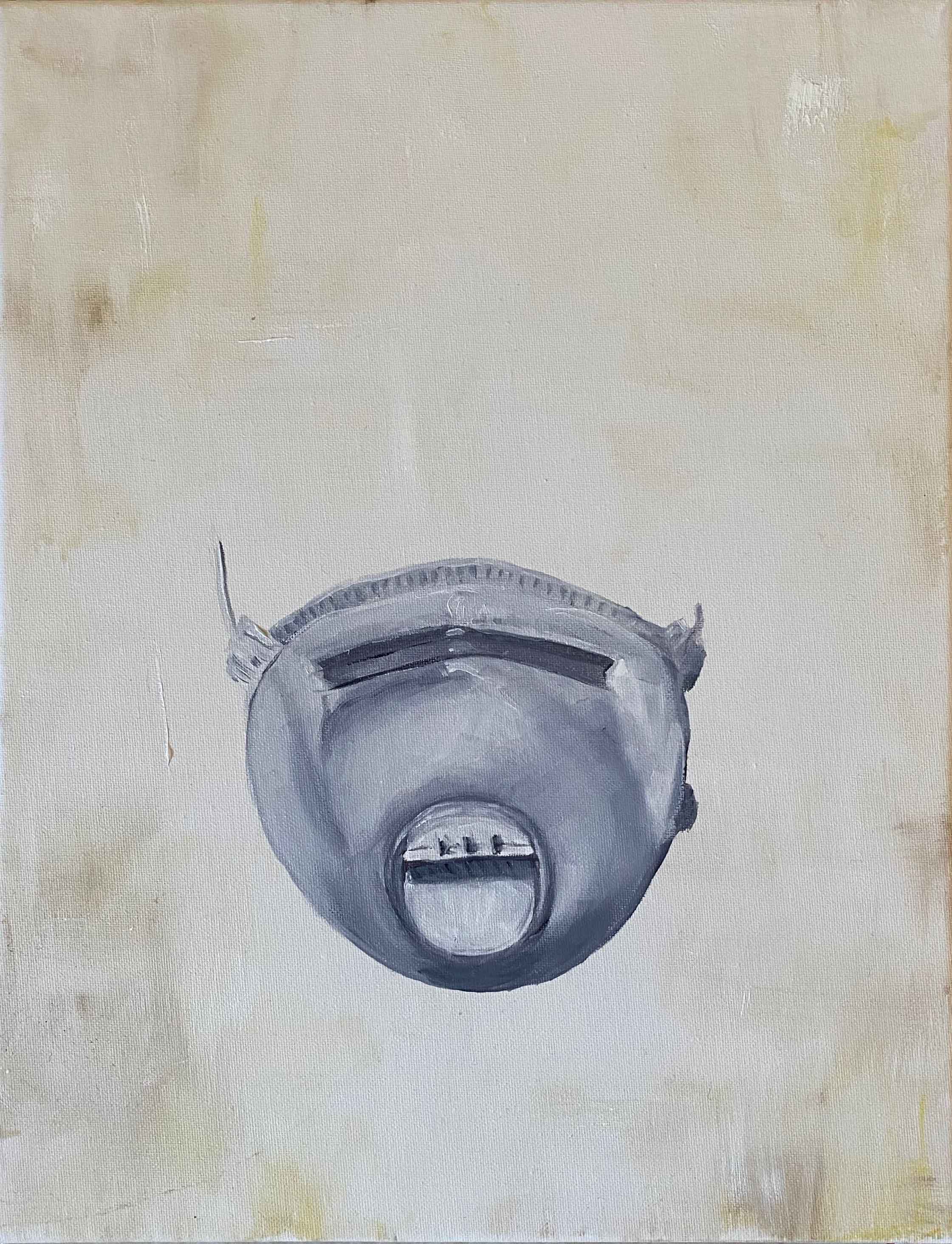
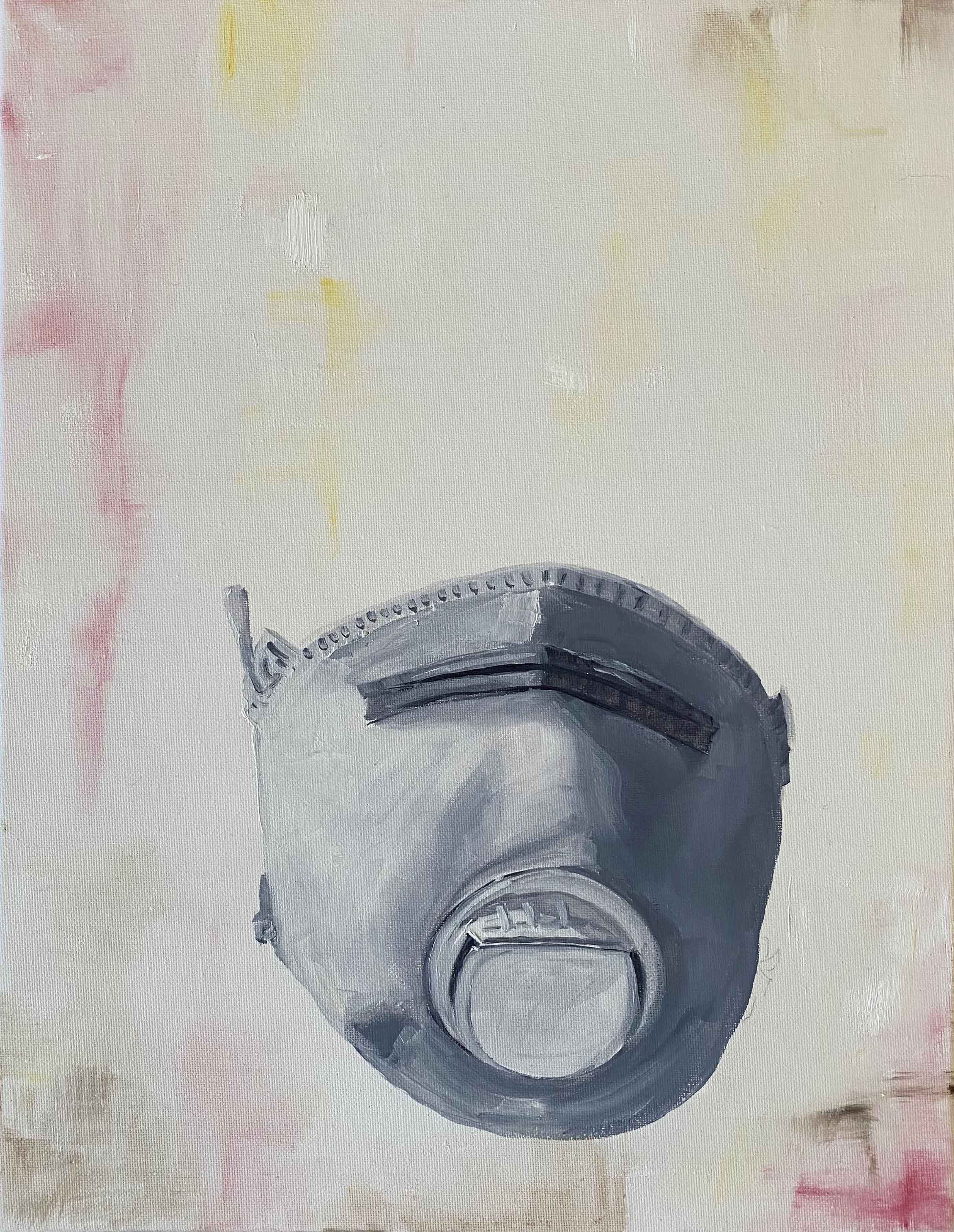
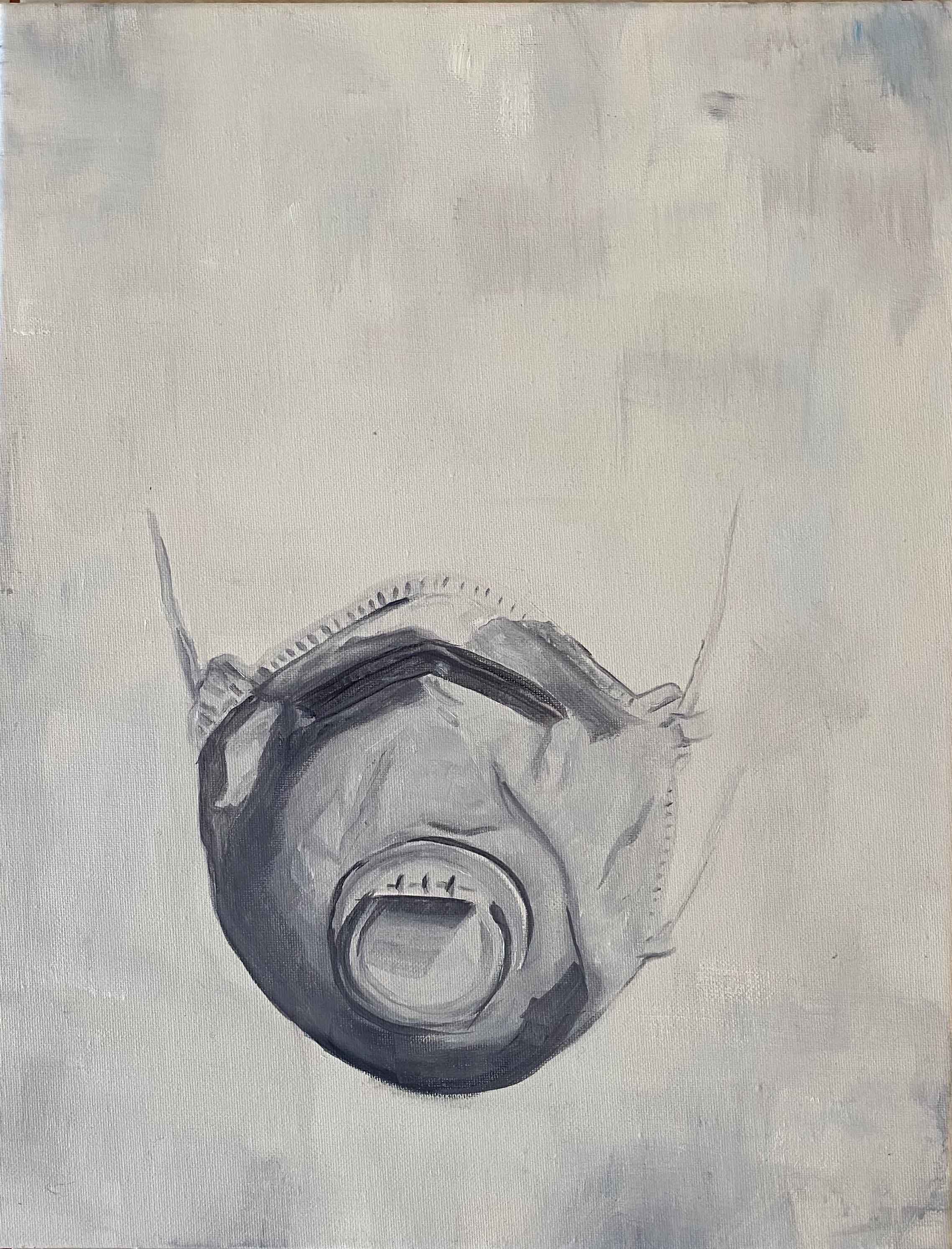
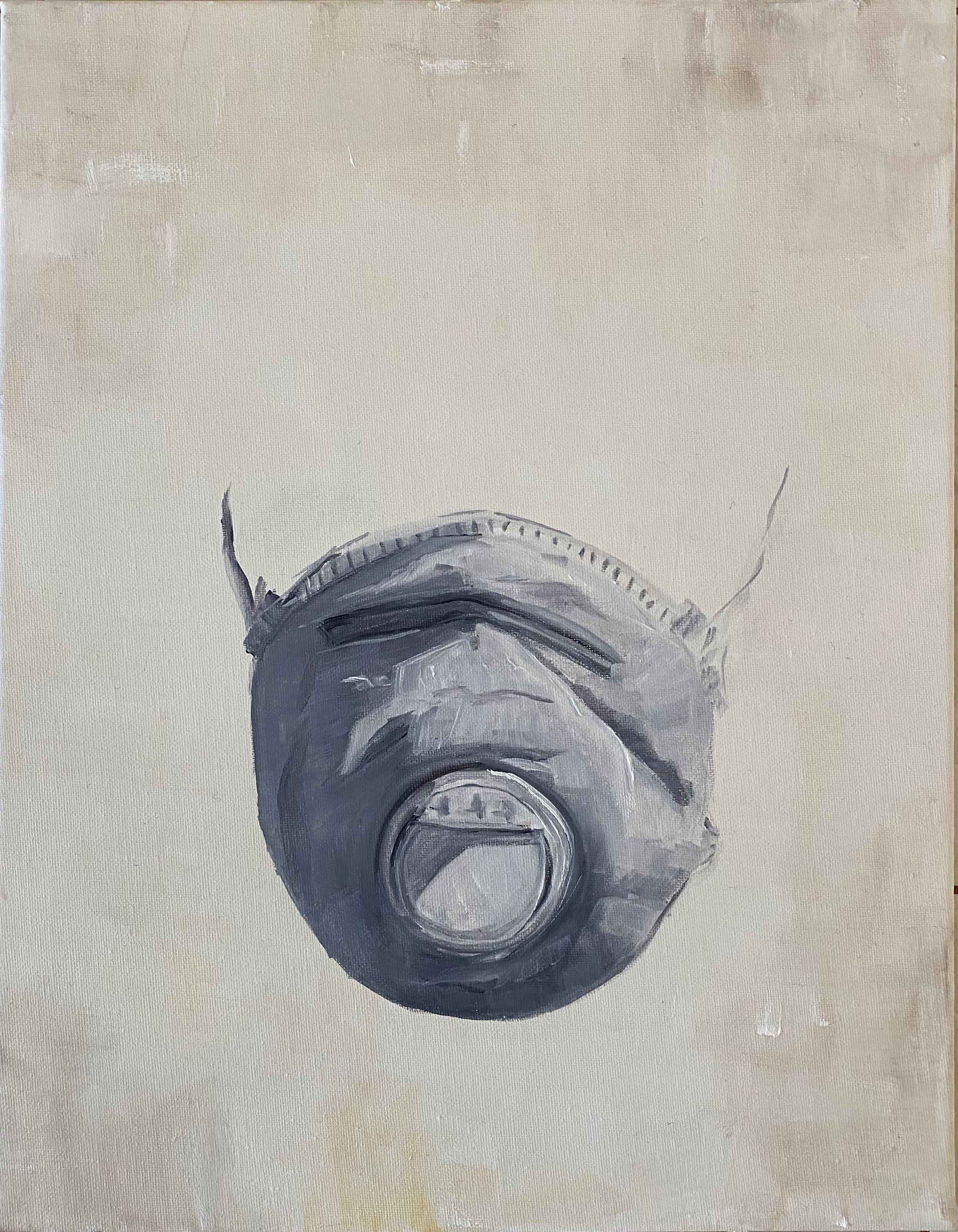
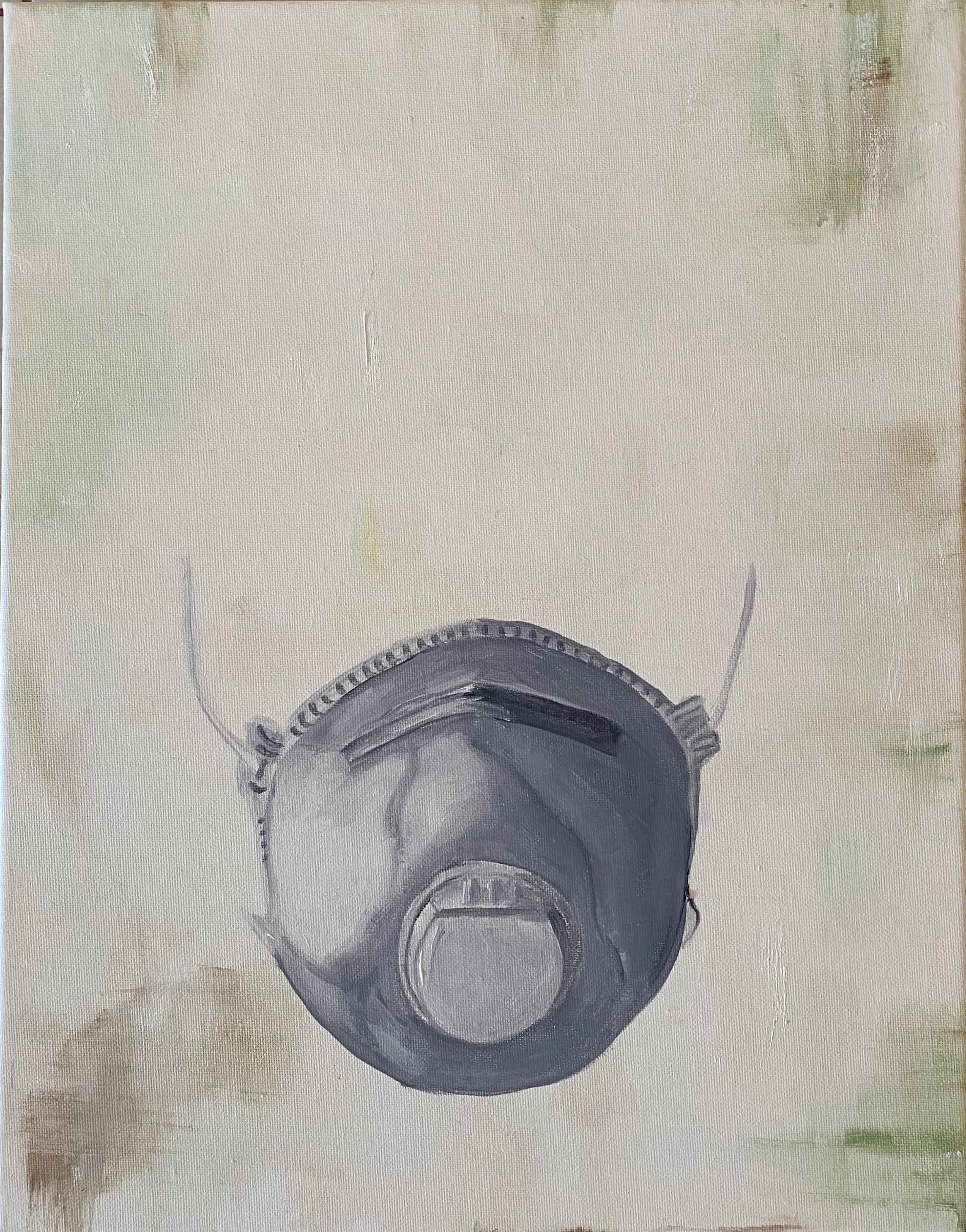
Instead of continuing with the fading of drawings, I seek comfort in painting. I continue in oil on canvas, keeping this passport picture format, but with only the masks visible. The faces remain present in their absence from the classical portrait sized painting. It feels slightly incongruous to dedicate a series of oil paintings to a flimsy object like the mask. What I am painting here is my fears.
I am taking inspiration in the almost monochrome paintings of items like pill packs or pillows by Alex Hanna. I am also thinking of the row of soup cans by Warhol- a pop symbol of consumerism at the time and translating it into THE consumer product of 2020- the mask- so desirable that it is not available to purchase anymore.
Originally, I thought of keeping the paintings as impersonal as possible by leaving the background white, but hearing of Michael Borreman never starting on a white background, I decide to give each background a slight tint of colour, matched with the person. In that way this background becomes symbolic of the person.
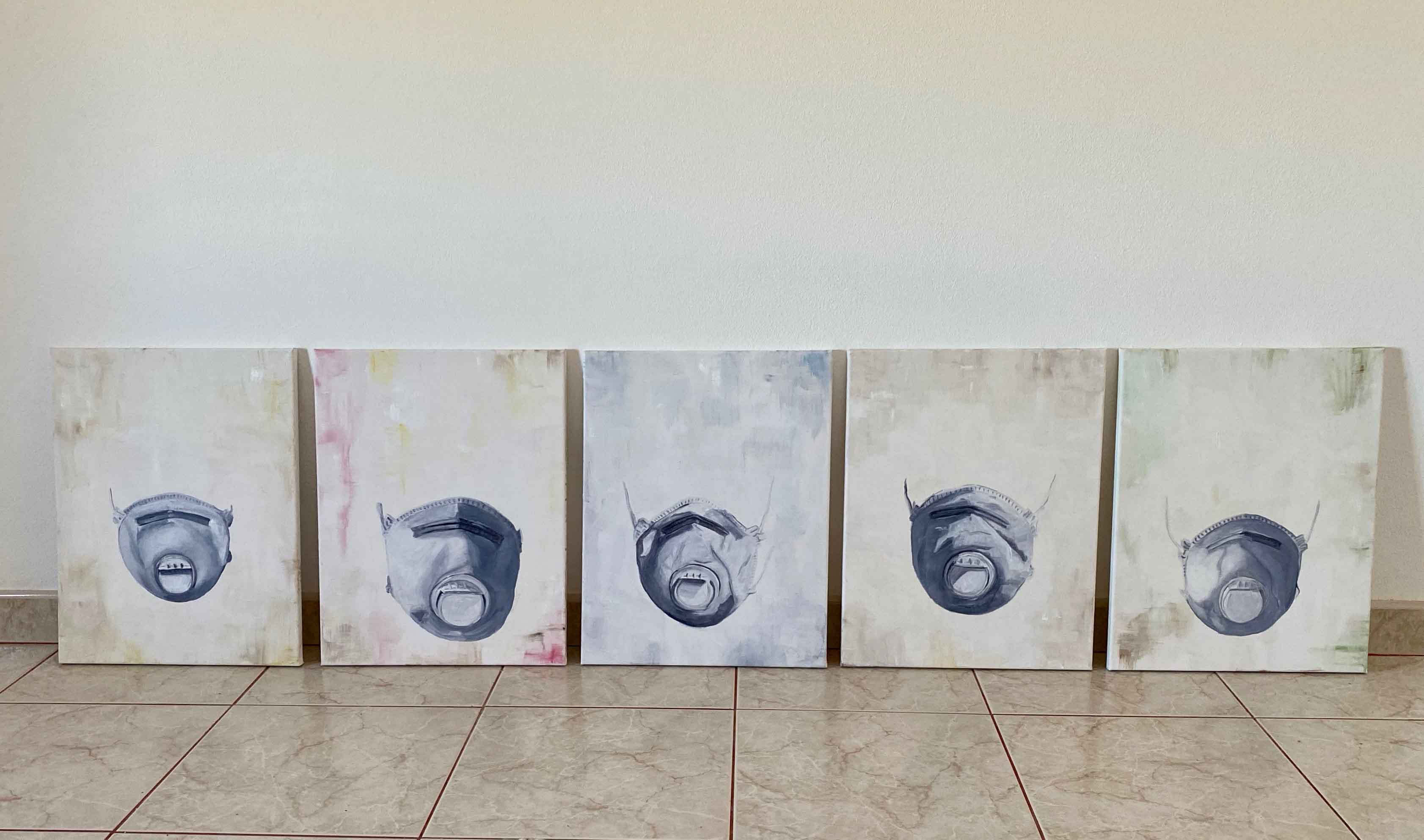
This are the final paintings , oil on mounted canvas 5 times 35x45cm:
This is how the paintings look beside each other:
This series worked out the way I wanted and expresses the loss of personality behind the masks that I was aiming for. There is a certain helplessness in the way the masks are hanging in space, as if on invisible faces, rather than placed somewhere tangible with a cast shadow.
At this point, I realize that I have gotten so moved by the subject that I played it too safe with the materials and lost track of the aim of this project. I have not achieved any real sense of relationship , nor of incongruity between the subject and the material .
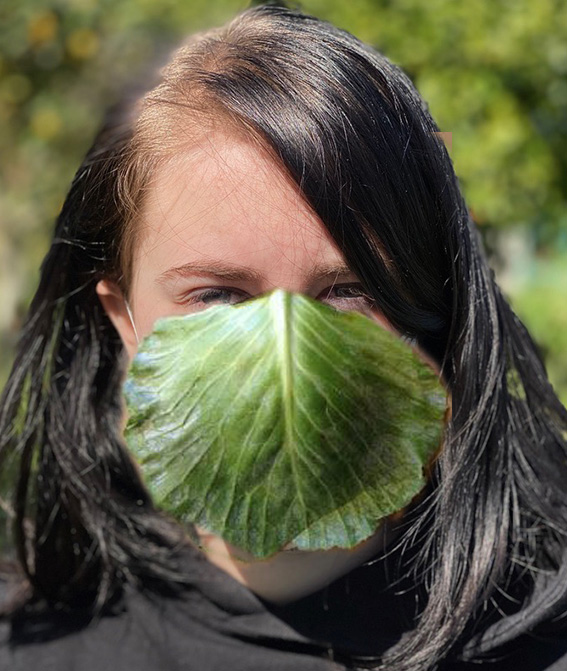
This mask is white, clean, soft, so it seems that a mask that would be dark, hard, in metal for example could be incongruous. But it just makes me think of another type of mask- a gas mask for example. The most incongruous I can think of would be a mask made of leaves and flowers or other natural materials. This mask speaks of danger and is artificial. Leaves would speak of nature. I created a Photoshop version of this idea:
I feel that I come dangerously close to a carnival mask though and will not pursue this.
Instead I think of the mask on incongruous supports. This connects to my parallel project, where I am using old items left behind by the former owners in my house between others, to explore the change happening here.
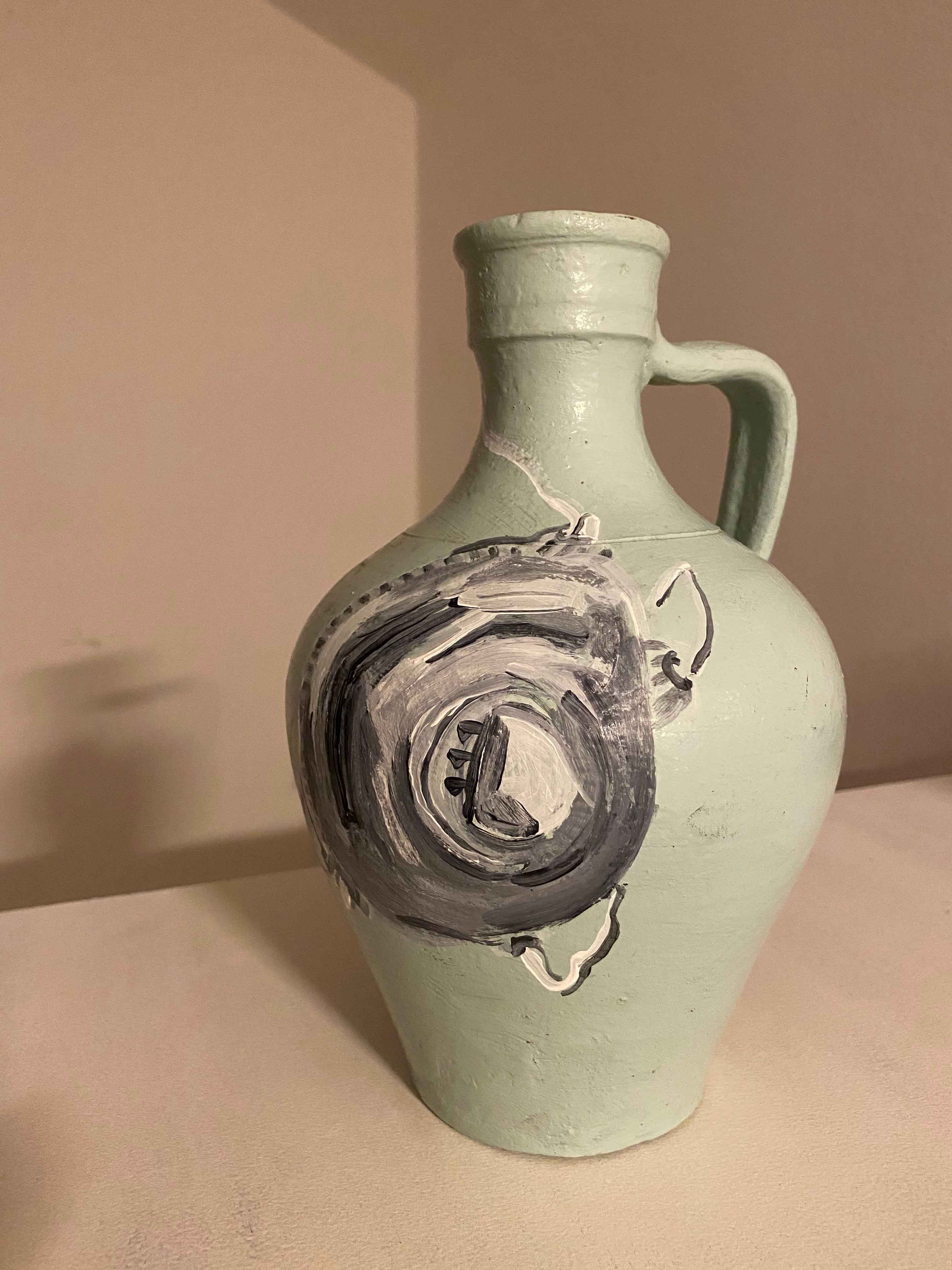
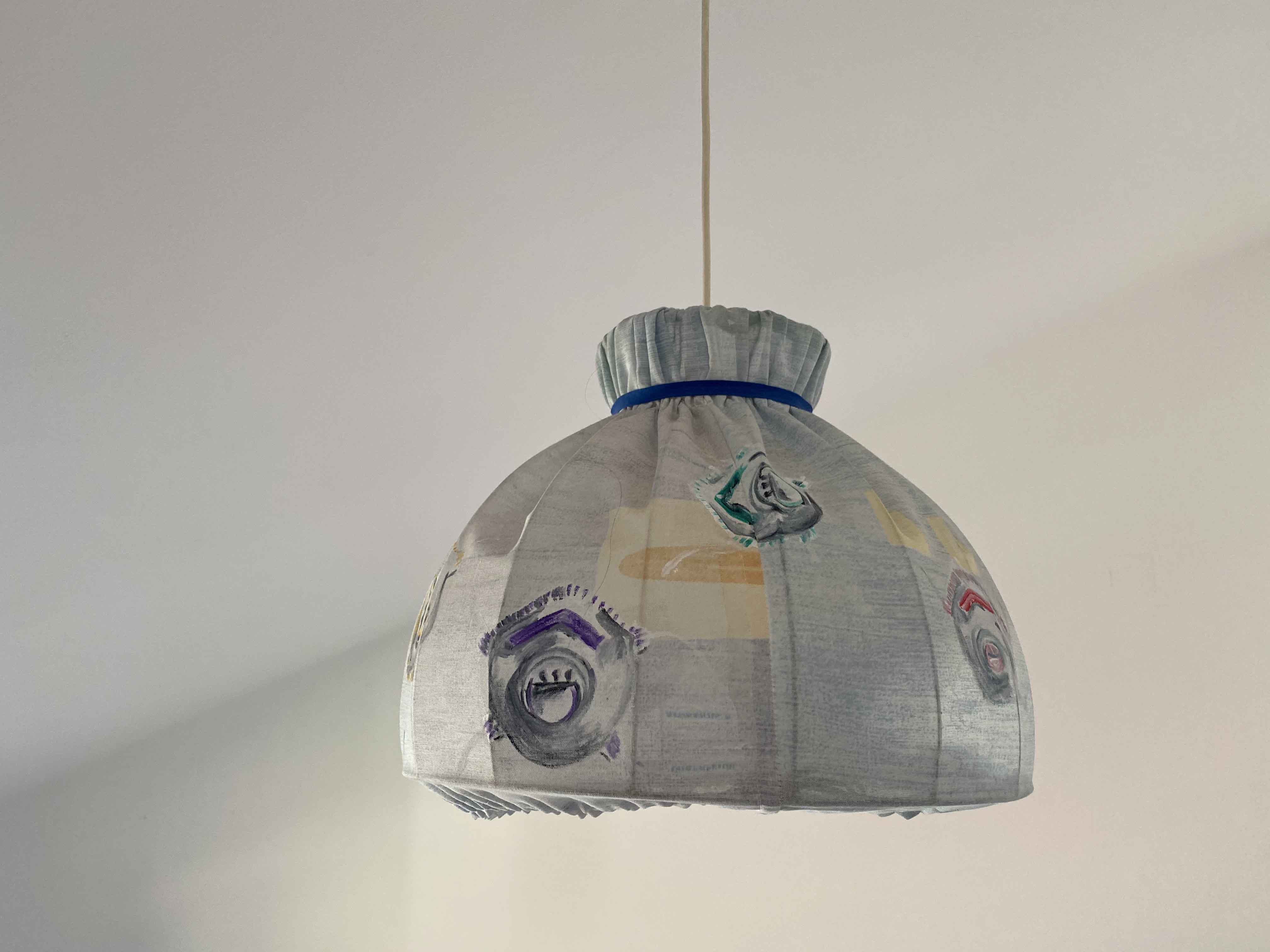
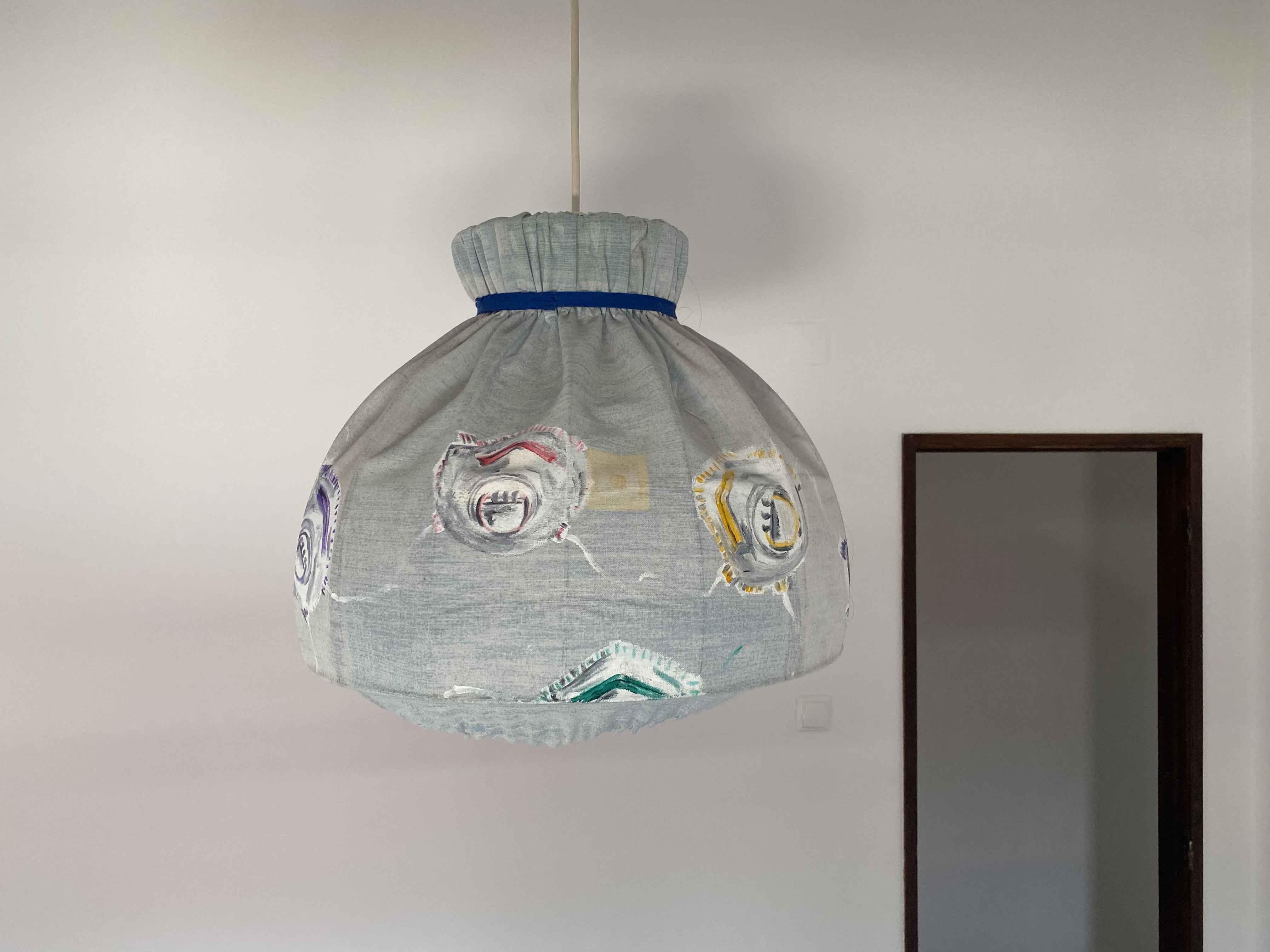
I decide that using the mask as motive on an old vase or as a pattern of a lampshade will push it out of it’s normal reality in an interesting way.
I am using acrylics and start with the vase:
To “normalize” the jug, I will add some grapes and grapeleaves:
I think this got quite funny by being absurd.
For the lampshade, I created the new pattern of 2020- colourful masks:
I could go on to Assignment 2 by using the mask as a tool to paint itself. That would actually work rather well as I have both soft parts to smear with and hard parts for interesting marks. I have seen more masks than I can stand for some time at this point though and am looking forward to a change. I am happy that I found a way to have some laughs about it in the end though- with the jug and the lampshade designs- as this narrative took me to darker places than I expected.
Research the work of Cornelia Parker. Make notes in your own words in response to the following:
What do you think Parker is trying to do in her piece Poison and Antidote Drawing (2010)?
Poison and Antidote Drawing is created using rattlesnake venom and black ink, anti-venom and white ink. Parker often uses bits of her subject to make her artwork. Why do you think she does this?
How do you think it feels to stand in the presence of artworks that are constructed from original objects of great cultural significance? How does that differ from, say, standing in front of a painting of the same object?
By researching the work of Cornelia Parker and understanding the connection between her subjects and the materials she is using, I have gained a whole new appreciation for her work.
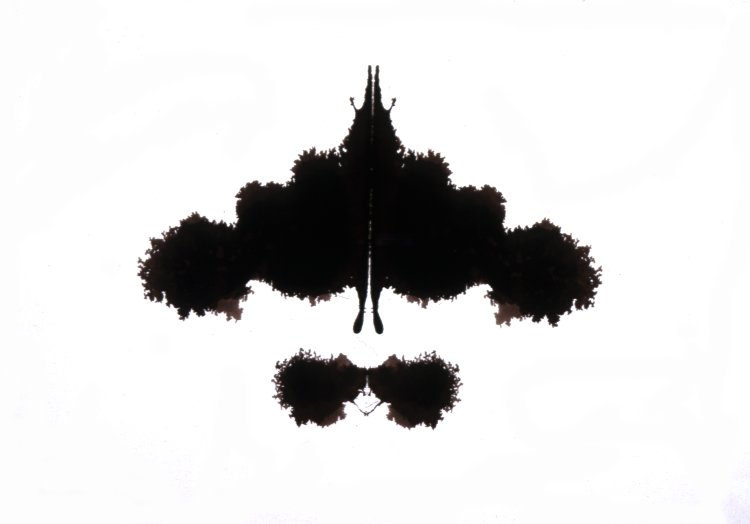
In her piece “Poison and Antidote Drawing” mentioned in the course manual, she used rattle snake poison in black ink and an antidote in white ink in a drawing that was folded in the middle in order to create identical impression of abstract shapes on either side of the crease.
This mirror drawing is an image of duality, and it pushes the duality of concepts like black and white, poison or antidote to literally a question of life and death by the qualities of the materials.
So the materials used and the process become the work- this is what characterizes Cornelia Parker’s art.
In the movie ” Cornelia Parker – What Do Artists Do All Day ?”, available on Youtube (https://www.youtube.com/watch?v=cuAF55BN-Ak), Parker said “The material is important, the process is important- the combination of those two things together make the work”.
Rattlesnake venom is maybe not the most common commodity, but often Parker uses familiar every day objects that she transforms into her work. In the above movie, we see Parker driving around London and photographing a withered road sign and cracks in the pavement.
She took rubber molds of the pavement cracks and then had them cast in bronze- elevating them to something really extraordinary.
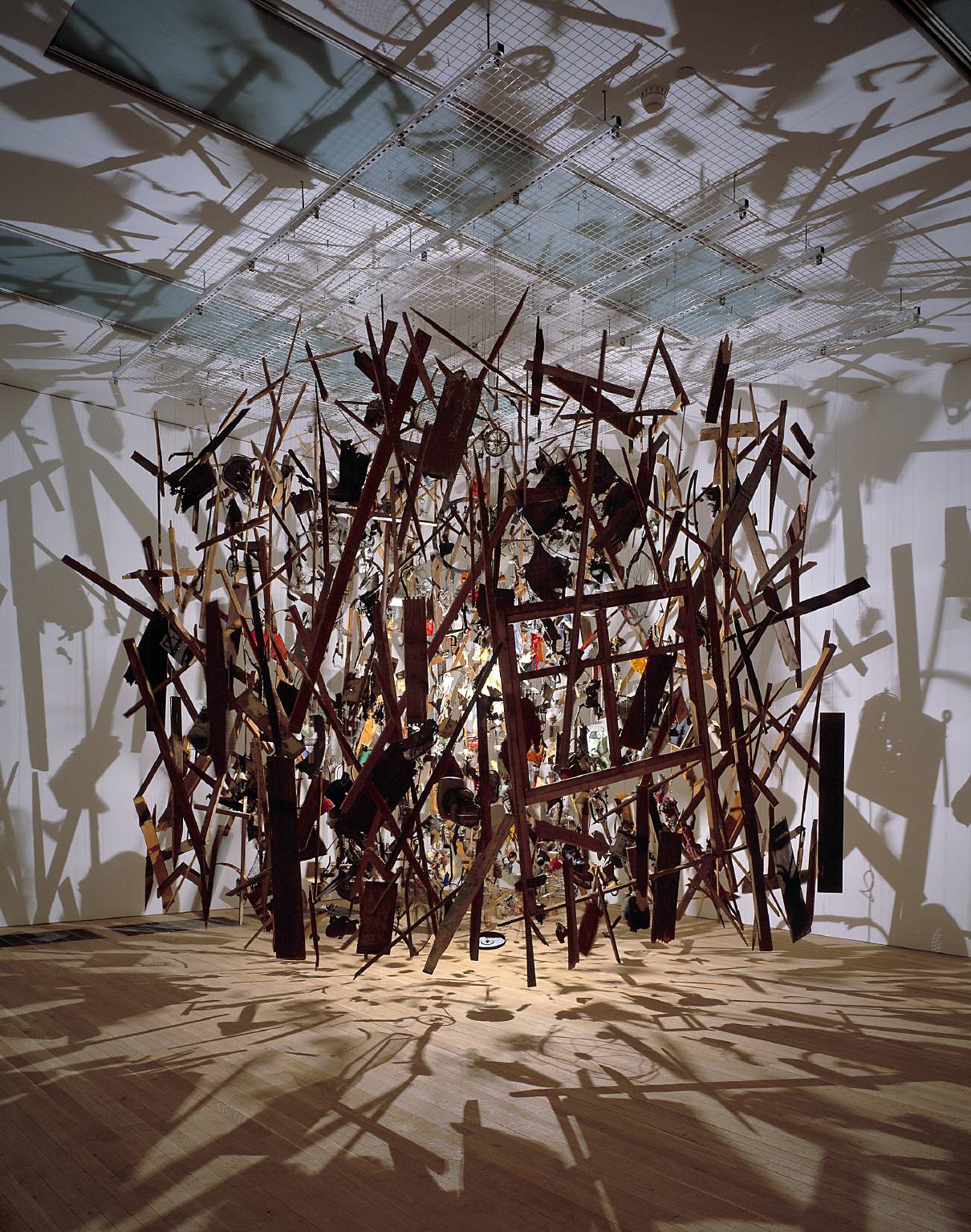
In Cornelia Parker’s probably most well known work, “Cold dark matter” from 1991, she asked the British army to blow up a garden shed.
A shed is a very familiar thing, and a place where often very personal items are stored- items that are not in use but too good to get rid of. It seems to be incongruous with the violence of an explosion. Explosions are such a common sight in comics or news or at the time bombings in major cities, so this was a very unsettling way of bringing that violence close to home, to the familiar.
This work looks really impressive on photographs, the blown up pieces of the shed hanging on transparent strings from the ceiling and lit up so they are casting strong shadows around. I can imagine the impact being even stronger in the flesh. By hanging the pieces instead of laying them on the floor, it seems like they are suspended in time and space- still in the middle of the explosion. This hanging of objects in different groups is recurring in Parker’s work. It creates an interesting tension in the space around the objects too, and for someone seeing the installation in the flesh, an interesting blurring of the line between work and spectator.
In another body of work, Parker is “drawing” by puncturing holes in the grids used as targets while shooting and then stitching with a wire made of melted down bullets literally drawn into a wire. Like this, she uses bullets, with their violent energy and potential for death, to draw something formal and considered.
I am fascinated by how Parker uses bits of her subject to make her artwork. This is not an aspect I have considered in my own making before and it will be interesting to consider for the upcoming assignment.
The artists below all make work which both creates and denies three dimensions at the same time. Take a look at their websites then make notes in your learning log about these artists, your response to their work and how their work relates to what you’ve been attempting in this project.
Angela Eames is a drawer, and uses the computer to draw. In a video interview with Miles Corley available on You tube (https://www.youtube.com/watch?v=mDriWgY9Gd0) she states:
“Manipulating virtual lines in space- for me that is drawing, it is a constructed approach to drawing. And a virtual approach to drawing. And a head approach.”
On my first approach, I find Eames’ art difficult to engage with. I see grids and objects manipulated in space and find it very organized and intellectual. I do not have an emotional response to it. Eames works in series, here are excerpts from the series “Red Skyripper” and “Green Skyripper”:
It seems very mathematical, and I can find a certain pleasure in the rhythm of the images.
In the series “Spoon”, I can recognize a red spoon being manipulated in the gridlike structure:
I find it more interesting with this recognizable object.
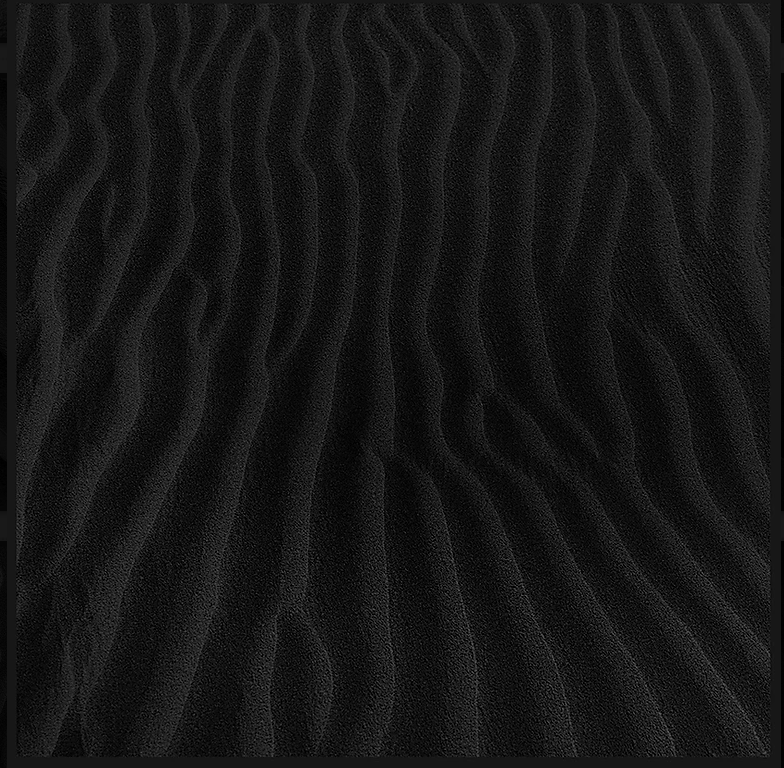
Maybe it is because of the familiarity of the view that I also like the series “Sand” exploring the waves created in the sand in different shades, like here “Black sand”:
This feels like a view that I have seen and photographed myself.
I understand why we are asked to look at Angela Eames’ work in relationship to “work which both creates and denies three dimensions at the same time“.
When working in the computer, the work does not have a size or a shape. Eames works within the computer, a 3D space, using photographs she has taken in the past- which adds an element of time and 2D elements to the work, then she wants to see it in physical space and prints it on canvas, where it becomes 2 D again, and receives a size and a surface.
In the video mentioned above, she speaks about her series “Puddles”: “The puddles are constructs in 3D space, they reflect something that comes from 2D imagery that I have taken in the past, and then you bring it out flat- on canvas, a soft absorptive surface that has nothing to do with that screen space.”
Eames’ is often using grids or tiles, and bend them in space so that there is a 3D illusion. She names that her work is about the inbetween of 2D and 3D.
Looking at this aspect of the work has made it more interesting and accessible to me than it was when I was looking for an emotional response.
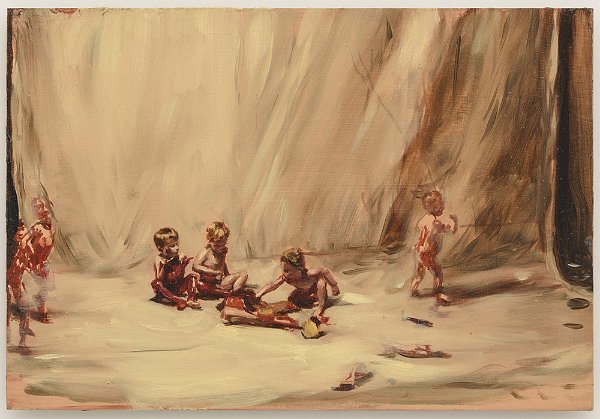
Michael Borreman’s art feels like the opposite of Angela Eames’s- it goes straight to the gut. At a first glimpse, his drawings might look like from some historical archive, like part of some research maybe, but very quickly it becomes strange and exciting, often scary. There is a mysterious narrative in the work. It always contains figures that are performing some sort of ritual that remains unclear. I find Borreman’s work fascinating!
“Fire from the sun” below is probably the most macabre series of paintings, with children gathered, blood spilled, the story unclear:
It does not deny that it is set up as a sort of stage, so in that sense removed from reality.
I am also fascinated by the many paintings where the faces or sometimes whole bodies of the figures are covered in some sack like masks, like “Amy” or “Melon” from 2017:
Amy 2017
Melon 2017
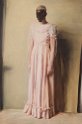
I particularly like the “The Angel” from 2013, where the blackened covered face and defeated posture contrasts to the pretty pink dress and also to the title. There is a fascinating tension in this contrast.
I really enjoy watching movies about the artists as it often shows their method of working and their spaces. Here I watched the documentary “Michaël Borremans: A Knife in the Eye” from 2011, available on Youtube: https://www.youtube.com/watch?v=dhhUmwmlMtc&t=2191s.
Borreman’s method is to create his scenarios with models and take pictures, that he then paints. He said in this movie, that painting is rather fast, although he is incredibly skilled at painting in a very classical manner. The idea, and the time between the photo session and knowing how he wants to paint it, in what scale and tones, is what takes the longest time.
He often introduces different planes in his imagery- like a model biting into a glass plate, or the model being cut off at the waist by a box created. I think here there is an interesting play between 2D and 3 D, because in a way Borreman creates dimensions that do not exist, or that we are not used to seeing.
The hidden parts becomes mysteriously absent, exciting our imagination.
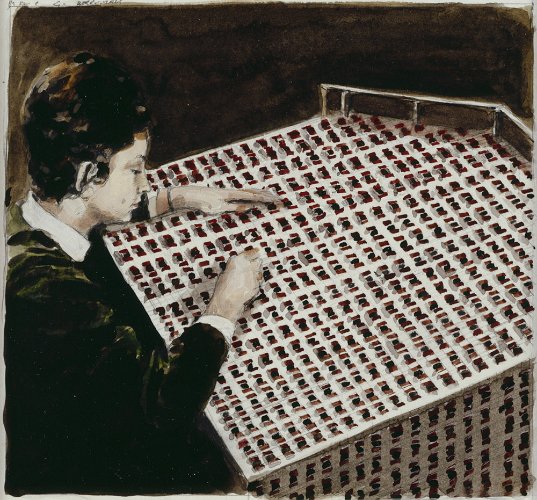
Borreman’s first passion is drawing though. He sais in the above movie that he has always drawn- it is a “literary function”. His drawings are full of narrative too, and I particularly like how freely Borreman is combining elements of different scale.
Here in “The House of opportunity-Vodoo” the house becomes small enough for the person to manipulate.
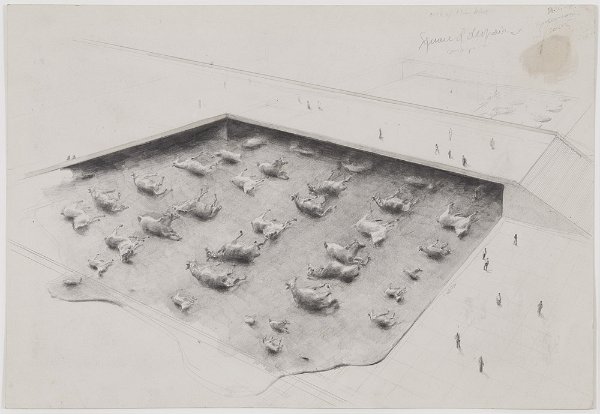
In many drawings there is a lot of “unfinished” space, something that always catches my attention, but then I go on filling up my own drawings.
Here in “Square of despair”, all the cattle are lying on their side with tiny persons walking around, and I like how the drawing is becoming less finished til the edges.
I found it interesting that Borreman always draws on found paper, he never buys blocks of paper. He likes when the paper is imperfect, with some spots or grease. Similarly he never starts a painting on a white canvas. He always puts down a beige or grey foundation. That way he can leave parts open rather freely and they will still blend into the image. This is definitely something to remember!
Borreman also works with film, but they are special films that he calls “tableau vivant”- living paintings. There is no plot or no activity whatsoever in the film. A model is placed in a position and then he films it rotating around the model. This way the figure is reduced to an object maybe, it is a mysterious, unusual way of looking at a person. So if his paintings are very cinematographic, his movies are very much like paintings.
Jim Shaw’s work plays with a very different spectrum of feelings than Michael Borreman’s. Here there is satire, a sharp commentary of especially American society and politics.
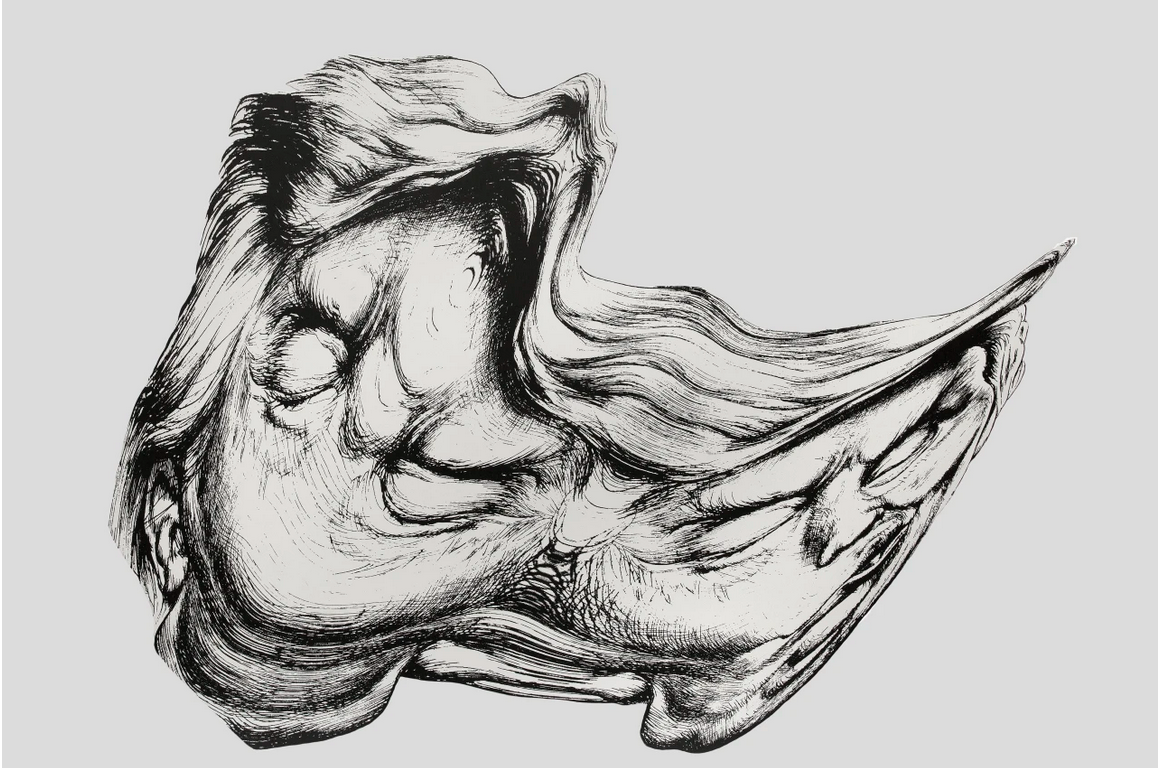
“The Trump smear”, from 2018 is a brilliant really poignant and critical portrait of the American president, with a black and white line drawing on plywood.
Shaw is often working in installations with these drawing cutouts. In that sense he is playing with a shift from 2D to 3D, as the figures appear as objects in space, while still remaining only 2D though.
These are installation views from “Issue of my loins ” 2019 and “The Wig museum” 2017, where you can see how Shaw is creating this interplay between 2D and 3D impressions.
Shaw mixes influences from art history, crackpot science, conspiracy theories and his own personal experiences into the work that then becomes an apocalyptic, end of the world narrative. He can be very meticulous and spend a decade researching his subjects.
One of his most famous subjects is the invented religion “Oism” with its mythical beasts and false history.
I find many of Jim Shaw’s pieces brilliant- his work is personal and at the same time closely bound to current events with sharp humor and criticism.
Course manual: Method: Build up a variety of surfaces using whatever comes to hand that has two differently coloured layers. Make several drawings by scratching through into the second layer. You can use wax and acrylic paint, oil glazes on board, household paint on wood, varnish on metal. Vary the scale of the drawings depending on your support. Choose a subject from your sketchbook or learning log and push through to make complete drawings, not just squares of texture with random marks. That way you’ll really learn what the materials can do.
I am on a worktrip to Rome and extend my stay a few days to visit my friend and painter Ellen Strasser in her studio in the Italian countryside.
Her studio is light and spacious and my dream.
Ellen clears a table for me to work on and I start on exercise 2.2- exploring mark-making materials.
Ellen has a treasure box full of suitable materials to scratch into the surface.
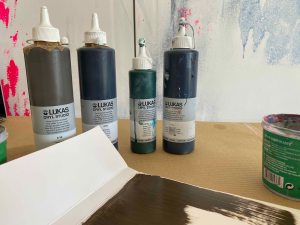
I am not staying long enough for oilpaints to dry, so I chose to work in acrylics- discovering Lukas Cryl brand that I have not tried before.
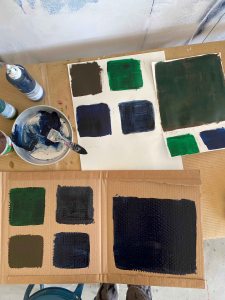
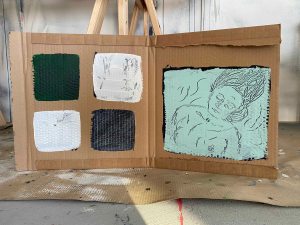
I start by exploring different marks on different colored surfaces on a cardboard box, and two different thicker glossy papers.
The result is much better scratching quickly into the still wet paper.
I have a problem with the scratching tool piercing too far into the paper and damaging it.
I will need to build up several layers of acrylics to create a solid base.A little frustrated by this discovery, I scratch into the left over paint on my metal palette, which is more successful:
This is really a fun experience. I will wash this away now, but I will look for some metal when home to try this again.
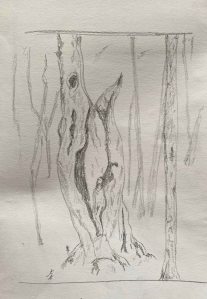
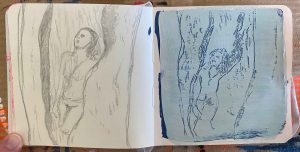
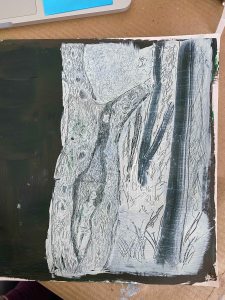
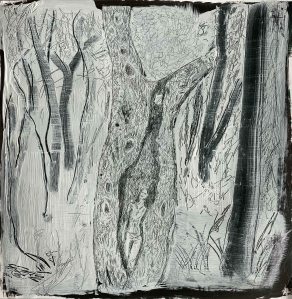
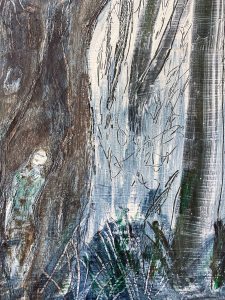
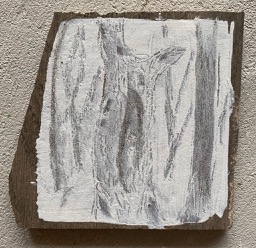
As for my subject, I am working from a photo that my friend Isa has sent me from her trip to Australia, where she is standing inside the trunk of a tree. I am fascinated by this forest, especially considering the recent tragic forest fires.
I start by an A4 sketch in pencil:
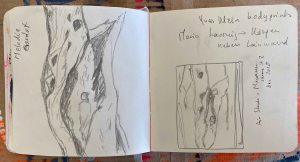
And some close ups of the figure in my pocket sketchbook:
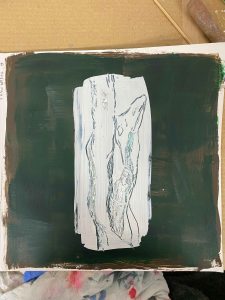
Then I prepare one of the supports with several layers of Sap green and Burnt umber Lucas Cryl. The top layer is Titanium White mixed with a little of these two colours.
I apply the top layer in small steps and scratch along the way, as the acrylics dry very fast and I can make much more free marks in the wet paint.
I am using very fine detailed marks and am spending a lot of time developing this into something very boring. I decide to start making larger, rougher marks. This is the whole drawing:
I am much happier with the rougher marks on forest on the sides. The detailed figure in the tree is too precious and looks like a lace curtain.
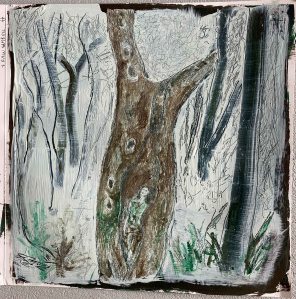
I try to add some colour:
This made it even more awful. I cover the other colours with Payne’s Grey.
I will stop here because it is just a rather awful drawing. I am happy for the mark making experiments though- this is definitely an example of many different marks:
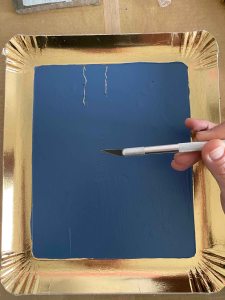
I have found a gold paper cake tray that I am hoping will allow me to do something close to the metal palette above (if treated more carefully).
I start by covering it in Lukas Cryl Steel blue- an amazing blue tone.
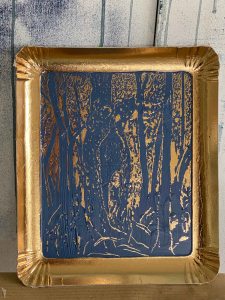
I am using the drawing of Isa in the tree above and a scalpel to carefully scratch out a variety of marks.
The result here is more fun and fitting to the golden frame, but it is still not a drawing that I like.
I have also found a broken tile and try using it as a background, covering it with Titanium white with some burnt umber.
The drawing remains a little unclear here, which adds a small note of mystery that I like. I also like to hold the drawing in my hand like a precious object.
So far, I was most happy with the roughly wiped marks for the forest around the main tree. I prepare two larger new backgrounds to try out this quicker wiping and scratching- one in Steel Blue and another with the same mix of Sap green and Raw Umber as above.
Experimenting in my sketchbook, I discover the effect of a Luminescent Orange- it is really shifting things.
I start with the brown background. As before , I apply the paint piece by piece to avoid it drying before I can manipulate it.
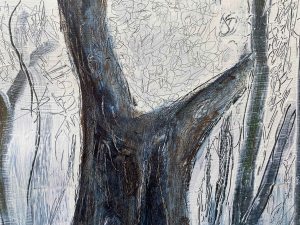
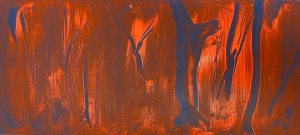
I enjoy the larger swiping marks! Then i add structure, grass and leaves using different thickness of wooden sticks. This is the first drawing:
And the second one on Steel blue:
I like the minimalist and almost abstract character of these drawings. But then I am also curious to see how I can push it further and add paint on top that I then continue making marks in.
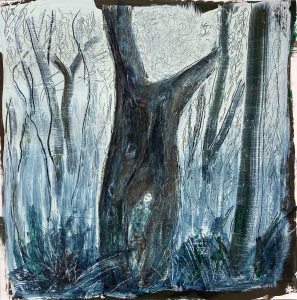
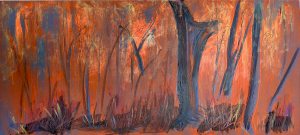
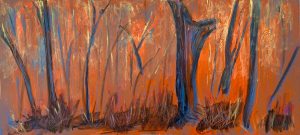
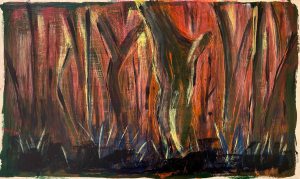
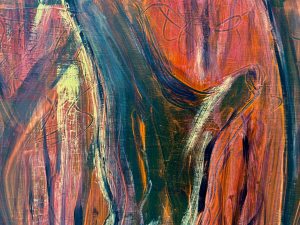
I have gone from the romantic hide away in a tree trunk to a blazing bush fire and feel that this is a much truer drawing. I feel that there is depth lacking on the right side and add a few more trees in the foreground and more marks in the ground.
For the drawing on a brown background, the bushfire develops like this:
In hindsight, I think the strongest drawings were the very simple almost abstract first versions of these drawings, especially the blue one. Pushing them further allowed me to add many layers of different marks though.
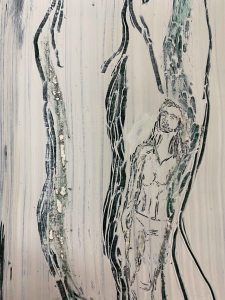
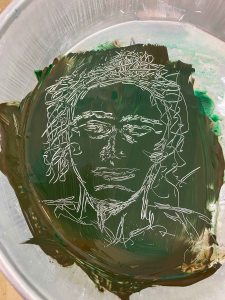
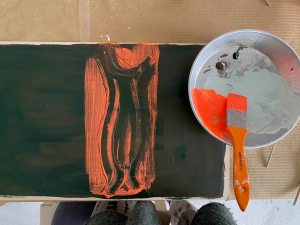
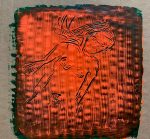
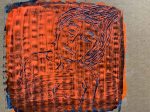
I need to change subject, and decide to turn to some portraits under water that I developed for a story about drowning, painting on glass for the parallel project. I am looking at the photos of these facial expressions under water again and continue with some mark making experiments on another of the prepared boards.
In my A5 sketchbook:
I am really fascinated by the Fluorescent Signal Red and will try it out for this subject too. It reminds me of the colour of a life west too, connecting it to the subject from another side too.
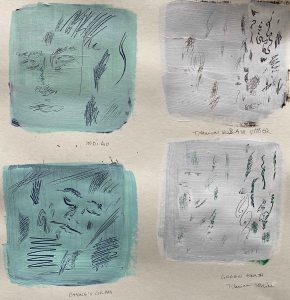
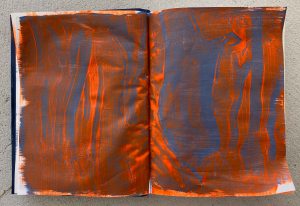
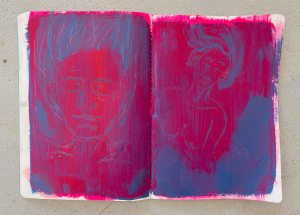
I also try out the combination of Steel blue and Fluorescent Signal Red in the A5 sketchbook:
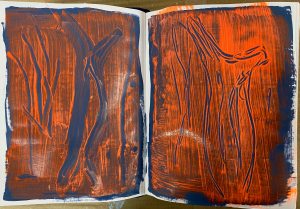
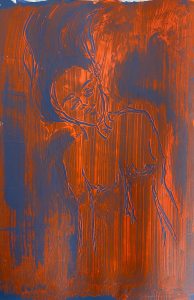
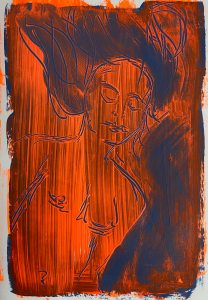
I prepare a thicker page of A4 in Steel blue and then Fluorescent Signal Red.
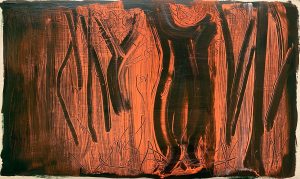
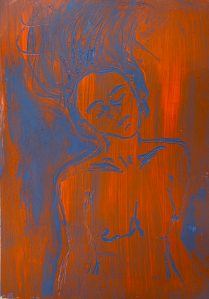
The paint is pushed to the sides by my wooden stick and it almost looks like a woodcut or similar. This is the drawing I am most happy with so far. I like the expression and how the blue and orange is divided in and around the figure.
I discover that there is a Fluorescent Magenta as well, so need to try out this colour too..although the Fluorescent Signal Red carries more meaning for the subject.
I have really enjoyed working in two colours only, and also enjoyed “rediscovering” acrylics. I would like to try out this technique with oil paint or wax that dries much more slowly as well.
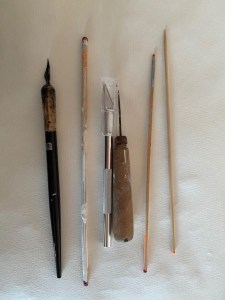
I have had the chance to try out many different markmaking tools, but these are the ones I used most:
It is time to pack and leave. I have absolutely loved working alongside an artist friend, although we were working on very different things, it is wonderful to share the joy of making.
3 weeks later
Only three weeks later, a joyful trip to Italy seems like from another lifetime. We are in the midst of corona virus Covid 19 measures and in a lock down here in Portugal and in most surrounding countries.
I finally manage to restart with this exercise and will try out scratching into oil paint on wood.
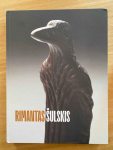
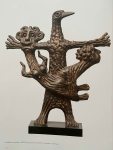
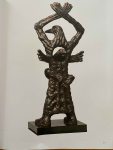
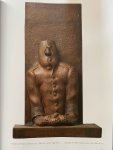
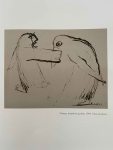
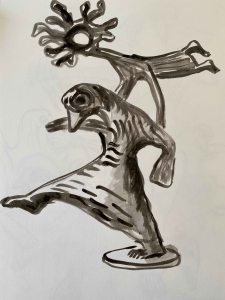
I am inspired by a book about the work of Lithuanian sculptor Rimantas Sulskis that was gifted to me recently. I am really touched by his bronze sculptures expressing the oppression under the Soviet Union through bird-men or birds and men in various intertwined forms.
They are humorous and touching and really expressing the struggle and pain and I find them fantastic.
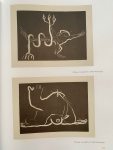
The same figures reappear in Sulskis monoprints and ink drawings:
(Images from the book “Rimantas Sulskis” : Andriusute-zukiene, R & Morenaite, D(2019).Rimantas Sulskis. Lithuania:Vilniaus Dailes Akademijos Leidykla, reproduced with permission of Rimantas Sulskis estate.)
I am wondering how I can develop a drawing about the oppression of today- the Corona virus- inspired by Sulskis without copying his work too closely.
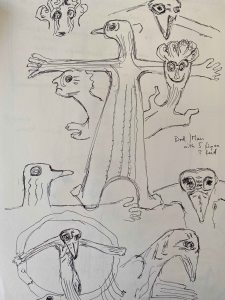
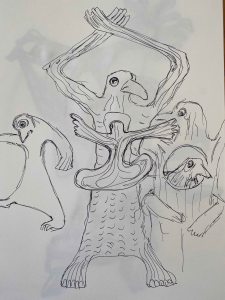
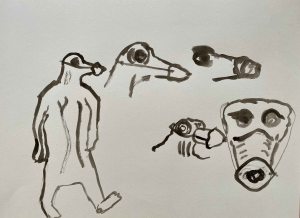
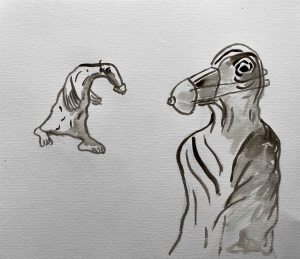
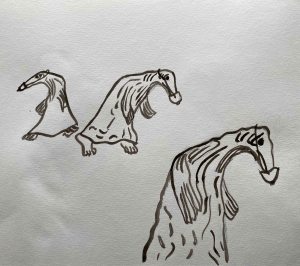
I start by drawing from the book just to familiarize myself with the figures:
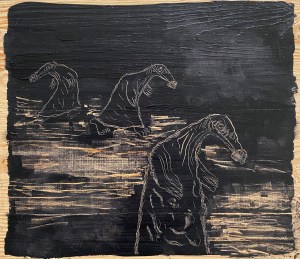
Then the idea comes to place a mask over the bird mans beak, symbolizing what is happening to the world now.
I am going to paint with oil on the lid of a wooden box:
I cut two watercolour papers to the the size of the board to try out two different compositions in Indian ink:
I choose the one on the right.
I then try out different ways of applying paint and scratching into the surface on the underside of the panel.
I see that I need to apply a coat of Transparent Gesso so that the paint does not seep into the wood. I am using a Liquitex transparent gesso. When dry, I apply a thick coat of Payne’s Grey Cobra oil paint to the wooden lid.
This is the final drawing, oil on wood:
I like how the feeling of the wooden surface comes through, and I quite like the playful, cartoon like figures that help me express a serious subject that has definitely infected my mind.
Again, this has been a project that has pushed me to explore a method of drawing that I would not consider otherwise, and I could just go on varying surfaces and media, but it is time to move on to the next project.
































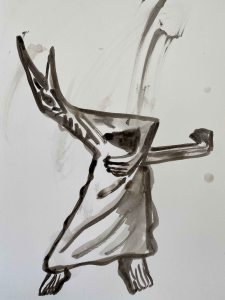




 Clara's Drawing 2