On the 15 th to 17 th of November, a large number of galleries came together for the “Lisbon Art weekend” with exciting exhibitions and events.
I really enjoyed this wonderful opportunity to create an itinerary through the city and visit several galleries I did not know before over the course of the weekend.
Gallery 3+1
I chose Gallery 3+1 with the individual exhibition “Almost nothing” by Brazilian artist Maria Laet for the opening ceremony, as this is an artist whose name keeps coming up and I still did not know her work.
Her work centers around the subject of “ time as action, intention and disintegration”
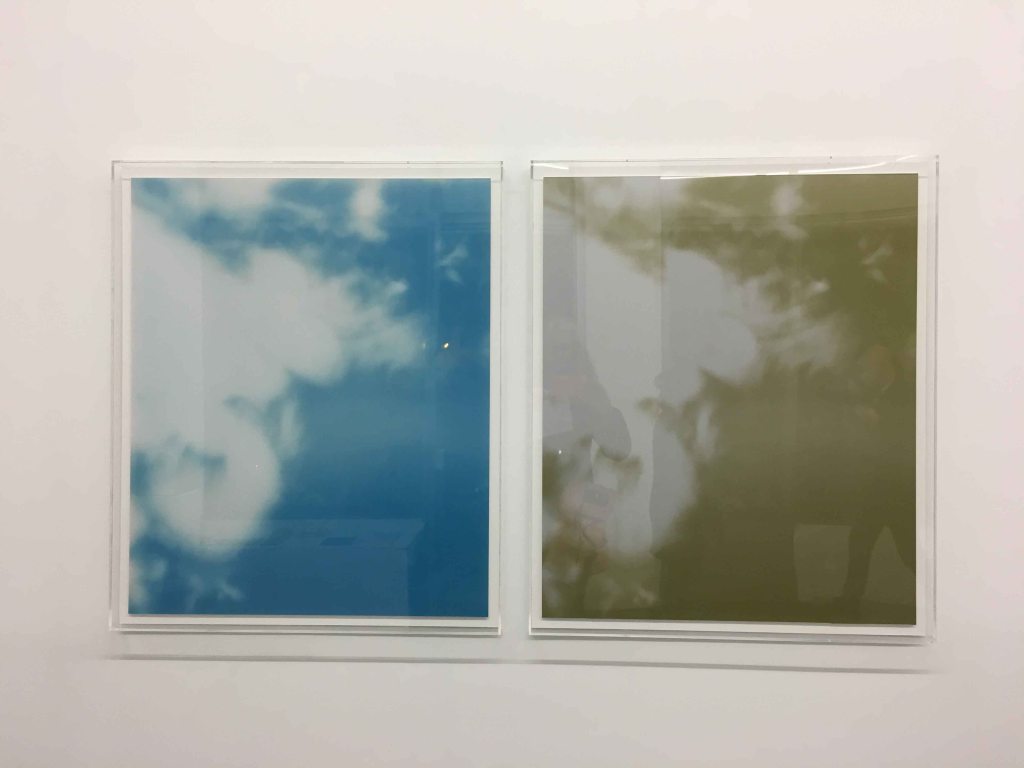
In this piece called “Overhead” she has placed a photogram of the rays of sun through a tree beside the photograph of the same. Now they look the same, but the photogram will disintegrate over time until the image disappears, while the photograph remains as a witness. I find it visually captivating now, and I like the idea of witnessing the slow transformation and thus having a sense of time incorporated in the work.
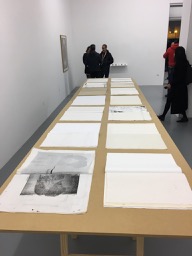
“That which we don’t see “ was presented as books lying on a long table. It is made of papers used to wrap or support other works, so just traces of something else that we would normally not give a second look.
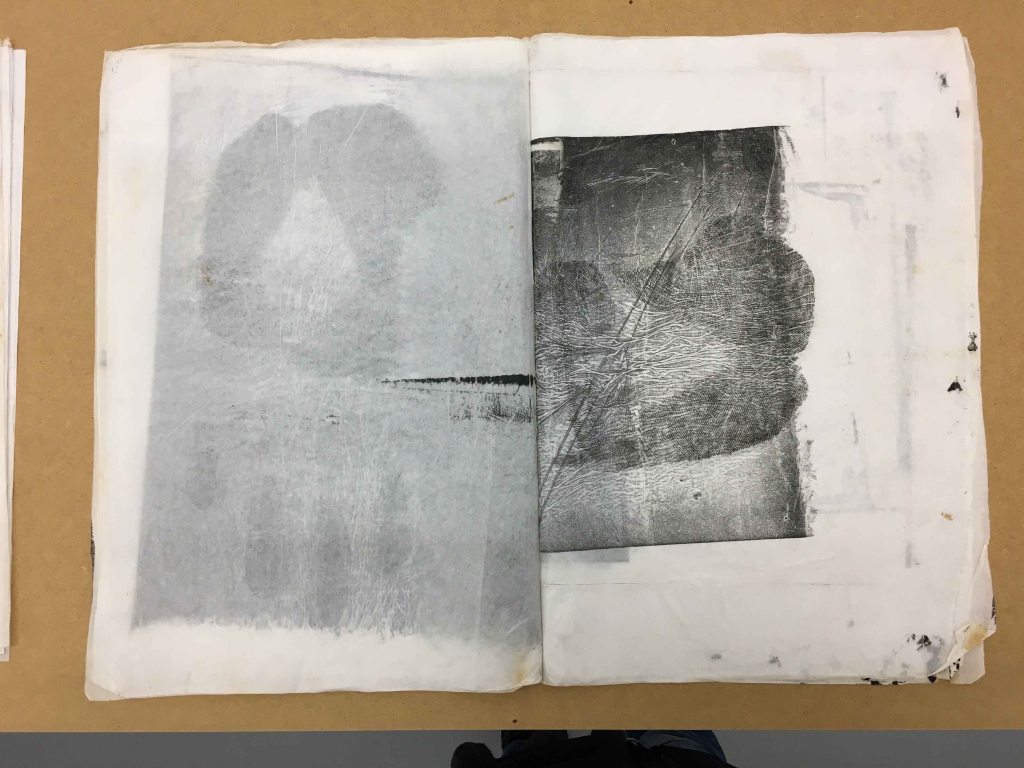
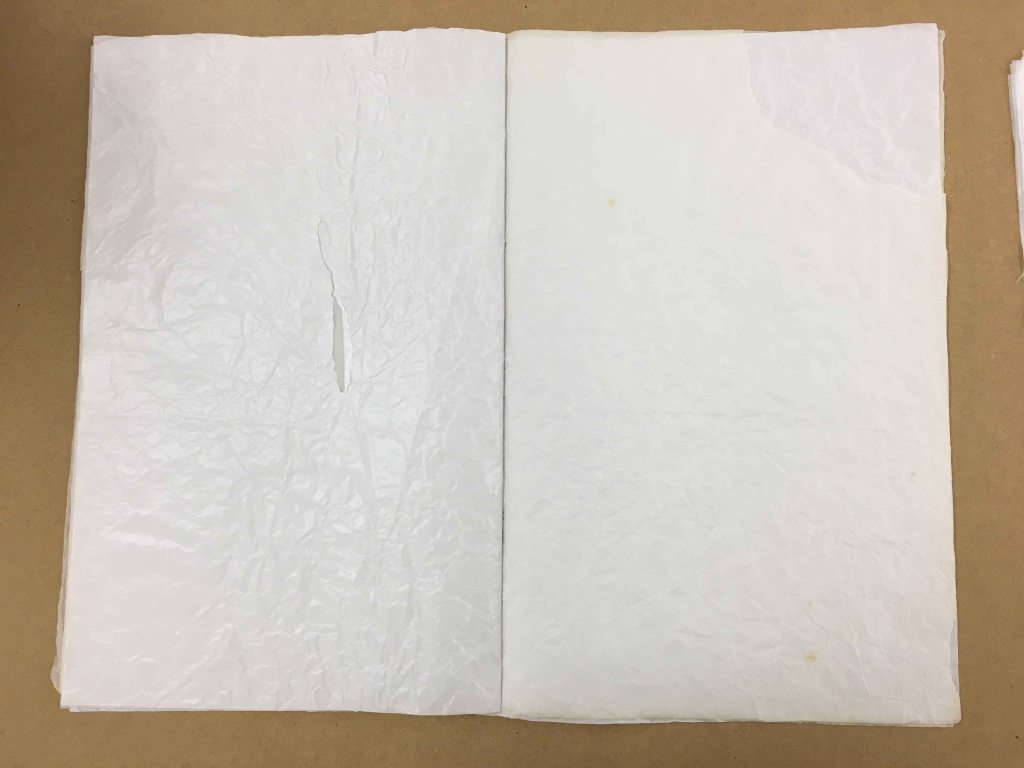
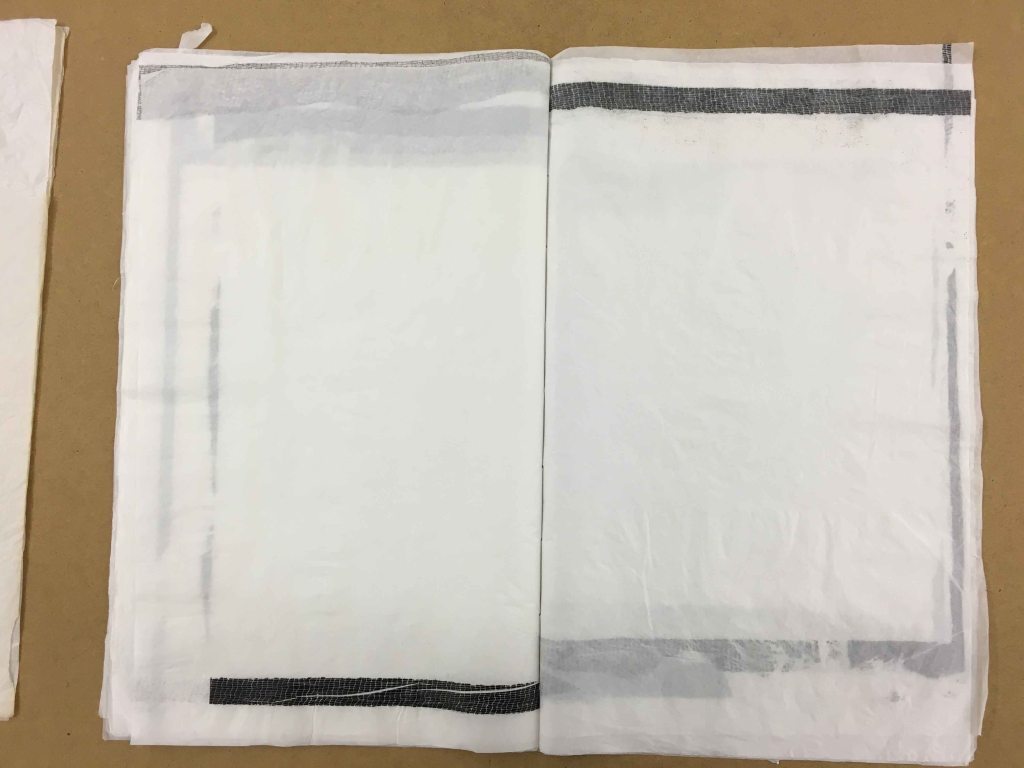
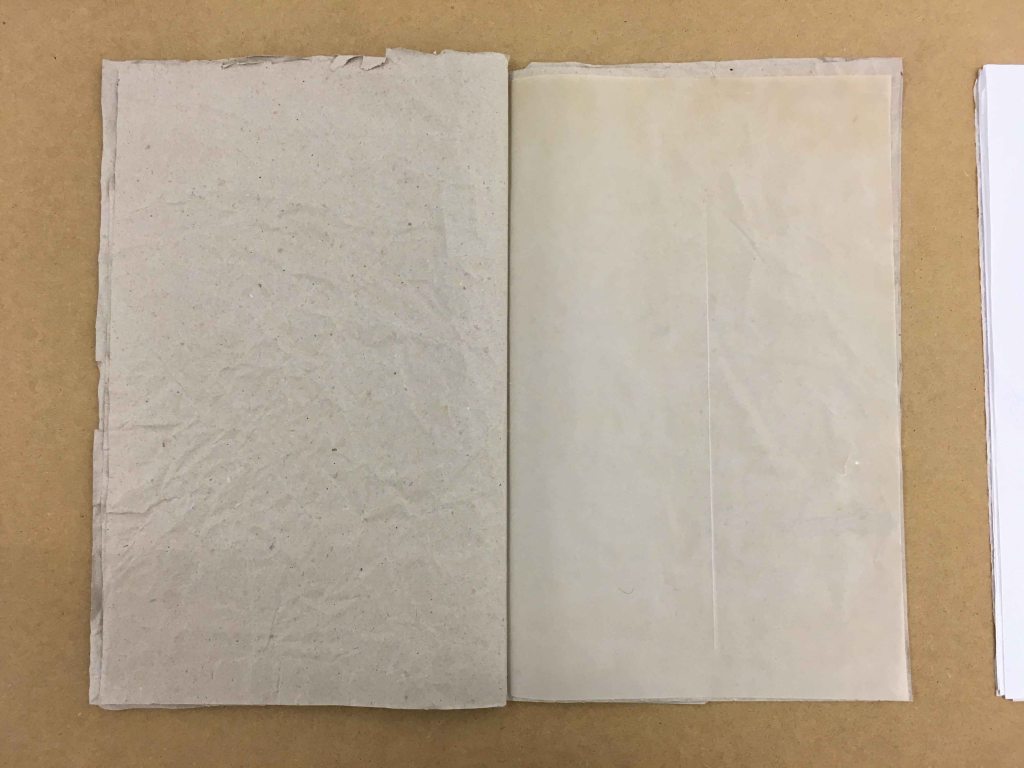
I really enjoyed the subtlety of the differences in papers and tones of white with the wrinkles and creases becoming gentle lines forming patterns and drawings. I like how light and subtle these “drawings” felt.
The idea to present an object (sculpture) in front of paintings or more graphical works on the wall was something that I saw on multiple occasions in the Ar Co exhibition in Lisbon in May this year.
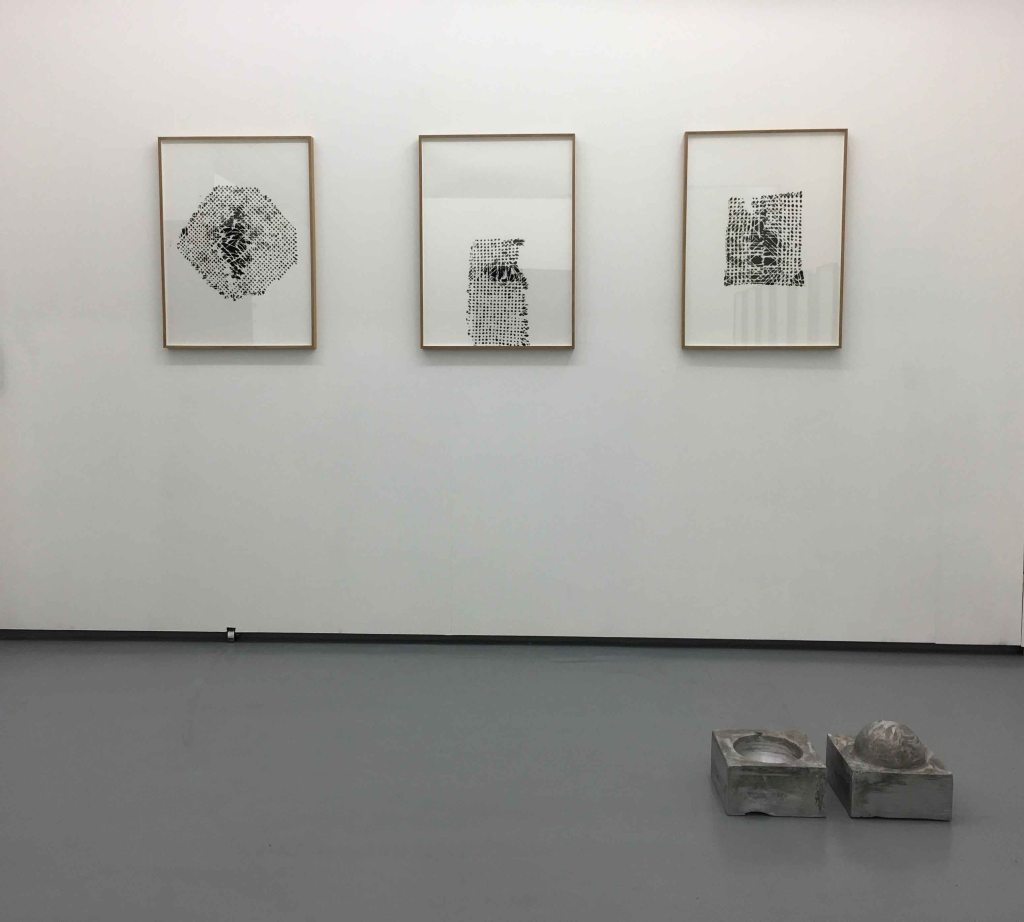
Here the molds around a balloon that the artist filled with one long breath remain, after the balloon itself has already shrunk. On the wall, we see rubbings with an oil stick over the backs of old, broken wickerchairs.
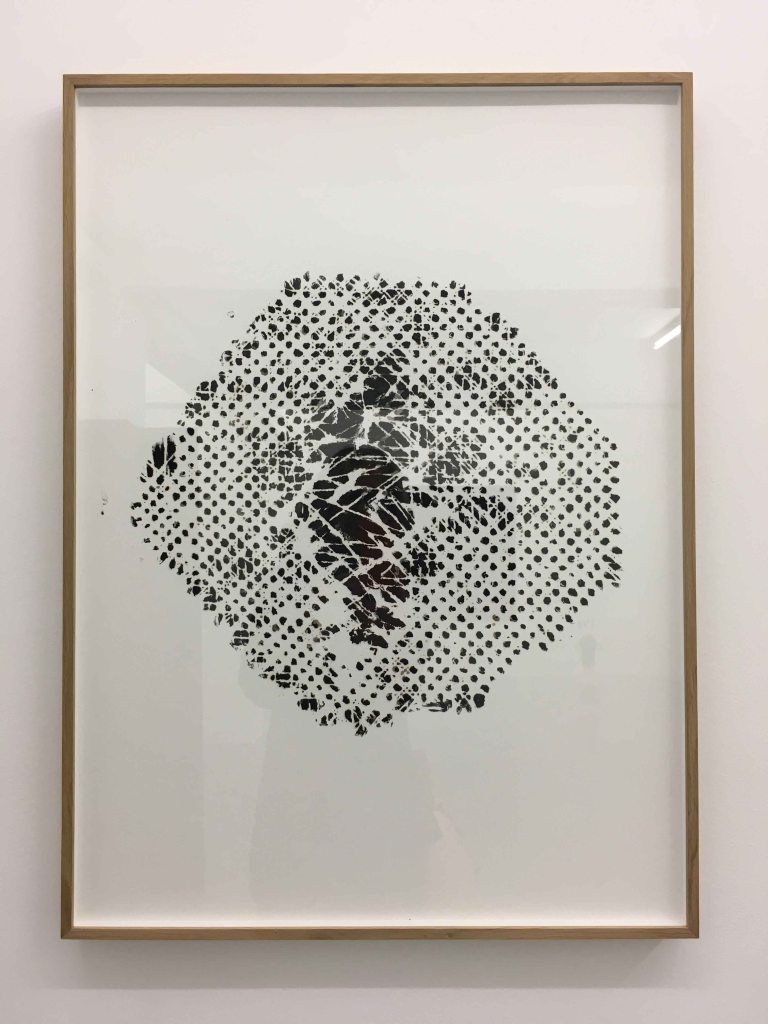
The rubbing through the backs of these chairs create beautiful graphical patterns. I quite loved this idea which sparks my imagination to try with other objects. The worn chairs express a sense of time again, and every rubbing is an original, so a fleeting record of this chair on this paper. The molds are also records of a fleeting object- a blown up balloon with a single breath of the author.
In the same gallery, but outside of this exhibition, I discovered a series of small paintings by another Brazilian artist- Gabriela Machado.
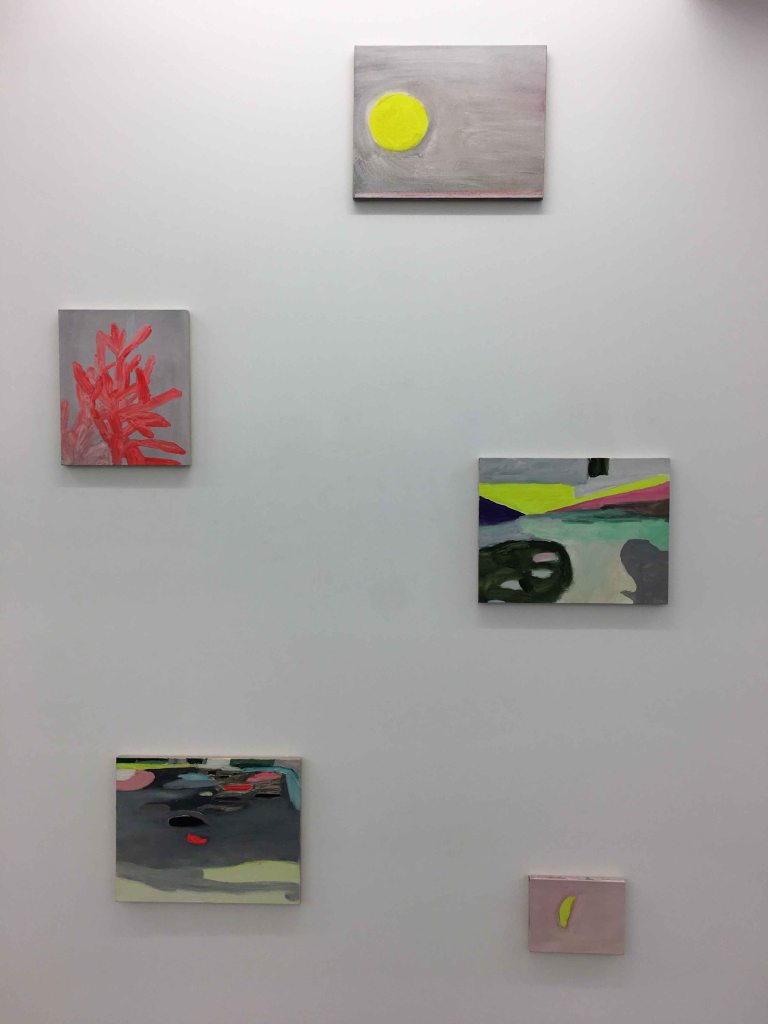
Dividing her time between Brazil and Portugal, Machado allows the light and colours of her surroundings to appear, amplified in the paintings while using motives mainly from nature. I was touched by these small, very colourful paintings, by her using almost fluorescent coulours and still keeping a sense of calm and quiet in them.
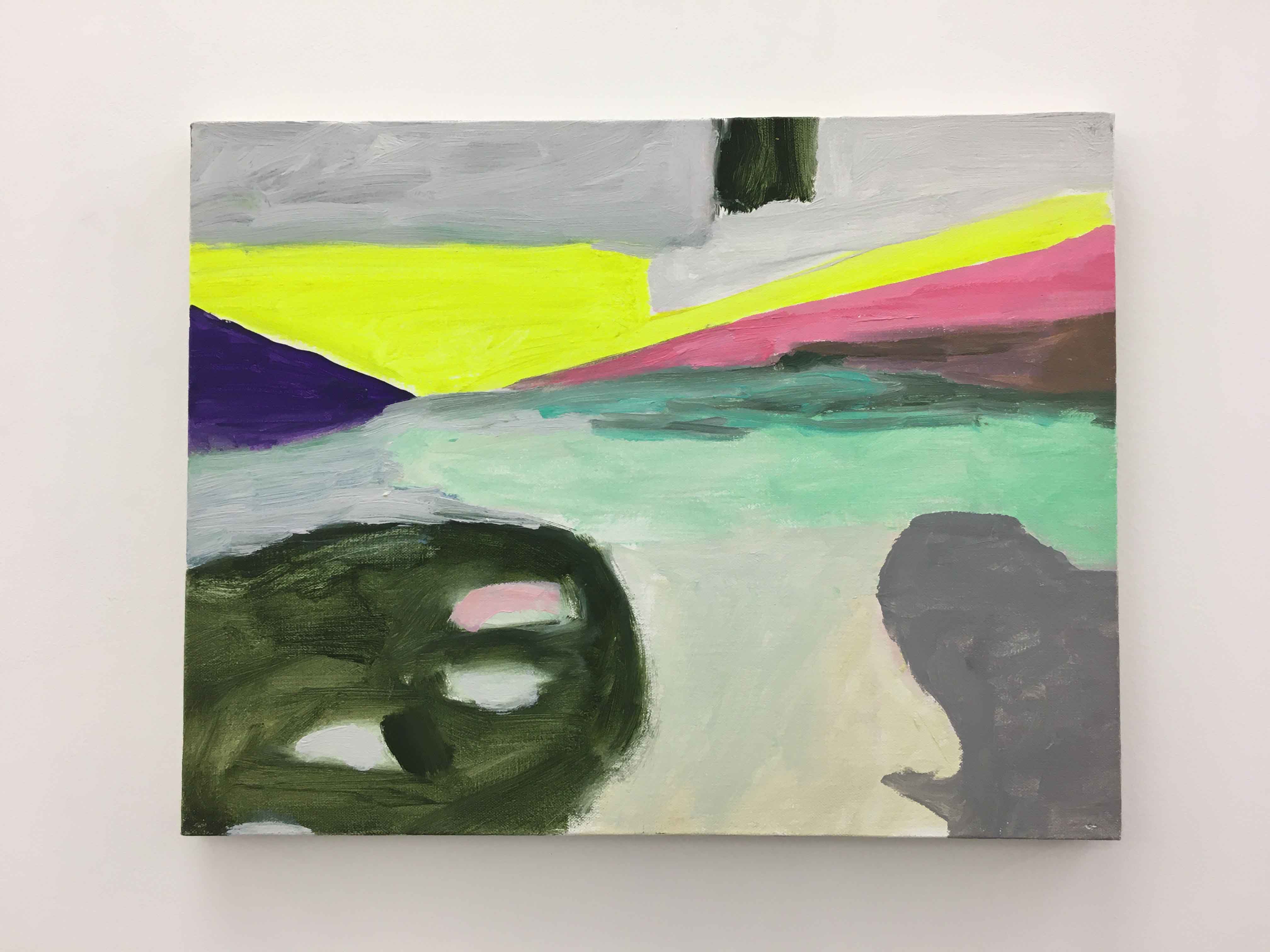
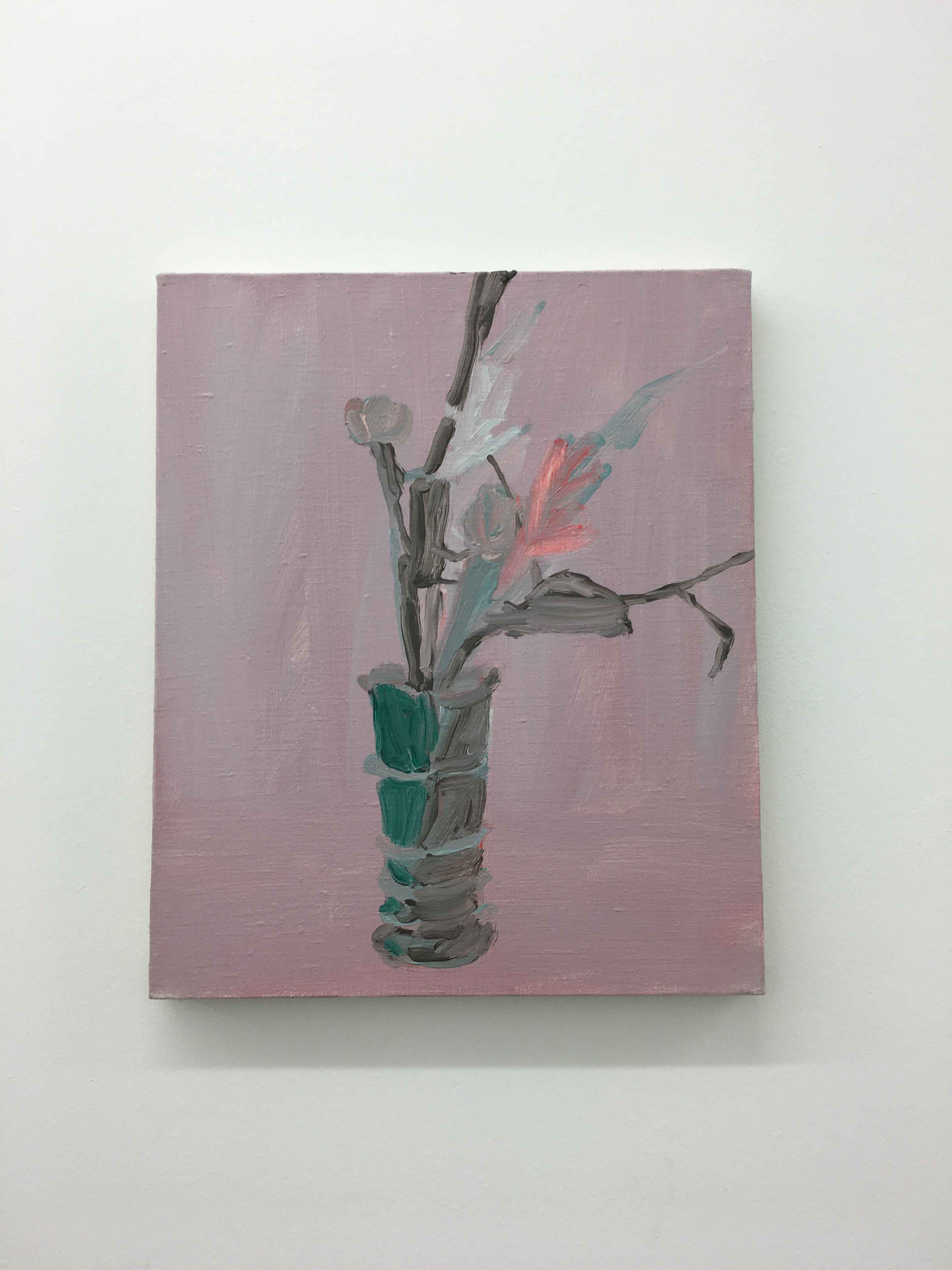
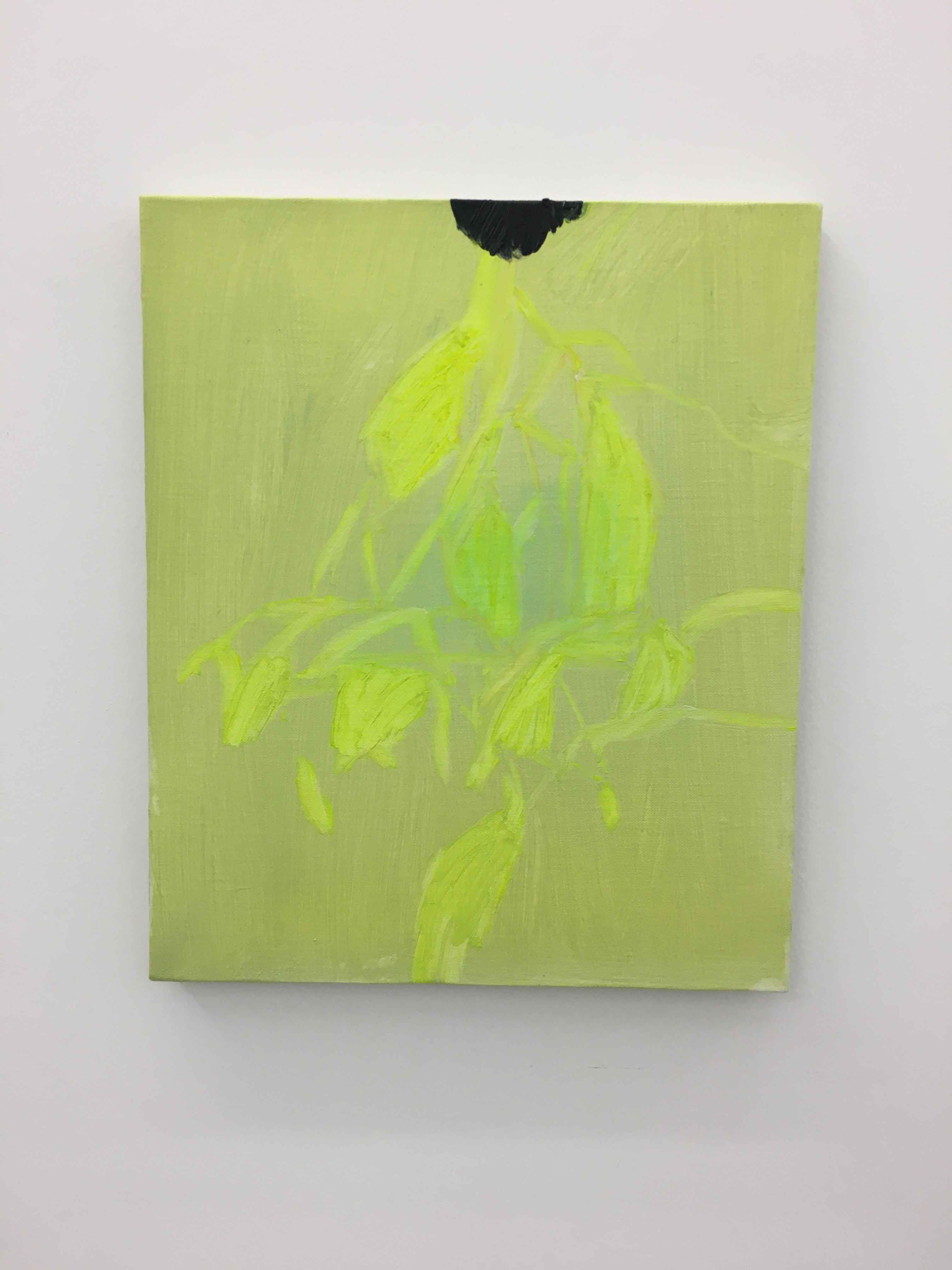
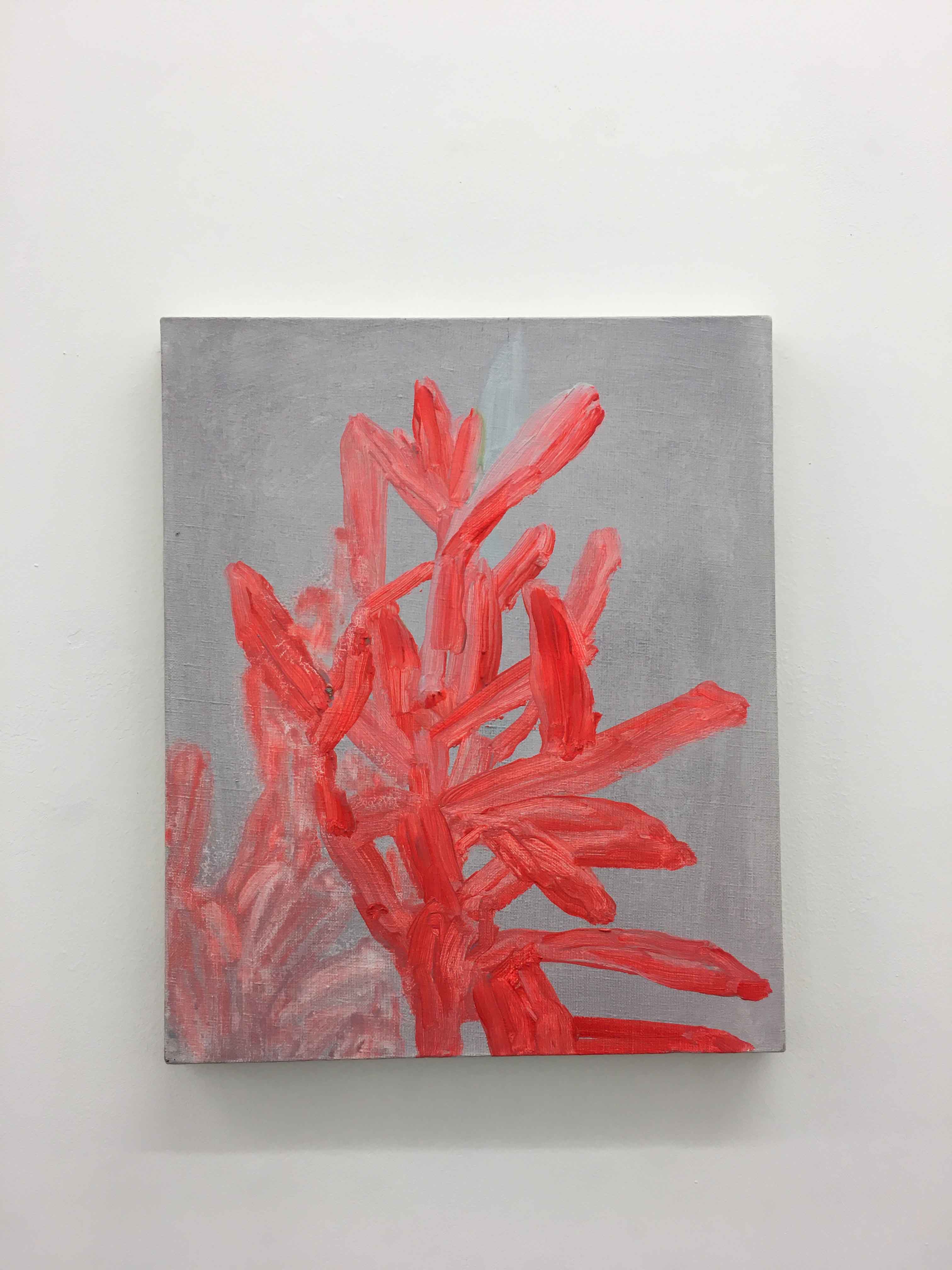
I like the simplicity of the motives and how she allows some close ups to become almost abstract. I definitely have a tendency to over complicate my motives and this was a refreshing reminder how sometimes much less is more.
I returned to the gallery later to ask to see more, and discovered this new series painted in oil on rough, unprepared linen, letting the lines bare in some places. Again, I loved the really bold use of colour, and also the unfinished character with the linen.
CARPINTARIAS DE ST LAZARO
On Saturday morning, I started my gallery visits with the rebuilt woodworking space “Carpintarias de St Lazaro”. I discovered that this is an amazing exhibition space I had not visited previously.
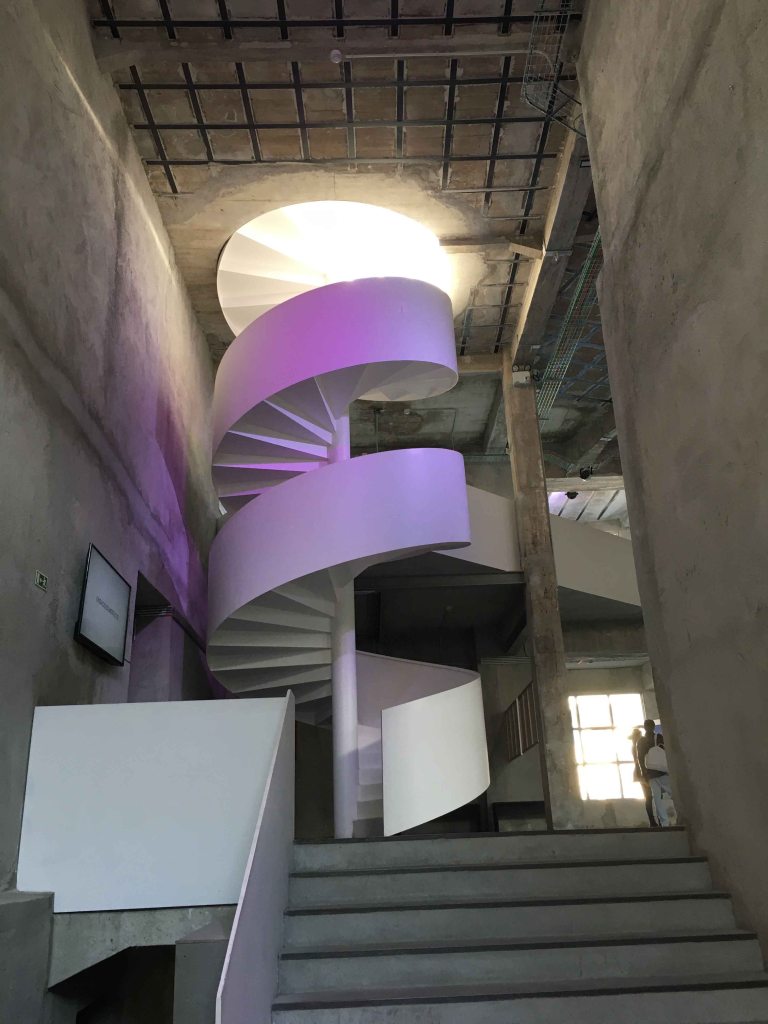
For this Lisbon Art Weekend, the Carpintarias showcased a photography exhibition with very different series from an international choice of photographers.
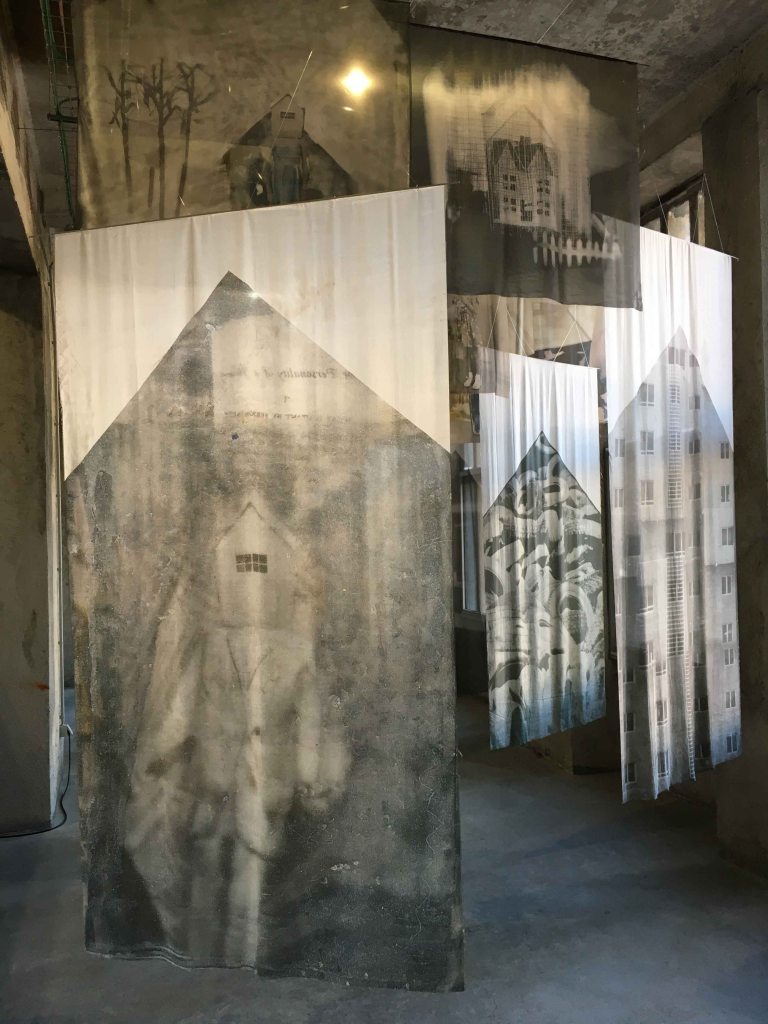
I was immediately drawn to the three dimensional work “On longing” by Melanie Walker. In this work she has combined textiles with photography so that the images are hanging and the viewer can walk through them. The transparency of the pieces add an element of layer and immersion into the piece.
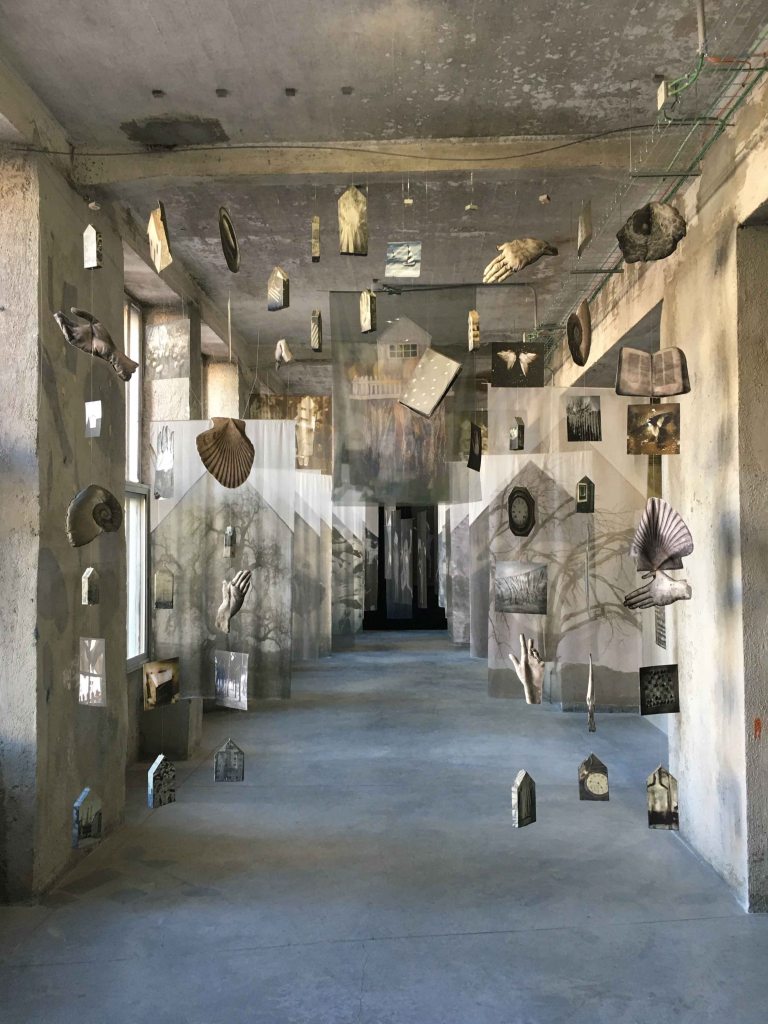
I felt drawn into the experience of this corridor where everything becomes a little blurred and unreal.
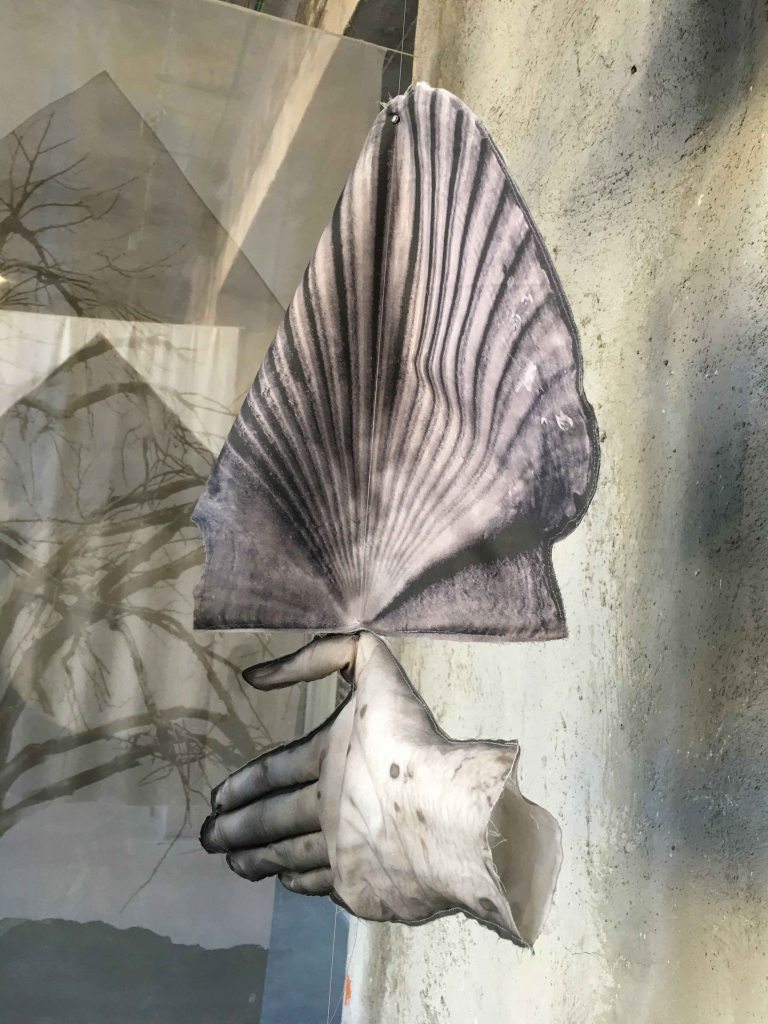
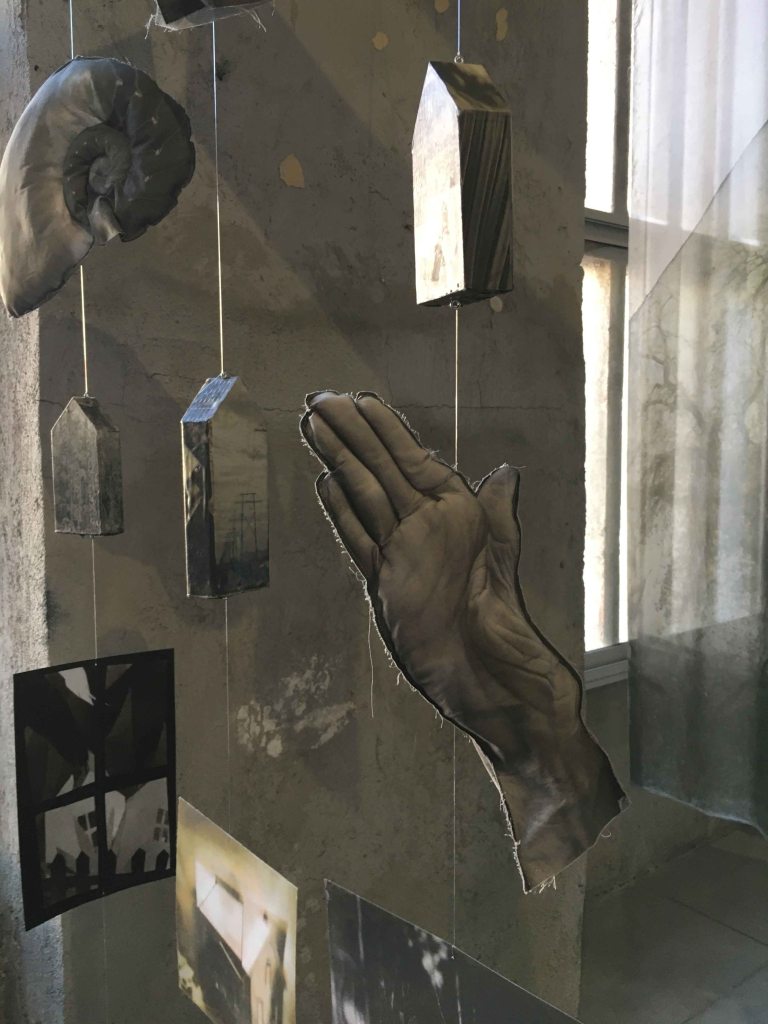
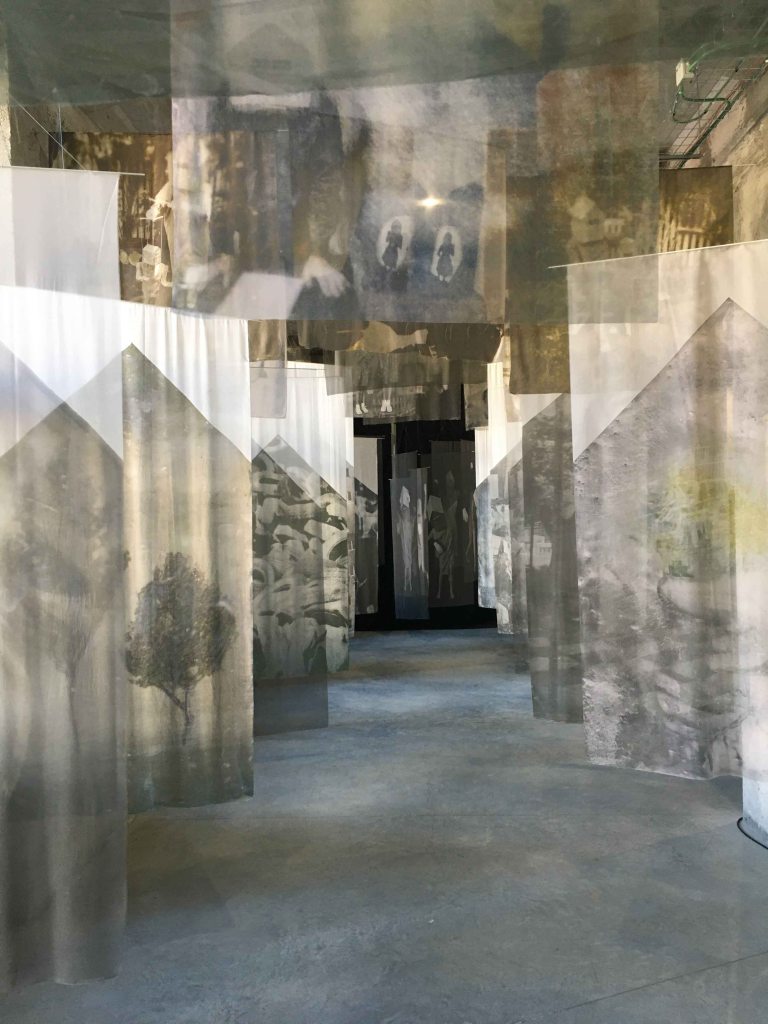
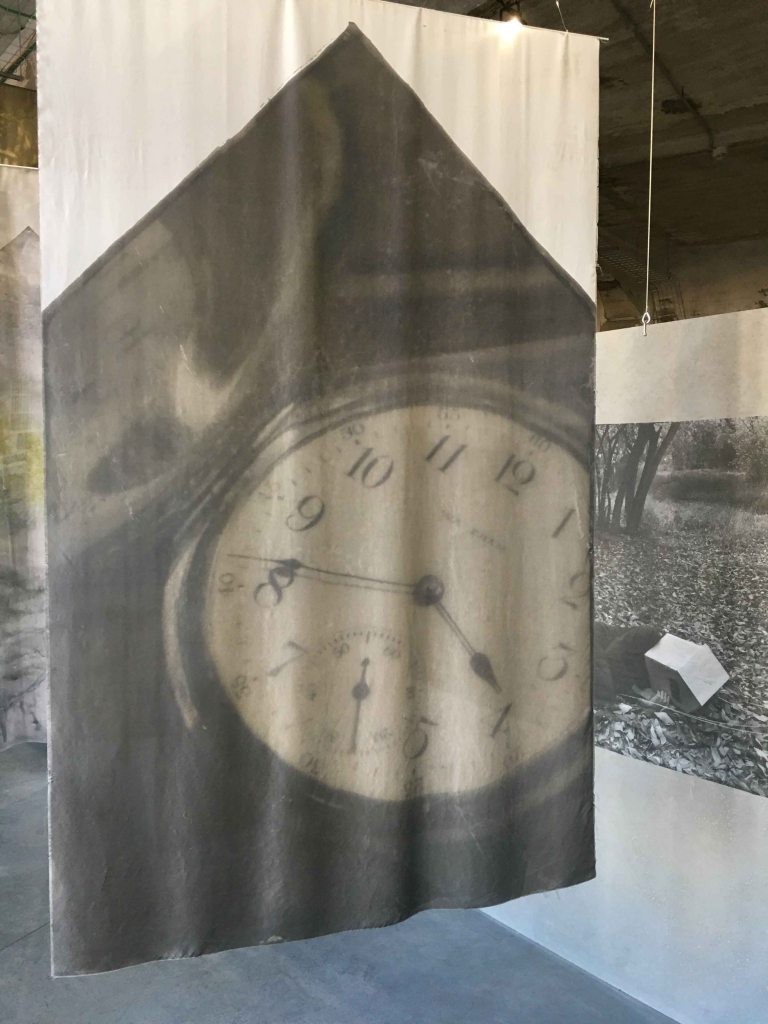
Walker is using the image of a house as a metaphor addressing themes of longing for belonging, a home, homelessness or also the crisis of refugees on the search for a safe home. Her figures are all carrying this metaphorical home on/in their heads.
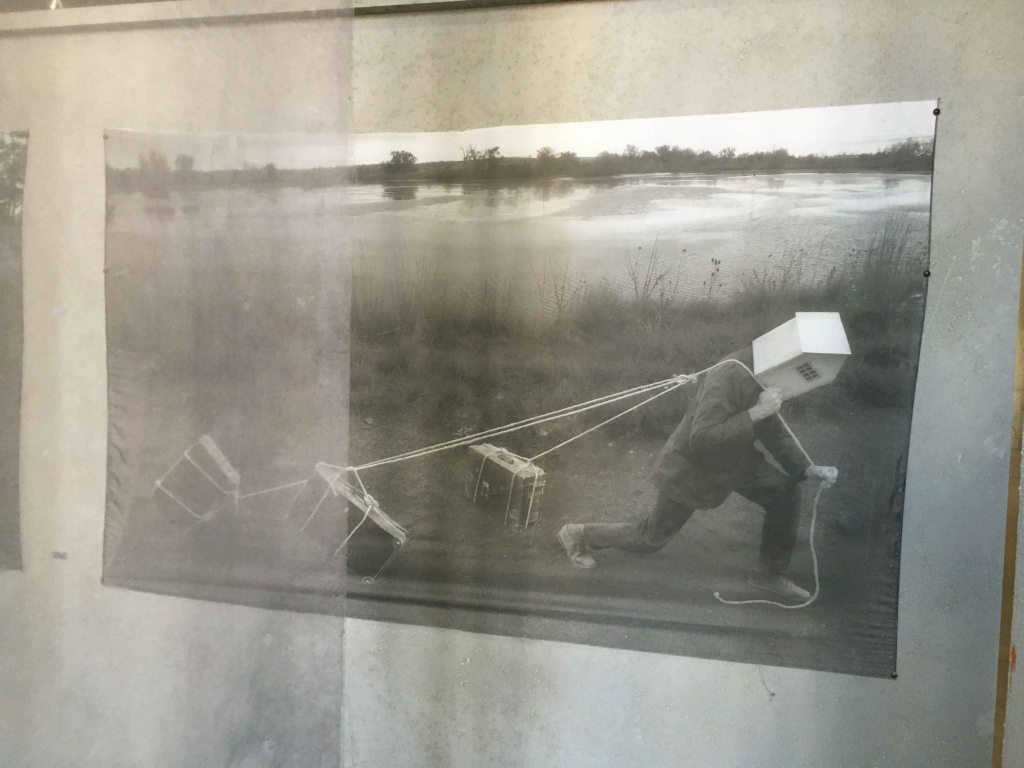
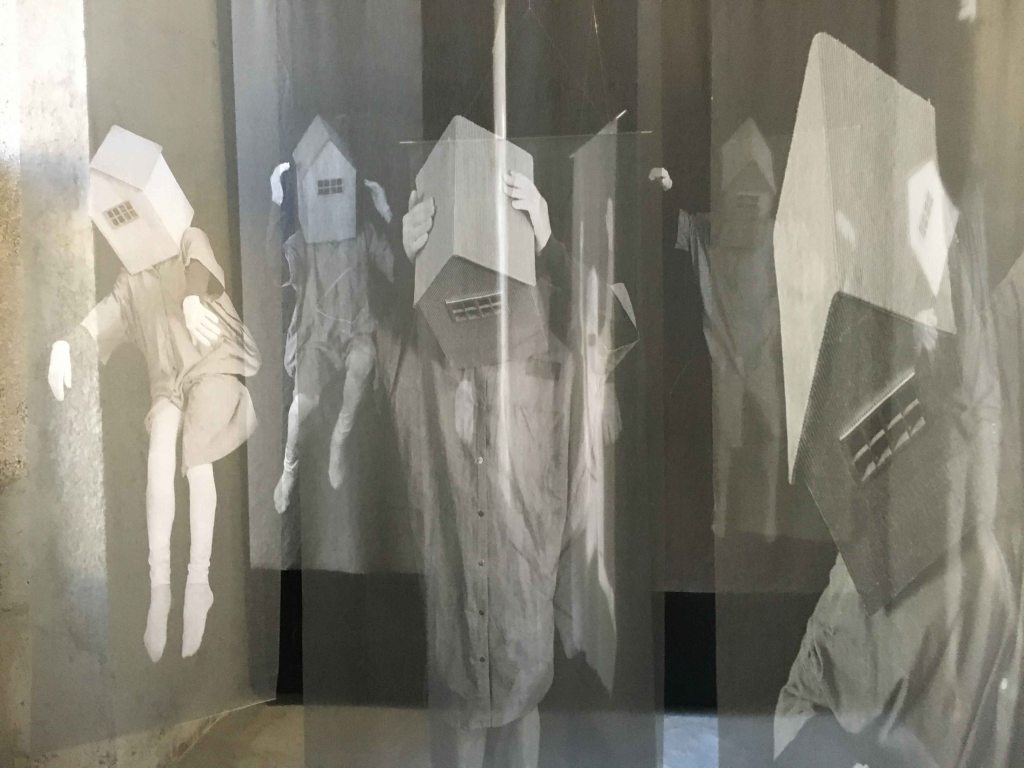
She is also addressing our sense of time by the direct image of huge clocks.
She displayed a collection of puppets with the same metaphorical houses on their heads:
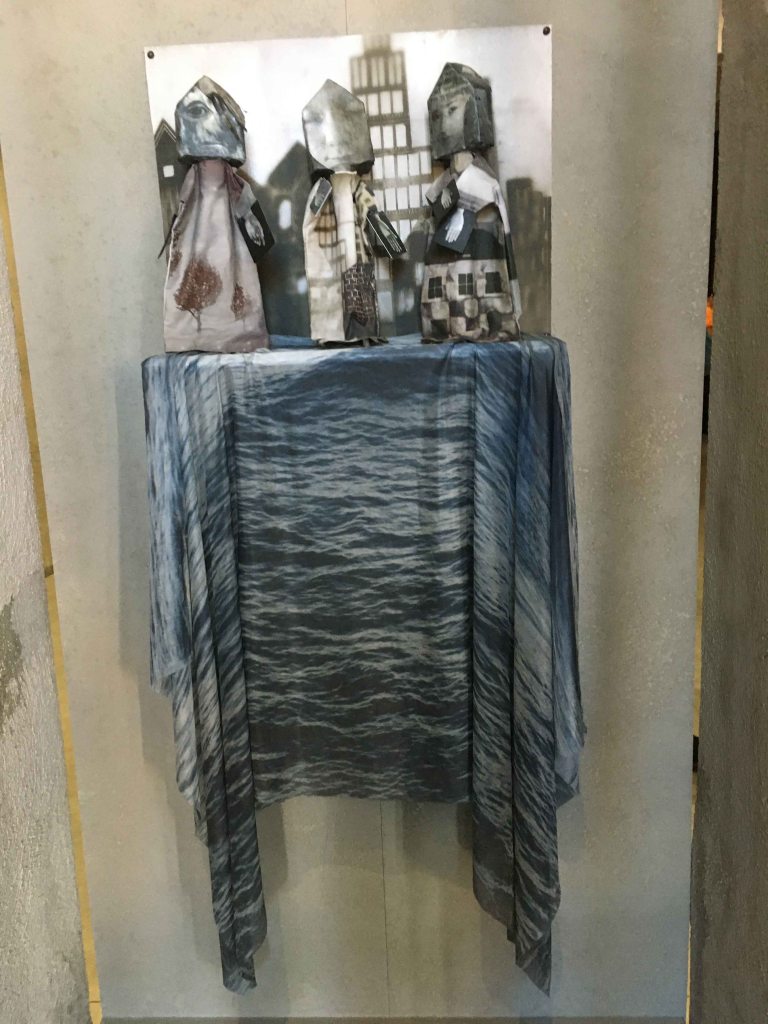
This exhibit definitely cam alive through the original way it was presented and through the combination of photographs and textile that gave the images a tactile and moving element and the experience of looking became much more immersive. The transparency of the cloths added a sense of dream or unreal. As a nomad and someone constantly trying to define a home in a new country, the theme of longing for belonging and a safe house feels very familiar to me.
The series “The Girls who spun gold” by Nydia Blas explores how young girls of African descent reclaim their power, their exploration, discovery and understanding of their own body when living in a society where this very body they reside in is not deemed worthy of protection.
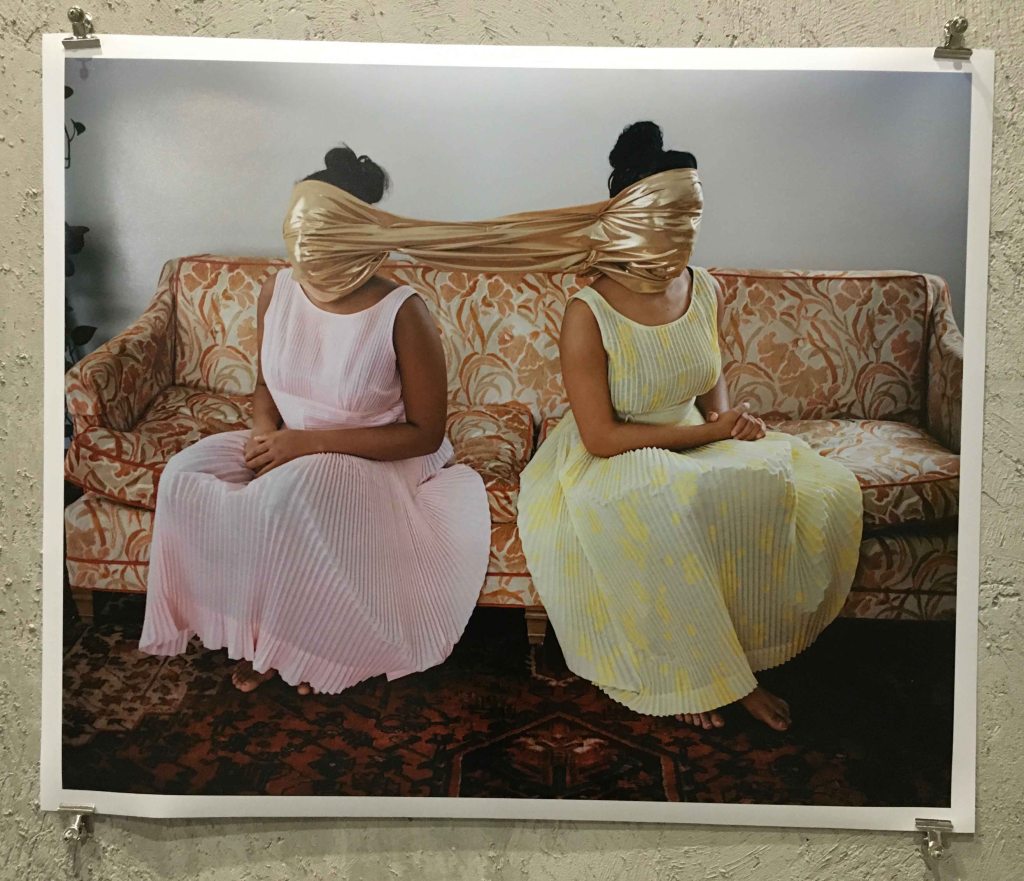
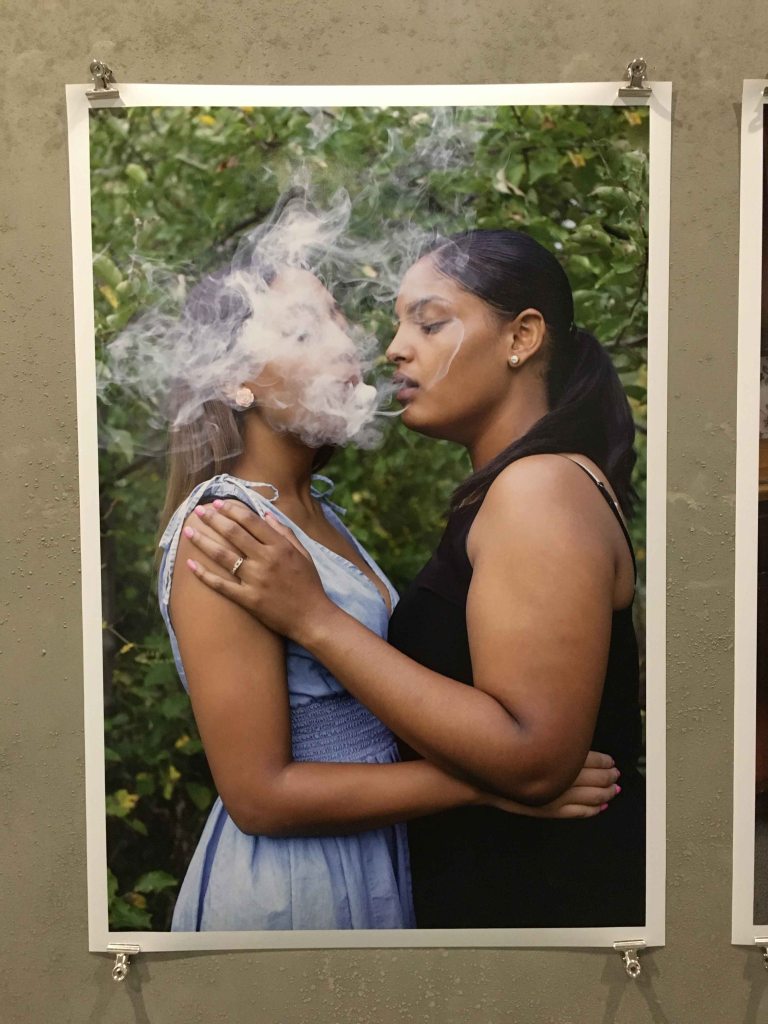
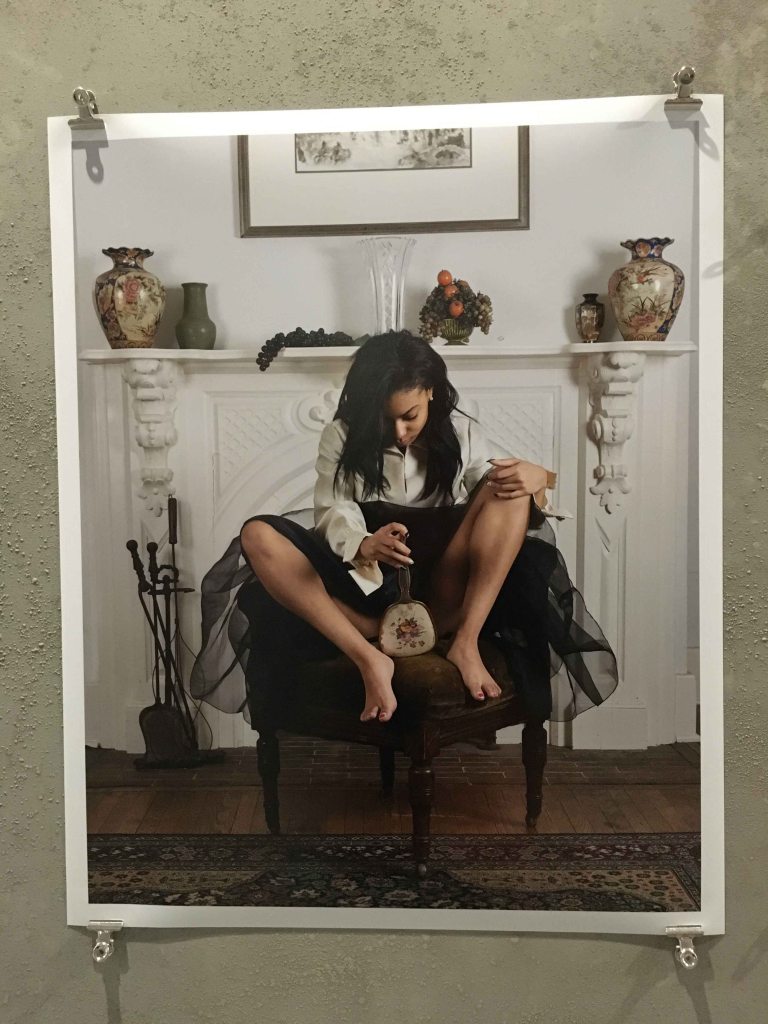
I feel a lot of trust and cooperation between the girls and the photographer here, that has led to a strong series with humor and sincerity.
In “there are no Homosexuals in Iran”, by Laurence Rasti, the photographer hides the gay couples in imaginative ways.
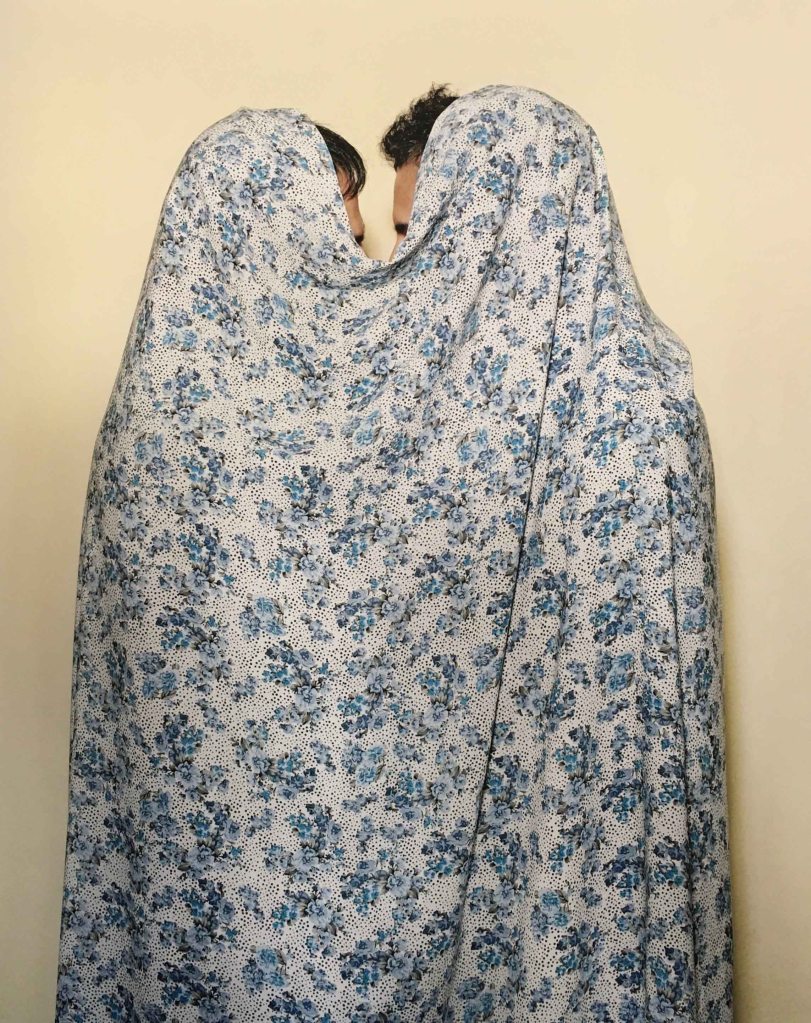
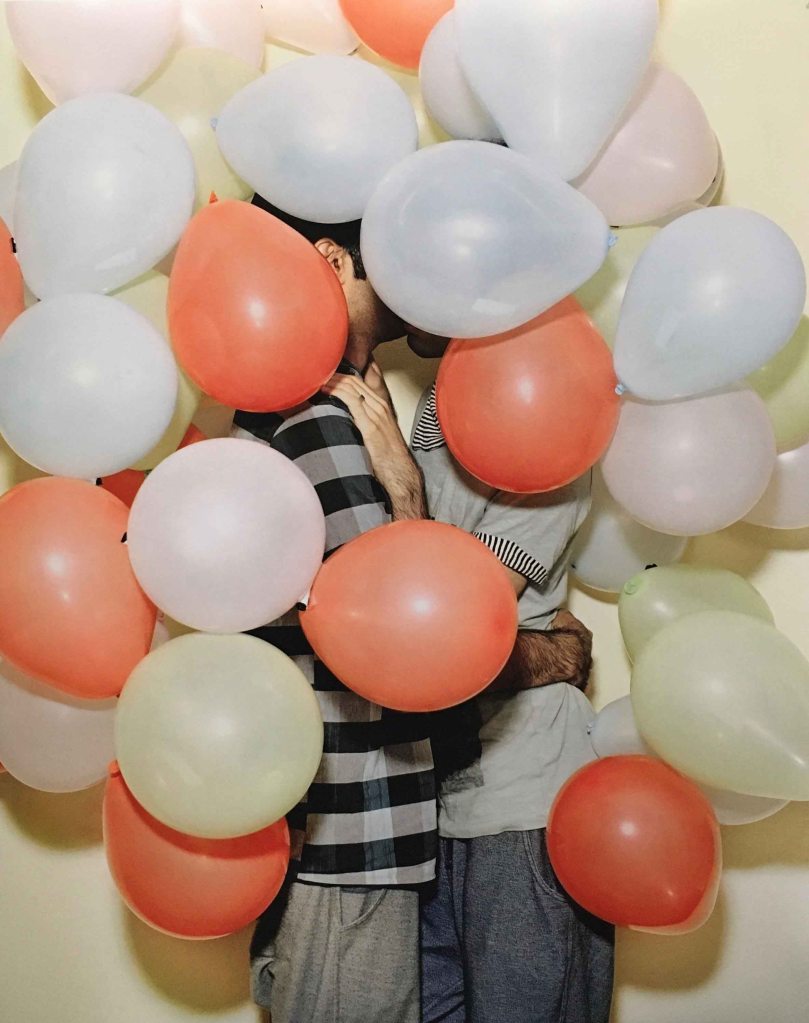
I was shocked to read that homosexuality is punishable by death in Iran and these images acquired a haunting quality. As an image, I especially like the left one, where the two bodies melt into a new form, a new creature, under the bed sheet, which also reminds me of the burka- another form of repression existing here.
The photographic mosaic “Ur Aitz” by Jon Cazenave is a landscape from the Basque country. Cazenave photographed a wave crashing on the rocks during the short time of five minutes.
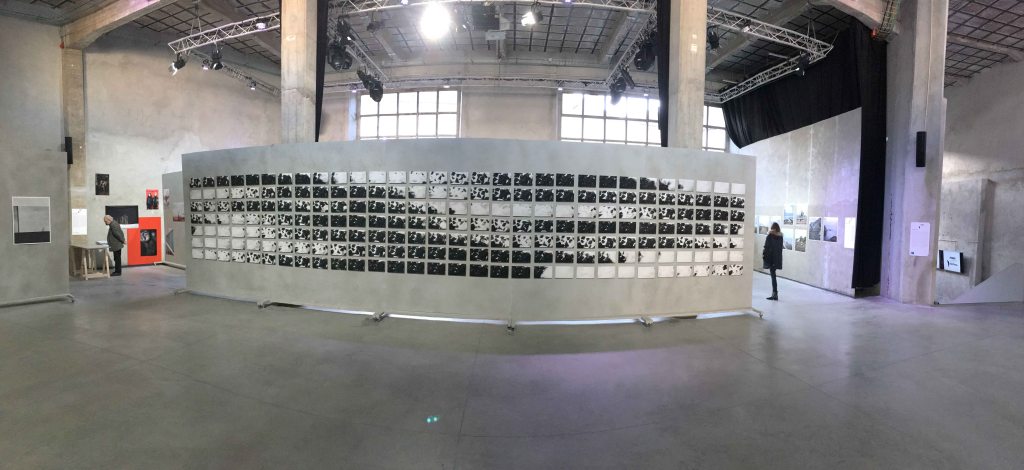
Presented like a mosaic occupying a whole wall in this way, the images have a visual rhythm like a wave and a strong impact, like the crashing on the rocks. Every line is composed of 30 images, a nod to the lunar cycles that define the strength of the tides.
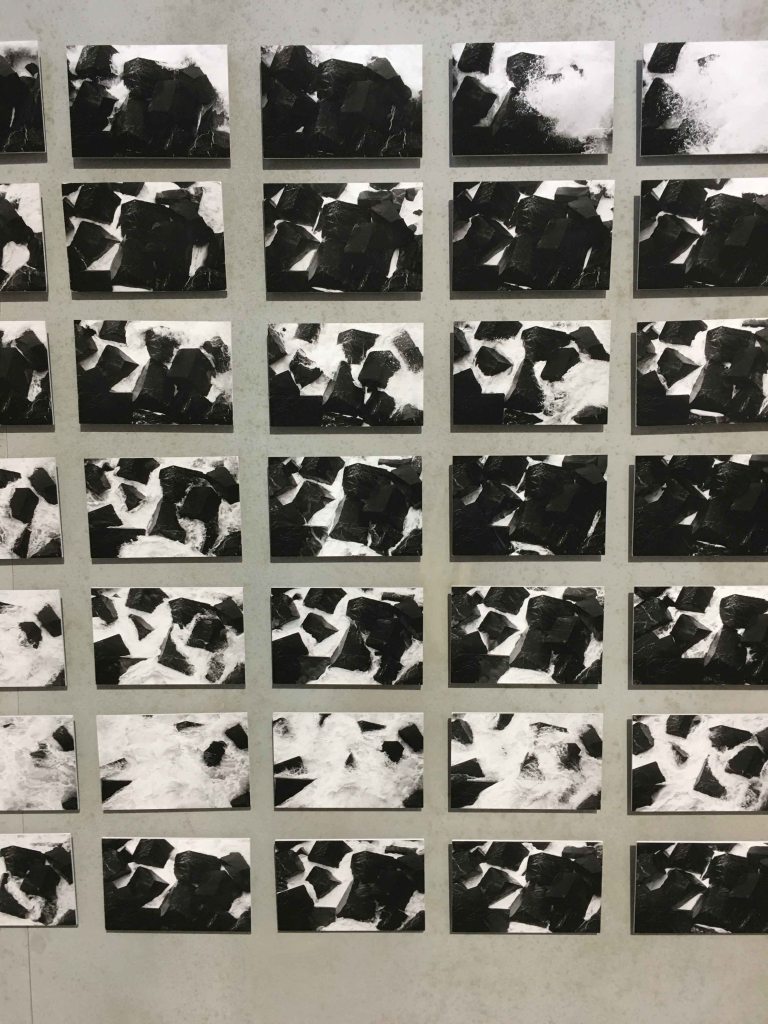
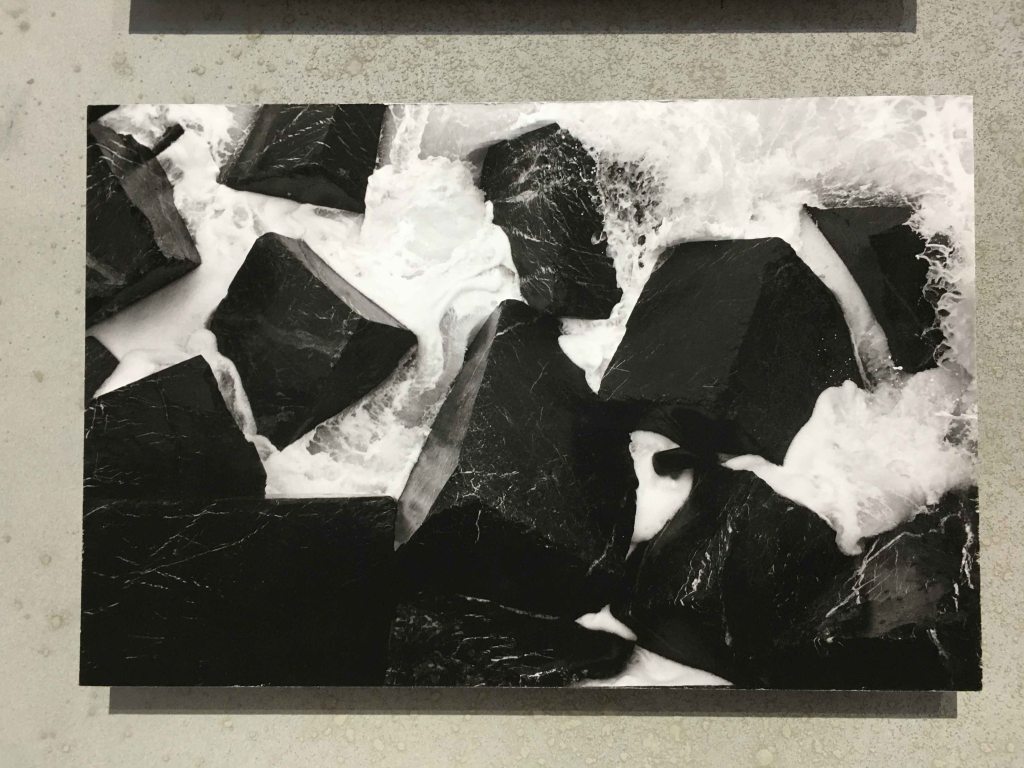
Close up, the images were graphically appealing, but did not have the impact of the whole. This work definitely worked by the scale and the strength of the rhythmic whole.
“The rage of devotion” by Mexican photographer Liza Ambrossio left a disturbing feeling.
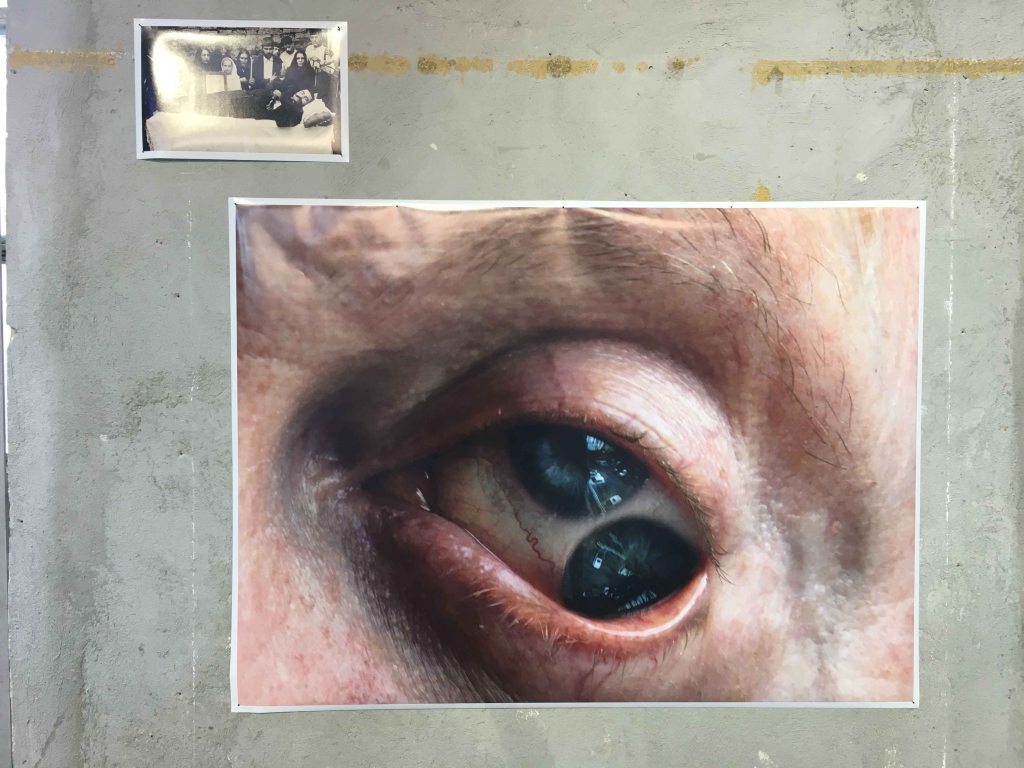
She combines old family photos and manipulated portraits on the subject of witchcraft and madness.
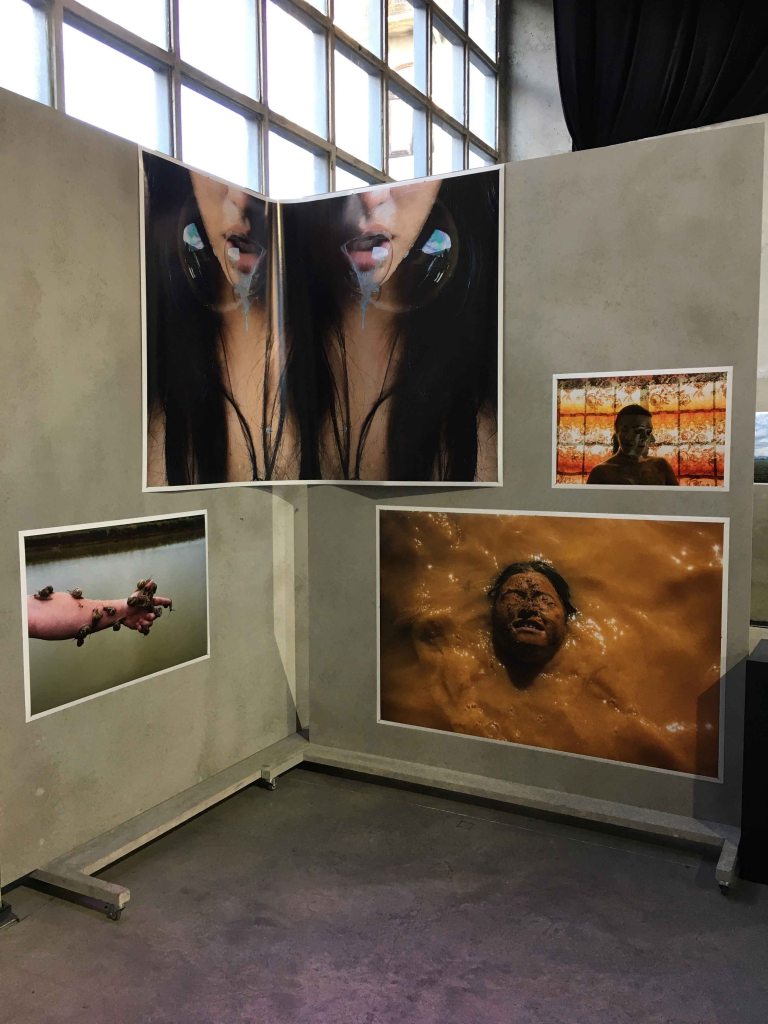
She started photographing after being cursed by her mother, and develops her work as the history of her own madness. On another scale, the work also reflects the madness of her country. These images have a lingering dark and uneasy feel. I can not imagine anyone walking past them completely unmoved.
“The Komi diary” by Filippo Zambon is a more traditional photojournalistic series about Syktyvkar, the capital of a small Komi republic so far up Northern Russia that it is unheard of for most.
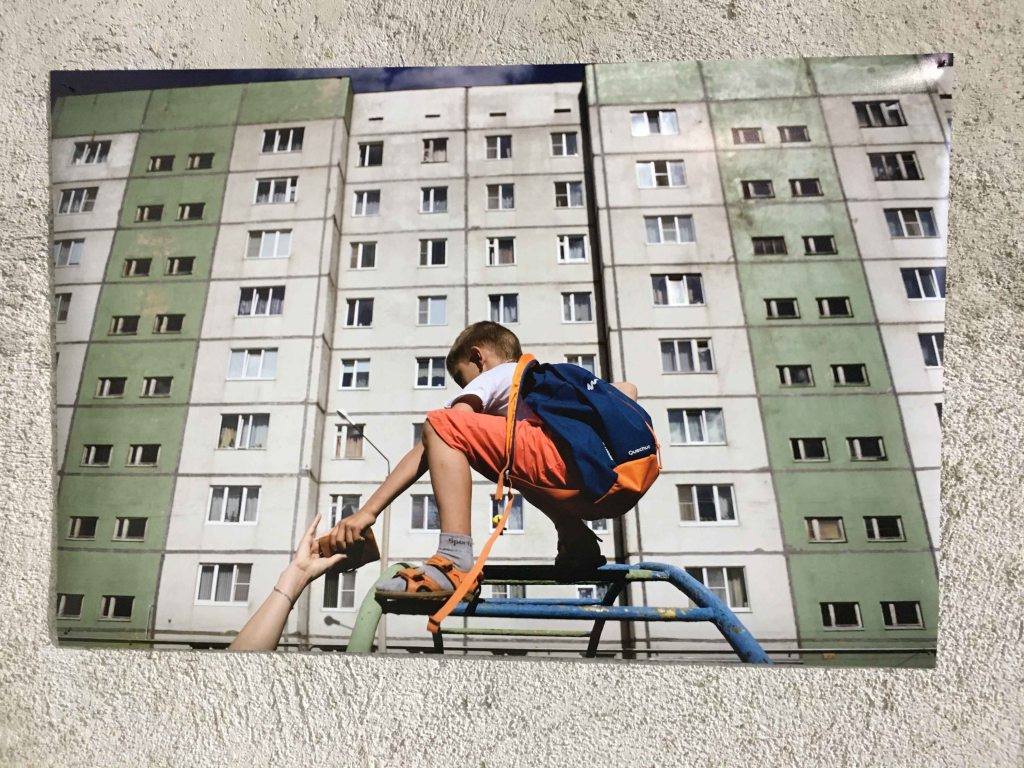
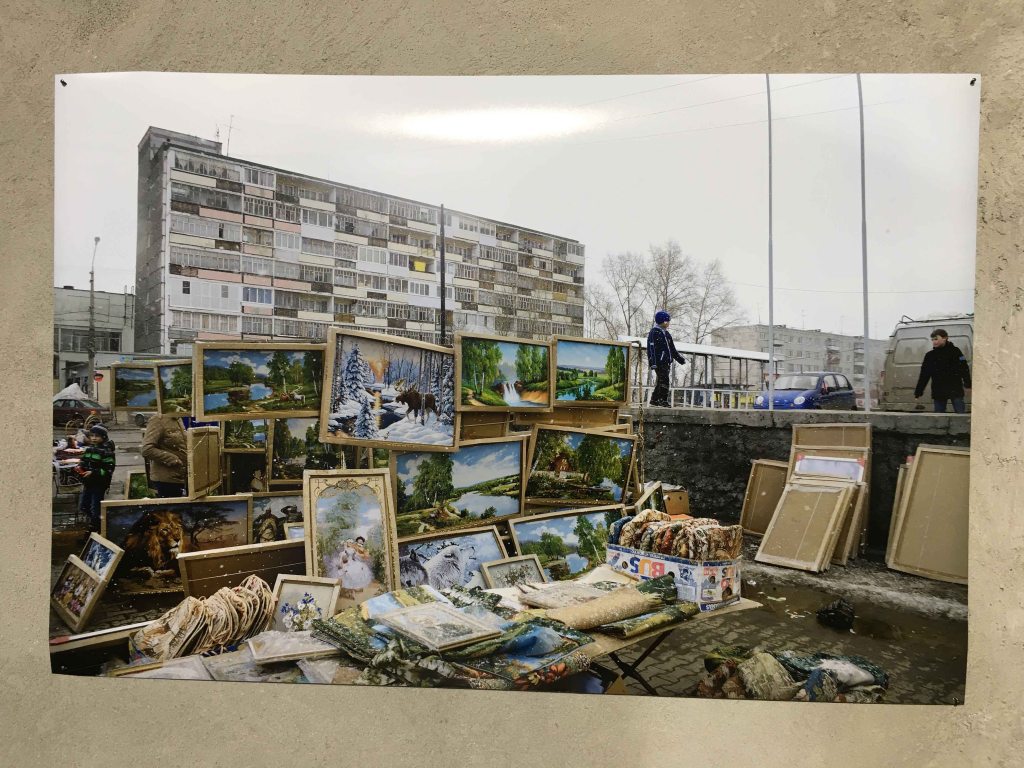
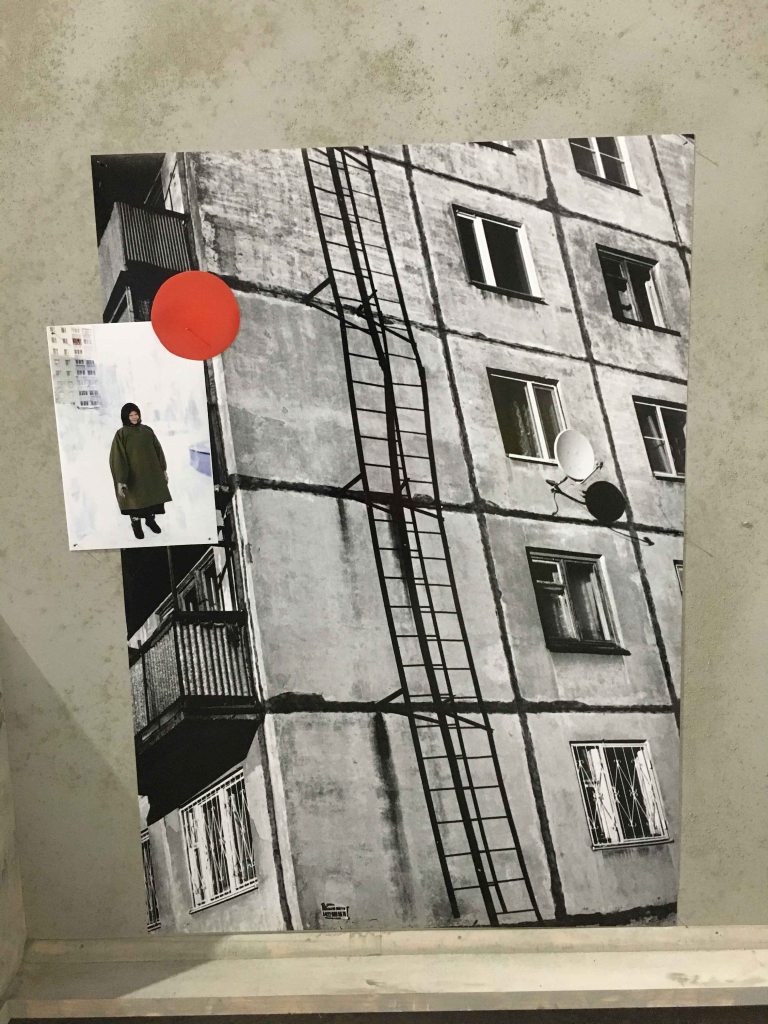

As a photographer, I lived and worked in Lithuania in the beginning of the 90’s, just after the country’s independence, so the block built houses and lace curtains feel familiar. I appreciate the graphic compositions here, and the personal approach to the people pictured. You can feel that the author has a tender and personal link to this special place.
GALLERY CRISTINA GUERRA
I continued my gallery day by visiting Galleria Cristina Guerra which displayed mainly sculptures in an exhibition called “Form and Volume” by 60 (!) international artists.
I am really glad that I caught a guided tour here, as part of the Lisbon Art weekend, as I must confess that I found many of the works incomprehensible, especially the many “ready- mades”.
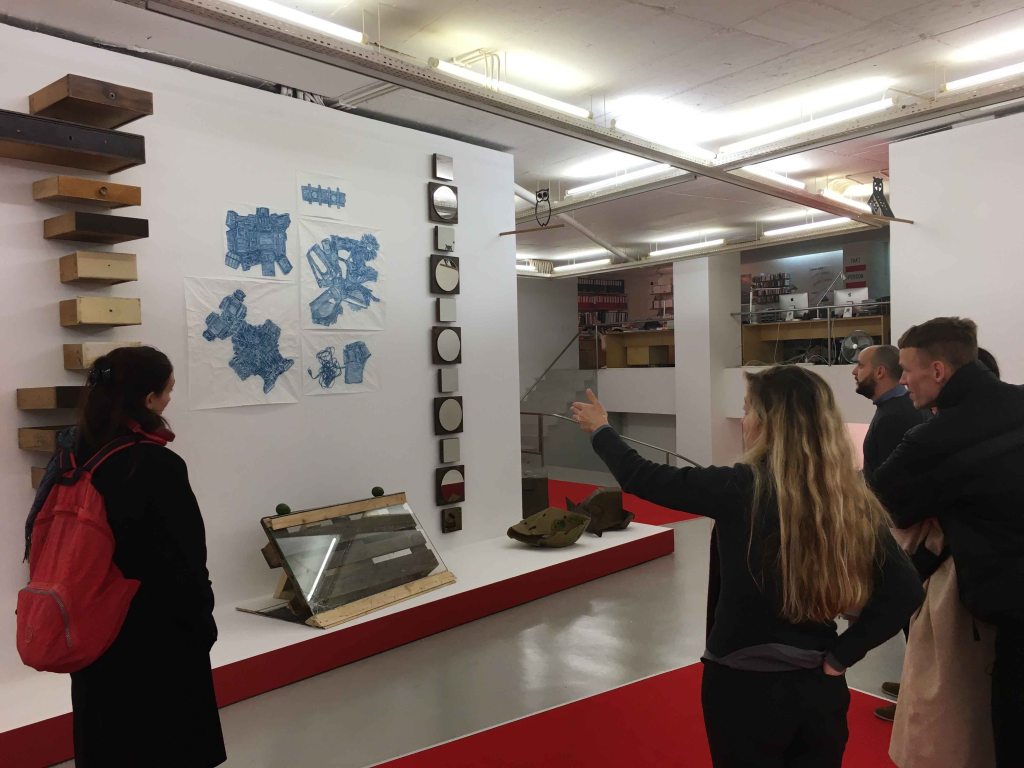
Here we are looking at the work “Schubladen” (Drawers) by Danilo Duenas.
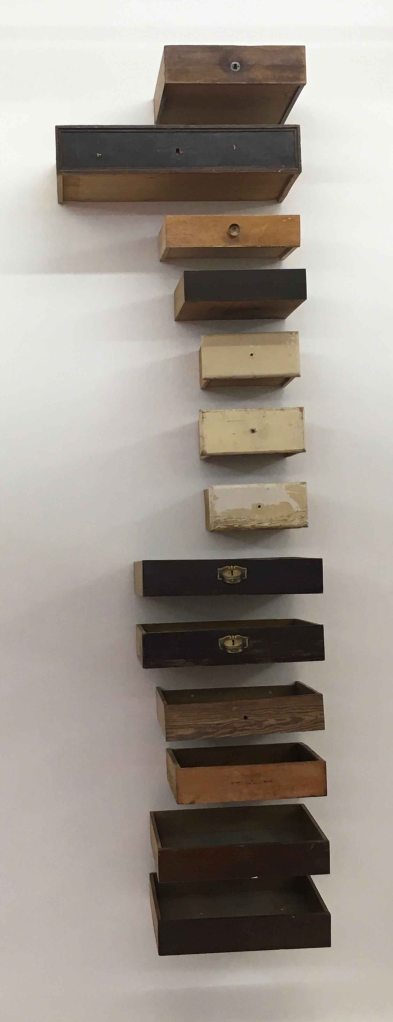
This sculpture is composed by 13 found drawers, symbolizing the ascension, so it is a sculpture with a spiritual component. Using these old found drawers places it in the Arte Povora category. I am not sure I would have felt the spiritual aspect without the tour, but I like the rhythm created by the different drawers and find that they awaken a certain curiosity in me.
I had a much harder time understanding the purpose of Claire Fontaine’s sculpture “Untitled (My ass)”, a readymade bidet and of course a hommage to Marcel Duchamps.
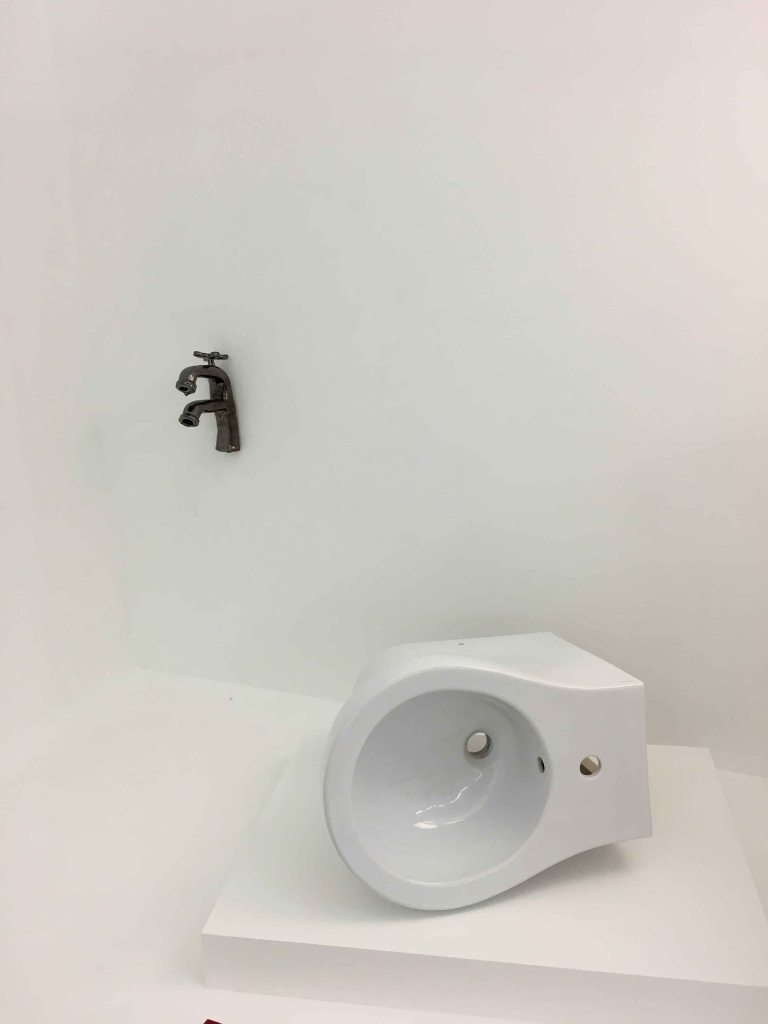
As much as I find Marcel Duchamp’s step to present the first ever ready made sculpture absolutely brilliant, I can not understand the brilliance in repeating that gesture.
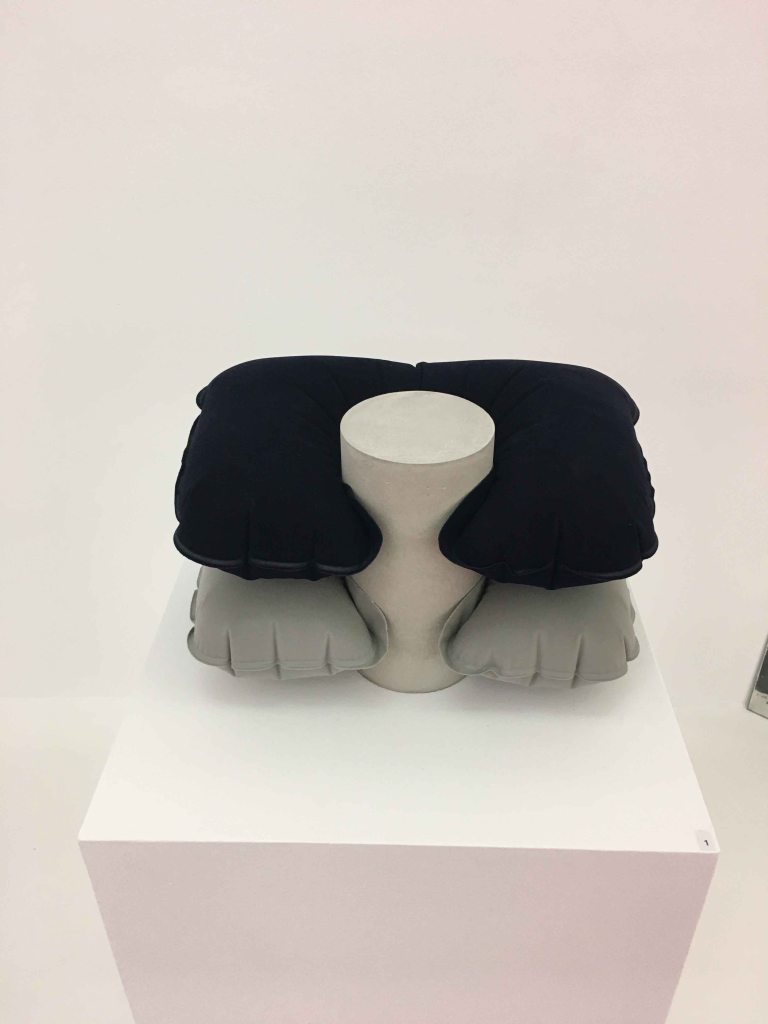
Similarly, I was not really impressed by Pablo Accinelli’s “Duracion Interna” – two travelpillows.
Lawrence Wiener exhibited statements in “Lost and found and lost again”, his material being the language. If you purchase this piece, you buy the idea and the right to reproduce these words as long as you keep these proportions, a brilliant idea.

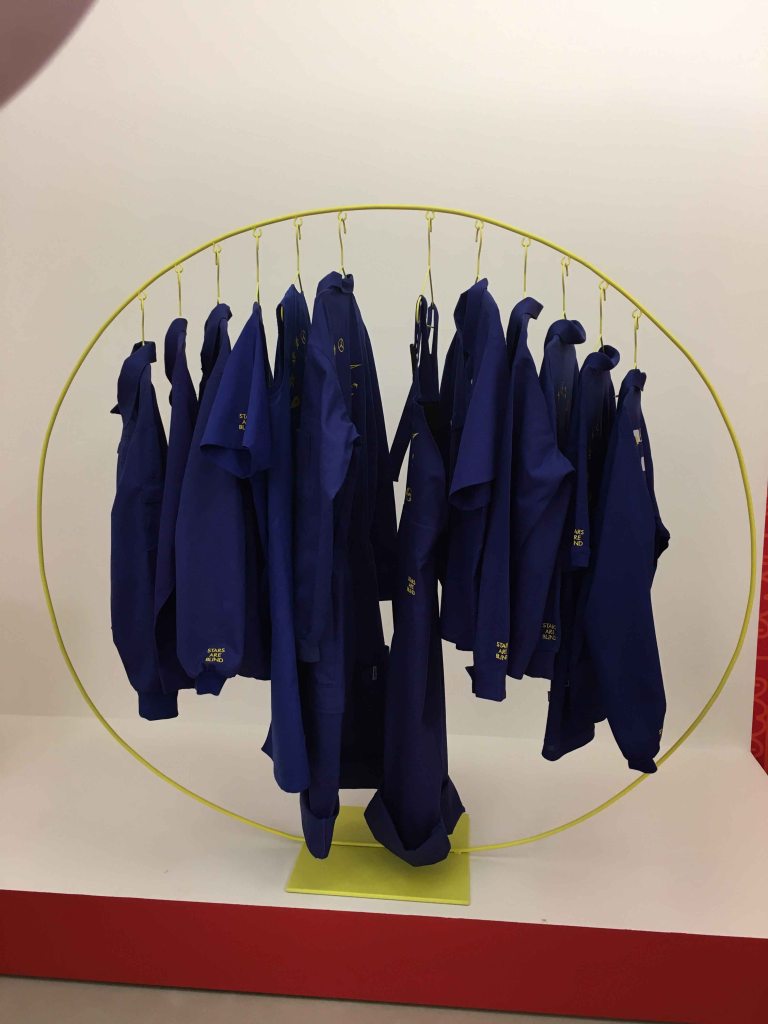
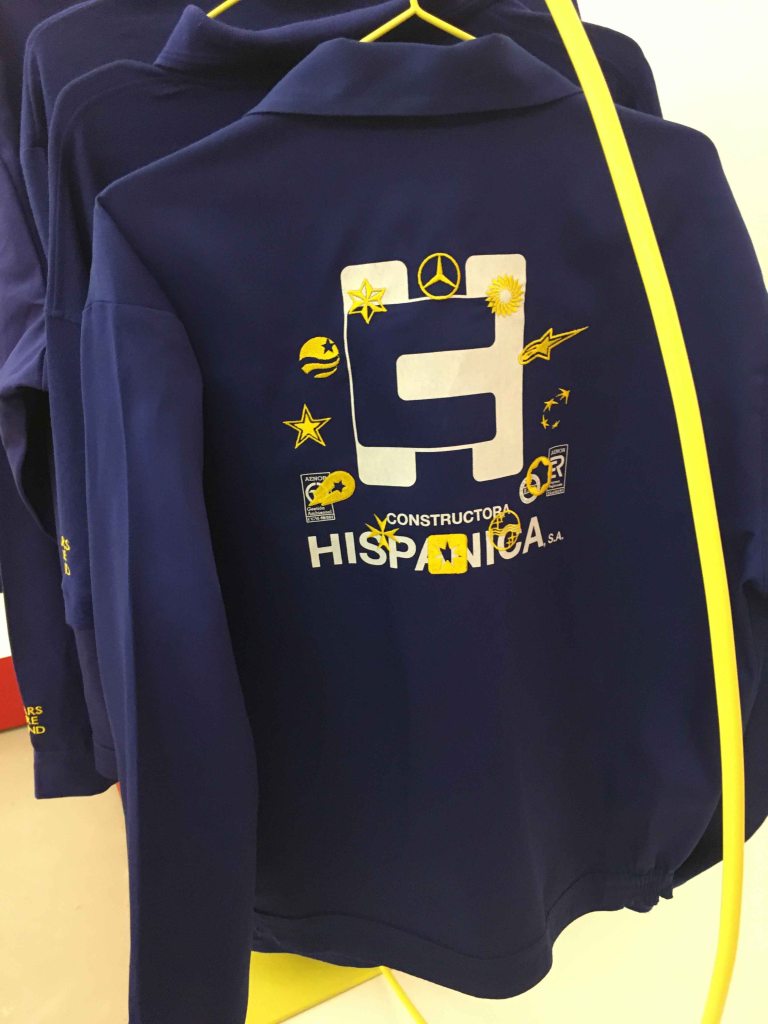
I found Adriana Martinez piece interesting both visually and conceptually- a critique of the European Union called ” The stars are blind”- a clothes rack with 12 items of clothing representing the member countries through uniforms.
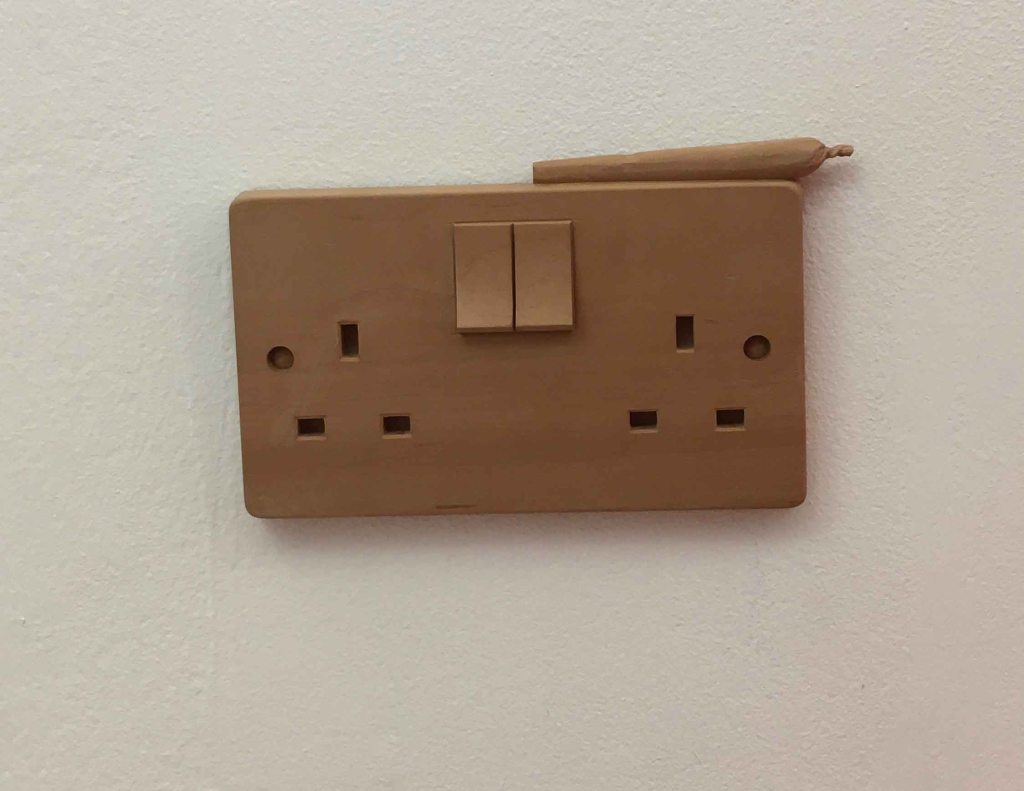
I almost oversaw the small wooden sculpture of Ryan Gander called “The way things collide”, an electric plug with a joint on top.
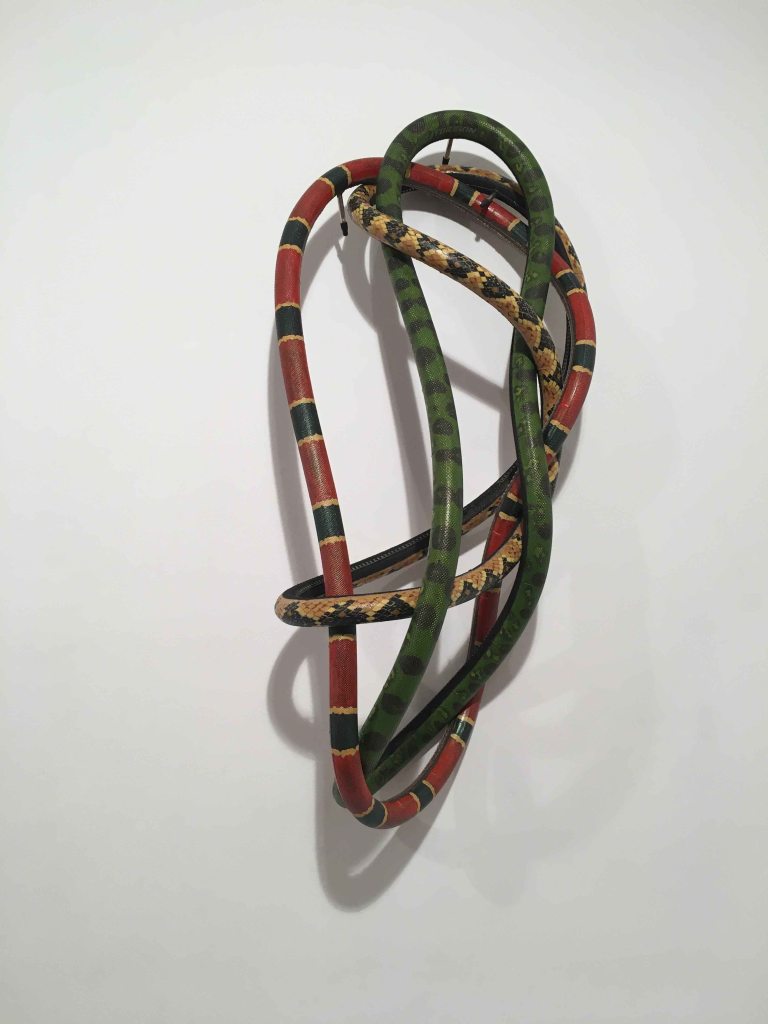
I found the piece “Gente Serpiente”, the snakepeople, by Mazenett Quiroga playful and at the same time aesthetically interesting. It is made by bicycle tires slung together and then painted with acrylics.
I also really liked a conceptual poetry work by Valeska Soares composed of hanging sheets of poetry books:
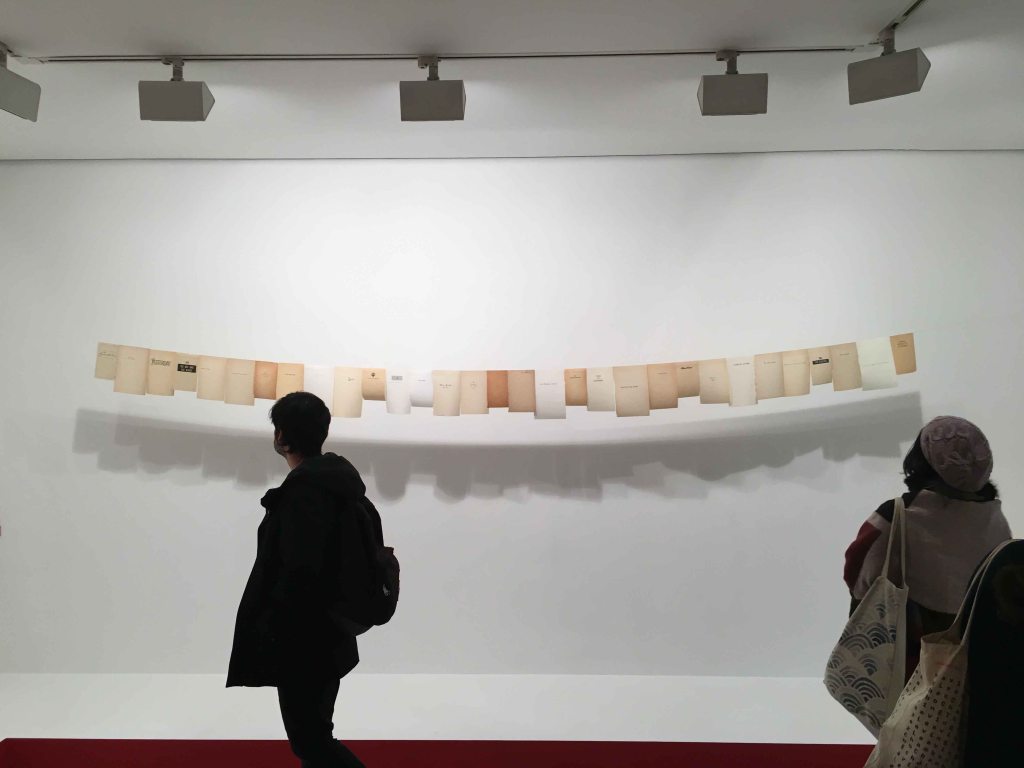

The rhythm and the shape of the light hanging pages, and also of the shadow cast on the wall create a visual wave that I can see as a visual poetry.
As a whole, the exhibition is overwhelmingly abundant, with very different sculptures of all sizes packed extremely close together and would need further visits to even begin to appreciate.
Gallery PEDRO CERA
The last visit of the day was the individual exhibition ” And the rest should be squandered” by German artist Tobias Rehberger at the gallery Pedro Cera.
The entrance was lit up by a large neon sign- the first exhibit:

According to the exhibition catalogue, this piece explores the border between what you can consider a finished or unfinished artwork, between functional and dysfunctional, perfect or corrupt. It definitely attracts attention with its violent complementary letters and the message is also reflecting modern questions of physical borders and illegal crossings as much as the borders of what can be art.
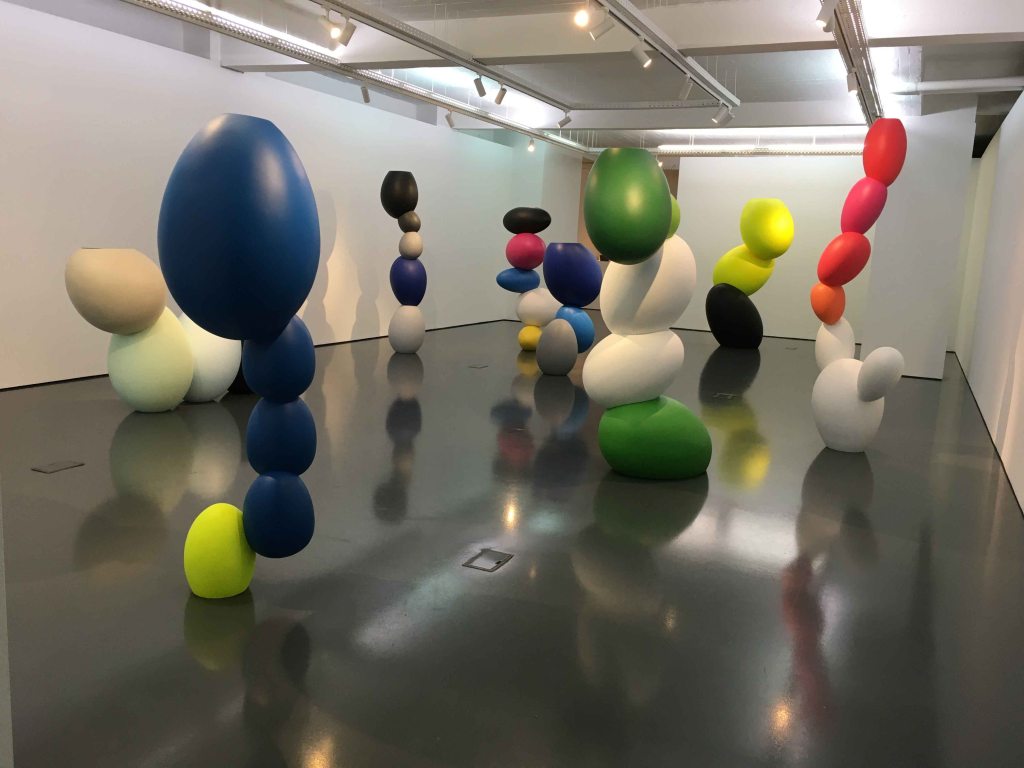
The main hall of the gallery was occupied by the colourful sculptures “Mother without child”. I was more familiar with Rehberger’s black and white very harshly graphical and completely covered rooms, so these felt like very soft, friendly, yes- motherly shapes in comparison. They are large like persons, or even larger, so they have a strong presence, or I would almost say personality, when you stand in front of them.
Then followed a series of paintings of letters of an invented alphabet.
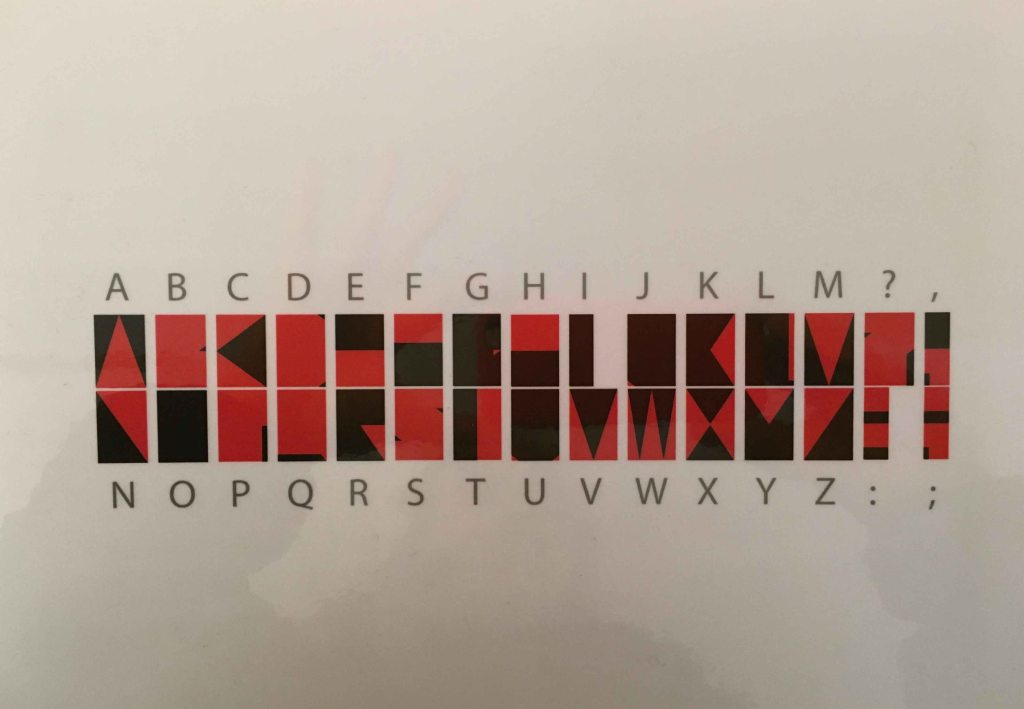
These letters were then used to write words and the results became paintings that defy the limits between abstract and representational. With the right code, we can read the meaning of the paintings.
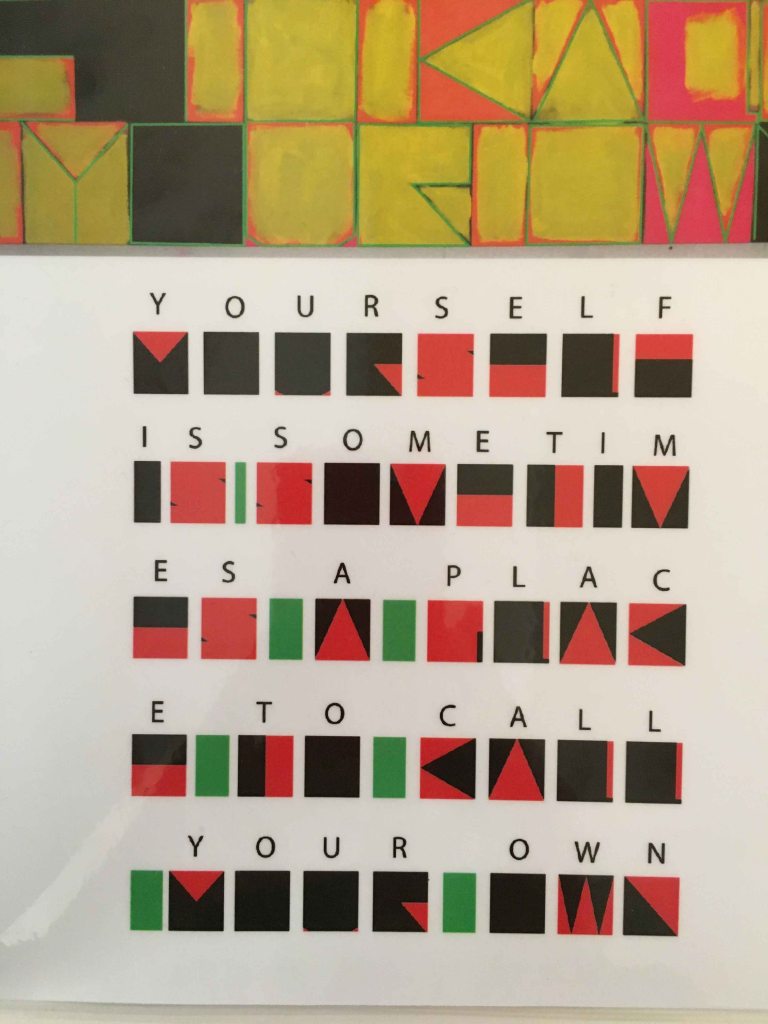
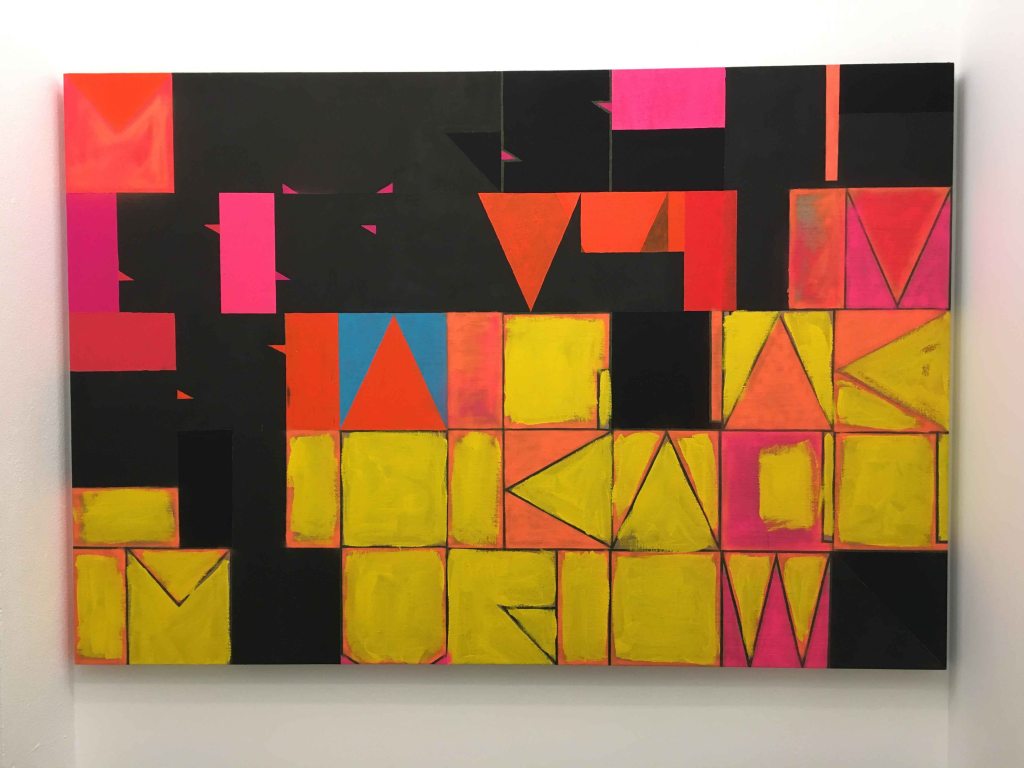
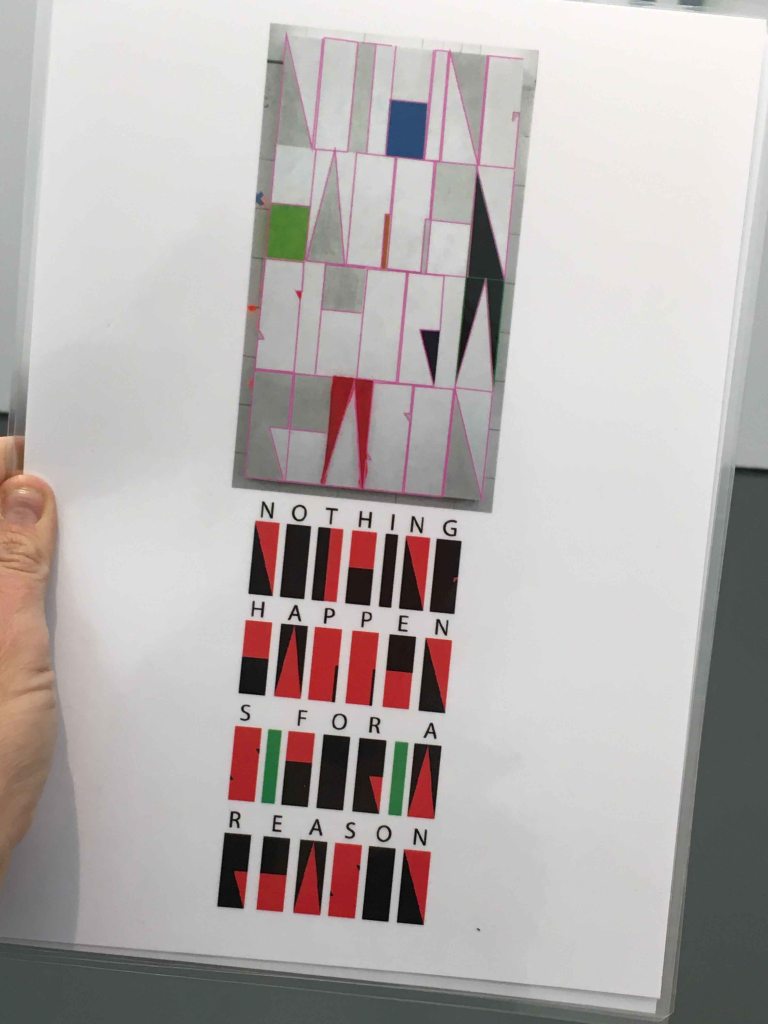
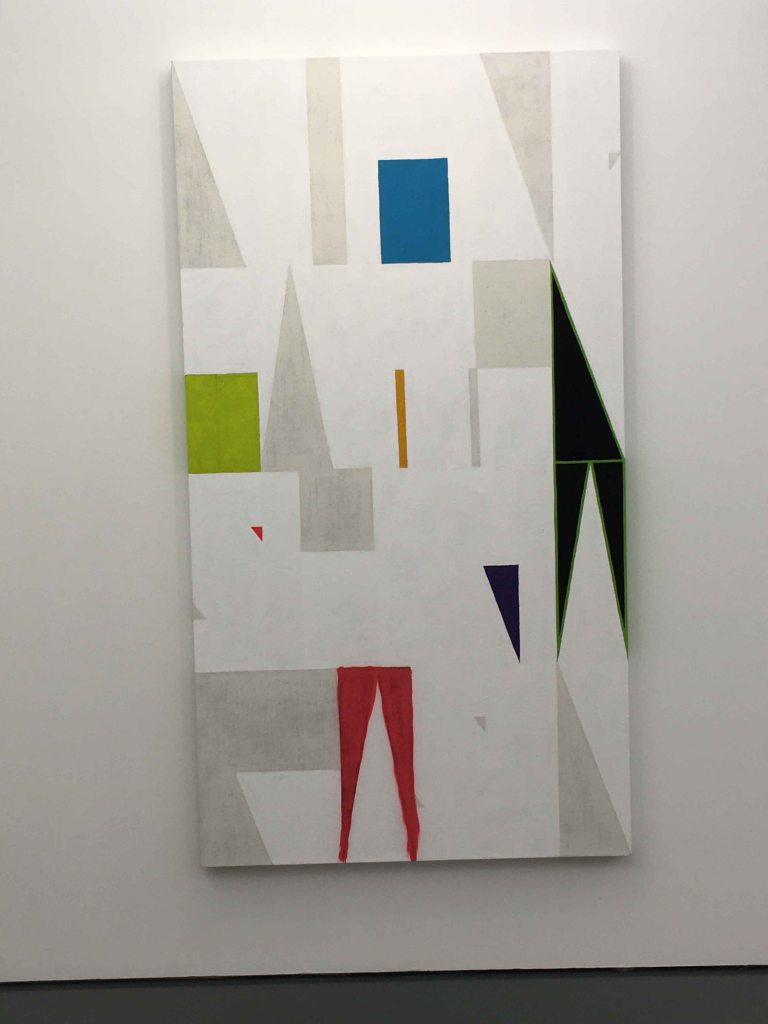
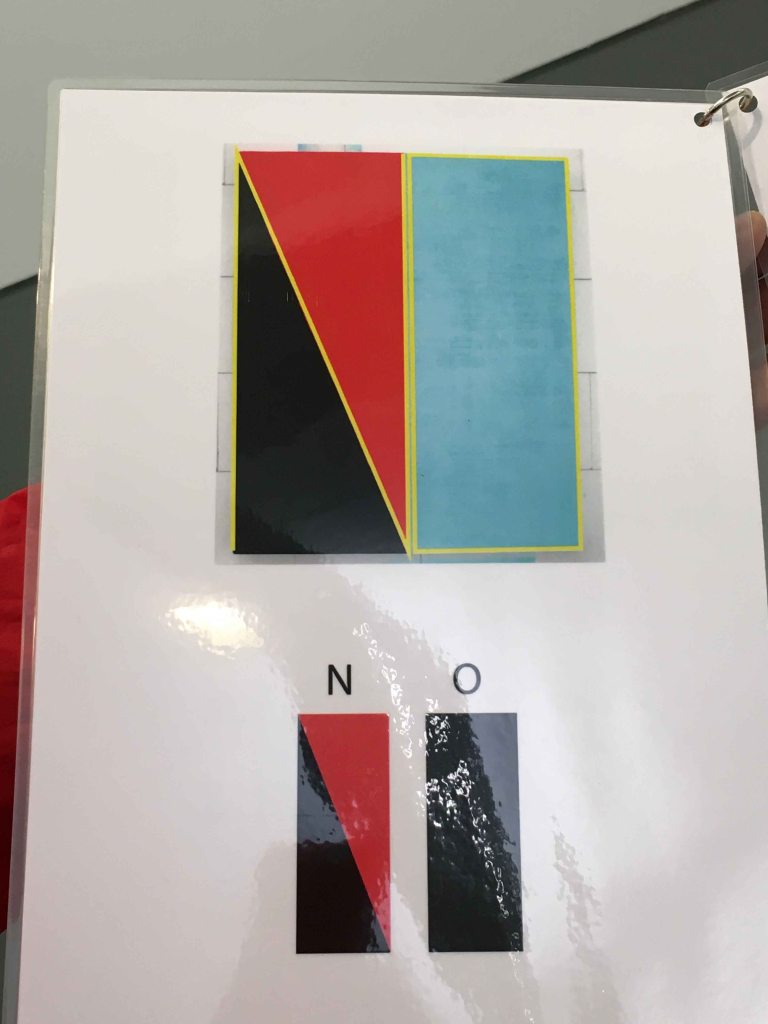
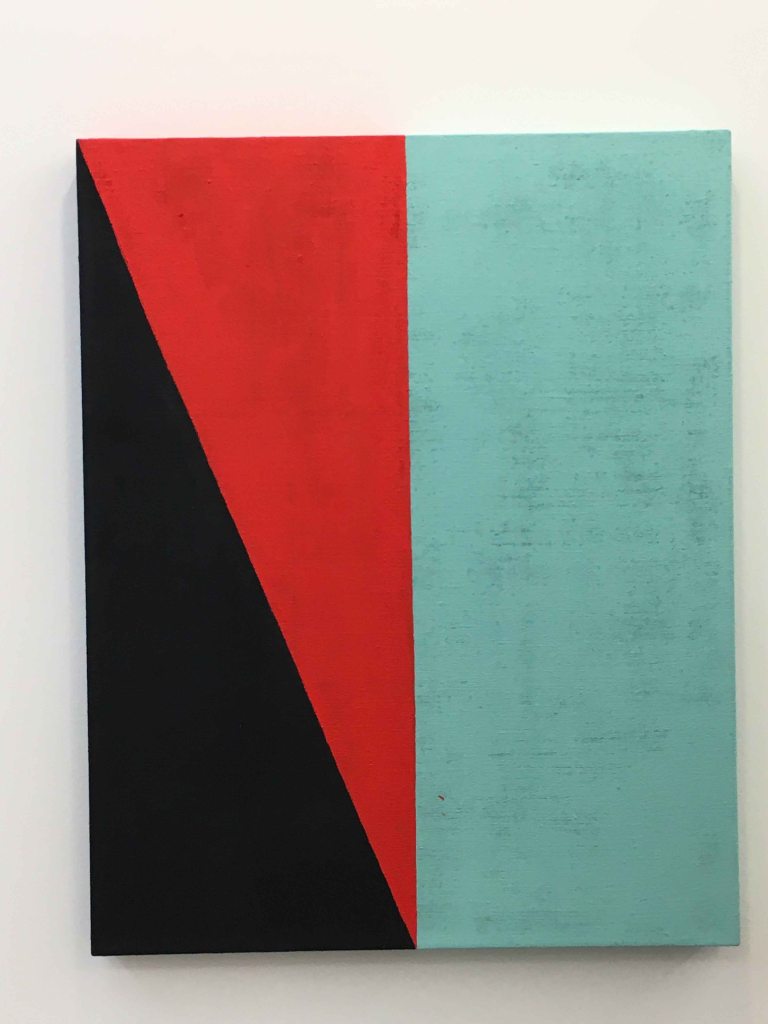
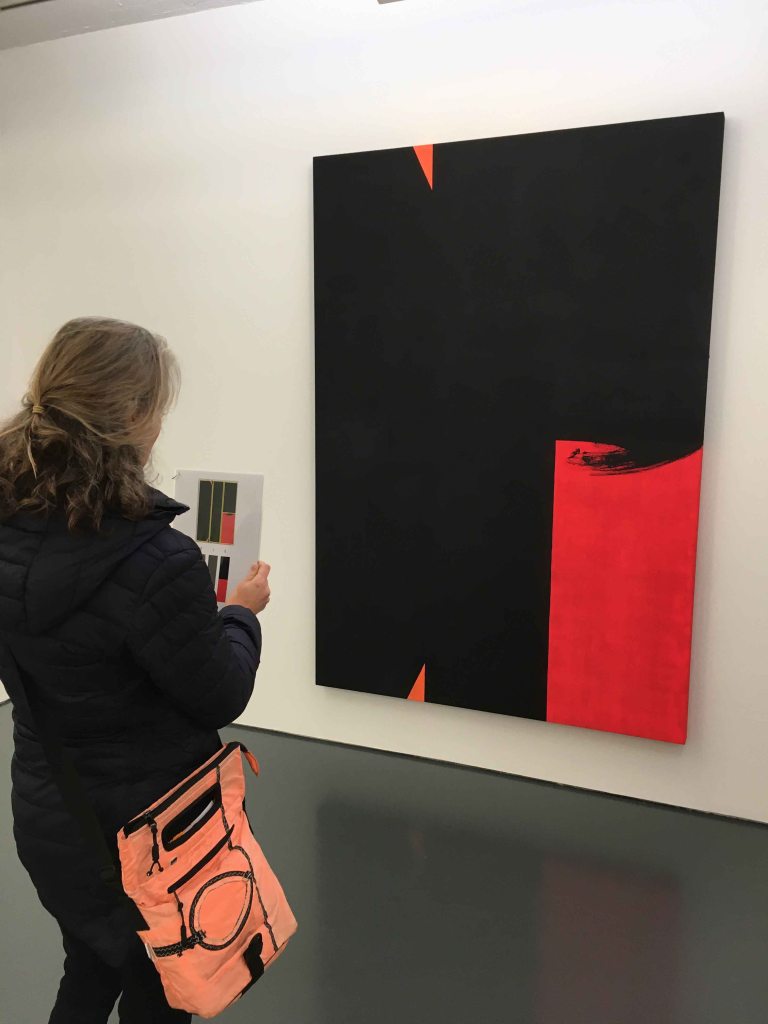
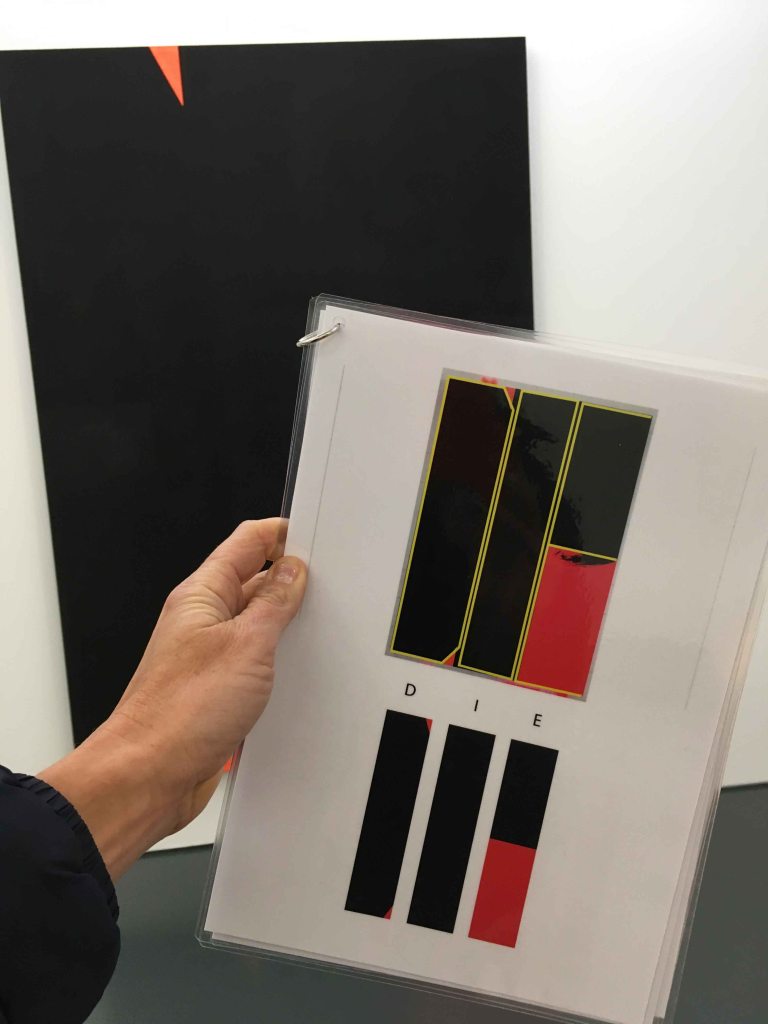
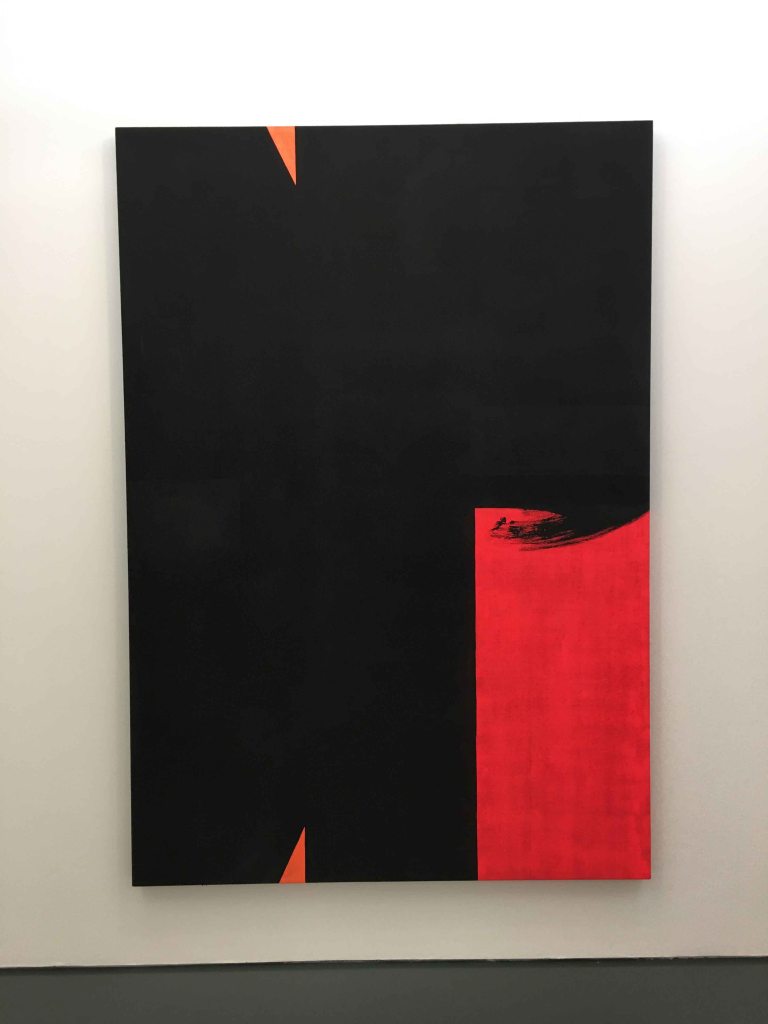
I was fascinated by the way these words emerged and altered my perception of the paintings.
Galeria BRUNO MURIAS
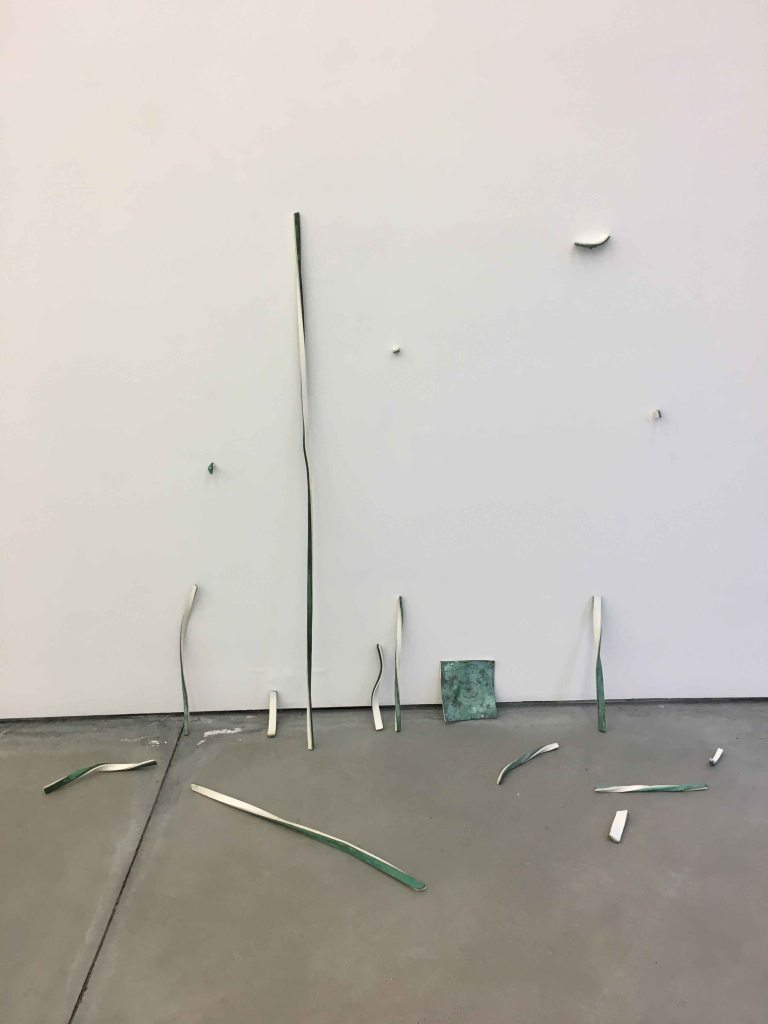
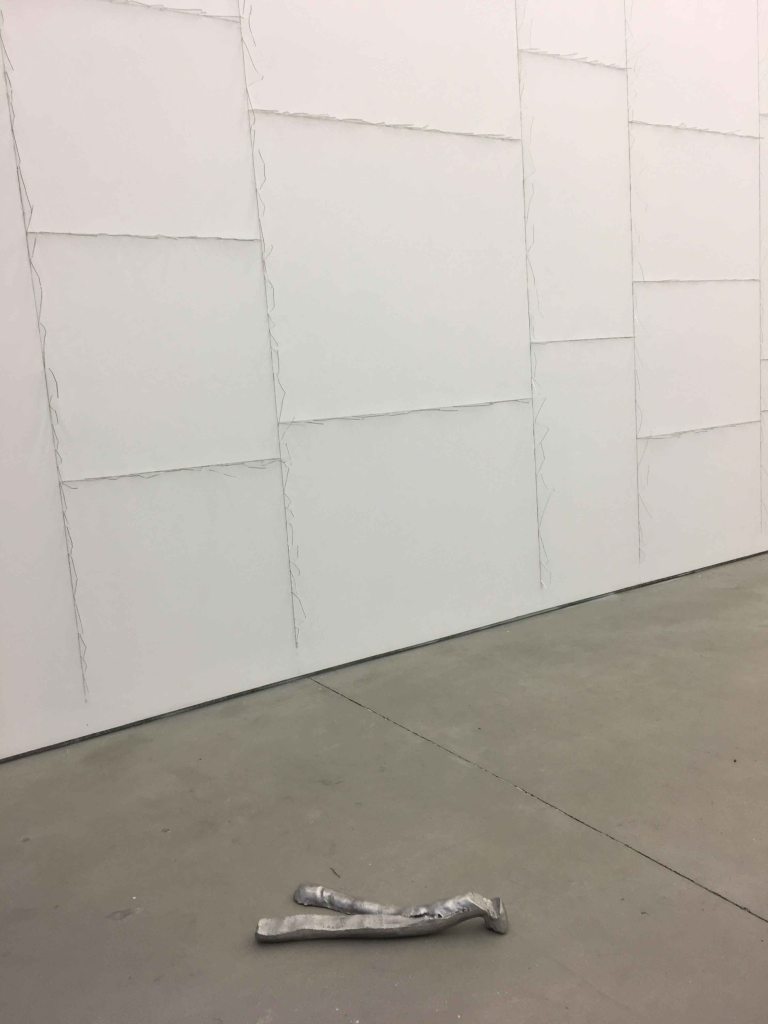
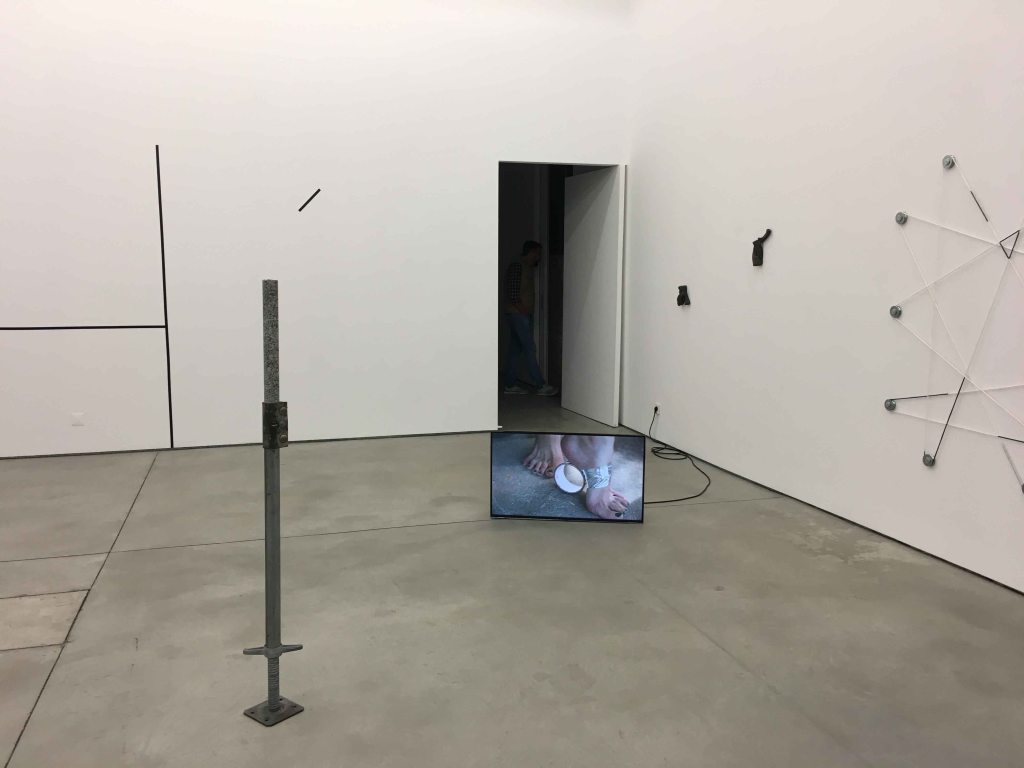
Sunday started with a visit to Galeria Bruno Murias with the exhibition “The unstable hour” by Bruno Cidra.
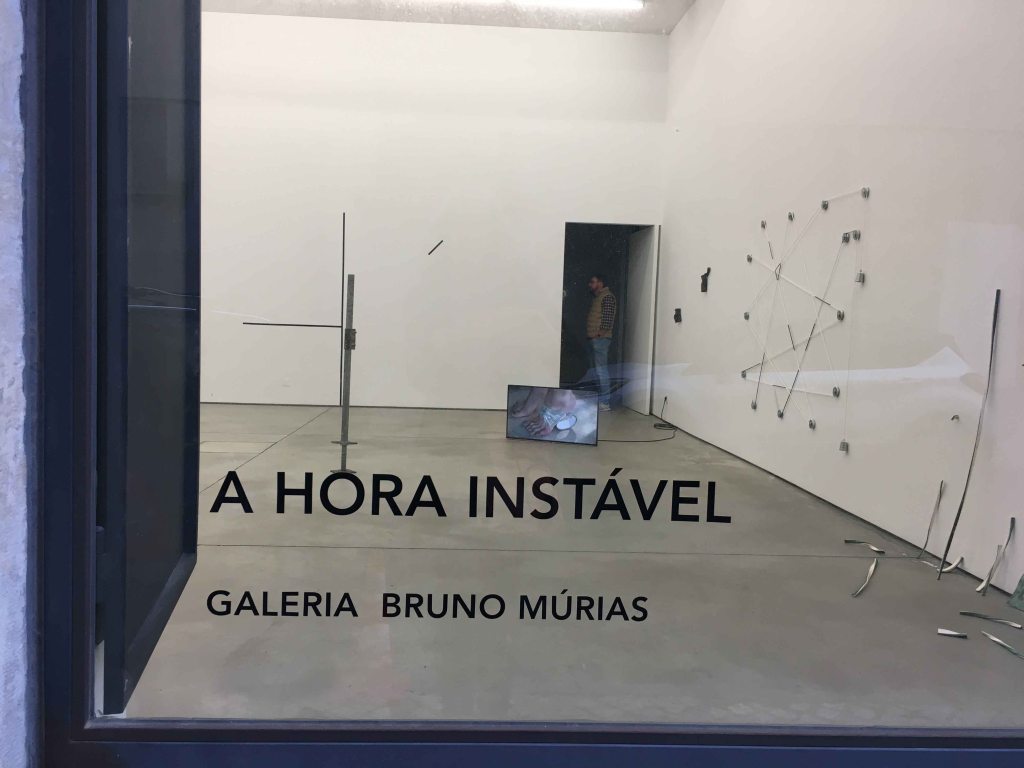
Cidra is working somewhere in between sculpture and drawing. His sculptures feel like very delicate drawings that have taken a three-dimensional form. I did not really feel attracted to these works aesthetically, but I loved this idea of the line taking off into space- something to give further thought while embarking upon this Drawing 2 course!
GALLERY FRANCISCO FINO
The visit to the gallery Fransisco Fino was definitely the highlight of today. The exhibition here was called “Serendipity or the art of interpreting signals” and dedicated to artists that defend rivers, seas and oceans at this crucial point of history.
The impressive sculptural forms made of suspended, coloured fishing nets by Carolina Caycedo occupied the main space of the gallery.

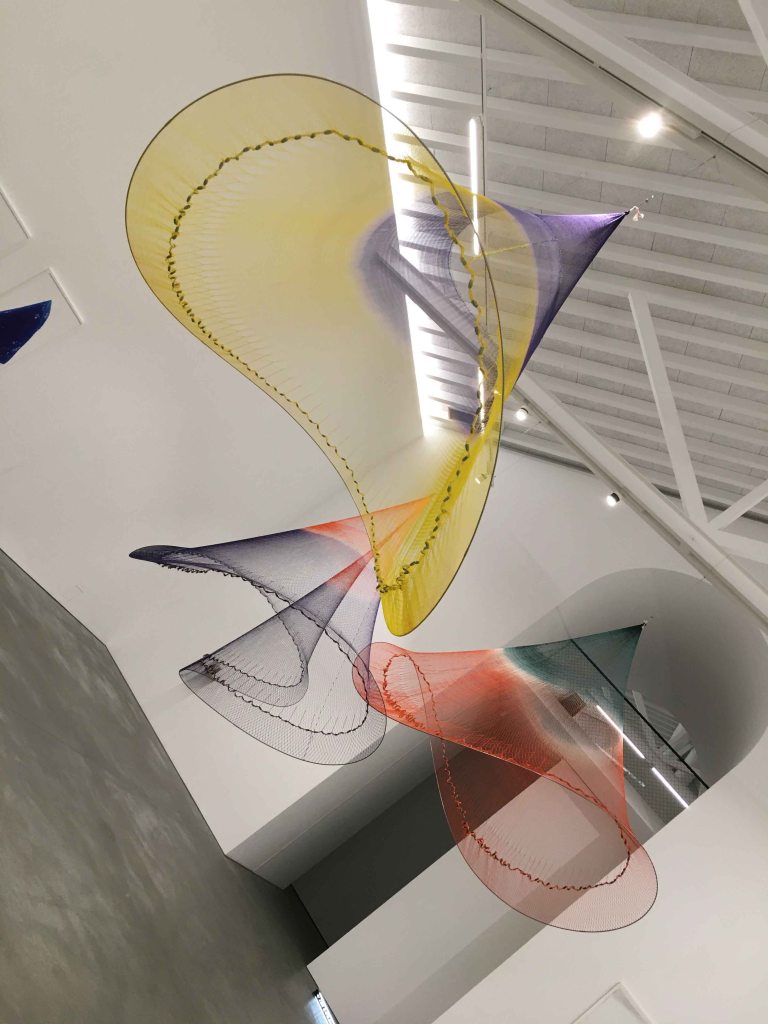
They remind me of the colourful net sculptures by Janet Echelman. These sculptures, so large and yet so light really create a special feeling for space and form. It is quite eerie to stand under them. At the same time, they are a direct reminder of the oceans and of the very contemporary problems our oceans face.
A second work that made an impression on me here was an engraving by Rosa Barba, called “Language Infinity Sphere”. The rings of a tree are created through a pattern of letters, reflecting upon the memory of language.


Rosa Barba is also the author of a magically beautiful video with images of very barren winter landscapes conveying a sense of deep longing in me, and a sadness in the desolate, rough surroundings at the same time.

I usually have a very hard time appreciating video art, and have simply omitted writing about other artists videos throughout these gallery visits, but this piece really struck something in me. It was recorded on a 16mm film and later transferred to video, and this fluttering, old way of filming also gives it a special character.
The last piece I will mention from this visit is a cigarette butt and an empty lighter thrown on the concrete floor – because this is an artform I still don’t understand at all. I would have taken it for litter, if I hadn’t seen the descriptive catalogue on the wall…


UNDERDOGS GALLERY
I ended this very full weekend with the finissage of Wasted Rita’s exhibition “And now for something completely different: a show that features at least one female artist” at the Underdogs Gallery.
I was already here for the opening of the show a month ago and completely chocked at the popularity of the event. I have been to some other exhibition openings in this gallery before, that were always comfortably moderately visited, but for this exhibition a queue of hundreds of people snaked through the street. And I didn’t even understand the exhibition….so I needed to come back now for a second look.
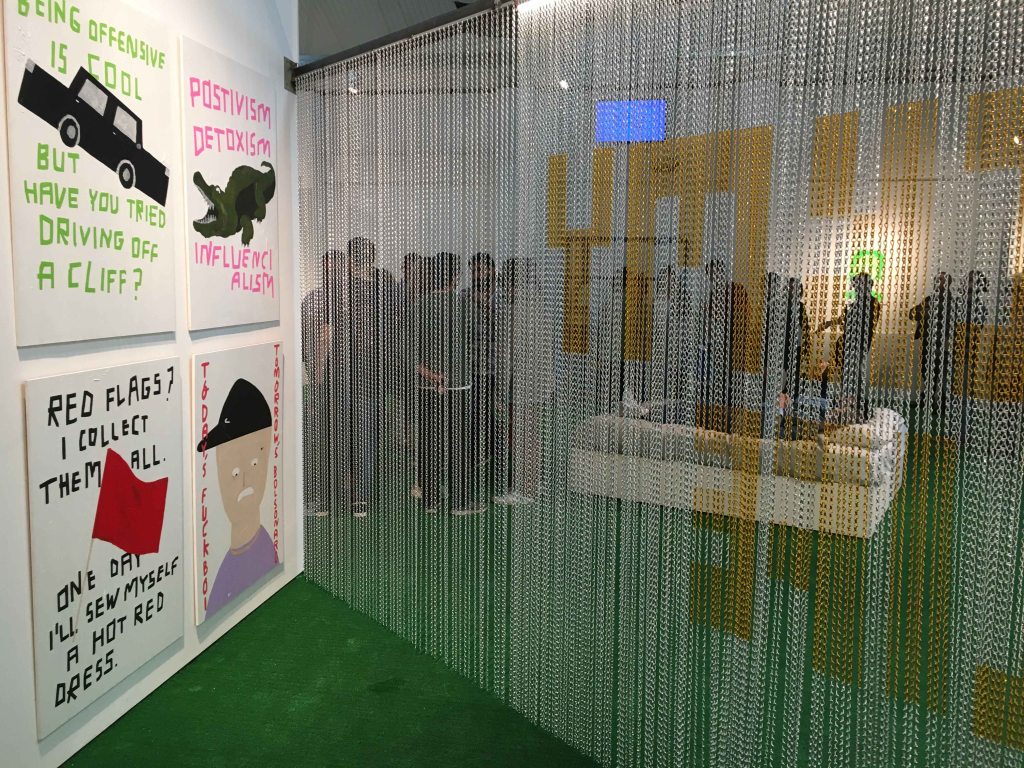
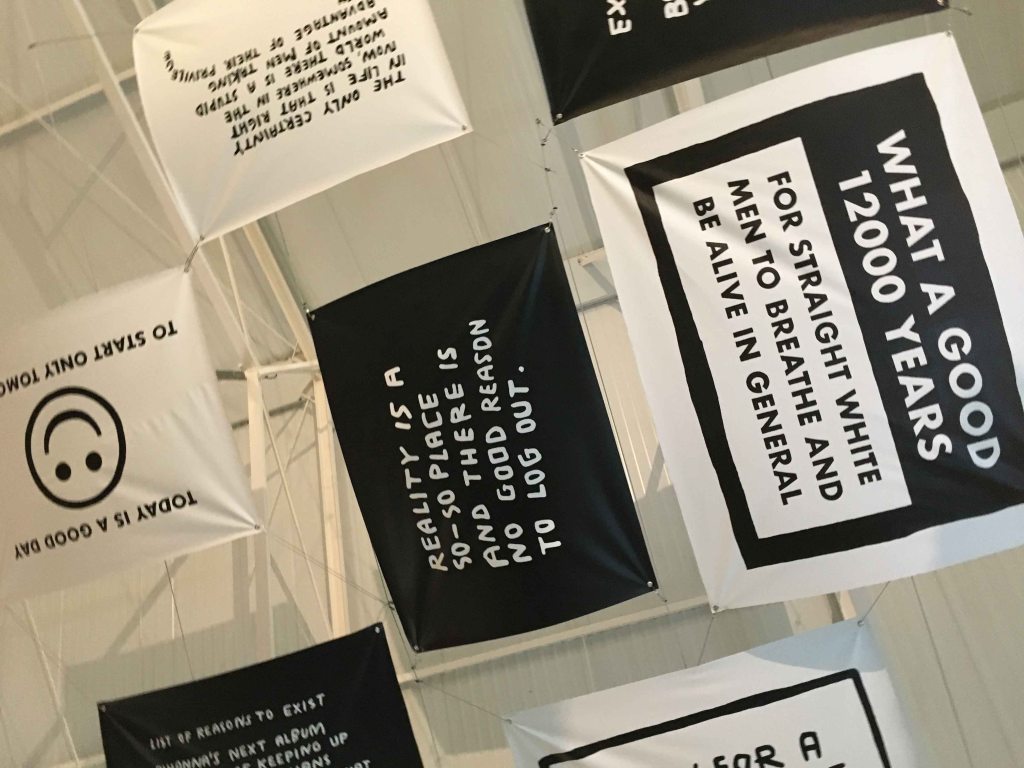
Wasted Rita’s work centers around short texts, humorous and provocative.
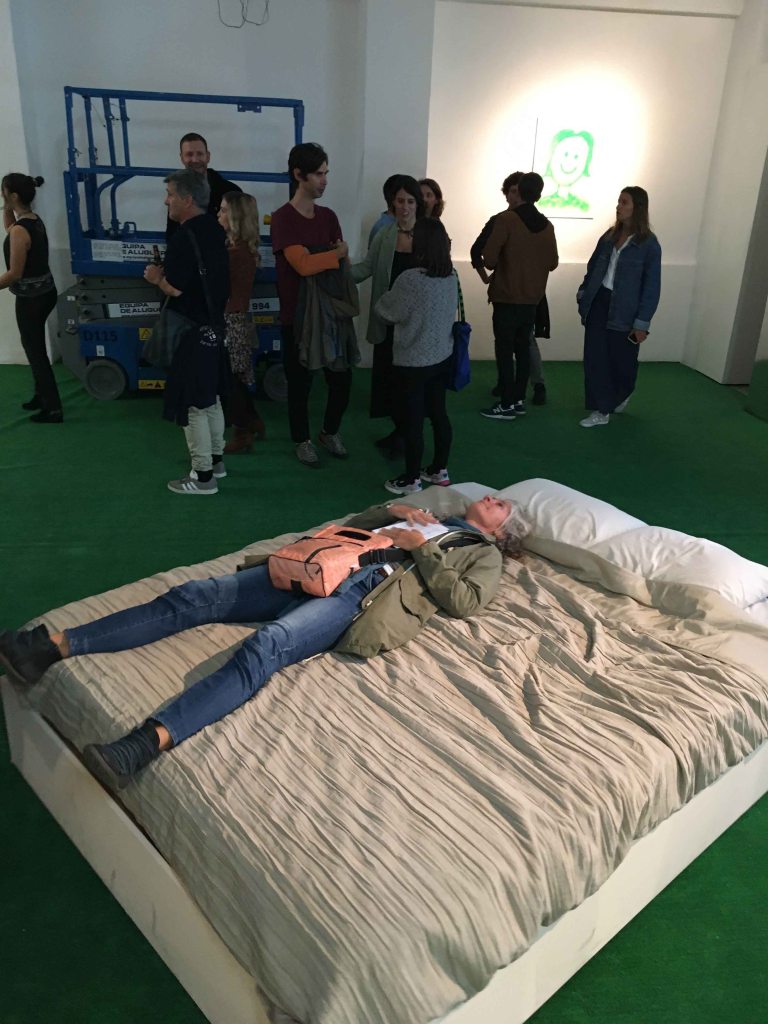
The middle of the room was occupied by a bed turning around and when lying on it you could read posters glued to the ceiling.

This is me turning around and reading:
You could also drive up and down on a noisy construction platform for a multimedia experience.
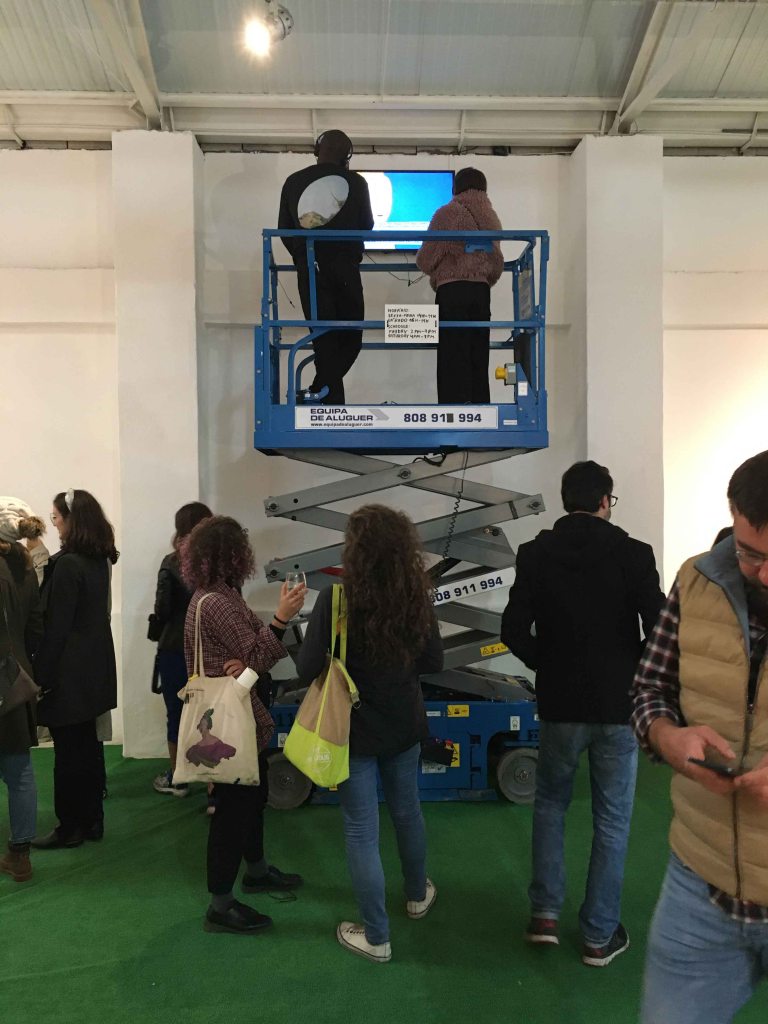
Or throw darts aiming at different goals like 10k followers, new Nike shoes or an exotic vacation:
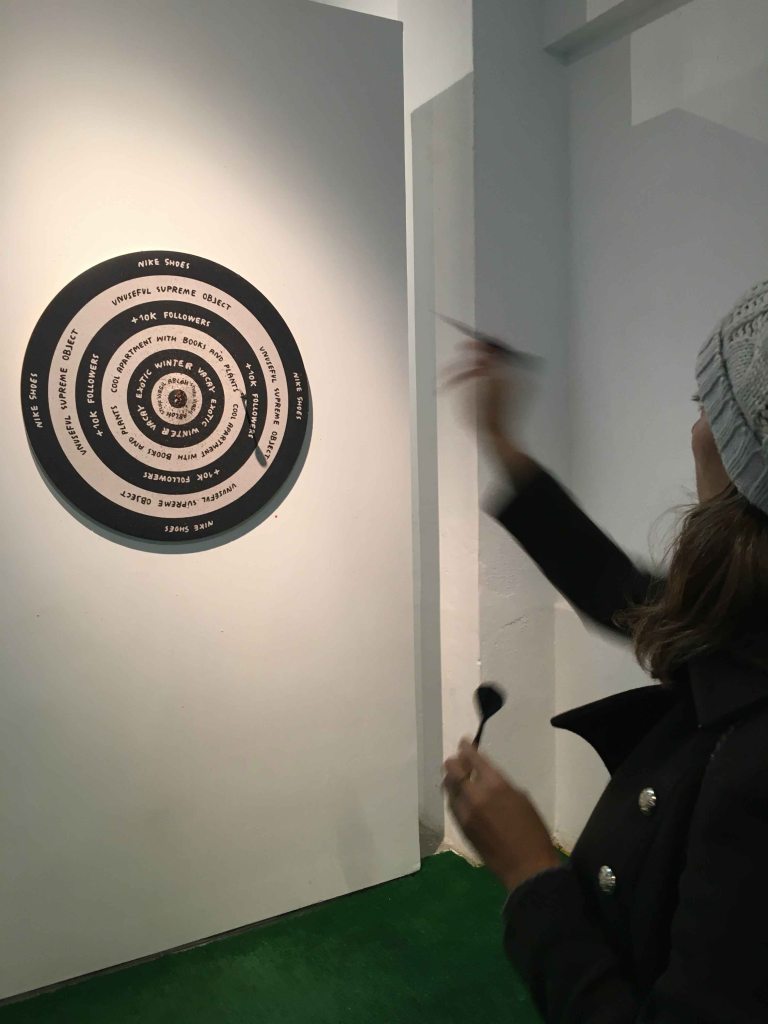
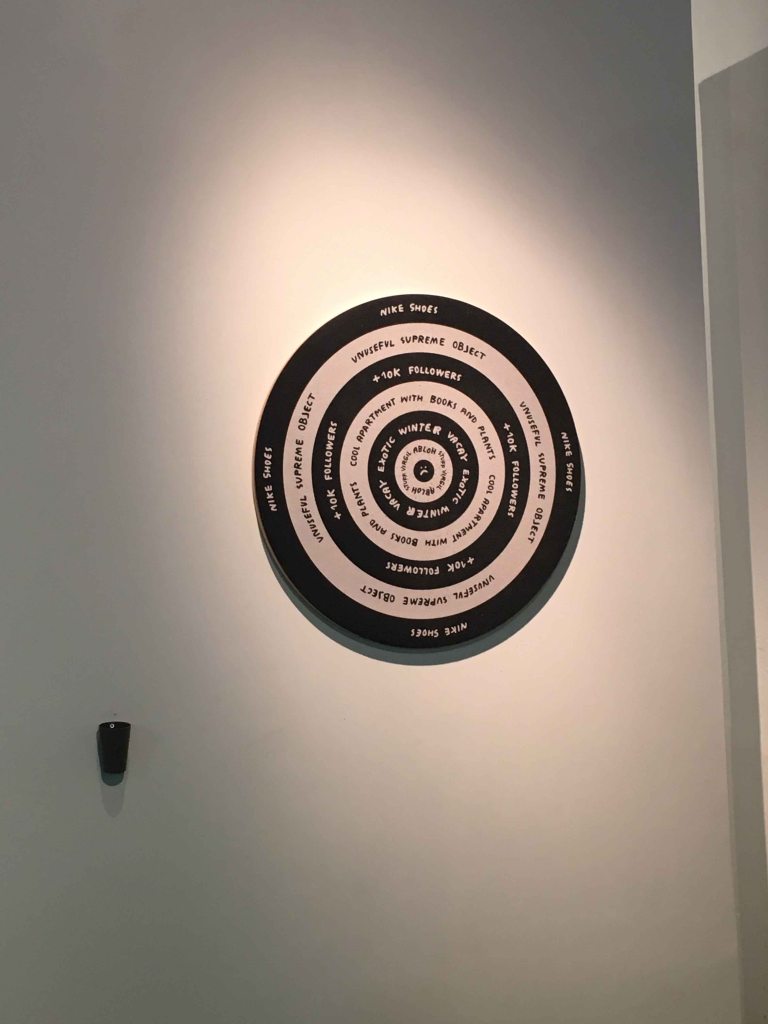
I appreciate the biting humor and provocative tone of the artist and I see how she has created some sort of absurd environment where the visitor can engage and participate, but I am still baffled that this is the most visited exhibition of the weekend.
LISBON ART WEEKEND
As a painter, I would have loved to see less installation and more painting and drawing presented of course, but this is a situation I find in most art events.
I loved the vibrancy of this art weekend though, of finding the galleries alive end full of visitors and seeing a lot of inspiring work.
 Clara's Drawing 2