This part of the course encourages me to take a closer look at composition through observational drawing.
Drawing 2 coursebook:
Aim: ” This project encourages you to reflect on the wider potential of observational drawing, in particular how you can use what you look at more experimentally as you develop your composition. You probably normally start by finding an interesting subject or setting up a still life. This project asks you to reverse this process by finding what may seem an initially unpromising subject, but one with several elements, and then building up the composition to create an interesting drawing. This will encourage you to reflect on the potential of a more creative and open-ended approach to composing drawings.
The “unpromising subject” immediately makes me think of the contemporary artist Mimei Thompson who paints beauty in the everyday, in a ripped open trashbag, in a fly, or in the weeds between her house and the studio.
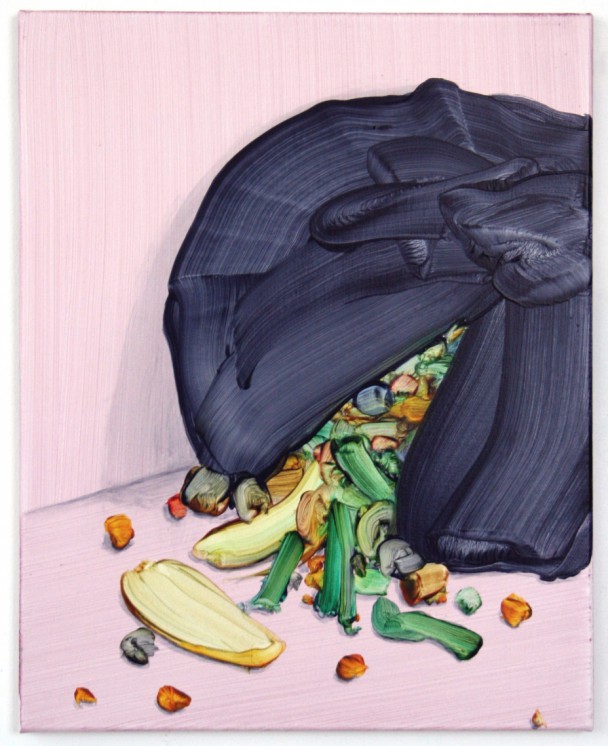
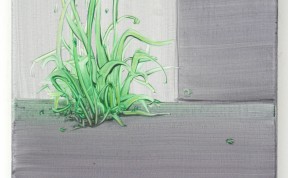
(Images from Thompson, M. c2014-15. Mimei Thompson. [Online]. [7 December 2019]. Available from: http://www.mimeithompson.com/work/collection/2014-15/#, with permission of the author.)
In an interview with Alli Sharma for the “Articulated artists” blog, she sais: “I was interested in looking at neglected corners, with the idea of finding something transformative in the everyday.”
Quote from http://articulatedartists.blogspot.com/2013/10/mimei-thompson-talks-to-alli-sharma-at.html (Blogspotcom. 2019. Blogspotcom. [Online]. [21 September 2019]. Available from: http://articulatedartists.blogspot.com/2013/10/mimei-thompson-talks-to-alli-sharma-at.html)
This is a subject I like very much exploring – transforming the everyday, the so-obvious- we don’t see it, into something that make us reflect again.
When I look around the room, my glance first falls on a cable and a lamp in the corner- definitely unpromising and I decide to just start here.
I use pencils and soft pastels for a first approach.
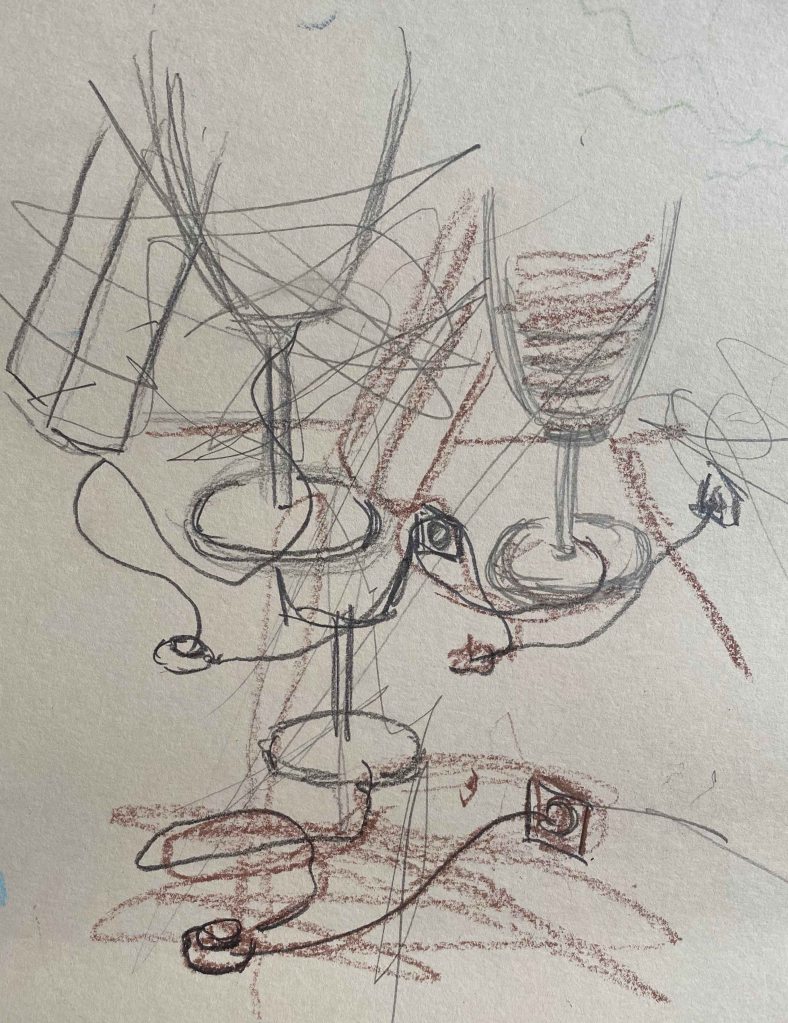
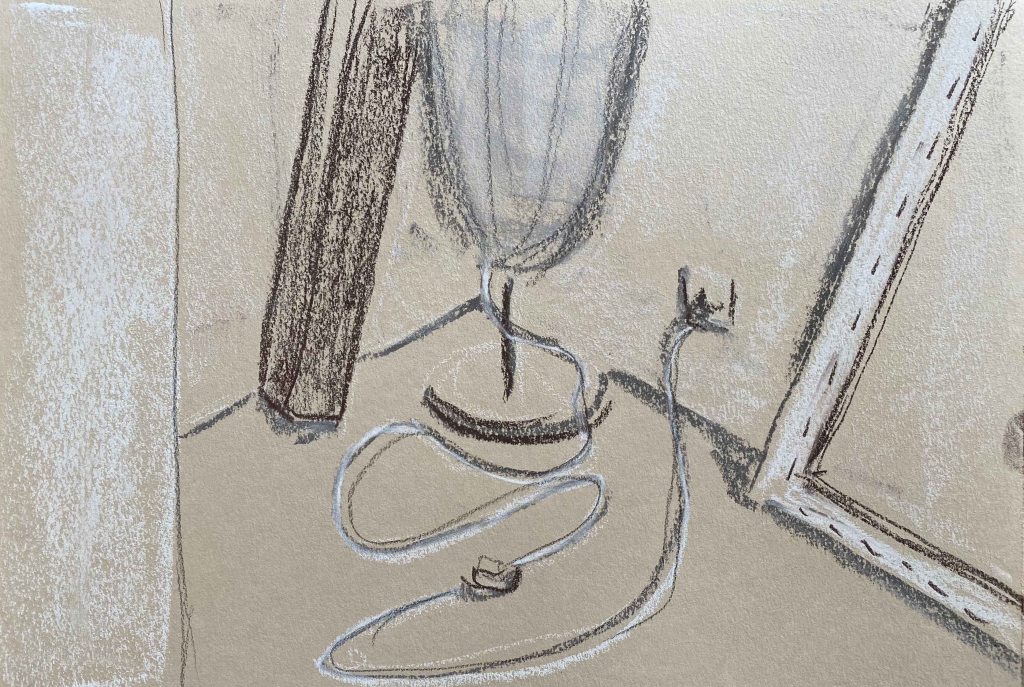
I decide to try using cut out shapes and graphite powder as I experienced in a lifedrawing class recently.
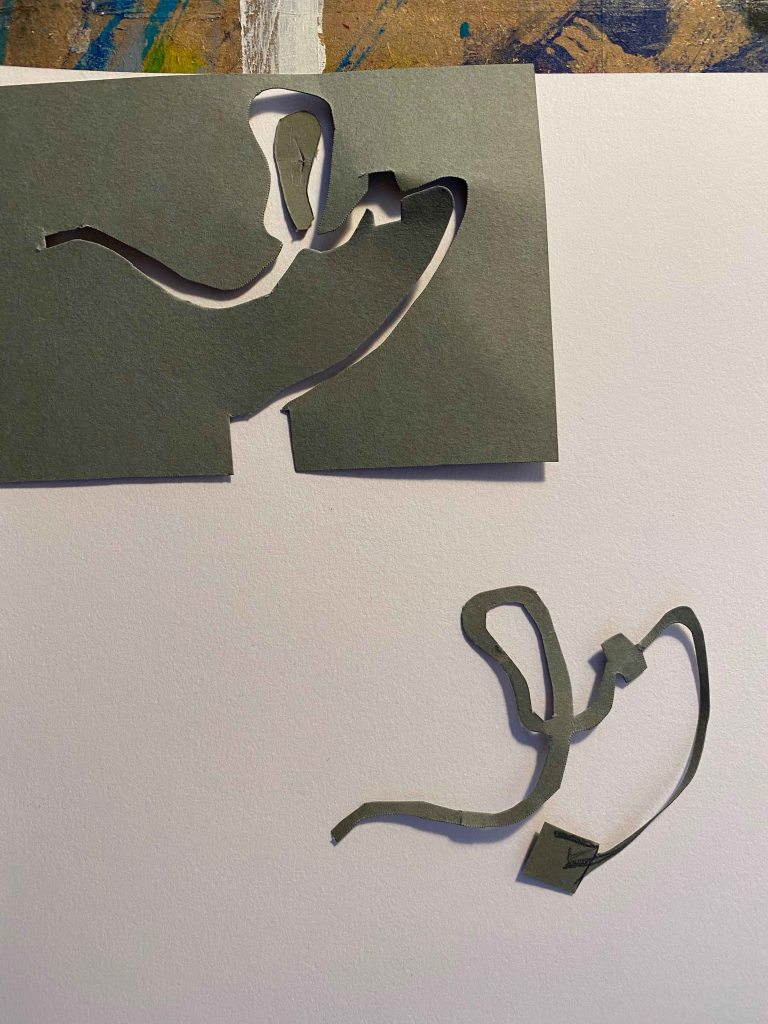
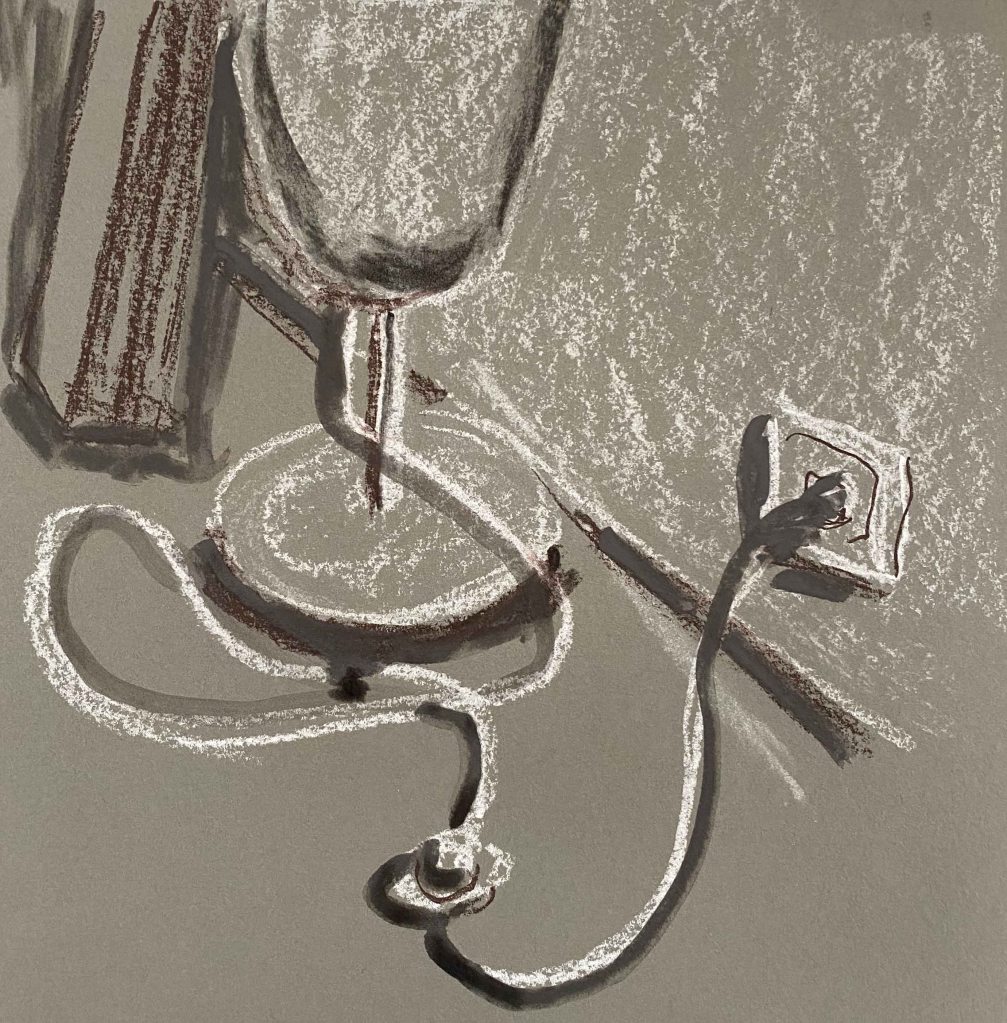
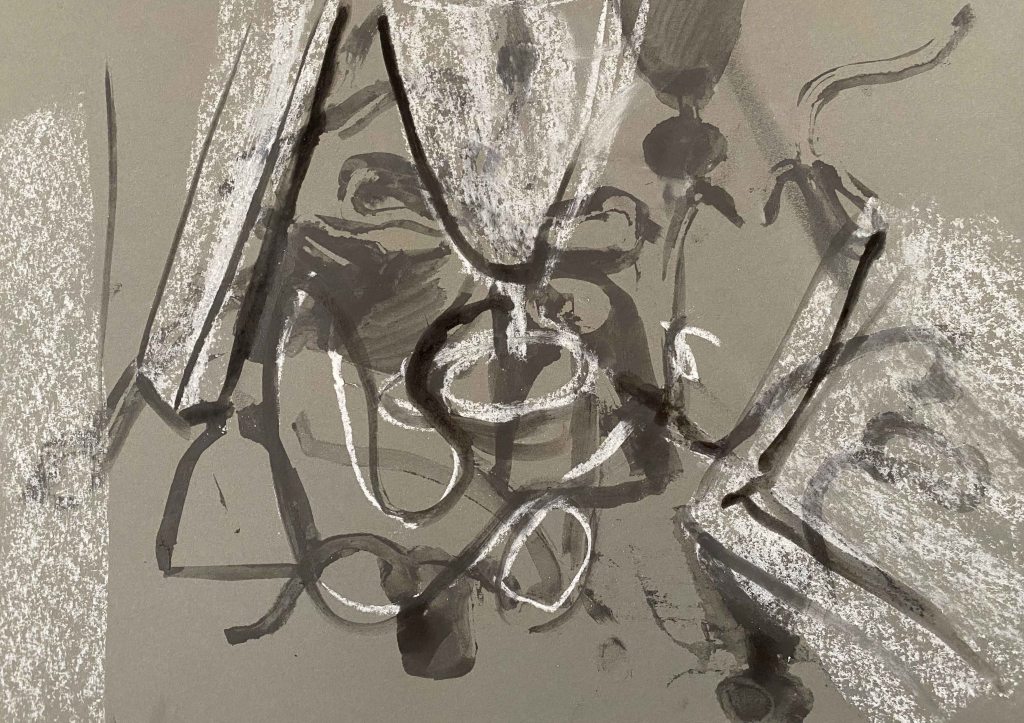
I decide to move away from the initial motive and focus on repeating certain elements.
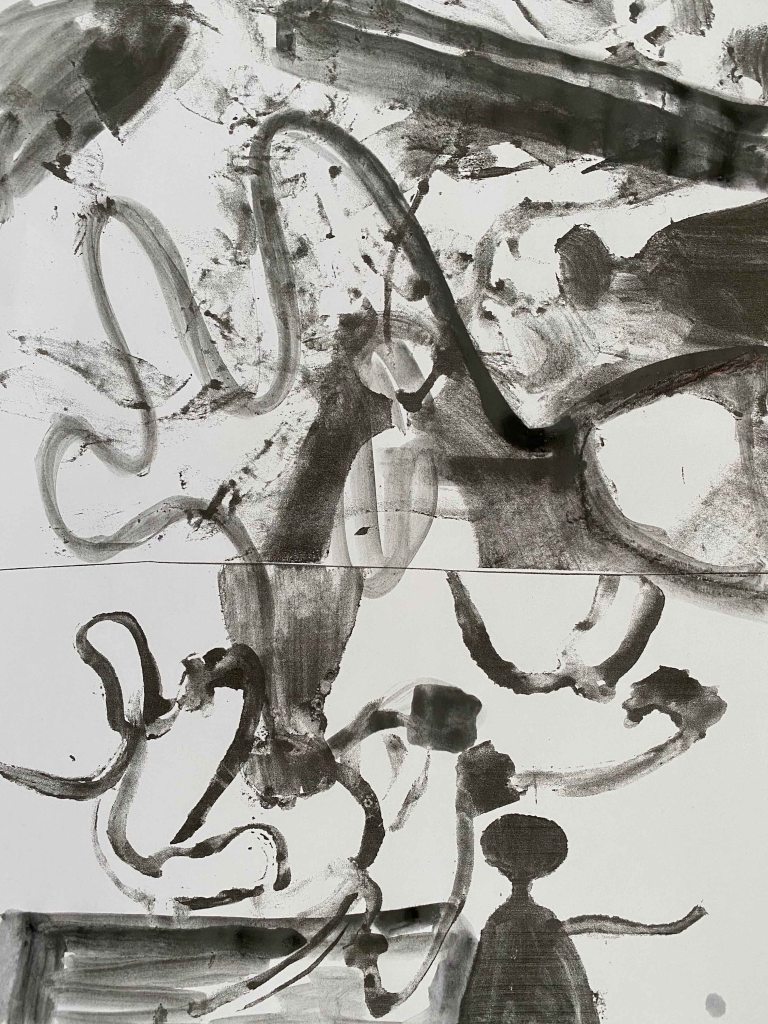
This was a good warm up, but I am still looking for an unpromising but captivating motive.
I discover it as soon as I step out of my front door the next morning :
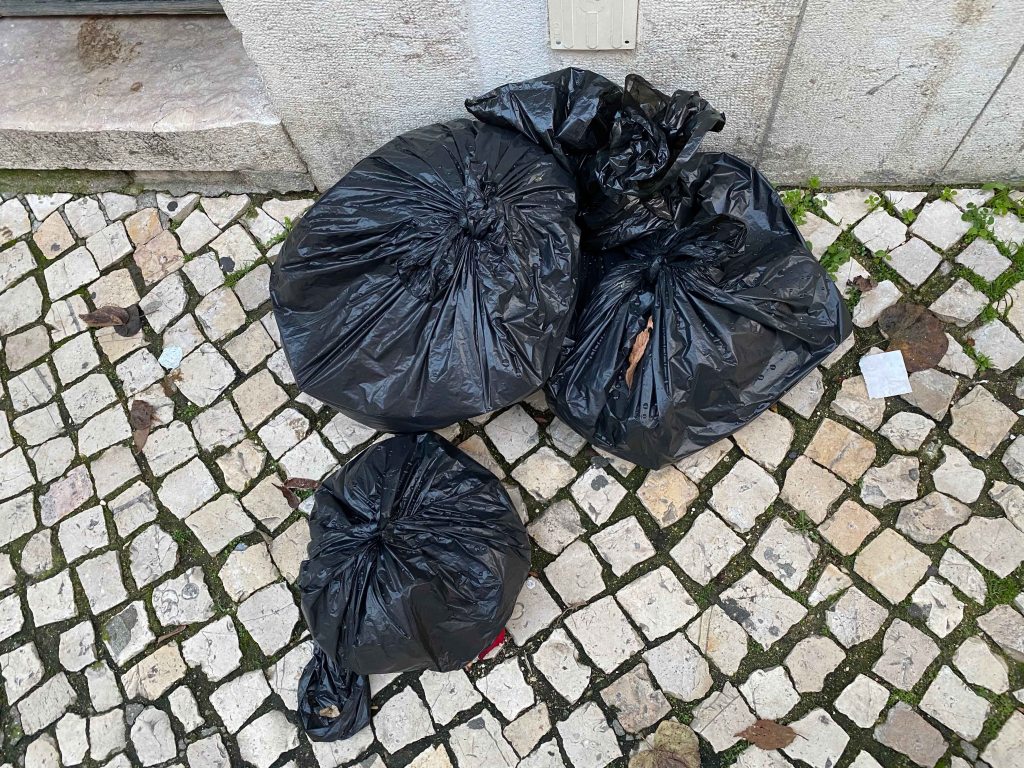
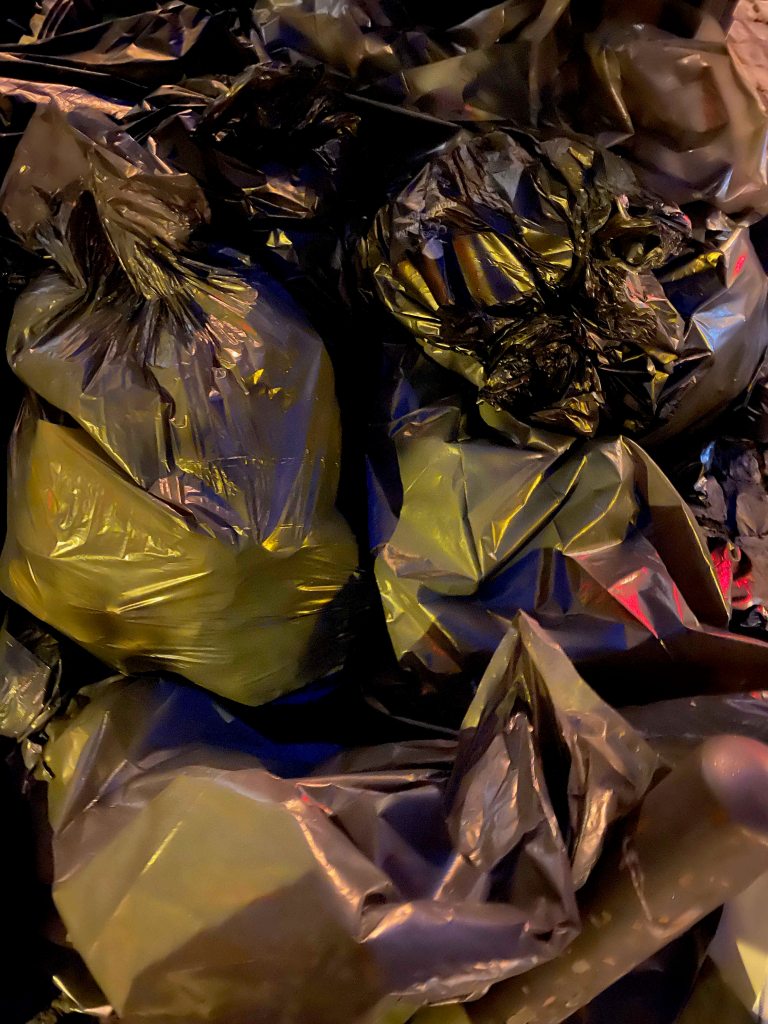
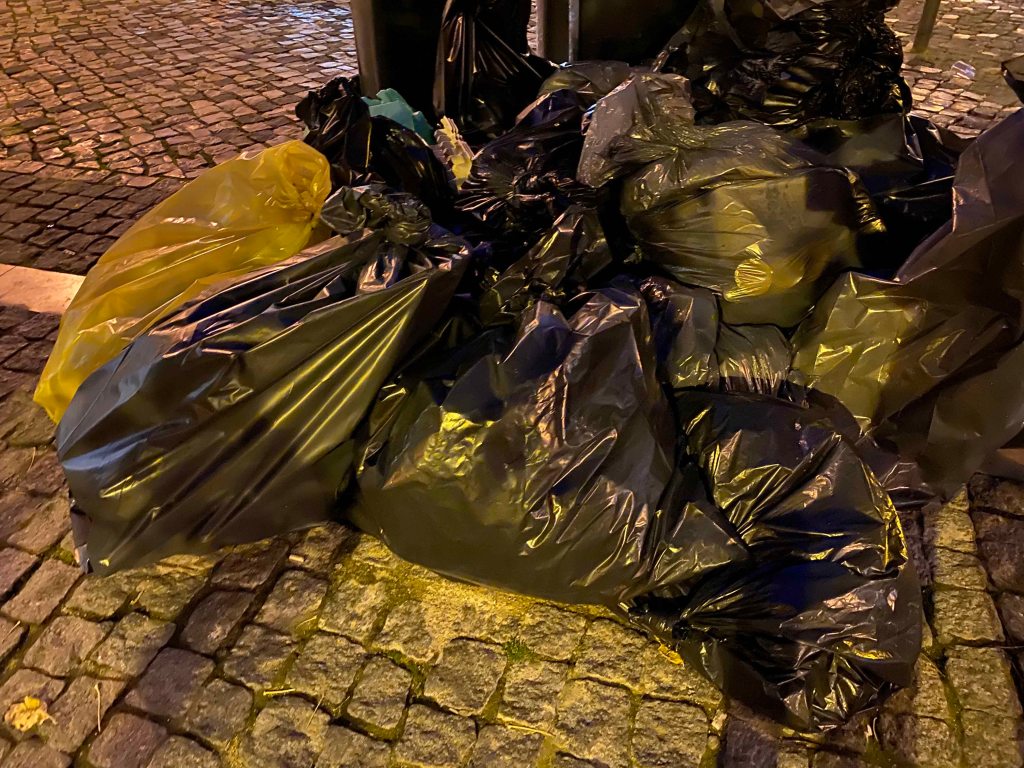
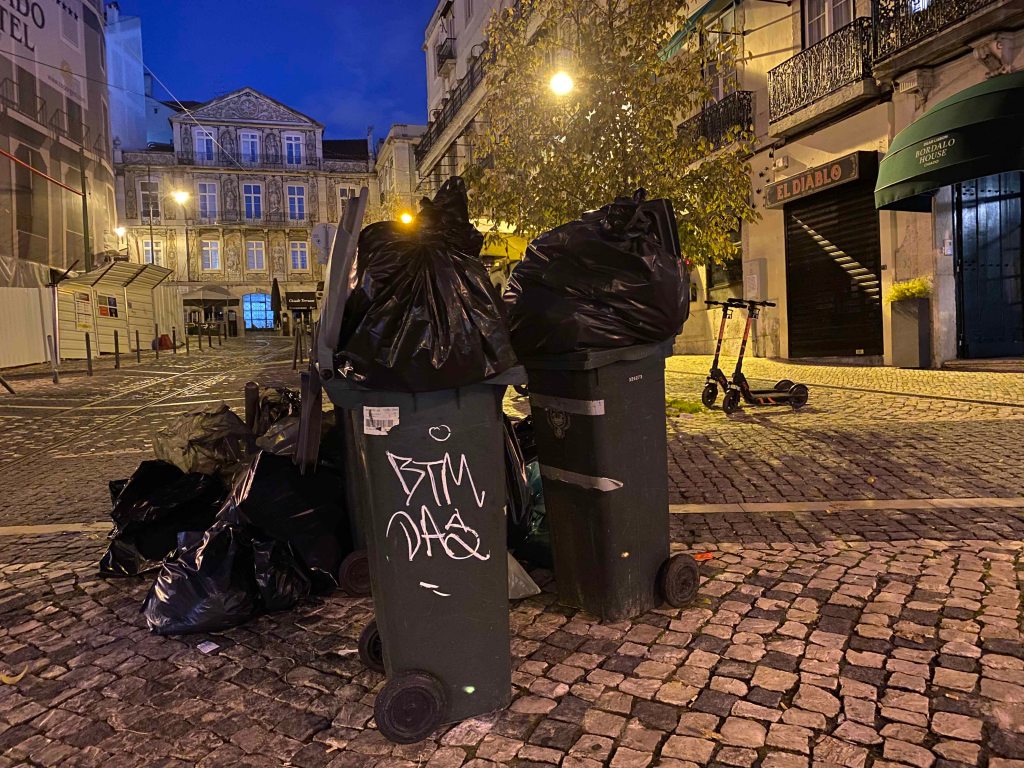
I am a very early riser, and usually see the streets before the garbage van passed by- which is often a desolate sight. The problem of the amount of trash we produce is also one that I can burn for and am excited to look at through this exercise. I have lived years in Asia where the amount of trash, and especially plastic, become very painfully obvious, as the collection system is often lacking, so the issue is not swept away from sight.
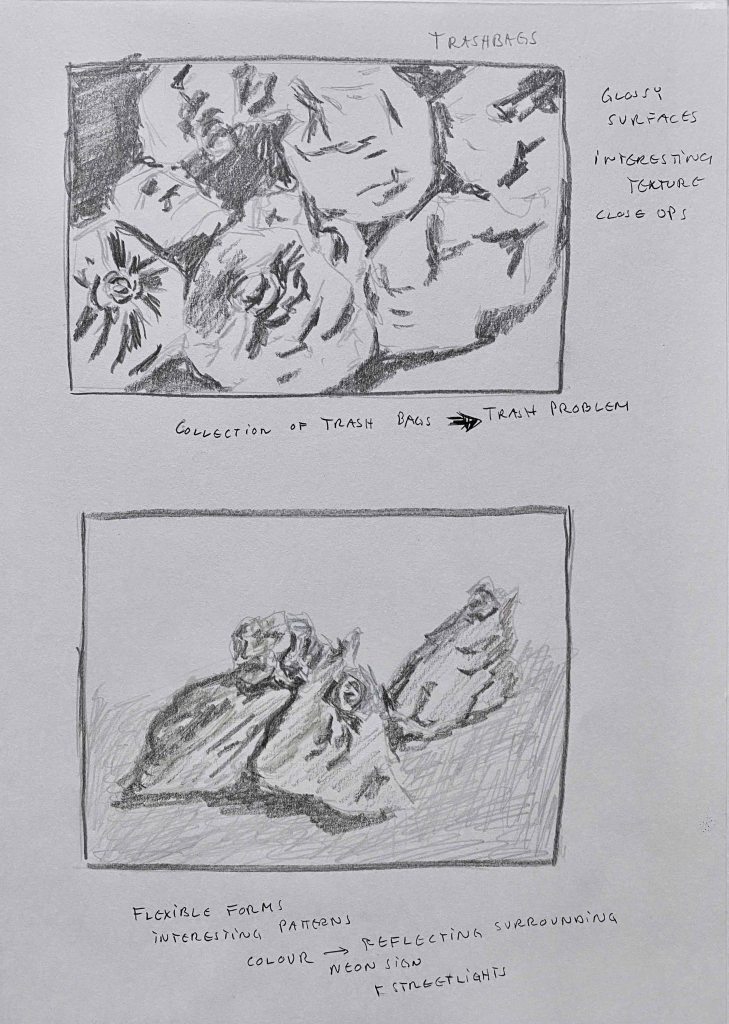
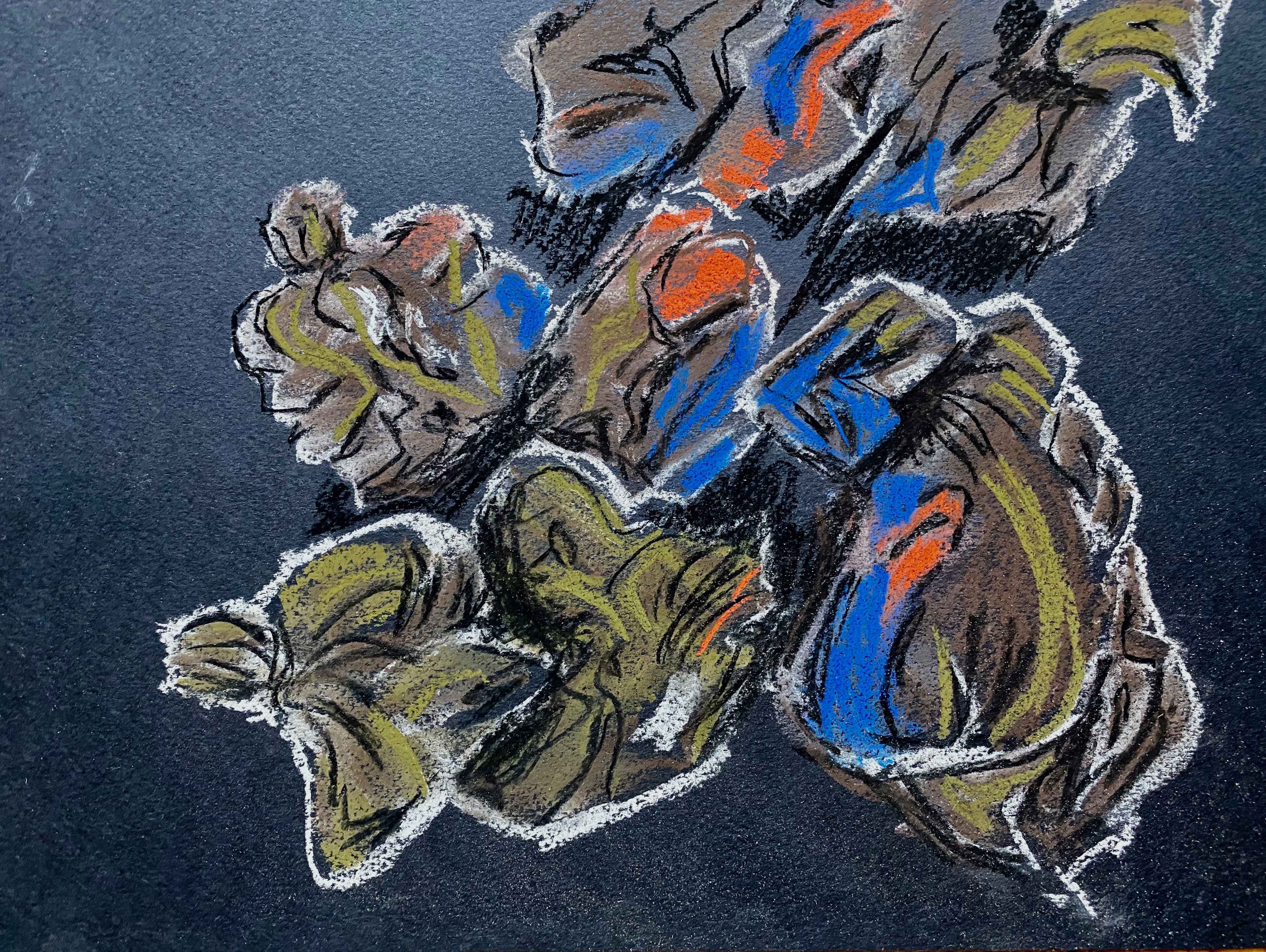
From a visual point of view, I am interested in the glossy surface of the plastic bags and the interesting textures created in the creases. Before the daylight, the plastic reflects the colours of surrounding streetlamps and neon signs.
I start with some pencil sketches in my A4 sketchbook:
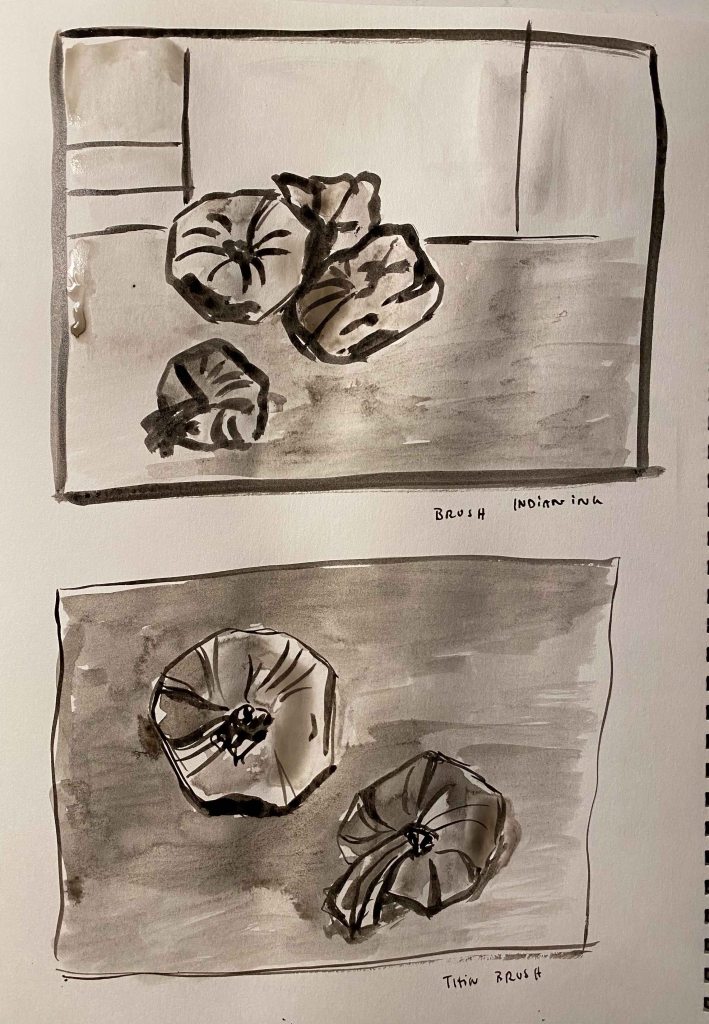
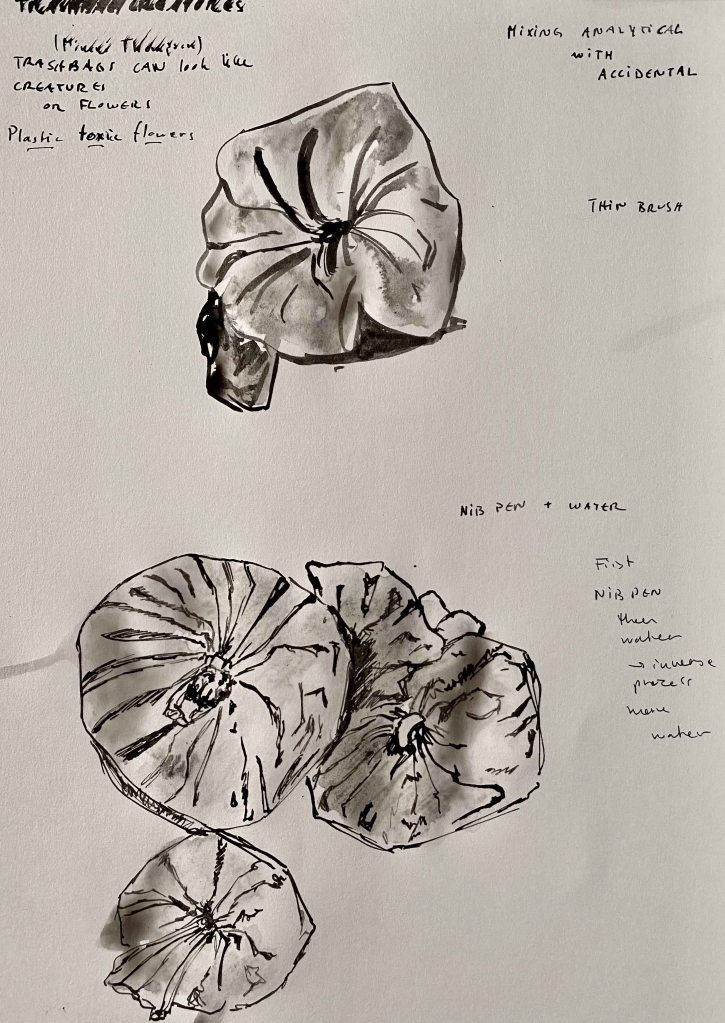
I continue looking for interesting lines with Indian ink. Here I am mixing very “analytical” marks drawn with a nib pen, and more accidental marks when dripping ink on wet places (A4 sketchbook).
Indian ink on grey paper starting with “accidental” blobs:
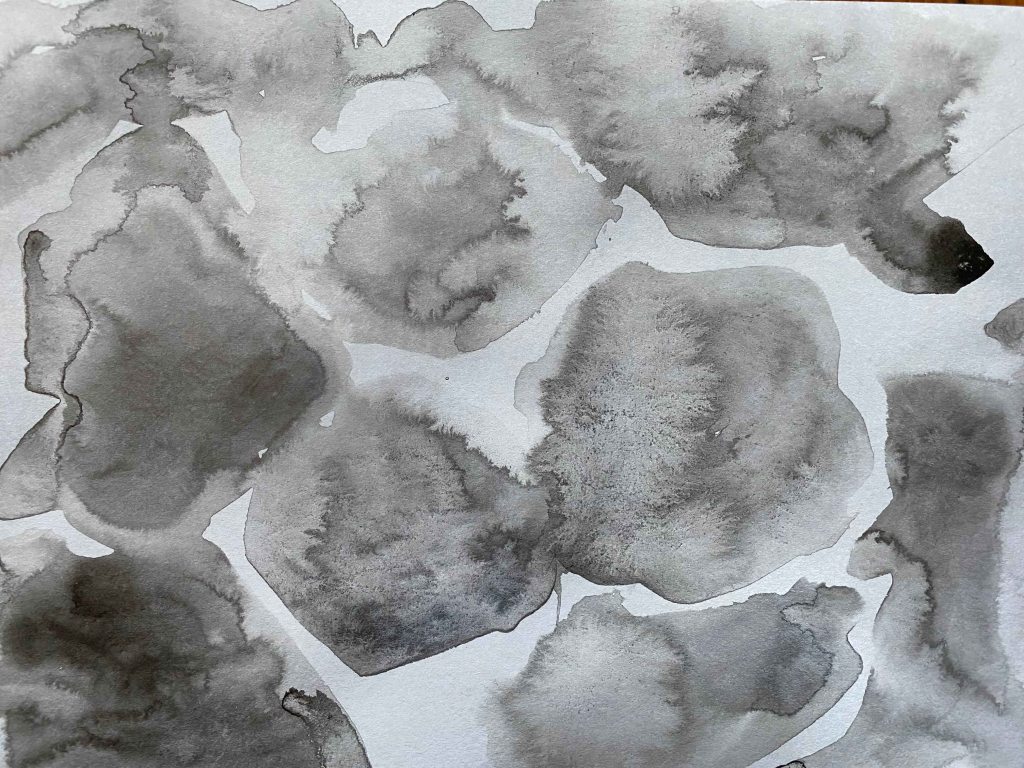
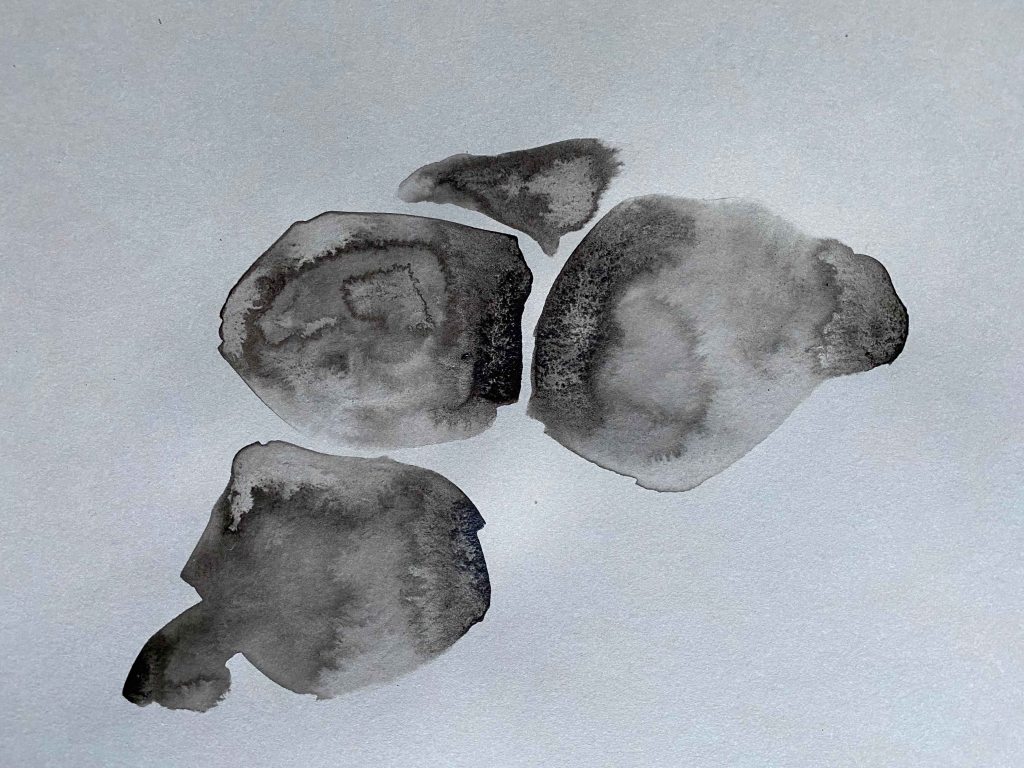
Then nib pen and brush:
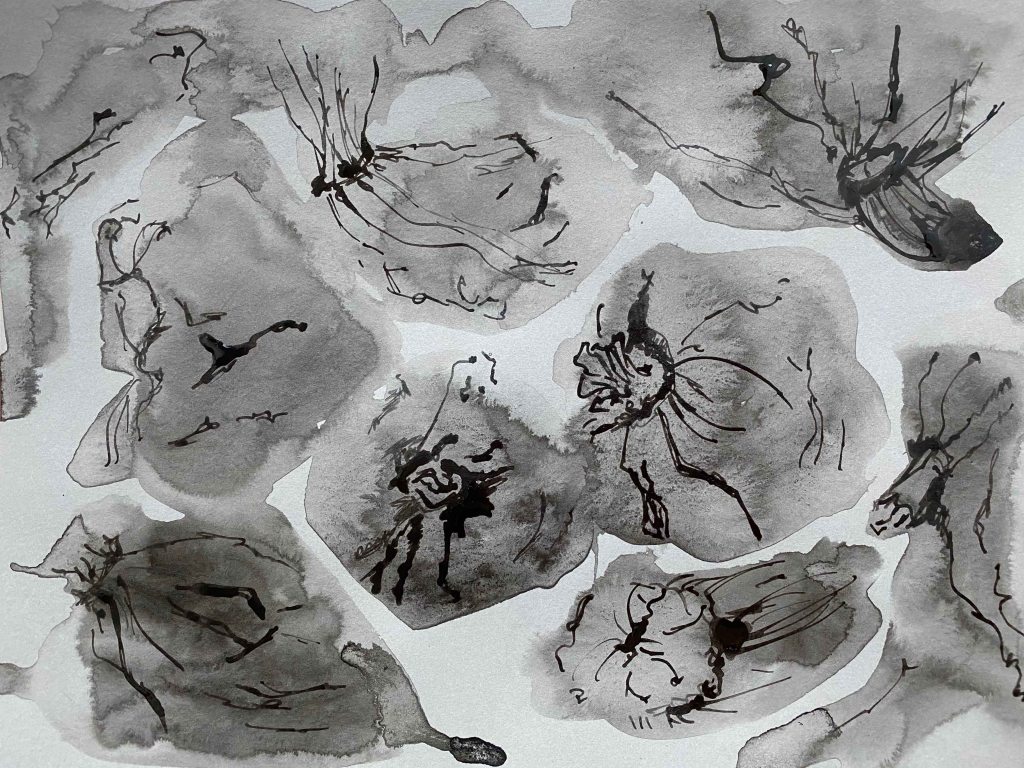
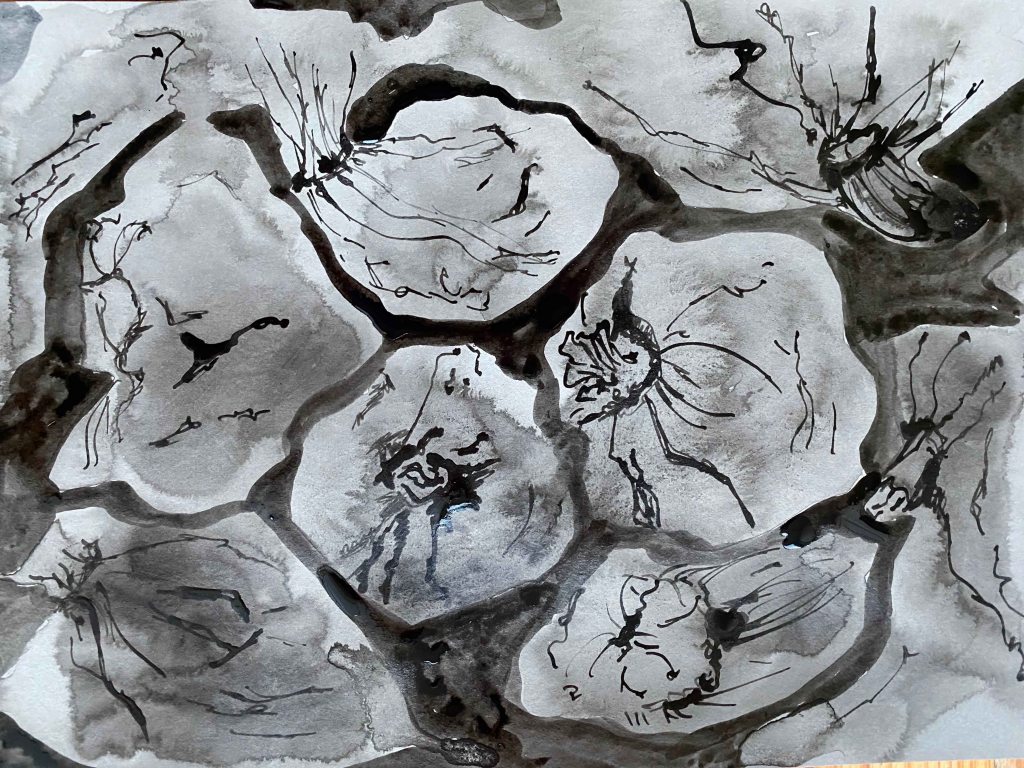
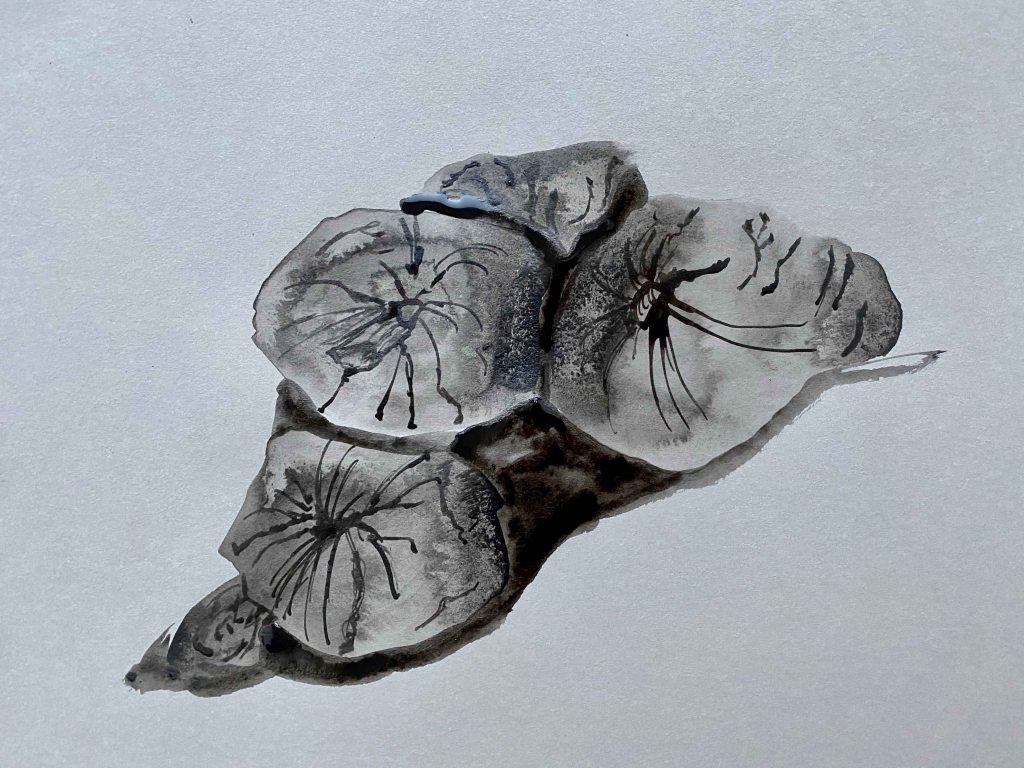
I also do a quick sketch using oil paint on paper, in Payne’s grey and black, to get a feeling for a more painterly approach.
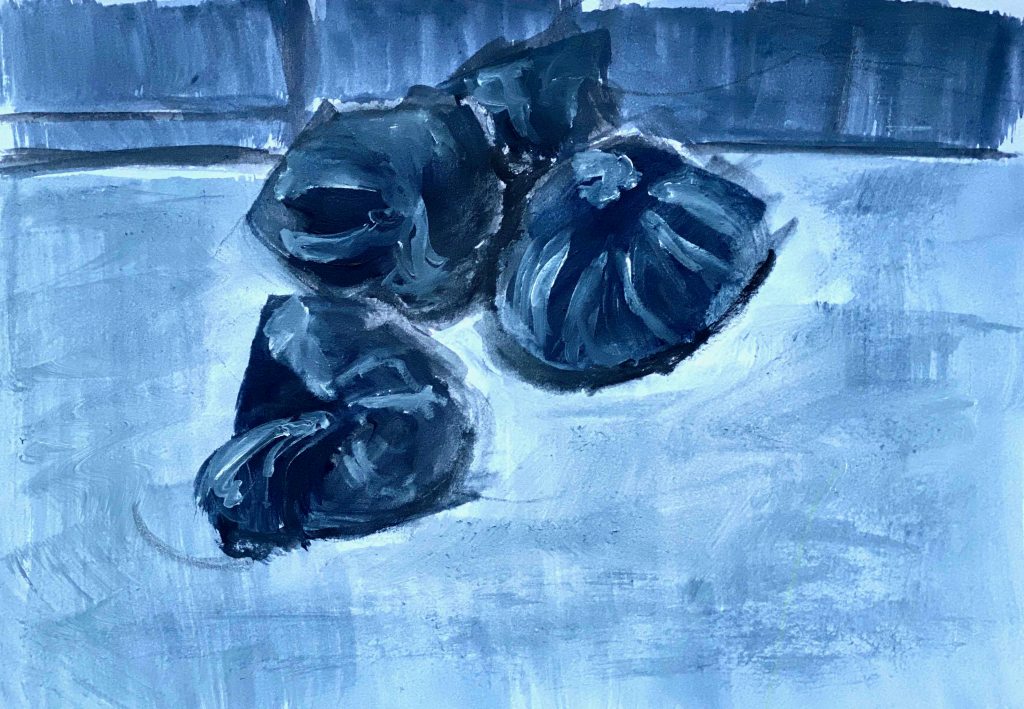
I photocopy the above sketches, as recommended in the course manual, and play around with different combinations and details and patterns.
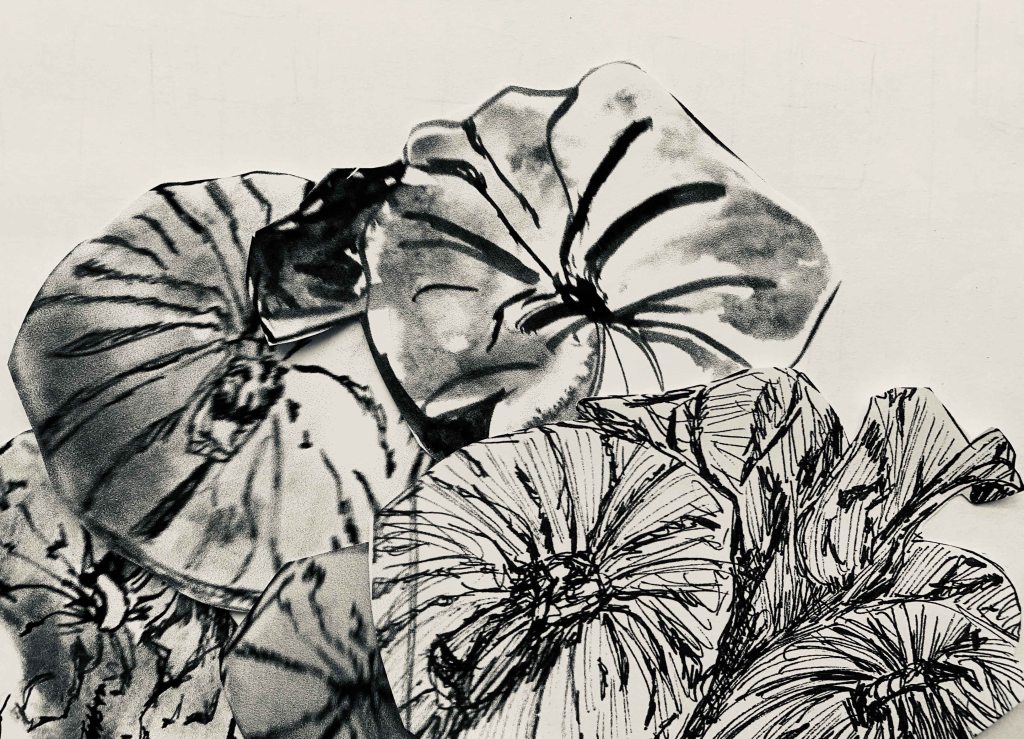
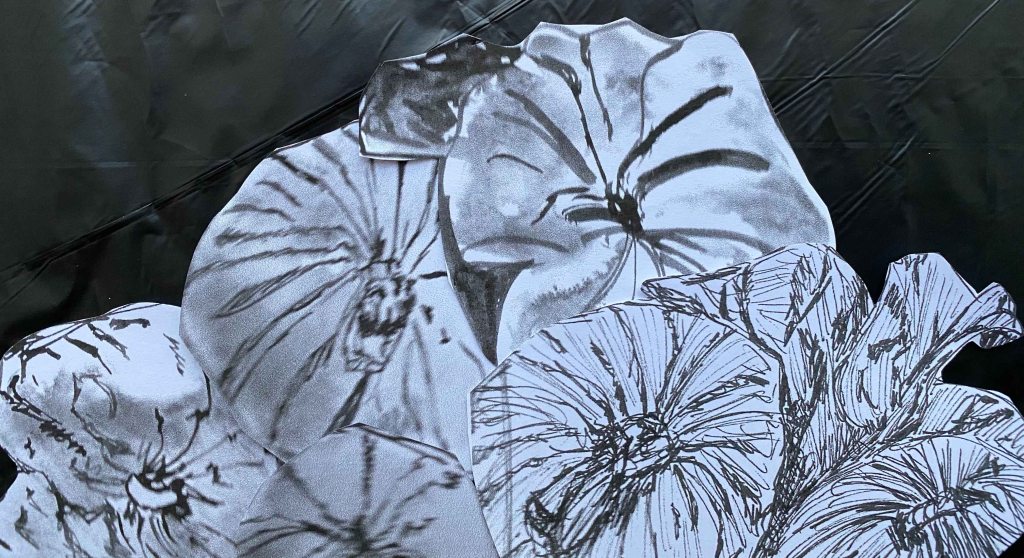
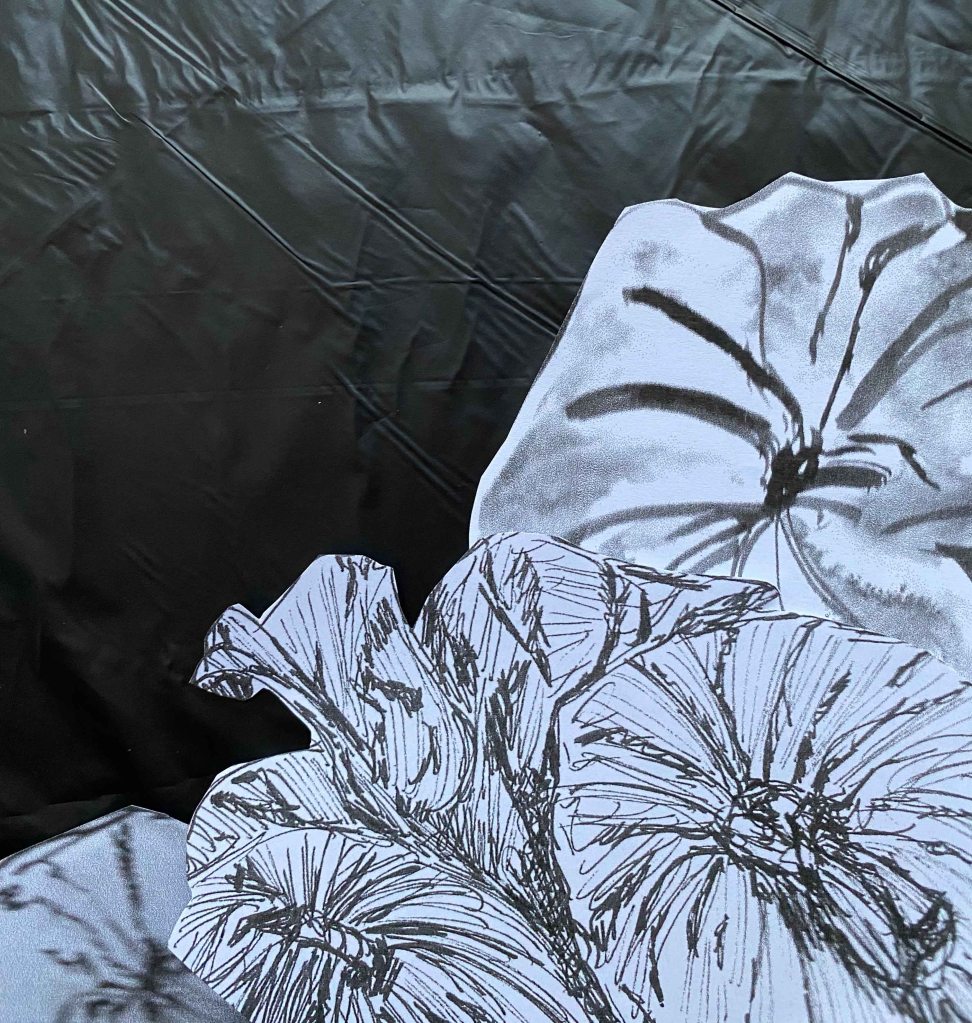
This is my chosen composition:
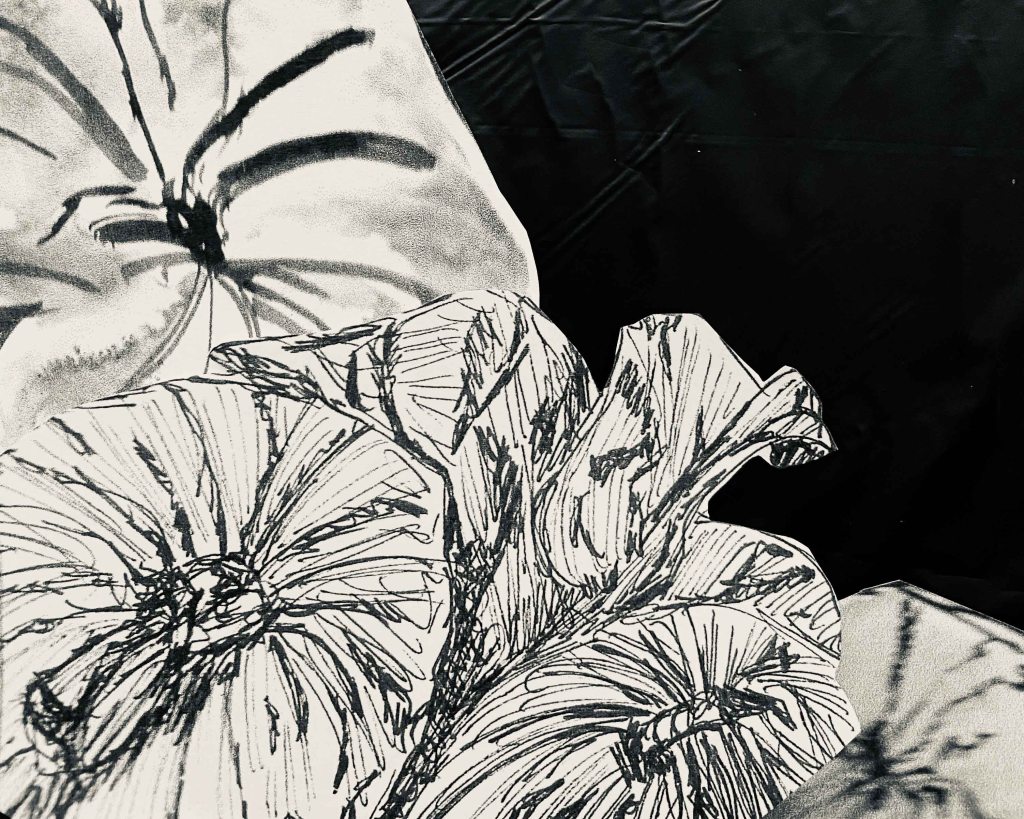
The bin bags look like flowers and I start calling this drawing “toxic flowers”.
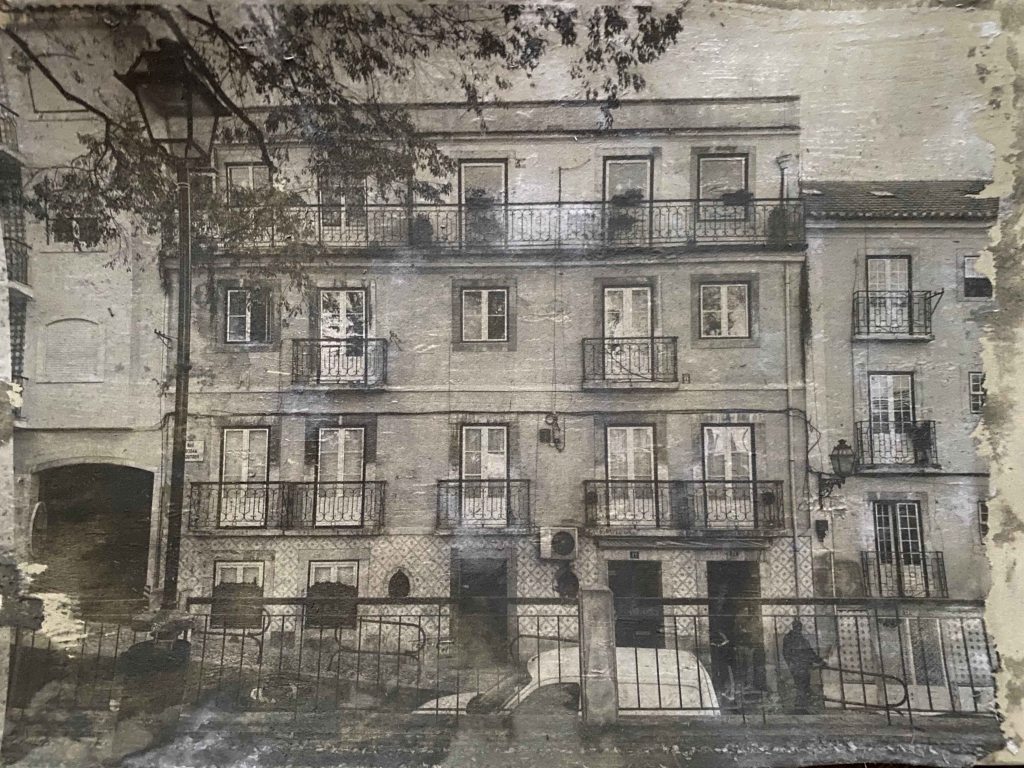
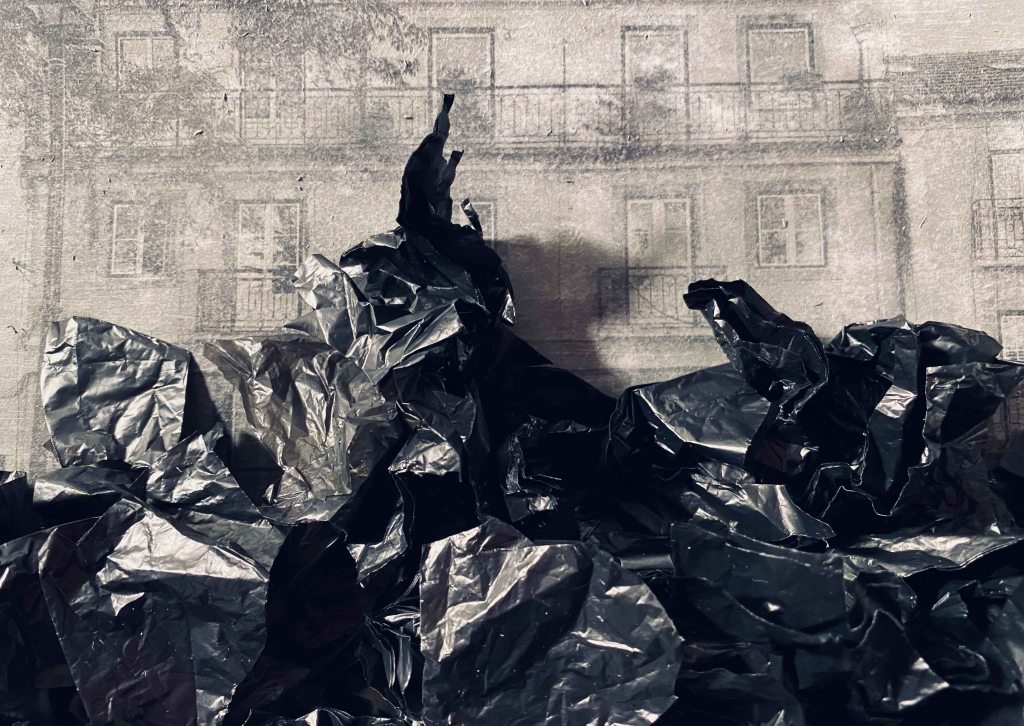
As I started with the bags found outside my own front door, I decide to try out combining a photo of my house and these toxic flowers. Using my own house as a background brings back the question of MY own responsibility in the mountain of trashbags brought out here. This is not a distant problem- how many bags have I brought out myself and how much of that could I have avoided?
A quick test drawing with the photocopied “toxic flowers”:
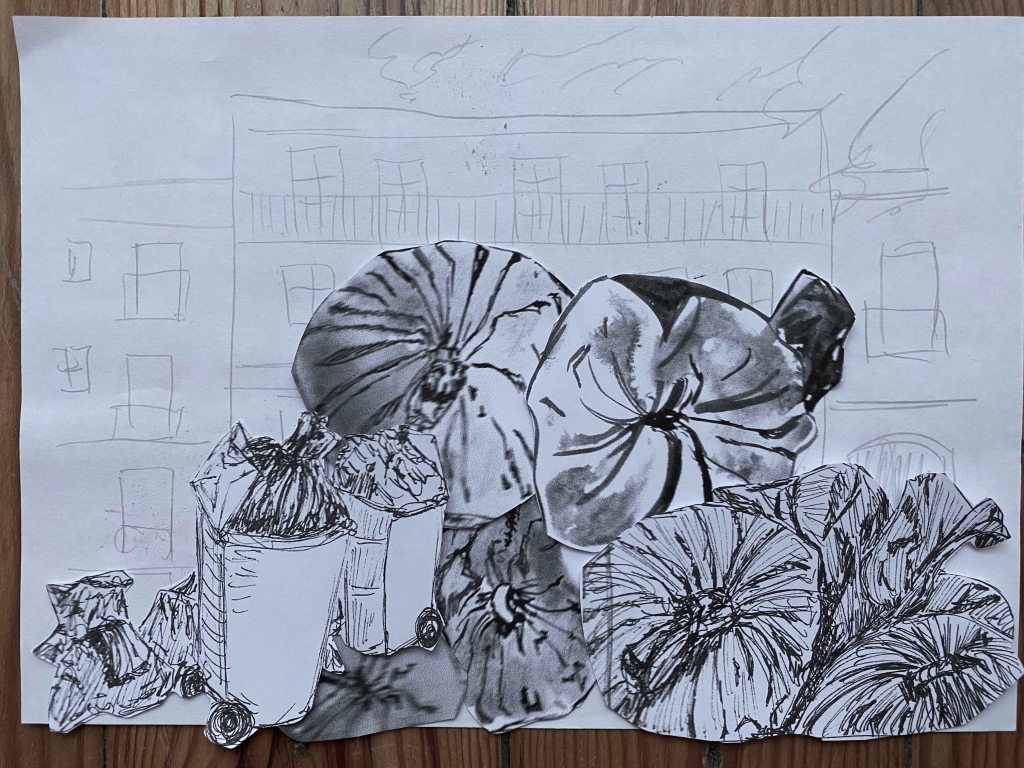
I like the contrast between the image in the background and the sketched details. I decide to take a photo and make a phototransfer of the front of my building, keeping the image black and white, or rather grey and grey.
With the difference in scale, I let the trash bags pile up to almost cover the house:
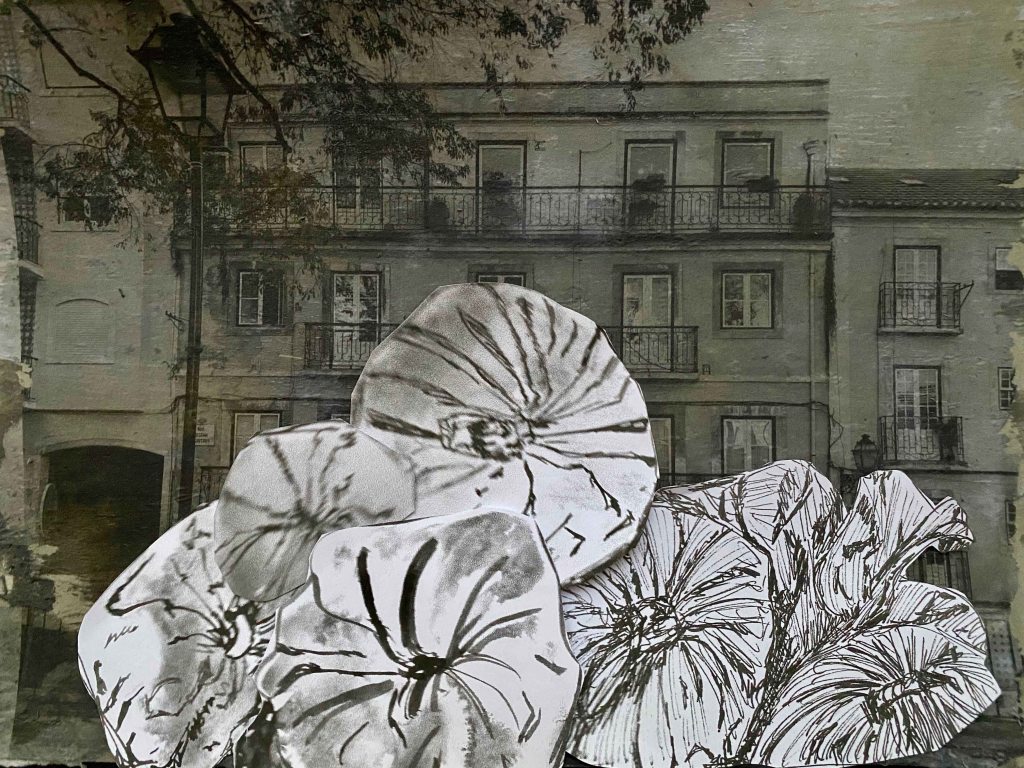
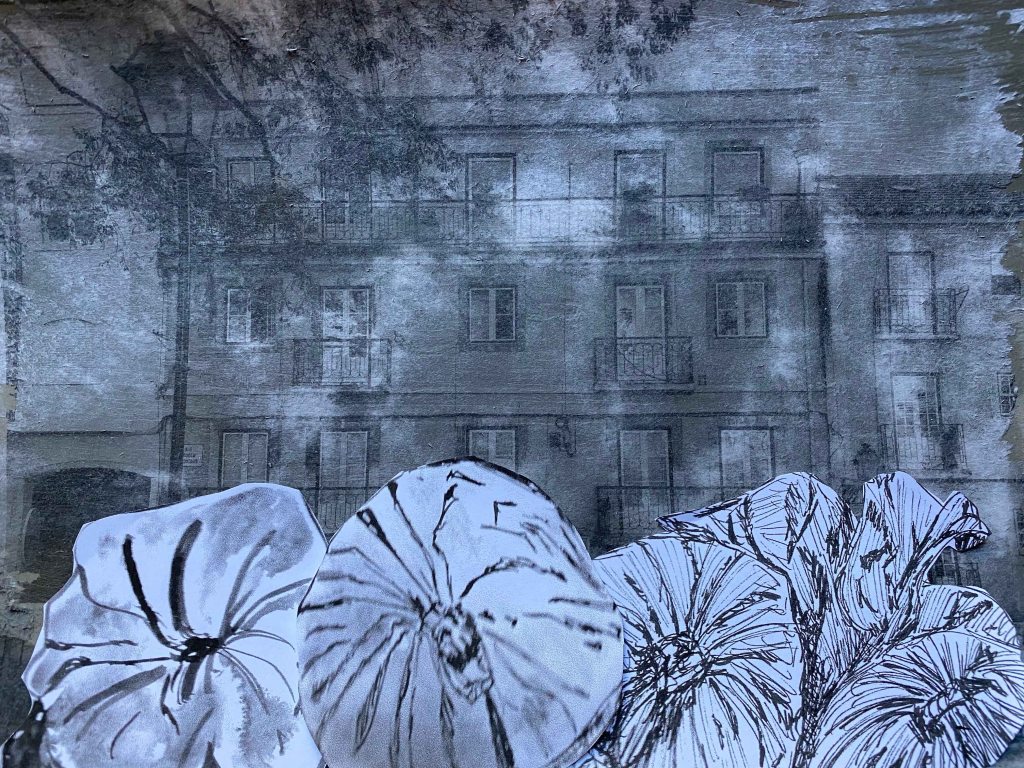
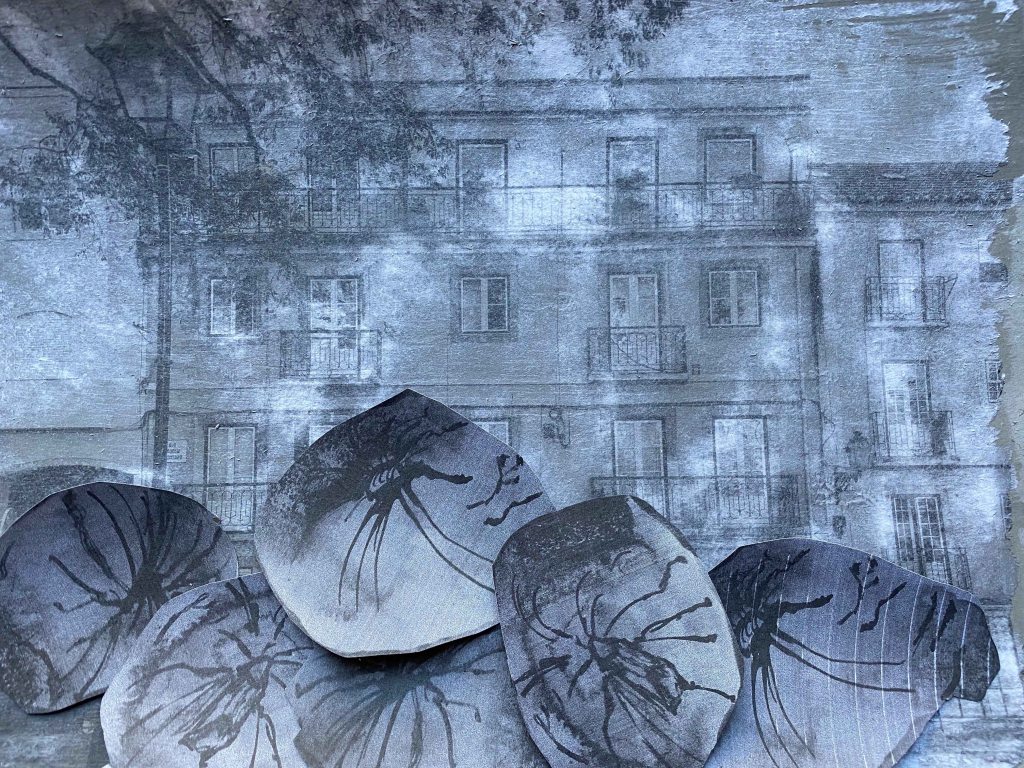
I like the absurdity of these images. I also create small trash bags that are more in scale with the house:
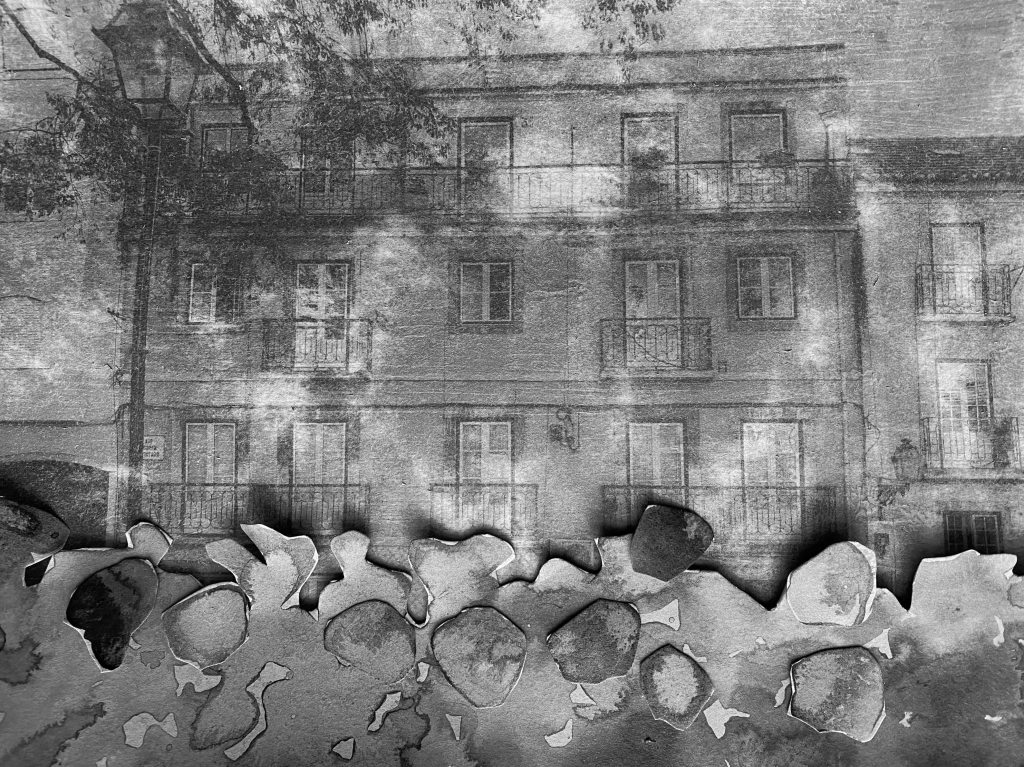

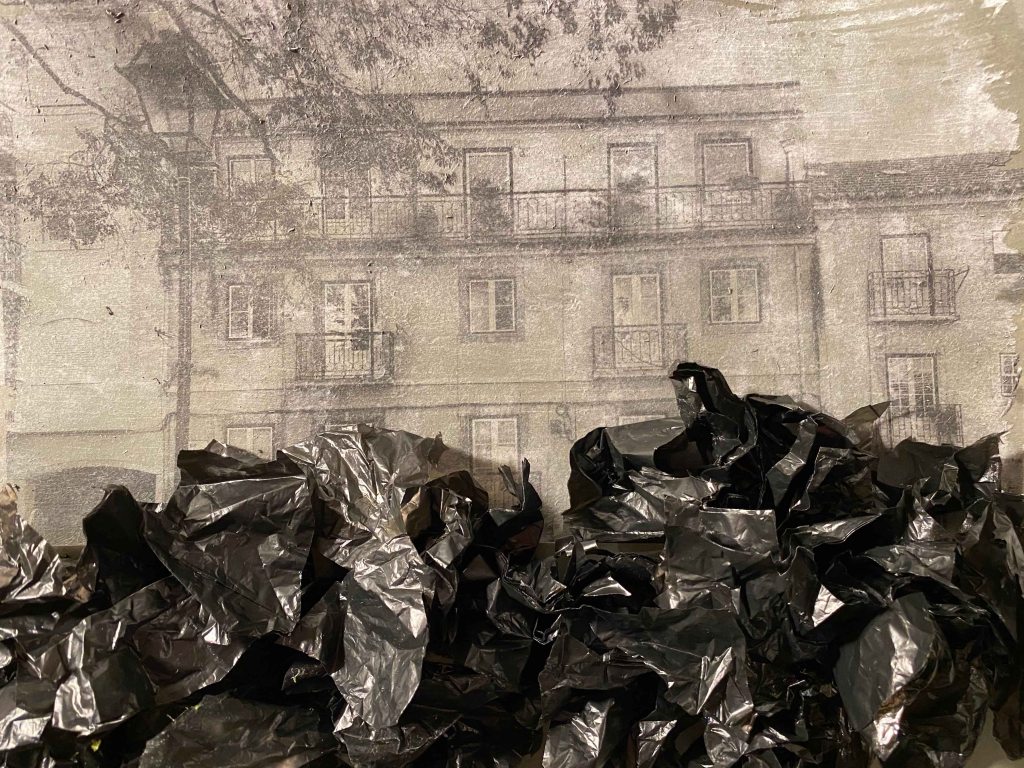
I also try to substitute the drawn bags with some I roll from a trashbag in plastic. In the second one, I allow the plastic to tower up to almost cover the house- really indicating the problem here, with a feeling of drowning in the quantity of trashbags.
Finally, I come back to the photocopied ink drawings with this more “romantical” composition, where the trash become decorative plants.
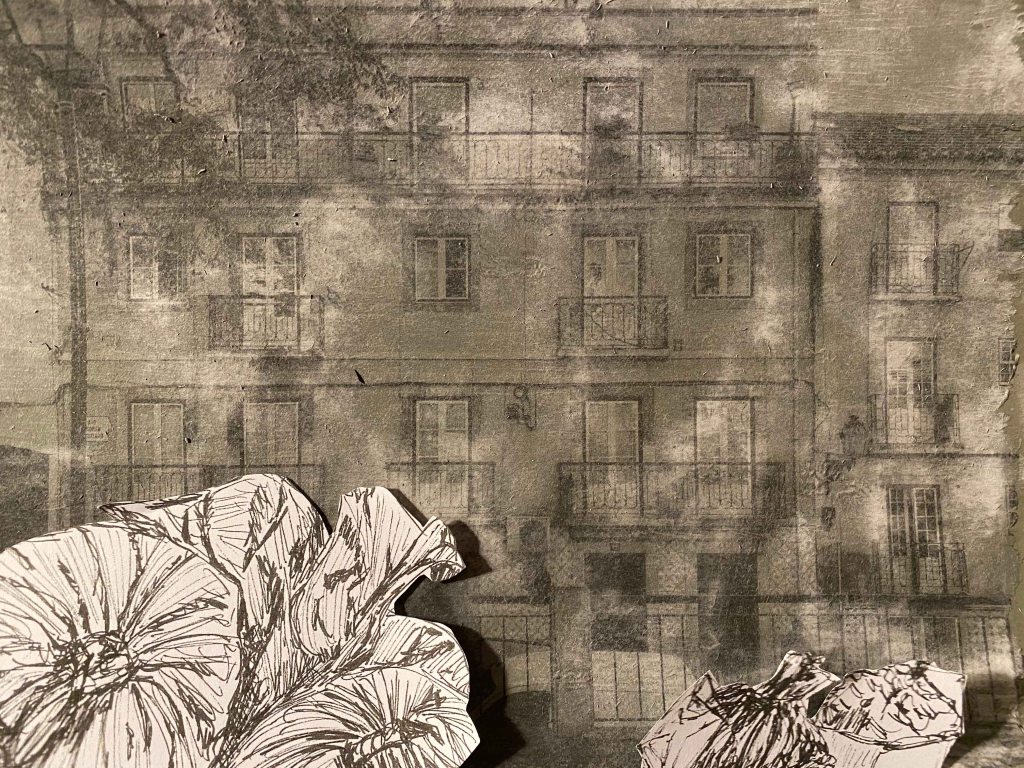
I like the aesthetic quality of the images above, and also the critical message they convey, but my images are becoming too illustrative, and I have lost track of the aim of the exercise- to work closely on the composition.
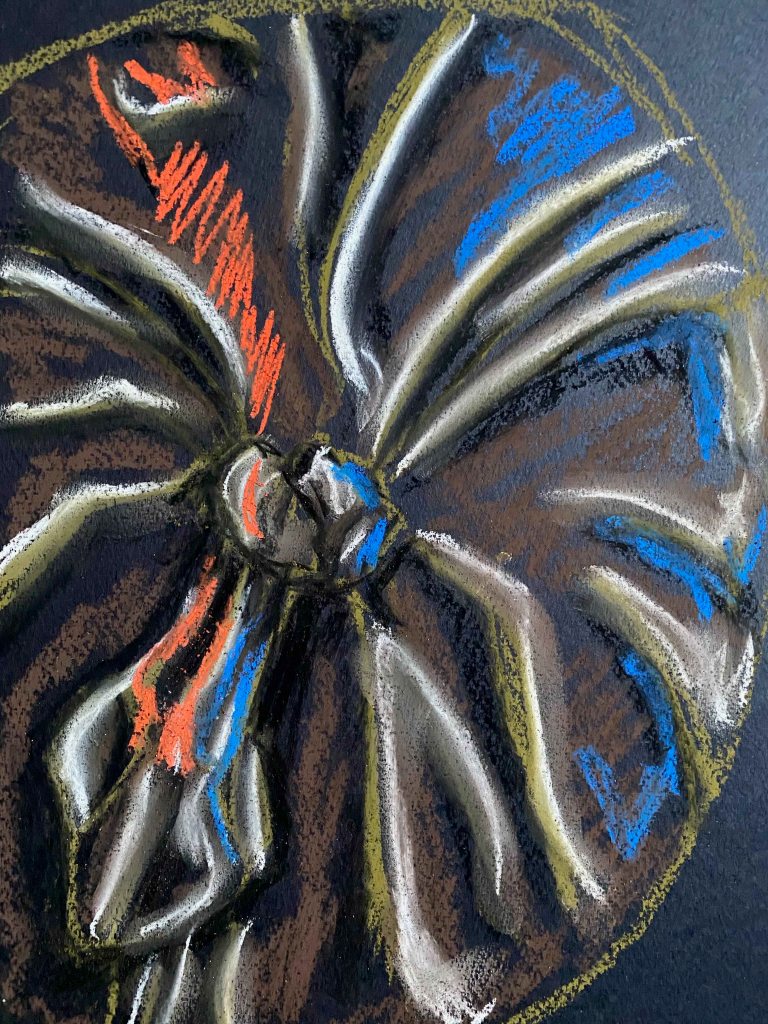
I come back to focusing on shapes and patterns with dry pastels on black paper. Here I am also introducing the colours of reflecting streetlights:
The idea of the plastic bags looking like flowers brings my thoughts to Georgia O Keeffe’s paintings of flowers in close up.
I explore various compositions of close ups of the trash bags, with the idea of a “toxic flower” in mind.
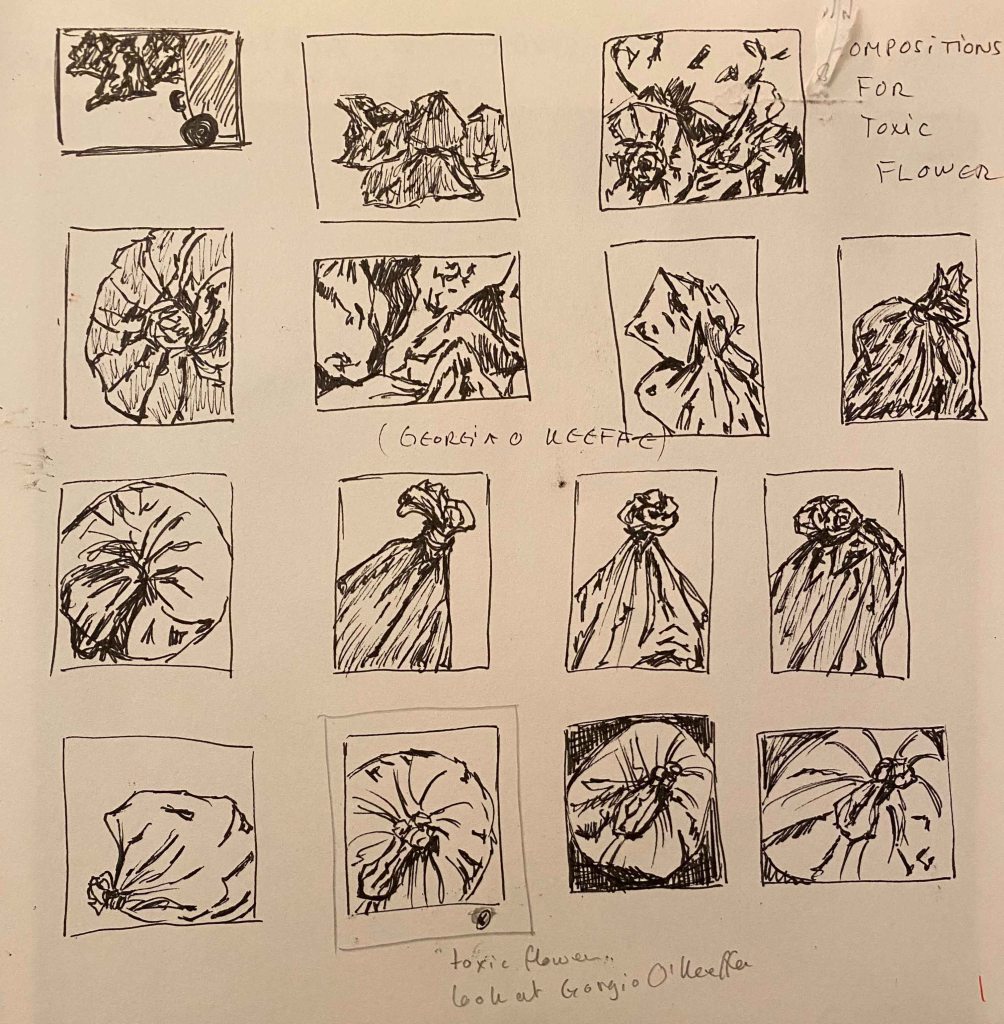
I chose the close up like the second in the bottom row and try it out with dry pastels on grey and black paper as well as ink nib pen.
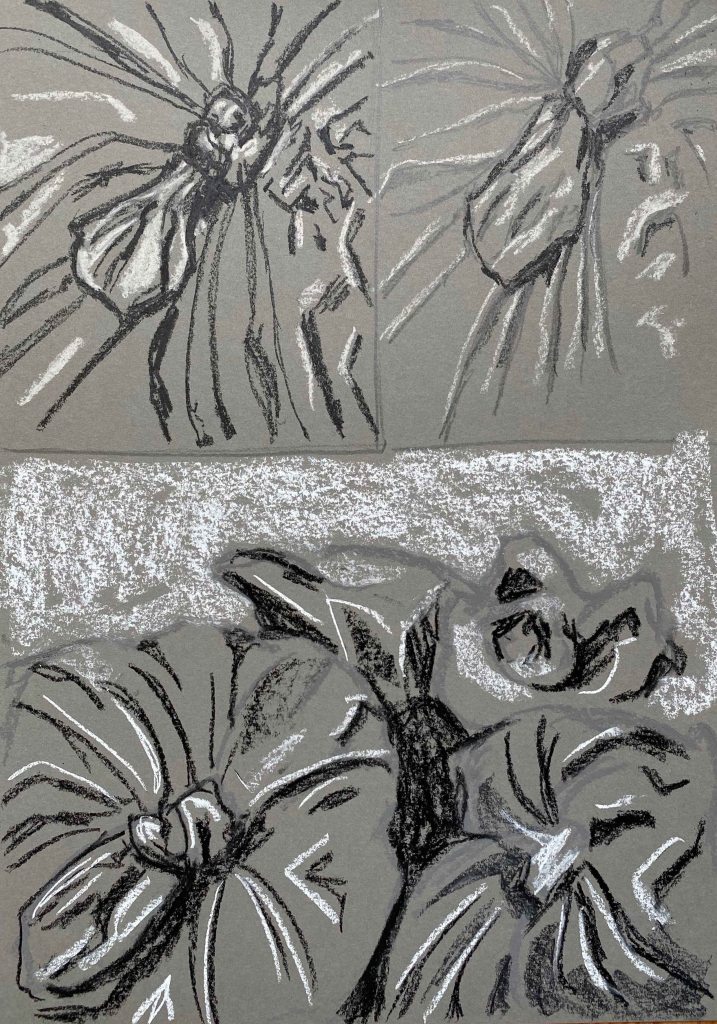
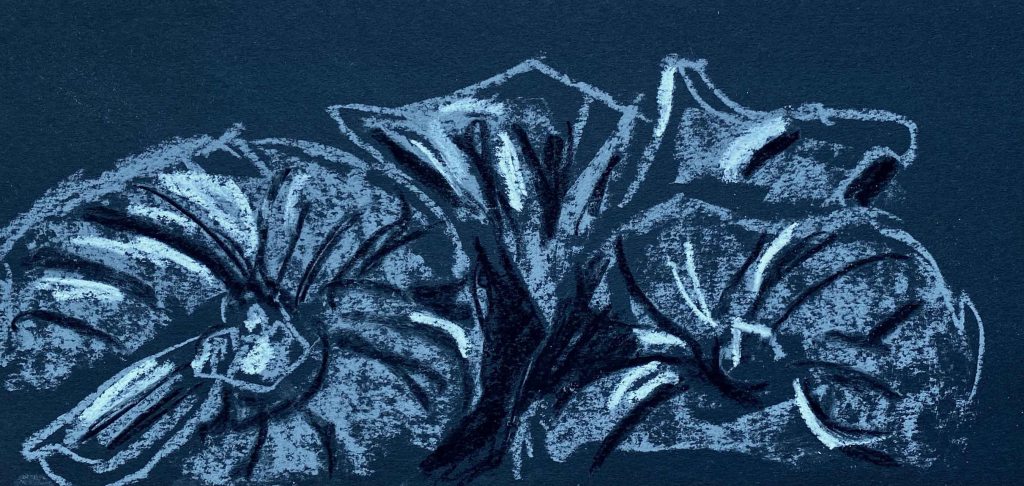
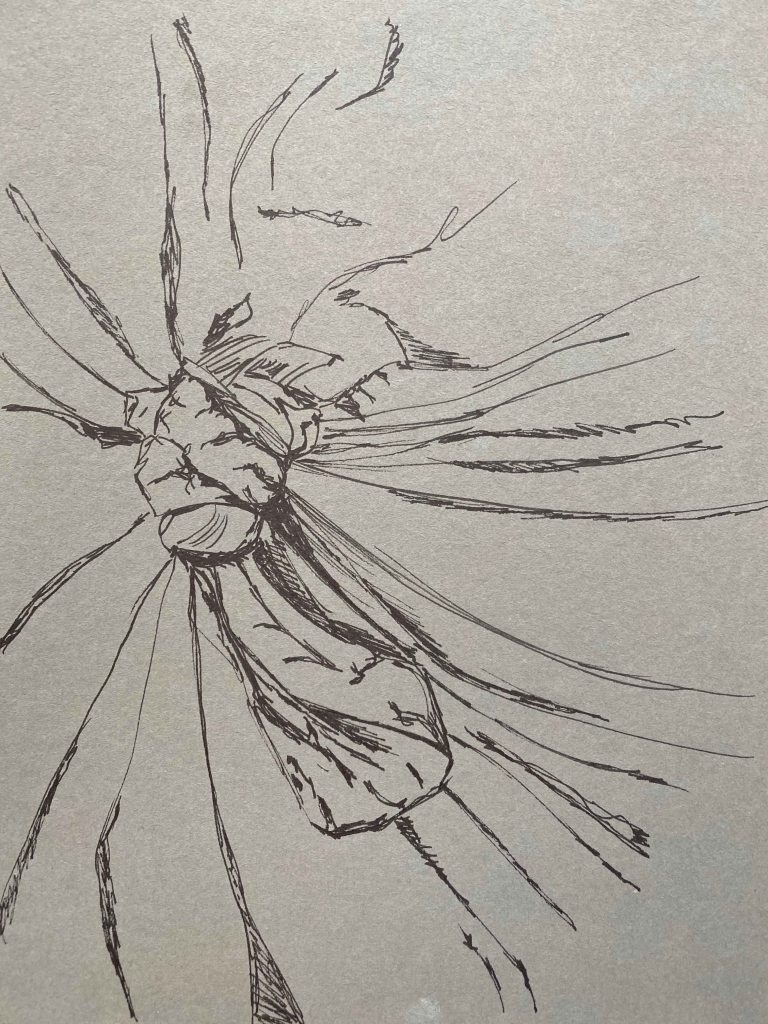
There is a phallic element with the tied part of plastic, another parallell to Georgia O Keeffee’s orchid close ups.
As I liked my first experiments with inks above, I decide to draw this final composition detailed in ink with a nib pen , and then wet the drawing once the ink is dry, and apply random spots of ink around the detailed drawing.
This is the final result- Indian ink on grey paper (21x23cm):
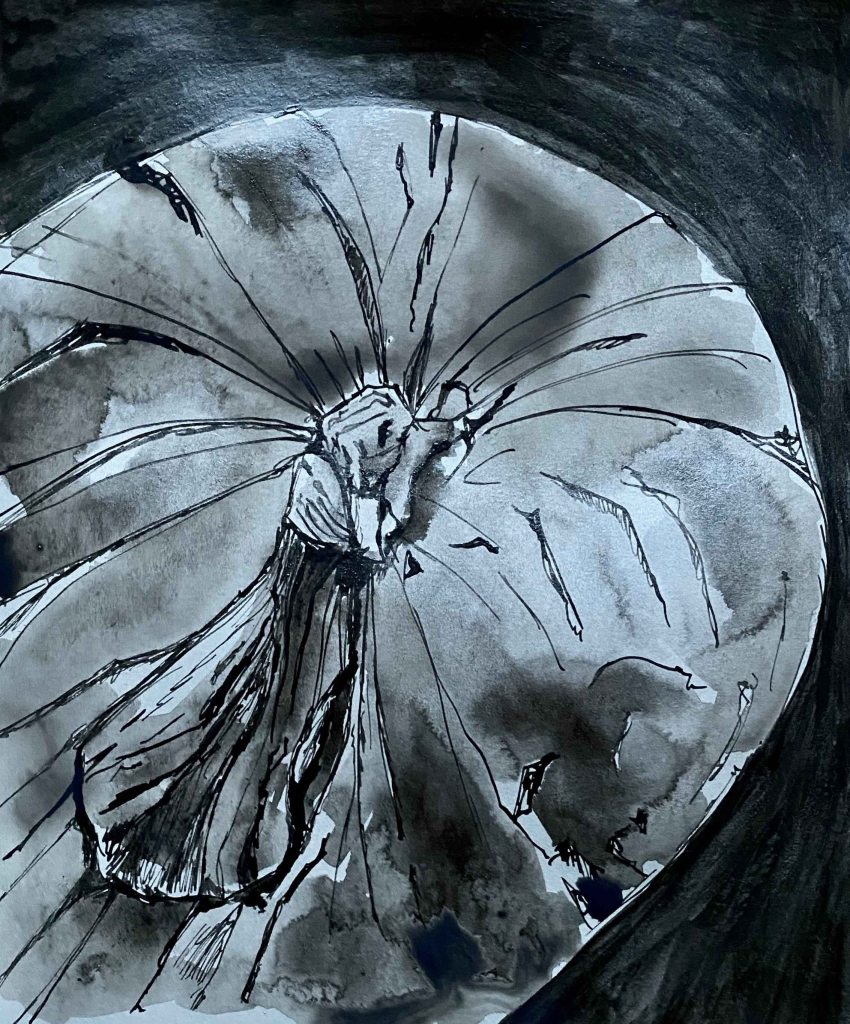
I like the difference between shiny parts where the ink has dried thicker, and matte parts where the ink is thin.
I also want to try and draw this “toxic flower” directly on a dark grey trashbag, elevating the plastic bag to an object of beauty.
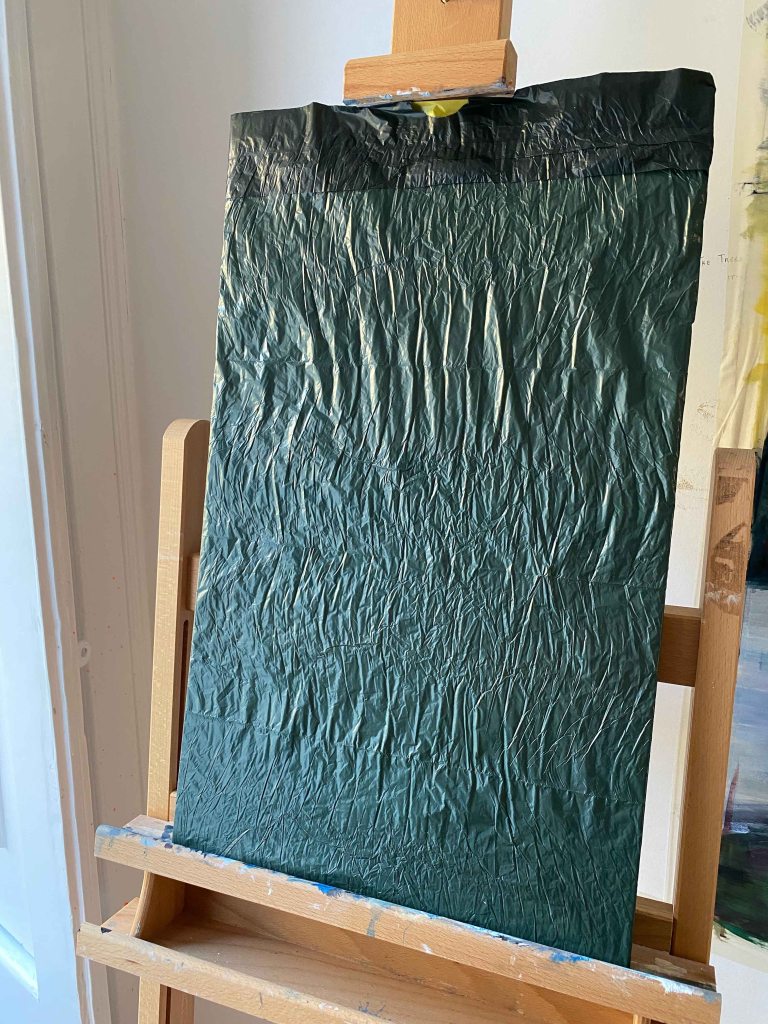
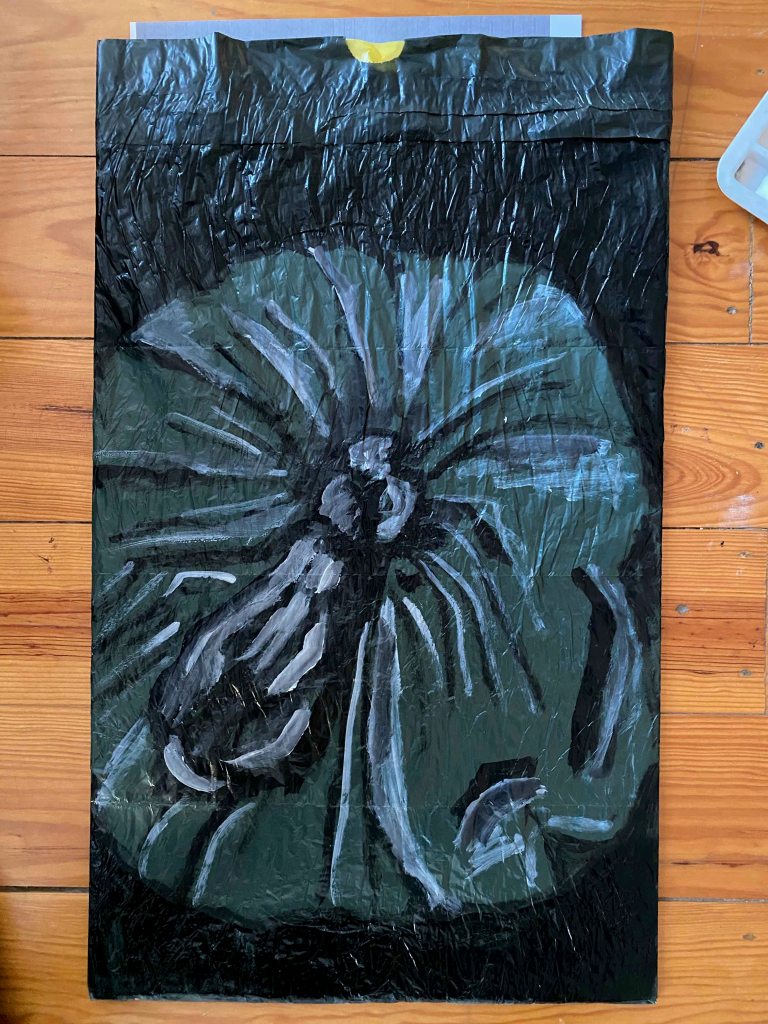
I do a quick drawing in pastels on black paper to try out the colours of reflecting neon signs for this composition.
This is the final drawing in colour on trash bag:

I overworked this drawing and it lost the spontaneity I was aiming for. I decide to give it another try and only add a slight touch of blue, instead of all the different reflected colours. This is the final drawing on a black trash bag:
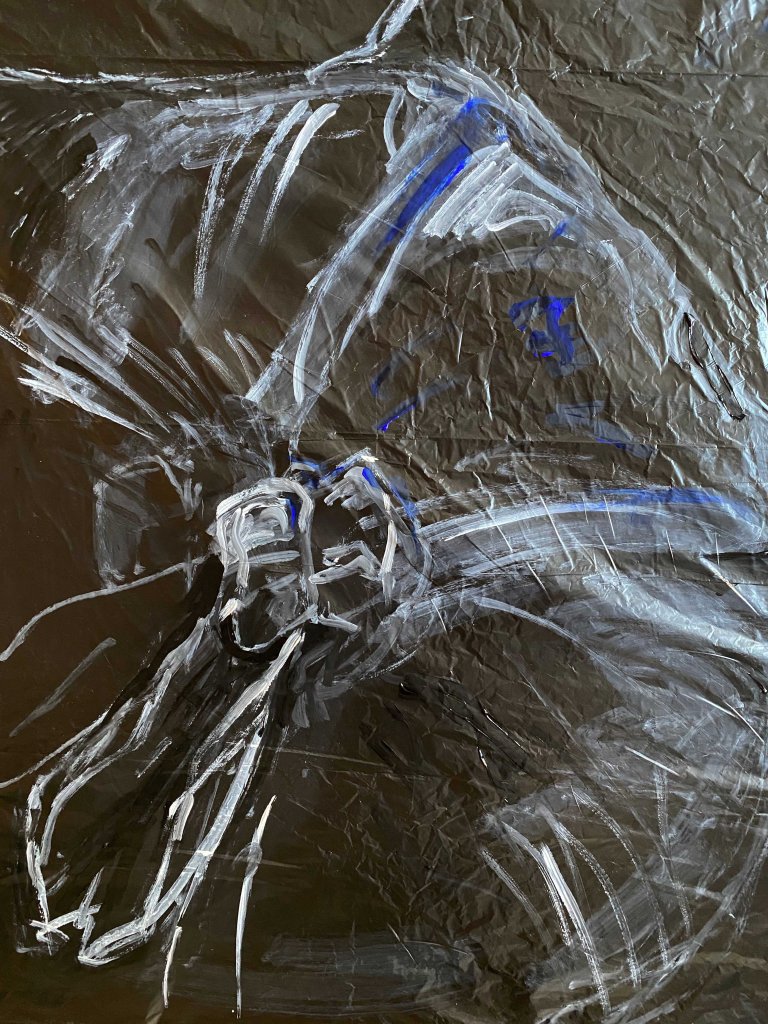
Reflection: I could just keep going experimenting with this subject, so I have definitely managed to turn an unpromising subject into one that I can become really curious about and continue working on. In the middle, I got sidetracked to looking at it more conceptually and lost the focus on the composition, while using the phototransfer of my house as a background. Finally focusing on detail allowed me to come back to the essence and drawing the trashbags as a toxic flower.
I tried using dry pastels and Indian ink with nib pen and brushes, phototransfer and collage and finally drawing in acrylics on plastic bags.
 Clara's Drawing 2