The drawings for Part 2 took me to quite personal and vulnerable places, so I was not quite sure what feedback to expect. I was delighted to receive a very encouraging and positive report from my tutor Emma Drye.
She recognized that I am exploring new ground and saw potential to develop new tools and find new ways forward with performance drawings and animations. Her advice: “Continue to let your conceptual content direct your process though.”, feels very important. So far I have chosen either a more conceptual approach or allowed for performance drawings, and it is an exciting meeting point to let these approaches come together.
I was experimenting with video for project 2.1 Space Depth and Volume, where I created a stop motion of a Wave crashing. This was a new approach that I will develop further.
Emma pointed out how in the portraits inspired by Auerbach for the same exercise- the Auerbach lines did not support the construction of the head- which was the missing link I needed to see.
My tutor formulated, how the large paintings with my body for Assignment 2, unlocked the way that my relationship with my body had been affected by my experiences and how important that was.
She recognized, that some of the paintings were too chaotic, and how the ones of a single moment that showed a clear iconographic image were easier to read for the viewer.
I guess, I was worried they were too empty or too simple , so it felt like a recognition that I can go on and explore single movement drawings. For sure, this opens up new possibilities and there are so many ways to continue this exploration!
For the final painting in red on linen, there is also a too hidden narrative. Emma writes “This is something that would need to be worked on and developed to find its own place as a figurative painting.”
For Project 3 Narrative, where I produced a series I called “Family picnic” where I portrayed my family with a COVID mask, I agree with my tutor, that the drawings would have benefited from a different type of line. She suggested that a slightly more faltering , slightly more vulnerable and variable line would have given more information and would have conveyed something more about how the situation felt. I can absolutely see that now. I think at the time, I felt safer when choosing a rather boring way of drawing.
Similarly in the series of paintings for the same narrative, Emma really liked the surface that I have laid down, but was not convinced by the way that I actually painted the masks. I absolutely agree with that, and am quite surprised myself in hindsight about the difference in painting techniques between the backgrounds and the masks. I can’t believe this was not obvious to me while painting. I was really so taken myself by the conceptual idea, the narrative, that I navigated towards some calm safety in the techniques without meaning to.
By painting the COVID masks onto objects in a humorous way, my tutor recognized how I was working through the feelings that came up with this difficult subject and seeing the power of art that way. I found it really helpful to get this reflected back at me, as it was a spontaneous decision at the time.
Another helpful reminder was to not overwork the pieces- something I definitely have a tendency to do! There is the value of space!
I have a long list of artists to research, which I am really excited to start with:
Louise Bourgeois, Ana Mendieta, Yoko Ono, Marina Abramovic, Ulay, Carolee Schneeman, Rose Finn-Kelcey, Helen Chadwick, Cathy de Monchaux
Course manual: Make a drawing of a subject of your choice using the subject itself, or tools constructed from the subject, dipped in ink or paint.
THE BEACH
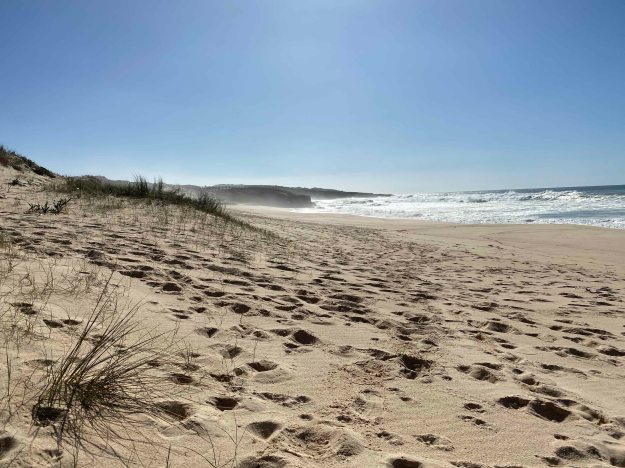
The directness of being outside in nature, at the beach, feeling, seeing and hearing the elements, and using only found materials to draw what is surrounding me, of course appealed to me. I prepared only a block of A4 watercolour paper, a pot of Indian ink and some white acrylic paints, and set off. This day, I did not yet know that a couple of days later it would become illegal to go to the beach, so this experience already carries a precious personal memory.
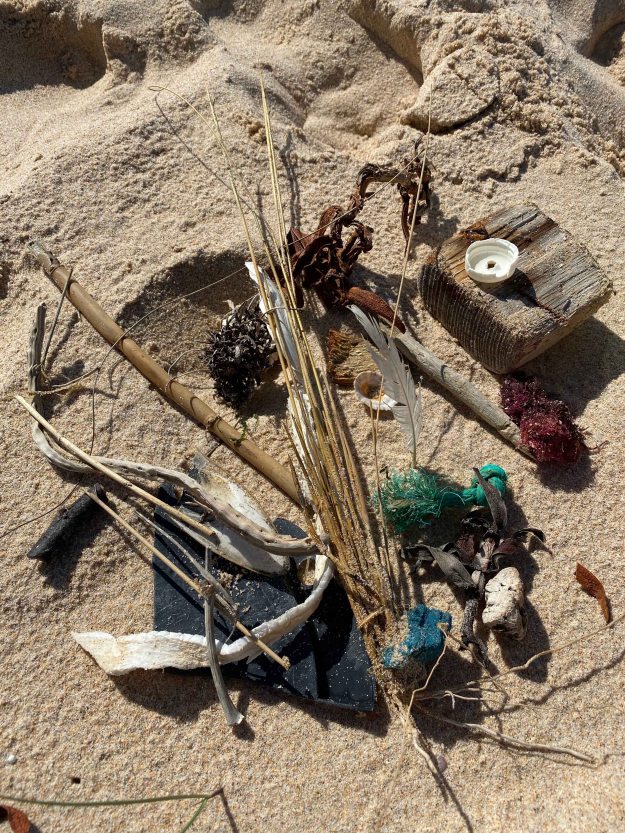
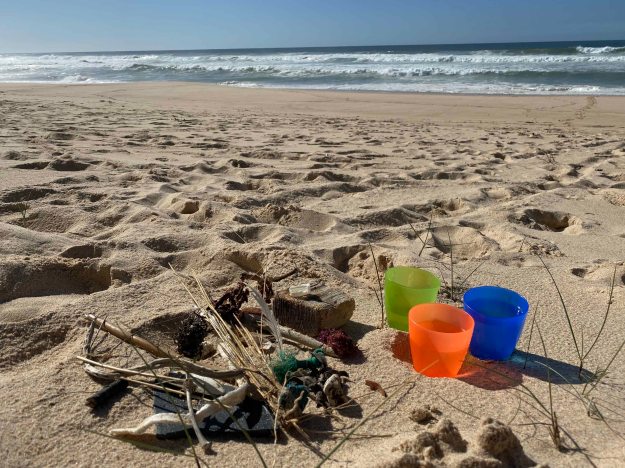
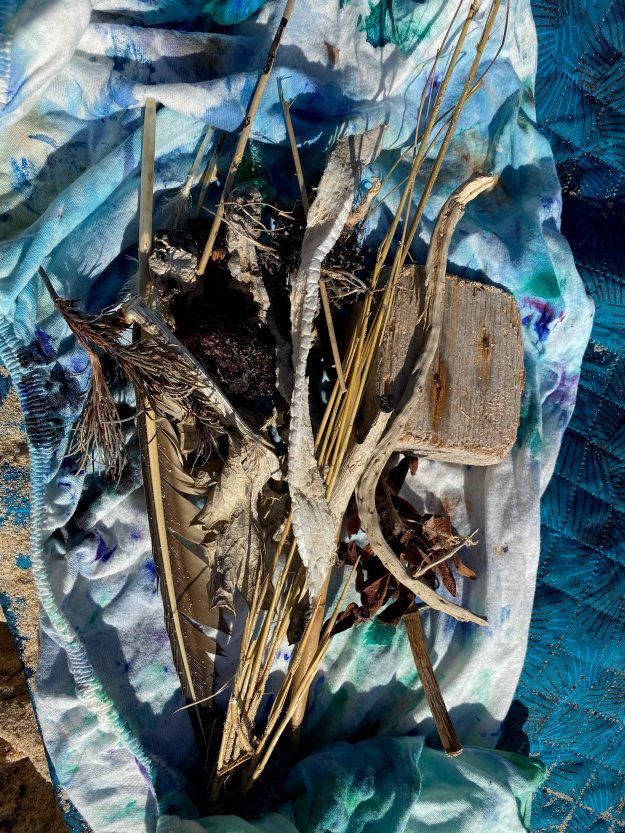
Within just a few minutes of walking in the sand, I had a whole collection of suitable painting materials- feathers, dry grasses, pieces of wood, trash, ropes and shells. And of course an unlimited supply of sand.
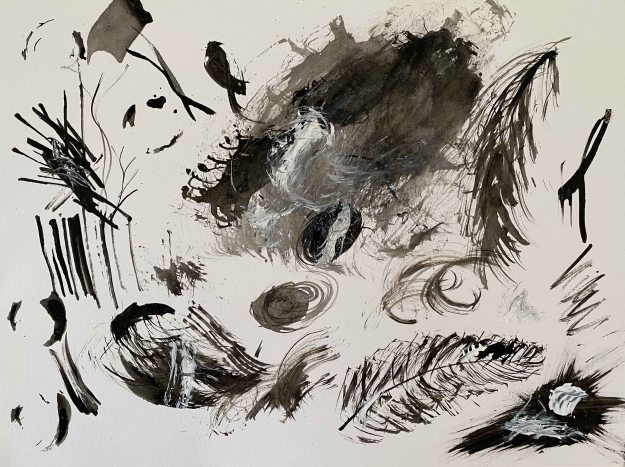
I started by trying out what marks my different tools can make with the ink.
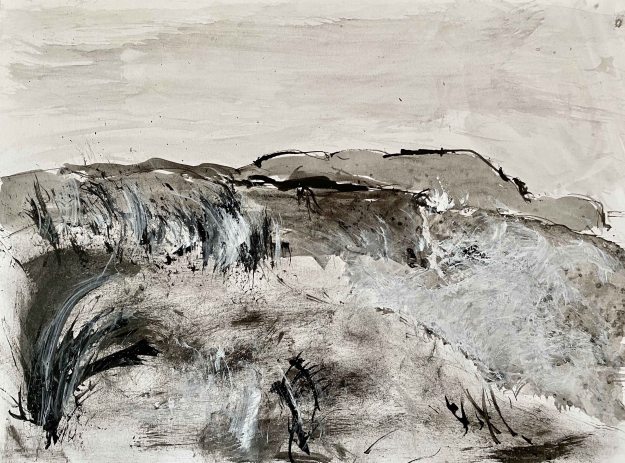
I continued with a rather quick A4 drawing of the landscape around me, using the different marks.
I try to associate the “tools” with the elements that I am drawing. So I am using a feather for the light marks of the sky, stones and woods for the rocks and an algae producing little bubbles for the water.
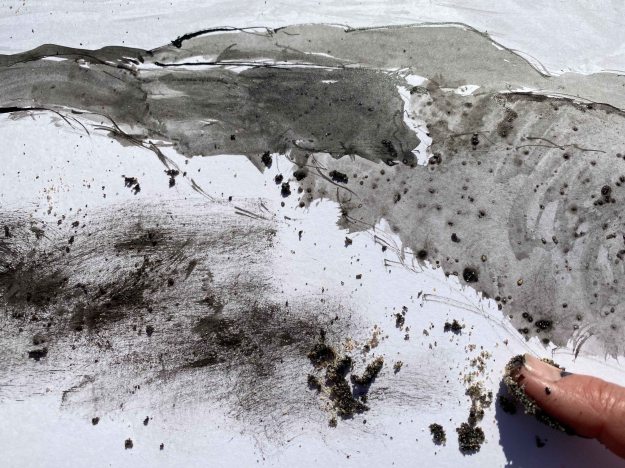
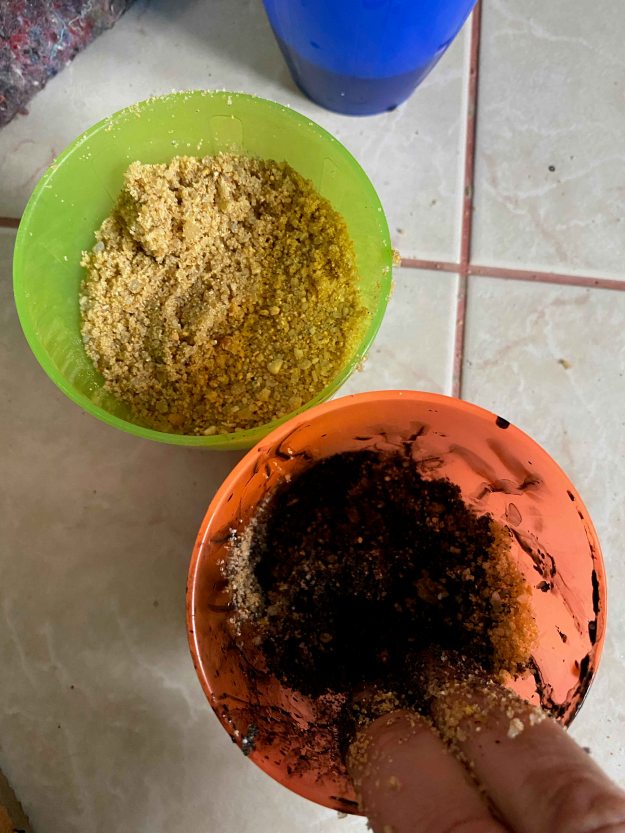
I am mixing ink and sand and rub it to the paper with my fingers for the sandy parts of the image.
Finally, I add a few strokes of white acrylic paint on the crest of the waves with a feather. This is the first final sketch A4:
I regret adding the white marks, the drawing felt clearer and more focused on the variety of the marks before.
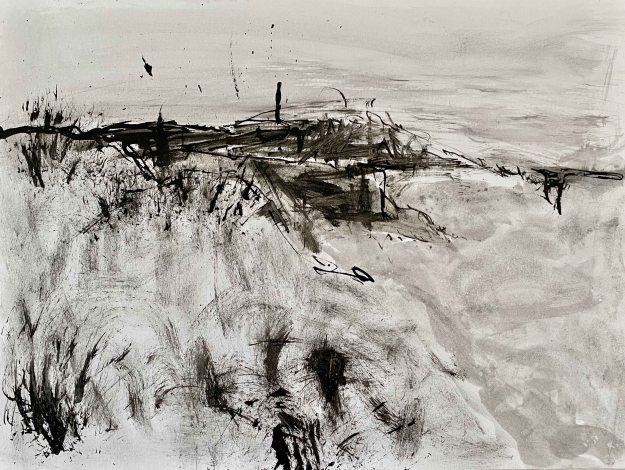
I start over and focus on the markmaking the different tools allow:
I am happier with this second, rougher version.
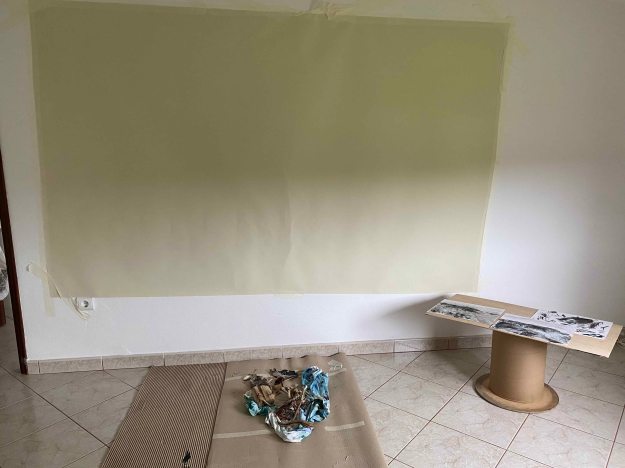
I decide to wrap my collection of tools and bring them home to push this further on a larger format drawing back in the studio.
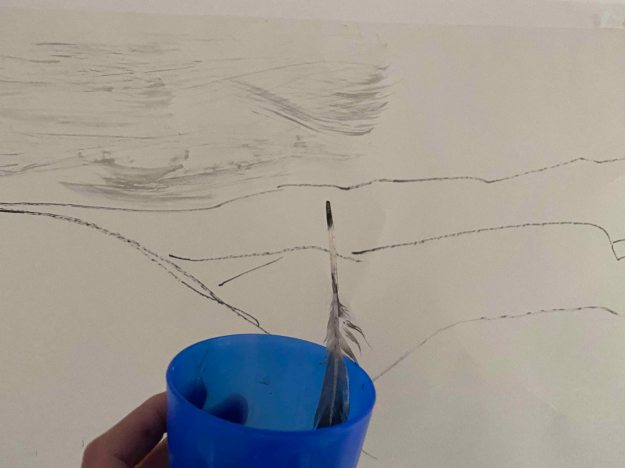
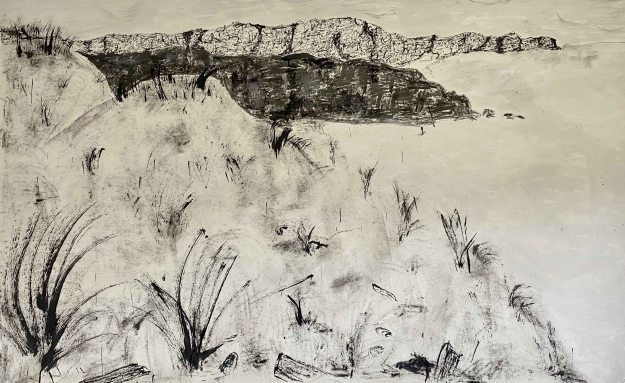
I follow the same principle of using “tools” or materials that are as close as possible to the elements I am depicting- using sand to draw sand, water algae to draw water, feathers for the sky, rocks for the rocks, grass for the grass etc.
This is the final drawing, approximately 150×250 cm:
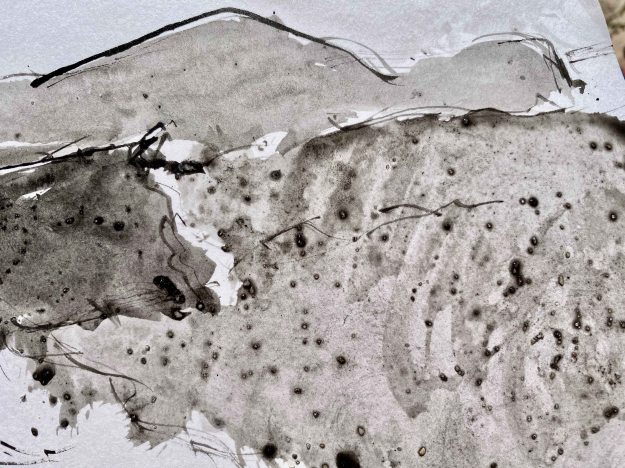
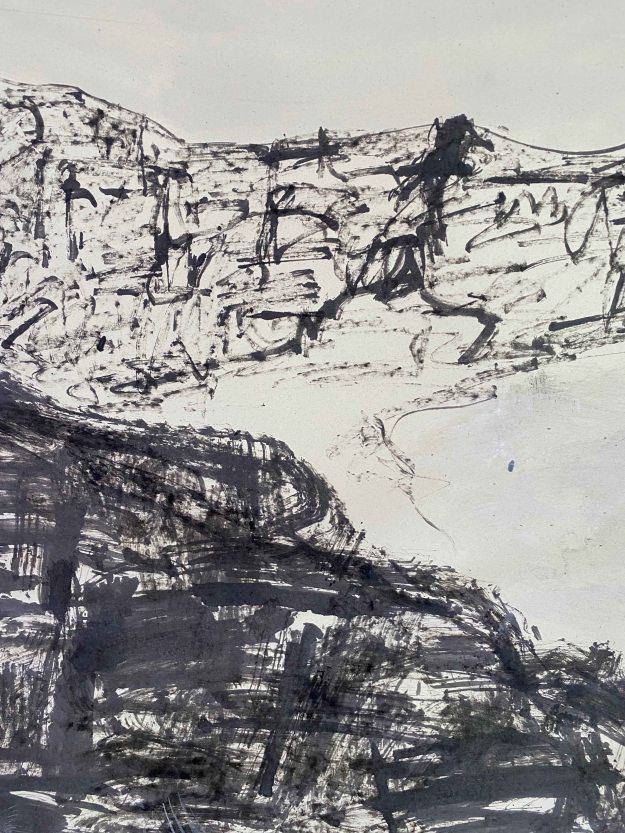
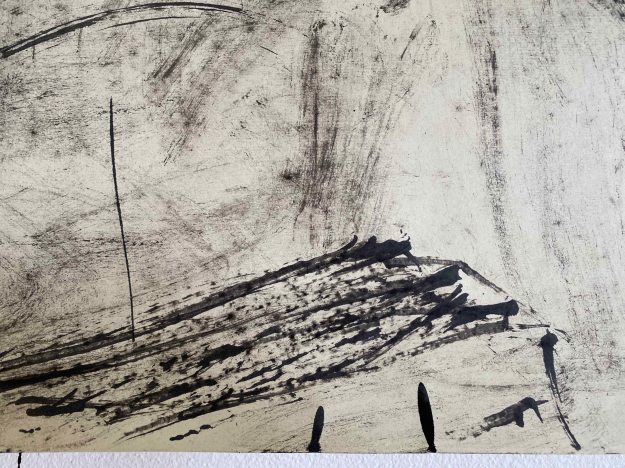
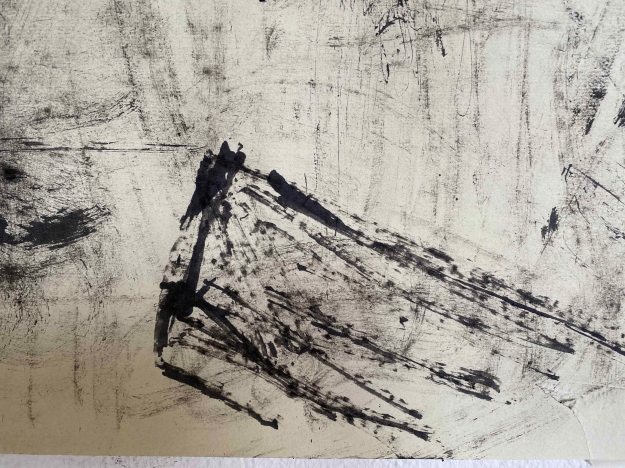
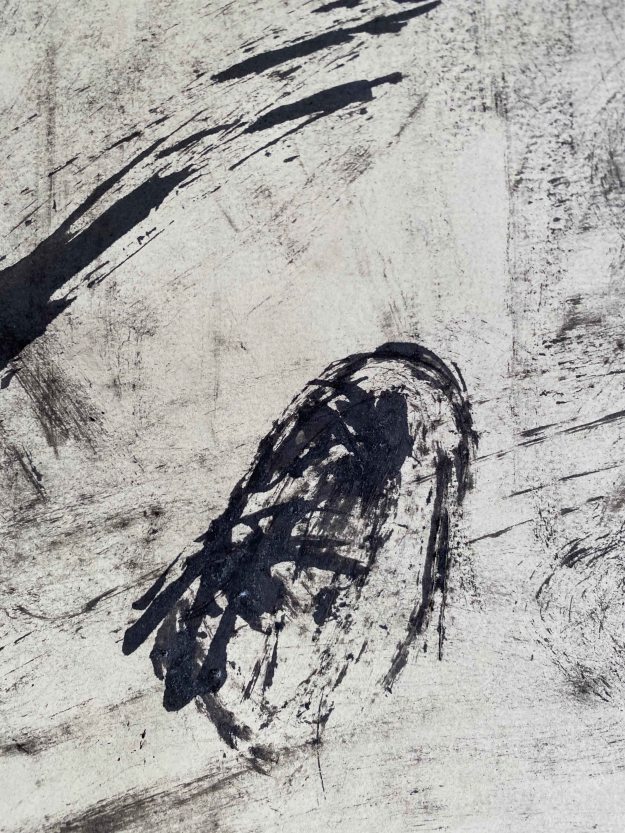
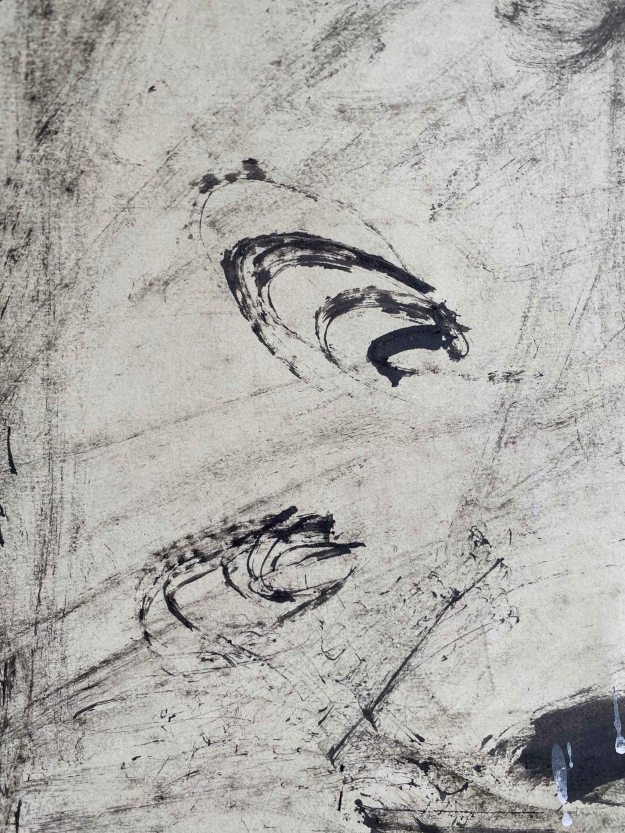
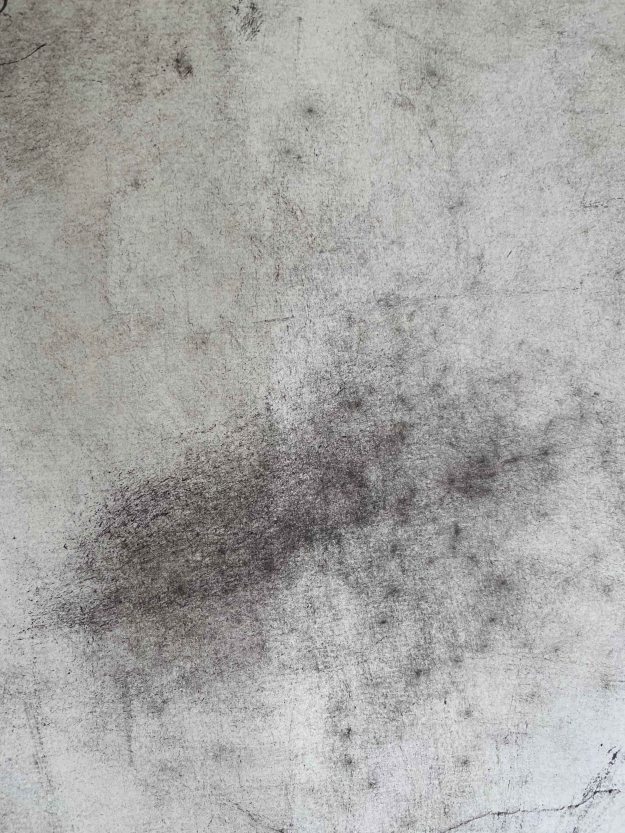
These are some close-ups:
Water drawn with algae:
Rocks drawn with stones:
Sky drawn with feathers:
Wood drawn with wood:
Shells drawn with shells:
Sand drawn with sand:
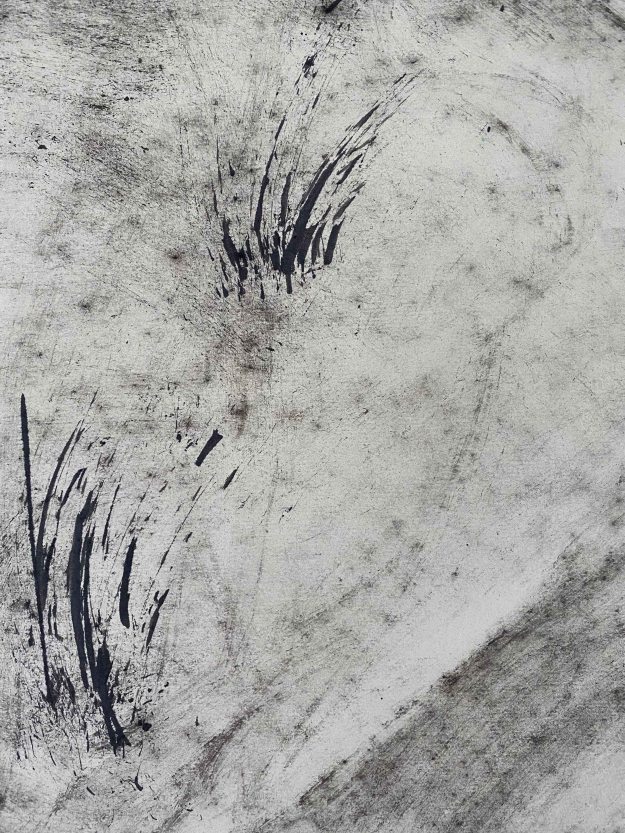
And beach grasses drawn with different leaves, sticks and grasses:
I feel happy with the exploration of the different marks my found tools can make in the details, but in the larger piece made at home, I can definitely feel how less spontaneous it is and the final result is suffering from it. I much preferred the directness of the experience of painting on the beach.
( to be continued in a life after the virus…)
THE BODY
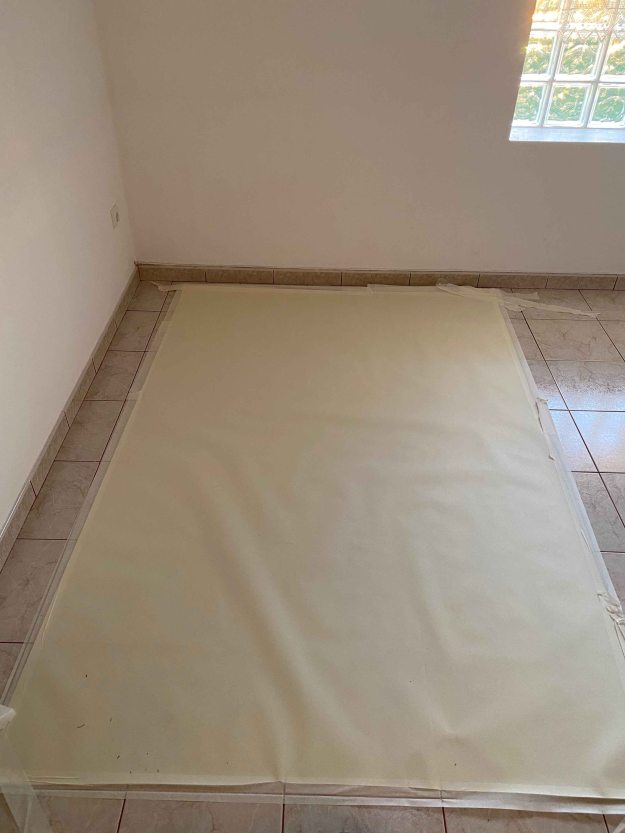
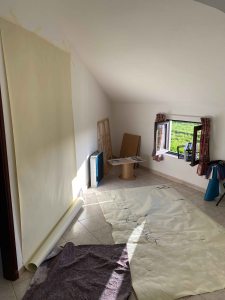
This assignment brief also feels like an invitation to explore bodypainting- painting my hands with my hands, my feet with my feet, my hair with my hair, my body with my body. I finally have a space that allows serious messiness, and I have of a long white roll of paper. Also, we are in quarantine by now, so painting on location is not an option. The thought of painting my body with my body is just getting louder and louder.
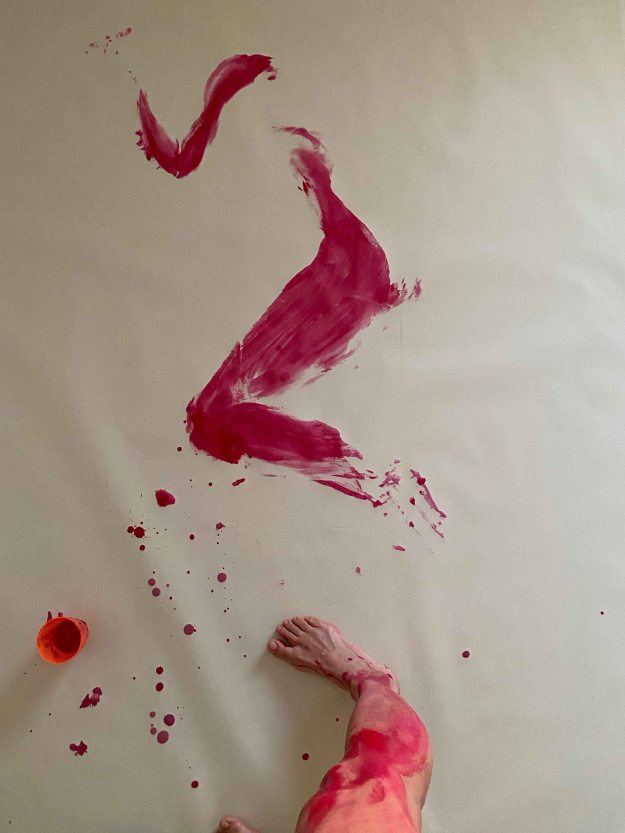
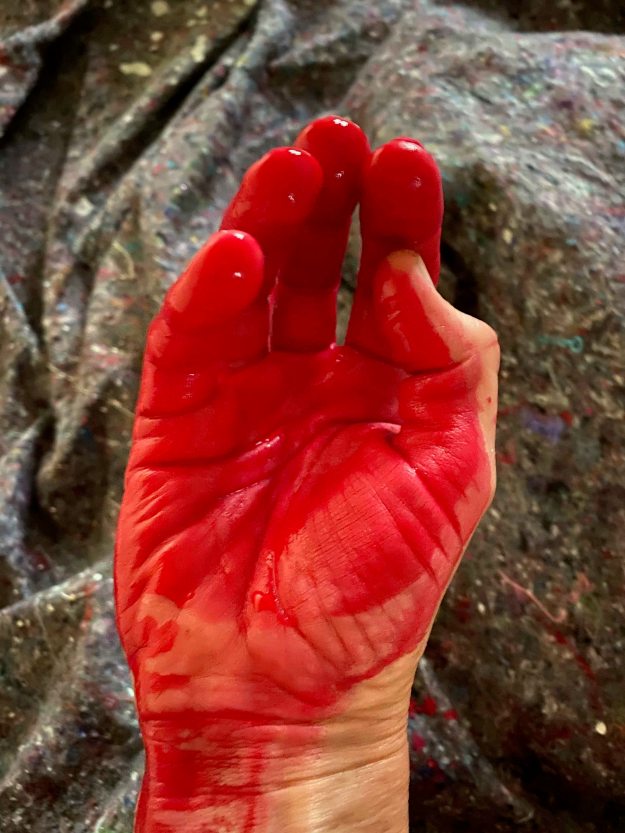
When I am standing here in front of the huge white paper, I have a lot of possible drawings in mind, but I want to stay spontaneous and just let one mark lead to the next. I start by covering my whole right side with a bright red paint acrylic and lie down on the paper.
And again:
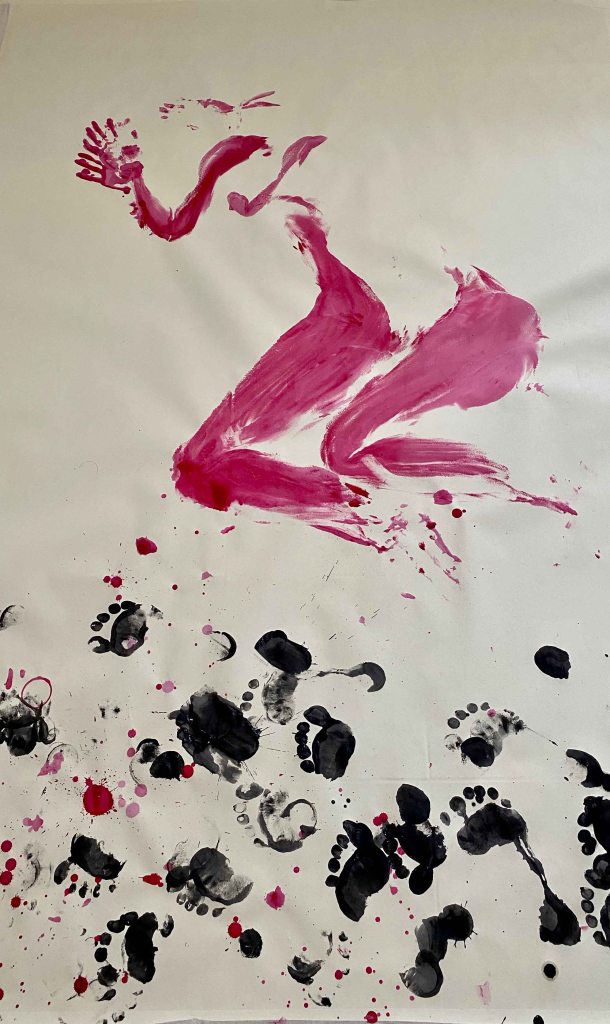
I couldn’t really guess how this would turn out, but the feeling of painting with my whole body is fantastic (despite is being really too cold!) This two prints looks like two figures interlaced and the wispy marks of the back hand randomly became a face. This drawing is already expressing a lot with so little that I decide to leave it for a day or two and see if I need to continue, instead of spoiling it by doing too much. I have an urge to walk around with my feet covered in black paint, but I am not sure.
After coming back and looking at it for two days, I just can’t stop myself. I cover the soles of my feet with black and walk around at the bottom of the drawing.
It was a miss. I should have left it alone. What I can do now is crop it to this, leaving just some footsteps…:
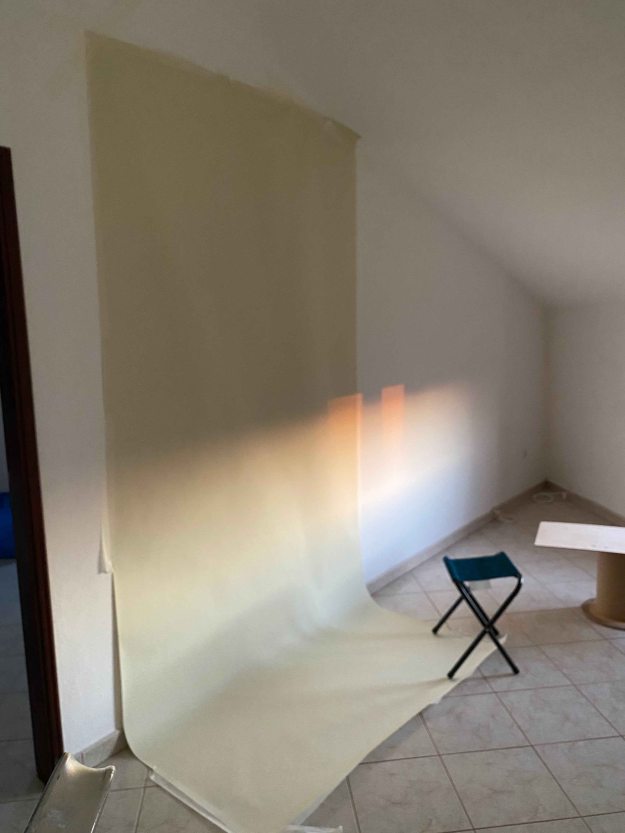
I start over again with a vertical paper larger than me:
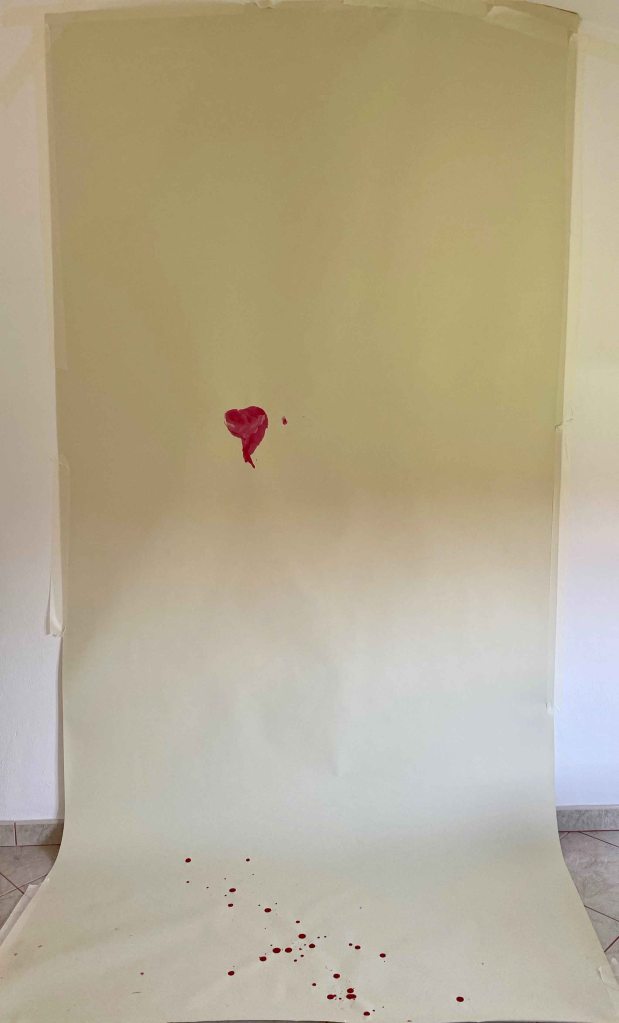
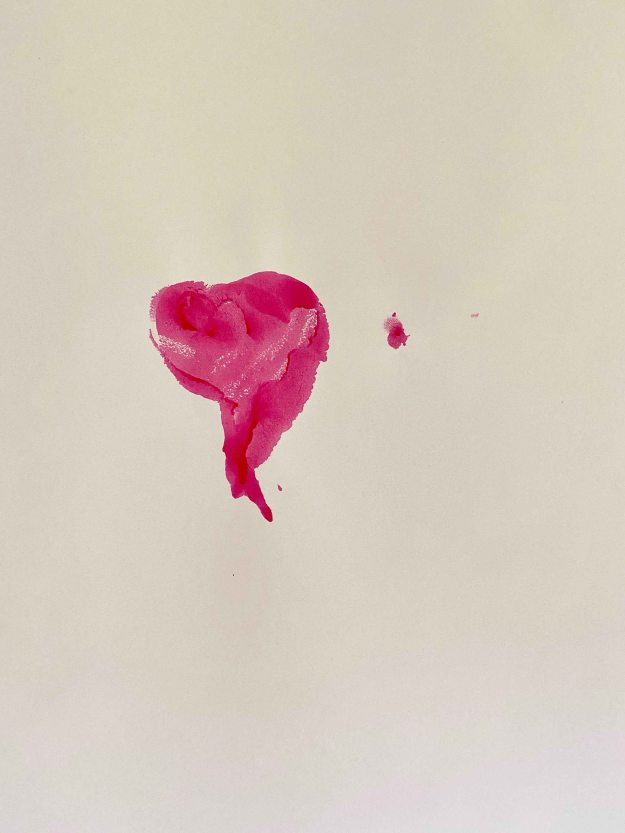
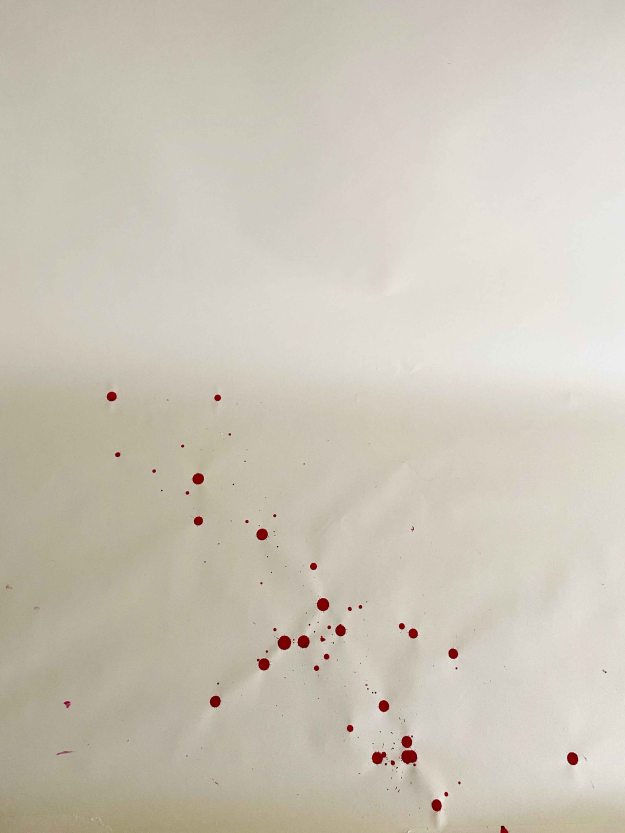
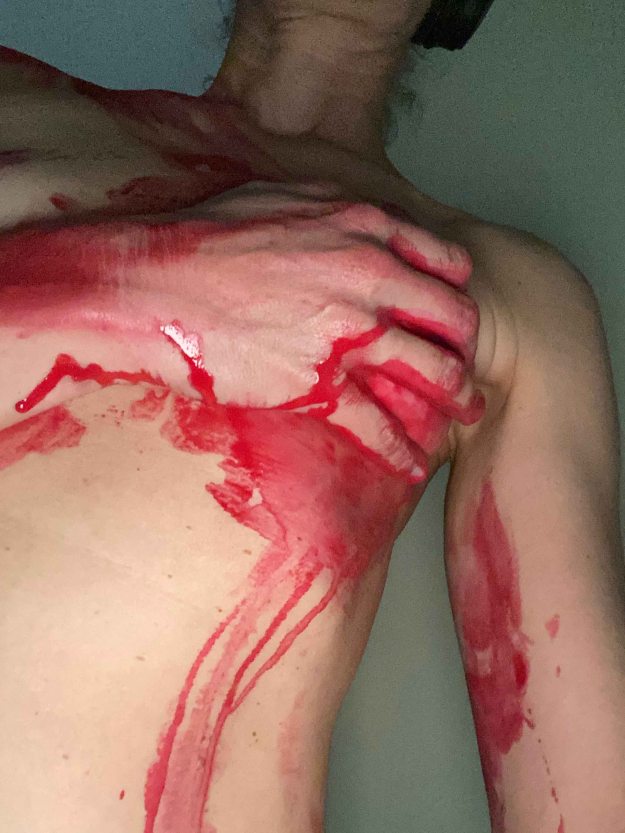
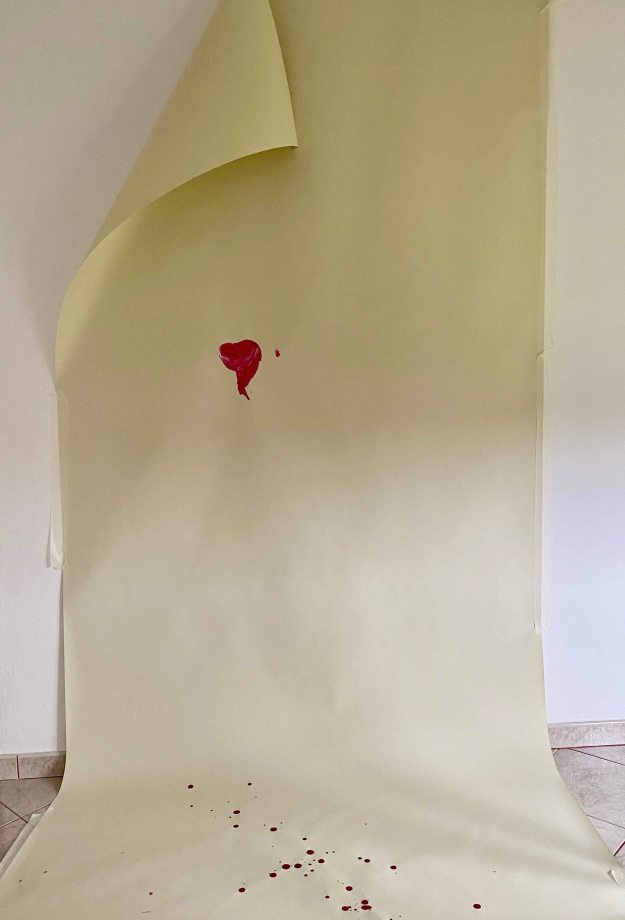
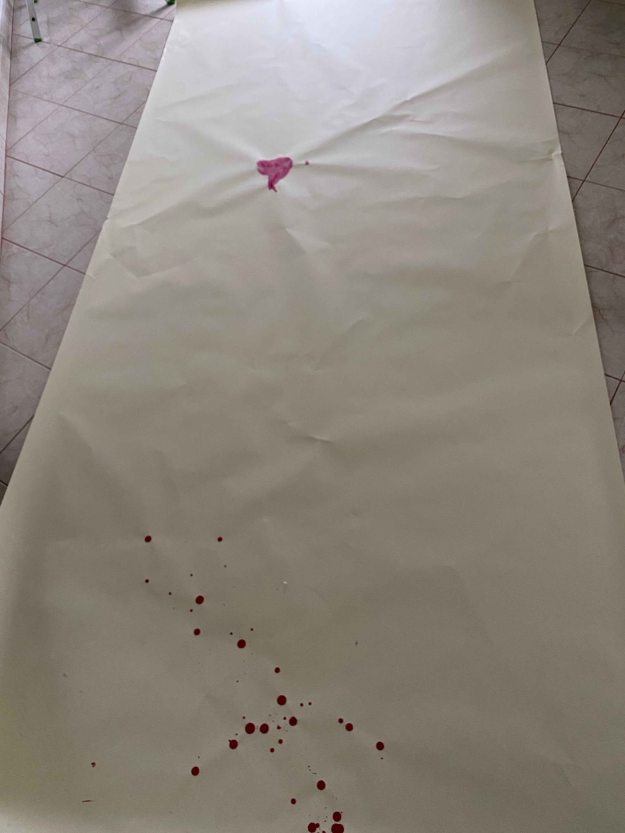
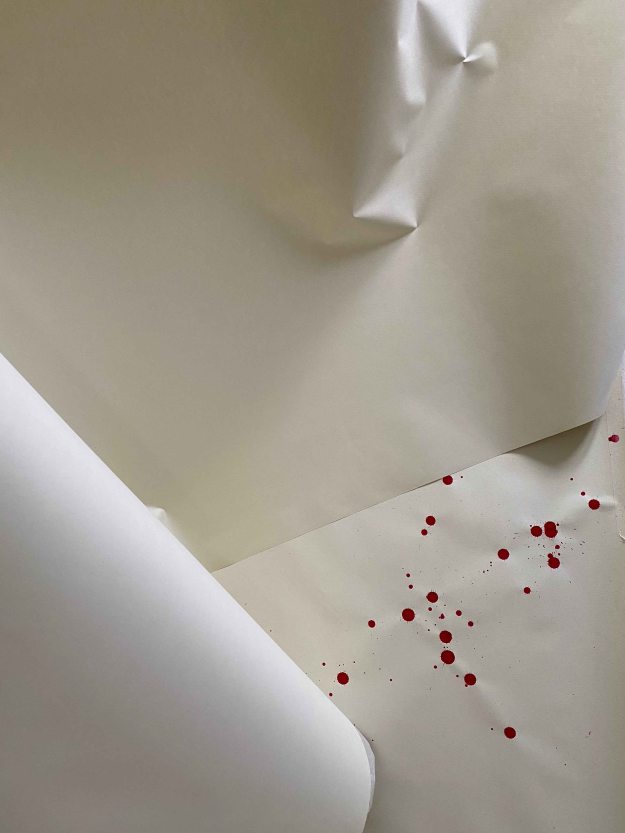
This time I am really seeing a fuller image of my whole body from the front and am especially curious about the marks from my hair. I feel magically drawn to the red colour again and when I look down on my body I start by covering my left breast, uneven and imperfect after surgery for breastcancer two years ago. I stop right there and just press that one breast to the paper. I spill some drops of paint to the floor.
I feel so much. This simple touch of my one mutilated breast on the large white paper said it all. I did quite a few drawings of the experience at the time but nothing expressed it as well as this. I feel how all that I was, suddenly became reduced to this one spot, how from being so much, I became a person with breastcancer. How lost I was. I was surprised at the strength of my feelings now. This experience lies two years back, and I would have thought that I had healed it both physically and emotionally.
This drawing is finished.
I continued by touching the paint and taking photos:
The direction and strength of this experience took me by surprise. It became more revealing and personal than I had intended. Also, I am incapable of judging how much this drawing is readable for anyone else, or if it is just so strong for myself.
The next day, I felt like taking it off the wall became a part of the experience- clearing and opening up to a feeling of relief.
BODY, nr 2
I am ready for a second trial and come back to painting my body with my body.
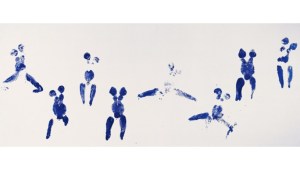
Meanwhile, I have researched the “Anthropométries series” by Yves Klein from the early 1960’s. He used nude models to act as “living brushes” in performances where they were covered in International Klein Blue (IKB)- a blue patented by Klein that he used in almost all his work- and then touched their bodies to huge canvases.
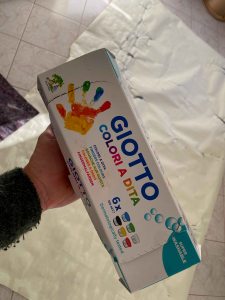
My studio is prepared with two large pieces of paper from my giant roll, one vertical and one horizontal. This time I am using childrens fingerpaint, as I had a really hard time scrubbing off the red acrylic paint last time. I can’t begin to imagine scrubbing of the precious IKB oil paint.
Yves Klein missed out on a really crucial part of the experience here I believe. Covering the body in paint and feeling how it wants to fall on the paper is an incredible experience that I would not want to miss!
I start by using the backside of the “Beach” drawing described above, so the paper has a wobbly surface here:
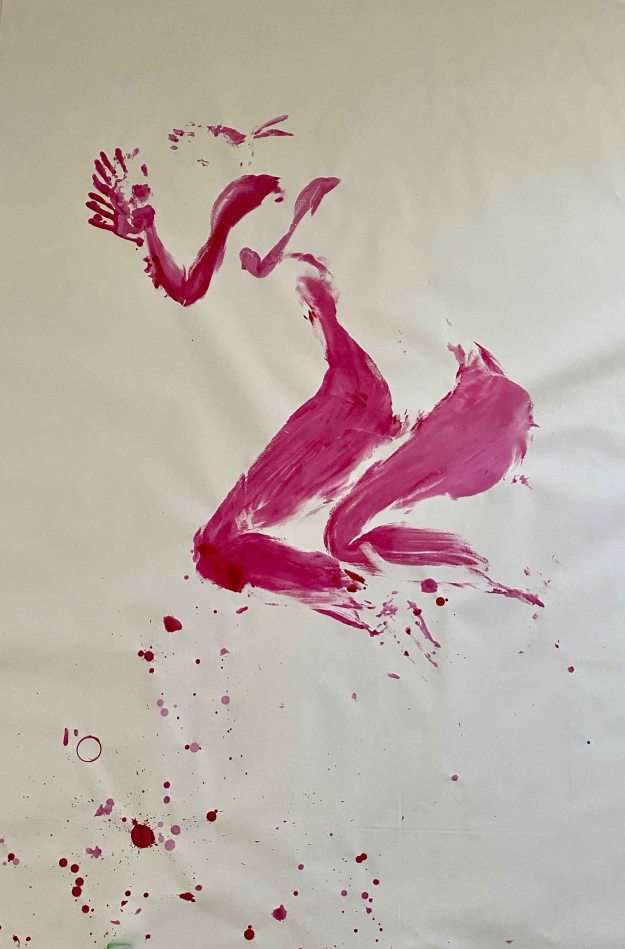
This is the final drawing:
It is almost like a limp figure carried by some birds, or upwards. I find it unfortunately chaotic. There are too many small marks to give a very clear and coherent sense of body. I do like the uneven surface though , that adds a level of texture.
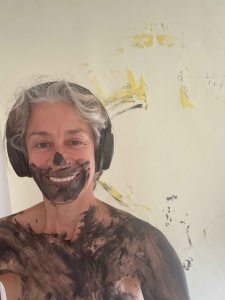
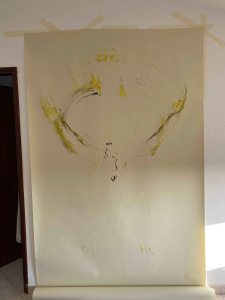
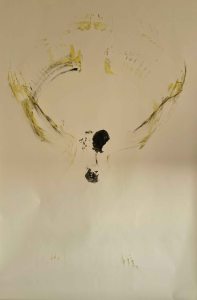
For the vertical paper, I add yellow colour to my underarms and stand in front of the paper lifting my arms as in a sun salutation.
I am closing my eyes and focusing on the movement.
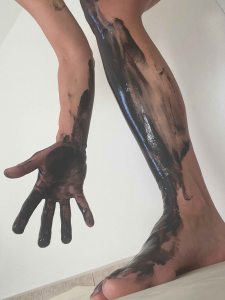
I decide to press my black body to the paper too:
I really like the winglike aura, which reflects the feeling of the movement really well. This is a light drawing, unfortunately really tricky to photograph. It has much more atmosphere in the flesh. Emotionally, today’s’ drawings were just fun and messy, I did not experience as much as strongly as last time.
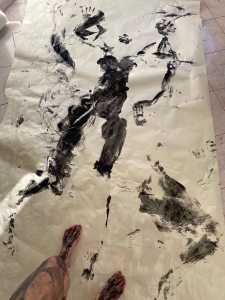
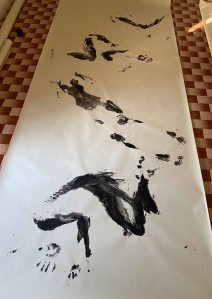
A couple of days later, I am ready for another trial. This time I prepare a longer piece of the paper on the floor, so that I can create a series of figures. I am using black paint again, liking the simplicity of it. Black could be ink or charcoal or many kinds of paint but has the connotation of being just that- a drawing medium, whereas the red spirals my imagination towards blood. I am avoiding using blue to be too close to Kleins’ project.
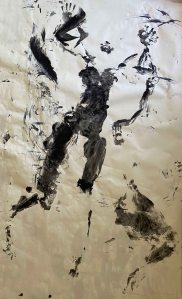
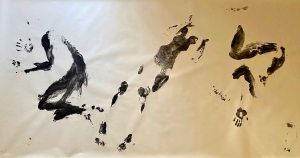
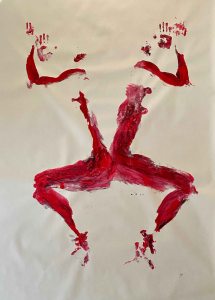
This is the final drawing. I have tried to create a wavelike movement, like springing up from a crouching position and continuing tumbling over.
I find the drawing stronger, when cropped to the two first figures:
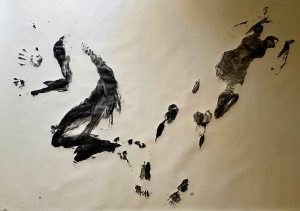
I prepare one more horizontal paper. This time I go back to the red, but without washing of the black layer and lie down one side after the next:
I like the creature like shape that comes out of this. It is not as strong as the image that I achieved the first time though, with the two figures intertwined.
This time again, I greatly enjoyed the experience. It is a magical feeling to stand in front of a huge white paper and not have any preconceived idea of what will happen, more than using my whole body as the drawing instrument to draw the body. It feels like I am stepping out of the process and allow it to happen, while at the same time being absolutely and literally immersed in the drawing.
BODY nr 3
Since looking at Yves Klein’s work, the idea of using oil on canvas has of course intensified with me saying yes- no- yes – no several times a day. Some time ago, I bought a first piece of untreated linen canvas to experiment with pouring diluted paints like Helen Frankenthaler. Am I going to use it for a single moment of body printing instead?
I am going to go for it… With the argument that I can always prime it and use it for something else later (although not as I intended).
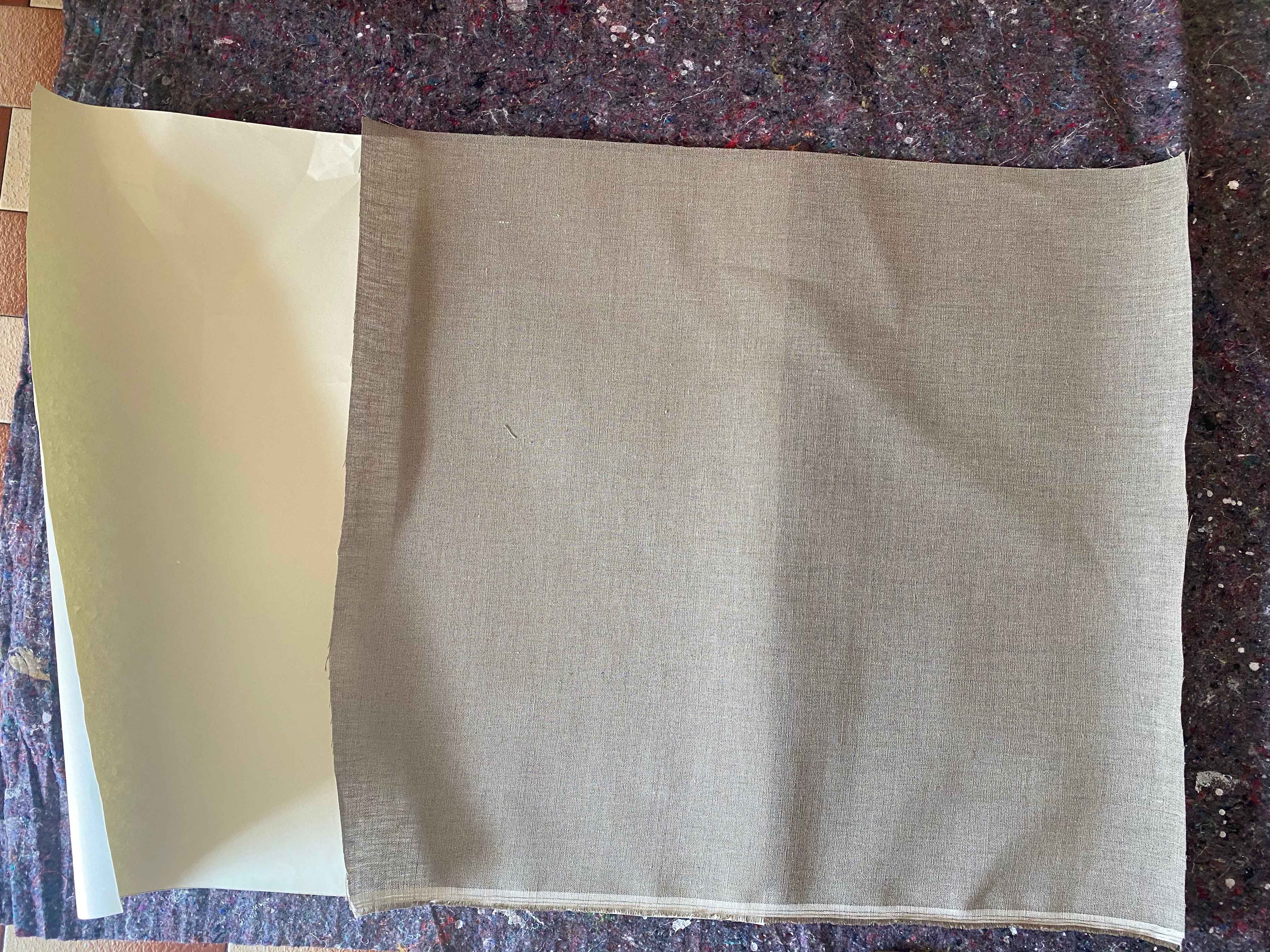
I start by testing if it makes a difference, if I put the thin linen on an absorb able cloth surface or on a glossy paper. I imagine that the thin material will let the paint seep through and might react differently.
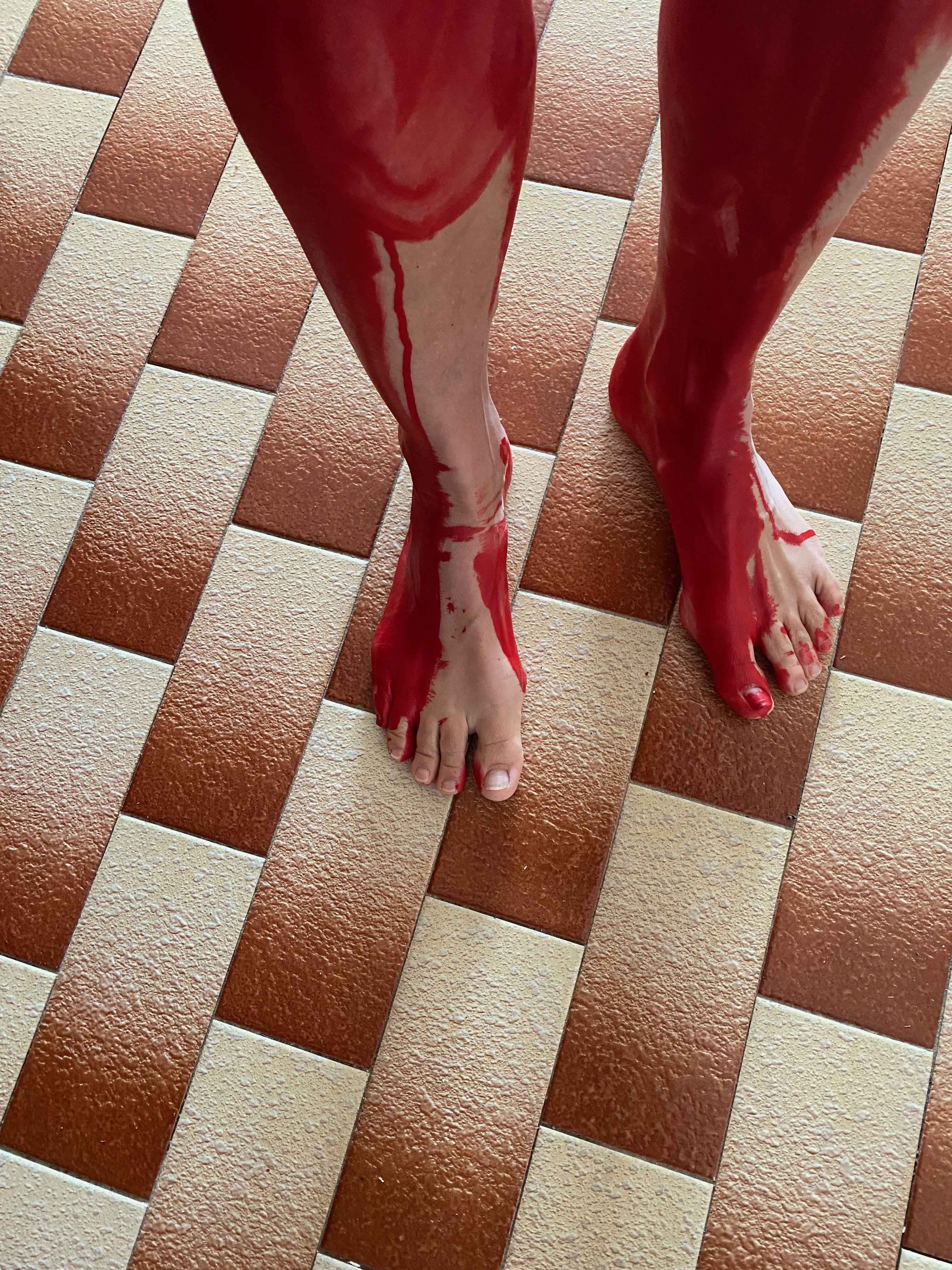
I will use watersoluble oil paints and also want to test how traumatizing the washing off is.
No, it does not make a difference if the underlying surface is absorbable. Actually, I am surprised at how resistant the surface is, I had imagined the diluted paint would bleed more.
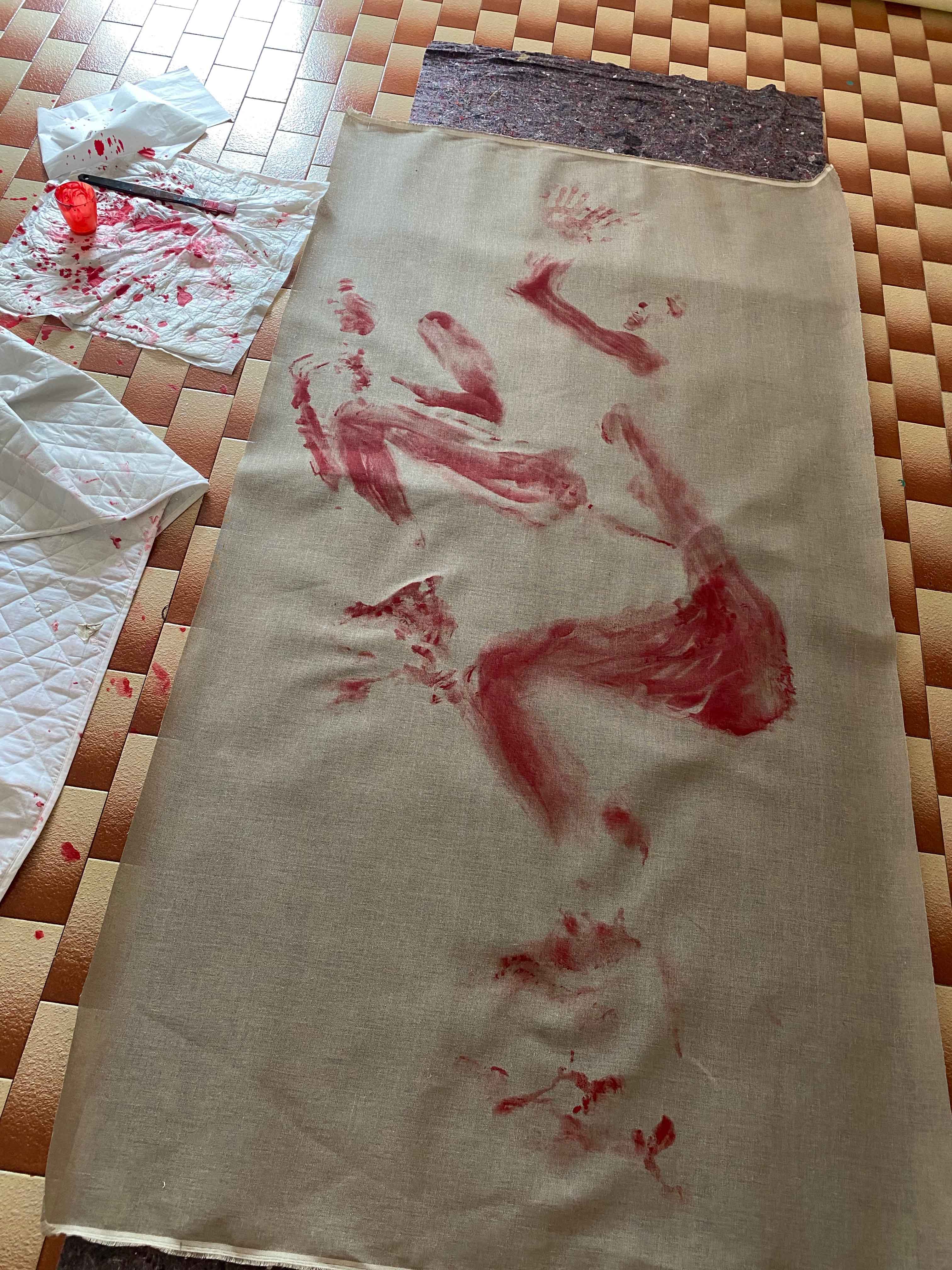
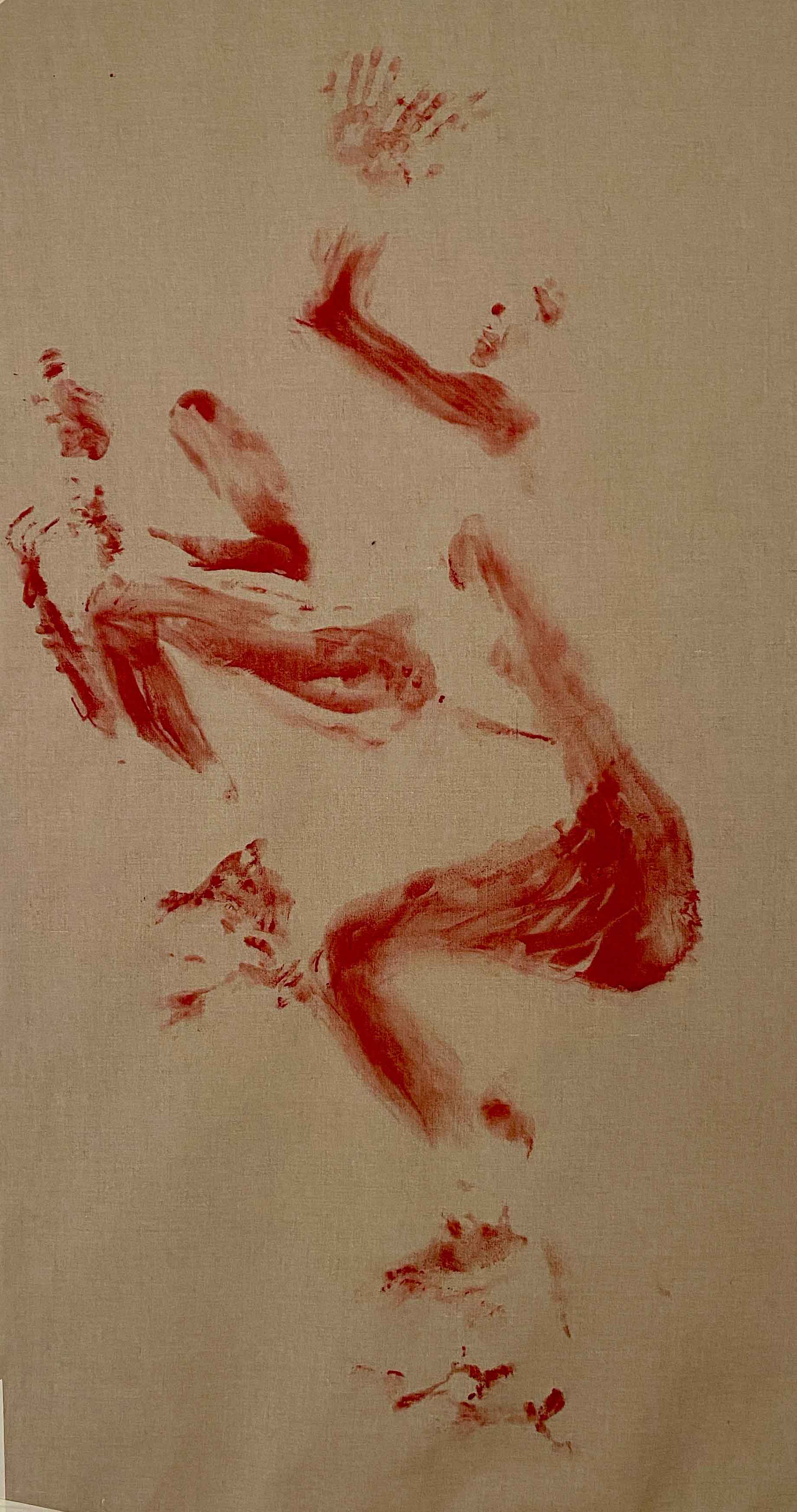
I choose to use red colour again, mixing Winsor&Newtons Artisan Cadmium red medium with a Cobra Carmin. The colour of the canvas is grey-brown and adding the red colour has a primal feel, reminiscent of a cave painting. It also feels primal because it looks like blood, adding another bodily element to the process.
It is all ready, but I feel a crushing responsibility at messing up the canvas, which takes away the lightness of the experience. I try lying down in different positions first without paint, which I did not do the previous times.
Here we go..
This is the painting after two rounds:
It is actually easier to wash off than acrylics! (And it helps that we have installed hot water in the house by now.)
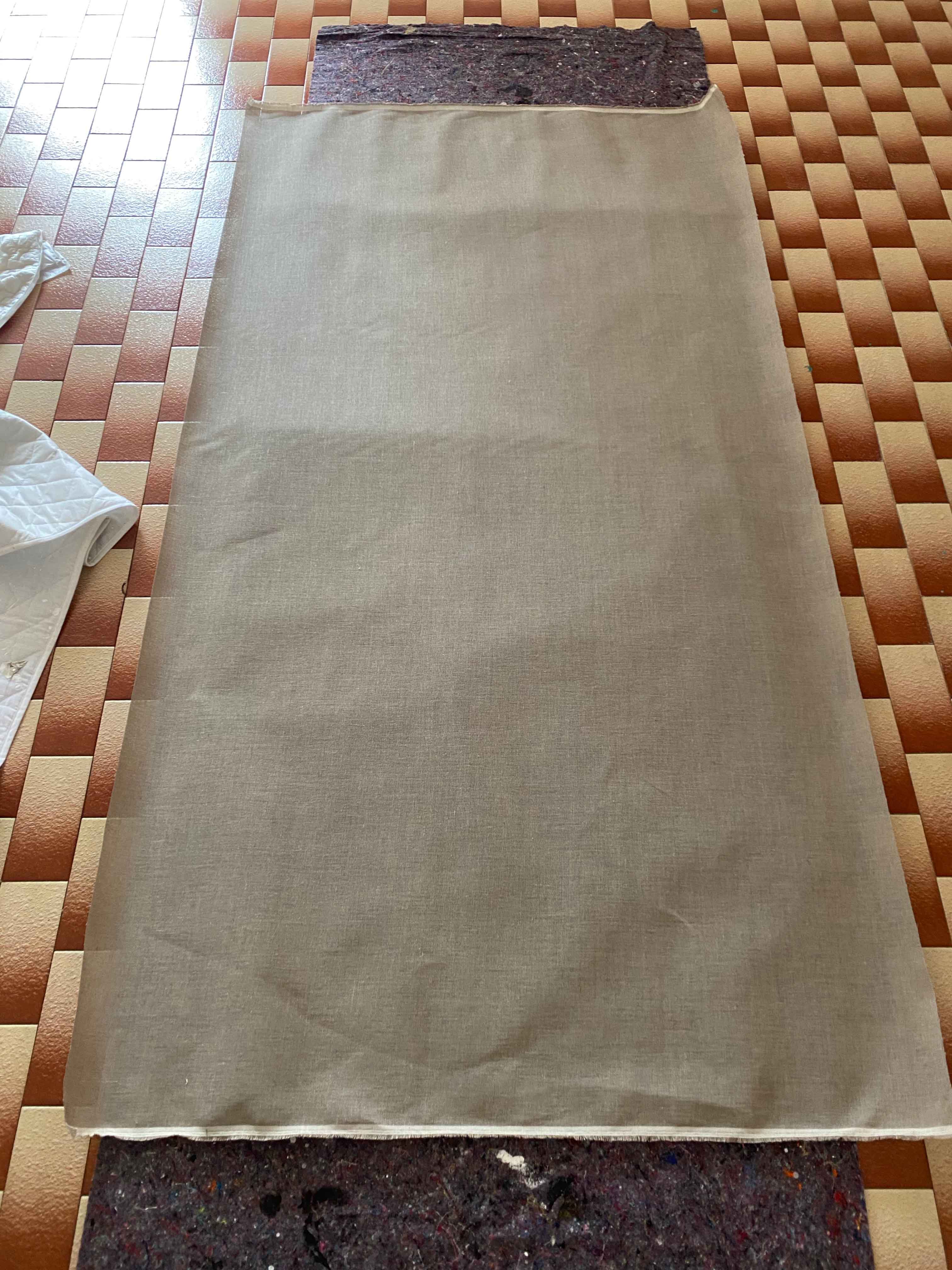
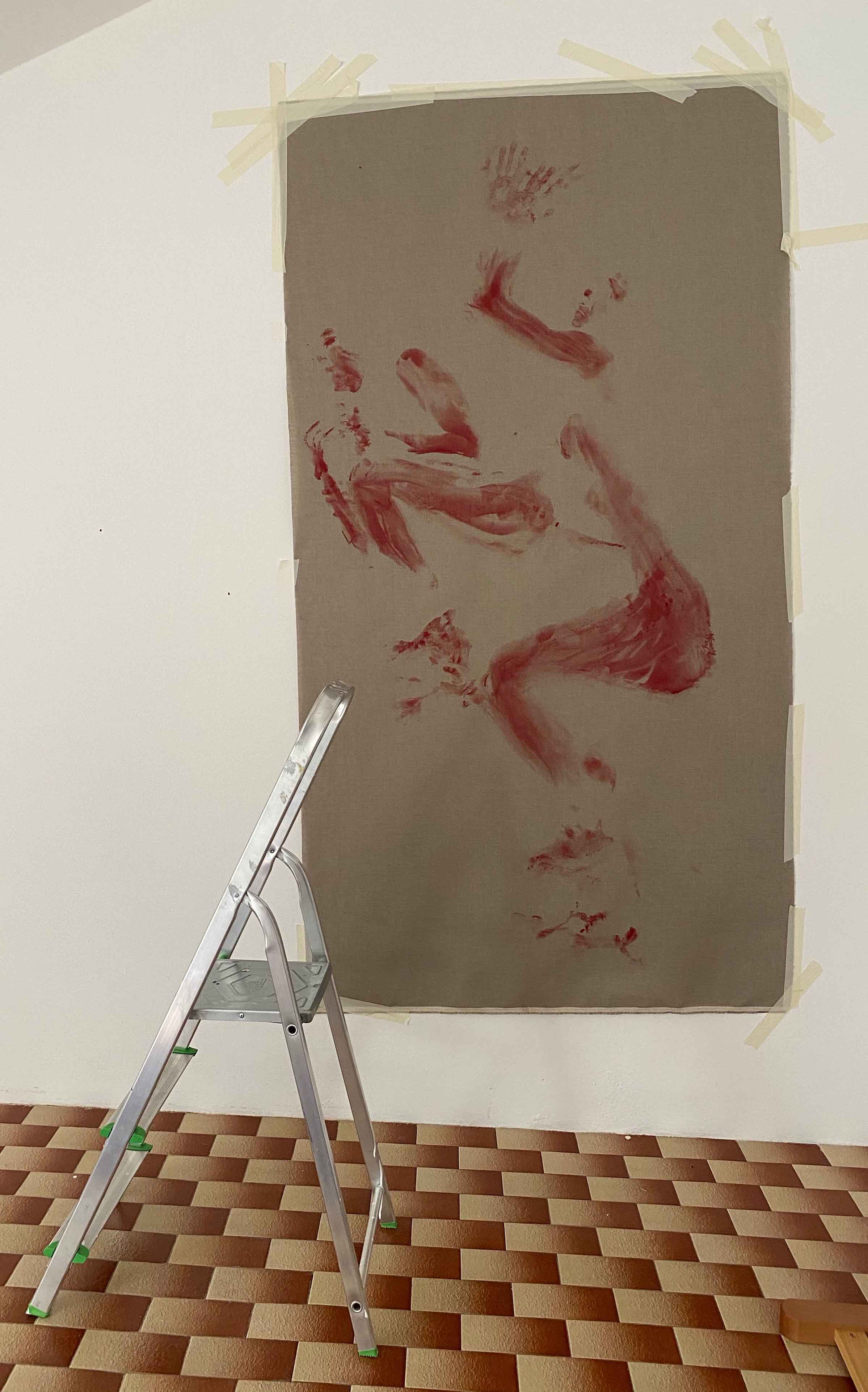
I hang the canvas vertically and take a photo with the ladder to show the scale:
This is the final painting:
I am not overwhelmed with the result, but it is also not a total miss. Compared to the works on paper, there is a much wider range of tones, many a little blurred or “wispy” marks, depending on how much paint got absorbed. I feel that this painting is somewhere between a cave painting and an Xray.
As a whole, painting with my whole body has been an incredible experience in fusing the subject and the process. It has been really interesting and surprising to observe my feelings coming up through the experience. It is also a process to accept the result when I only have seconds to paint, and so much time and material to prepare and to clean up.



 Clara's Drawing 2