For Part 3, I received a video tutorial with my tutor Emma Drye, followed by a written report. I was really grateful for the video tutorial, as after feeling quite cut off from everything during the quarantine, this positive and encouraging video chat, really boosted my enthusiasm again.
I had had a lot of fun with Part 3 though, and felt really happy that the projects were light and fun and possible to do in family, like for example blind drawing. Emma Drye also commented on how the video that I submitted for Assignment 3 was a great example of studying with the OCA, combining making art with a role in the family. In the video of spontaneous and intuitive drawing to music, my family pass through and play an important role. My tutor pointed out, that there is a professional quality to the video whilst still feeling personal and the choice of music was exactly right.
We also discussed the Parallel project, which helped formulate it further: “Your other body of work is a slow deconstruction of your home and an exploration of the community narratives that connect it and you to your neighbors.”
We discussed narratives; who owns them and who are they for. We discussed our house as a nexus of narratives and how having moved into it suddenly for lock down have made us part of this narrative. We also discussed how far they might extend beyond the house, or whether neighbors might be invited in, as well as how the stories can be communicated.
We also discussed other artists that have worked around the concepts of place, home or belonging, which is tying in to the parallel project and a subject I am curious about for the Critical review as well:
Daniel Miller – the comfort of things (book), Hans Peter Feldman – archives, Jeremy Deller , Cornelia Parker, Andrew Cranston, Vija Celmins
I will write a separate post researching these artists in the research section of the Parallel project.
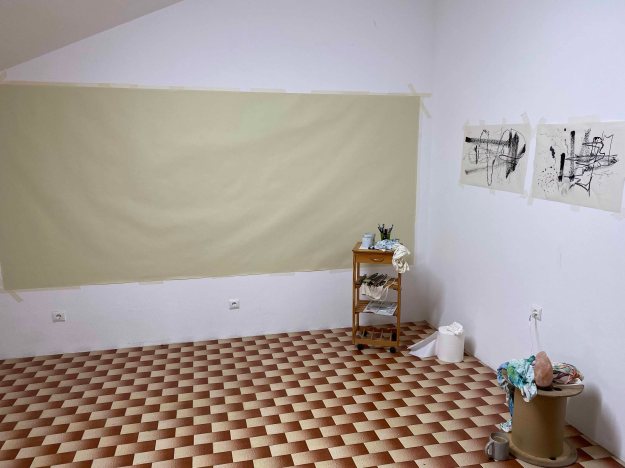
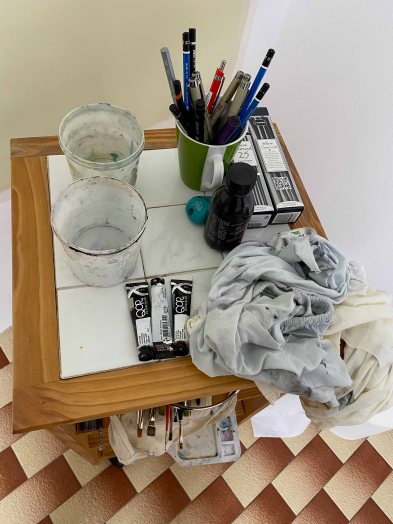
We also discussed how painting as well as drawing can be a part of the work and looked at the paintings with figures and lampshades that I did as part of the Parallel project. Emma Drye encouraged me to slow down, to work in more preparatory steps that I then pin up around the easel. Working in oil, I will let the paint dry in between layers, which will help create a sense of space. In my paintings, there is a lot of blending. When creating more distinct layers, the surface of the painting creates a bridge to 3D, which brings dynamism to the process. If not, it has to be more clear, that the flat character is a conscious choice, like for example in the paintings of Paula Rego.
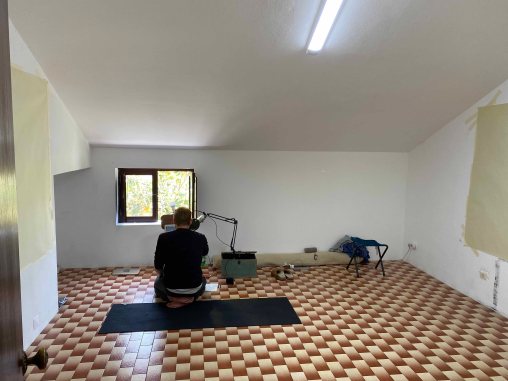
Emma Drye also asked how the many tiles and patterns in the house can find their way into the project, which is an aspect that had slipped away for me somewhat- so it was a good reminder. To be honest, the chocking overwhelm of the different pattern have already become so familiar after a few months in the house.
I really like the format of the video tutorial, which gives more space for discussion, and then a follow up with a written report which emphasizes the main points again, also containing a list of interesting and relevant artists to research. I feel ready to launch into Part 4, and to continue exploring the Parallel project.





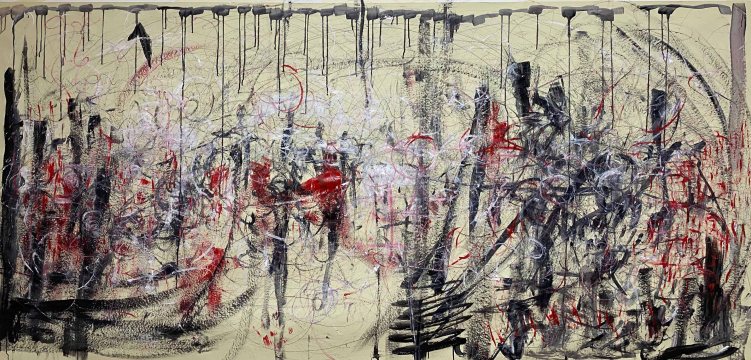
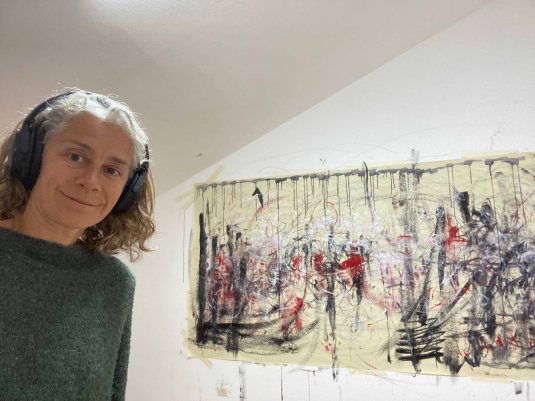
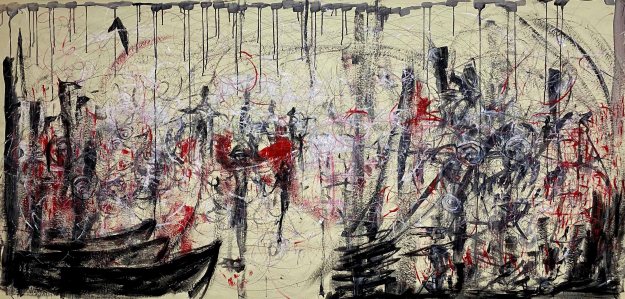
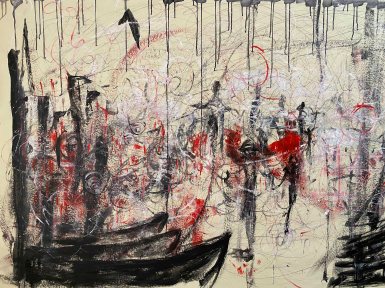
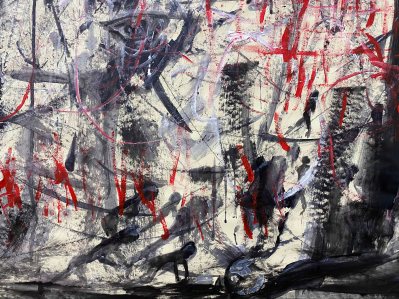
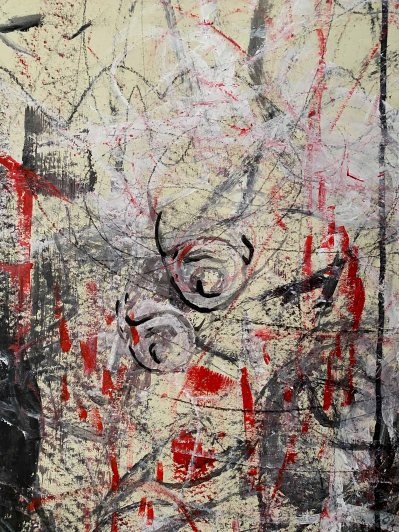
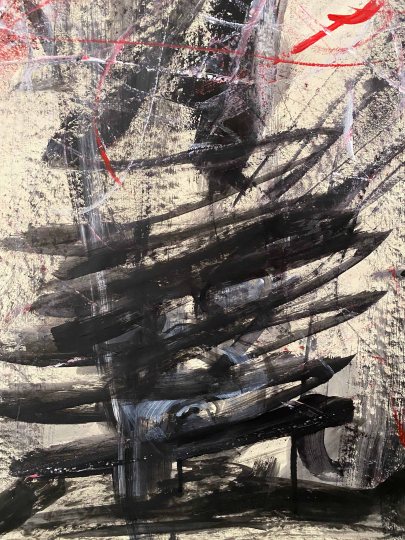
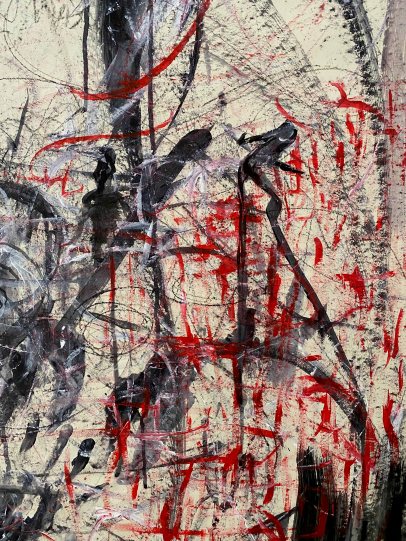
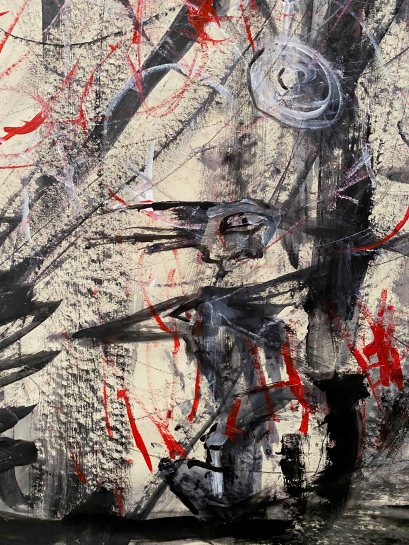
 Clara's Drawing 2