Category Archives: Part 5 Time lines

ASSIGNMENT 5

Assignment 5: “Review the project work that you’ve completed for this part of the course and then produce a drawing that needs a period of time to elapse during its production.”

Since I started my studies with the OCA several years ago, I have had the plan to start drawing a drawing a day as a diary, but til now I have not implemented it.

I have just discovered OCA student led initiative “OCAtober” which gives a word day as a prompt  for a drawing that is then posted on Instagram. I will participate in this to start my drawing diary and also to overcome my shyness of publishing works that don’t feel “good enough”. Combining these small drawings into a larger work will then produce the drawing that has needed a period of time to elapse during its production.

During a visit to “Trema” contemporary art gallery in Lisbon last year, I discovered the Portuguese artist Carlos Barão.
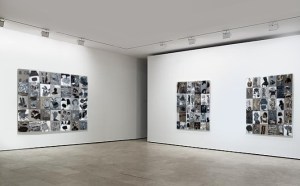
He paints or draws a small painting a day and then combines them into series on larger canvases. His art is quite dark and contains much text, an intriguing mix of drawing, painting and text always in black, red or earth tones.


The first thing I notice, is that the drawings are different in size and support, but proportional, and it can be quite tricky to combine them in the end. I counted that the larger panels contain respectively 67 and 80 small drawings. The newer framed works contained 20 drawings.

In a series of older works (2010-14), Barão combined same sized drawings, 35 pieces per panel, and he still used different papers. I would guess they are 30x30cm. I will choose to start with this as it will make combining the final drawings much easier. ( I might change and include other formats after the first month of OCAtober is over).
galeria trema 2017 (2)

I am often attracted to works that contain an obscure or incomplete narrative, and this is what I find in the work of Carlos Barão and what I hope to create in my own drawing diary.

 About Carlos Barão: “the artist seems to want to tell a tale – perhaps a fairy tale – that transcends his own life. As a result the on-looker is invited to complement the story-in-suspension with his own references and memories. The gap between the image and its meaning seems to reside in the personal and non-transmittable ambit of each of us. (…)

The paintings of Carlos Barao speak an apparently inaccessible language, like the feeling of something intimate and strange – Das Unheimliche according to Freud. “

Hugo Dinis, in “Something Strangely Familiar II“, in Cat. Galley Pedro Serrenho, Lisbon. 2009

(Images and quote from: Barao, C. 2018. Carlos Barao artist. [Online]. [1 October 2020]. Available from:  http://www.carlosbarao.com/ingles.htm)

Drawing diary for “OCAtober”

I decide to use the format 20x20cm to keep the final panel manageable in size when combining many of the drawings. I prepare papers in various qualities and shades of that size.

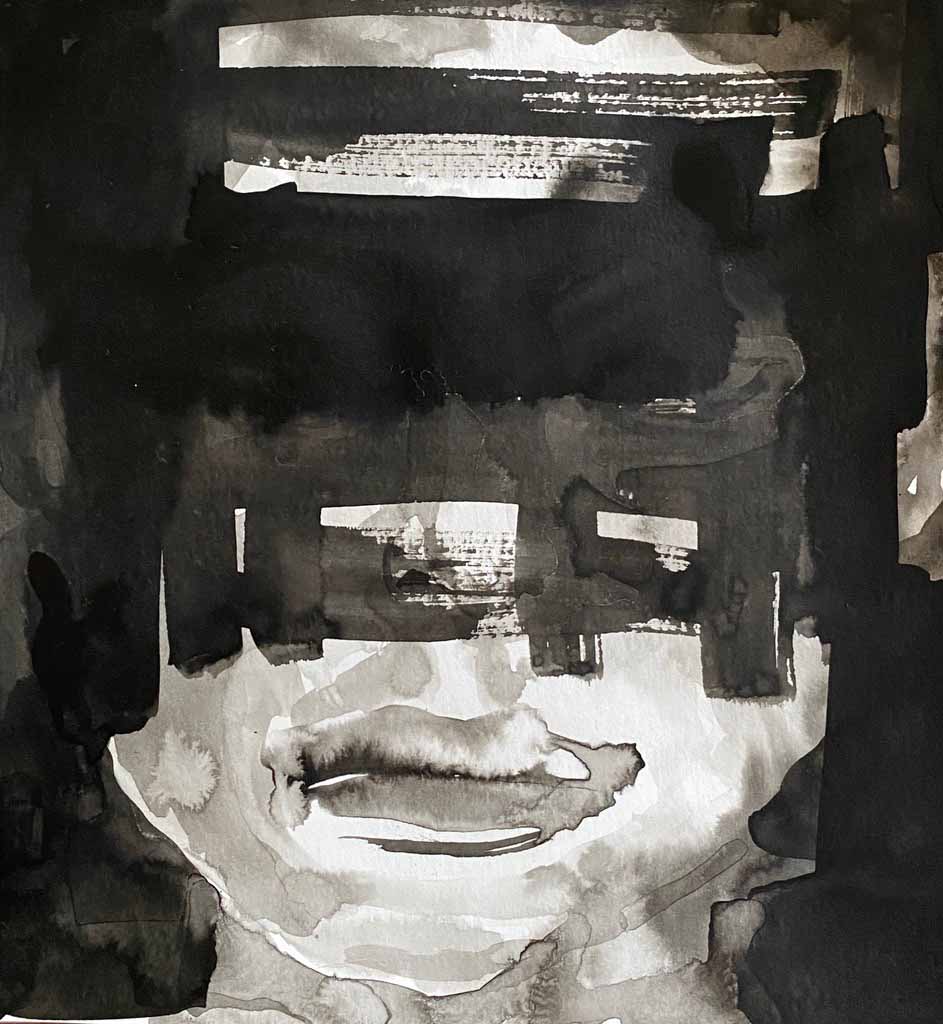
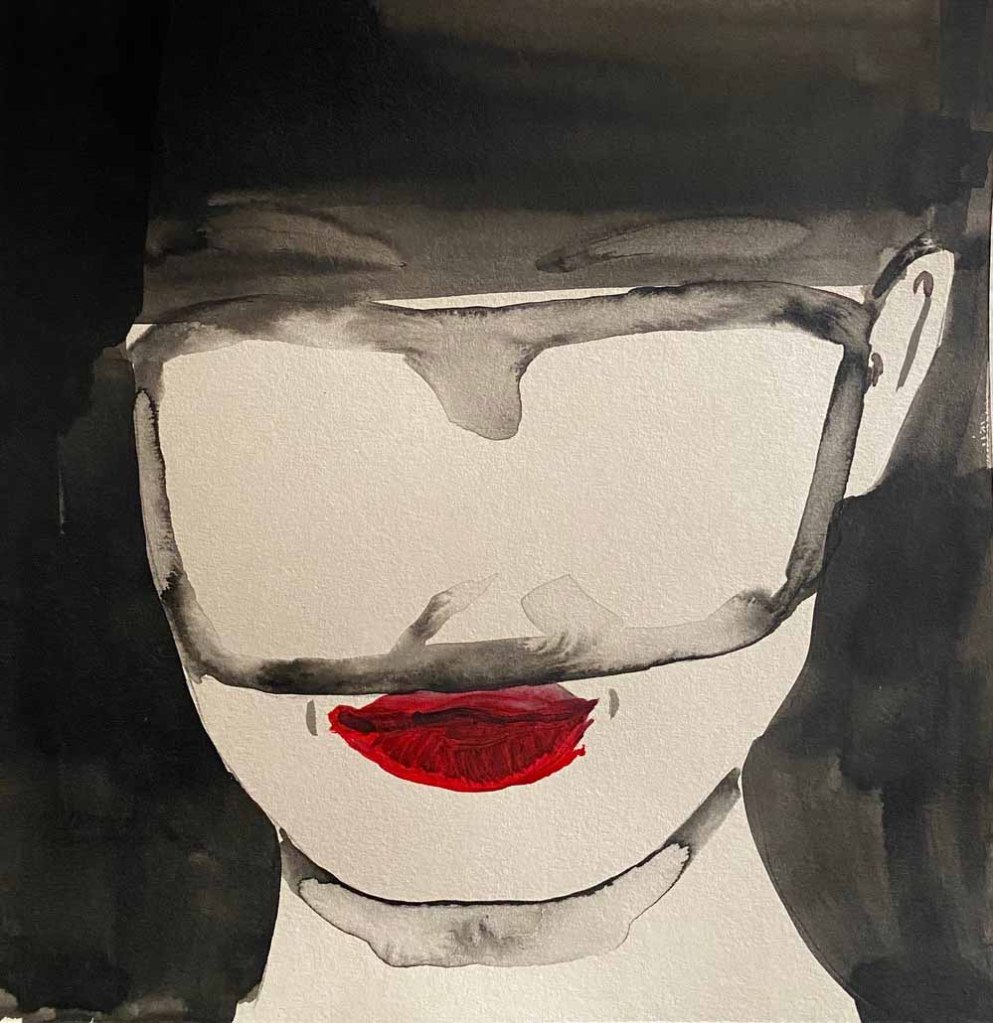
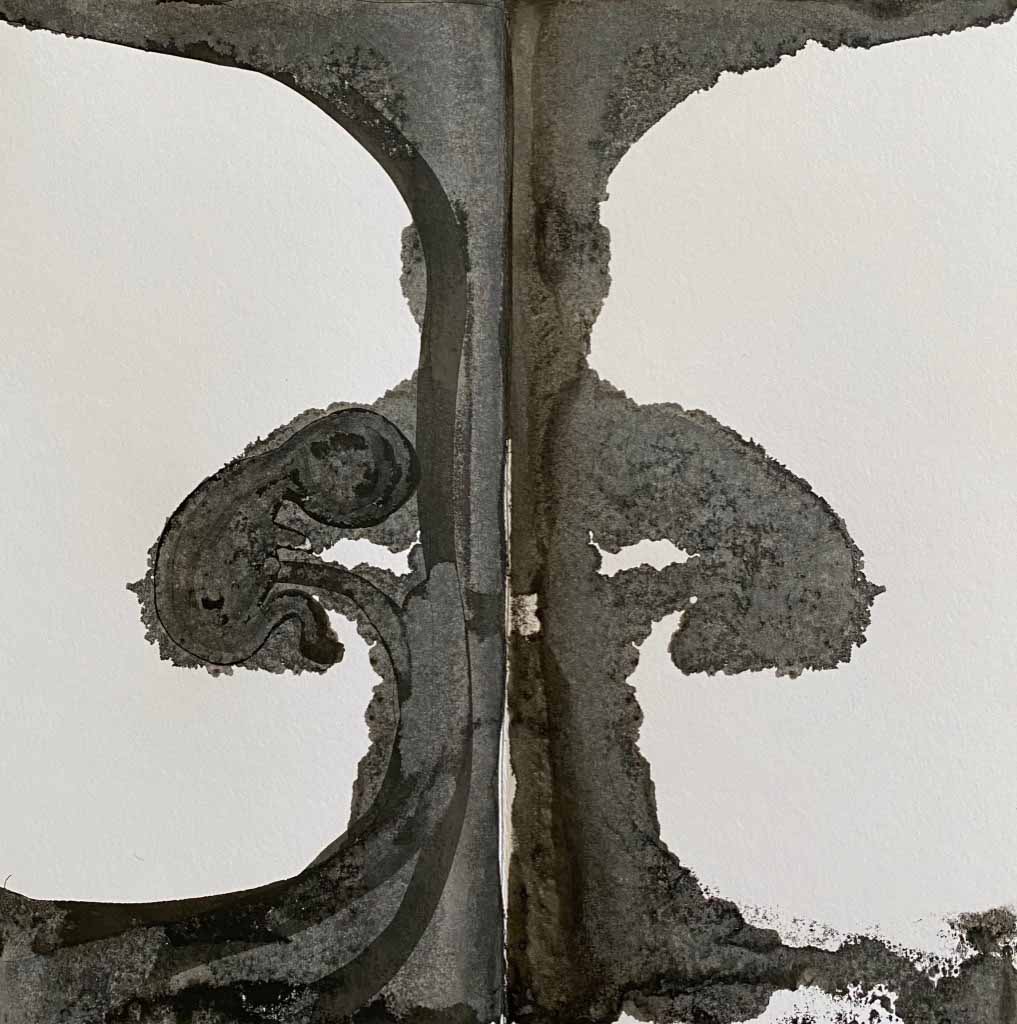
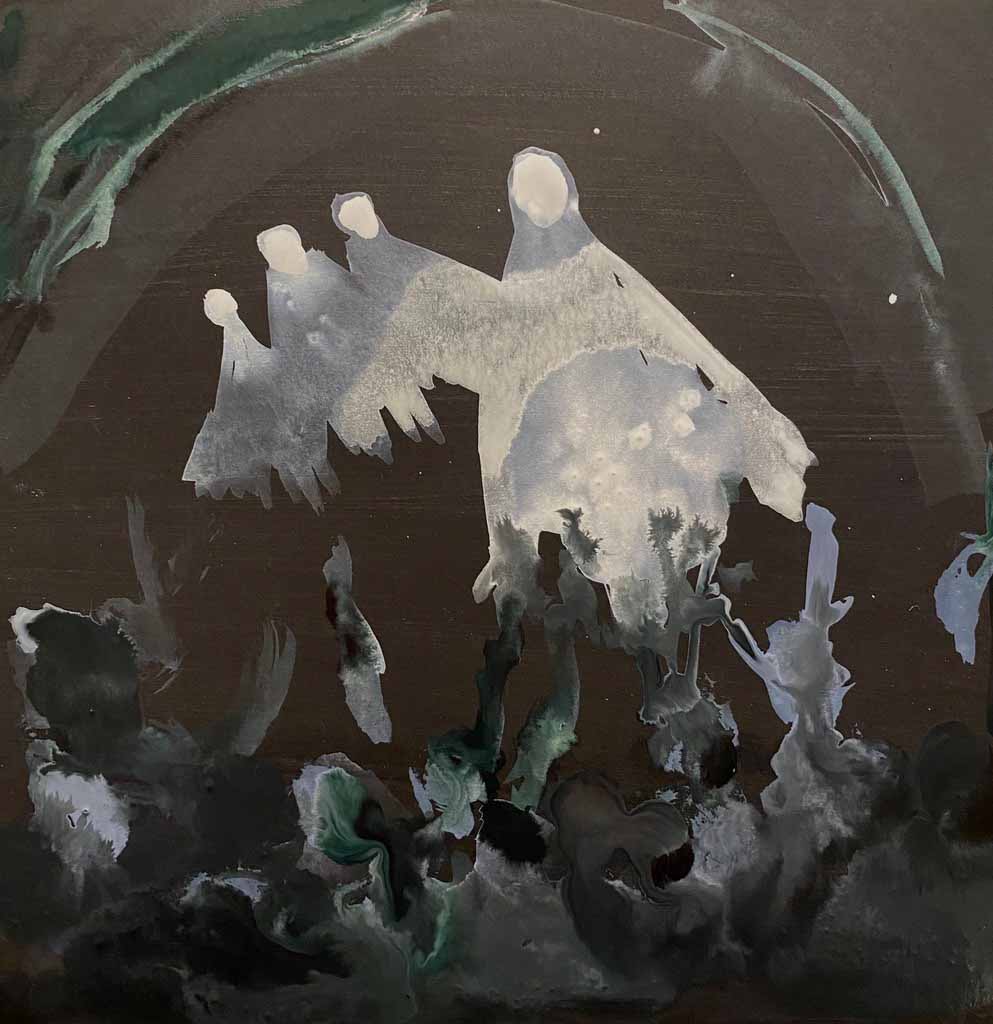
Day 1: Imposter

I had to start by looking up what imposter means, and then thought of how many faces/ roles/ masks we are wearing, and how not all of them feel true.

Ink and acrylics on white paper

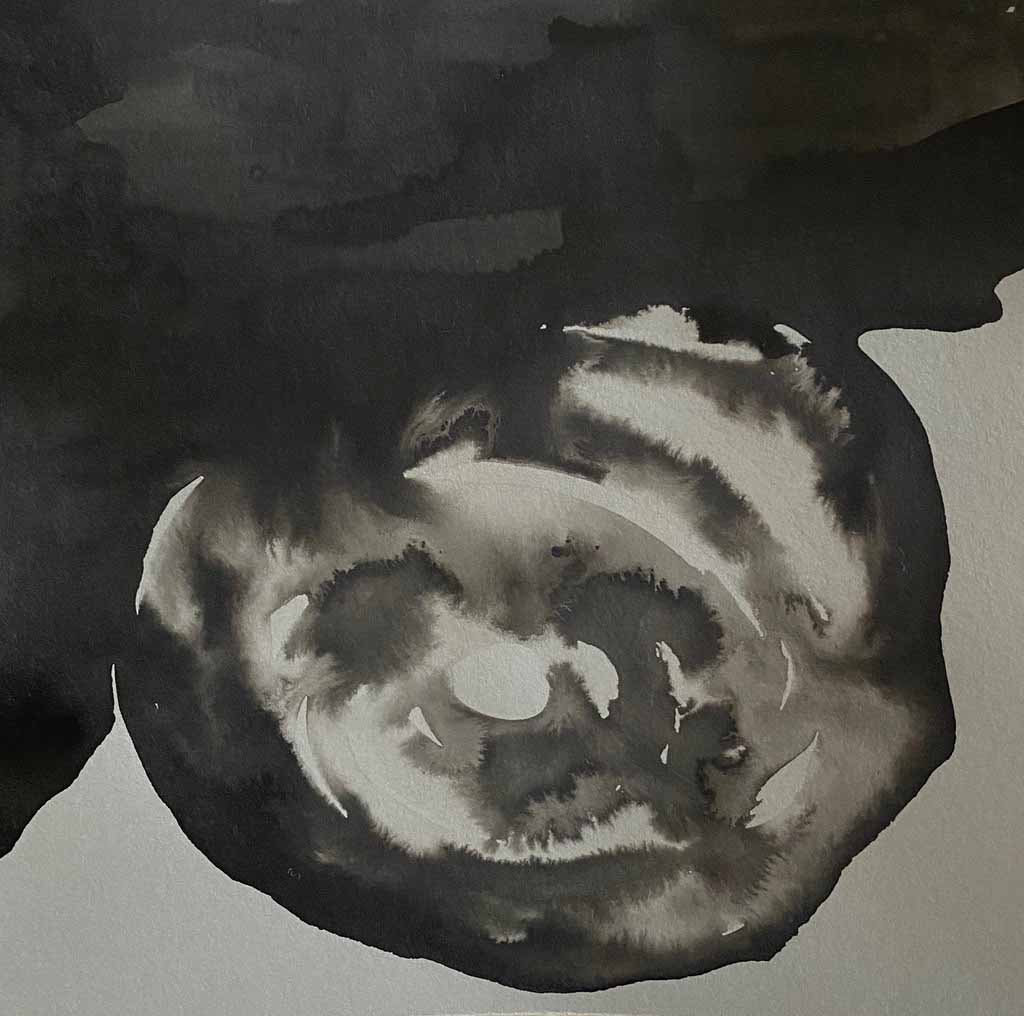
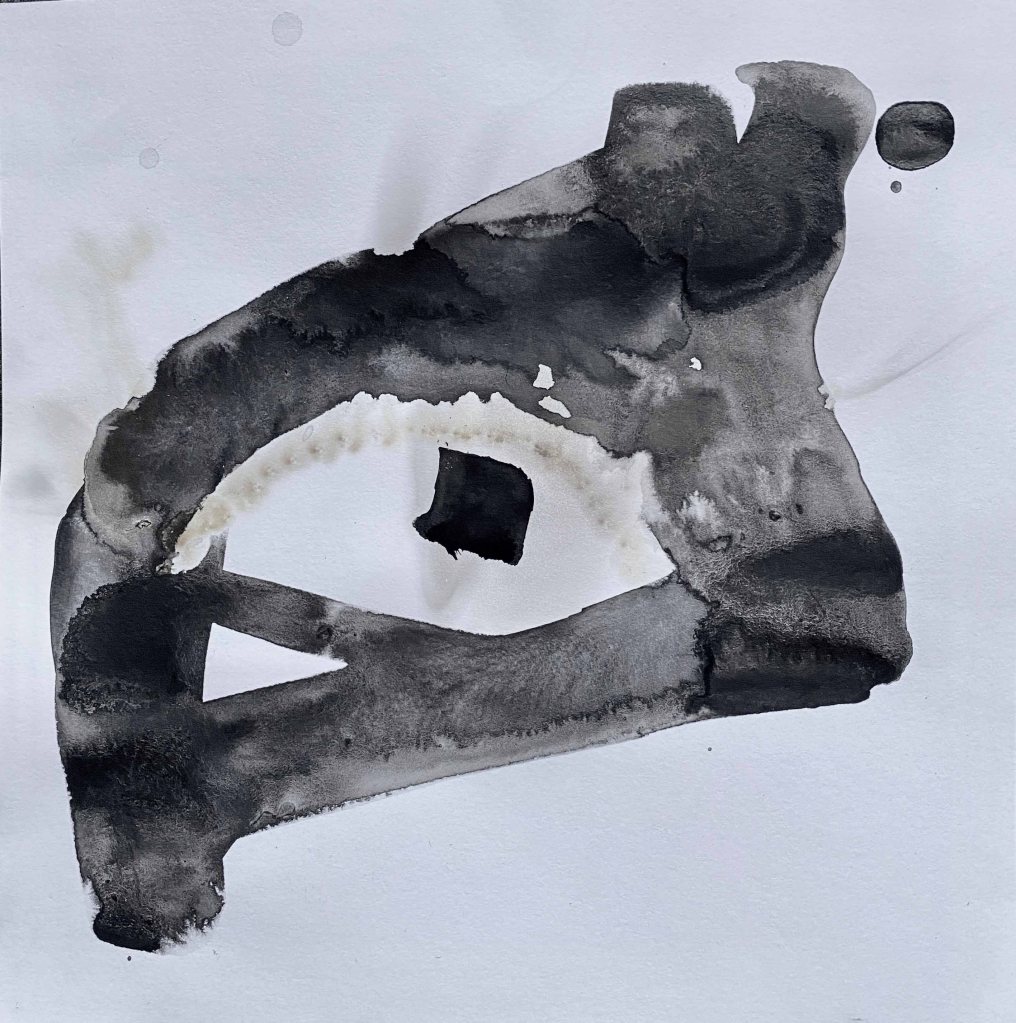
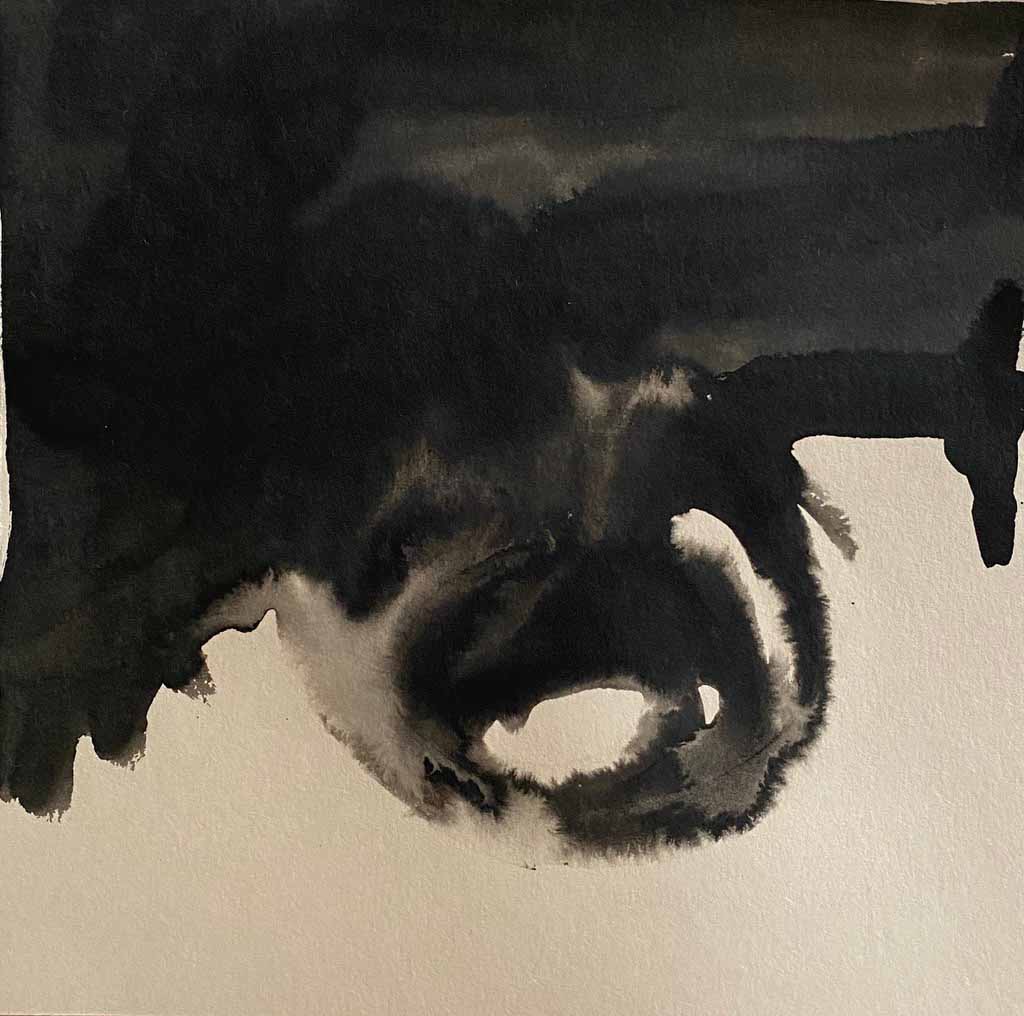
Day 2: Dark

Ink on paper. I chose this one:
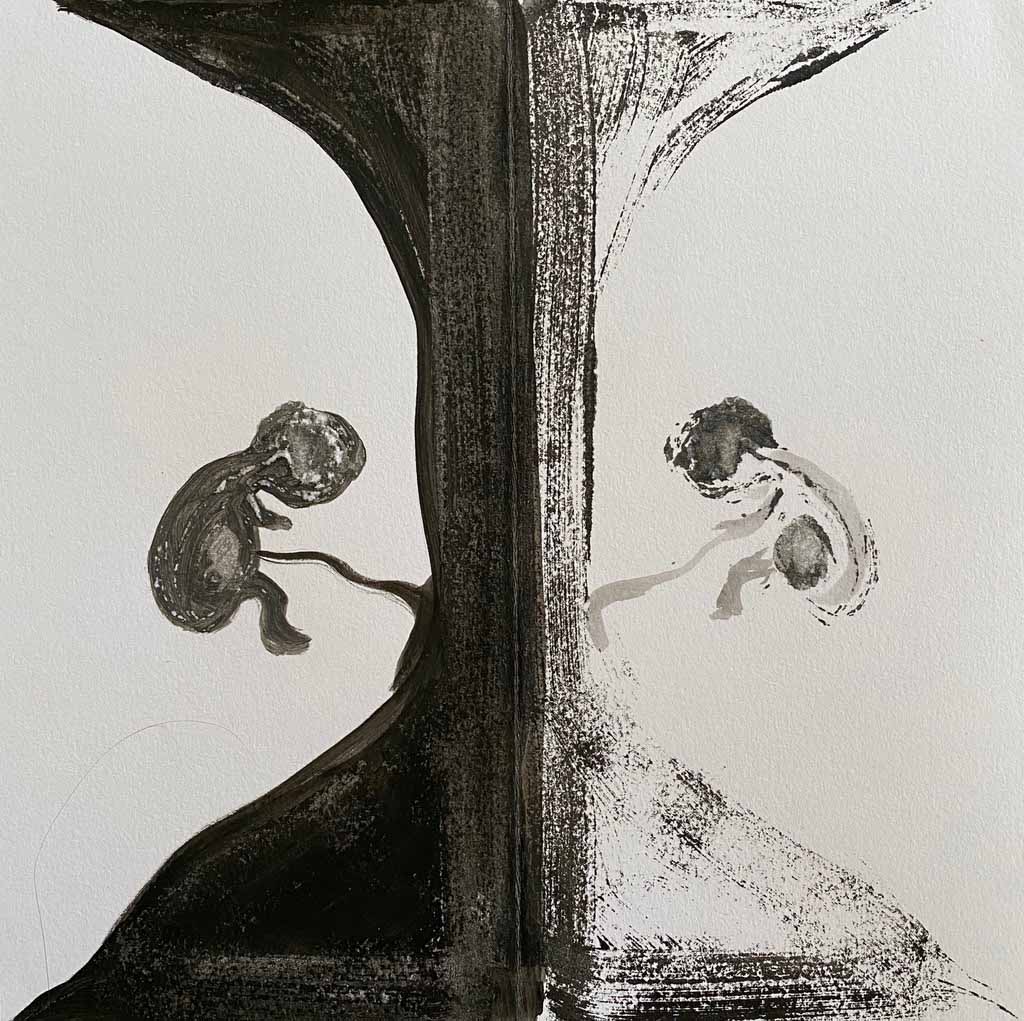
Day 3: Cutting

Cobra watersoluble oil on oilprepared paper:

I am planning to keep to monochrome images or use quite dull colours, like here Payne’s grey, maybe adding some earth tones or green where needed.

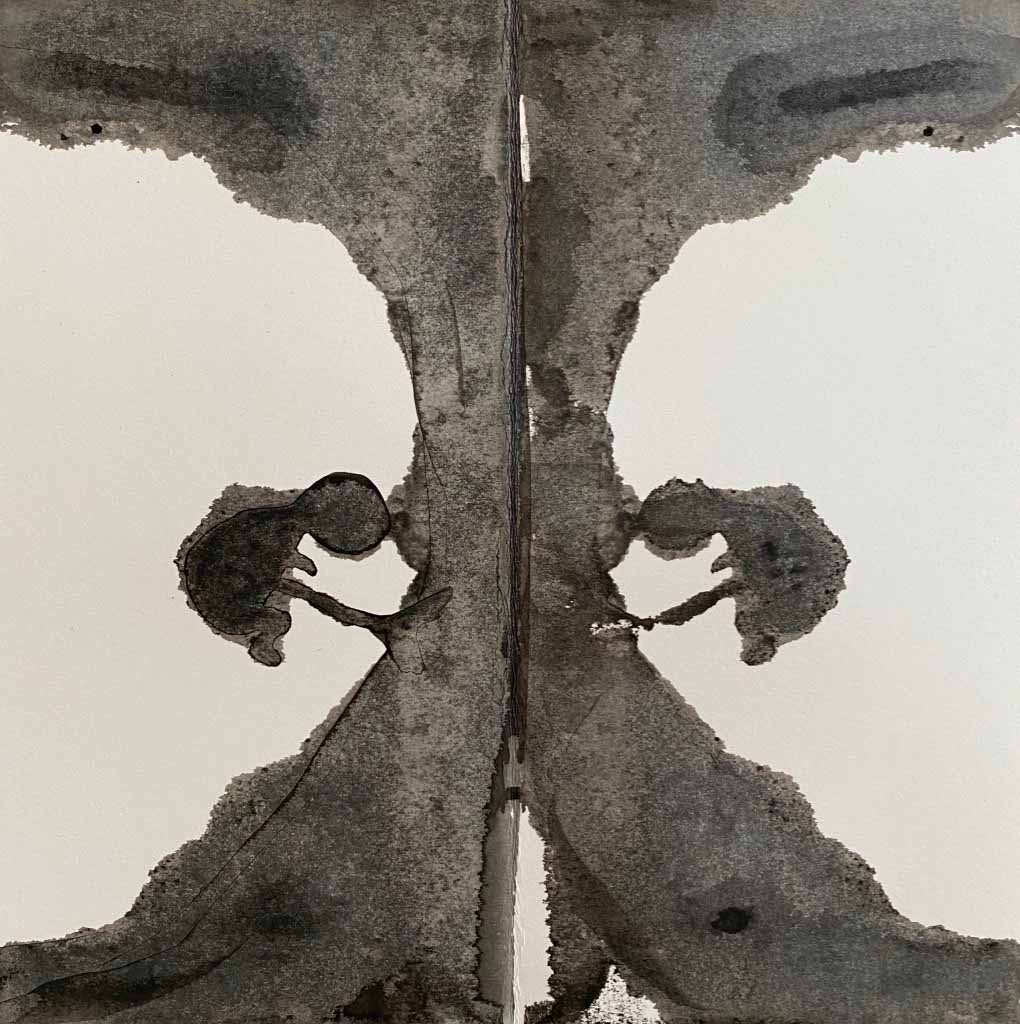
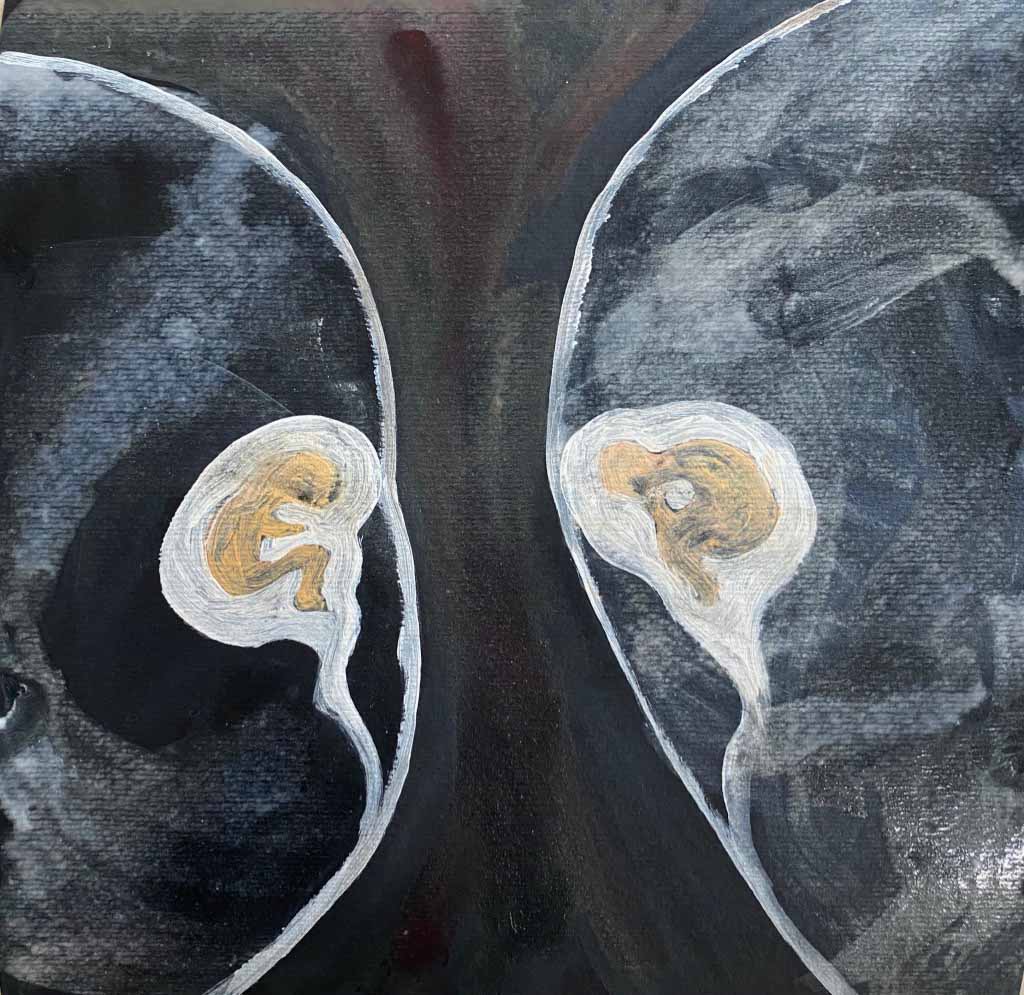
Day 4:Twin

Inkdrawings, the duplicated by folding the paper in half
Day 5: Shed

Watercolour and acrylic on brown wrapping paper

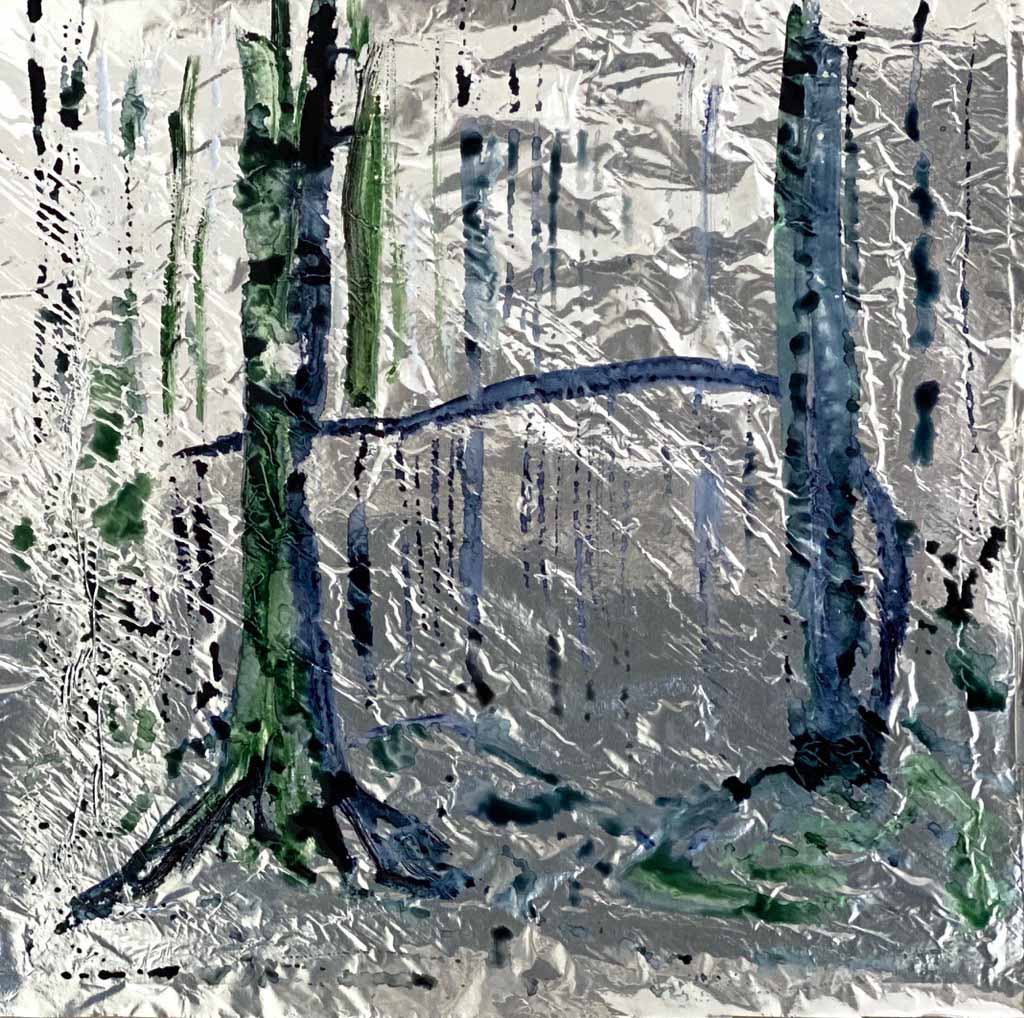
Day 6: Lake
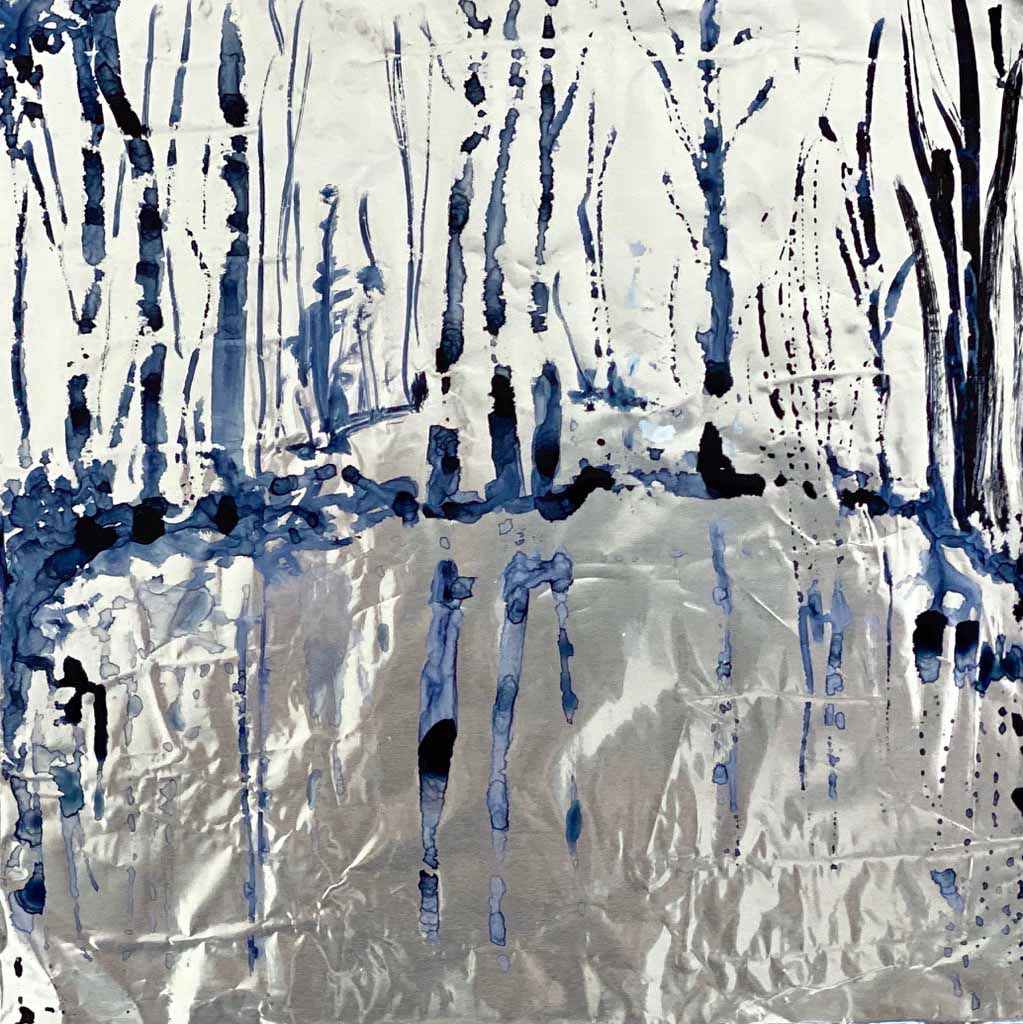
Today I experimented with QoRwatercolour on aluminium foil, to create that reflective quality of the watersurface.

Day 7:Toast

A very full day in the city, so today I did a quick drawing in a cafe, specially ordering toast to draw in on newsprint and photographing it on the spot. I think this image reflects the morning cafe mood well.

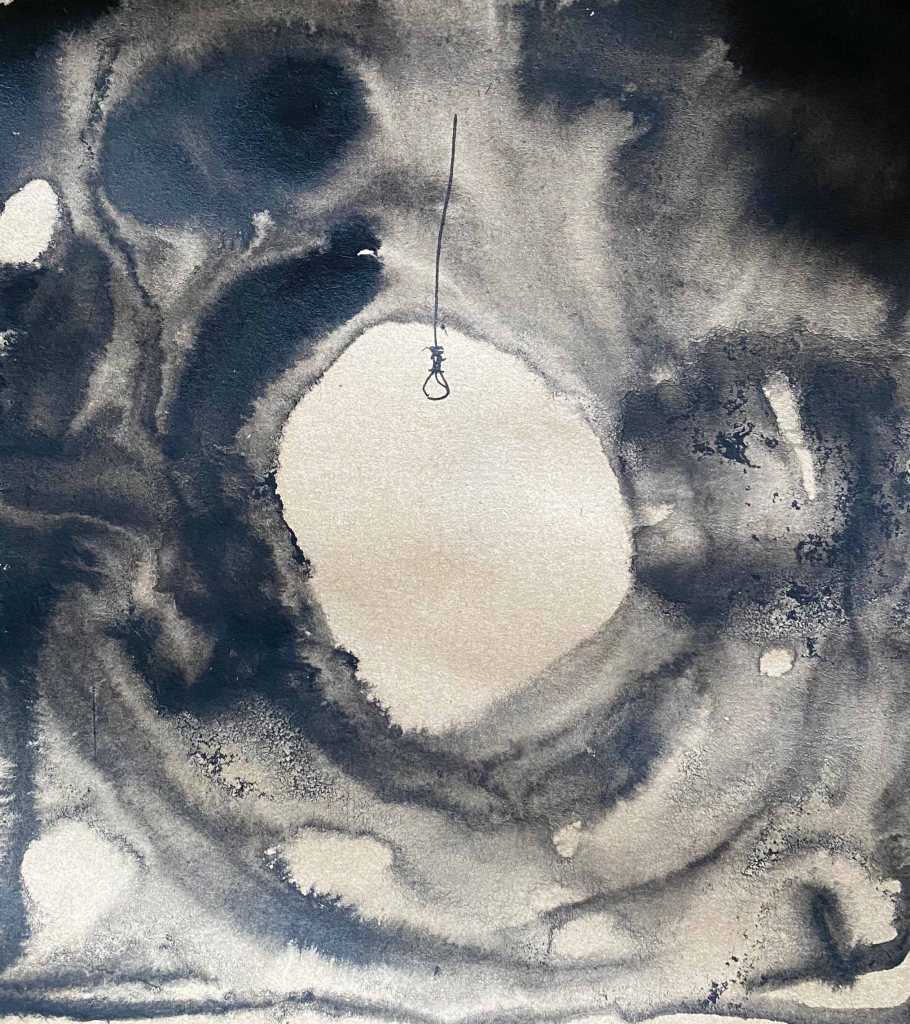
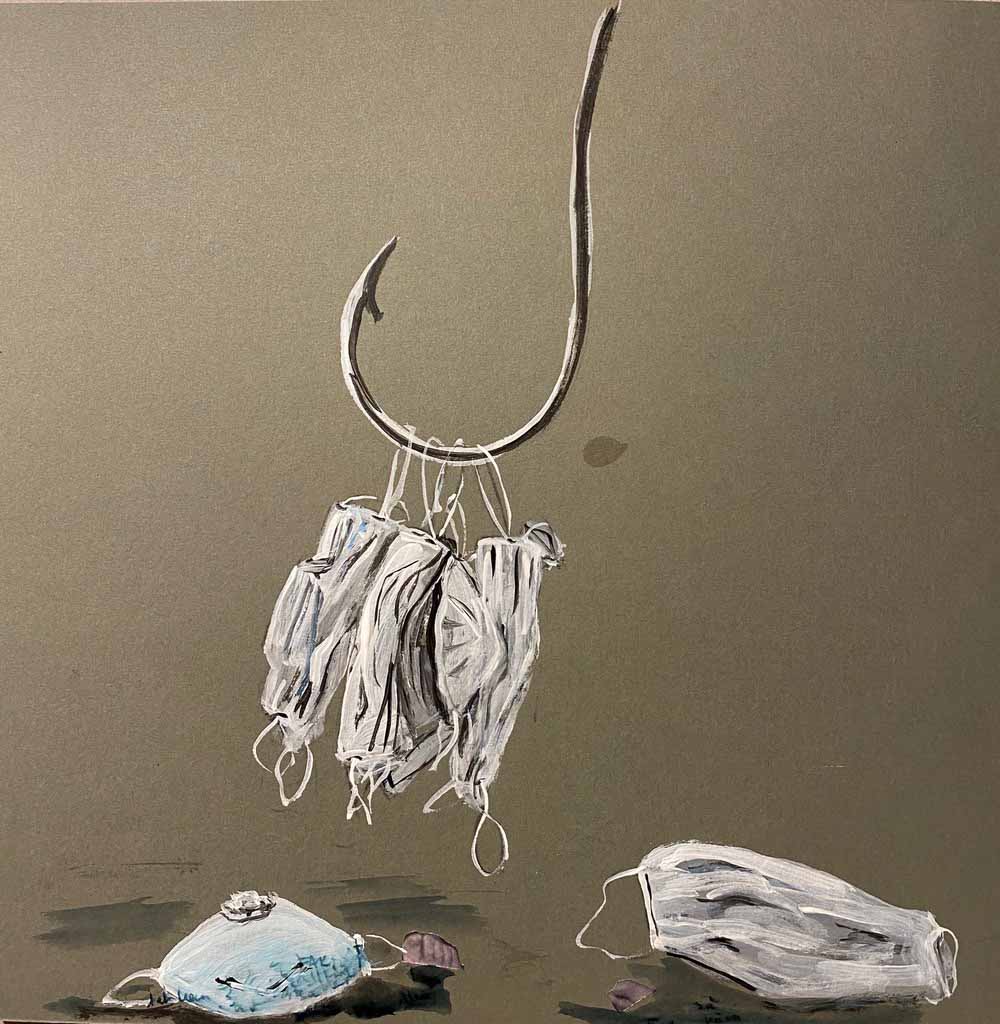
Day 8: Hook

A very full day , so I am grateful for this challenge or I would definitely not have drawn anything today, now I make it a late night. I have been wearing a mask all day in the city today, and am appalled by the amount of discarded masks I see everywhere. Acrylics on grey paper.
Day 9: Acid

As a photographer, I visited forests destroyed by acid rain a few years ago, a sight that I will never forget. Ink on paper.
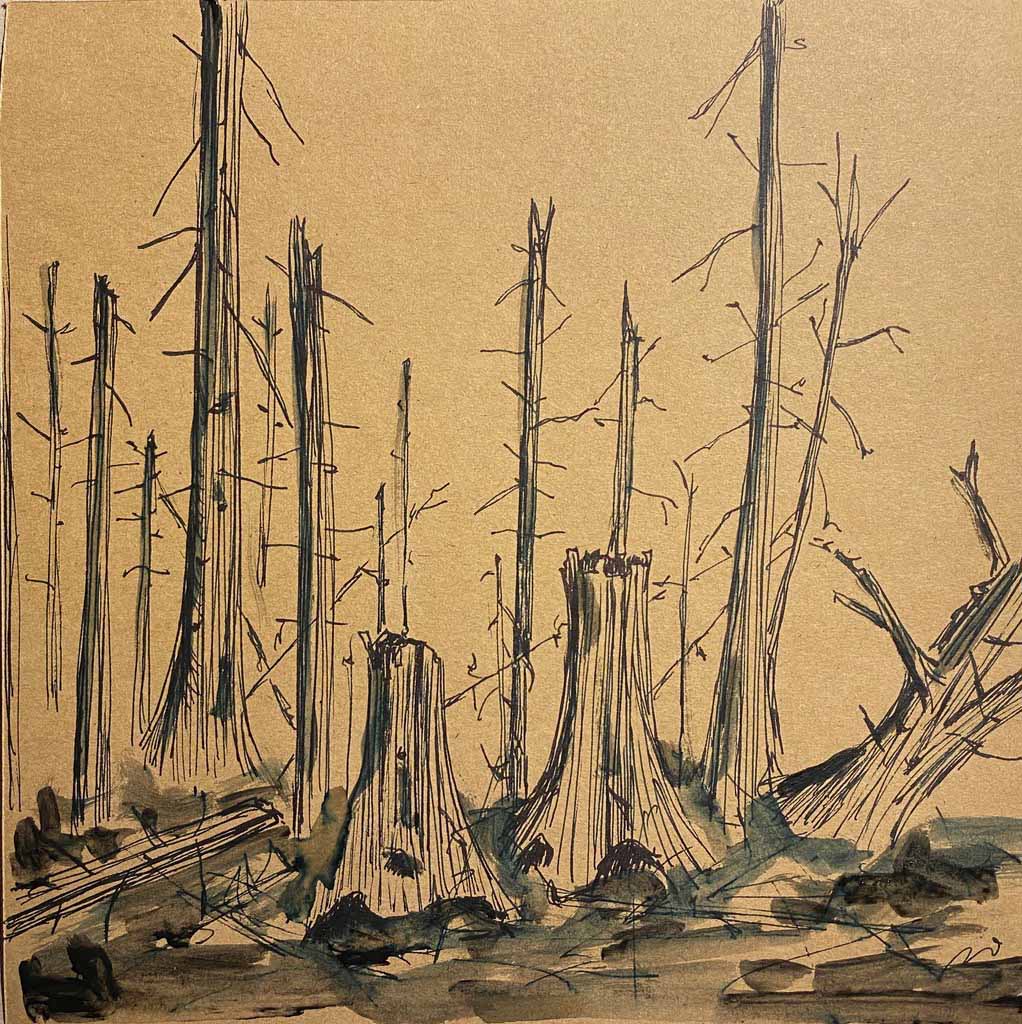
I then sprayed bleach on the drawing, filming the slow deterioration, melting of the trees. The very short film impression can be seen under the #OCAtober Instagram or @nowclara, link https://www.instagram.com/p/CGHr9KtgoJI/

Day 10: Mail

Todays’ prompt brought me back to my overflowing Inbox
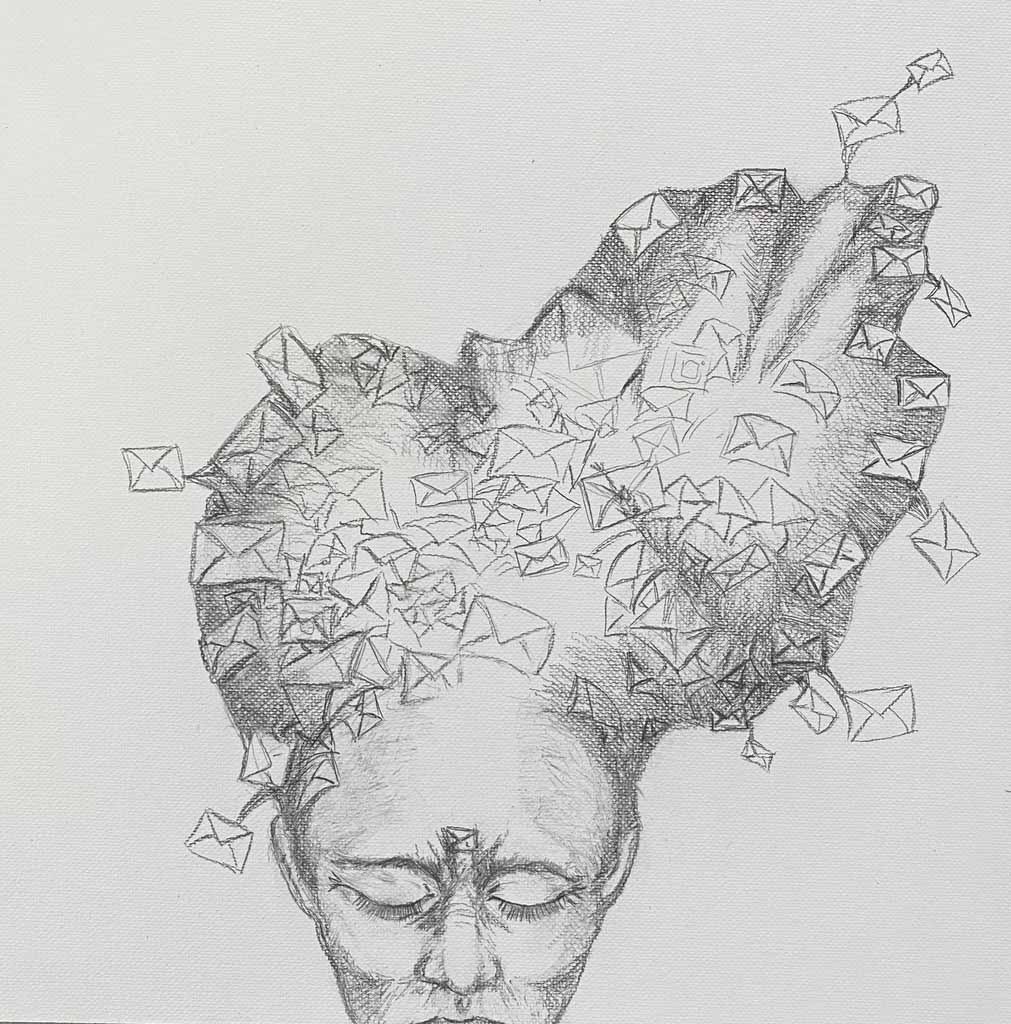
Pencildrawing on paper

Day 11: Sacrifice

Todays prompt was a tricky one, my imagination went from rituals of sacrifice, to the sacrifices of a mother for her children, and finally landed with how we are all sacrificing our planets natural resources for our lifestyle. Acrylics on newsprint of an article about forests disappearing.
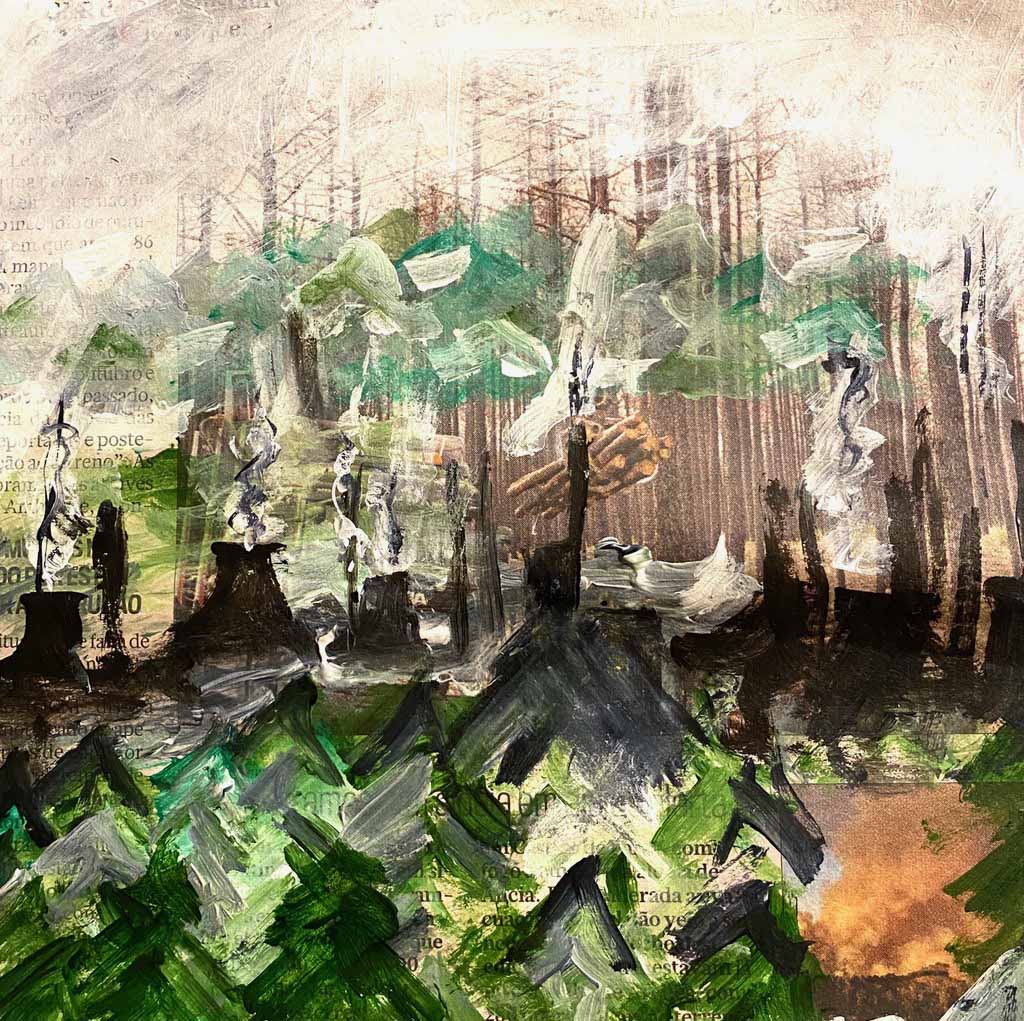
I am not happy with the final result here, but this type of challenge is also about learning to let go of everything having to be satisfying.

Day 12: Sharp

Today is a “cheatday” with really too little time. I use a quick trick, cutting a sharp line in paper.

I like the simplicity of this, and realize that I have to include more simple, graphical elements in the series.

Day 13: Throne

Another tricky prompt. My result is too illustrative .

Ink and acrylics on paper.

Day 14: Spoon

I am immediately thinking of a couple spooning, and decide to use monoprinting, oil on glass and acrylic paper
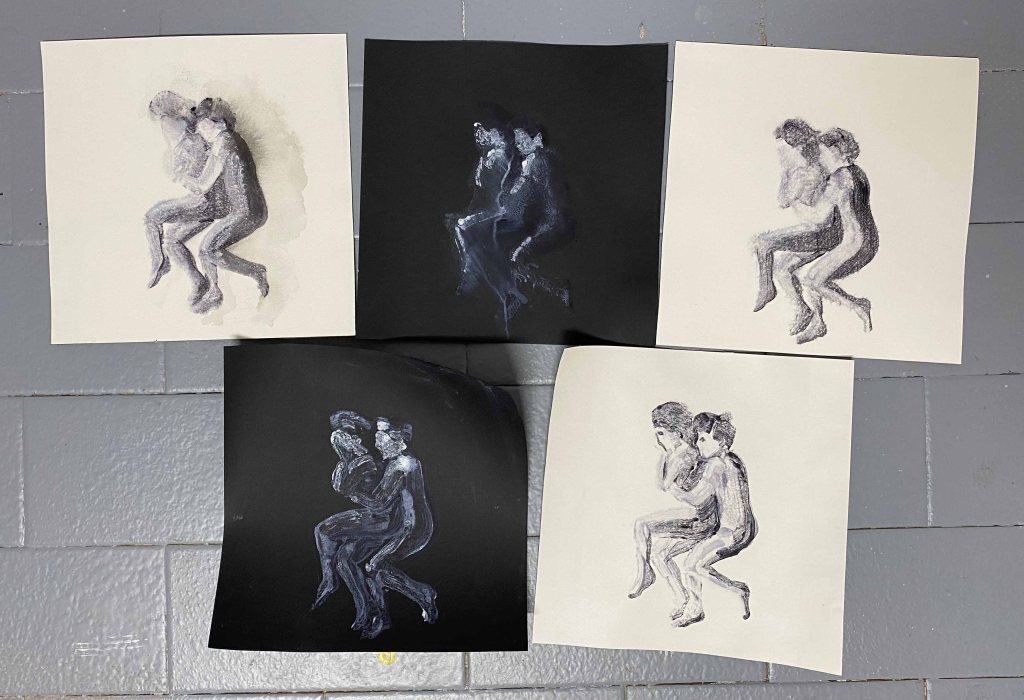
This is the one I choose:, I added a cloud of ink on the back to add some depth.
Day 15: Hair

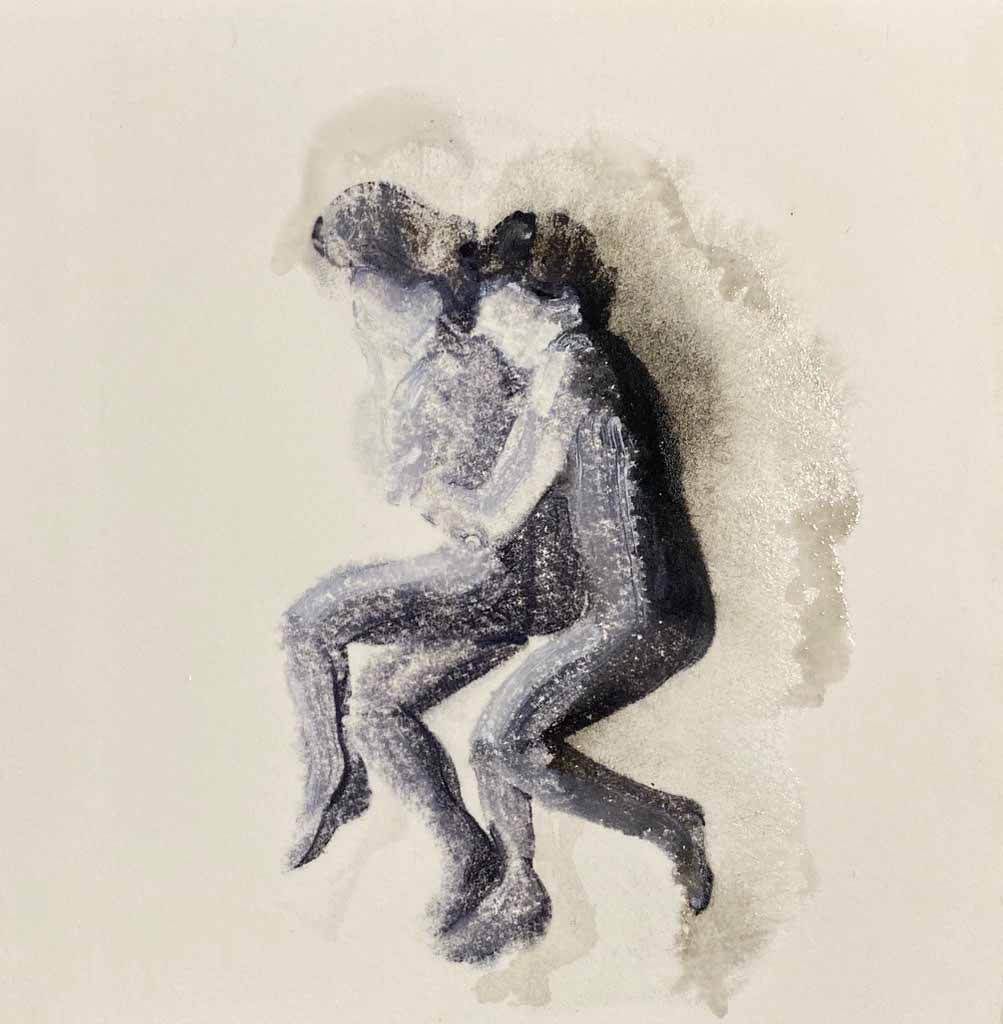
Hair in the sink! We have the perfect 70’s sink in the house. Cobra oil on oilprepared paper:

This little painting got a little too colourful for the series, but I think the mood of the scene fits in. It will be interesting to see when trying to puzzle the pieces together.

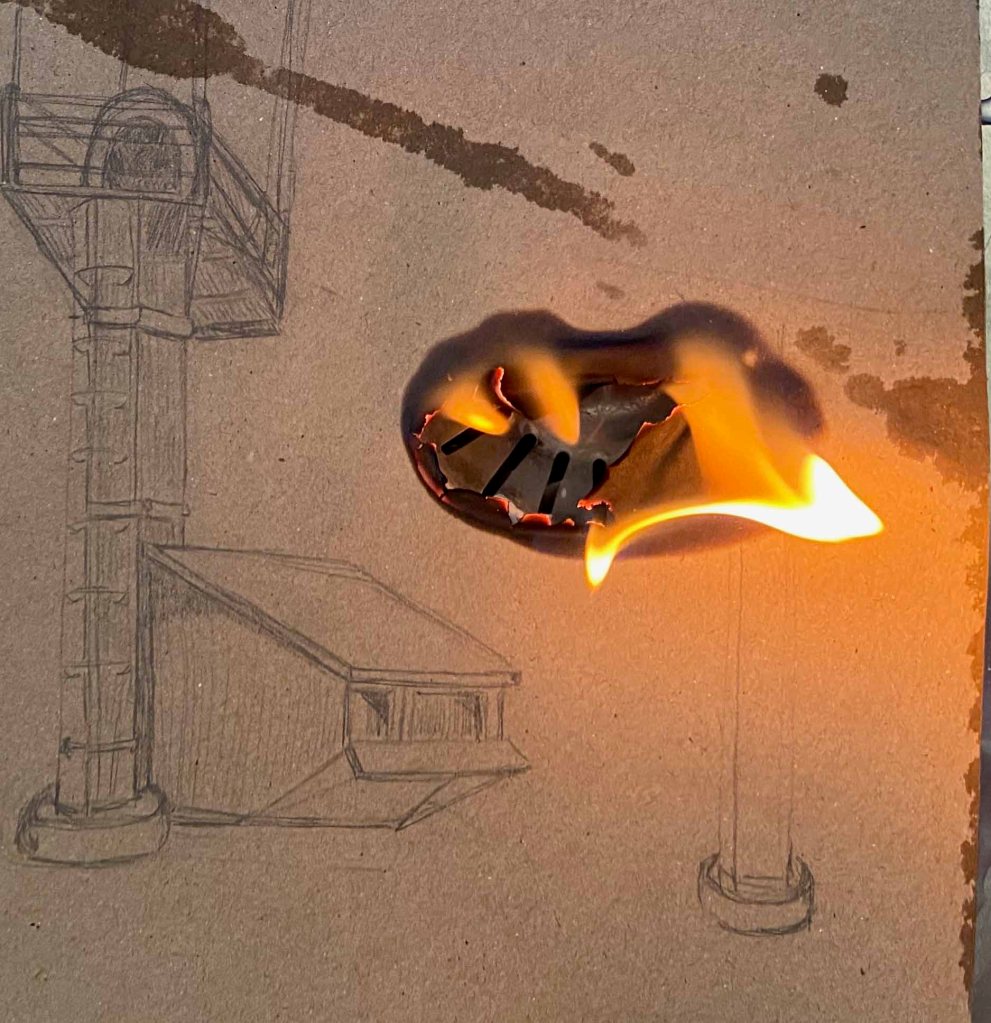
Day 16: Fire

I decide to make a pencildrawing of some industrial scene that I literally set on fire. This drawing will not be on the final panel as it is now a pile of ashes…
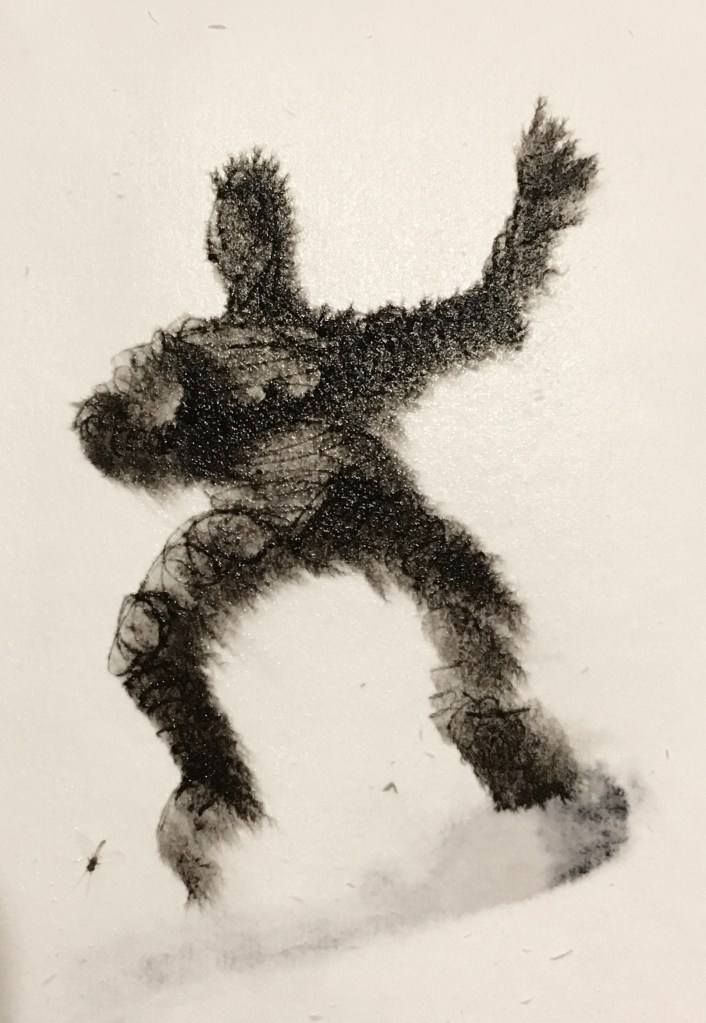
Day 17: Riser

Inkpen on wet paper. I really like this simple, spontaneous figure.
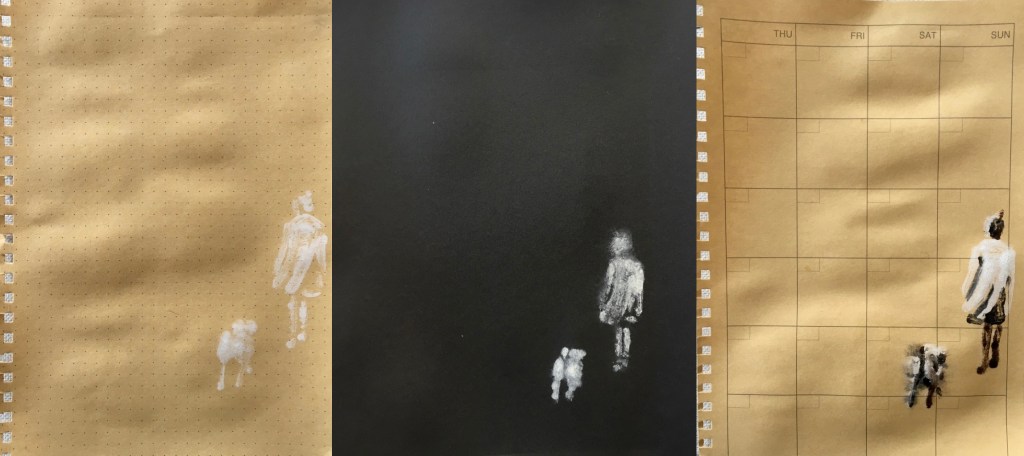
Day 18: Depart

Three monoprints on different papers of the same motive.
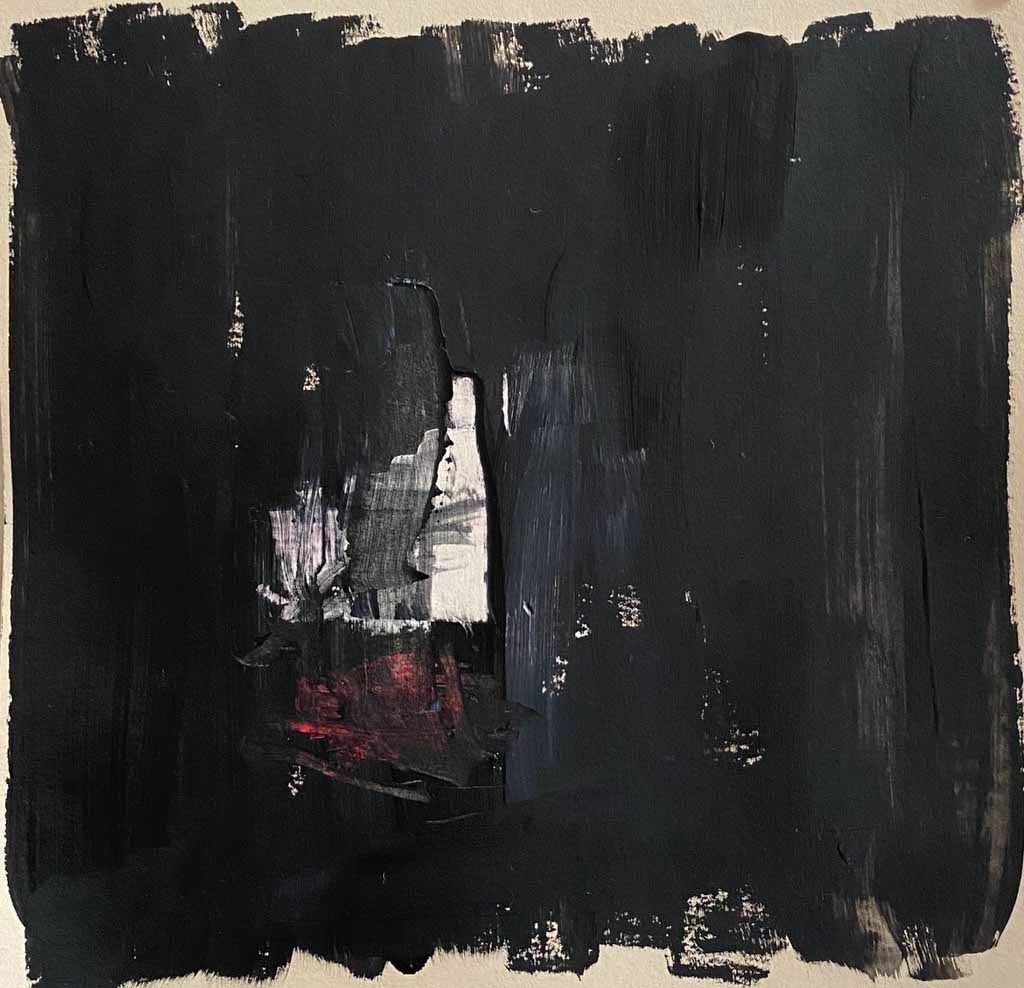
Day 19: Pocket

I have been thinking all day of todays’ prompt, and after all ideas with someone stuck in a pocket, or a mask in the suitpocket, I landed on a quick and simple abstract “pocket of light”, acrylics on paper.
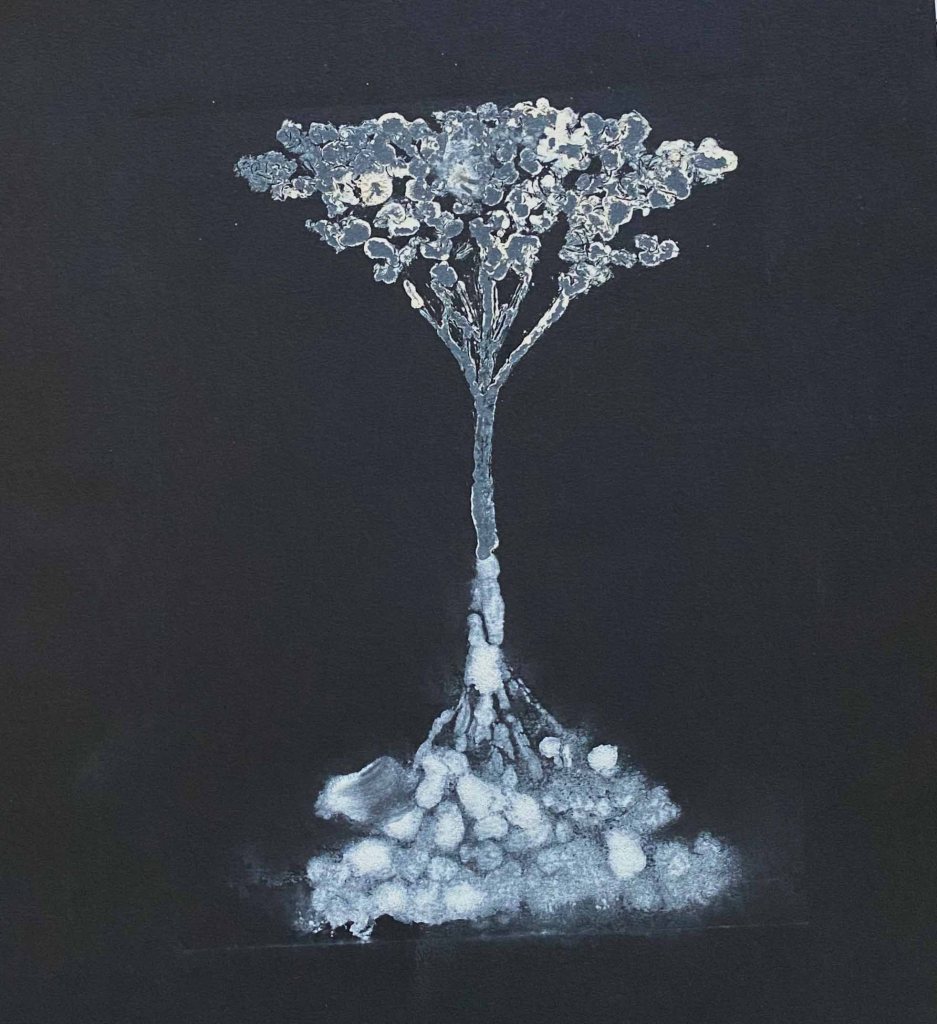
Day 20: Tree

Another monoprint of a “tree of life” with white oilcolour on black paper
Day 21: Match

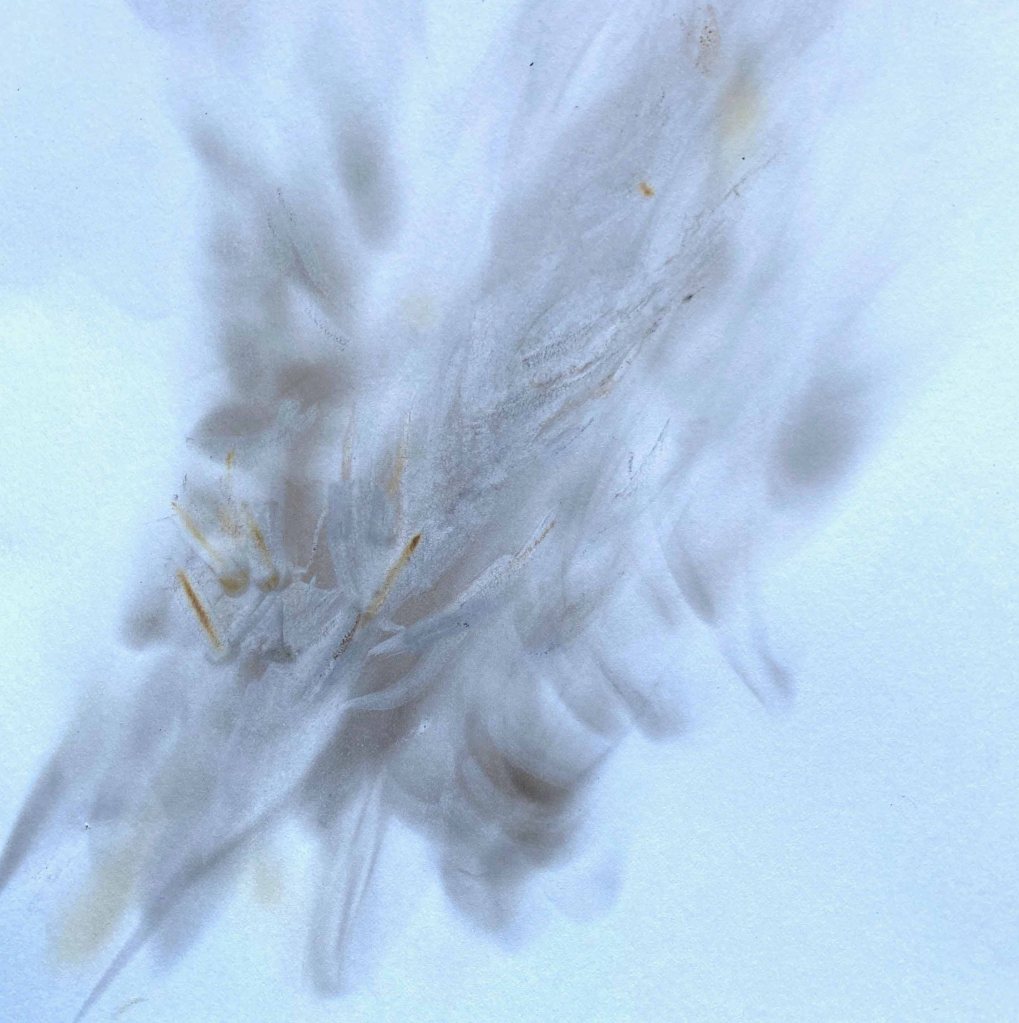
I decide to use todays’ prompt as a drawing tool instead of the subject- drawing by holding a match to the paper:
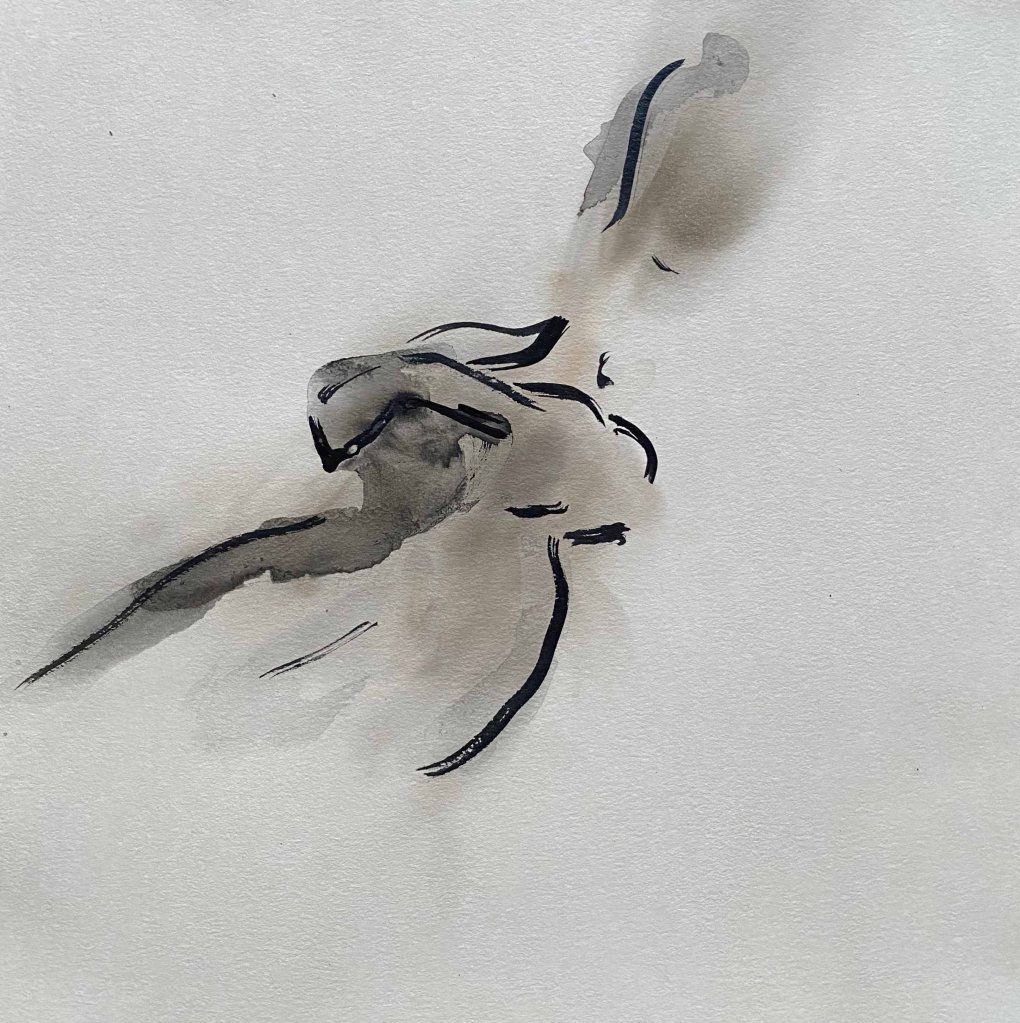
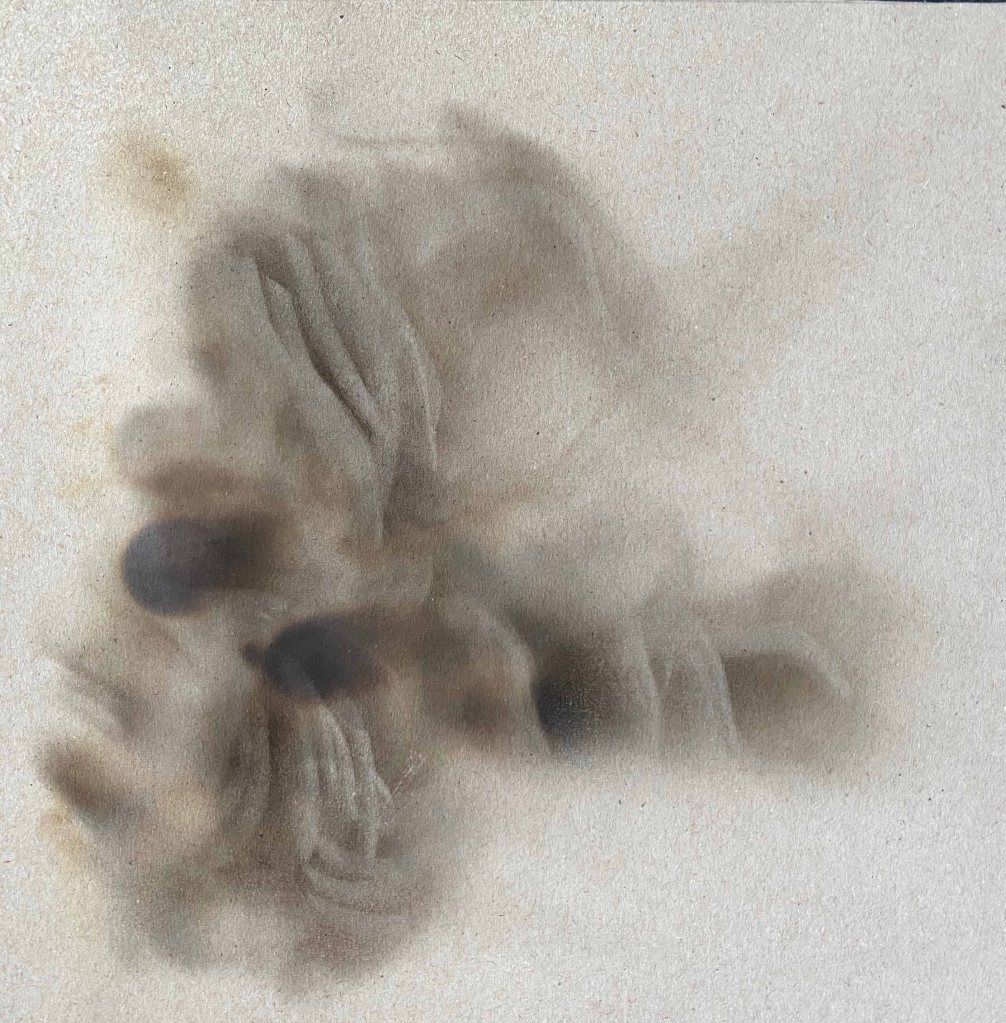
And the final little drawing:
Day 22: Kitchen

This was the one day I skipped..

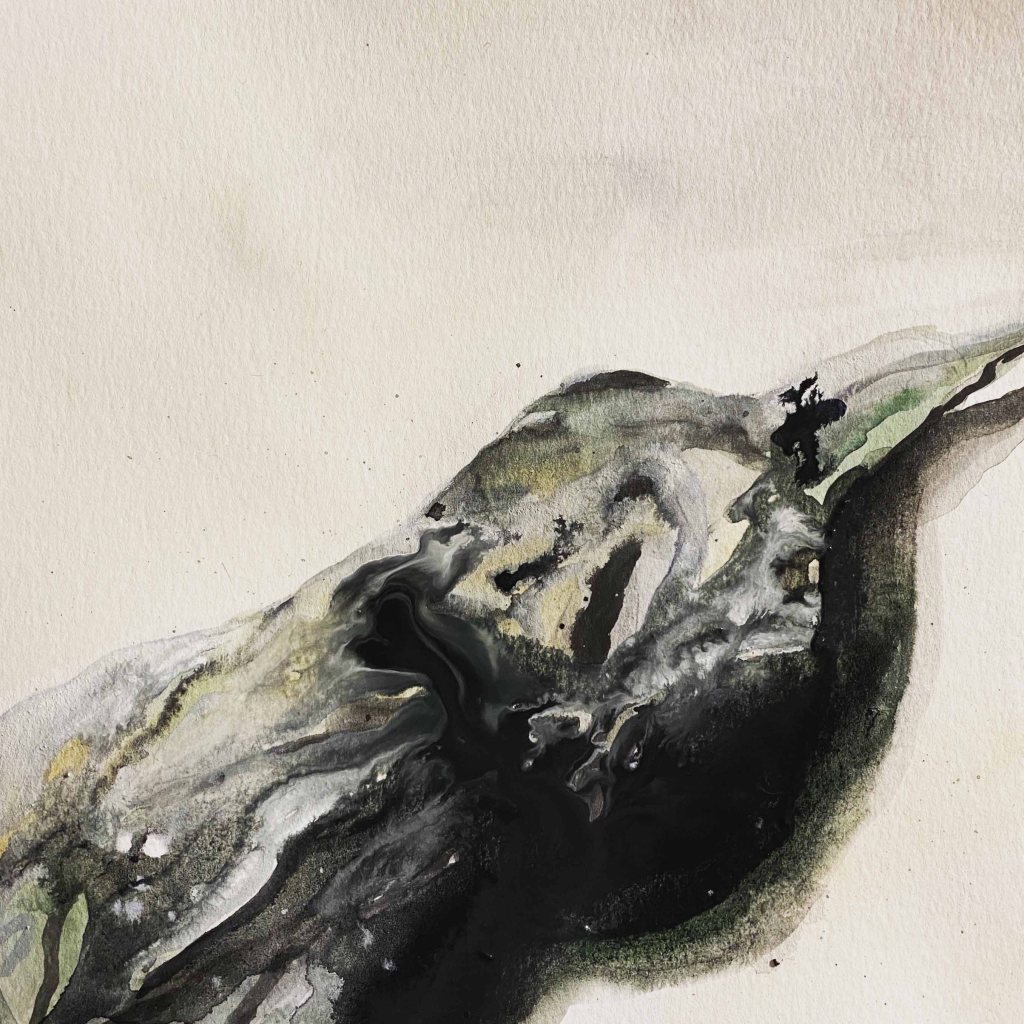
Day 23: Rotten

I found a genuinely rotten small pumpkin in the garden just in time for this prompt- Watercolour and Indian ink.
Day 24: Party

White gel pen and watercolour on black paper

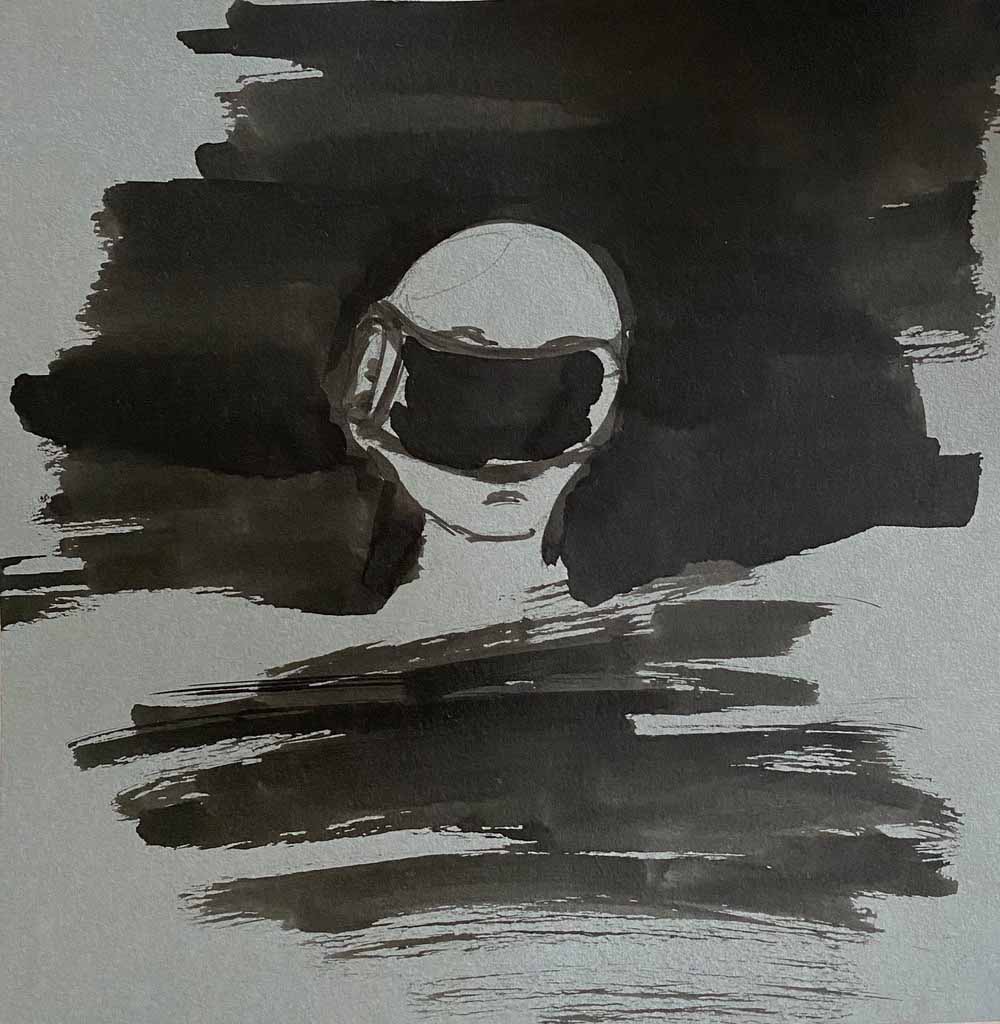
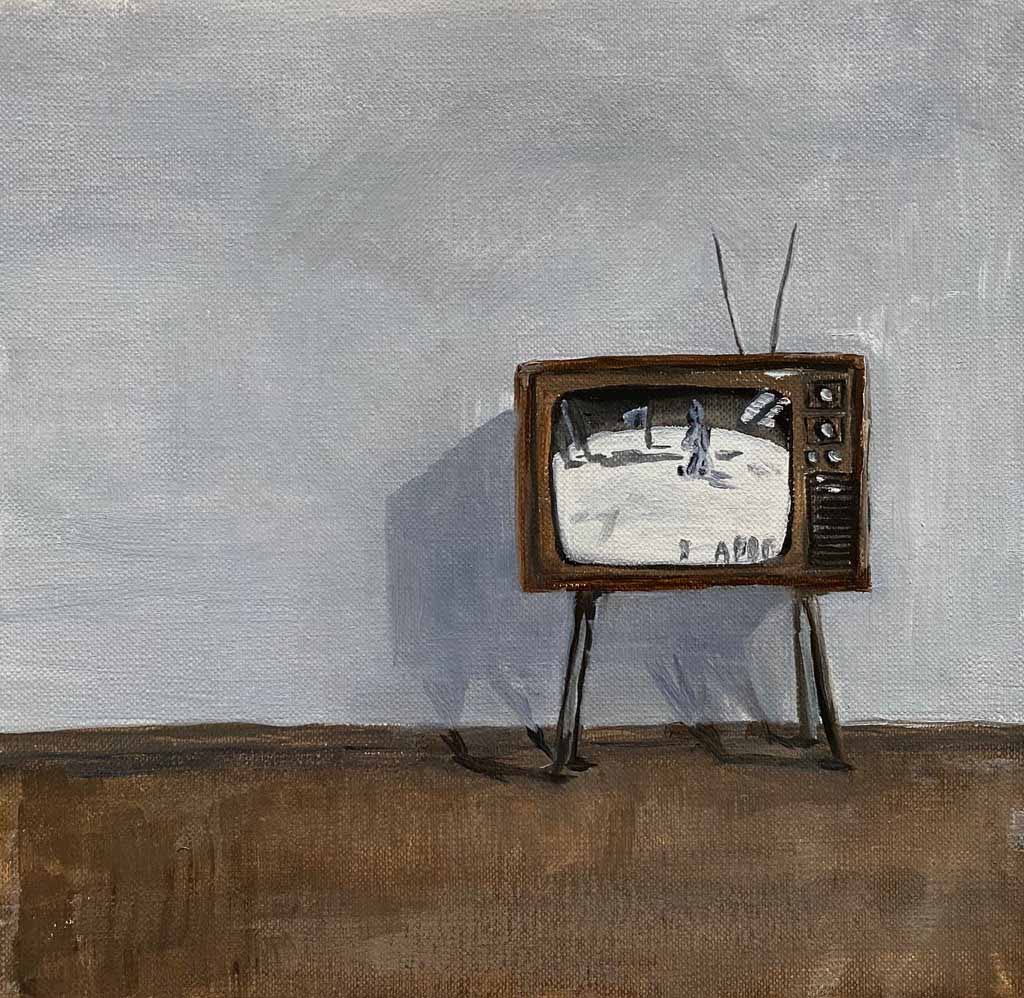
Day 25: Moon

I started with a whole series of monorpints that were very boring
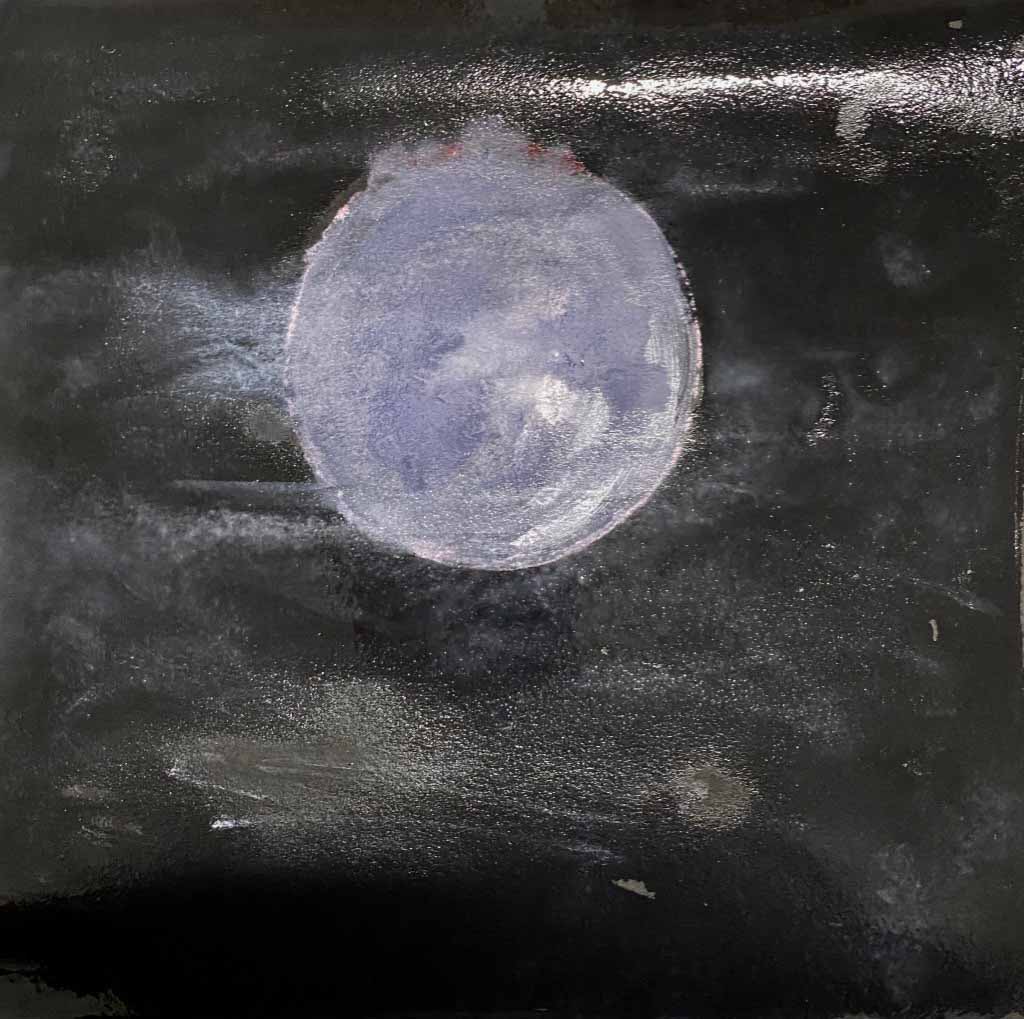
So instead I decided to paint the memory of the moonlanding on an oldfashioned TV in watersoluble oils.
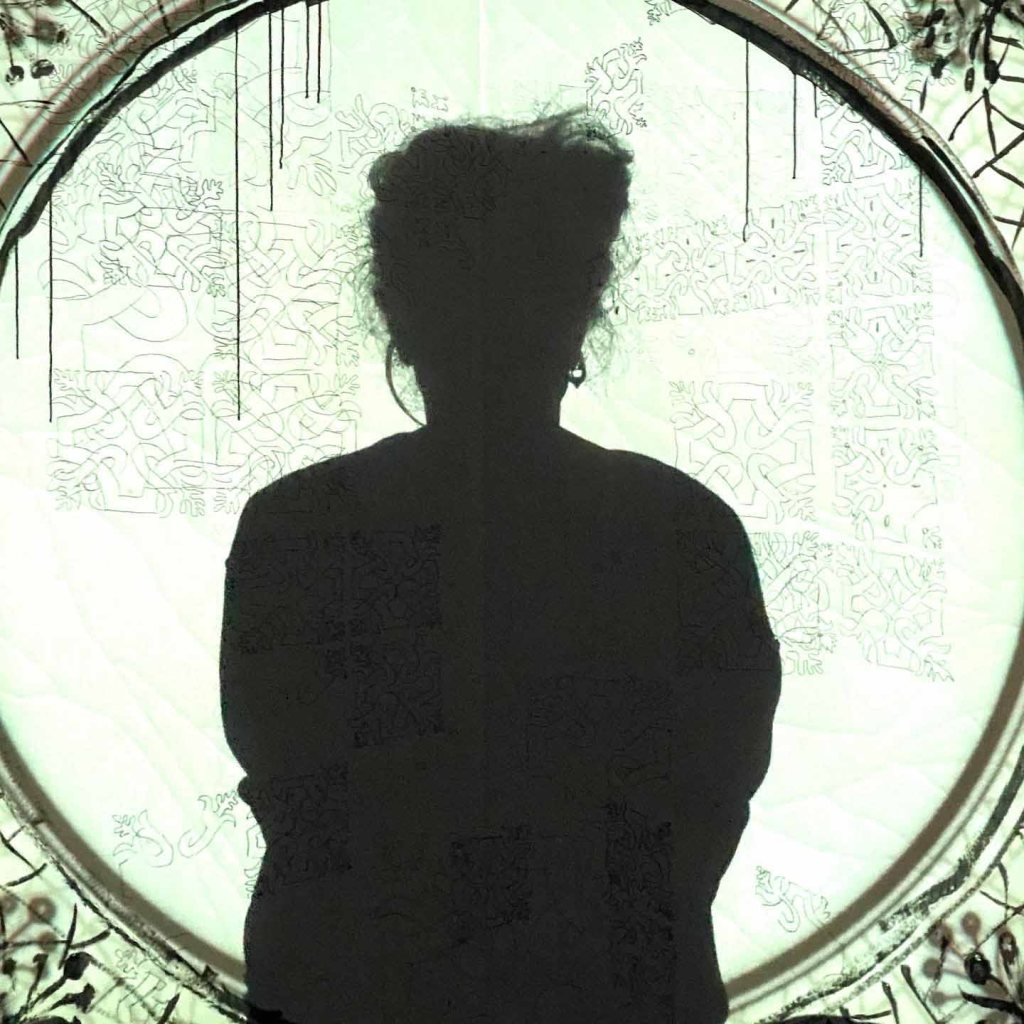
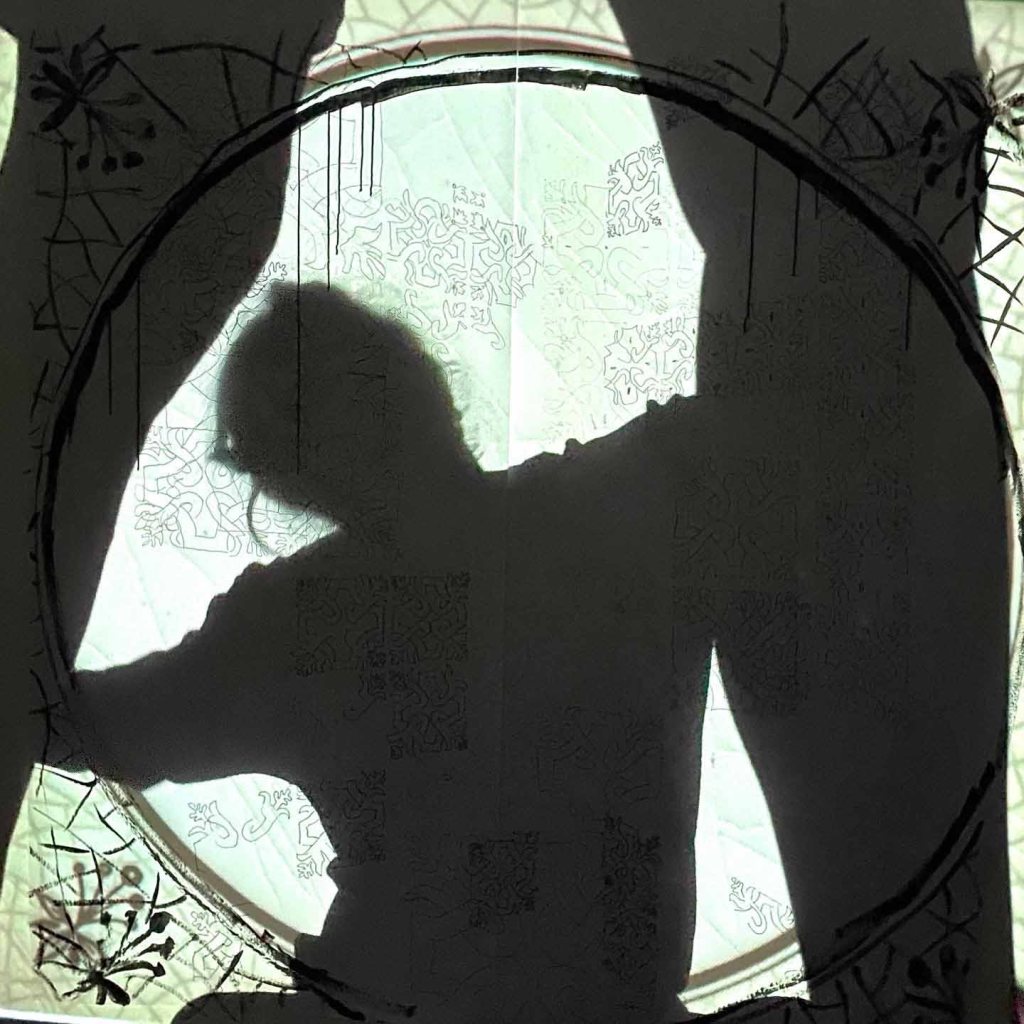
I also posted two photos that I took for project 5.2 An artists book:
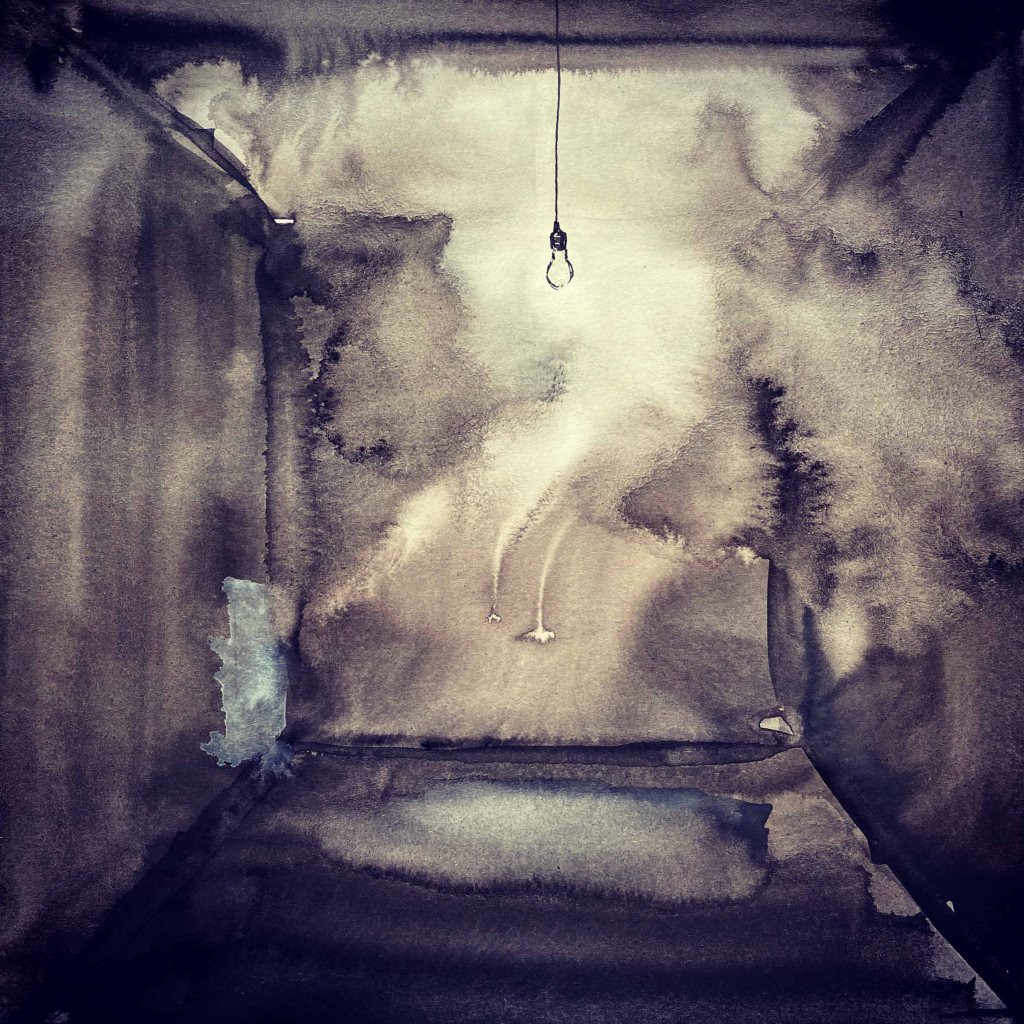
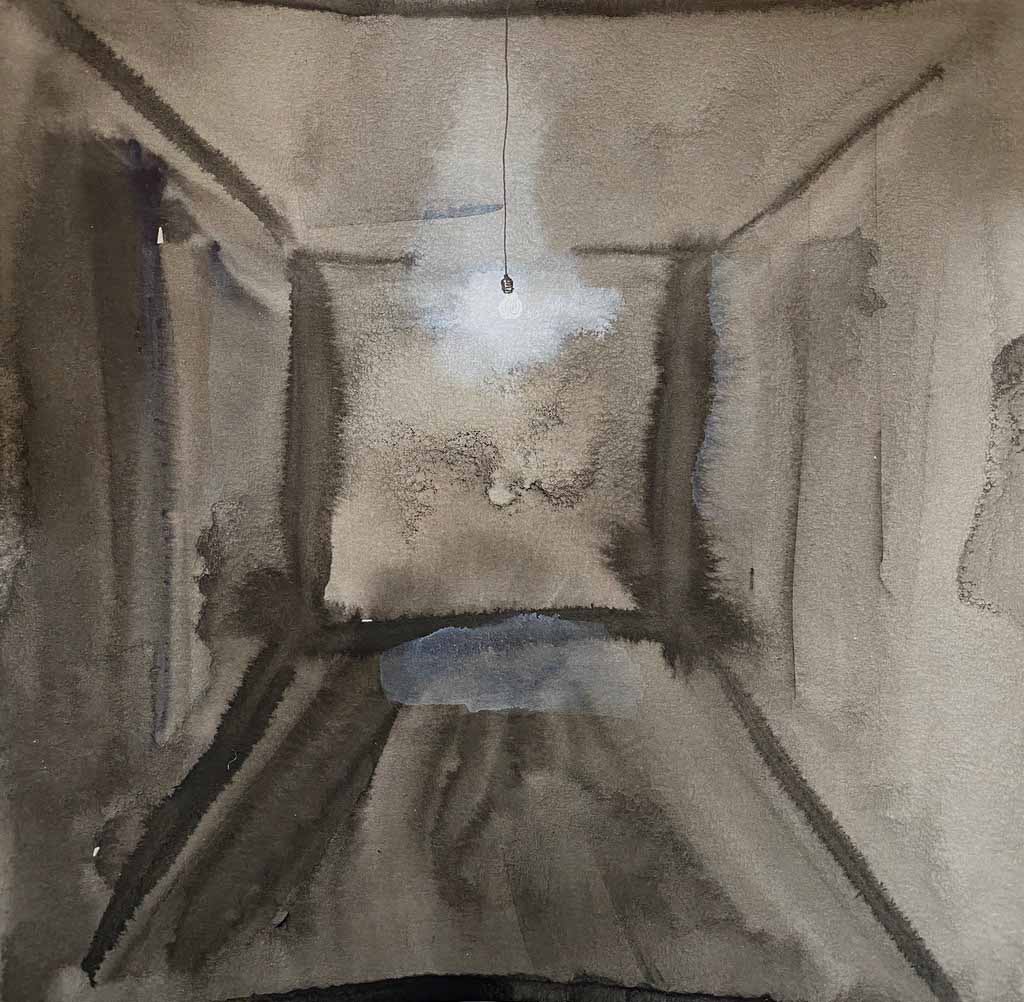
Day 26: Cellar

Indian ink on wet paper
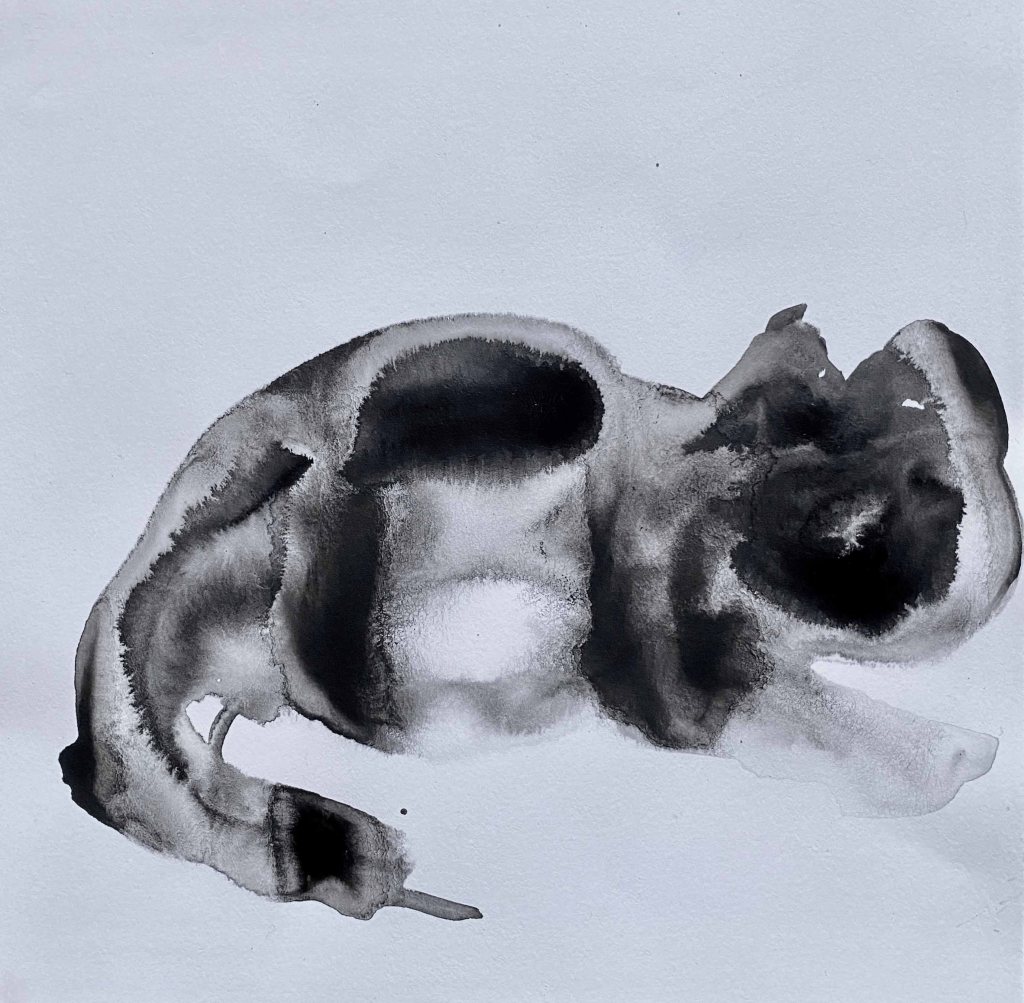
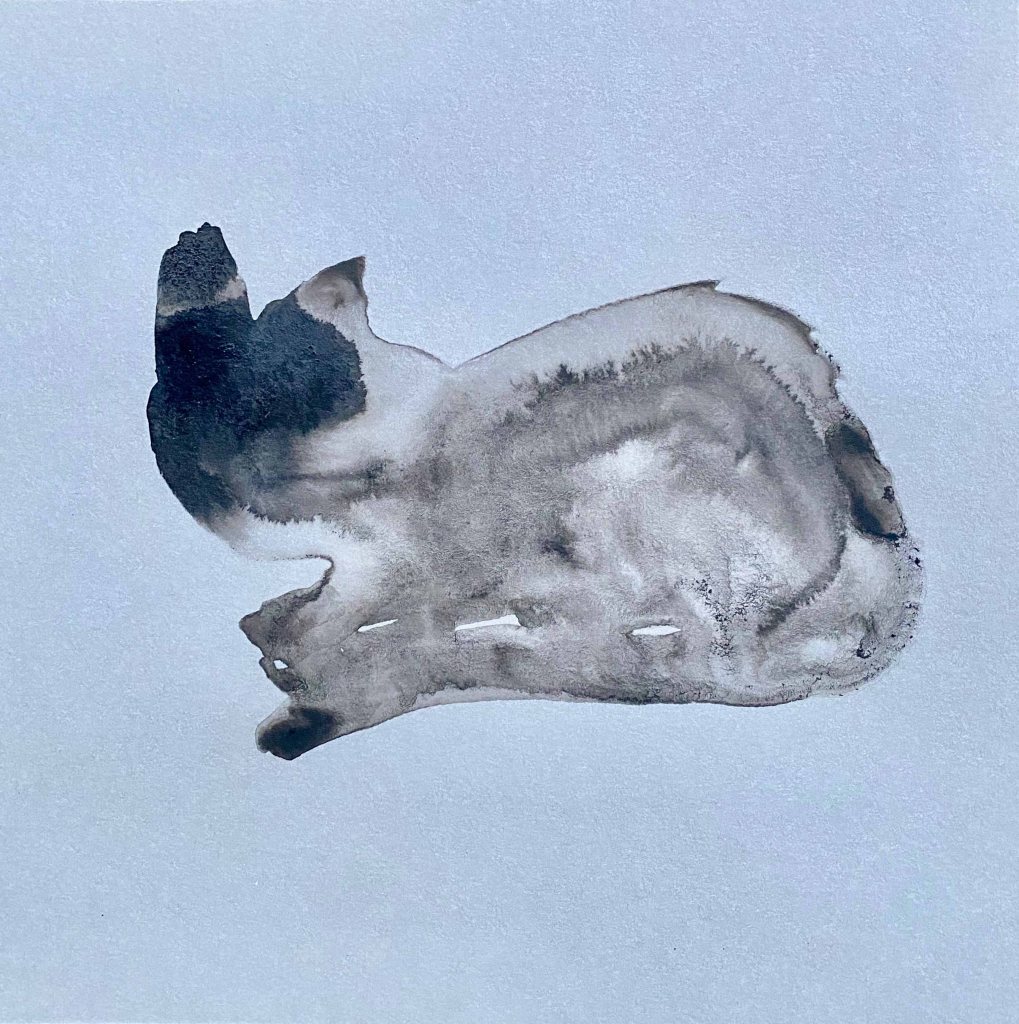
Day 27: Feline

Again, I am experimenting with “happy accidents” with Indian ink on wet paper
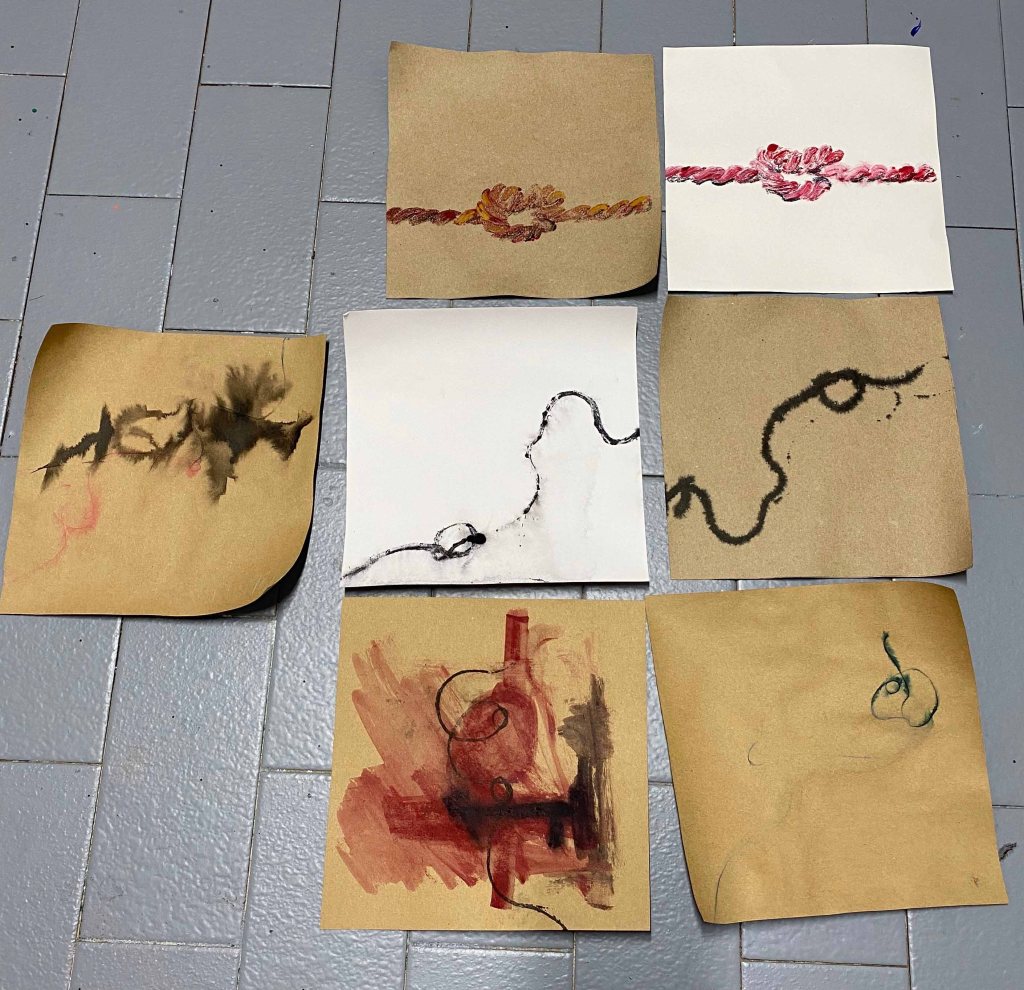
Day 28: Tie

Here I start by a series of monoprints of various knots to a not very satisfactory result
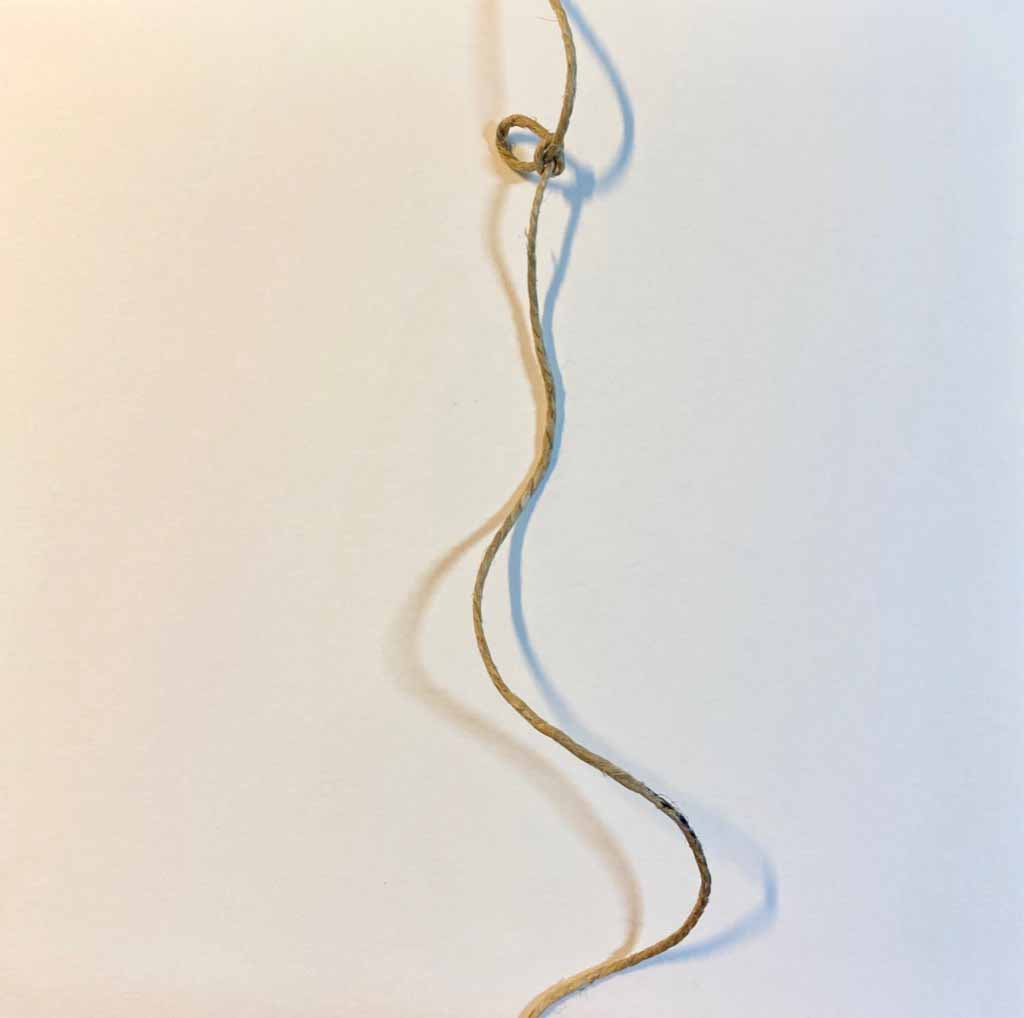
Finally I choose a much simpler, very graphic version:
Day 29: Trick

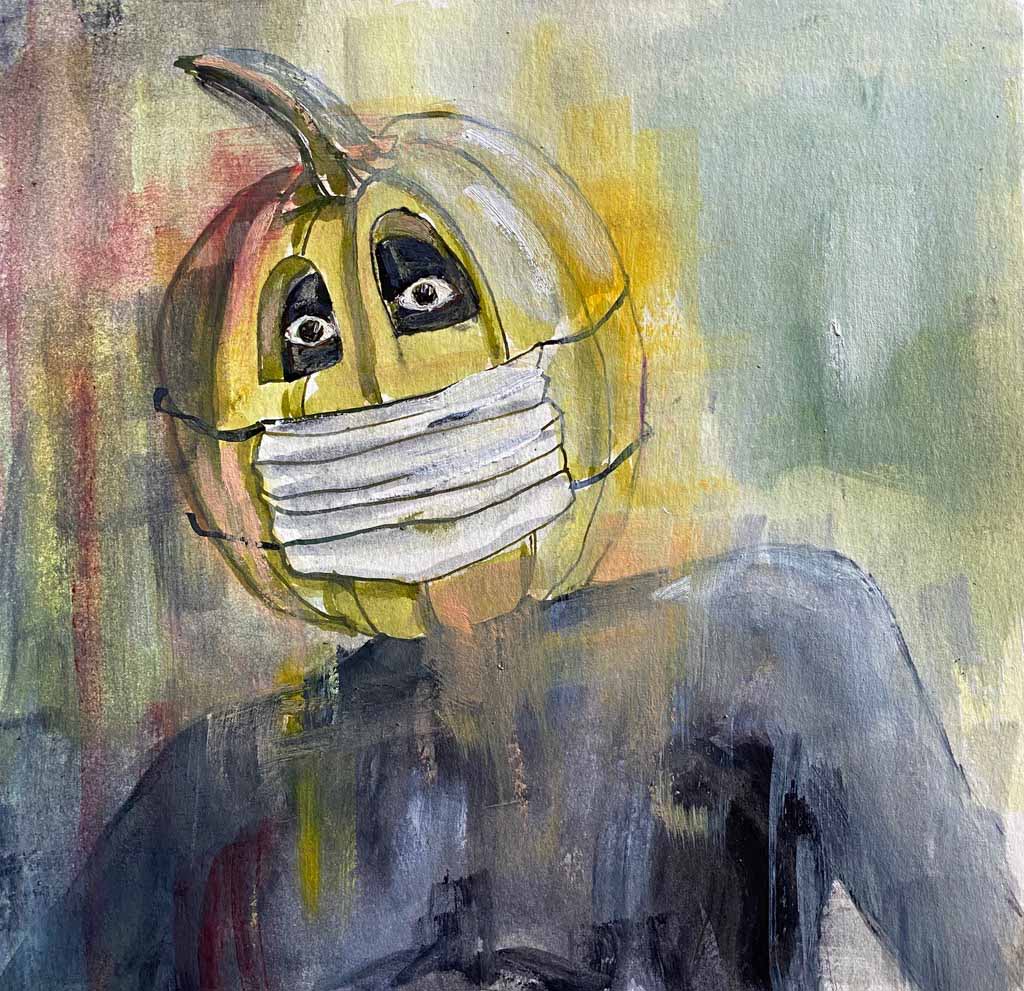
Halloween is coming up, and on top of that we all are wearing masks already, so a masquerade pumpkin head seemed appropriate. Oil and ink on oilpaper.
Day 30: Flowerbed

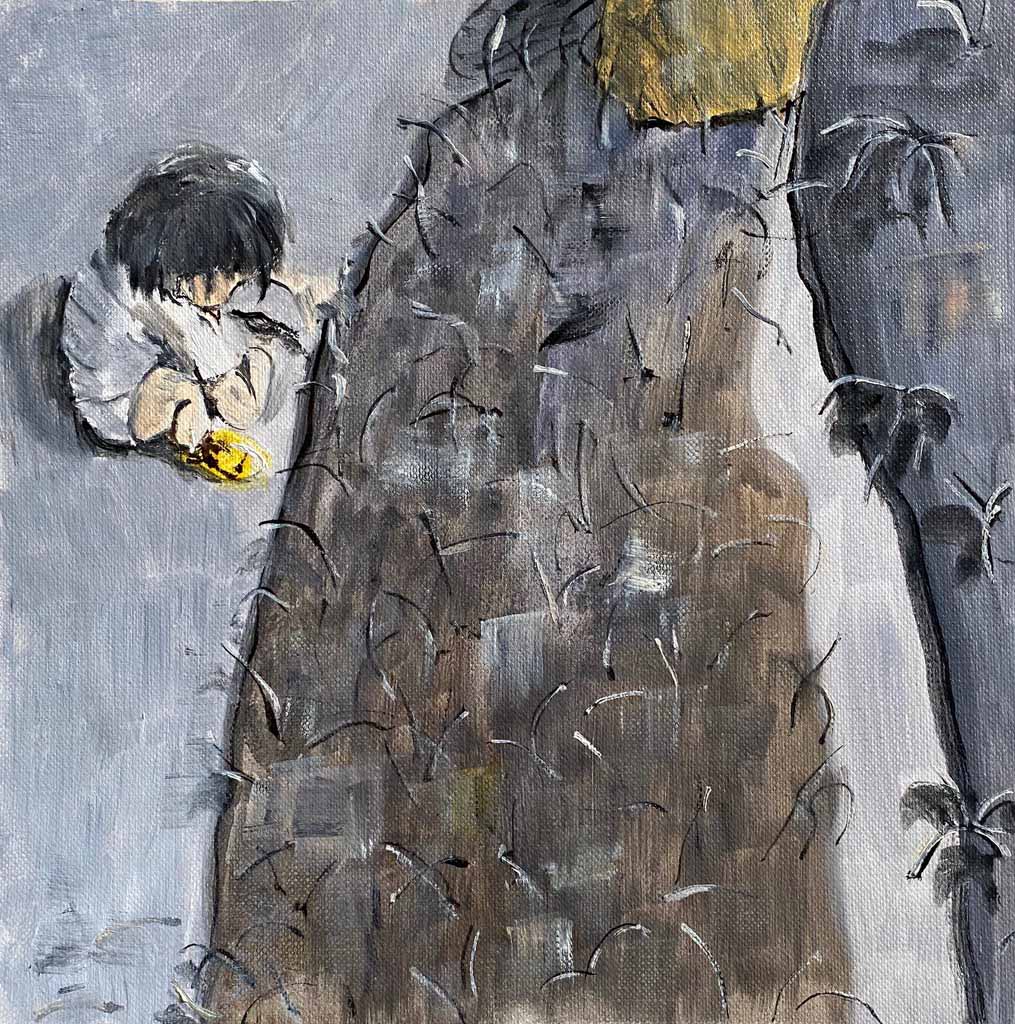
It is autumn and the flowerbeds are dry and dull- oil on paper
Day 31: Blue

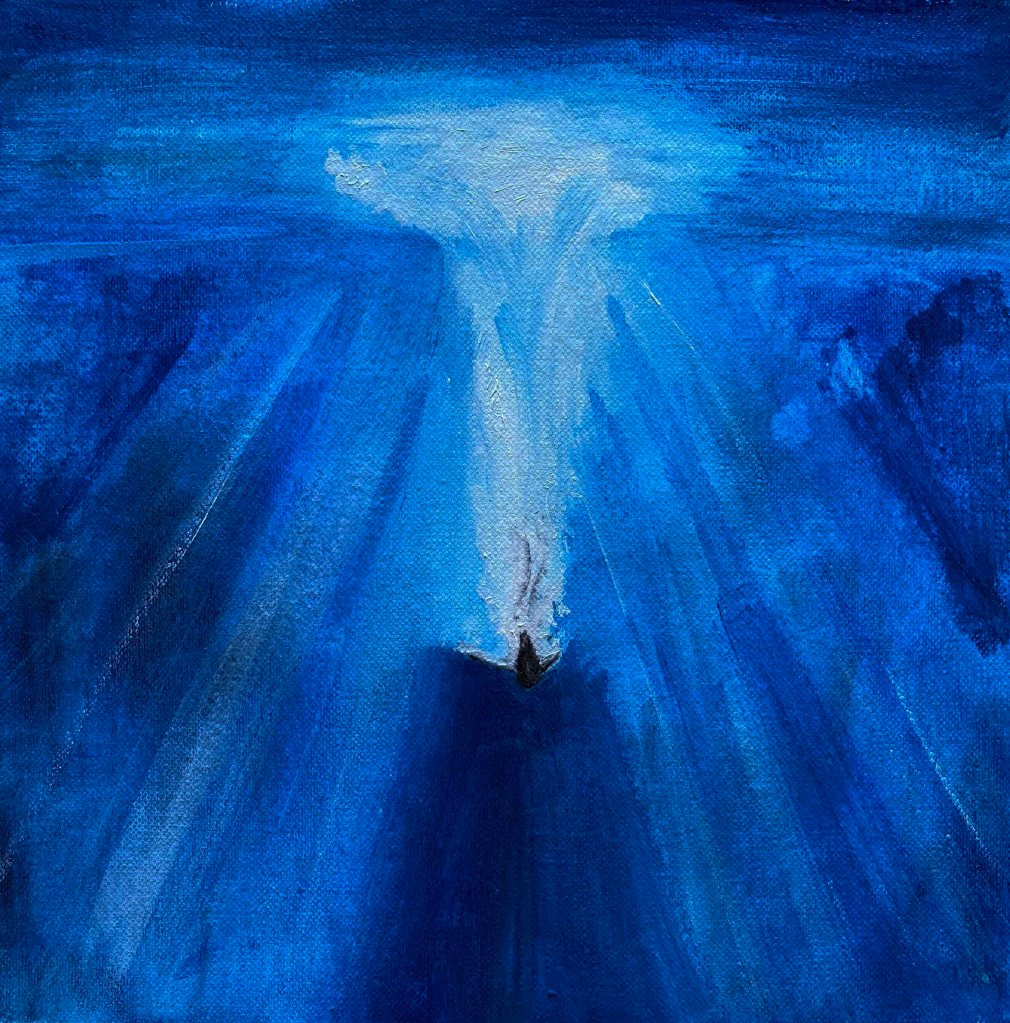
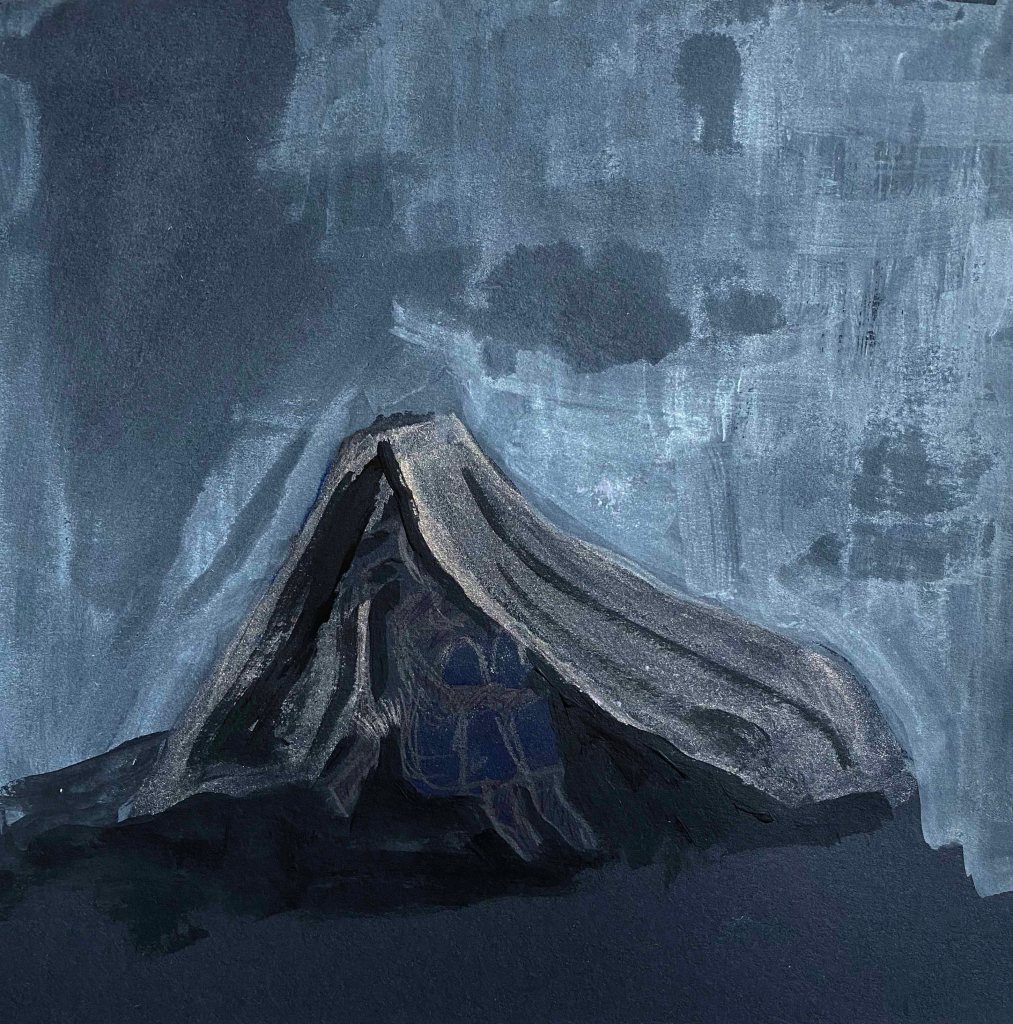
Here I have two ideas, and time to realize them both: diving into the deep blue ocean, and feeling blue. The first one is oil on paper:
The second one is mixed media (pencil, ink, watercolour) on black paper
FINALLY, I have arrived to the end of the month. This was a very useful exercise in just doing, no matter the circumstances, and also in just posting/showing, even when I am not satisfied. It has pushed me into a productive flow. It has also taught me to look more lightly at Instagram and earned me several new followers. It has produced a small body of work that needed a period of time to elapse during its production- responding to the Assignment 5 brief. I am more happy with certain pieces than others naturally.

One problem that I see in combining them into the planned panels, is that they are partly too illustrative and standing too well alone. This is probably the result of over thinking the prompts and also a side effect of showing them daily on Instagram- which called for a more “finished” piece.

I will continue this drawings on squares for 21 more days, without prompts and without showing them individually, to hopefully allow some more “connective”, spontaneous pieces to happen that can work as a final panel.

These are the following pieces:
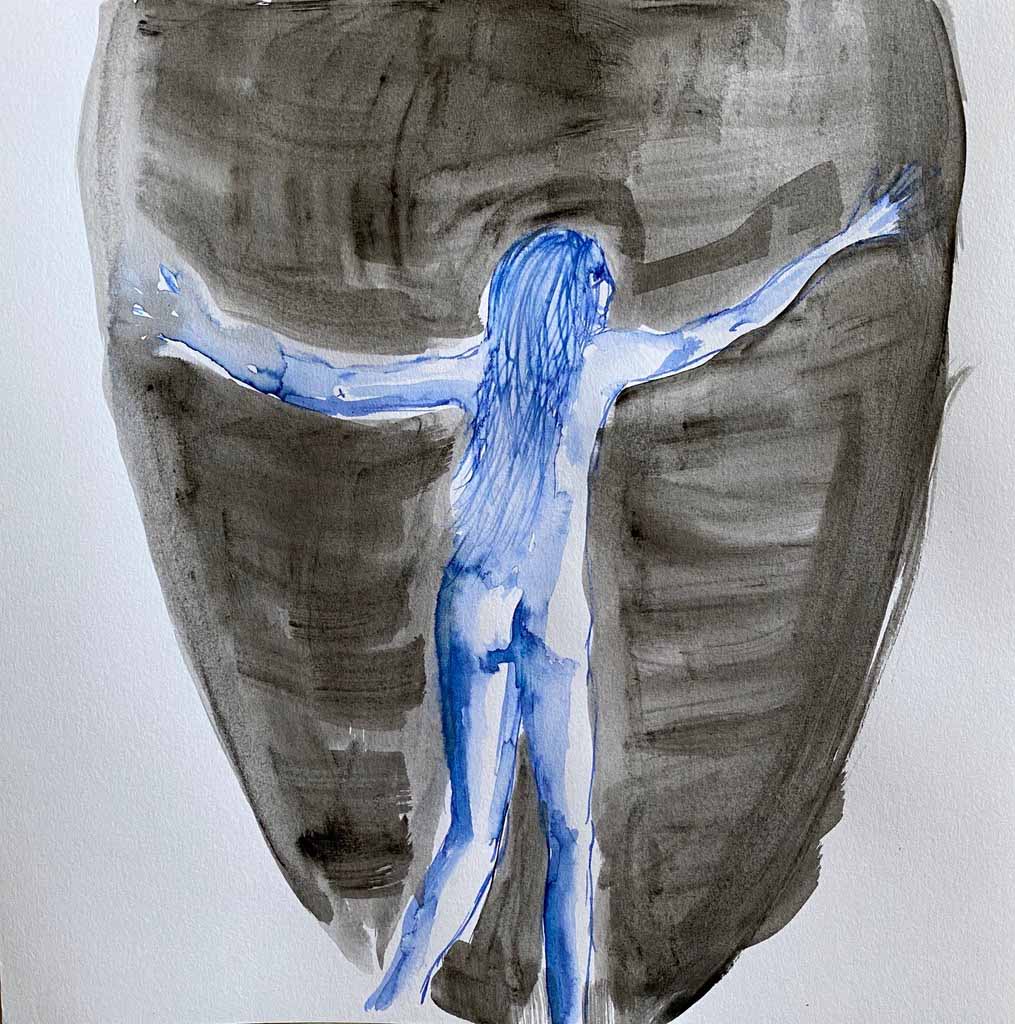
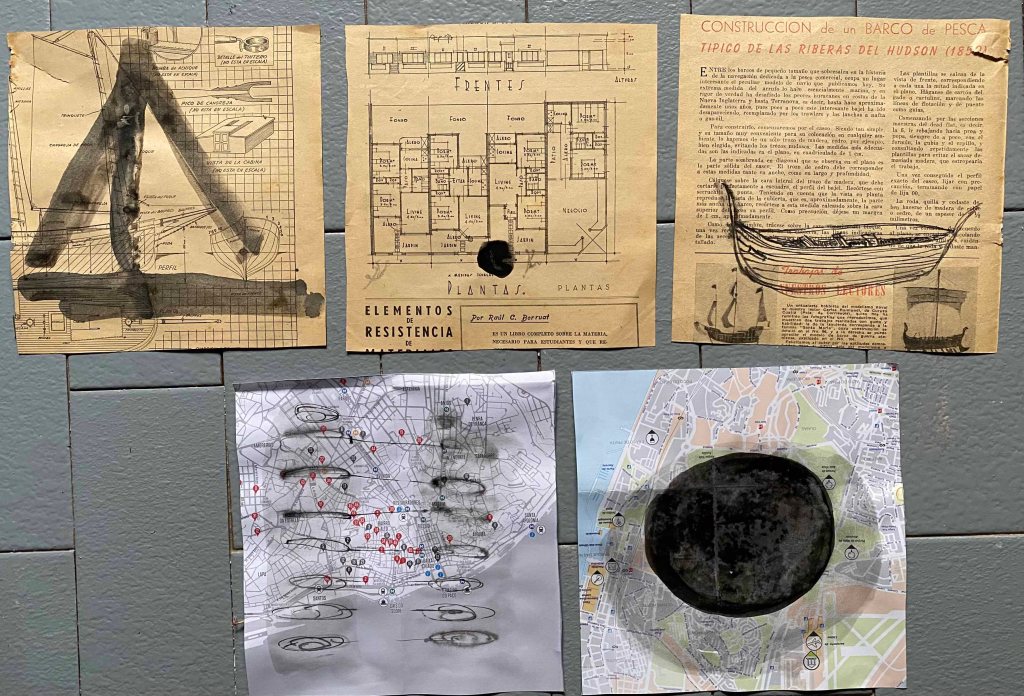
I will not post them all individually, but here are some that I find special.

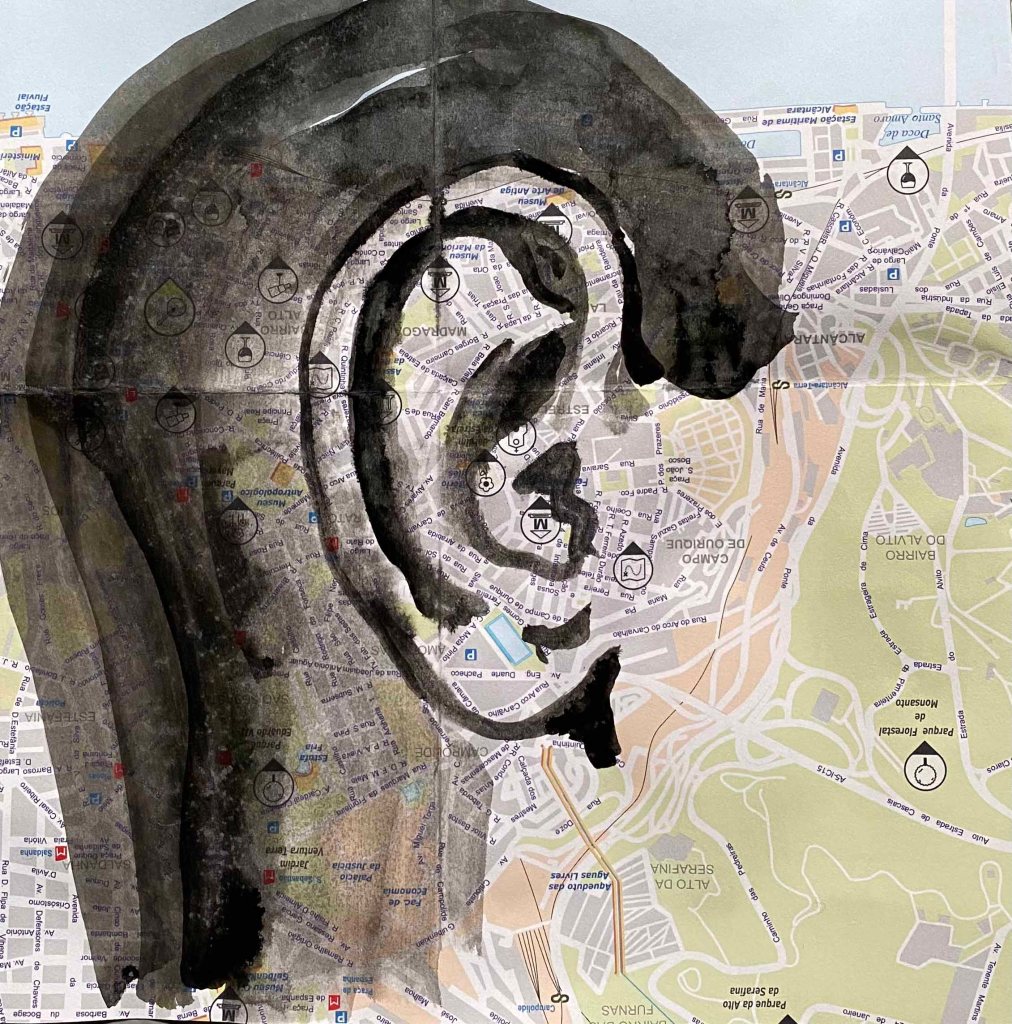
I particularly like the pieces where I used found paper, an old map and a very old magazine found in our house. I added to them very sparingly:
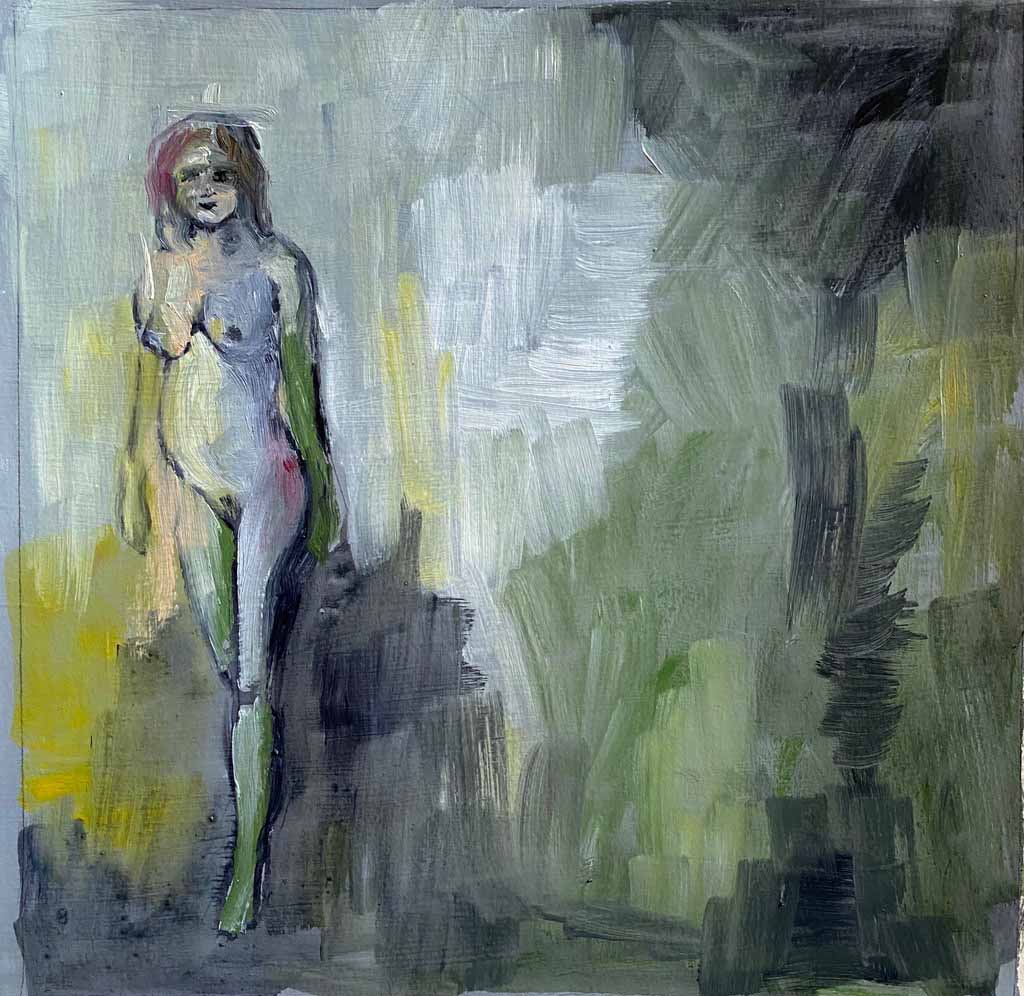
I have a pregnant friend, and am sketching her as another possibility for a painting that would fit in with the subject of Assignment 5. These are just some first sketches to remember the pregnant body.

I finally have small paintings/drawings from 52 days- it is an impressive little stack!
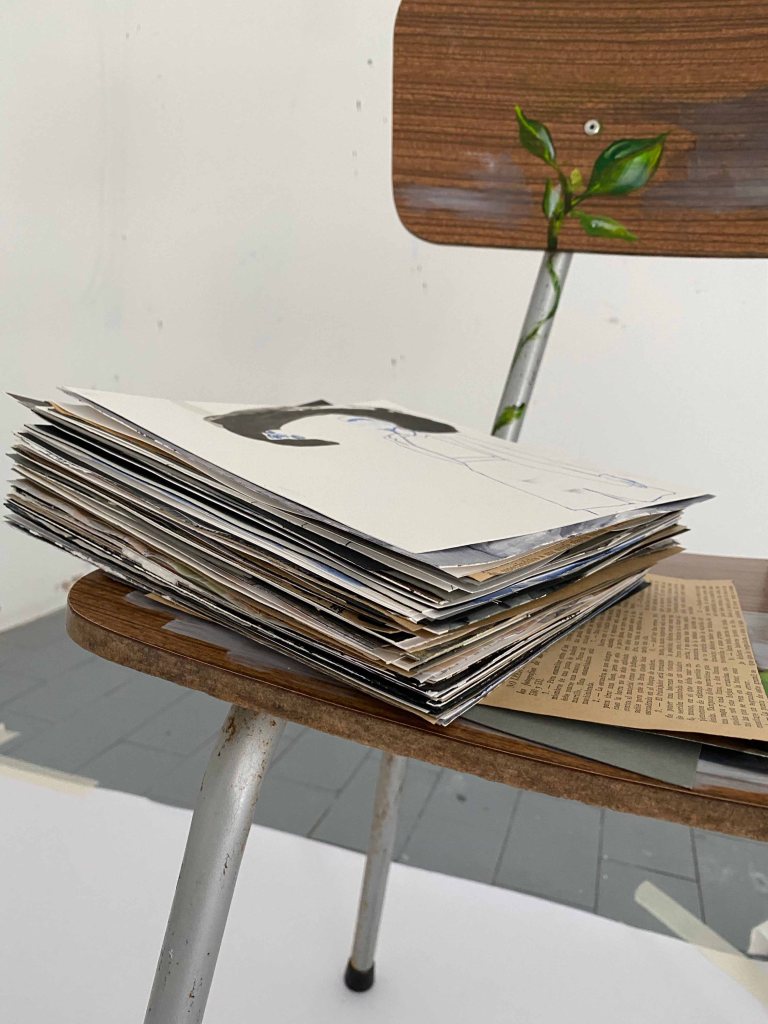
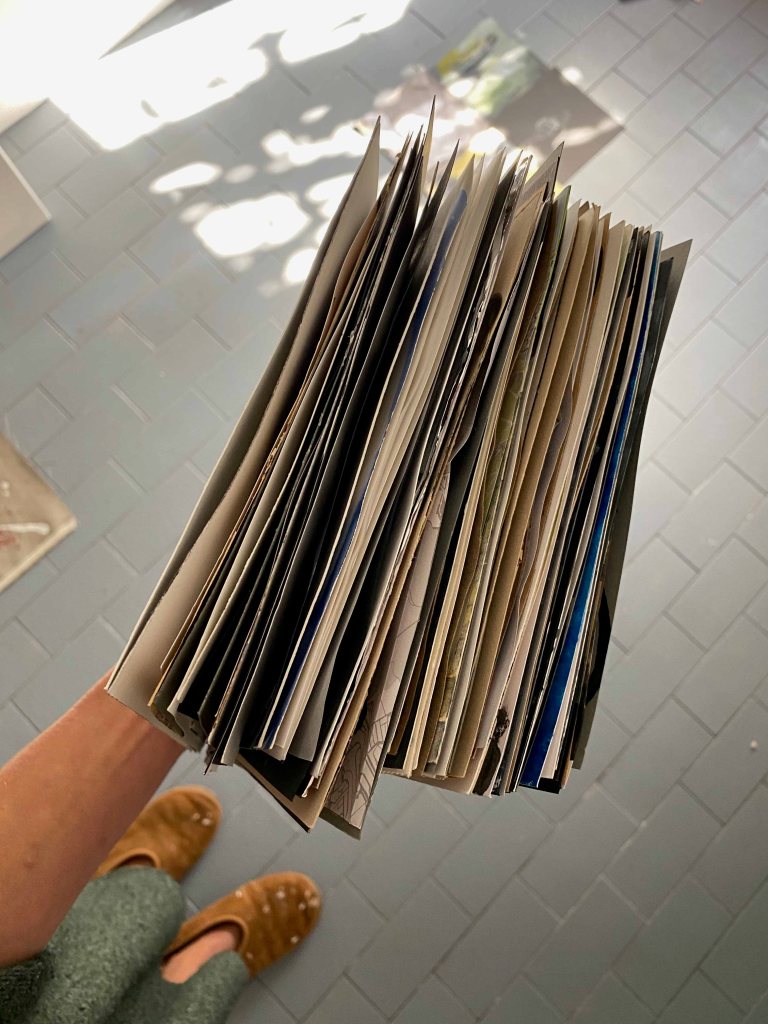
When I am holding them all together , I realize that this too, would have been a nice artist’s book bound together.

But it seems like I am all for puzzles this time, so here is the development of the panel:

I try a square version:
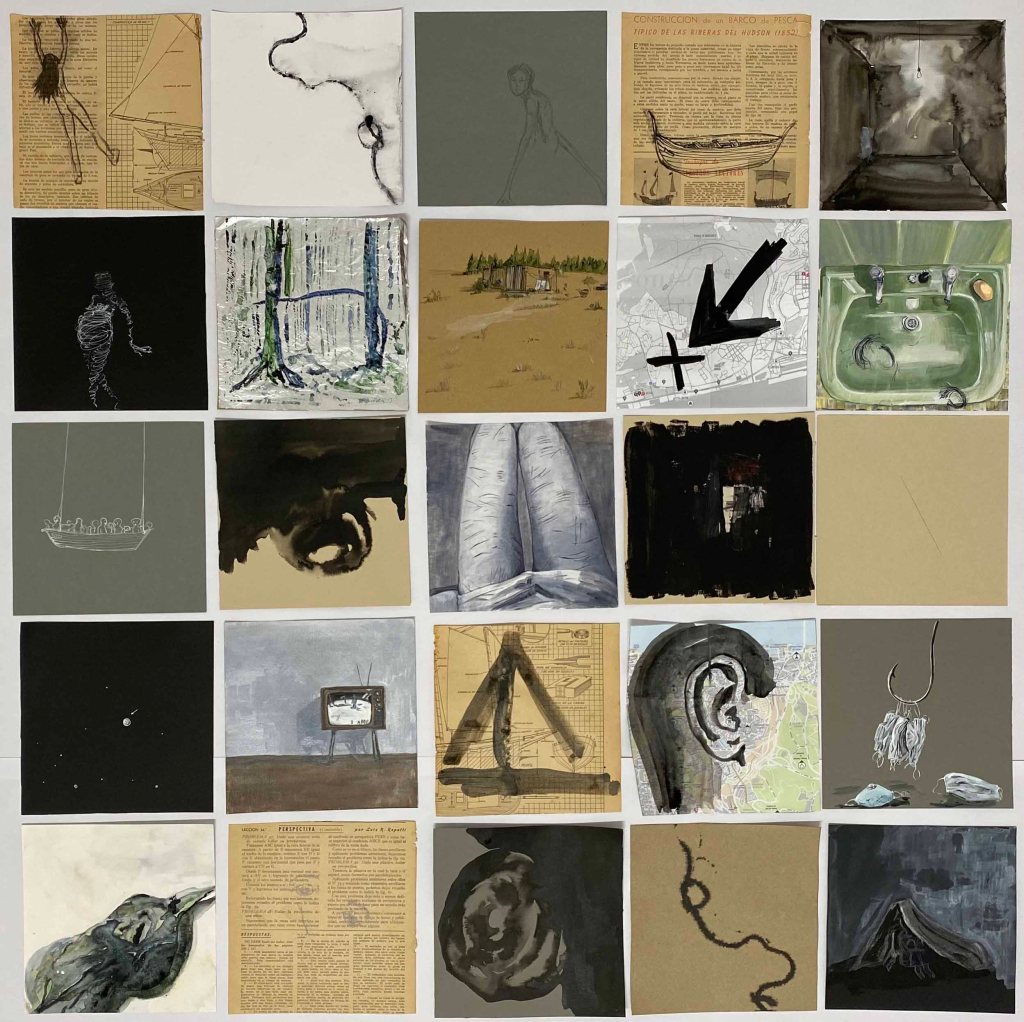
I try another version starting from the very first drawing from October 1: Imposter:
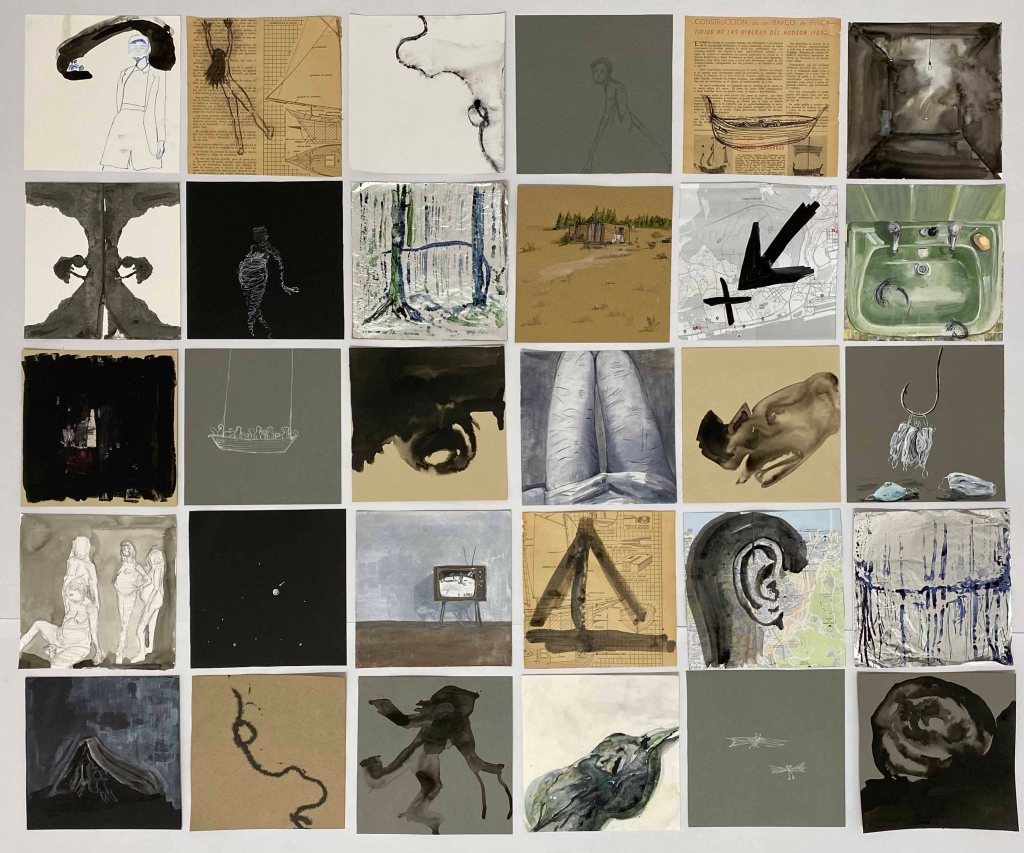
Another version containing my favorites:
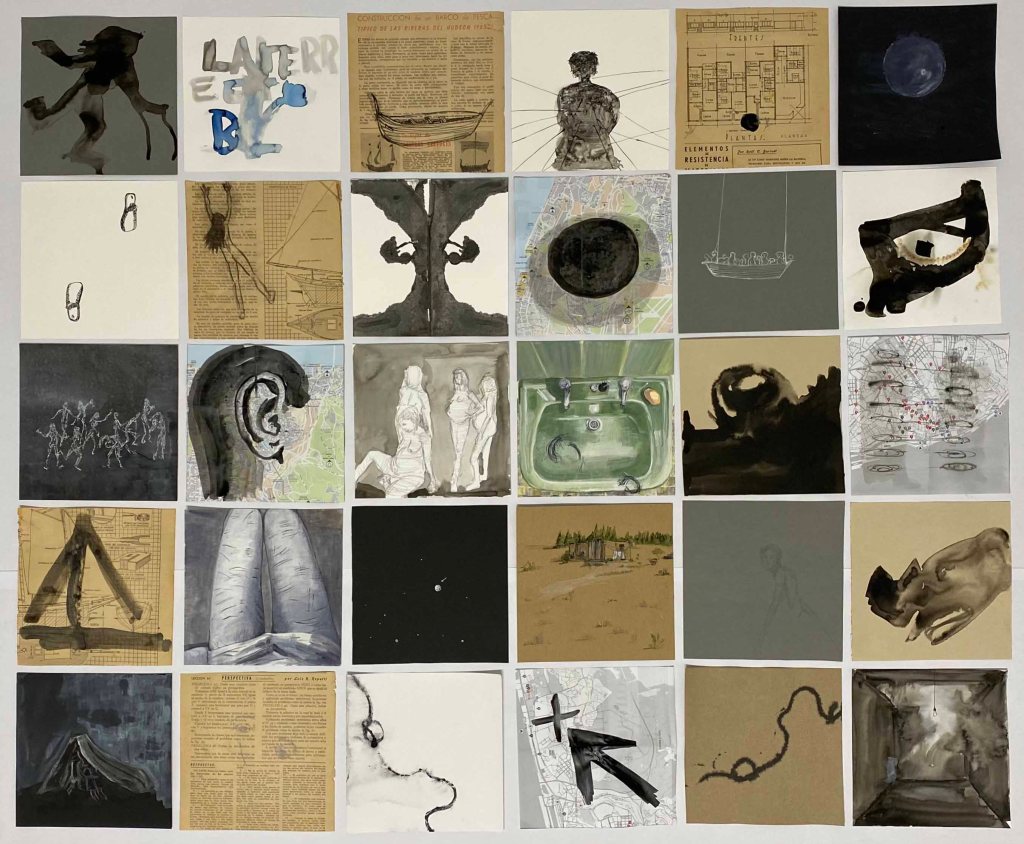
And here, the final panel- where I had to let go of some of those favorites in favor of a more coherent whole:
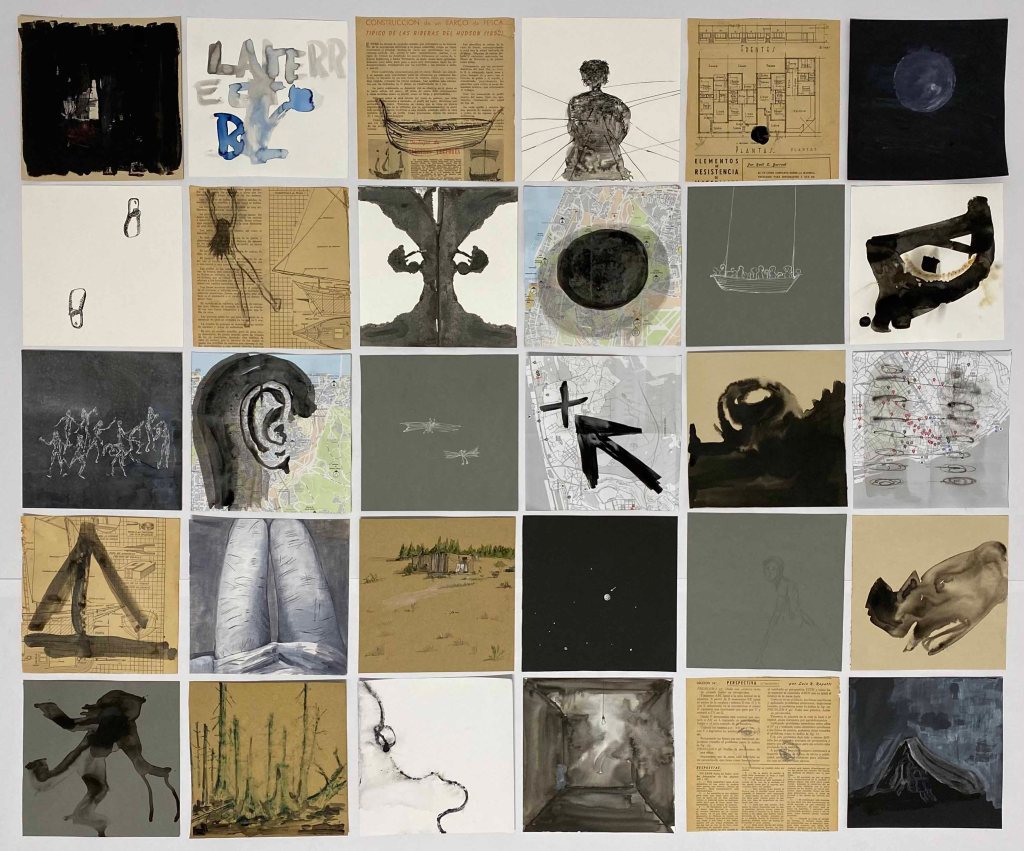
I am happy with the different mix of techniques and papers used, and how they still flow together as one work, balancing between rather complex full drawings and more empty, clear ones. I believe these drawings have a certain value in themselves but noticed how I had to let go of several of my preferred ones for the whole to be stronger- with clearer and not so detailed drawings working better in context with others.

It has been a very useful project for me to let this develop slowly over 52 days, to really come into the routine of drawing everyday- and hope that this is just the beginning!

5.3 A finer focus

Course manual:

Aim: Gwen Hardie is an artist who makes careful drawings and paintings of small areas of her own skin. Richard Wright is a former sign writer turned Turner Prize winner who makes intricate wall drawings. Grayson Perry is a ceramic artist who makes detailed extended doodles. Jim Shaw combines exquisite naturalistic detail with complex cartoon imagery. Do some research into artists who work in a similarly painstaking or meticulous way, something which arguably has become one of the most significant features of contemporary drawing. By making a drawing of your own which involves focused effort you’ll be in a position to reflect on how this affects your relationship with the subject and the process and what it communicates to the viewer.

Method: Choose a subject which has a substantial number of detailed parts. Think about whether these parts will be repeated (a plate of baked beans, for example) or all different (a hyper-realist drawing of pins and nails). Consider also whether the parts will be drawn from observation or invented (as in the work of Paul Noble). Remember that the original subject may not be primarily visual (in extended doodling, for example); you may be using drawing to describe a narrative or even musical score, so that the imagery is secondary to the relationships between the elements.

RESEARCH

TERESA ESGAIO

I was lucky to visit the exhibition opening of young contemporary Portuguese artist Teresa Esgaio (b. 1985) at the Underdogs Gallery in Lisbon last year. She draws very detailed, photo realistic drawings in dry pastel and graphite.

The title of the exhibition is “Take a number” and upon entering the gallery space there were two very long, low benches with a total of 100 small drawings of queue numbers, along with the dispenser on the wall, as if entering an institutional space for a long wait.

IMG_5231

Each and every one was very detailed, with creases and spots or ripped corners.

I asked the artist how long these drawings would take her, and Teresa explained that she spends around three weeks drawing full time on the larger works, like this bed:

IMG_5185

This was my favorite work of the exhibition. It felt like the most personal and vulnerable maybe- giving a glimpse of something possibly very intimate.

Although I greatly admire the quality of detail and focus here, this is not a way I am aspiring to draw myself.

(photos my own from the exhibition)

MARC FAIRNINGTON

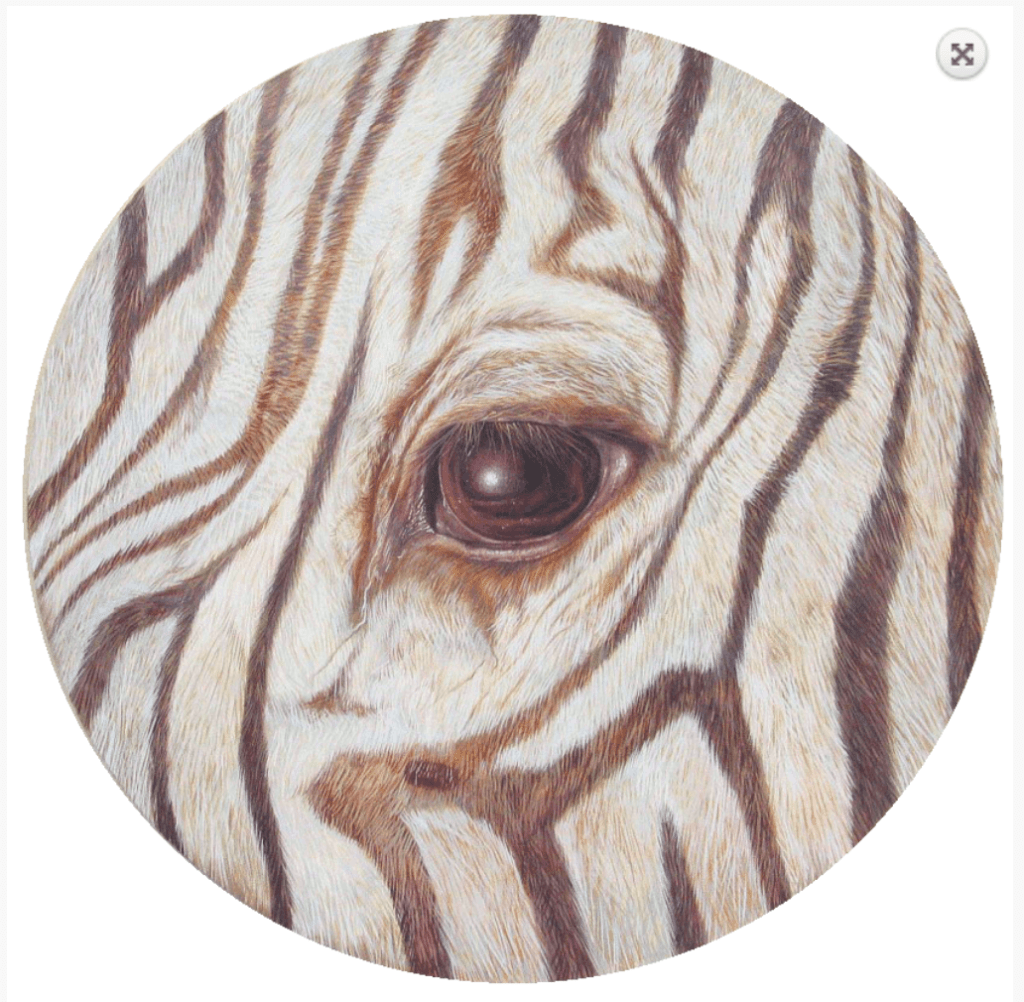
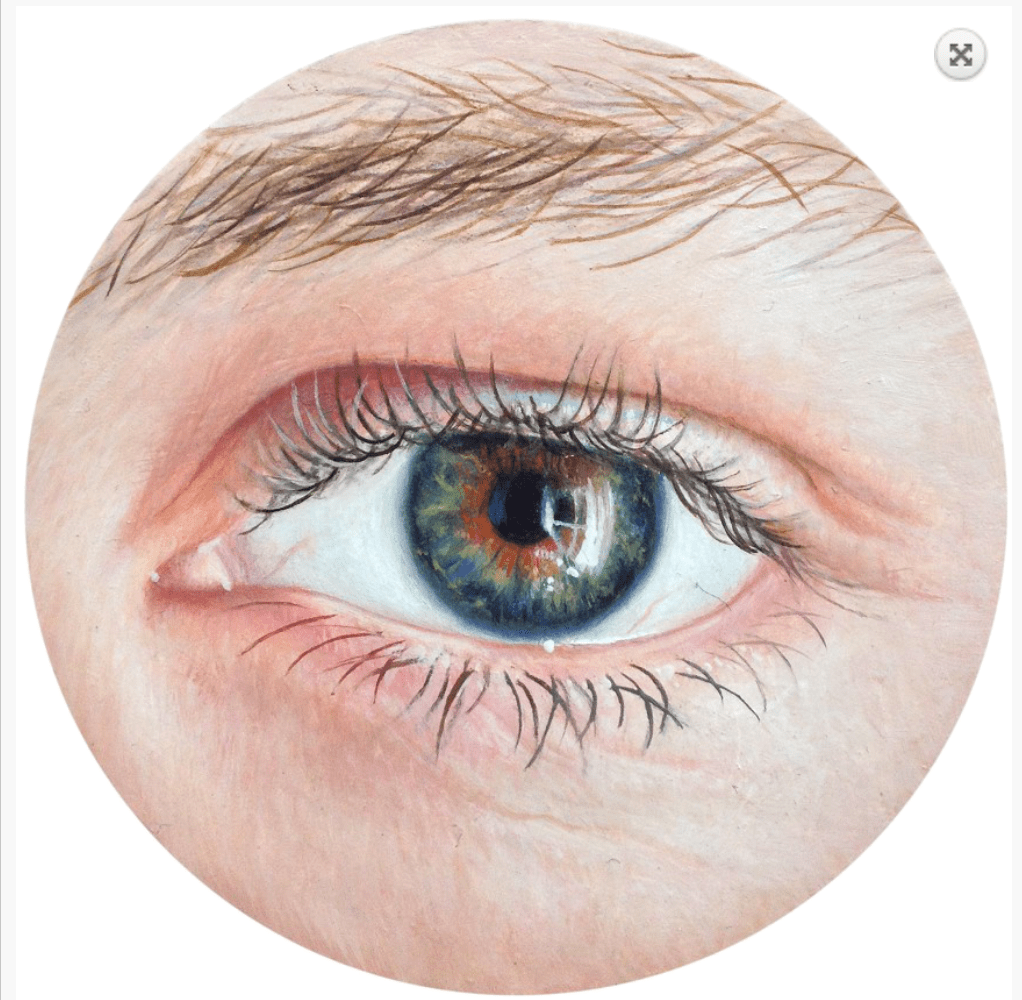
Marc Fairnington paints with intense detail- humans, animals, and plants.

I am quite fascinated by his long series of eyes, both human and animal, in tondo formats, they look spectacular. I often draw eyes and want to learn how to draw them better, so this is a wonderful example to look at.

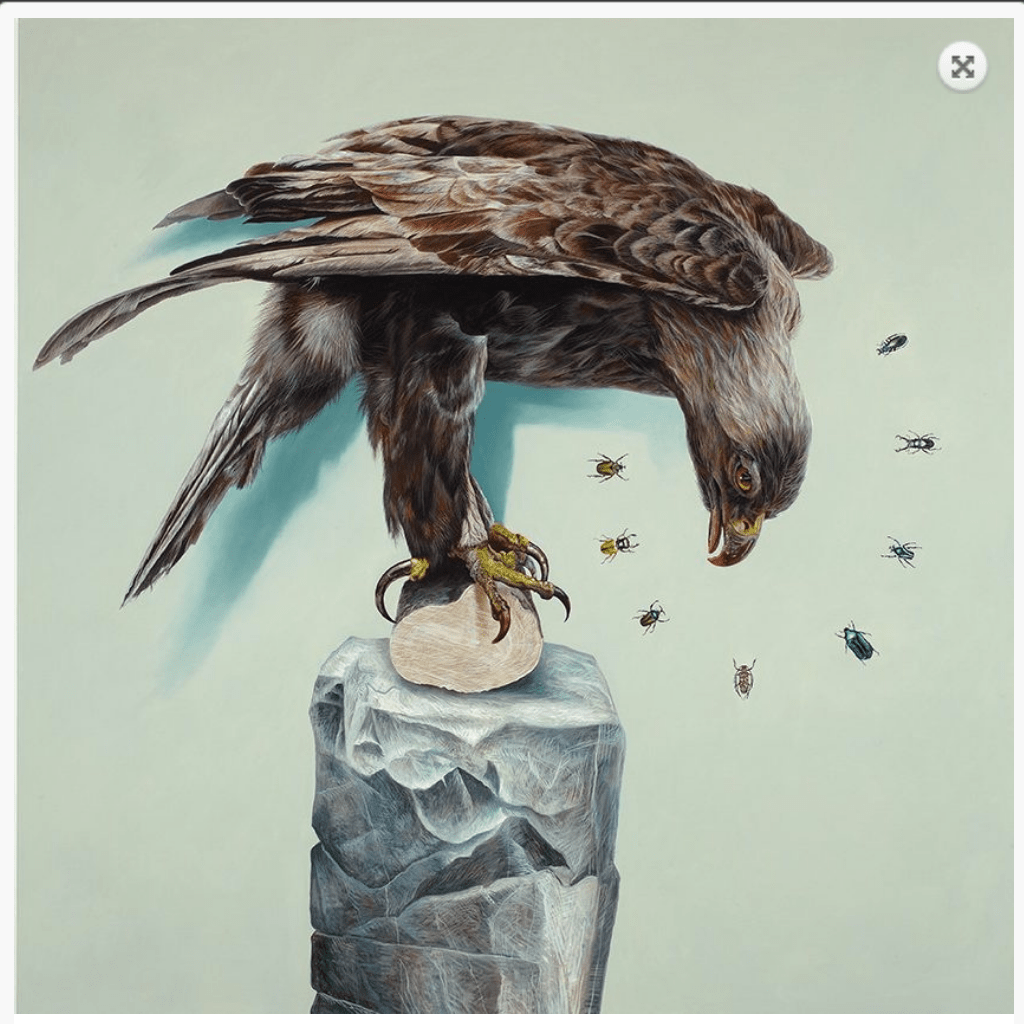
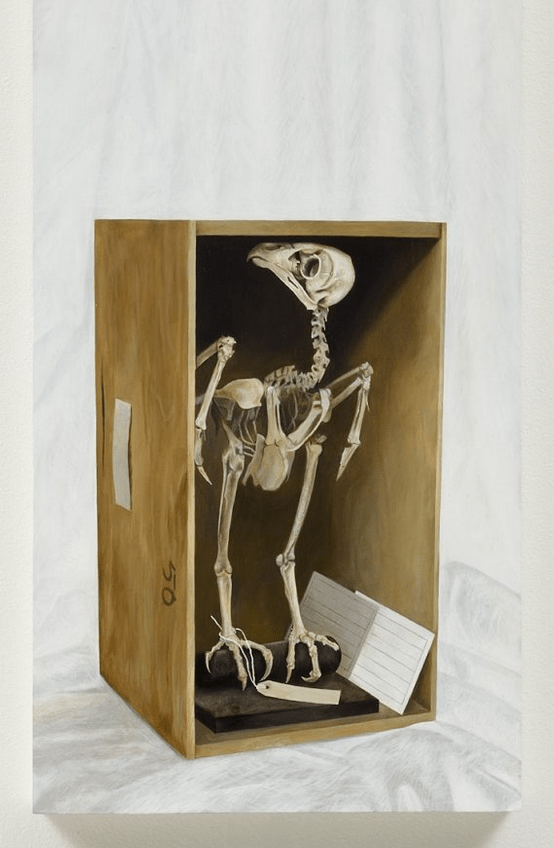
But if his paintings look like from a natural history collection at a first glimpse- they are much more interesting than that. It is “unnatural history”- invented creatures, plants with more than one species on the same branch and beasts.

I definitely admire this extremely detailed and meticulous painting, the seemingly natural, but then with an added layer of mystery.

(Images from: Underwood, S. 2020. Marc Fairnington painter. [Online]. [13 November 2020]. Available from: https://markfairnington.com/)

A FINER FOCUS ON TILES

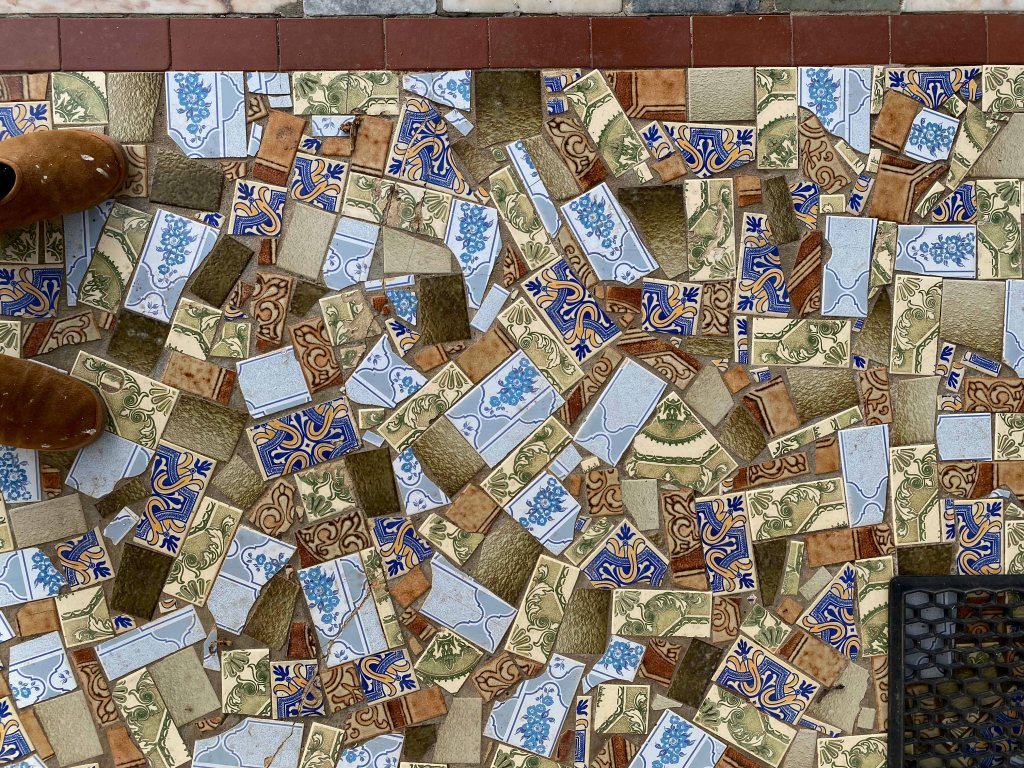
I have just spent days looking at the patterns of the wild tiles in our odd house, for the artist’s book.

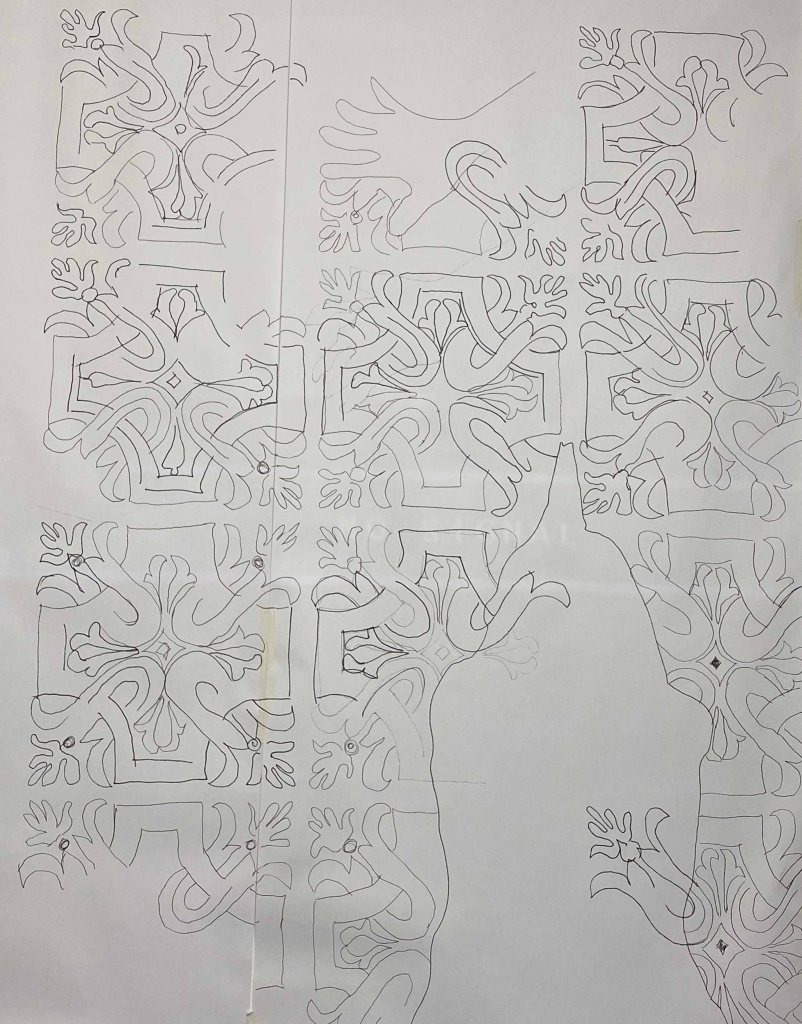
For this project, I want to continue scrutinizing the patterns closely and recombining them into a new imagined world.

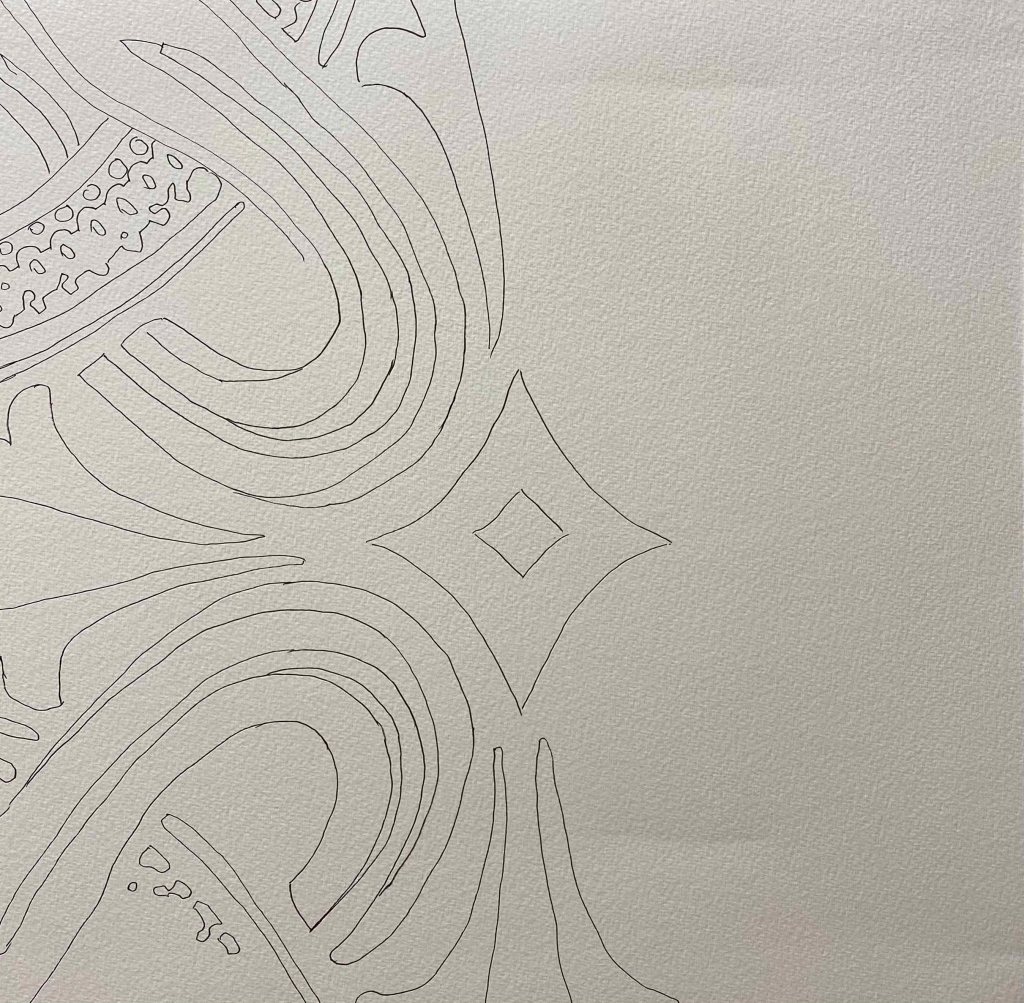
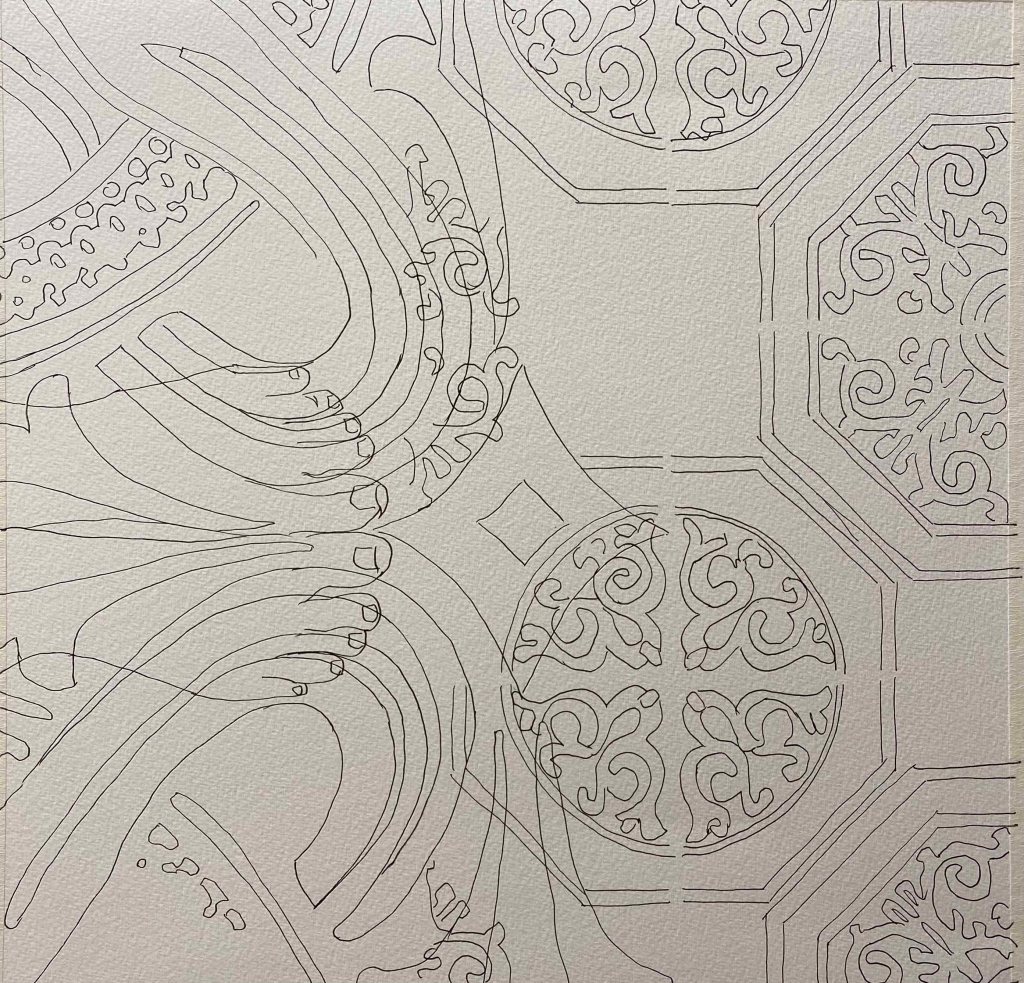
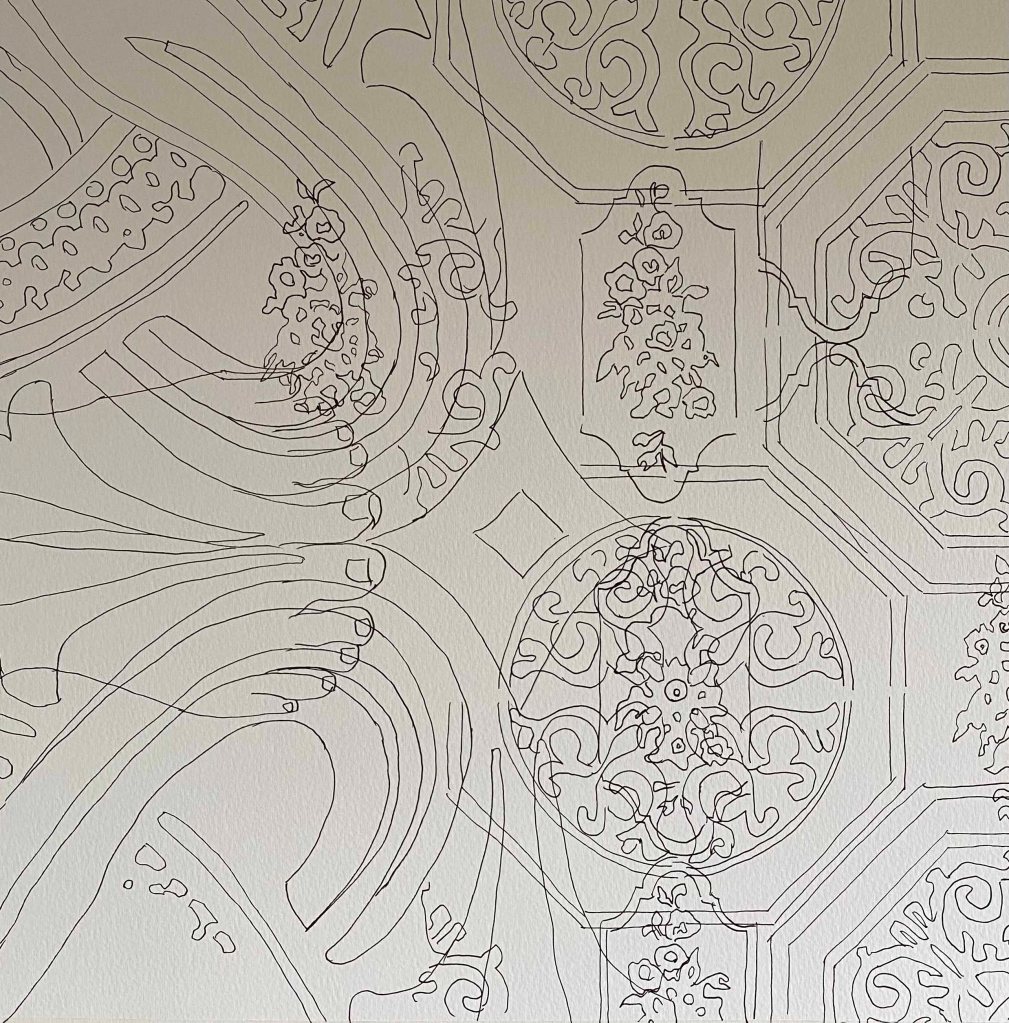
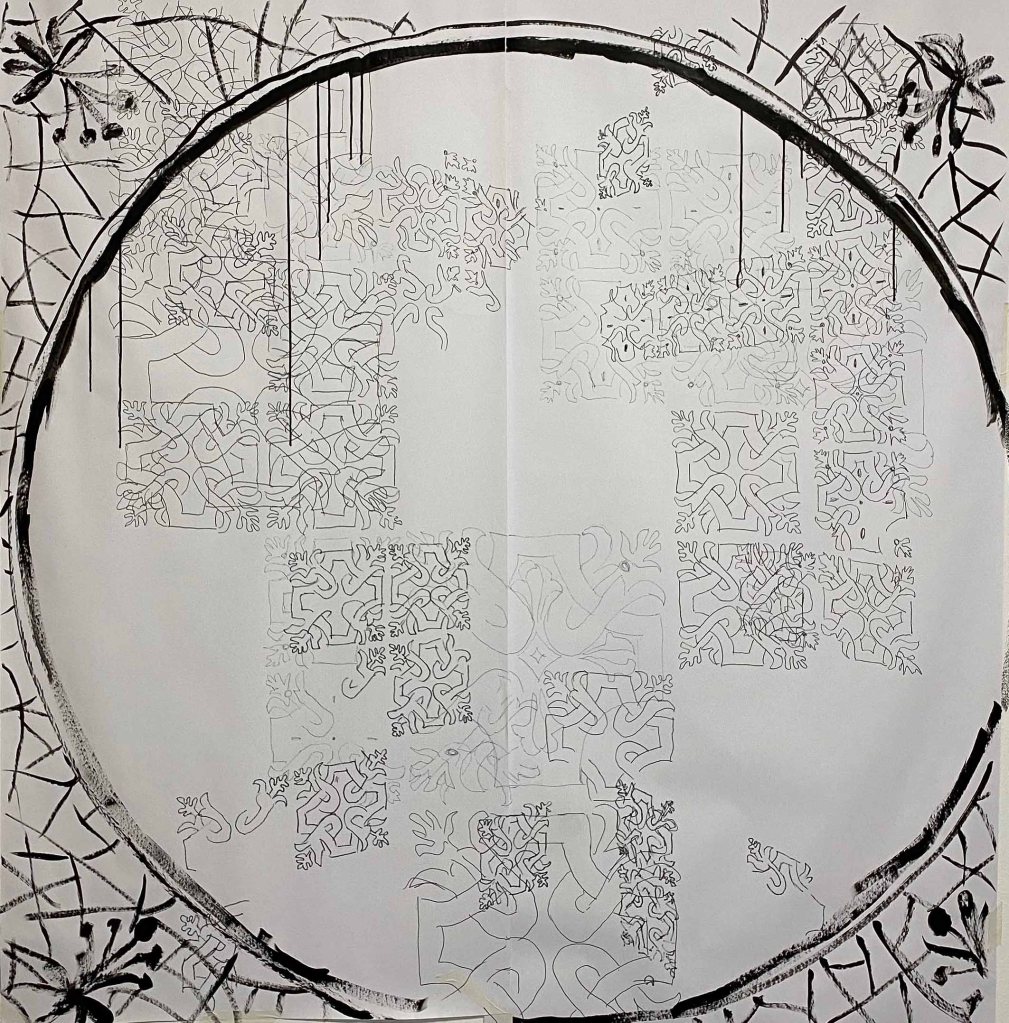
I will use a fine liner pen working from an easel. I prepare a larger square of 36×36 cm white 300gr watercolour paper to mimic a clean, white tile, large enough to develop different patterns. This is a combination between close observation of the existing patterns and allowing myself the freedom to continue into extended doodling.

I noticed in the previous project of the artists book, what a very different feeling a lifesized (180×200 cm) drawing on the wall had, compared to the small printed version of the same drawing that I could hold in my hand.

This is a sequence of the process combining the different patterns and free drawing:

I am definitely not an abstract artist- even when I am planning to focus on patterns, I start finding form.

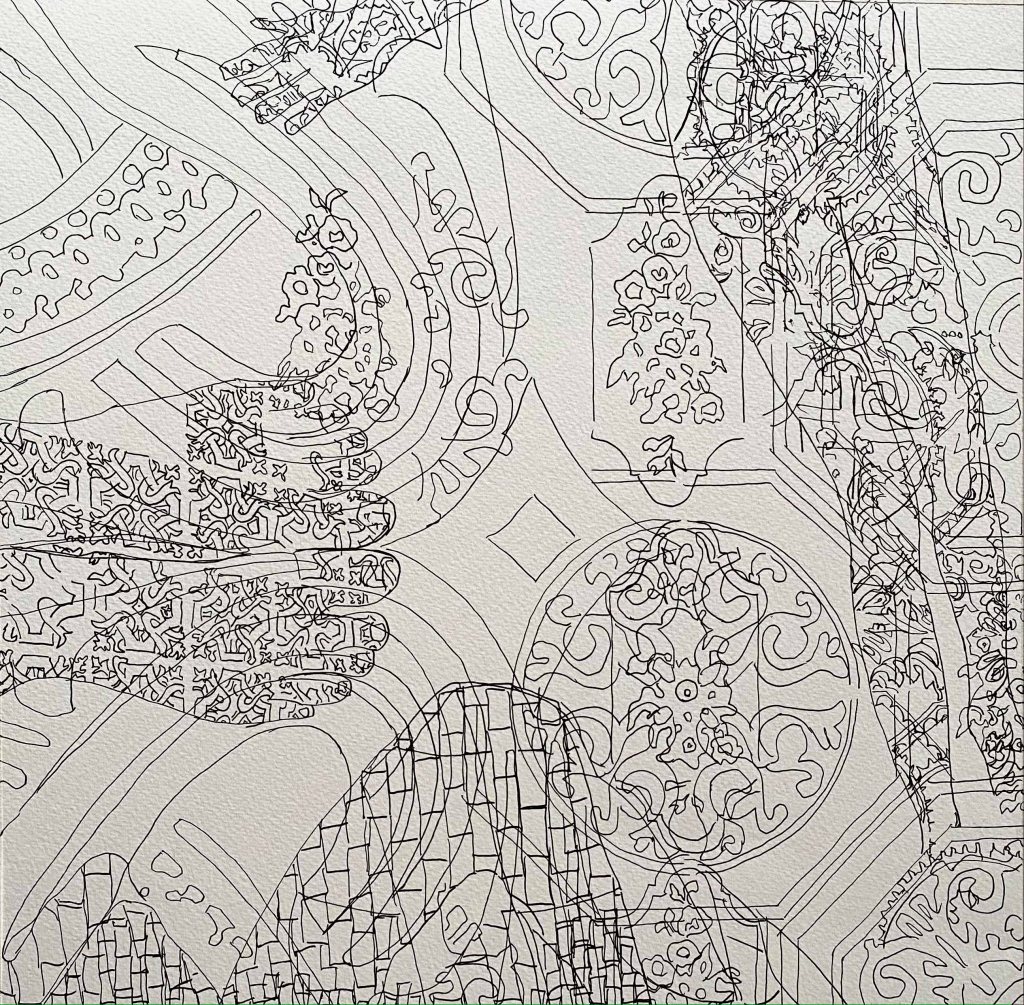
This is the final drawing:

This drawing gave me the experience of working painstakingly and meticulously, it required a finer focus. I think that is possible to feel for the viewer. I am not overly enthusiastic with the result, but greatly enjoyed the meditative aspect of the project, and also developed yet another level of knowledge about the weird tiles in this house. I was quite surprised to notice how imperfect their patterns actually are, something I had not noticed when seeing them on the wall.

5.4 Time and the viewer

Course manual: “Aim: Make a drawing which forces the viewer to use time differently. This may mean a drawing which takes time to make sense of, or a drawing that creates a feeling of a certain pace. The drawing may need an investment of time by the viewer in some way. A drawing is a record of the time you spent making it, but the viewer also spends time looking at it, perhaps seeking meaning, enjoying its beauty or marvelling at the artist’s skill.

Reflection: Reflect on the time spent by the viewer and how it relates to what you do as an artist.”

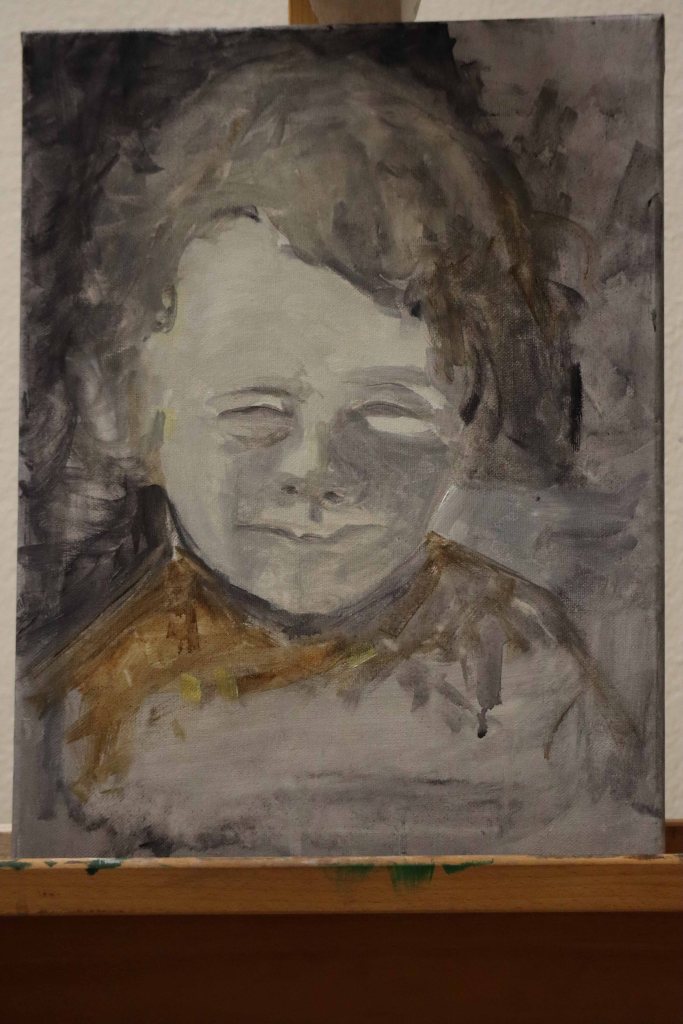
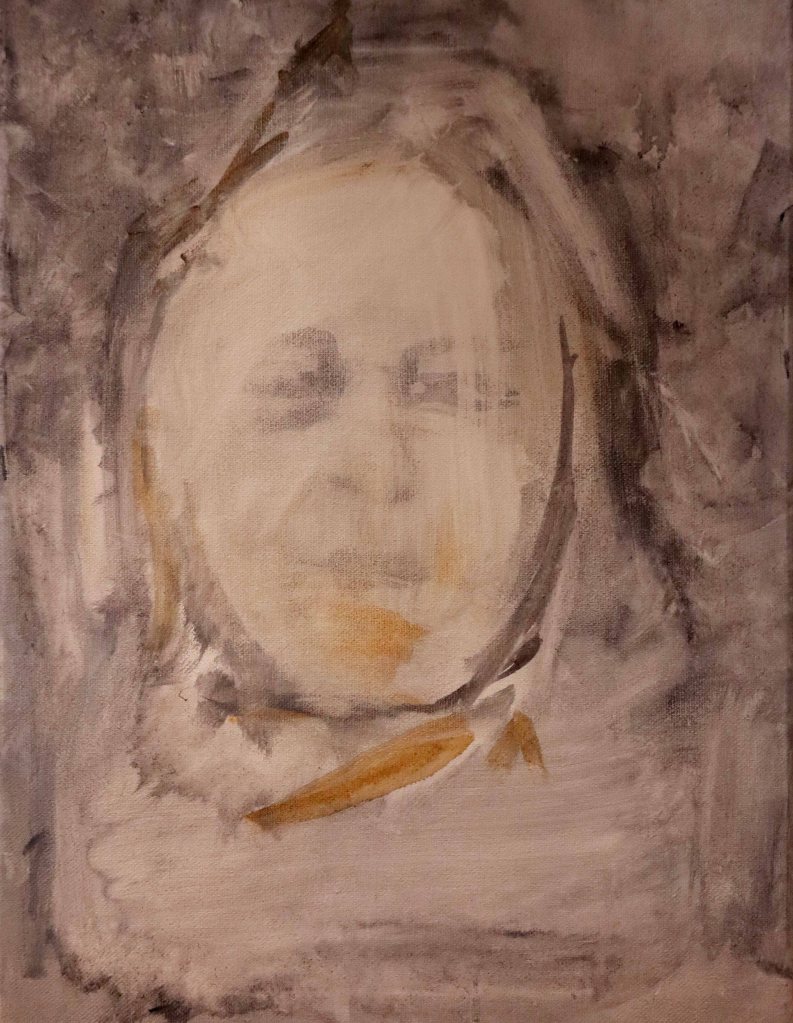
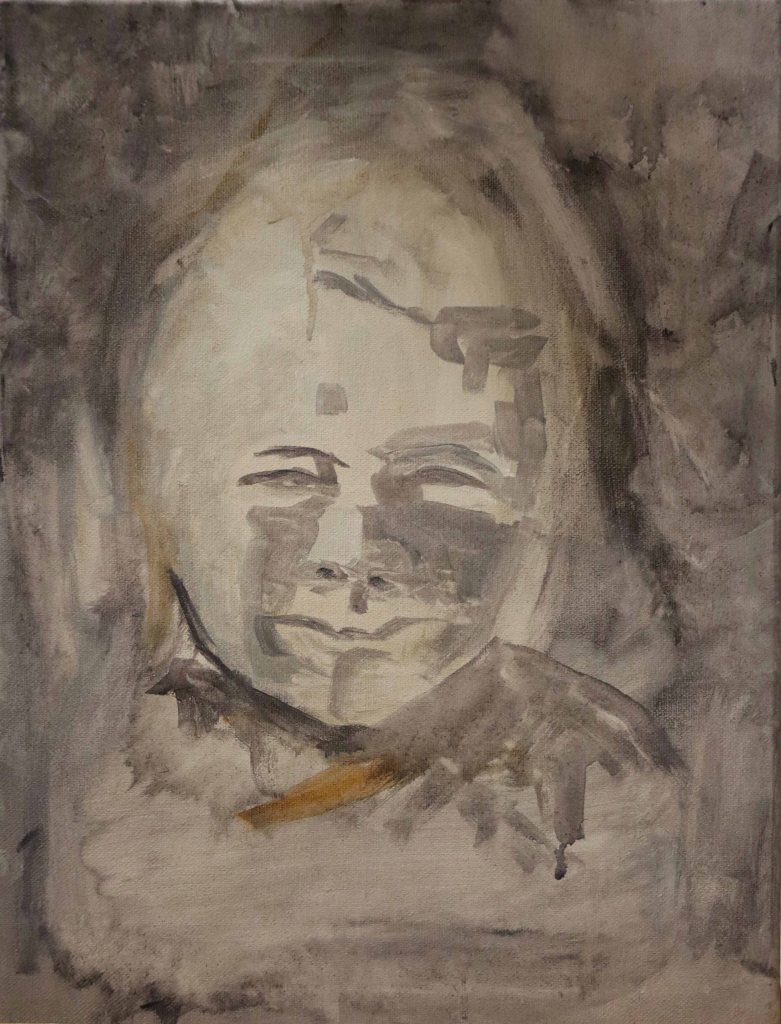
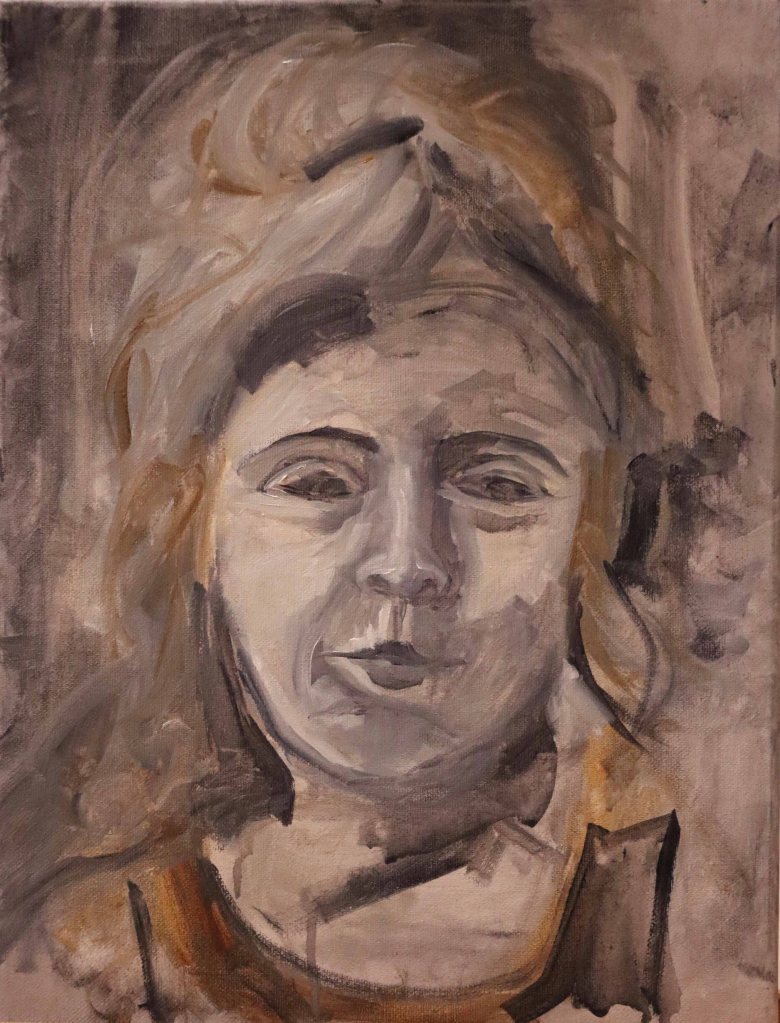
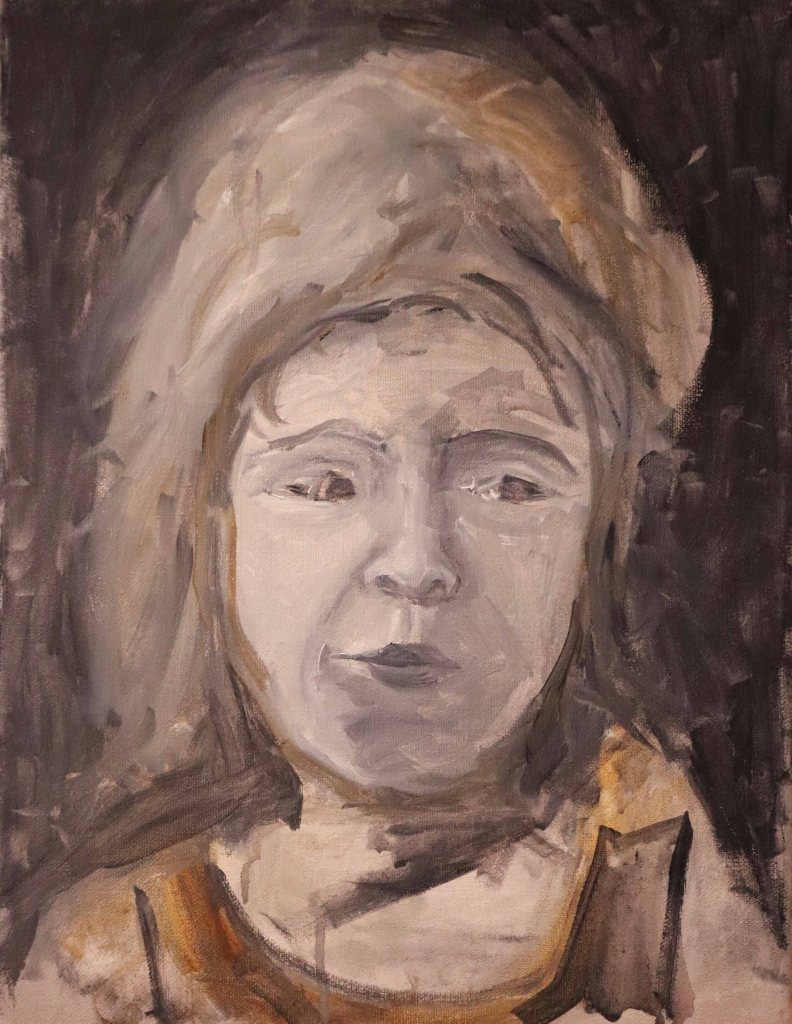
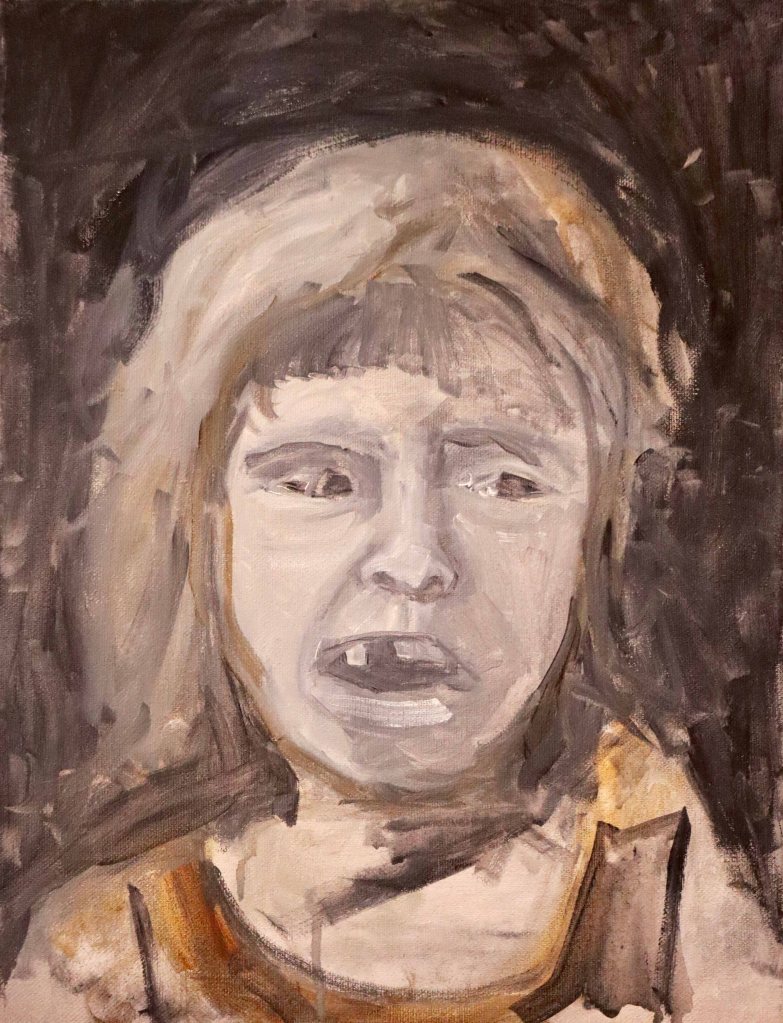
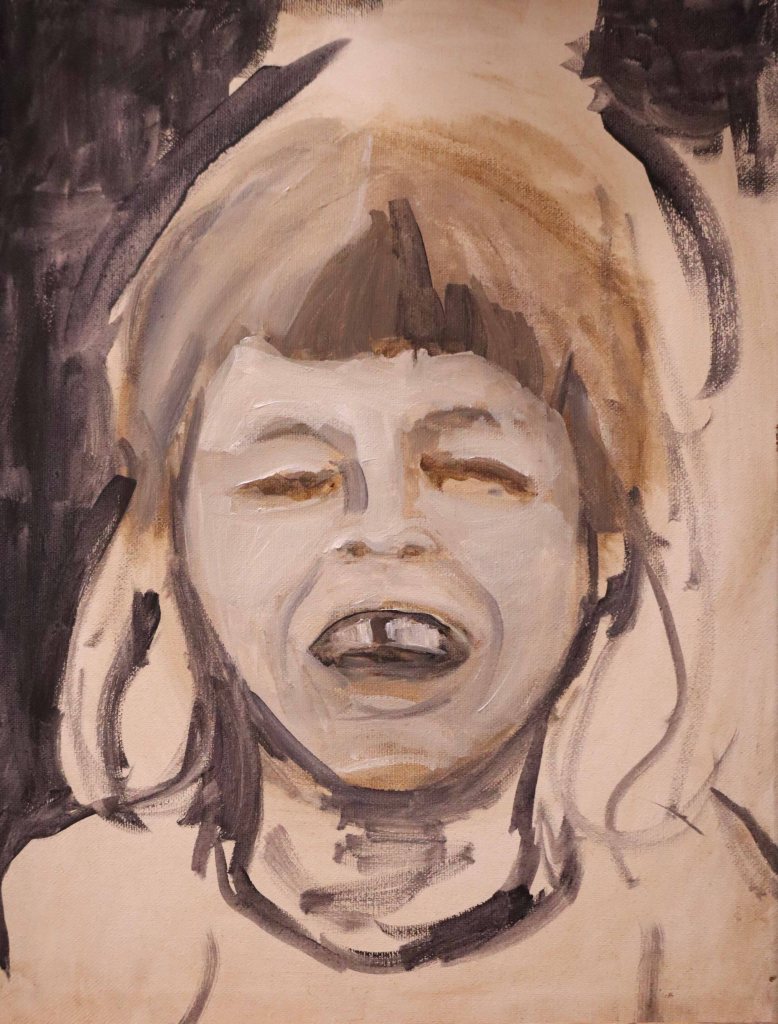
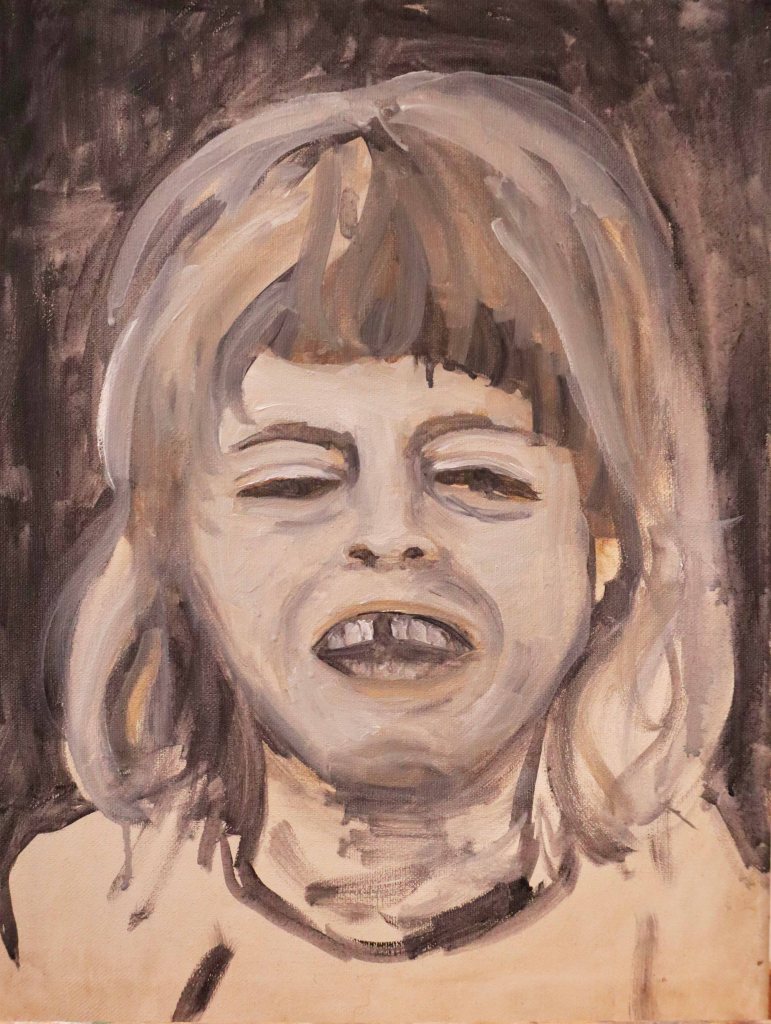
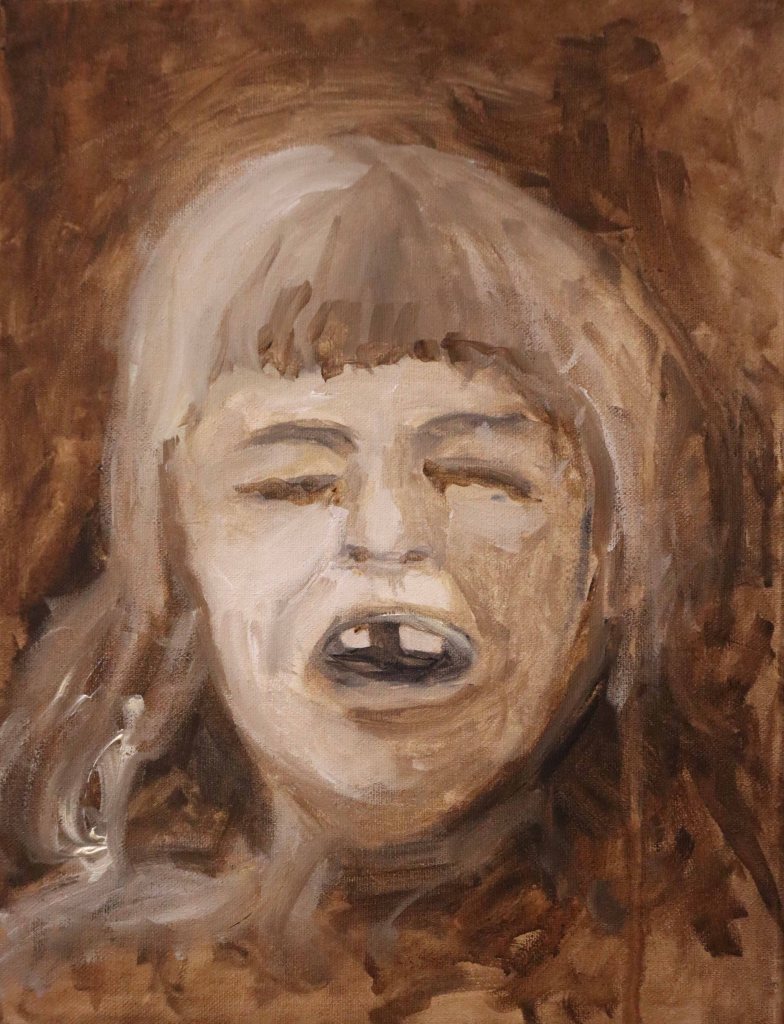
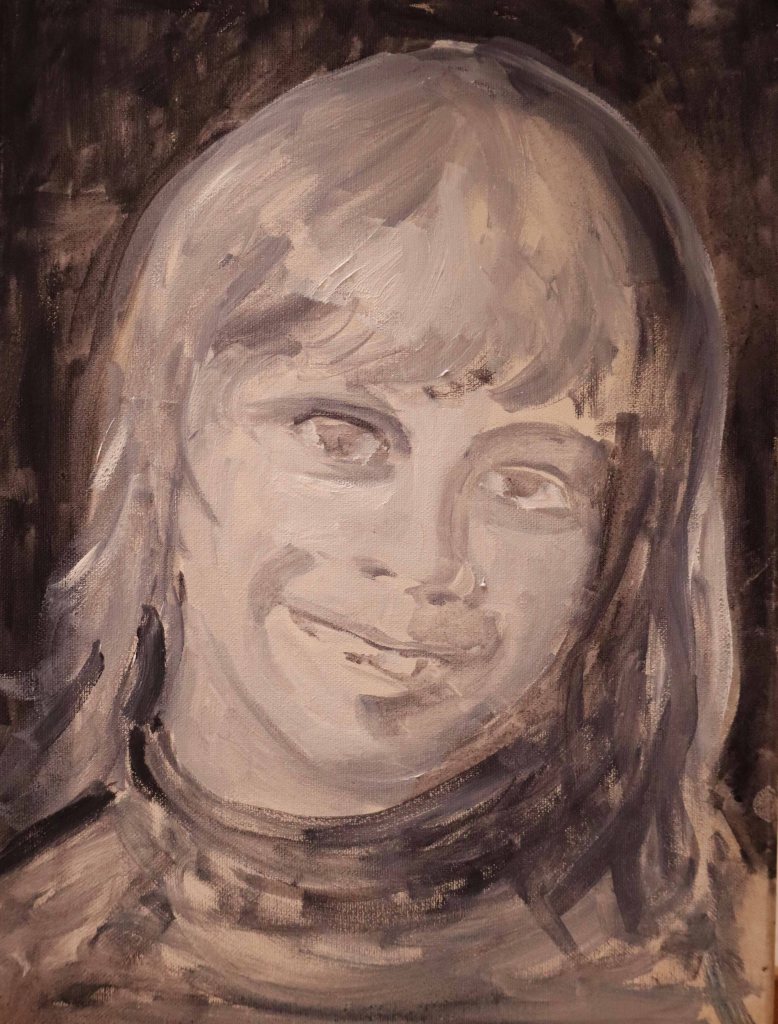
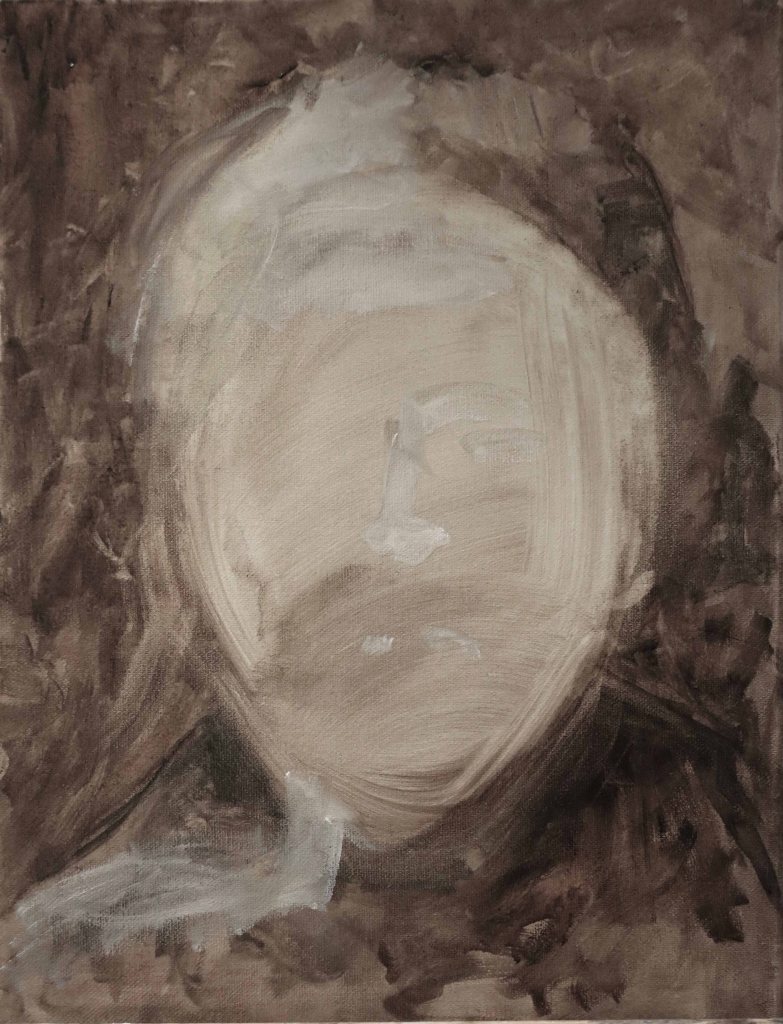
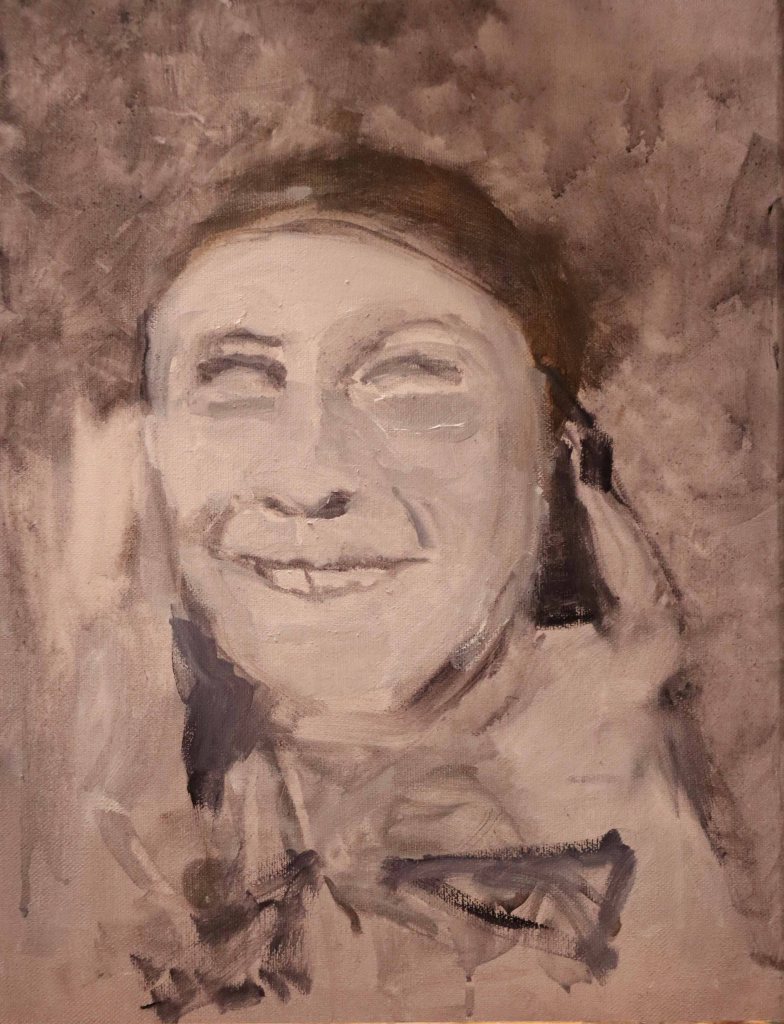
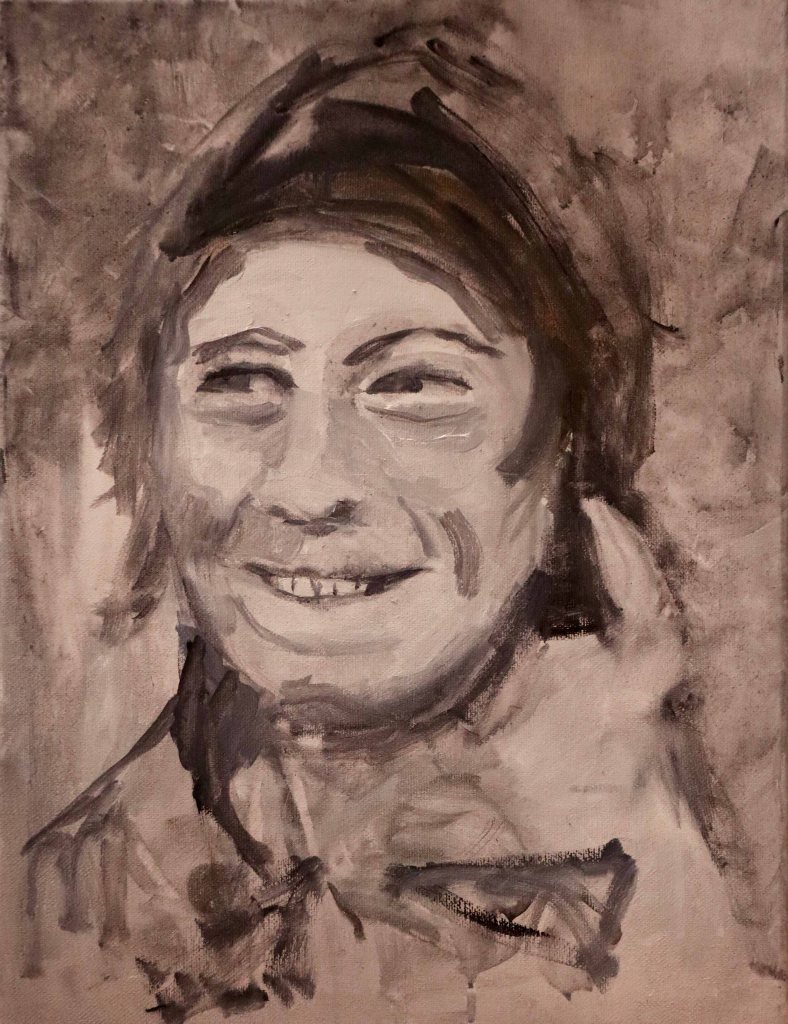
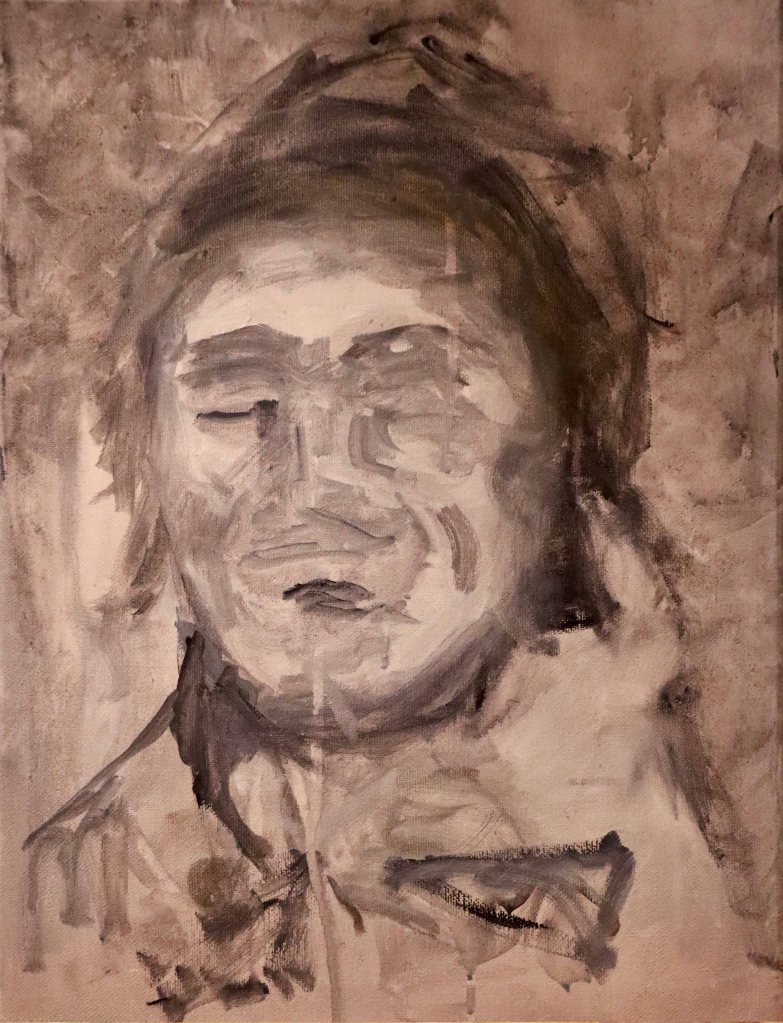
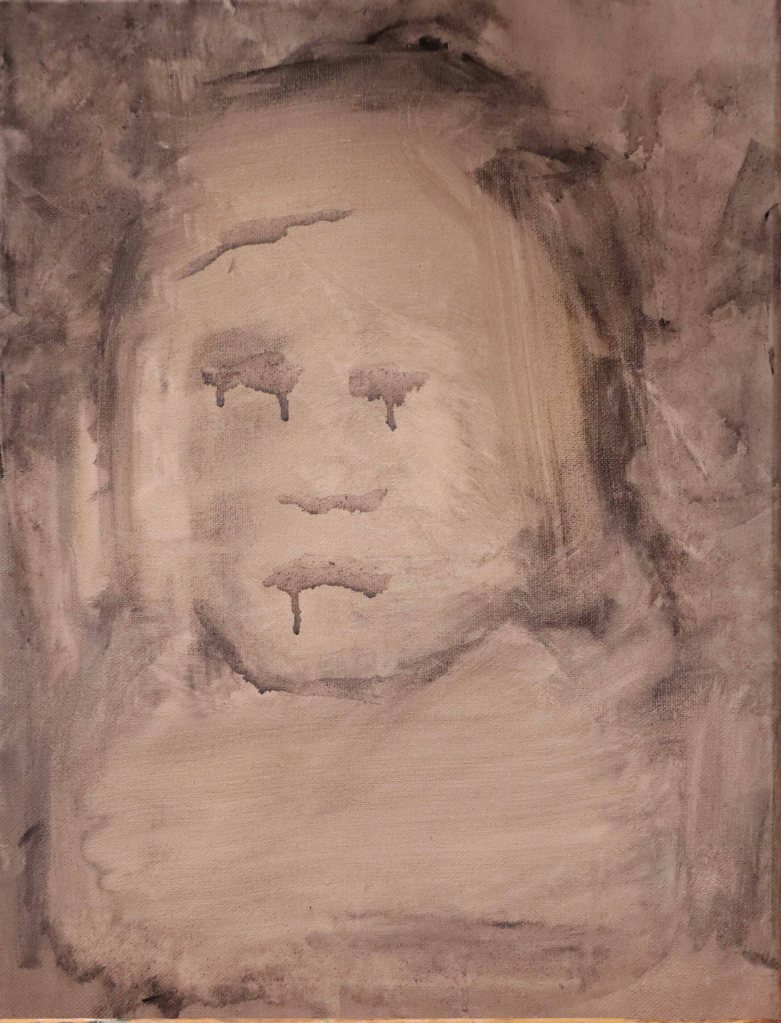
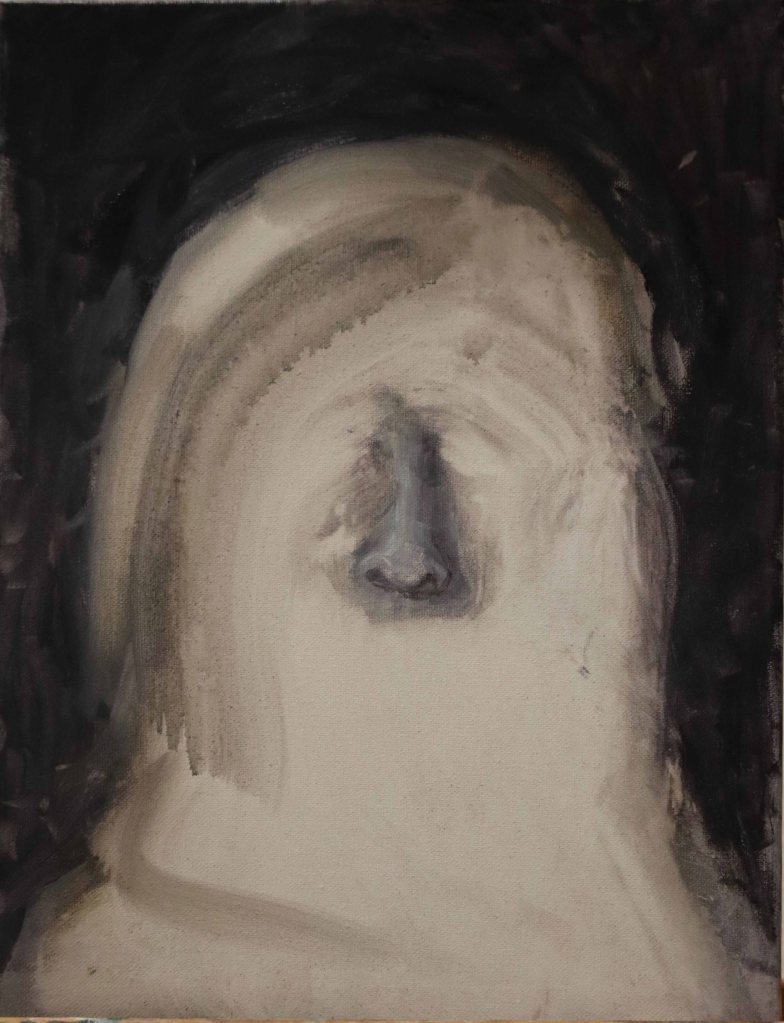
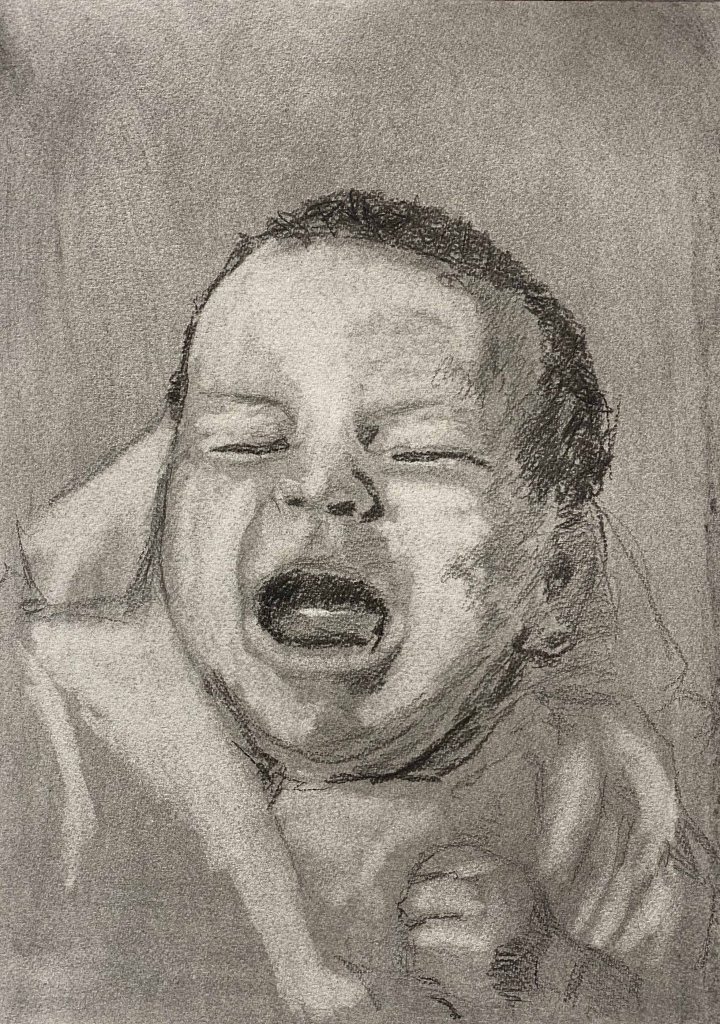
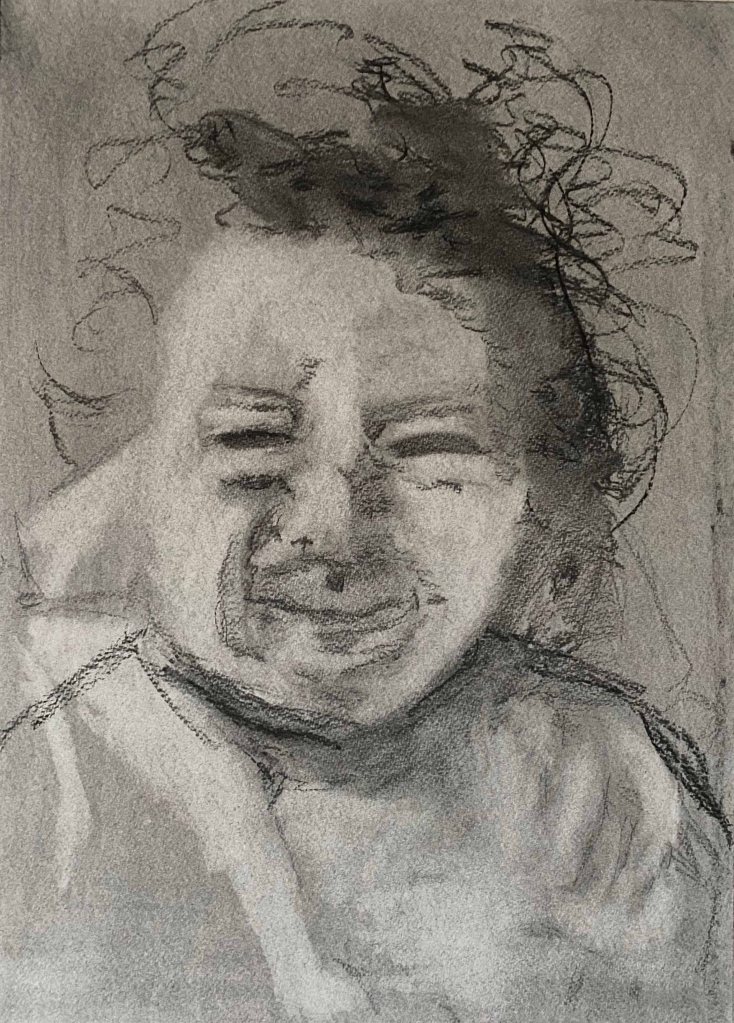
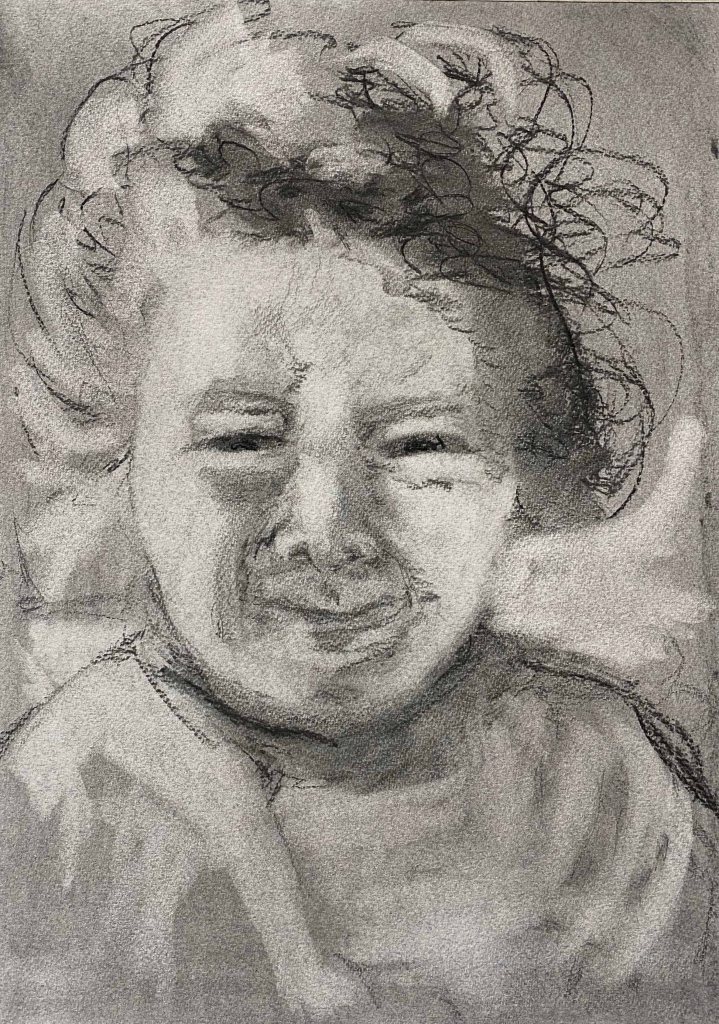
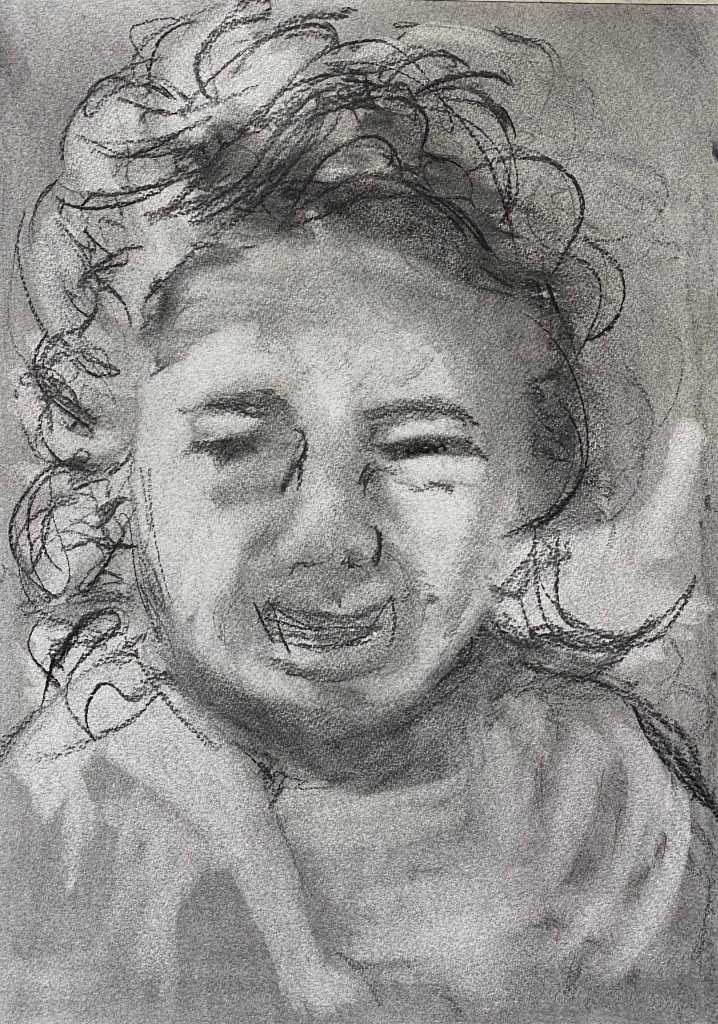
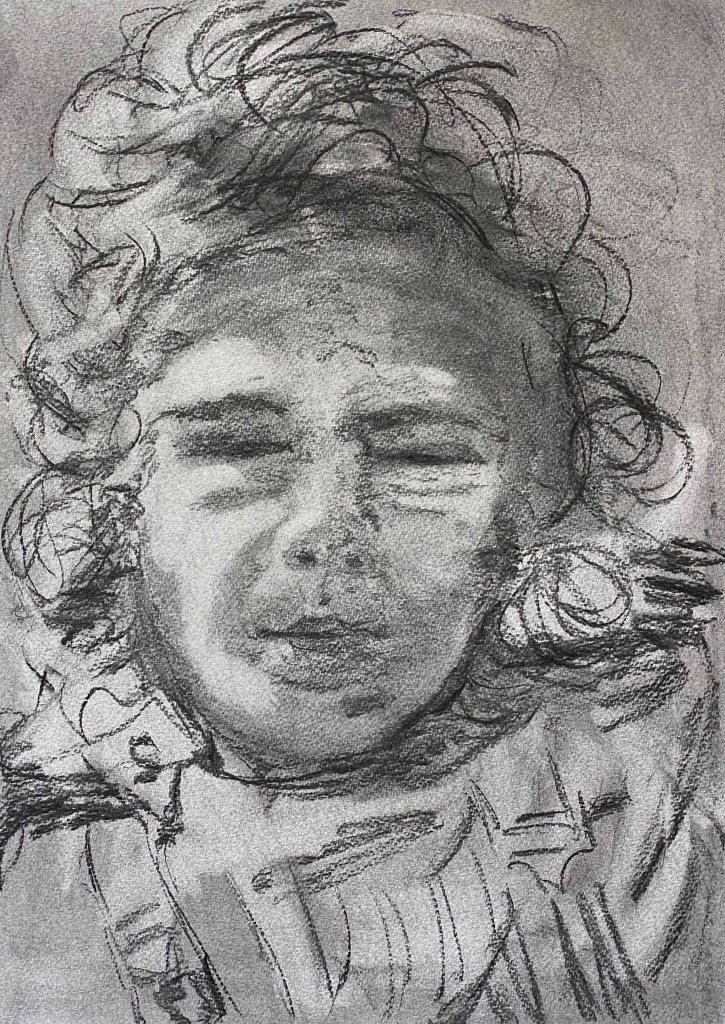
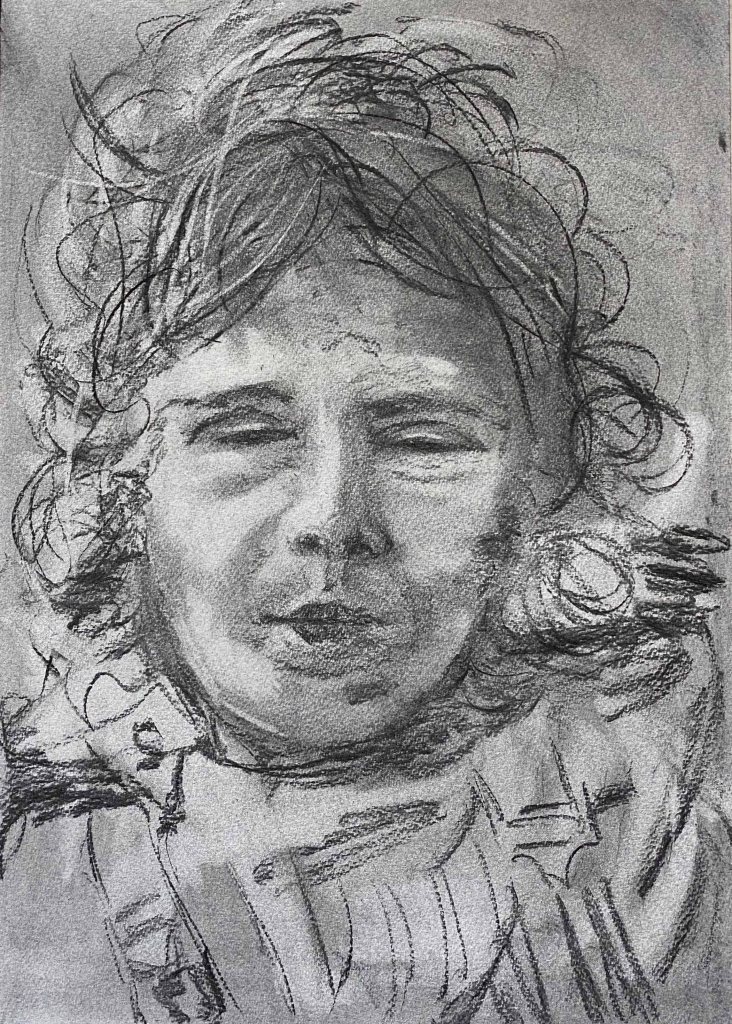
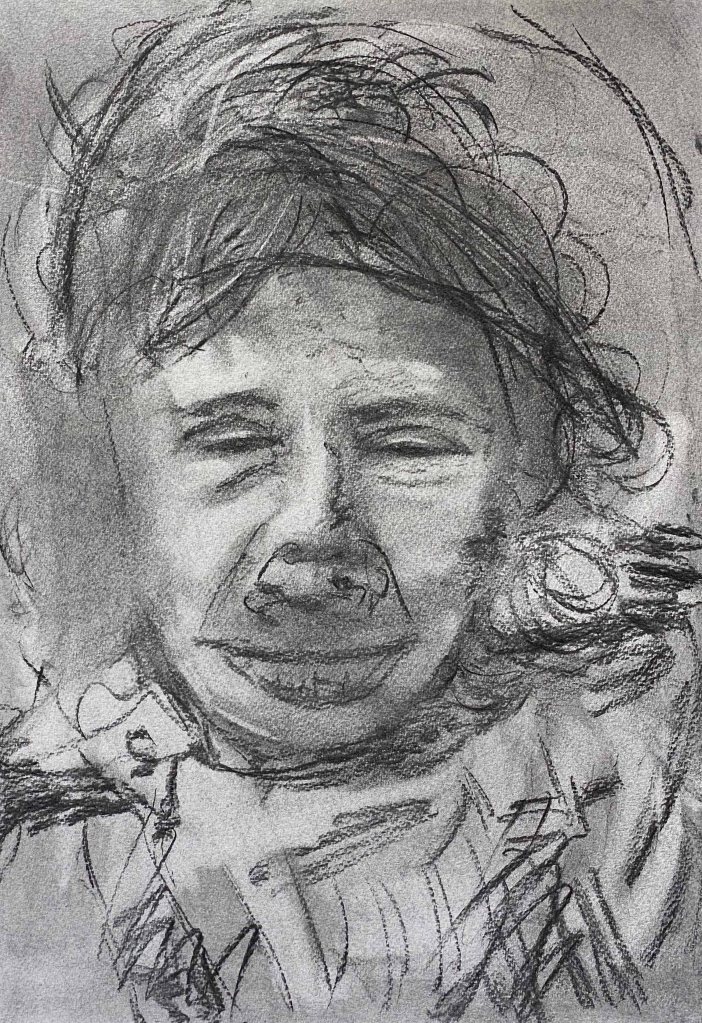
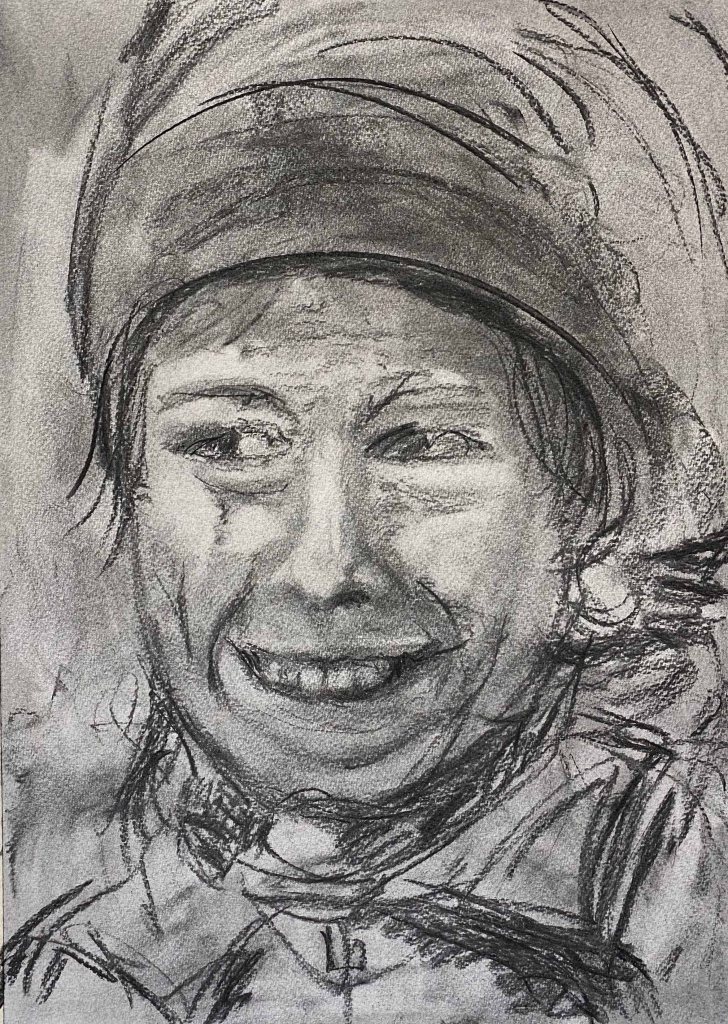
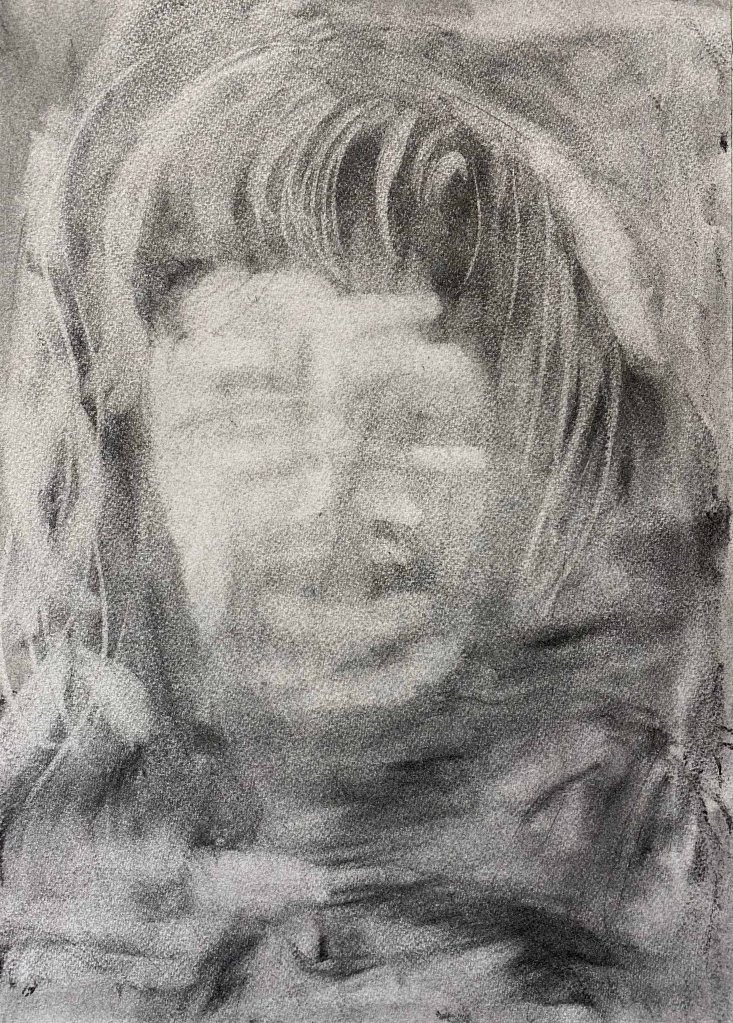
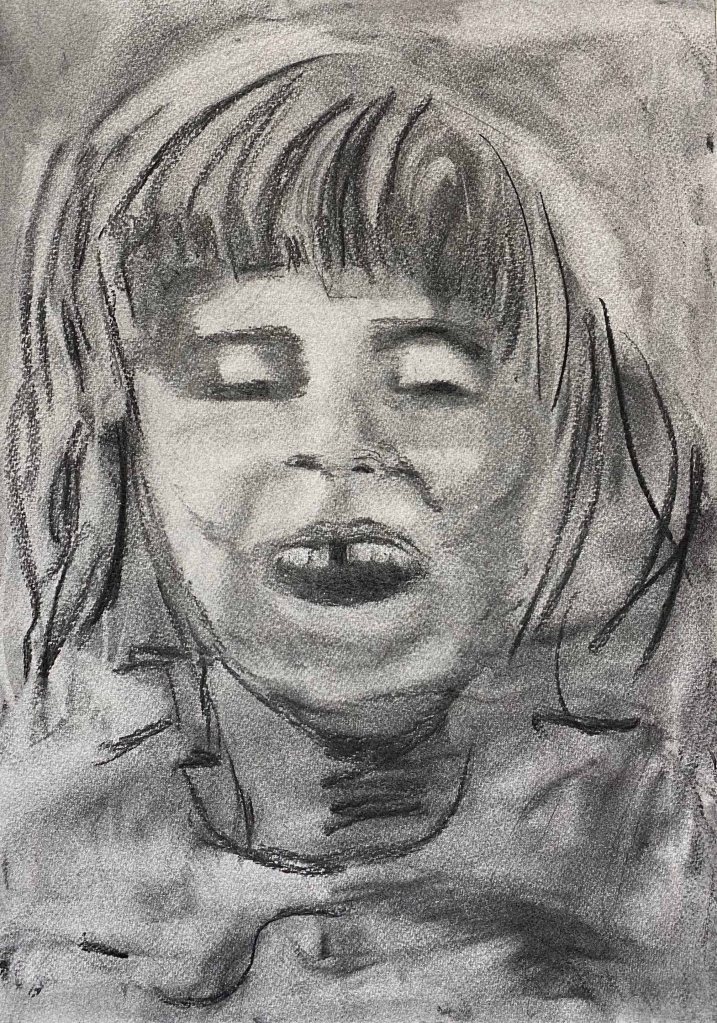
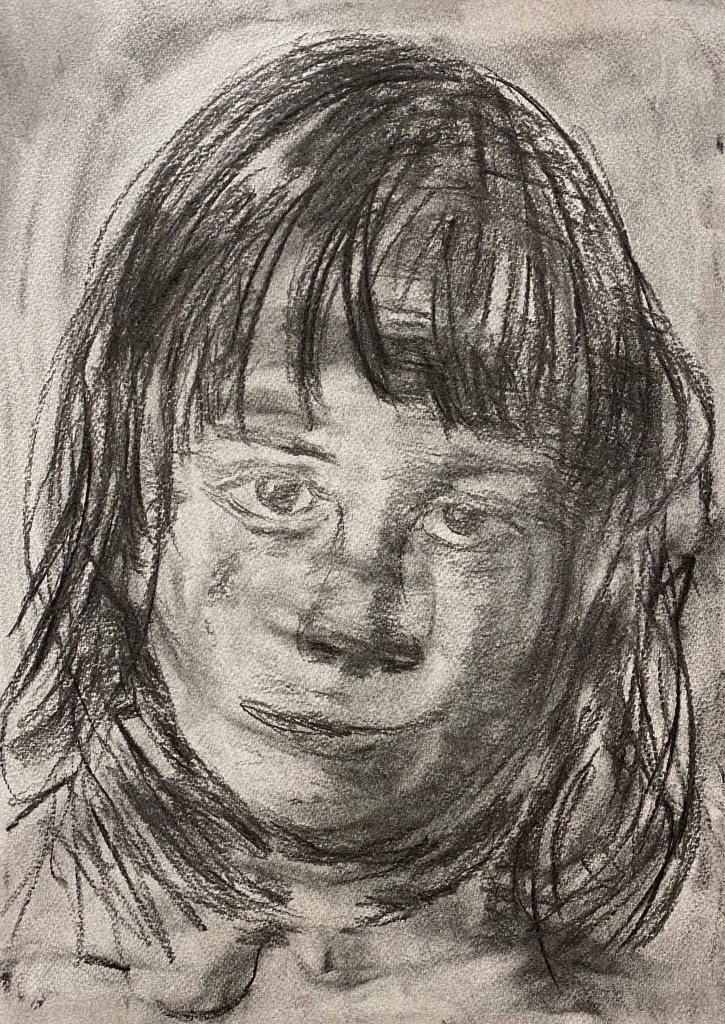
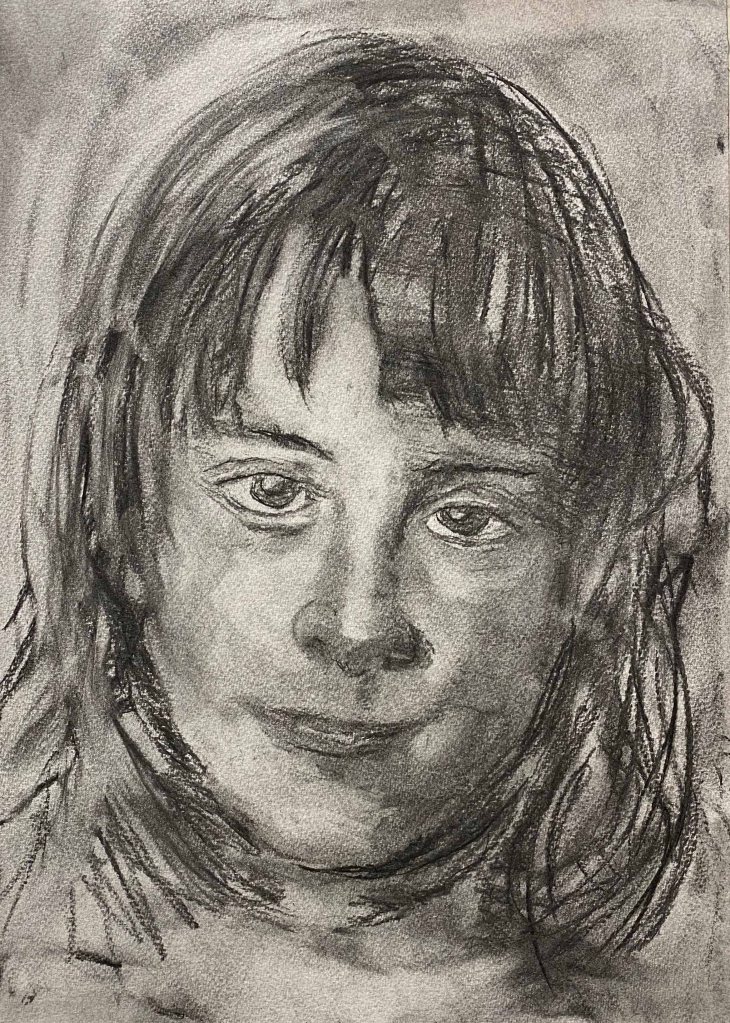
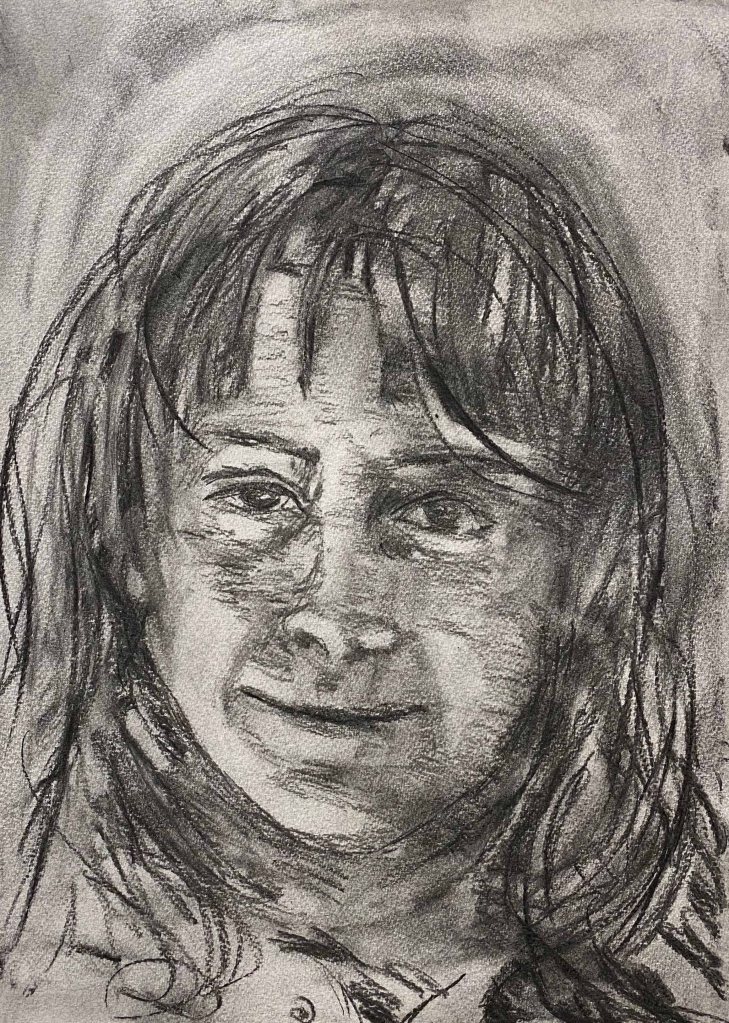
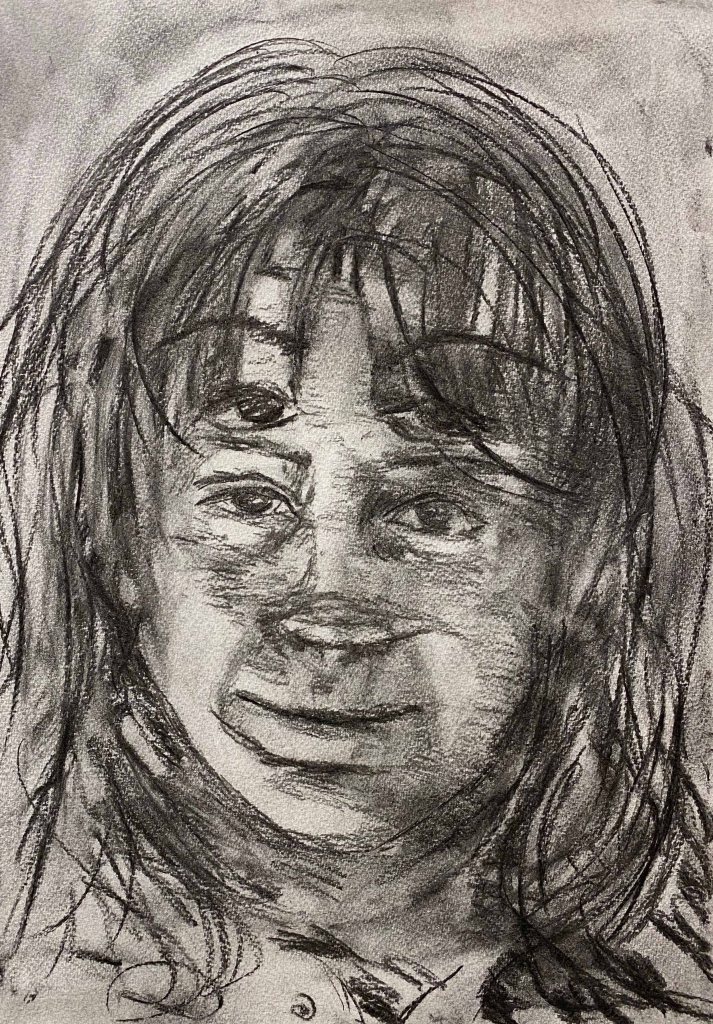
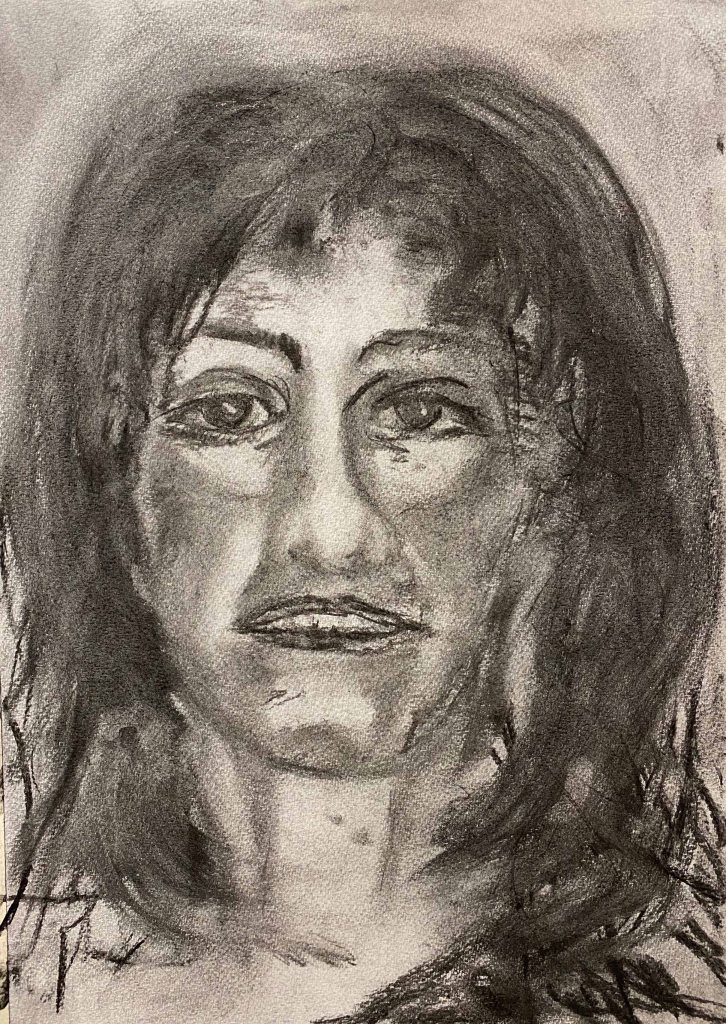
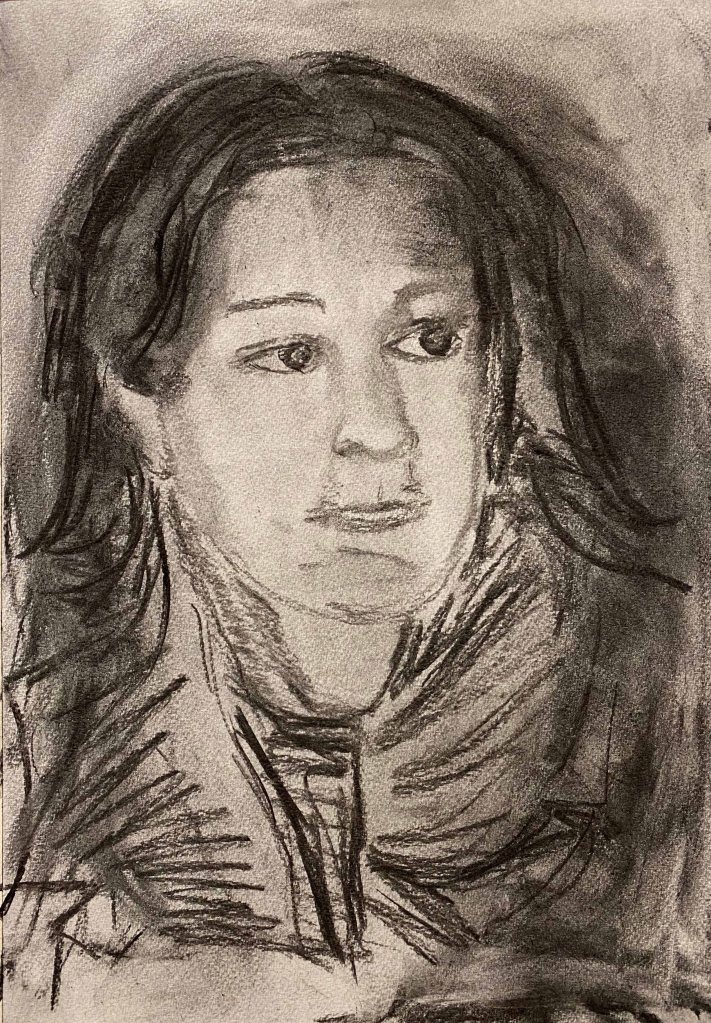
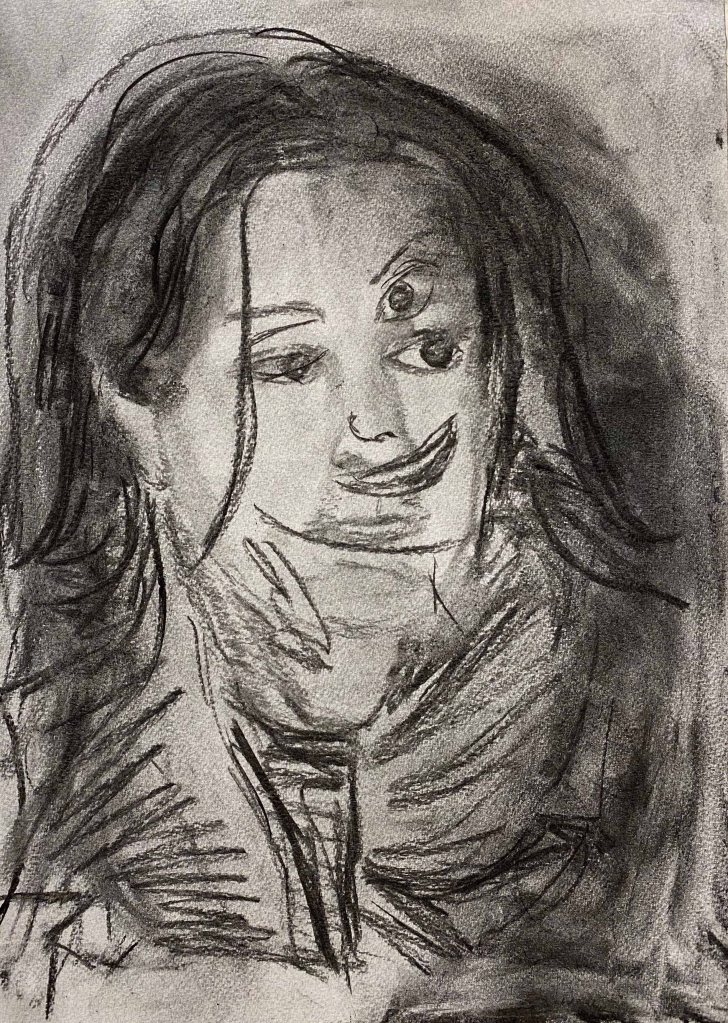
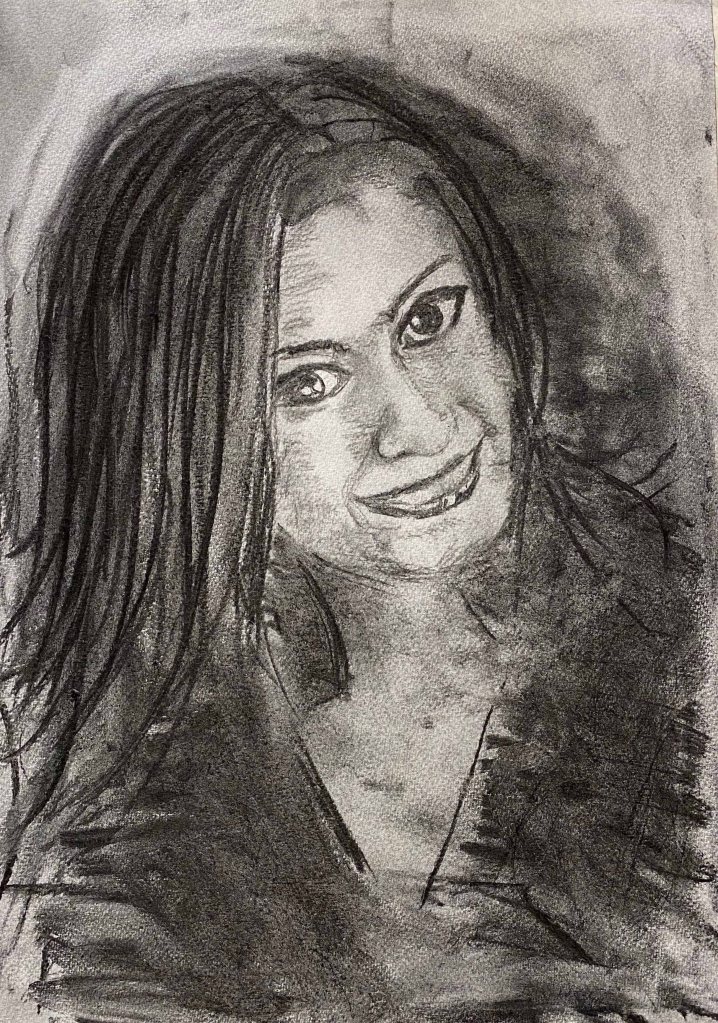
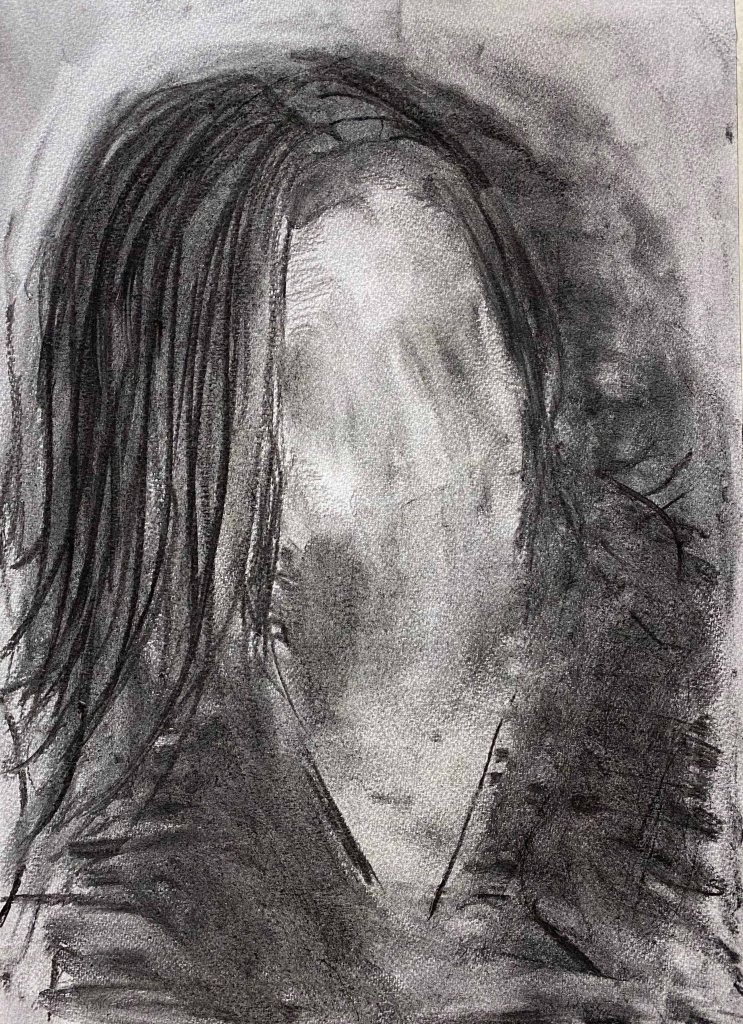
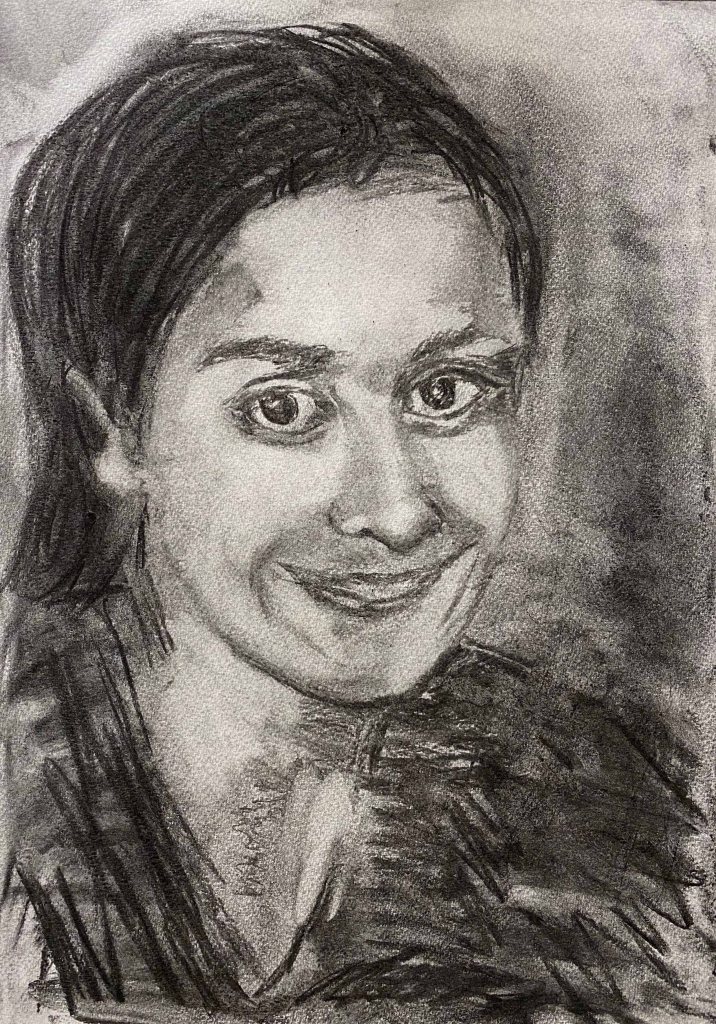
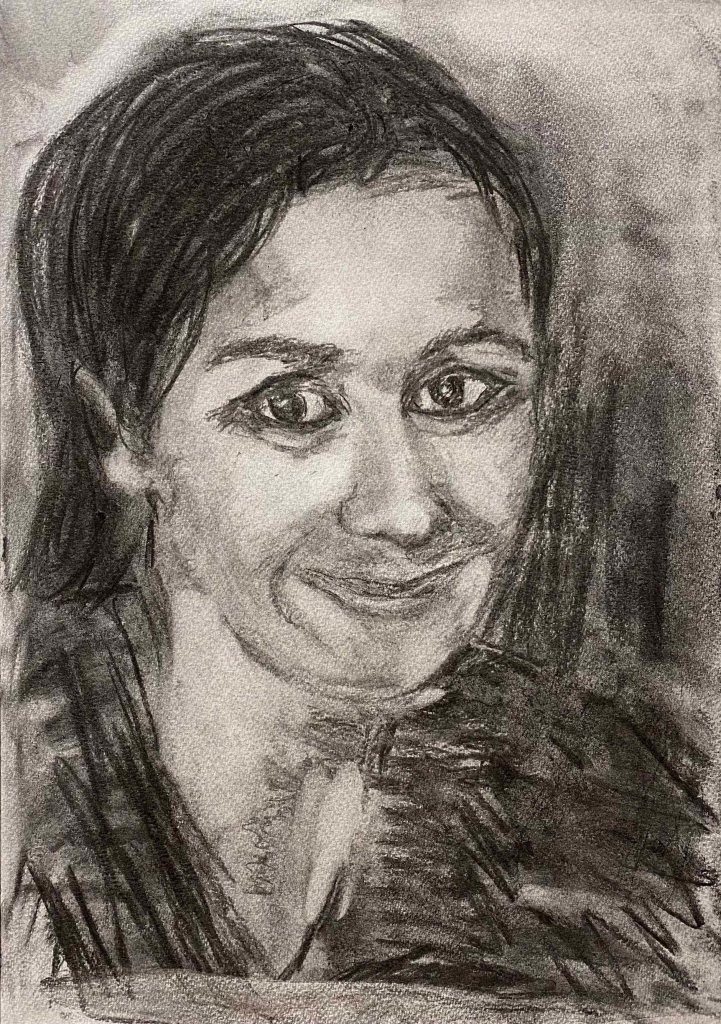
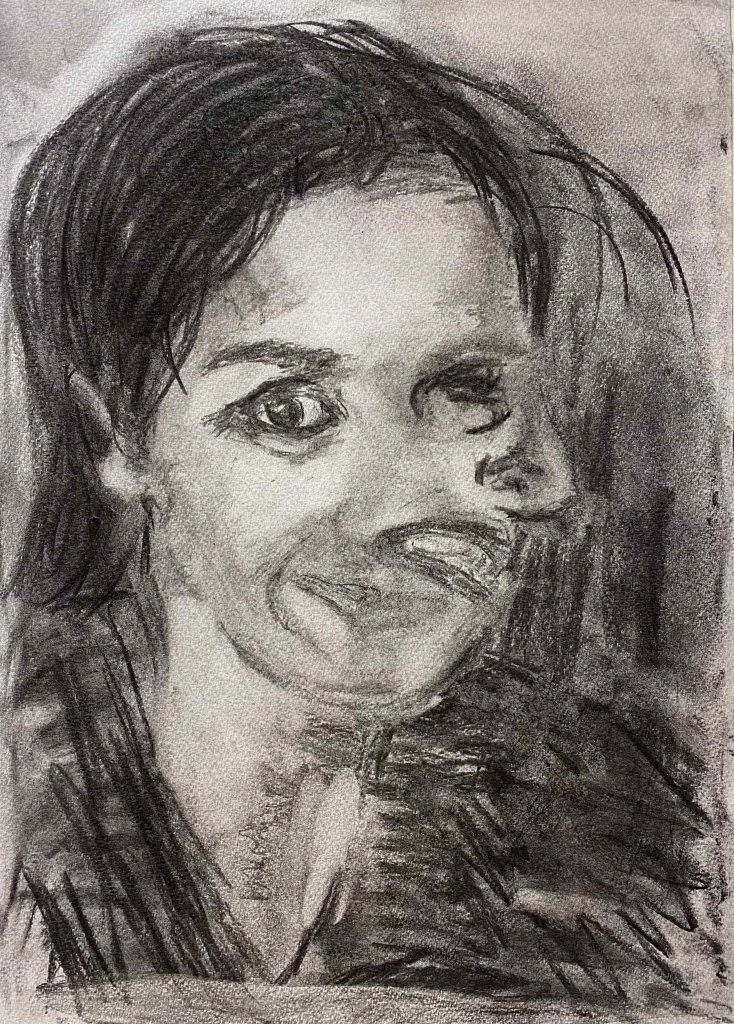
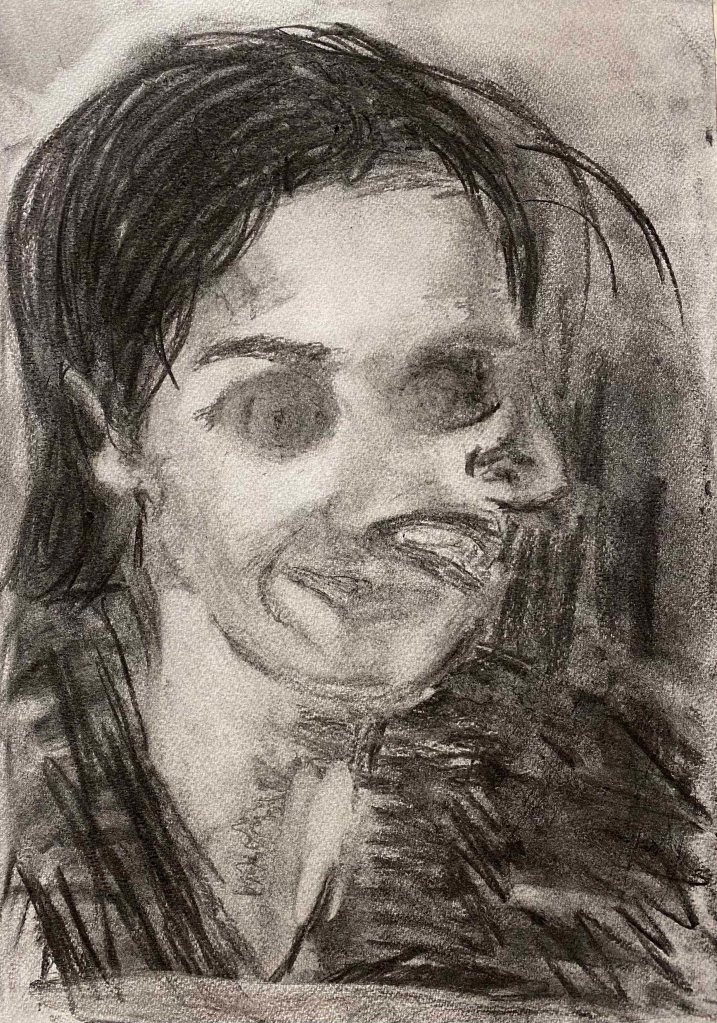
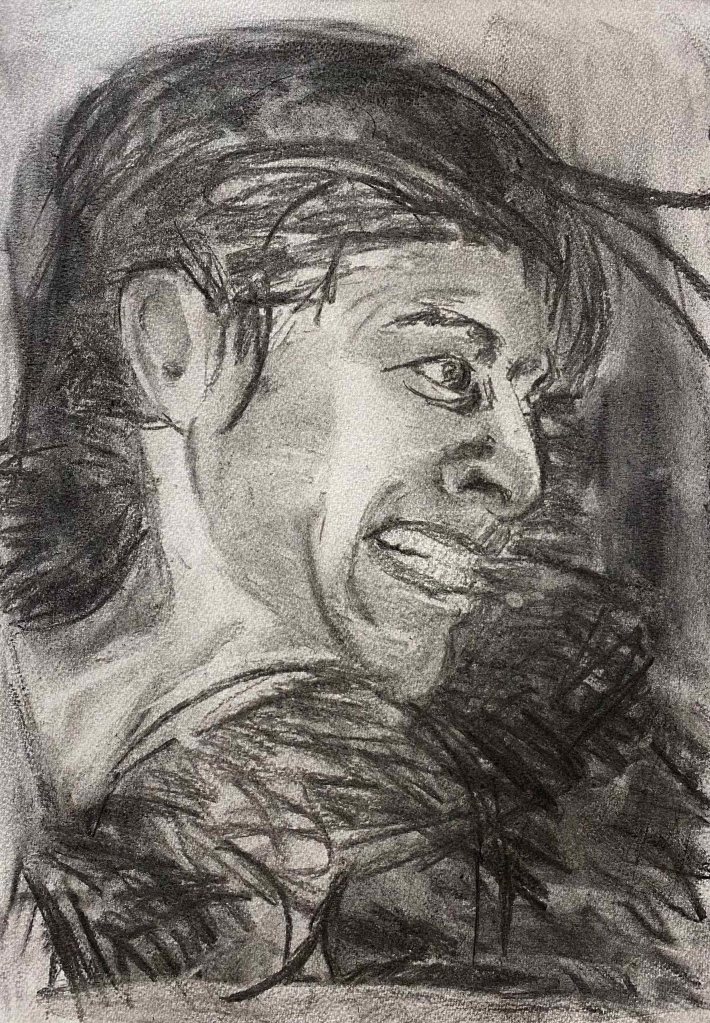
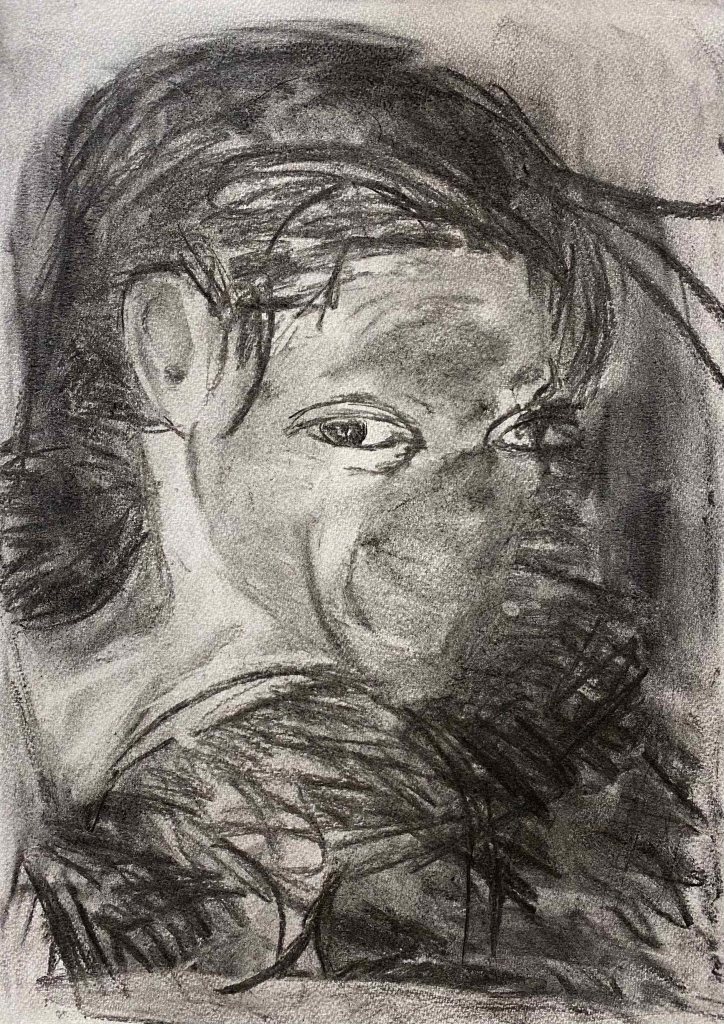
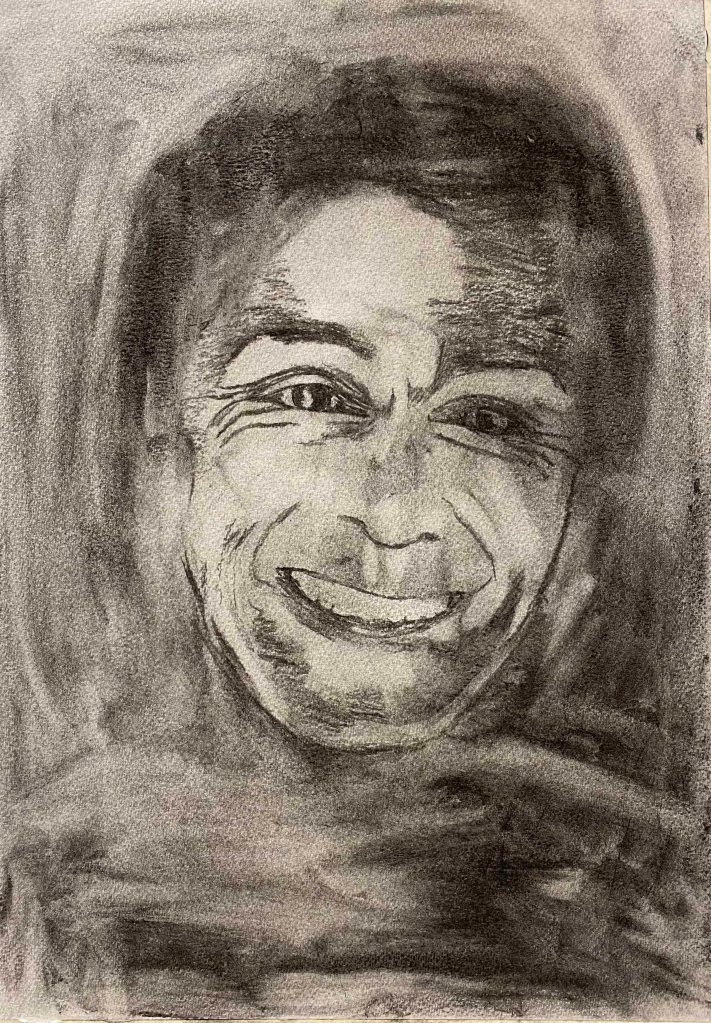
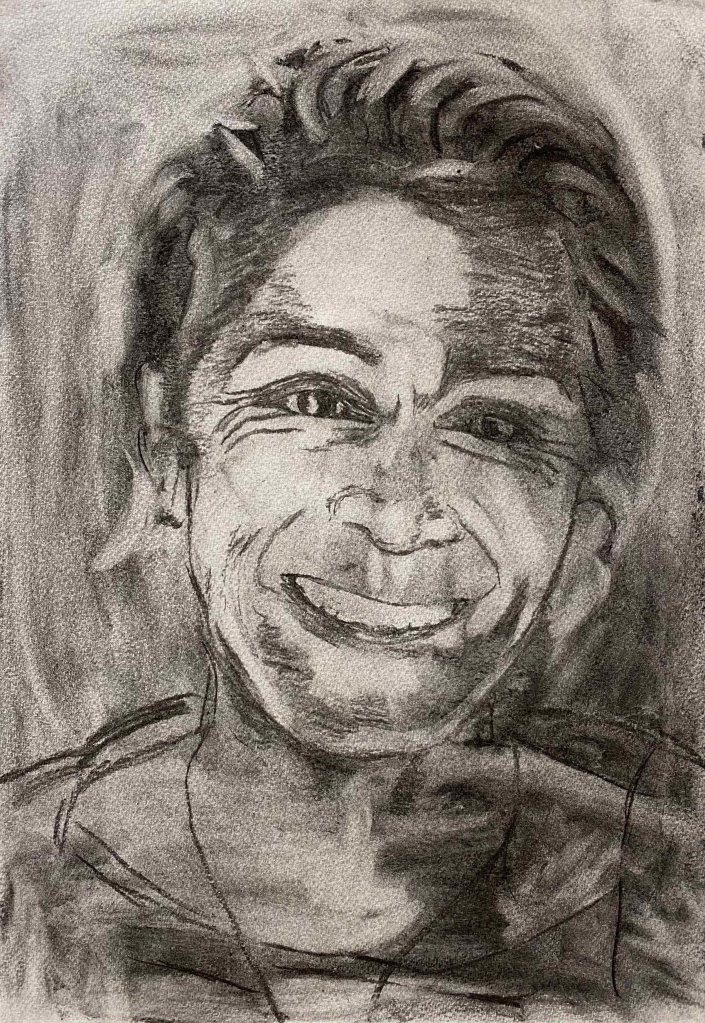
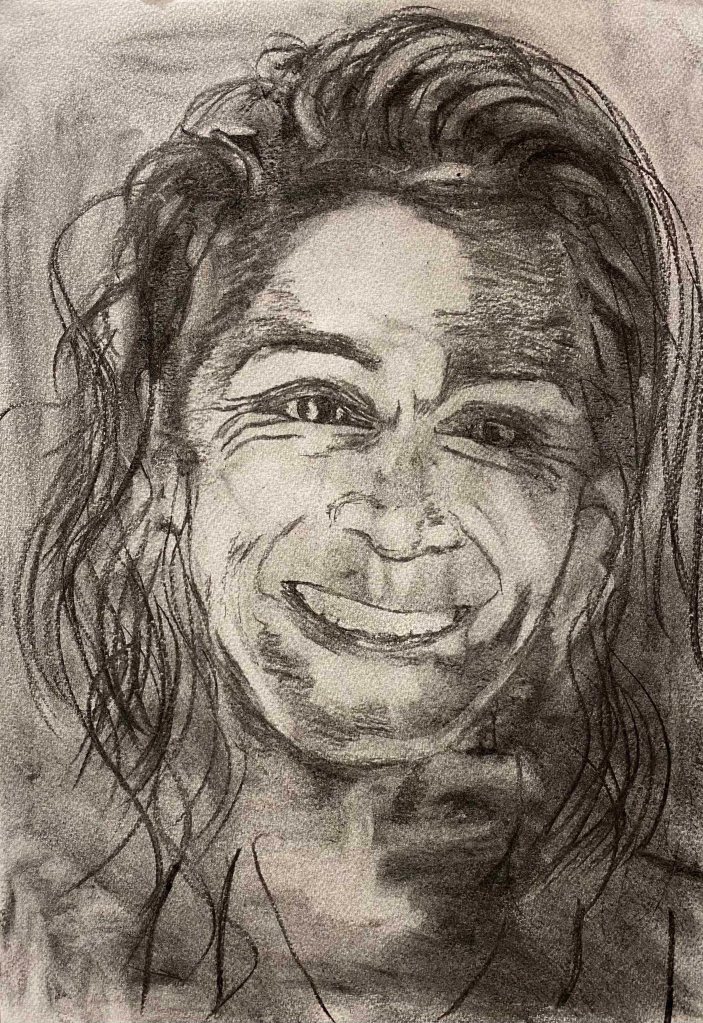
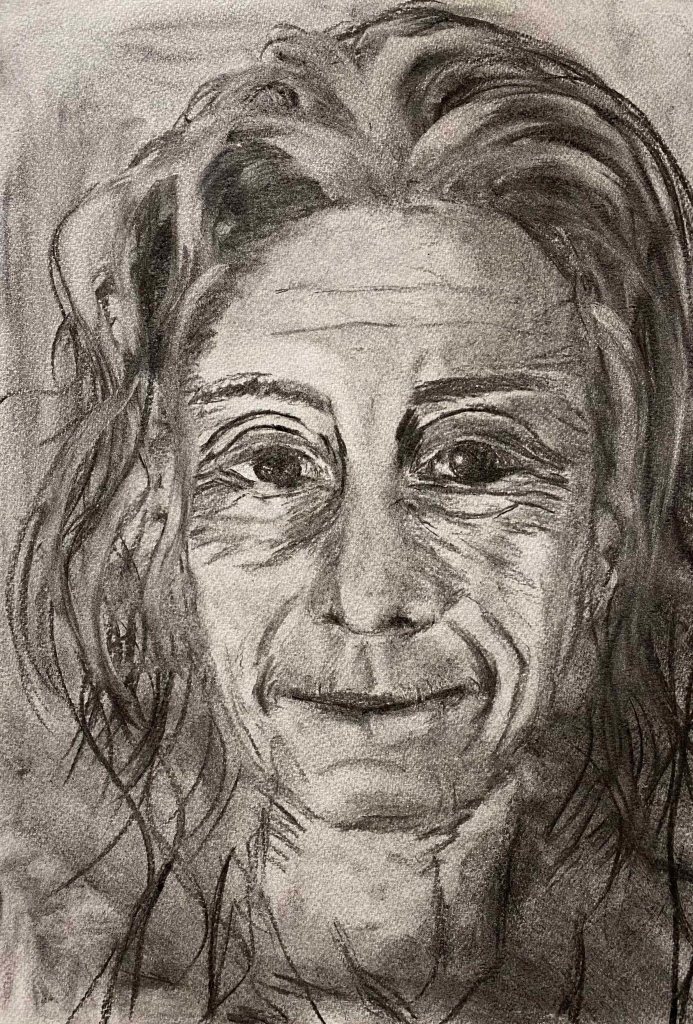
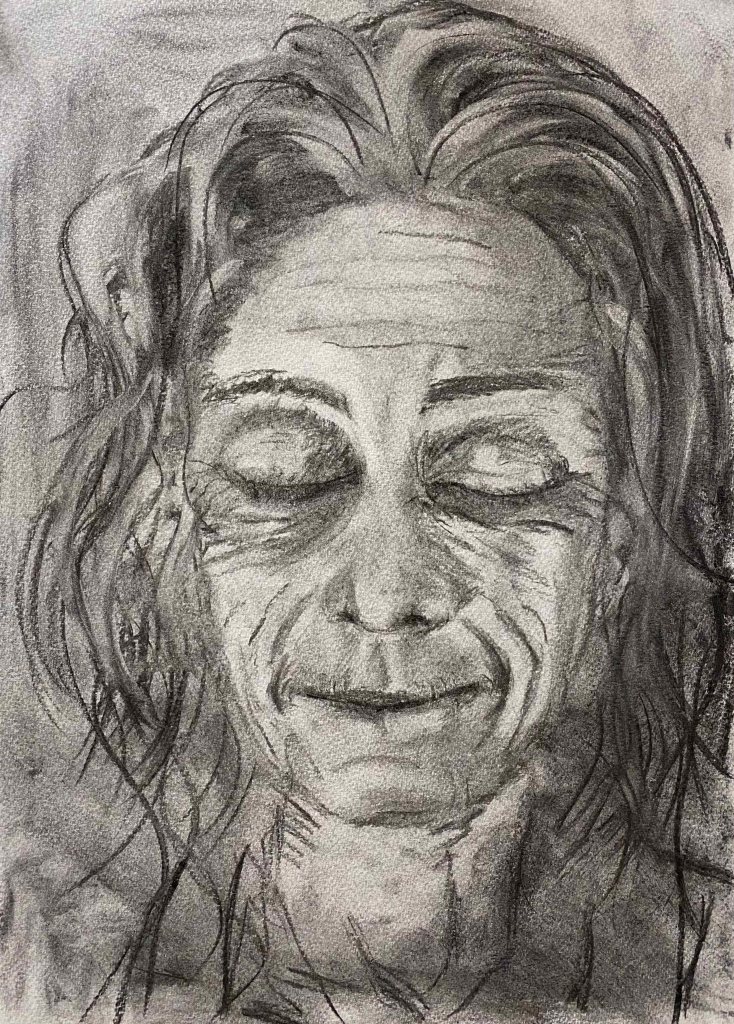
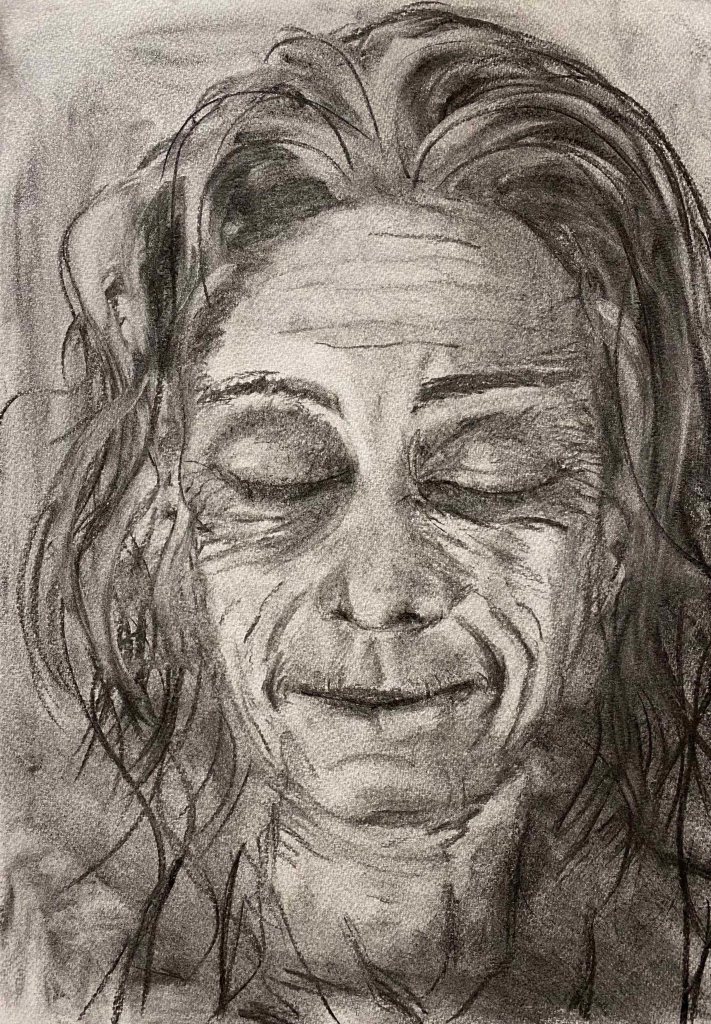
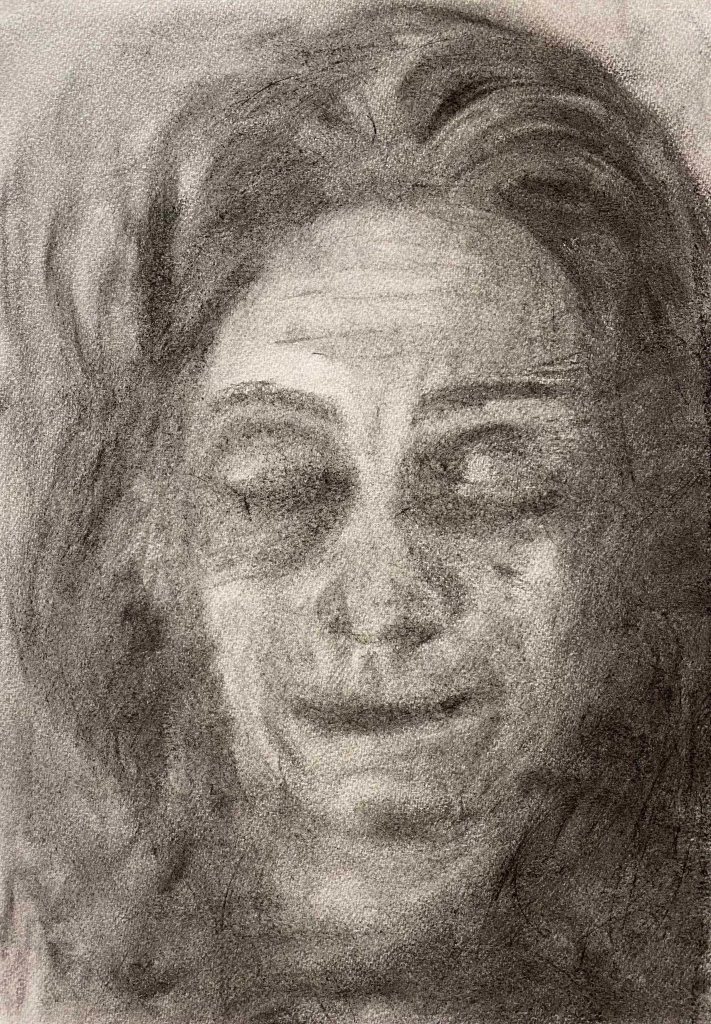
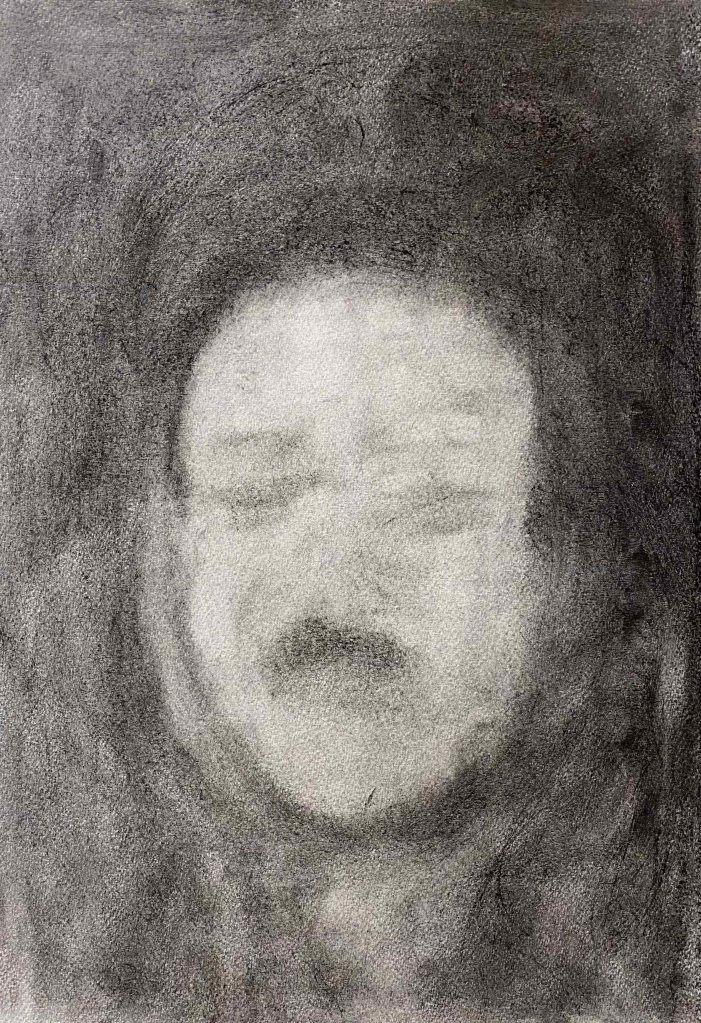
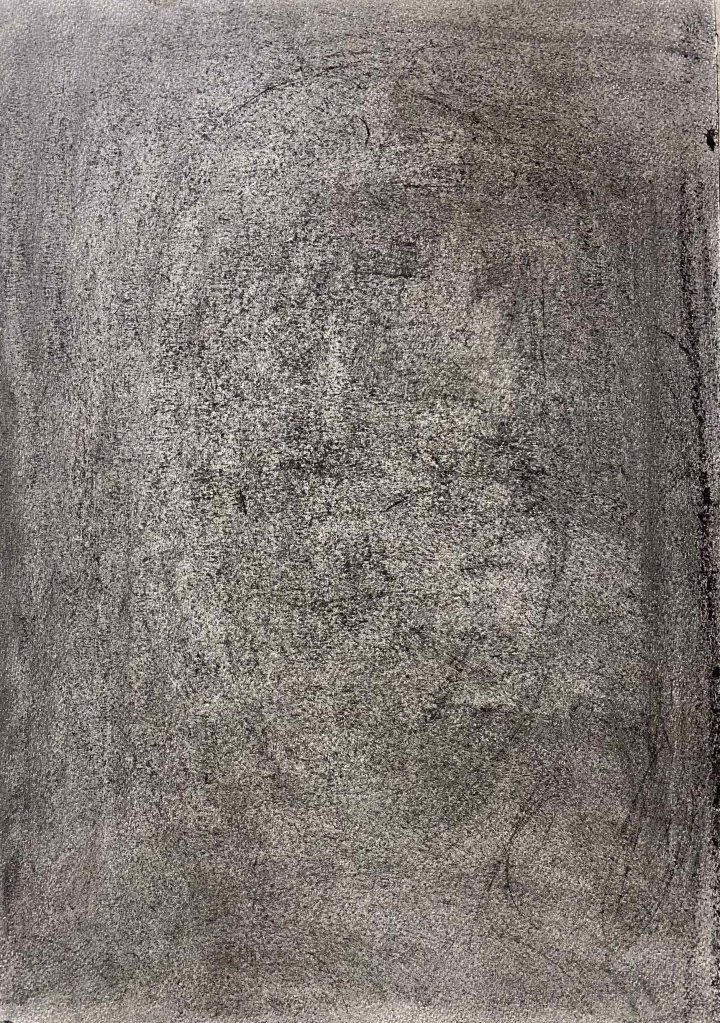
Inspired by Giacometti or Frank Auerbach’s portraits, where a multitude of repeated lines and erased parts corrected over and over, show a long process of searching for the right line, I have the idea to use one canvas or one piece of paper to draw a a timeline of self-portraits. Looking at photographs of myself from different ages, I will start with a baby portrait and then erase or change the lines til I arrive at a portrait of my current age- 50 years old.

I have never before felt drawn to draw self-portraits, but firstly I am the person to whom I will have the most easy access to photos of all ages, and I am as well drawn to the self- inquiry of a timeline.

I am very much hoping that the last portrait of the 50 year old, will still show traces of the first baby one, but am not yet sure how this will work out technically.

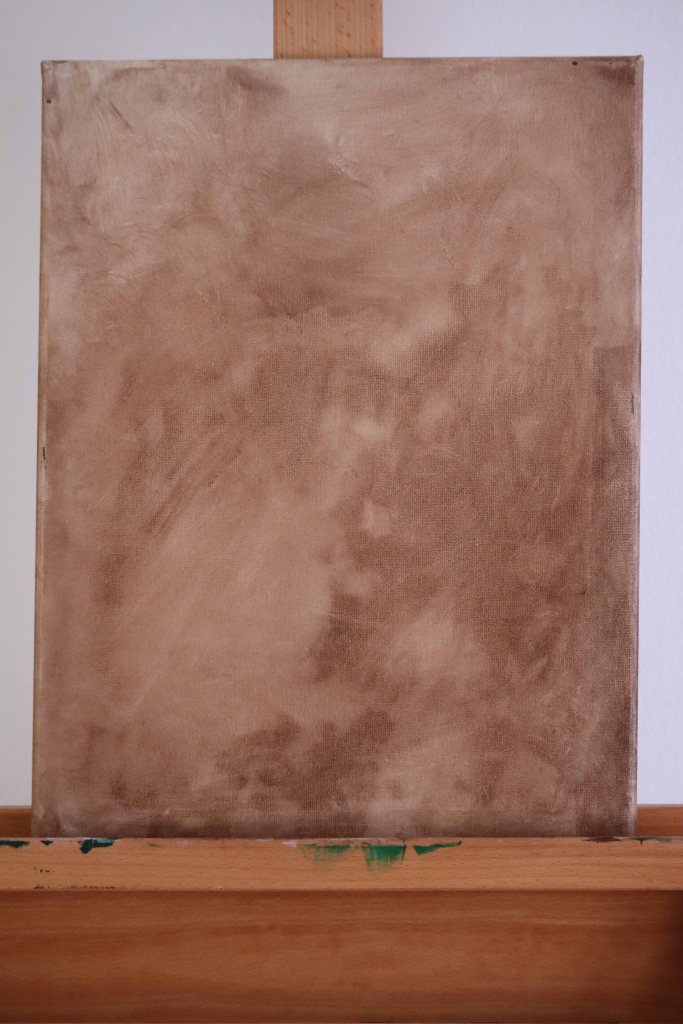
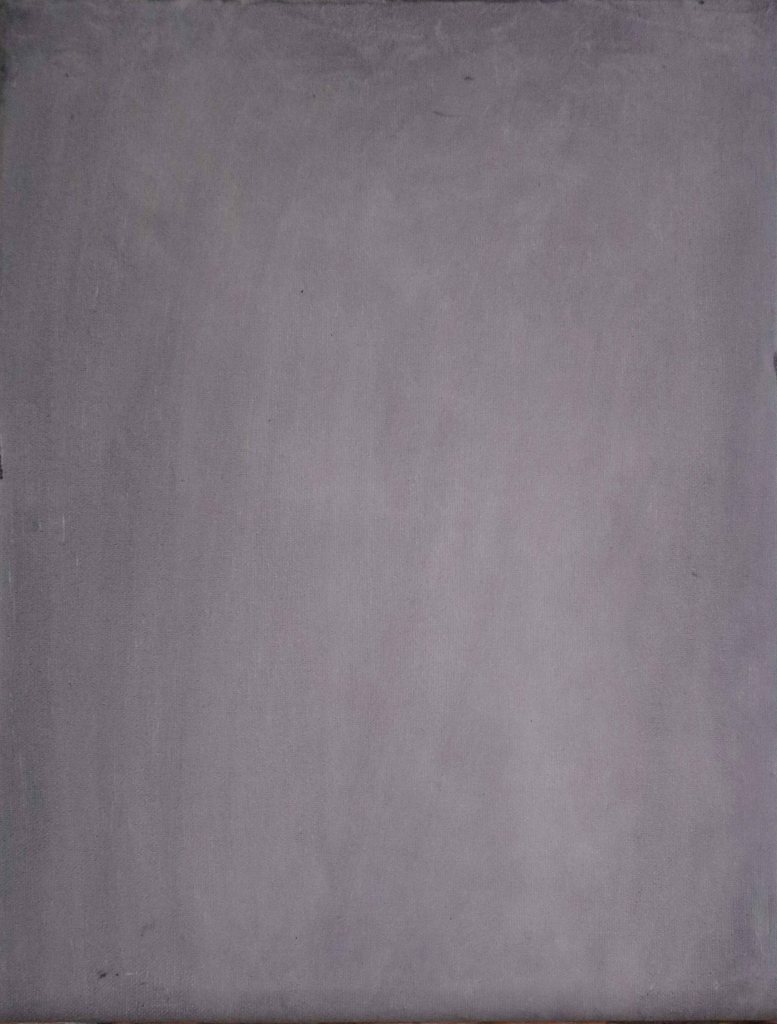
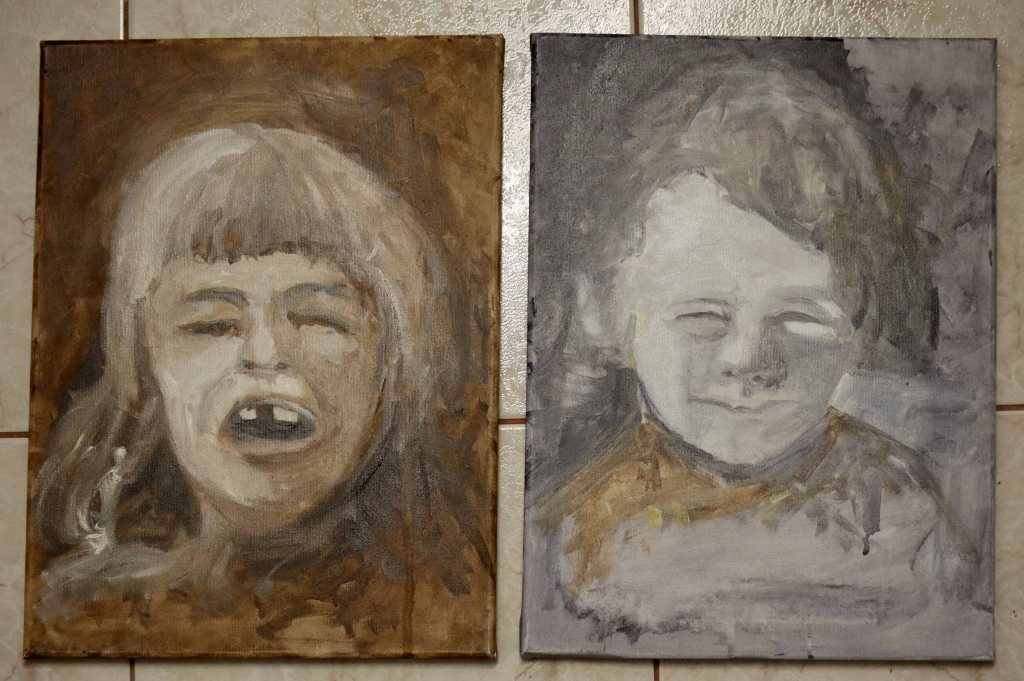
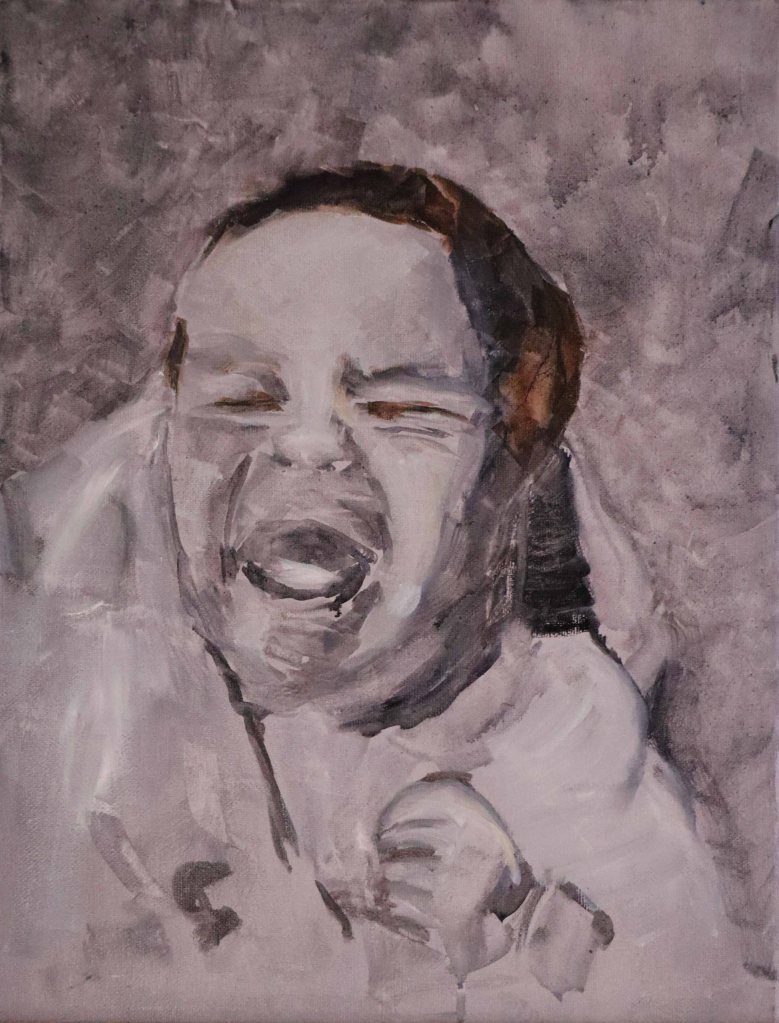
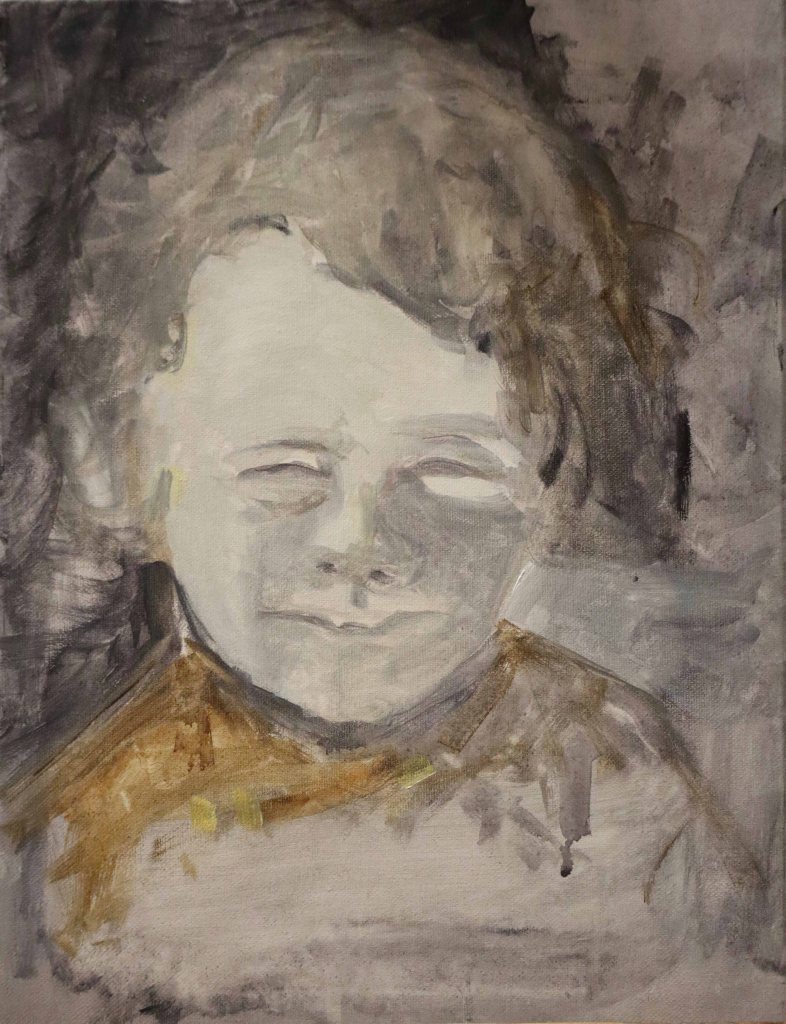
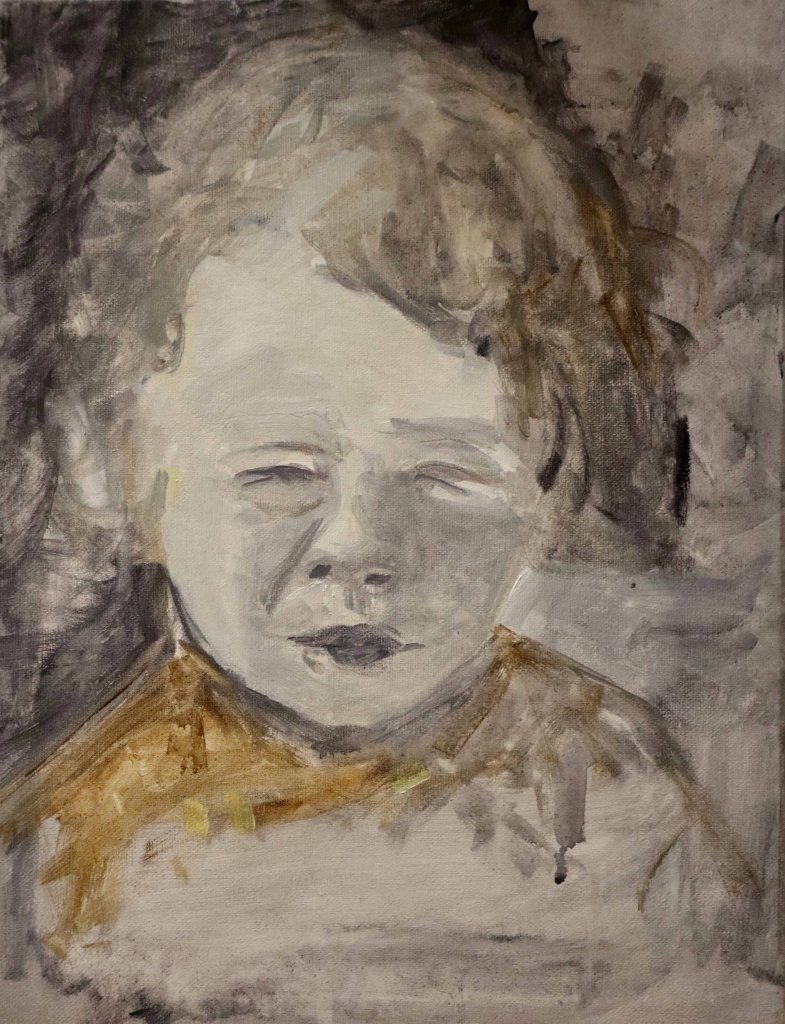
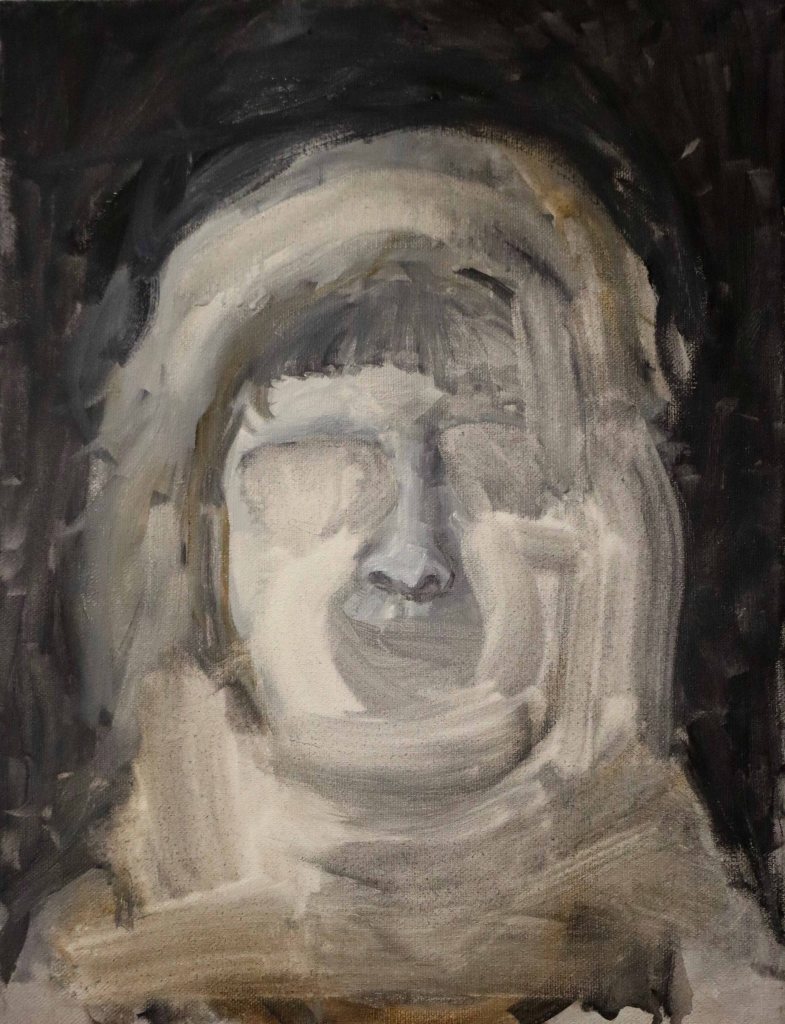
Having attended Keith Ashcroft’s workshop “from dark to light”, I am very much tempted to try this in oilpaints, starting from a dark ground. I choose two small canvases 30x40cm, and coat one in Payne’s Grey and the other in Raw Umber oil paint, as I want to experiment with a warmer and colder background.

I intend to choose one, and then sketch all of the photos one after the other on the same canvas, hoping that it will show remnants of the laborious process as well as a record of many years of transformation.

On my palette, I only have raw umber, Payne’s grey, Titanium White and Zink White. I am aiming for a monochrome effect playing with warm/cold tones.

After way too many hours of trials, I end up with this series of photographs from my two canvases:

I am getting a little desperate here for two reasons- in order to see anything, I wipe off too much of the previous image and you can not tell if it was painted on top of another portrait, as was the whole point. Secondly, I will be 70 years old before finishing this series at this pace.

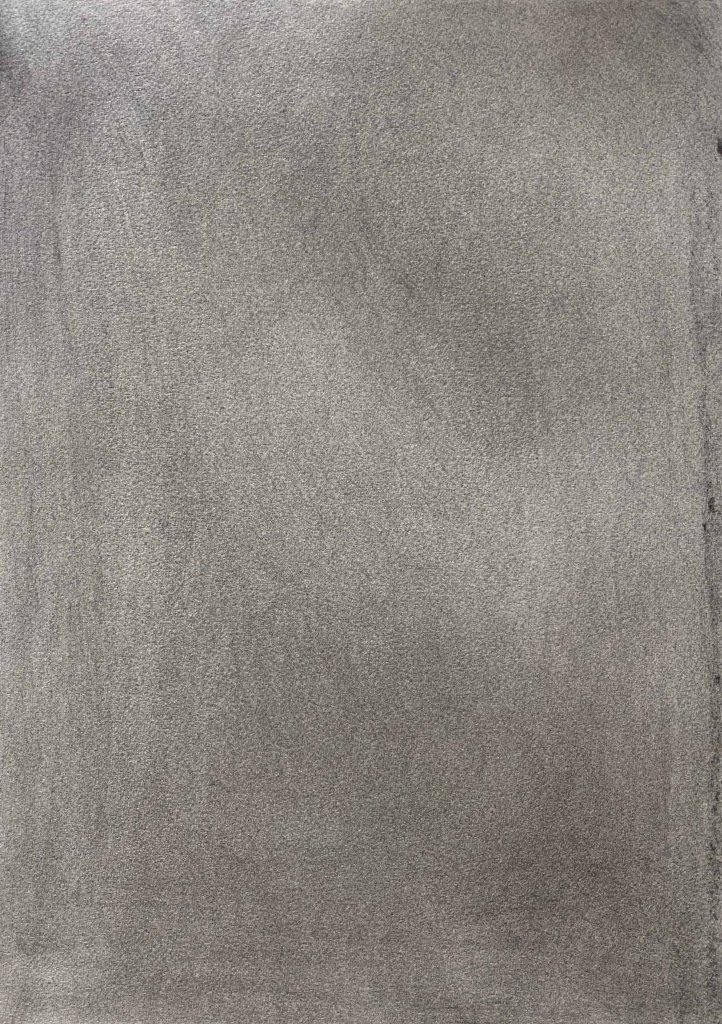
I decide to start over again with charcoal instead, spending less time on each of the drawings and trying to wipe off less in between.

I choose a sturdy 300gr Canson watercolor paper to be able to erase and correct a lot without too much damage to the paper.

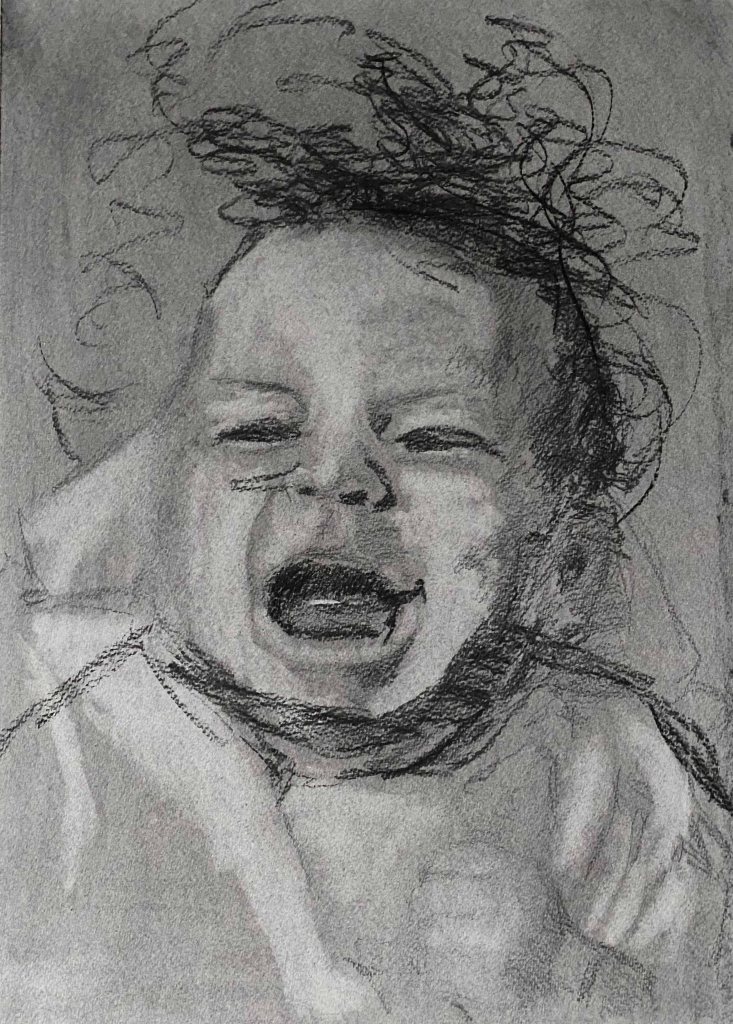
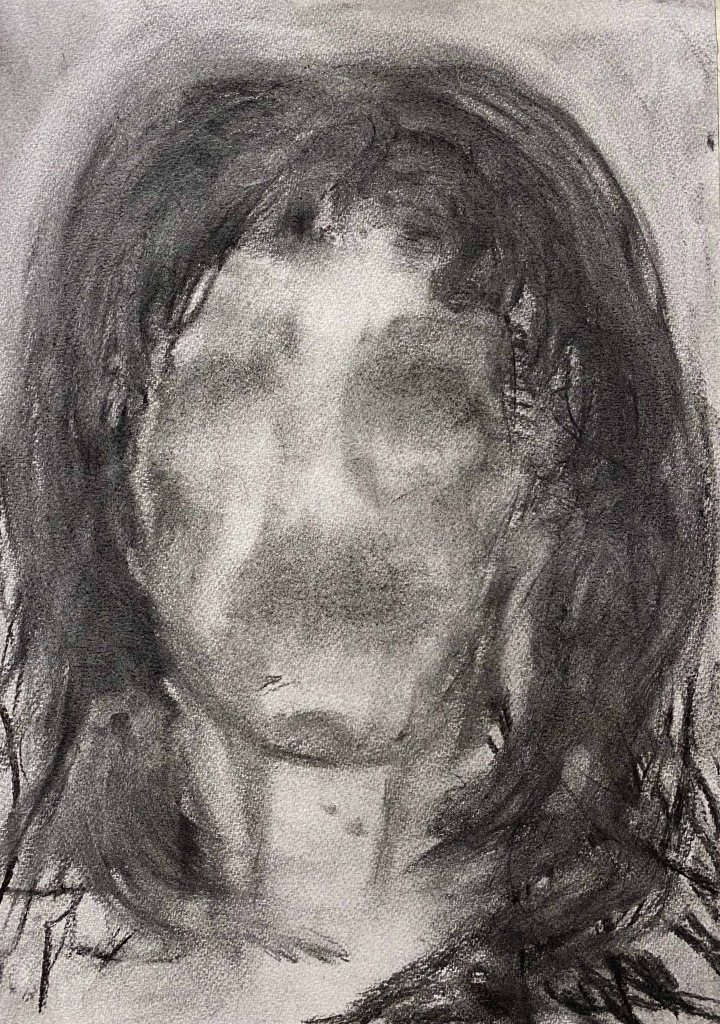
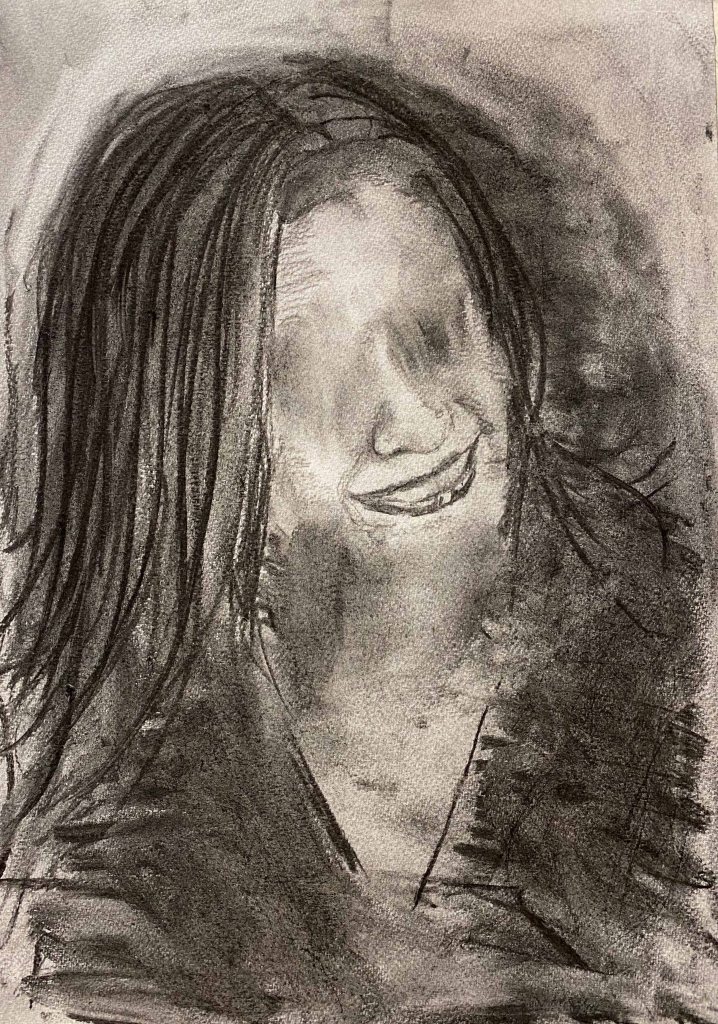
I end up with this series of drawings, all in charcoal:

This is how the drawings look strung together in a time-lapse video:

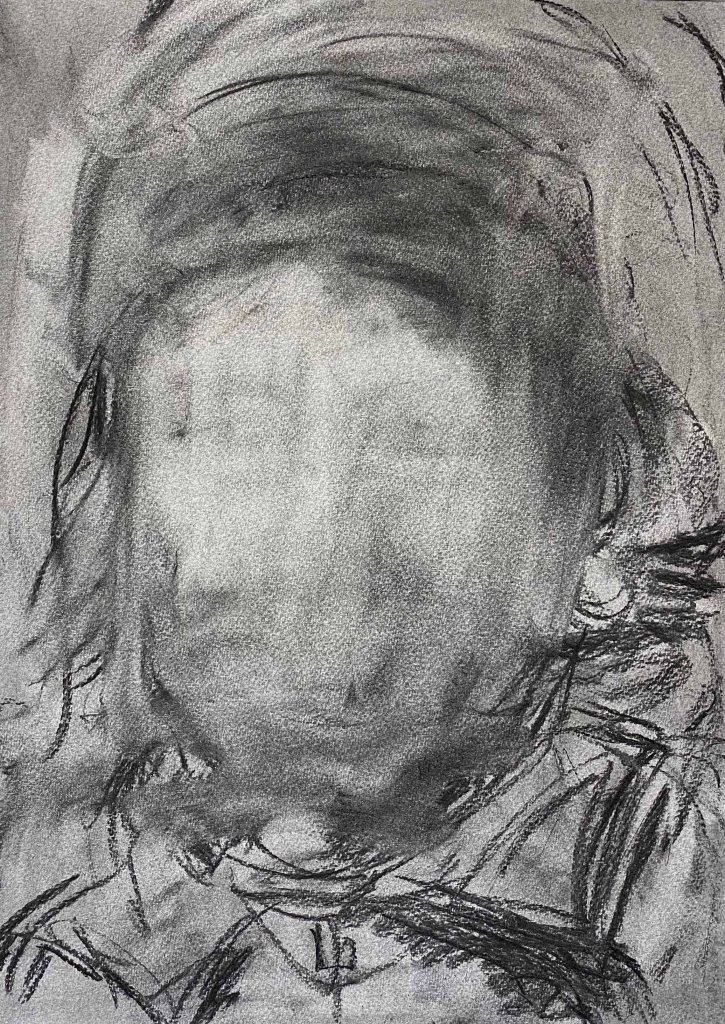
If I only look at the last drawing- I do see traces of the many previous layers:

Like an erased De Kooning by Rauschenberg, this drawing requires some context to be understood, as it is the process that is the response to the project here.

This drawing requires more time than a casual glimpse and more engagement from the viewer to understand. It was very time-consuming to produce and when knowing the subject and the process, this will be felt by the viewer.

5.2 A tiletastic artist’s book

D2 Course manual:

Aim: Artists’ books can be anything from a concertina fold to a professionally bound volume or an old textbook with sheets stuck in.

Research artists’ books as a form of artistic practice. Hans Peter Feldmann, Wolfgang Tillmans, Sol de Witt, Eileen Hogan and Arnaud Desjardin are just some of the artists who have worked in this way. The Chelsea School of Art has a collection of about 3,500 artists’ books established by Clive Philpott, an expert on the subject. The collection includes concrete poetry, European and American conceptual works and contemporary British artists.

Review your research and, perhaps taking an idea from your existing sketchbook work, create an artist’s book about something which elapses over time.

RESEARCH: Artist’s books as a form of artistic practice

Hans Peter Feldmann

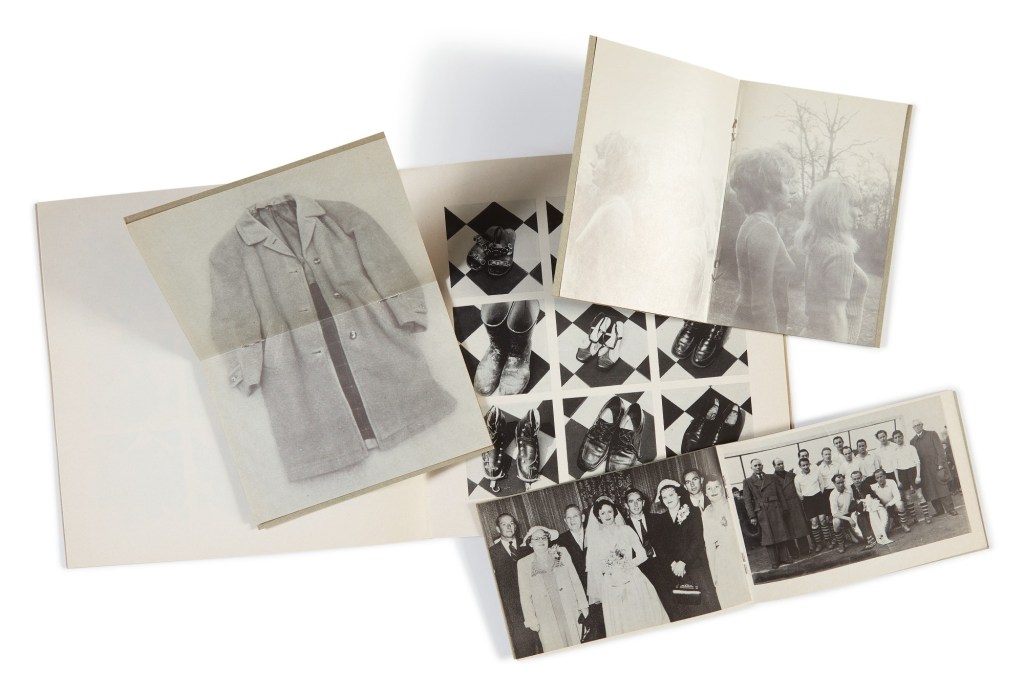
Hans- Peter Feldmann descibes himself as a compulsive collector of images and everyday objects, rather than an artist. As a collector of images- the bookform lends itself to cataloguing and viewing the pieces. He started presenting series of images in self-made books from 1968. He collects photographs or found images of a seemingly banal subject- like all the clothes of one woman or the views from hotel rooms, which he then elevates into a new experience.

(Image from: Sotheby’s. 2020. Sotheby’s . [Online]. [11 November 2020]. Available from: https://www.sothebys.com/en/buy/auction/2019/contemporary-prints-and-multiples-online/hans-peter-feldmann-untitled-bilder )

His work “100 years” which is a series of portraits of people from 8 months to 100 years old is one of many works dealing with time. Another is a photoseries of a medal taken with different shutter times.

I like the simplicity of his photobooks. He deliberately chooses a very cheap and “self made” technique and look and then simply fotocopied them to make more copies. This simplicity lends itself to the subjects, which are also “simple” things, everyday objects that receive a new value and quality by being looked at differently, even when the format is so unpretentious.

Wolfgang Tillmanns

Wolfgang Tillmanns is most renowned as a photographer, and came to fame with pictures documenting different social aspects of society, as well as enlarged scenes that become abstract. He was the first photographer to win the Turner prize in 2000. Since then, he also works with rap music, video and performance.

Tillmann often groups his series into artist’s books.

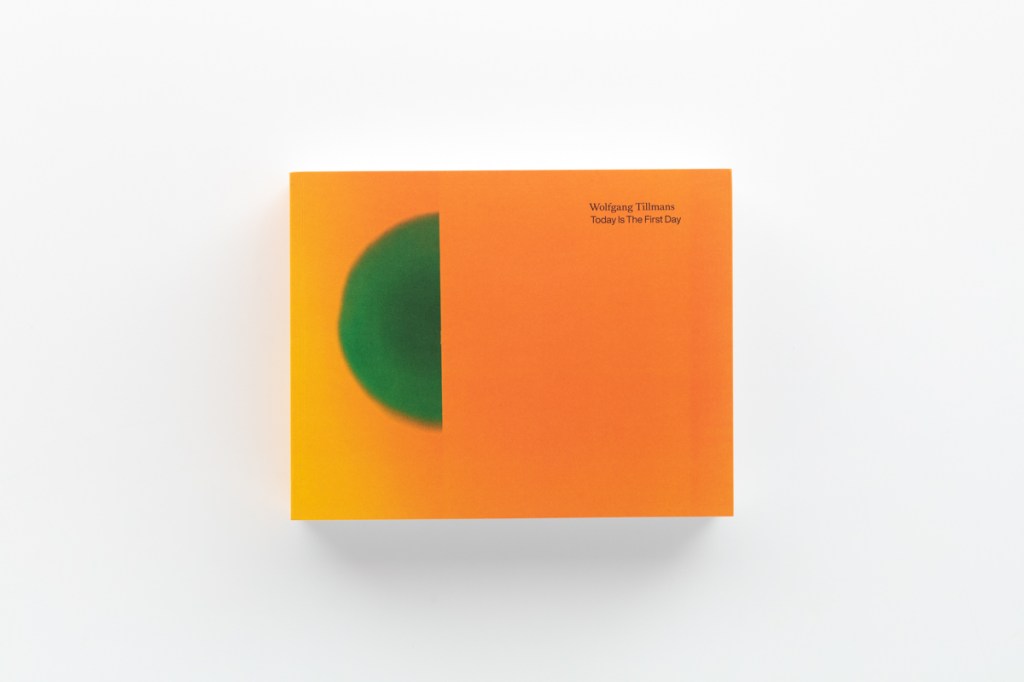
His latest book is “Today is the first day, a 512pages artist’s book published this year.

(Images from: Tillmans, W. 2020. Wolfgang Tillmanns. [Online]. [11 November 2020]. Available from: https://tillmans.co.uk/)

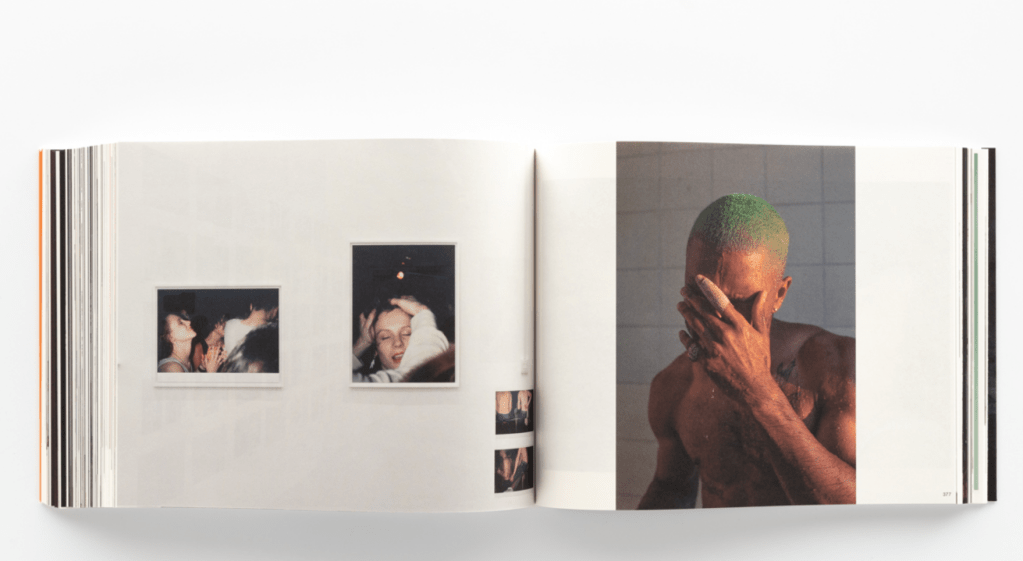
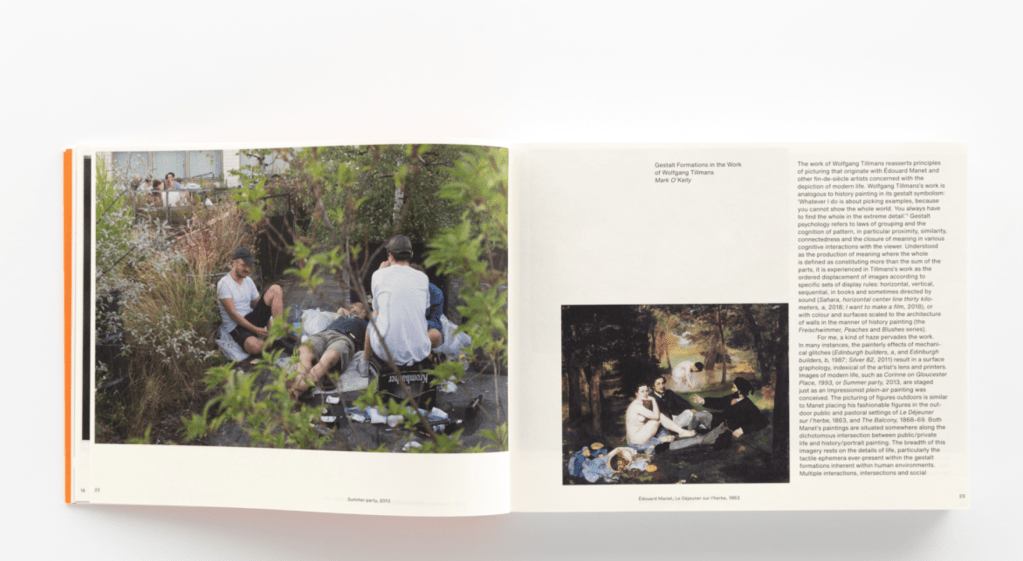
On Tillmanns website http://www.tillmanns.co.uk, many of his books are available to leaf through, which also gives good insights to the layout. The images are accompanied by various texts, and exhibition texts from different authors. His images are often very direct and striking and condensed into a book they show an overwhelming variety of scenes and angles. Leafing through them has made me appreciate Tillmann’s work much better. Sometimes seeing the same photo blown up to a huge format in an exhibition produces a quick effect, but it can stay at the level of a quick shock. The book form shows more of a genuine research quality and I would almost say tenderness for the subjects explored.

SOL LE WITT

The American artist Sol LeWitt worked in sculptures and massive wall drawings, but his interest in series also brought him to produce more than 50 artist’s books. He was one of the innovators of developing the artist’s book as an art form and was a co founder of Printed Matter- one of the first organizations dedicated to creating and distributing artists’ books.

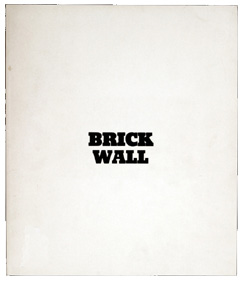
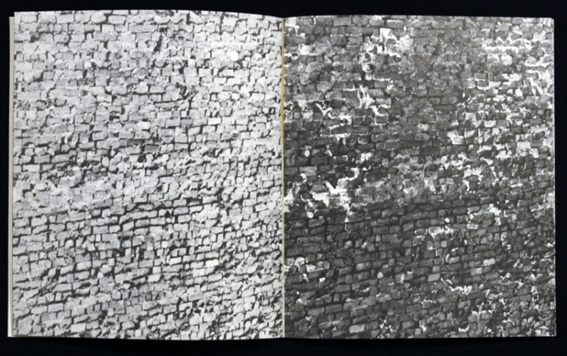
His first books, contained explorations of geometrical forms, then appeared colour and finally photography, like for example in “Brick wall” from 1977, where he photographed various wall surfaces.

(Images from: Artists. 2018. Artist’s books. [Online]. [12 November 2020]. Available from: http://artistsbooks.info/AB_Lewitt%20Sol.html)

Researching Sol Le Witts books, lead me to a fantastic website dedicated to artists books: http://www.artistsbooks.info

DIETER ROTH

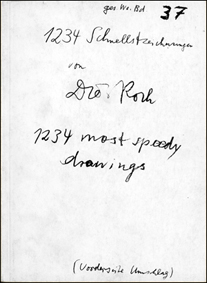
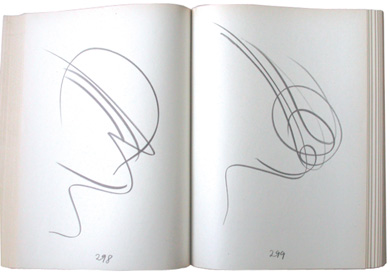
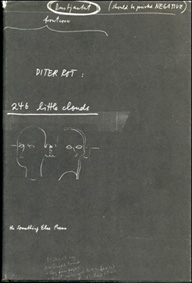
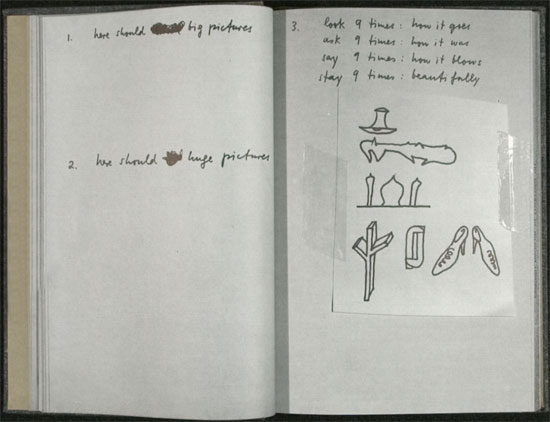
The work of Swiss artist Dieter Roth is also very centered around the book form. The two following books were published in a few hundred copies and handsigned. I like their very spontaneous and unpretentious nature, like the below book of “1234 most speedy drawings”:

This is a little book of 246 clouds. The books exist as works in themselves, not as preparatory sketchbooks for other works.

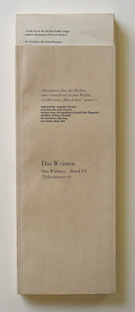
Roth then went on to produce books with loose papers presented in different forms.

(Images from: Artists books. 2018. Artist’s books. [Online]. [12 November 2020]. Available from: http://artistsbooks.info/AB_Roth%20Dieter.html)

The books consisted of loose sheets, leaving the viewer the freedom to shuffle the pages in any order. This is an idea I am quite attracted to trying out.

The bookform took an extreme form in Roths work “Litteratur wurst” (Litterature sausage) where he minced magazine pages and drawings and stuffed them into a sausage skin. This is just to show how incredibly versatile and artist’s book can be!

TILETASTIC

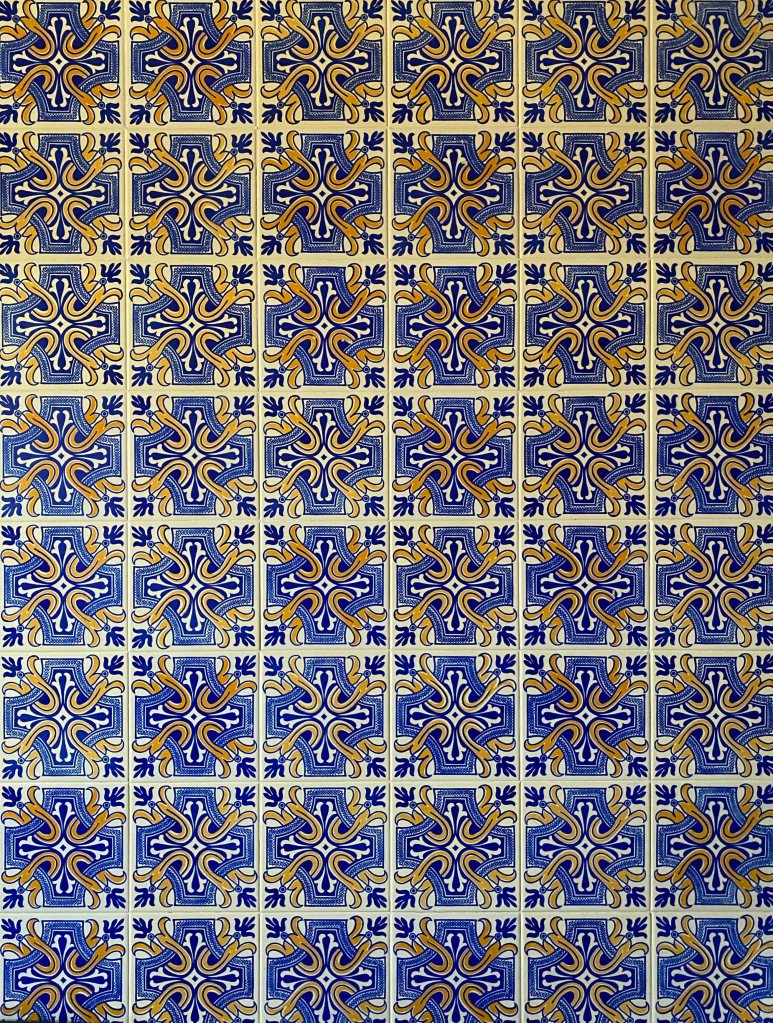
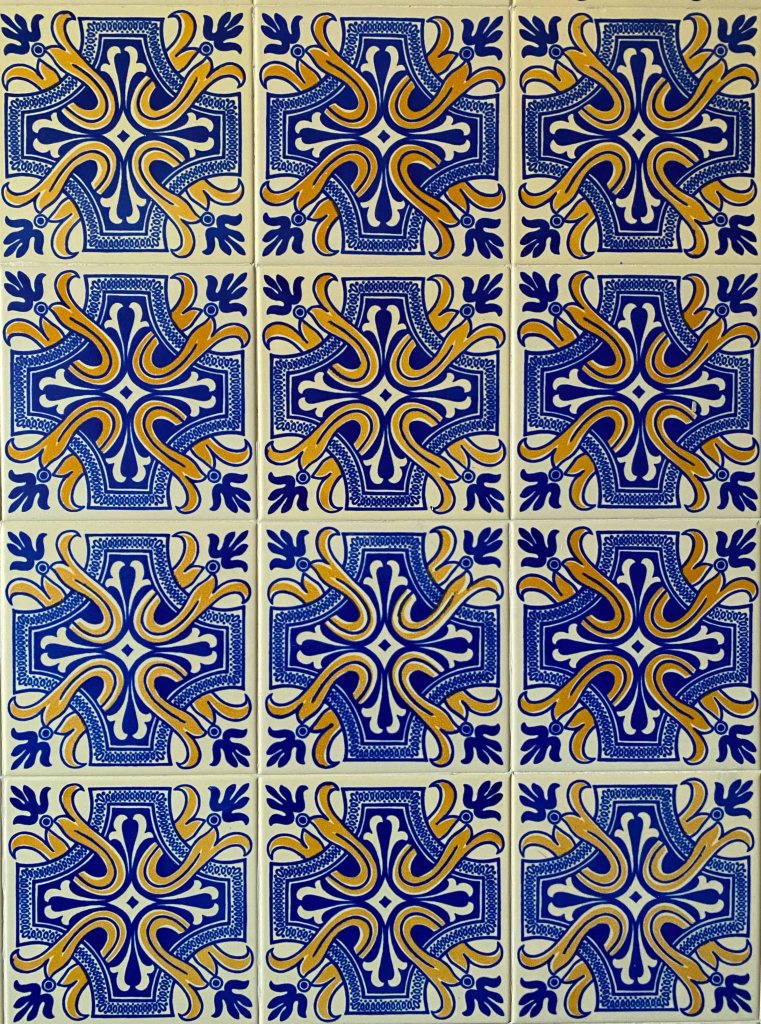
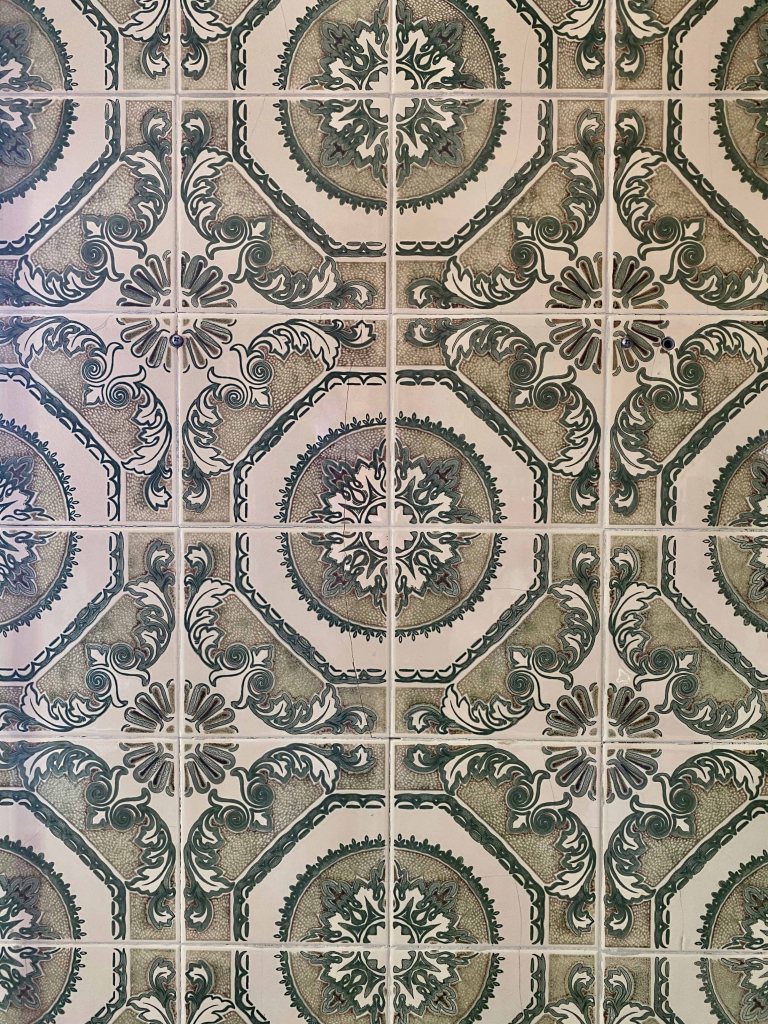
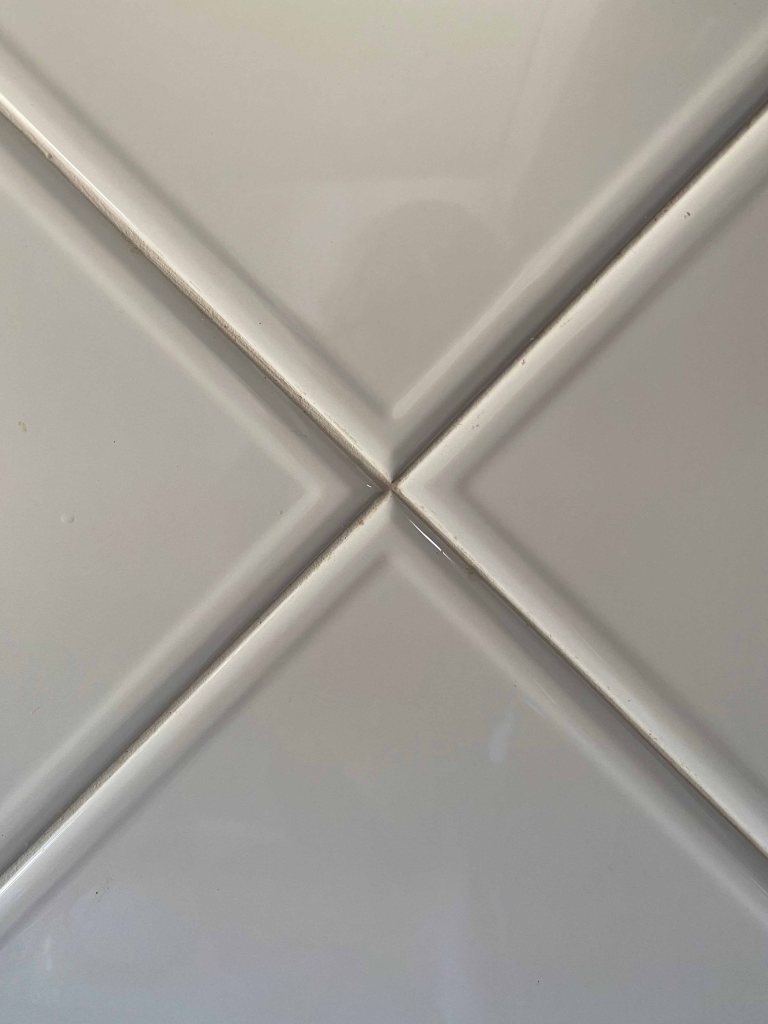
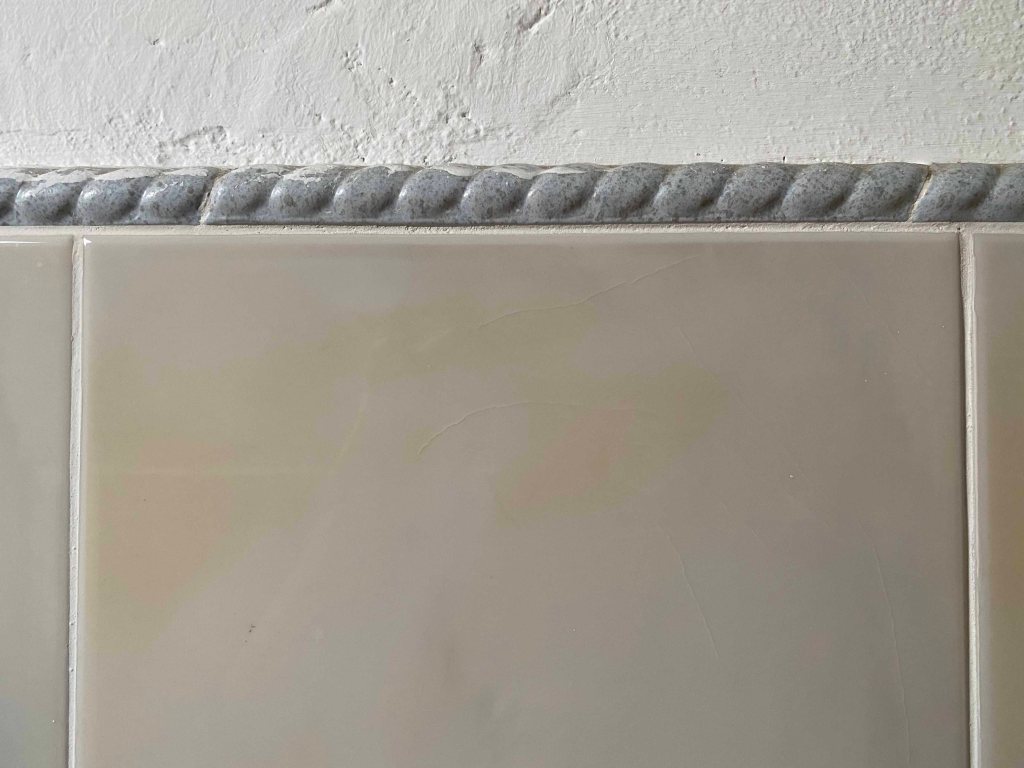
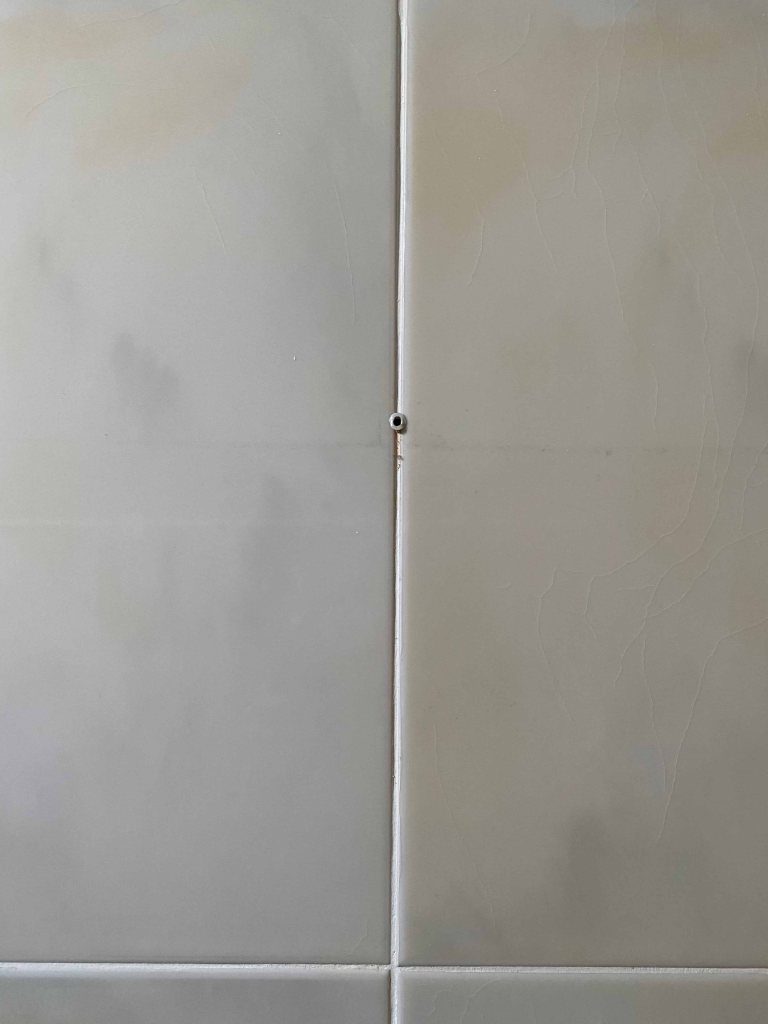
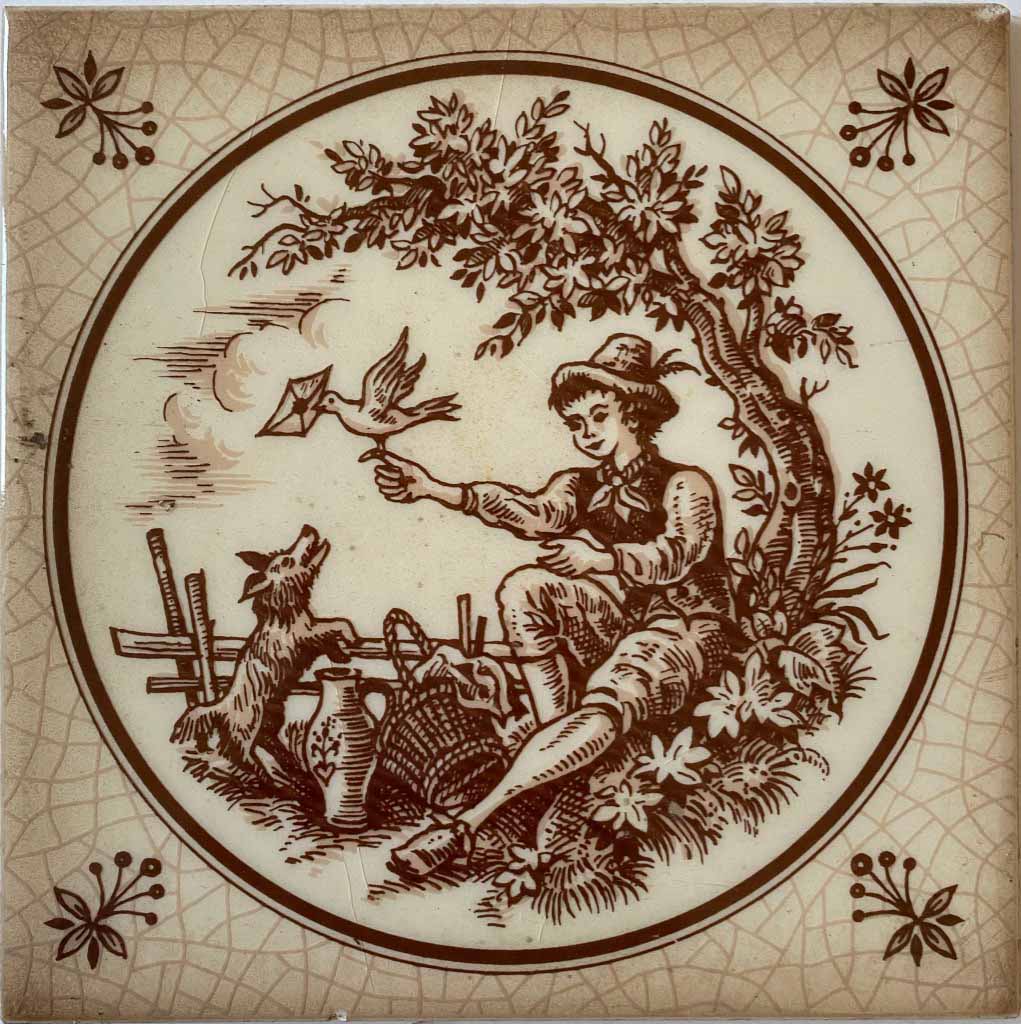
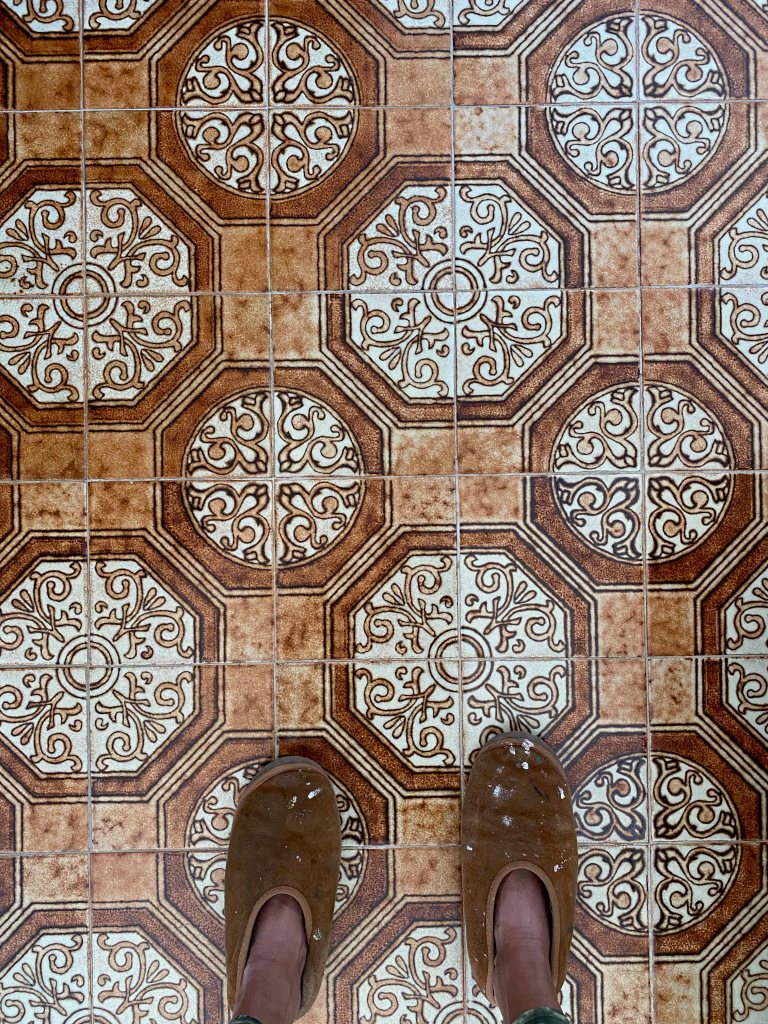
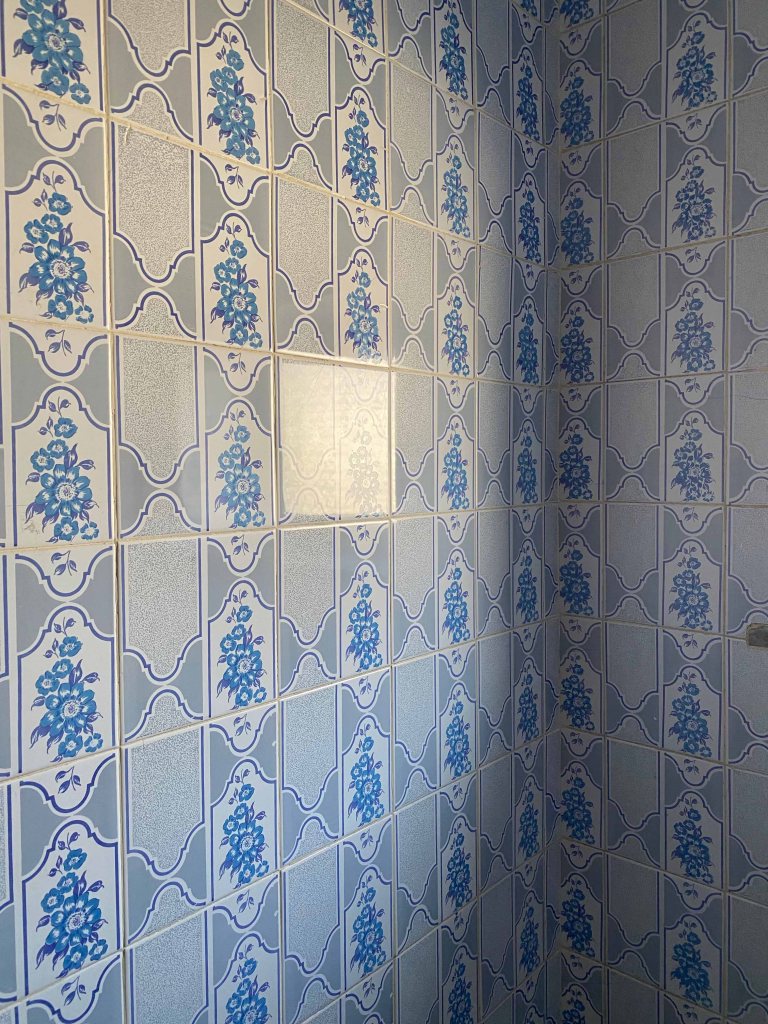
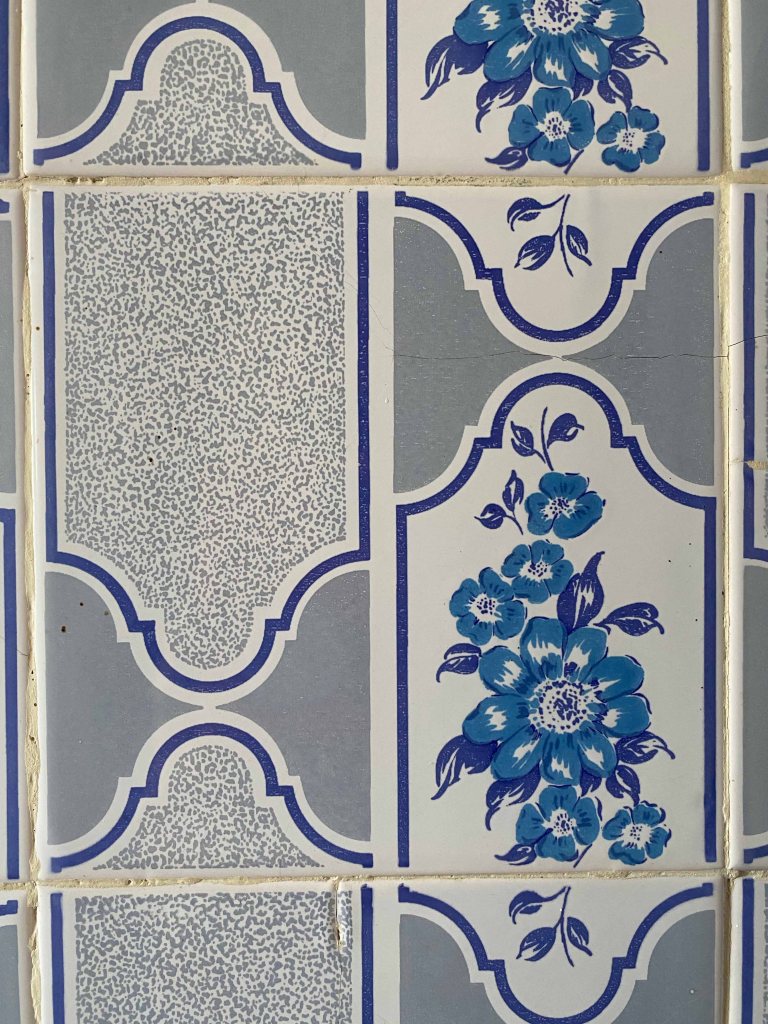
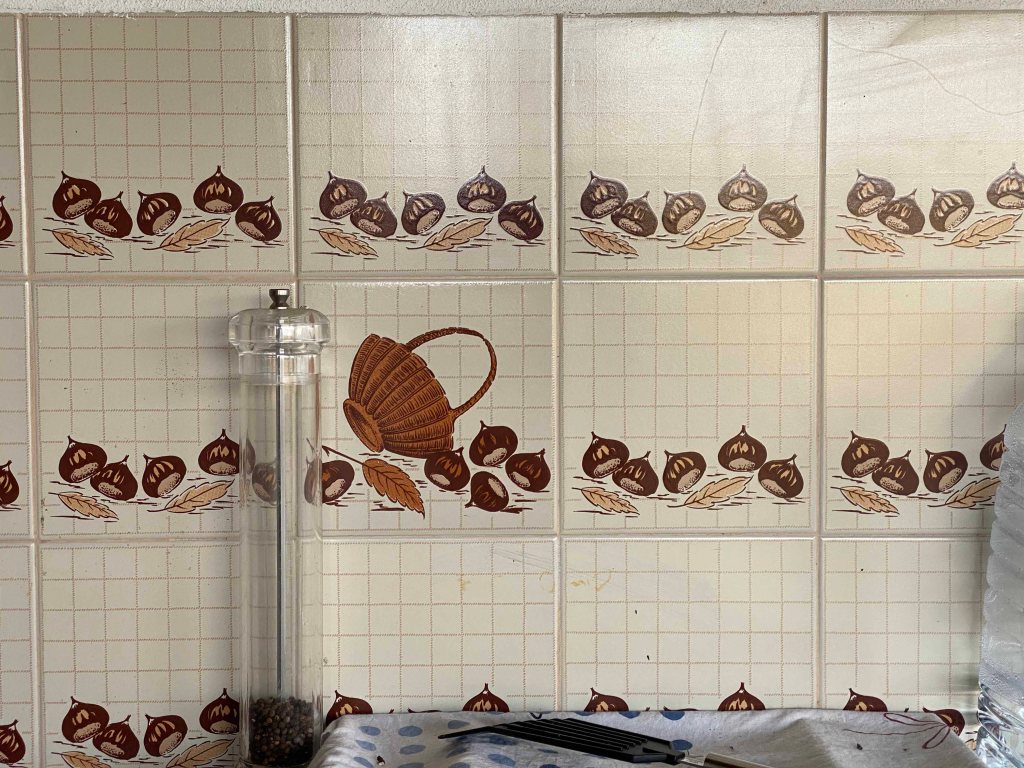
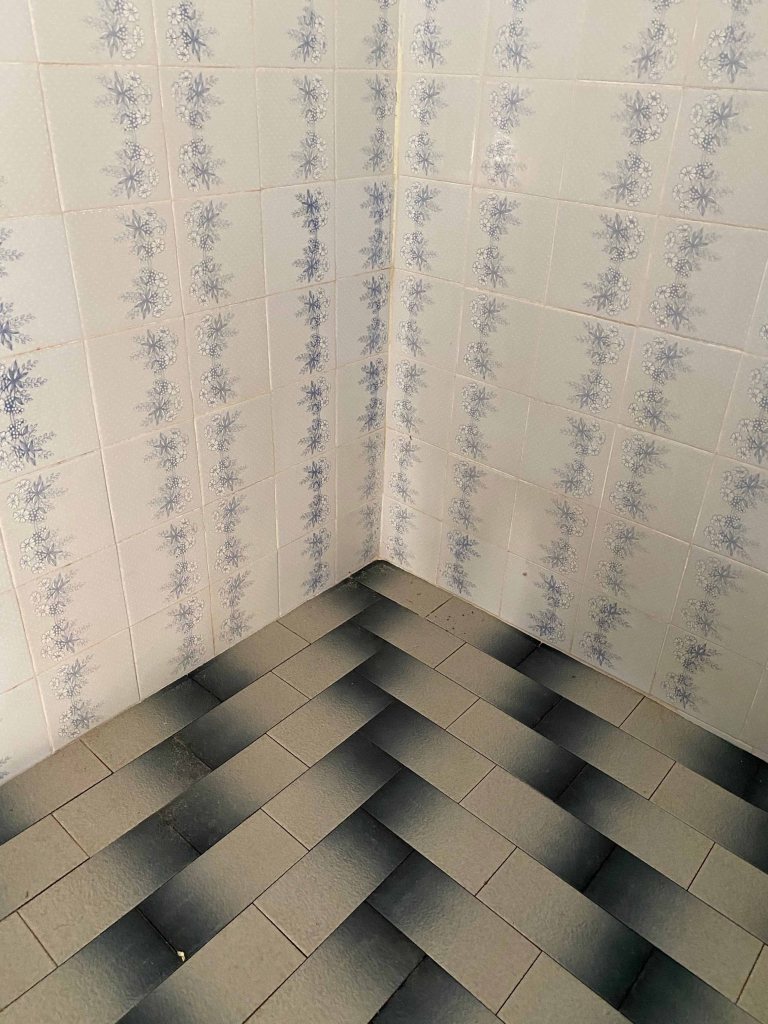
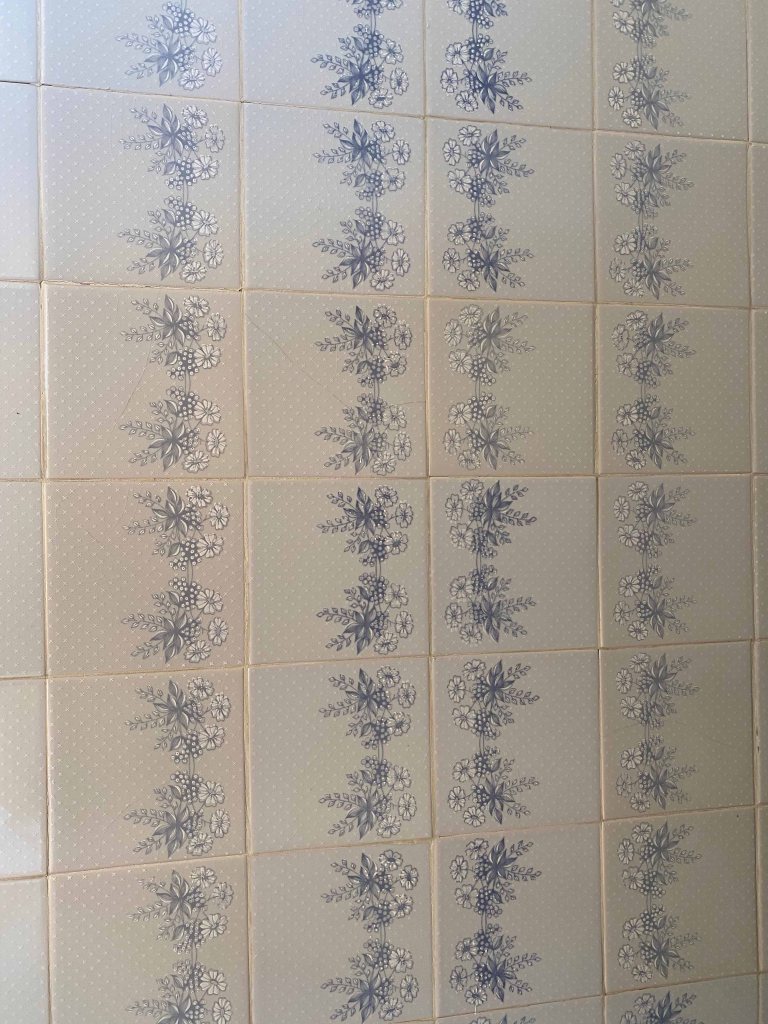
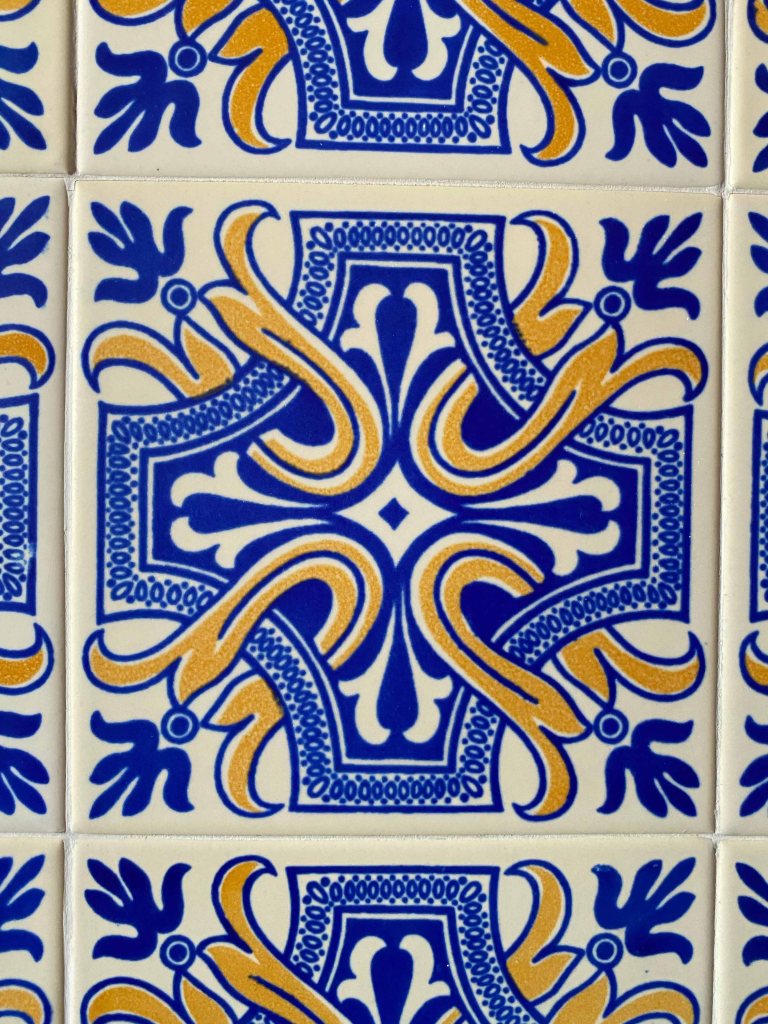
For my parallel project, I am studying the deconstruction and narratives in our old house here in Portugal. One absolutely fantastic element here, is the incredible amount of different tiles used. They are not the beautiful, antique white and blue Portuguese azulejos you may think of . This house was built 35 years ago, with very peculiar taste.

An artist’s book seems the perfect format to catalogue the many tiles , before we cover them up with calming paint or change them altogether.

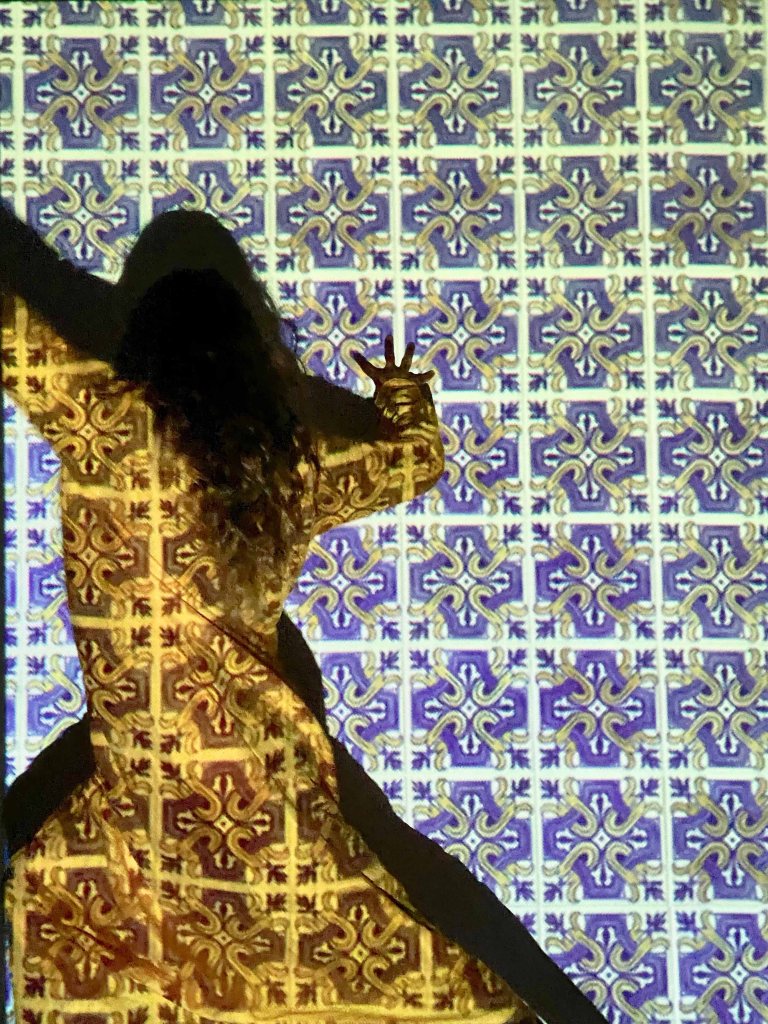
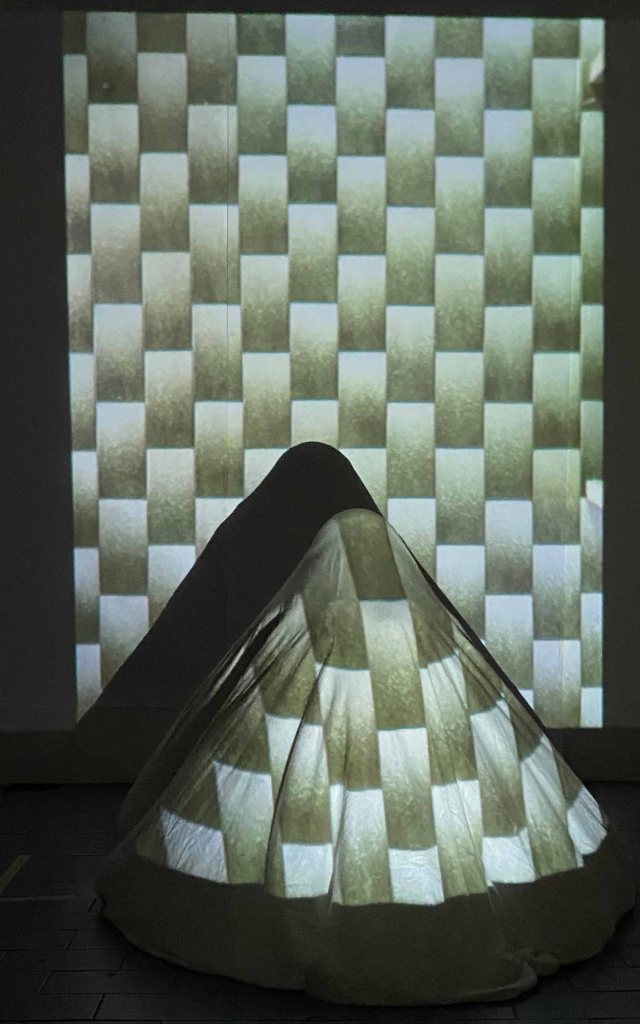
Then, I will use the many patterns of the tiles for new drawings, as well as backgrounds for projections with dance and performance. I am overflowing with ideas of how to project the most fantastic tiles onto my body and create shapes with movement.

The format of an artists book can serve both the purpose of cataloguing the tiles for memory, and to place them in relationship to the new drawings and photos of a more performative character.

THE TILES

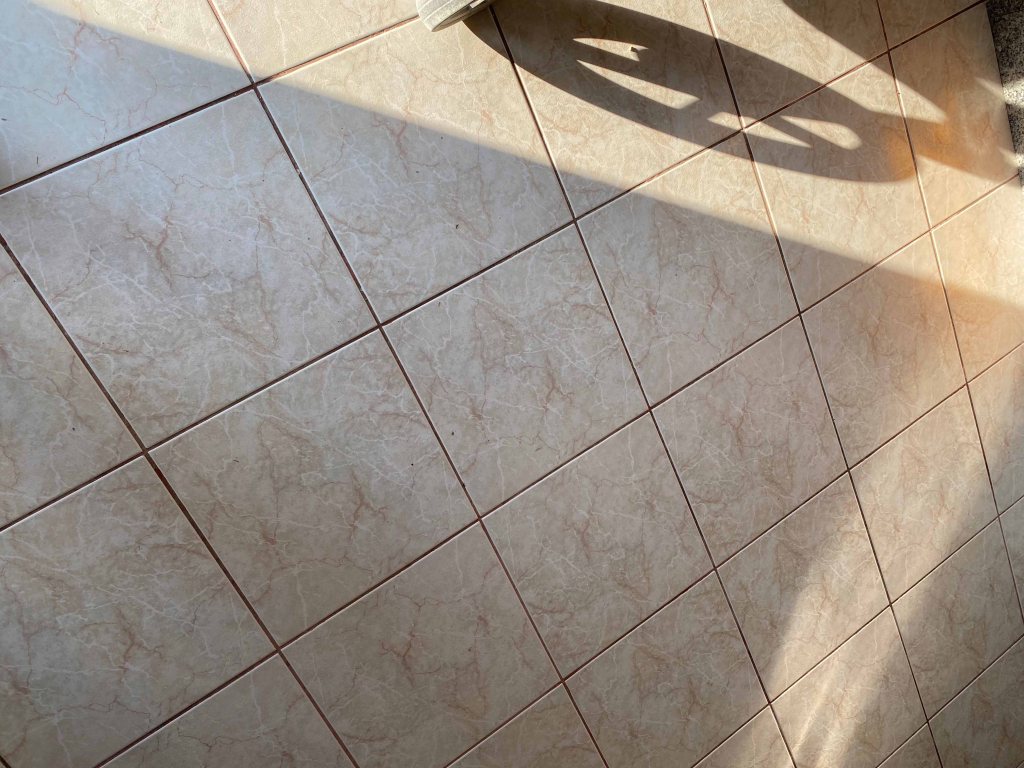
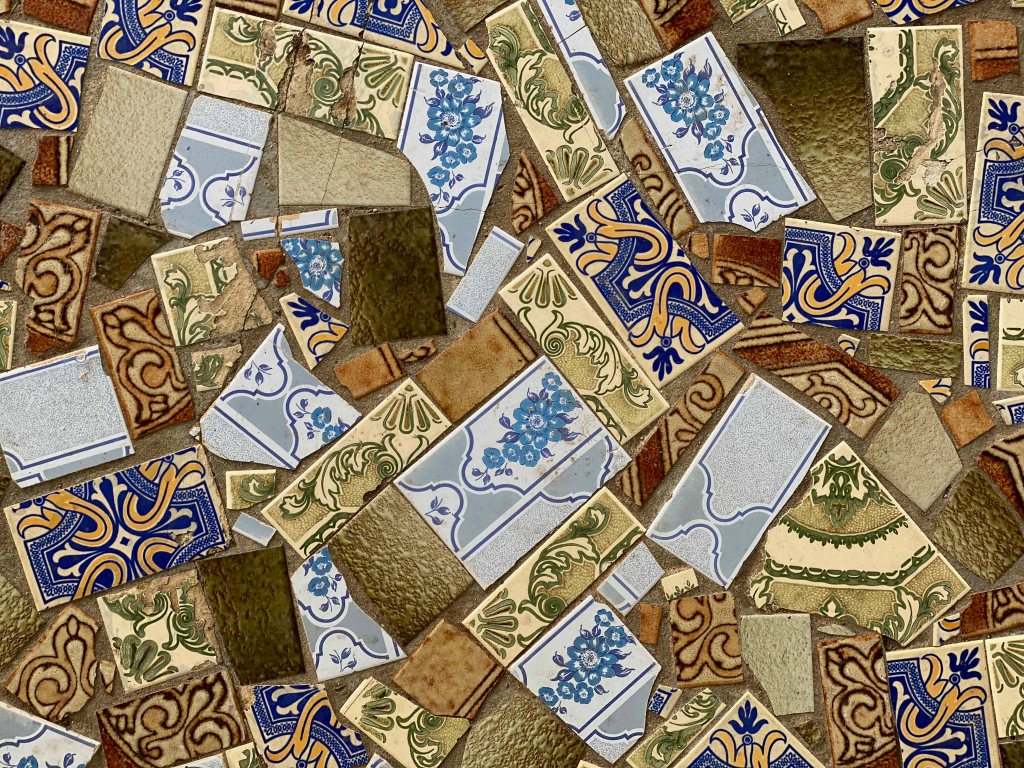
I start by photographing and editing the impressive amount of different tiles in the house.

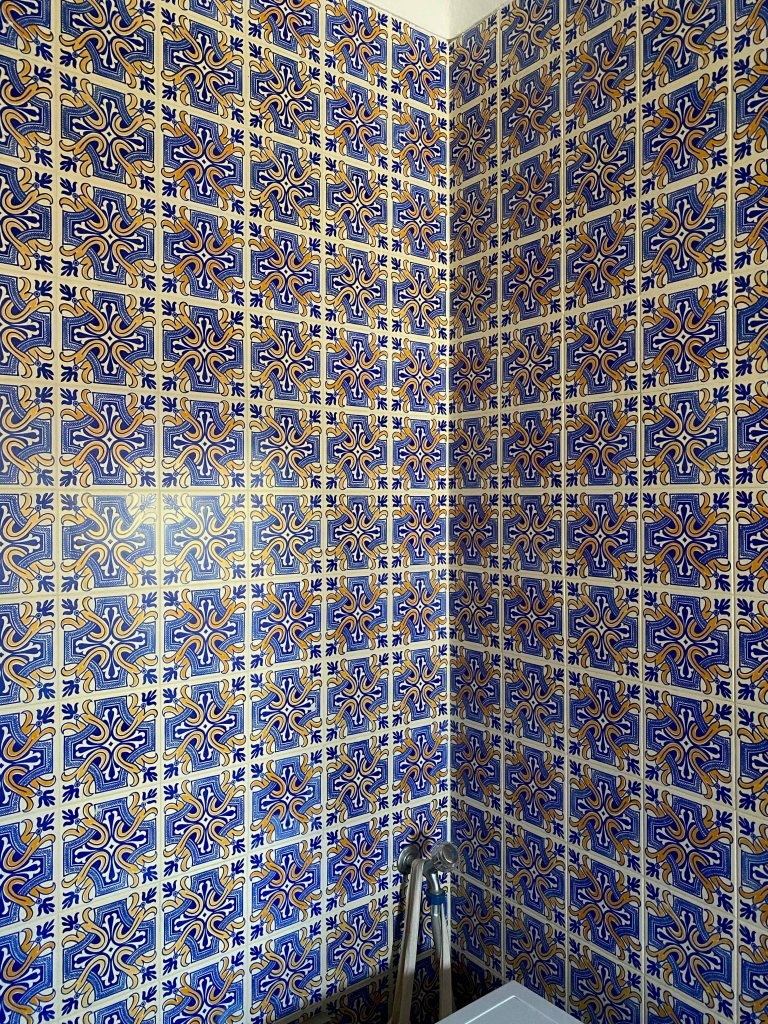
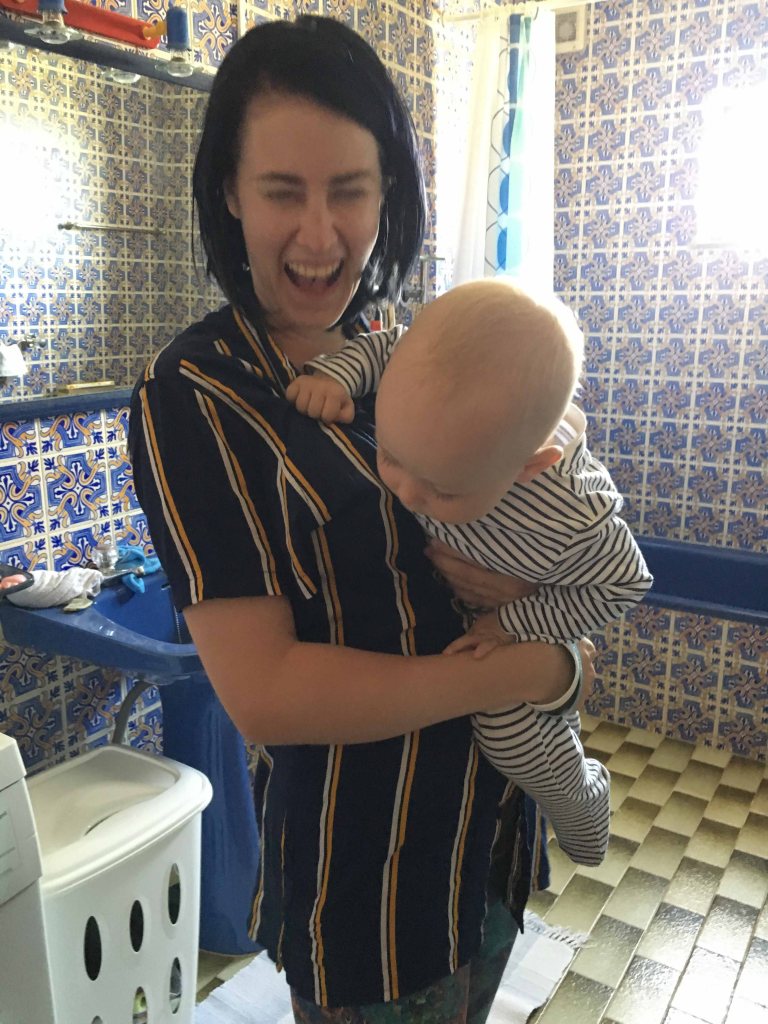
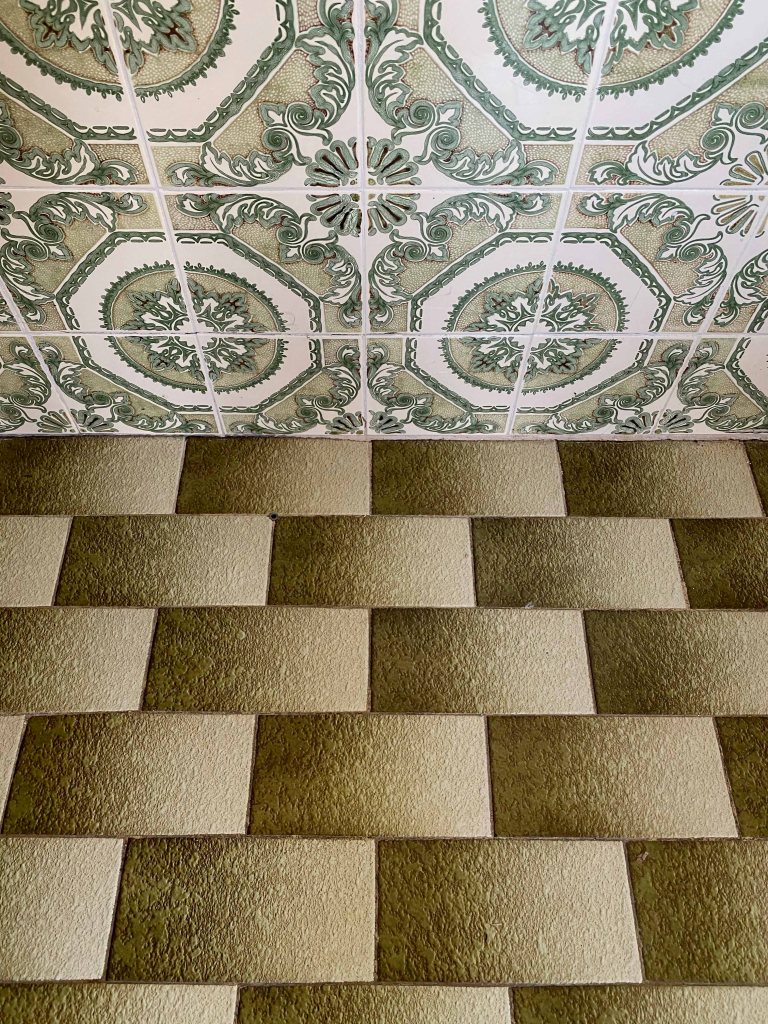
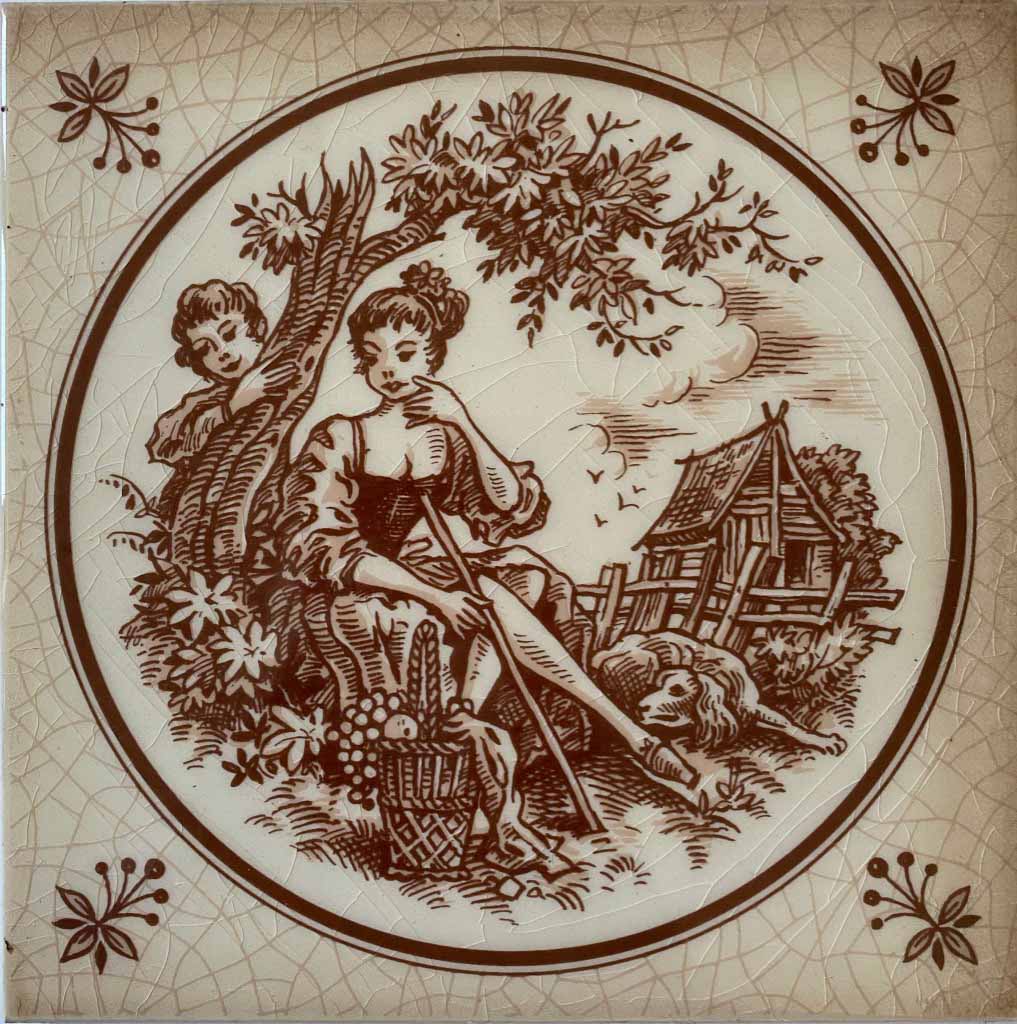
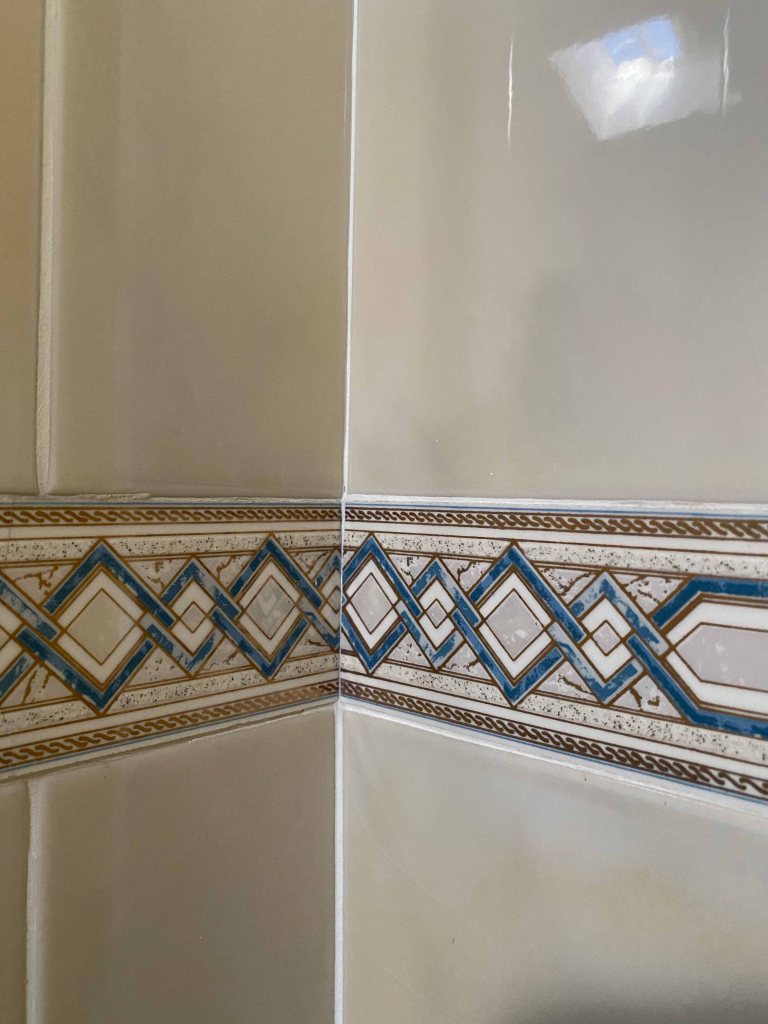
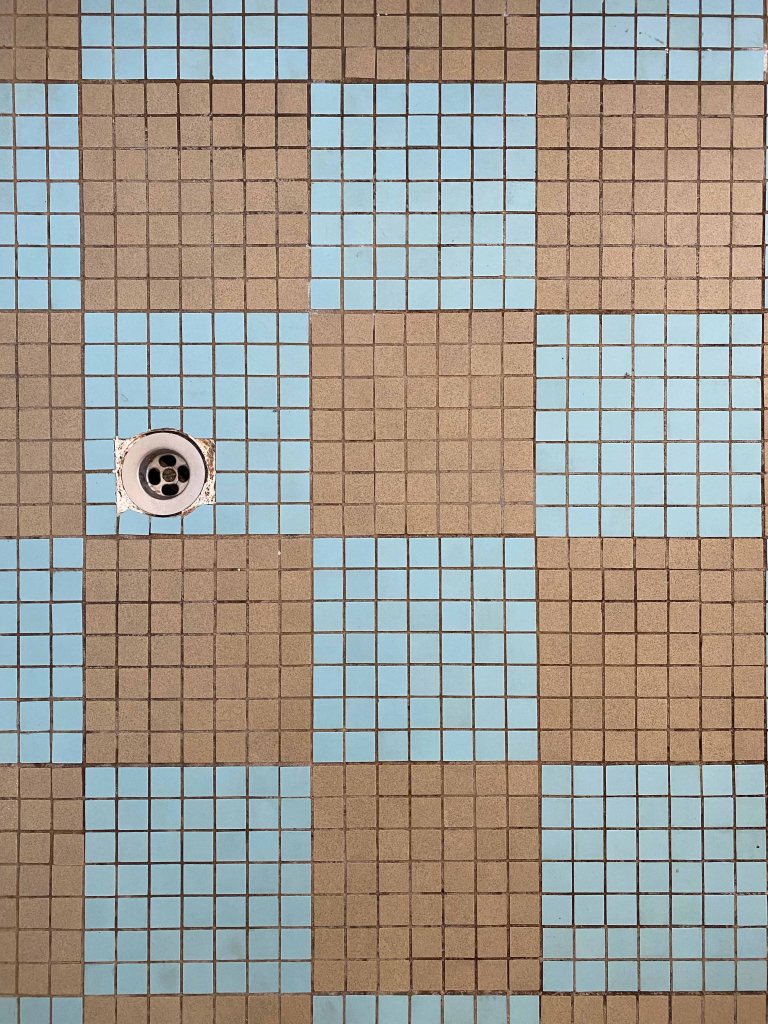
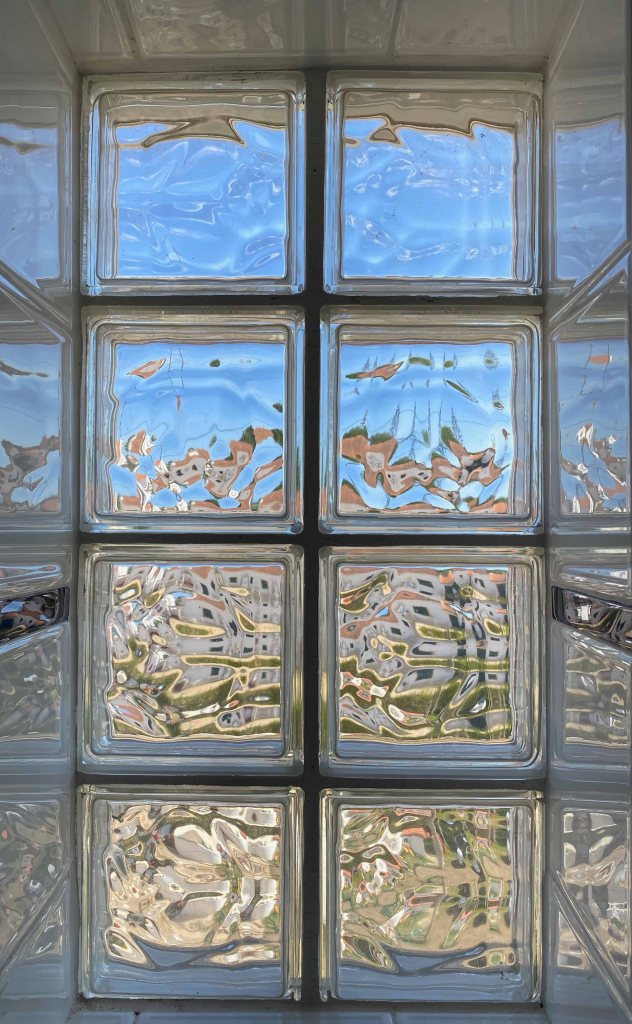
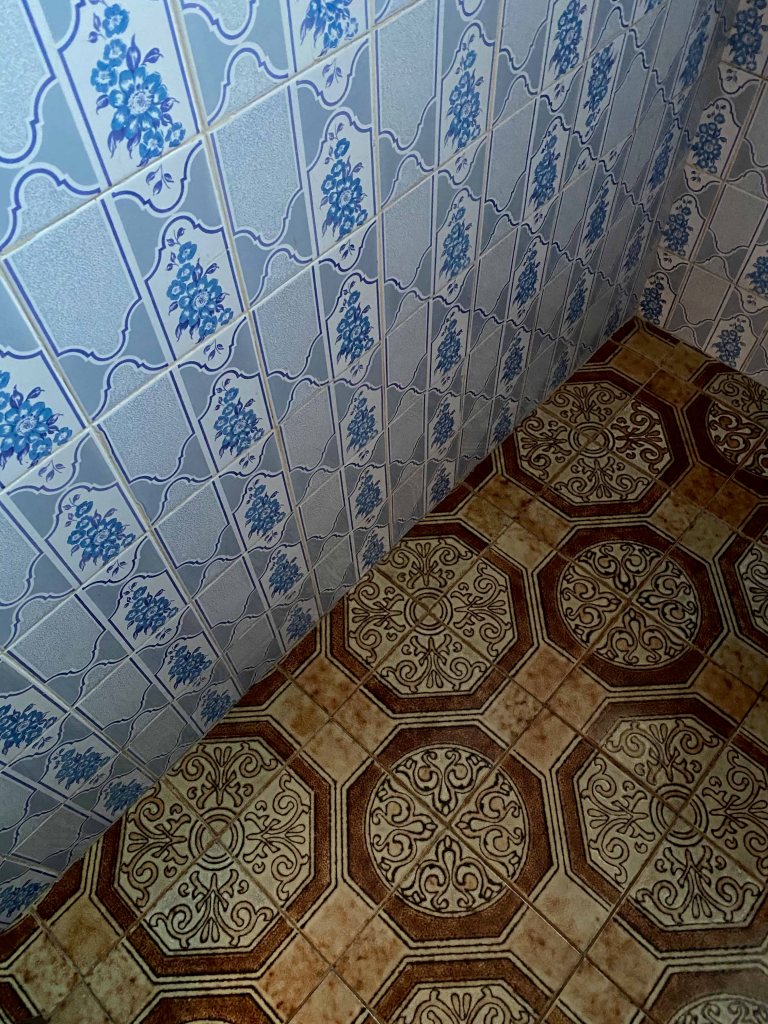
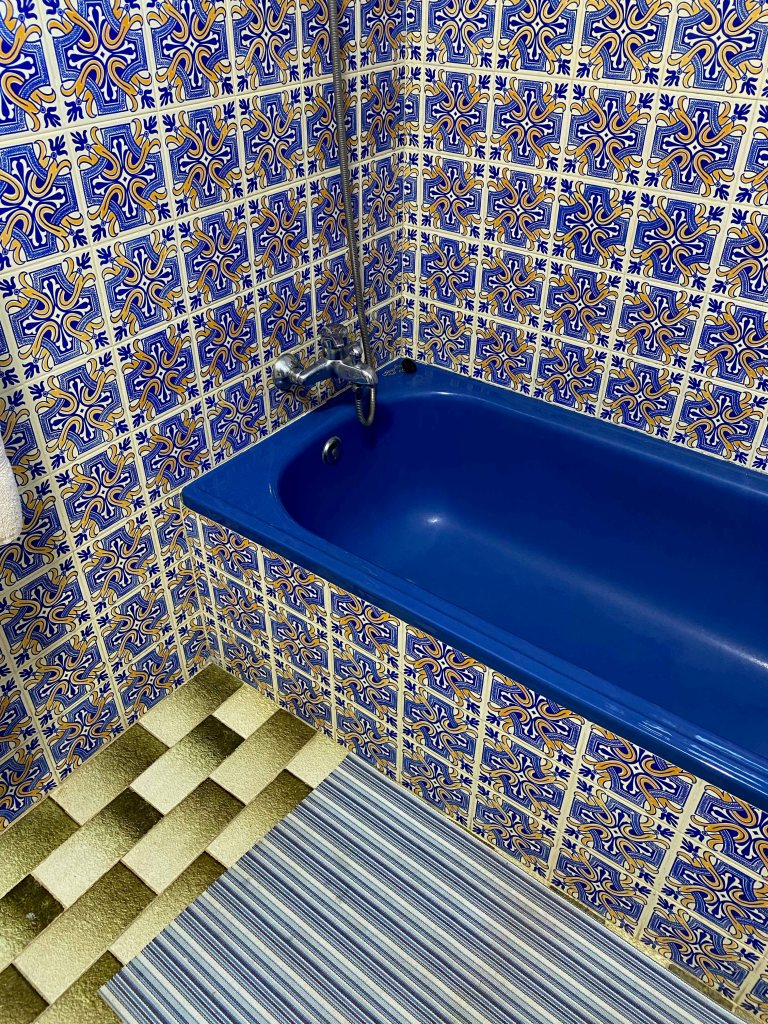
The most impressive is the bathroom:

I took a precious picture of my daughter the first time she saw it:

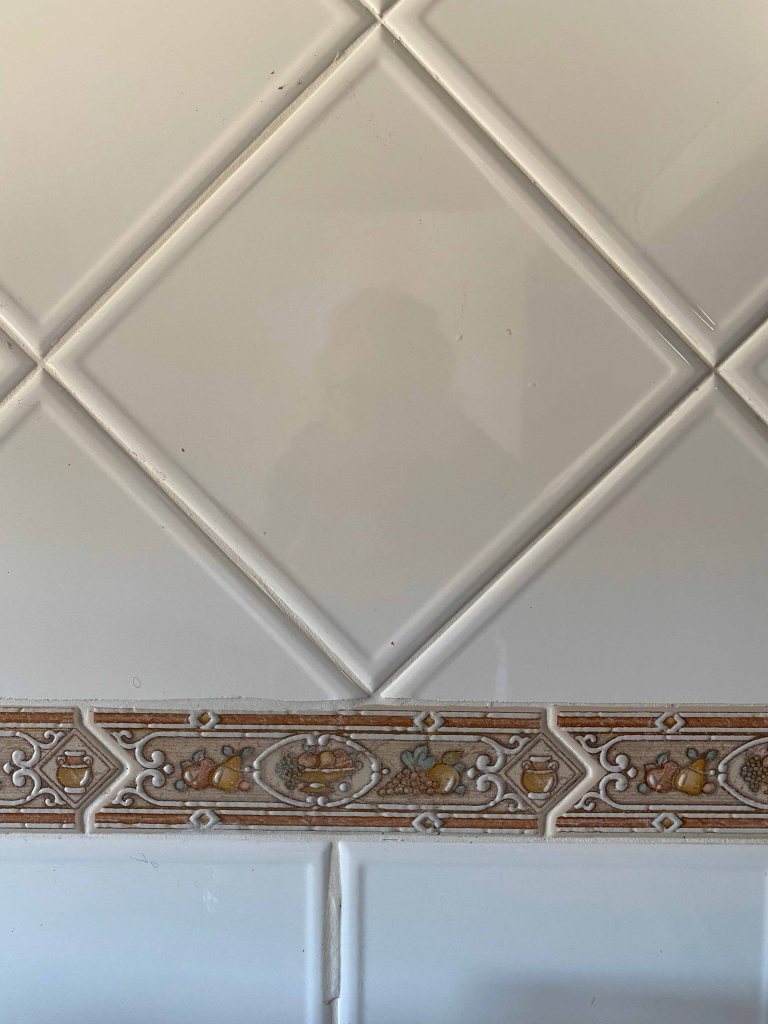
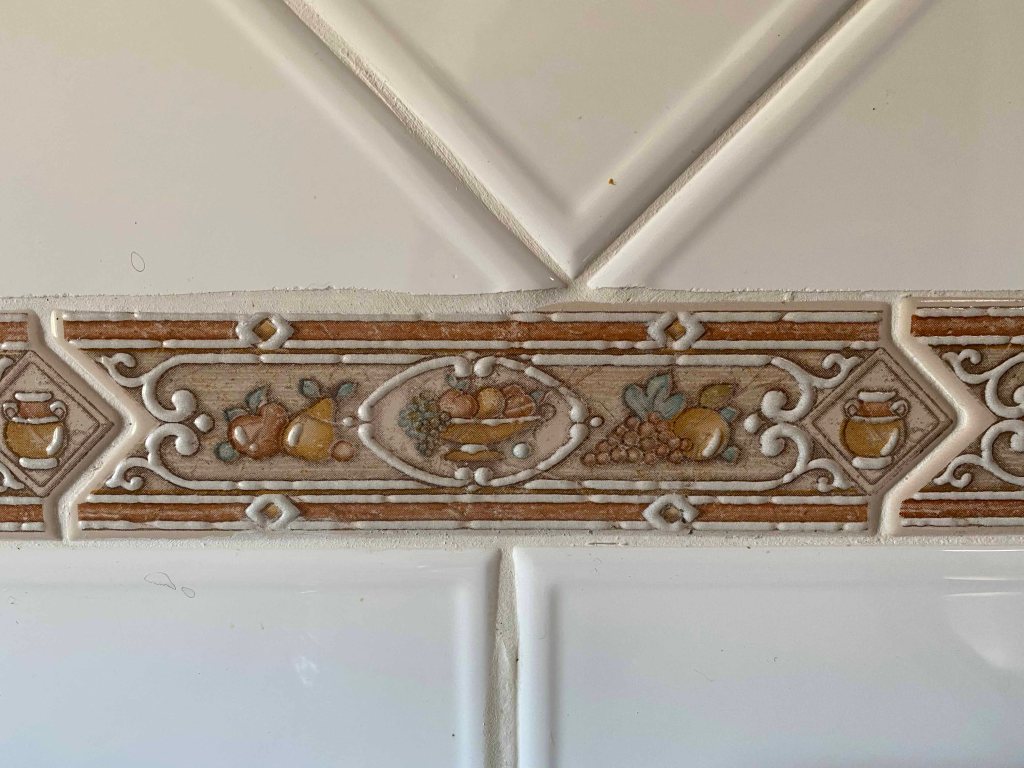
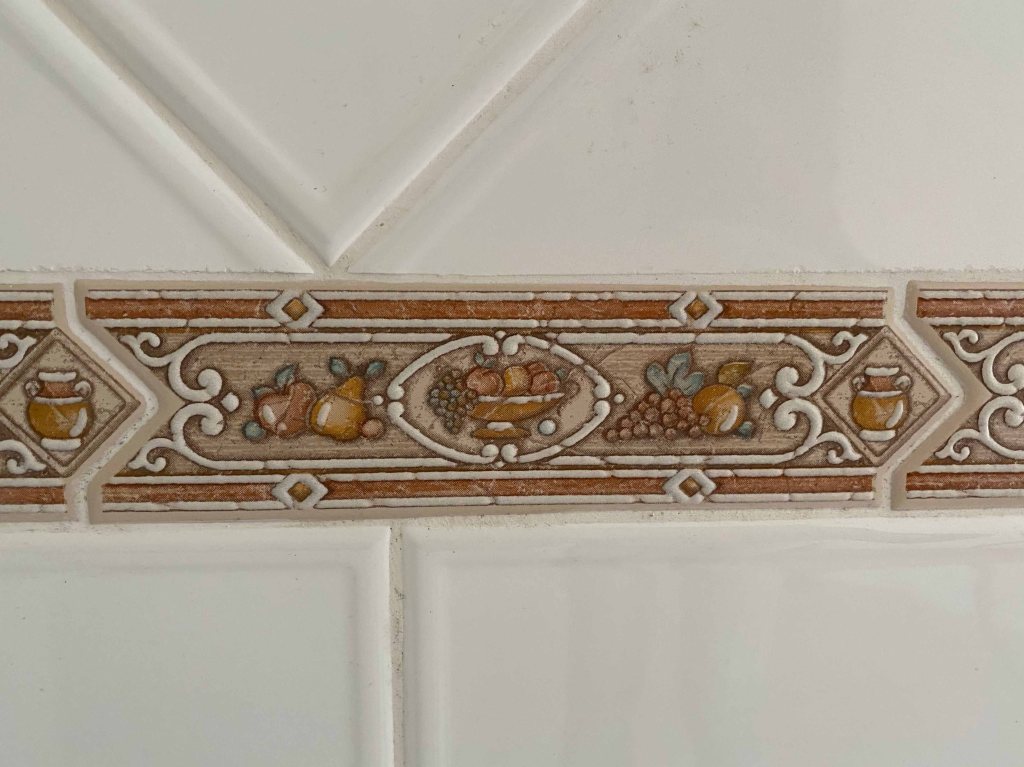
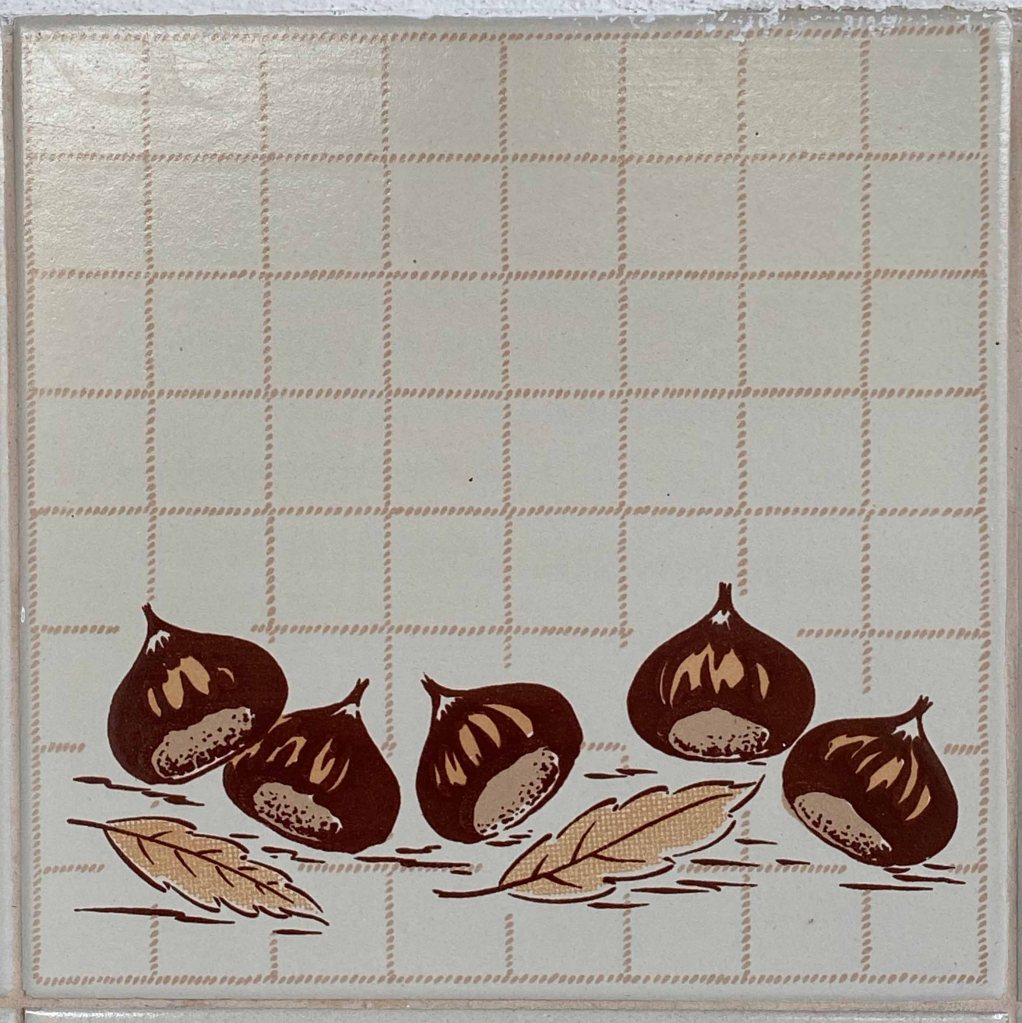
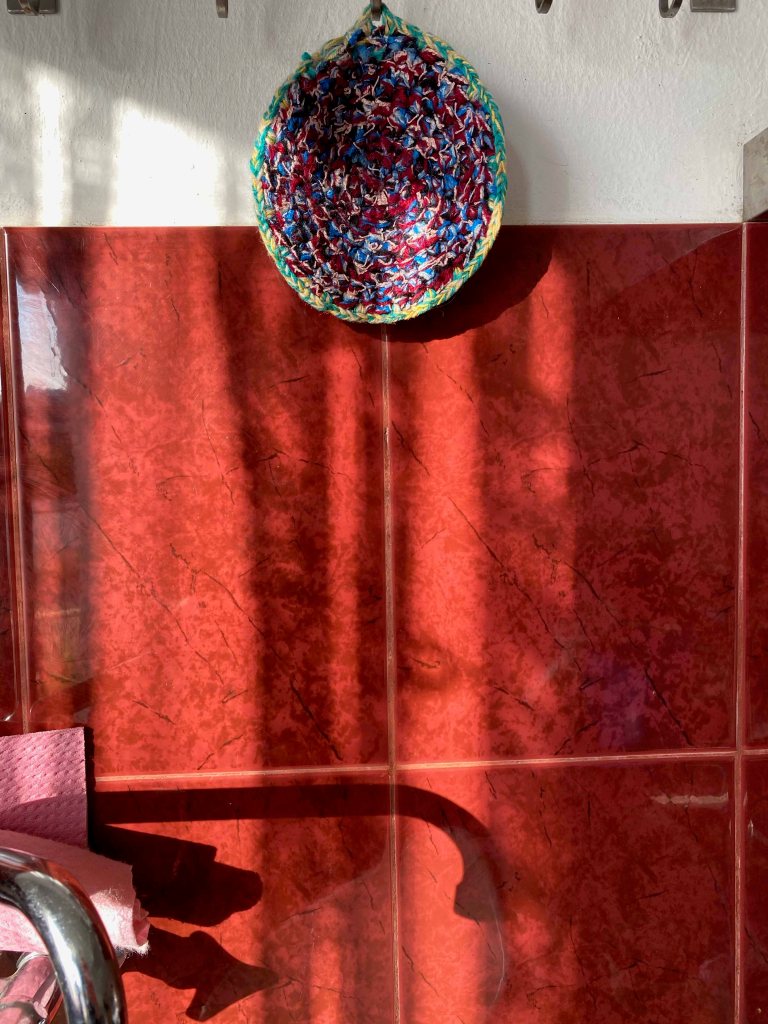
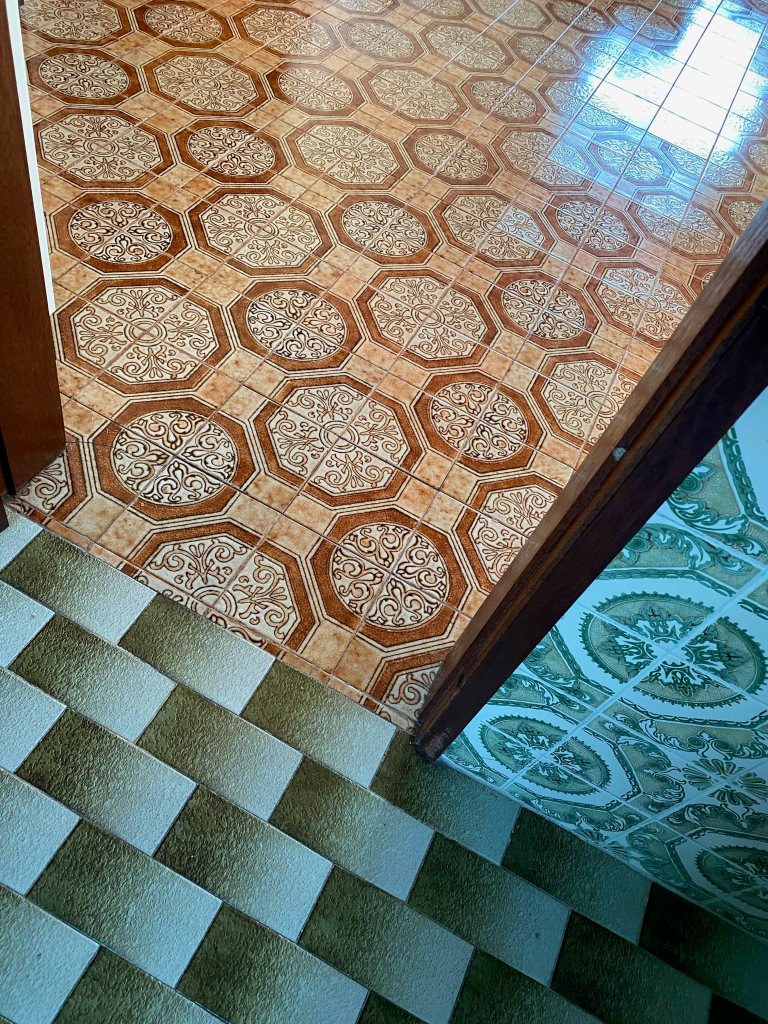
Next must be the kitchen:

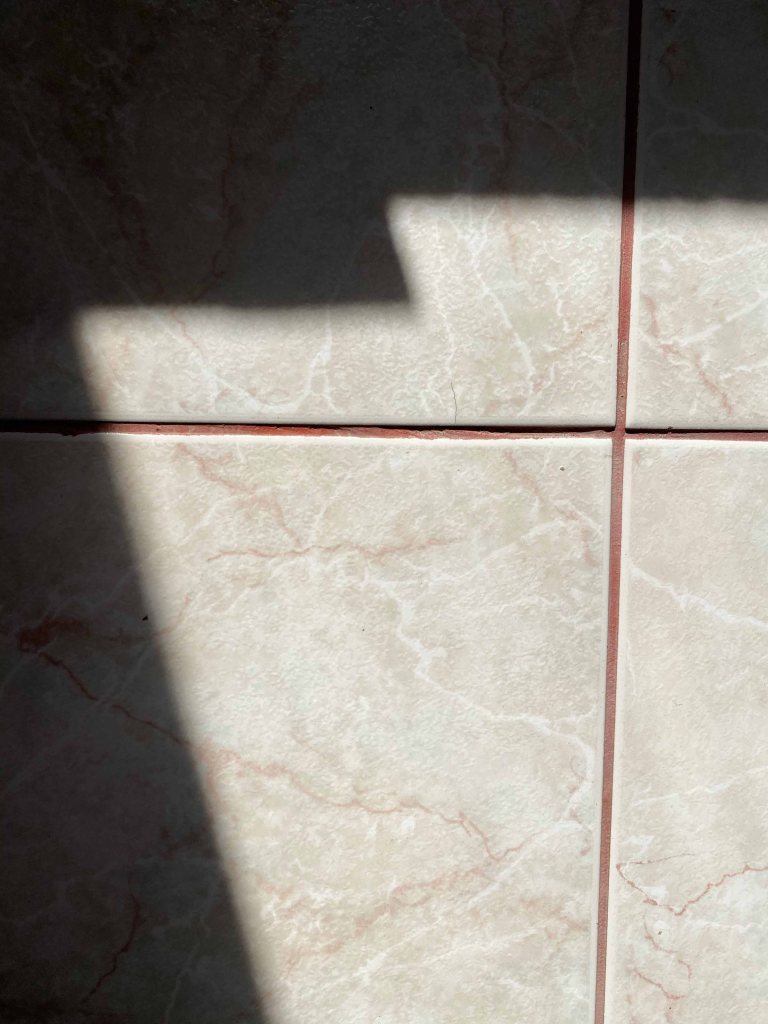
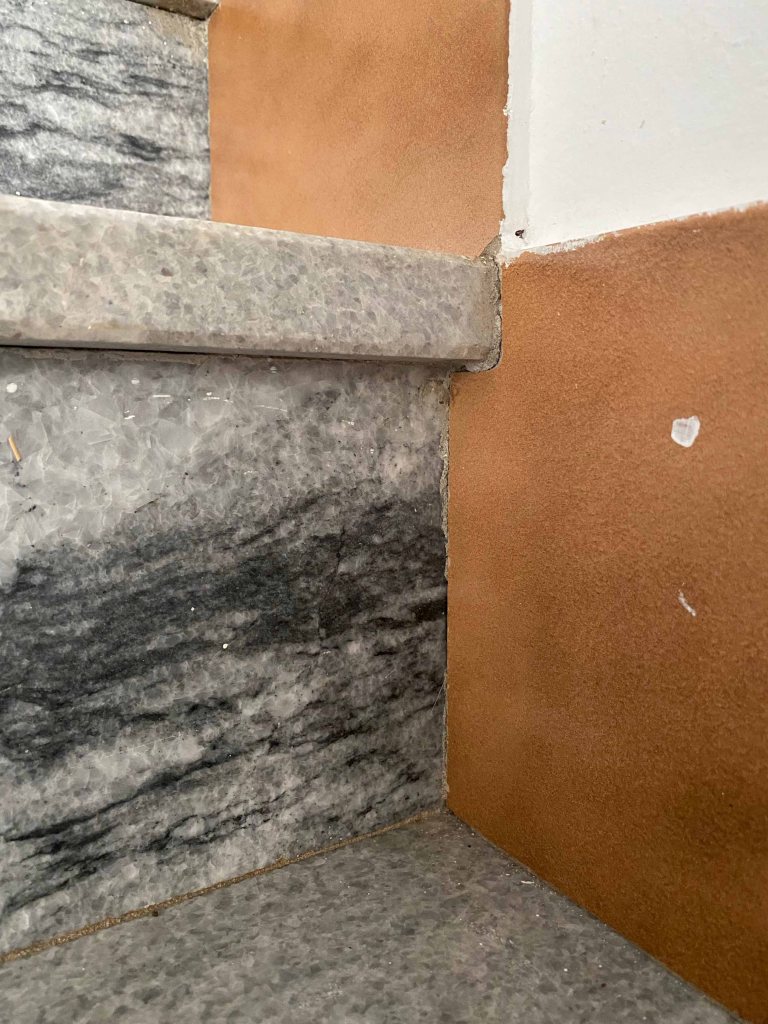
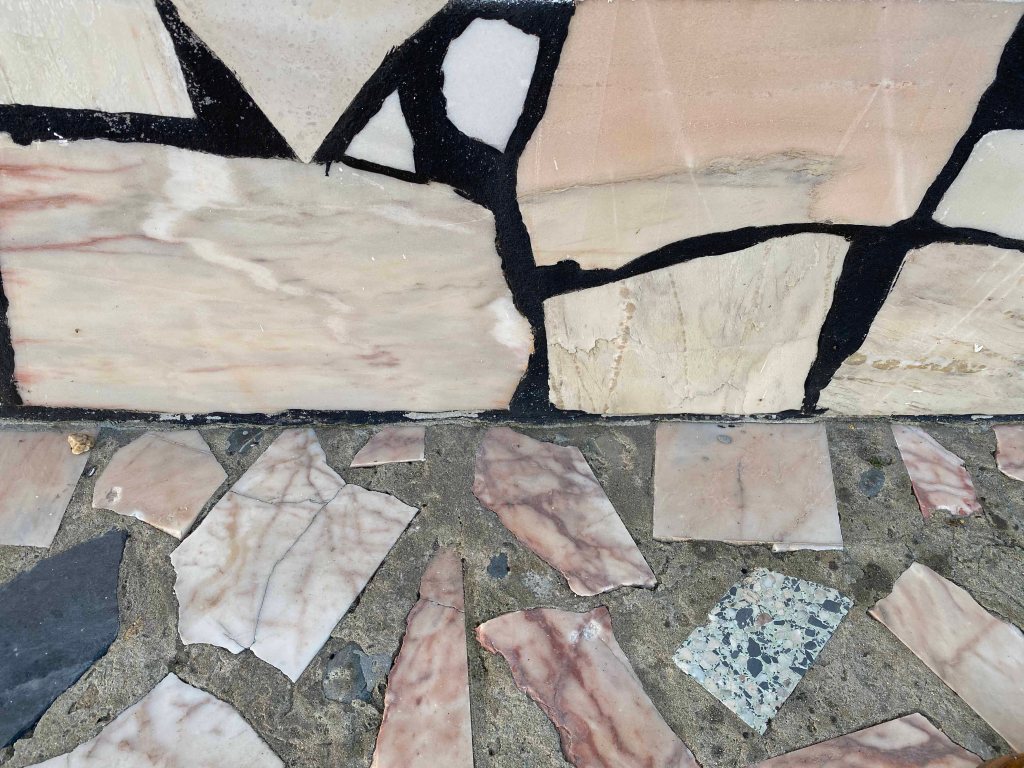
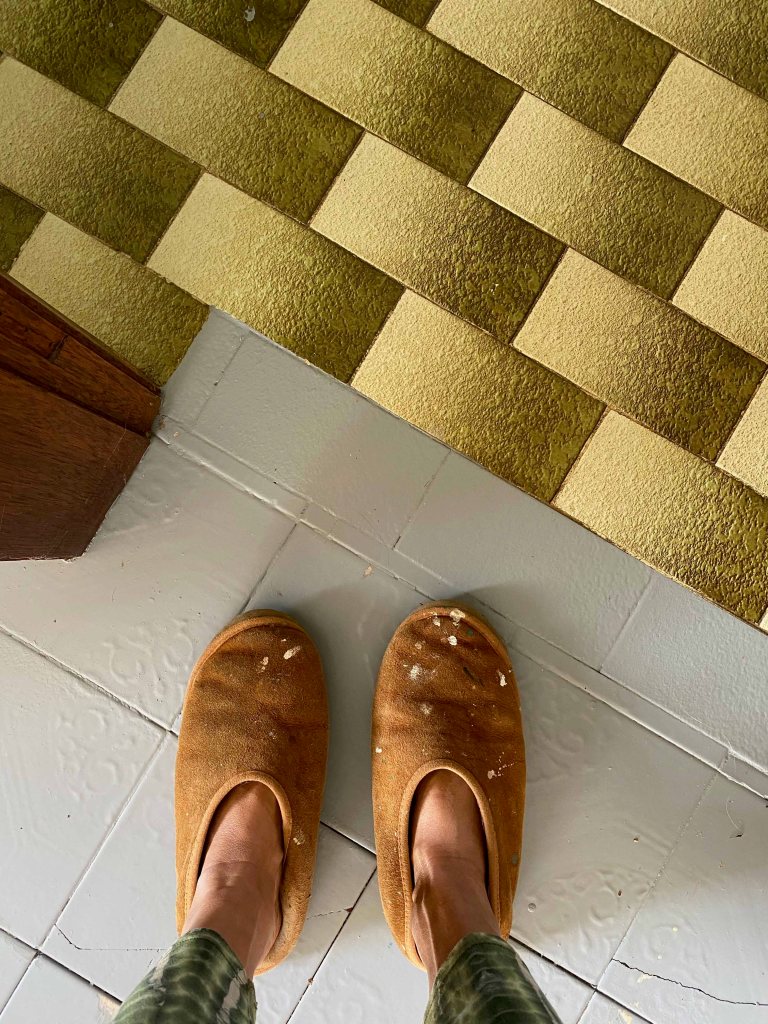
The rest of the tiles are not as spectacular per se, but fabulous in the sheer amount of them:

The effect is especially amplified by the creative combinations:

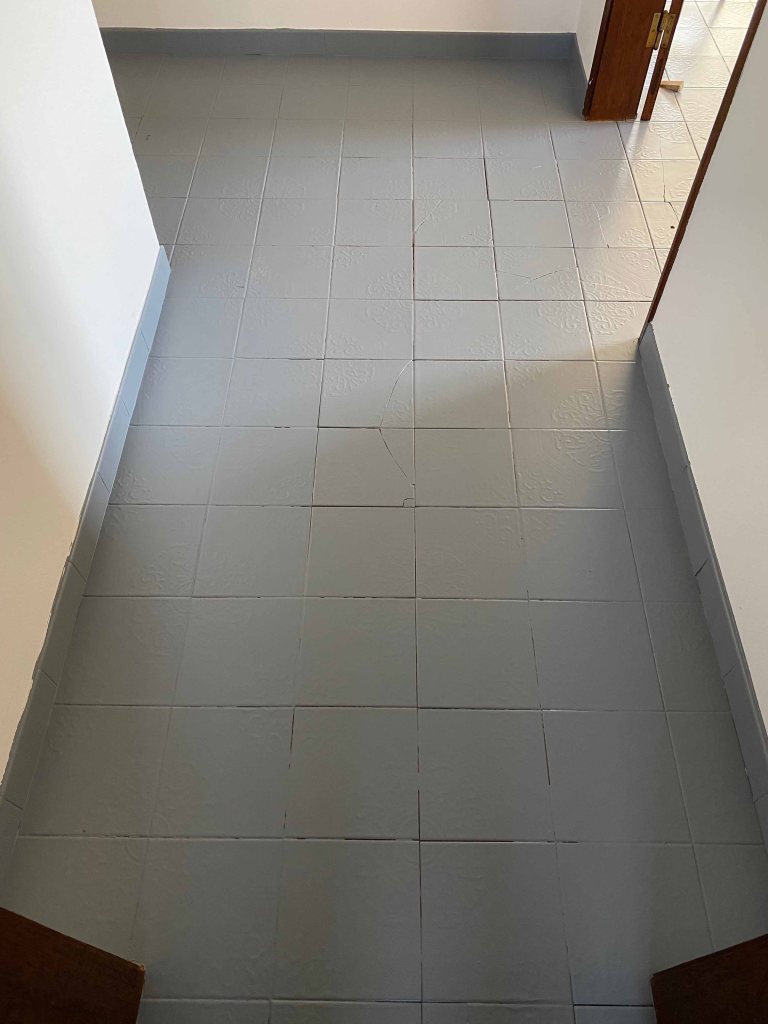
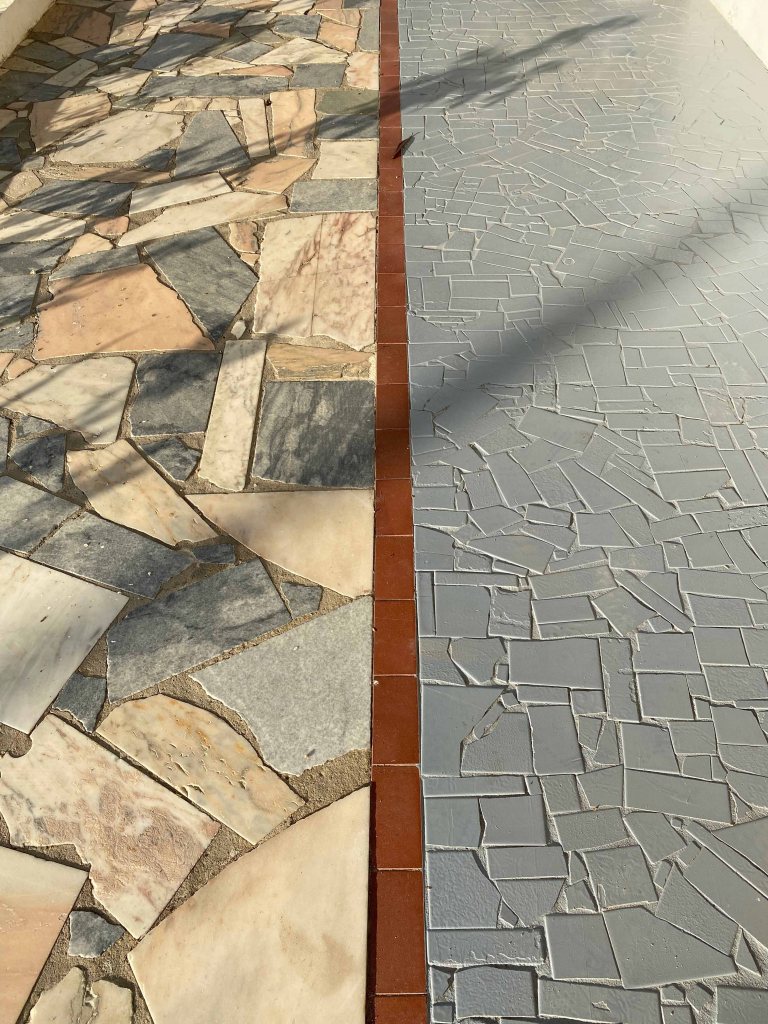
We have started to cover some areas with grey tile paint to be able to think clearly in some spaces.:

A TILE PERFORMANCE

With this catalogue of photographs as a base, I take the tiles into my creative world. I invite my friend Rita again, who is an aerial dancer and create a scene with the tiles being projected at my studio wall. I want to include myself and my own body in some of the pieces, but also be able to be behind the camera while Rita is performing.

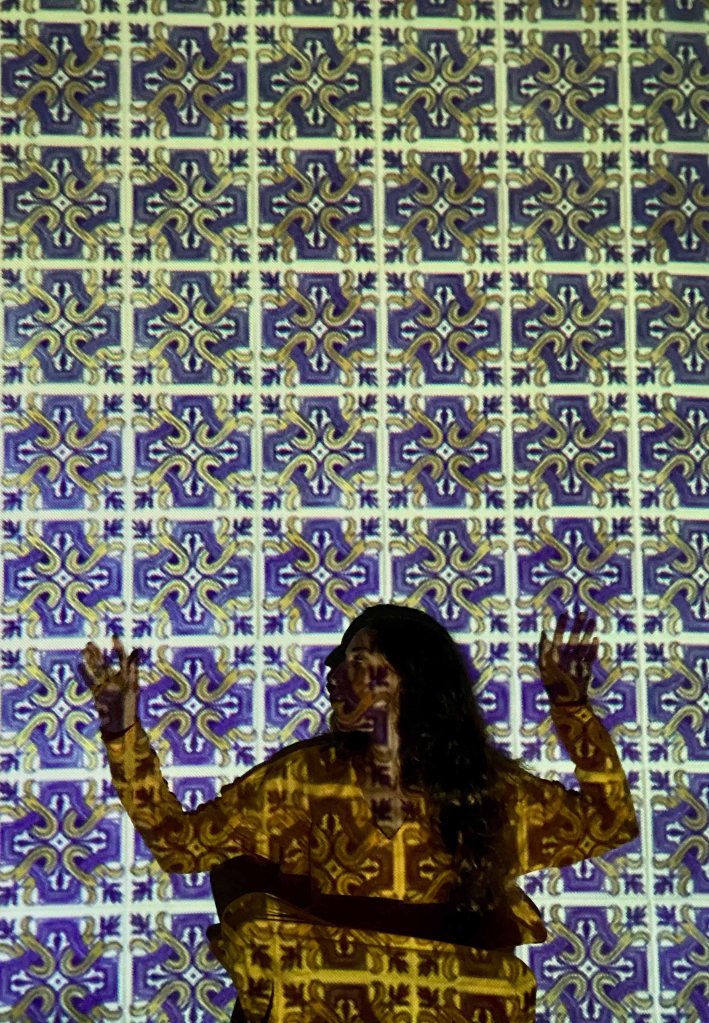
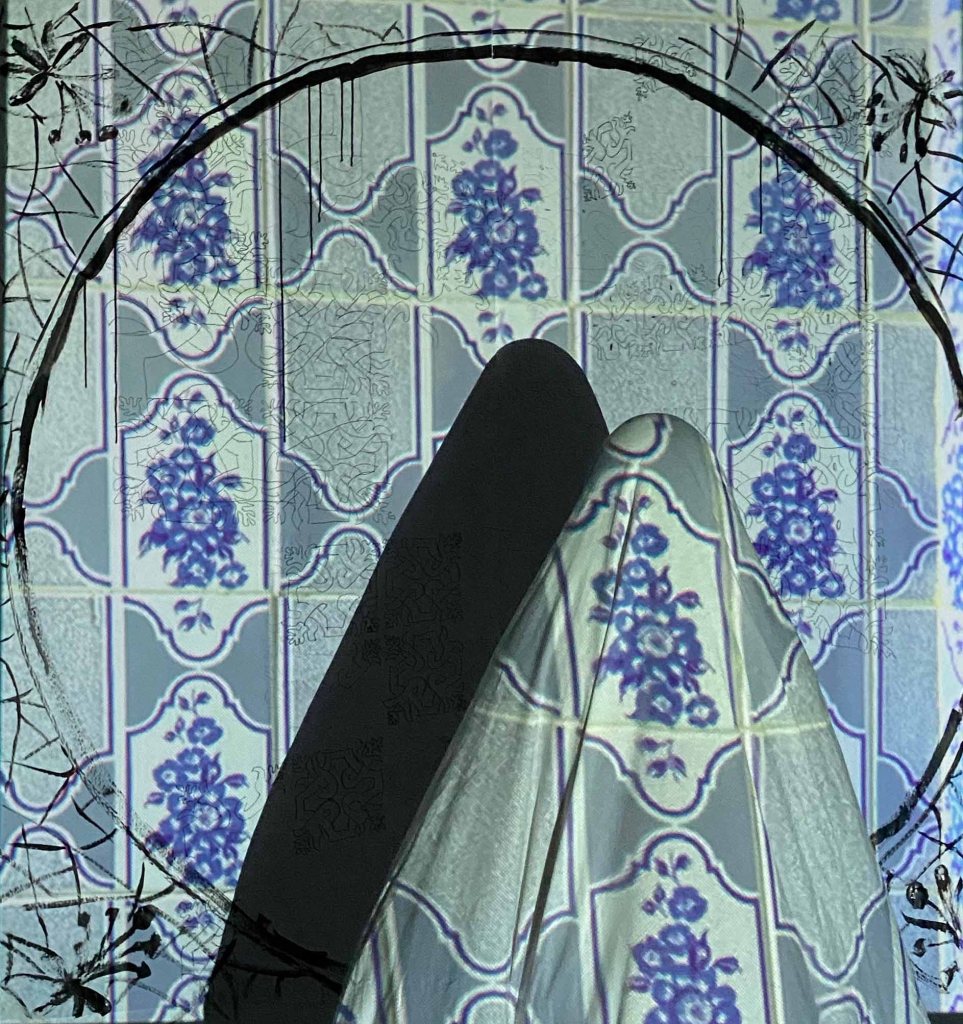
We start with the mesmerizing bathroom tiles:

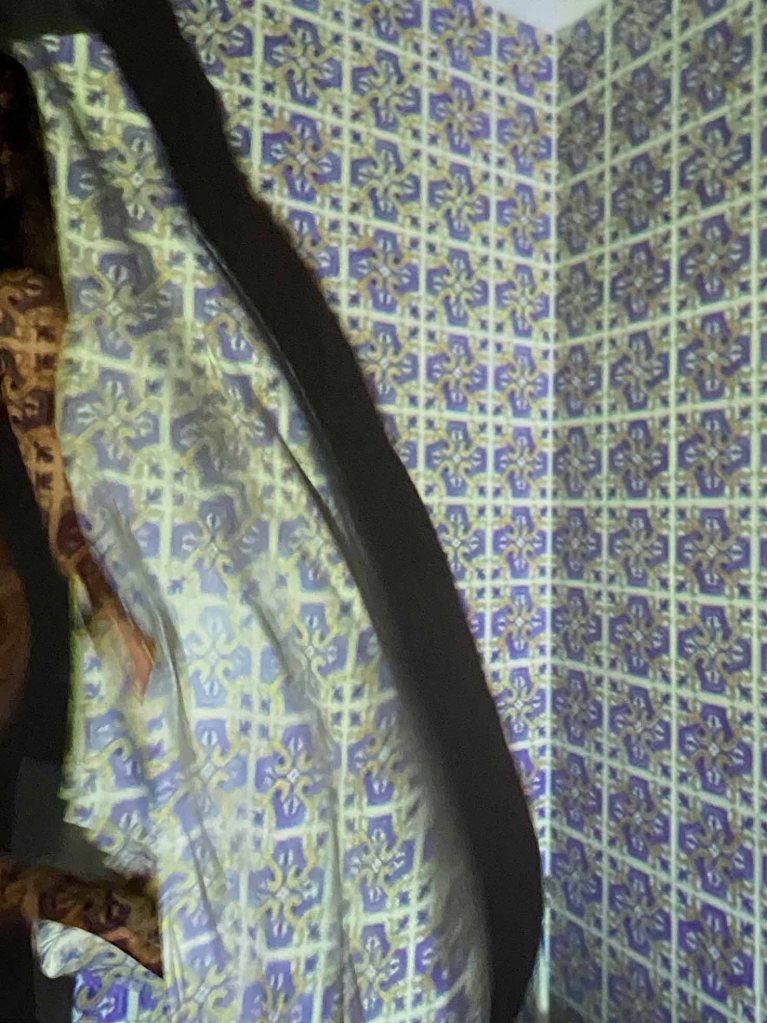
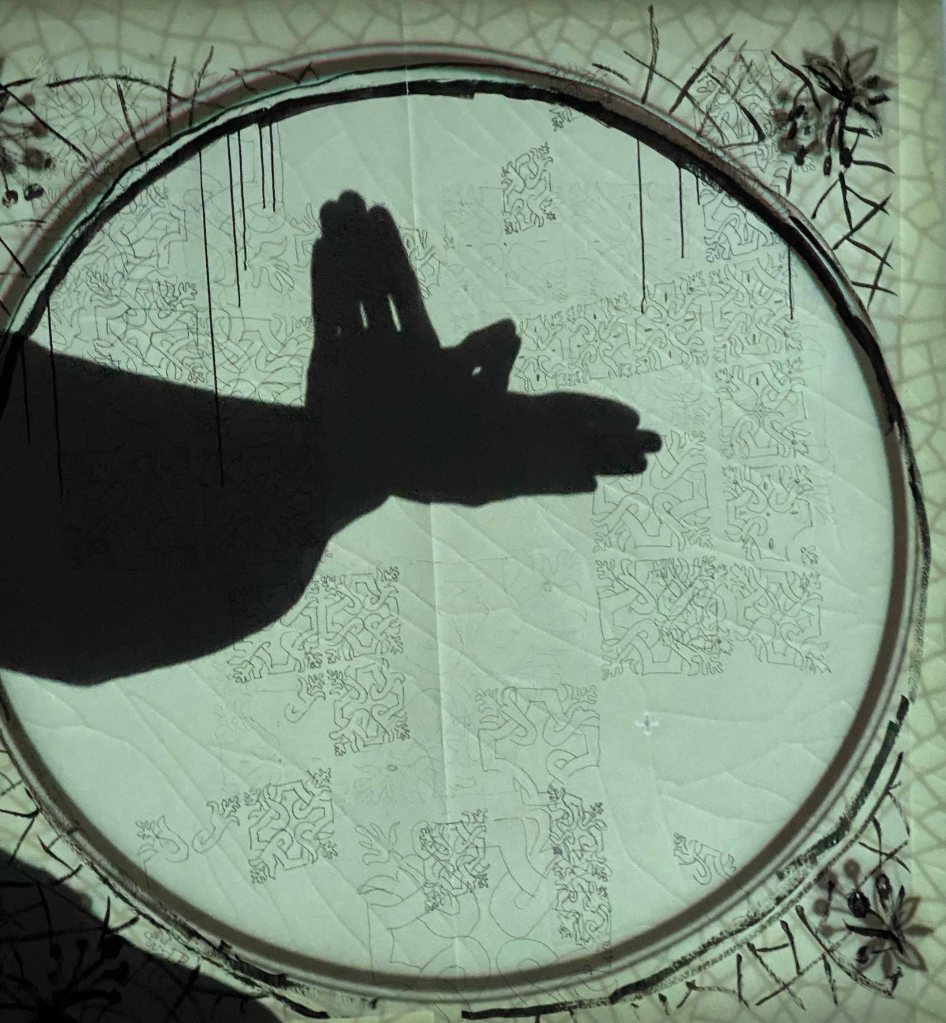
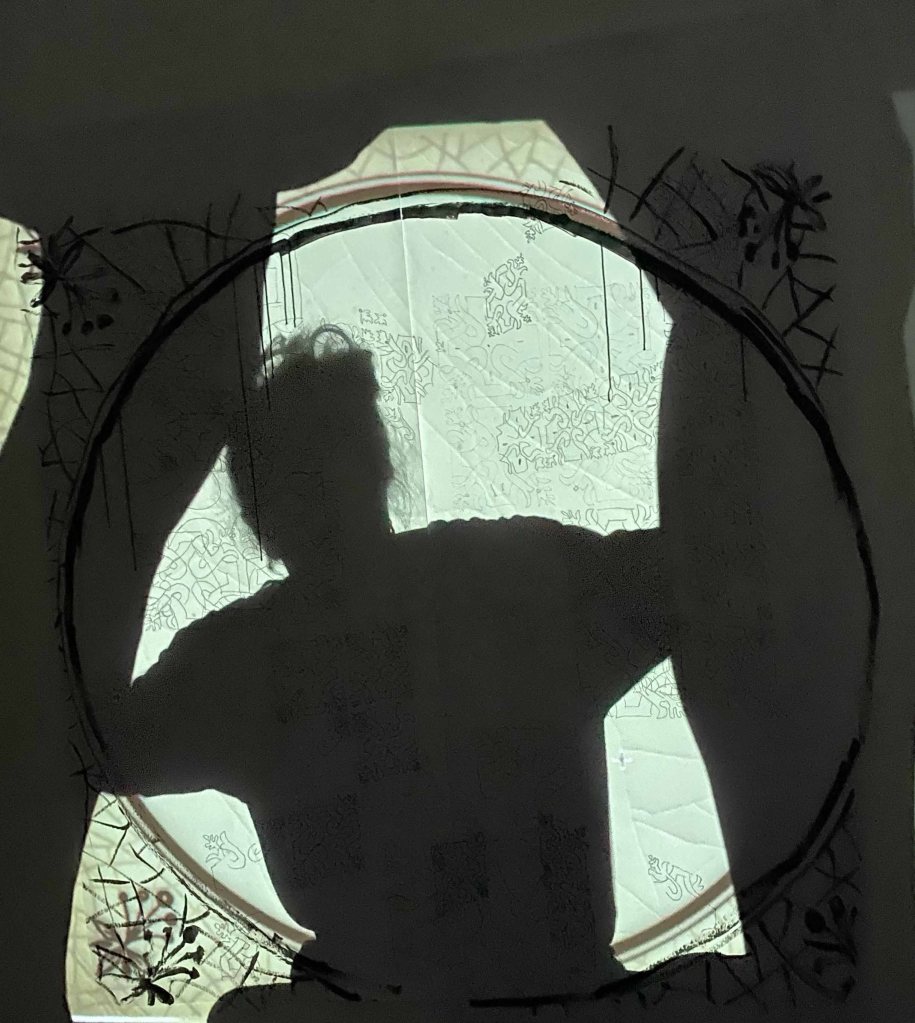
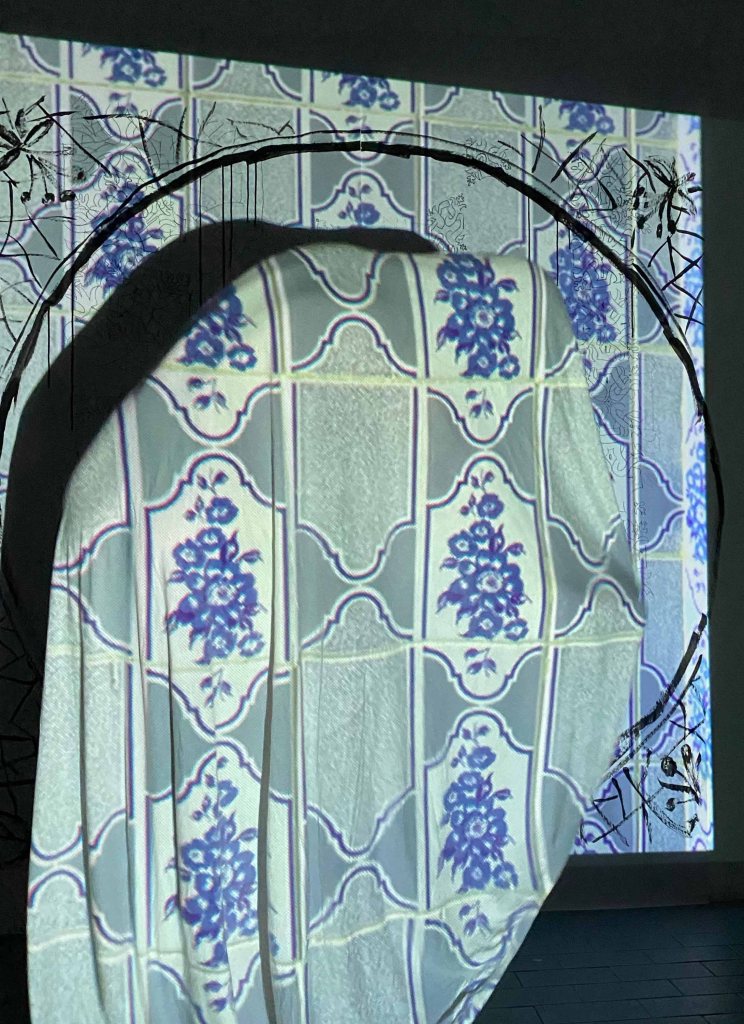
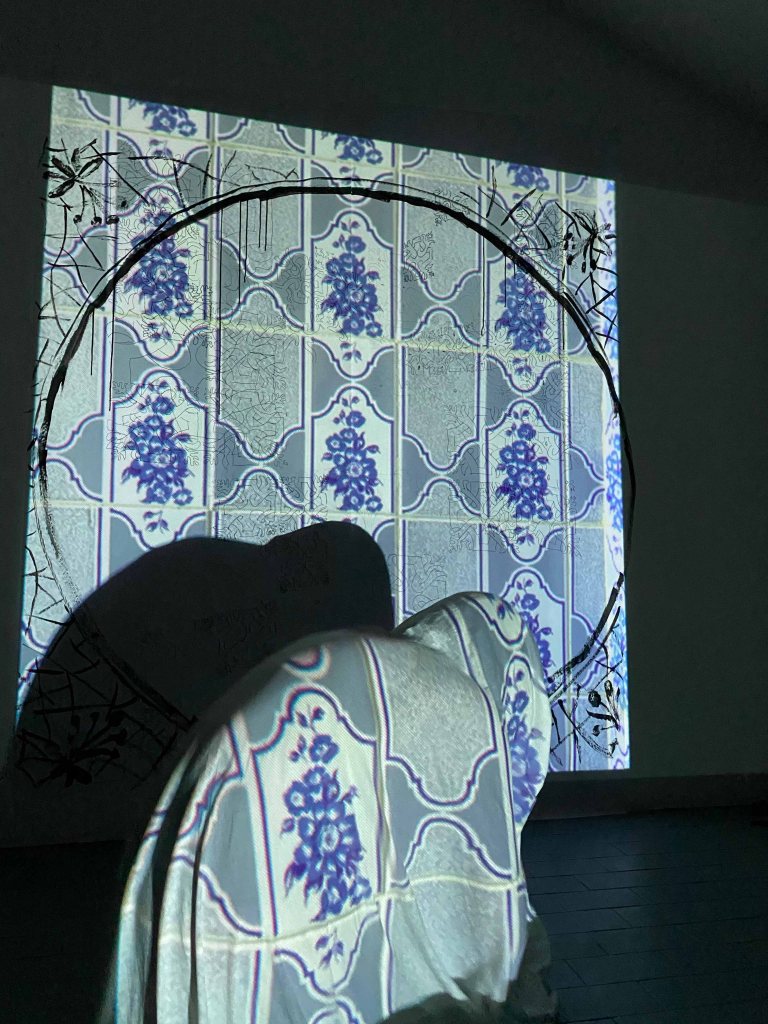
I am projecting photographs with the tiles in different sizes and capture the shadows of our moving bodies under a cloth:

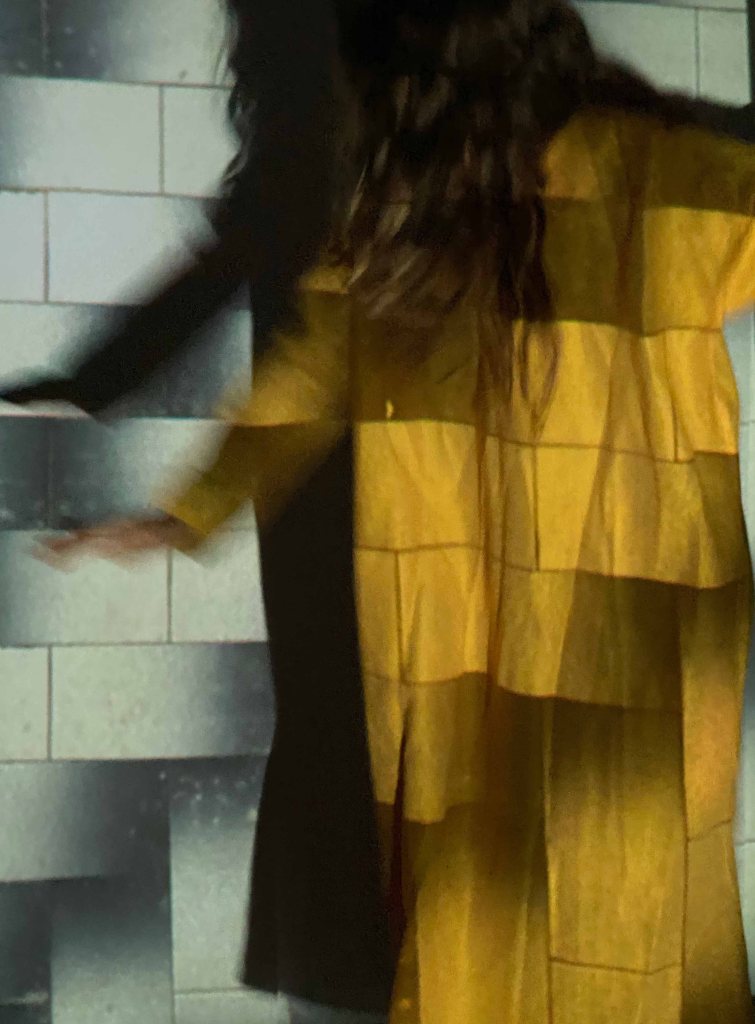
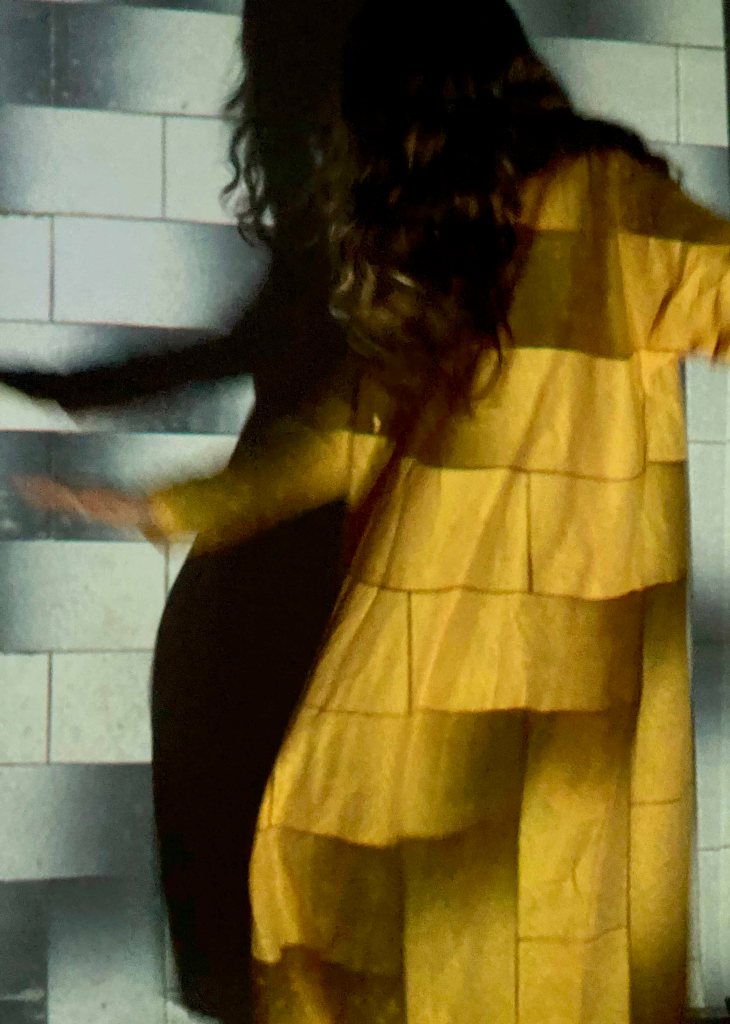
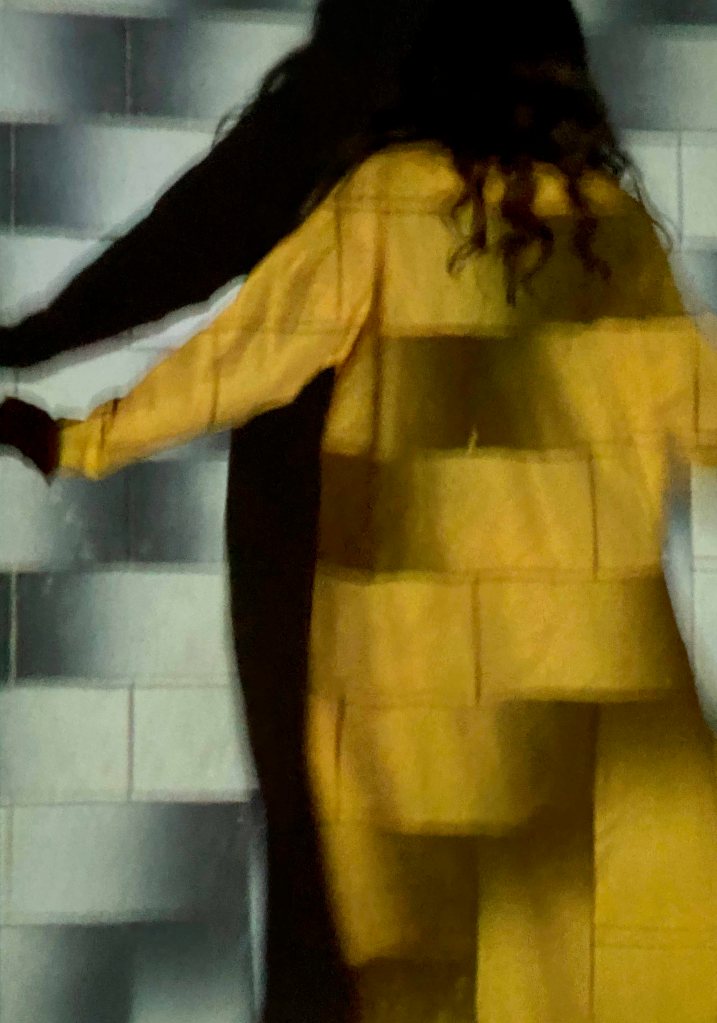
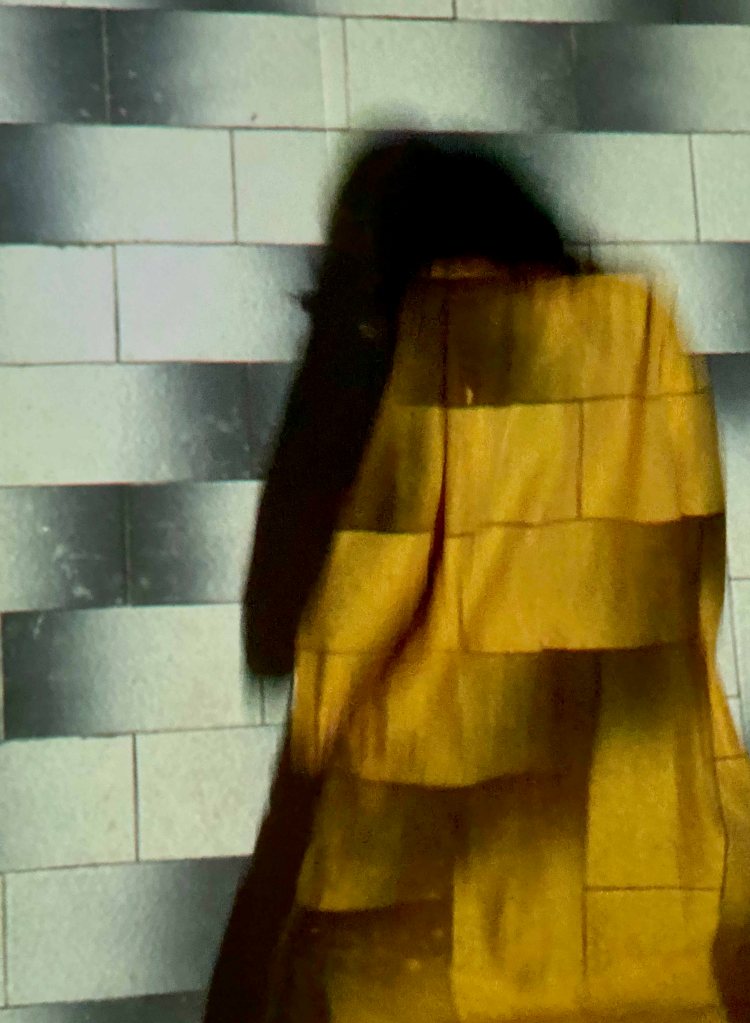
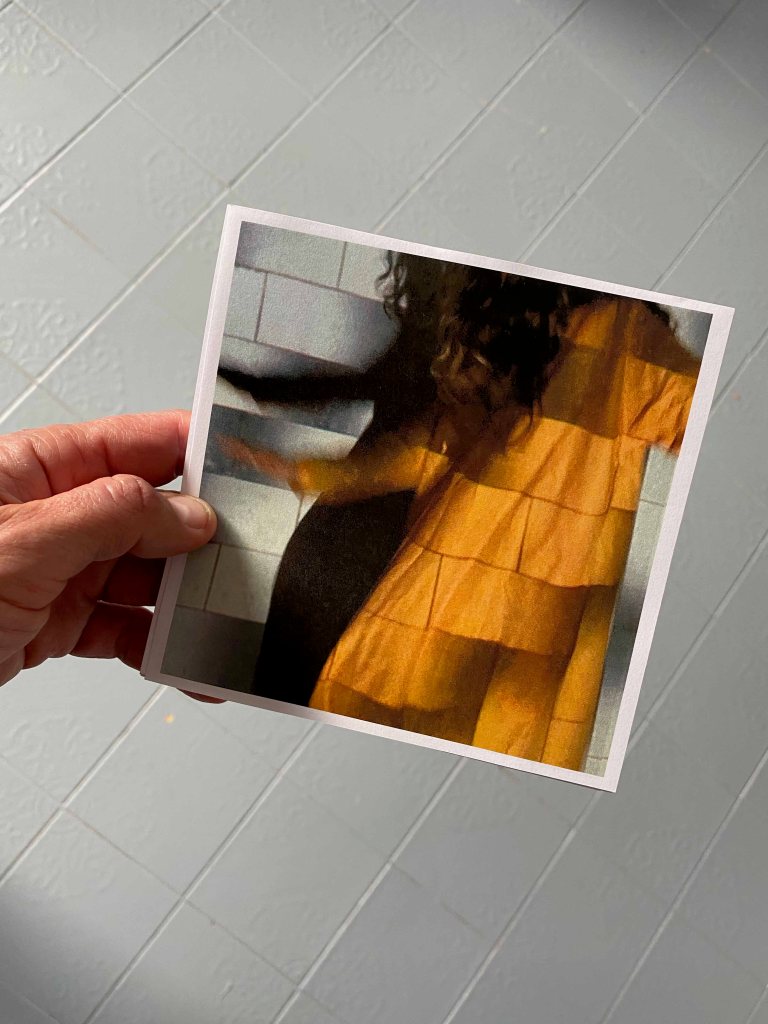
Rita performs wearing a yellow dress:

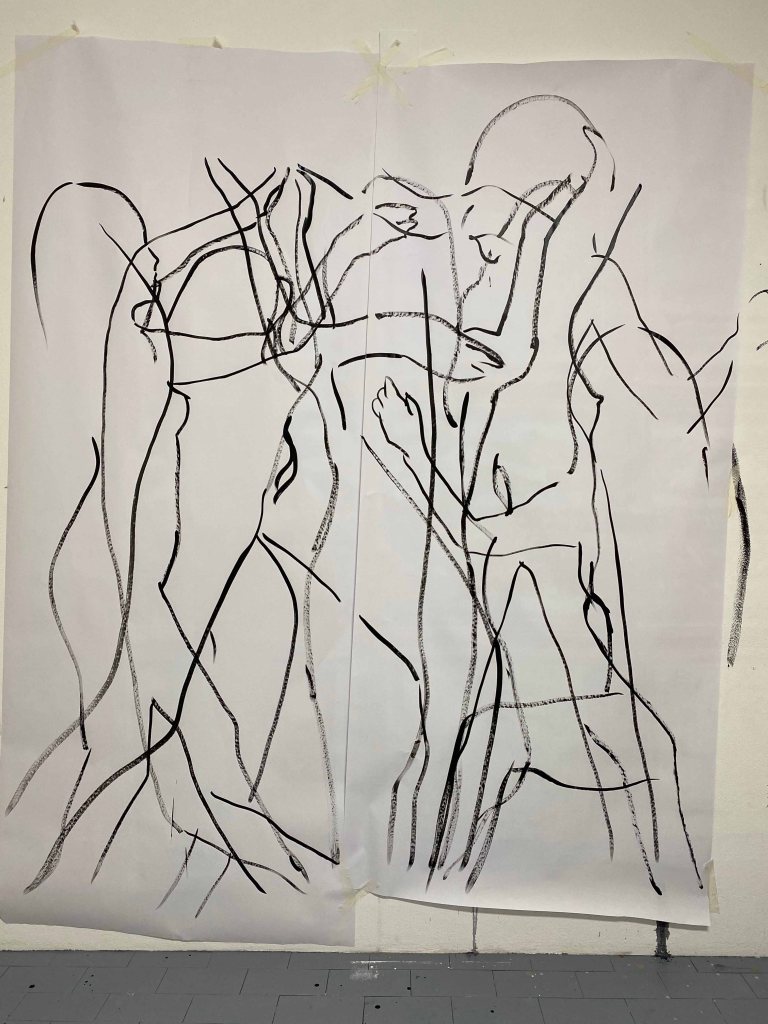
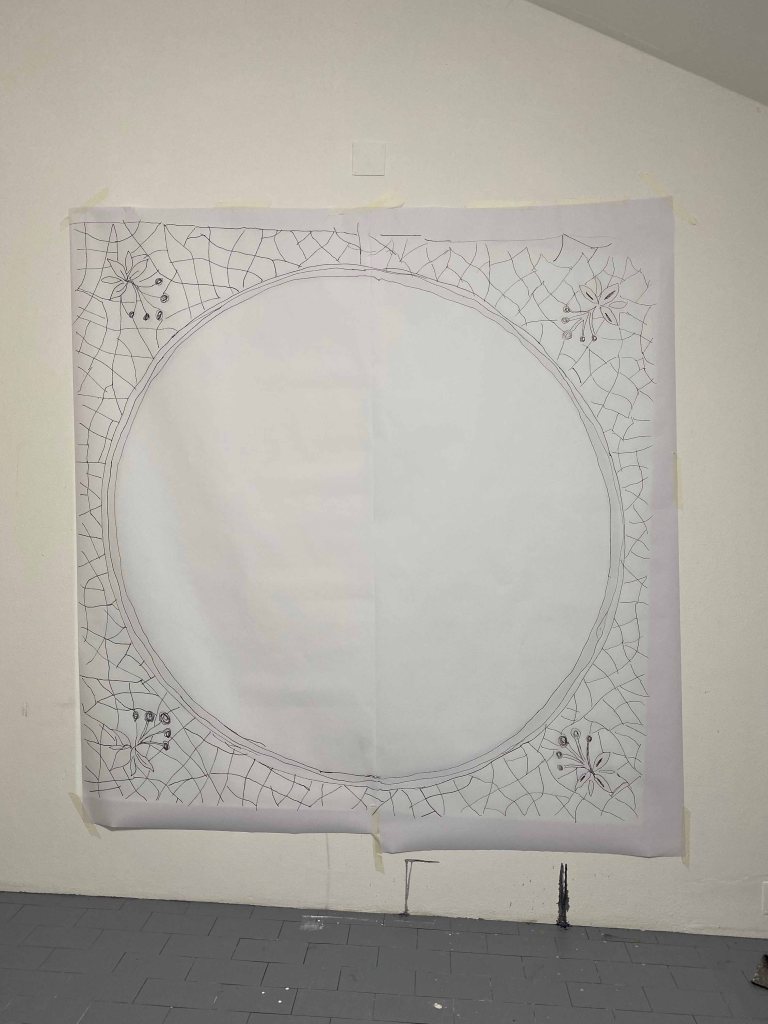
Next , we are drawing the patterns of the tiles on very big paper on the studio wall.

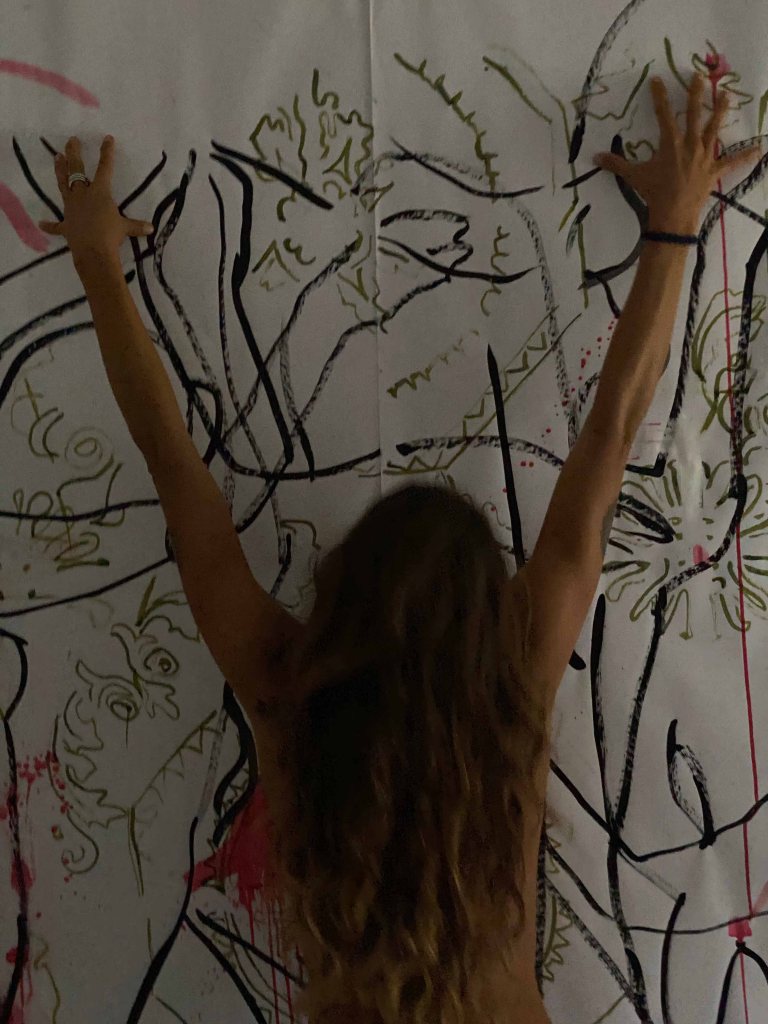
This is the first drawing (approximately 180x200cm)

Here I photograph the drawing with an arm for a sense of scale:

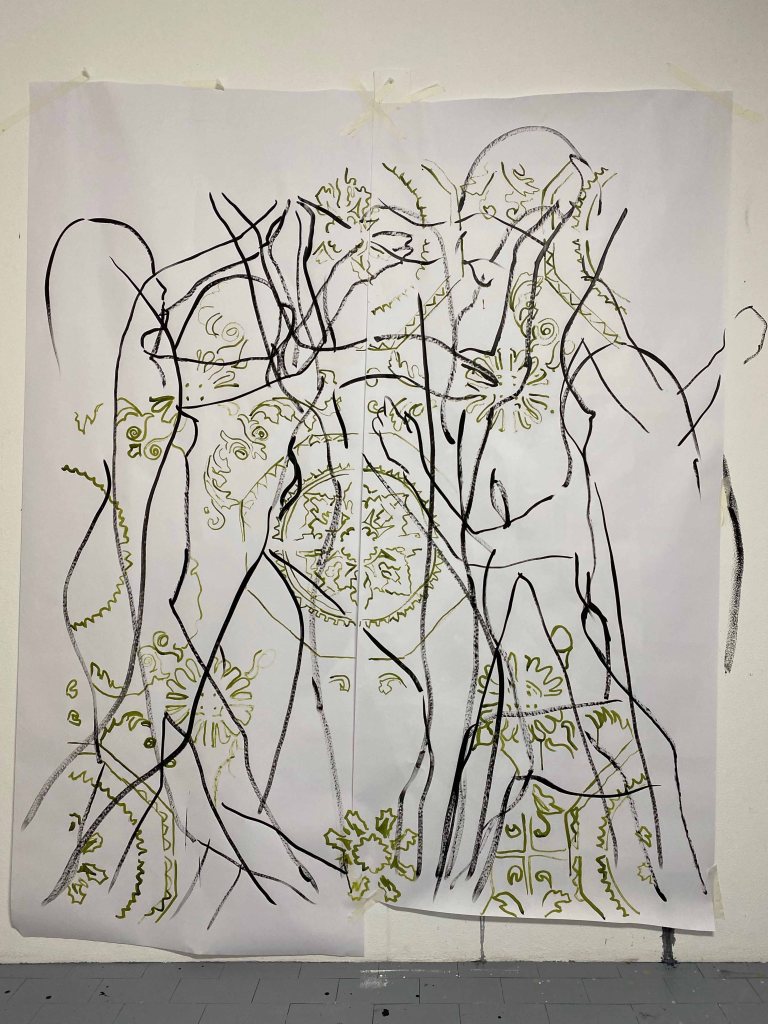
For a second drawing, we use 3 projected photos of the same bathroom tiles in different perspectives and add the pattern from another tile as a frame.

This becomes the background for the following:

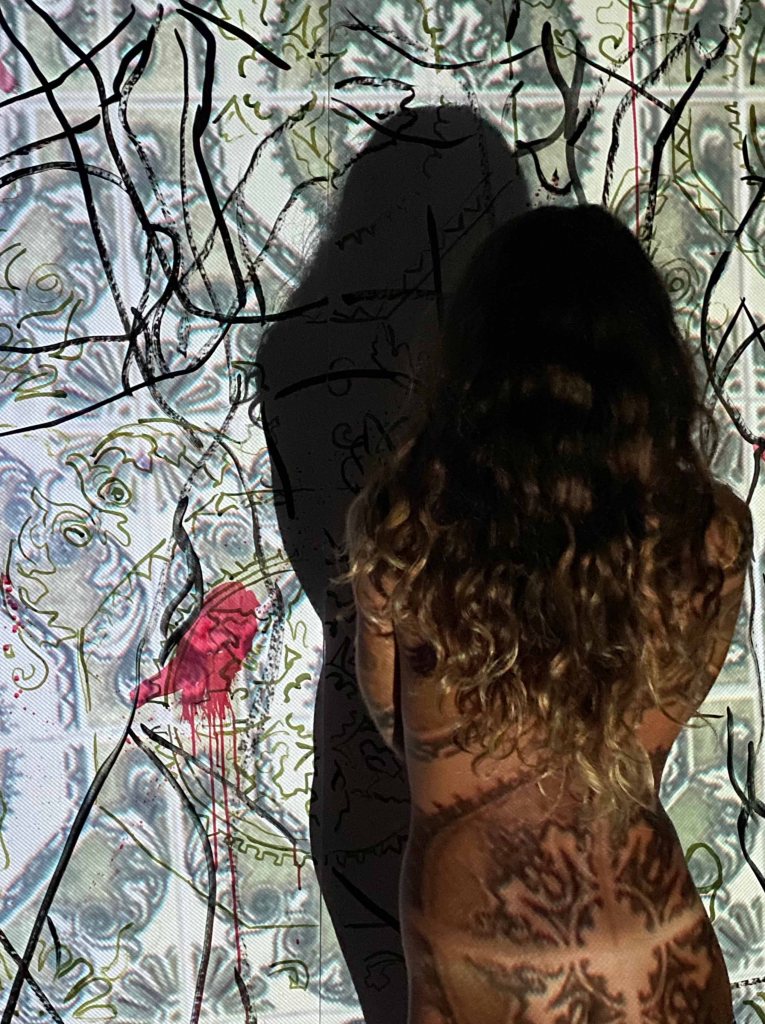
And in combination with yet another tiles photo and my shadow:

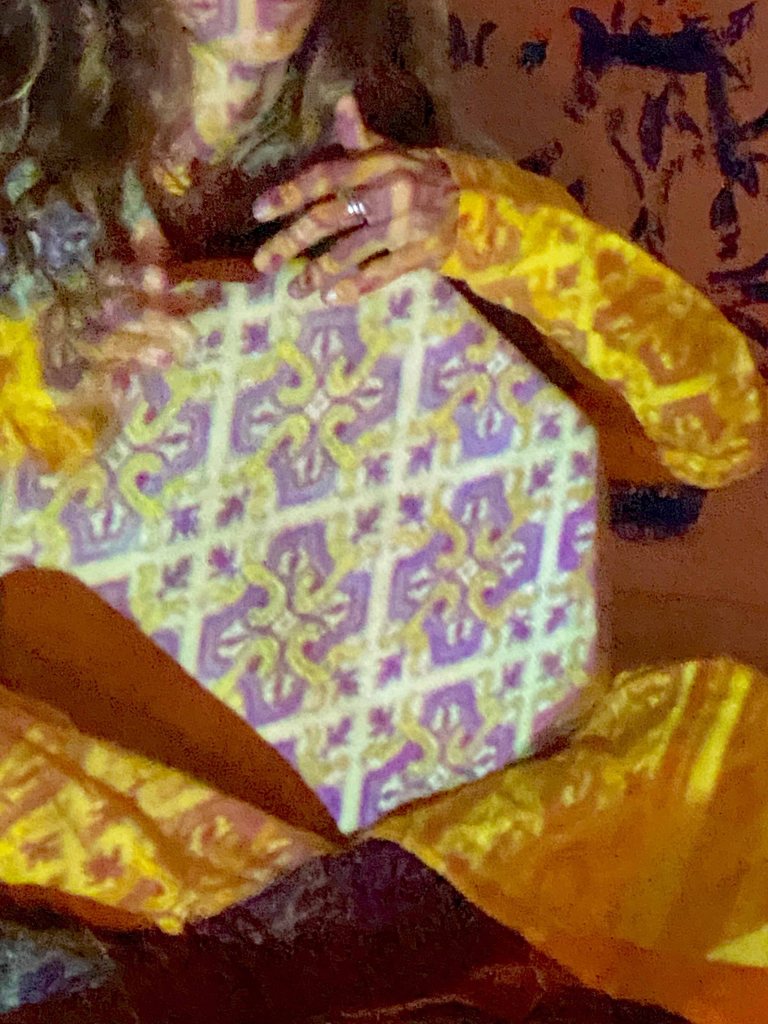
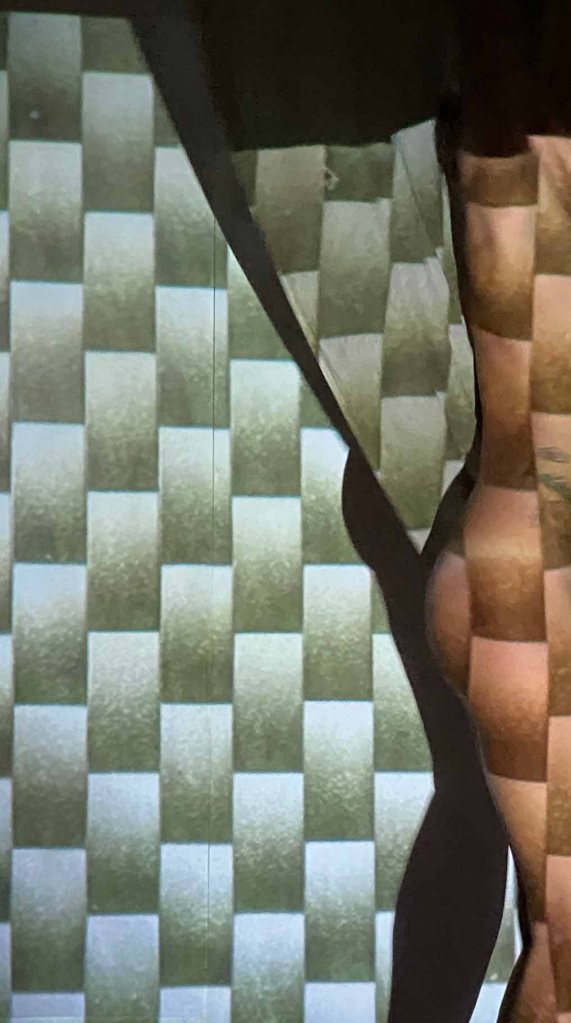
We also project the tiles on our bodies

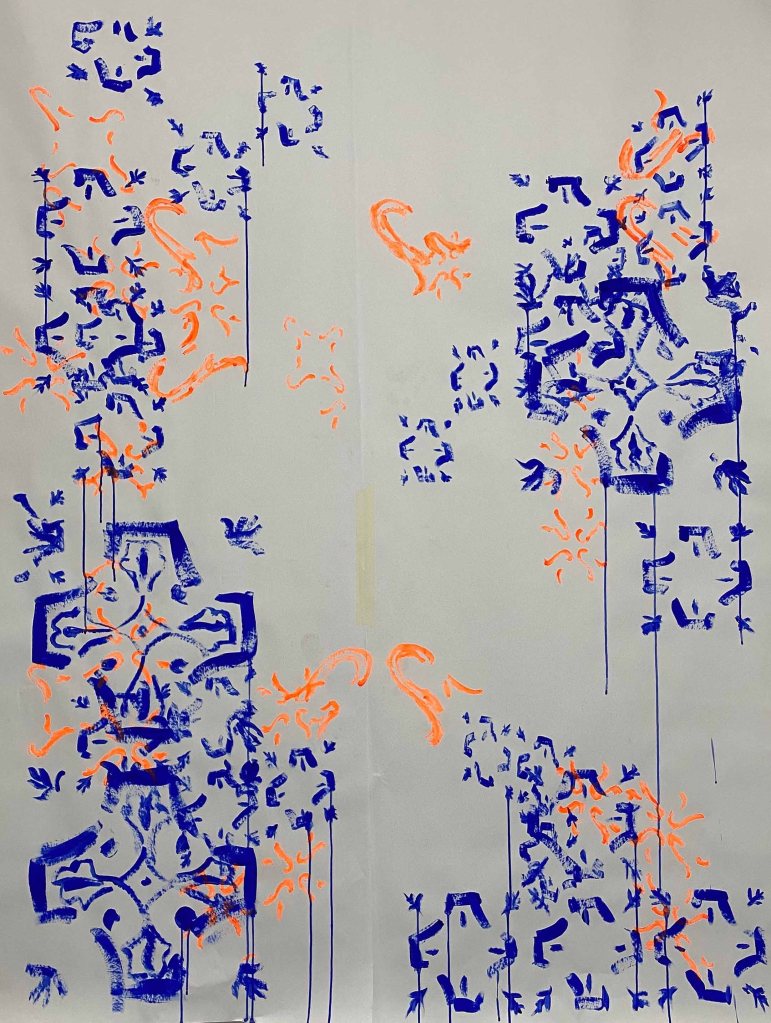
I am using the same bathroom tiles for yet another drawing in acrylics:

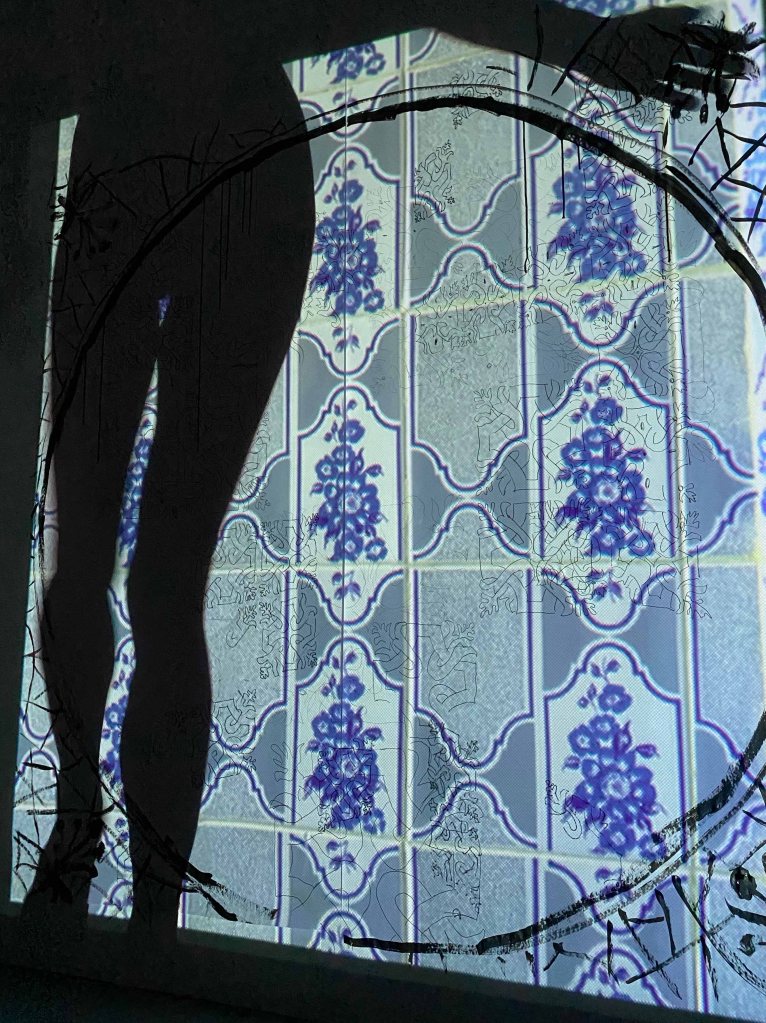
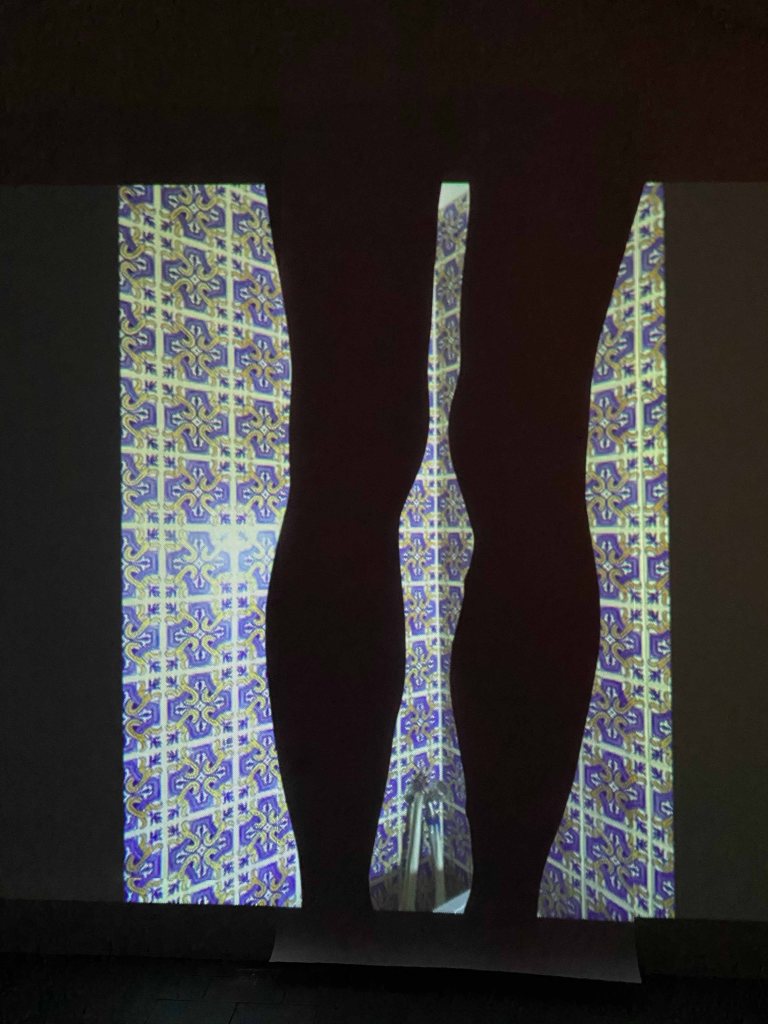
A last bathroom tile picture with the shadow of my legs

Now we continue dancing on the pattern of a blue floor tile, trying the yellow dress again.

It works much better here , with the pattern that is not so intricate.

The kitchen floor has the same tiles in green, that I photograph in a different direction:

It becomes really effective in the place where the floor meets the wall:

The kitchen tiles open up a whole new universe of possibilities!
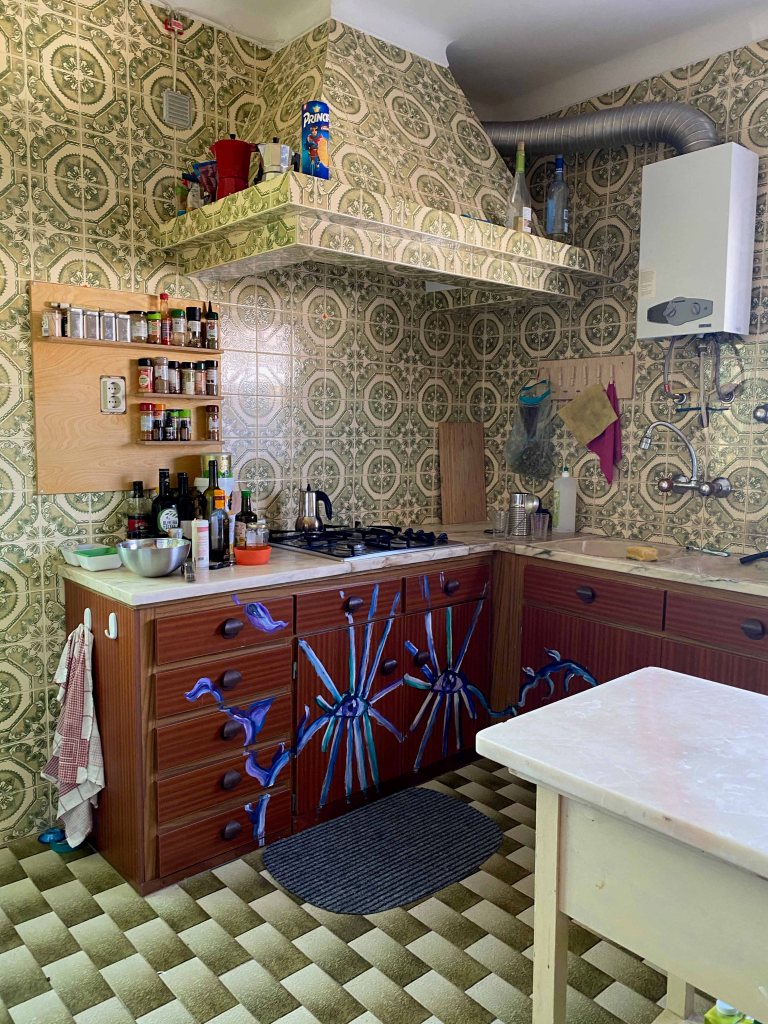
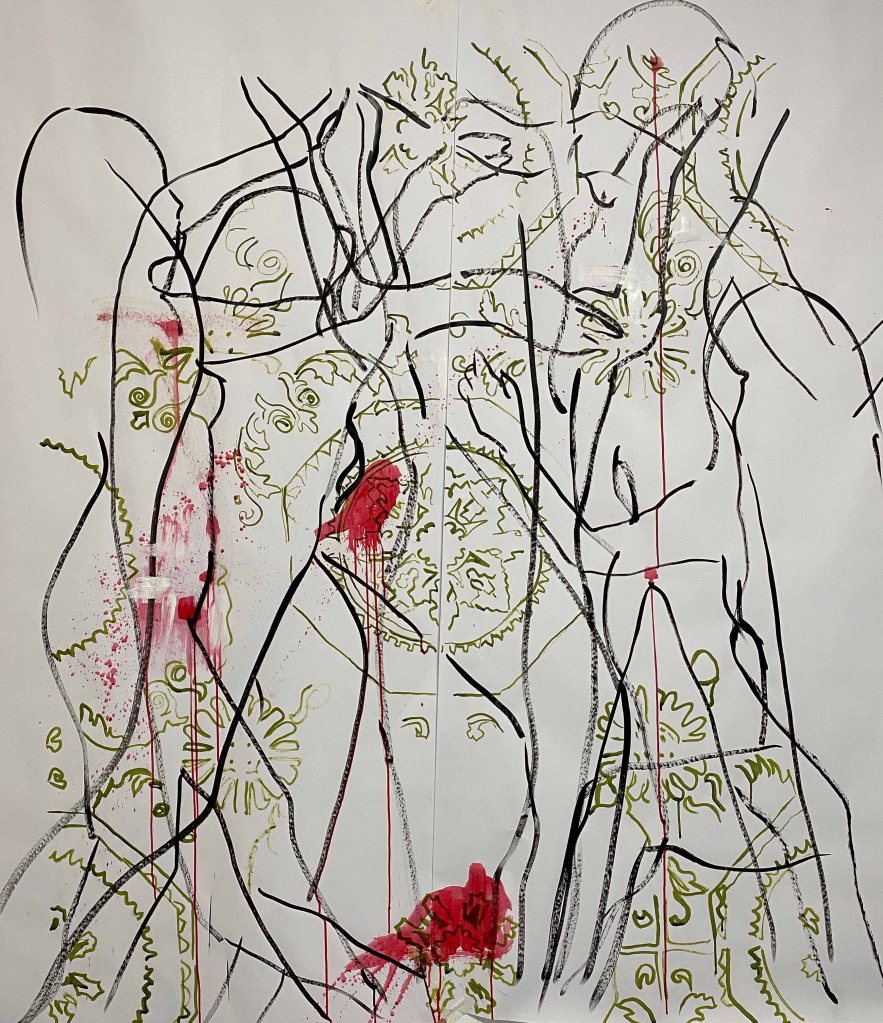
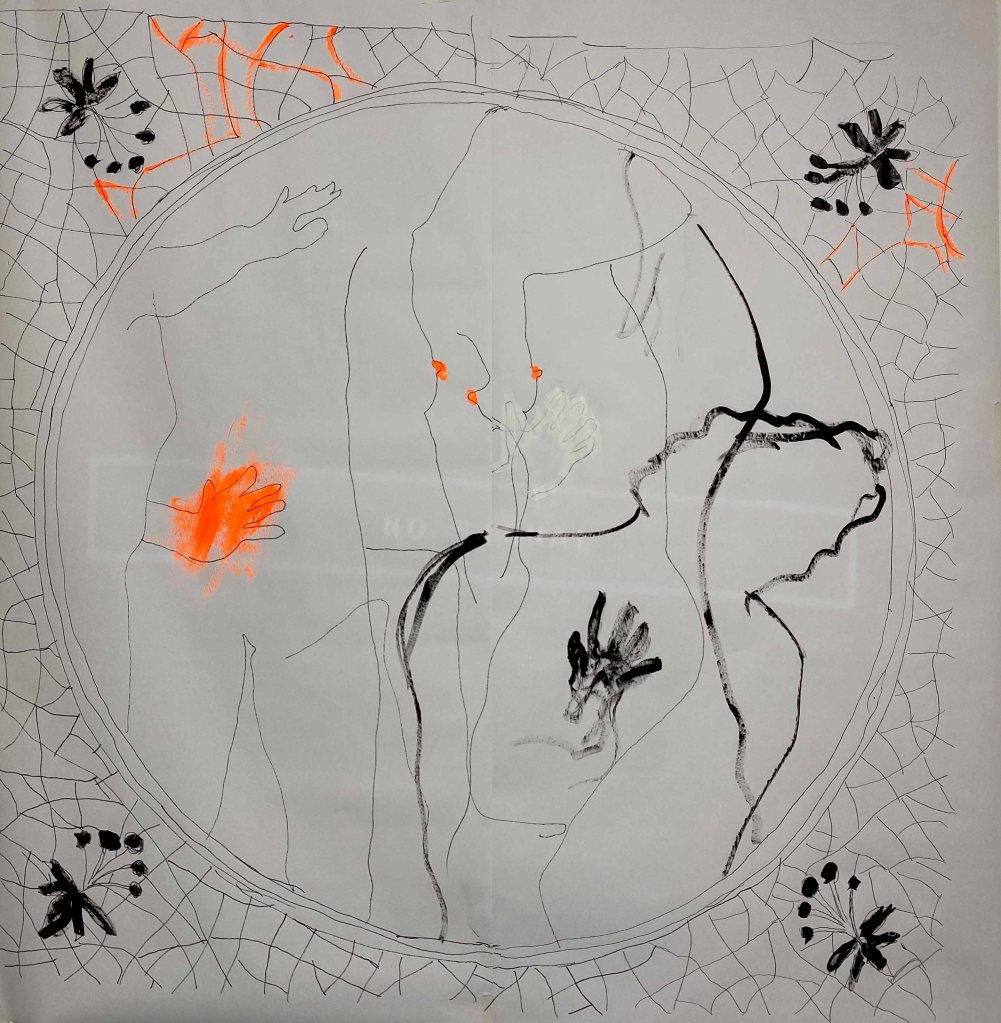
We return to drawing on a new big paper on the wall. I start by capturing Rita’s dance, an eternal movement in the imaginary kitchen, then add the patterns of the kitchen tiles, and finally some splashes of red

This is the background for the next performance

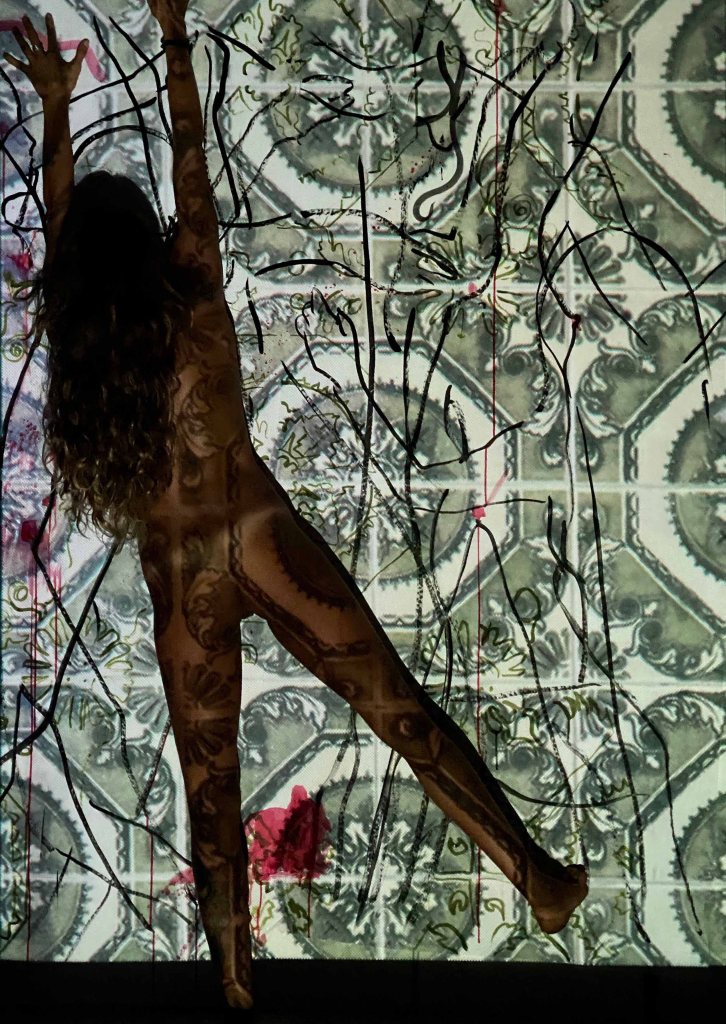
I am fascinated by the patterns of the tiles on the body

We return to drawing again, this time the floor tiles of the original hall and living room, including our feet

Adding acrylics

Finally, I project the tiles on the drawing with Rita moving her legs

This is more impressive in a short video:

We put up yet another paper, and return to the most simple tile.

We have been going for two fun, creative, intense days here, and I have material that will take at least a week to edit!

THE BOOK-DIGITAL

I decide to create a “photobook ” format, as a way to preserve the history of the tiles found in the house in combination with our creative transformation of them. In this video, you can follow the flicking through the digital version of the book:

I am really happy with where the tile story took me, but I feel like I still need to explore the potential of the artist’s book more hands on.

THE BOOK-

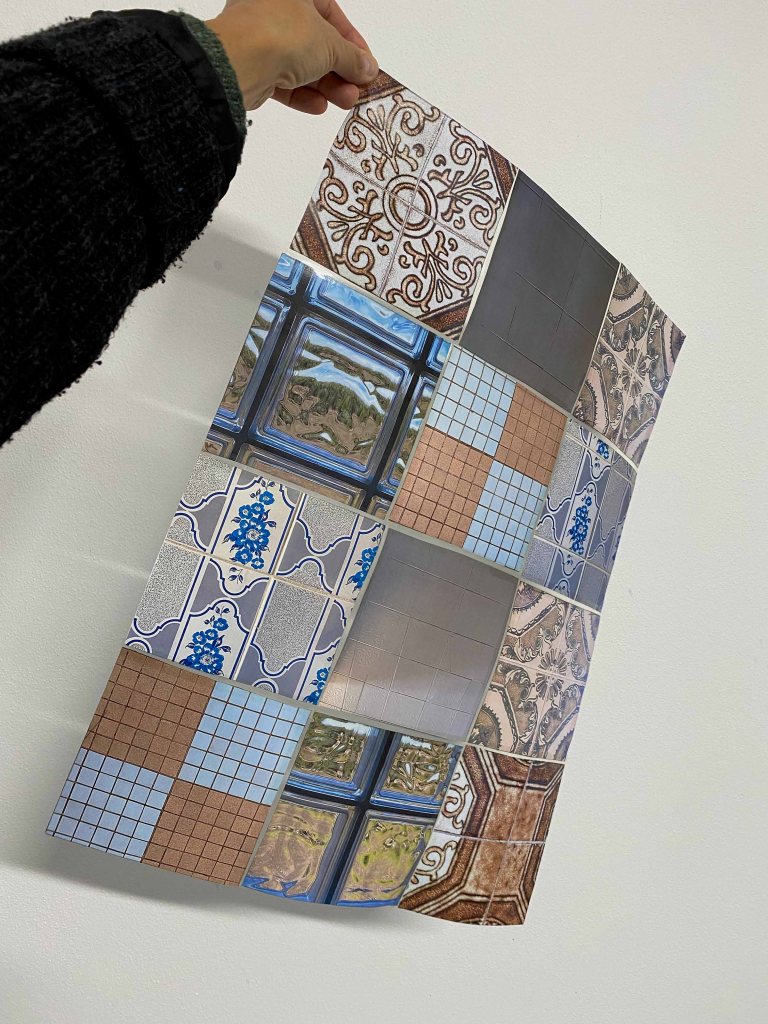
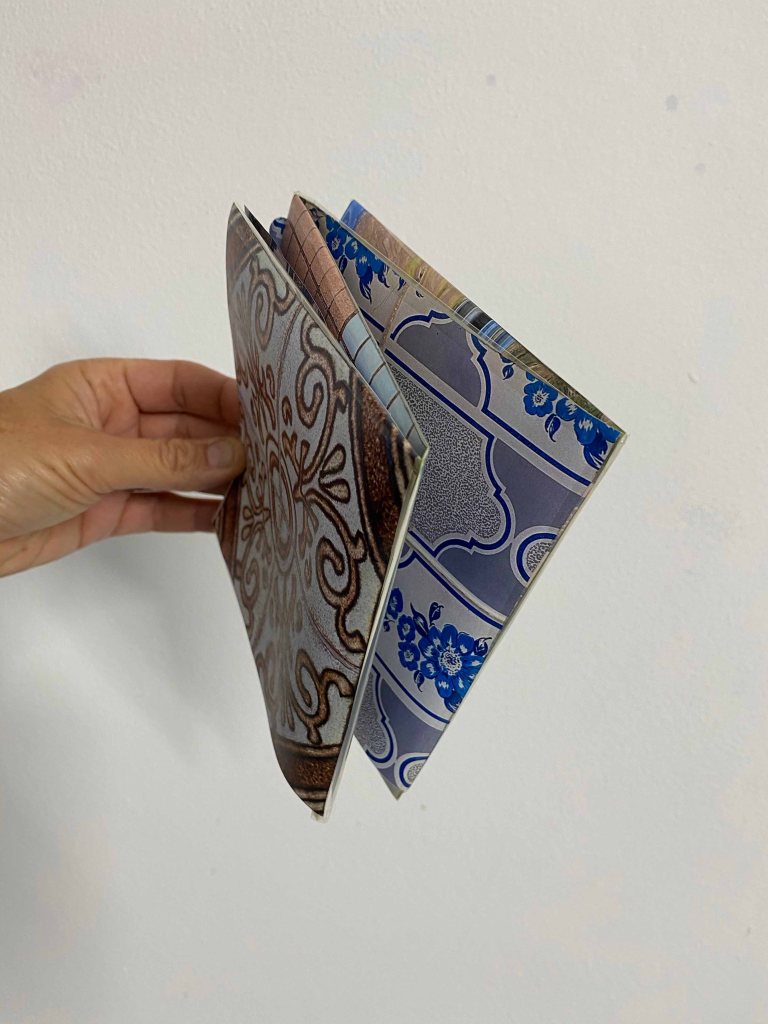
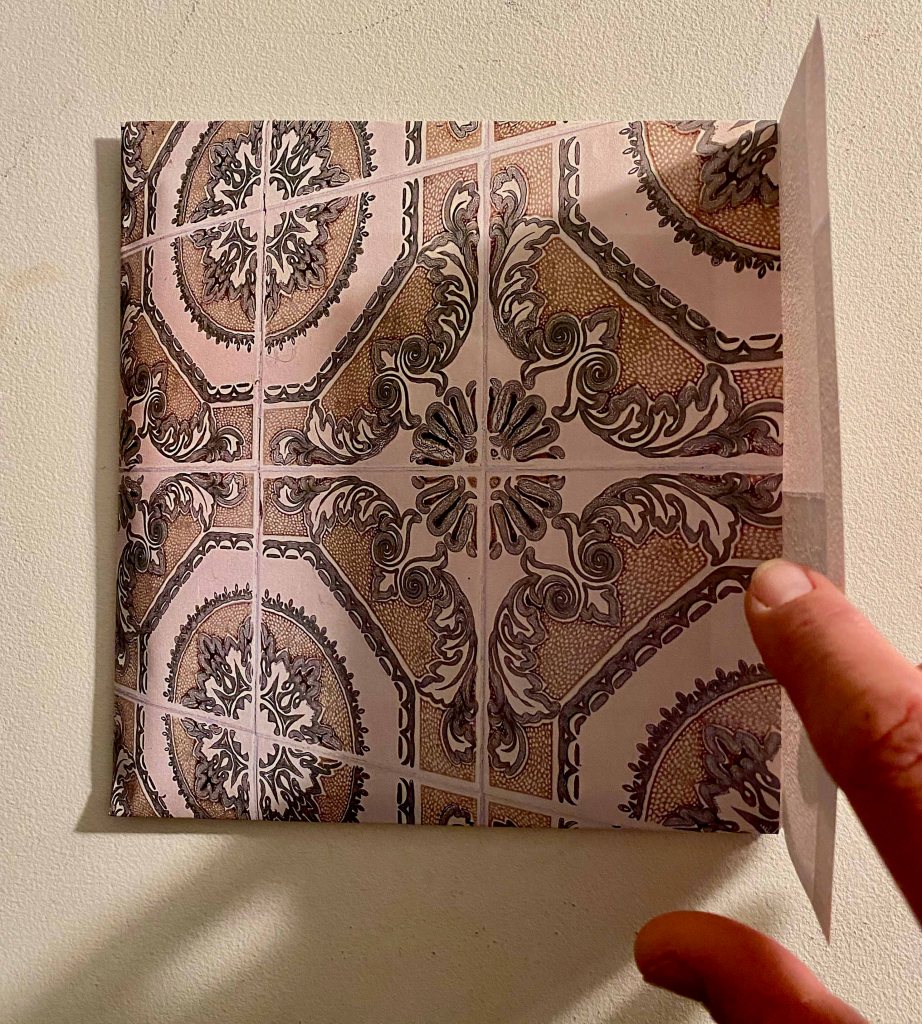
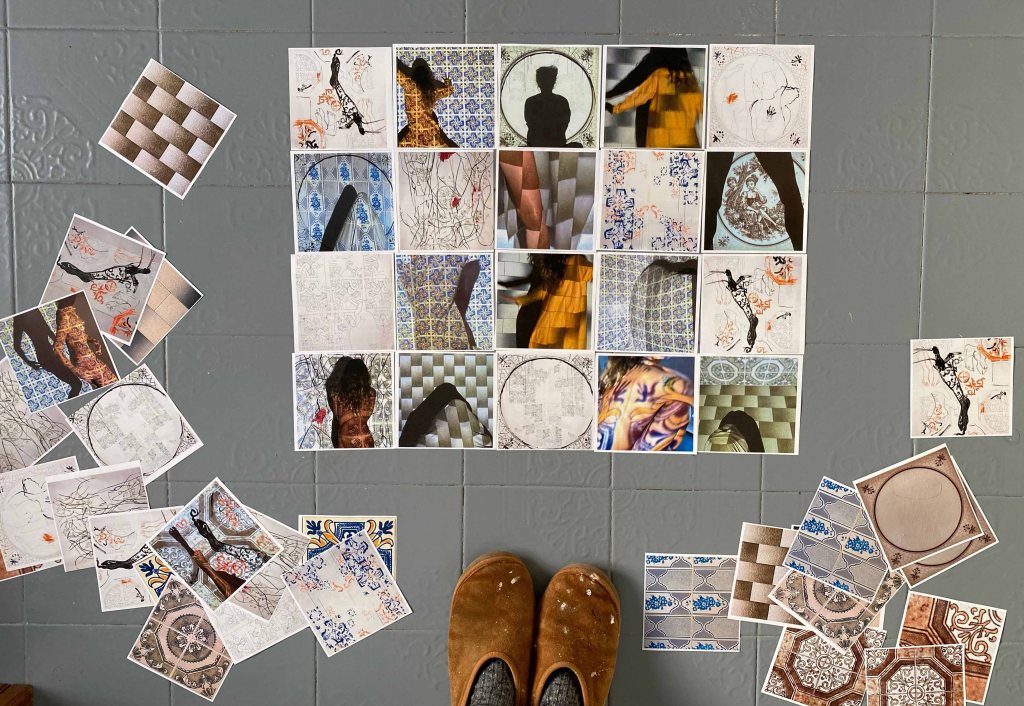
I am preparing the photos in square formats to print them and use them as “tiles” for a new mosaic. I will experiment with attaching them and folding them together into a map/ book.

As a trial, I have taped the tile photos together into a mosaic. You can move the whole piece around like a blanket or a carpet that can of course be continued to any size.

And then folded together into a map like book:

I decide that the piece can become much more interesting if leaving it more open. Inspired by “Volume 8 ” by Dieter Roth, I print out a new set of tile shaped photos and will keep them as a set of cards, in a crafted folder, leaving the possibility of a new combination for the tiletastic mosaic every time you open it.

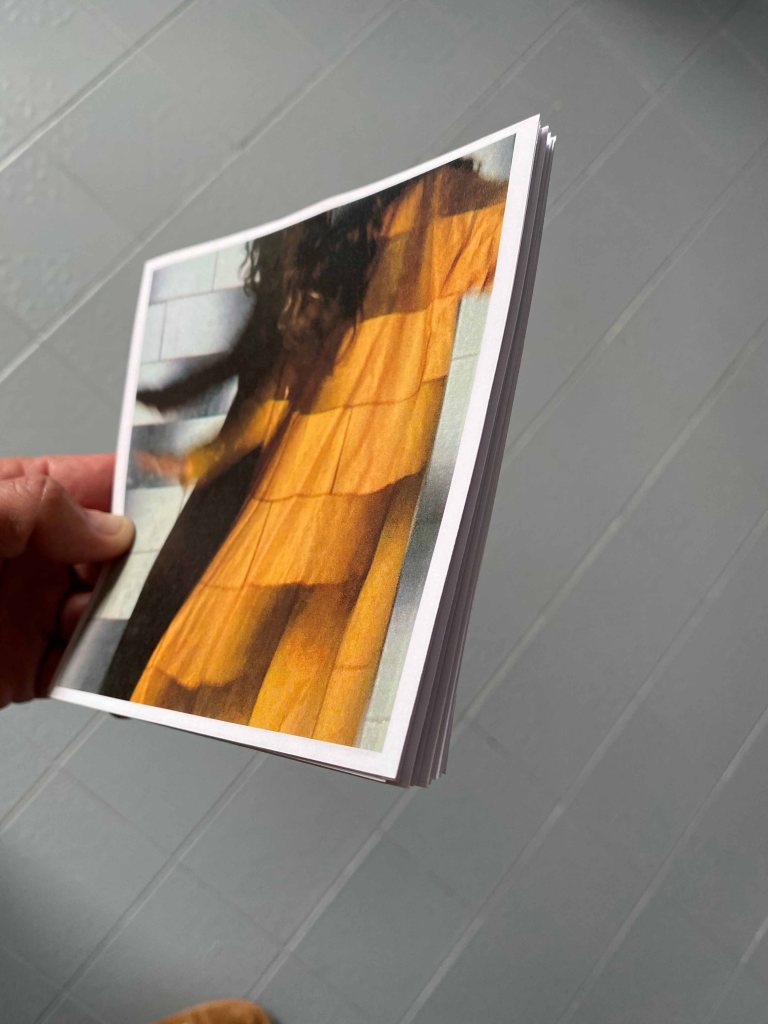
It feels really good to hold the stack of images in my hand, the thickness of the pile corresponding to a tile more or less.

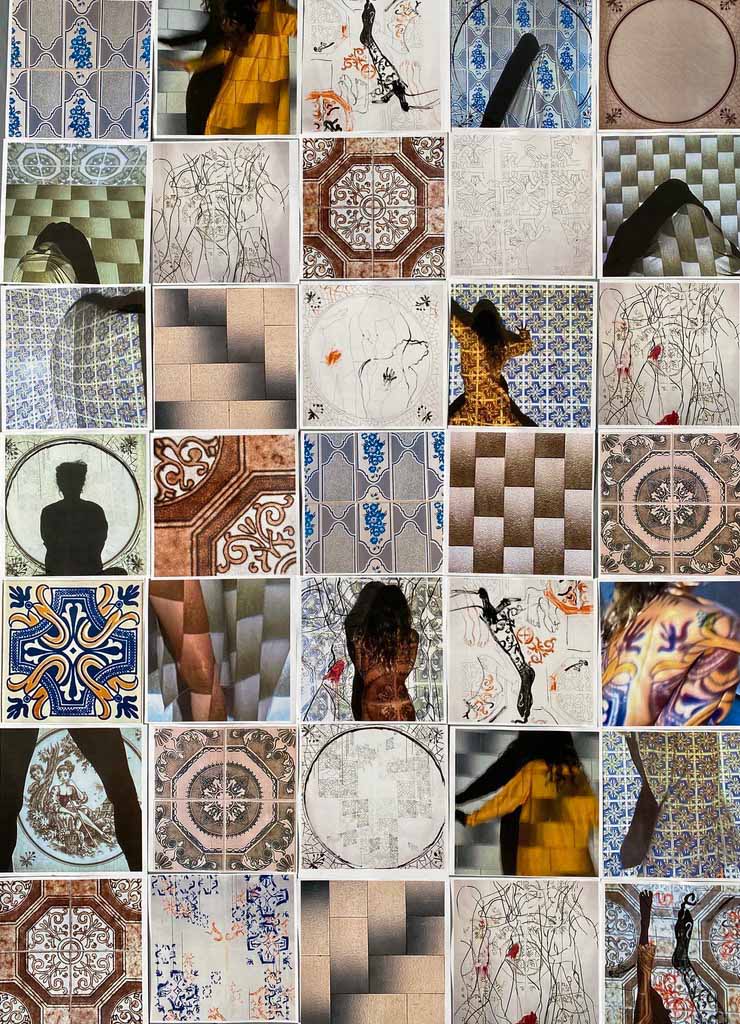
And then the puzzle can begin:

This is just one of the infinite possibilities:

I realize that this result is at least as “noisy” as the original tiles and combinations!

I am happy though with where this project has taken me- to examine our many tiles and to play with them into creating new versions.

I will continue this exploration into the next project: A finer focus

5.1 A changing scene

D2 Manual:

Aim: Drawing moving figures or a changing scene can be extremely challenging. A large part of that challenge, however, is your own conception of the purpose. By taking a step back from trying to pin the action down to a static conclusion, and instead making a drawing which is a record of the movement and action itself, we can begin to reflect on how to balance movement and form to create a dynamic image.

Method: Find a fairly busy scene, with plenty of movement. Sit somewhere comfortable and out of the way and start making a drawing. As something catches your eye, capture it as best you can. Keep responding to movements as they happen so you build up a drawing full of dynamic energy. Depending on how fast you can capture form or how much repetition your view has, you may be able to build up a convincing representation of the scene. Whatever happens, you should be able to make a drawing which captures a sense of time elapsed, rather like a photographic long exposure. Don’t lose focus; make each mark as accurately as you can. Even if you just get a small mark representing the back of someone’s head before you lose them, make sure that mark is as accurately shaped and placed as you can get it.

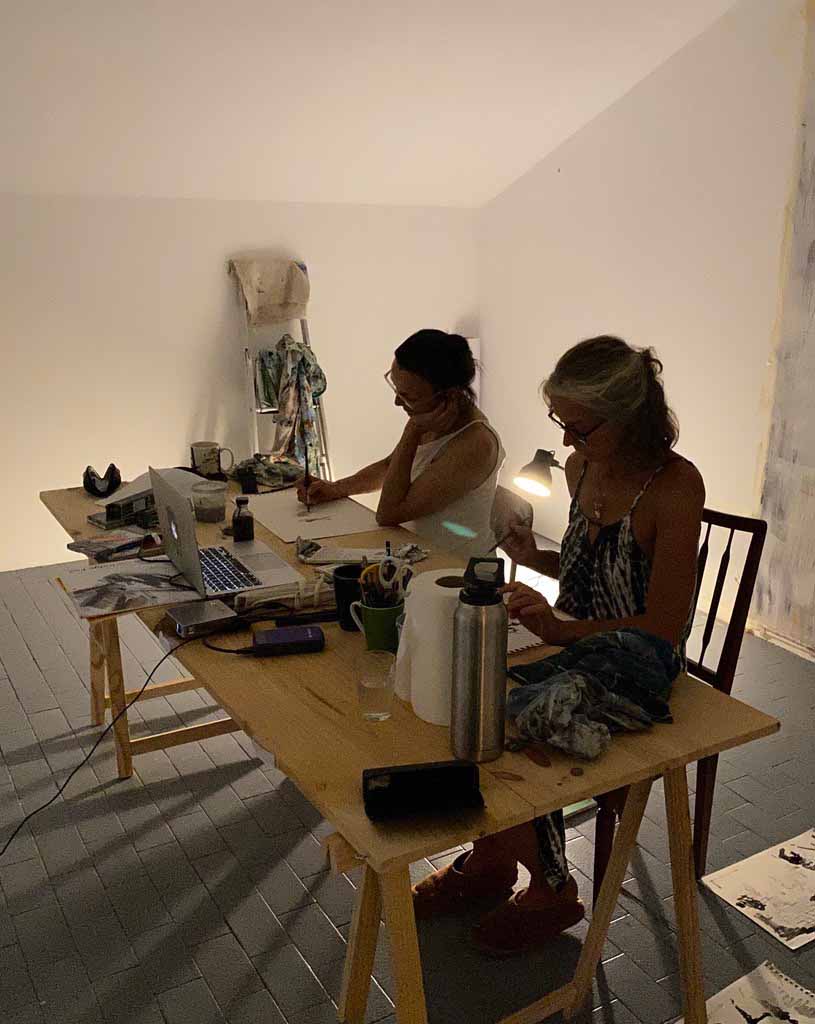
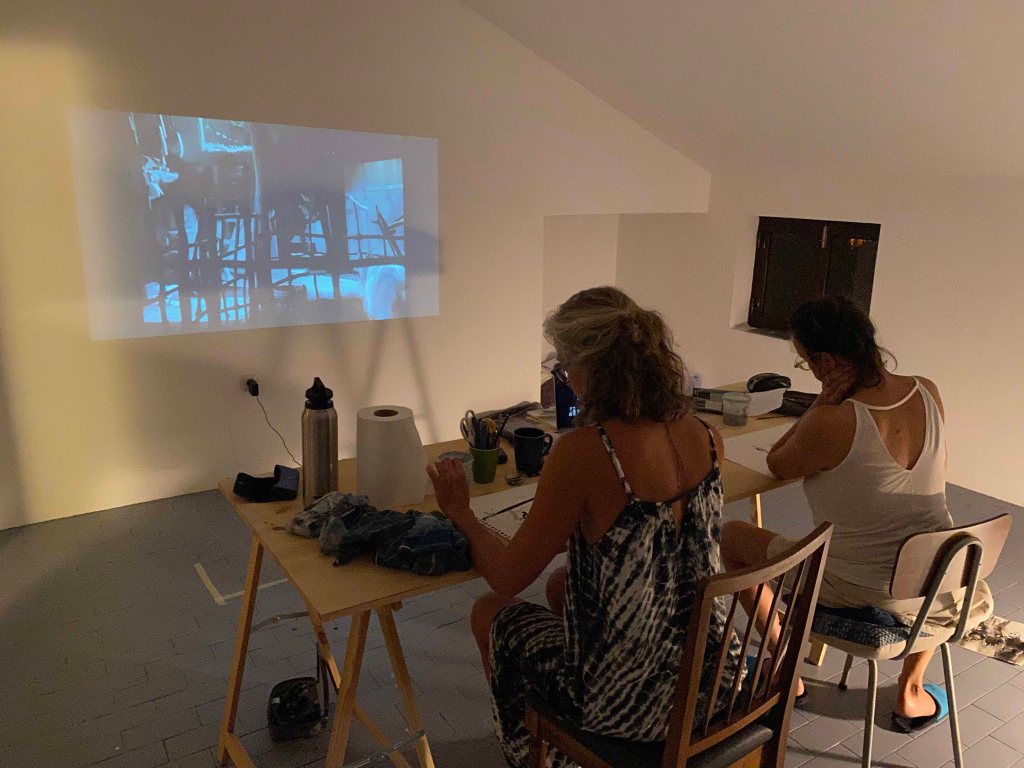
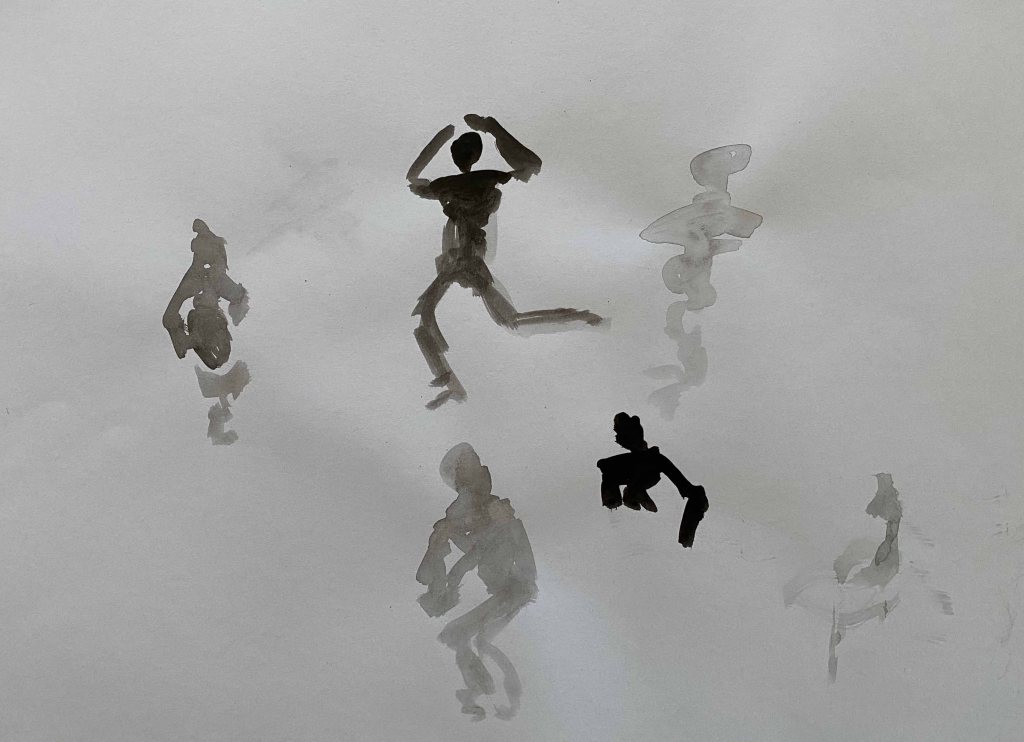
I am far from a busy scene here in my Portuguese village, but have my friend Ellen visiting who is up for drawing together. We decide to project busy scenes from You tube clips on the wall and draw them, which is a lot of fun!

We start with the trailer of the movie “Dune”, which is full of very quick fighting scenes- very tricky to capture! I choose Indian ink and a fine brush as my medium to avoid trying to be too precise on A3 paper.

I think these drawings capture that there is movement and many figures, but it is really not clear what is happening.

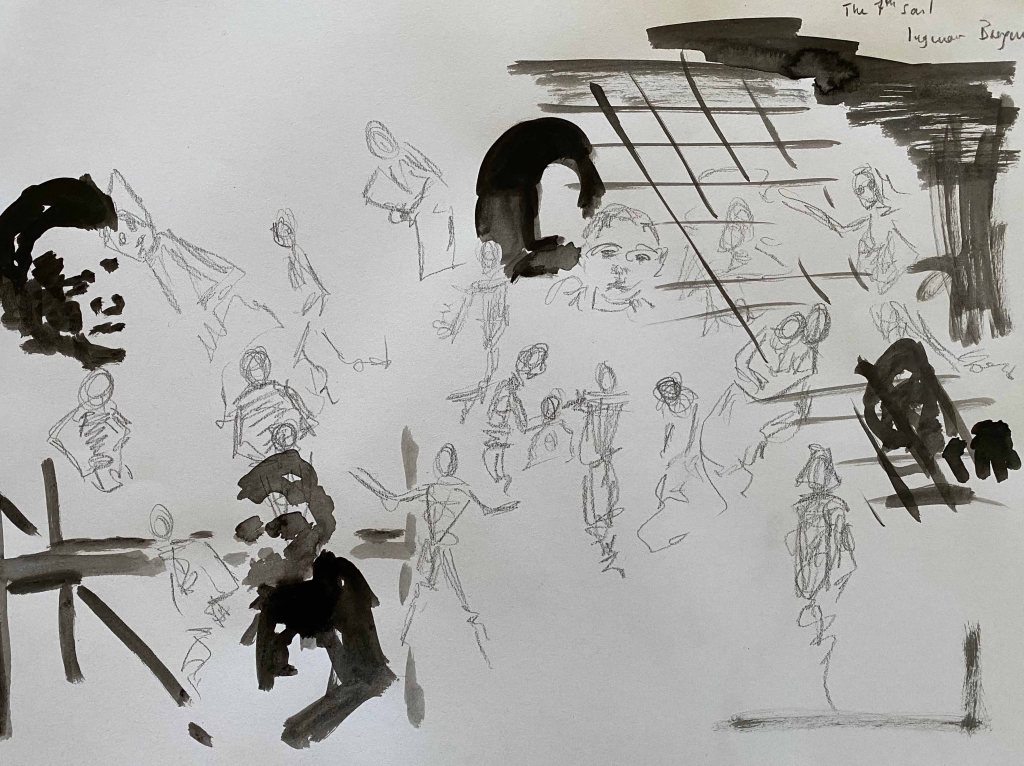
We decide to change for Ingmar Bergman’s movie “The seventh sail” instead, as it is black and white and moves much slower, even freezes at times on a scene.

I mix pencil drawings with Indian ink with a brush to use different strength of line. Knowing the movie, you can pick out some of the themes of it in the drawing, but it is still quite disappointing as a result.

Some days later, I invite my friend and aerial dancer Rita to participate in a performance we create for the Artists’ book (blog post coming up).

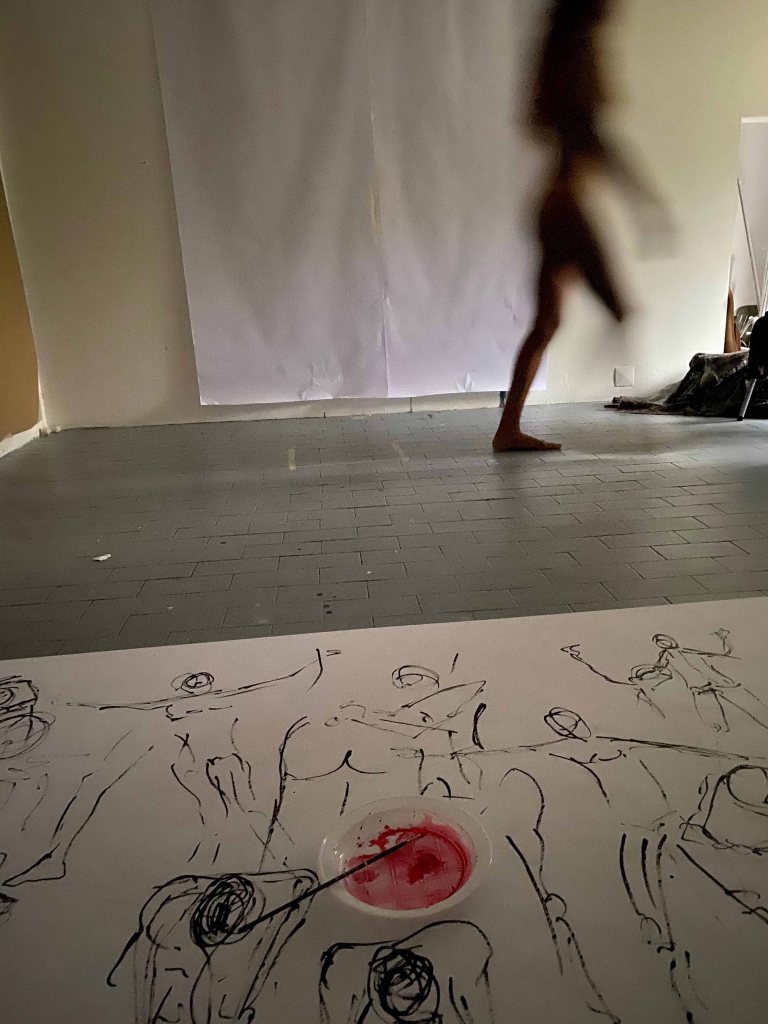
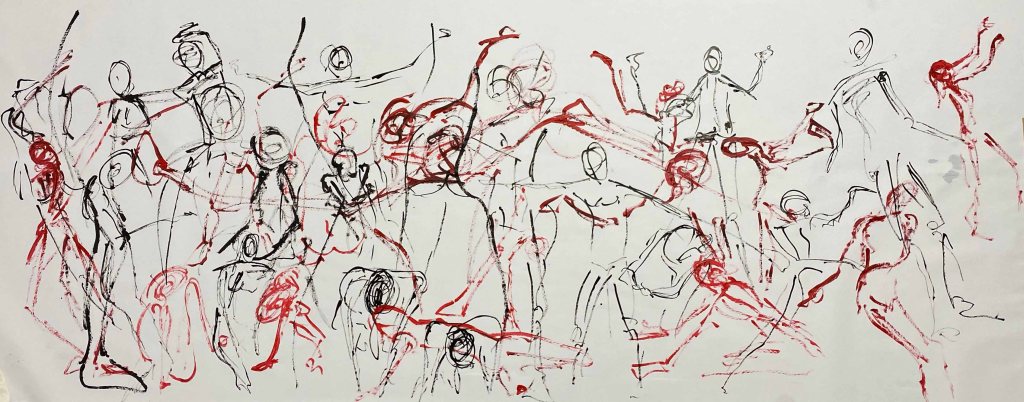
She loves to dance, and I roll out a long piece of a paper roll on the floor (approx 90×300 cm) to capture her movements.

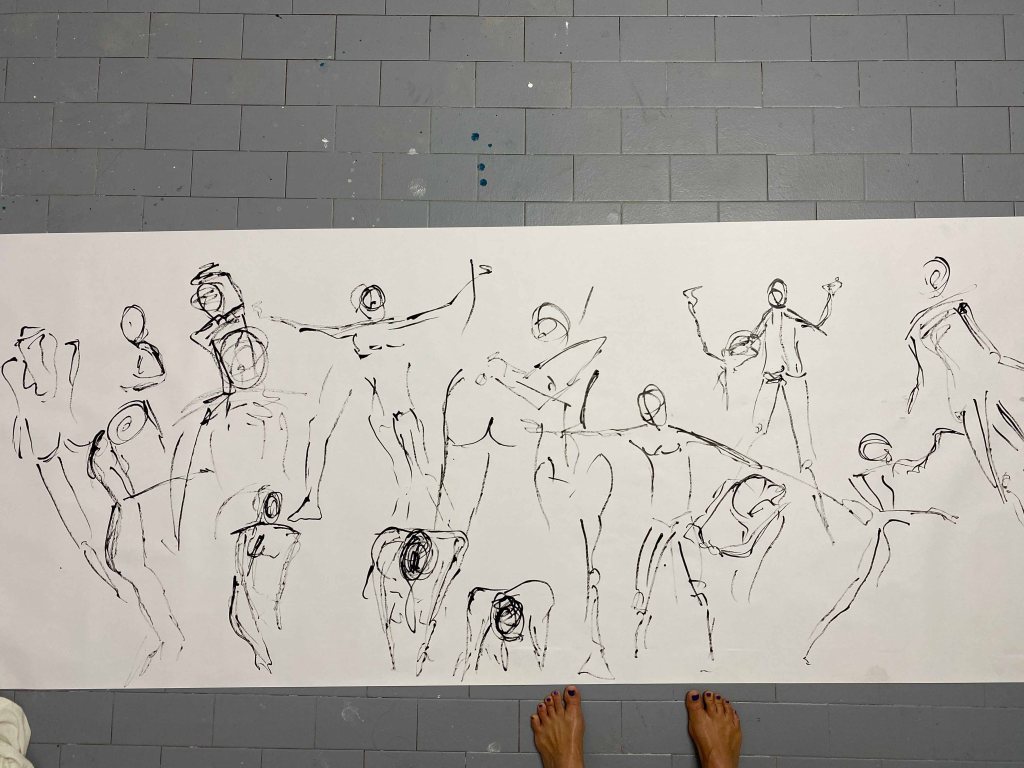
I start with black Indian ink and a thin brush. The Indian ink allows me to make very quick and fluid marks, it feels ideal for this type of very quick drawing.

It must be many an artists dream to have a model as perfect as Rita dancing for the drawing and I am frustrated at not being able to capture this better.

For a second round, I decide to try with red Carmin acrylics, and a thin brush.

The acrylics are more resistant, even well diluted and I find I have to dip my brush much more often. Ink is more suitable for these very quick movements.

This is the final drawing:

I think you can definitely feel movement and dance and it is a very dynamic drawing. It would require a lot more of practice to capture the beauty of the movements more precisely though. I am glad that I worked on such a big paper as it made my own movements more free. Ideally I should have worked on a vertical paper though (easel) and not on the ground, to avoid looking up and down all the time.

Drawing the moving figure is definitely something I would like to learn better, so: to be continued.