D2 Manual:
“Aim: Drawing moving figures or a changing scene can be extremely challenging. A large part of that challenge, however, is your own conception of the purpose. By taking a step back from trying to pin the action down to a static conclusion, and instead making a drawing which is a record of the movement and action itself, we can begin to reflect on how to balance movement and form to create a dynamic image.“
“Method: Find a fairly busy scene, with plenty of movement. Sit somewhere comfortable and out of the way and start making a drawing. As something catches your eye, capture it as best you can. Keep responding to movements as they happen so you build up a drawing full of dynamic energy. Depending on how fast you can capture form or how much repetition your view has, you may be able to build up a convincing representation of the scene. Whatever happens, you should be able to make a drawing which captures a sense of time elapsed, rather like a photographic long exposure. Don’t lose focus; make each mark as accurately as you can. Even if you just get a small mark representing the back of someone’s head before you lose them, make sure that mark is as accurately shaped and placed as you can get it.“
I am far from a busy scene here in my Portuguese village, but have my friend Ellen visiting who is up for drawing together. We decide to project busy scenes from You tube clips on the wall and draw them, which is a lot of fun!
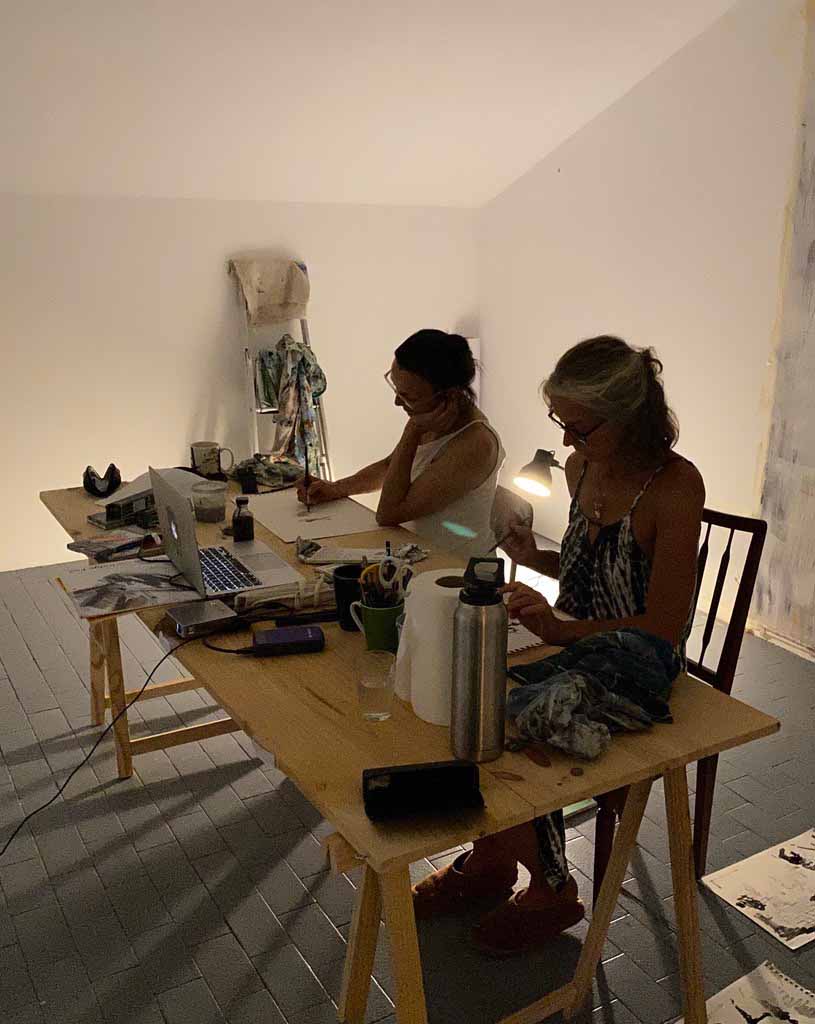
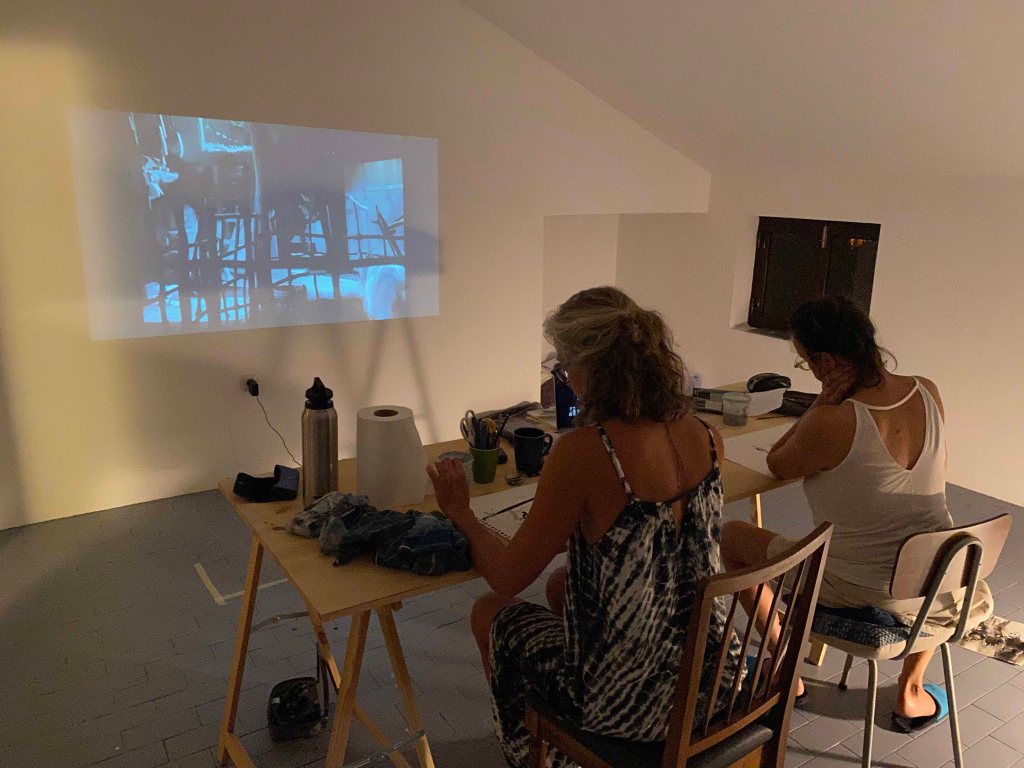
We start with the trailer of the movie “Dune”, which is full of very quick fighting scenes- very tricky to capture! I choose Indian ink and a fine brush as my medium to avoid trying to be too precise on A3 paper.

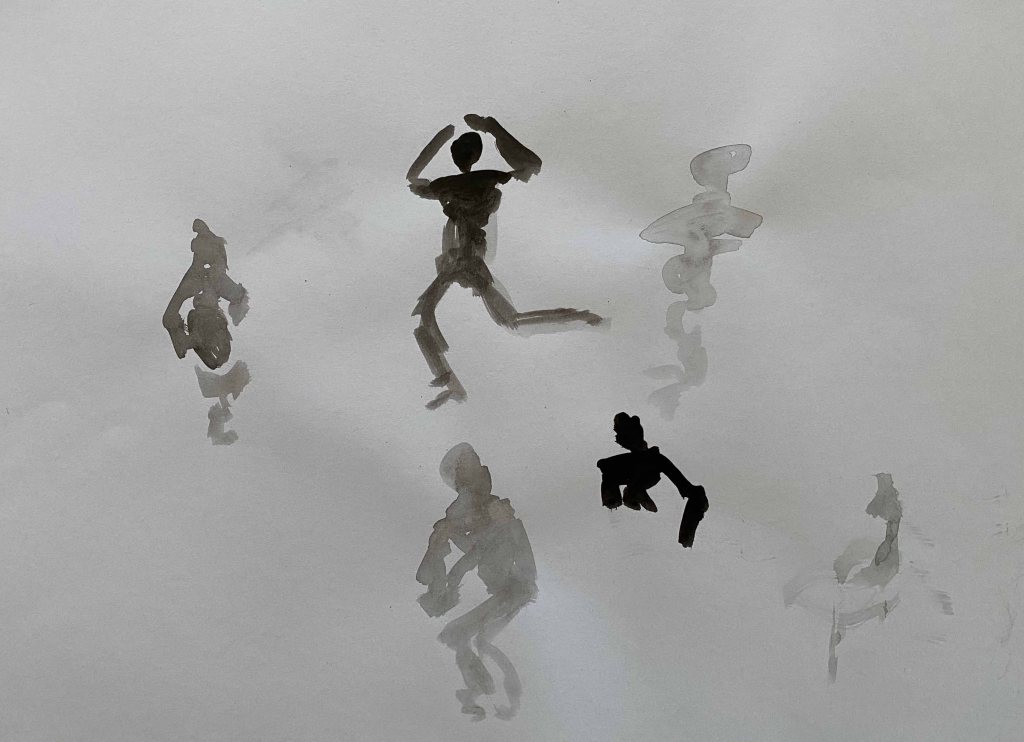
I think these drawings capture that there is movement and many figures, but it is really not clear what is happening.
We decide to change for Ingmar Bergman’s movie “The seventh sail” instead, as it is black and white and moves much slower, even freezes at times on a scene.
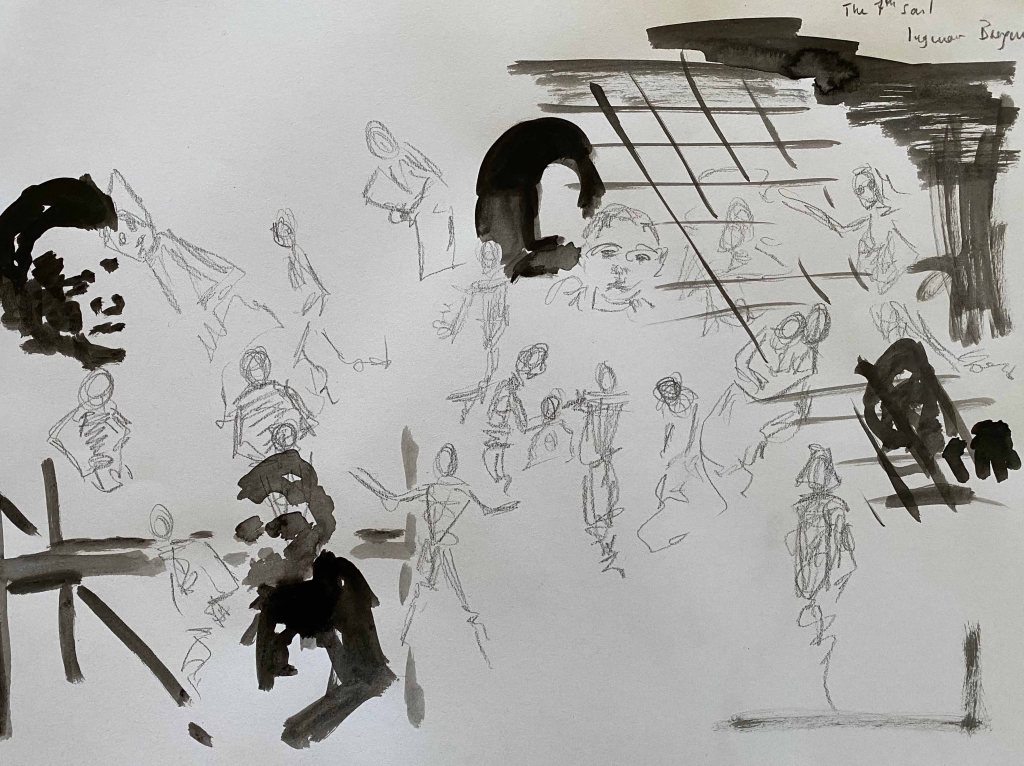

I mix pencil drawings with Indian ink with a brush to use different strength of line. Knowing the movie, you can pick out some of the themes of it in the drawing, but it is still quite disappointing as a result.
Some days later, I invite my friend and aerial dancer Rita to participate in a performance we create for the Artists’ book (blog post coming up).
She loves to dance, and I roll out a long piece of a paper roll on the floor (approx 90×300 cm) to capture her movements.
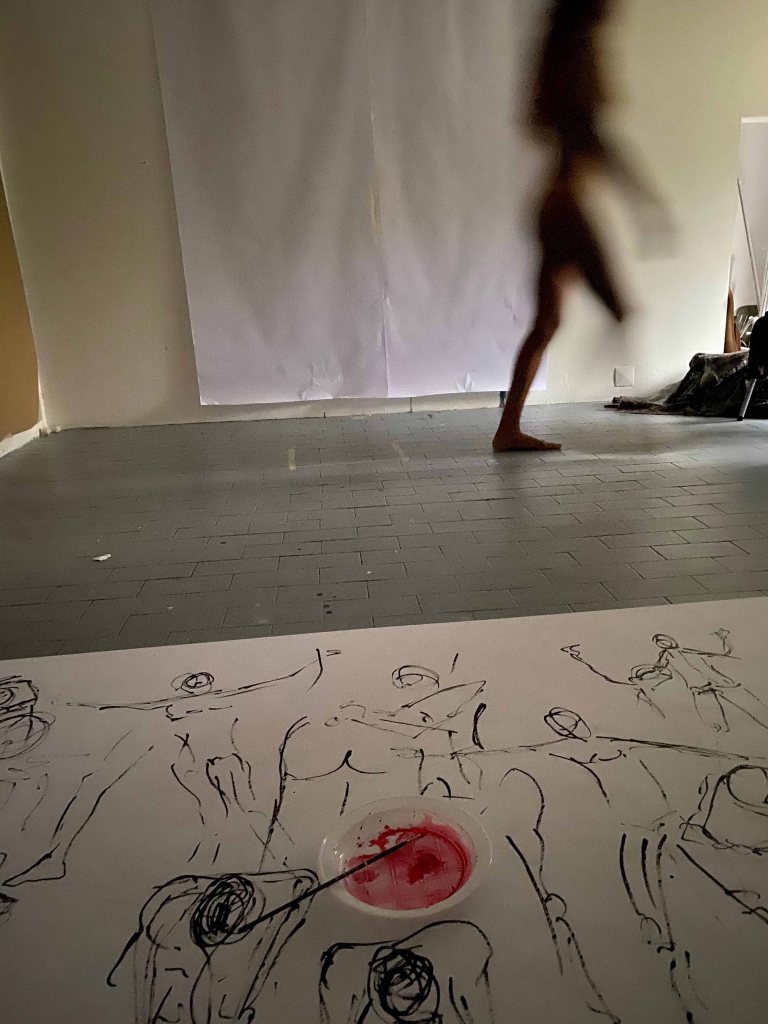
I start with black Indian ink and a thin brush. The Indian ink allows me to make very quick and fluid marks, it feels ideal for this type of very quick drawing.
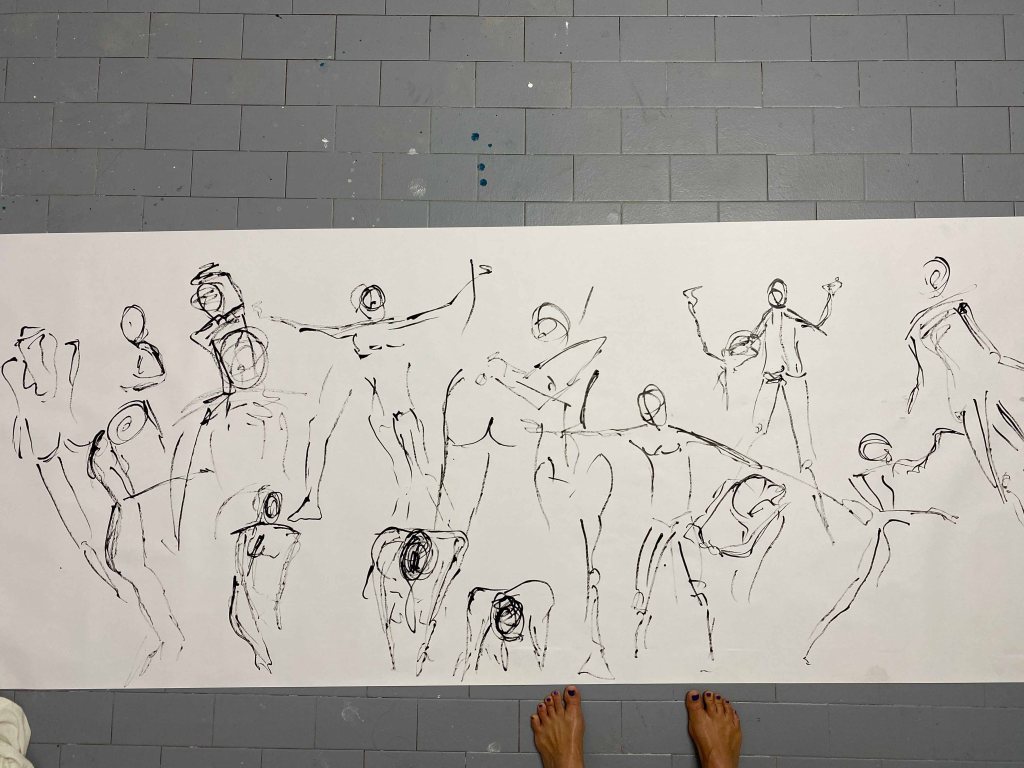
It must be many an artists dream to have a model as perfect as Rita dancing for the drawing and I am frustrated at not being able to capture this better.
For a second round, I decide to try with red Carmin acrylics, and a thin brush.
The acrylics are more resistant, even well diluted and I find I have to dip my brush much more often. Ink is more suitable for these very quick movements.
This is the final drawing:
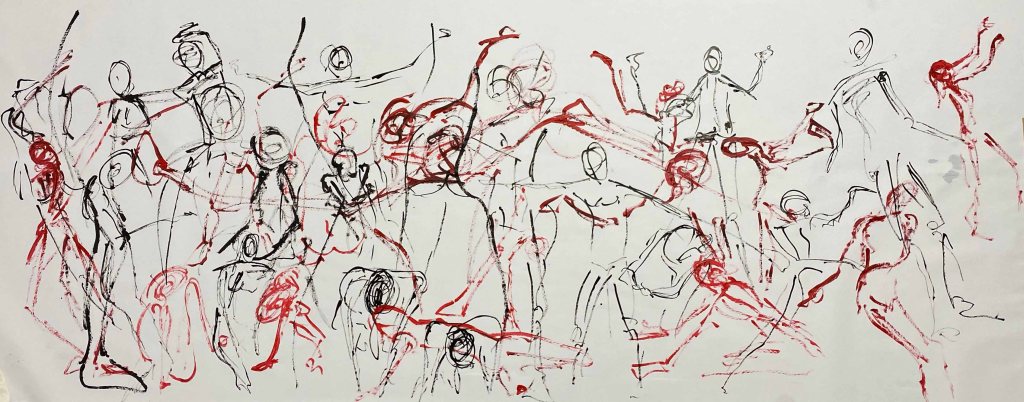
I think you can definitely feel movement and dance and it is a very dynamic drawing. It would require a lot more of practice to capture the beauty of the movements more precisely though. I am glad that I worked on such a big paper as it made my own movements more free. Ideally I should have worked on a vertical paper though (easel) and not on the ground, to avoid looking up and down all the time.
Drawing the moving figure is definitely something I would like to learn better, so: to be continued.
 Clara's Drawing 2