D2 Course manual:
“Aim: Artists’ books can be anything from a concertina fold to a professionally bound volume or an old textbook with sheets stuck in.
Research artists’ books as a form of artistic practice. Hans Peter Feldmann, Wolfgang Tillmans, Sol de Witt, Eileen Hogan and Arnaud Desjardin are just some of the artists who have worked in this way. The Chelsea School of Art has a collection of about 3,500 artists’ books established by Clive Philpott, an expert on the subject. The collection includes concrete poetry, European and American conceptual works and contemporary British artists.
Review your research and, perhaps taking an idea from your existing sketchbook work, create an artist’s book about something which elapses over time.“
RESEARCH: Artist’s books as a form of artistic practice
Hans Peter Feldmann
Hans- Peter Feldmann descibes himself as a compulsive collector of images and everyday objects, rather than an artist. As a collector of images- the bookform lends itself to cataloguing and viewing the pieces. He started presenting series of images in self-made books from 1968. He collects photographs or found images of a seemingly banal subject- like all the clothes of one woman or the views from hotel rooms, which he then elevates into a new experience.
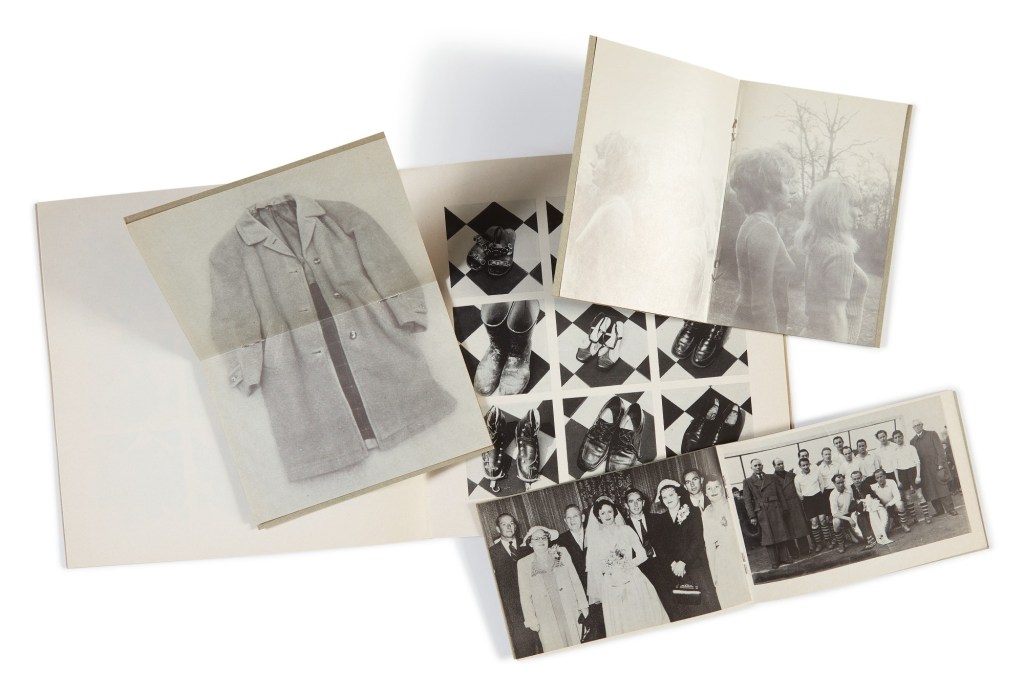
(Image from: Sotheby’s. 2020. Sotheby’s . [Online]. [11 November 2020]. Available from: https://www.sothebys.com/en/buy/auction/2019/contemporary-prints-and-multiples-online/hans-peter-feldmann-untitled-bilder )
His work “100 years” which is a series of portraits of people from 8 months to 100 years old is one of many works dealing with time. Another is a photoseries of a medal taken with different shutter times.
I like the simplicity of his photobooks. He deliberately chooses a very cheap and “self made” technique and look and then simply fotocopied them to make more copies. This simplicity lends itself to the subjects, which are also “simple” things, everyday objects that receive a new value and quality by being looked at differently, even when the format is so unpretentious.
Wolfgang Tillmanns
Wolfgang Tillmanns is most renowned as a photographer, and came to fame with pictures documenting different social aspects of society, as well as enlarged scenes that become abstract. He was the first photographer to win the Turner prize in 2000. Since then, he also works with rap music, video and performance.
Tillmann often groups his series into artist’s books.
His latest book is “Today is the first day, a 512pages artist’s book published this year.
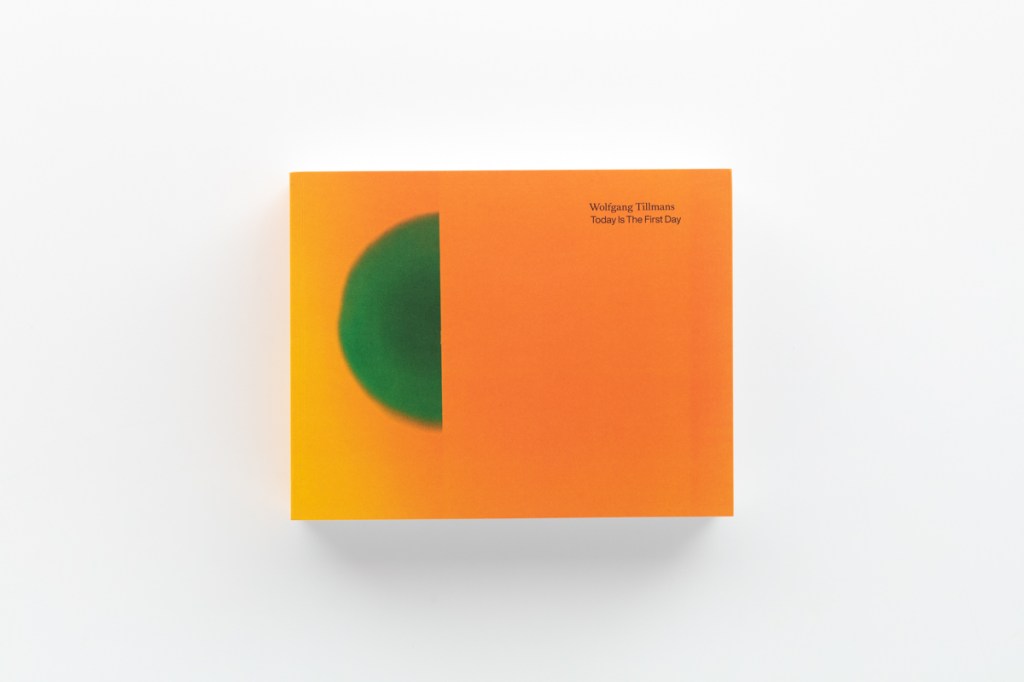
(Images from: Tillmans, W. 2020. Wolfgang Tillmanns. [Online]. [11 November 2020]. Available from: https://tillmans.co.uk/)
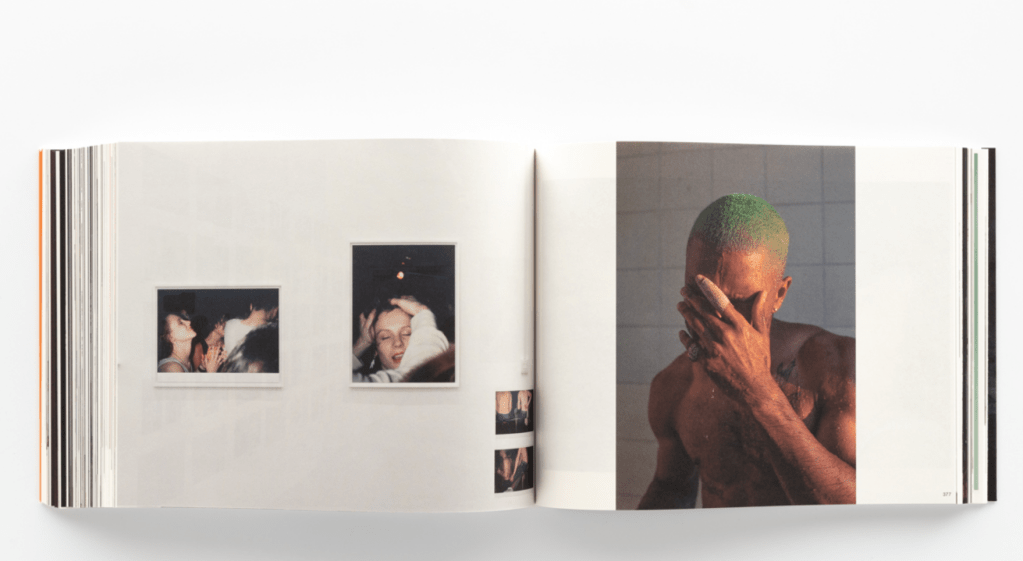
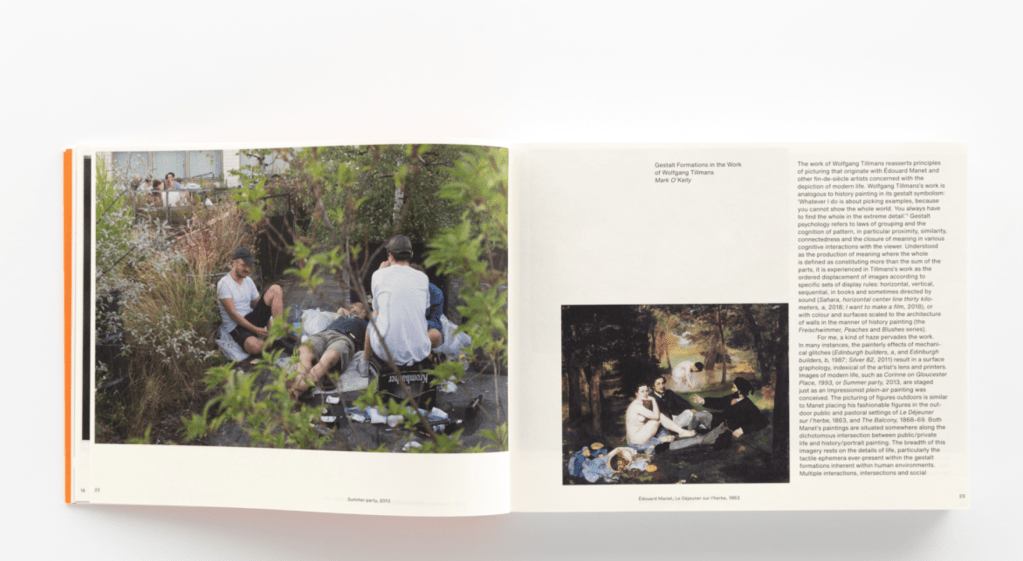
On Tillmanns website http://www.tillmanns.co.uk, many of his books are available to leaf through, which also gives good insights to the layout. The images are accompanied by various texts, and exhibition texts from different authors. His images are often very direct and striking and condensed into a book they show an overwhelming variety of scenes and angles. Leafing through them has made me appreciate Tillmann’s work much better. Sometimes seeing the same photo blown up to a huge format in an exhibition produces a quick effect, but it can stay at the level of a quick shock. The book form shows more of a genuine research quality and I would almost say tenderness for the subjects explored.
SOL LE WITT
The American artist Sol LeWitt worked in sculptures and massive wall drawings, but his interest in series also brought him to produce more than 50 artist’s books. He was one of the innovators of developing the artist’s book as an art form and was a co founder of Printed Matter- one of the first organizations dedicated to creating and distributing artists’ books.
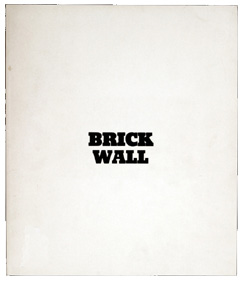
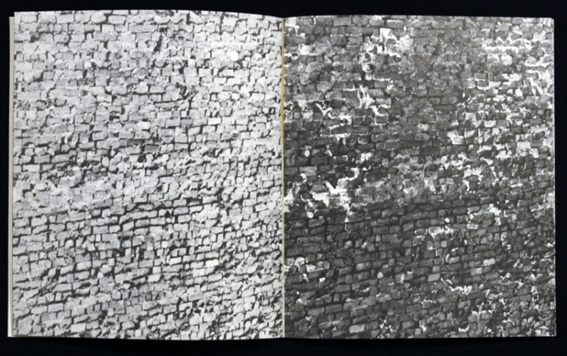
His first books, contained explorations of geometrical forms, then appeared colour and finally photography, like for example in “Brick wall” from 1977, where he photographed various wall surfaces.



(Images from: Artists. 2018. Artist’s books. [Online]. [12 November 2020]. Available from: http://artistsbooks.info/AB_Lewitt%20Sol.html)
Researching Sol Le Witts books, lead me to a fantastic website dedicated to artists books: http://www.artistsbooks.info
DIETER ROTH
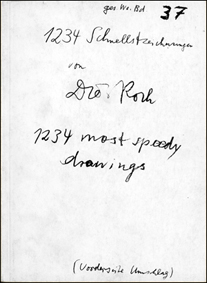
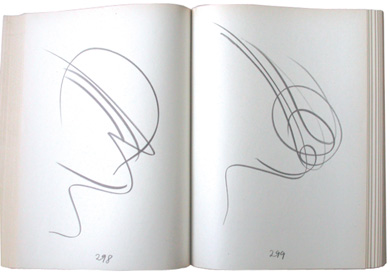
The work of Swiss artist Dieter Roth is also very centered around the book form. The two following books were published in a few hundred copies and handsigned. I like their very spontaneous and unpretentious nature, like the below book of “1234 most speedy drawings”:
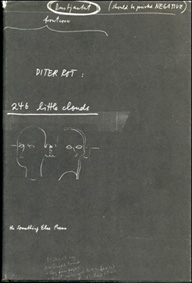
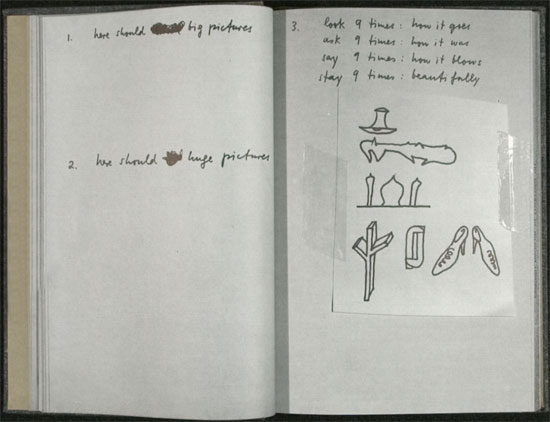
This is a little book of 246 clouds. The books exist as works in themselves, not as preparatory sketchbooks for other works.
Roth then went on to produce books with loose papers presented in different forms.
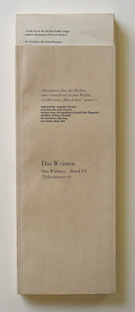
(Images from: Artists books. 2018. Artist’s books. [Online]. [12 November 2020]. Available from: http://artistsbooks.info/AB_Roth%20Dieter.html)
The books consisted of loose sheets, leaving the viewer the freedom to shuffle the pages in any order. This is an idea I am quite attracted to trying out.
The bookform took an extreme form in Roths work “Litteratur wurst” (Litterature sausage) where he minced magazine pages and drawings and stuffed them into a sausage skin. This is just to show how incredibly versatile and artist’s book can be!
TILETASTIC
For my parallel project, I am studying the deconstruction and narratives in our old house here in Portugal. One absolutely fantastic element here, is the incredible amount of different tiles used. They are not the beautiful, antique white and blue Portuguese azulejos you may think of . This house was built 35 years ago, with very peculiar taste.
An artist’s book seems the perfect format to catalogue the many tiles , before we cover them up with calming paint or change them altogether.
Then, I will use the many patterns of the tiles for new drawings, as well as backgrounds for projections with dance and performance. I am overflowing with ideas of how to project the most fantastic tiles onto my body and create shapes with movement.
The format of an artists book can serve both the purpose of cataloguing the tiles for memory, and to place them in relationship to the new drawings and photos of a more performative character.
THE TILES
I start by photographing and editing the impressive amount of different tiles in the house.
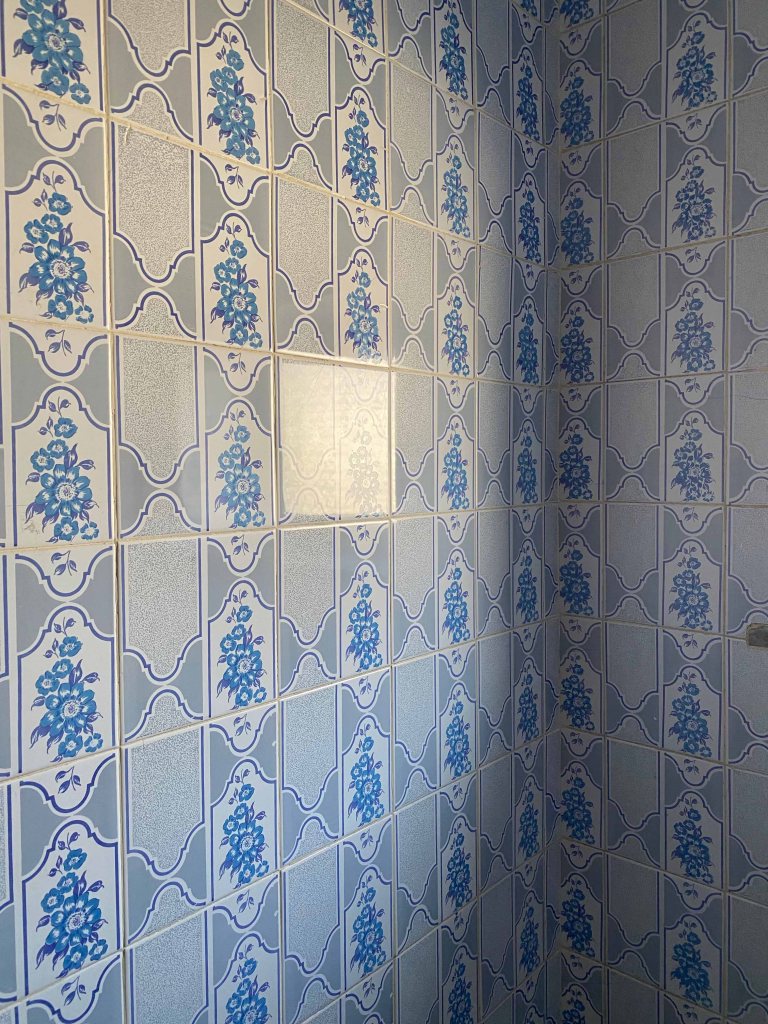
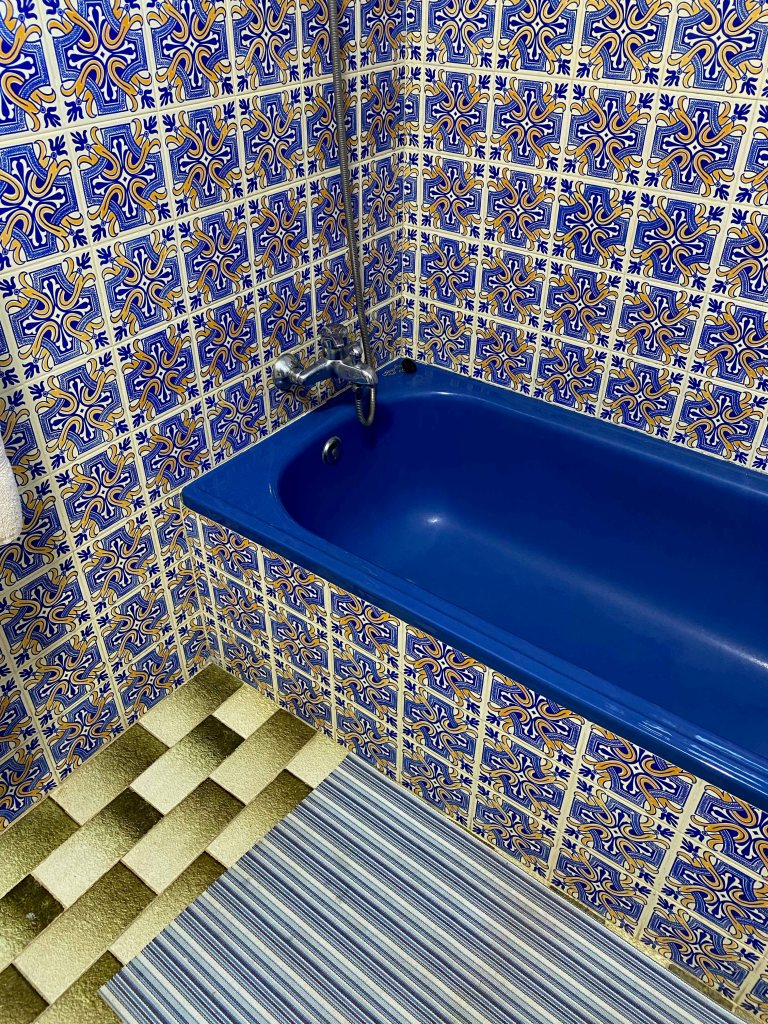
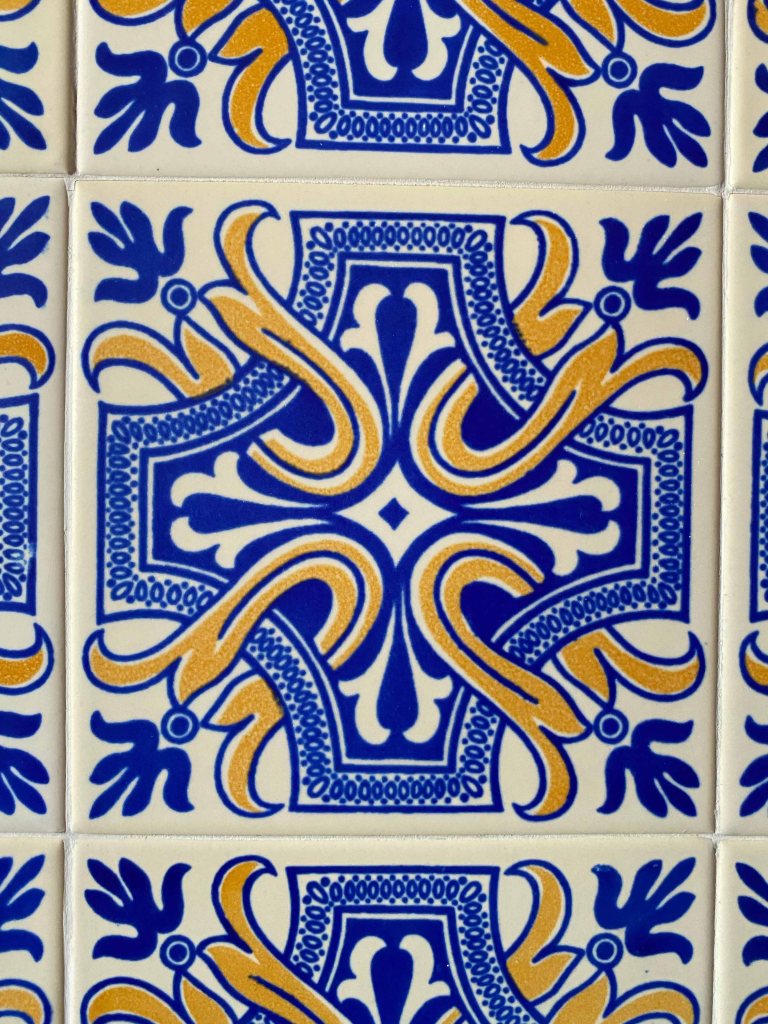
The most impressive is the bathroom:
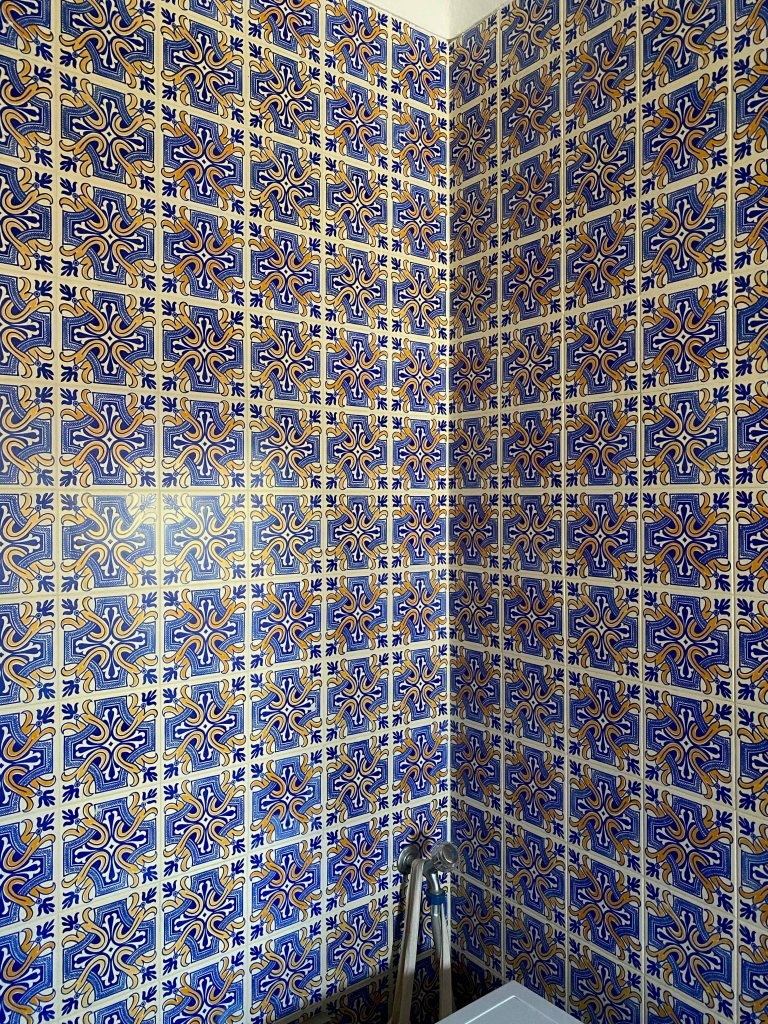
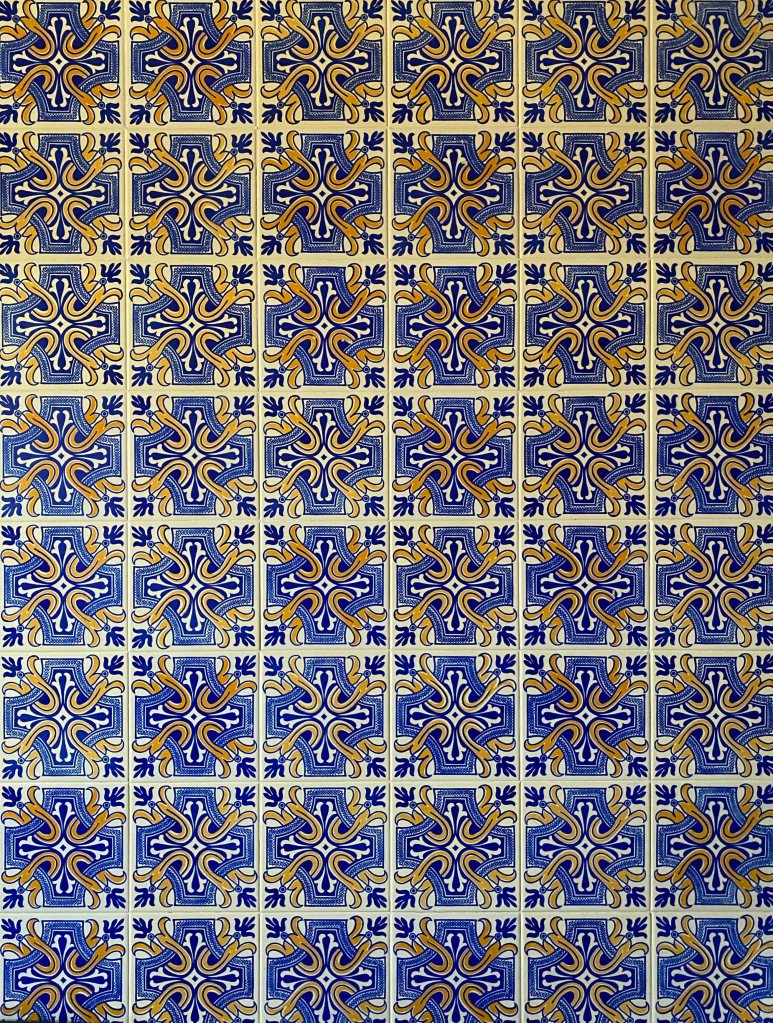
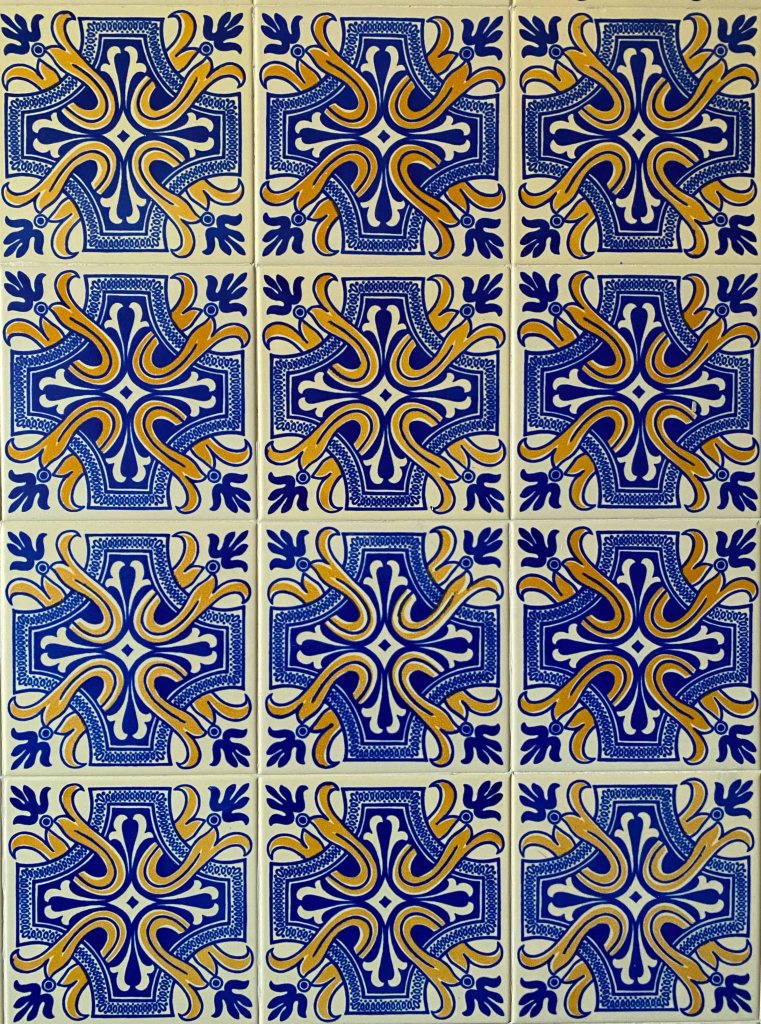
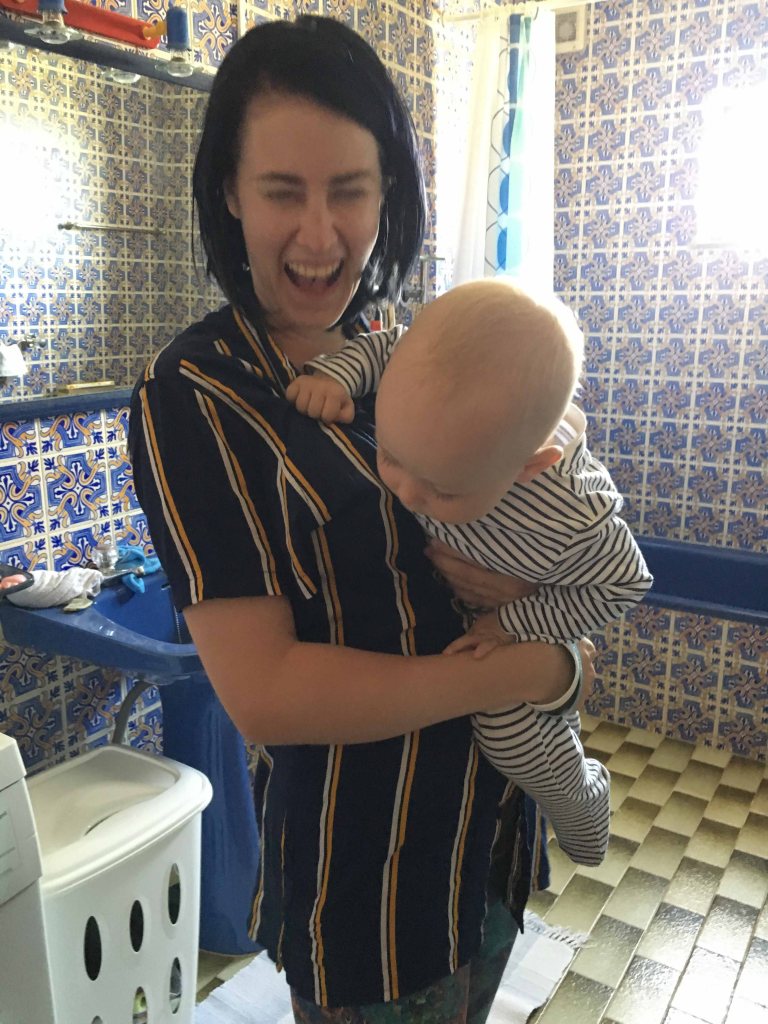
I took a precious picture of my daughter the first time she saw it:
Next must be the kitchen:
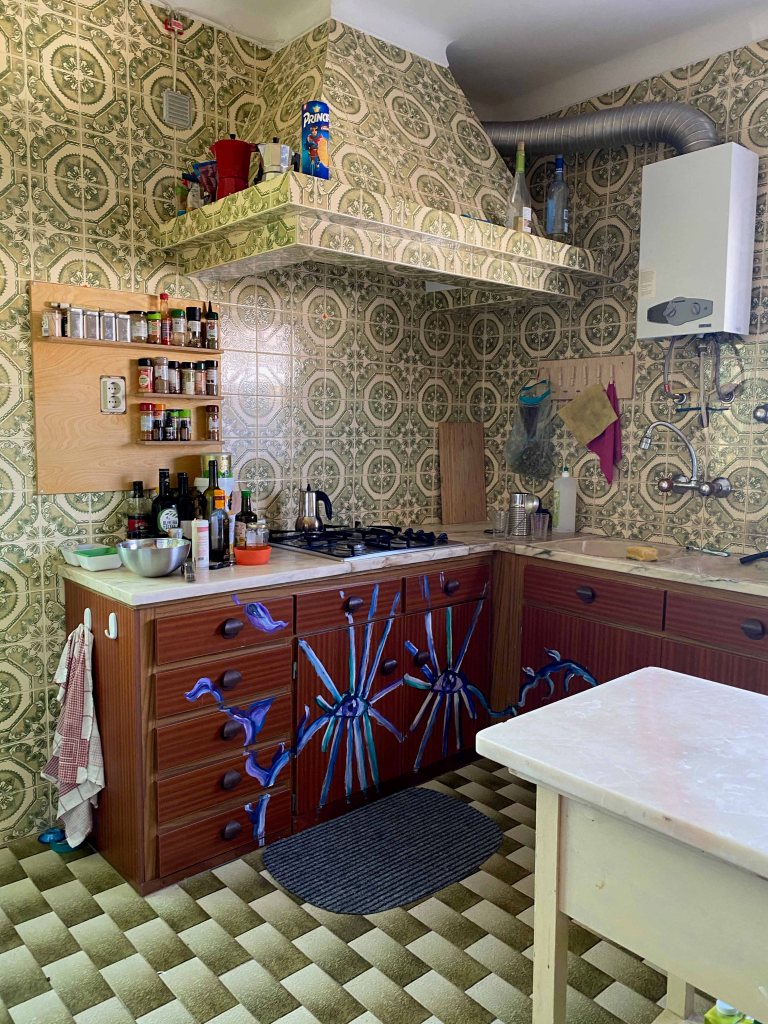
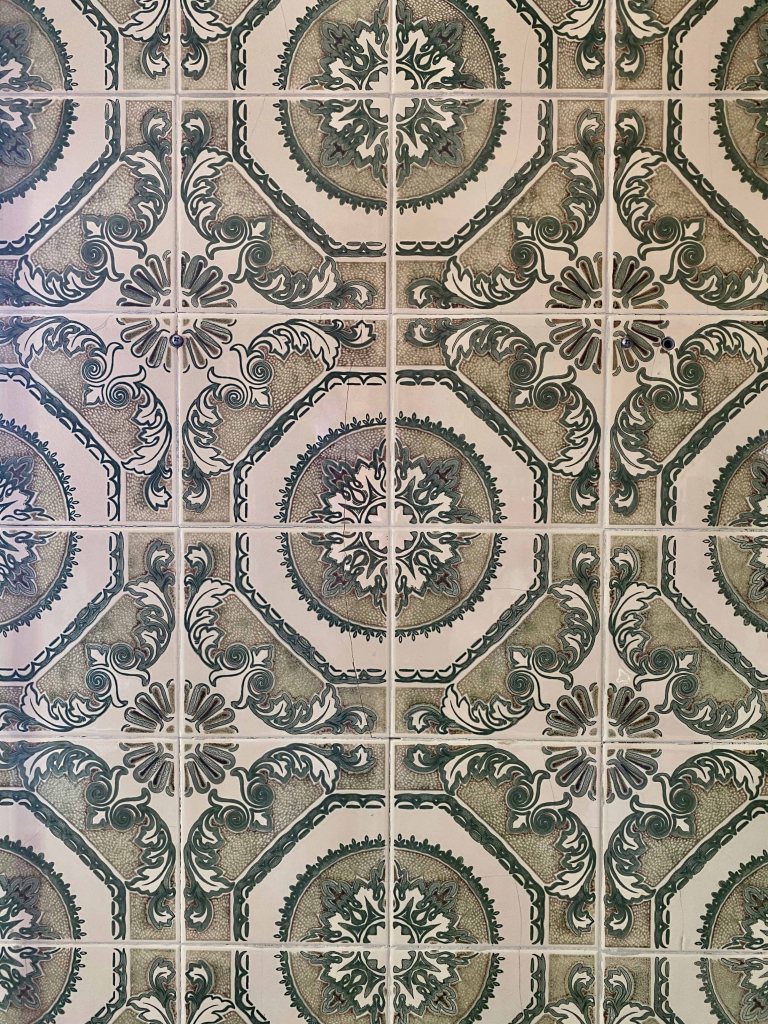
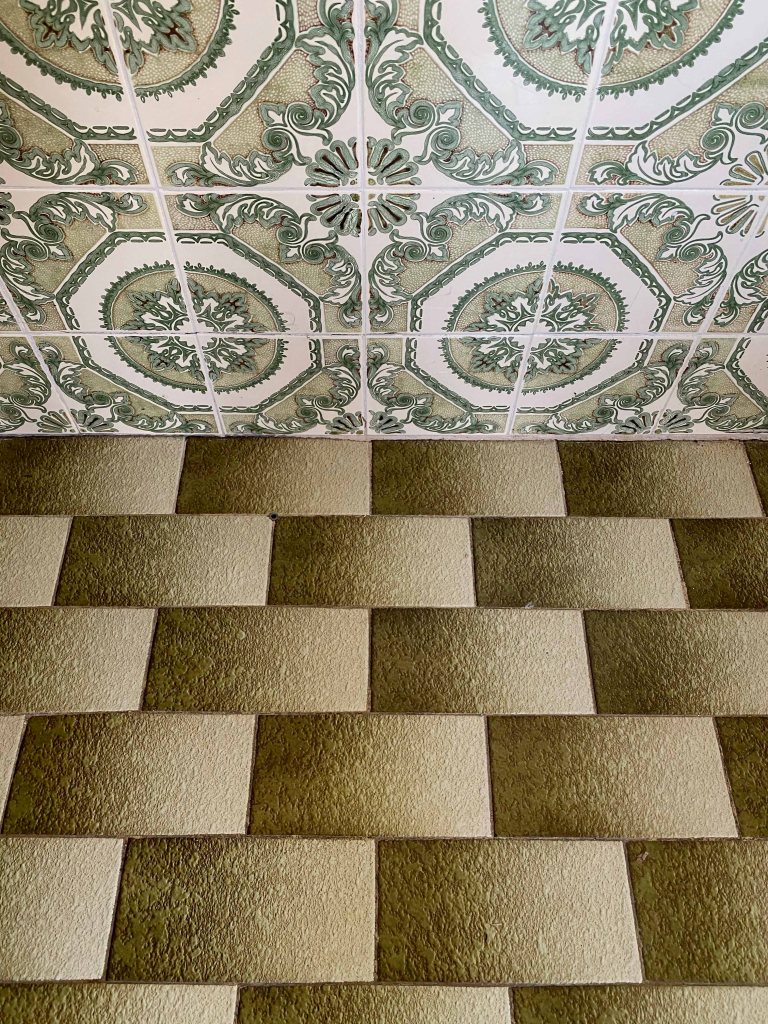
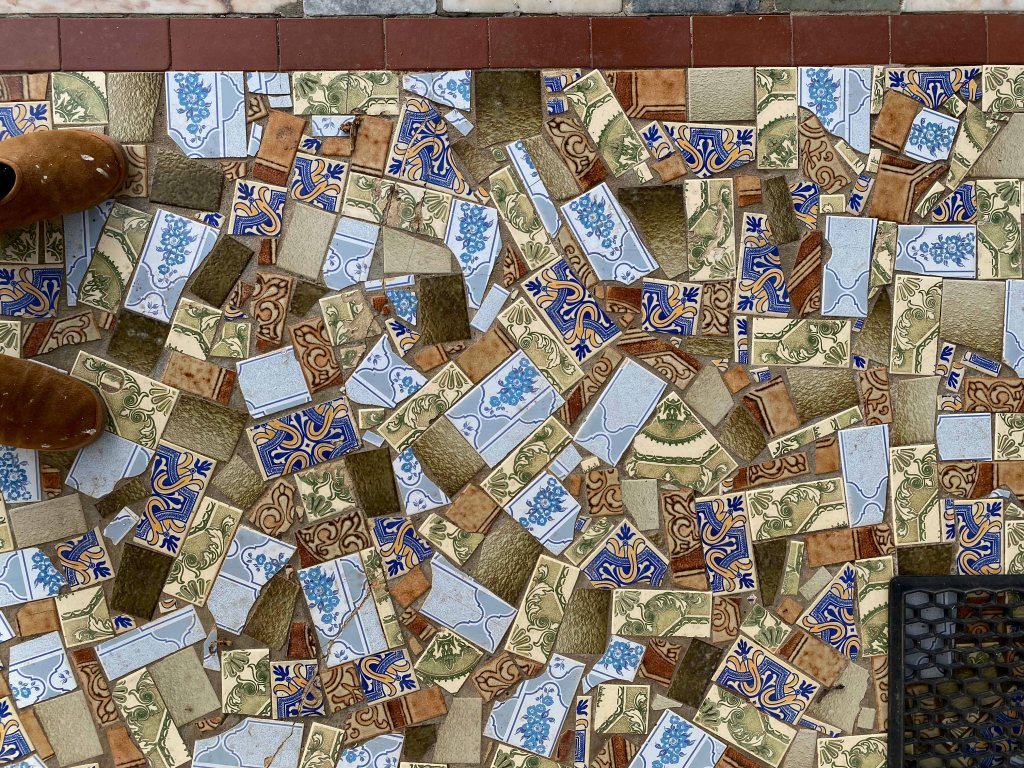
The rest of the tiles are not as spectacular per se, but fabulous in the sheer amount of them:
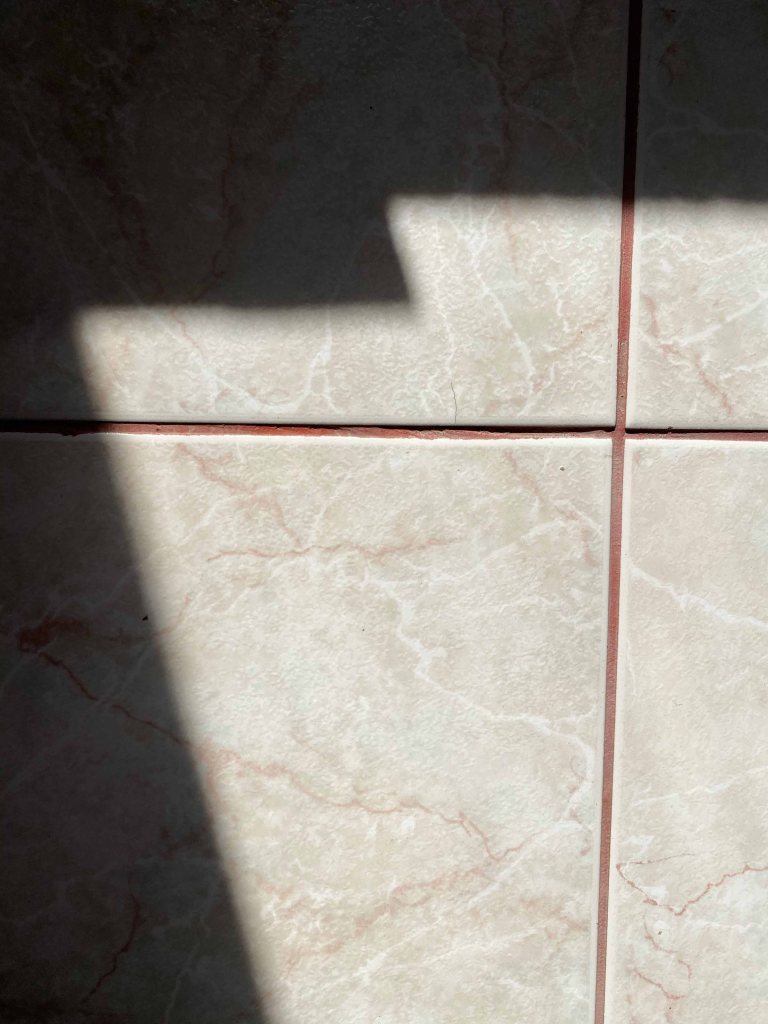
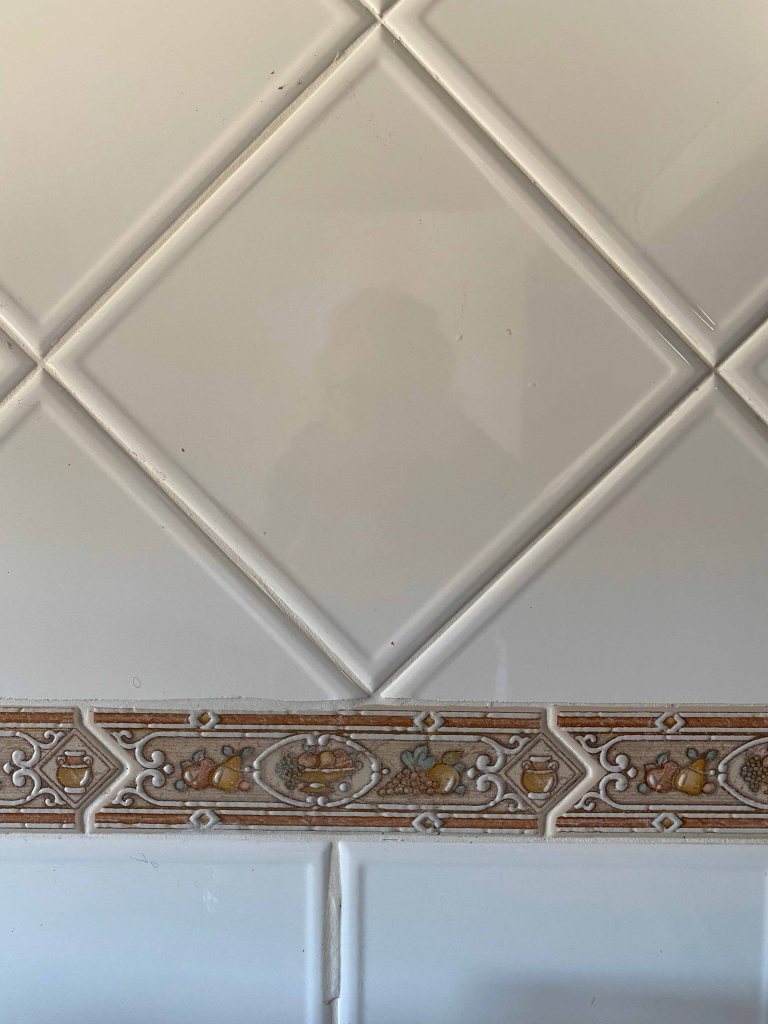
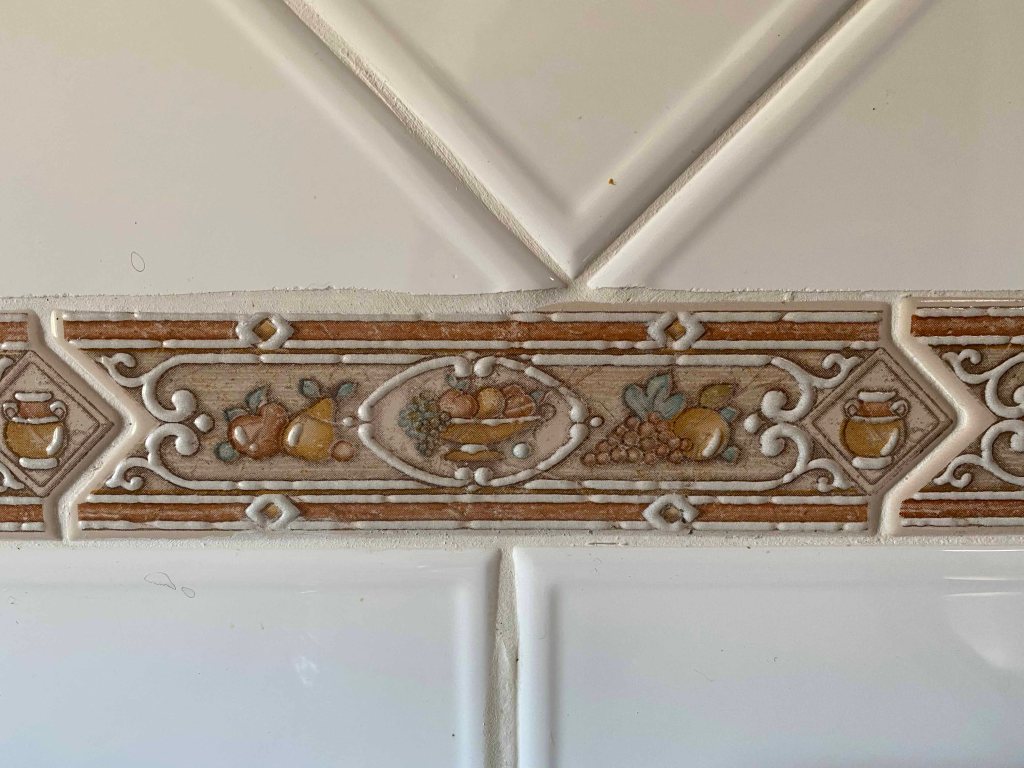
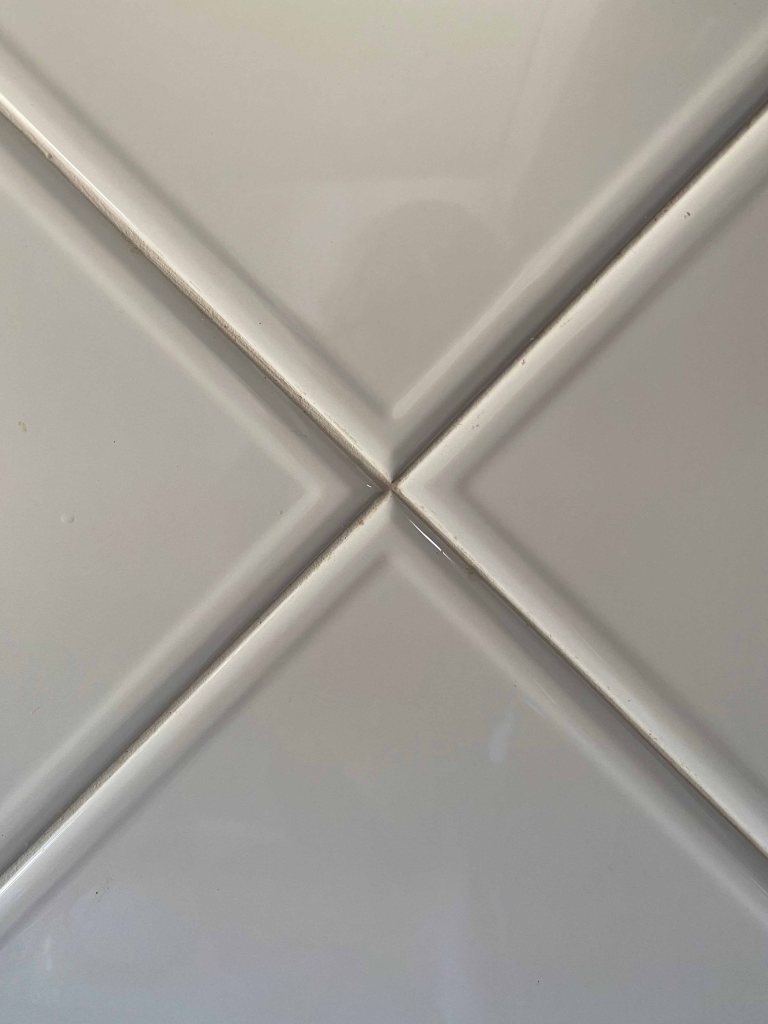
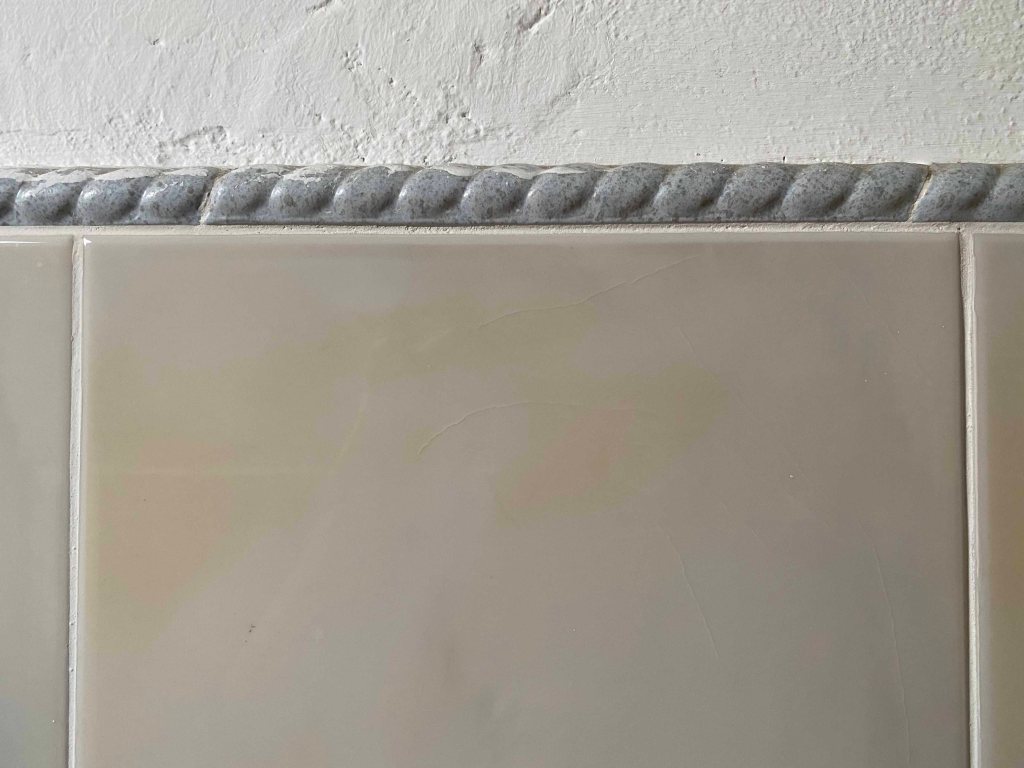
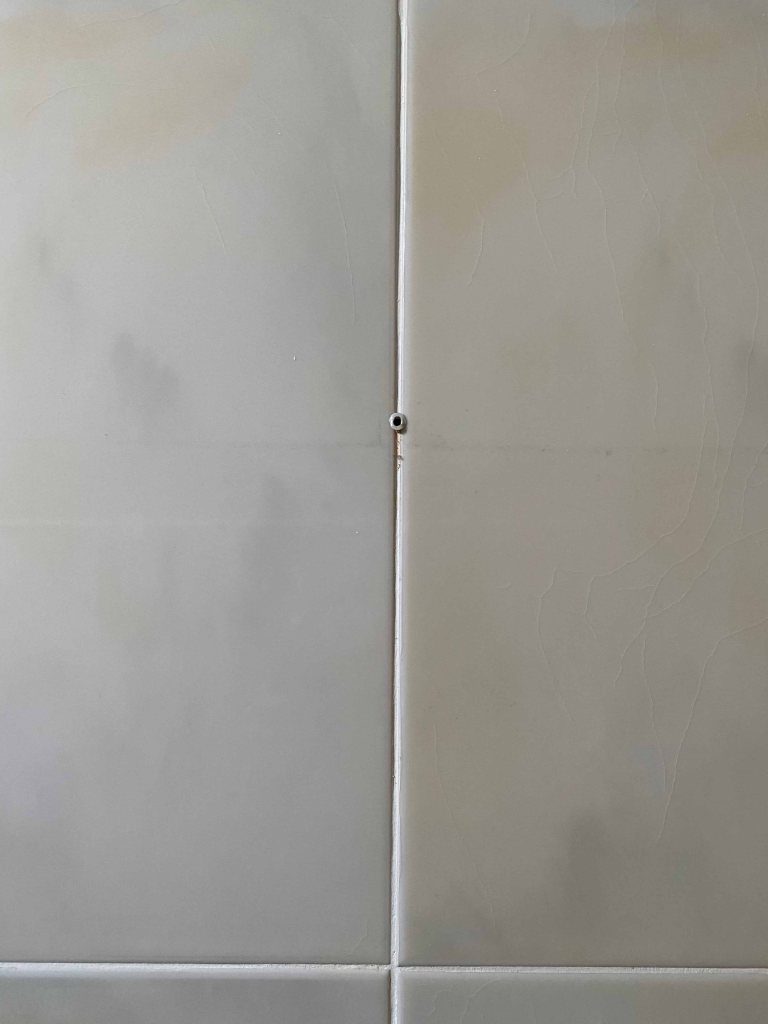

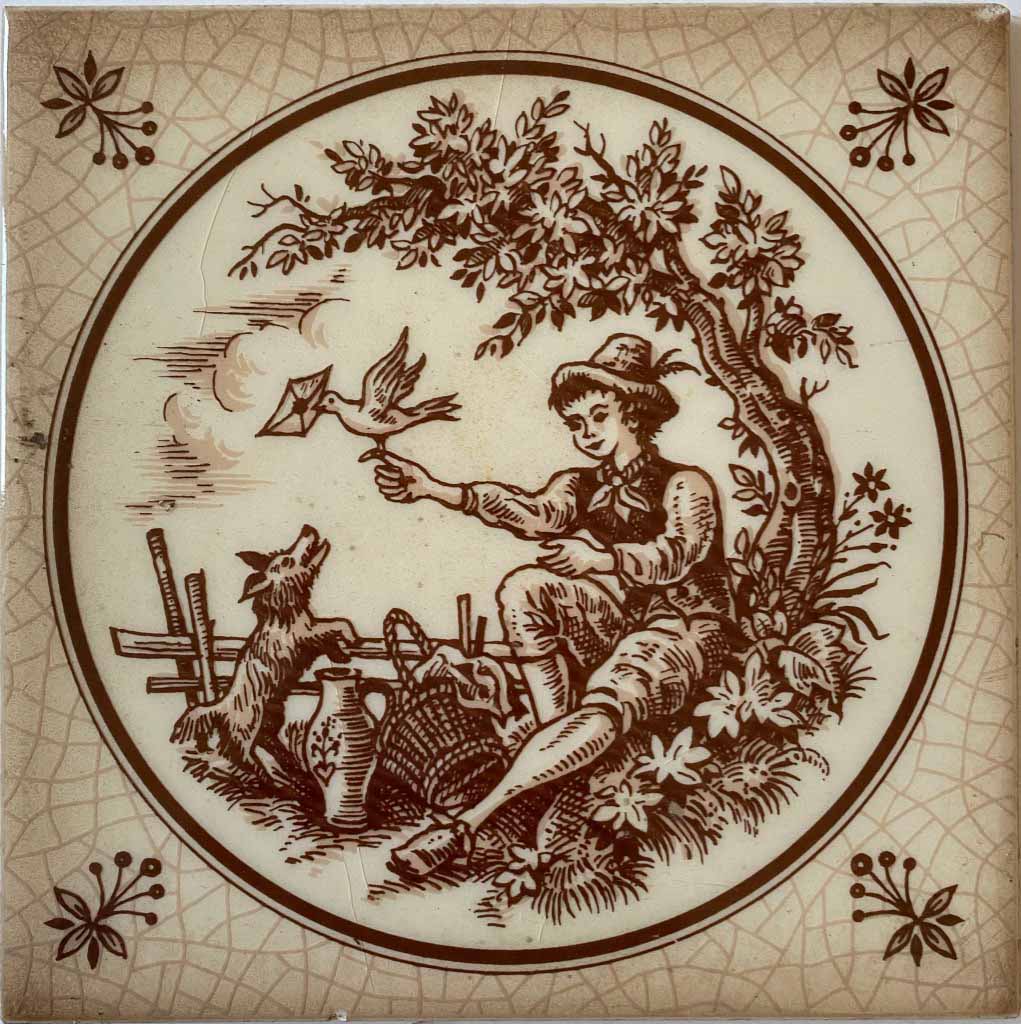
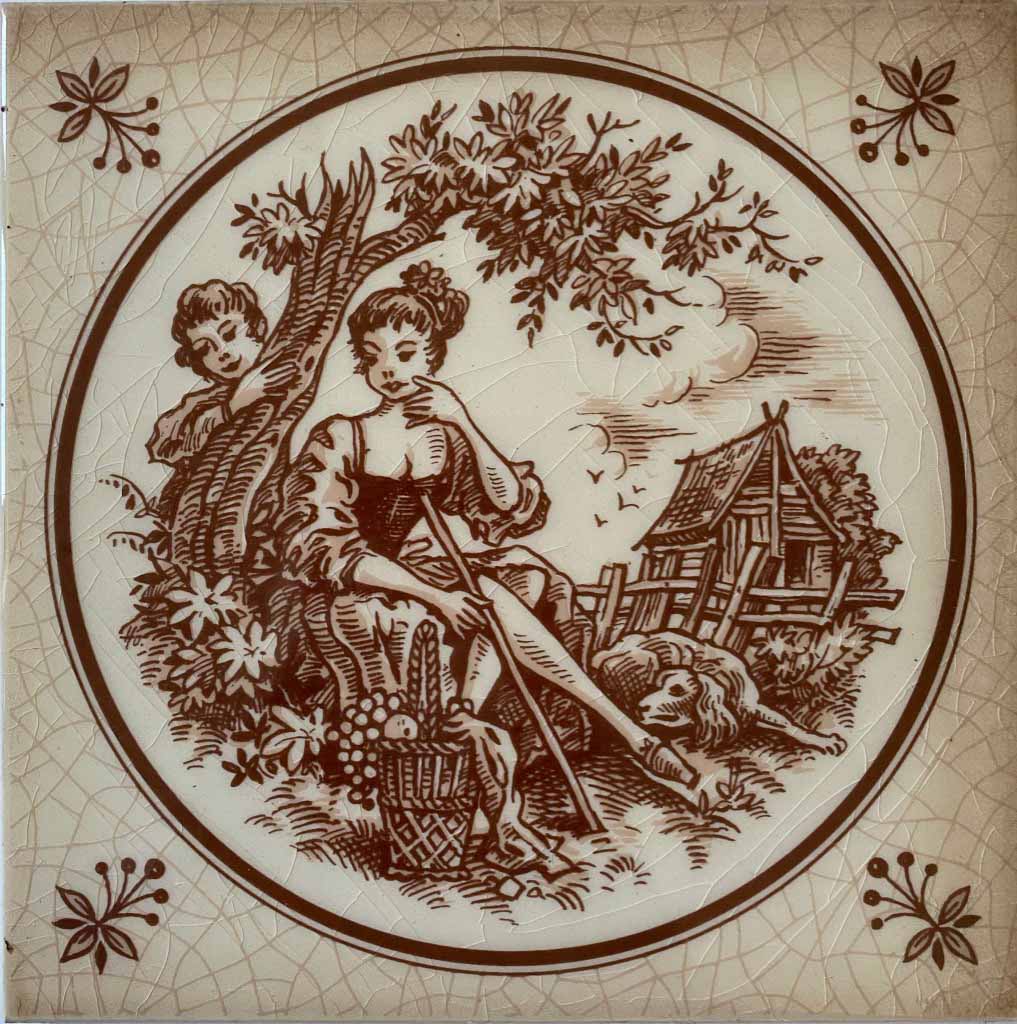
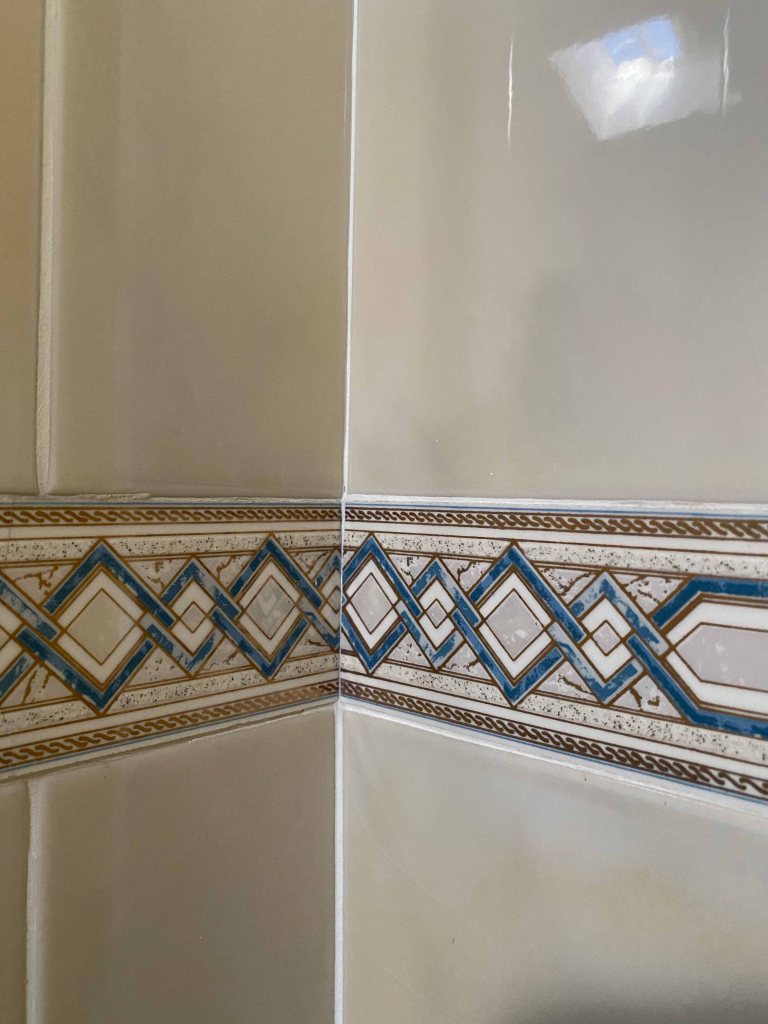
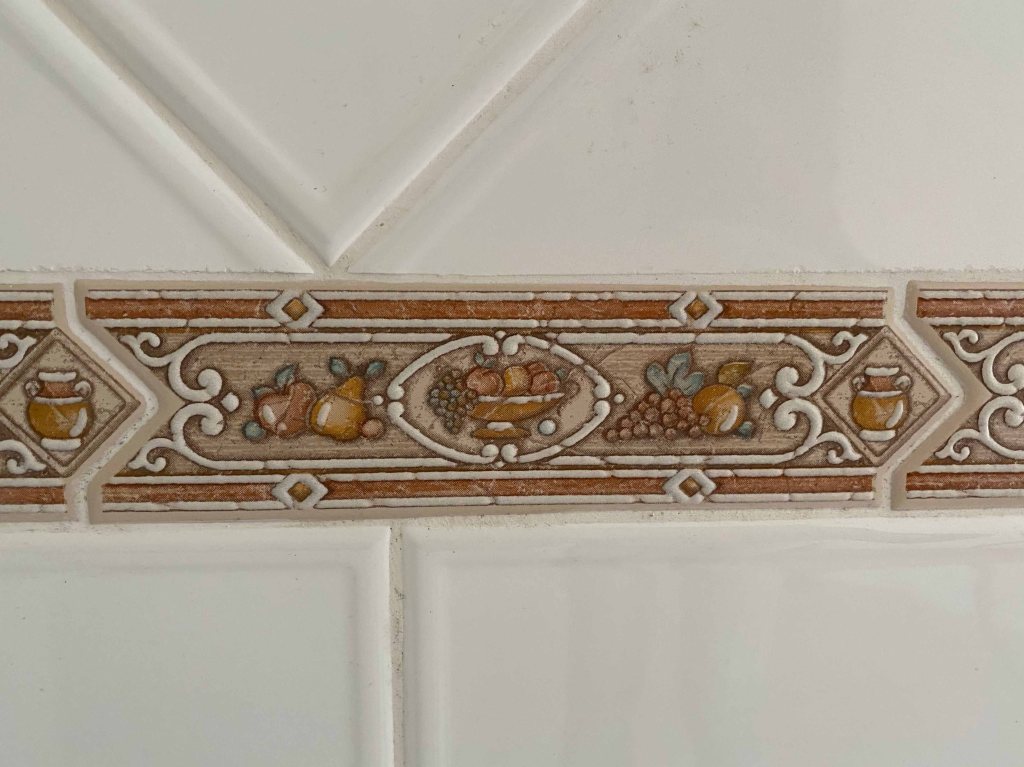
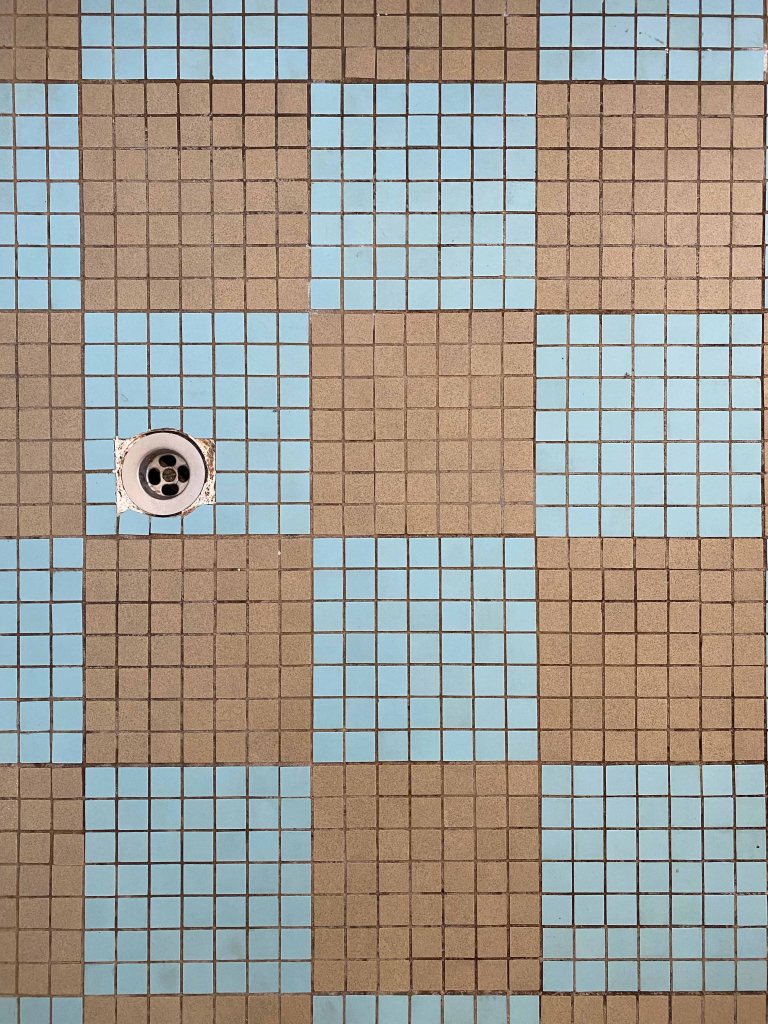
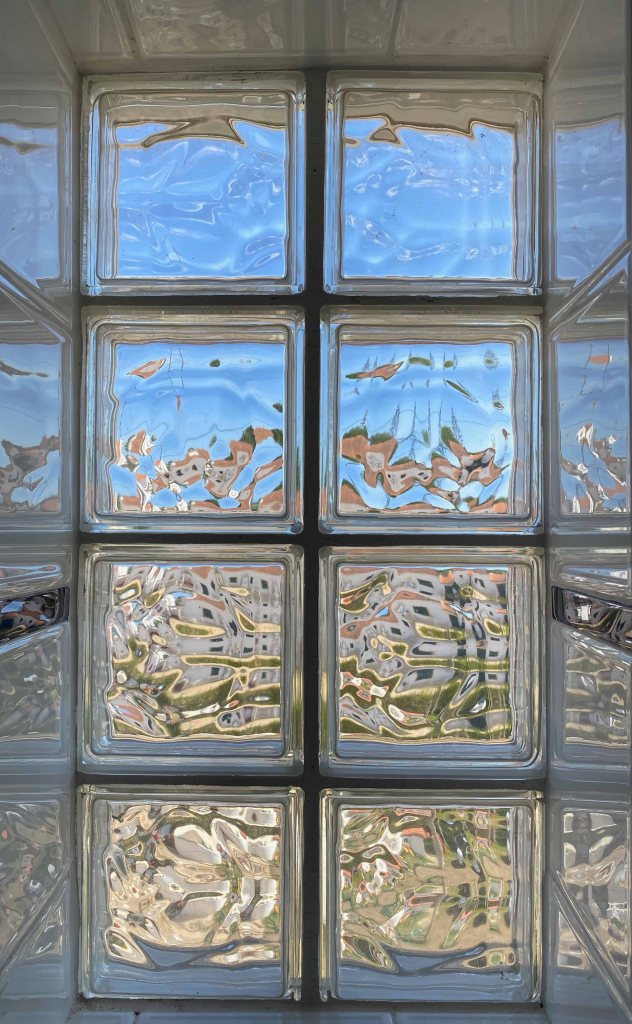
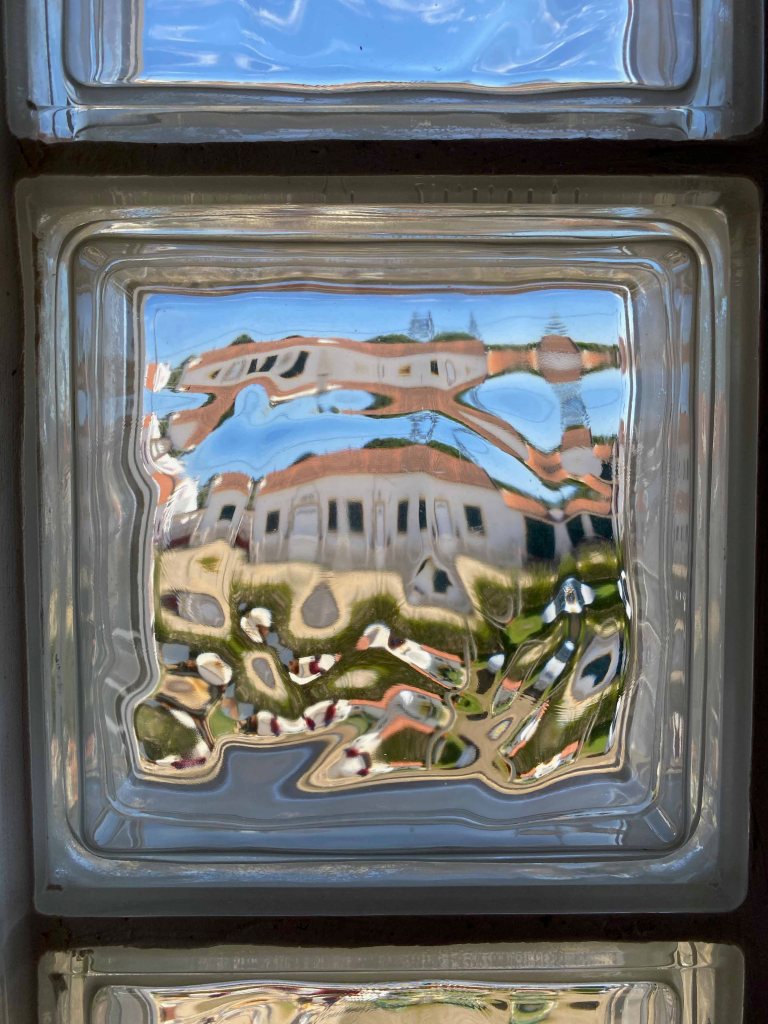

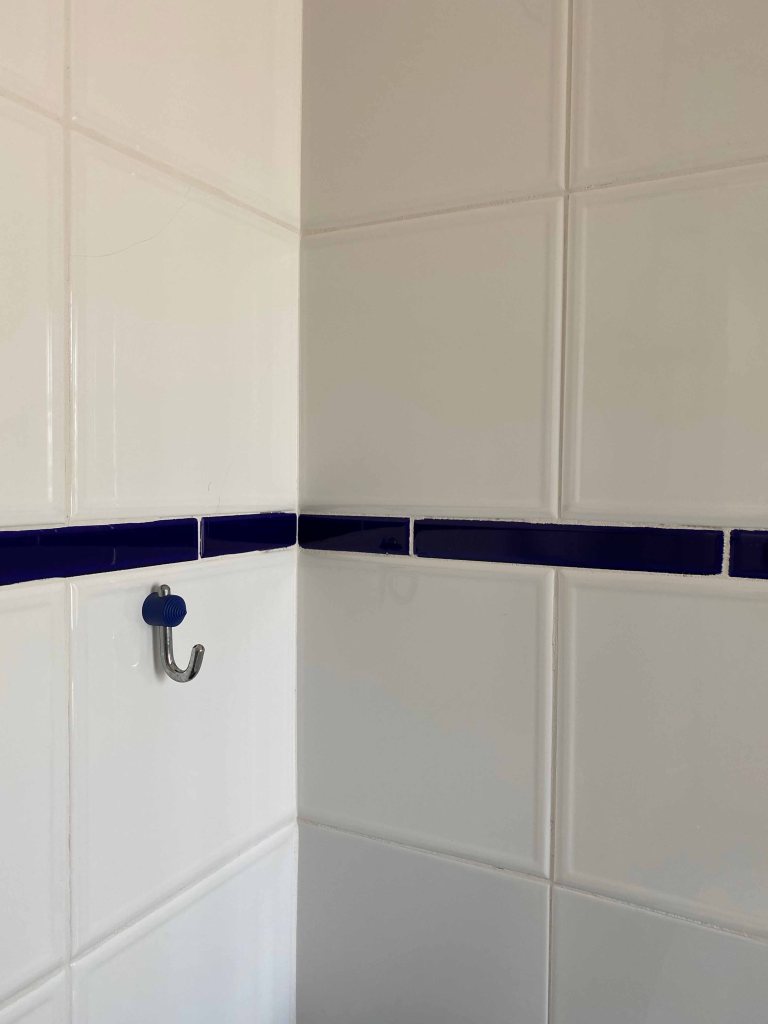
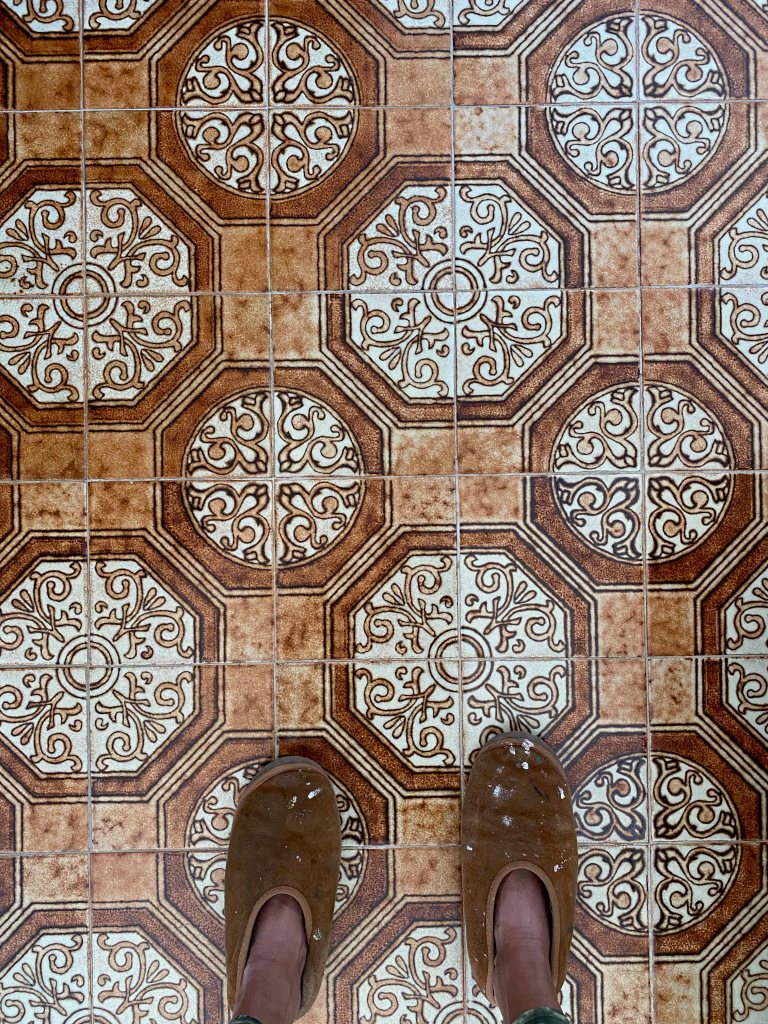
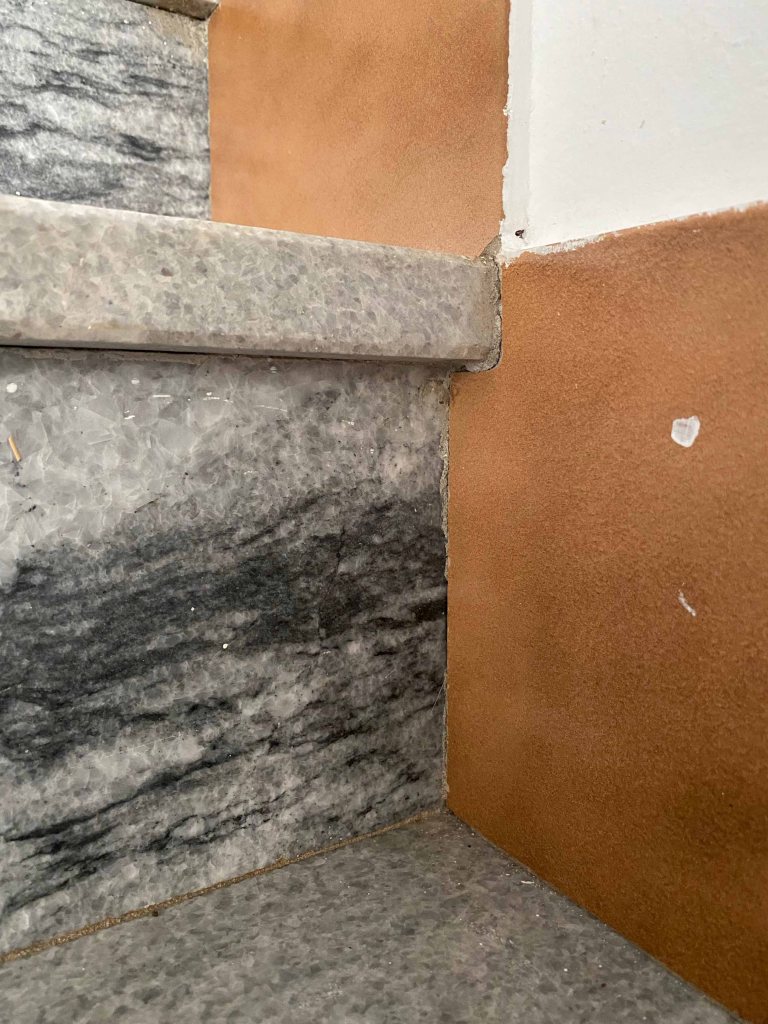
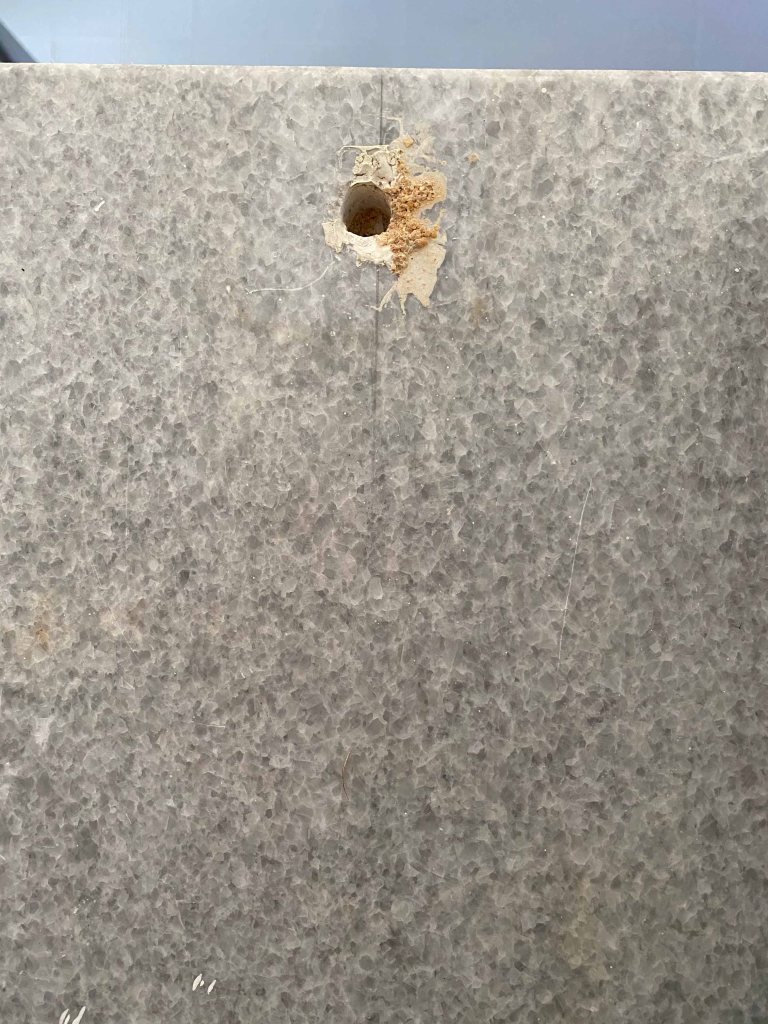
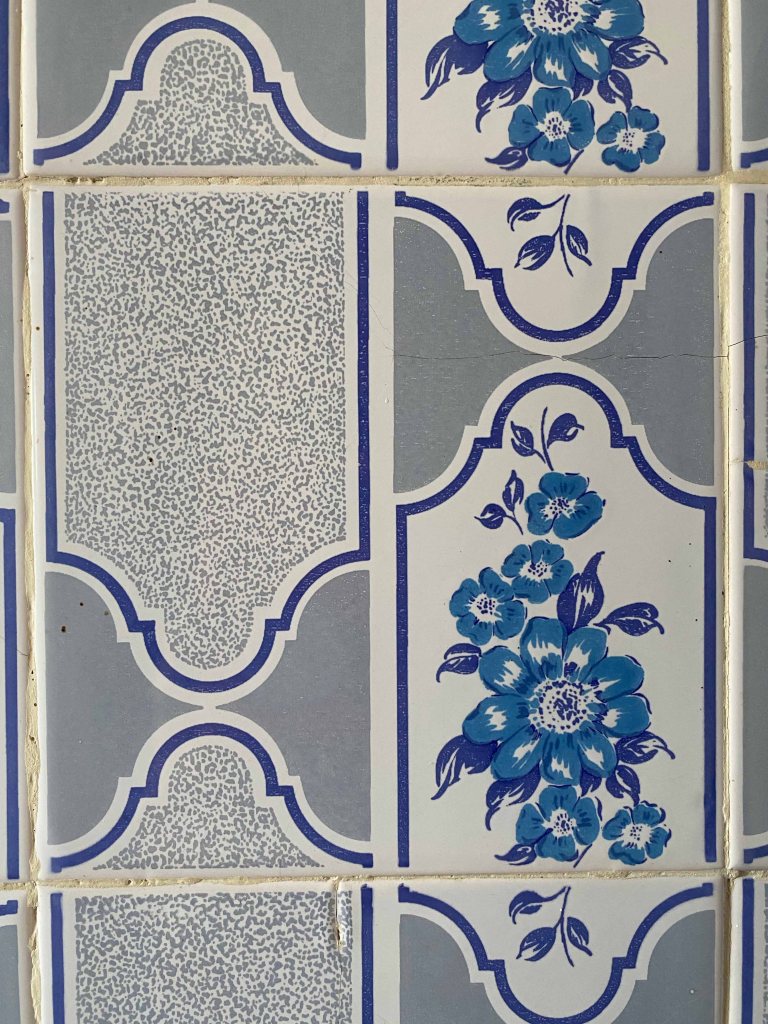
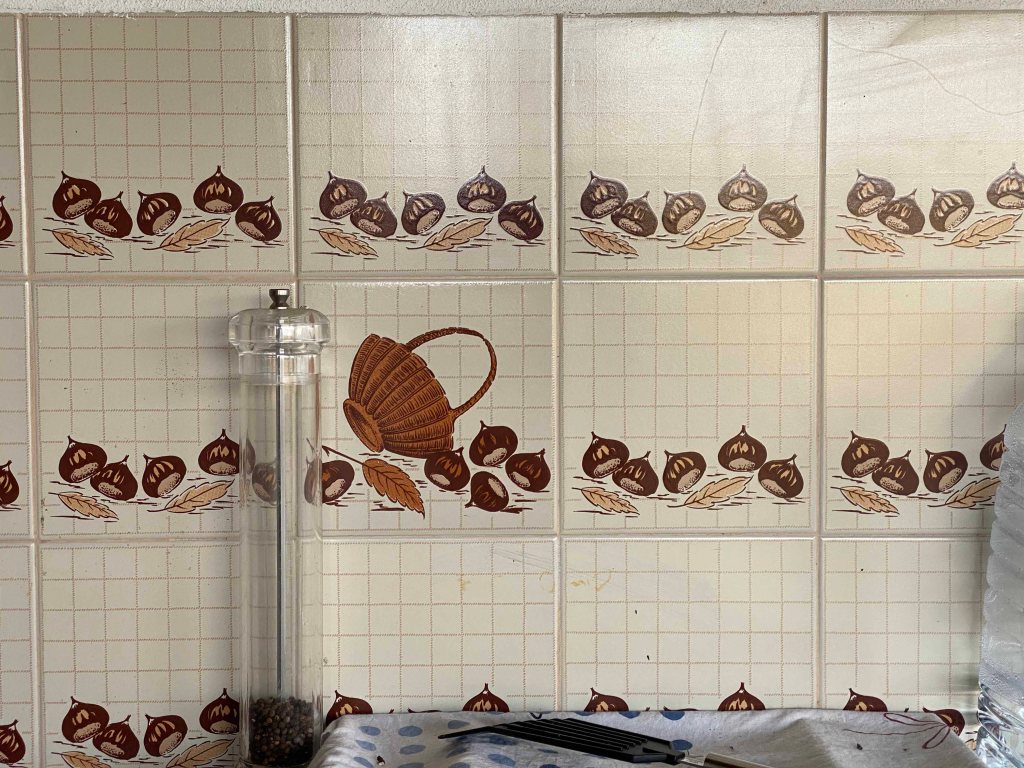

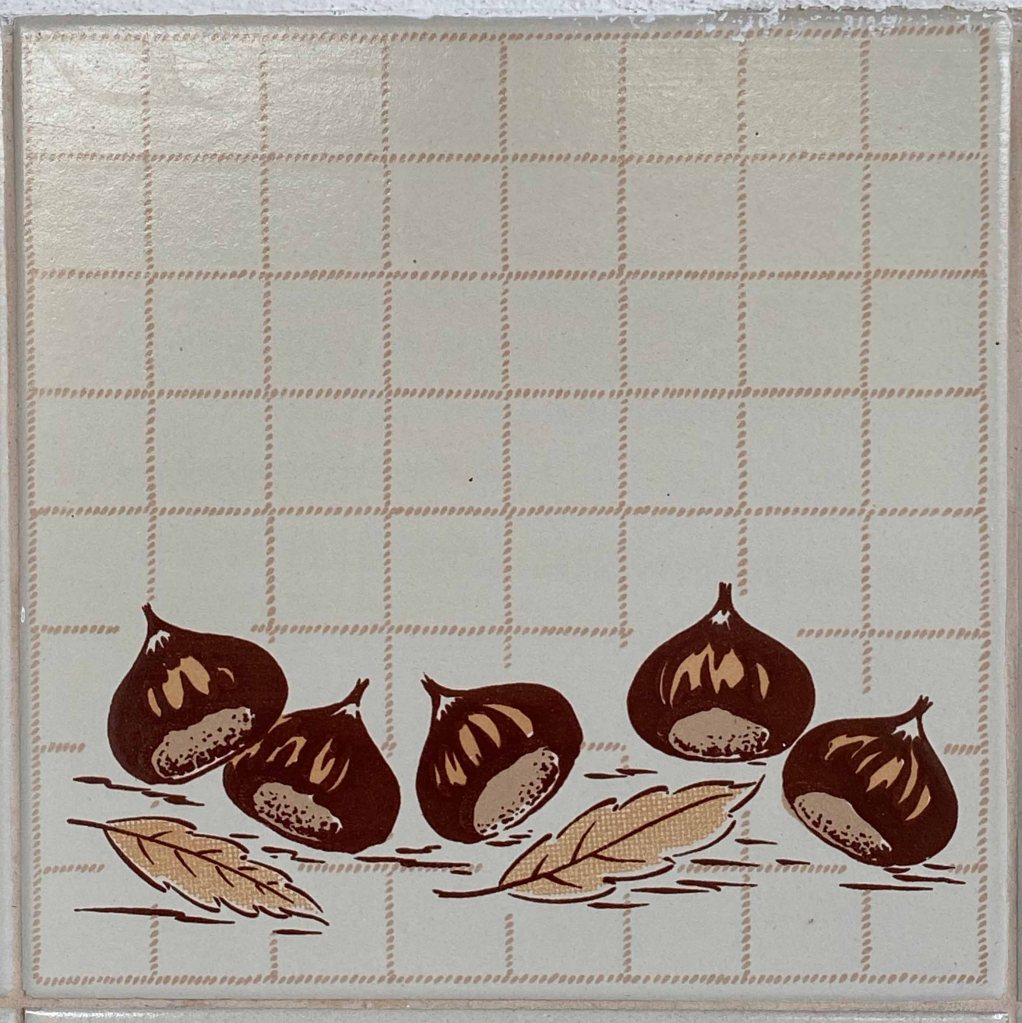
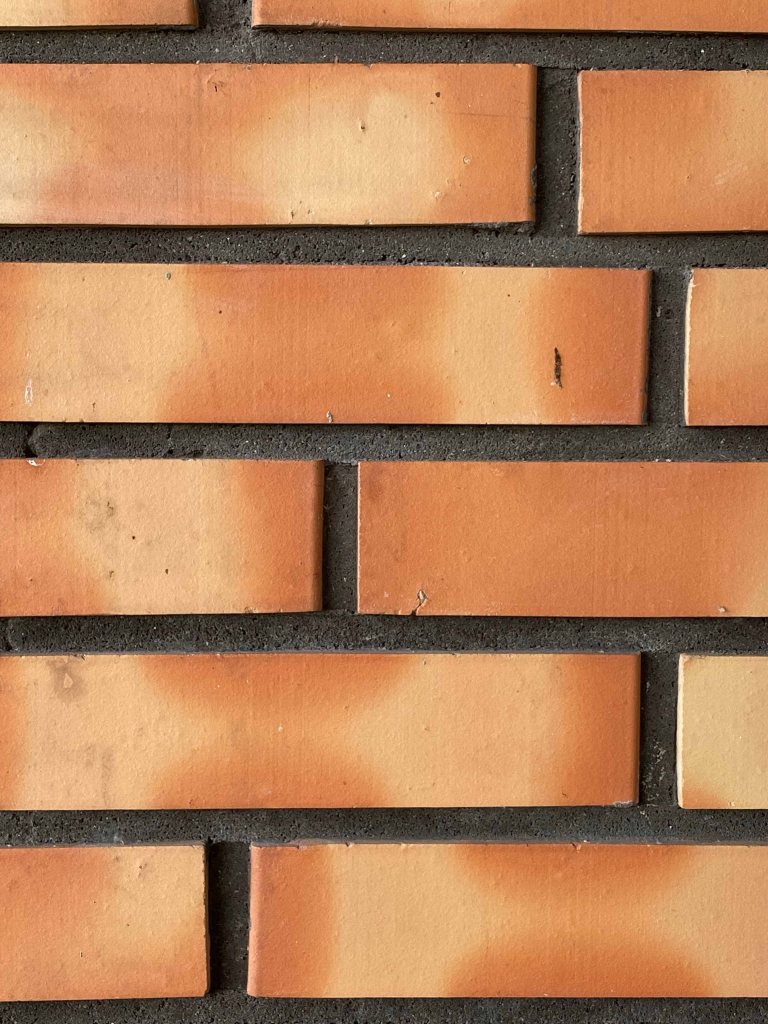
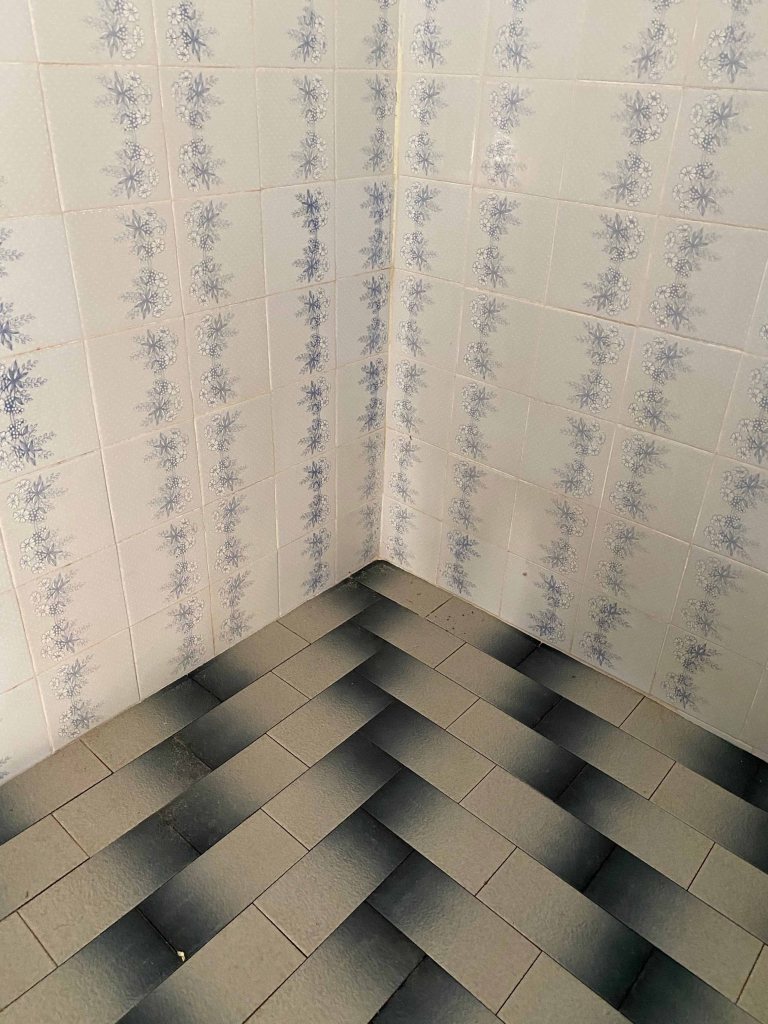
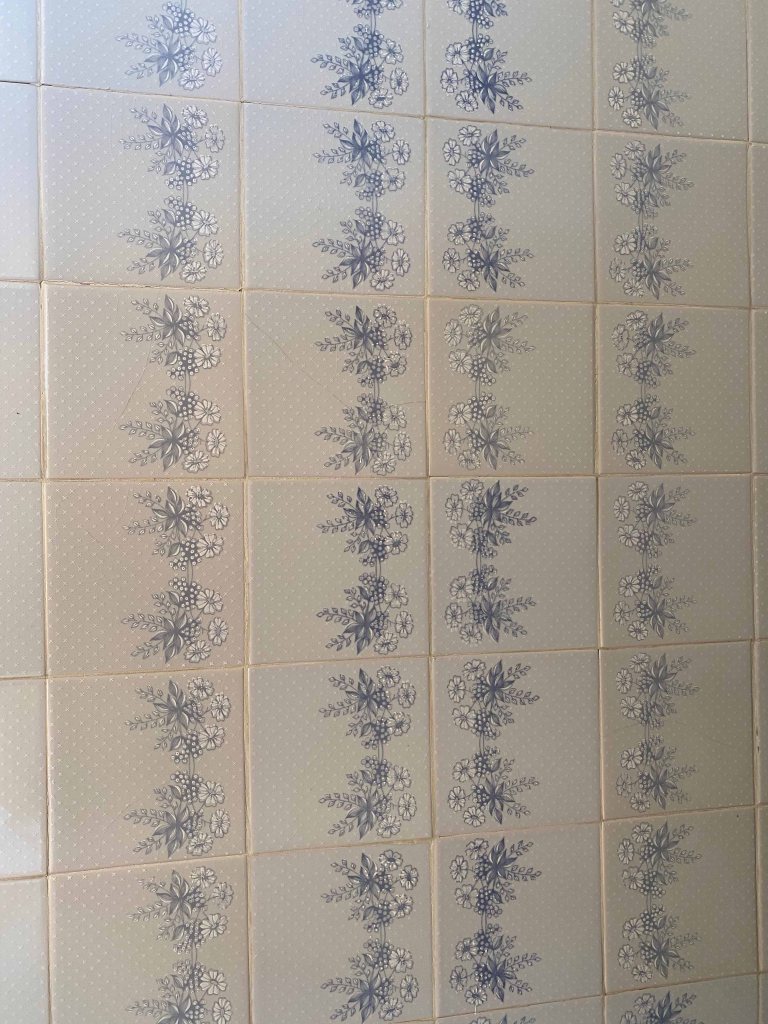
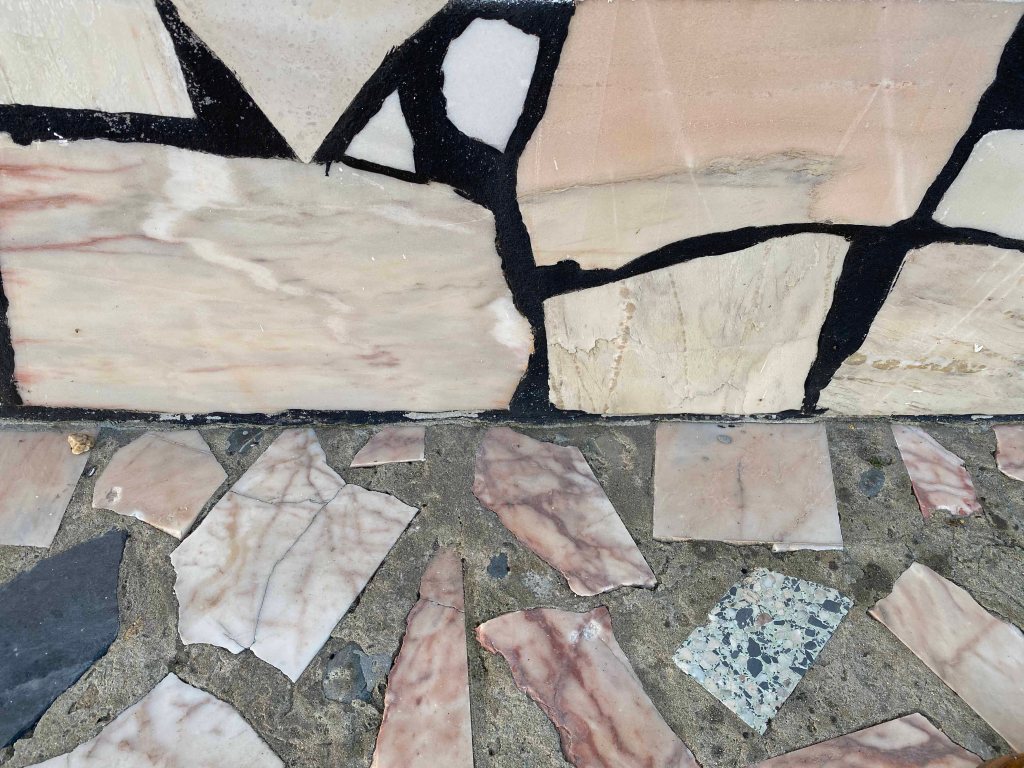
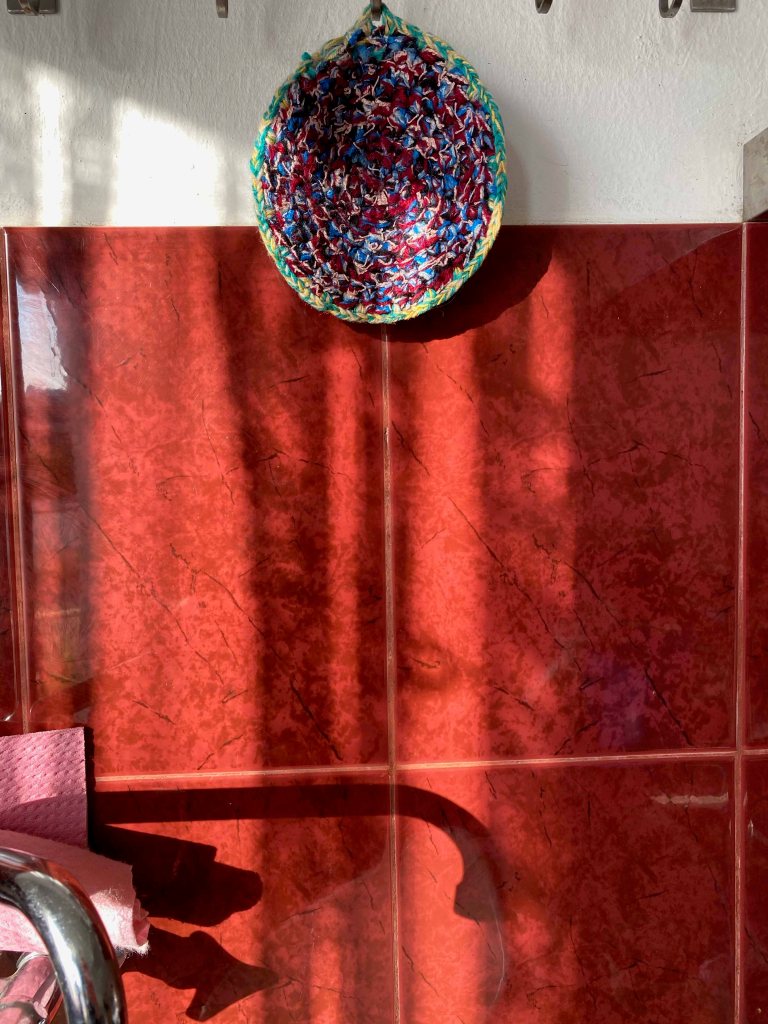
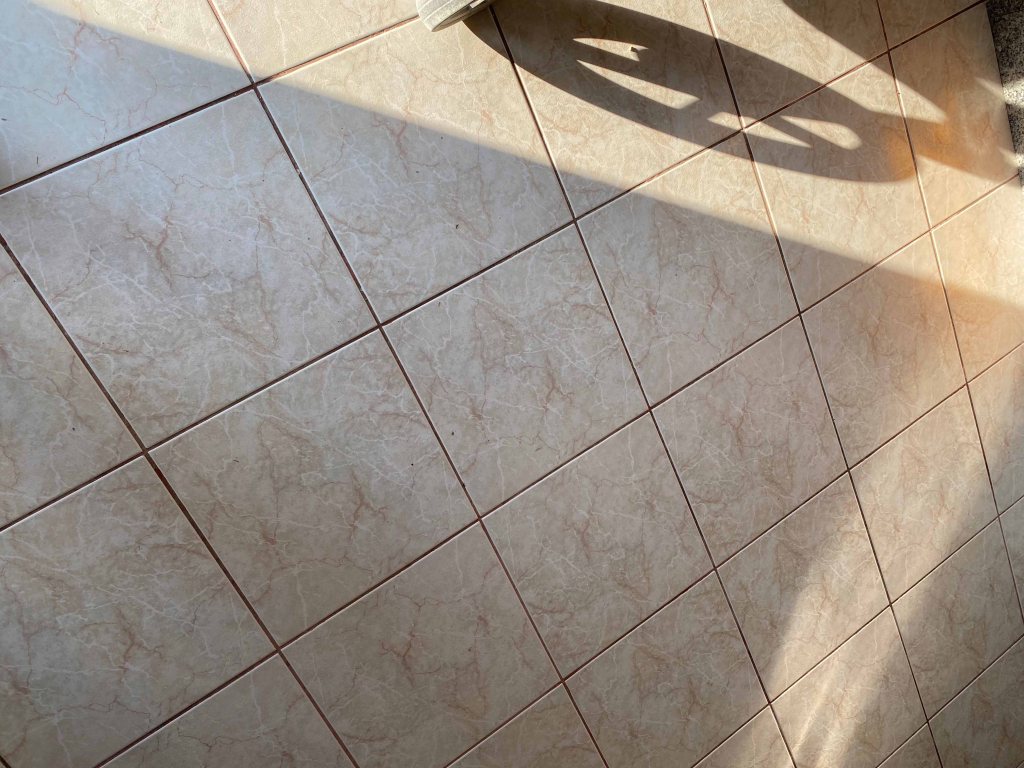
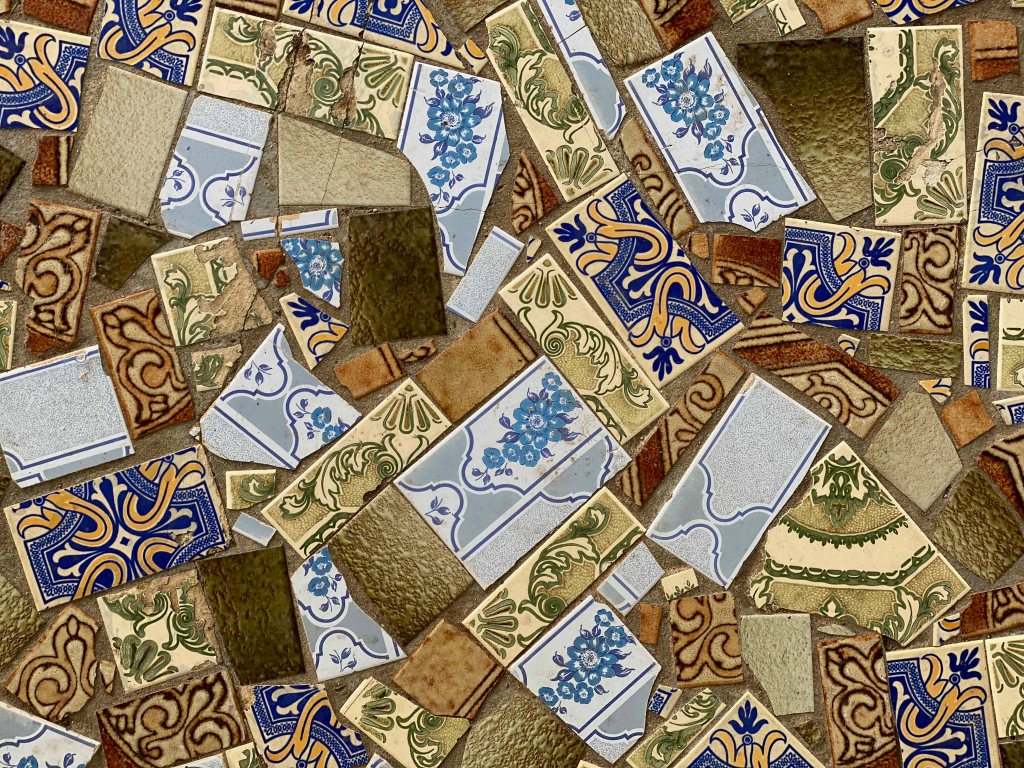
The effect is especially amplified by the creative combinations:
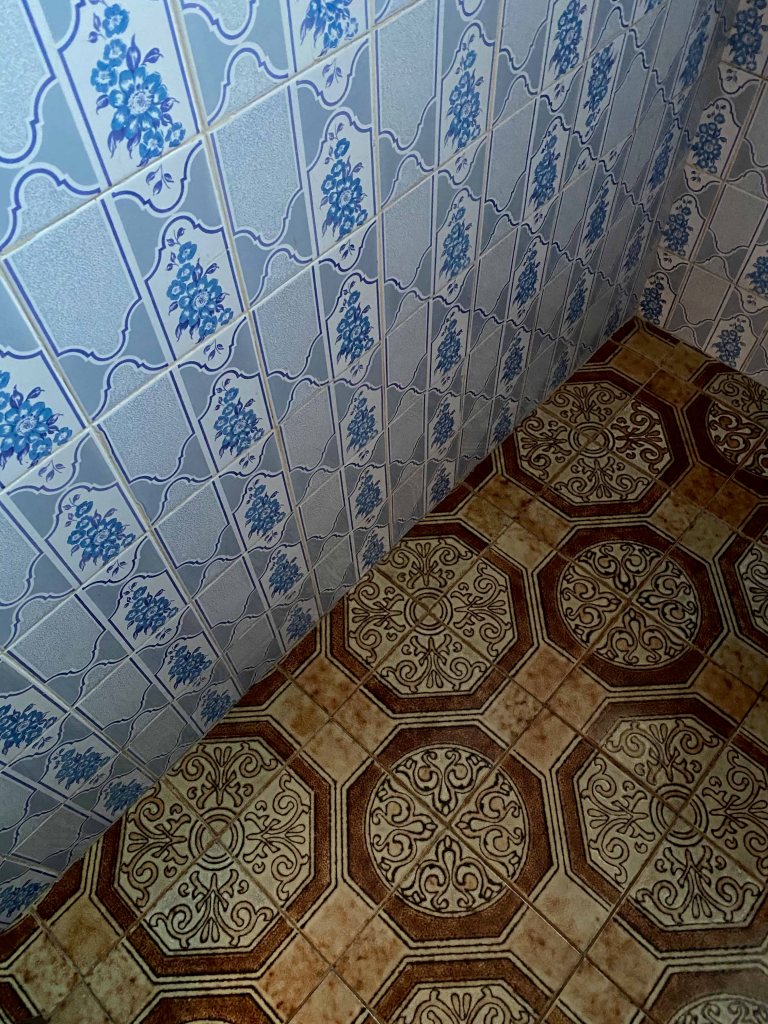
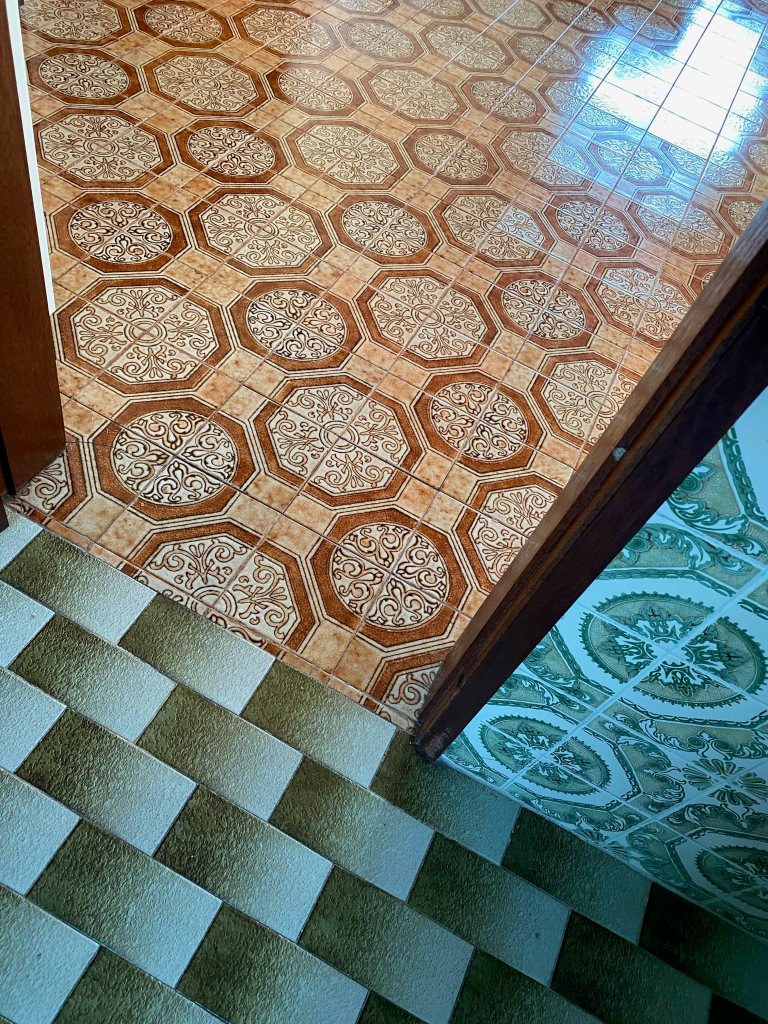
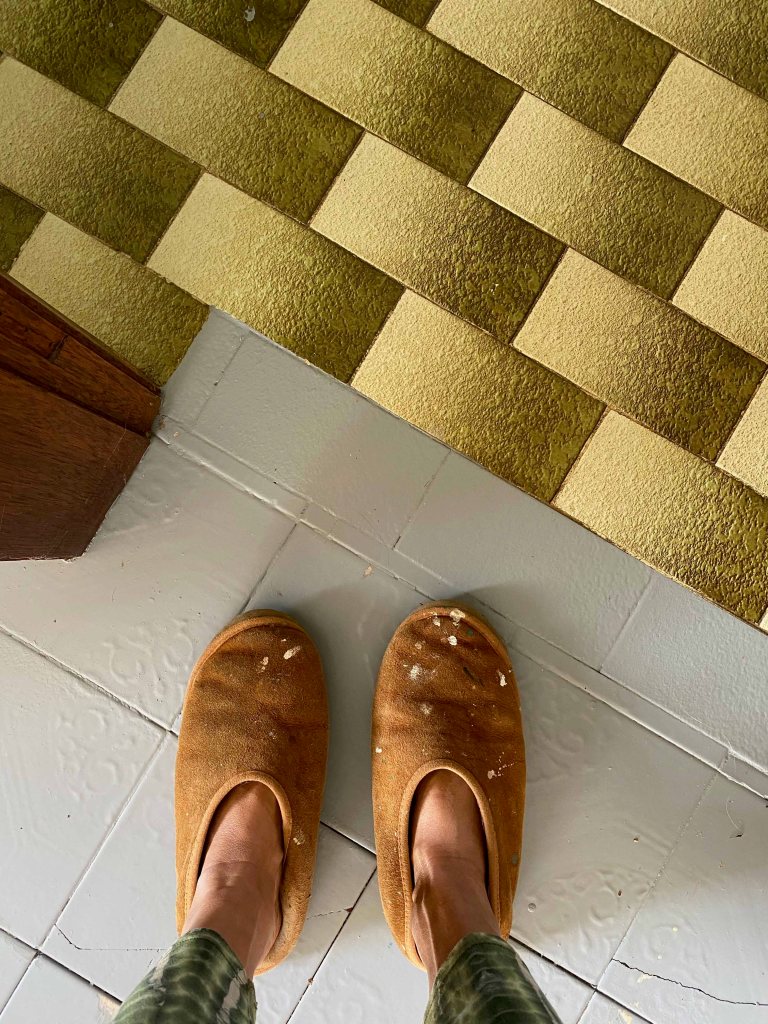
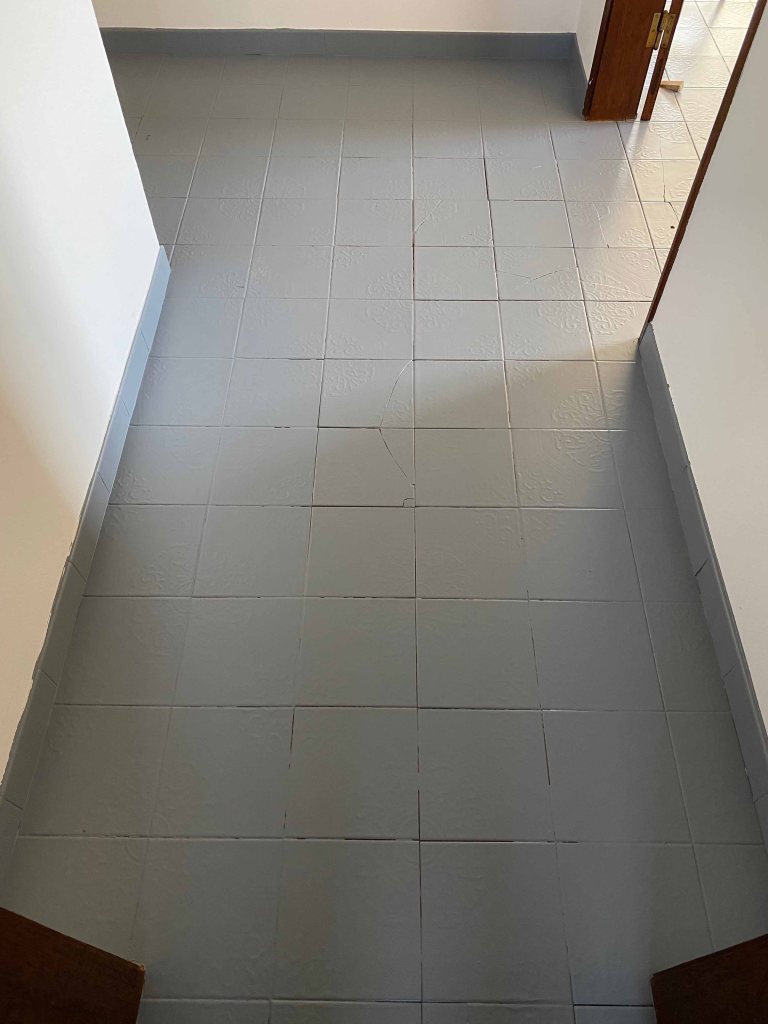
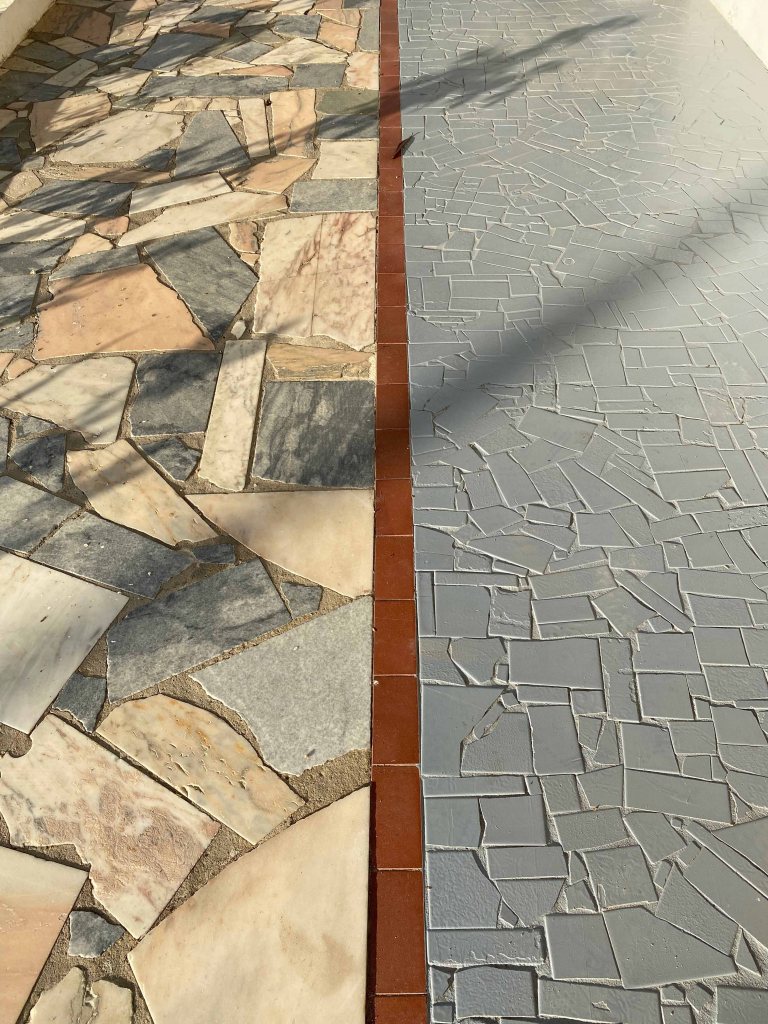
We have started to cover some areas with grey tile paint to be able to think clearly in some spaces.:

A TILE PERFORMANCE
With this catalogue of photographs as a base, I take the tiles into my creative world. I invite my friend Rita again, who is an aerial dancer and create a scene with the tiles being projected at my studio wall. I want to include myself and my own body in some of the pieces, but also be able to be behind the camera while Rita is performing.
We start with the mesmerizing bathroom tiles:
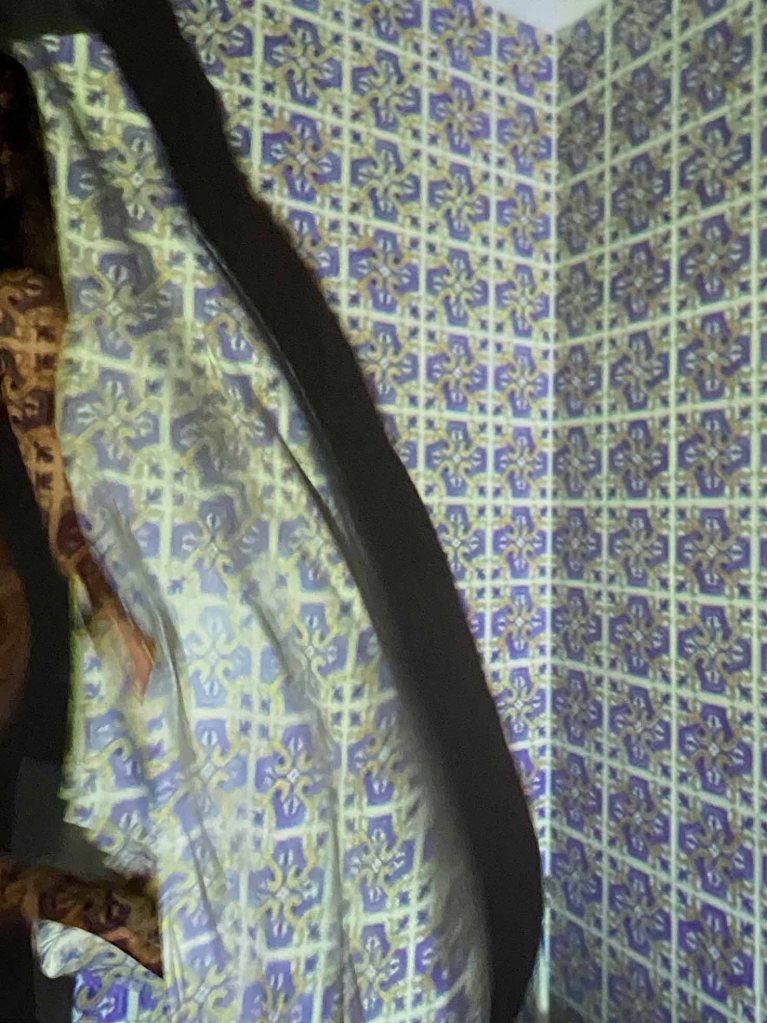
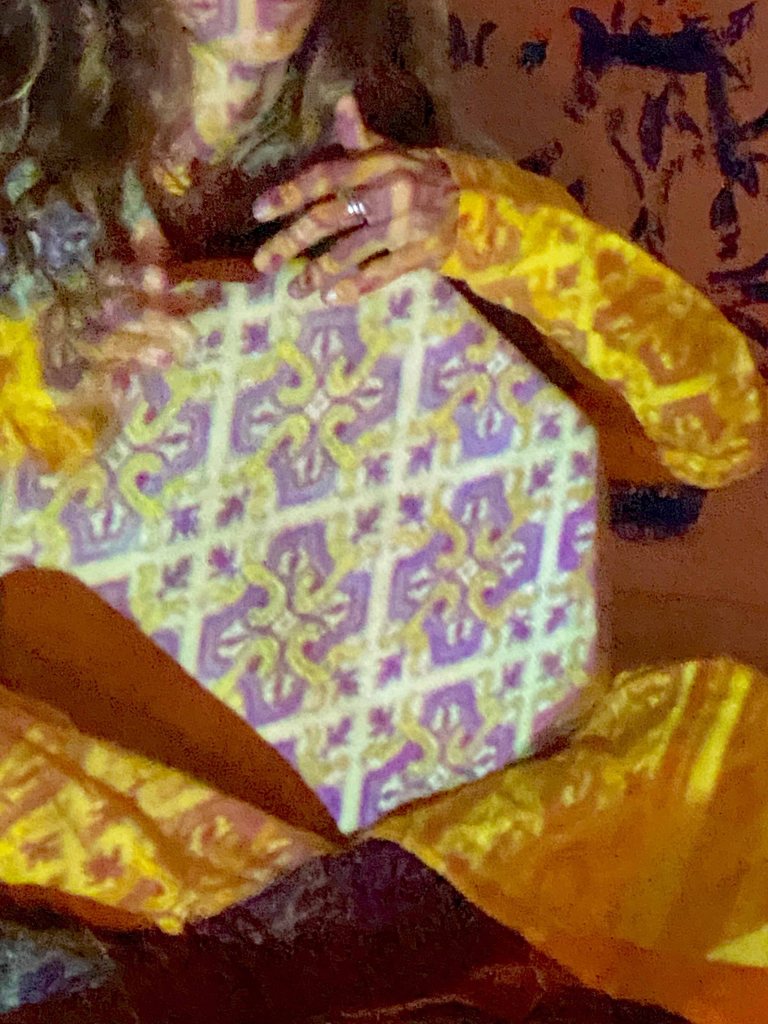
I am projecting photographs with the tiles in different sizes and capture the shadows of our moving bodies under a cloth:



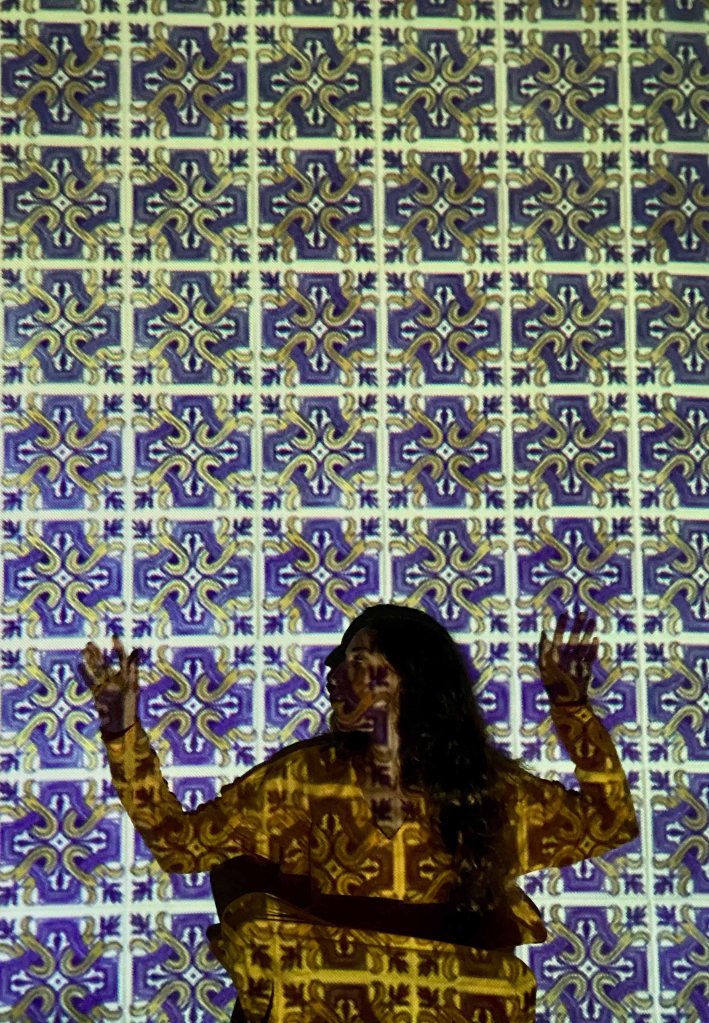
Rita performs wearing a yellow dress:
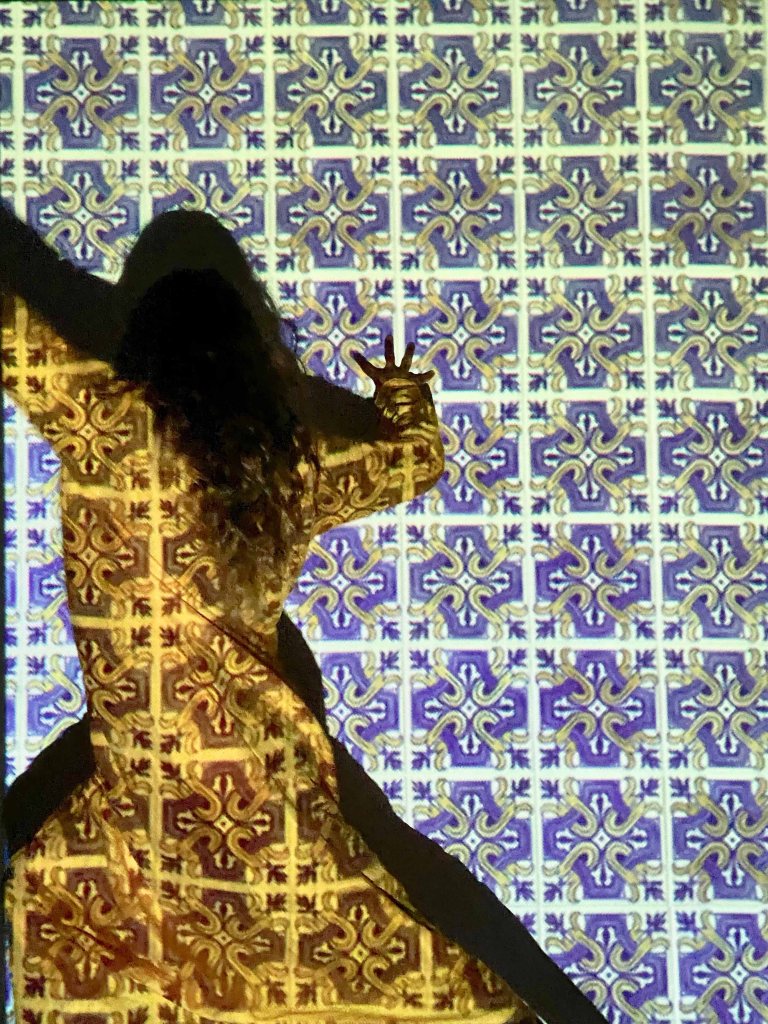
Next , we are drawing the patterns of the tiles on very big paper on the studio wall.


This is the first drawing (approximately 180x200cm)
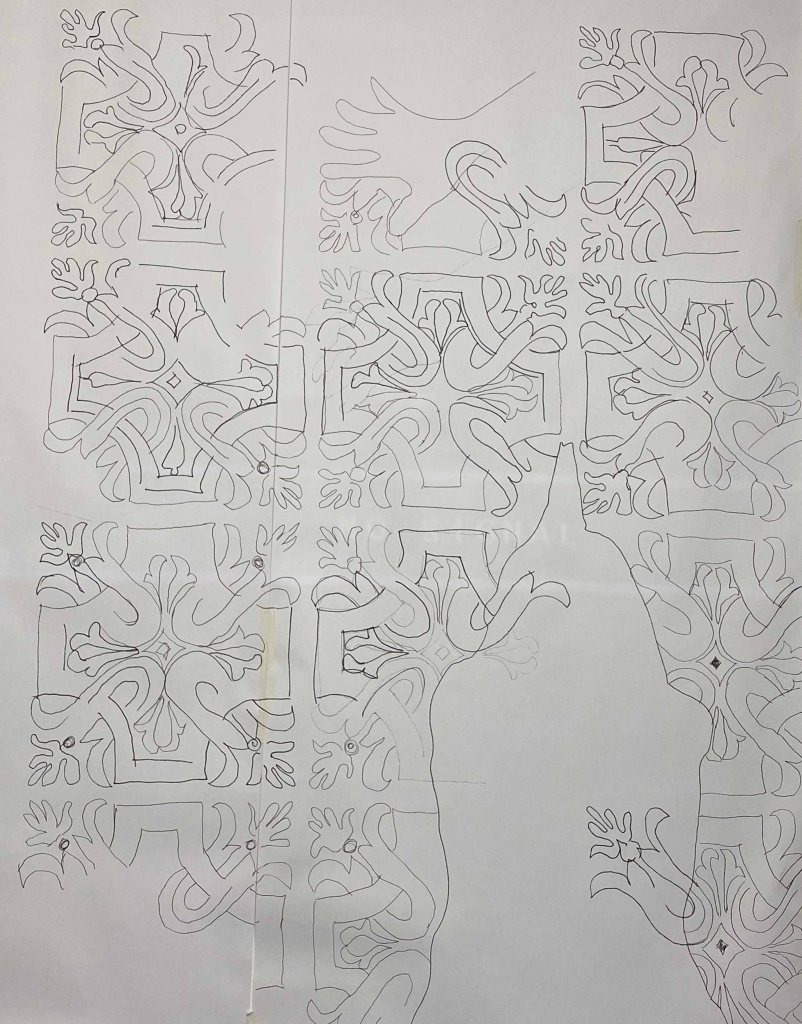
Here I photograph the drawing with an arm for a sense of scale:

For a second drawing, we use 3 projected photos of the same bathroom tiles in different perspectives and add the pattern from another tile as a frame.
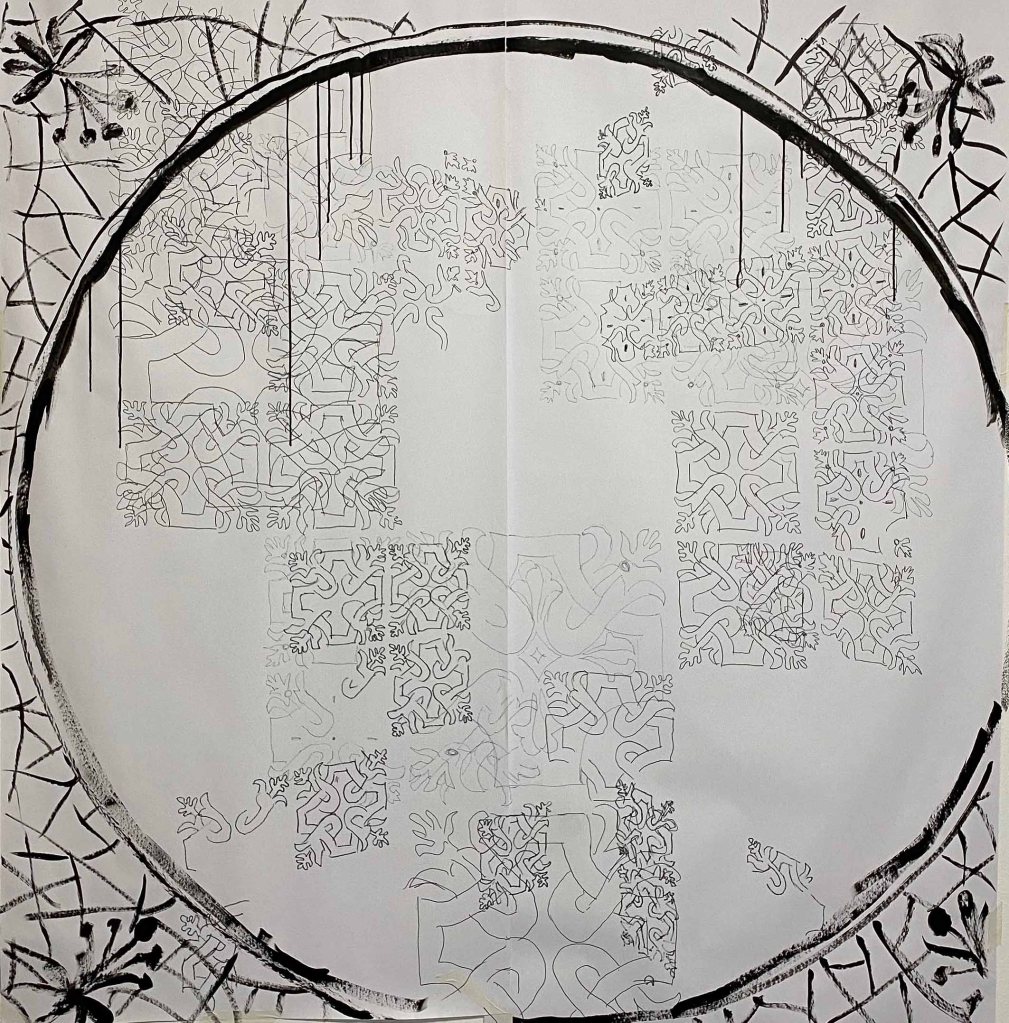
This becomes the background for the following:
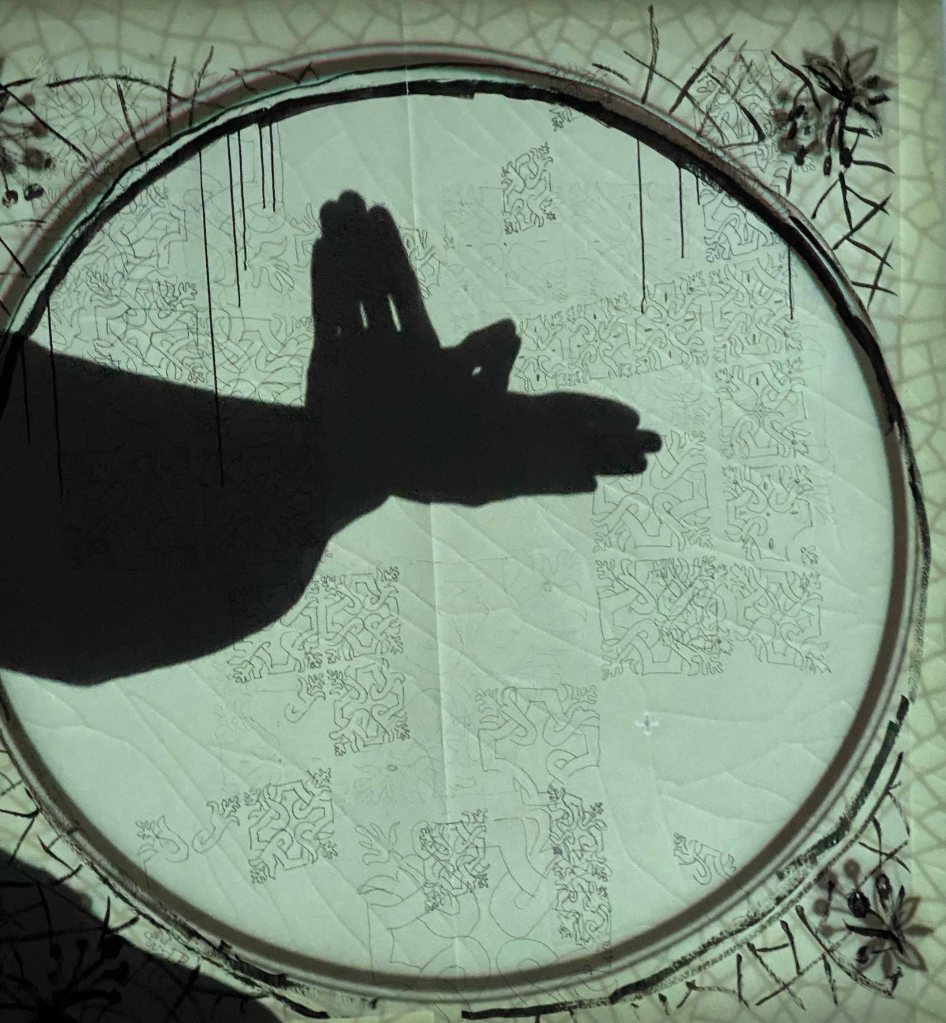
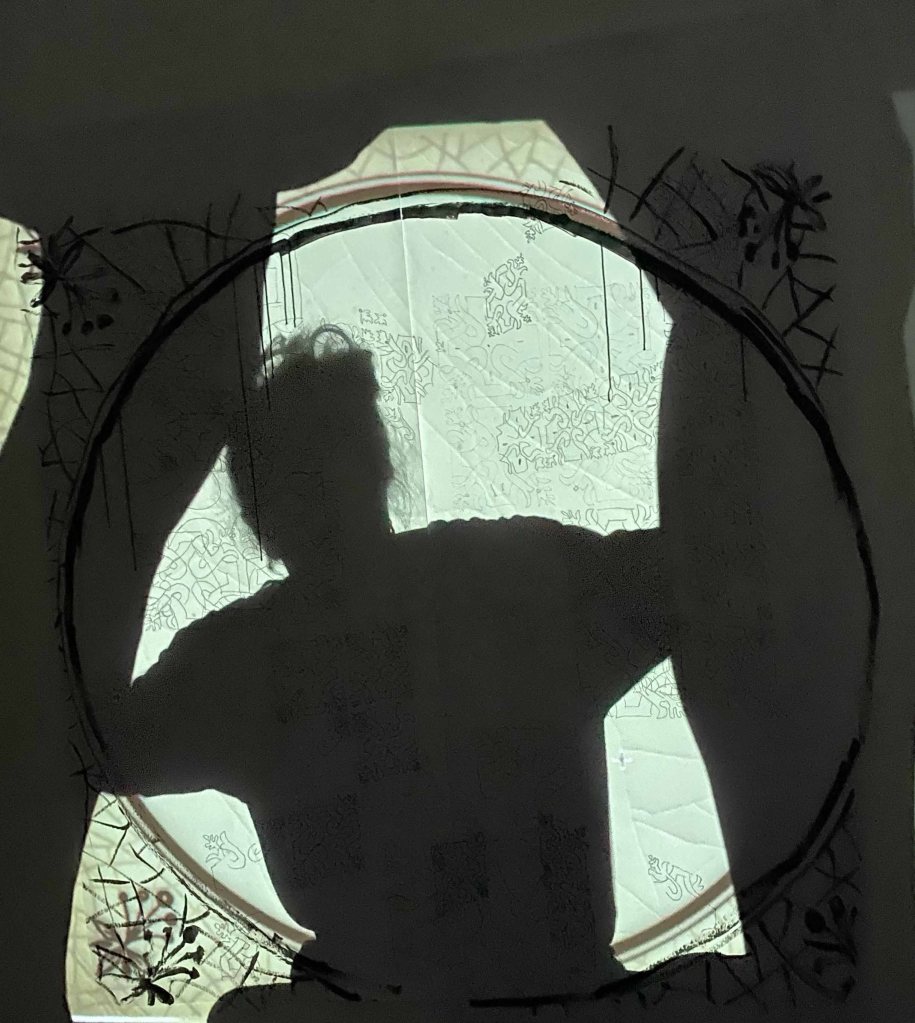

And in combination with yet another tiles photo and my shadow:
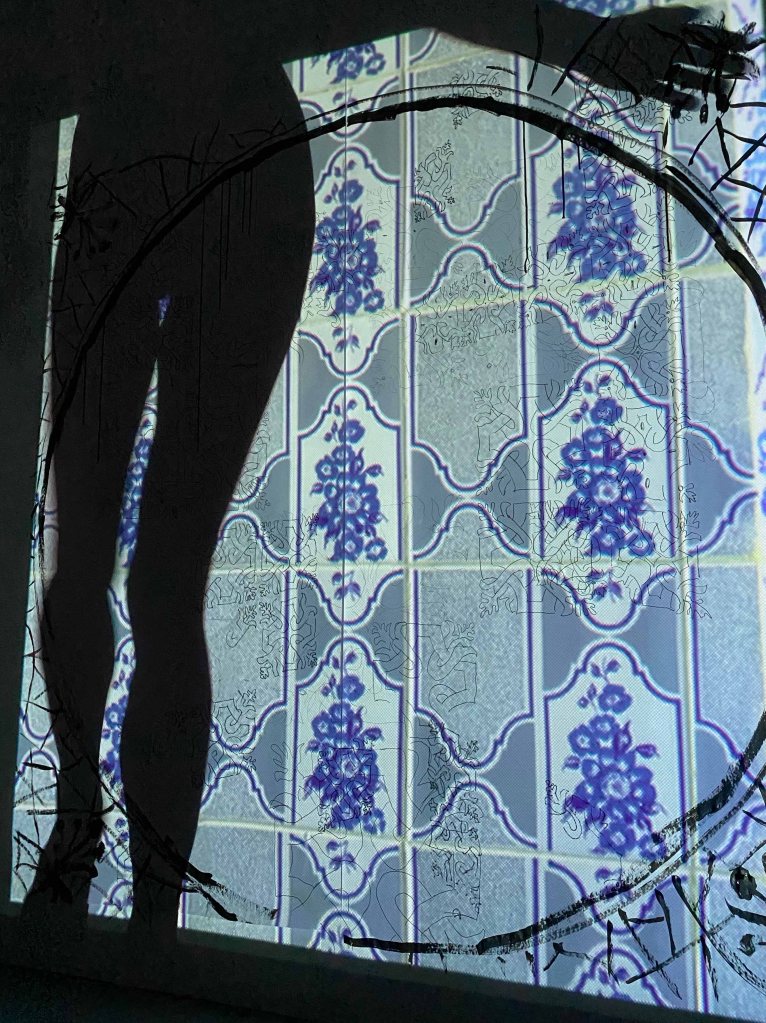
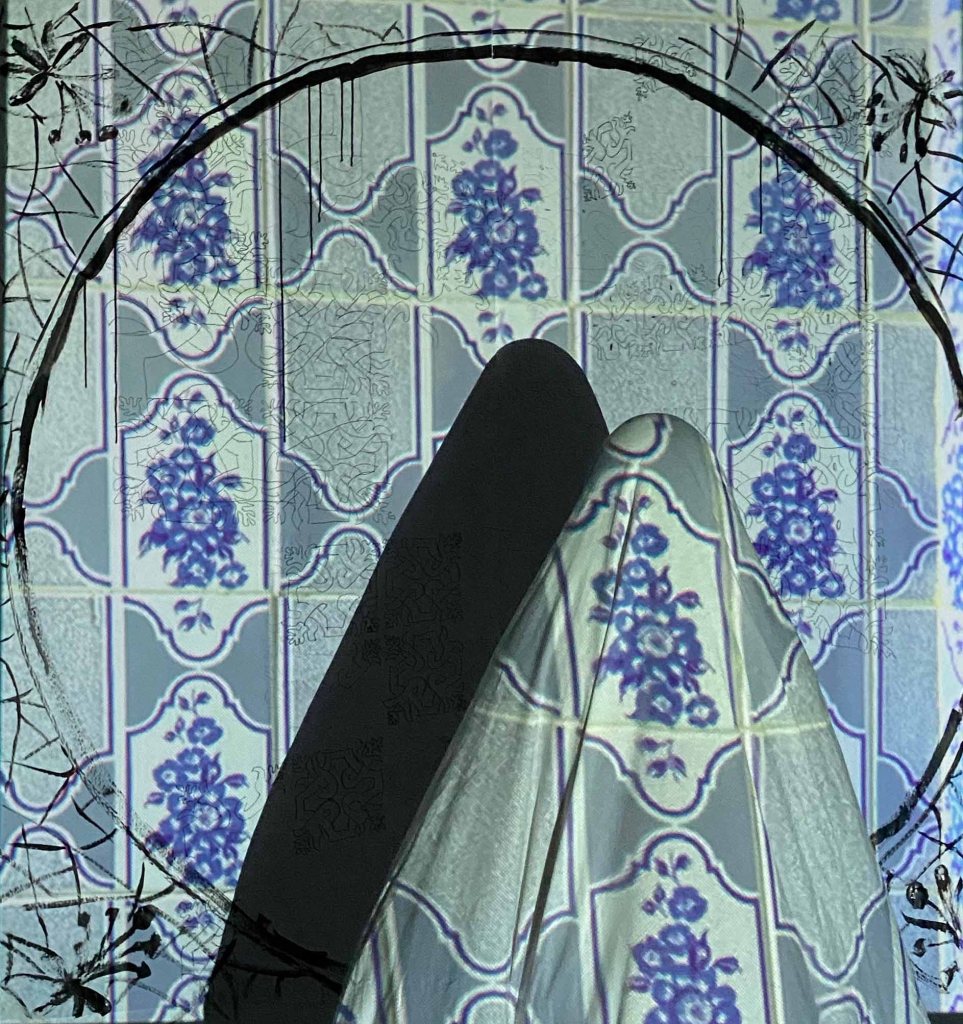
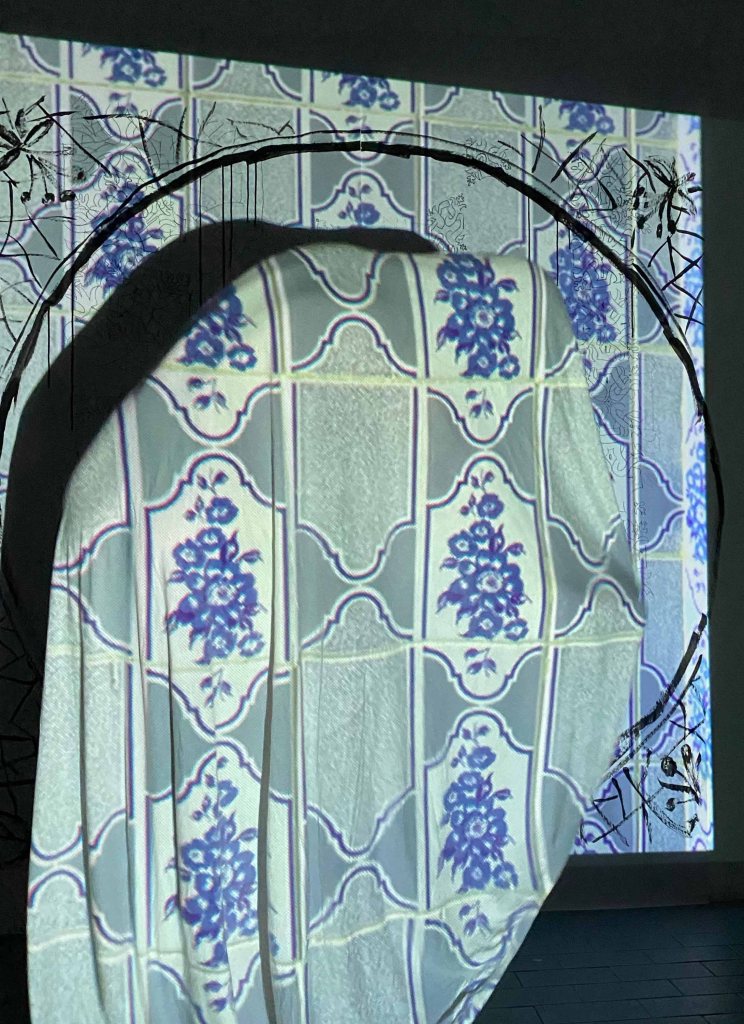
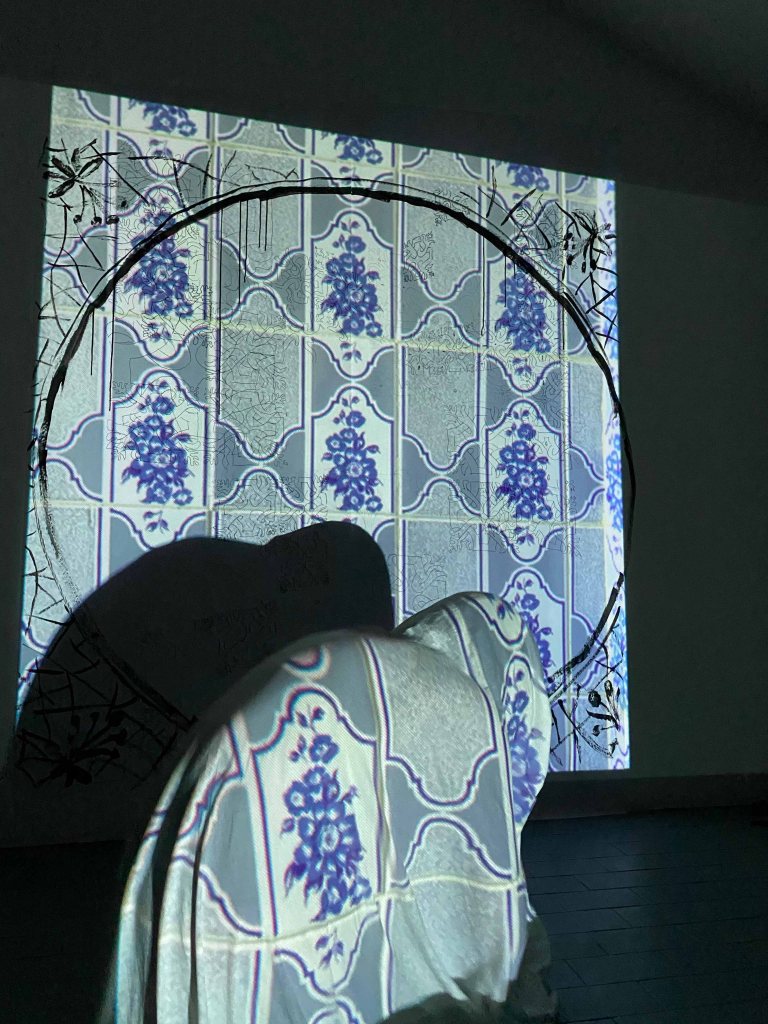
We also project the tiles on our bodies

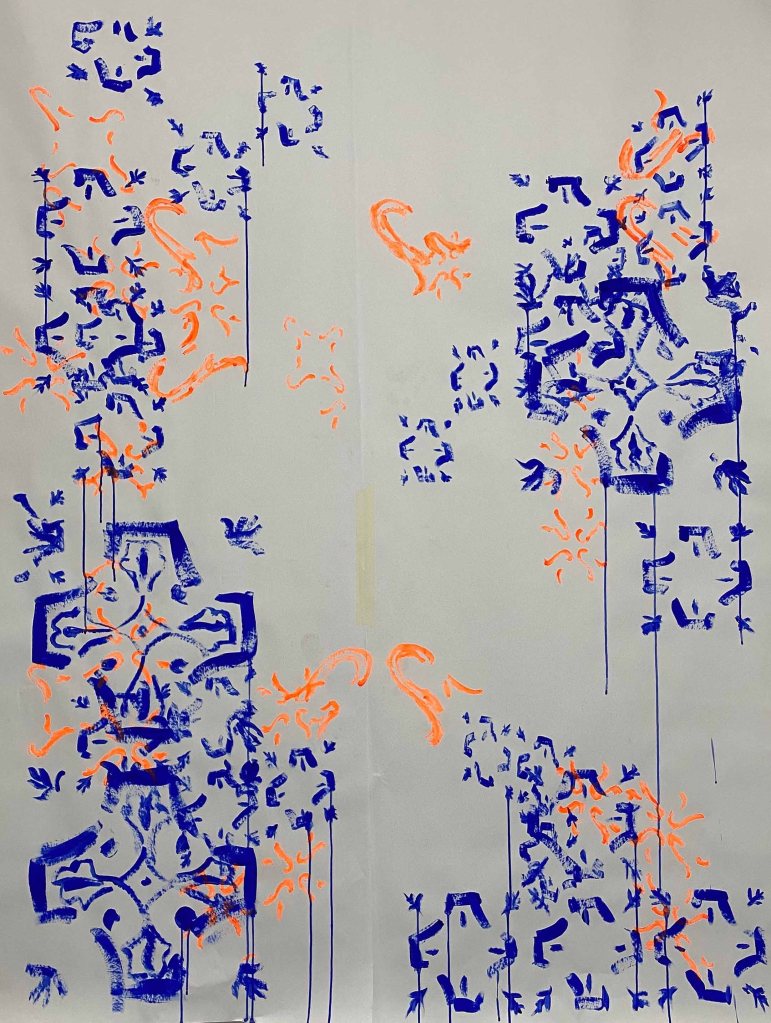
I am using the same bathroom tiles for yet another drawing in acrylics:
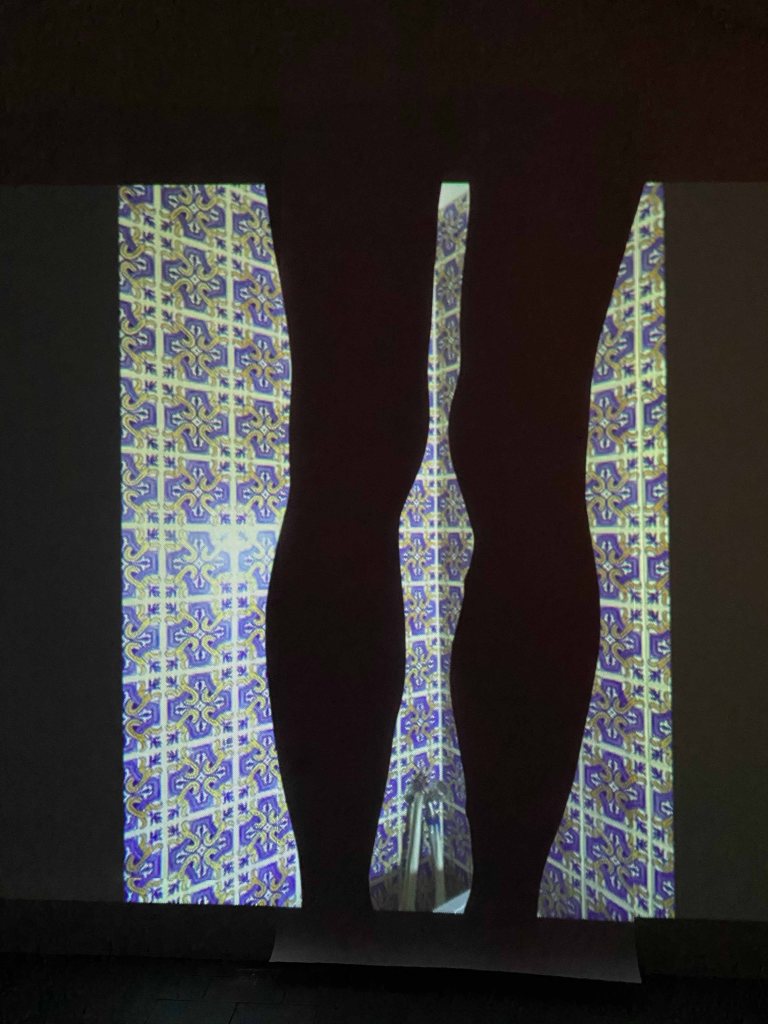
A last bathroom tile picture with the shadow of my legs
Now we continue dancing on the pattern of a blue floor tile, trying the yellow dress again.
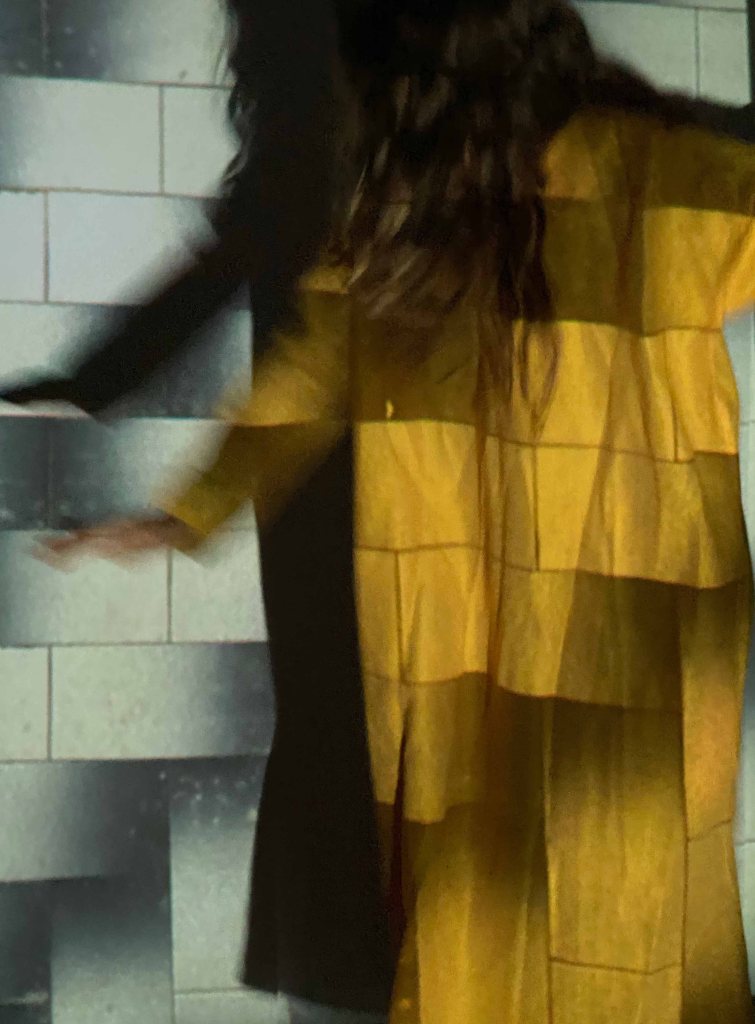
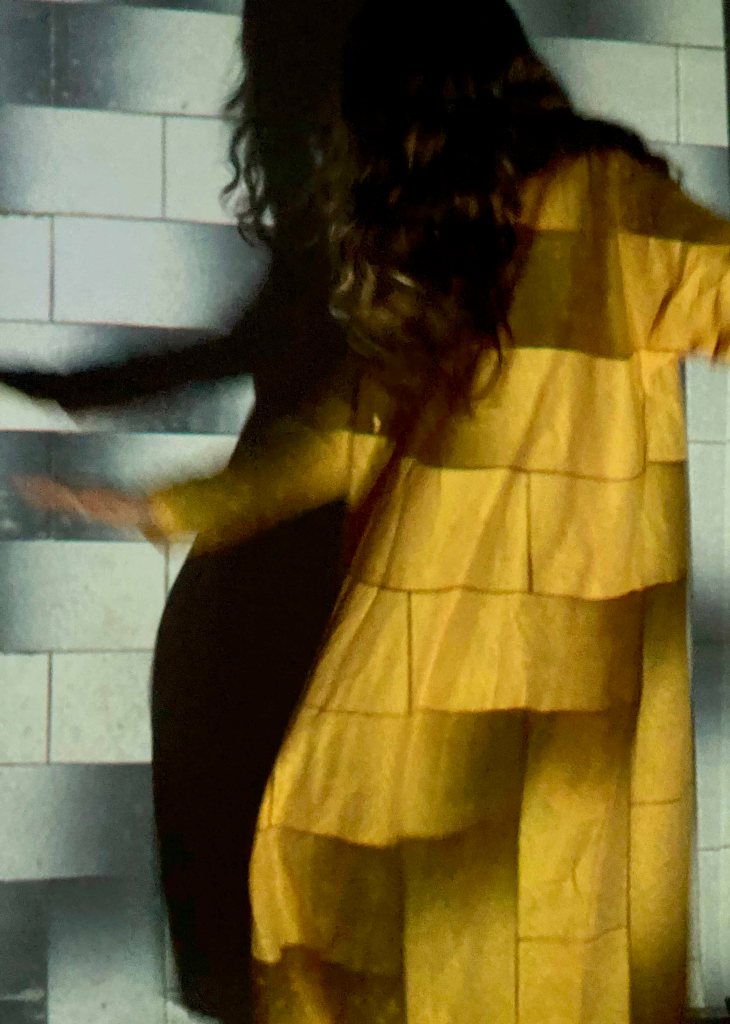
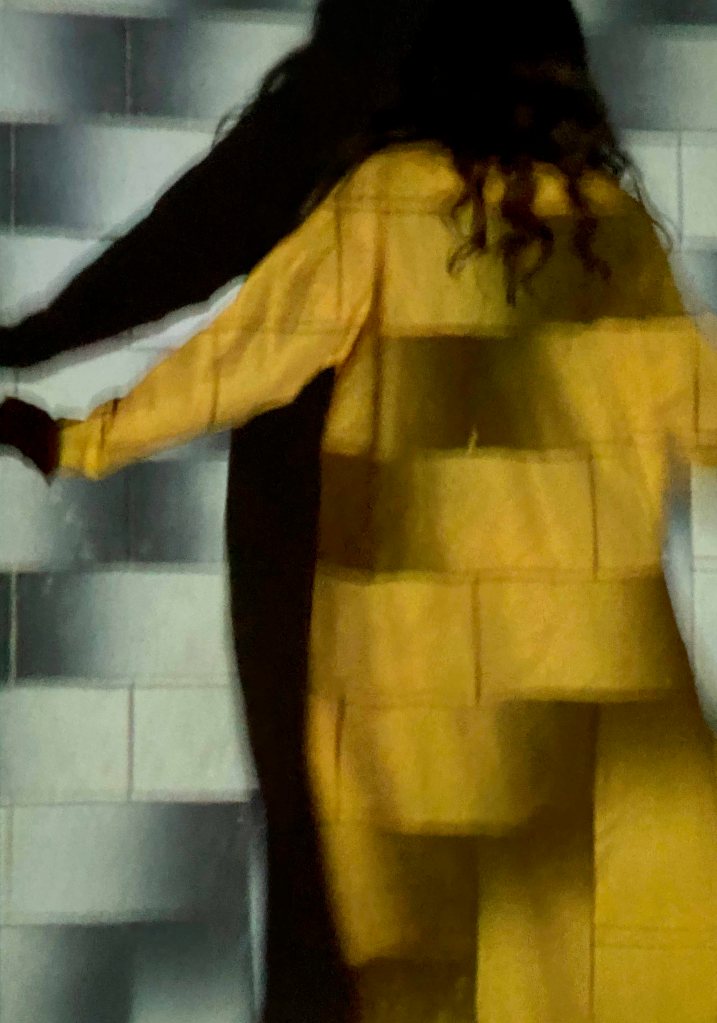
It works much better here , with the pattern that is not so intricate.
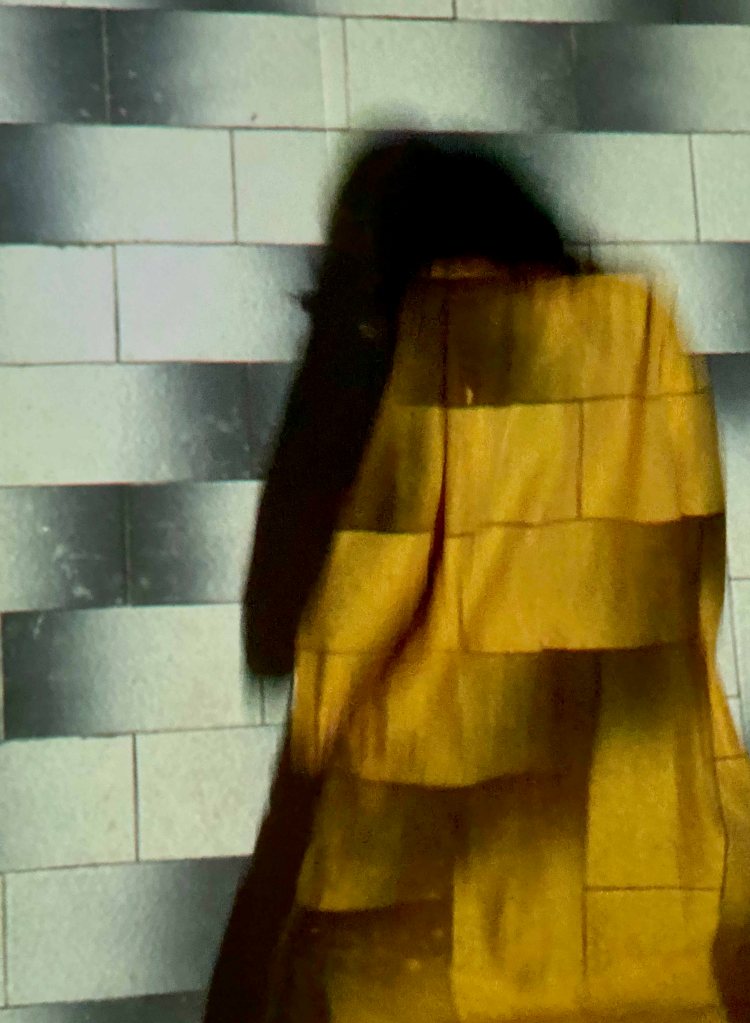
The kitchen floor has the same tiles in green, that I photograph in a different direction:
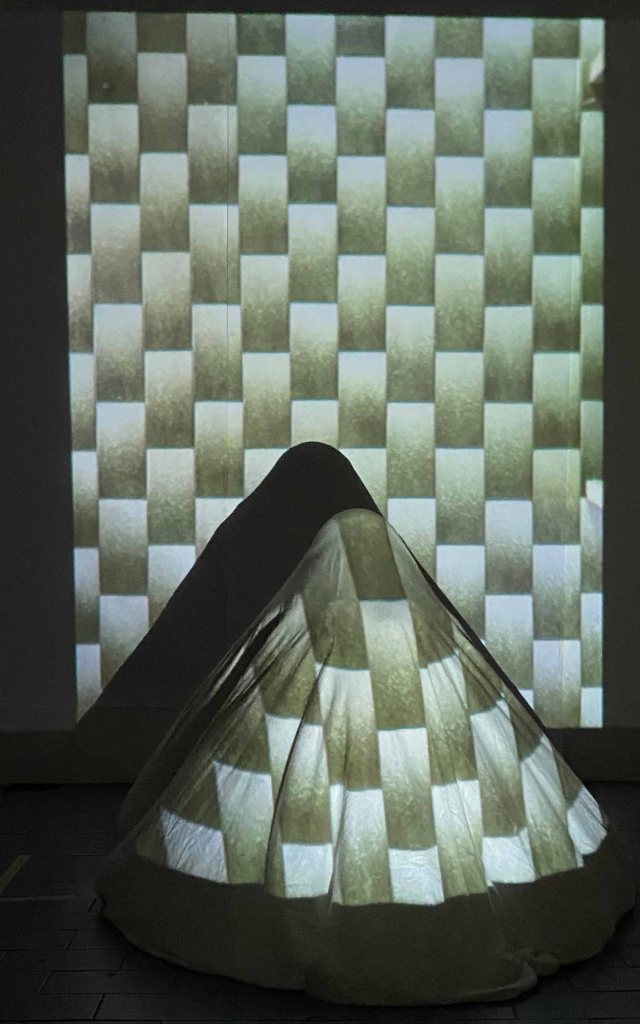
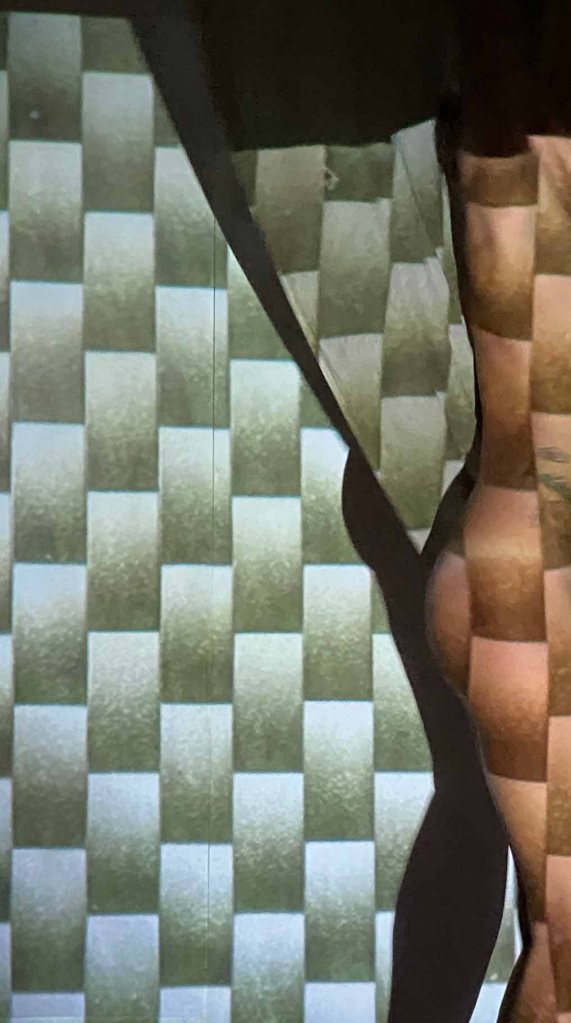
It becomes really effective in the place where the floor meets the wall:


The kitchen tiles open up a whole new universe of possibilities!

We return to drawing on a new big paper on the wall. I start by capturing Rita’s dance, an eternal movement in the imaginary kitchen, then add the patterns of the kitchen tiles, and finally some splashes of red
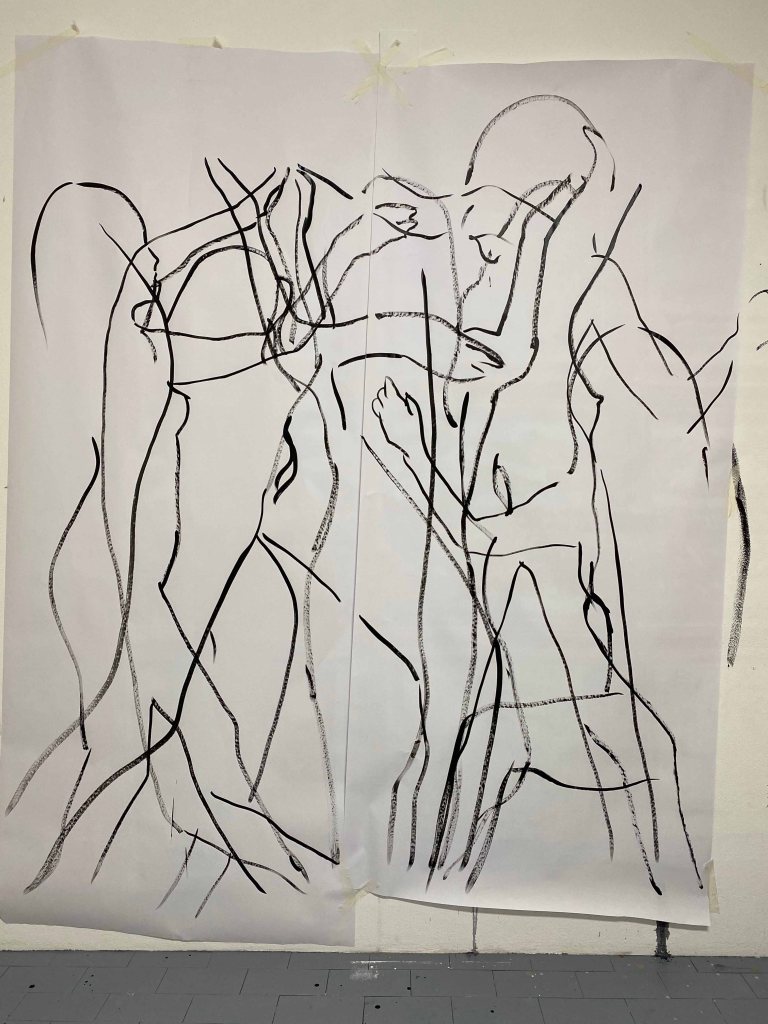
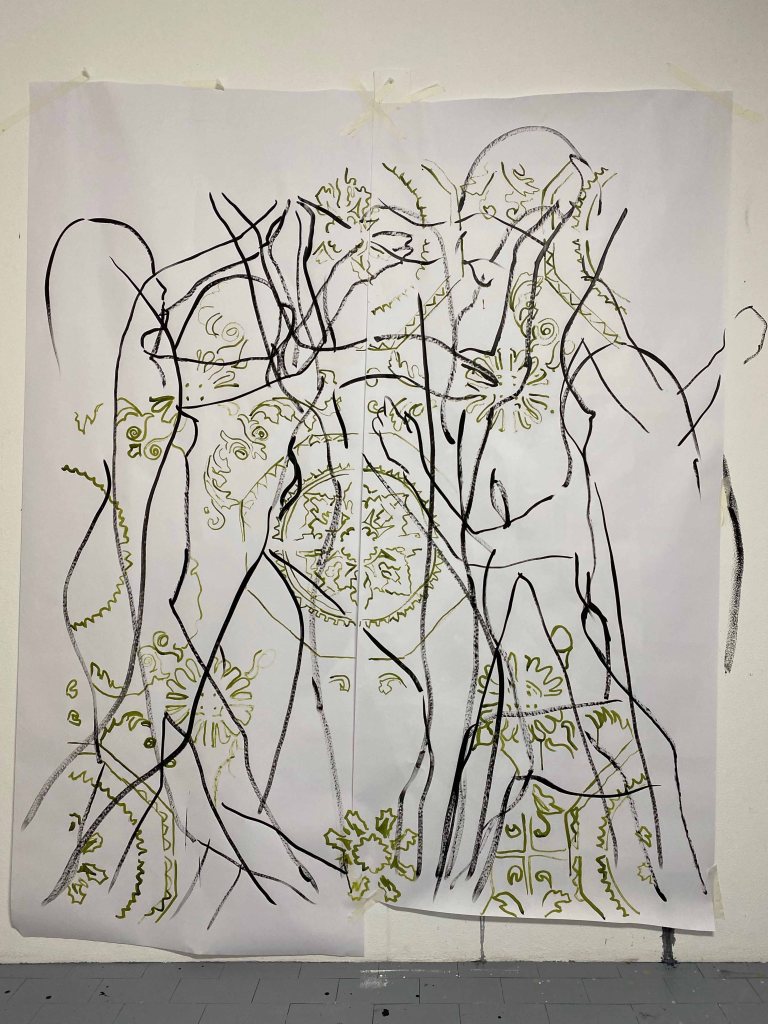
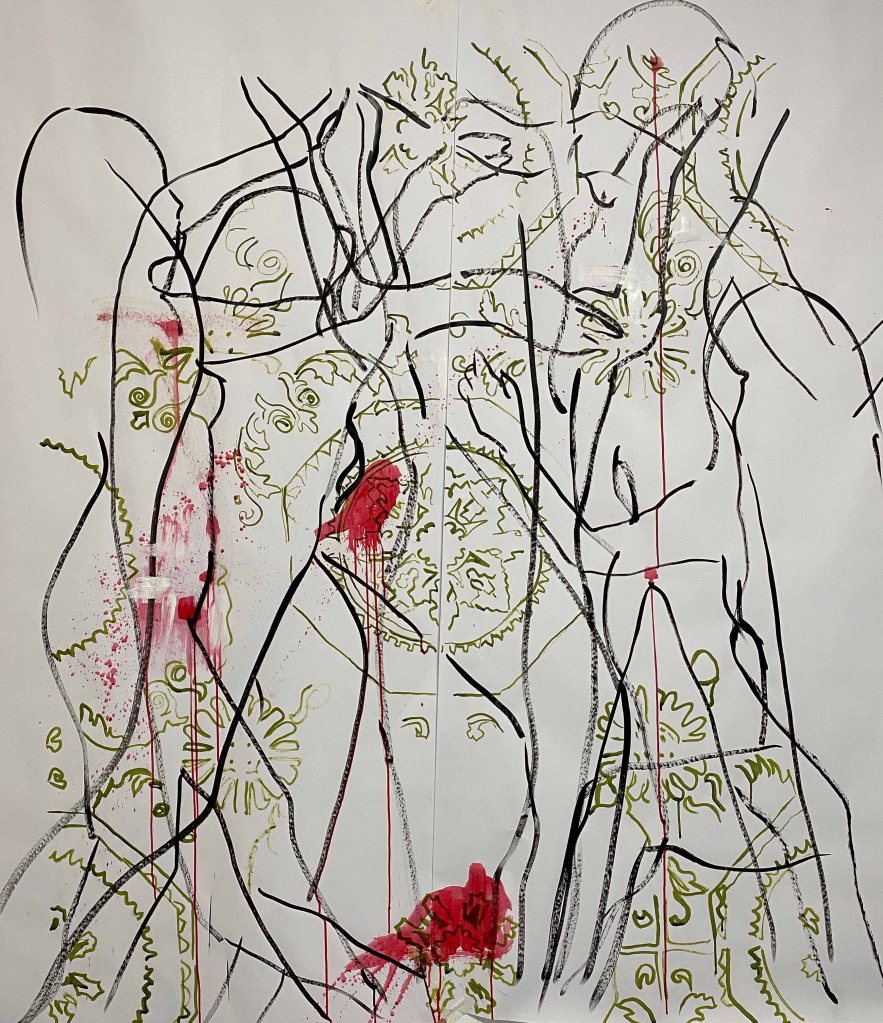
This is the background for the next performance
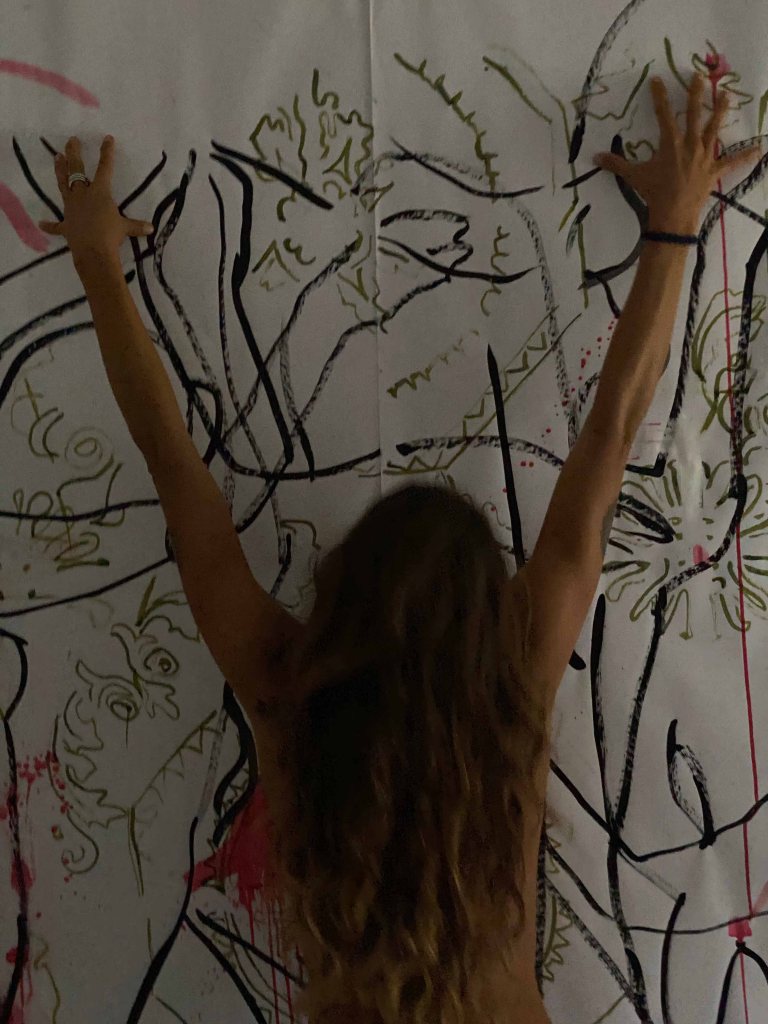
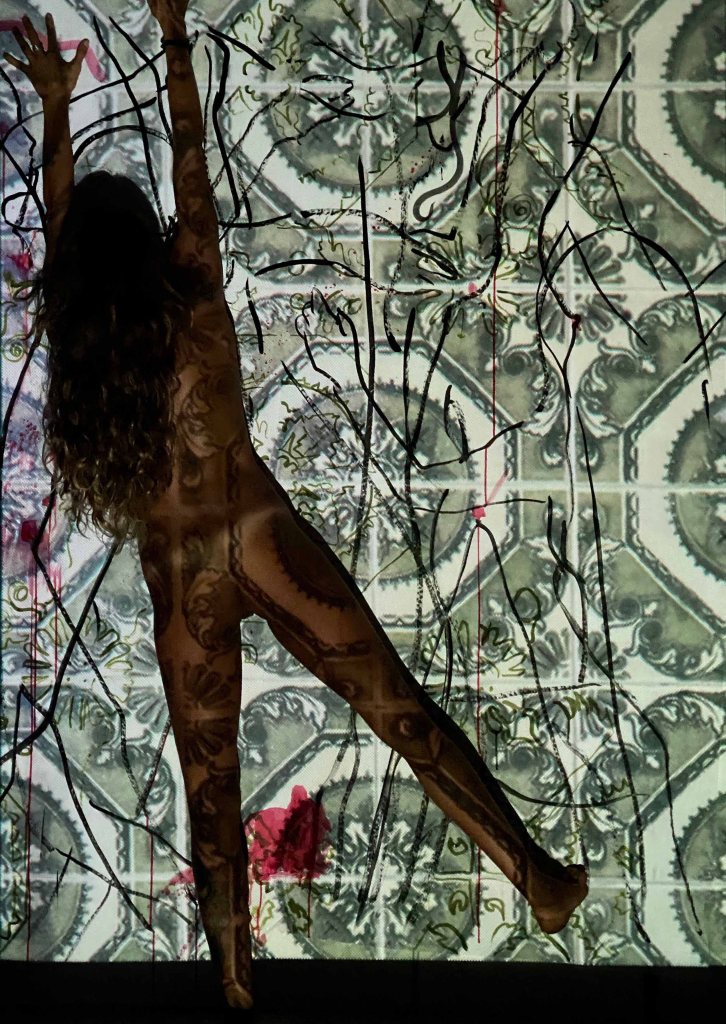
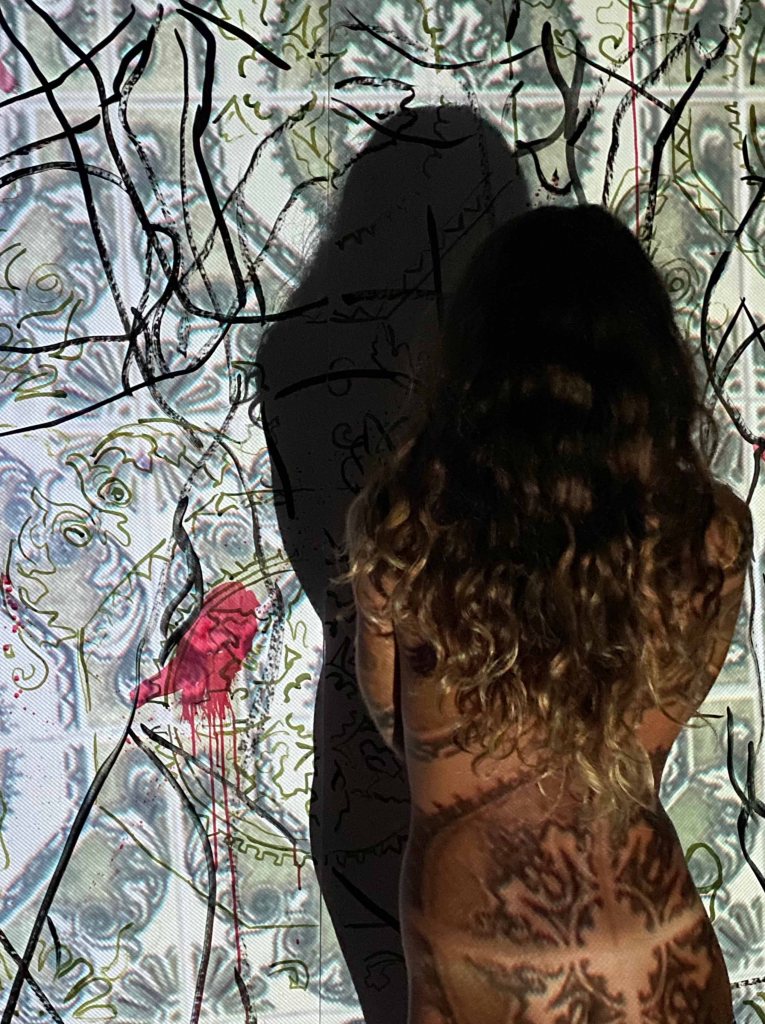
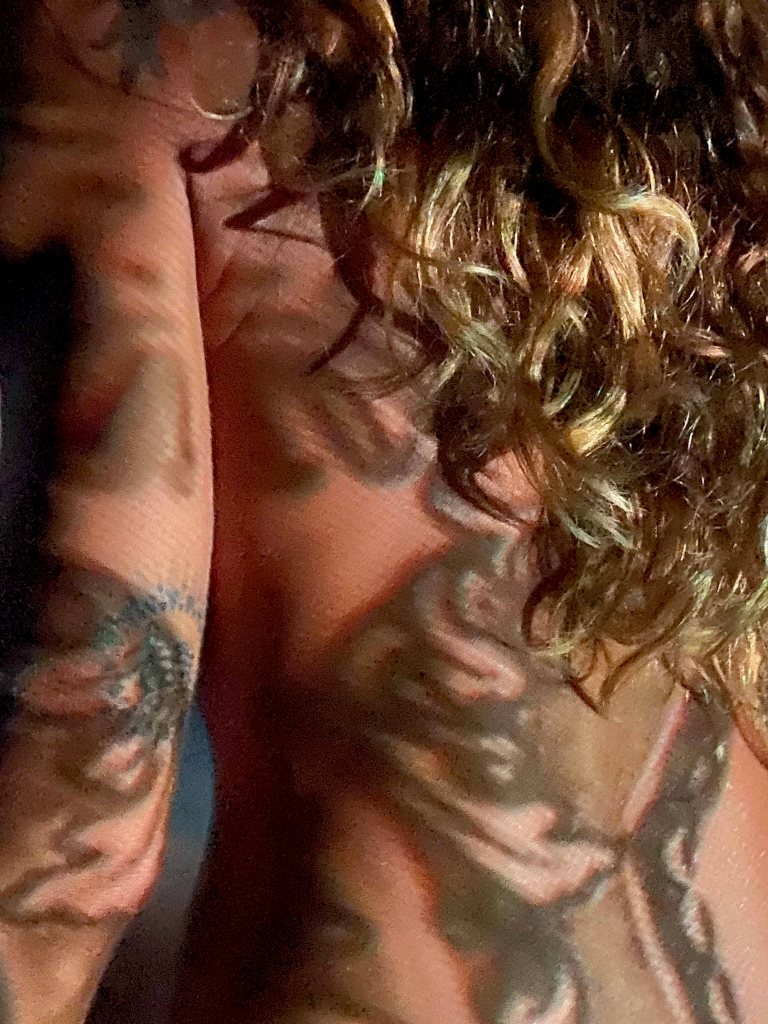
I am fascinated by the patterns of the tiles on the body
We return to drawing again, this time the floor tiles of the original hall and living room, including our feet

Adding acrylics

Finally, I project the tiles on the drawing with Rita moving her legs

This is more impressive in a short video:
We put up yet another paper, and return to the most simple tile.
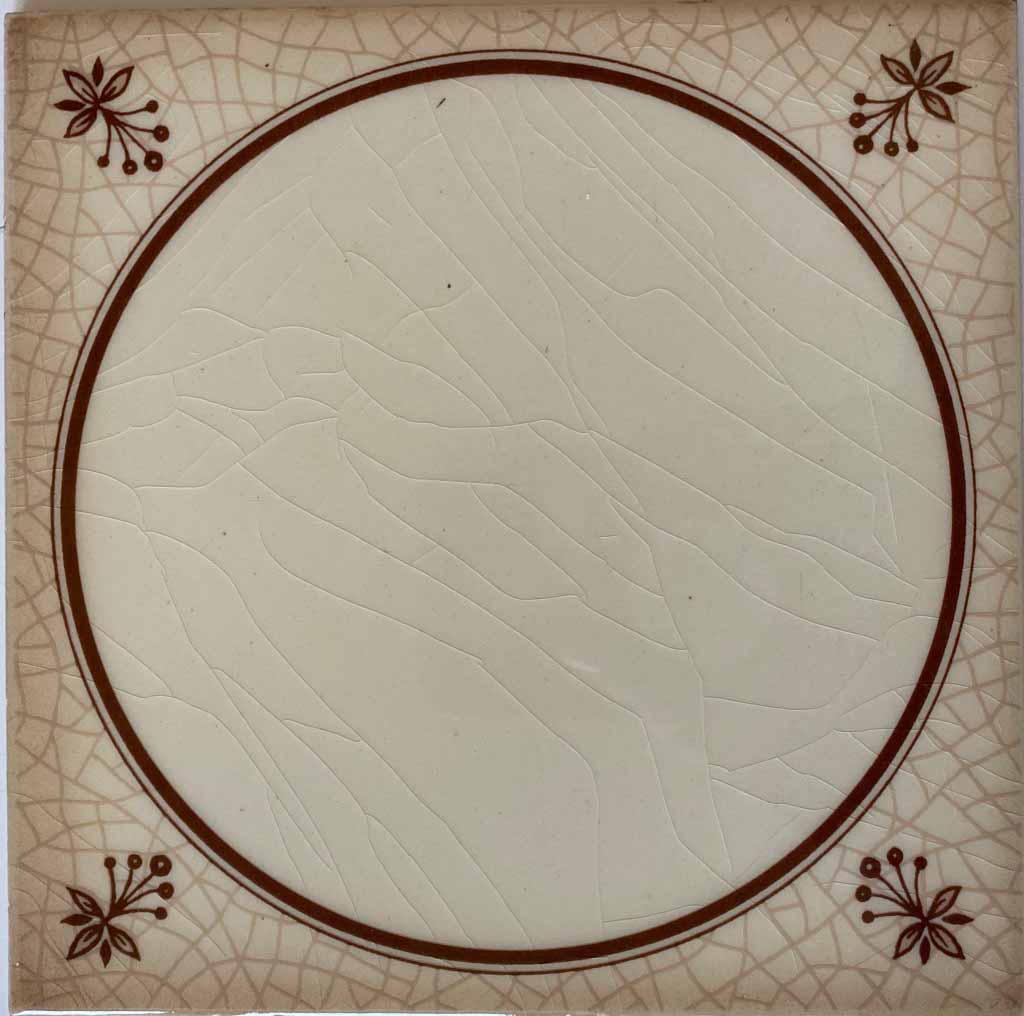
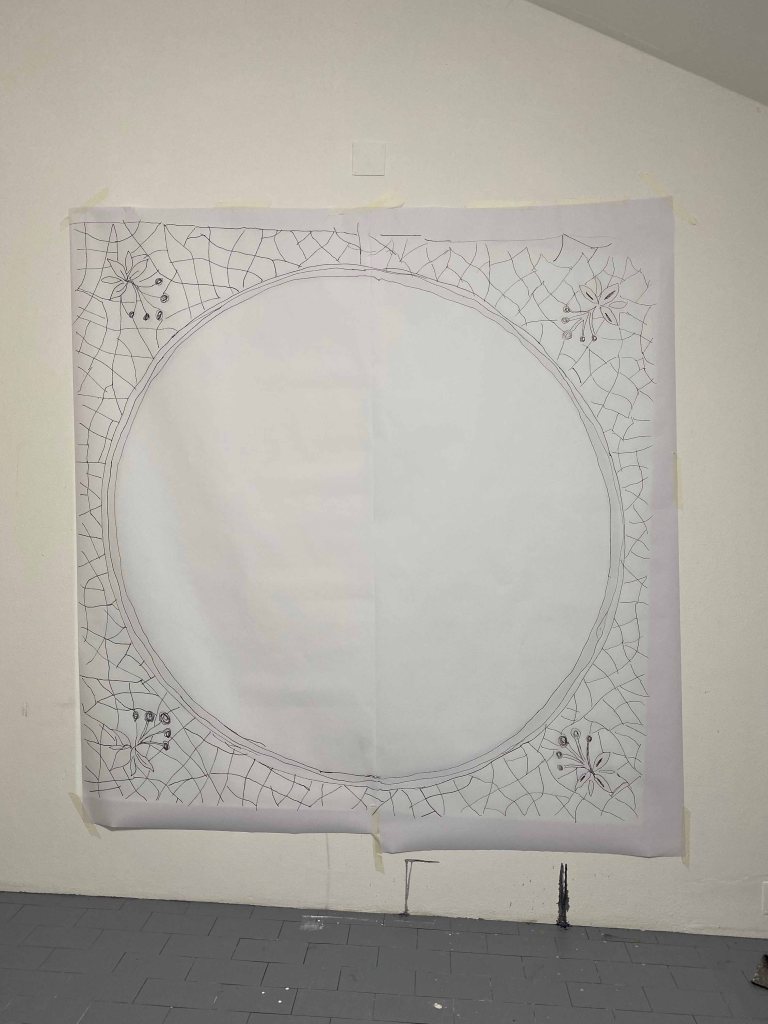

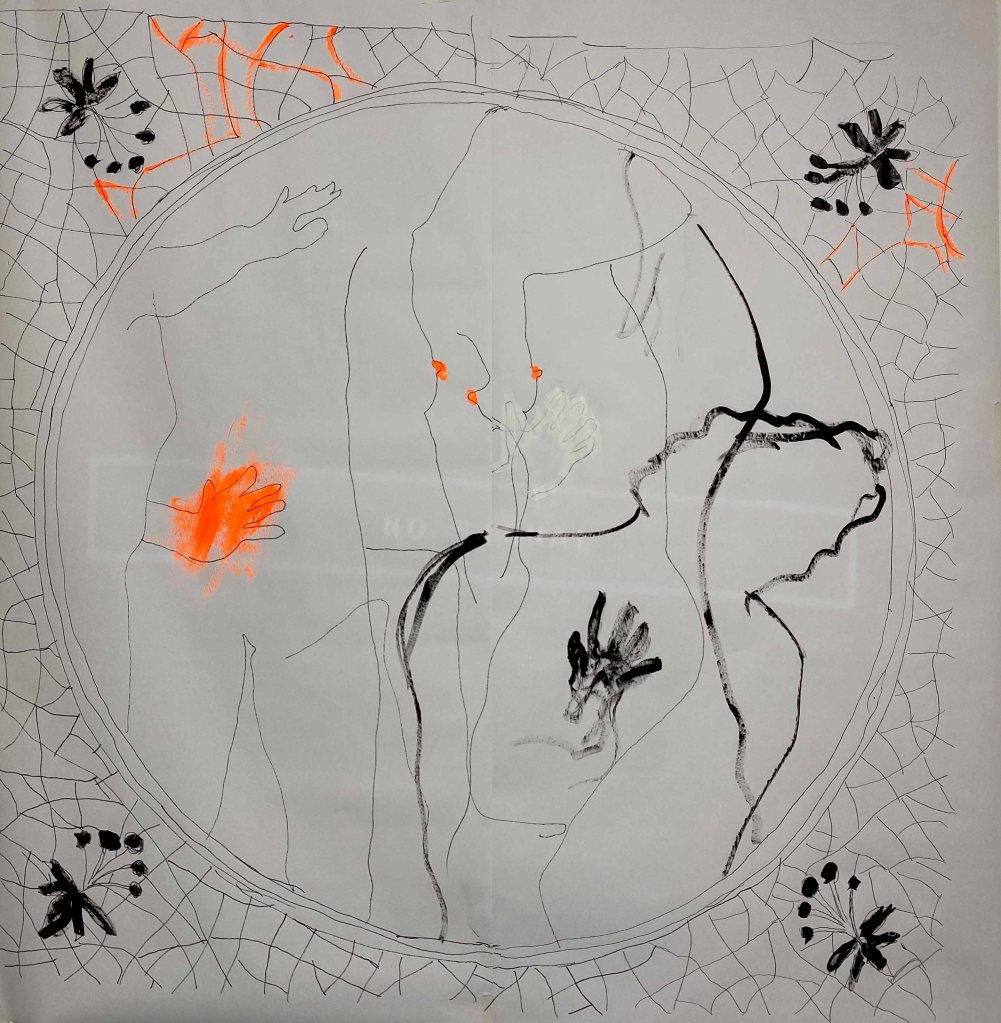
We have been going for two fun, creative, intense days here, and I have material that will take at least a week to edit!
THE BOOK-DIGITAL
I decide to create a “photobook ” format, as a way to preserve the history of the tiles found in the house in combination with our creative transformation of them. In this video, you can follow the flicking through the digital version of the book:
I am really happy with where the tile story took me, but I feel like I still need to explore the potential of the artist’s book more hands on.
THE BOOK-
I am preparing the photos in square formats to print them and use them as “tiles” for a new mosaic. I will experiment with attaching them and folding them together into a map/ book.
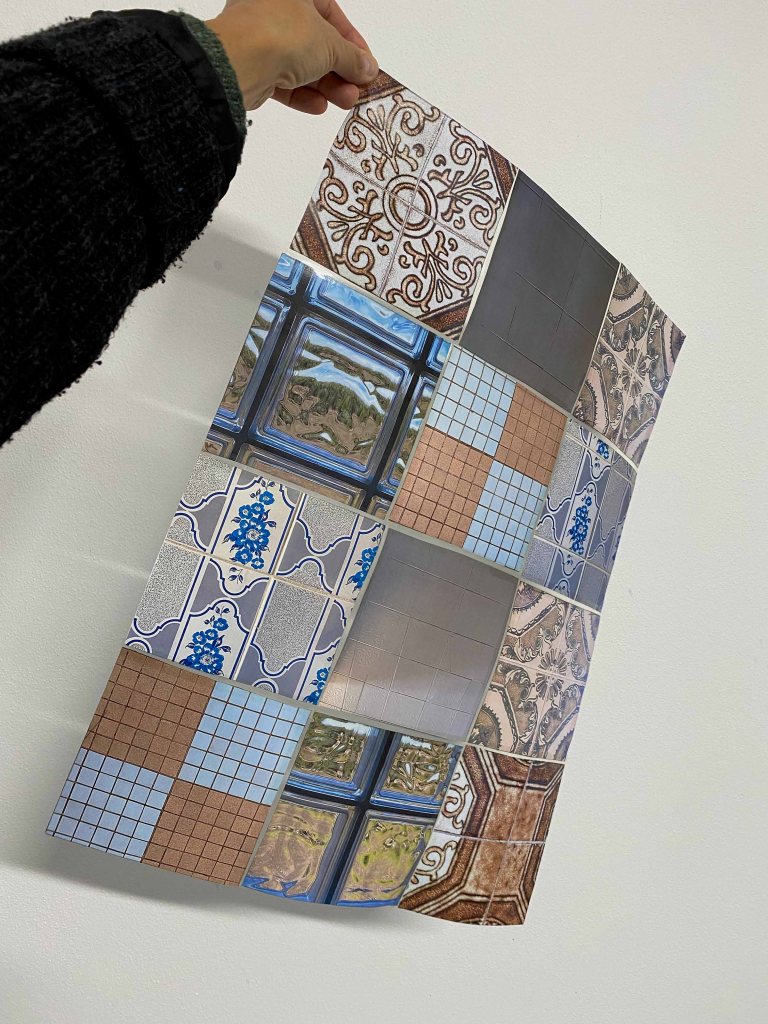
As a trial, I have taped the tile photos together into a mosaic. You can move the whole piece around like a blanket or a carpet that can of course be continued to any size.

And then folded together into a map like book:
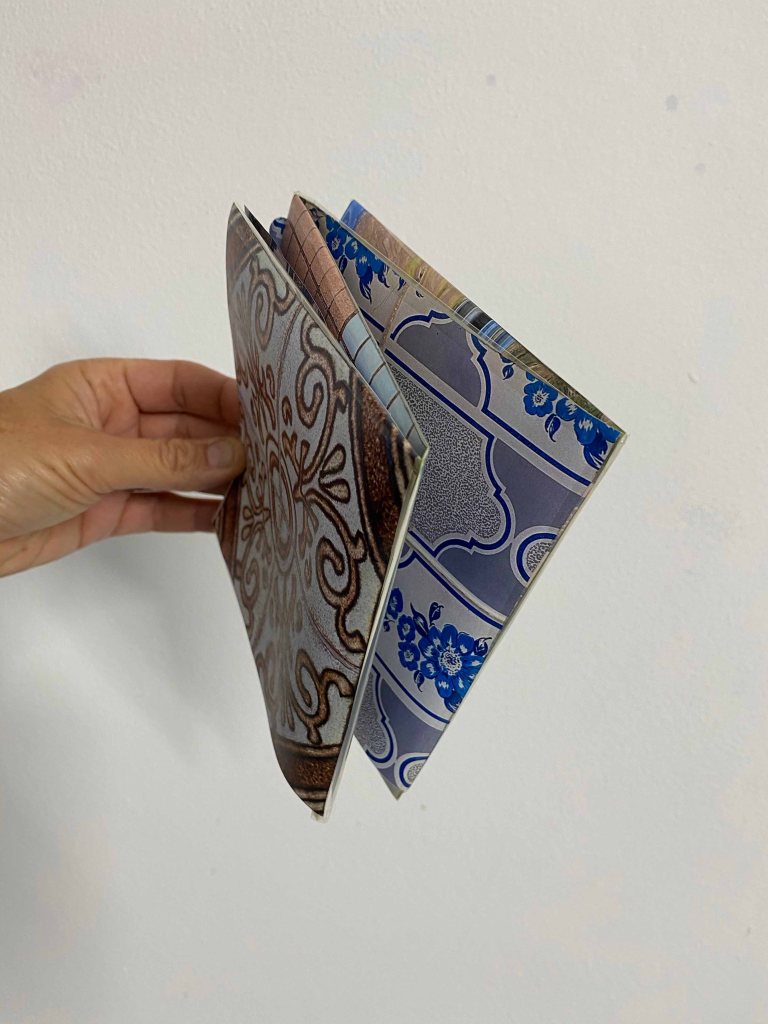
I decide that the piece can become much more interesting if leaving it more open. Inspired by “Volume 8 ” by Dieter Roth, I print out a new set of tile shaped photos and will keep them as a set of cards, in a crafted folder, leaving the possibility of a new combination for the tiletastic mosaic every time you open it.

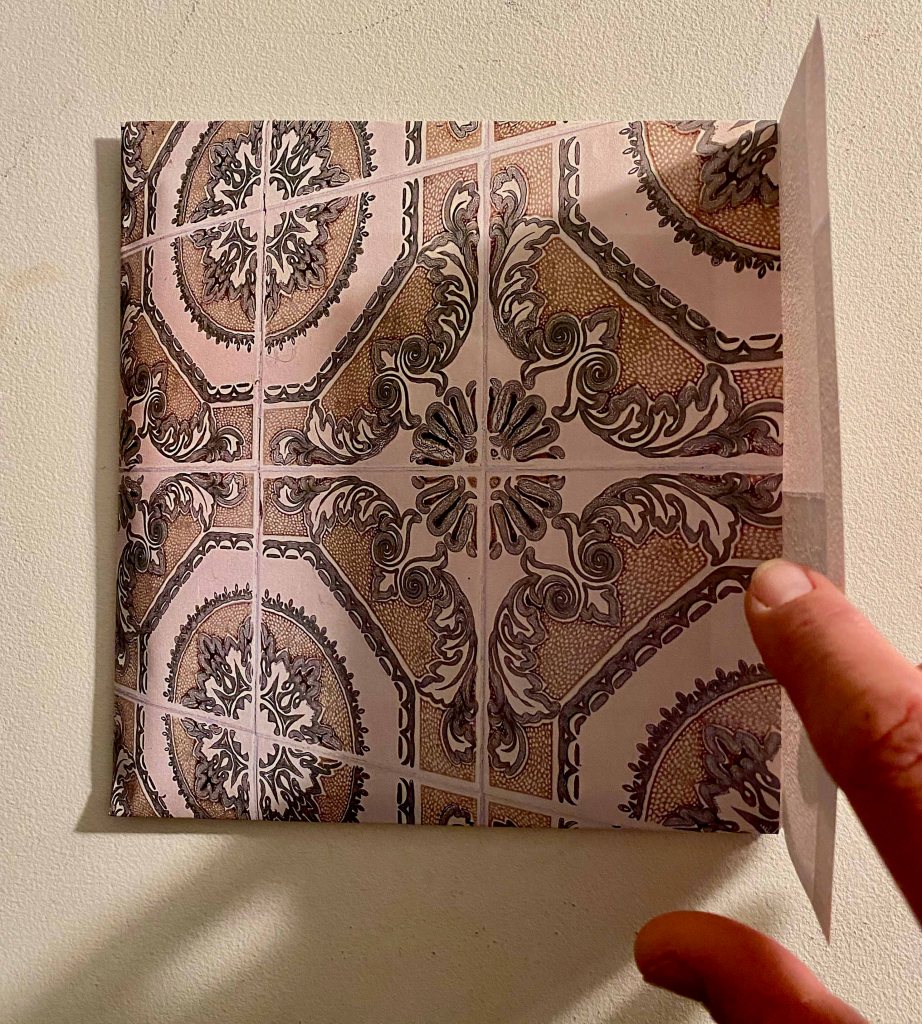

It feels really good to hold the stack of images in my hand, the thickness of the pile corresponding to a tile more or less.
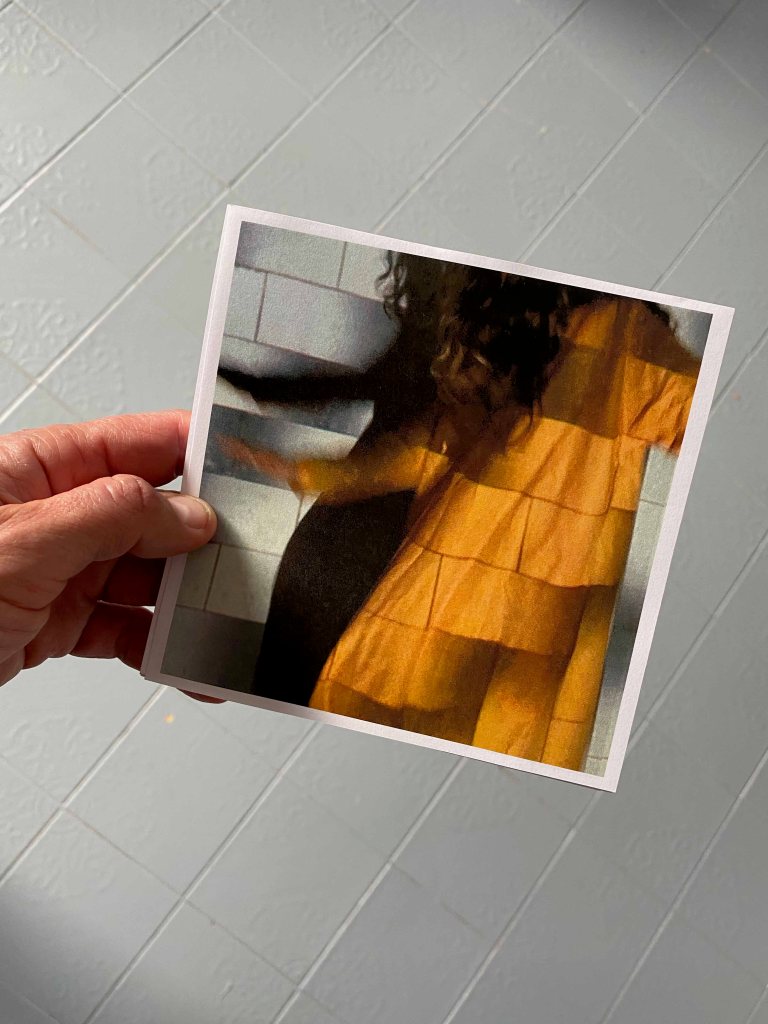
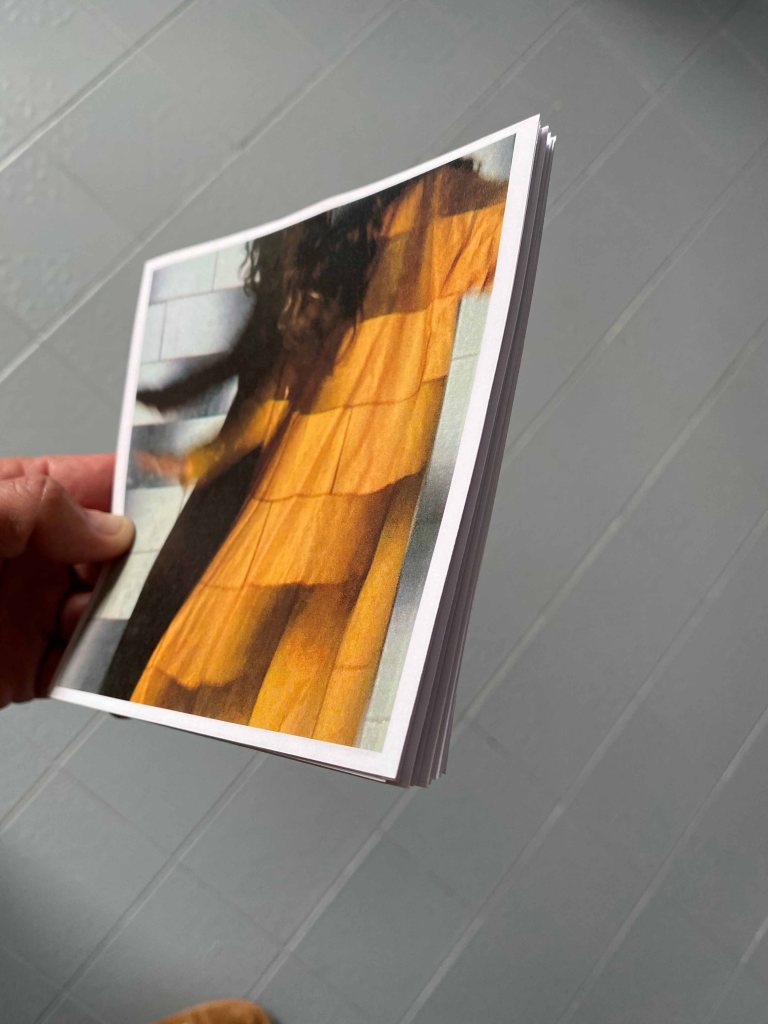
And then the puzzle can begin:
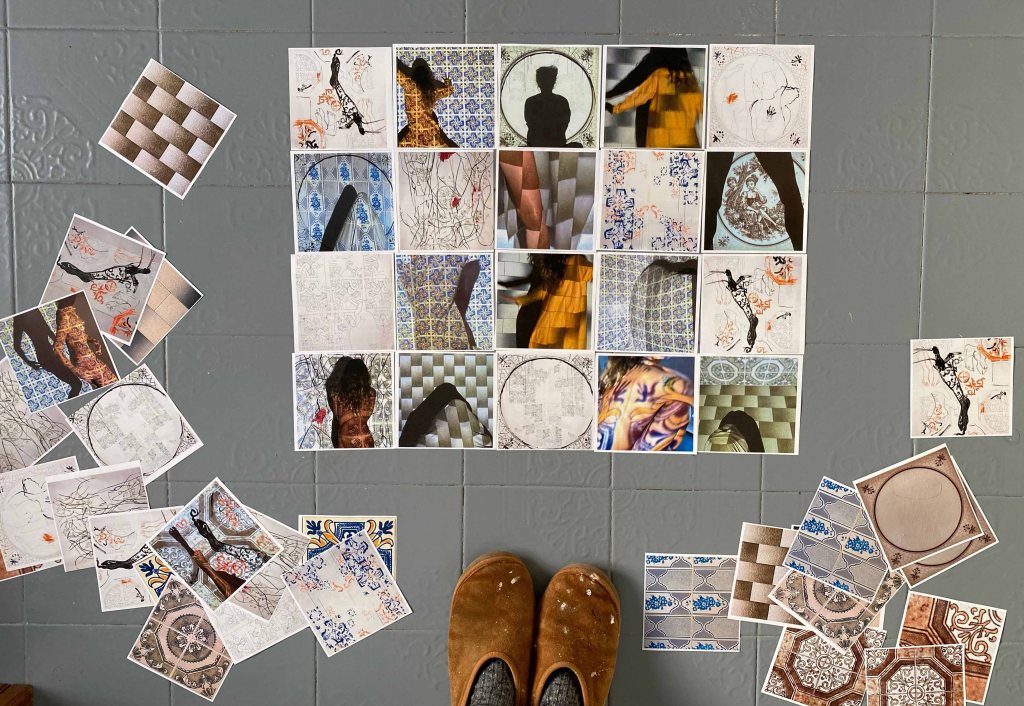
This is just one of the infinite possibilities:
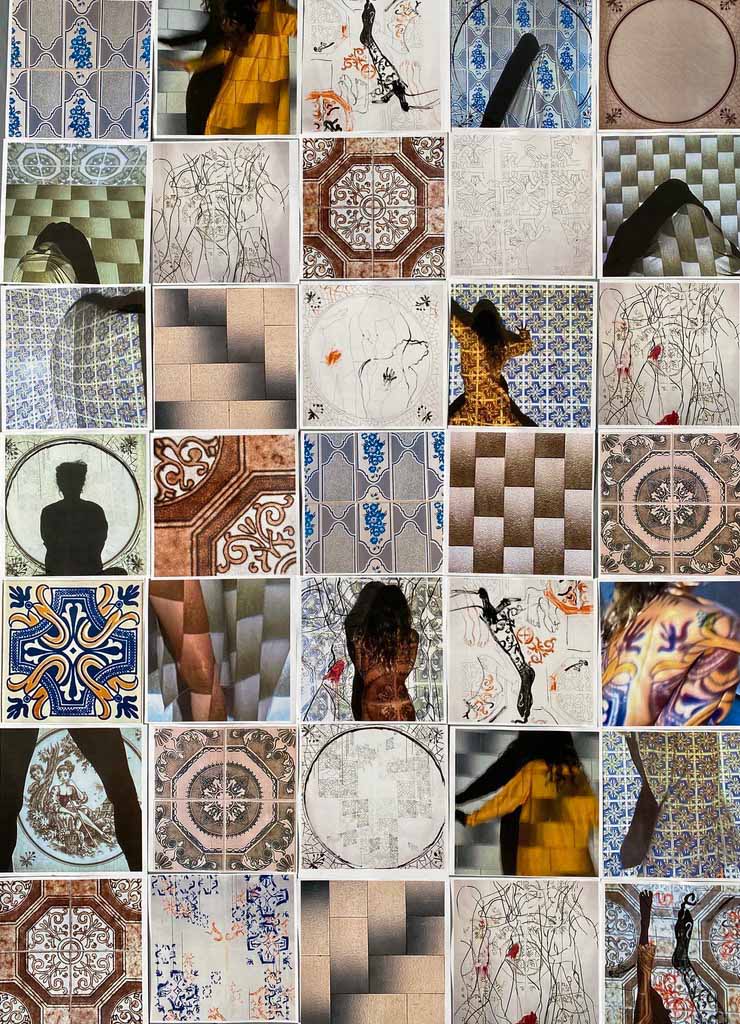
I realize that this result is at least as “noisy” as the original tiles and combinations!
I am happy though with where this project has taken me- to examine our many tiles and to play with them into creating new versions.
I will continue this exploration into the next project: A finer focus
 Clara's Drawing 2