Course manual:
Aim: Gwen Hardie is an artist who makes careful drawings and paintings of small areas of her own skin. Richard Wright is a former sign writer turned Turner Prize winner who makes intricate wall drawings. Grayson Perry is a ceramic artist who makes detailed extended doodles. Jim Shaw combines exquisite naturalistic detail with complex cartoon imagery. Do some research into artists who work in a similarly painstaking or meticulous way, something which arguably has become one of the most significant features of contemporary drawing. By making a drawing of your own which involves focused effort you’ll be in a position to reflect on how this affects your relationship with the subject and the process and what it communicates to the viewer.
Method: Choose a subject which has a substantial number of detailed parts. Think about whether these parts will be repeated (a plate of baked beans, for example) or all different (a hyper-realist drawing of pins and nails). Consider also whether the parts will be drawn from observation or invented (as in the work of Paul Noble). Remember that the original subject may not be primarily visual (in extended doodling, for example); you may be using drawing to describe a narrative or even musical score, so that the imagery is secondary to the relationships between the elements.
RESEARCH
TERESA ESGAIO
I was lucky to visit the exhibition opening of young contemporary Portuguese artist Teresa Esgaio (b. 1985) at the Underdogs Gallery in Lisbon last year. She draws very detailed, photo realistic drawings in dry pastel and graphite.
The title of the exhibition is “Take a number” and upon entering the gallery space there were two very long, low benches with a total of 100 small drawings of queue numbers, along with the dispenser on the wall, as if entering an institutional space for a long wait.

Each and every one was very detailed, with creases and spots or ripped corners.
I asked the artist how long these drawings would take her, and Teresa explained that she spends around three weeks drawing full time on the larger works, like this bed:

This was my favorite work of the exhibition. It felt like the most personal and vulnerable maybe- giving a glimpse of something possibly very intimate.
Although I greatly admire the quality of detail and focus here, this is not a way I am aspiring to draw myself.
(photos my own from the exhibition)
MARC FAIRNINGTON
Marc Fairnington paints with intense detail- humans, animals, and plants.
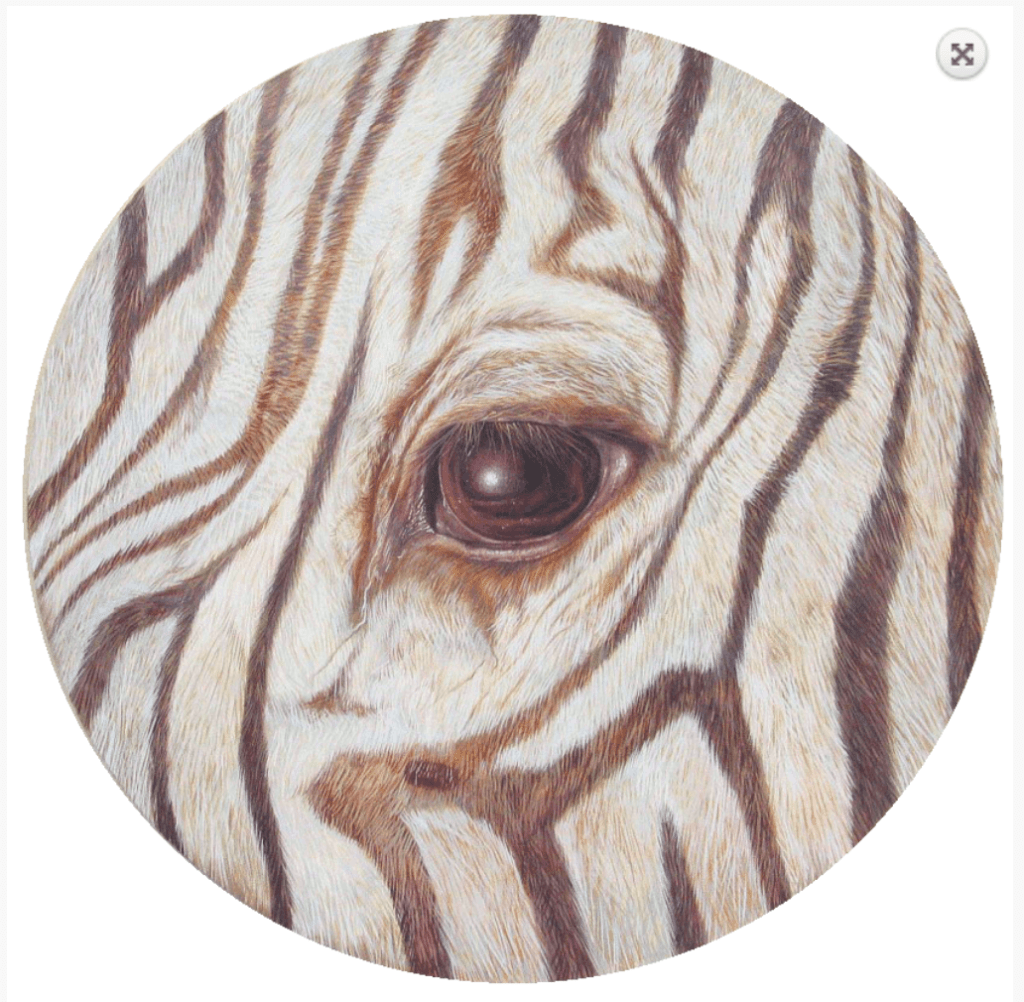
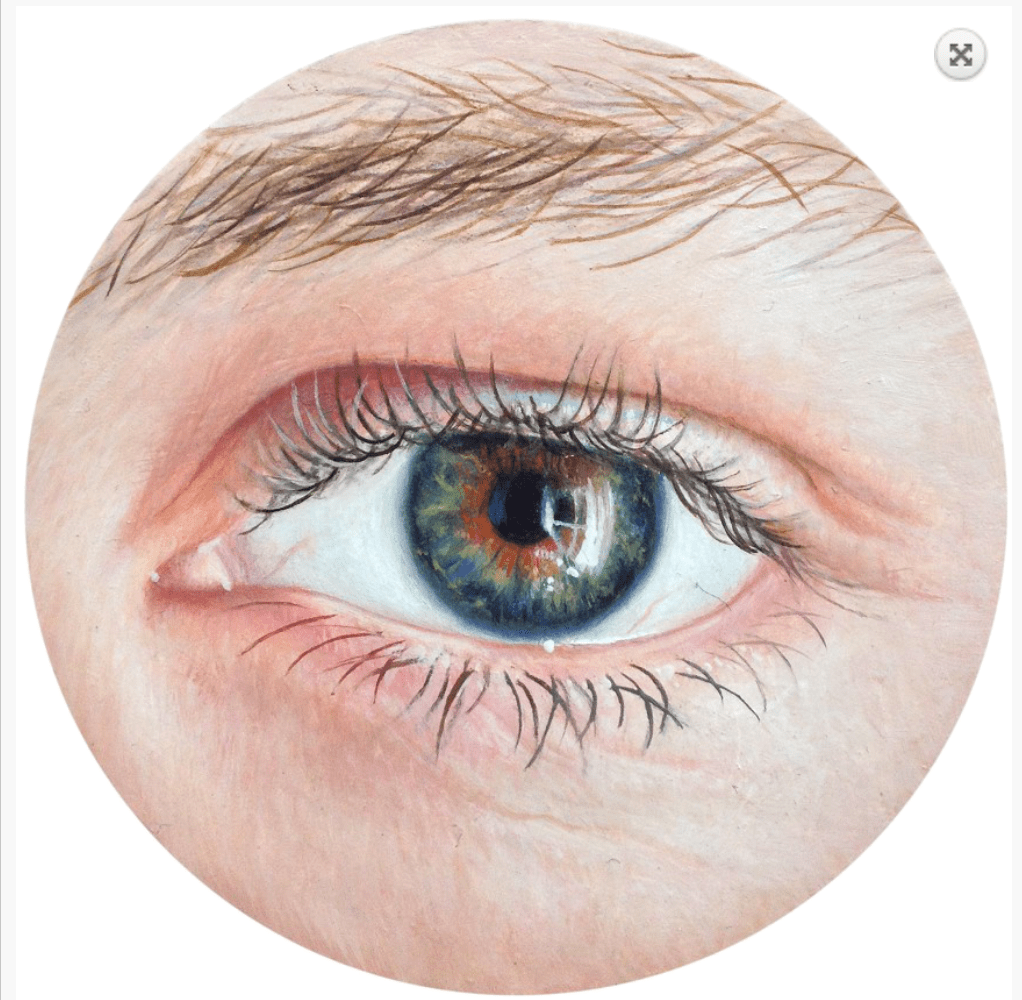
I am quite fascinated by his long series of eyes, both human and animal, in tondo formats, they look spectacular. I often draw eyes and want to learn how to draw them better, so this is a wonderful example to look at.
But if his paintings look like from a natural history collection at a first glimpse- they are much more interesting than that. It is “unnatural history”- invented creatures, plants with more than one species on the same branch and beasts.
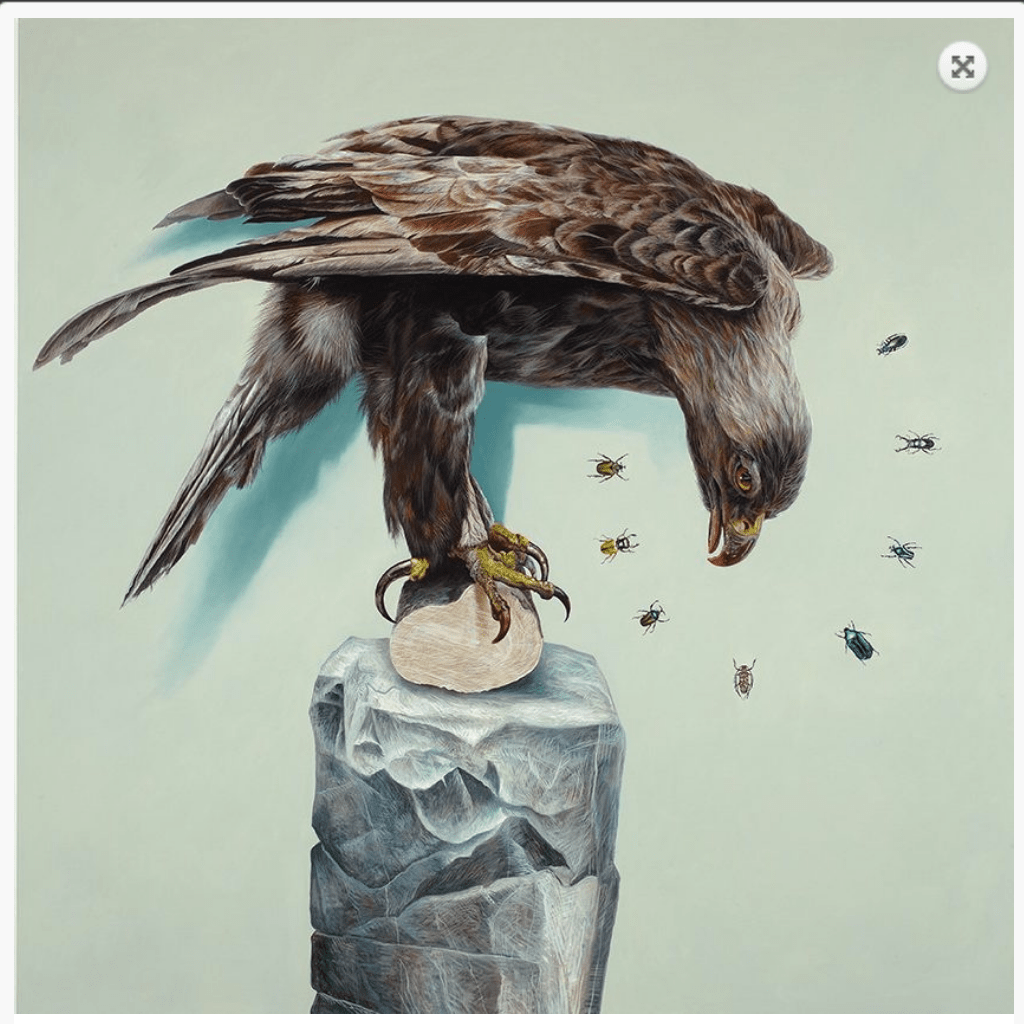
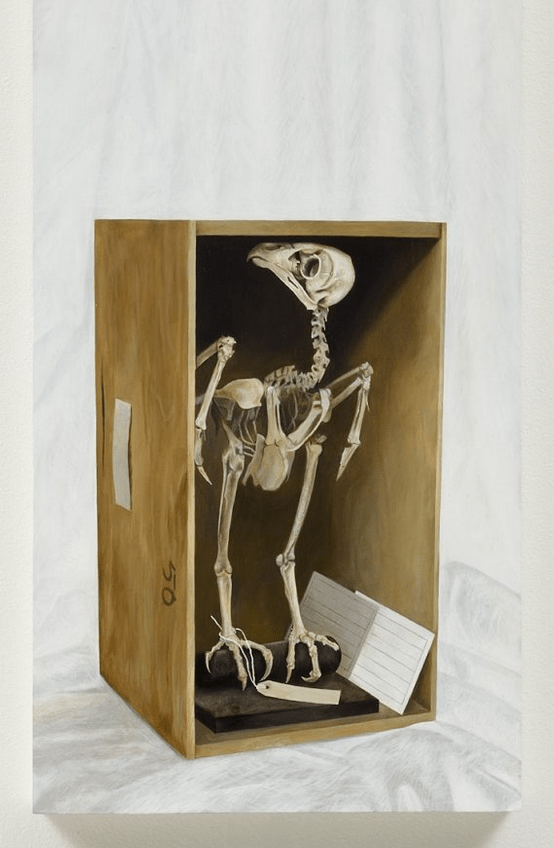
I definitely admire this extremely detailed and meticulous painting, the seemingly natural, but then with an added layer of mystery.
(Images from: Underwood, S. 2020. Marc Fairnington painter. [Online]. [13 November 2020]. Available from: https://markfairnington.com/)
A FINER FOCUS ON TILES
I have just spent days looking at the patterns of the wild tiles in our odd house, for the artist’s book.
For this project, I want to continue scrutinizing the patterns closely and recombining them into a new imagined world.
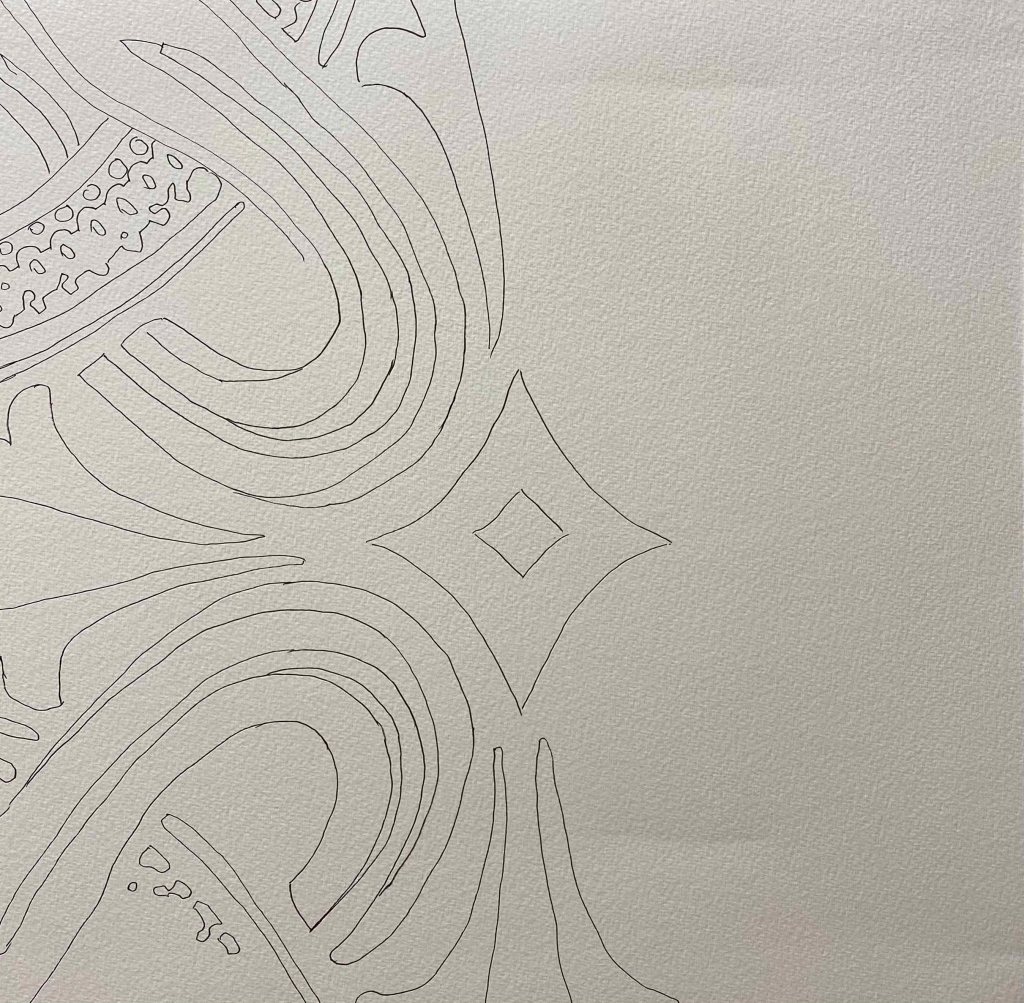
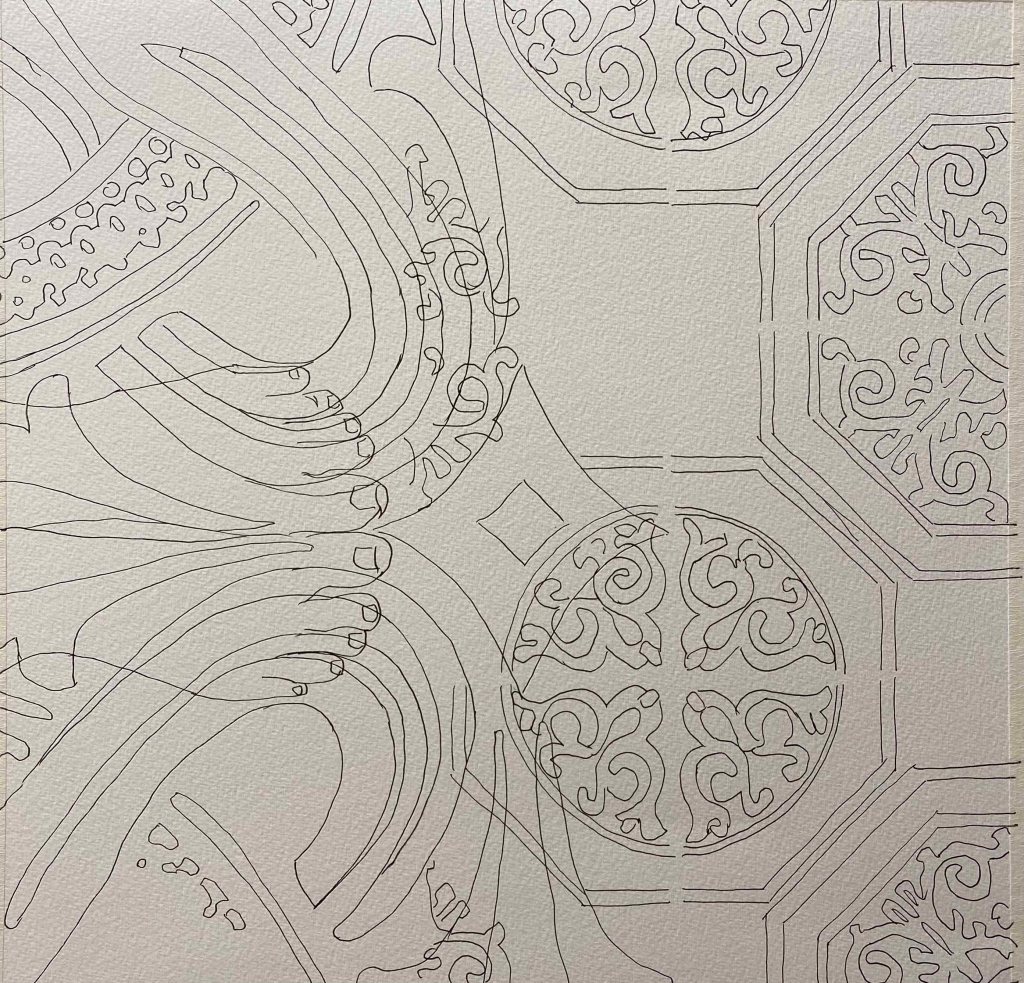
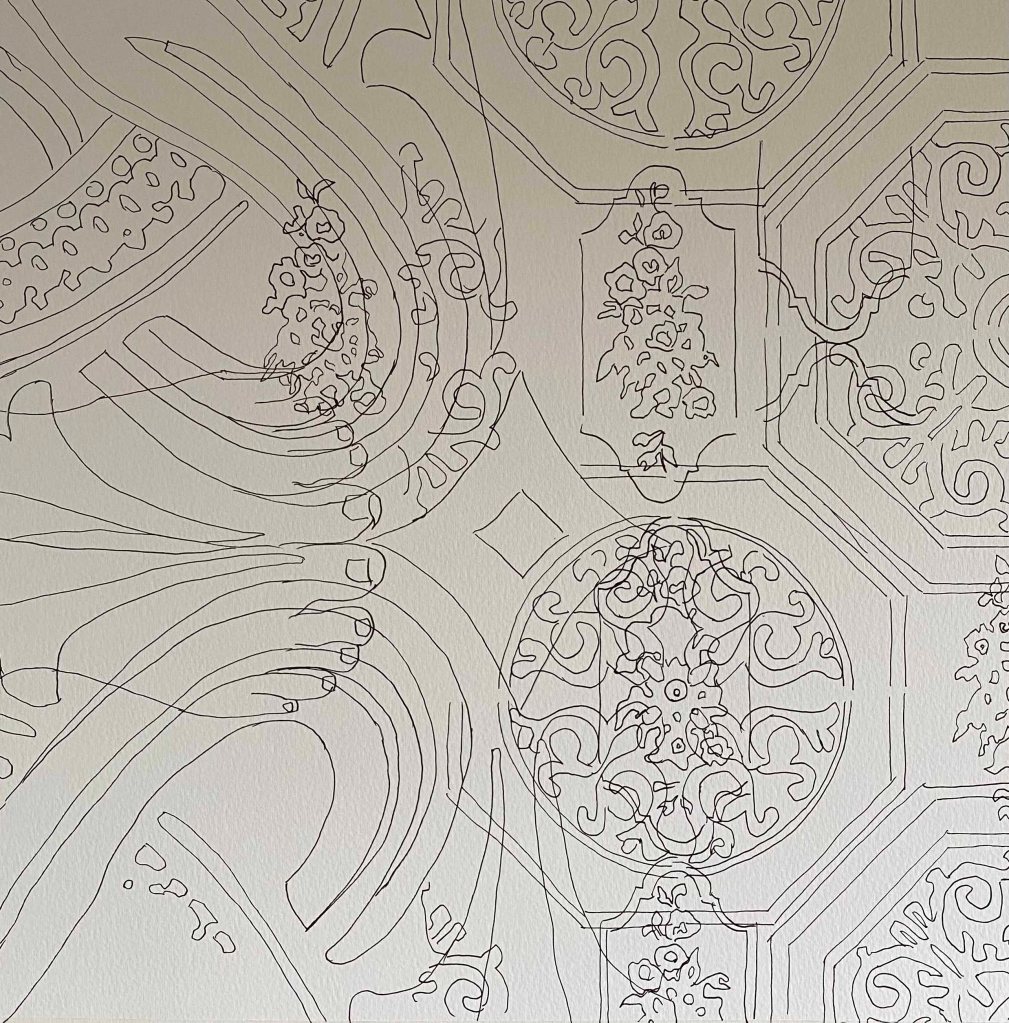
I will use a fine liner pen working from an easel. I prepare a larger square of 36×36 cm white 300gr watercolour paper to mimic a clean, white tile, large enough to develop different patterns. This is a combination between close observation of the existing patterns and allowing myself the freedom to continue into extended doodling.
I noticed in the previous project of the artists book, what a very different feeling a lifesized (180×200 cm) drawing on the wall had, compared to the small printed version of the same drawing that I could hold in my hand.
This is a sequence of the process combining the different patterns and free drawing:

I am definitely not an abstract artist- even when I am planning to focus on patterns, I start finding form.
This is the final drawing:
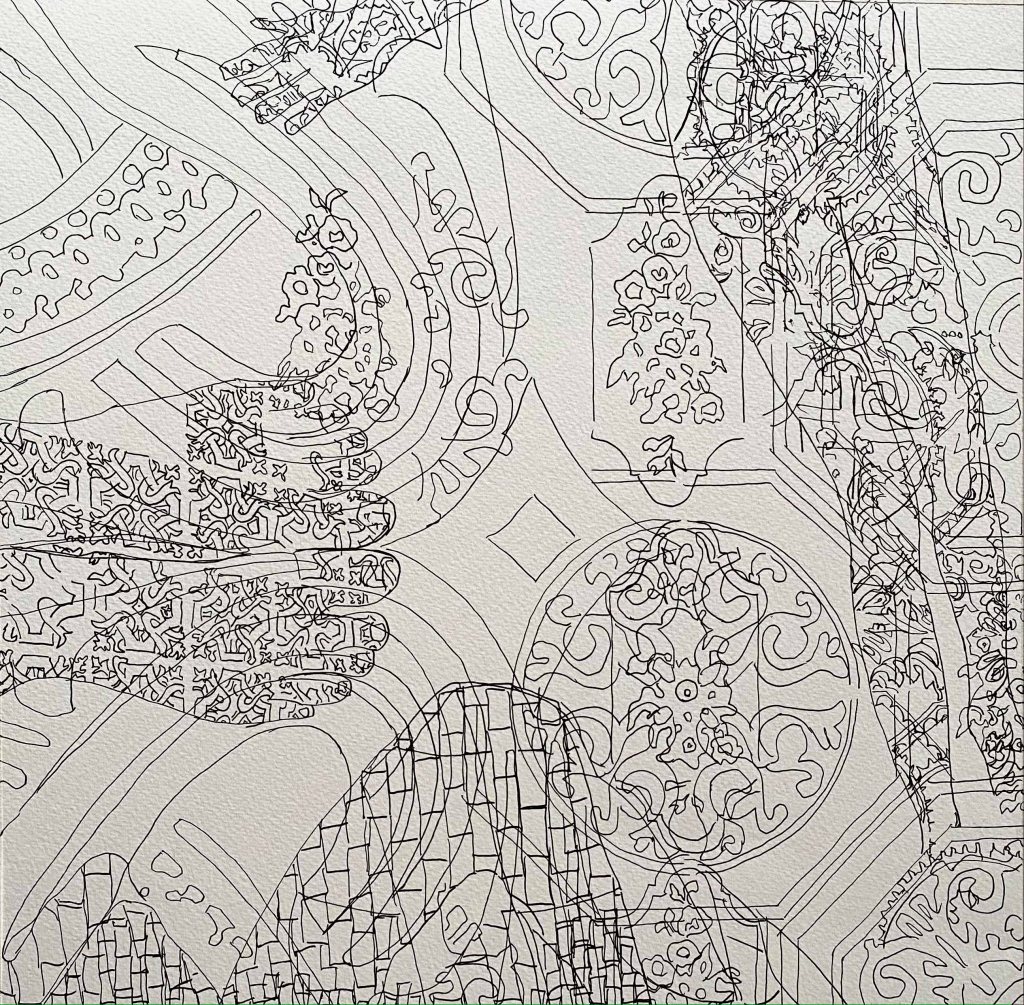
This drawing gave me the experience of working painstakingly and meticulously, it required a finer focus. I think that is possible to feel for the viewer. I am not overly enthusiastic with the result, but greatly enjoyed the meditative aspect of the project, and also developed yet another level of knowledge about the weird tiles in this house. I was quite surprised to notice how imperfect their patterns actually are, something I had not noticed when seeing them on the wall.
 Clara's Drawing 2