Category Archives: ASSIGNMENT 6

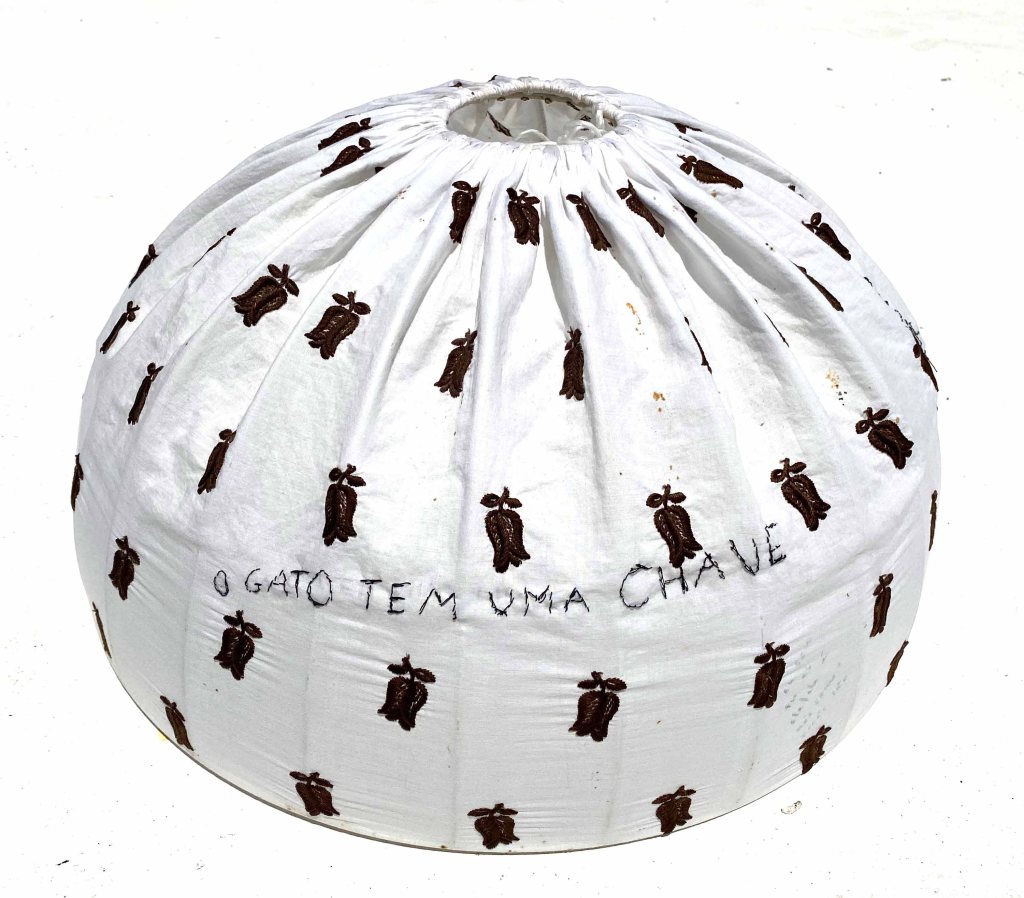
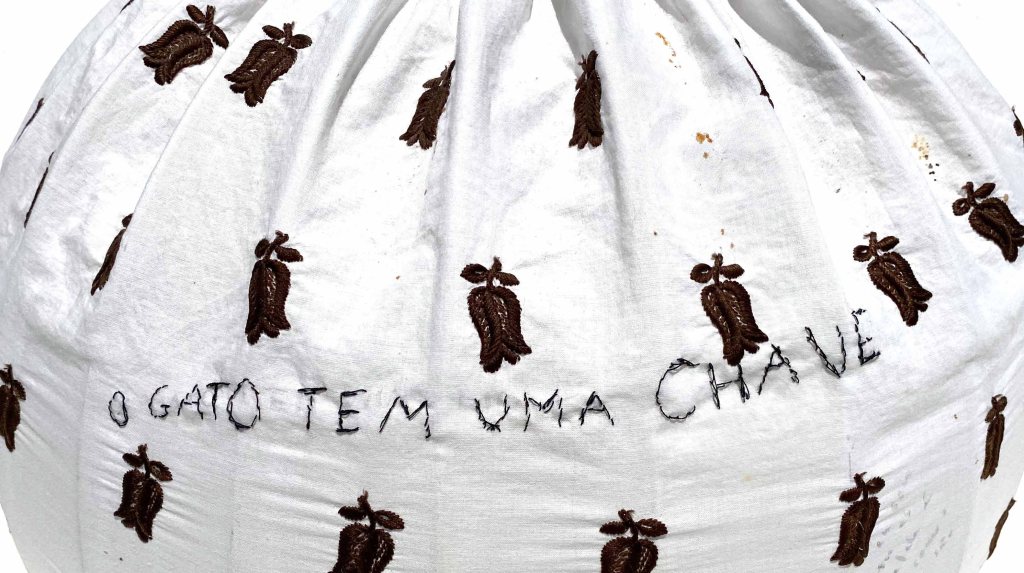
“Grammart”, or “The cat has a key” (O gato tem uma chave)

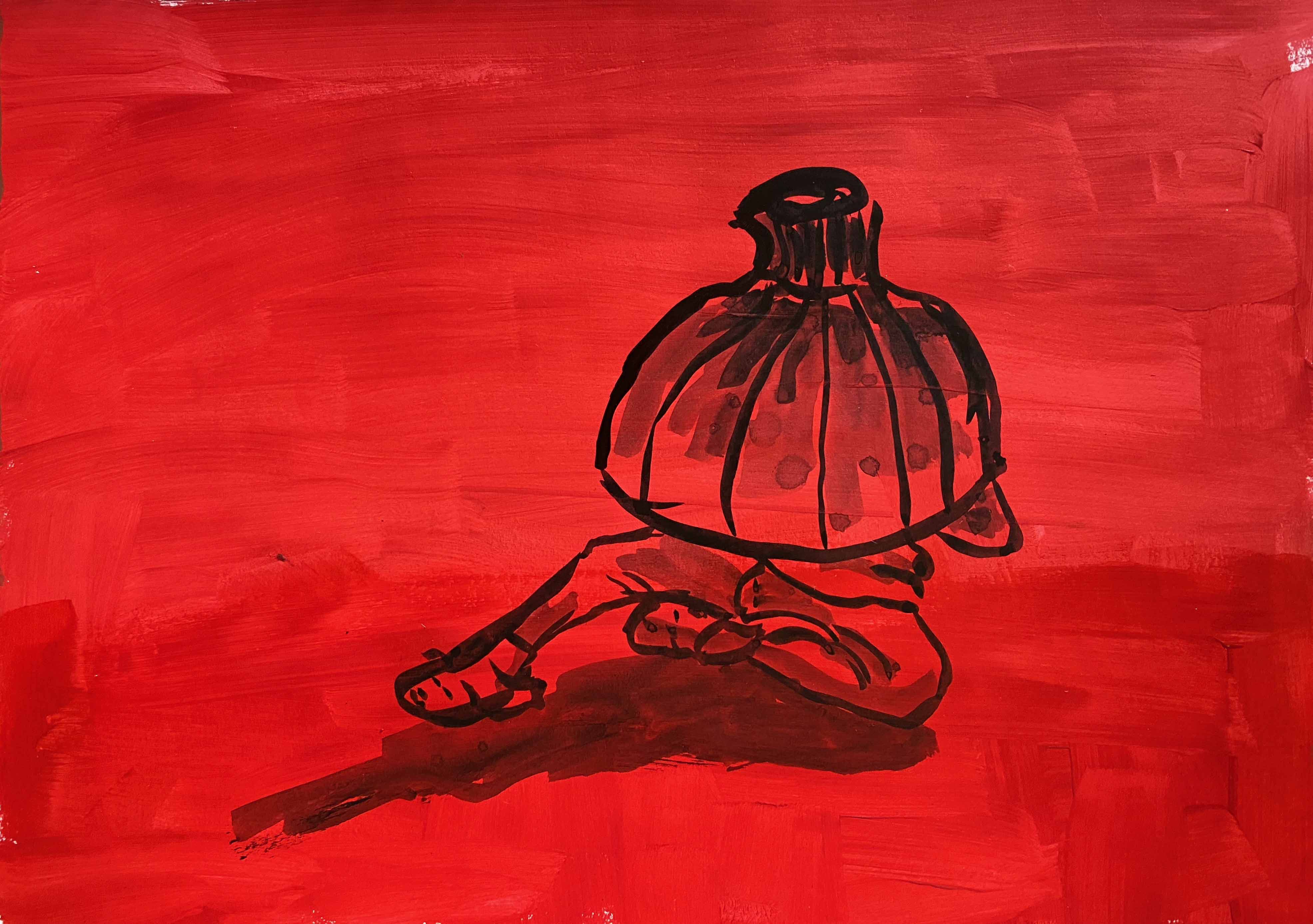
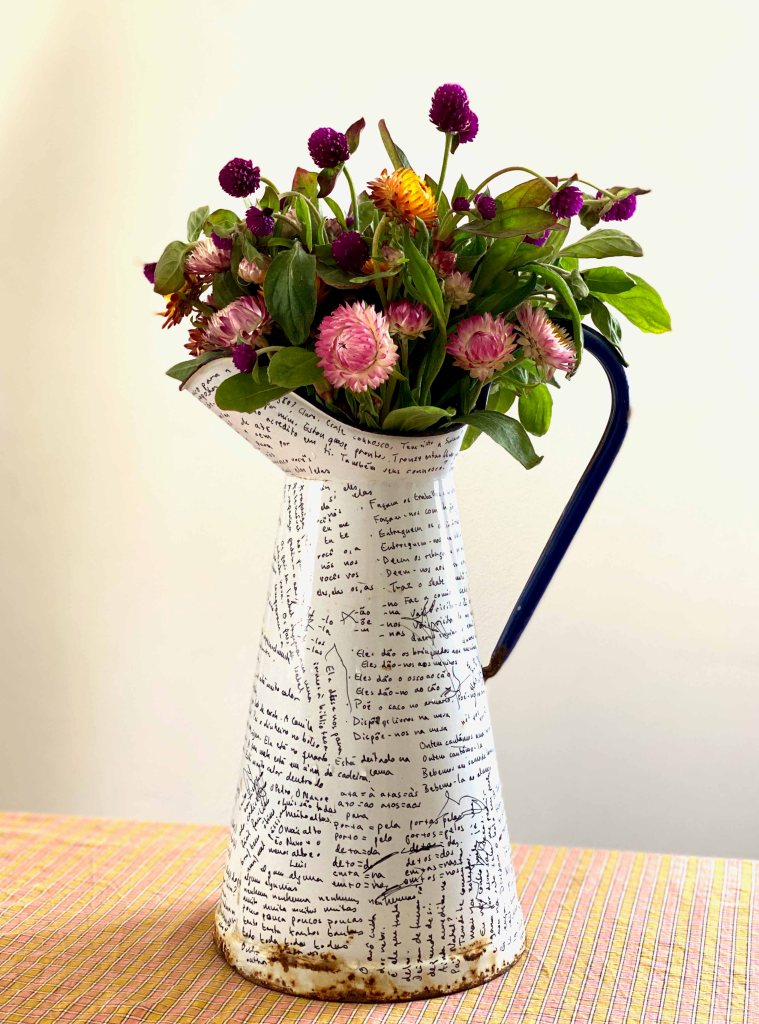
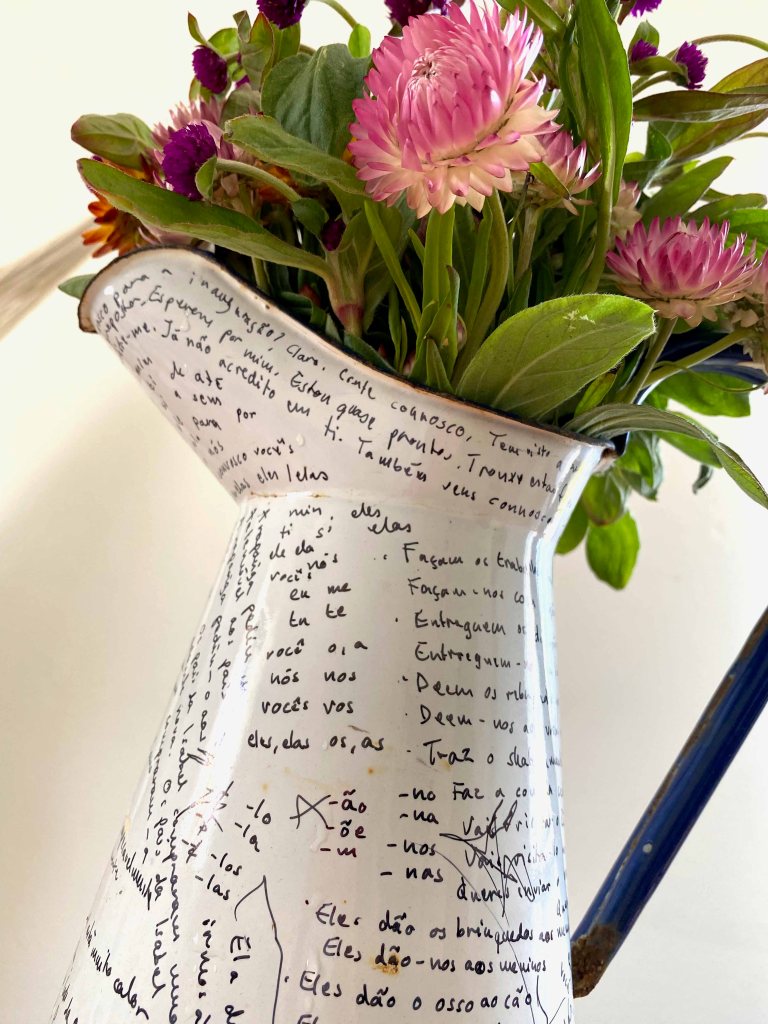
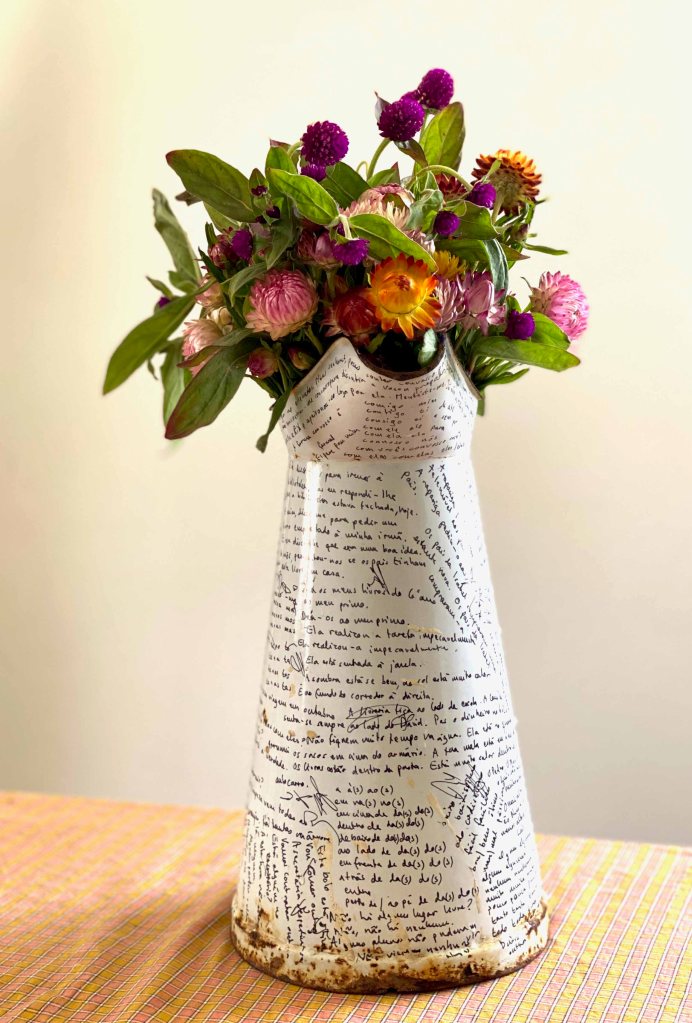
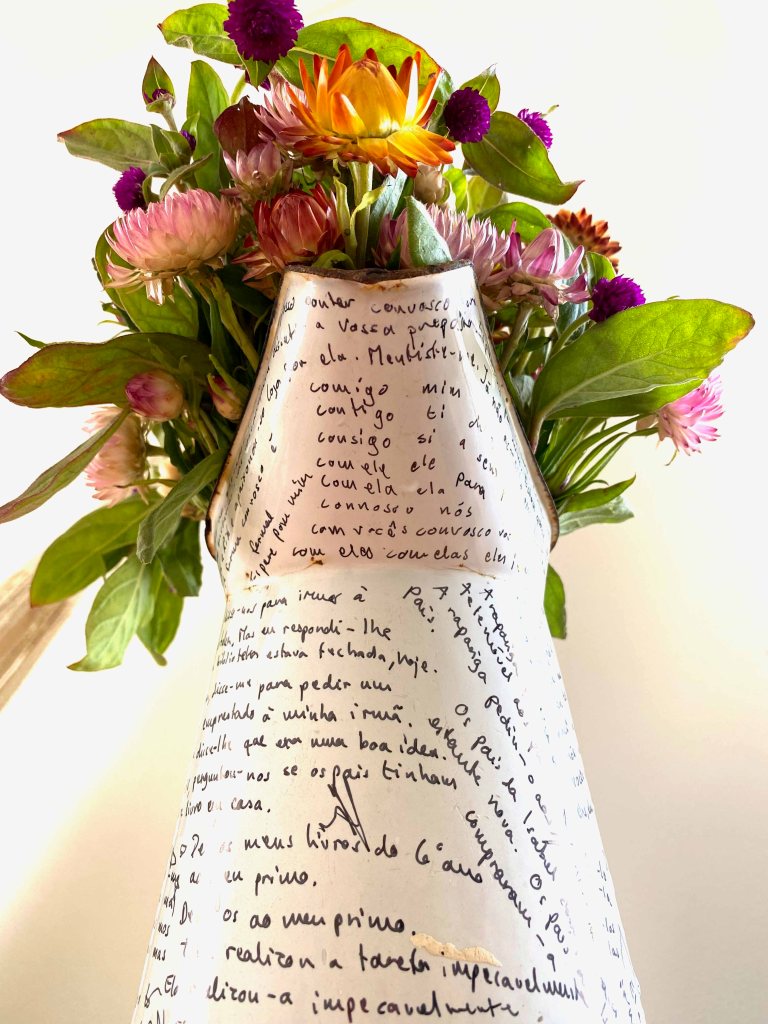
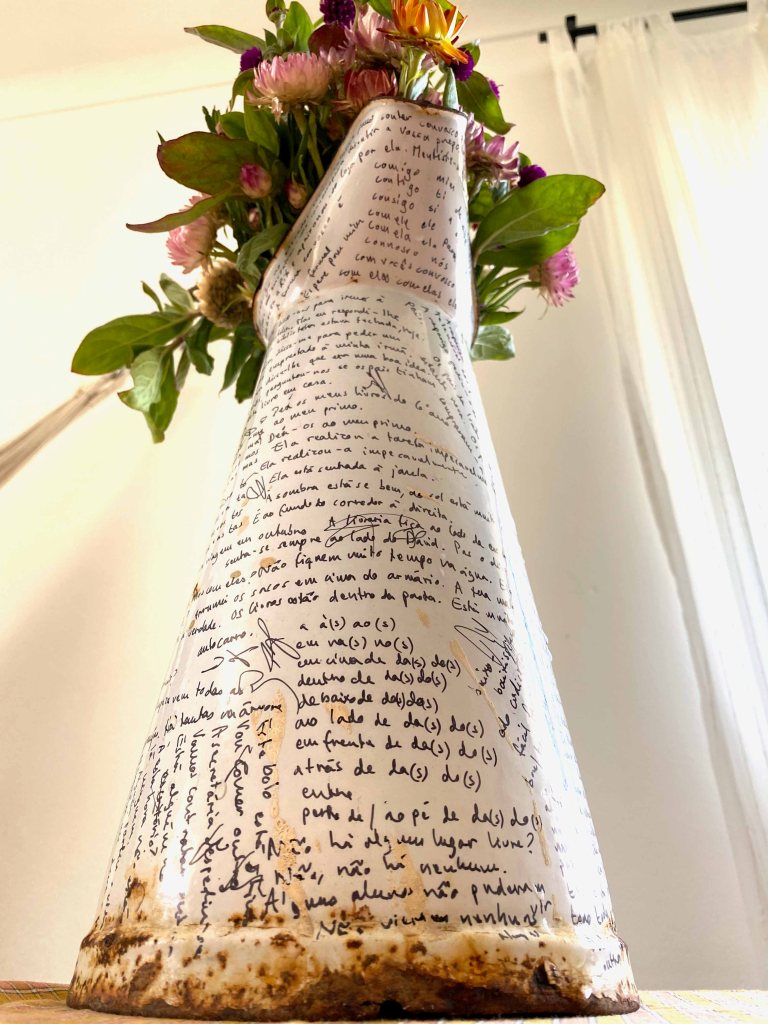
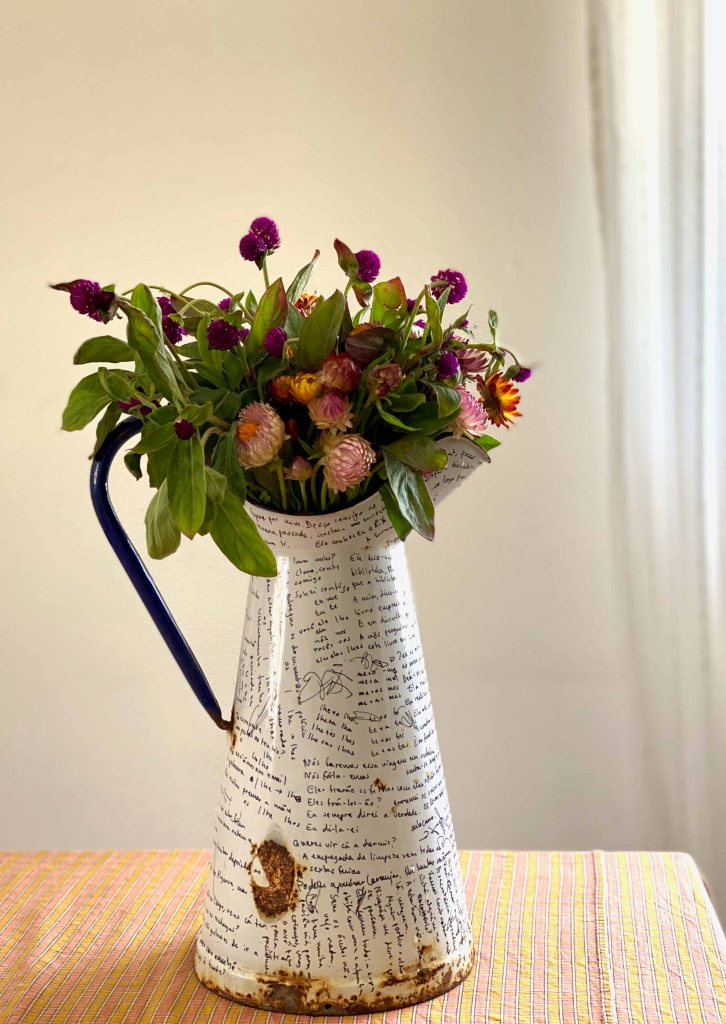
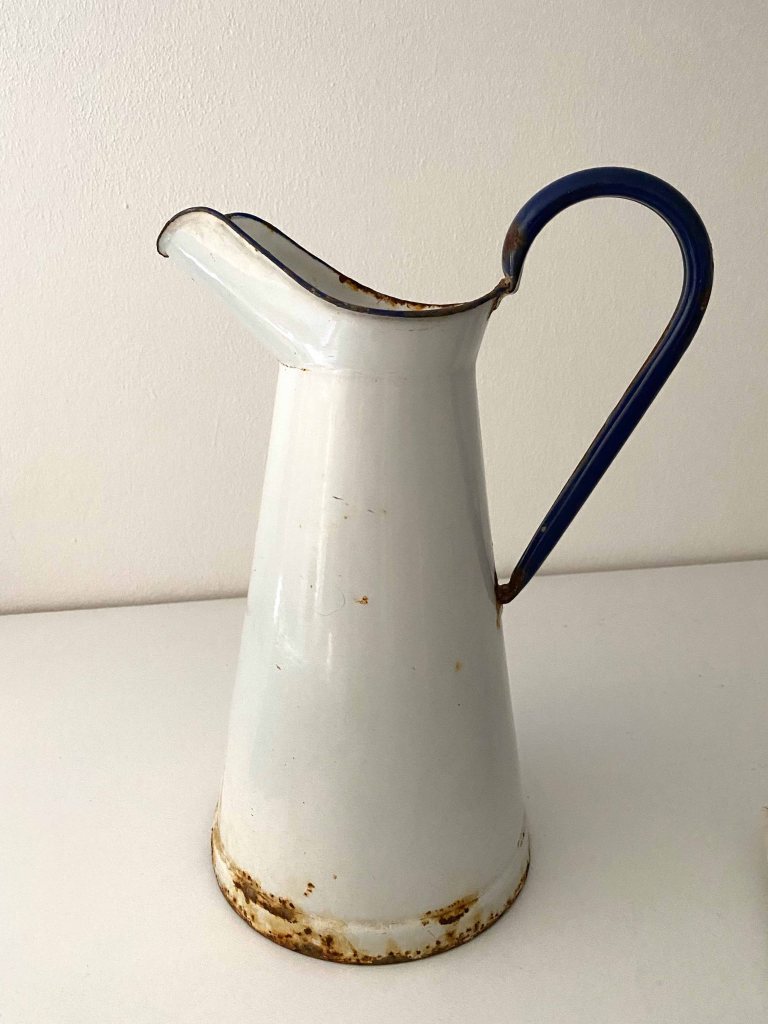
I found myself debating whether I should dedicate the little spare time I had to art or to doing my Portuguese grammar homework, when the solution became obvious, “Grammart”. I have already used a lot of the odd leftover objects in this house for the parallel project. This time a lampshade and a pitcher stood out as perfect supports for my grammar homework. The idea is to merge old items from the house with something personal and present, like my struggle with Portuguese grammar.

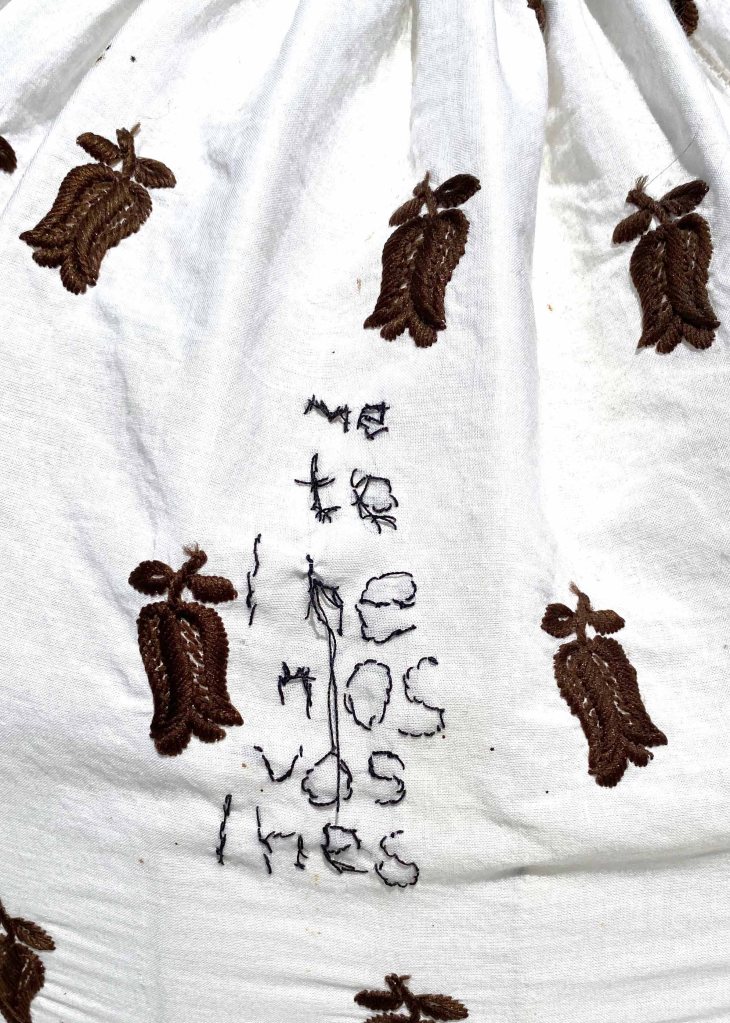
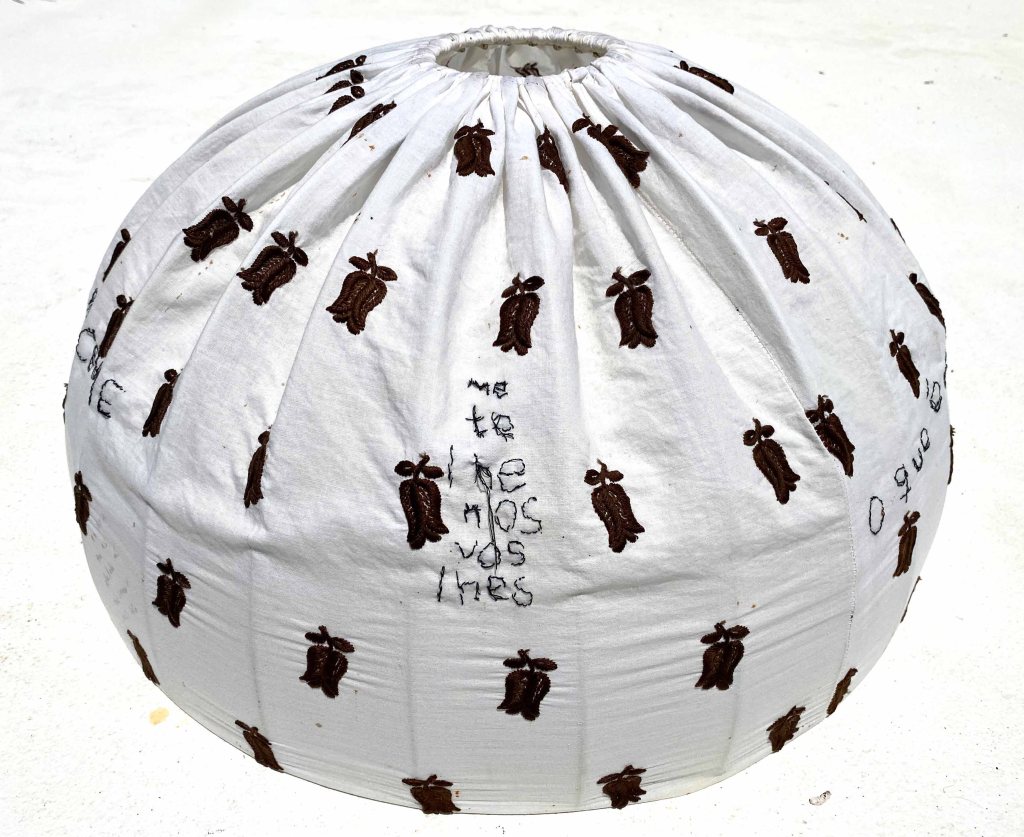
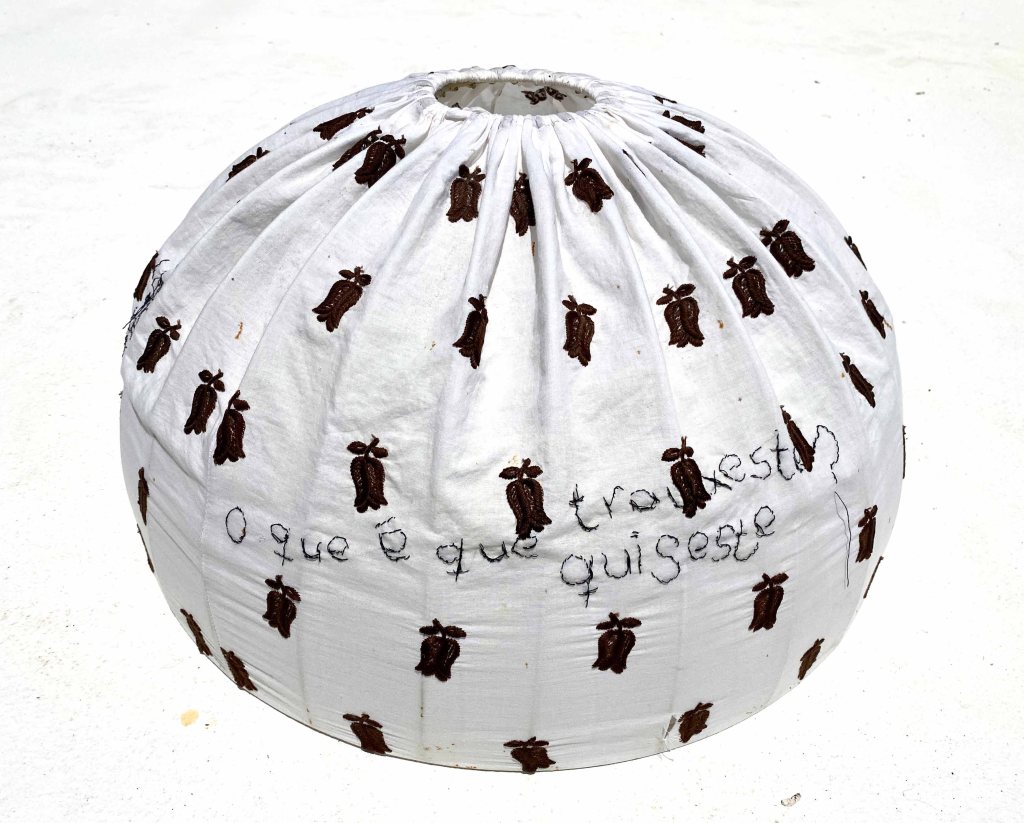
This is the result after some hours of homework, enhanced by some scribbles by my granddaughter.

This piece can be strategically placed as a flower vase and allow me to cast quick secret glimpses on the rules during a conversation in Portuguese.

It was an obvious and simple idea, but I am happy with the result. I think the scribbles add a clearly contemporary style to the object, whereas the shape and the rusty signs of ageing are clearly from another time, so the merging of different stories work well here.

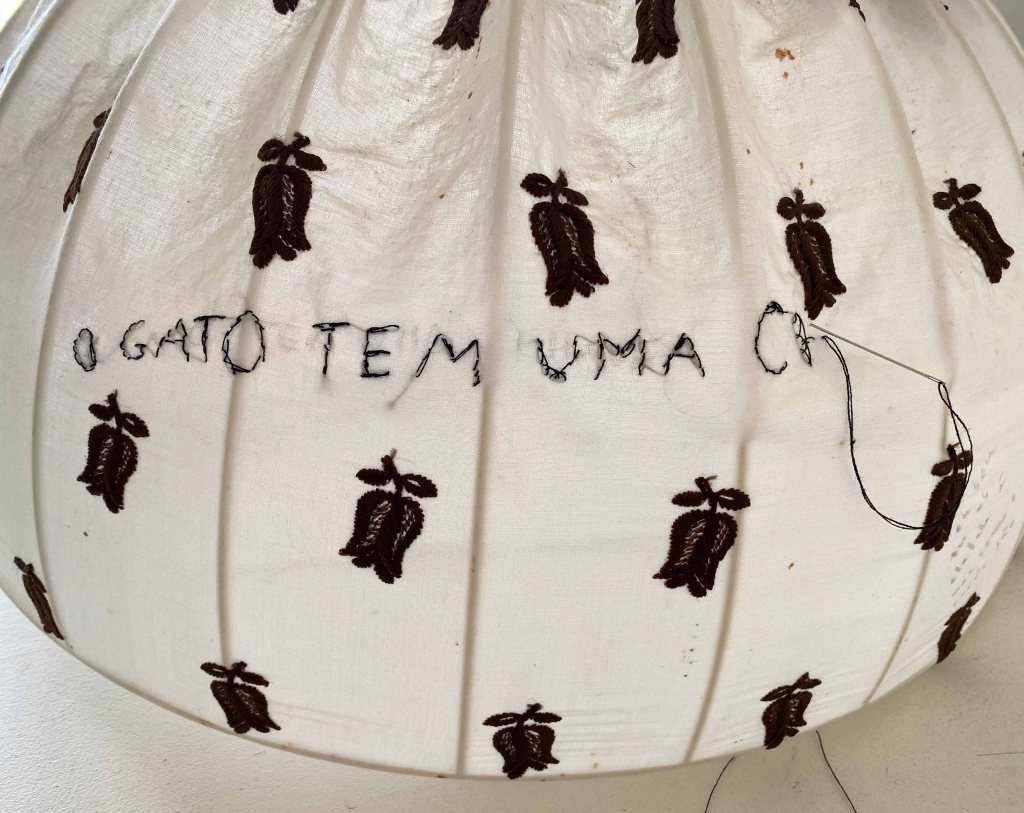
For the lampshade, I try my hand at embroidering.

I am a beginner at embroidering, but instead of trying to be neat and look more expert, I am exaggerating my clumsiness. I want the beginners look of the embroidery to reflect my beginners mind with the Portuguese language. Also the lampshade already has machine made embroidered flowers and I want the handmade imperfections to contrast with the machine made and uniform shapes.

The very useful phrase “O gate tem uma chave”, meaning “the cat has a key” was automatically created by the language learning platform, and I just love the absurdity of it.

I chose to keep the piece monochrome and rather spacious and believe the balance between the existing pattern and the embroidered words work well. Also it is again a very clear contrast between different worlds that reflect the gap between the history of the house and what we bring to it.

Parallel project- Empty room/ Modern cavepainting

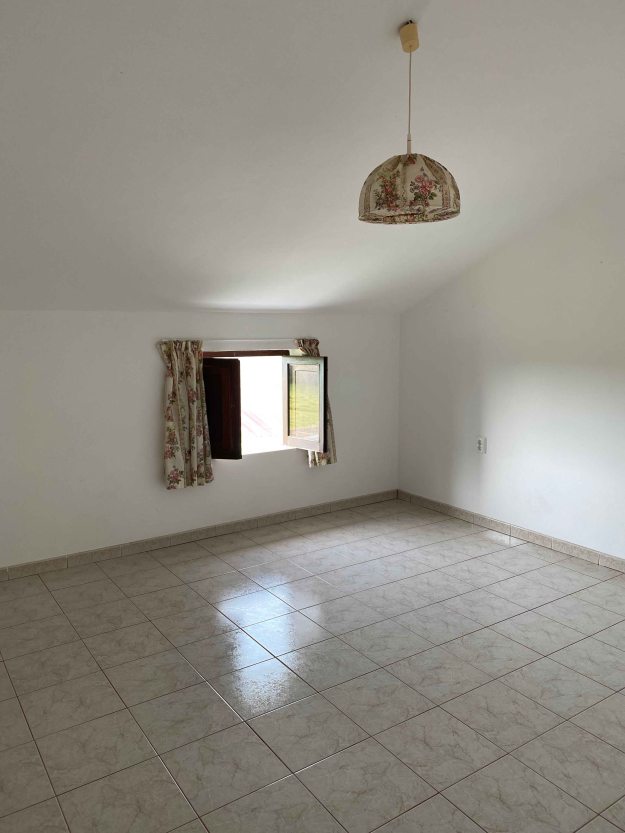
In several of the rooms, a lampshade is left dangling from the ceiling and some curtains left on the window. In a way, these lonely left over objects just emphasize the emptiness of the room.

This room is to the North and always cold and dark. It has a weird shape and really low ceiling to one side. When I first saw it, it had very much very dark, heavy furniture in it and I can still feel the energy of this dark heaviness lingering. It took me a good while to even clean it out and it is definitely the space I have spent less minutes in.

I will change this by making “an empty room” one of the objects for the parallel project and by using this whole room as my sketchbook to record many of the stories I hear about the village.

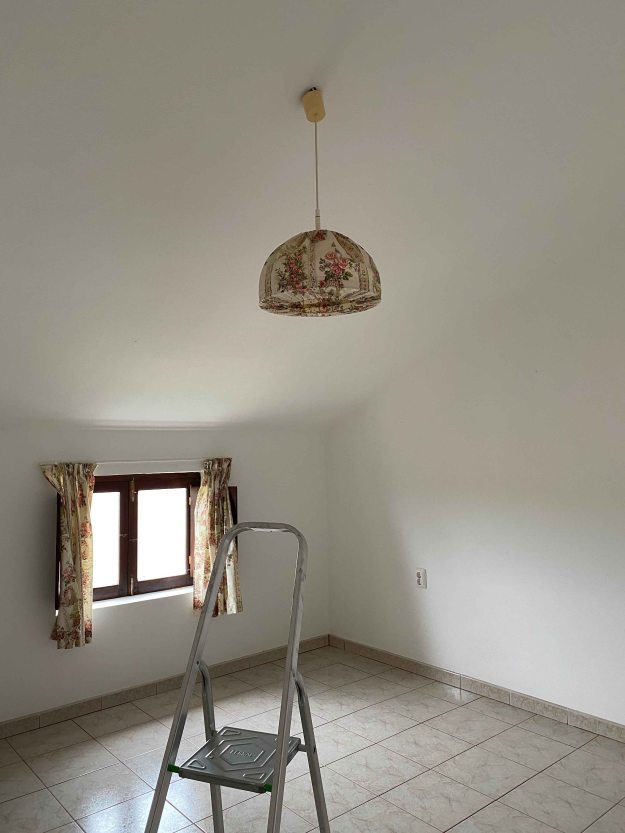
Hera I am, ready to start. A whole white room as my white page. And now I need to decide where to put down the tip of my pen.

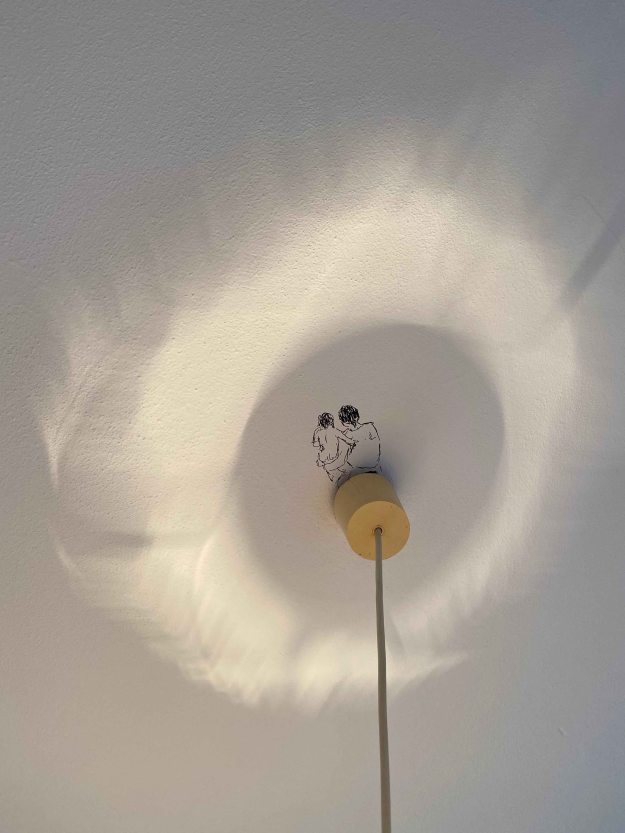
The dangling lampshade seems to be the center around which the space moves and I climb the ladder to start there.

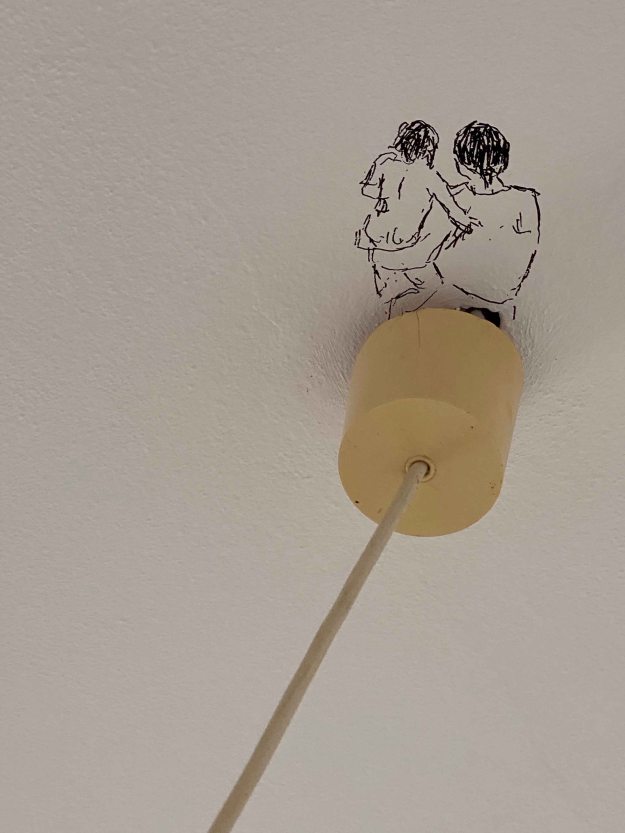
I start with my neighbor Donna Maria’s account of her first memory from when she was 3 or 4 years old and still little enough to be carried by her mother.

When I switch on the light, I am so happy I chose to start at this point in the room:

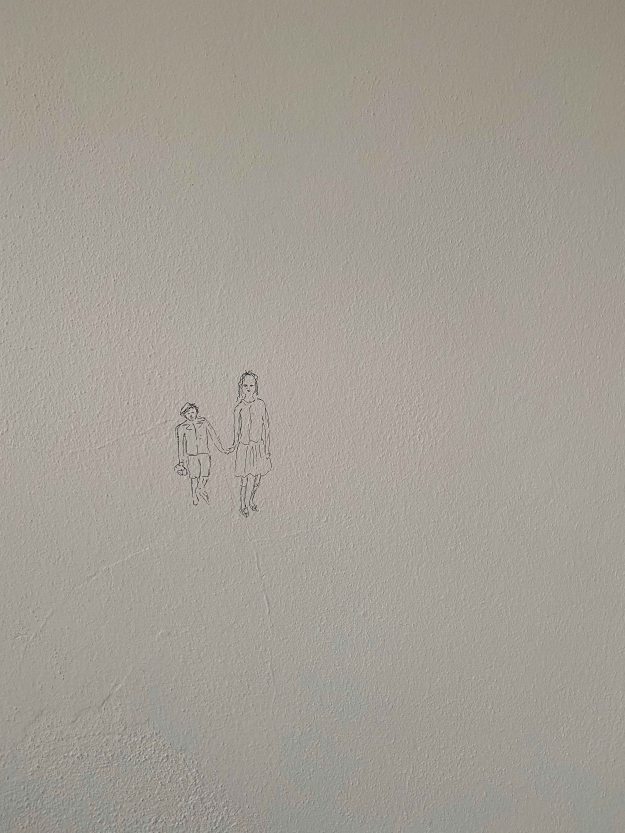
I start another story on the wall to the East, about Maria Jose walking to school with her little brother, the 4 km to the nearest primary school.

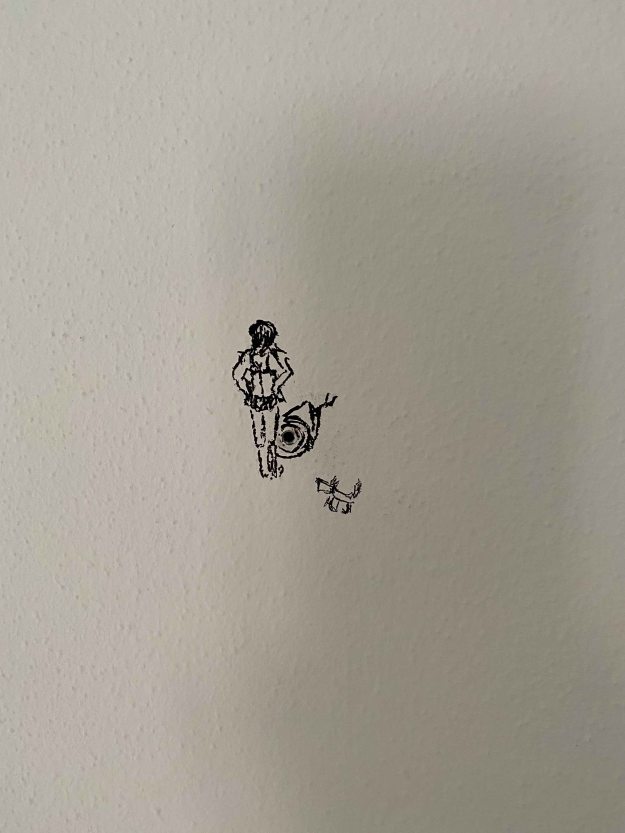
On the back wall, her granddaughter has a dog called Boss.

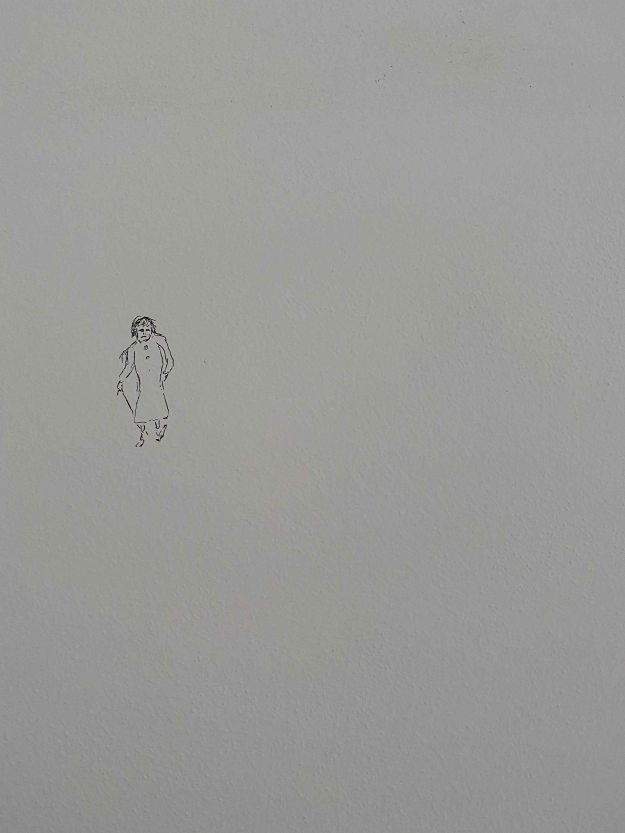
I realize that all three stories start with relationships- to the mother, to the dog, to the brother. I decide to leave the Western wall to a lonely figure- Donna Laura from the house on the other side of ours.

Her story is very sad. I will let it evolve around the figure in time.

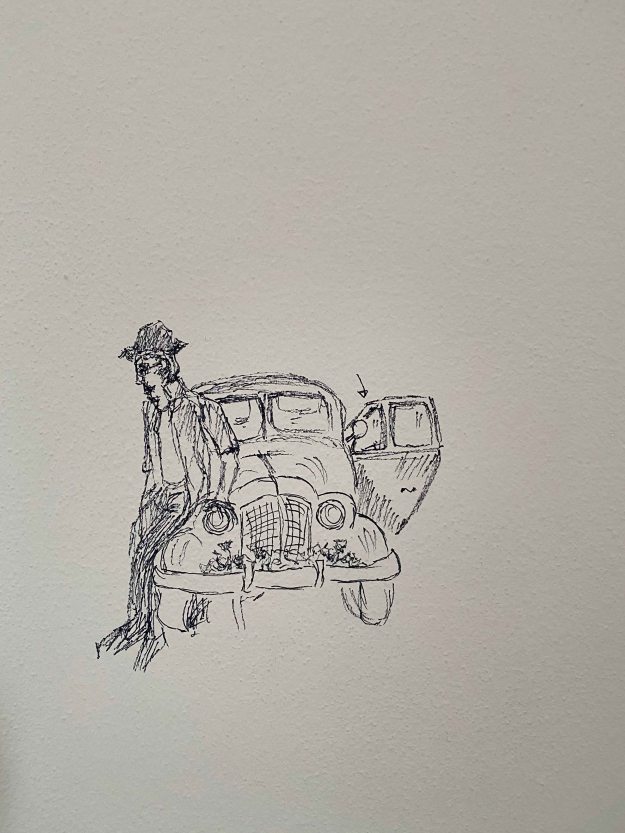
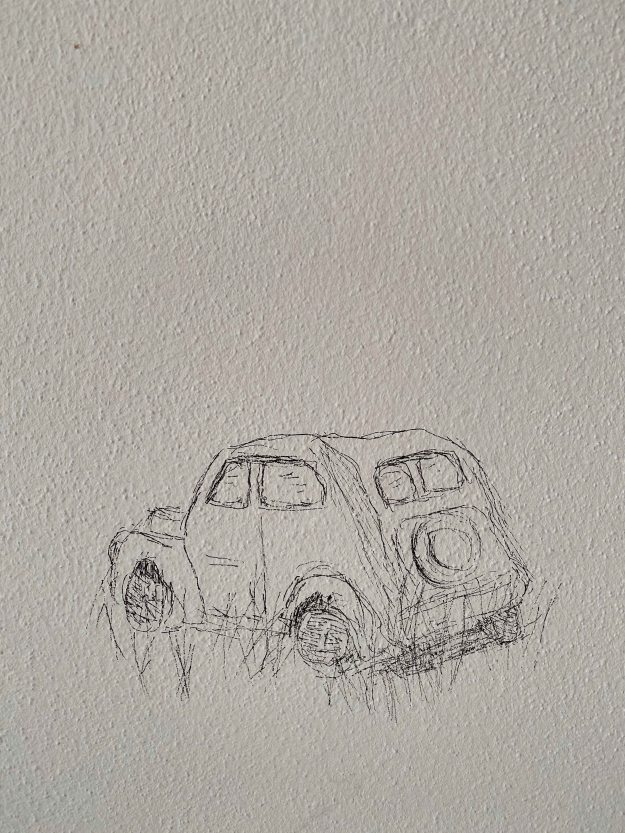
I have written another blogpost about all the glass I have found, and some of the pieces are clearly from a car. I decide to let other parts of the walls start with stories about the cars from which these glasses came- using this room as a sketchbook:

I prepared several different pens, with the idea of letting fainter drawings lie further back in time than thicker, clearer drawings. I will let go of this though, as I will use the walls more freely and allow myself to grab whatever pen is at hand at the moment.

This is a short video of the current situation:

I am planning to continue filling the walls here with snippets of narratives from the house and the village, until they connect in a web of stories. When the walls are full, I might use a torch to film it in the dark, with just the lit up parts flaring up to be visible- again making the connection to the cave painting. Possibly, I use an IPhone torch, as this is a modern cave painting.

When the walls are filled and filmed, I will probably paint it all white again.

6. Parallel project- transformation and chairs

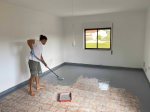
Our latest interventions with paint pots and brushes has brought a sense of transformation to some parts of the house. We are slowly taming the wild patterns and pipes and colour explosions.

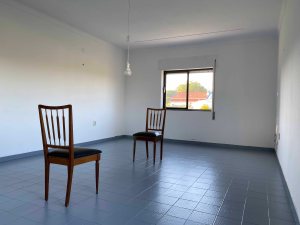
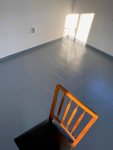
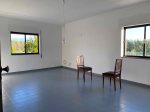
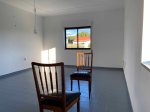
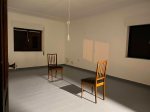
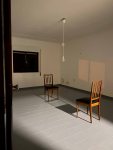
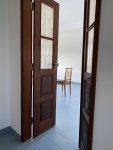
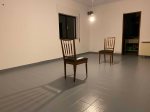
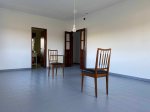
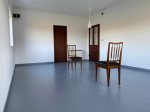
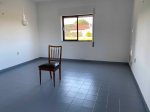
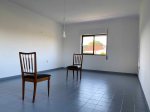
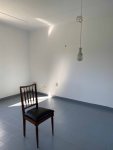
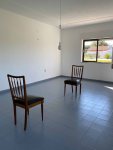
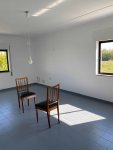
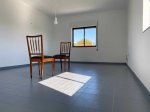
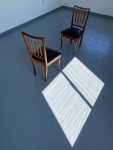
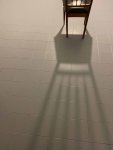
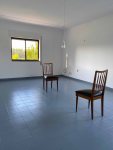
We are joking that we have moved from a Pedro Almodovar movie to one by Lars Norén. Two left over chairs appear in the room, and the cold white/grey surroundings with a single lightbulb hanging transform the scene into an interrogation room.

I am walking past this weird random scene in different lights of the day, and start documenting the different atmospheres.

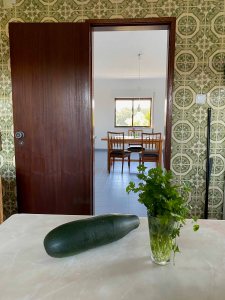
Stepping out from the kitchen into this new reality really highlights the contrast:

Take the walk with me:


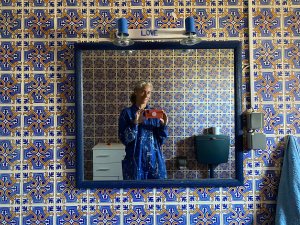
I am still savoring the trip of going to our wild bathroom for a little longer- before our Scandinavian sparsity will creep in here too.

6. Parallel project – Wallpaper and Covid 19 music

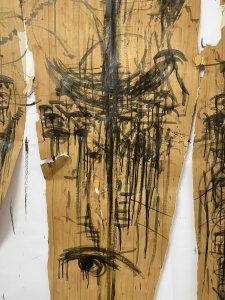
Drawing on music for Assignment 3 opened up a desire for more spontaneous and intuitive drawing that I continue exploring here. After drawing on left over shower-curtains, I discover a new interesting support in the wallpaper that I pull down from the ceiling of the living room.

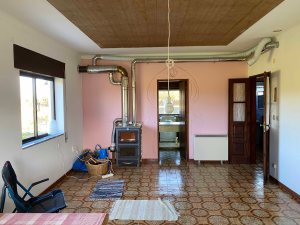
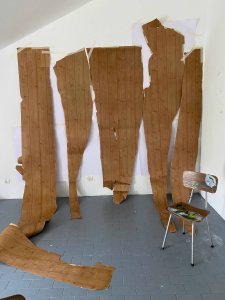
Our living room has fake wooden wallpaper on the ceiling and one pink wall behind an industrial set up of pipes, pared with our sparse, last minute quarantine thrown in furniture, besides the ever present wild tiles of course.

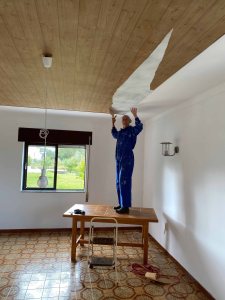
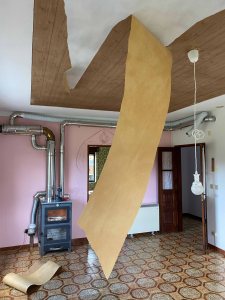
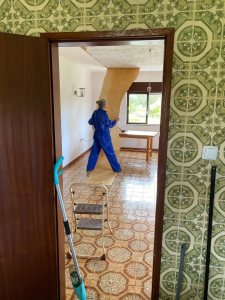
It is a relief to start steaming and pulling down the fake ceiling.

While doing so, I am thinking of all the stories these walls and ceilings have heard, of all the laughter and tears during the many years in this house. When I realize that I can pull off rather large chunks of the paper at a time, I see how this can become an interesting support for drawings:

It is the lockdown of the Covid 19 that brought us here so quickly and intertwined our history with the ones of the house.  Tom Woodfin, my dear friend who is sharing this time here with us has made me aware of the composer Marcus J Buehler who has translated the DNA structure of the virus into music:

Viral Counterpoint of the Coronavirus Spike Protein (2019-nCoV) by Markus J. Buehler on #SoundCloud

This piece is roughly one hour long. I will use the old wallpaper as a support for intuitive drawing while listening the the music from the Covid 19 virus structure. In this way, I connect the many stories absorbed from the house, with the beginning of our story here.

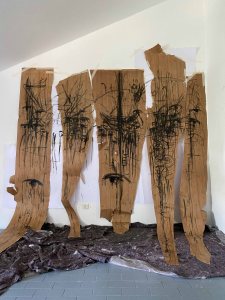
I tape the stripes of the wallpaper to the wall of my studio:

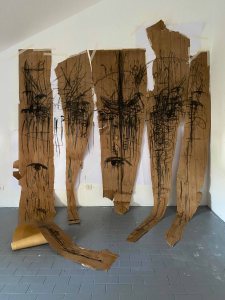
I find they look like ancient scrolls and decide to use only Indian ink for my marks, curious to see what spontaneous new story will emerge.

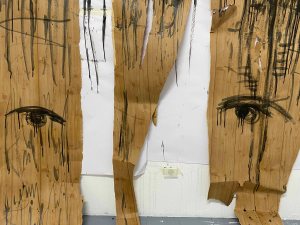
After one hour of loosing myself in the lulling sounds of the virus, combined with a breathwork mix by Tom Woodfin based on the above musical piece above this is what emerged:

As well as connecting our own presence to the house, I was curious to really feel into and listen to this musical interpretation of the virus. It is something so difficult to grasp on a conscious level, and I was hoping to find this way of feeling into what is happening.

What came out of this listening, was a feeling of overwhelm and tiredness. There was no feeling of threat or danger, I saw more a cry for help. There were many tears cried by many eyes and more water than that, some boats and many drops.

This was a fascinating way of exploring how I felt about the Covid 19 virus, which on a conscious level brings up more questions than answers. At the same time, it was an interesting way of connecting our story to this support that has soaked up so many stories told in this house.

Music:

And Tom Woodfin Mixcloud breathwork sessions:


Parallel project- Painting to music on shower curtains

I have just completed Part 3, which ended with painting to music- a process I absolutely loved.  A link to the blogpost about Assignment 3:https://clarasdrawing2.design.blog/2020/05/02/assignment-3/(opens in a new tab).

Among the many treasures of old left over items in the house that I am using for this parallel project, were two shower – curtains left hanging. I decide to approach the same process of painting to music using these two very different large curtains as supports.

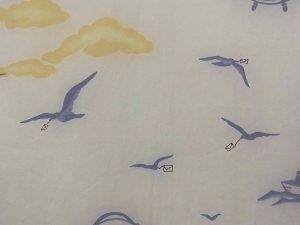
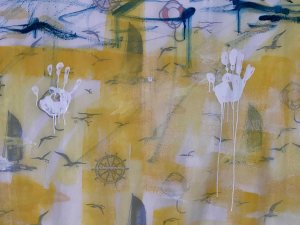
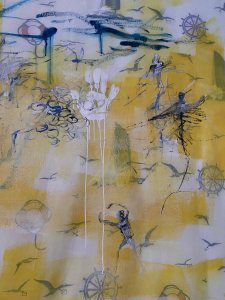
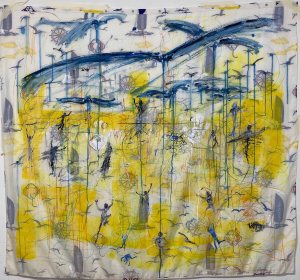
I start with a curtain with a plastic feel and a maritime theme with sailboats and seagulls:


I choose Portuguese music- Fado- with lyrics about the sea and longing. Fado is traditional Portuguese music and it is full of feeling and tears and sad lovestories, that I can very well imagine associated to this village close to the sea. The Portuguese word “Saudade” meaning “Longing” has a special place both in the language and in this type of music.

I was imagining starting by just closing my eyes and moving to the music, but I immediately got drawn to let the seagulls carry loveletters and started adding a letter to every bird.

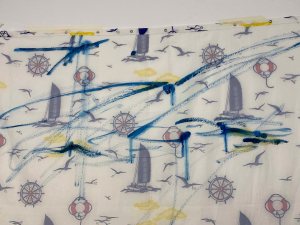
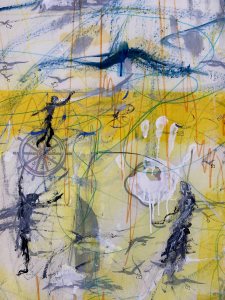
I could feel tears building up and let some large sad movements with blue acrylics follow the birds and drops (tears) flow.

I felt the drama building up and grabbed a large brush with burning yellow, followed by white using my whole palms.

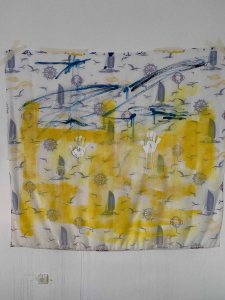
As the story became denser- figures started appearing, calling out, clinging, longing, running, reaching.

Different tones had different coloured marks, and I let the layers build up.

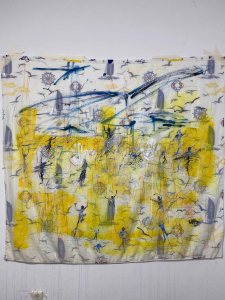
This is the final painting on the shower curtain:

This painting is again more a story about process than a final, finished piece, like I experienced with Assignment 3 as well.  I felt that starting from a patterned cloth, rather than a blank page conditioned the story too strongly. I was already caught between the lyrics of the music and the motive of the existing curtain, which directed my imagination strongly.

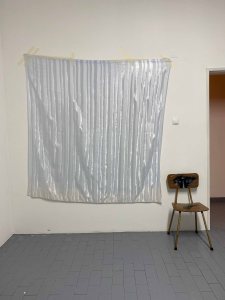
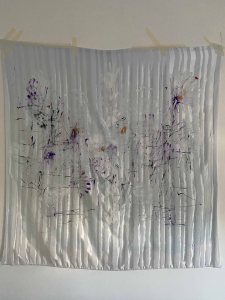
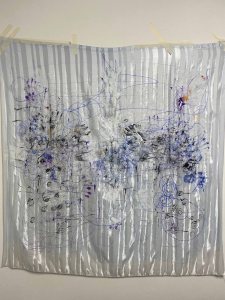
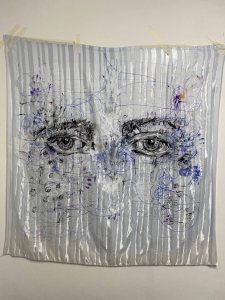
The second showercurtain is in a plain blue grey colour with a silky finish. I feel relief at starting without a print.

I choose to listen to Fado again- traditional, very emotional Portuguese music. Again the theme is unanswered love and longing.

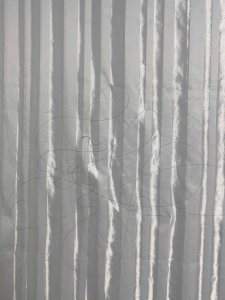
This time, I close my eyes and just let the pen dance over the fabric in movements to the music.

I realize that the touch of this fabric is very sensual, and decide to continue exploring that by painting with my hands and fingers, emphasizing touch.

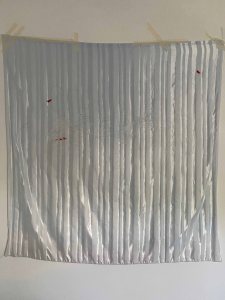
There are some sharp, painful moments that I see in red:

After approximately 45 minutes of listening to Fado, I have really reached a point of saturation. I step back and see if I can recognize a motive in the musical marks.

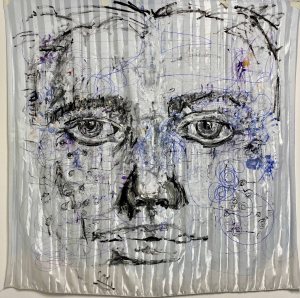
It requires pushing the imagination, but I decide to see the face of a lost love in the marks, and bring it forward with black acrylic paint.

The final portrait on the shower curtain is not so convincing- but this process of painting to music brings forward an incredible amount of different marks and layers. It allows for a freedom of marks and use of different media that feels very liberating.

This richness of marks and layers that this free and intuitive approach is adding to the drawings is definitely something I want to continue exploring in various contexts.


Parallell project- Lampshades

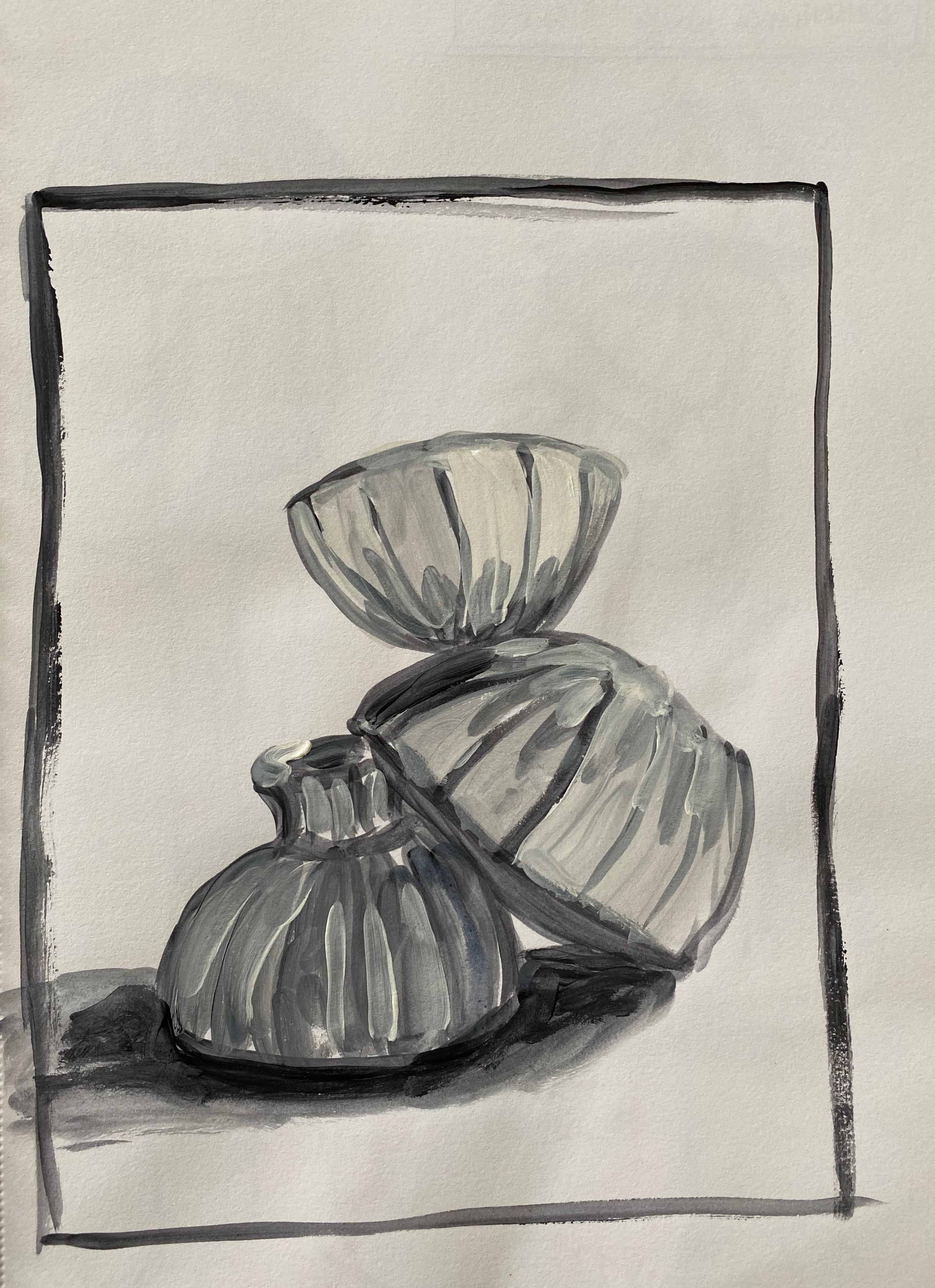
In some of the rooms, a solitary lampshade was left dangling when we arrived here. I have collected them and planned to use them both as a support to paint on and as a subject for still life.

They first appeared in Part 3, Project 2, Experiments with mark-making:

And I used one as a support for a fun way to close my rather dark drawings with masks  in 2.3 Narrative:

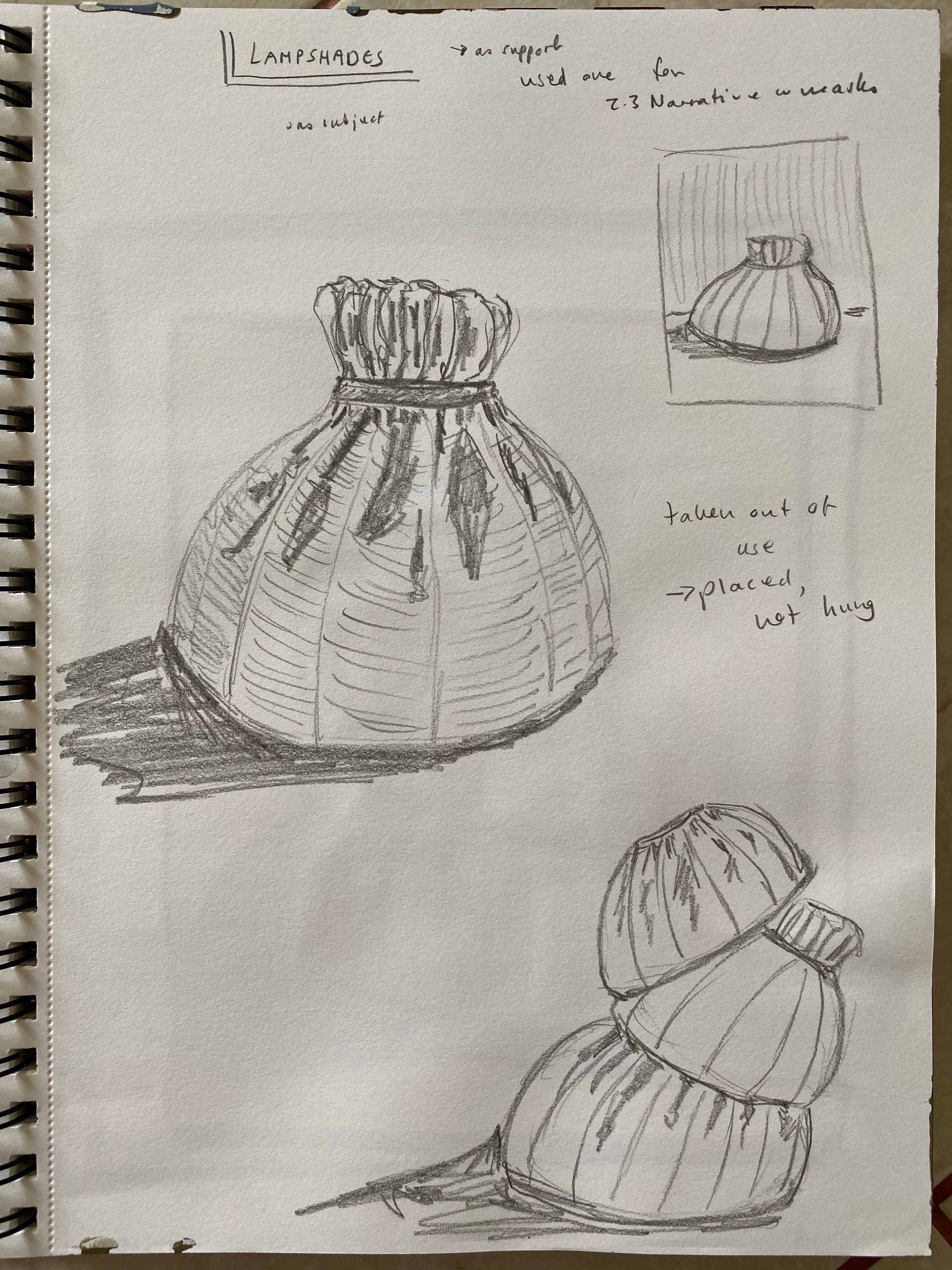
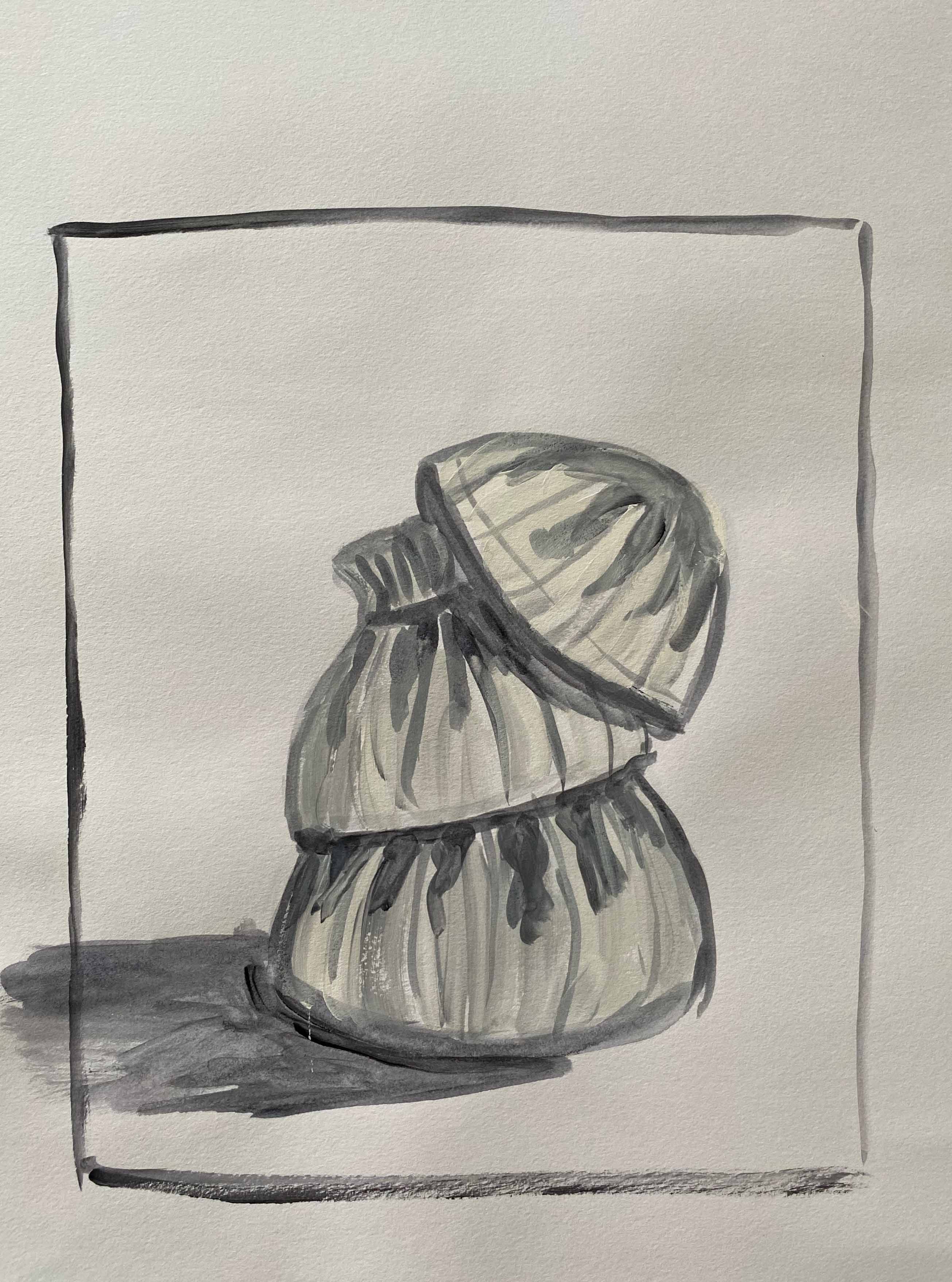
I am now arranging the lampshades in various ways for still life, piling them up instead of hanging them to take them out of their context.

Pencilsketches A4:
IMG_6484

Sketches in Payne’s grey and Titanium White acrylics, A4:
IMG_6489

IMG_6492

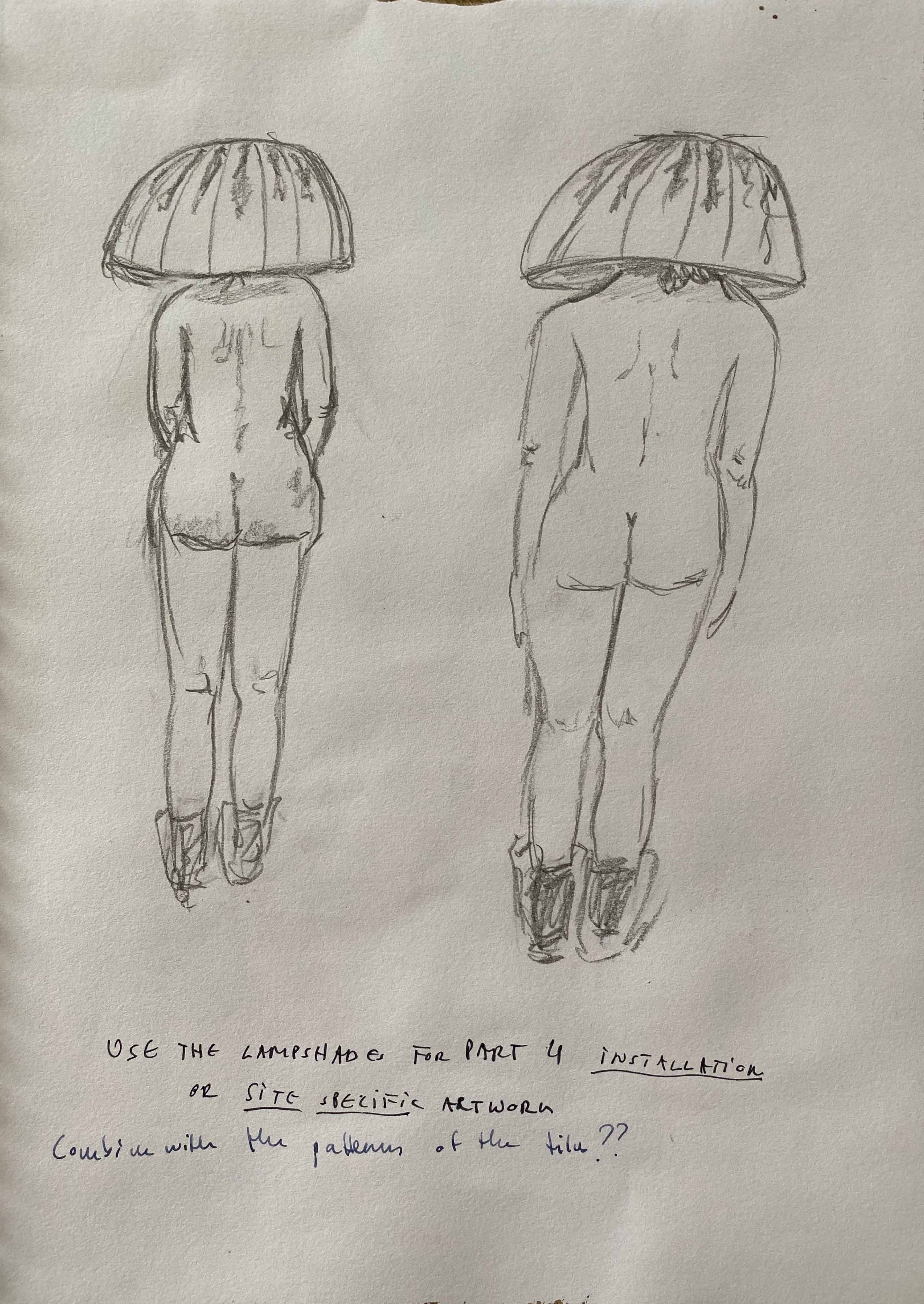
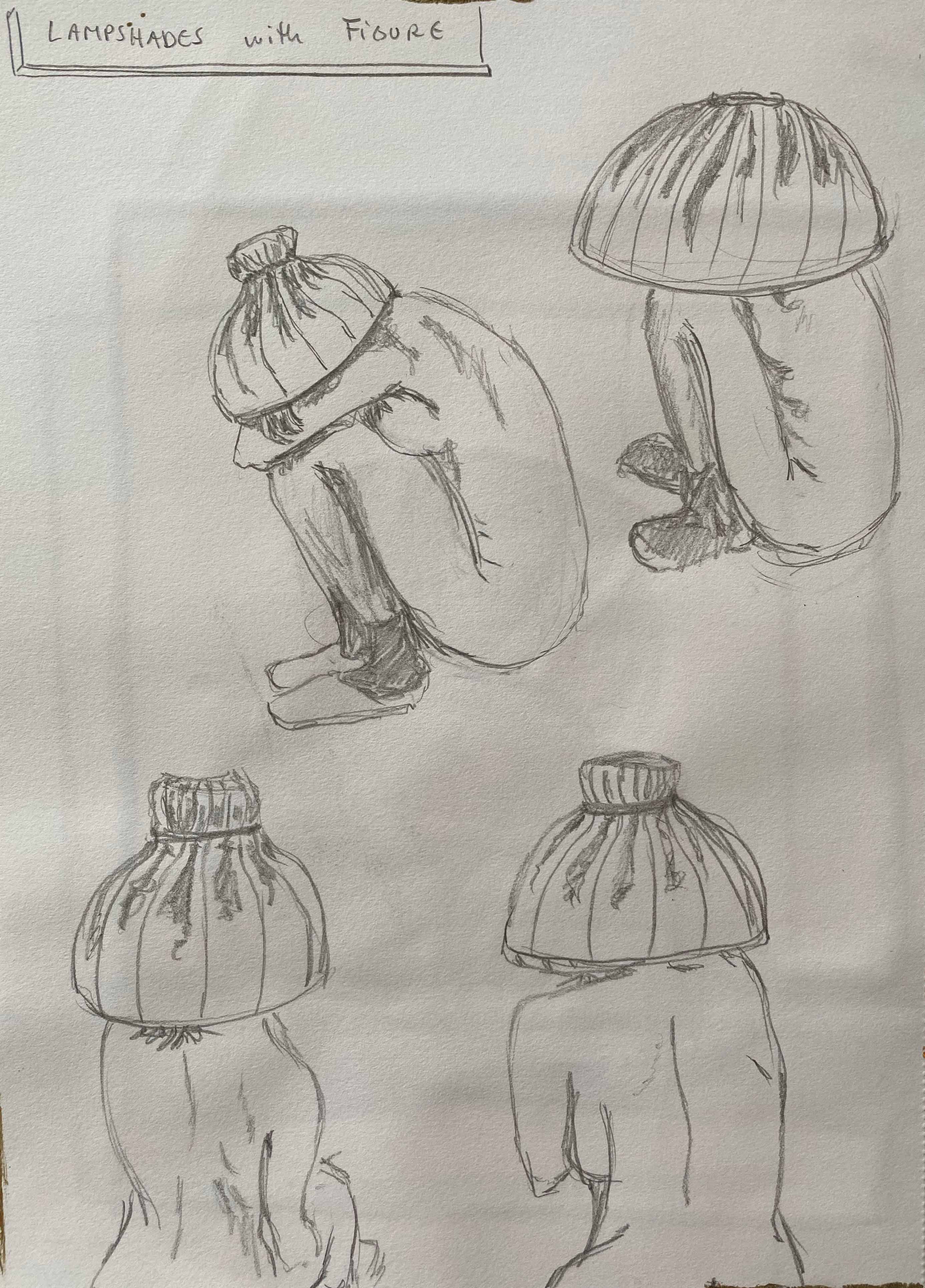
I like these shapes and see that they have potential, but it is when I imagine to include the figure that I really start getting excited about this subject.

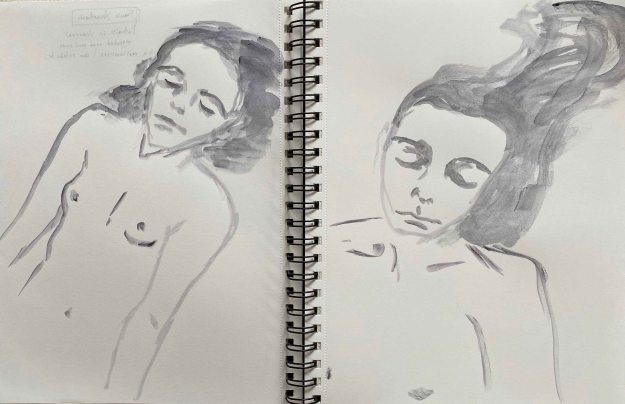
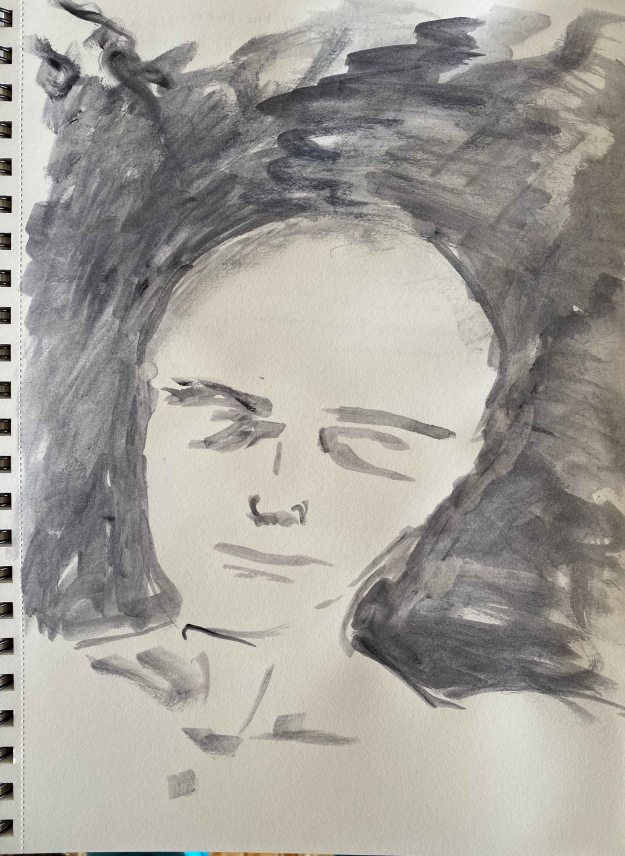
One advantage with the Covid 19 lockdown, is that my daughter and granddaughter have time to model.

Pencil sketches A4 in sketchbook:
IMG_6496

IMG_6499

Sketches on the walls of “Parallel project- empty room, modern cavepainting” ( see separate post):

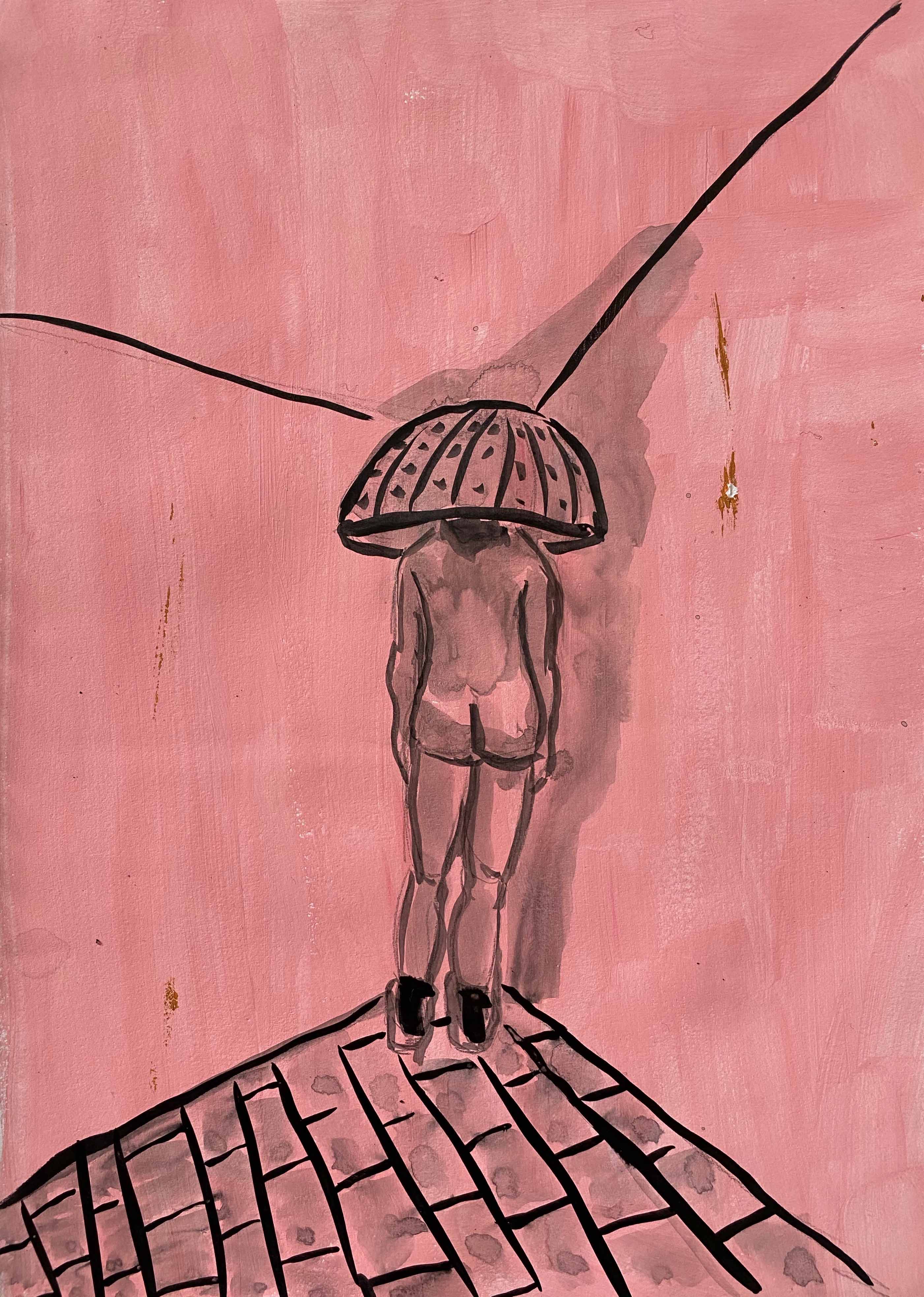
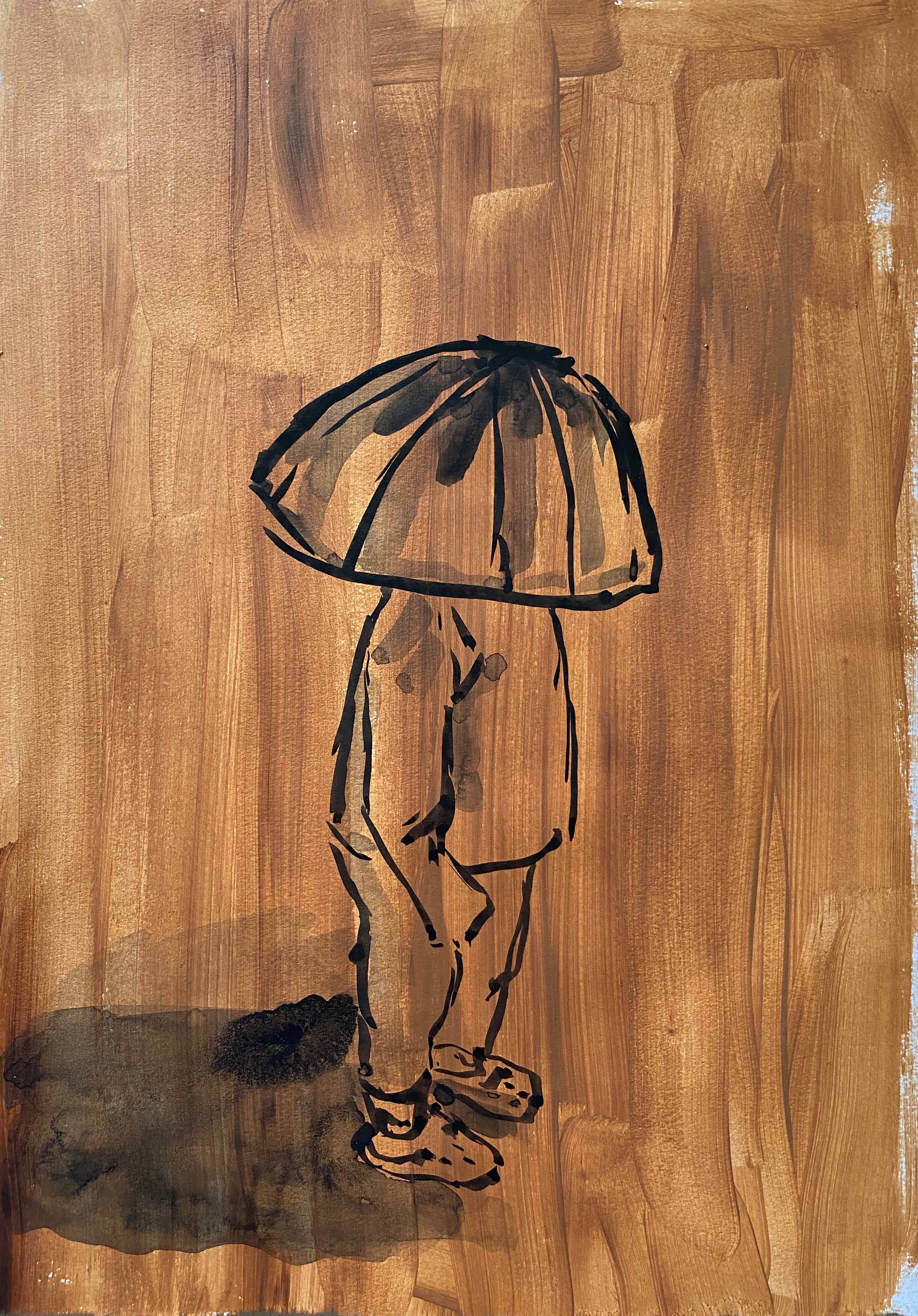
A4 sketches in acrylics with Indian ink:
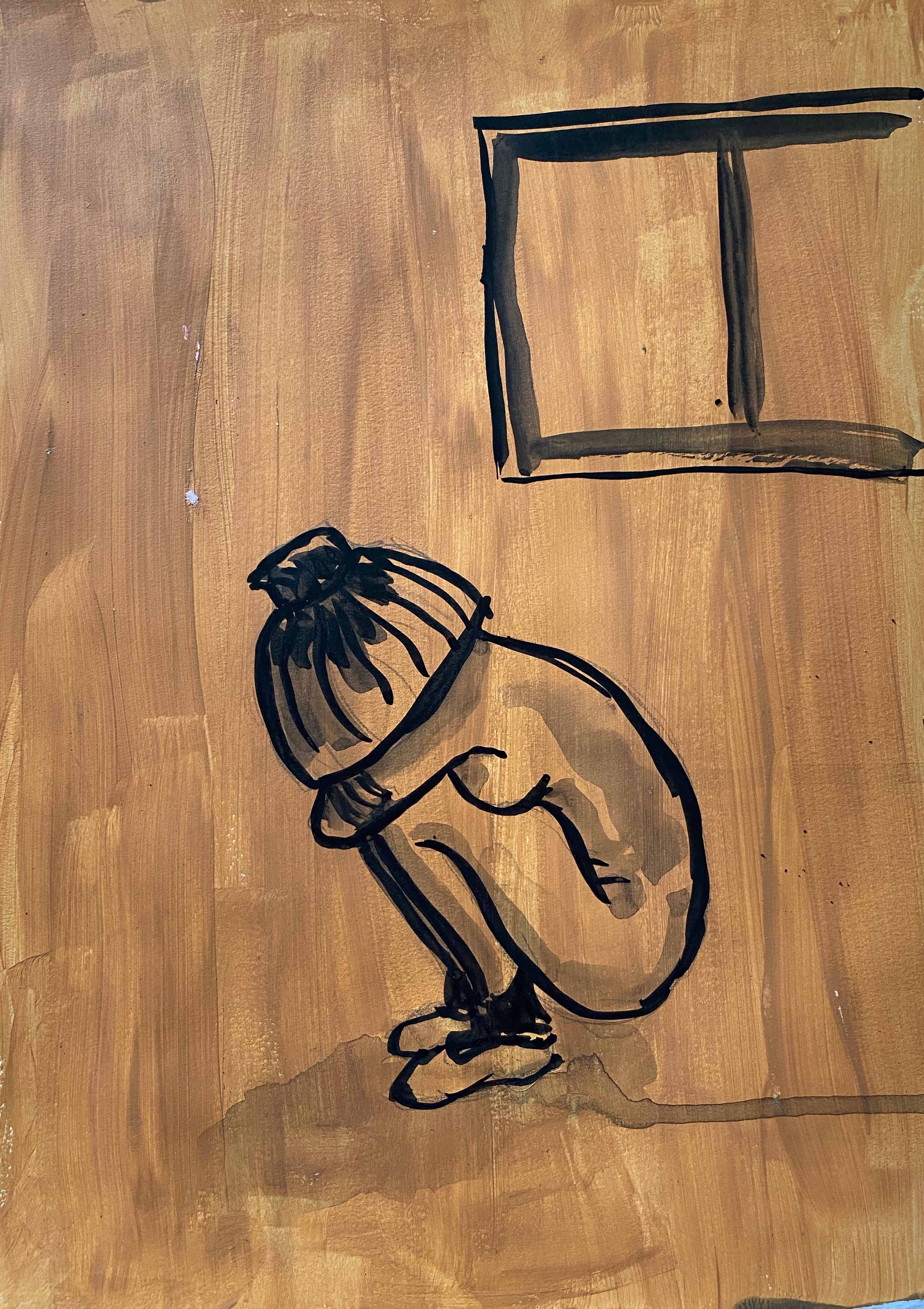
IMG_6507

IMG_6510

IMG_6517

IMG_6524

From here, I took a big leap to starting three big (100×120 cm) paintings in oil on canvas all at the same time:
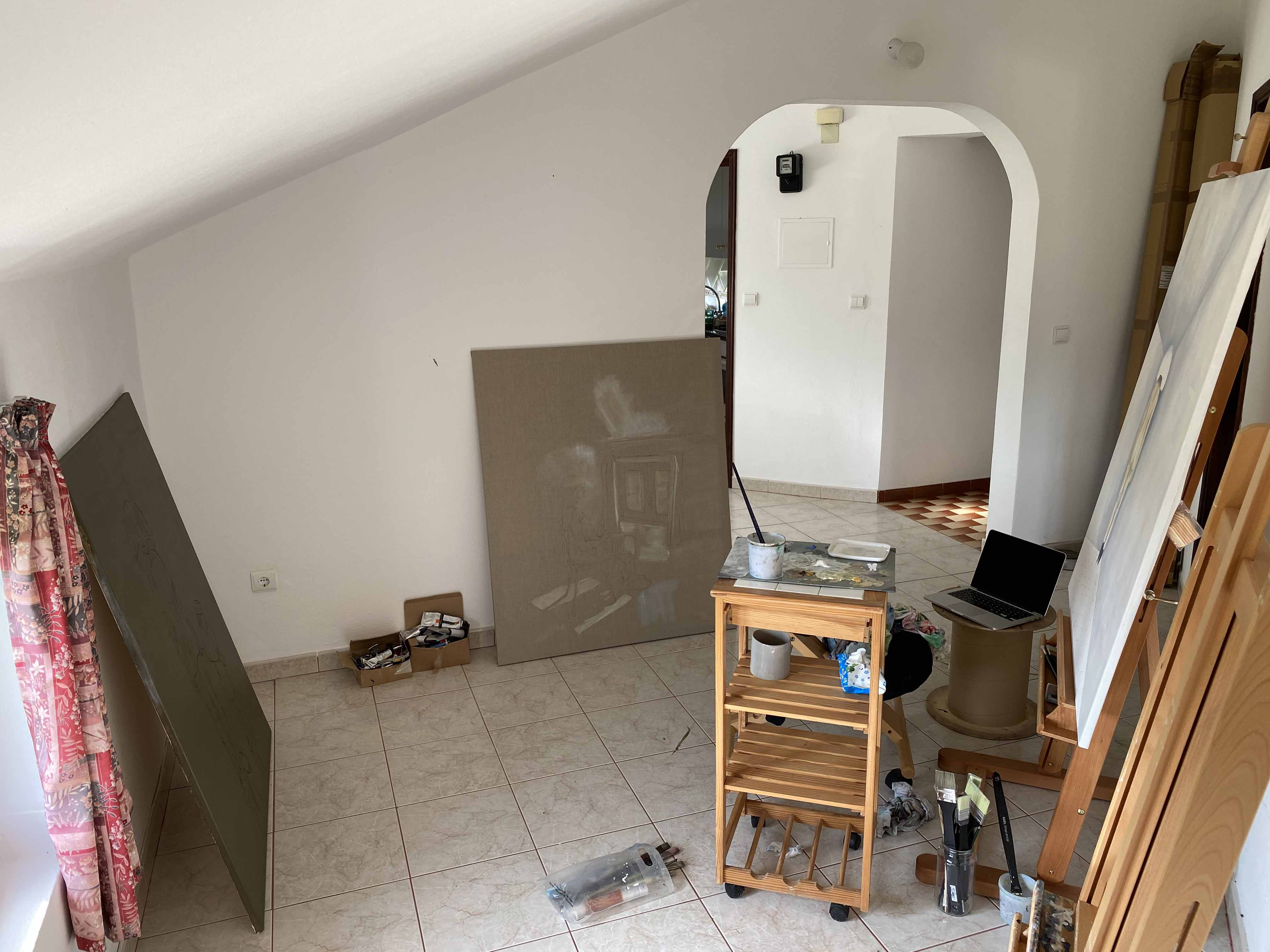
IMG_5878

This is unprecedented. What is happening here is that I am making a very clear and loud statement to the universe that “I am going to paint!”. I spent the last 20 years doing very sensible things before finally starting, so I am not ready to stop. Being in a household where very suddenly we do not have any foreseeable income at the moment, could bring up different ideas, but no- I will food garden and renovate and babysit and work- and I will definitely paint- on big expensive canvases in oil even 🙂

Letting my daughter and the little One wear the lampshades on their heads is a way I find to speak about a lot of the feelings coming up in these times. There is the feeling of not seeing where we are going, or even standing in front of a wall. There is an element of hiding as well. In one motive, my daughter poses nude, emphasizing the vulnerability of the now. In the other, where I photoshop my daughter and granddaughter together before painting them, they are wearing the soggy casual sweatpants that I see almost every day.

I start by covering a white canvas 100×120 cm with a military green acrylic coat.
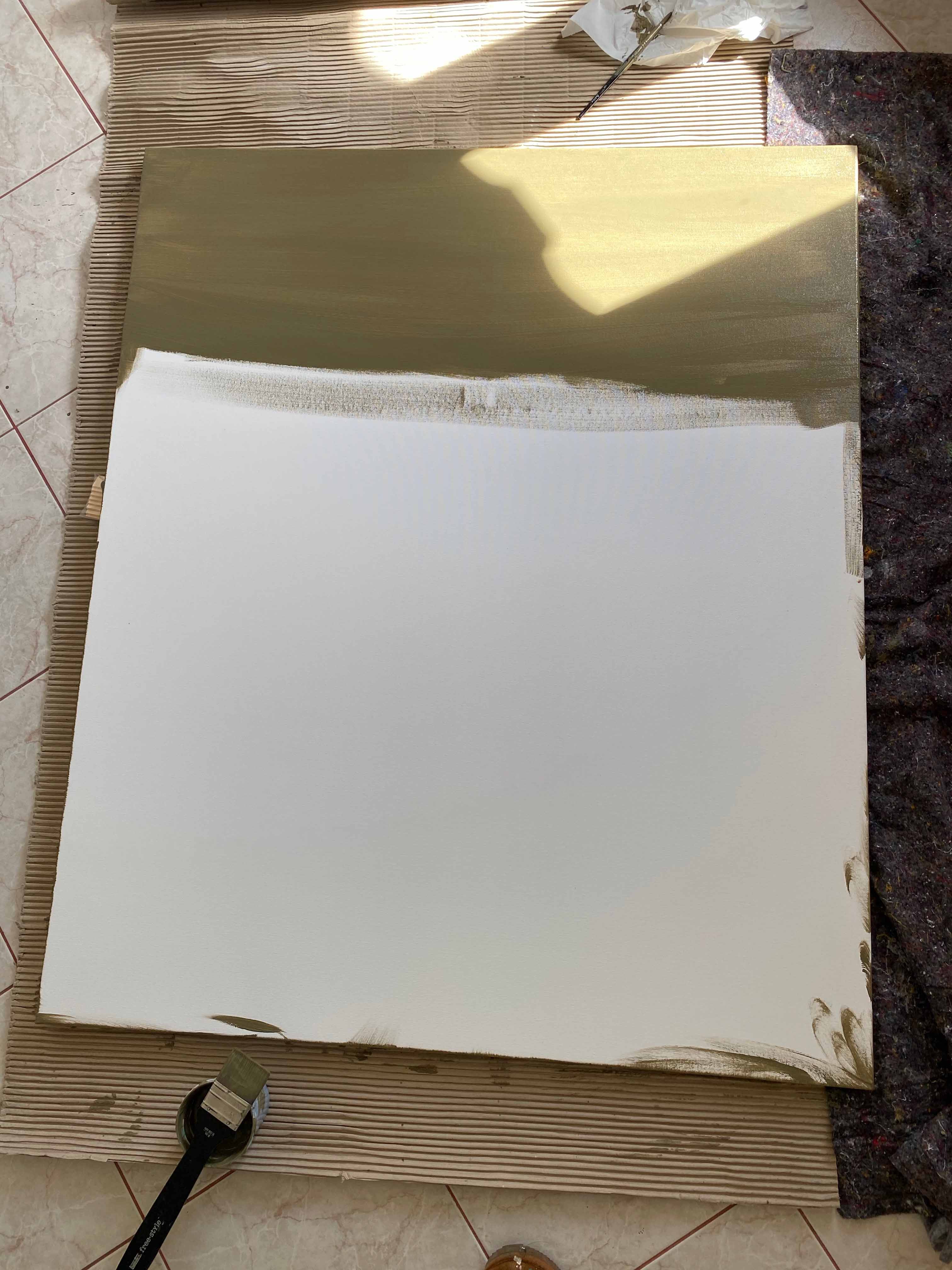
IMG_5704

Once starting in oils, I struggle for a really long time with the background. I have the idea to use a camouflage pattern, but then smudge it, so it is a camouflaged camouflage pattern.


I try this is many unsatisfying ways.

Finally I cover up the whole background with a rather monotonous military green in oil, similar to the acrylic background I started out with 2 days prior. The red stripes just happened, after I listened to a podcast about statistics on Soundcloud, which had similar wave patterns.

I am using a big flat brush all along for the figures, to avoid overworking.

This is the final painting.
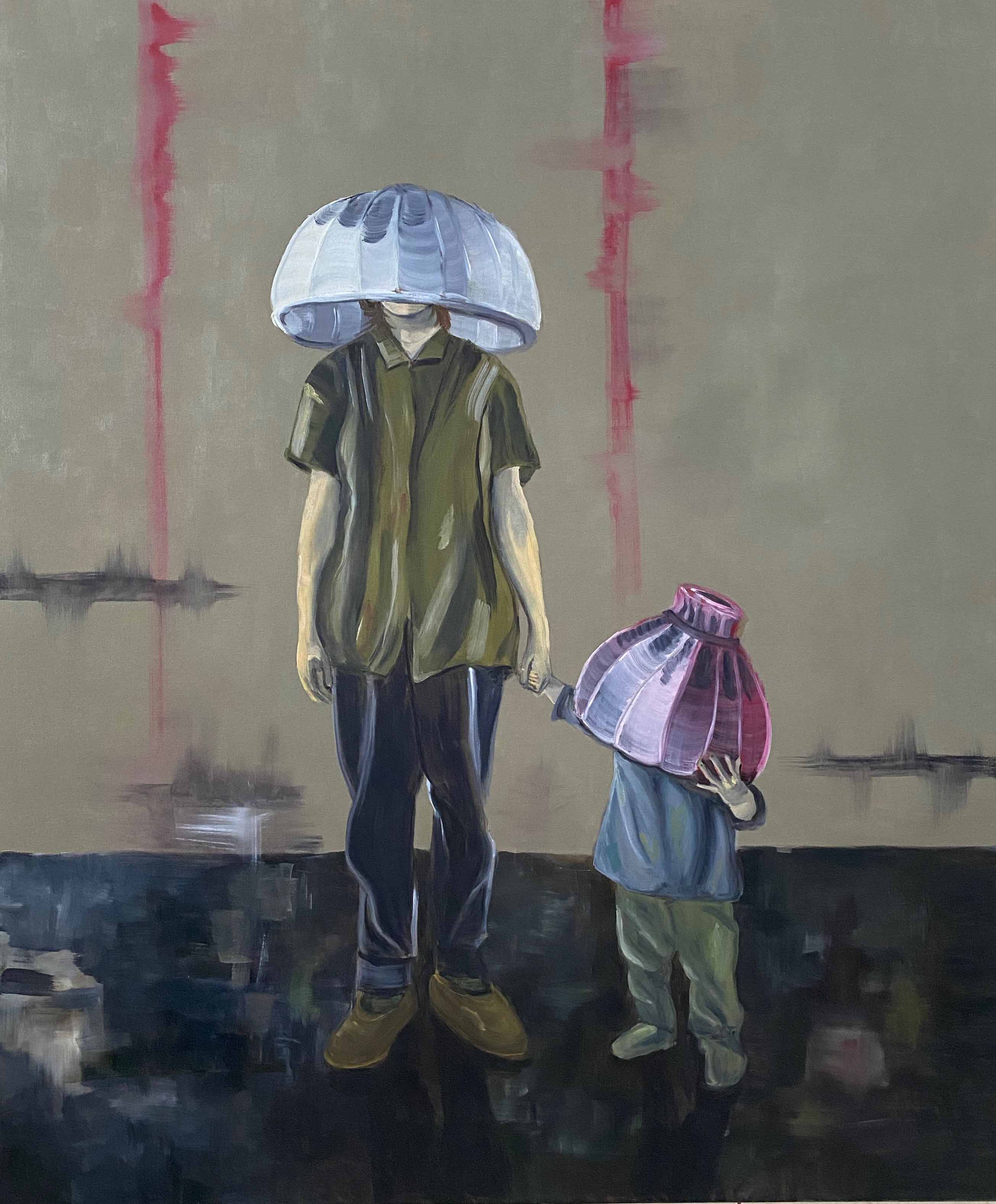
IMG_6152

I call it “Spring Summer 2020” like a fashion collection. I really like this painting myself. It shows the mixture of humor and fear I feel at the moment and I have captured something very personal in both my daughters and granddaughters postures that make them recognizable to me even with their heads covered.  I also like that this painting connects us and our unplanned time here all together with some of the odd old elements of the house that I connect to this parallel project- the lampshades.

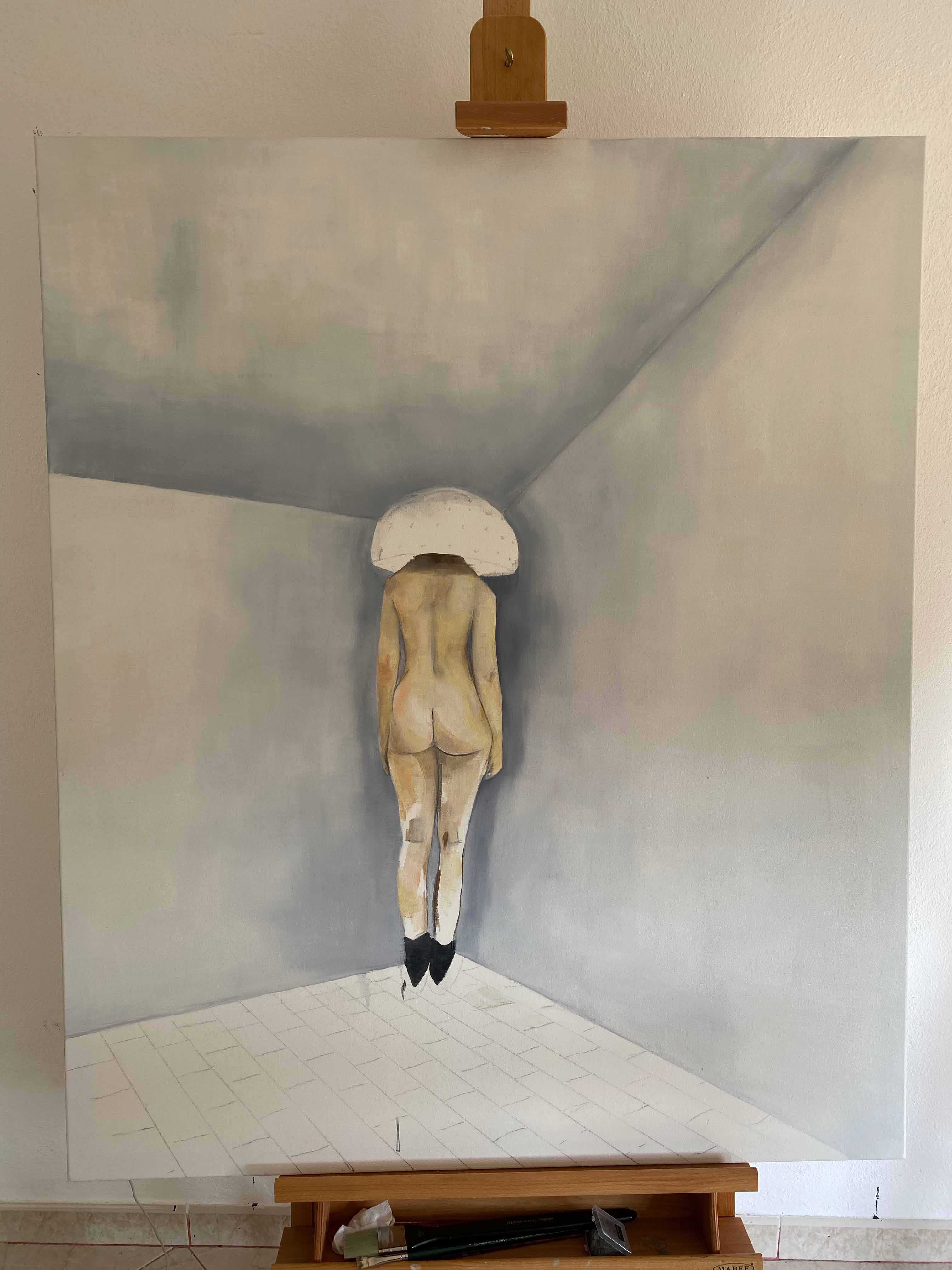
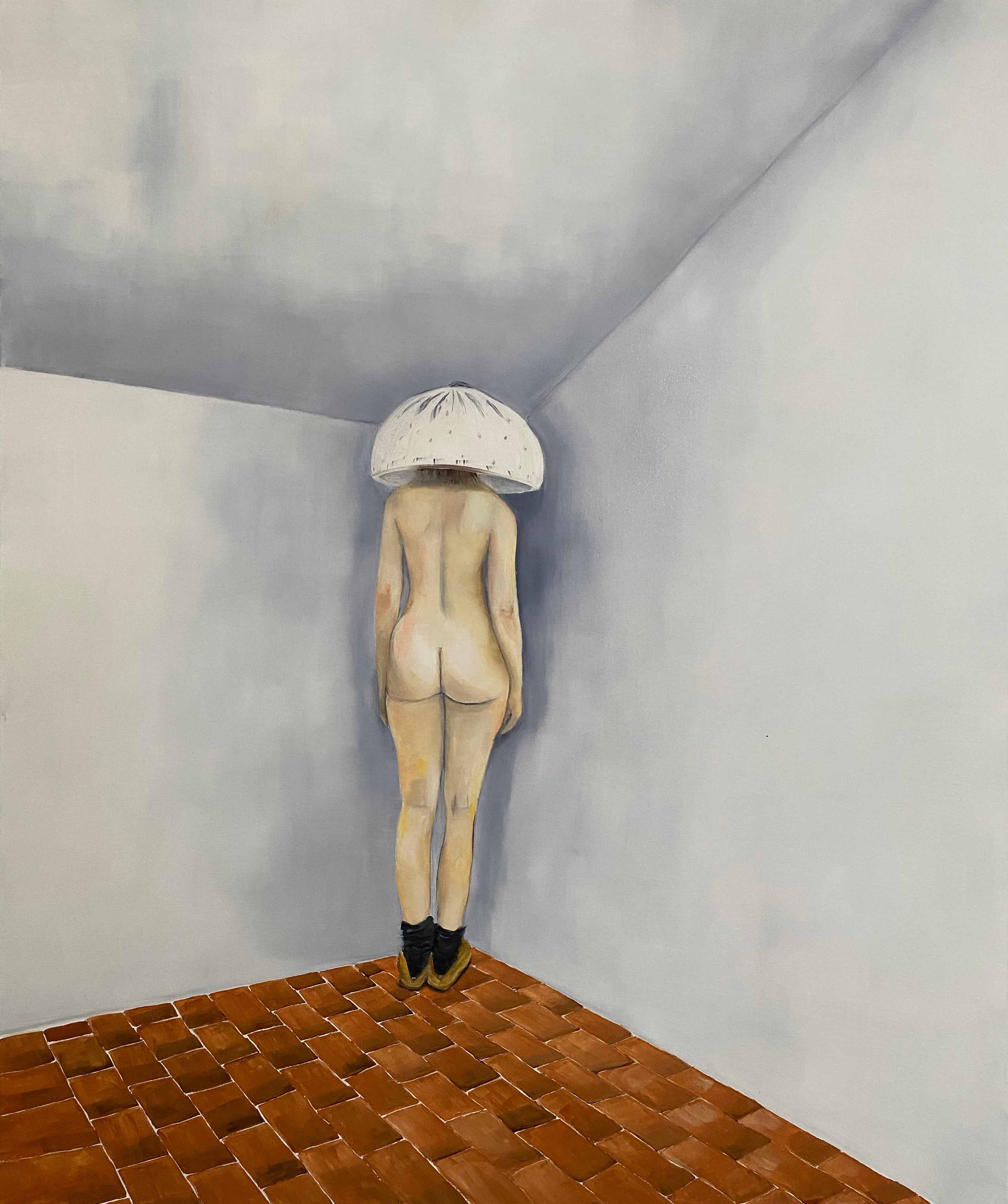
The second painting is a nude with lampshade. I choose to paint this much more carefully and try to achieve the right flesh tones. I find that the more careful approach reflects the more vulnerable feeling of this painting.
IMG_5874

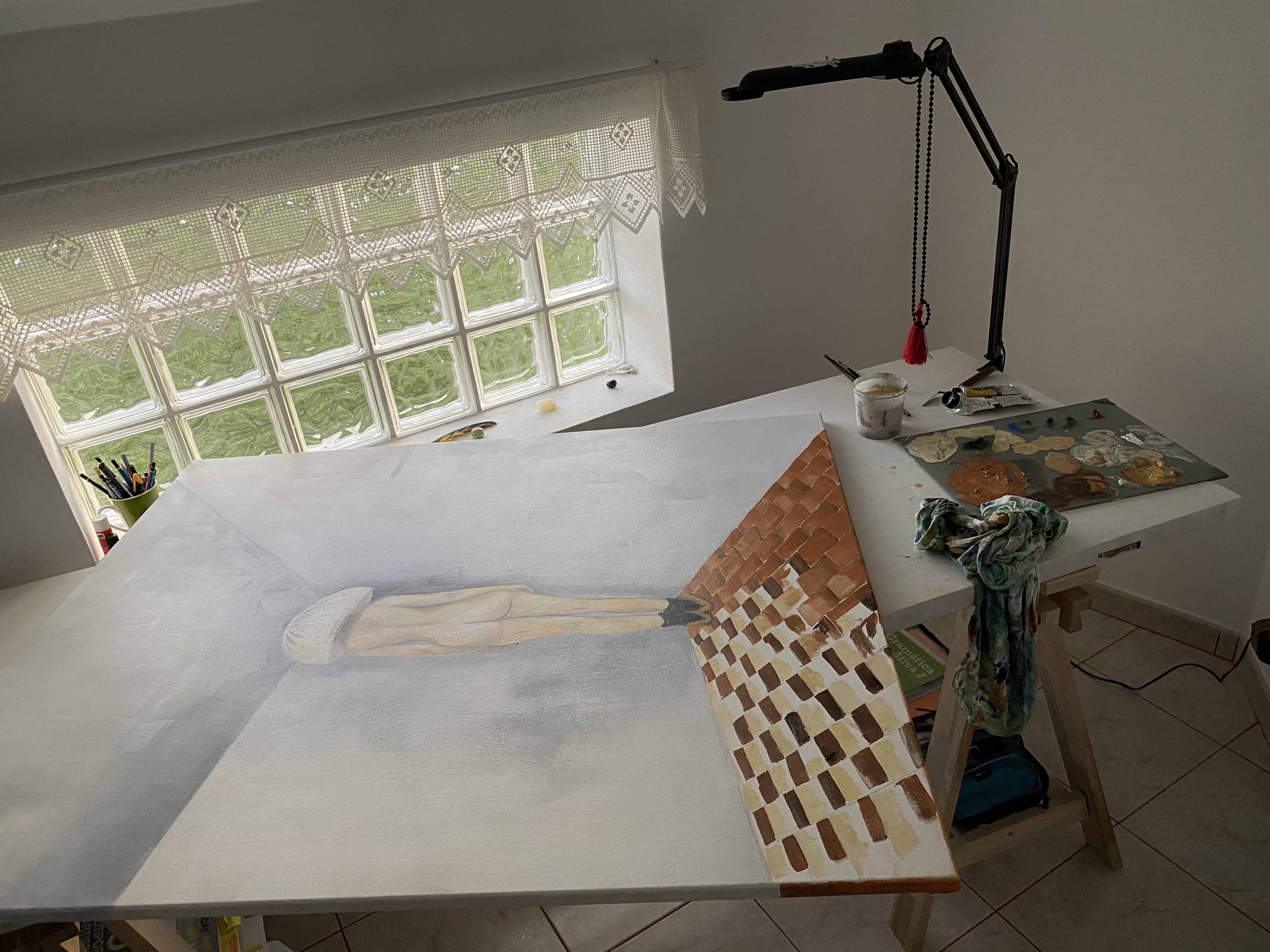
I placed her in the corner, feeling trapped or without direction. The walls are crashing down on her, there is no spaciousness. I hesitate long about what to do with the floor, but decide to paint brick coloured tiles similar to the ones that are really here, to have a solid floor, instead of letting her hover in something more grey or non distinct.
IMG_5914

These brickcoloured tiles could also be outside, which maybe brings more confusion to the painting, which I like.

This is the final painting:
IMG_5947

I am happy with the motive and the feeling this painting transmits, but I was too careful in my choice of colours and precious little brushstrokes. I enjoy a bolder approach more.

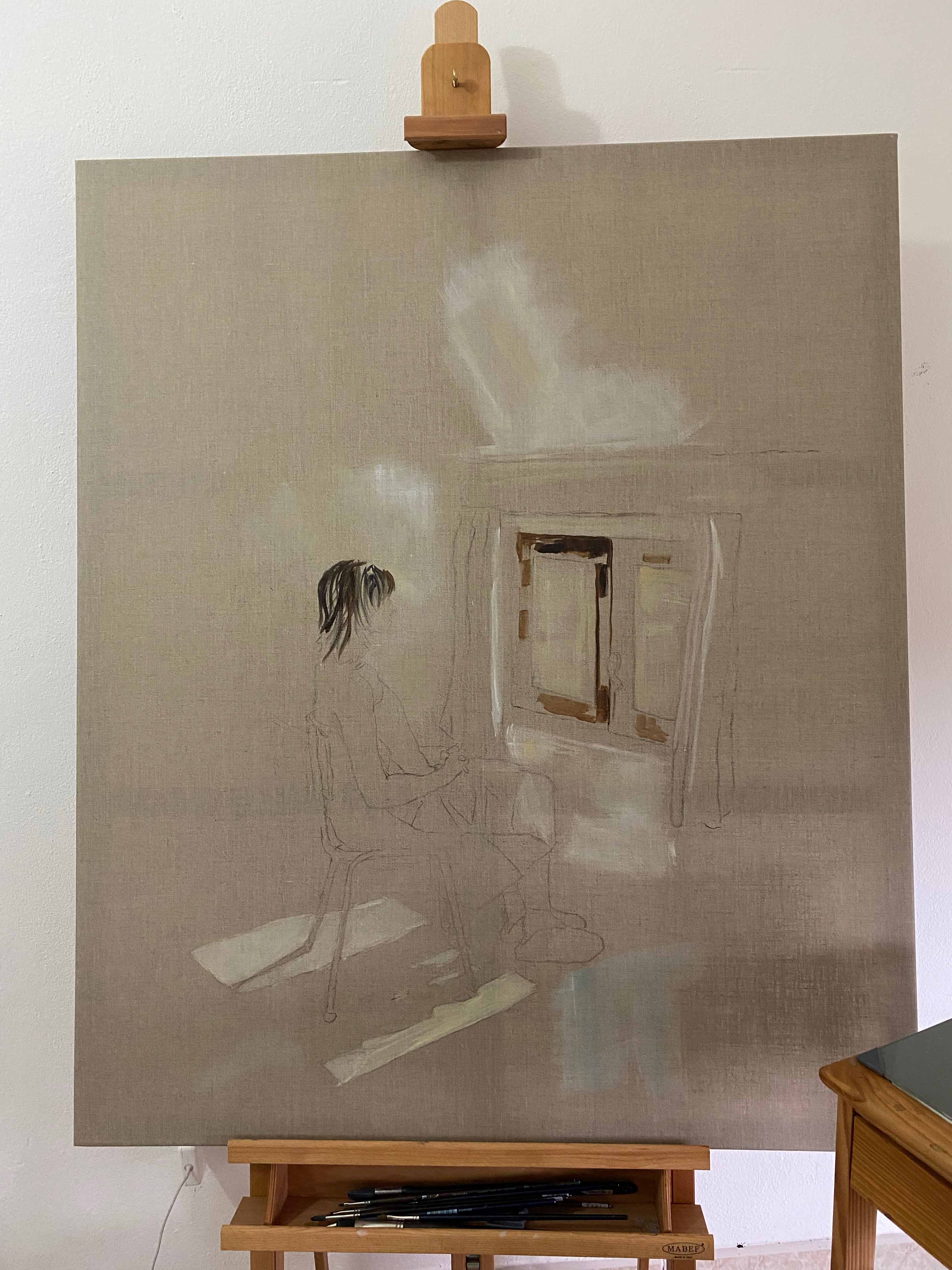
The last painting does not exactly belong to this post, as it has lost the lampshade. I place it here though because it is a part of the same experience and just a few photos before the one that I chose for this painting, Ria was actually wearing the lampshade, but I prefer to paint her longing expression.

IMG_4781 (1).jpg

In all three , Ria is also wearing the same slippers and socks- an allusion to this time closed in the house.

I have started this last painting on a linen canvas that I have stretched ( also a new experience.)
IMG_6076

I will post the painting here once completed.

At this point, I am just starting on Part 4 of the course, and can see how these lampshades may reappear in the project of Installation or maybe be used for the site specific artwork fro Assignment 4.

I also want to experiment further with using the lampshades as supports.

To be continued


Paralell project- painting on found objects

Since coming to this house, we have had good laughs about the horrible tiles, the crazy layout of the rooms, the low ceilings- which all seemed really funny as we were planning all the great renovations we would do- move walls, open up glassdoors to a wonderful deck, change the whole kitchen and bathrooms of course.

A couple of moths later, due to the Covid 19 virus, here we are all of us safely tucked away without any income. Suddenly we will just have to love the house as it is!

While still believing that it was very temporary, I had some fun painting the kitchen

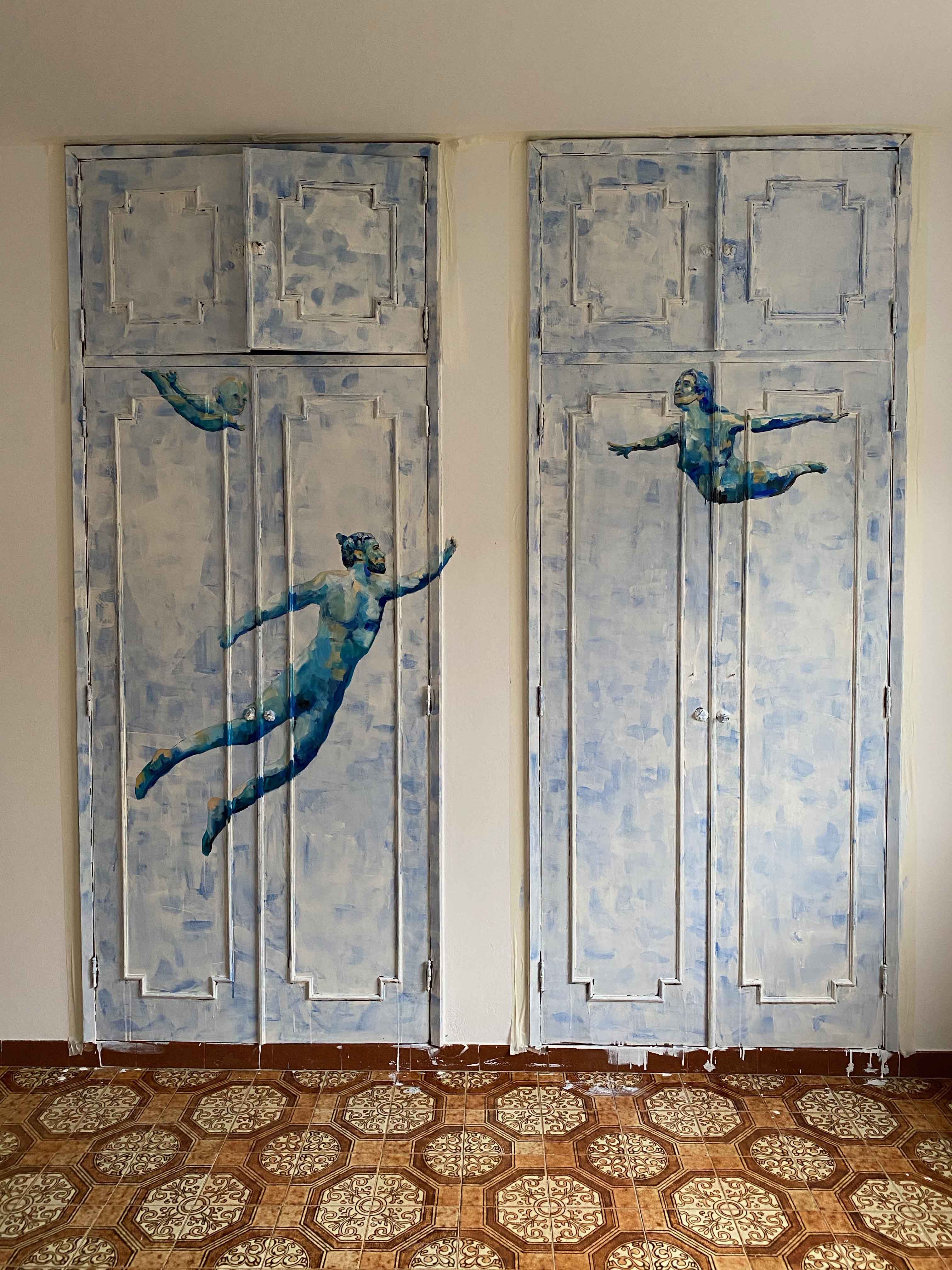
The bedroom closets

IMG_8625

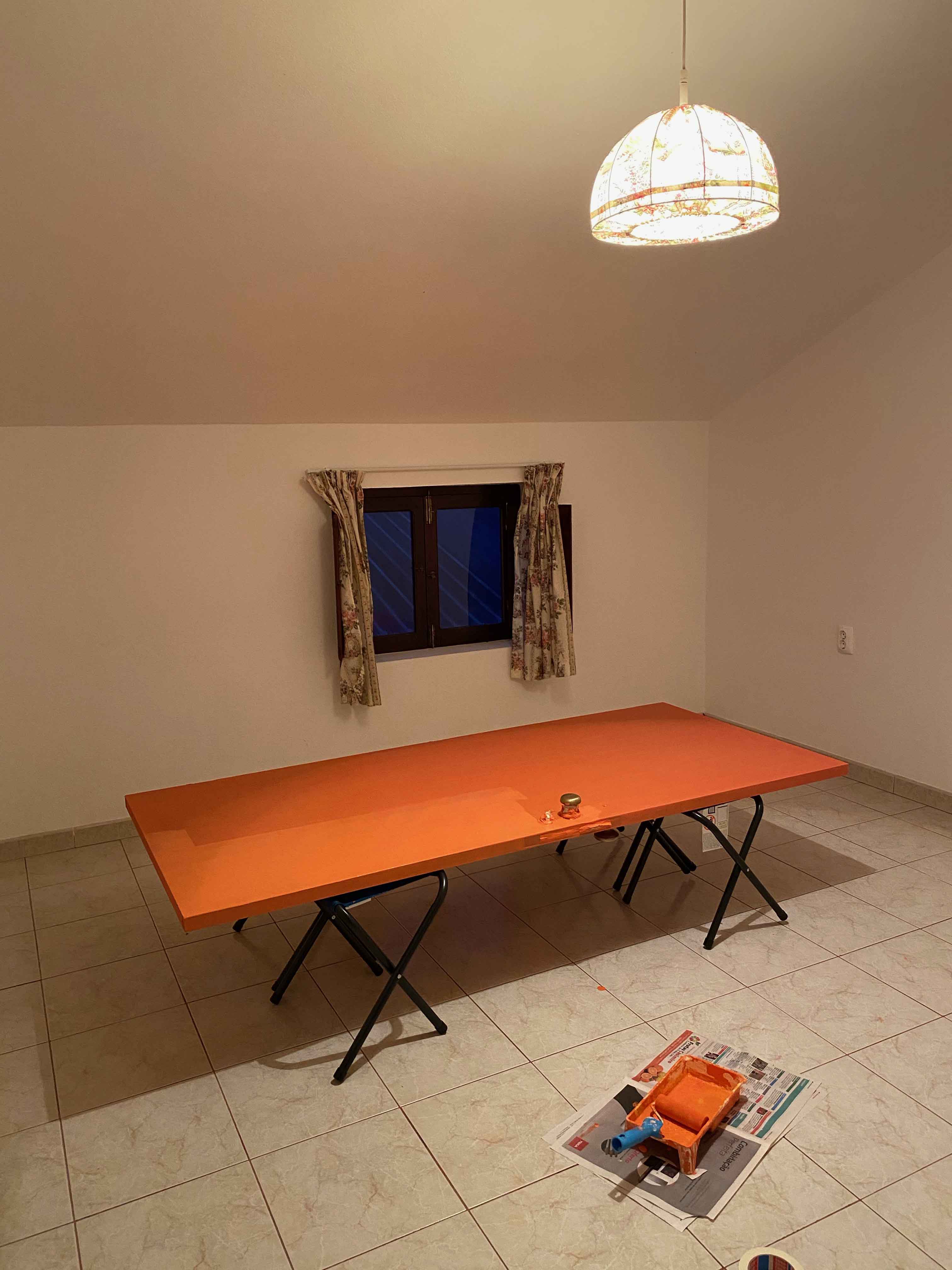
This week, already in quarantine and it dawning that this is not so temporary- the door to Tom’s room:

A couple of chairs:

The door to my room is next 🙂

IMG_2435

This is already a very crazy house, but there is no reason to stop now! I am already looking at everything as a potential canvas.

IMG_4067

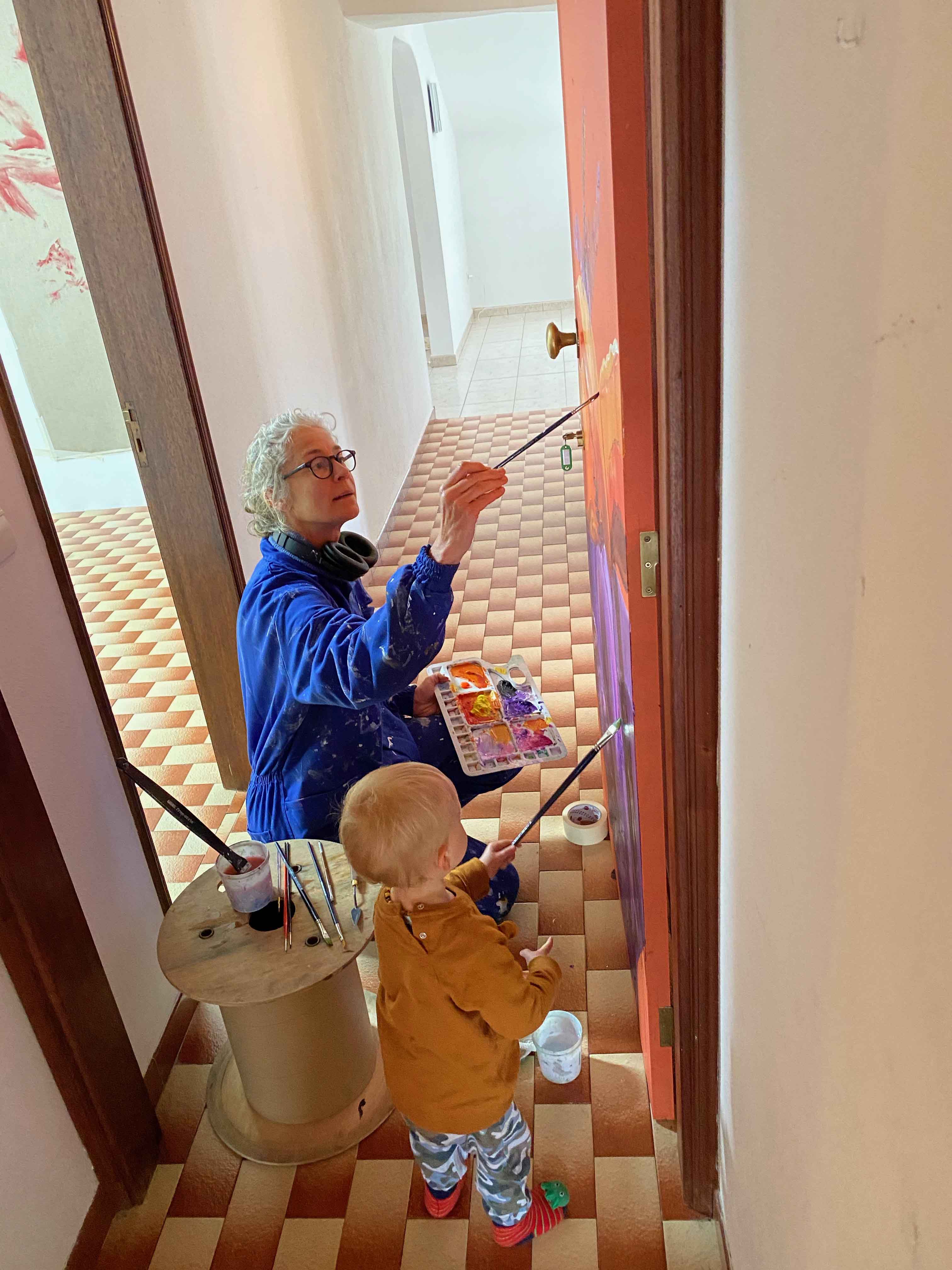
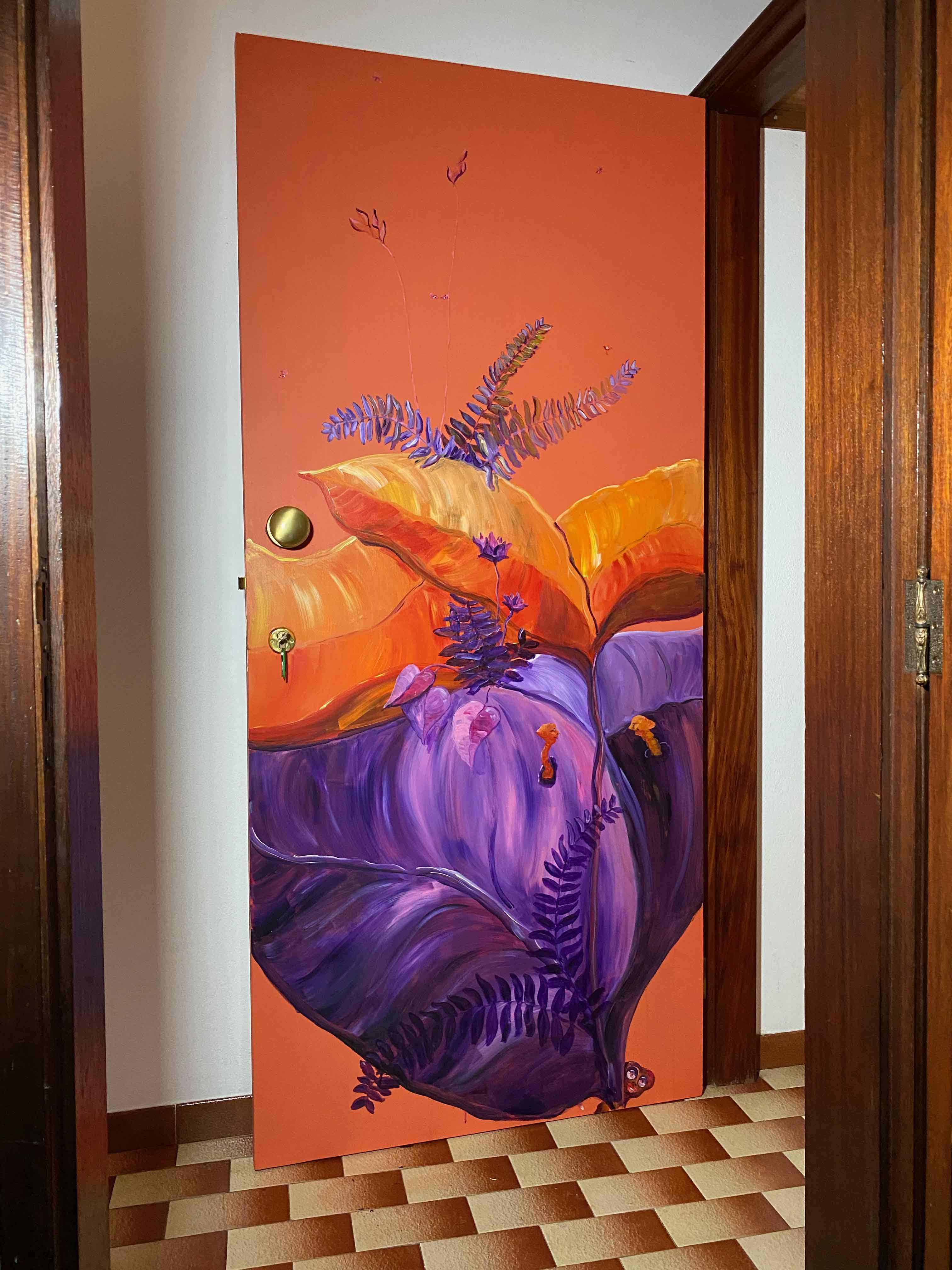
This is how the orange door turned out:

IMG_4151

And the door to the gas bottles:

My little assistant is happily painting along with water for now, but she will probably soon discover that my palette is different…

Parallel project : glass- the car

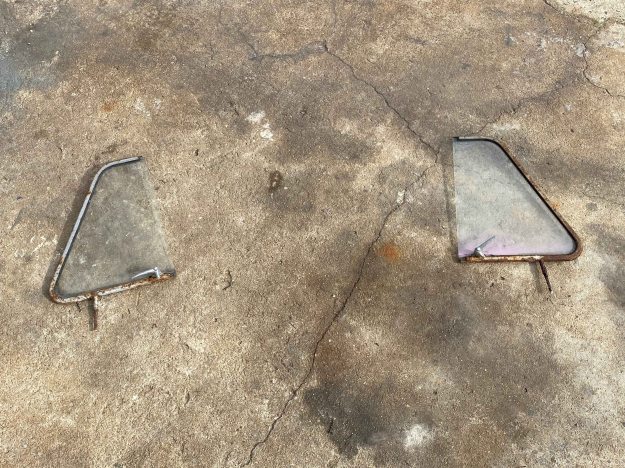
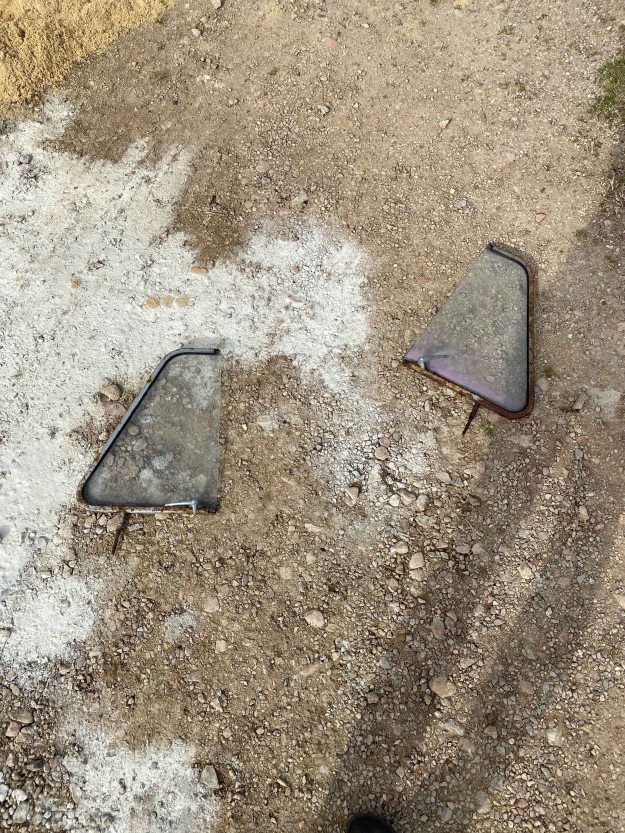
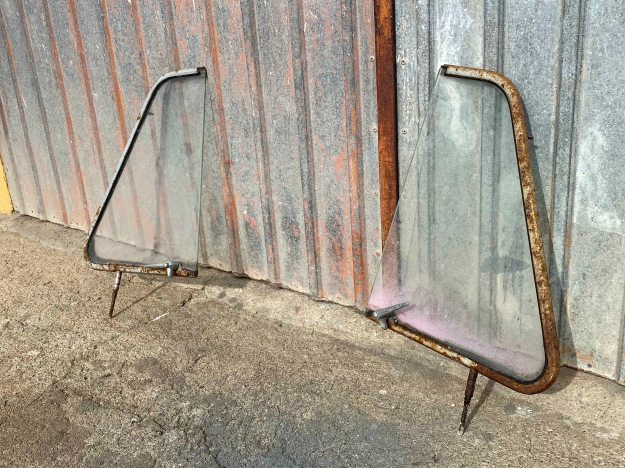
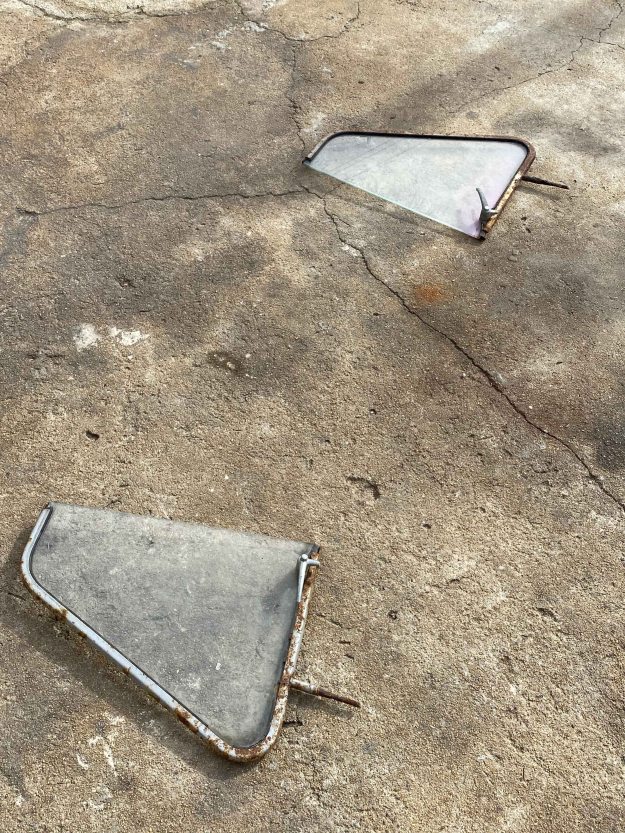
I have used various glass panes as supports for a series on drowning around the well. Now I am considering how these pieces of glass already tell a story of their own. Especially, there is a couple of triangular pieces of glass, that tell the story of coming from a old car. I started out by imagining what narratives I would paint on these pieces of glass, when I realized that just looking at them, the imagination of the viewer could already see so many different stories around this car.

Maybe the pride of driving it shining new all those years ago, a kiss, a road trip, shopping, an accident…

I let these pieces tell their story themselves, by simply placing them in different spots on the entrance driveway or outside the garage.

I am using “the empty room” that I describe in another blogpost as a sketchbook and include two small drawings on the walls about this car:


Parallel project : Glass, the drowning

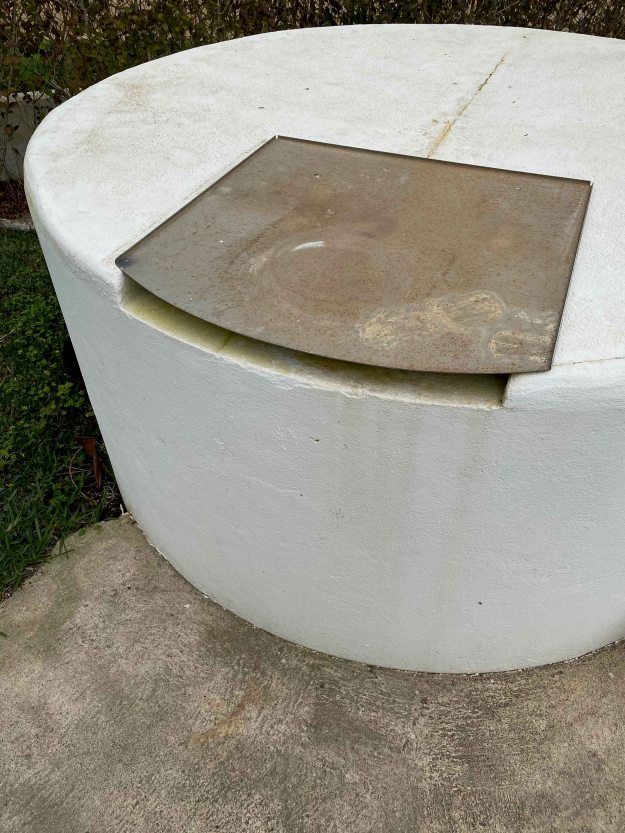
The well is a place of life and death in this area of long , dry summers. Anyone who asks about the house, asks if it has a good well, and yes, it does. There is also a darker side to the wells- a long tradition of suicides being committed in them. I though it was a joke when my Portuguese partner saw it as an absolute priority to order a new metal lid with a lock for the well, but no, it is really taken seriously.

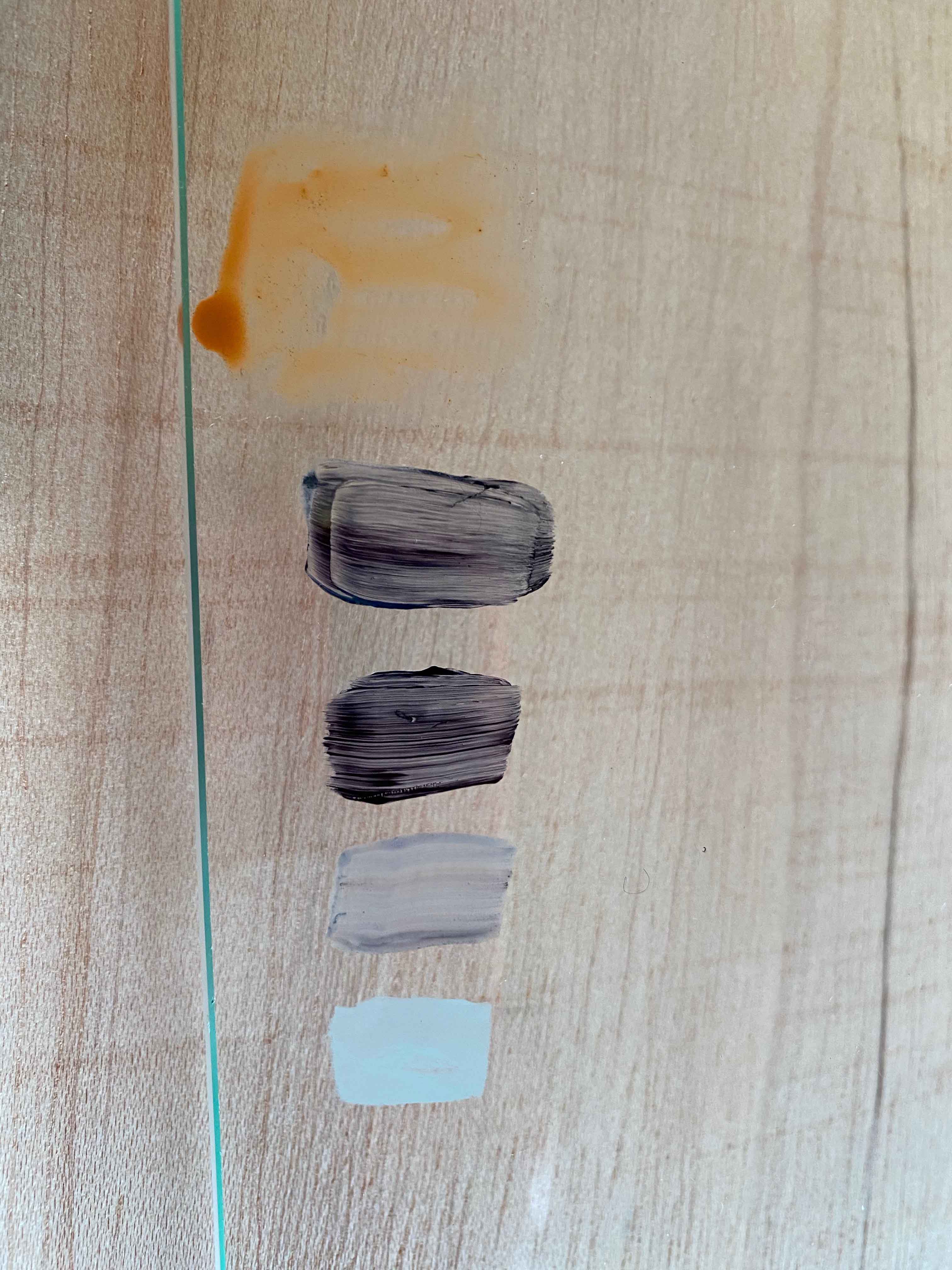
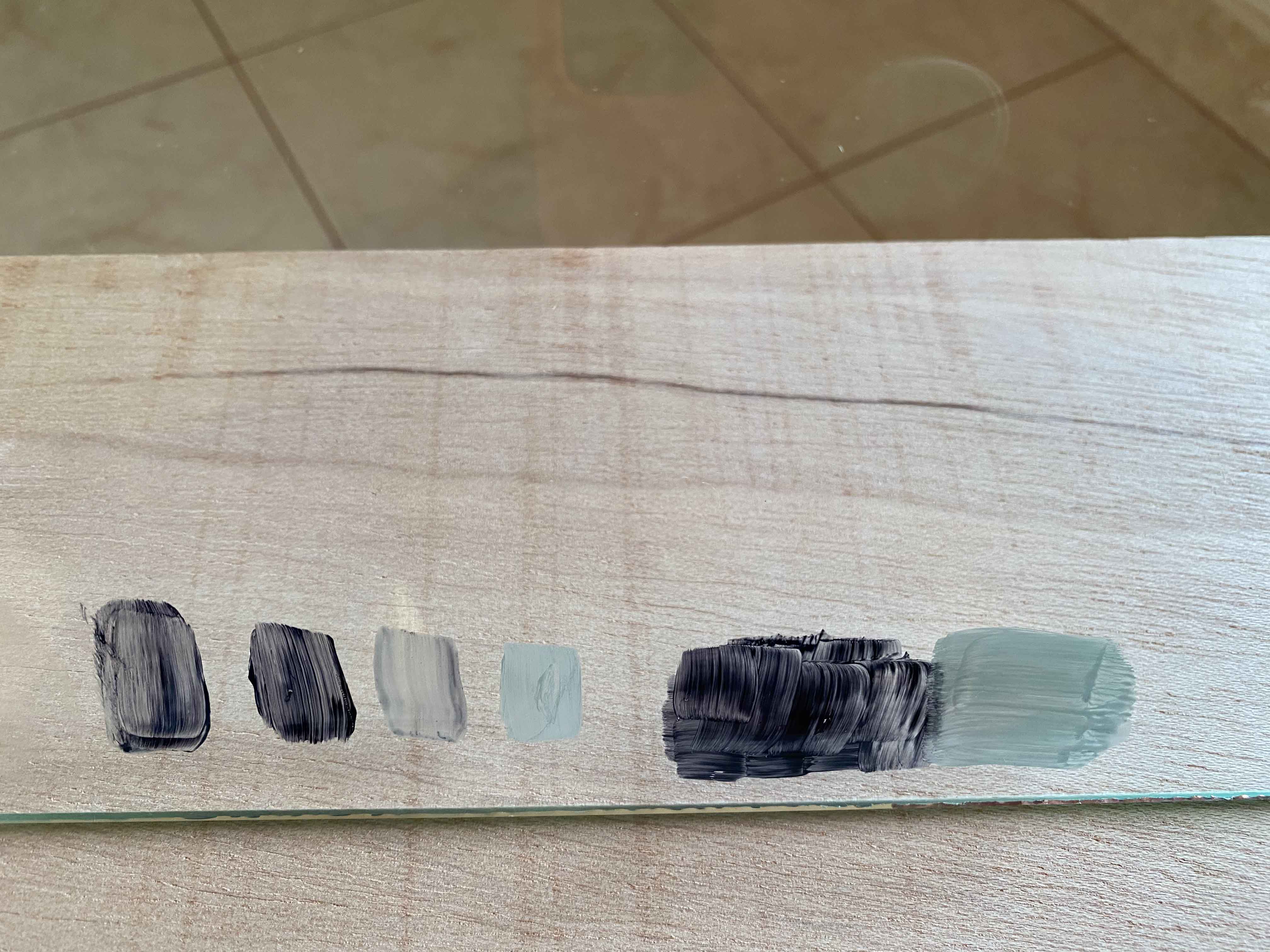
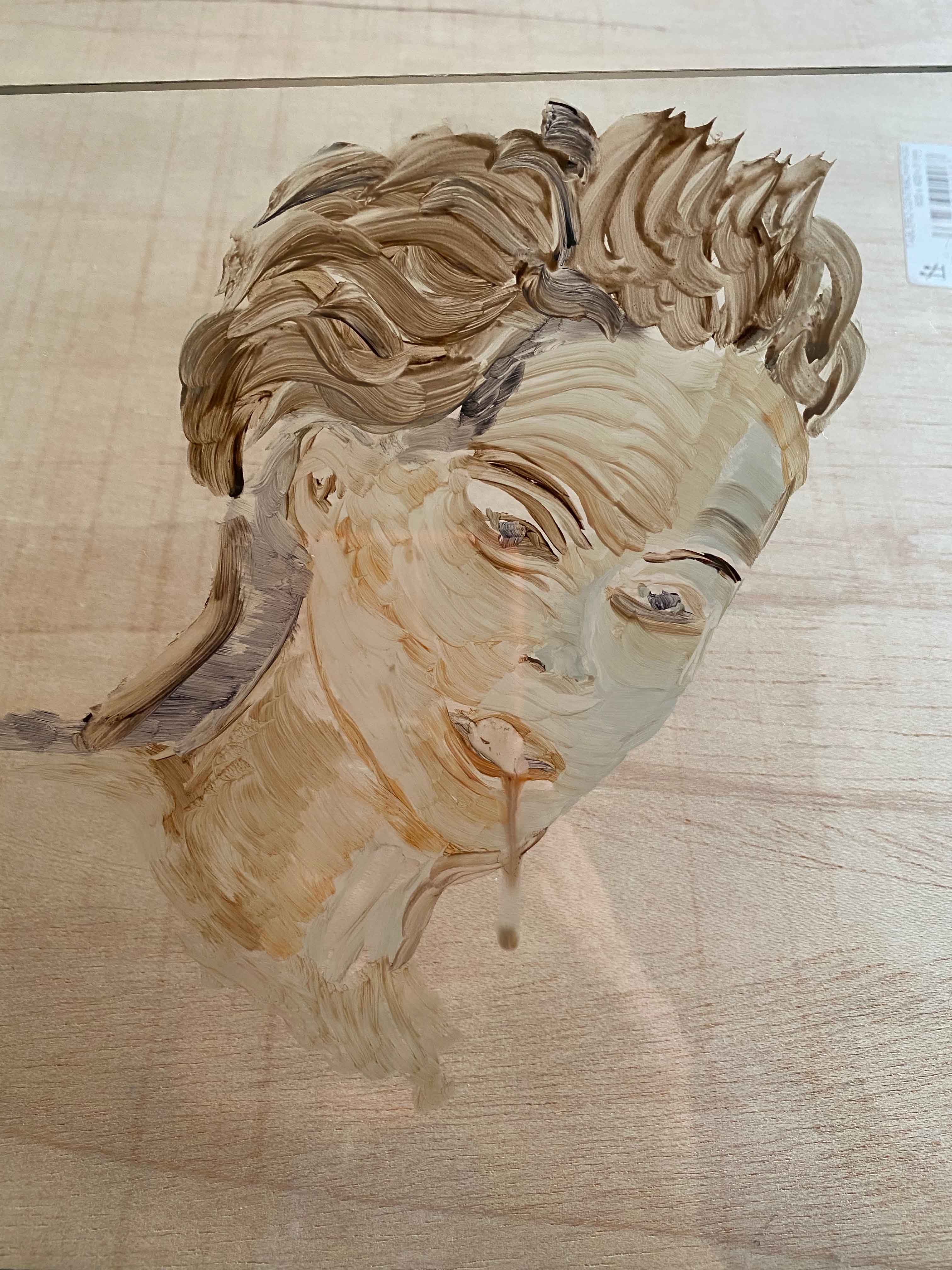
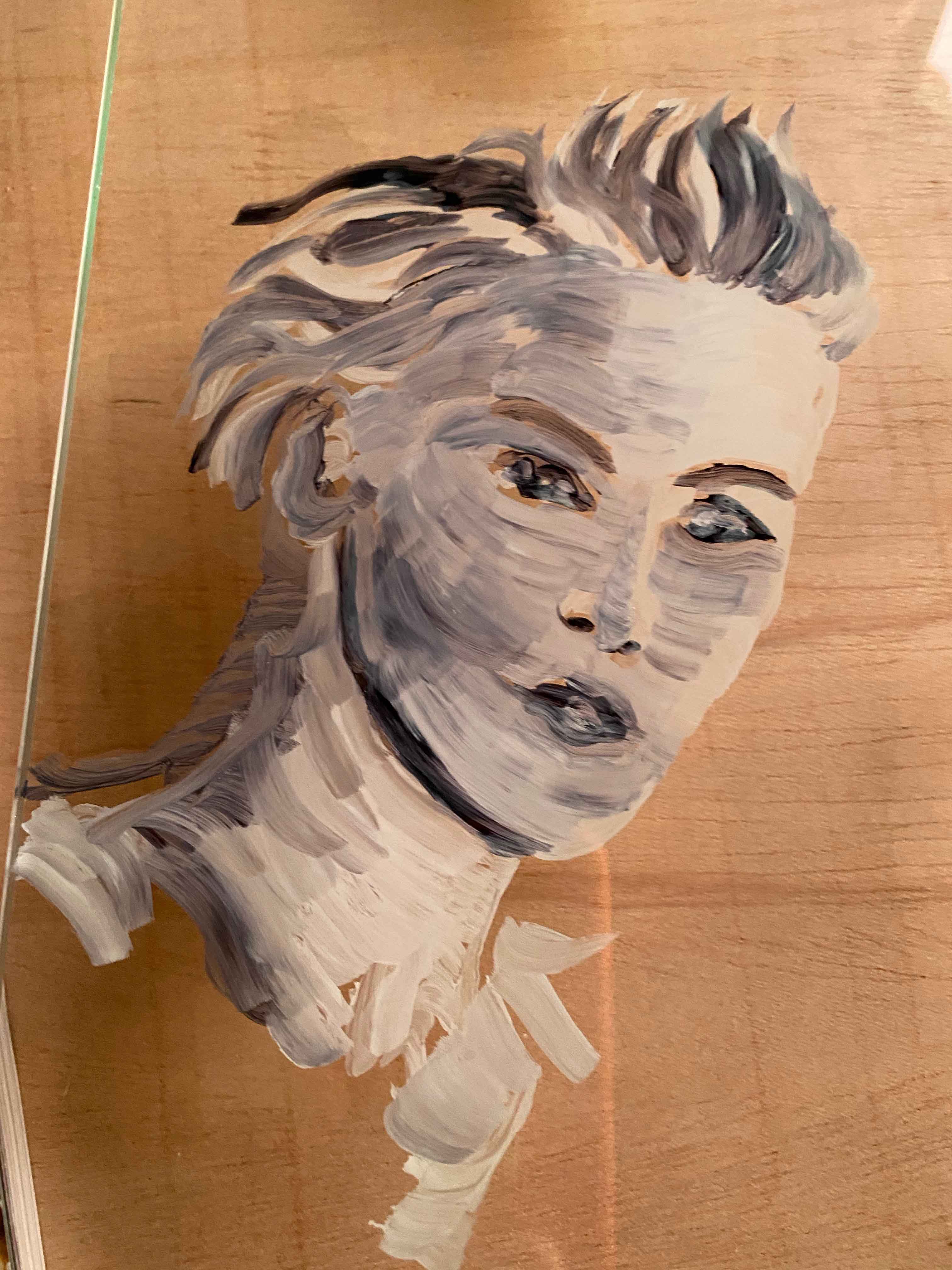
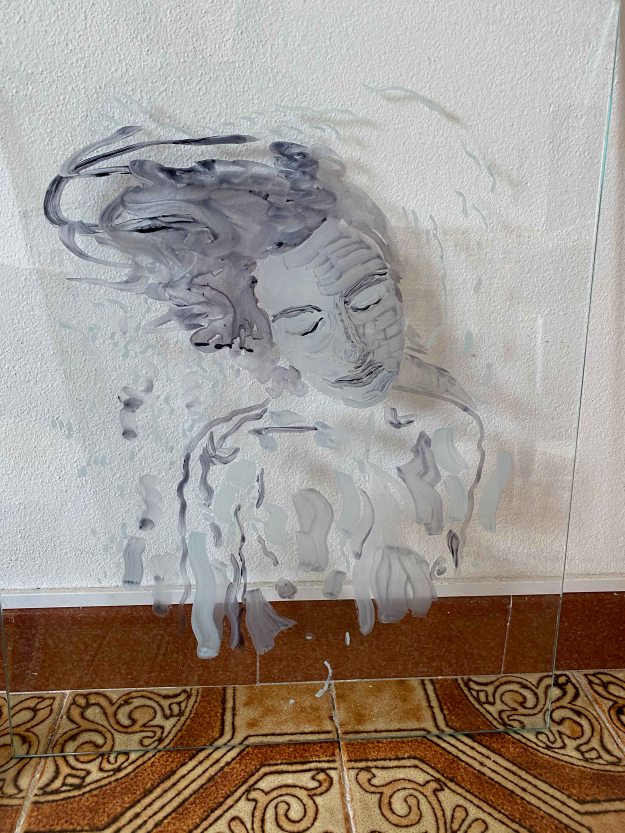
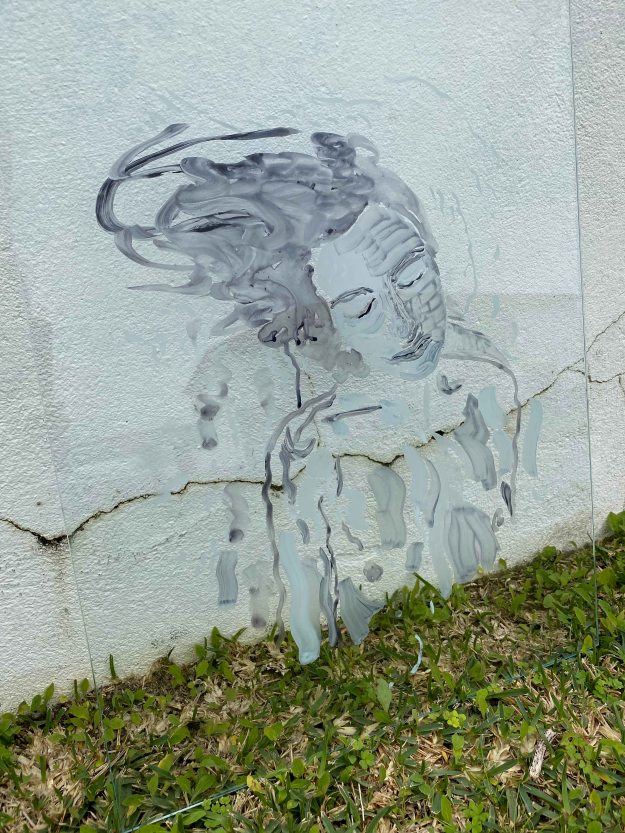
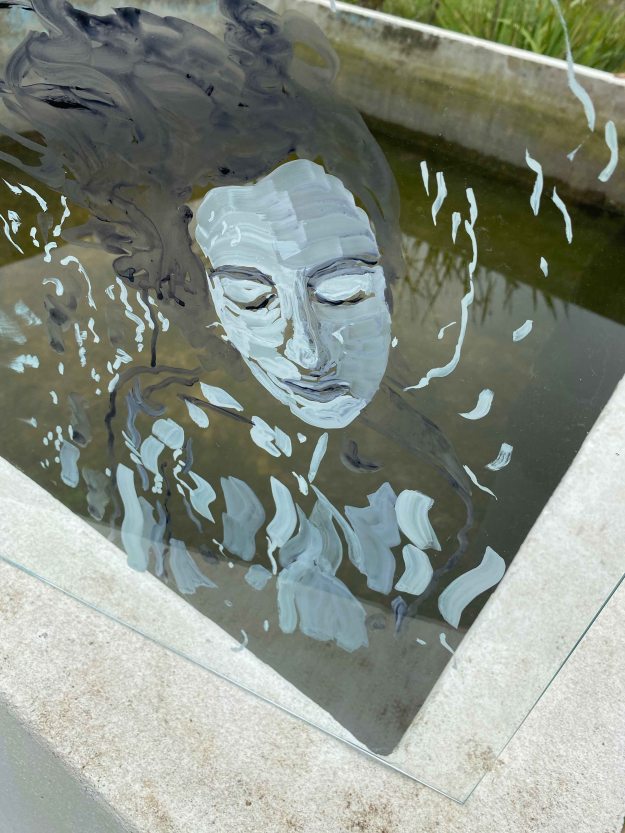
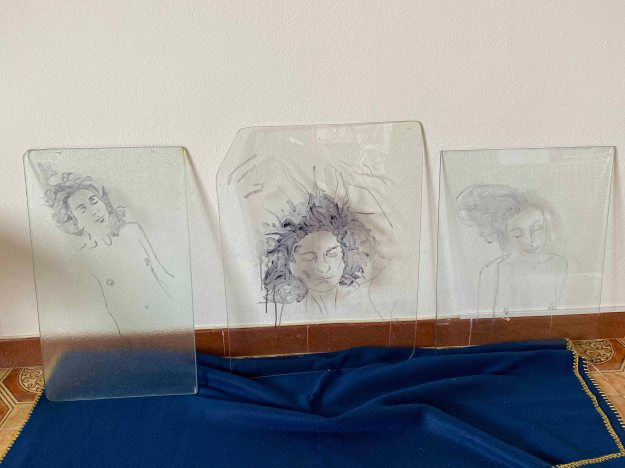
My imagination connected the many stories of drowning and suicide in the wells with the collection of glass I have found on the property. I want to draw portraits under the glass of floating faces at peace.

I start by trying out painting with Cobra watersoluble oil paints on glass. My idea is to introduce water or drops at some points and let the image drown.

I ask my freediving friend Isa to send me some photos of herself under water to understand the facial expressions under water.

I start with some sketches using these facial expressions under water from the photos, but for different faces.

I am currently on Part 2.2 using sgraffitti, so I try out different compositions in this technique :


These are quick oil sketches in my A4 sketchbook:

The glass all have different qualities. I choose a large but thin and clear glass, probably from a shelf for Isa’s delicate face floating under water.

I carry the glass outside and photograph it in different locations. It is a symbolical walk that ends up leaning on the well and finally perched over the opening.

Where I dip it in water and let it wash away….

I am quite fascinated by the water soluble oil paints that have a thickness and viscosity that feels like traditional oil while painting, and then wash away like any water soluble paints. That said, the washed away face is too much, it does not leave anything to the imagination of a viewer.

Also, as for the image I painted, I realize that as so often, my very quick sketches in the sketchbook seem more true and have a softer ephemeral quality that I would like to keep. For a second trial on the glass, I choose to sketch lightly using only Payne’s Grey and a light outline.

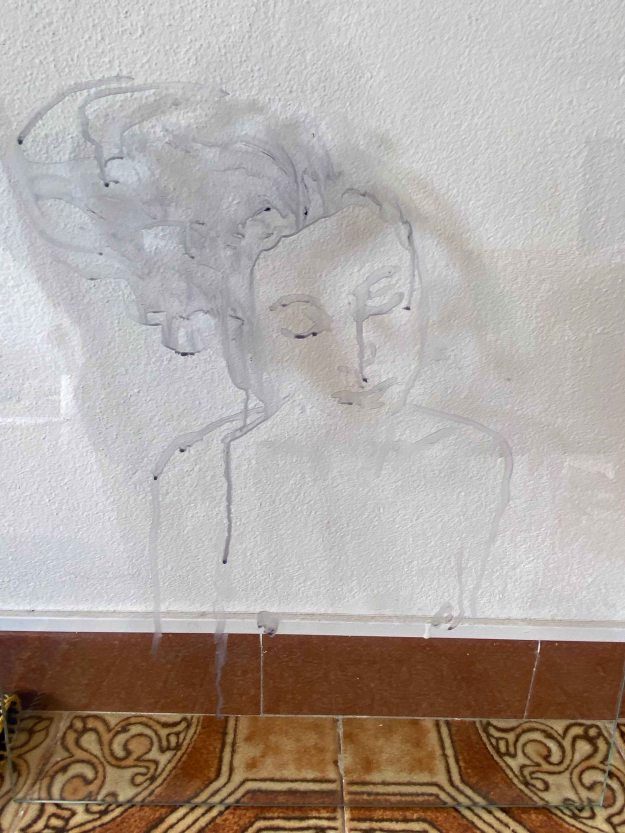
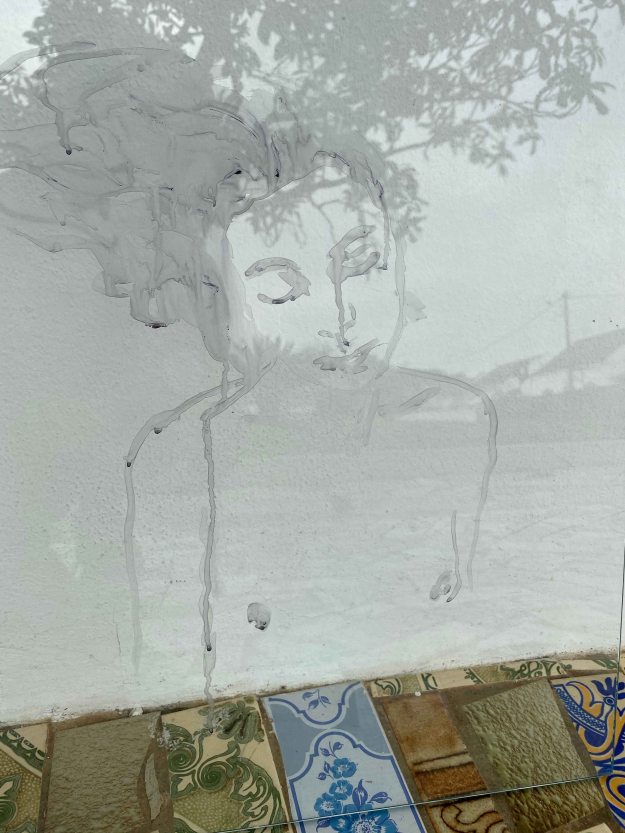
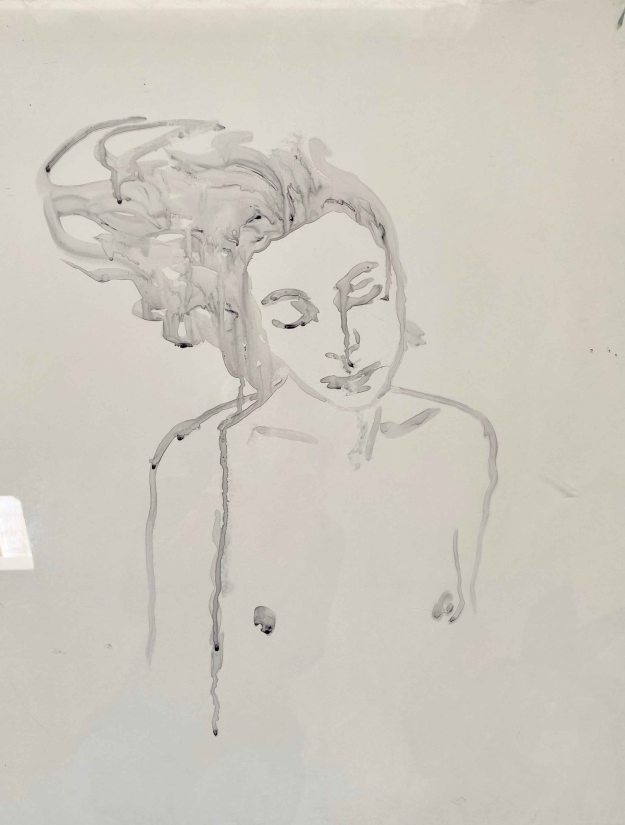
I am happy with the softness and delicacy of this painting- it catches the ephemeral quality I was after. I decide to not wash it away, but merely let a few drops show the contact with water. I continue by carrying the glass outside and taking photographs.

I particularly like this image where my house and the large tree in front are reflected in Isa’s face.

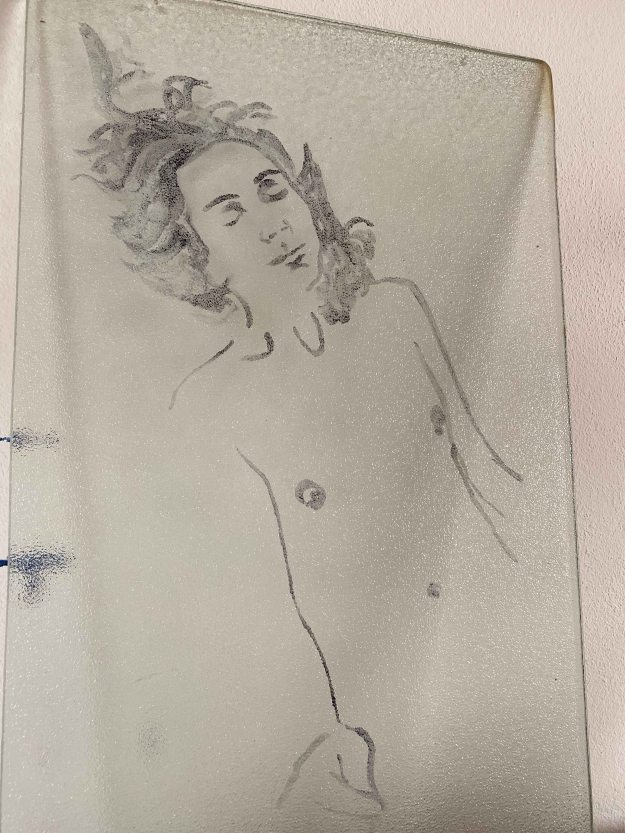
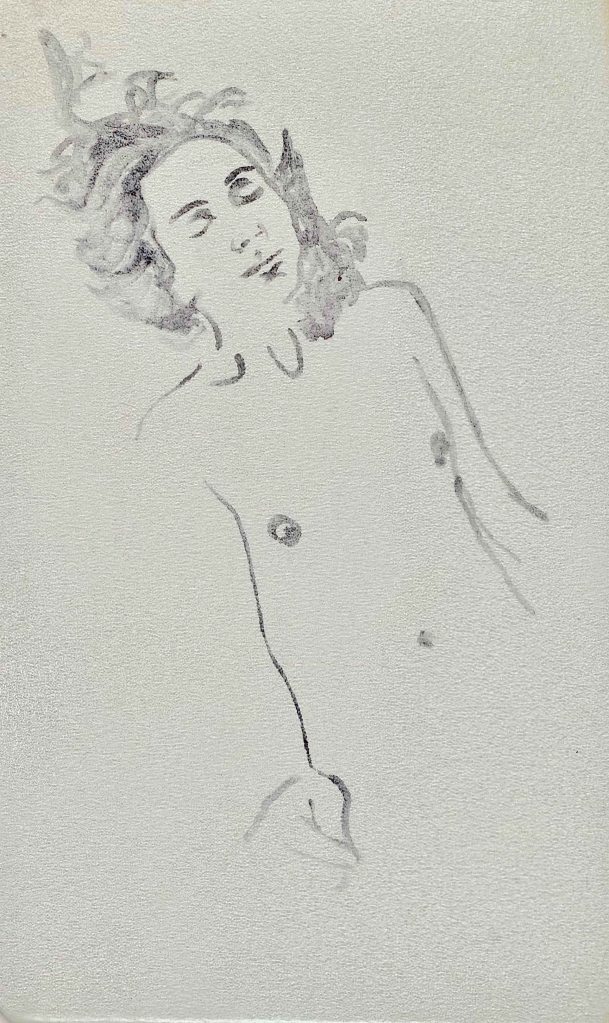
I decide to leave this glass for now, and choose a thick, frosted glass, probably from a refrigerator for a second image. I am using Isa’s facial expressions but want to feature a different person.

I like the posture and the expression here and decide to put it away and see what wants to happen with it later.

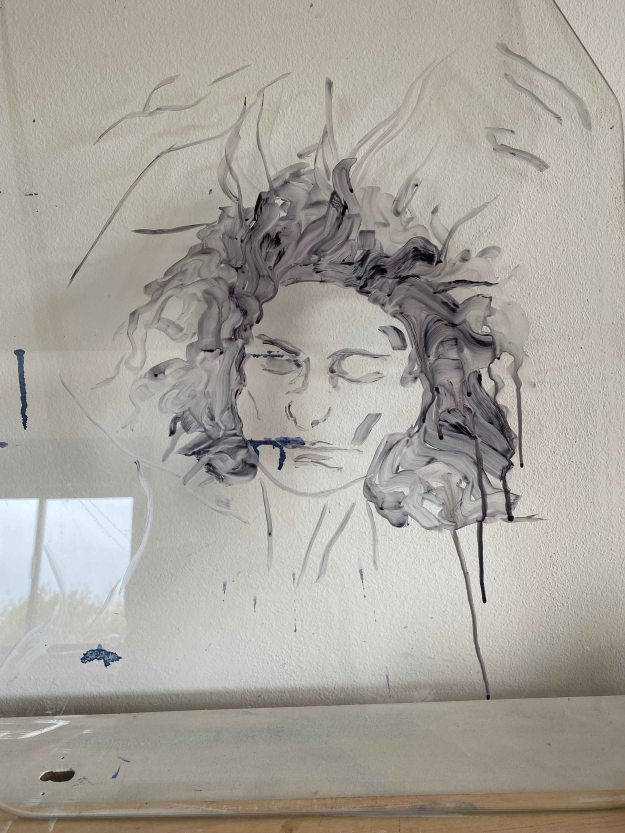
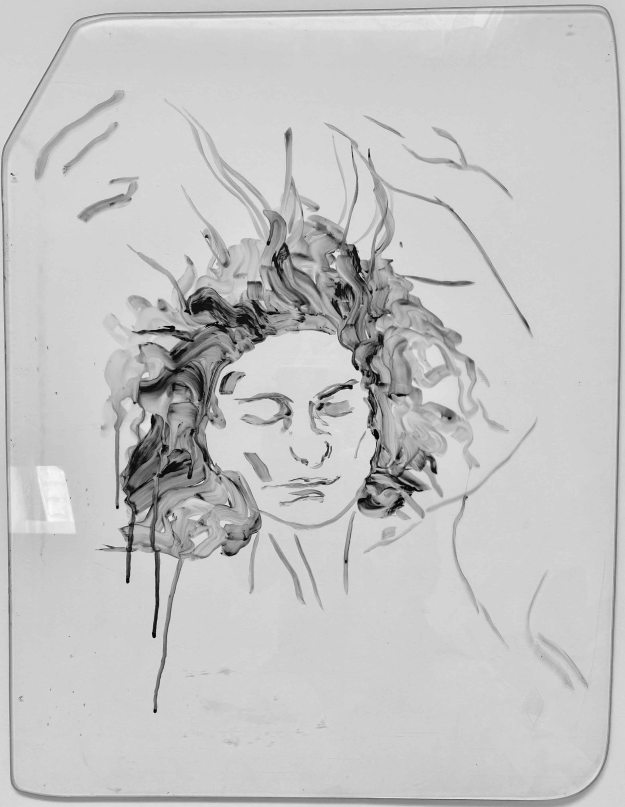
I pick yet another glass, a transparent thicker one and paint a face in a close up, with the arms floating up over the head hinted at.

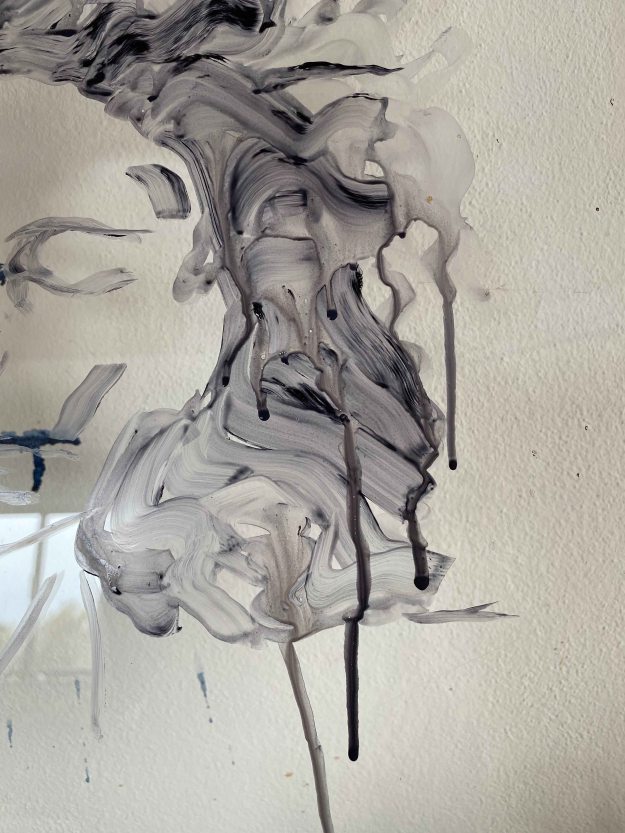
I like the details of the running paint in the hair while the face is clearer.

So I have three portraits under glass that I will set aside for the moment:

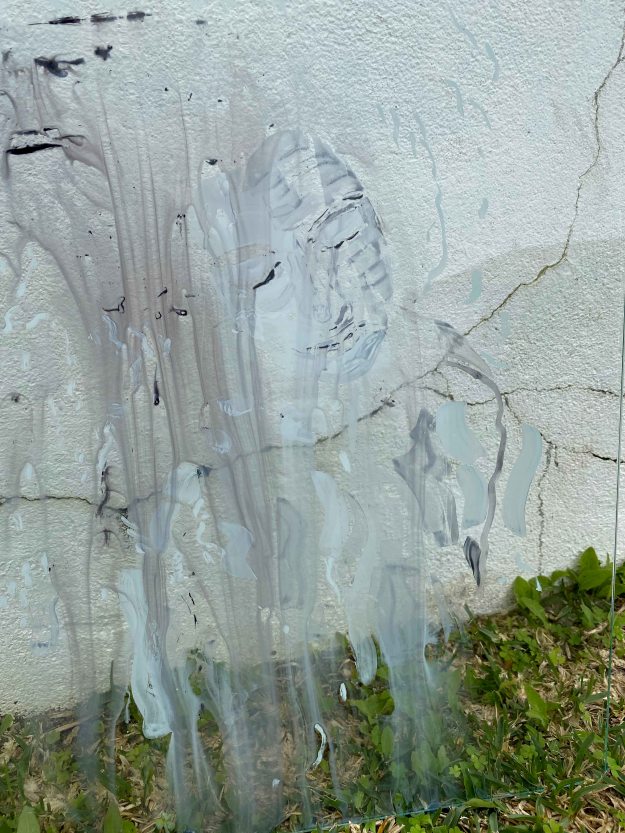
A light rain is starting to fall, and I have the idea to paint another face on glass and leave it out in the rain and see what happens.

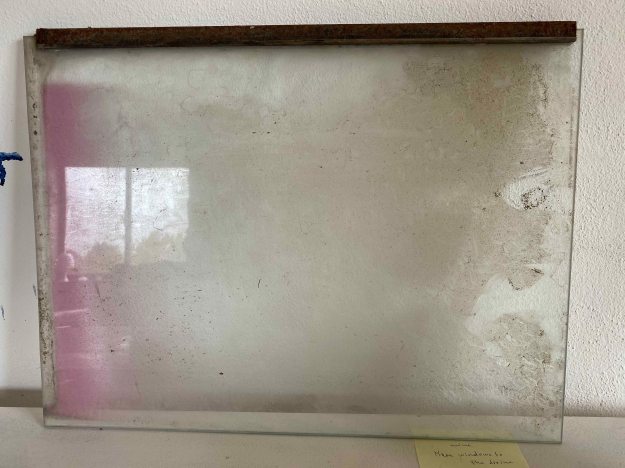
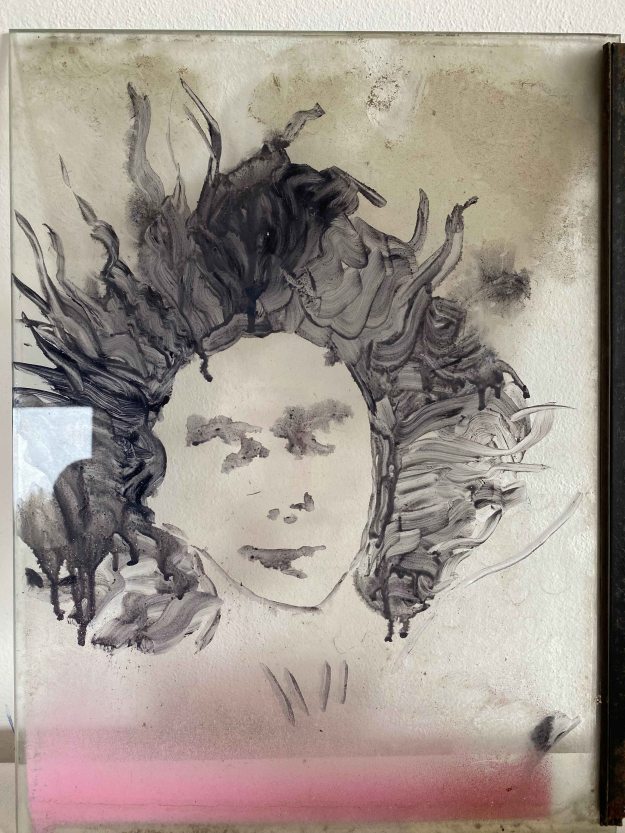
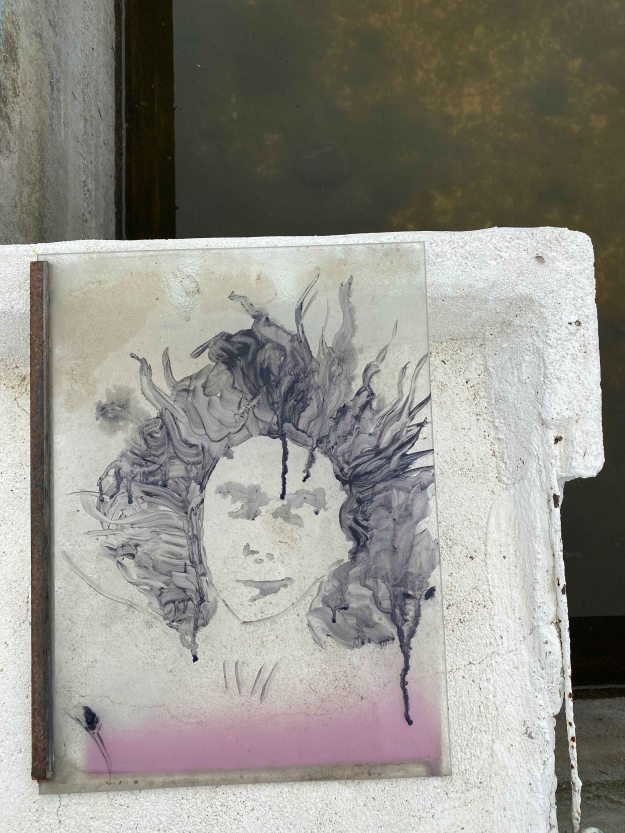
I choose a piece that has a rusty border and a strange pink trace of spray paint. I decide to leave it as dirty as I found it.

And this is the image that I leave out on the well in the light rain:

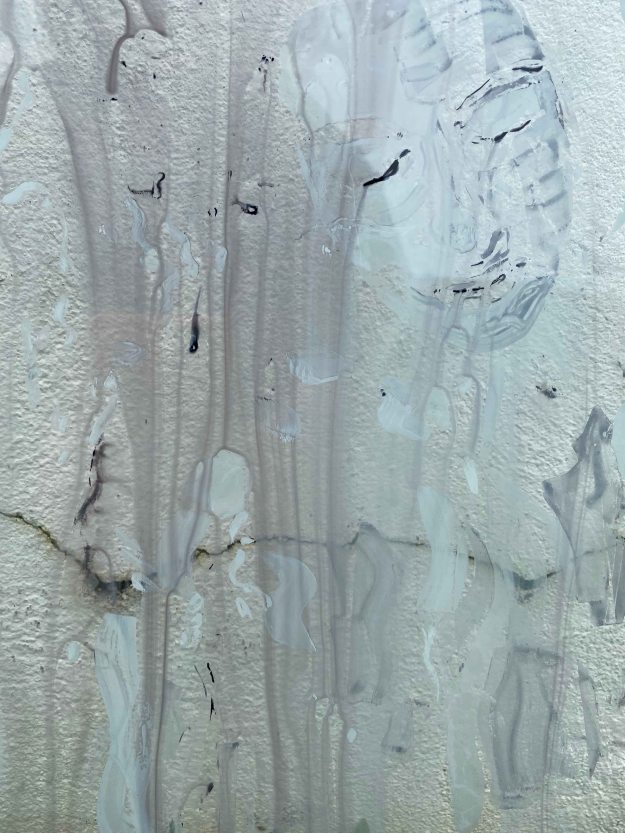
The next morning , I am surprised and disappointed that nothing much has happened to the image.

I continued sketching on this theme for the Project 2.2 Markmaking materials:


I am quite fascinated by the paintings of Genevieve Figgis, who allows the paint to flow and puddle. She has often used various metal plates as supports. I want to experiment with very liquid paint ( watersoluble oils? Oils and Liquin? Acrylics and water?) and let it have a life of its own on the slippery glass surface. For the narrative, I have looked at how Marc Chagall tells his stories in different planes of the canvas.
Parallel project- Empty room/ Modern cavepainting

In several of the rooms, a lampshade is left dangling from the ceiling and some curtains left on the window. In a way, these lonely left over objects just emphasize the emptiness of the room.

This room is to the North and always cold and dark. It has a weird shape and really low ceiling to one side. When I first saw it, it had very much very dark, heavy furniture in it and I can still feel the energy of this dark heaviness lingering. It took me a good while to even clean it out and it is definitely the space I have spent less minutes in.

I will change this by making “an empty room” one of the objects for the parallel project and by using this whole room as my sketchbook to record many of the stories I hear about the village.

I plan to start different stories at different parts of the walls and then continue the narratives til they meet and create a pattern over the room. At some point, these walls will be smashed and I will collect the stories as dust in a suitable box.

Hera I am, ready to start. A whole white room as my white page. And now I need to decide where to put down the tip of my pen.

The dangling lampshade seems to be the center around which the space moves and I climb the ladder to start there.

I start with my neighbor Donna Maria’s account of her first memory from when she was 3 or 4 years old and still little enough to be carried by her mother.

When I switch on the light, I am so happy I chose to start at this point in the room:

I start another story on the wall to the East, about Maria Jose walking to school with her little brother, the 4 km to the nearest primary school.

On the back wall, her granddaughter has a dog called Boss.

I realize that all three stories start with relationships- to the mother, to the dog, to the brother. I decide to leave the Western wall to a lonely figure- Donna Laura from the house on the other side of ours.

Her story is very sad. I will let it evolve around the figure in time.

I have written another blogpost about all the glass I have found, and some of the pieces are clearly from a car. I decide to let other parts of the walls start with stories about the cars from which these glasses came- using this room as a sketchbook:

I prepared several different pens, with the idea of letting fainter drawings lie further back in time than thicker, clearer drawings. I will let go of this though, as I will use the walls more freely and allow myself to grab whatever pen is at hand at the moment.

Spinning these drawings together in stories adds the dimension of time engrained in the piece, as well as the two-dimensionality of the drawings and the three-dimensionality of the whole room.

I will resume the drawings now again on this fresh coat of paint. There will probably not be any grand finale with breaking the walls and collecting the dust, but this room will still be the sketchbook for the stories.

Suddenly we also live full time in the unrenovated house with all the family, due to the lock down, so today it occurred to me that our presence, our life here will weave into the sketchbook entries on these walls too. We already belong to the story of this house.

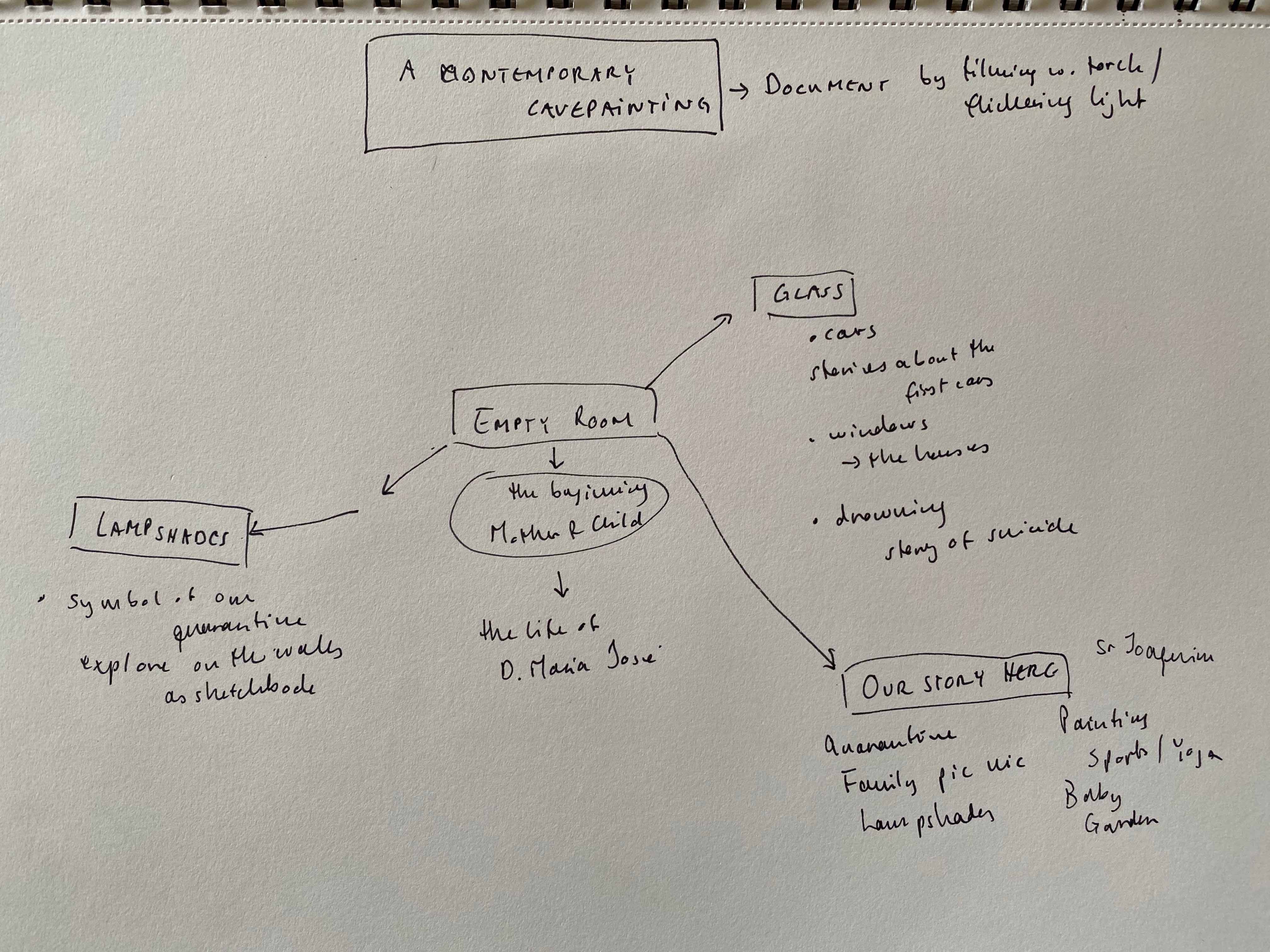
The new map of this “empty room” looks like this:

IMG_6478

The motives of the sketches on the walls here will connect to all other parts of the parallell project.

Our presence here first appeared with small sketches from a photoseries I did with my daughter and granddaughter wearing  lampshades on their heads:


These are sketches for oil paintings that I logged more about under the part of the parallel project “lampshades”.

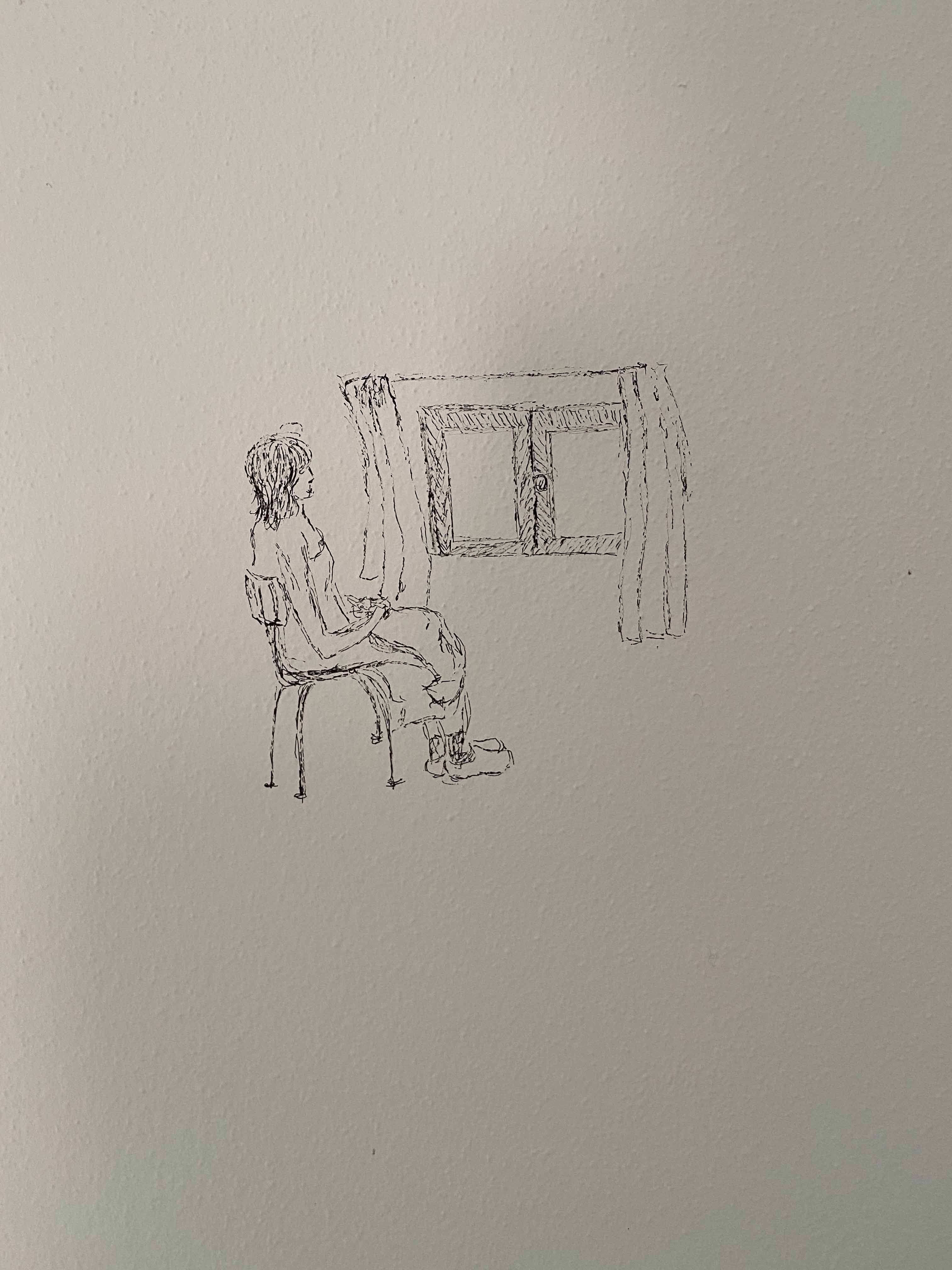
Also a sketch of my daughter longingly looking through the window after way too long in this house for quarantine:

IMG_6475

To be continued