Category Archives: Part 6 Conclusion

Parallel project : Glass, the drowning

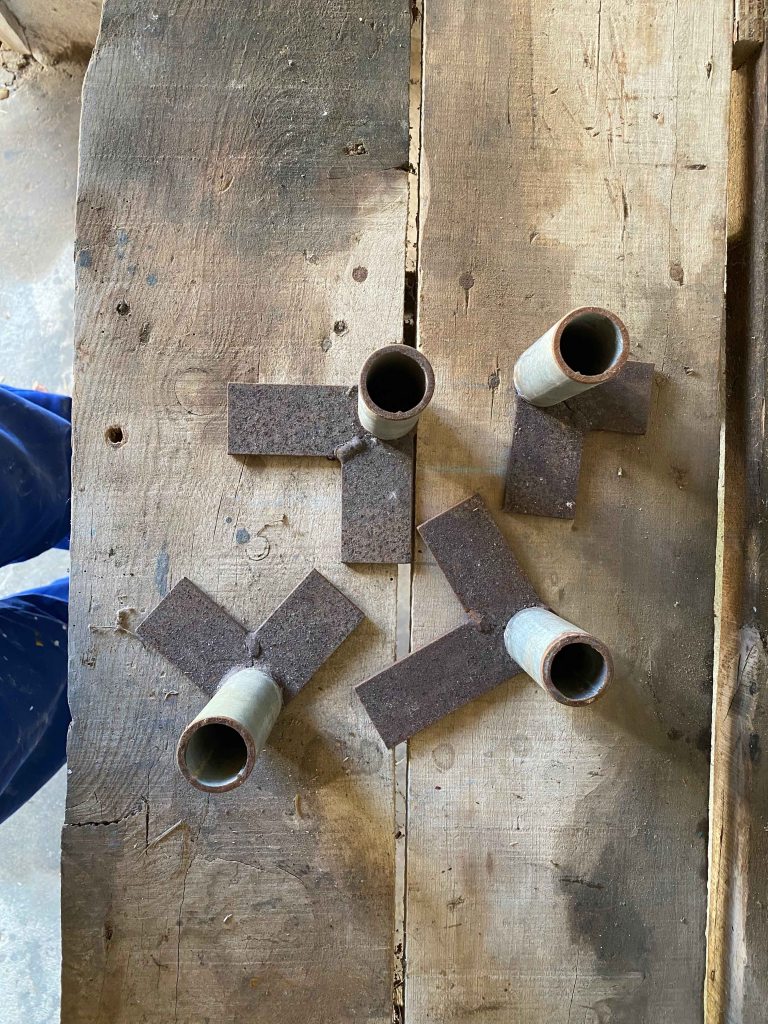
The well is a place of life and death in this area of long , dry summers. Anyone who asks about the house, asks if it has a good well, and yes, it does. There is also a darker side to the wells- a long tradition of suicides being committed in them. I though it was a joke when my Portuguese partner saw it as an absolute priority to order a new metal lid with a lock for the well, but no, it is really taken seriously.
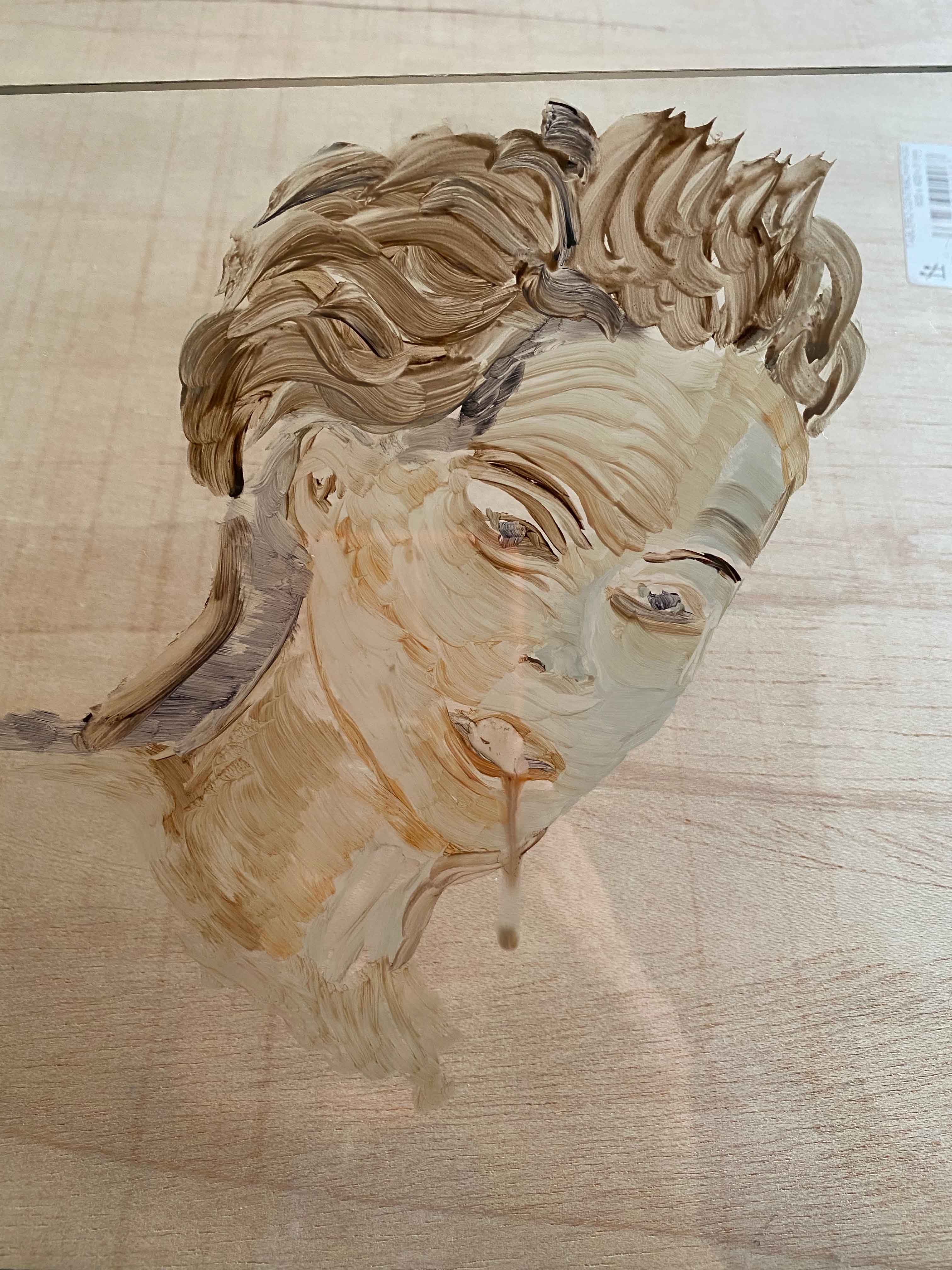
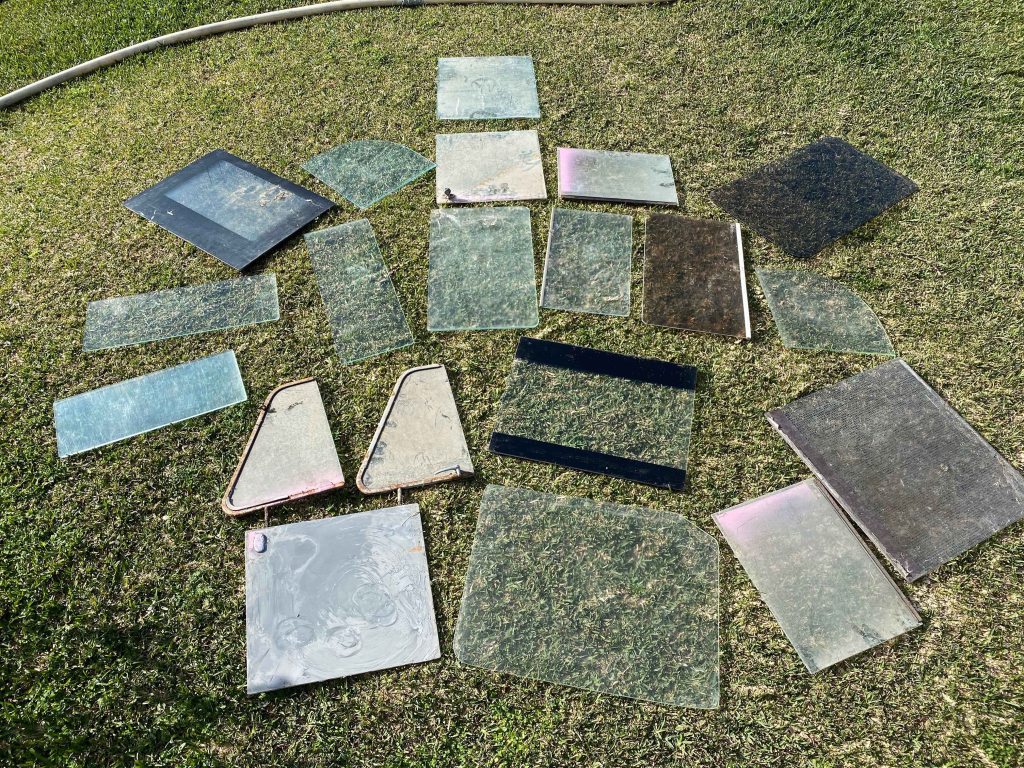
My imagination connected the many stories of drowning and suicide in the wells with the collection of glass I have found on the property. I want to draw portraits under the glass of floating faces at peace.

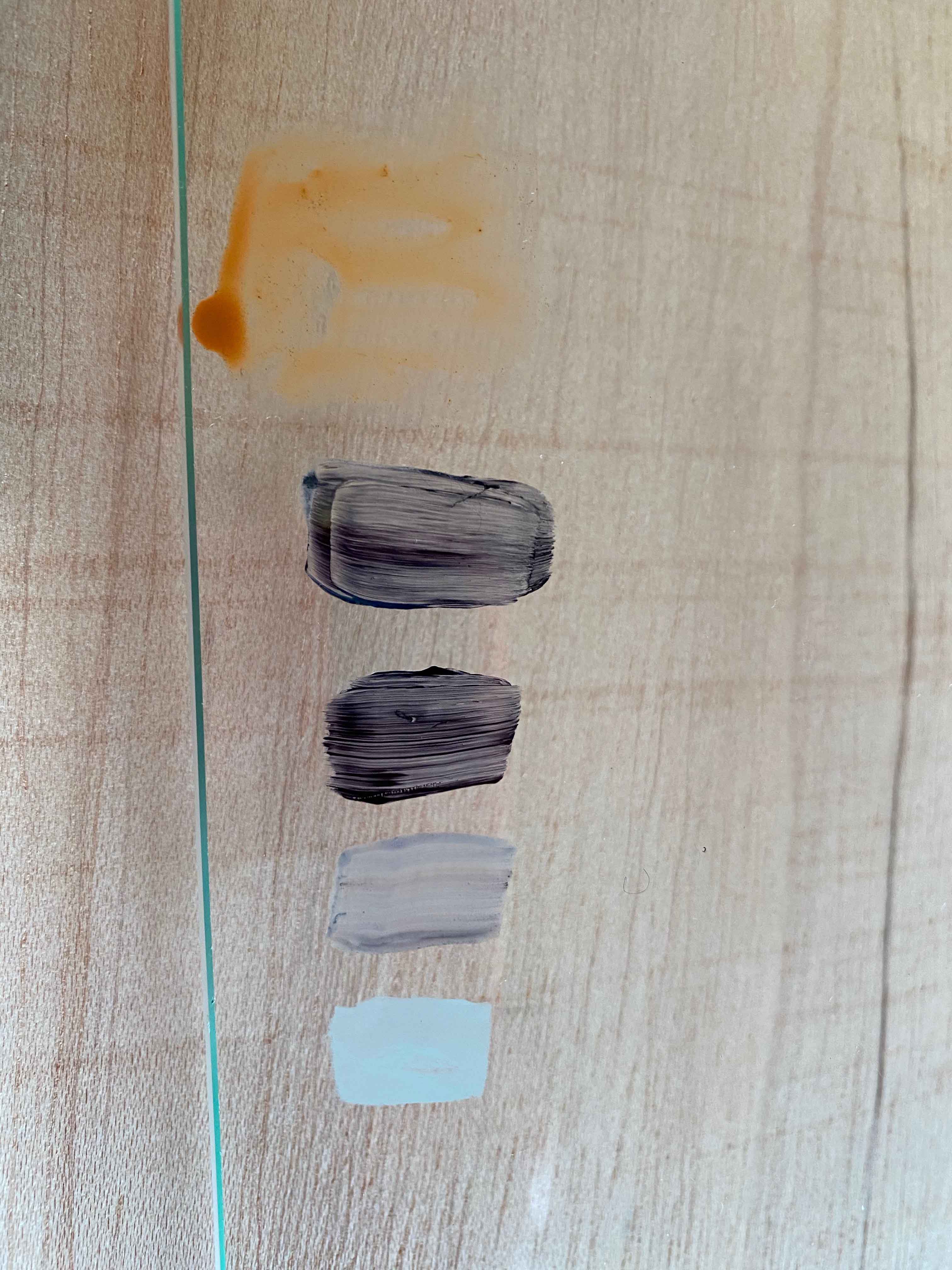
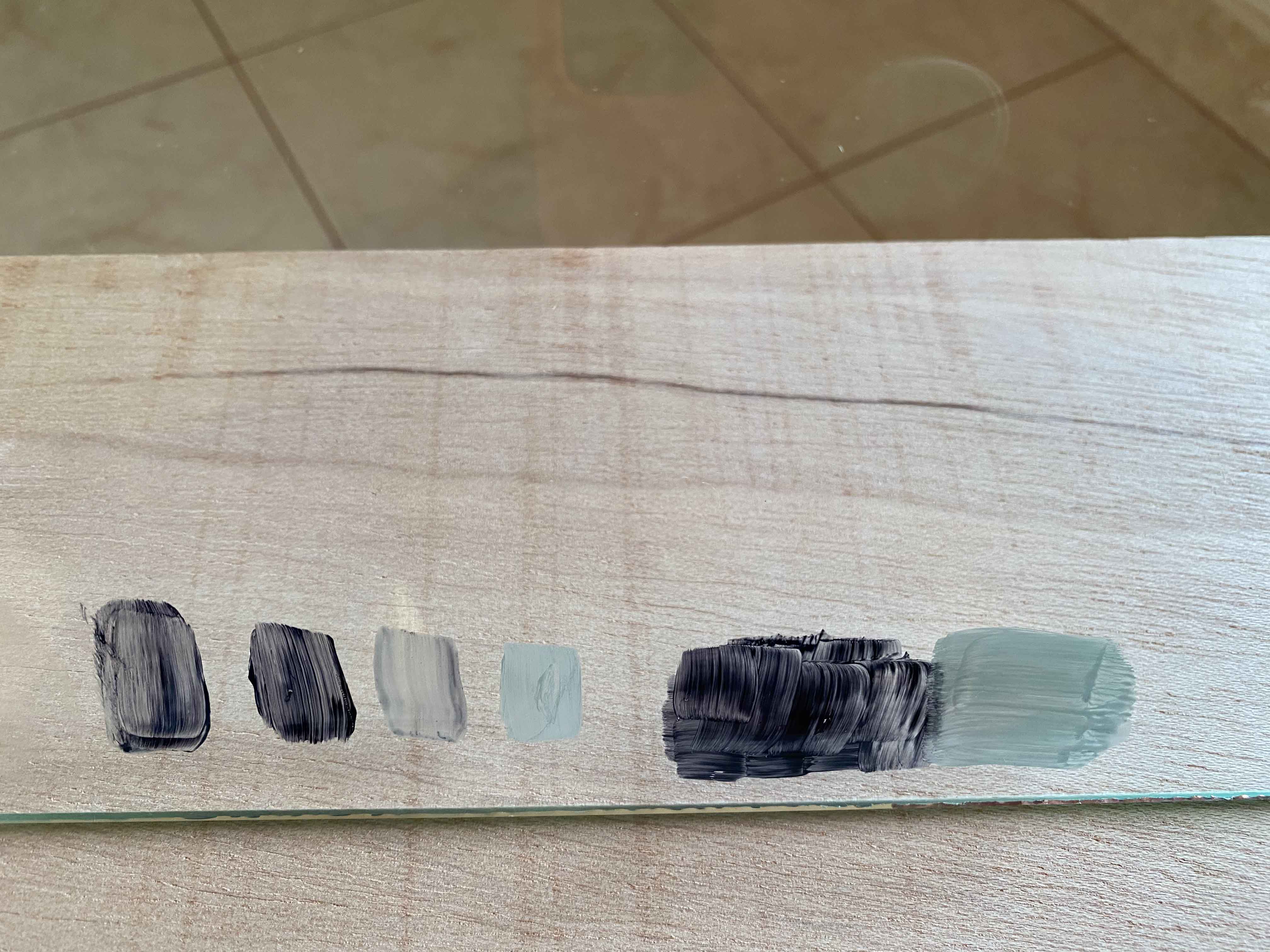
I start by trying out painting with Cobra watersoluble oil paints on glass. My idea is to introduce water or drops at some points and let the image drown.
I ask my freediving friend Isa to send me some photos of herself under water to understand the facial expressions under water.

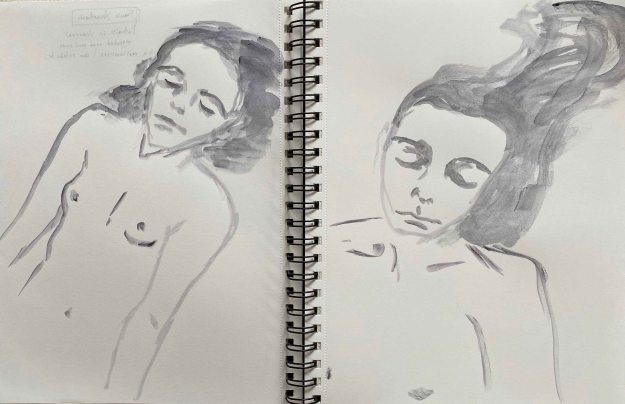
I start with some sketches using these facial expressions under water from the photos, but for different faces.

I am currently on Part 2.2 using sgraffitti, so I try out different compositions in this technique :


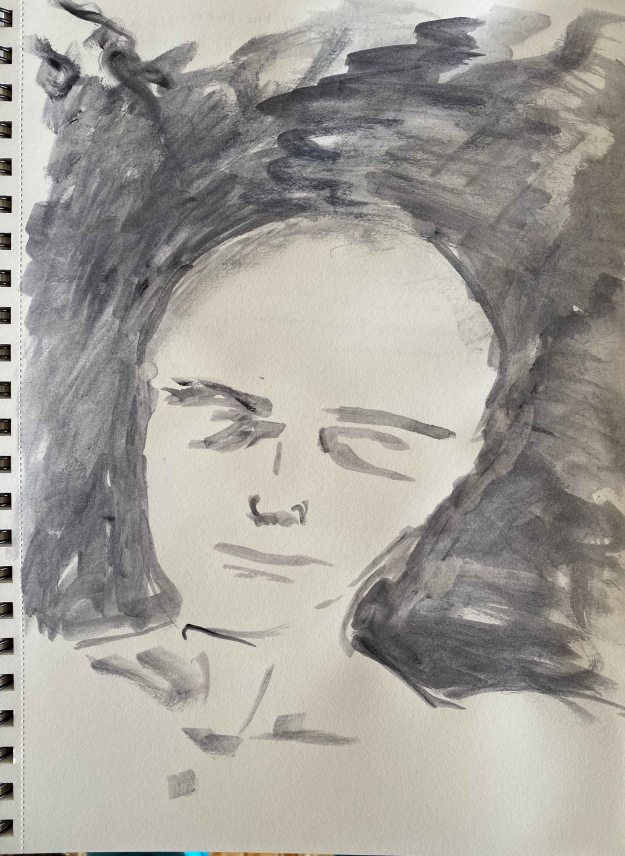
These are quick oil sketches in my A4 sketchbook:
The glass all have different qualities. I choose a large but thin and clear glass, probably from a shelf for Isa’s delicate face floating under water.
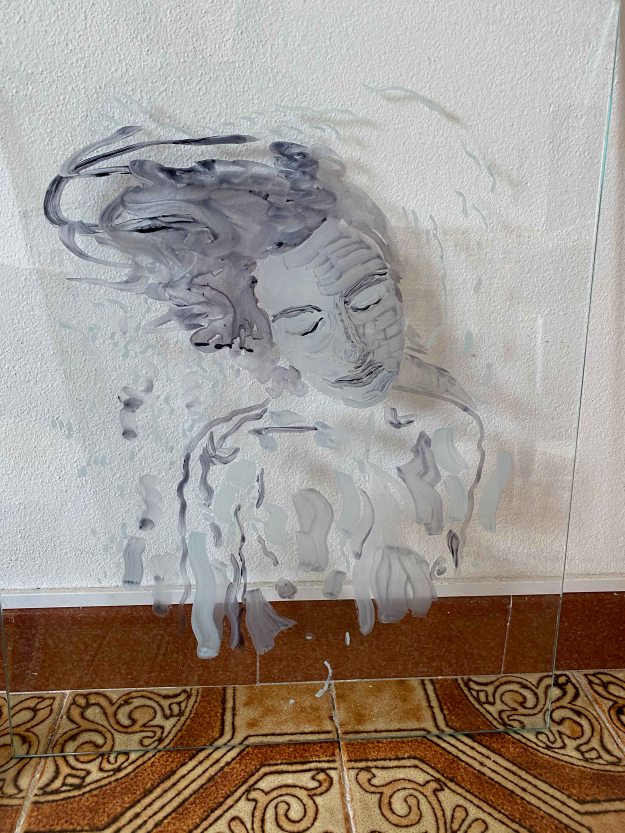
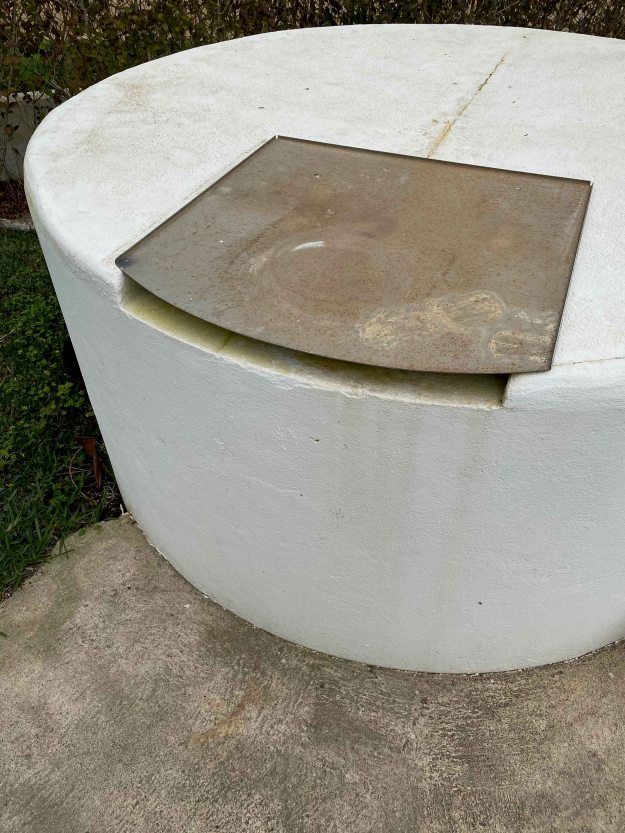
I carry the glass outside and photograph it in different locations. It is a symbolical walk that ends up leaning on the well and finally perched over the opening.
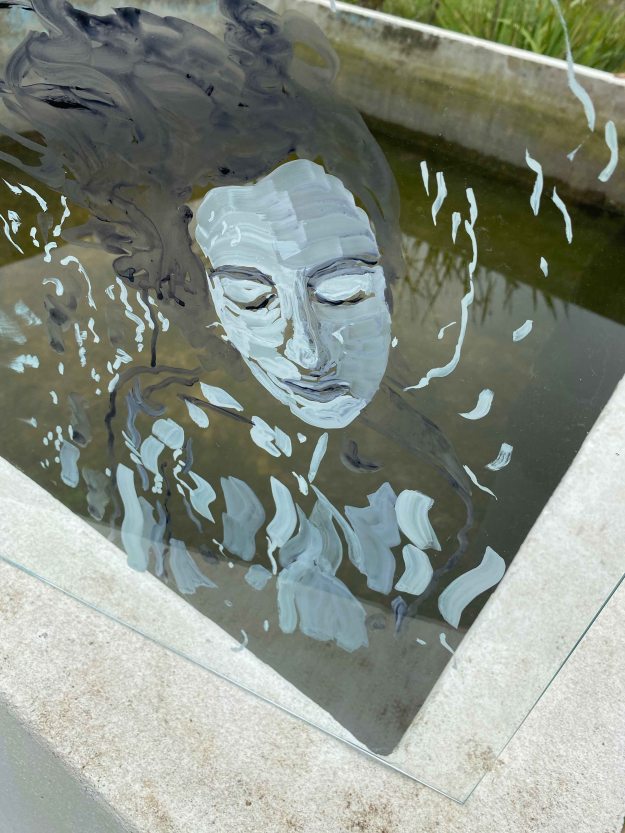
Where I dip it in water and let it wash away….
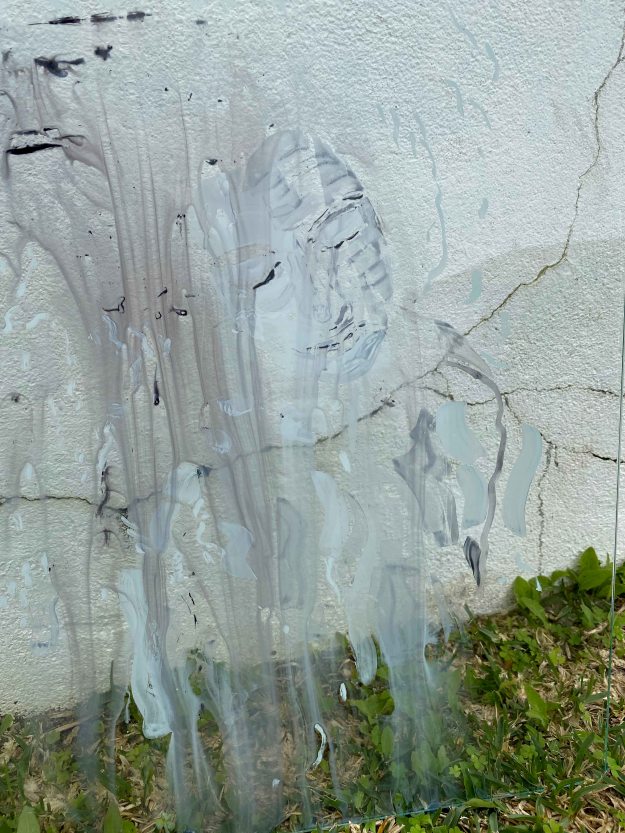
I am quite fascinated by the water soluble oil paints that have a thickness and viscosity that feels like traditional oil while painting, and then wash away like any water soluble paints. That said, the washed away face is too much, it does not leave anything to the imagination of a viewer.

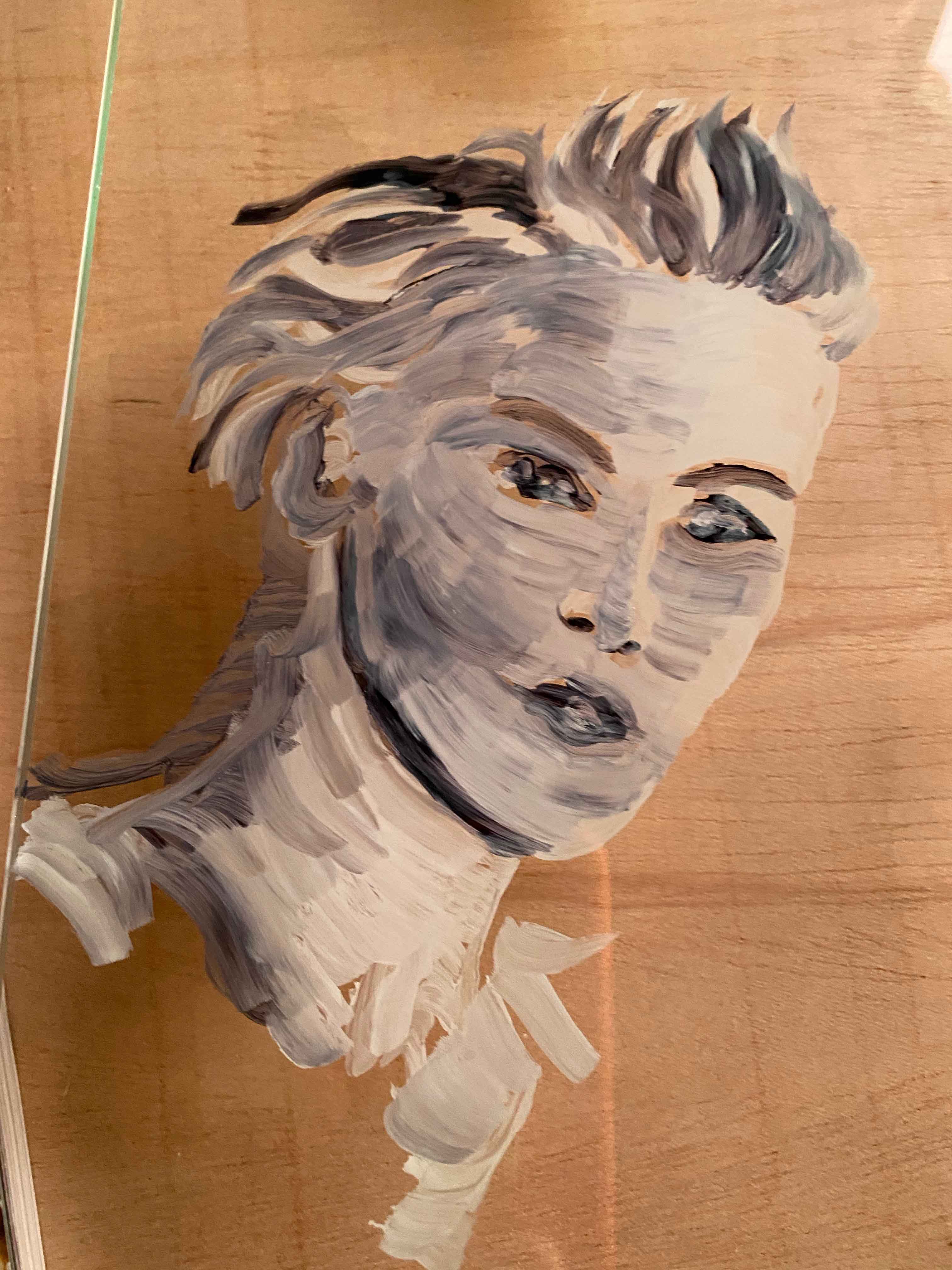
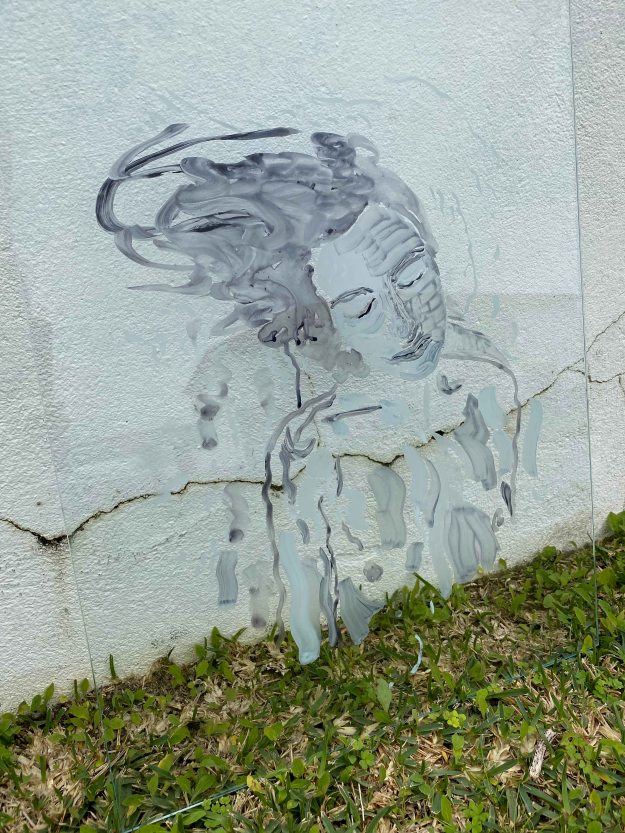
Also, as for the image I painted, I realize that as so often, my very quick sketches in the sketchbook seem more true and have a softer ephemeral quality that I would like to keep. For a second trial on the glass, I choose to sketch lightly using only Payne’s Grey and a light outline.
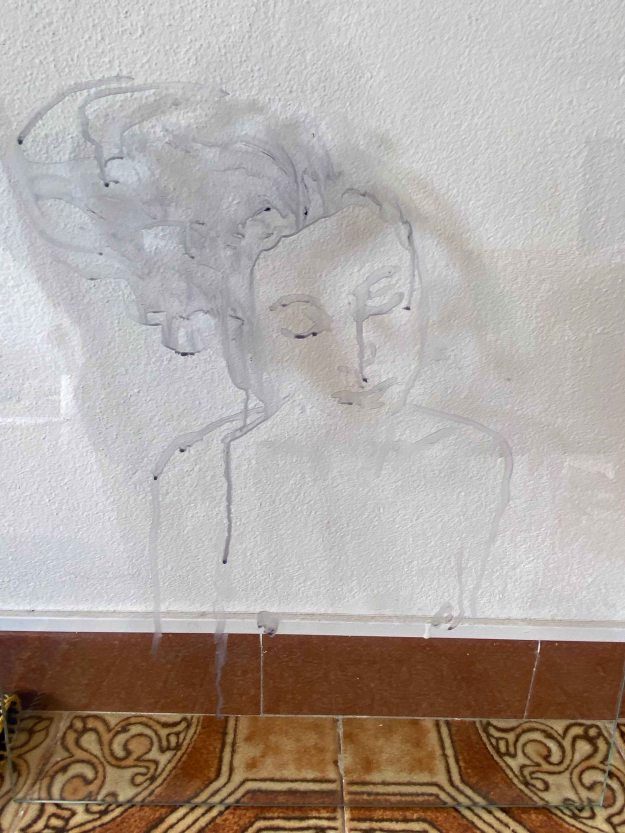
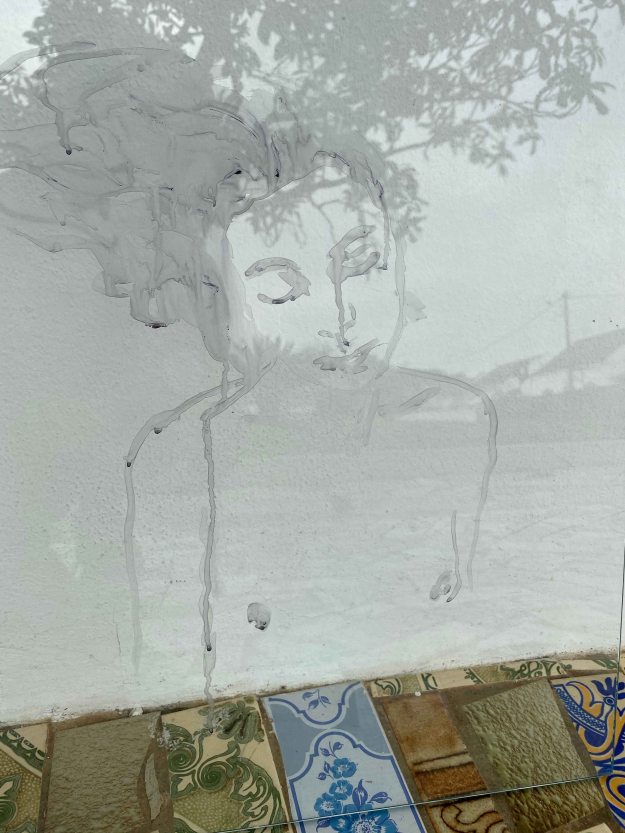
I am happy with the softness and delicacy of this painting- it catches the ephemeral quality I was after. I decide to not wash it away, but merely let a few drops show the contact with water. I continue by carrying the glass outside and taking photographs.

I particularly like this image where my house and the large tree in front are reflected in Isa’s face.
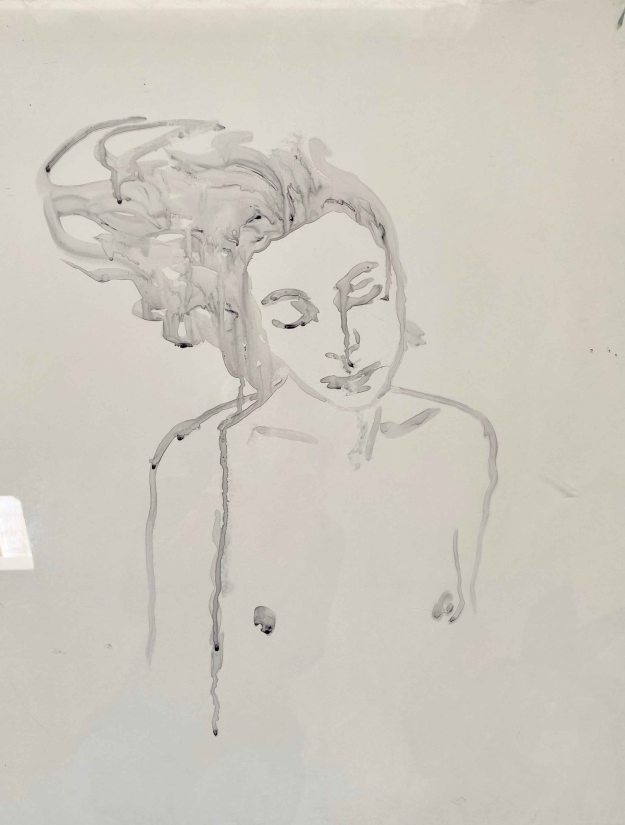
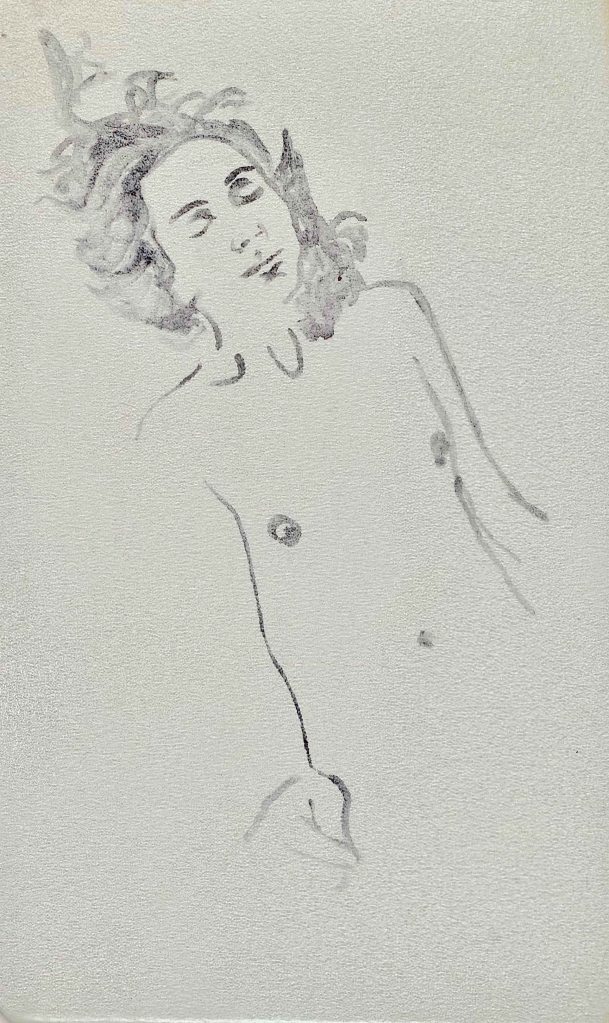
I decide to leave this glass for now, and choose a thick, frosted glass, probably from a refrigerator for a second image. I am using Isa’s facial expressions but want to feature a different person.
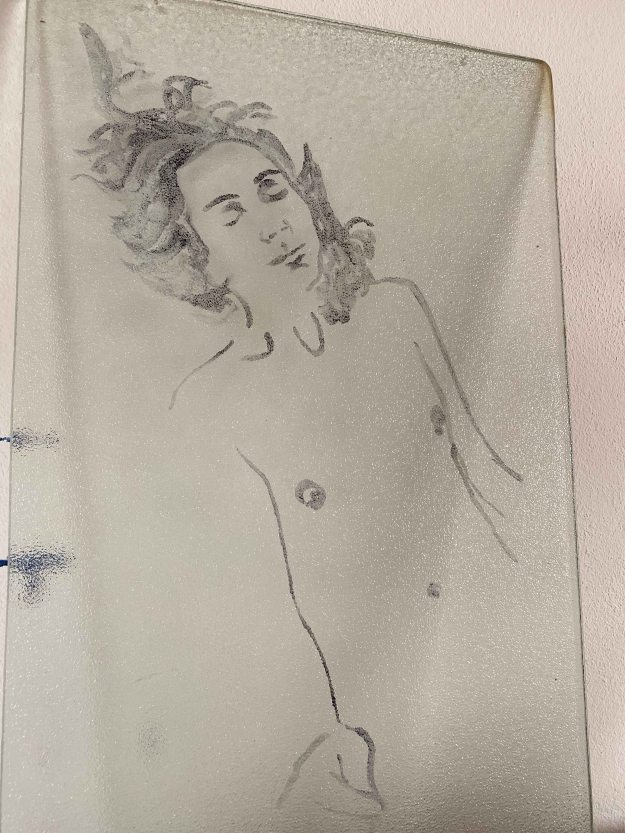
I like the posture and the expression here and decide to put it away and see what wants to happen with it later.

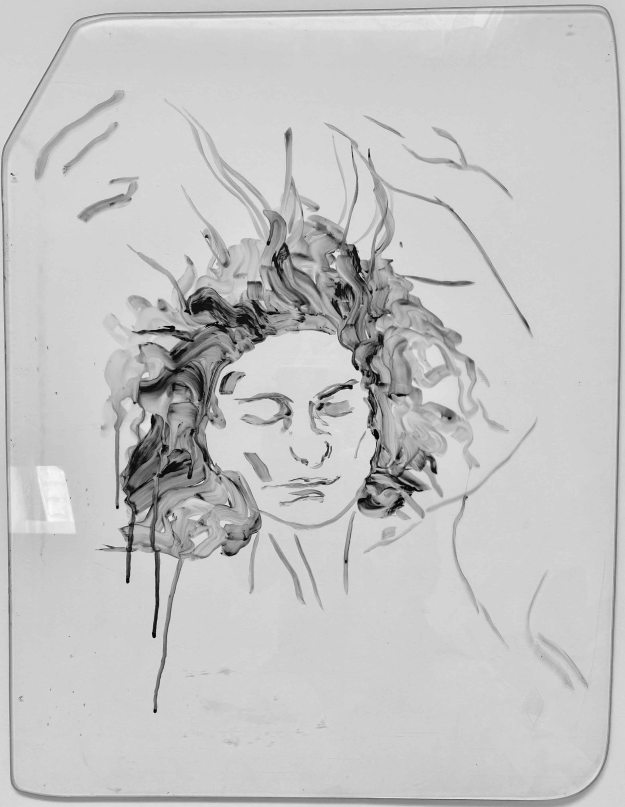
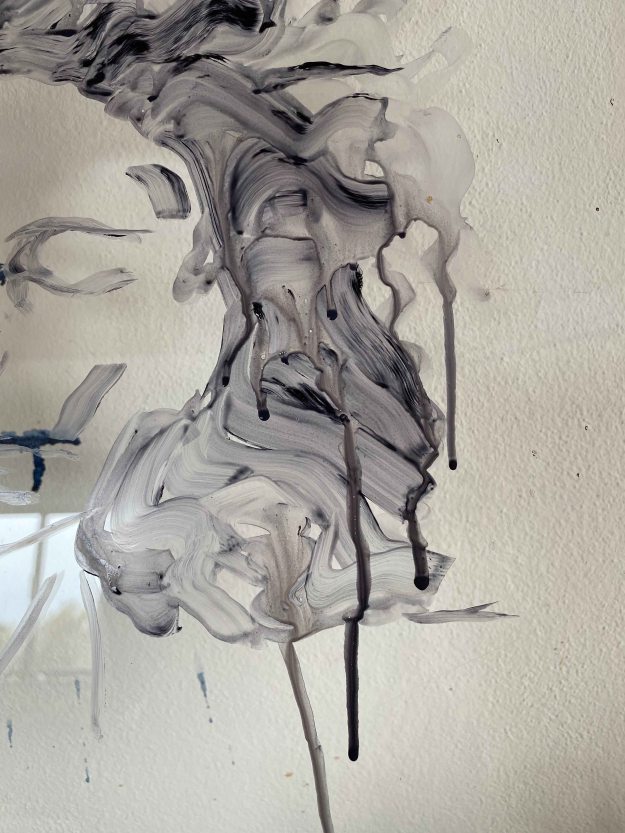
I pick yet another glass, a transparent thicker one and paint a face in a close up, with the arms floating up over the head hinted at.
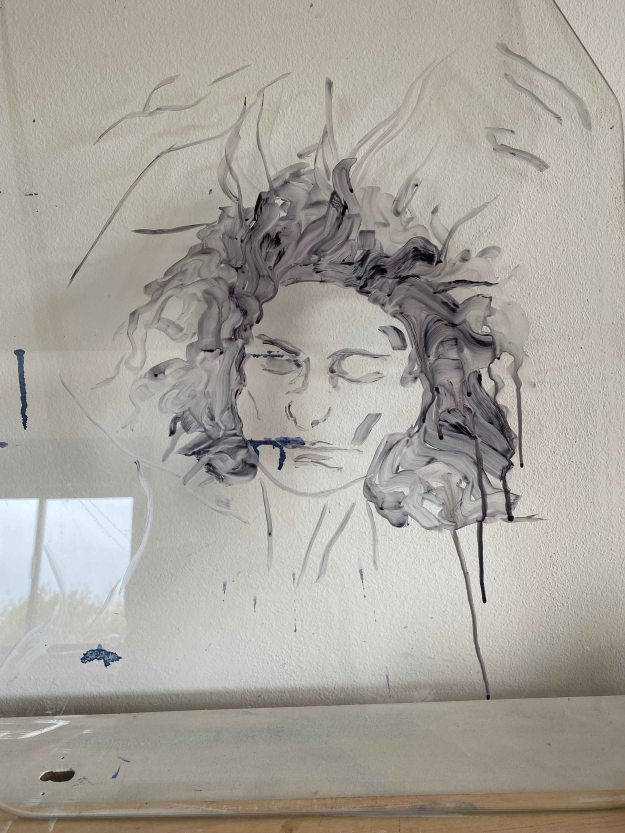
I like the details of the running paint in the hair while the face is clearer.
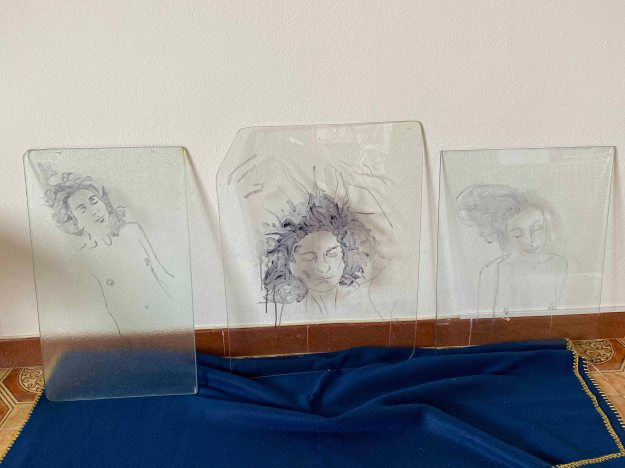
So I have three portraits under glass that I will set aside for the moment:
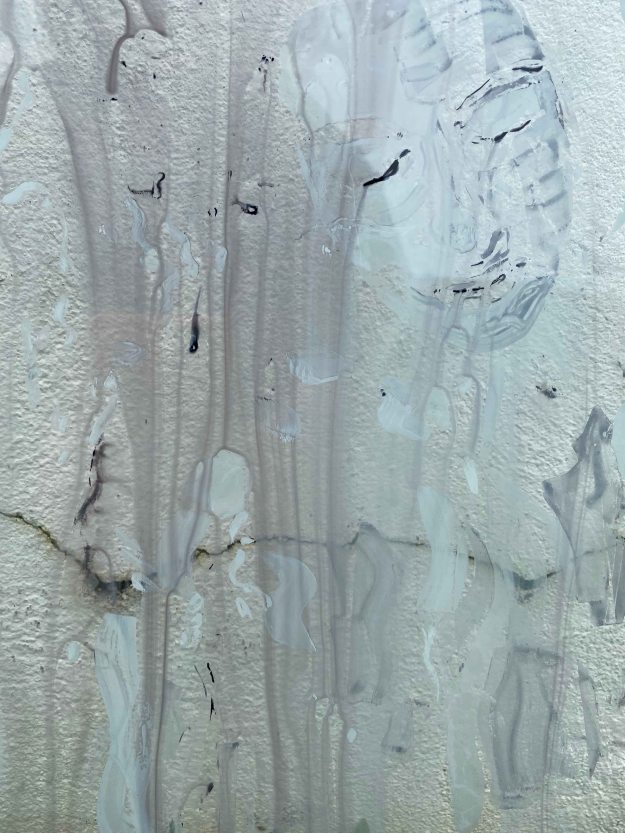
A light rain is starting to fall, and I have the idea to paint another face on glass and leave it out in the rain and see what happens.

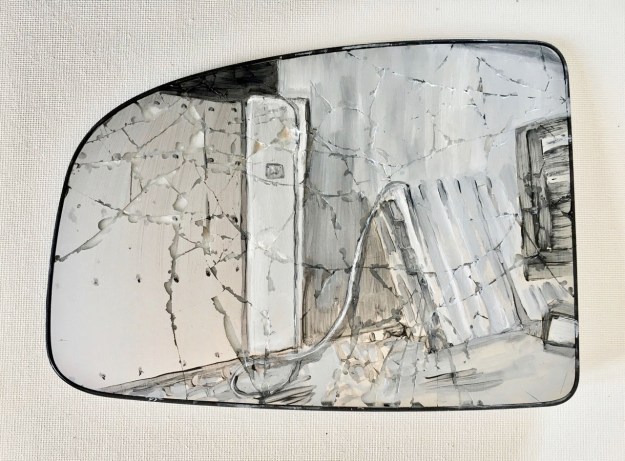
I choose a piece that has a rusty border and a strange pink trace of spray paint. I decide to leave it as dirty as I found it.
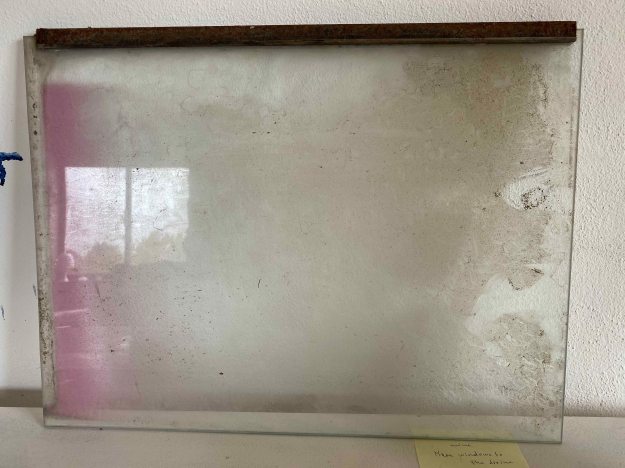
And this is the image that I leave out on the well in the light rain:
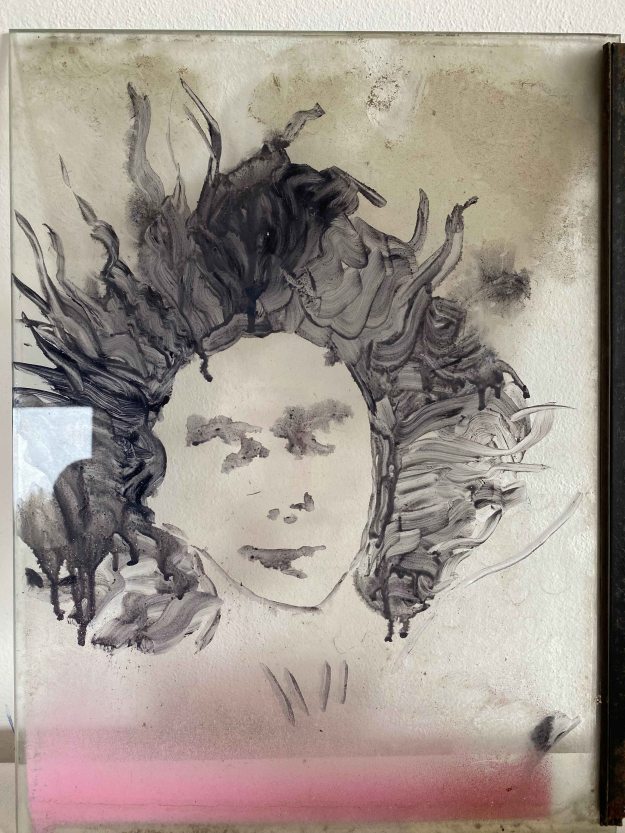
The next morning , I am surprised and disappointed that nothing much has happened to the image.
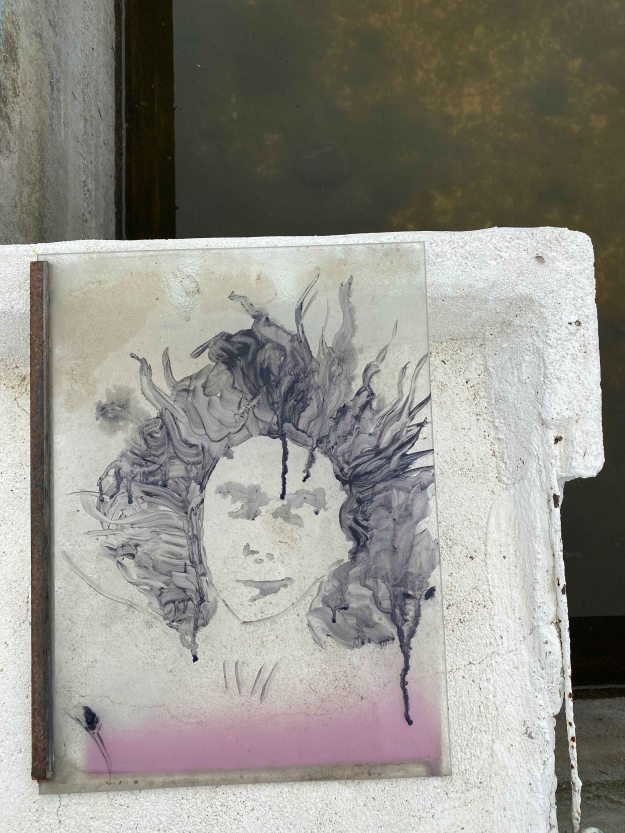
I continued sketching on this theme for the Project 2.2 Markmaking materials:


I am quite fascinated by the paintings of Genevieve Figgis, who allows the paint to flow and puddle. She has often used various metal plates as supports. I want to experiment with very liquid paint ( watersoluble oils? Oils and Liquin? Acrylics and water?) and let it have a life of its own on the slippery glass surface. For the narrative, I have looked at how Marc Chagall tells his stories in different planes of the canvas.
Parallel project- Empty room/ Modern cavepainting

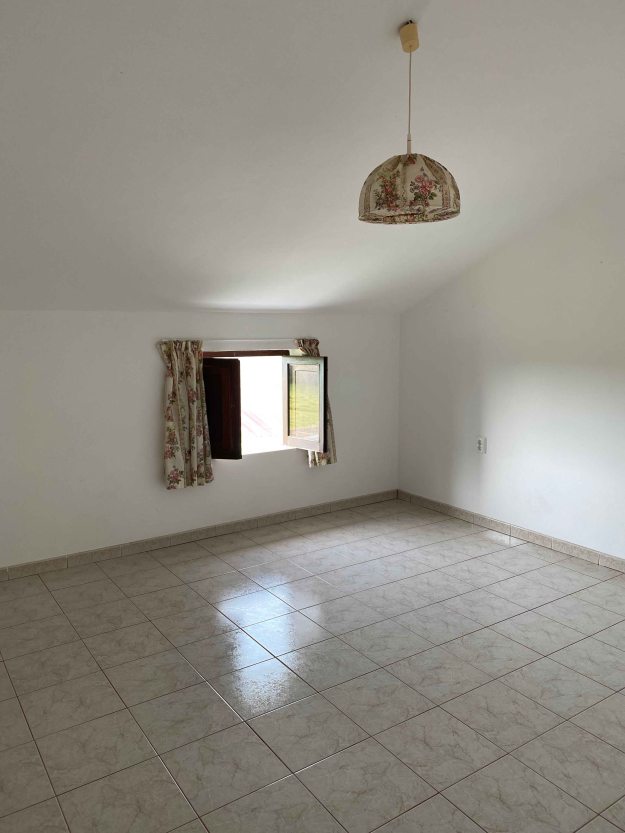
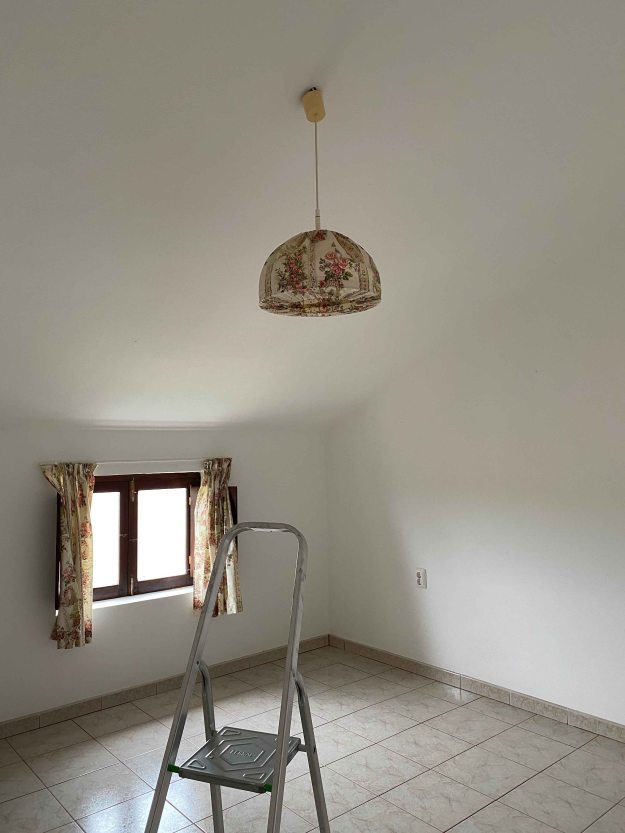
In several of the rooms, a lampshade is left dangling from the ceiling and some curtains left on the window. In a way, these lonely left over objects just emphasize the emptiness of the room.

This room is to the North and always cold and dark. It has a weird shape and really low ceiling to one side. When I first saw it, it had very much very dark, heavy furniture in it and I can still feel the energy of this dark heaviness lingering. It took me a good while to even clean it out and it is definitely the space I have spent less minutes in.

I will change this by making “an empty room” one of the objects for the parallel project and by using this whole room as my sketchbook to record many of the stories I hear about the village.

I plan to start different stories at different parts of the walls and then continue the narratives til they meet and create a pattern over the room. At some point, these walls will be smashed and I will collect the stories as dust in a suitable box.

Hera I am, ready to start. A whole white room as my white page. And now I need to decide where to put down the tip of my pen.

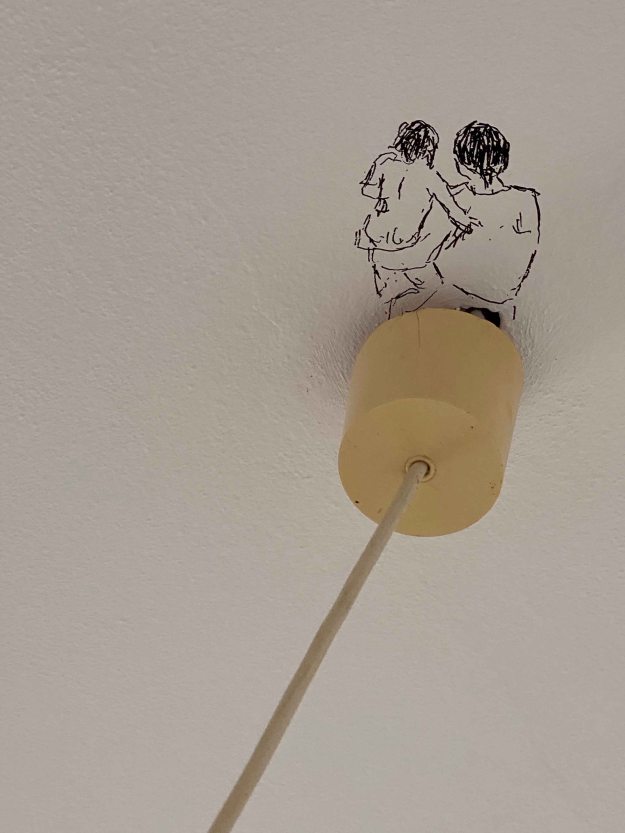
The dangling lampshade seems to be the center around which the space moves and I climb the ladder to start there.

I start with my neighbor Donna Maria’s account of her first memory from when she was 3 or 4 years old and still little enough to be carried by her mother.

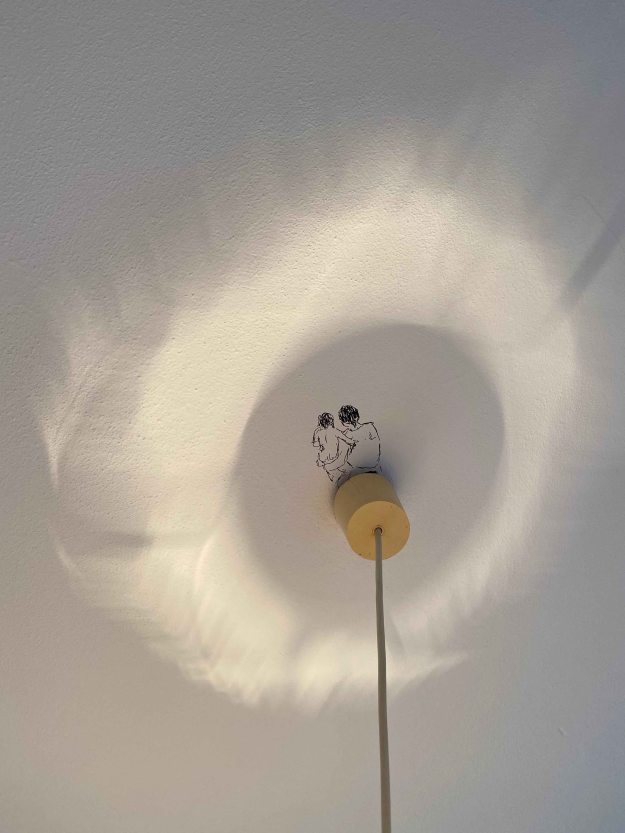
When I switch on the light, I am so happy I chose to start at this point in the room:

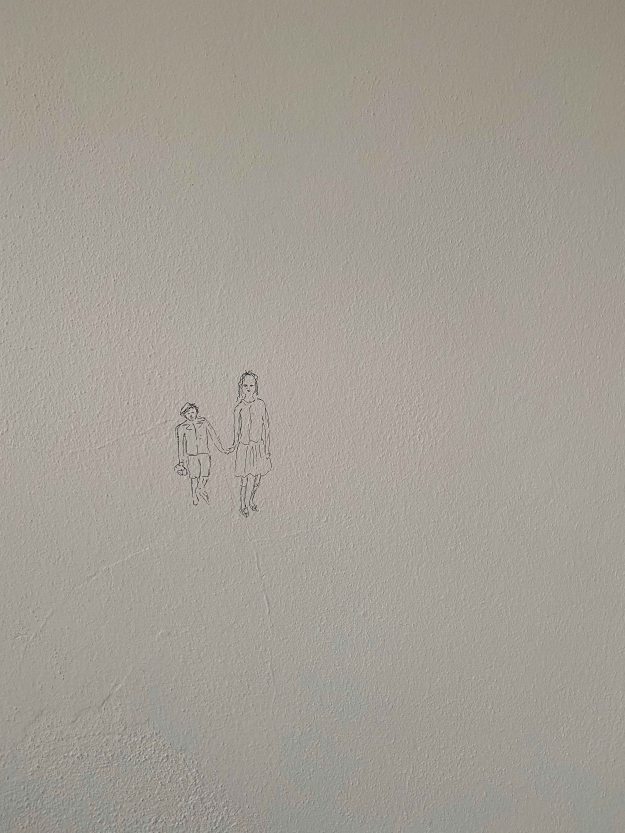
I start another story on the wall to the East, about Maria Jose walking to school with her little brother, the 4 km to the nearest primary school.

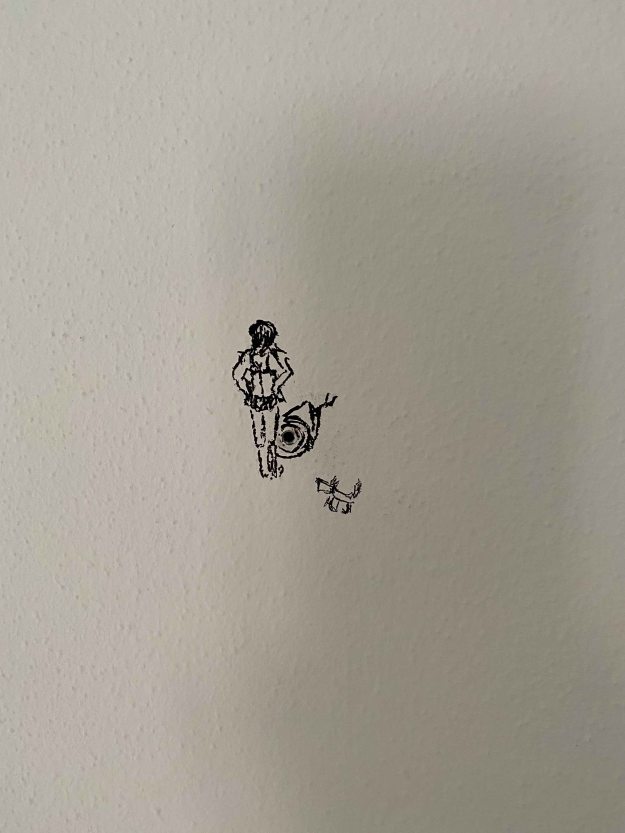
On the back wall, her granddaughter has a dog called Boss.

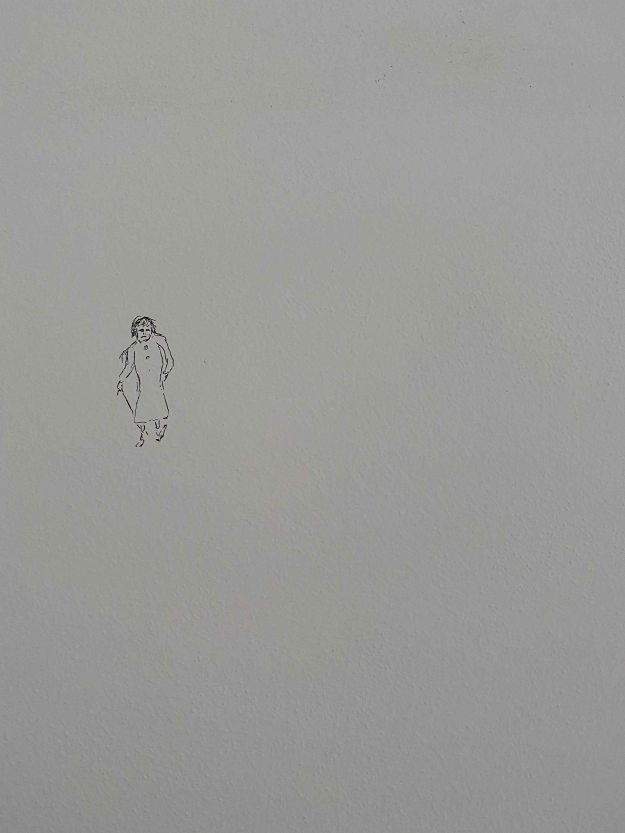
I realize that all three stories start with relationships- to the mother, to the dog, to the brother. I decide to leave the Western wall to a lonely figure- Donna Laura from the house on the other side of ours.

Her story is very sad. I will let it evolve around the figure in time.

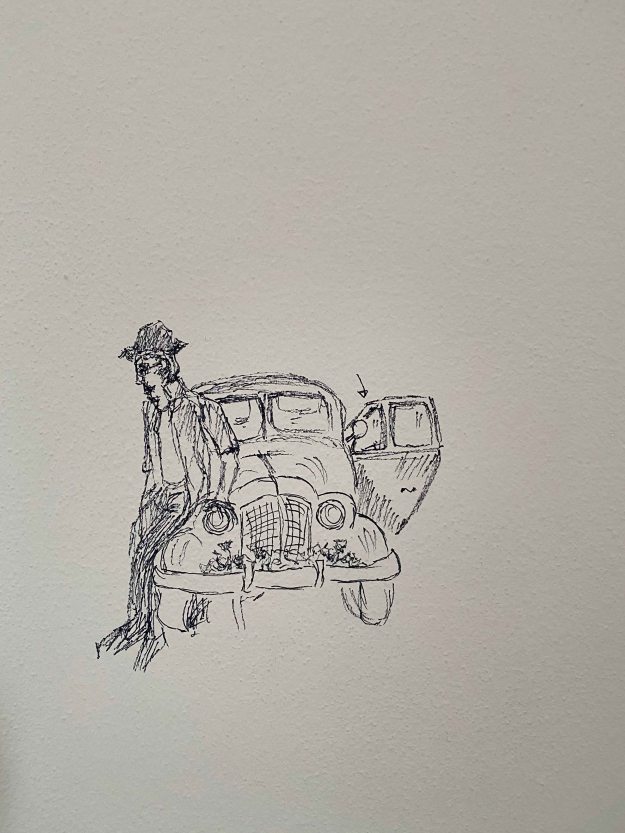
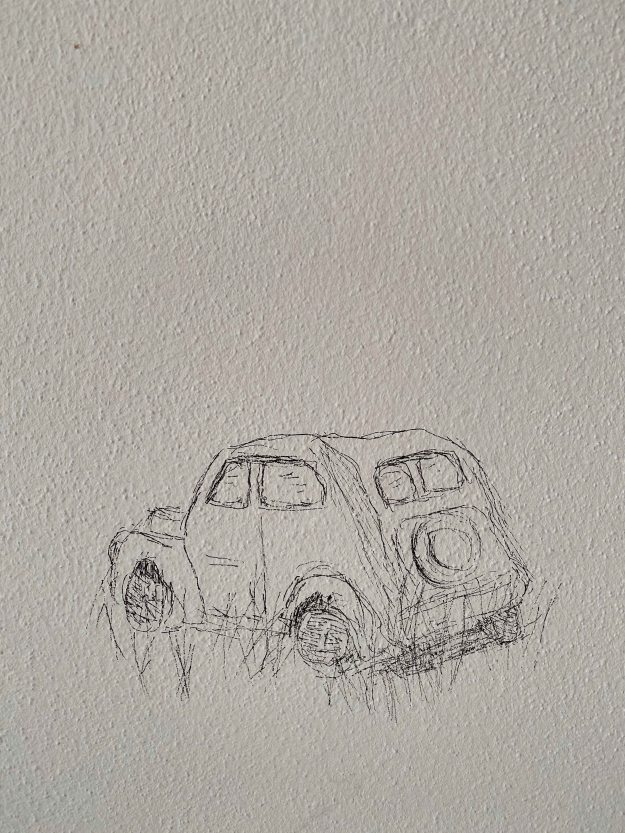
I have written another blogpost about all the glass I have found, and some of the pieces are clearly from a car. I decide to let other parts of the walls start with stories about the cars from which these glasses came- using this room as a sketchbook:

I prepared several different pens, with the idea of letting fainter drawings lie further back in time than thicker, clearer drawings. I will let go of this though, as I will use the walls more freely and allow myself to grab whatever pen is at hand at the moment.

Spinning these drawings together in stories adds the dimension of time engrained in the piece, as well as the two-dimensionality of the drawings and the three-dimensionality of the whole room.

I will resume the drawings now again on this fresh coat of paint. There will probably not be any grand finale with breaking the walls and collecting the dust, but this room will still be the sketchbook for the stories.

Suddenly we also live full time in the unrenovated house with all the family, due to the lock down, so today it occurred to me that our presence, our life here will weave into the sketchbook entries on these walls too. We already belong to the story of this house.

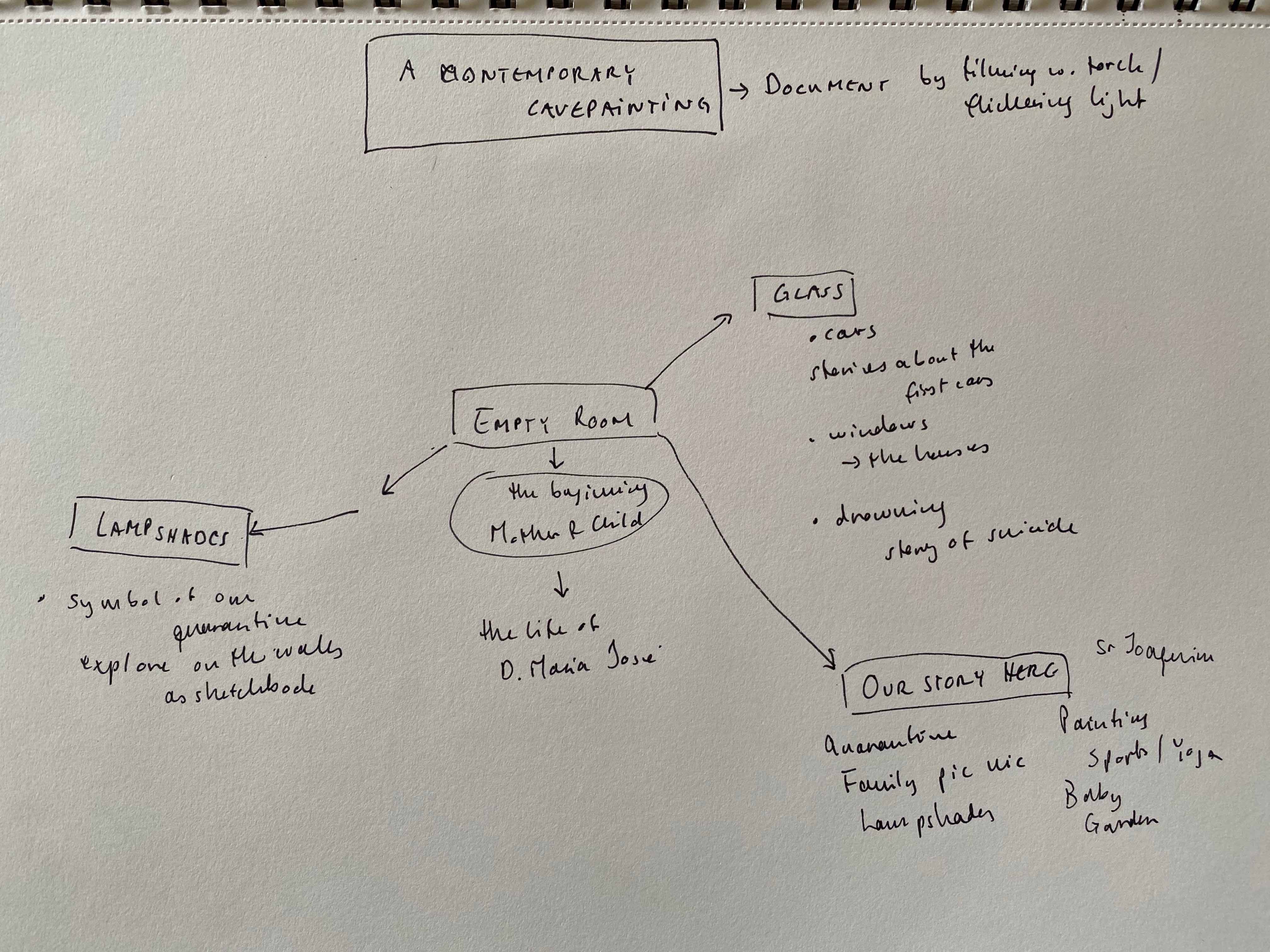
The new map of this “empty room” looks like this:

IMG_6478

The motives of the sketches on the walls here will connect to all other parts of the parallell project.

Our presence here first appeared with small sketches from a photoseries I did with my daughter and granddaughter wearing  lampshades on their heads:


These are sketches for oil paintings that I logged more about under the part of the parallel project “lampshades”.

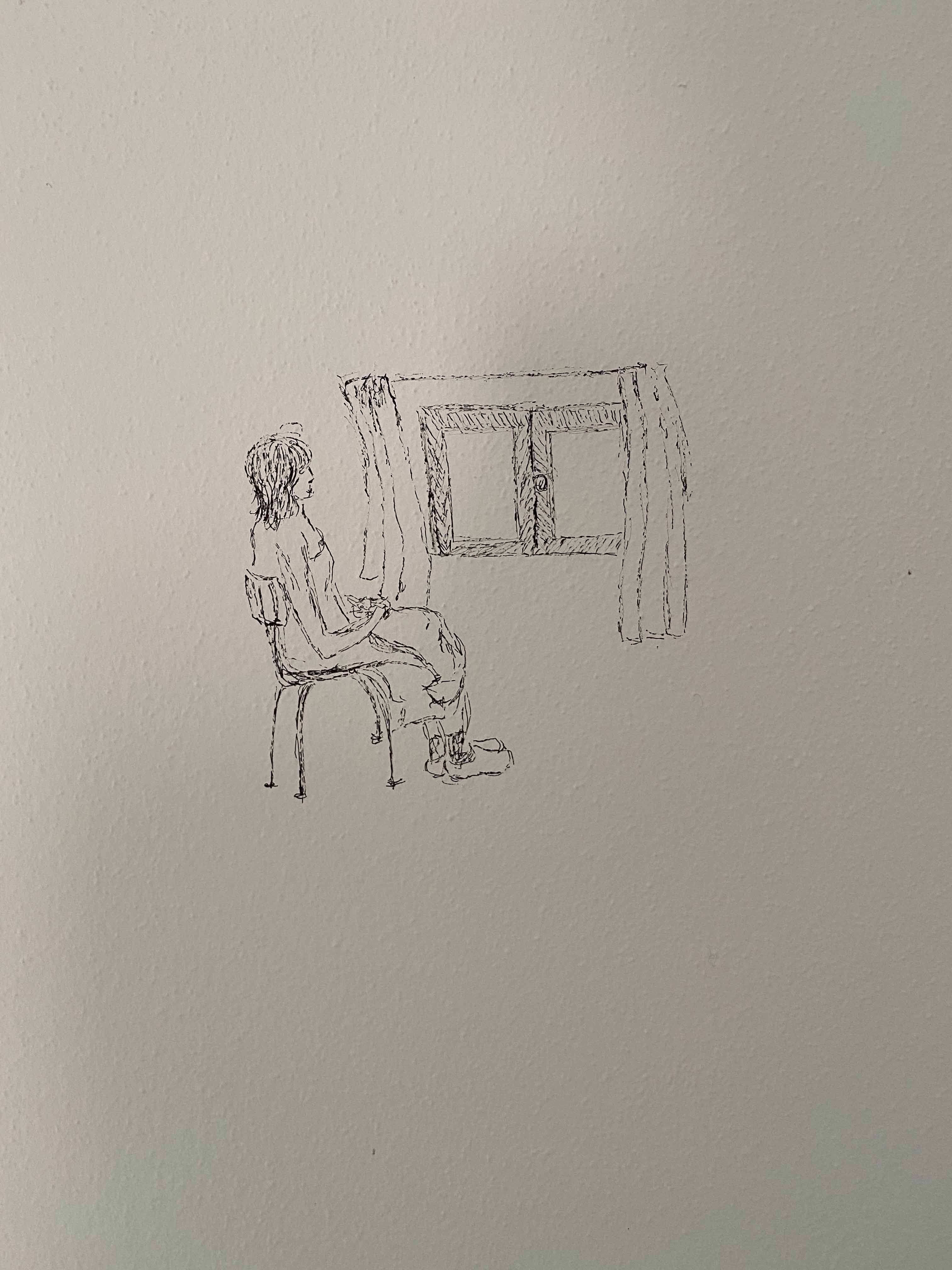
Also a sketch of my daughter longingly looking through the window after way too long in this house for quarantine:

IMG_6475

To be continued


The parallel project

I am most interested in painting and drawing stories.

For POP 1 , I accompanied the emotional and physical changes of my daughter when she went through the different stages of an unplanned teenage pregnancy.


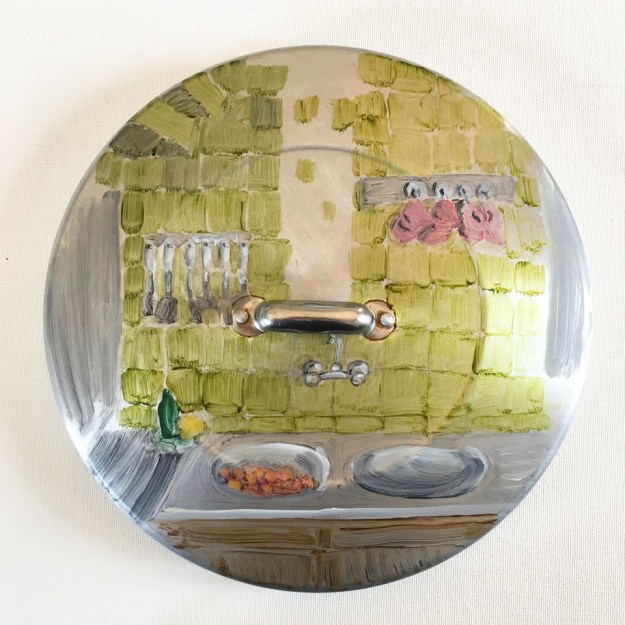
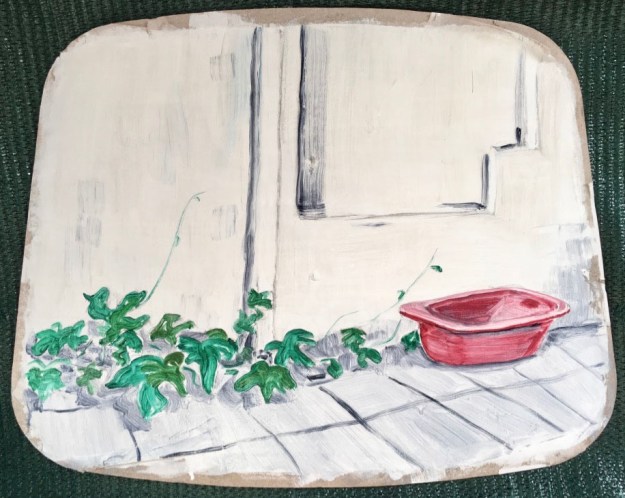
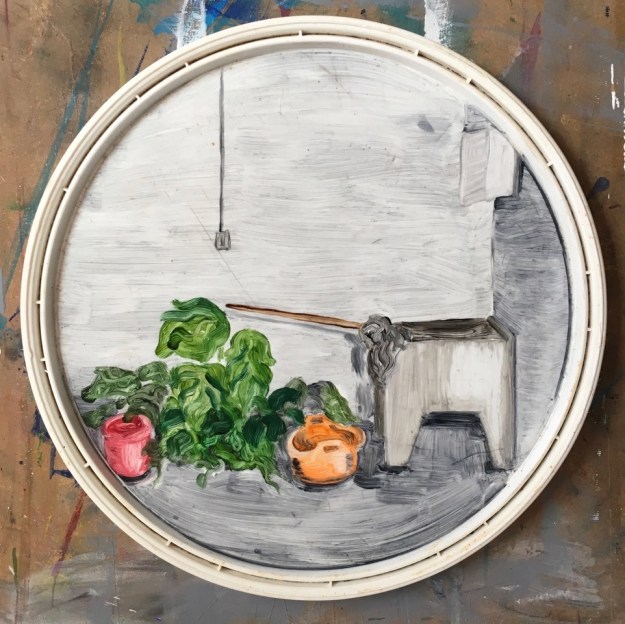
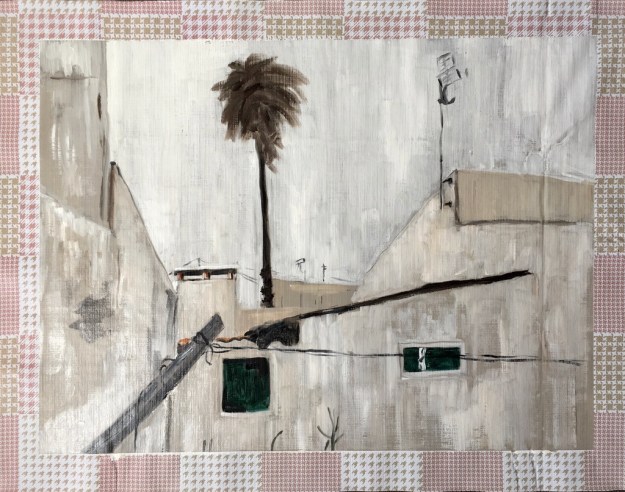
For UPM, I portrayed the village in the South of Portugal where we spent a few months per year, using locally found materials as my supports.

And presented it in the backyard:


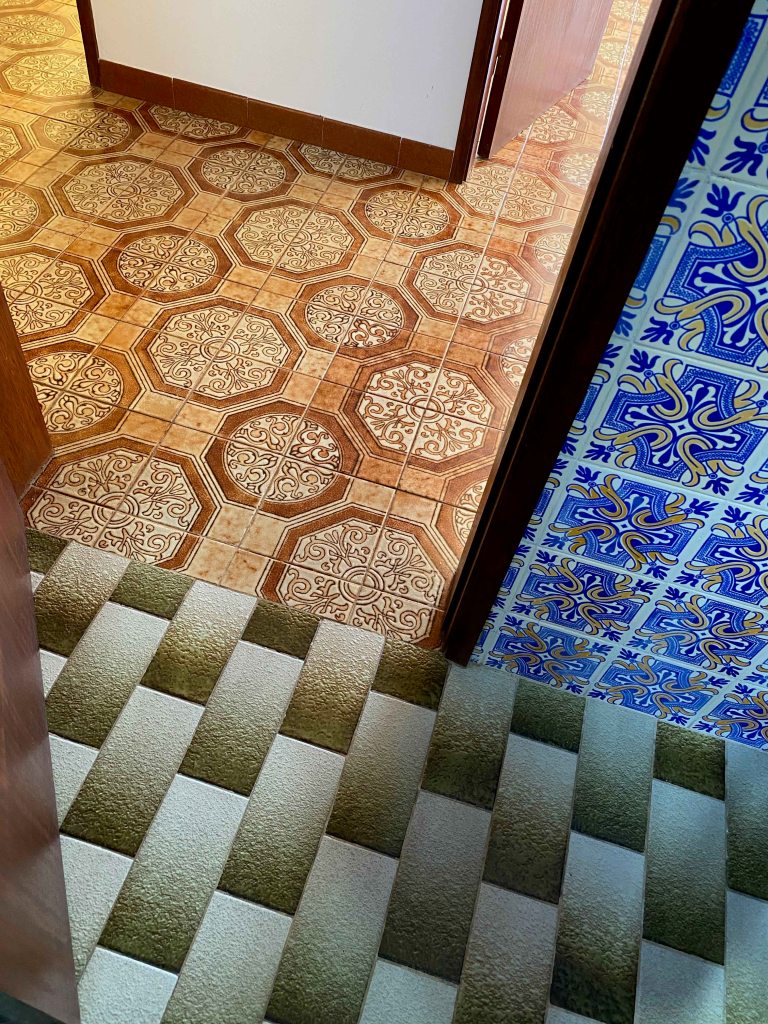
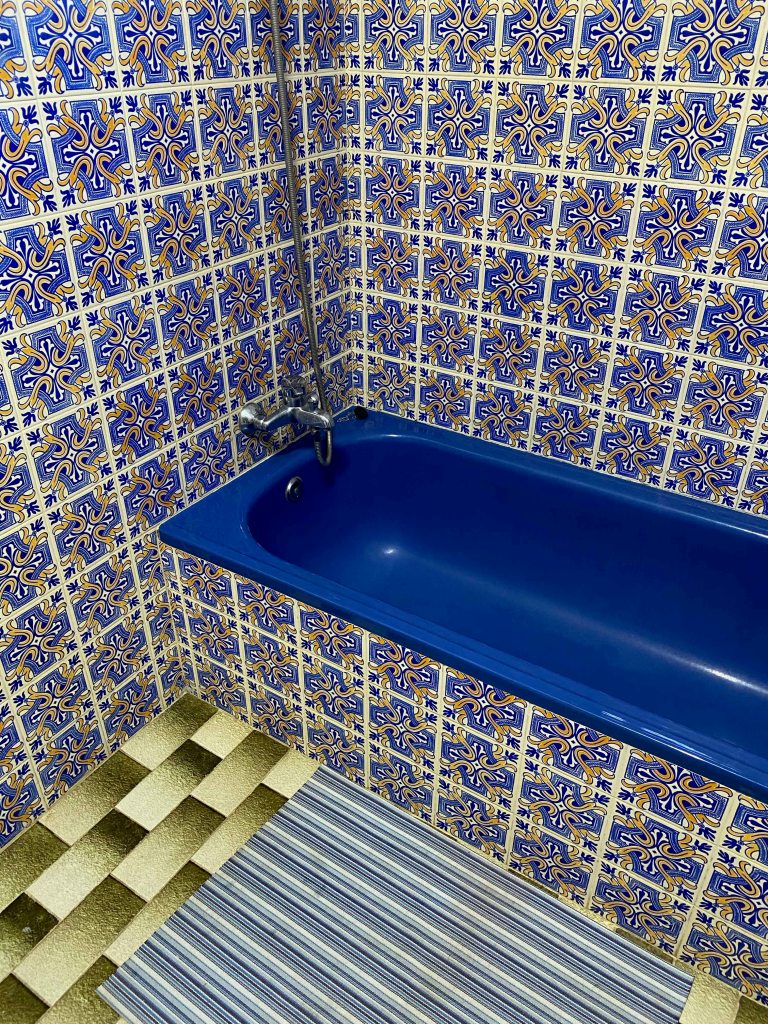
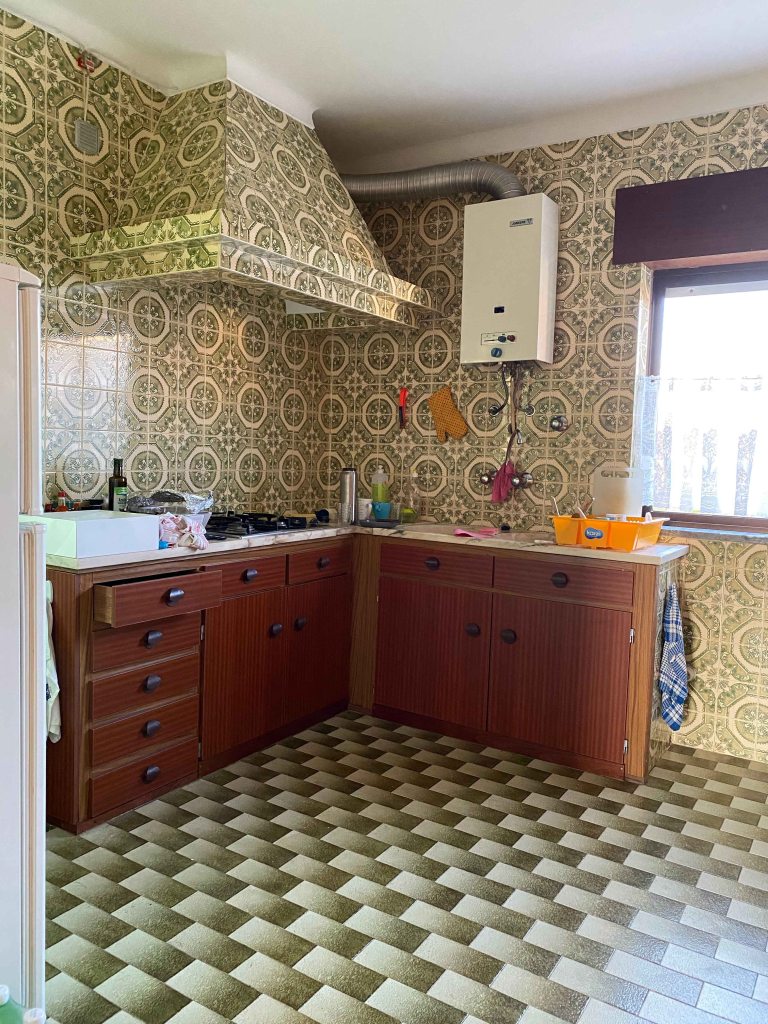
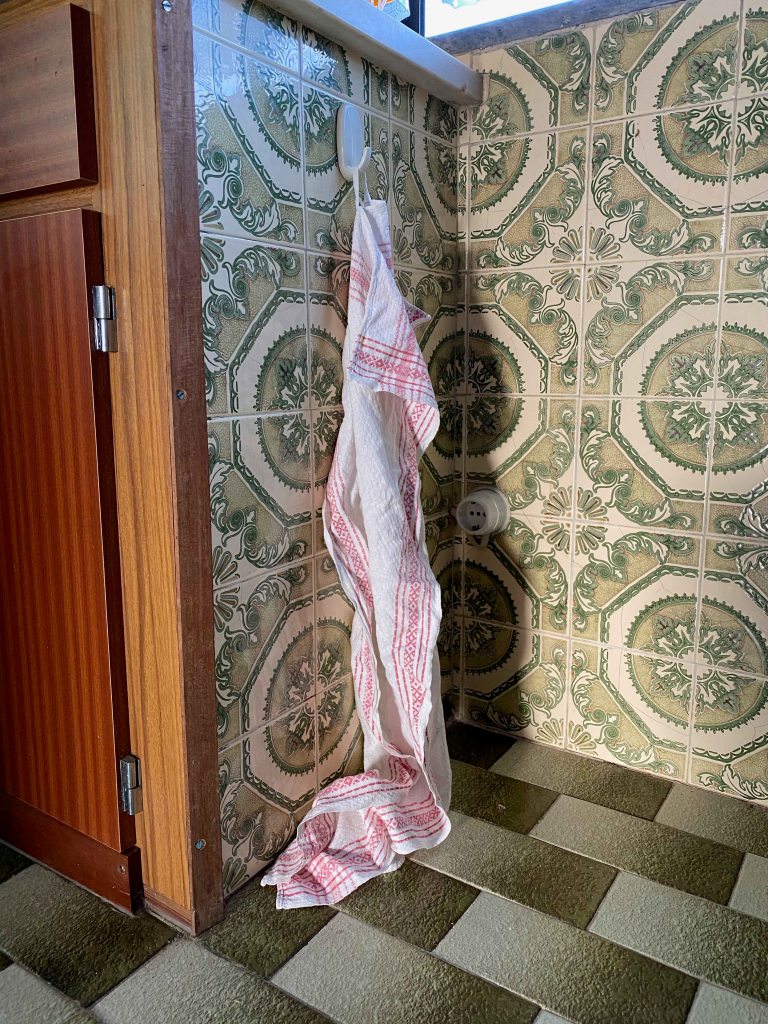
We have just bought a house in this same village and are in the process of renovating it totally. This house is so terribly ugly that it becomes quite fascinating- with an excessive use of tiles in various patterns contrasting with stark whitewashed walls and strange details.

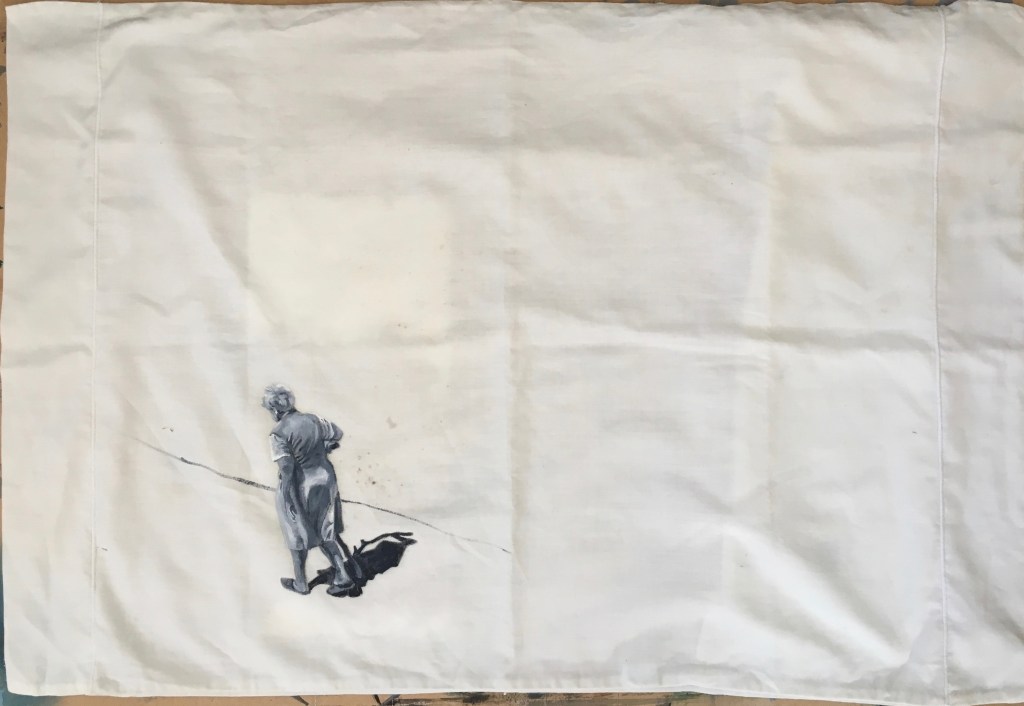
Our neighbour- Dona Maria Jose that I also painted on a pillow cover for UPM, is a well of information and stories about the village and its quirky inhabitants.


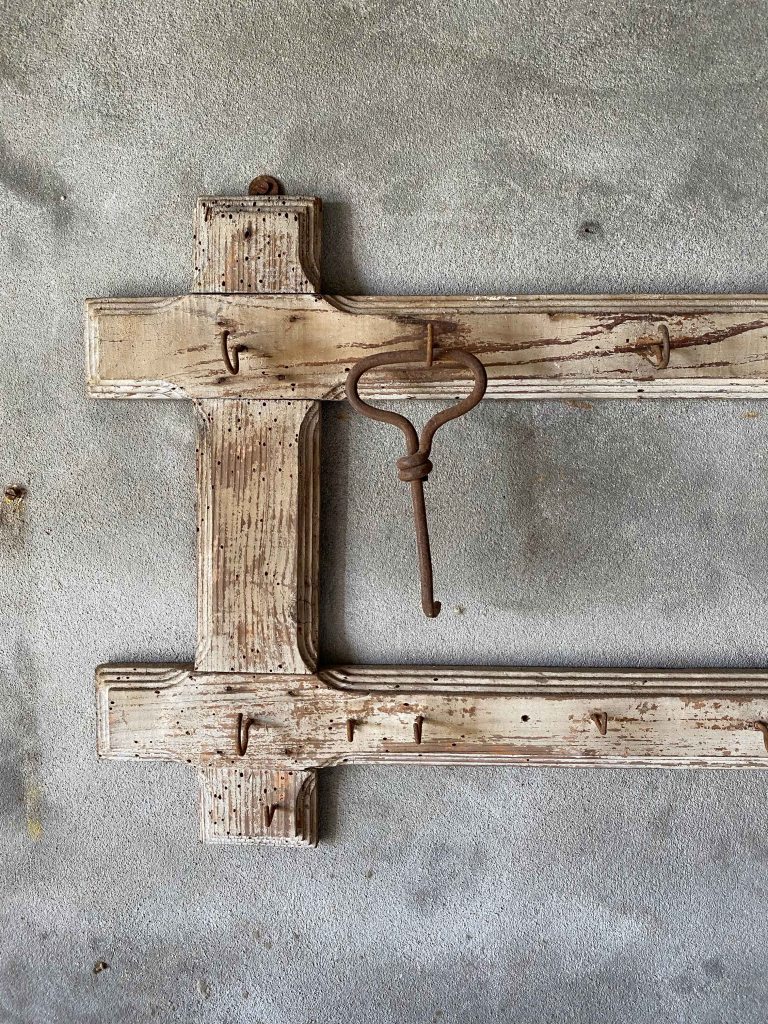
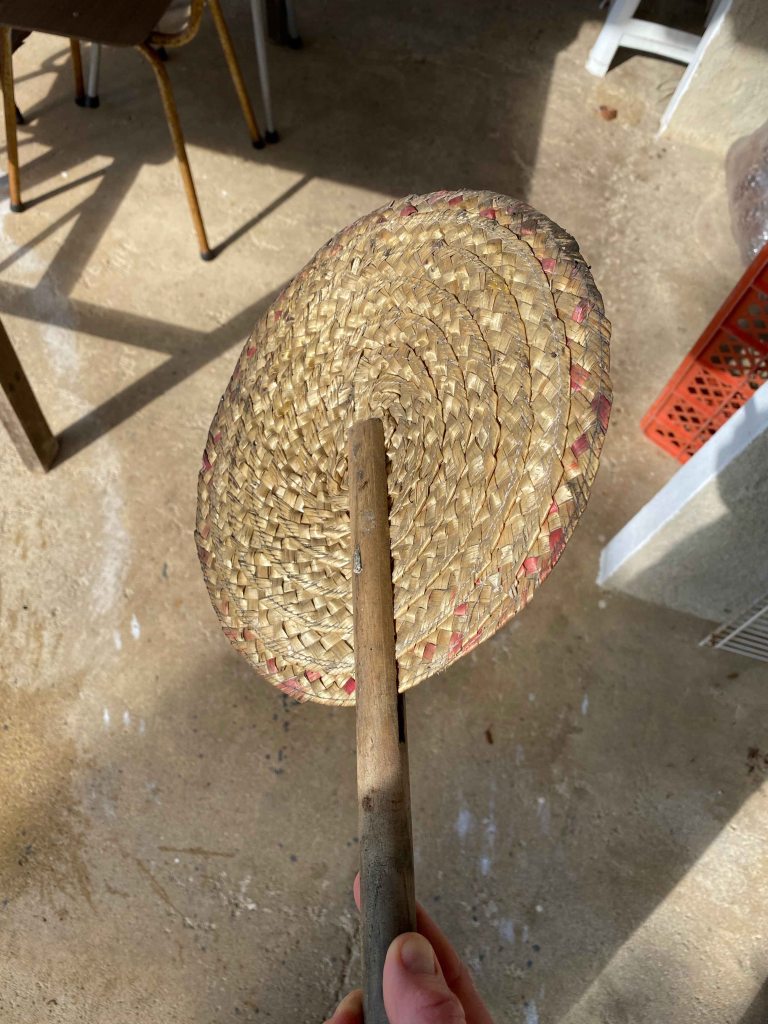
I would like to paint some glimpses of these sometimes tragic, sometimes surreal stories. I would like to use various strange objects that have been left here in the house and around as supports- like lace curtains or vases or lamp shades. I also found an incredible collection of various glass and would like to experiment with painting on them.

Some items might be too heavy or bulky to send and could maybe be included as photos?

I am not sure how yet, but it would be interesting to pick up the patterns of all the tiles used here too, before they will be changed with the renovation. For this project, I would focus more on the figures and their emotions than on things, but use the objects to express the stories.

I am curious what my tutor Emma Drye thinks of these first ideas for a parallel project and how this can develop.